Hubbry Logo
Andy BorowitzAndy BorowitzMain
Open search
Andy Borowitz
Community hub
Andy Borowitz
logo
8 pages, 0 posts
0 subscribers
Be the first to start a discussion here.
Andy Borowitz
Andy Borowitz
from Wikipedia

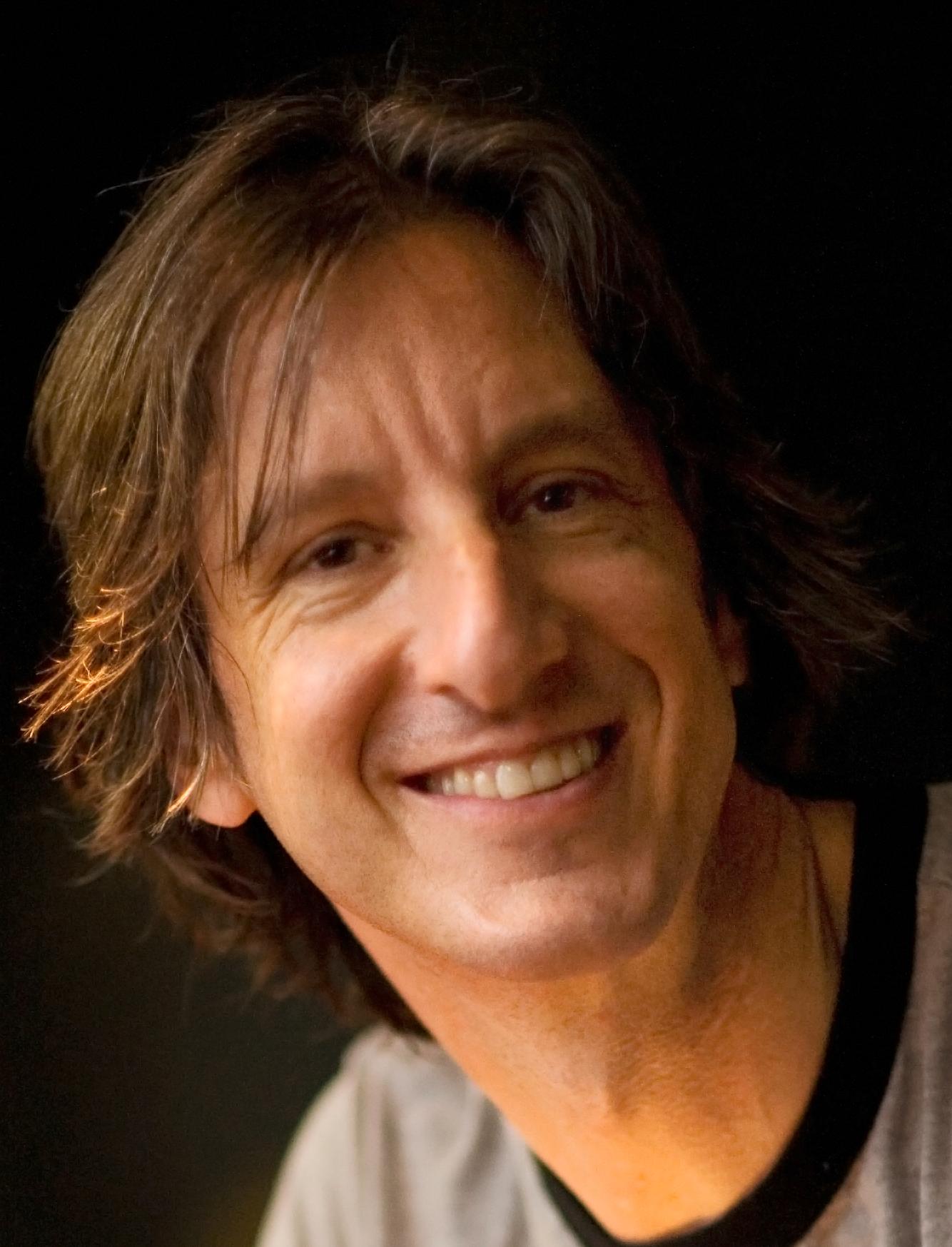
Andy Borowitz (born January 4, 1958)[1] is an American writer, comedian, satirist, and actor. Borowitz is a New York Times-bestselling author who won the first National Press Club award for humor. He is known for creating the NBC sitcom The Fresh Prince of Bel-Air and the satirical column The Borowitz Report.

Key Information

Early life

[edit]

Borowitz was born to a marginally observant Reform Jewish family[2] in Shaker Heights, Ohio,[3] and graduated from Shaker Heights High School.[4]

In 1980, Borowitz graduated magna cum laude from Harvard College, where he lived in Adams House and was president of the Harvard Lampoon.[5] He also wrote for the Hasty Pudding Theatricals. Borowitz studied with playwright William Alfred and wrote his undergraduate thesis on Restoration comedy.

Career

[edit]

Hollywood

[edit]

After graduating from Harvard, Borowitz moved to Los Angeles to work for producer Bud Yorkin at Tandem Productions, the company Yorkin co-founded with producer Norman Lear. From 1982 through 1983, he wrote for the television series Square Pegs, starring Sarah Jessica Parker. From 1983 through 1984, he wrote for the television series The Facts of Life. He wrote for various television series through the 1980s.

During his marriage to writer and producer Susan Borowitz (1982–2005), the two co-created The Fresh Prince of Bel-Air,[6] which ran for six seasons on NBC and launched the acting career of Will Smith.[7] The series won NAACP's Image Award for Outstanding Comedy Series in 1993.[4]

In 1998, Borowitz co-produced the film Pleasantville, starring Reese Witherspoon, Tobey Maguire, William H. Macy, Joan Allen, and Jeff Daniels.[7] It was nominated for three Academy Awards, including Best Art Direction-Set Decoration, Best Costume Design, and Best Music, Original Dramatic Score.

In 2004 Borowitz appeared in Woody Allen's Melinda and Melinda, starring Will Ferrell, and in Marie and Bruce, starring Julianne Moore and Matthew Broderick. Marie and Bruce was co-written by Wallace Shawn and director Tom Cairns. In 2007 he appeared in the film Fired!

Political satire

[edit]

In the late 1990s, Borowitz began e-mailing humorous news parodies to friends. In 2001, he founded The Borowitz Report, a site that posts one 250-word news satire every weekday. The site led to greater fame and widespread attention for Borowitz as a political satirist. The Wall Street Journal devoted a page-one story to him and his site in 2003 and readership ultimately grew to the millions. In 2005, the newspaper syndicator Creators Syndicate began syndicating The Borowitz Report to dozens of major newspapers, including the Los Angeles Times, The Seattle Times, and The Philadelphia Inquirer. It is also one of the longest-running features at the Newsweek website. He has served as a commentator on the National Public Radio programs Weekend Edition Sunday and Wait Wait… Don't Tell Me!, the latter on November 12, 2006. Borowitz is also a regular contributor to humor newspaper Funny Times.

In 2007, he started blogging for the Huffington Post. His posts were featured on the home page of the blog and quickly became one of its most popular features. His popularity surged during the 2008 campaign, leading The Daily Beast to call him "America's satire king".[8]

In 2009, The Borowitz Report began a Twitter feed, which was voted the number-one Twitter account in the world in a Time magazine poll in 2011. Eventually, he abandoned the feed.[9]

On July 18, 2012, Borowitz announced that The New Yorker had acquired The Borowitz Report website, the first time that the magazine had ever made such an acquisition. In its first 24 hours as a New Yorker feature, The Borowitz Report garnered the most page views on the entire New Yorker website.[citation needed]

Television performer

[edit]

In 2002, Borowitz joined the staff of CNN's American Morning and soon appeared on the program three mornings a week. In 2004, he covered the Democratic National Convention for the channel, paired with comedian Lewis Black of The Daily Show. He has made numerous appearances on other television programs including Countdown with Keith Olbermann, Best Week Ever on VH1 and Live at Gotham on Comedy Central.

In 2010, Borowitz appeared on the PBS show Need to Know. Tom Shales, television critic for The Washington Post, singled out Borowitz for praise, calling him "one of the wittiest Web wags".[10]

Stand-up comedy

[edit]

Borowitz's success as a television performer led to his becoming a strong draw as a stand-up comedian, and he started headlining at major comedy clubs across the country, including Carolines on Broadway, where he hosts a monthly show called Next Week's News. Other major comedians who have appeared with him in that show include Amy Sedaris and Susie Essman.

For four consecutive years starting in 2004, he performed at The Comedy Festival in Aspen, Colorado.

In September 2007, he headlined an edition of Next Week's News at the Bumbershoot[11] festival in Seattle, Washington, performing to standing-room-only audiences and critical acclaim in the press, including the Seattle Post-Intelligencer. He also performed to a sold-out house at the 2007 New York Comedy Festival, which featured other prominent comedians including Denis Leary, Bill Maher, and Sarah Silverman.

In 2008, he hosted a series of sold-out shows at New York City's 92nd Street Y called "Countdown to the Election". The show earned rave reviews and featured such guests as Arianna Huffington, Mo Rocca, Jonathan Alter, Joy Behar, and Jeffrey Toobin.

He continued to tour the country performing stand-up, including a performance at the University of California, Santa Barbara in April 2008. The university newspaper, Daily Nexus, reported that Borowitz played to a packed house and had the audience "erupting with laughter".[12]

Comedian Mike Birbiglia praised Borowitz in a May 2009 profile in Harvard Magazine: "Andy just picked up stand-up comedy as a hobby, and he's as good at it as anybody."[4]

On November 28, 2010, CBS News Sunday Morning aired a retrospective of his career as a comedian and writer, calling him "one of the funniest people in America".[13]

On June 28, 2011, he performed at New York City's Central Park Summerstage and drew a crowd estimated at 5,000, setting a new record for turnout at a Summerstage spoken-word event.

The New Yorker

[edit]

In 1998, Borowitz began contributing humor to The New Yorker magazine. He quickly became one of the magazine's most prolific humor contributors, writing dozens of essays including "Emily Dickinson, Jerk of Amherst",[14] selected as one of the funniest humor pieces in the magazine's history and included in The New Yorker's humor collection Fierce Pajamas. Two more humor pieces of his appeared in the magazine's 2008 collection Disquiet, Please! He has also performed at The New Yorker Festival's humor revues at The Town Hall in New York City with such other New Yorker contributors as Woody Allen, Steve Martin, and Calvin Trillin. Additionally, he has joined The New Yorker College Tour, where he has performed with improv group The Second City and David Sedaris.

In addition to writing for The New Yorker, Borowitz has written for many other magazines, including Vanity Fair and The Believer, and was a primary contributor to the cult magazine Army Man.

National Book Awards

[edit]

In 2009, Borowitz was chosen by the National Book Foundation to host the National Book Awards in New York City. Previous hosts have included such comedians and writers as Steve Martin and Garrison Keillor. His performance earned him a return engagement for the 2010 awards ceremony.

The 50 Funniest American Writers

[edit]

In 2011, Library of America chose Borowitz to edit an anthology of American humor, The 50 Funniest American Writers. Encompassing American humor from Mark Twain to The Onion, the book was set to be released on October 13, 2011. It became a best seller on the day of its publication, reaching number eight on Amazon.com and becoming the number-one humor book in the United States. It also became the first book in the 32-year history of the Library of America to become a New York Times and Wall Street Journal bestseller. Both Barnes & Noble and Amazon.com named it a Best Book of 2011, and Amazon.com named it the number-one Entertainment Book of the Year. In a feature about the book, The Washington Post noted its popular success, calling Borowitz "America's finest fake-news creator and sharpest political satirist".[15]

An Unexpected Twist

[edit]

In 2012, Borowitz wrote his first autobiographical work, An Unexpected Twist, an Amazon Kindle single. The essay recounts Borowitz's near-death experience in 2008 while undergoing emergency abdominal surgery in New York City. A mixture of dark comedy, hospital drama and love story, the book became a bestseller on its first day of release, placing number one on Amazon's Kindle Single chart. It became the first nonfiction Kindle Single to make The Wall Street Journal bestseller list, debuting at number six.[16]

In his book review for The New York Times, Dwight Garner wrote, "Andy Borowitz is the funniest human on Twitter, and that's not mean praise. His first original e-book—the current best-selling Single—is a seriocomic memoir called An Unexpected Twist, about a blockage in his colon that nearly killed him. This funny book has a sneaky emotional gravity. As the time of his illness, he'd been married only a few months, and his small book becomes a rather large love story."[17]

In his review of the book, journalist Seth Mnookin wrote, "Borowitz has become one of the most lauded satirists in the country—think of him as a literary Jon Stewart. His name graces the cover of one of the most successful Library of America volumes ever (The 50 Funniest American Writers* (*According to Andy Borowitz)). He was voted by Time magazine readers as having the #1 Twitter feed in the world. He even hosted the National Book Awards—twice… It's no surprise that Borowitz is able to mine his situation for humor. What makes An Unexpected Twist even more satisfying is his ability to highlight some of the surreal and infuriating aspects of modern American medical care without hitting the reader over the head with them."[18]

On June 25, 2012, Amazon named An Unexpected Twist the Best Kindle Single of 2012.

Other

[edit]

Since 1999, Borowitz has been the primary host of The Moth, a New York-based storytelling group. He sings with the literary rock band Rock Bottom Remainders, a group with a rotating cast of players including Dave Barry, Matt Groening, Roy Blount Jr., Stephen King, Amy Tan, Robert Fulghum, Barbara Kingsolver, and Scott Turow. He has taught screenwriting in the United States and Europe and is on the guest faculty of the Maurits Binger Film Institute in Amsterdam.

In October 2012, he became the host of the BBC comedy series News Quiz USA. The hit comedy series has millions of listeners on BBC Radio 4 in the U.K. and is broadcast on the public radio station WNYC in New York.

Personal life

[edit]

He was married to Susan Borowitz, the co-creator of The Fresh Prince of Bel-Air. After their divorce he married Olivia Gentile,[19] the author of Life List: A Woman's Quest for the World's Most Amazing Birds. He has three children and lives in Hanover, New Hampshire.[20]

Awards

[edit]

Books

[edit]
  • 2000 – The Trillionaire Next Door – The Greedy Investor's Guide to Day Trading. New York: HarperBusiness. ISBN 978-0-06-662076-3.
  • 2003 – Who Moved My Soap? – The CEO's Guide to Surviving in Prison. New York: Simon & Schuster. ISBN 978-0-7432-5142-6.
  • 2004 – Governor Arnold – A Photodiary of His First 100 Days in Office. New York: Simon & Schuster. ISBN 978-0-7432-6266-8.
  • 2004 – The Borowitz Report – The Big Book of Shockers. New York: Simon & Schuster Paperbacks. ISBN 978-0-7432-6277-4.
  • 2006 – The Republican Playbook. New York: Hyperion Books. ISBN 978-1-4013-0290-0.
  • 2009 – Who Moved My Soap? – The CEO's Guide to Surviving in Prison – The Bernie Madoff Edition. New York City, New York: Simon & Schuster. ISBN 978-0-7432-5142-6.
  • 2011 – The 50 Funniest American Writers* (*According to Andy Borowitz) – An Anthology of Humor from Mark Twain to The Onion. New York City, New York: Library of America. ISBN 978-1-59853-107-7.
  • 2012 – An Unexpected Twist. Seattle, Washington: Amazon Digital Services. ASIN B007A4V33M (Amazon Kindle Single).
  • 2022 – Profiles in Ignorance – How America's Politicians Got Dumb and Dumber. New York: Simon & Schuster. ISBN 978-1-66800-388-6.

Notes

[edit]

References

[edit]
[edit]
Revisions and contributorsEdit on WikipediaRead on Wikipedia
from Grokipedia

Andy Borowitz (born January 4, 1958) is an American writer, comedian, and satirist recognized for developing the NBC sitcom The Fresh Prince of Bel-Air and authoring The Borowitz Report, a satirical commentary series launched in 2001 that amassed millions of subscribers before its association with The New Yorker ended in 2023.
Borowitz, who grew up in the area and earned a from in 1980 while serving as president of the Harvard Lampoon, has produced multiple humor books that achieved New York Times bestseller status and received distinctions including the inaugural National Press Club humor award and two Thurber Prize for American Humor finalist nods. His work, often delivered through newsletters and columns, employs exaggeration and irony to critique political and social events, though its partisan leanings have drawn scrutiny for aligning with prevailing institutional narratives rather than balanced empirical analysis. He resides in with his family.

Early Life and Education

Childhood in Shaker Heights

Andy Borowitz was born on January 4, 1958, in , , and raised in the nearby suburb of Shaker Heights. He grew up in a Jewish family, with parents who identified as Jewish but maintained minimal religious observance, characterizing their home as a "funny household" where his father exposed him to comedic influences such as films. Borowitz later reflected on his childhood amid Cleveland's "golden age of absurdity," exemplified by local events like the 1969 fire, which contributed to an environment ripe for satirical observation. At , Borowitz was an academic high achiever known for "extreme grade grubbing" rather than overt antics, yet he showed early comedic inclinations by becoming editor of the school newspaper primarily to oversee its annual April Fools' edition. This role allowed him to experiment with satirical writing around age 18, marking the initial spark of his interest in humor through structured, journalistic formats rather than spontaneous performance.

Harvard College Experience

Borowitz graduated magna cum laude from in 1980. During his undergraduate years, he resided in Adams House and immersed himself in comedic pursuits, including writing, directing, and acting in several student plays. A pivotal aspect of his Harvard experience was his leadership role in , the university's storied undergraduate humor publication, where he eventually served as president. His involvement extended to collaborative pranks, such as leading a Lampoon team in the summer before his senior year to produce and mail a satirical edition mimicking The Harvard Crimson's orientation issue to all incoming freshmen, thereby establishing his reputation for irreverent humor on campus. Borowitz also performed and contributed to theater productions, activities that sharpened his satirical voice and exposed him to working as professional comedy writers in industry hubs like Hollywood. These extracurricular engagements fostered early networks and honed skills in and performance that directly influenced his trajectory toward and television production upon leaving college.

Entertainment Career Beginnings

Hollywood Screenwriting and Producing

Following his graduation from in 1980, Andy Borowitz moved to to pursue a career in television writing, joining under producer , co-founder of the company with . This early entry into Hollywood positioned him in the sitcom landscape of the early 1980s, where he contributed scripts emphasizing character-driven humor and situational comedy. Borowitz's initial writing credits included episodes for Archie Bunker's Place on , such as "A Blast from the Past," which aired on February 7, 1982, and "West Side Astoria," broadcast on April 4, 1982. He also wrote for , a single-season series in 1982-1983 focusing on high school social dynamics, and contributed to The Facts of Life, an running from 1979 to 1988. These roles honed his skills in crafting concise, dialogue-heavy scenes for ensemble casts, marking his establishment as a rising talent in network production during the decade. By the late 1990s, Borowitz expanded into feature films as co-producer of Pleasantville (1998), directed by and starring , , and . The film, which grossed over $40 million at the U.S. box office, depicted siblings transported into a monochromatic sitcom world undergoing transformative color shifts symbolizing societal evolution. His producing involvement supported the project's blend of and narrative structure, reflecting his accumulated expertise in comedic storytelling from television.

Creation of The Fresh Prince of Bel-Air

Andy and co-created , a sitcom that premiered on on September 10, 1990, and aired for six seasons, concluding on May 20, 1996, with 148 episodes produced. Andy Borowitz wrote the pilot script in roughly three weeks under an NBC development deal and served as alongside his wife. The show's premise centered on Will Smith portraying a rapping teenager from West Philadelphia's inner city who relocates to live with his affluent aunt, uncle, and cousins in the upscale Bel-Air enclave of , creating a fish-out-of-water dynamic that juxtaposed streetwise urban culture against privileged suburban life. This format drew inspiration from music producer , who during a dinner hosted by Borowitz shared stories of his own Bel-Air family, including his daughter's casual requests for water, which informed elements like the wealthy relatives' mannerisms. Borowitz, aware of potential challenges in authentically depicting characters as a white writer from , incorporated input from a diverse writing staff and crew to ensure varied perspectives on African-American experiences beyond stereotypes. The series marked one of the first major network sitcoms to feature a rapper as its lead, blending hip-hop influences with family comedy and earning praise for broadening representations of success, class, and cultural duality within Black households. Critics highlighted the program's crossover appeal, which introduced hip-hop vernacular and themes into white suburban audiences while challenging monolithic views of Black life through characters ranging from a principled to an aspiring actress. It received a Primetime Emmy nomination in for Outstanding Lighting Direction (Electronic) for a Series.

Other Television and Film Projects

Borowitz wrote episodes for 1980s sitcoms including (1980–1983), (1982–1983), and The Facts of Life (1979–1988), contributing to their comedic scripts during a period of expanding network television formats. He co-created the sitcom Day by Day (1988–1990), which centered on a couple resigning from their jobs to focus on parenting their young daughter, blending family humor with social commentary on work-life balance; the series ran for two seasons with 33 episodes before cancellation. Borowitz also developed Out All Night (1992–1993), an sitcom starring as a nightclub owner navigating single motherhood and business challenges alongside younger employees; it aired 19 episodes over one season, attracting modest ratings in its urban comedy niche. In collaboration with his then-wife , he co-created Aliens in the Family (1996), an ABC family sitcom featuring a human-alien and their blended household, which premiered to mixed reviews and lasted only eight episodes due to low viewership. Borowitz served as an on the Peacock drama series Bel-Air (2022–present), a gritty reimagining of as a serialized narrative exploring class, race, and family dynamics in modern ; the show, developed from a 2019 fan film concept, debuted on February 13, 2022, and secured renewals for three seasons by 2024, marking a shift from to prestige television format.

Rise as a Satirist

Inception of The Borowitz Report

Andy Borowitz initiated The Borowitz Report by composing satirical news parodies and emailing them to during the late , drawing on his background in to lampoon political figures and events through exaggerated, absurd scenarios. This informal distribution method allowed for quick feedback and organic sharing among recipients, who forwarded the pieces to their own networks, fostering initial buzz without formal publication channels. In 2001, Borowitz formalized the project by launching The Borowitz Report as a dedicated , transitioning from ad hoc emails to a structured online presence that posted one 250-word faux news article each weekday. The content adopted a format mimicking mainstream news headlines and briefs, but infused with hyperbolic inventions that targeted the logical inconsistencies and rhetorical excesses of political discourse, such as fabricating quotes or outcomes to underscore real-world hypocrisies. Early growth relied on list subscriptions and rudimentary dissemination, with readers subscribing via the site to receive daily updates directly, amplifying reach through personal recommendations in an era before widespread . This expansion capitalized on the novelty of web-based amid rising online news consumption, distinguishing it from print humor by enabling real-time responses to current events like election cycles.

Stand-up Comedy and Live Performances

Borowitz began incorporating live into his career in the mid-2000s, following his departure from Hollywood and the launch of his satirical newsletter in 2001. His early onstage appearances included a 2006 segment on the series , where he delivered comedic material, and a 2009 stand-up set at 92YTribeca tied to promoting his humor book Who Moved My Soap?. His live style emphasizes observational humor drawn from everyday absurdities, interwoven with sharp political jabs targeting current events and public figures, often in a solo format that builds to audience interaction. Performances typically unfold in theaters and university halls, allowing for extended monologues on topics like governmental incompetence, delivered with timing honed from his Lampoon days at Harvard. A milestone came with his national tour Make America Not Embarrassing Again, which ran through 2020 and featured sold-out shows at major venues including the on September 21, , and the Dolby Theatre in Hollywood on April 24, 2019. The tour extended internationally, playing to packed houses worldwide, and focused on satirizing political embarrassments through rapid-fire anecdotes. Borowitz has sustained live work at academic and cultural institutions, such as a 2008 lecture-performance at , Santa Barbara's Campbell Hall; a 2022 evening event at Dartmouth College's Hopkins Center for the Arts; and a moderated discussion with comedic elements at Drew University's Forum on April 28, 2025, hosted at the Mayo Performing Arts Center. More recently, on October 24, 2025, he performed An Evening of Sanity at Princeton's McCarter Theatre Center, combining stand-up, conversation, and Q&A on contemporary follies. These engagements underscore his preference for intimate, responsive crowds over mass media outlets.

Contributions to The New Yorker

In July 2012, The New Yorker acquired The Borowitz Report, Andy Borowitz's satirical news column, and began publishing it exclusively on its website. The column, which originated independently in 2001, featured short, absurd headlines and dispatches parodying current events, particularly political absurdities, such as "George Santos to Spend More Time with Imaginary Family" in reference to the congressman's fabrications or "Clarence Thomas Collapses from Exhaustion After First Full Day of Regulating Himself" amid ethics scrutiny of the Supreme Court justice. These pieces typically lampooned figures across the political spectrum but frequently targeted conservative politicians and institutions, aligning with Borowitz's style of highlighting perceived hypocrisies through exaggeration. The column rapidly gained prominence on The New Yorker's platform, amassing millions of readers worldwide during its eleven-year run. To mitigate risks of misinterpretation amid rising concerns over , especially following adjustments to algorithms, The New Yorker appended explicit labels to each entry, including "Satire from the Borowitz Report" and, by late 2016, updated the section's tagline from "the news, reshuffled" to "not the news." Borowitz himself emphasized the satirical intent, stating that the content would remain "as inaccurate as always." Publication ceased in December 2023 as part of broader cost-cutting at parent company Condé Nast, which included layoffs of approximately 5% of its workforce earlier that year. Borowitz attributed the decision directly to the magazine's financial difficulties, marking the end of a fixture that had become one of The New Yorker's most-viewed online features in its early days post-acquisition.

Political Satire and Publications

Themes and Style in Satirical Works

Borowitz's satirical works recurrently emphasize themes of political ignorance and incompetence, with a predominant focus on conservative politicians whose and policies are depicted as detached from and logical coherence. This motif often manifests through portrayals of figures like extending their own statements to self-defeating extremes, underscoring causal disconnects between asserted beliefs—such as election denialism or historical revisionism—and verifiable facts. Such themes align with a perspective that attributes policy flaws on the right to foundational misunderstandings of reality, rather than strategic disagreements, reflecting influences from outlets like that systematically prioritize liberal critiques of conservatism. Stylistically, Borowitz employs and as core techniques, amplifying minor rhetorical inconsistencies into catastrophic outcomes to expose perceived hypocrisies in conservative positions on issues like and public . By constructing faux news scenarios where politicians' logic unravels into —such as absurd defenses of unfounded claims—he critiques not just individual errors but systemic incentives favoring spectacle over substance in right-leaning . This method draws from classical traditions but adapts to modern contexts, where the technique's effectiveness hinges on audiences recognizing the kernel of truth in the distortion, though sources note its roots in Borowitz's early exposure to surreal elements in everyday American life. Following the 2016 U.S. presidential election, Borowitz's evolved toward more pointed commentary on , shifting from comparatively broader absurdities in pre-Trump political coverage to intensified scrutiny of populist as a causal driver of national dysfunction. This change coincided with observations that real-world events under Trump rendered traditional exaggeration obsolete, prompting reliance on near-literal extensions of actual statements to maintain satirical bite. The pivot underscores a causal realism in his work: where earlier pieces lampooned universal follies, post-2016 output increasingly posits conservative rejection of expertise as uniquely erosive to institutional norms, informed by the era's empirical surge in .

Books on Political Ignorance and Humor

Andy Borowitz's Profiles in Ignorance: How America's Politicians Got , published on September 13, 2022, by , examines the historical embrace of by U.S. political leaders, arguing that has evolved from a liability to a strategic asset in gaining and retaining power. The book traces this trend across figures from to , , and , positing that leaders who feign or cultivate ignorance appeal to voters by prioritizing over expertise, often exacerbating failures in areas like and . Borowitz uses and historical examples, such as Reagan's gaffes on basic and Trump's denial of , to illustrate how ignorance signals authenticity to certain electorates, though critics note the work's selective focus on Republican examples limits its scope on bipartisan shortcomings. The volume achieved New York Times bestseller status in nonfiction categories shortly after release, reflecting strong initial sales driven by Borowitz's established audience from The New Yorker and his satirical newsletter. It garnered over 2,200 customer reviews on Amazon averaging 4.7 out of 5 stars, with praise for its humorous dissection of political folly but some detractors arguing it prioritizes polemic over rigorous analysis. Borowitz frames the book as a diagnostic tool rather than a prescriptive one, warning that rewarding ignorance undermines democratic competence without proposing structural reforms beyond voter education. In addition to Profiles in , Borowitz compiled The Borowitz Report: The Big Book of Shockers in 2009, a collection of his satirical dispatches lampooning political absurdities and media , though it leans more toward episodic humor than thematic analysis of ignorance. These works distinguish themselves from his fictional satires by grounding commentary in real events, emphasizing how public tolerance for factual distortion sustains flawed leadership, with Profiles extending this to a broader causal of electoral incentives.

Transition to Substack and Independent Satire

In December 2023, The New Yorker discontinued The Borowitz Report as part of cost-cutting measures amid financial difficulties at , ending a 23-year association that began in and intensified after 2012. Borowitz, who had contributed satirical columns weekly, cited the publication's economic pressures as the primary reason for the split, allowing him to pursue independent distribution without editorial or budgetary constraints imposed by legacy media structures. Borowitz relaunched The Borowitz Report on in March 2024, adopting a model of free daily faux news posts accessible to all subscribers, with paid tiers offering exclusive content such as comments, special election coverage, podcasts, and videos. By August 2025, the newsletter had amassed over 619,000 total subscribers, including tens of thousands of paid members, demonstrating strong audience retention and growth independent of traditional publishing gatekeepers. This shift enabled financial autonomy, as Borowitz noted the platform's community-building features fostered direct reader engagement, contrasting with the corporate limitations that led to his New Yorker exit. Content continuity persisted through 2024 and into 2025, with regular satirical pieces targeting U.S. elections, political figures, and events; examples include mockery of Robert F. Kennedy Jr.'s campaign antics and hypothetical Kennedy family responses to his endorsements. Borowitz maintained the concise, headline-driven style of absurd political commentary, such as pieces on irony in Trump-Kennedy interactions, without the frequency reductions or thematic dilutions sometimes associated with institutional oversight. The Substack format supported this output, yielding high engagement metrics reflective of pre-transition readership loyalty.

Criticisms and Controversies

Accusations of Partisan Bias

Media Bias/Fact Check rates The Borowitz Report as left-biased , citing its pattern of stories that consistently favor left-leaning perspectives while denigrating right-wing figures and policies. AllSides similarly classifies the outlet as having a left , noting frequent satirical headlines critical of and conservative politicians, such as those portraying Republican figures as ignorant or hypocritical. Conservative media outlets have accused Borowitz of producing humor tailored to self-satisfied liberal audiences, often dismissing it as lacking wit or universality. For instance, the New York Post described his work as "notoriously unfunny" upon the termination of his New Yorker column in December 2023, highlighting repetitive anti-conservative jokes like a 2008 quip about Barack Obama that exemplified what critics viewed as partisan pandering rather than broad satire. Critics have pointed to an imbalance in targets, with Borowitz's output featuring rare mockery of left-leaning politicians—such as occasional jabs at in 2015—contrasted against prolific ridicule of conservatives, leading to claims that his functions more as partisan commentary than equal-opportunity humor. This perceived asymmetry has fueled accusations from conservative commentators that Borowitz's work reinforces ideological echo chambers rather than challenging power across the .

Debates Over Humor Effectiveness

Critics have argued that Andy Borowitz's satirical style primarily reinforces existing beliefs among liberal audiences rather than challenging or broadening perspectives. In a 2012 Salon review, Allen Clifton described Borowitz's humor as "dad jokes for self-satisfied liberals," suggesting pieces that affirm preconceptions—such as portraying as intellectually deficient or as emblematic of elite detachment—fail to provoke deeper reflection or persuade skeptics, instead catering to within echo chambers. This view posits that such , while generating high engagement through shares among aligned readers, yields limited conversions in opinion, as empirical studies on political humor indicate it often strengthens in-group without mitigating polarization. Debates further highlight satire's potential to amplify division over exposing absurdities, particularly in anti-Trump content that dominates Borowitz's output during the 2016-2020 period. on satirical consumption shows it can intensify negative partisanship, where audiences derive satisfaction from but experience no shift toward cross-aisle understanding, potentially entrenching ideological silos akin to filter bubbles. Overexposure to such one-sided ridicule has been linked to backlash effects, where relentless targeting fosters unintended sympathy for subjects among moderates or opponents, as observed in broader critiques of late-night comedy's Trump-era focus, which risked humanizing the target through perceived unfairness rather than substantive critique. Proponents counter that Borowitz's concise, absurd exaggerations effectively illuminate policy hypocrisies for engaged readers, evidenced by The Borowitz Report's sustained millions of weekly views and shares, which sustain public discourse on political folly. Yet, causal analyses question this impact's depth, noting satire's shares often reflect affective reinforcement—spiking outrage or amusement in homogeneous networks—over behavioral change, with studies showing minimal attitude shifts beyond already sympathetic demographics. This tension underscores a core debate: whether Borowitz's humor serves truth-seeking by distilling causal absurdities in power structures or inadvertently polarizes by prioritizing partisan .

Instances of Satire Misinterpretation

In December 2016, amid heightened concerns over following the U.S. presidential election, introduced a prominent on The Borowitz Report section, explicitly stating "The Borowitz Report is not the news" to prevent misinterpretation of its satirical content as factual reporting. This measure addressed instances where readers, particularly on platforms, shared Borowitz's pieces without recognizing their humorous intent, blurring distinctions between and . A prominent example occurred on March 8, 2017, when Chinese state media and outlets like treated a Borowitz satire—falsely claiming U.S. President accused of hacking his tax returns—as legitimate news, leading to official commentary and diplomatic ripples before the error was corrected. The piece, which exaggerated Trump's real tax disputes for comedic effect, highlighted how cultural and contextual gaps can amplify misreadings of Western abroad. Fact-checking organization has documented multiple cases through 2025 where Borowitz's work went viral as purported fact, including a September 2025 satire claiming then-Vice Presidential candidate JD Vance proposed rebranding to honor billionaires, and an October 2025 piece alleging federal charges against former FBI Director were dismissed due to a clerical misspelling in legal documents. These election-adjacent satires, detached from their New Yorker or origins during rapid online sharing, illustrate persistent challenges in source verification. Such misinterpretations, frequently traced to uncontextualized reposts on platforms like and , raise concerns about diminished and the inadvertent contribution to , where satirical exaggeration competes with verifiable events for audience attention. Borowitz has acknowledged in interviews that his intentionally absurd scenarios sometimes align too closely with real-world absurdities, complicating reader discernment without explicit cues. This pattern underscores broader risks to public discourse, as unchecked viral spread can foster skepticism toward all news-like content.

Personal Life

Family and Relationships

Borowitz was married to from April 16, 1982, until their divorce in October 2007; the couple had two children, a son and a daughter, raised primarily in . He married in January 2008, following a period of in his TriBeCa apartment in . Borowitz and Gentile later relocated uptown in for proximity to and family-friendly amenities, before settling in , with their daughter. Borowitz maintains a low public profile regarding his family life, with limited details shared beyond these basic facts in interviews and profiles.

Health Challenges and Resilience

In the fall of 2008, Borowitz experienced a sudden abdominal that escalated rapidly, leading to admission for at a highly rated New York . What began as severe pain revealed a life-threatening intestinal blockage, complicated by and subsequent , necessitating three surgeries over several days as his condition deteriorated into sepsis-like peril. Despite the ordeal's intensity—including a second hospital admission and extended recovery—Borowitz demonstrated resilience by channeling the experience into reflective writing that preserved his comedic lens. In a 2012 New Yorker essay, he described the hospital stay as a "nightmare" devoid of inherent humor, yet noted how confronting mortality sharpened his appreciation for life's unpredictability without derailing his output. This culminated in his autobiographical Kindle Single An Unexpected Twist (2012), a No. 1 bestseller that interwove stark medical details with wry observations on vulnerability, earning acclaim as Amazon's best Kindle Single of the year. The episode imposed no enduring professional setback; Borowitz resumed his satirical contributions to and The Borowitz Report promptly, sustaining a prolific pace amid ongoing tours and publications that underscored his adaptive fortitude. In a 2018 interview, he recounted the infection's grueling treatment—including antibiotics and monitoring—but emphasized full recovery without chronic impairments, attributing survival to timely intervention rather than altered habits.

Awards and Recognition

Major Honors and Nominations

Borowitz earned the Image Award in 1992 for creating and producing , recognizing the series' contributions to comedy and cultural representation. He was named a finalist for the Thurber Prize for in 2001, an accolade highlighting excellence in humorous writing. In 2004, Borowitz received the Angele Gingras Humor Award from the National Press Club, marking the inaugural presentation of this honor to a for his satirical work. The following year, he was selected as a finalist for the Thurber Prize again, this time for The Borowitz Report: The Big Book of Shockers, a compilation of his satirical columns. The Borowitz Report website garnered seven Dot-Comedy Awards from About.com for its content. These recognitions underscore Borowitz's impact in television production and written humor, though he has not secured major literary prizes like the Thurber win itself.

Inclusion in Humor Rankings

Borowitz edited the 2011 anthology The 50 Funniest American Writers: An Anthology of Humor from to , published by the , after reviewing works by more than 1,000 authors to select pieces spanning from the to contemporary . This curation positioned him as an arbiter of American comedic literature, reflecting peer recognition within literary publishing circles for his expertise in humor. The volume achieved commercial success as a New York Times bestseller, underscoring its reception among readers and critics as a authoritative compilation. Such editorial roles in prestigious anthologies serve as informal industry endorsements, distinct from competitive awards, by entrusting the selector with defining a genre's canon. The Library of America's choice of Borowitz, known for his satirical column in , highlights subjective assessments of his contributions to sustaining satirical traditions amid evolving media landscapes. No formal numerical rankings of Borowitz himself appear in major humor surveys, but his involvement in this project illustrates contextual esteem from established literary institutions.

References

Add your contribution
Related Hubs
User Avatar
No comments yet.