Hubbry Logo
Ant venomAnt venomMain
Open search
Ant venom
Community hub
Ant venom
logo
8 pages, 0 posts
0 subscribers
Be the first to start a discussion here.
Ant venom
Ant venom
from Wikipedia
Ant venom
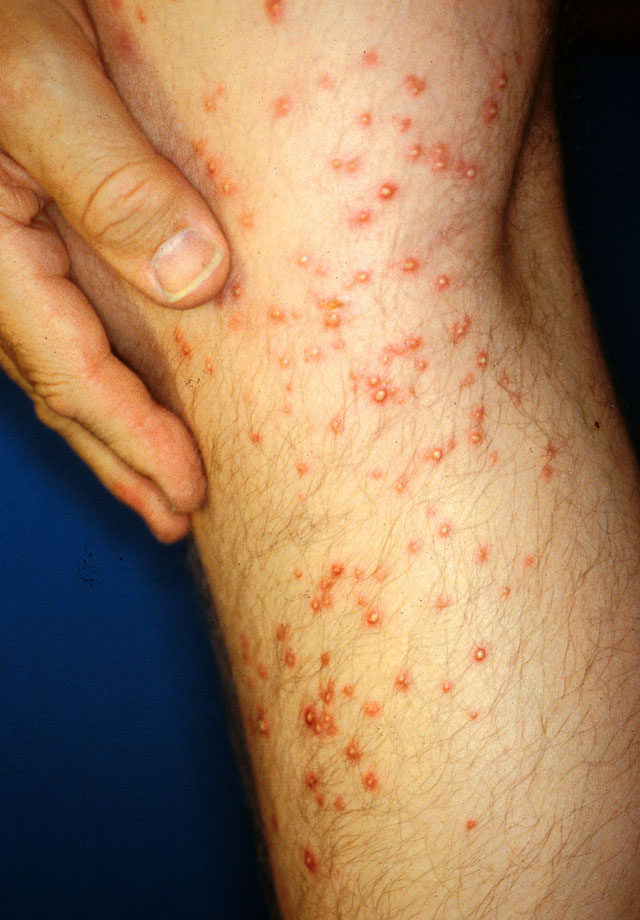
Sterile pustules 3 days after fire ant stings.
SpecialtyEmergency medicine

Ant venom is any of, or a mixture of, irritants and toxins inflicted by ants. Most ants spray or inject a venom, the main constituent of which is formic acid only in the case of subfamily Formicinae.

Ant stings

[edit]

Of all extant ant species, about 71% are considered to be stinging species. Notable examples include a few species of medical importance, such as Solenopsis (fire ants), Pachycondyla, Myrmecia (bulldog ants), and Paraponera (bullet ants). In the case of fire ants, the venom consists mainly of alkaloid (>95%) and protein (<1%) components.[1] Stinging ants cause a cutaneous condition that is different from that caused by biting venomous ants. Particularly painful are stings from fire ants, although the bullet ant's sting is considered by some to be the most painful insect sting.[2]: 450  Some subfamilies have evolutionarily lost the ability to sting.[3]

First aid for fire ant bites includes external treatments and oral medicines.[citation needed]

Severe allergic reactions can be caused by ant stings in particular and venomous stings in general, including severe chest pain, nausea, severe sweating, loss of breath, serious swelling, fever, dizziness, and slurred speech;[5] they can be fatal if not treated.

See also

[edit]

References

[edit]
[edit]
Revisions and contributorsEdit on WikipediaRead on Wikipedia
from Grokipedia
Ant venom is a complex cocktail of bioactive compounds secreted by the venom glands of in the family Formicidae, primarily functioning as a defensive and predatory mechanism across more than 16,000 described . These venoms typically comprise a diverse mixture of low-molecular-weight components such as alkaloids, , hydrocarbons, and amines, alongside higher-molecular-weight elements including peptides, proteins, and enzymes, with compositions varying significantly by subfamily—for instance, dominates in Formicinae, piperidine alkaloids in Myrmicinae like fire ants (Solenopsis spp.), and neurotoxic peptides in and . The venom is produced in specialized glands, such as the poison gland for peptides and the convoluted gland for alkaloids in some , and delivered via a modified sting. In terms of function, ant venoms enable prey immobilization through paralysis-inducing neurotoxins, deter predators and competitors via painful or irritant effects, and provide antimicrobial protection for the colony, with some also serving as alarm pheromones or herbicides. Recent research as of 2025 has further elucidated venom diversity in subfamilies like Formicinae. For example, in predatory ants like the bullet ant (Paraponera clavata), the peptide poneratoxin targets voltage-gated sodium channels to cause intense, long-lasting pain and paralysis in both insects and vertebrates. Fire ant venoms, rich in solenopsins, exhibit hemolytic, insecticidal, and antibiotic properties that enhance colony defense and foraging efficiency. This functional diversity reflects evolutionary adaptations, with peptide toxins like those in bulldog ants (Myrmecia spp.)—derived from the hyperdiverse aculeatoxin gene family—demonstrating dual roles in predation and vertebrate-specific pain mediation through sodium channel modulation. Medically, ant venoms pose significant risks due to their allergenicity, with stings from species like fire ants and bull ants capable of inducing severe via IgE-mediated responses to venom proteins such as hyaluronidases and phospholipases. Conversely, their bioactive components hold therapeutic promise: solenopsins exhibit anti-angiogenic effects against cancer cells, offer potential as novel antibiotics, and sodium channel-modulating toxins provide insights for research. Ongoing studies highlight the pharmacological potential of these venoms, including and anticancer properties, underscoring their value beyond in and medicine.

Composition

Chemical Components

Ant venom comprises a diverse array of chemical components, primarily alkaloids, peptides, low-molecular-weight acids, and enzymes, which contribute to its toxicological profile. Alkaloids, particularly and , are prominent in many species, serving as key irritants. In fire ants of the genus Solenopsis, such as S. invicta, the venom is dominated by 2-methyl-6-alkylpiperidines like solenopsins, which constitute up to 90-95% of the dry venom weight and exhibit hemolytic, cytotoxic, and properties by disrupting cell membranes and inducing . These piperidines are synthesized via a polyketide-like pathway involving chain elongation from units, followed by , cyclization to form the piperidine ring, and N-alkylation to introduce side chains, though the full enzymatic details remain partially unresolved. Pyrrolidine alkaloids, found in genera like Monomorium and Megalomyrmex, feature 2,5-dialkyl structures and similarly act as irritants by penetrating lipid bilayers, causing and pain through modulation. Peptides and proteins in ant venom often function as neurotoxins or allergens. A representative example is from the bullet ant , a 25-amino-acid linear with the sequence Phe-Leu-Pro-Leu-Leu-Ile-Leu-Gly-Ser-Leu-Leu-Met-Thr-Pro-Pro-Val-Ile-Gln-Ala-Ile-His-Asp-Ala-Gln-Arg, featuring two α-helices stabilized by hydrophobic interactions. This modulates voltage-gated sodium channels, prolonging action potentials and inducing prolonged pain without significant tissue damage. Low-molecular-weight compounds include , prevalent in the of Formicinae ants like and Camponotus species, where it comprises the majority of the secretion and acts as a necrotoxin by denaturing proteins and disrupting cellular integrity at concentrations up to 50-80%. This simple (HCOOH) is produced via metabolic pathways from serine or , enhancing potency through acidification and tissue penetration. Enzymes such as phospholipases and hyaluronidases facilitate venom spread and toxicity. (PLA2), identified in venoms of Pogonomyr mex harvester ants and Myrmecia bulldog ants, catalyzes the of phospholipids at the sn-2 position in a calcium-dependent manner, releasing and lysophospholipids that promote and via eicosanoid production. Hyaluronidases, present across various ant venoms including those of Solenopsis and Myrmecia, employ an acid-base catalytic mechanism involving Glu and Tyr residues to cleave β-1,4-glycosidic bonds in , thereby degrading and enhancing diffusion of other venom components. A specific exemplar is solenopsin A from Solenopsis fire ants, a trans-2-methyl-6-n-undecylpiperidine with the molecular formula , responsible for the characteristic pustular through membrane disruption and release.

Species Variations

Ant venoms exhibit significant variations across subfamilies, reflecting adaptations to predation, defense, and ecological niches. In the subfamily Formicinae, which includes genera such as and , venom is dominated by , comprising up to 70% of the volume by volume, with notably low content. This composition supports functions like defense and allomonal spraying rather than injection, as Formicinae species lack a functional sting apparatus. The Myrmicinae subfamily contrasts sharply, featuring alkaloid-rich venoms tailored for potent stinging. Fire ants (Solenopsis invicta) produce solenopsins, a class of alkaloids that form over 95% of their , accompanied by trace proteins; these contribute to hemolytic and insecticidal effects. In harvester ants (Pogonomyrmex spp.), - and enzyme-rich venoms predominate, featuring neurotoxic peptides and hydrolytic enzymes that enable efficient prey subdual in arid habitats. Ponerinae venoms highlight peptide diversity, particularly in predatory species. The bullet ant () contains ponericins and neurotoxic peptides like , which induce intense pain, ranking 4.0+ on the —the highest recorded for hymenopterans. This peptide arsenal supports solitary hunting in tropical forests, with cytolytic and properties enhancing prey immobilization. Quantitative differences in venom yield underscore these variations, typically ranging from 0.1 to 10 µL per sting, with smaller species like S. invicta delivering 0.04–0.11 µL and larger ants yielding 0.07–0.91 µL. Yields correlate with body size, as larger like P. clavata expel greater volumes suited to their habitat demands, while concentrations adjust for environmental factors such as prey availability. Evolutionary trends reveal a progression from peptide-rich venoms in primitive subfamilies like to non-proteinaceous, acid-based formulations in derived groups such as , alongside alkaloid dominance in advanced Myrmicinae, adapting to shifts in sociality and foraging strategies.

Production and Delivery

Glandular Production

The venom glands of ants are specialized exocrine structures primarily located in the gaster, the posterior abdominal segments, where they facilitate the synthesis and storage of venom. These glands typically comprise a long, slender, and highly convoluted tubular filament serving as the secretory portion, lined with class 3 glandular cells, and a thin-walled, muscular reservoir for accumulation. The reservoir connects directly to the sting apparatus via a duct, enabling controlled release, while the filament's epithelial lining features basal infoldings, abundant mitochondria, and apical microvilli that support active secretion. In contrast, the Dufour's gland, a separate tubiform sac adjacent to the venom apparatus in many species, primarily produces hydrocarbons for communication rather than toxic venom, though in certain primitive ants it may contribute defensive secretions. Biosynthesis of ant venom occurs within the epithelial cells of the glandular filament, where secretory granules accumulate precursors such as peptides or alkaloids, which undergo enzymatic to form mature bioactive compounds. These class 3 cells, characterized by intracellular secretory canals, enable the endocellular synthesis and transport of venom materials directly into the lumen for conveyance to the . The process relies on the cells' rich and Golgi apparatus for and modification, ensuring efficient production tailored to the ant's defensive needs. Regulation of venom production may involve hormonal cues and environmental factors that trigger replenishment after depletion. Colony stressors or predation encounters can stimulate glandular activity to restore reserves. Storage in the is limited to small volumes, typically on the order of 10–100 nL (0.01–0.1 µL) in worker depending on species and body size, with a thick cuticular intima lining preventing autotoxicity and enzymatic degradation of the . Developmentally, ant venom glands originate as rudimentary structures in larvae, where epithelial cells begin differentiation, and undergo significant maturation during the pupal stage through histolysis and reorganization of imaginal tissues. By eclosion to adulthood, the glands achieve full functionality, with secretory capacity increasing in parallel with overall body growth; cultured cells from larval and pupal stages demonstrate viability and venom-producing potential, underscoring the metamorphic progression.

Stinging Mechanism

The stinging apparatus in is located at the tip of the gaster, within the , and consists of paired lancets and a central stylet that together form the functional sting. The lancets are serrated along their edges to facilitate tissue penetration, while the stylet serves as the primary conduit for delivery through its internal . Surrounding musculature, including longitudinal and oblique muscles attached to the venom reservoir, enables precise control over sting extension and retraction. The injection sequence begins with the anchoring itself to the target using its mandibles, followed by rapid flexion of the gaster to drive the sting forward. In larger species, the lancets first penetrate the skin or to a depth of up to 2-3 mm, creating a pathway, after which the stylet advances to deliver directly into the . expulsion occurs through rhythmic contractions of the reservoir's musculature, aided by specialized valvilli—flexible structures on the lancets that alternate between sealing the chamber for buildup and opening for refill, ensuring efficient metering and flow. Recent studies (as of 2025) on valvilli reveal sharply delimited zones that may correspond to distinct mechanical properties during delivery. Many stinging species, such as fire ants (Solenopsis invicta), possess smooth lancets without barbs, allowing repeated stinging without apparatus loss; a single worker can deliver multiple jabs, each expelling approximately 0.66 nL of , until the reservoir is depleted. This capability enables sustained during encounters with larger prey or threats. In defensive contexts, adopt postures involving gaster elevation and flexion toward the target, often integrating stinging with the release of alarm pheromones from the Dufour's gland to recruit nestmates for coordinated attacks. In contrast, species of the subfamily Formicinae lack a functional stinging apparatus and instead spray venom as a fine from a modified acidopore at the gaster's tip, achieving similar defensive effects without penetration.

Biological Effects

Effects on Prey

Ant venom exerts profound neurotoxic effects on prey, primarily through peptides that disrupt channels, leading to rapid and immobilization. In predatory such as Paraponera clavata, the peptide targets voltage-gated sodium channels in insect neurons, prolonging their open state and causing repetitive firing followed by blockade of synaptic transmission in the . This mechanism induces , preventing escape and facilitating capture of and small . Similarly, ectatomin from Ectatomma tuberculatum blocks calcium channels, contributing to neuromuscular disruption and prey subdual. Cytotoxic components, particularly alkaloids, further enhance prey incapacitation by directly damaging cellular structures. In fire ants (Solenopsis spp.), solenopsins act as amphipathic molecules that insert into cell , forming pores that lead to and subsequent tissue . This process disrupts and internal tissues in prey, promoting liquefaction and aiding external by the ants. Such actions are especially effective against soft-bodied arthropods, where membrane disruption causes rapid cellular breakdown and prevents recovery. Enzymatic elements in ant venom amplify these effects by facilitating toxin dissemination and amplifying damage. , present in venoms of species like , hydrolyzes in extracellular matrices, allowing deeper penetration and spread of neurotoxins and cytotoxins into prey tissues. Complementing this, phospholipases, such as in various ant venoms, catalyze the of phospholipids in cell membranes, inducing in insect and contributing to systemic toxicity. These enzymes collectively accelerate prey debilitation, enabling efficient predation on larger or more resilient targets. The overall lethality of ant venom against prey is evidenced by low LD50 values, typically ranging from 0.1 to 10 µg/g body weight, which limit effective predation to small . For instance, the of Solenopsis invicta has an LD50 of approximately 0.1 mg/kg (equivalent to 0.1 µg/g) in , while venoms from Amazonian predatory ants like Neoponera spp. (formerly classified under Pachycondyla) exhibit LD50 values of 245.9–677.6 µg/g in blowflies (as of 2024). These metrics underscore venom potency tailored to prey size, with larger vertebrates generally beyond the scope of single stings due to insufficient toxin volume. Synergistic interactions between alkaloids and peptides optimize venom efficacy in predatory contexts, particularly in army ants (Eciton spp.), where combined actions ensure swift subdual. Cytotoxic alkaloids initiate membrane damage and local , while neurotoxic peptides exploit this breach to deliver more rapidly, resulting in coordinated immobilization and . This interplay enhances predatory success against mobile swarms, minimizing energy expenditure in group .

Effects on Humans

Ant venom envenomation in humans primarily elicits localized and inflammatory responses, varying by but commonly involving activation and immune-mediated effects. The immediate sensation is often a sharp, burning at the sting site, resulting from venom alkaloids such as solenopsins in fire ants (Solenopsis invicta), which depolarize sensory nerves and induce a capsaicin-like burning through of peripheral . This arises from direct interaction with channels and subsequent release. The inflammatory cascade triggered by ant venom involves rapid degranulation and release, leading to , increased , and localized . In stings, solenopsins further promote induction, including and , exacerbating and resulting in characteristic sterile pustules that form within 24 hours due to neutrophilic infiltration and tissue damage. These pustules, filled with and in sensitized individuals, represent a delayed response and are a hallmark of . The intensity of pain from ant stings is quantified by the , a subjective scale from 0 to 4 developed through empirical testing of over 80 hymenopteran species. stings rank at 1.2, described as "sharp, sudden, mildly alarming, like walking over shifting coals"; in contrast, the bullet ant () scores 4.0+, evoking "pure, intense, brilliant pain like walking over flaming charcoal with a 3-inch nail embedded in your heel" that persists for 12-24 hours. Other notable rankings include the wasp at 4.0 for throbbing pain and the red (Pogonomyrmex spp.) at 3.0 for intense, long-lasting agony. The acute phase of sting effects typically lasts minutes to hours, characterized by immediate and wheal formation that resolves within 1-2 hours, while secondary effects such as , itching, and pustule development extend from hours to several days. Pustules in stings peak at 24 hours and may persist for 3-10 days, with residual itching and discoloration lasting up to a week. Severity of responses is influenced by the number of stings, as multiple injections increase the total dose and amplify both and ; individual sensitivity, including prior or atopic predisposition, heightens the risk of exaggerated reactions; and the effective dose, which correlates with size and injection efficiency. For instance, mass attacks by fire ants can deliver cumulative doses leading to widespread and systemic symptoms in sensitive individuals.

Medical Importance

Common Reactions

The reactions to ant stings vary by species, but those from fire ants (Solenopsis spp.) are among the most commonly reported and medically significant in affected regions. The most common reactions to stings in humans are localized cutaneous responses, primarily involving (redness), pruritus (itching), and wheal formation at the sting site, which typically appear within minutes of the . These initial symptoms often include an immediate burning sensation that subsides quickly, followed by the development of papules within 2 hours and vesicles within 4 hours; the wheal and reaction generally resolves within 1-2 days, though sterile pustules may form by 24 hours and persist for up to a week. Stings from other species, such as bull ants (Myrmecia spp.) or jack jumper ants (Myrmecia pilosula), typically cause intense pain, swelling, and edema without pustule formation, and can lead to severe allergic reactions including . The bullet ant () sting is notorious for causing extreme pain lasting up to 24 hours, rated highest on the , though systemic effects are less common. Harvester ants (Pogonomyrmex spp.) produce painful stings with neurotoxic effects, sometimes resulting in prolonged numbness or allergic responses. Secondary bacterial infections represent a moderate complication from stings, arising from the rupture of these pustules, which allows entry of such as Staphylococcus species into the wound. Scratching or disruption of the pustule increases this risk, potentially leading to localized or formation, necessitating topical antibiotics or wound care to prevent escalation. Epidemiologically, fire ant stings affect a significant portion of populations in infested regions, with annual sting rates ranging from 8.5% to 51% in heavily impacted areas of the , and systemic allergic reactions occurring in approximately 0.5-2% of stings, while large local reactions occur in about 20% of cases. For instance, in urban habitats, 25-60% of residents may experience stings yearly, contributing to substantial medical consultations. Children and the elderly are particularly vulnerable to heightened and more pronounced local reactions due to their reduced mobility, which increases exposure to multiple stings, and physiological factors that amplify swelling responses. In these groups, may extend beyond 10 cm from the site, lasting 24-72 hours and requiring closer monitoring to avoid complications like impaired function in affected limbs. This vulnerability applies across stinging ant species but is well-documented for fire ants. Diagnosis of ant stings relies on clinical history and examination, with key criteria including the presence of multiple lesions in a clustered or circular pattern from a single attack, distinguishing them from solitary bites that typically produce a single puncture site with central . For fire ants, the characteristic pustules aid identification. Confirmation may involve skin testing for IgE-mediated sensitivity if reactions recur, but the multiplicity of sites is a hallmark feature.

Treatment and Management

For most ant stings, initial treatment focuses on measures to alleviate local symptoms such as pain, swelling, and itching. Victims should promptly remove any attached s by brushing or scraping them off the skin to prevent further , then wash the affected area with and to reduce risk. Applying packs or compresses for 10-15 minutes at a time helps constrict blood vessels and numb the area, while elevating the limb promotes drainage and reduces swelling. Over-the-counter antihistamines like diphenhydramine or loratadine provide relief from itching and mild allergic responses, and topical corticosteroids such as cream can further soothe . Oral analgesics like ibuprofen or acetaminophen are recommended for . These measures apply generally, though severe pain from like bullet ants may require stronger analgesics. In cases of , which occurs in sensitized individuals and manifests as systemic symptoms including , difficulty breathing, or , immediate administration of epinephrine via auto-injector is the cornerstone of emergency care, regardless of ant species. This should be followed by supplemental treatments such as intramuscular or intravenous corticosteroids (e.g., ) to mitigate inflammation and antihistamines to block effects, with patients transported to a medical facility for observation. For those with a history of severe reactions to s, venom-specific immunotherapy using imported fire ant whole body extract has demonstrated high efficacy, with protection rates exceeding 95% upon sting challenge, comparable to outcomes in hymenopteran immunotherapy. This desensitization therapy is typically administered over 3-5 years for sustained protection in high-risk patients. Similar immunotherapy is available for jack jumper ants in . Rare severe envenomations from multiple stings, particularly by fire ants, can lead to complications like , characterized by muscle breakdown and potential acute renal failure. management involves aggressive intravenous fluid to maintain output and prevent kidney injury, along with cardiac and renal monitoring; in extreme cases, may be required for clearance and correction. Supportive care, including analgesia and wound management, is essential to address secondary infections or tissue damage. Prevention strategies emphasize avoiding contact with ant nests in endemic areas. Wearing protective clothing such as long pants tucked into socks, closed-toe shoes, and gloves during outdoor activities in ant-prone regions significantly reduces sting risk, especially for children and agricultural workers. Professional nest removal using targeted insecticides or baits is advised for persistent infestations near human habitats, with follow-up inspections to ensure colony elimination. Individuals with known allergies should carry epinephrine auto-injectors and avoid areas with visible mounds. Similar precautions apply to other stinging in their habitats.

Ecological Role

Predation and Defense

Ant venom plays a crucial role in predation by enabling individual foragers to immobilize prey efficiently, particularly in species like trap-jaw ants of the Odontomachus. In Odontomachus opaciventris, hunters primarily rely on rapid strikes to stun small arthropods such as and fruit flies, reserving venom stings for fast-moving or bulky prey to achieve immobilization without excessive energy expenditure. This strategy yields high success rates, with prey retrieval efficiency ranging from 76.7% to 100% across various small up to twice the ant's body size. Similarly, in other trap-jaw ants, the grasp and initially subdue prey, followed by a targeted venomous sting to ensure capture. In colony defense, ant venom facilitates alarm recruitment through pheromonal components that trigger coordinated mass attacks against intruders. For instance, , a major constituent of venom in formicine , serves as both a toxic agent and an , prompting nestmates to mobilize and sting en masse when released during threats. In fire (Solenopsis invicta), venom alkaloids like solenopsins cause and tissue damage, while from the mandibular amplify defensive responses, leading to swarming where hundreds of workers converge on predators or competitors. This pheromone-mediated escalation enhances colony protection by overwhelming assailants through sheer numbers and cumulative . Efficiency in subduing prey often involves repeated envenomations to overcome resistance in larger or more active targets, with success depending on potency and delivery volume. workers, for example, deliver multiple stings—averaging 0.66–1.01 nL of per injection—shifting sites after initial attacks to maximize accumulation, which paralyzes insects like crickets within minutes and contributes to an LD50 of 0.489 μg against other ants. In the ponerine ant Harpegnathos venator, stinging duration extends from 13 to 20 seconds for larger, active , prolonging and improving transport success compared to brief stings on immobile prey. These metrics underscore how iterative application scales with prey size, ensuring immobilization even against vigorous escape attempts. Adaptive strategies in venom deployment vary between solitary hunters and swarm foragers, balancing conservation with collective efficacy. Solitary predatory ants like H. venator modulate investment based on prey activity, applying longer stings only to mobile targets to avoid waste while maintaining high rates. In contrast, swarm-based species such as fire ants employ a more profligate approach, where individual doses are modest but amplified through group envenomations, allowing subdual of outsized threats without relying on single-ant potency. This divergence reflects ecological pressures: solitary hunters prioritize resource efficiency to sustain individual foraging, whereas social swarmers leverage colony-scale deployment for defense and predation dominance. A notable involves raids on vertebrates, where mass stinging leads to severe outcomes for small or vulnerable animals. S. invicta colonies target newborns, hatchlings, or weakened vertebrates such as and birds, using coordinated injections to induce systemic , , and , often within hours of sustained attack. Survival rates for affected vertebrates are low, with causing anaphylactic shock or organ failure in cases involving dozens of stings, highlighting the 's role in enabling to exploit larger prey resources.

Interspecies Interactions

Ant venom plays a significant role in interspecies chemical communication, particularly through components that function as and pheromones. In of the Myrmicinae, such as Myrmica rubra, the venom gland produces pheromones like 3-ethyl-2,5-dimethylpyrazine, which workers deposit during to mark paths and guide nestmates to food sources. These compounds facilitate efficient group navigation and resource exploitation within ant communities. Additionally, venom often contains or synergizes with pheromones that signal threats to nearby individuals from other species; for instance, in Myrmicinae ants, ketones such as 4-methyl-3-heptanone, released via the sting apparatus, elicit defensive responses and alert colonies to intruders like competing ants or predators. The properties of ant venom contribute to interspecies interactions by inhibiting fungal that threaten communal resources. In leaf-cutter of the genus Atta, symbiotic bacteria like produce antifungal compounds that inhibit Escovopsis, a specialized that attacks the ' cultivated gardens, thereby protecting this mutualistic system from invasive microbes. Workers groom and apply these compounds to suppress fungal overgrowth, maintaining the stability of the garden ecosystem and preventing disruptions from opportunistic that could affect both ant and fungal partners. In ant-ant warfare, venom serves as a key weapon during aggressive encounters, such as slave-making raids. Formica sanguinea, a dulotic species, employs its formic acid-based venom, sprayed from the sting, to overpower and kill workers of host colonies like during invasions, facilitating the capture of brood for enslavement. This chemical assault subdues defenders, allowing raiders to extract pupae without excessive physical combat, and underscores venom's role in intercolony dominance and . Interactions with vertebrates often involve venom's repellent effects, particularly through sprayed acids that deter herbivores. In formicine , formic acid from the venom gland is ejected to ward off browsing mammals and birds, creating chemical barriers around foraging trails or nests that reduce herbivory pressure on associated plants. For example, workers of species like spray acid onto foliage, signaling danger and discouraging vertebrate grazers, which indirectly benefits plant partners in mutualistic relationships. Venom also contributes to symbiotic contexts, such as ant-plant mutualisms, through defensive roles against herbivores and pathogens. In systems involving Pseudomyrmex ants and Acacia plants, patrolling workers use venom stings to protect the plants from herbivores, supporting the mutualism. This activity helps maintain the stability of the mutualism by deterring invaders.

Research and Applications

Pharmacological Studies

Pharmacological studies on ant venom have primarily focused on laboratory-based investigations to characterize its bioactive components and potential therapeutic properties. Extraction methods typically involve non-destructive techniques such as electrical stimulation to milk venom from live ants, which allows repeated collection without killing the insects, or destructive gland dissection for detailed proteomic analysis. For instance, electrical stimulation of the bullet ant Paraponera clavata yields venom containing major peptides comparable to dissected samples, preserving the full peptidome. Yields vary by species but generally range from 10–300 μg per ant, equating to approximately 1–30 mg from 100 ants, with fire ants (Solenopsis invicta) producing around 10 μg of alkaloids and 50–100 ng of protein per individual via solvent-based methods like hexane-water immersion. These approaches enable sufficient material for downstream analyses while minimizing ecological impact. Bioactivity screening of ant venom employs in vitro assays to evaluate antimicrobial and anticancer effects. Antimicrobial activity is assessed using minimum inhibitory concentration (MIC) tests against bacterial strains, where fire ant venom alkaloids like solenopsins demonstrate MIC values of 4–64 μg/mL against pathogens such as Staphylococcus aureus and Streptococcus pneumoniae. For anticancer potential, solenopsin from S. invicta inhibits phosphatidylinositol-3-kinase (PI3K)/Akt signaling, which is implicated in cancers including melanoma, with an IC50 of 5–10 μM for Akt inhibition. These screenings highlight venom's broad-spectrum bioactivity, guiding isolation of lead compounds. Key discoveries in the 2000s advanced understanding of ant venom peptides as modulators with potential. Studies identified ponericins from Neoponera villosa as and insecticidal peptides that also block s, with Orivel et al. (2001) reporting their paralytic effects on lepidopteran larvae at nanomolar concentrations. Pilosulin 3 from Myrmecia pilosula, isolated in 2004, exhibited and potential properties, suggesting modulation of pathways. By the mid-2000s, research on quadriceps venom revealed peptides with antinociceptive effects in rodent models, reducing acetic acid-induced writhing via inhibition. These findings positioned ant venom peptides as prototypes for novel analgesics targeting voltage-gated s. Model organisms facilitate toxicity and pain research on ant venoms. Drosophila melanogaster serves as an invertebrate model for toxicity testing, where peptides like U9 from Tetramorium bicarinatum induce lethality and membrane disruption at 1–10 μM, revealing mechanisms such as mitochondrial dysfunction. Rodent models, including mice and rats, are used for pain studies; for example, P. clavata venom (poneritoxin) elicits hyperalgesia in paw injection assays, with doses of 1–10 μg/kg quantifying nociceptive responses via von Frey filaments. These models provide scalable platforms for dose-response curves and behavioral endpoints. Challenges in ant venom research include low yields and ethical concerns over sourcing. Extracting sufficient quantities remains difficult, as venoms constitute only 0.01–0.1% of body mass, necessitating large collections (hundreds to thousands of individuals) for robust assays. Ethical issues arise from harvesting wild populations, prompting shifts toward or synthetic peptide production to avoid of like Myrmecia spp. Purification complexities further hinder progress, with only a fraction of the estimated 13,000+ species' venoms studied.

Therapeutic Potential

Ant venom derivatives, particularly and peptides, have emerged as promising candidates for medical applications due to their bioactive properties. Research has focused on their potential in treating inflammatory conditions, microbial infections, and cancers, with several compounds advancing through preclinical stages. , a piperidine from the venom of the Solenopsis invicta, and its analogs exhibit anti-inflammatory effects suitable for dermatological therapies. In mouse models of , topical application of solenopsin analogs reduced skin thickness by 30% and inflammation by 50% compared to untreated controls, attributed to inhibition of sphingomyelinase activity and production. Similar efficacy was observed in models, where solenopsin suppressed pro-inflammatory release, highlighting its potential for chronic skin disorders. Antimicrobial applications leverage the broad-spectrum activity of venom components against antibiotic-resistant pathogens. Alkaloids from S. invicta venom, including solenopsin A, inhibit biofilm formation in bacteria such as Staphylococcus aureus and demonstrate antifungal effects against Candida auris, offering a strategy to combat resistance in wound infections. Formic acid, the primary constituent in venoms of Formicinae ants like Formica rufa, enhances antimicrobial efficacy when combined with resins, as seen in nest disinfection behaviors; this suggests analogs could be developed for wound dressings to prevent bacterial colonization without promoting resistance. In cancer research, cytotoxic peptides from ant venoms show targeted therapeutic promise. Pilosulin-3, a peptide from the venom of the jack jumper ant Myrmecia pilosula, induces concentration-dependent cytotoxicity in breast cancer cell lines (MCF-7 and MDA-MB-231) with an IC50 of 0.5 µM, alongside radiosensitizing effects that enhance cell cycle arrest at G2/M phase when combined with radiation. Additionally, S. invicta venom alkaloids suppress tumor growth in preclinical models by disrupting cell proliferation pathways, positioning them as candidates for adjuvant therapies. As of April 2025, ALBEY, a product derived from (Myrmecia pilosula) , became available for treating to ant stings. Despite these advances, ant therapeutics remain largely preclinical as of 2025, facing regulatory challenges related to profiles, , and scalable synthesis of complex peptides. High-impact studies emphasize the need for optimized delivery systems to mitigate adverse effects while preserving bioactivity.

References

Add your contribution
Related Hubs
User Avatar
No comments yet.