Hubbry Logo
Zinc oxideZinc oxideMain
Open search
Zinc oxide
Community hub
Zinc oxide
logo
8 pages, 0 posts
0 subscribers
Be the first to start a discussion here.
Zinc oxide
Zinc oxide
from Wikipedia
Zinc oxide
Names
Other names
Zinc white, calamine, philosopher's wool, Chinese white, flowers of zinc, zinca
Identifiers
3D model (JSmol)
ChEBI
ChEMBL
ChemSpider
DrugBank
ECHA InfoCard 100.013.839 Edit this at Wikidata
EC Number
  • 215-222-5
13738
KEGG
RTECS number
  • ZH4810000
UNII
UN number 3077
  • InChI=1S/O.Zn checkY
    Key: XLOMVQKBTHCTTD-UHFFFAOYSA-N checkY
  • [Zn]=O
Properties
ZnO
Molar mass 81.406 g/mol[1]
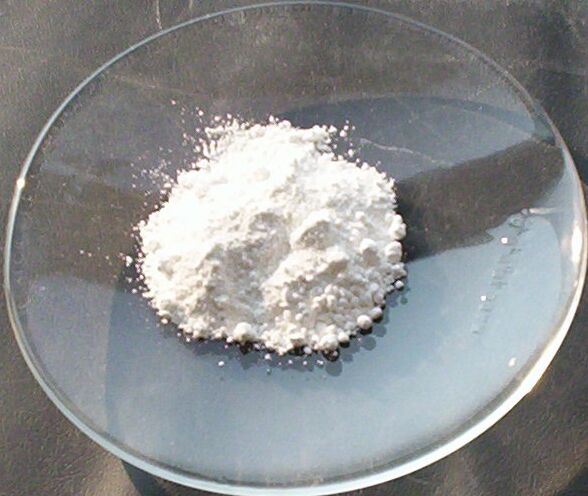
Appearance White solid[1]
Odor Odorless
Density 5.6 g/cm3[1]
Melting point 1,974 °C (3,585 °F; 2,247 K) (decomposes)[1][7]
Boiling point 2,360 °C (4,280 °F; 2,630 K) (decomposes)
0.0004% (17.8°C)[2]
Band gap 3.2 eV (direct)[3]
Electron mobility 180 cm2/(V·s)[3]
−27.2·10−6 cm3/mol[4]
Thermal conductivity 0.6 W/(cm·K)[5]
n1=2.013, n2=2.029[6]
Structure[8]
Wurtzite
C6v4-P63mc
a = 3.2495 Å, c = 5.2069 Å
2
Tetrahedral
Thermochemistry[9]
40.3 J·K−1mol−1
43.65±0.40 J·K−1mol−1
−350.46±0.27 kJ mol−1
−320.5 kJ mol−1
Enthalpy of fusion fHfus)
70 kJ/mol
Pharmacology
QA07XA91 (WHO)
Hazards
GHS labelling:
GHS09: Environmental hazard
Warning
H400, H401
P273, P391, P501
NFPA 704 (fire diamond)
NFPA 704 four-colored diamondHealth 2: Intense or continued but not chronic exposure could cause temporary incapacitation or possible residual injury. E.g. chloroformFlammability 0: Will not burn. E.g. waterInstability 0: Normally stable, even under fire exposure conditions, and is not reactive with water. E.g. liquid nitrogenSpecial hazards (white): no code
2
0
0
Flash point 1,436 °C (2,617 °F; 1,709 K)
Lethal dose or concentration (LD, LC):
240 mg/kg (intraperitoneal, rat)[10]
7950 mg/kg (rat, oral)[11]
2500 mg/m3 (mouse)[11]
2500 mg/m3 (guinea pig, 3–4 h)[11]
NIOSH (US health exposure limits):
PEL (Permissible)
TWA 5 mg/m3 (fume) TWA 15 mg/m3 (total dust) TWA 5 mg/m3 (resp dust)[2]
REL (Recommended)
Dust: TWA 5 mg/m3 C 15 mg/m3

Fume: TWA 5 mg/m3 ST 10 mg/m3[2]

IDLH (Immediate danger)
500 mg/m3[2]
Safety data sheet (SDS) ICSC 0208
Related compounds
Other anions
Zinc sulfide
Zinc selenide
Zinc telluride
Other cations
Cadmium oxide
Mercury(II) oxide
Except where otherwise noted, data are given for materials in their standard state (at 25 °C [77 °F], 100 kPa).
☒N verify (what is checkY☒N ?)

Zinc oxide is an inorganic compound with the formula ZnO. It is a white powder which is insoluble in water. ZnO is used as an additive in numerous materials and products including cosmetics, food supplements, rubbers, plastics, ceramics, glass, cement, lubricants,[12] paints, sunscreens, ointments, adhesives, sealants, pigments, foods, batteries, ferrites, fire retardants, semi conductors,[13] and first-aid tapes. Although it occurs naturally as the mineral zincite, most zinc oxide is produced synthetically.[14]

History

[edit]

Early humans probably used zinc compounds in processed[14] and unprocessed forms, as paint or medicinal ointment; however, their composition is uncertain. The use of pushpanjan, probably zinc oxide, as a salve for eyes and open wounds is mentioned in the Indian medical text the Charaka Samhita, thought to date from 500 BC or before.[15] Zinc oxide ointment is also mentioned by the Greek physician Dioscorides (1st century AD).[16] Galen suggested treating ulcerating cancers with zinc oxide,[17] as did Avicenna in his The Canon of Medicine. It is used as an ingredient in products such as baby powder and creams against diaper rashes, calamine cream, anti-dandruff shampoos, and antiseptic ointments.[18]

The Romans produced considerable quantities of brass (an alloy of zinc and copper) as early as 200 BC by a cementation process where copper was reacted with zinc oxide.[19] The zinc oxide is thought to have been produced by heating zinc ore in a shaft furnace. This liberated metallic zinc as a vapor, which then ascended the flue and condensed as the oxide. This process was described by Dioscorides in the 1st century AD.[20] Zinc oxide has also been recovered from zinc mines at Zawar in India, dating from the second half of the first millennium BC.[16]

From the 12th to the 16th century, zinc and zinc oxide were recognized and produced in India using a primitive form of the direct synthesis process. From India, zinc manufacturing moved to China in the 17th century. In 1743, the first European zinc smelter was established in Bristol, United Kingdom.[21] Around 1782, Louis-Bernard Guyton de Morveau proposed replacing lead white pigment with zinc oxide.[22]

The main usage of zinc oxide (zinc white) was in paints and as an additive to ointments. Zinc white was accepted as a pigment in oil paintings by 1834 but it did not mix well with oil. This problem was solved by optimizing the synthesis of ZnO. In 1845, Edme-Jean Leclaire in Paris was producing the oil paint on a large scale; by 1850, zinc white was being manufactured throughout Europe. The success of zinc white paint was due to its advantages over the traditional white lead: zinc white is essentially permanent in sunlight, it is not blackened by sulfur-bearing air, it is non-toxic and more economical. Because zinc white is so "clean" it is valuable for making tints with other colors, but it makes a rather brittle dry film when unmixed with other colors. For example, during the late 1890s and early 1900s, some artists used zinc white as a ground for their oil paintings. These paintings developed cracks over time.[23]

In recent times, most zinc oxide has been used in the rubber industry to resist corrosion. In the 1970s, the second largest application of ZnO was photocopying. High-quality ZnO produced by the "French process" was added to photocopying paper as a filler. This application was soon displaced by titanium.[24]

Chemical properties

[edit]

Pure ZnO is a white powder. However, in nature, it occurs as the rare mineral zincite, which usually contains manganese and other impurities that confer a yellow to red color.[25]

Crystalline zinc oxide is thermochromic, changing from white to yellow when heated in air and reverting to white on cooling.[26] This color change is caused by a small loss of oxygen to the environment at high temperatures to form the non-stoichiometric Zn1+xO, where at 800 °C, x = 0.00007.[26]

Zinc oxide is an amphoteric oxide. It is nearly insoluble in water, but it will dissolve in most acids, such as hydrochloric acid:[27]

ZnO + 2 HCl → ZnCl2 + H2O

Solid zinc oxide will also dissolve in alkalis to give soluble zincates:[27]

ZnO + 2 NaOH + H2O → Na2[Zn(OH)4]

ZnO reacts slowly with fatty acids in oils to produce the corresponding carboxylates, such as oleate or stearate. When mixed with a strong aqueous solution of zinc chloride, ZnO forms cement-like products best described as zinc hydroxy chlorides.[28] This cement was used in dentistry.[29]

Hopeite

ZnO also forms cement-like material when treated with phosphoric acid; related materials are used in dentistry.[29] A major component of zinc phosphate cement produced by this reaction is hopeite, Zn3(PO4)2·4H2O.[30]

ZnO decomposes into zinc vapor and oxygen at around 1975 °C with a standard oxygen pressure. In a carbothermic reaction, heating with carbon converts the oxide into zinc vapor at a much lower temperature (around 950 °C).[27]

ZnO + C → Zn(Vapor) + CO

Physical properties

[edit]
Wurtzite structure
A zincblende unit cell

Structure

[edit]

Zinc oxide crystallizes in two main forms, hexagonal wurtzite[31] and cubic zincblende. The wurtzite structure is most stable at ambient conditions and thus most common. The zincblende form can be stabilized by growing ZnO on substrates with cubic lattice structure. In both cases, the zinc and oxide centers are tetrahedral, the most characteristic geometry for Zn(II). ZnO converts to the rocksalt motif at relatively high pressures about 10 GPa.[13]

Hexagonal[32] and zincblende polymorphs have no inversion symmetry (reflection of a crystal relative to any given point does not transform it into itself).[33] This and other lattice symmetry properties result in piezoelectricity of the hexagonal[32] and zincblende[33] ZnO, and pyroelectricity of hexagonal ZnO.[34]

The hexagonal structure has a point group 6 mm (Hermann–Mauguin notation) or C6v (Schoenflies notation), and the space group is P63mc or C6v4. The lattice constants are a = 3.25 Å and c = 5.2 Å; their ratio c/a ~ 1.60 is close to the ideal value for hexagonal cell c/a = 1.633.[35] As in most group II-VI materials, the bonding in ZnO is largely ionic (Zn2+O2−) with the corresponding radii of 0.074 nm for Zn2+ and 0.140 nm for O2−. This property accounts for the preferential formation of wurtzite rather than zinc blende structure,[36] as well as the strong piezoelectricity of ZnO. Because of the polar Zn−O bonds, zinc and oxygen planes are electrically charged. To maintain electrical neutrality, those planes reconstruct at atomic level in most relative materials, but not in ZnO – its surfaces are atomically flat, stable and exhibit no reconstruction.[37] However, studies using wurtzoid structures explained the origin of surface flatness and the absence of reconstruction at ZnO wurtzite surfaces[38] in addition to the origin of charges on ZnO planes.

Mechanical properties

[edit]

ZnO is a relatively soft material with approximate hardness of 4.5 on the Mohs scale.[12] Its elastic constants are smaller than those of relevant III-V semiconductors, such as GaN. The high heat capacity and heat conductivity, low thermal expansion and high melting temperature of ZnO are beneficial for ceramics.[24] The E2 optical phonon in ZnO exhibits an unusually long lifetime of 133 ps at 10 K.[39]

Among the tetrahedrally bonded semiconductors, it has been stated that ZnO has the highest piezoelectric tensor, or at least one comparable to that of GaN and AlN.[40] This property makes it a technologically important material for many piezoelectrical applications, which require a large electromechanical coupling. Therefore, ZnO in the form of thin film has been one of the most studied and used resonator materials for thin-film bulk acoustic resonators.[41]

Electronic and optical properties

[edit]

Favourable properties of zinc oxide include good transparency, high electron mobility, wide band gap, and strong room-temperature luminescence. Those properties make ZnO valuable for a variety of emerging applications: transparent electrodes in liquid crystal displays,[42] energy-saving or heat-protecting windows,[25] and electronics as thin-film transistors and light-emitting diodes.[43]

ZnO is a semiconductor of the II-VI semiconductor group and it has a relatively wide direct band gap of ~3.3 eV at room temperature. Advantages associated with a wide band gap include higher breakdown voltages, ability to sustain large electric fields, lower electronic noise, and high-temperature and high-power operation. The band gap of ZnO can further be tuned to ~3–4 eV by its alloying with magnesium oxide or cadmium oxide.[13] Due to this large band gap, there have been efforts to create visibly transparent solar cells utilising ZnO as a light absorbing layer. However, these solar cells have so far proven highly inefficient.[44]

Most ZnO has n-type character, even in the absence of intentional doping.[13] Nonstoichiometry is typically the origin of this n-type character, but the subject remains controversial.[45] An alternative explanation has been proposed, based on theoretical calculations, that unintentional substitutional hydrogen impurities are responsible.[46] Controllable n-type doping is easily achieved by substituting Zn with group-III elements such as Al, Ga, In or by substituting oxygen with group-VII elements chlorine or iodine.[47]

Reliable p-type doping of ZnO remains difficult. This problem originates from low solubility of p-type dopants and their compensation by abundant n-type impurities. This problem is observed with GaN and ZnSe. Measurement of p-type in "intrinsically" n-type material is complicated by the inhomogeneity of samples.[48]

Current limitations to p-doping limit electronic and optoelectronic applications of ZnO, which usually require junctions of n-type and p-type material. Known p-type dopants include group-I elements Li, Na, K; group-V elements N, P and As; as well as copper and silver. However, many of these form deep acceptors and do not produce significant p-type conduction at room temperature.[13]

Electron mobility of ZnO strongly varies with temperature and has a maximum of ~2000 cm2/(V·s) at 80 K.[49] Data on hole mobility are scarce with values in the range 5–30 cm2/(V·s).[50]

ZnO discs, acting as a varistor, are the active material in most surge arresters.[51][52]

Zinc oxide is noted for its strongly nonlinear optical properties, especially in bulk. The nonlinearity of ZnO nanoparticles can be fine-tuned according to their size.[53]

Production

[edit]

For industrial use, ZnO is produced at levels of 105 tons per year[25] by three main processes:[24]

Indirect process

[edit]

In the indirect or French process, metallic zinc is melted in a graphite crucible and vaporized at temperatures above 907 °C (typically around 1000 °C). Zinc vapor reacts with the oxygen in the air to give ZnO,[54] accompanied by a drop in its temperature and bright luminescence. Zinc oxide particles are transported into a cooling duct and collected in a bag house. This indirect method was popularized by Edme Jean LeClaire of Paris in 1844 and therefore is commonly known as the French process. Its product normally consists of agglomerated zinc oxide particles with an average size of 0.1 to a few micrometers. By weight, most of the world's zinc oxide is manufactured via French process.[citation needed]

Direct process

[edit]

The direct or American process starts with diverse contaminated zinc composites, such as zinc ores or smelter by-products. The zinc precursors are reduced (carbothermal reduction) by heating with a source of carbon such as anthracite to produce zinc vapor, which is then oxidized as in the indirect process. Because of the lower purity of the source material, the final product is also of lower quality in the direct process as compared to the indirect one.[54]

Wet chemical process

[edit]

A small amount of industrial production involves wet chemical processes, which start with aqueous solutions of zinc salts, from which zinc carbonate or zinc hydroxide is precipitated. The solid precipitate is then calcined at temperatures around 800 °C.[citation needed]

Laboratory synthesis

[edit]
The red and green colors of these synthetic ZnO crystals result from different concentrations of oxygen vacancies.[55]

Numerous specialised methods exist for producing ZnO for scientific studies and niche applications. These methods can be classified by the resulting ZnO form (bulk, thin film, nanowire), temperature ("low", that is close to room temperature or "high", that is T ~ 1000 °C), process type (vapor deposition or growth from solution) and other parameters.[citation needed]

Large single crystals (many cubic centimeters) can be grown by the gas transport (vapor-phase deposition), hydrothermal synthesis,[37][55][56] or melt growth.[7] However, because of the high vapor pressure of ZnO, growth from the melt is problematic. Growth by gas transport is difficult to control, leaving the hydrothermal method as a preference.[7] Thin films can be produced by a variety of methods including chemical vapor deposition,[57] metalorganic vapour phase epitaxy, electrodeposition, sputtering, spray pyrolysis, thermal oxidation,[58] sol–gel synthesis, atomic layer deposition, and pulsed laser deposition.[59]

Zinc oxide can be produced in bulk by precipitation from zinc compounds, mainly zinc acetate, in various solutions, such as aqueous sodium hydroxide or aqueous ammonium carbonate.[60] Synthetic methods characterized in literature since the year 2000 aim to produce ZnO particles with high surface area and minimal size distribution, including precipitation, mechanochemical, sol-gel, microwave, and emulsion methods.[61]

ZnO nanostructures

[edit]

Nanostructures of ZnO can be synthesized into a variety of morphologies, including nanowires, nanorods, tetrapods, nanobelts, nanoflowers, nanoparticles, etc. Nanostructures can be obtained with most above-mentioned techniques, at certain conditions, and also with the vapor–liquid–solid method.[37][62][63] The synthesis is typically carried out at temperatures of about 90 °C, in an equimolar aqueous solution of zinc nitrate and hexamine, the latter providing the basic environment. Certain additives, such as polyethylene glycol or polyethylenimine, can improve the aspect ratio of the ZnO nanowires.[64] Doping of the ZnO nanowires has been achieved by adding other metal nitrates to the growth solution.[65] The morphology of the resulting nanostructures can be tuned by changing the parameters relating to the precursor composition (such as the zinc concentration and pH) or to the thermal treatment (such as the temperature and heating rate).[66]

Aligned ZnO nanowires on pre-seeded silicon, glass, and gallium nitride substrates have been grown using aqueous zinc salts such as zinc nitrate and zinc acetate in basic environments.[67] Pre-seeding substrates with ZnO creates sites for homogeneous nucleation of ZnO crystal during the synthesis. Common pre-seeding methods include in-situ thermal decomposition of zinc acetate crystallites, spin coating of ZnO nanoparticles, and the use of physical vapor deposition methods to deposit ZnO thin films.[68][69] Pre-seeding can be performed in conjunction with top down patterning methods such as electron beam lithography and nanosphere lithography to designate nucleation sites prior to growth. Aligned ZnO nanowires can be used in dye-sensitized solar cells and field emission devices.[70][71]

Applications

[edit]

The applications of zinc oxide powder are numerous, and the principal ones are summarized below. Most applications exploit the reactivity of the oxide as a precursor to other zinc compounds. For material science applications, zinc oxide has high refractive index, high thermal conductivity, binding, antibacterial and UV-protection properties. Consequently, it is added into materials and products including plastics, ceramics, glass, cement,[72] rubber, lubricants,[12] paints, ointments, adhesive, sealants, concrete manufacturing, pigments, foods, batteries, ferrites, and fire retardants.[73]

Rubber industry

[edit]

Between 50% and 60% of ZnO use is in the rubber industry.[74] Zinc oxide along with stearic acid is used in the sulfur vulcanization of rubber.[24][75] ZnO additives in the form of nanoparticles are used in rubber as a pigment[76] and to enhance its durability,[77] and have been used in composite rubber materials such as those based on montmorillonite to impart germicidal properties.[78]

Ceramic industry

[edit]

Ceramic industry consumes a significant amount of zinc oxide, in particular in ceramic glaze and frit compositions. The relatively high heat capacity, thermal conductivity and high temperature stability of ZnO coupled with a comparatively low coefficient of expansion are desirable properties in the production of ceramics. ZnO affects the melting point and optical properties of the glazes, enamels, and ceramic formulations. Zinc oxide as a low expansion, secondary flux improves the elasticity of glazes by reducing the change in viscosity as a function of temperature and helps prevent crazing and shivering. By substituting ZnO for BaO and PbO, the heat capacity is decreased and the thermal conductivity is increased. Zinc in small amounts improves the development of glossy and brilliant surfaces. However, in moderate to high amounts, it produces matte and crystalline surfaces. With regard to color, zinc has a complicated influence.[74]

Medicine

[edit]

Skin treatment

[edit]

Zinc oxide as a mixture with about 0.5% iron(III) oxide (Fe2O3) is called calamine and is used in calamine lotion, a topical skin treatment.[79] Historically, the name calamine was ascribed to a mineral that contained zinc used in powdered form as medicine,[80] but it was determined in 1803 that ore described as calamine was actually a mixture of the zinc minerals smithsonite and hemimorphite.[81]

Zinc oxide is widely used to treat a variety of skin conditions, including atopic dermatitis, contact dermatitis, itching due to eczema, diaper rash and acne.[82] It is used in products such as baby powder and barrier creams to treat diaper rashes, calamine cream, anti-dandruff shampoos, and antiseptic ointments.[18][83] It is often combined with castor oil to form an emollient and astringent, zinc and castor oil cream, commonly used to treat infants.[84][85]

It is also a component in tape (called "zinc oxide tape") used by athletes as a bandage to prevent soft tissue damage during workouts.[86]

Antibacterial

[edit]

Zinc oxide is used in mouthwash products and toothpastes as an anti-bacterial agent proposed to prevent plaque and tartar formation,[87] and to control bad breath by reducing the volatile gases and volatile sulfur compounds (VSC) in the mouth.[88] Along with zinc oxide or zinc salts, these products also commonly contain other active ingredients, such as cetylpyridinium chloride,[89] xylitol,[90] hinokitiol,[91] essential oils and plant extracts.[92][93] Powdered zinc oxide has deodorizing and antibacterial properties.[94]

ZnO is added to cotton fabric, rubber, oral care products,[95][96] and food packaging.[97][98] Enhanced antibacterial action of fine particles compared to bulk material is not exclusive to ZnO and is observed for other materials, such as silver.[99] The mechanism of ZnO's antibacterial effect has been variously described as the generation of reactive oxygen species, the release of Zn2+ ions, and a general disturbance of the bacterial cell membrane by nanoparticles.[100]

Sunscreen

[edit]

Zinc oxide is used in sunscreen to absorb ultraviolet light.[82] It is the broadest spectrum UVA and UVB absorber[101][102] that is approved for use as a sunscreen by the U.S. Food and Drug Administration (FDA),[103] and is completely photostable.[104] When used as an ingredient in sunscreen, zinc oxide blocks both UVA (320–400 nm) and UVB (280–320 nm) rays of ultraviolet light. Zinc oxide and the other most common physical sunscreen, titanium dioxide, are considered to be nonirritating, nonallergenic, and non-comedogenic.[105] Zinc from zinc oxide is, however, slightly absorbed into the skin.[106]

Many sunscreens use nanoparticles of zinc oxide (along with nanoparticles of titanium dioxide) because such small particles do not scatter light and therefore do not appear white. The nanoparticles are not absorbed into the skin more than regular-sized zinc oxide particles are[107] and are only absorbed into the outermost layer of the skin but not into the body.[107]

Dental restoration

[edit]

When mixed with eugenol, zinc oxide eugenol is formed, which has applications as a restorative and prosthodontic in dentistry.[29][108]

Food additive

[edit]

Zinc oxide is added to many food products, including breakfast cereals, as a source of zinc, a necessary nutrient. Zinc may be added to food in the form of zinc oxide nanoparticles, or as zinc sulfate, zinc gluconate, zinc acetate, or zinc citrate.[109] Some foods also include trace amounts of ZnO even if it is not intended as a nutrient.[110]

Pigment

[edit]

Zinc oxide (zinc white) is used as a pigment in paints and is more opaque than lithopone, but less opaque than titanium dioxide.[14] It is also used in coatings for paper. Chinese white is a special grade of zinc white used in artists' pigments.[111] The use of zinc white as a pigment in oil painting started in the middle of 18th century.[112] It has partly replaced the poisonous lead white and was used by painters such as Böcklin, Van Gogh,[113] Manet, Munch and others, though it is being phased out by some artists paint manufacturers because of its tendency to form brittle and unstable paint films in oils.[114][115] It is also a main ingredient of mineral makeup (CI 77947).[116]

UV absorber

[edit]

Micronized and nano-scale zinc oxide provides strong protection against UVA and UVB ultraviolet radiation, and are consequently used in sunscreens,[117] and also in UV-blocking sunglasses for use in space and for protection when welding, following research by scientists at Jet Propulsion Laboratory (JPL).[118]

Coatings

[edit]

Paints containing zinc oxide powder have long been utilized as anticorrosive coatings for metals. They are especially effective for galvanized iron. Iron is difficult to protect because its reactivity with organic coatings leads to brittleness and lack of adhesion. Zinc oxide paints retain their flexibility and adherence on such surfaces for many years.[73]

ZnO highly n-type doped with aluminium, gallium, or indium is transparent and conductive (transparency ~90%, lowest resistivity ~10−4 Ω·cm[119]). ZnO:Al coatings are used for energy-saving or heat-protecting windows. The coating lets the visible part of the spectrum in but either reflects the infrared (IR) radiation back into the room (energy saving) or does not let the IR radiation into the room (heat protection), depending on which side of the window has the coating.[25]

Plastics, such as polyethylene naphthalate (PEN), can be protected by applying zinc oxide coating. The coating reduces the diffusion of oxygen through PEN.[120] Zinc oxide layers can also be used on polycarbonate in outdoor applications. The coating protects polycarbonate from solar radiation, and decreases its oxidation rate and photo-yellowing.[121]

Corrosion prevention in nuclear reactors

[edit]

Zinc oxide depleted in 64Zn (the zinc isotope with atomic mass 64) is used in corrosion prevention in nuclear pressurized water reactors. The depletion is necessary, because 64Zn is transformed into radioactive 65Zn under irradiation by the reactor neutrons.[122]

Methane reforming

[edit]

Zinc oxide (ZnO) is used as a pretreatment step to remove hydrogen sulfide (H2S) from natural gas following hydrogenation of any sulfur compounds prior to a methane reformer, which can poison the catalyst. At temperatures between about 230–430 °C (446–806 °F), H2S is converted to water by the following reaction:[123]

H2S + ZnO → H2O + ZnS

Electronics

[edit]
Photograph of an operating ZnO UV laser diode and the corresponding device structure.[124]
Flexible gas sensor based on ZnO nanorods and its internal structure. ITO stands for indium tin oxide and PET for polyethylene terephthalate.[125]

ZnO has wide direct band gap (3.37 eV or 375 nm at room temperature). Therefore, its most common potential applications are in laser diodes and light emitting diodes (LEDs).[126] Moreover, ultrafast nonlinearities and photoconductive functions have been reported in ZnO.[127] Some optoelectronic applications of ZnO overlap with that of GaN, which has a similar band gap (~3.4 eV at room temperature). Compared to GaN, ZnO has a larger exciton binding energy (~60 meV, 2.4 times of the room-temperature thermal energy), which results in bright room-temperature emission from ZnO. ZnO can be combined with GaN for LED-applications. For instance, a transparent conducting oxide layer and ZnO nanostructures provide better light outcoupling.[128] Other properties of ZnO favorable for electronic applications include its stability to high-energy radiation and its ability to be patterned by wet chemical etching.[129] Radiation resistance[130] makes ZnO a suitable candidate for space applications. Nanostructured ZnO is an effective medium both in powder and polycrystalline forms in random lasers,[131] due to its high refractive index and aforementioned light emission properties.[132]

Gas sensors

[edit]

Zinc oxide is used in semiconductor gas sensors for detecting airborne compounds such as hydrogen sulfide, nitrogen dioxide, and volatile organic compounds. ZnO is a semiconductor that becomes n-doped by adsorption of reducing compounds, which reduces the detected electrical resistance through the device, in a manner similar to the widely used tin oxide semiconductor gas sensors. It is formed into nanostructures such as thin films, nanoparticles, nanopillars, or nanowires to provide a large surface area for interaction with gasses. The sensors are made selective for specific gasses by doping or surface-attaching materials such as catalytic noble metals.[133][134]

Aspirational applications

[edit]

Transparent electrodes

[edit]

Aluminium-doped ZnO layers are used as transparent electrodes. The components Zn and Al are much cheaper and less toxic compared to the generally used indium tin oxide (ITO). One application which has begun to be commercially available is the use of ZnO as the front contact for solar cells or of liquid crystal displays.[42]

Transparent thin-film transistors (TTFT) can be produced with ZnO. As field-effect transistors, they do not need a p–n junction,[135] thus avoiding the p-type doping problem of ZnO. Some of the field-effect transistors even use ZnO nanorods as conducting channels.[136]

Piezoelectricity

[edit]

The piezoelectricity in textile fibers coated in ZnO have been shown capable of fabricating "self-powered nanosystems" with everyday mechanical stress from wind or body movements.[137][138]

Photocatalysis

[edit]

ZnO, both in macro-[139] and nano-[140] scales, could in principle be used as an electrode in photocatalysis, mainly as an anode[141] in green chemistry applications. As a photocatalyst, ZnO reacts when exposed to UV radiation[139] and is used in photodegradation reactions to remove organic pollutants from the environment.[142][143] It is also used to replace catalysts used in photochemical reactions that would ordinarily require costly or inconvenient reaction conditions with low yields.[139]

Other

[edit]

The pointed tips of ZnO nanorods could be used as field emitters.[144]

ZnO is a promising anode material for lithium-ion battery because it is cheap, biocompatible, and environmentally friendly. ZnO has a higher theoretical capacity (978 mAh g−1) than many other transition metal oxides such as CoO (715 mAh g−1), NiO (718 mAh g−1) and CuO (674 mAh g−1).[145] ZnO is also used as an electrode in supercapacitors.[146]

Safety

[edit]

As a food additive, zinc oxide is on the U.S. Food and Drug Administration's list of generally recognized as safe substances.[147]

Zinc oxide itself is non-toxic; it is hazardous, however, to inhale high concentrations of zinc oxide fumes, such as those generated when zinc or zinc alloys are melted and oxidized at high temperature. This problem occurs while melting alloys containing brass because the melting point of brass is close to the boiling point of zinc.[148] Inhalation of zinc oxide, which may occur when welding galvanized (zinc-plated) steel, can result in a malady called metal fume fever.[148]

In sunscreen formulations that combined zinc oxide with small-molecule UV absorbers, UV light caused photodegradation of the small-molecule absorbers and toxicity in embryonic zebrafish assays.[149]

See also

[edit]

References

[edit]

Cited sources

[edit]

Reviews

[edit]
[edit]
Revisions and contributorsEdit on WikipediaRead on Wikipedia
from Grokipedia
Zinc oxide is an with the ZnO, existing as a white or yellowish-white, odorless powder that is insoluble in but exhibits amphoteric , reacting with both acids and bases to form salts. It has a molecular weight of 81.4 g/mol, a density of 5.61 g/cm³, and a high of 1975°C, making it thermally . Notably, zinc oxide absorbs below 366 nm, contributing to its utility in protective applications. Zinc oxide is produced industrially through several methods, including the French process, which involves the vaporization and oxidation of metallic ; the American process, utilizing high-temperature reduction of ; and the wet process, based on followed by . These techniques yield high-purity forms suitable for diverse applications. As one of the most important zinc compounds, it serves as a key ingredient in sunscreens and ointments for UV protection and skin soothing, including diaper rash creams for infants and topical preparations for acne-prone and oily skin, in rubber to enhance durability, and in paints and ceramics as a white pigment. Additional uses include batteries, food additives (such as in supplements and colorants), and pesticides, where it is exempt from certain tolerance requirements under U.S. regulations. While generally recognized as safe for topical applications, including in infant care products such as diaper rash ointments, and certain ingestible uses, zinc oxide poses inhalation risks primarily in industrial or high-exposure scenarios involving fumes or dust, potentially causing with symptoms like chills, fever, cough, and metallic taste. It is also classified as an , toxic to aquatic life, necessitating careful handling in production and disposal.

History

Early discovery and uses

Zinc oxide has been utilized since ancient times in medicinal and cosmetic applications across various civilizations. In ancient , the medical text , composed between 300 BCE and 500 CE, references pushpanjan—likely zinc oxide produced by oxidizing —as a healing salve for eye infections and open wounds, serving as an early astringent and soothing agent. and Romans employed zinc oxide, known historically as pompholyx (from the Greek term for "bubble," referring to its sublimated form during zinc ) or tutty (an impure oxide collected from smelting flues), in ointments for irritations, ulcers, and as a precursor to calamine-based lotions; these uses date back to at least the 1st century CE in texts by Dioscorides, though zinc compounds appear in Roman remedies as early as the BCE for anti-inflammatory purposes. Such applications highlight zinc oxide's role as a desiccative and protective substance in pre-industrial . The compound occurs naturally as the mineral zincite, a rare red to yellow hexagonal crystal first described in 1810 from specimens in , USA, though its recognition as zinc oxide predates formal . In the , European chemists advanced its scientific understanding through experimental isolation. Zinc oxide was produced synthetically by burning metallic zinc in air, a method refined around 1746 alongside the isolation of pure zinc metal by ; this combustion yielded the white powder known as "philosopher's wool" or "flowers of zinc." By 1782, French chemist Louis-Bernard Guyton de Morveau proposed zinc oxide as "," a non-toxic alternative to for artists' paints, marking its entry into early industrial applications despite higher production costs initially. During the , oxide gained prominence in pharmaceuticals for topical skin treatments, including ointments for rashes, eczema, burns, and due to its soothing, antibacterial, and protective properties. Its , ZnO, was established through chemical analyses by this period, confirming its composition as a 1:1 ratio of and oxygen. The first large-scale synthetic production in occurred via the indirect (French) process, involving vaporization and oxidation of metal, with commercial viability emerging around the mid-1800s; earlier primitive synthesis in from the 12th to 16th centuries involved direct heating of with carbon. These developments laid the foundation for oxide's broader recognition as a versatile compound beyond its ancient empirical uses.

Industrial development

The industrial development of zinc oxide accelerated in the 19th century with its integration into emerging manufacturing sectors. patented the process for rubber in 1844, and by the mid-19th century, zinc oxide was adopted as an activator in this process, leveraging its reactivity to accelerate sulfur cross-linking and improve rubber's elasticity and durability. Concurrently, the zinc white paint industry expanded rapidly after the 1850s, as improved production scaled up across Europe, positioning zinc oxide as a safer, opaque alternative to for artists' materials and industrial coatings. In the , production innovations further entrenched zinc oxide's role in industry. The indirect or French process, developed in the , achieved dominance by the through efficient vaporization of metallic zinc to yield high-purity powder, meeting surging demands in pigments and fillers. triggered a significant production surge, driven by military needs for flares, protective coatings on equipment, and rubber components like tires, with over 50% of output allocated to rubber to support wartime mobility. The 1930s marked key expansions into ceramics and pharmaceuticals, where zinc oxide served as a low-expansion in glazes to enhance stability and as an in ointments for treatments. Post-1950s, its application as a curing activator in proliferated, with the sector consuming roughly 50% of global zinc oxide by 2000 due to its essential role in optimizing density for performance and longevity. Economically, zinc oxide production scaled dramatically, reaching approximately 1.5 million metric tons annually by 2020, fueled by diversified uses across rubber, paints, and . This growth was bolstered in the by regulatory shifts away from lead-based alternatives amid concerns, accelerating zinc oxide's adoption in paints and coatings as a non-toxic substitute.

Structure

Bulk crystal structure

Zinc oxide in its bulk form primarily adopts the wurtzite structure, which is the thermodynamically stable polymorph under ambient conditions. This hexagonal belongs to the P6₃mc and features tetrahedral coordination of Zn²⁺ and O²⁻ ions, with lattice parameters a = 3.25 and c = 5.21 . The unit cell consists of alternating layers of Zn and O atoms stacked along the c-axis, resulting in a non-centrosymmetric arrangement that lacks inversion . Alternative polymorphs of zinc oxide include the zincblende structure, a metastable cubic form ( F43m) that can be stabilized under specific conditions such as in thin films or nanoparticles, and the rocksalt structure, a high-pressure cubic phase ( Fm3m) that forms above approximately 10 GPa. The transition to the rocksalt phase involves a significant volume reduction and is reversible upon release, though the kinetics can lead to partial retention of the high-pressure form. In nature, zinc oxide occurs as the mineral zincite, which typically exhibits the structure but is often impure due to substitutions by iron and , imparting red or yellow hues. Common defects in bulk zincite and synthetic ZnO include interstitial zinc atoms and oxygen vacancies, which arise from non-stoichiometry and influence electrical conductivity without altering the overall crystal symmetry. The structure features polar Zn-O bonds due to the ionic character and directional tetrahedral bonding, which generates a spontaneous polarization along the c-axis and underlies the material's piezoelectric properties. This polarity also contributes to the direct of approximately 3.37 eV, as the tetrahedral coordination aligns the conduction and valence band extrema at the Γ point of the .

Nanostructures

Zinc oxide nanostructures encompass a diverse array of morphologies at the nanoscale, typically with dimensions ranging from 1 to 100 nm, including nanoparticles, nanowires, nanorods, tetrapods, hollow spheres, and quantum dots. These forms arise from controlled synthesis processes and predominantly retain the hexagonal crystal structure characteristic of bulk ZnO, which demonstrates enhanced thermodynamic stability in low-dimensional configurations compared to alternative phases like rocksalt. A defining feature of ZnO nanostructures is their high surface-to-volume ratio, which amplifies quantum confinement effects, resulting in widened bandgaps and discrete energy levels that distinguish their optical and electronic from bulk material. Defect engineering further tailors these structures, with oxygen vacancies serving as dominant shallow donors that facilitate intrinsic n-type doping and enhance mobility. Dimensionality plays a crucial role in the performance of ZnO nanostructures: one-dimensional (1D) forms such as nanowires and nanorods promote anisotropic growth and efficient electron transport along their axes; two-dimensional (2D) nanosheets provide expansive surfaces for interactions; and three-dimensional (3D) tetrapods offer branched connectivity that bolsters structural integrity and multi-directional property enhancement. The wurtzite phase persists across these dimensionalities, contributing to their piezoelectric and semiconducting versatility. Advancements up to have focused on sophisticated 3D nano-microstructures, which exhibit superior light scattering due to their multifaceted arms, increasing photon trapping efficiency in optical systems. Complementing this, plant-mediated green synthesis routes, utilizing extracts from sources like leaves and seeds, yield biocompatible ZnO nanoparticles with reduced toxicity, ideal for biomedical interfaces through eco-friendly stabilization of the nanostructures.

Properties

Chemical properties

Zinc oxide (ZnO) exhibits amphoteric behavior, reacting with both acids and bases to form corresponding salts. In acidic conditions, it dissolves to produce zinc salts and water, as illustrated by the reaction with hydrochloric acid:
\ceZnO+2HCl>ZnCl2+H2O\ce{ZnO + 2HCl -> ZnCl2 + H2O}
This reactivity underscores its basic character toward acids. With bases, ZnO forms soluble zincate ions, for example:
\ceZnO+2NaOH+H2O>Na2[Zn(OH)4]\ce{ZnO + 2NaOH + H2O -> Na2[Zn(OH)4]}
These reactions highlight its acidic character in alkaline environments.
In zinc oxide, zinc adopts the +2 oxidation state (Zn(II)), which is the predominant and stable valence for zinc in this compound, with no lower oxidation states being stable under standard conditions. The equilibrium with , Zn(OH)2_2, is characterized by a solubility product constant Ksp3×1017K_{sp} \approx 3 \times 10^{-17} at 25°C, indicating very low in . ZnO itself is insoluble in but shows this limited behavior through its hydroxide form. Zinc oxide demonstrates high thermal stability, remaining intact up to approximately 1975°C before decomposing. However, at elevated temperatures above 1000°C, it can be reduced by to yield metallic and :
\ceZnO+C>Zn+CO\ce{ZnO + C -> Zn + CO}
This reduction is a key in . ZnO is non-flammable and does not support , though its reactions with acids are exothermic, generating significant heat. Additionally, it functions as a in metallurgical operations, aiding in the removal of impurities and improving .

Physical properties

Zinc oxide (ZnO) is a dense, high-melting with a of 5.606 g/cm³ at . This value reflects its compact , which contributes to the material's overall stability and mechanical integrity. The compound exhibits a high of 1975 °C, at which it begins to rather than fully liquefy, and a of approximately 2360 °C under standard conditions. These elevated thermal thresholds make ZnO suitable for applications requiring resistance to extreme temperatures, though limits practical processes. Mechanically, bulk ZnO demonstrates moderate strength and brittleness, characterized by a ranging from 105 to 150 GPa, indicating significant stiffness along principal crystallographic directions due to its hexagonal lattice. Its Mohs is 4.5, allowing it to scratch materials like but not , while the is approximately 1-3 MPa·m^{1/2}, highlighting its susceptibility to crack propagation under stress. Thermally, ZnO has a conductivity of 20-50 W/m·K at , varying with direction and purity owing to in the anisotropic . The coefficient of linear is 4-6 × 10^{-6}/K, with lower values parallel to the c-axis, and the is 40.5 J/mol·K near ambient conditions. Additionally, the relative constant (ε_r) is about 7.8-10 at low frequencies, and remains negligible below 1000 °C, ensuring minimal volatilization in standard processing environments.
PropertyValue/RangeNotes/Source
Density5.606 g/cm³Room temperature
Melting point1975 °CDecomposes
Boiling point~2360 °CDecomposes
Young's modulus105-150 GPaAnisotropic, bulk
Mohs hardness4.5Standard scale
Fracture toughness1-3 MPa·m^{1/2}Bulk ceramics
Thermal conductivity20-50 W/m·KRoom temperature, anisotropic
Thermal expansion coefficient4-6 × 10^{-6}/KAverage, linear
Specific heat capacity40.5 J/mol·KNear room temperature
Dielectric constant (ε_r)7.8-10Low frequency, bulk
Vapor pressureNegligible below 1000 °CApproximate 0 mmHg at 20 °C

Optical and electronic properties

Zinc oxide (ZnO) is a with a direct of 3.37 eV at , enabling efficient optical transitions for applications in . The large exciton of 60 meV exceeds the at (kT ≈ 25 meV), allowing stable s that contribute to strong and efficient energy transfer processes. Optically, ZnO displays a sharp absorption edge at around 370 nm, corresponding to its energy, beyond which it becomes highly transparent. Thin films and bulk ZnO typically show transmittance greater than 80% across the (approximately 400–800 nm), making it suitable for transparent conductive oxides. The of ZnO is approximately 2.0 in the visible range, influencing its use in optical coatings and waveguides. The absorption coefficient α near the band edge is given by α=4πkλ,\alpha = \frac{4\pi k}{\lambda}, where k is the extinction coefficient and λ is the wavelength; this relation describes how light intensity decays exponentially with depth in the material. Electronically, undoped ZnO behaves as an n-type semiconductor primarily due to intrinsic defects such as oxygen vacancies and zinc interstitials, which introduce shallow donor levels below the conduction band. Electron mobilities in high-quality ZnO films and bulk samples range from 100 to 200 cm²/V·s at room temperature, supporting efficient charge transport. The resistivity of ZnO varies widely from 10^{-3} to 10^3 Ω·cm, depending on defect concentration and doping, with lower values achieved through controlled synthesis to minimize compensation effects. At surfaces, Fermi level pinning occurs due to interface states, fixing the Fermi energy near the conduction band minimum and influencing Schottky barrier formation in devices. In ZnO nanostructures like quantum dots, quantum confinement effects lead to a widening of the band gap compared to bulk material.

Production

Industrial processes

The primary industrial processes for producing bulk zinc oxide are the indirect (French) process, the direct (American) process, and wet chemical methods, each suited to different raw materials and purity requirements. In the indirect or French process, high-purity metal is vaporized at temperatures around 910–1000°C in a controlled furnace environment, where it reacts with oxygen from air to form zinc oxide vapor, which is then cooled and collected as a fine . This method accounts for approximately 70-80% of global zinc oxide production as of 2024 due to its efficiency in yielding consistent, high-quality product from recycled or virgin . The resulting zinc oxide typically achieves purity levels of 99.5–99.9%, making it suitable for demanding applications. The direct or American process starts with zinc-containing ores, residues, or smelter byproducts, which are reduced at high temperatures using a carbon-based to produce zinc vapor (via reactions such as ZnO + C → Zn + CO), followed by controlled re-oxidation in air to form zinc oxide. This approach is more economical for utilizing impure feedstocks but yields lower-purity zinc oxide, often around 99% or less, and generates byproducts such as zinc ferrite (ZnFe₂O₄) when iron impurities are present in the . It is commonly employed in regions with abundant resources for large-volume production. Wet chemical processes involve dissolving zinc salts, such as (ZnSO₄), in aqueous solutions, followed by precipitation with bases or carbonates (e.g., Na₂CO₃ to form ZnCO₃), purification steps to remove impurities, and at elevated temperatures to decompose the intermediate into zinc oxide. These methods produce high-purity zinc oxide exceeding 99.5%, with advantages in controlling particle morphology, though they represent a smaller share of overall production compared to the vapor-phase routes. Across these processes, is significant, often on the order of several kWh per kg due to heating and reaction requirements, though exact figures vary by scale and feedstock.

Laboratory synthesis

Laboratory synthesis of zinc oxide focuses on small-scale techniques that enable precise control over purity and morphology, often achieving levels exceeding 99.99% for applications, in contrast to larger-scale that prioritize cost over such refinement. One common method is , where zinc precursors like or are heated to produce ZnO. For instance, zinc dihydrate (ZnC₂O₄·2H₂O) undergoes followed by , typically at temperatures between 300°C and 500°C, yielding ZnO via the reaction: ZnC2O4ZnO+CO2+CO\text{ZnC}_2\text{O}_4 \rightarrow \text{ZnO} + \text{CO}_2 + \text{CO} This process, conducted in a furnace under controlled atmosphere, allows particle size to be tuned by varying the heating rate and final temperature, with slower heating promoting smaller crystallites. Similarly, thermal decomposition of zinc hydroxide (Zn(OH)₂) at around 400–500°C produces ZnO and water vapor, offering a straightforward route for high-purity powders suitable for spectroscopic studies. The sol-gel method provides another versatile laboratory approach, involving the and of zinc alkoxide precursors, such as zinc ethoxide (Zn(OC₂H₅)₂), in an alcohol solvent to form a sol that gels upon aging. The is then dried and calcined at 400–600°C to remove organics and crystallize ZnO, resulting in uniform particles with controlled size distribution influenced by precursor concentration and temperature. This technique is favored for its ability to produce homogeneous materials at ambient pressures, enabling doping or composite formation during gelation. Chemical vapor deposition (CVD) is employed for depositing ZnO thin films in laboratory settings, where a volatile zinc precursor, such as diethylzinc (Zn(C₂H₅)₂), is vaporized and reacted with oxygen or at substrate temperatures of 400–600°C. This gas-phase process occurs in a chamber, allowing epitaxial growth on substrates like or , with film thickness and crystallinity adjusted by precursor flow rates and deposition time. The resulting films exhibit high transparency and are ideal for optoelectronic prototypes, achieving purities comparable to bulk methods through inert carrier gases.

Nanomaterial synthesis

Hydrothermal and solvothermal methods are widely employed for synthesizing zinc oxide , involving the reaction of zinc salt solutions in sealed autoclaves under elevated temperatures and pressures to control morphology and size. Typically, these processes occur at 100-200°C for several hours, yielding one-dimensional structures such as nanorods and nanowires with diameters ranging from 10 to 100 nm and lengths up to several micrometers, enabling precise tuning via precursor concentration, , and additives. Recent advances in the have incorporated green solvothermal variants, utilizing plant extracts like those from or neem as capping agents to replace toxic , promoting eco-friendly production of uniform nanorods while enhancing stability and reducing aggregation. Electrospinning offers a versatile route for producing zinc oxide nanofibers, where a polymer-zinc precursor solution is extruded through a charged nozzle to form a fibrous mat, followed by calcination at 400-600°C to decompose the polymer and crystallize ZnO. This technique yields high-aspect-ratio nanofibers with diameters of 50-200 nm, ideal for applications requiring large surface areas, as the process parameters like voltage (10-20 kV) and flow rate (0.5-2 mL/h) directly influence fiber uniformity and alignment. Microwave-assisted synthesis provides a rapid and energy-efficient alternative for nanoparticles, heating precursors in a via irradiation to accelerate and growth in under 10 minutes. Operating at powers of 300-800 , this method produces spherical nanoparticles with sizes of 5-50 nm, offering advantages in and reduced energy consumption compared to conventional heating, while solvents like help control particle dispersion. In recent developments as of 2025, aerosol has emerged for synthesizing zinc oxide tetrapods, where zinc vapor or aerosol droplets are pyrolyzed in a or furnace at 800-1000°C to form branched structures with arm lengths of 100-500 nm, leveraging gas-phase reactions for high-purity, complex morphologies without templates. Additionally, doping strategies, such as incorporating or ions during synthesis, have enhanced by modulating surface charge and reducing , with Cu-doped ZnO nanoparticles showing improved cell viability above 90% at concentrations up to 50 μg/mL in biomedical assays.

Applications

Industrial and material uses

Zinc oxide plays a crucial role in the rubber industry as an activator for sulfur-based processes. It facilitates the crosslinking of rubber polymers by reacting with fatty acids to form zinc soaps, which accelerate the curing reaction and enhance the mechanical properties of the final product. Typically added at dosages of 1-5 parts per hundred rubber (phr), zinc oxide improves heat resistance, tensile strength, and aging stability, making it indispensable in and other rubber . In ceramics and , zinc oxide functions as a secondary that lowers the melting temperature of glazes and promotes without excessive expansion. As an , it scatters light to impart whiteness and opacity to glazes, while also enhancing durability and elasticity to prevent upon cooling. Its low coefficient allows it to stabilize formulations, particularly in high-alumina glazes where it forms zinc spinel compounds for improved opacification. Zinc oxide is widely utilized as a pigment known as zinc white in paints and coatings, serving as a non-toxic, opaque alternative to lead-based pigments. It provides excellent covering power, durability, and UV resistance in exterior paints. In anticorrosion applications, particularly primers for steel, zinc oxide contributes to protective barrier formation and inhibits rust by passivating the substrate, often in combination with other inhibitors for enhanced performance in salt spray environments. As a food additive, is recognized as (GRAS) by the U.S. for use as a source of dietary in fortified foods and supplements. It also acts as an anti-caking agent in powdered products and as a UV stabilizer in plastics for , preventing degradation and maintaining material integrity.

Medical and cosmetic applications

Zinc oxide is commonly incorporated into skin treatment formulations, particularly rash creams, where concentrations ranging from 25% to 40% create a protective barrier that shields irritated skin from moisture and irritants. This barrier function helps prevent and alleviate dermatitis by promoting a dry environment conducive to . Additionally, zinc oxide supports through its properties, which contract skin tissues, reduce , and form a soothing protective layer over minor abrasions and burns. Topical zinc oxide, particularly in ointments commonly known as zinc ointment or цинкова мазь, does not cause increased skin oiliness or sebum production. Instead, such preparations are beneficial for oily and acne-prone skin due to their ability to cleanse excess sebum, exert astringent, anti-inflammatory, and anti-acne effects. In cosmetic applications, zinc oxide serves as a key ingredient in sunscreens, functioning as a broad-spectrum ultraviolet (UV) blocker with non-nano particles that primarily reflect UVA and UVB radiation while also absorbing UV light due to its optical bandgap properties. The U.S. Food and Drug Administration (FDA) has classified zinc oxide as generally recognized as safe and effective (GRASE) for over-the-counter sunscreen use at concentrations up to 25%. This physical barrier approach minimizes skin penetration and provides reliable photoprotection without the chemical absorption associated with organic filters. Zinc oxide exhibits antibacterial effects in medical formulations by releasing zinc ions that disrupt bacterial cell membranes, leading to leakage and cell death; it is particularly effective against common pathogens like and at concentrations of 1-5%. These properties make it valuable in topical ointments and creams for preventing secondary infections in skin conditions. In dental applications, zinc oxide is a primary component of temporary fillings and cements, such as zinc oxide-eugenol formulations, which offer activity to inhibit in the oral cavity and radiopacity for clear visibility on X-rays. The material's ability to set into a durable, biocompatible seal supports its use as a base under restorations, aiding in pulp protection and facilitating provisional repairs.

Electronics and sensing

Zinc oxide's wide and n-type characteristics make it suitable for various electronic devices and sensors. Its ability to form Schottky barriers at grain boundaries and interfaces enables applications in nonlinear resistors and conductometric sensing. Zinc oxide varistors are polycrystalline ceramics composed primarily of ZnO grains separated by thin oxide (Bi₂O₃)-rich intergranular layers, which create potential barriers responsible for the device's highly nonlinear current-voltage characteristics. These varistors exhibit a low leakage current below the clamping voltage and a sharp increase in conductivity above it, allowing them to absorb surge energies effectively in power systems. Widely used for surge protection in electrical circuits, they protect sensitive equipment from voltage spikes by clamping transients to safe levels, with typical nonlinear coefficients exceeding 50. In gas sensing, ZnO operates as a chemiresistive material where target gases like (CO), (H₂), and (NO₂) adsorb onto its surface, modulating the depletion layer width and thus altering electrical resistance. Sensors based on ZnO nanostructures, such as thin films or nanowires, typically require operating temperatures of 200–400°C to activate gas desorption and optimize sensitivity, with responses often quantified as the ratio of resistance in air to that in the target gas. For instance, undoped ZnO sensors show enhanced selectivity to NO₂ at around 200°C due to strong interactions, while H₂ detection benefits from higher temperatures near 400°C for faster recovery times. These devices are valued for their low cost and room-temperature potential in doped variants, though elevated temperatures remain standard for reliable performance in industrial monitoring. Doped ZnO, particularly aluminum-doped ZnO (AZO), serves as a transparent conductive (TCO) with high optical over 80% in the and low below 10 Ω/sq, making it an indium-free alternative to ITO for applications like touchscreens and displays. The aluminum doping introduces free electrons, reducing resistivity to around 10⁻³ Ω·cm while maintaining wide properties for transparency. AZO films are deposited via methods like , achieving uniform coatings suitable for , where their stability under bending outperforms traditional TCOs. In light-emitting diodes (LEDs), ZnO functions primarily as an n-type layer in heterostructures for and emitters, leveraging its 3.37 eV for efficient carrier injection and recombination. Devices often pair n-ZnO with p-type materials like GaN or NiO to form p-n junctions, achieving in the 370–450 nm range with output powers up to several microwatts under continuous operation. Early demonstrations include nanowire-based UV LEDs with low turn-on voltages around 3 V, highlighting ZnO's potential despite challenges in p-type doping.

Emerging applications

Biomedical advancements

Zinc oxide nanoparticles (ZnO NPs) have emerged as promising agents in (PDT) for cancer treatment, primarily through the generation of (ROS) under (UV) light exposure, which induces selective in tumor cells. Recent studies have demonstrated that ZnO NPs act as efficient , enhancing ROS production to trigger in hepatocellular carcinoma cells without significant harm to healthy tissues. In glioblastoma models, ZnO NPs integrated into nanocarriers improve PDT efficacy by improving photosensitizer solubility and tumor penetration, leading to enhanced cell death in hypoxic environments. Surface functionalization of ZnO NPs with ligands such as folic acid enables to cancer cells, minimizing off-target effects and overcoming resistance. For instance, folate-conjugated ZnO NPs loaded with have shown significant tumor burden reduction in Ehrlich ascites models, with in vivo studies reporting up to 70% decrease in tumor volume through enhanced cellular uptake and ROS-mediated . These advancements, documented in research up to 2021, highlight ZnO NPs' role in precision by modulating tumor microenvironments and immune responses. In applications, ZnO-incorporated s facilitate sustained release, promoting tissue regeneration while combating . Polycaprolactone s embedded with ZnO NPs exhibit controlled release of antimicrobials like , accelerating wound closure in diabetic models by up to 50% compared to untreated controls. Additionally, the effects of ZnO NPs arise from Zn modulation, which downregulates NF-κB signaling pathways and reduces pro-inflammatory cytokines, thereby mitigating excessive inflammation during healing. / meshes with integrated ZnO further enhance proliferation and deposition, supporting management. ZnO NPs have been incorporated into coatings for biomedical implants and textiles, significantly reducing microbial adherence in clinical isolates. These coatings disrupt bacterial adhesion on substrates through Zn release and ROS generation, reducing infection risks in orthopedic applications. Plant-mediated synthesis of ZnO NPs, using extracts like those from odoratum, yields biocompatible variants with reduced to mammalian cells while maintaining potent antibacterial activity against multidrug-resistant strains. Recent 2025 reviews underscore the antidiabetic potential of ZnO NPs, which lower blood glucose levels in preclinical trials by enhancing insulin sensitivity and inhibiting α-glucosidase activity. In streptozotocin-induced diabetic rat models, ZnO NPs administered orally reduced fasting glucose by 30-40% and improved glycemic control without hepatotoxicity. Furthermore, ZnO NPs exhibit neuroprotective effects by alleviating oxidative stress and preserving neuronal integrity in Parkinson's disease models, with L-Dopa-modified variants restoring dopamine levels and motor function in 6-OHDA-exposed rodents. These findings position ZnO NPs as versatile candidates for neurodegenerative therapies.

Energy and environmental uses

Zinc oxide (ZnO) has emerged as a promising in energy and environmental applications due to its wide bandgap, non-toxicity, and ability to generate under light irradiation. In , ZnO facilitates for and the degradation of organic pollutants, such as dyes in . For instance, ZnO nanorods combined with silver seed layers have demonstrated enhanced photocatalytic degradation of dye under UV light, achieving high removal efficiencies attributed to improved charge separation and reduced electron-hole recombination. Typical degradation efficiencies for dyes like under UV irradiation range from 80-95% in optimized ZnO systems, though overall quantum yields for such processes often fall between 5-10% due to limitations in light absorption and recombination rates. Doping ZnO with elements like extends its activity to visible light, enabling high degradation of , which broadens its applicability for solar-driven . In solar energy conversion, ZnO nanostructures serve as photoanodes in dye-sensitized solar cells (DSSCs), leveraging their high and porous structure for efficient dye adsorption and charge transport. ZnO nanosheet-based photoanodes have yielded power conversion efficiencies of approximately 6% under standard illumination (100 mW/cm²), with hierarchical nanostructures further enhancing performance by increasing surface area for dye loading. Recent advancements with star-like ZnO morphologies in DSSCs have reported efficiencies up to 7-8%, approaching higher benchmarks through optimized electron pathways in the photoanode. ZnO also plays a supportive role in catalytic reforming processes for syngas production, particularly in dry reforming of methane, where it enhances nickel catalyst stability. In Ni/ZnO-Al₂O₃ composites, ZnO promotes strong metal-support interactions that suppress carbon deposition and Ni sintering at operating temperatures around 700°C, maintaining high CH₄ conversion rates (over 80%) for extended periods during syngas generation. Zn-modified Ni catalysts on supports like ZrO₂ form Ni-Zn alloys that further improve coke resistance, enabling stable operation for over 50 hours in methane reforming reactions. As of 2025, ZnO has gained traction in advanced energy storage as an anode material for lithium-ion batteries, benefiting from its high theoretical capacity and nanostructured forms that mitigate volume expansion issues. Pre-lithiated ZnO anodes deliver reversible capacities of around 639 mAh/g after 200 cycles at 0.1 A/g, surpassing anodes and supporting higher energy densities in next-generation batteries. Additionally, ZnO-based sensors contribute to by detecting volatile organic compounds (VOCs) at low concentrations, essential for air quality assessment. Polyaniline/ZnO composites exhibit high sensitivity to a broad class of VOCs, including and , with detection limits down to , enabling real-time tracking in urban and industrial settings. Doped ZnO thin films further enhance selectivity for specific VOCs, facilitating portable devices for ecological surveillance.

Safety and environmental considerations

Toxicity and health effects

Zinc oxide demonstrates low acute oral toxicity, with LD50 values exceeding 5000 mg/kg in rats and mice, indicating minimal risk from ingestion under normal conditions. Its low solubility in the limits systemic absorption following oral exposure. In contrast, acute inhalation exposure to zinc oxide fumes or dust acts as an irritant, primarily causing —a self-limiting condition with symptoms including fever, chills, metallic taste, , and —often reported among welders and metalworkers. Inhalation of high concentrations of zinc oxide powder can cause respiratory irritation, and in extreme cases may contribute to symptoms resembling metal fume fever, though these risks are primarily linked to industrial fumes or dust exposure rather than typical household or consumer use. For infants and babies, inhalation of any fine powder carries general risks of lung irritation or aspiration-related issues (e.g., bronchopneumonia), which is more documented with other powders such as zinc stearate. However, no specific cases of harm from zinc oxide powder inhalation in infants are reported in major health authorities. Zinc oxide remains safe for topical use in infants (e.g., in diaper rash ointments), where inhalation is unlikely during normal application. Nanoparticulate zinc oxide introduces distinct risks upon inhalation, where it can generate (ROS) in pulmonary tissues, promoting and in models at airborne concentrations greater than 1 mg/m³. These effects, observed in studies involving rats exposed to 60 nm particles, include increased expression of inflammatory markers and transient injury, though equivalents remain under investigation for dose-response thresholds. Bulk zinc oxide shares similar irritant potential but at higher thresholds, with forms enhancing cellular uptake and ROS production due to their smaller size. Notably, neither bulk nor zinc oxide shows evidence of carcinogenicity; zinc oxide has not been classified by the International Agency for Research on Cancer (IARC) with respect to its carcinogenicity to humans. Dermal exposure to zinc oxide, particularly in bulk form, is considered safe for topical applications such as sunscreens, where it remains largely non-absorbed through intact , with systemic absorption estimated at less than 0.03% of the applied dose. Nano zinc oxide particles exhibit comparable dermal safety profiles, with minimal penetration beyond the in human studies, supporting its widespread use without significant systemic effects. Chronic occupational exposure to zinc oxide dust or fumes, primarily via , presents pulmonary risks for workers, including persistent airway , reduced function, and increased respiratory morbidity such as chronic , particularly in industries like galvanizing. These effects stem from cumulative deposition in the , leading to histopathological changes like in prolonged high-exposure scenarios, though nano forms may exacerbate at lower doses due to heightened . As of 2025, comprehensive reviews affirm the of zinc oxide in cosmetic formulations at concentrations below 25%, aligning with regulatory approvals for use, while emphasizing the need for nano-specific labeling to mitigate hazards in aerosolized products.

Regulatory aspects

Zinc oxide demonstrates low mobility in soil, characterized by a high organic carbon-water partition coefficient (Koc > 5000), which restricts its leaching into groundwater and facilitates retention in upper soil layers. Dissolved zinc from zinc oxide exhibits a low octanol-water partition coefficient (log Kow ≈ -1.0), indicating negligible bioaccumulation potential across trophic levels in ecosystems. In aquatic systems, zinc oxide exhibits relatively low acute toxicity to fish, with 96-hour LC50 values exceeding 1 mg/L, though chronic exposure may pose risks at lower concentrations depending on particle size and form. Additionally, zinc oxide undergoes environmental transformation via photolysis, where ultraviolet light induces dissolution or degradation, contributing to its eventual breakdown in sunlit waters and soils without relying on microbial biodegradation. Regulatory frameworks address the environmental release and handling of zinc oxide to mitigate ecological risks. Under the European Union's REACH regulation, nano-scale zinc oxide requires detailed registration and , with specific restrictions prohibiting its use in sprayable cosmetic products like sunscreens due to potential inhalation and atmospheric dispersion concerns. In the United States, the (FDA) classifies zinc oxide as (GRAS) for direct addition to food as a nutrient supplement, permitting its use at levels conforming to good manufacturing practices without predefined upper limits. The (OSHA) sets a (PEL) of 5 mg/m³ as an 8-hour time-weighted average for zinc oxide fumes in workplace air to prevent respiratory hazards from industrial emissions. Sustainability initiatives emphasize reducing the environmental footprint of zinc oxide through and innovative production methods. zinc oxide from end-of-life tires enables high recovery rates of up to 90% via leaching processes from rubber , diverting significant quantities from landfills and reintroducing the material into cycles. Green synthesis approaches, utilizing plant extracts or microbial agents instead of chemical precursors, substantially lower energy consumption and generation, with 2025 research initiatives advancing scalable, low-impact protocols to support principles in nanomaterial production.

References

Add your contribution
Related Hubs
User Avatar
No comments yet.