Hubbry Logo
Apollo BayApollo BayMain
Open search
Apollo Bay
Community hub
Apollo Bay
logo
8 pages, 0 posts
0 subscribers
Be the first to start a discussion here.
Apollo Bay
Apollo Bay
from Wikipedia

Apollo Bay is a coastal town in southwestern Victoria, Australia. It is situated on the eastern side of Cape Otway, along the edge of the Barham River and on the Great Ocean Road, in the Colac Otway Shire. The town had a population of 1,790 at the 2021 census.[2]

Key Information

It is a major tourist destination in Victoria.[3] It is host to the annual Apollo Bay Seafood Festival, Winter Wild and the Great Ocean Road Running Festival.

In winter to spring, southern right whales come to the area mainly to breed, bear their calves, and raise them in the warmer, calm waters of South Australia during their migration season. Less frequently, humpback whales can be seen off the coast.

History

[edit]
1936 Stamp - Cable to Tasmania depicting the Greek goddess Amphitrite

Apollo Bay is part of the traditional lands of the Gadubanud, or King Parrot people, of the Cape Otway coast.[4] By the early 19th century, the area was being frequented by sealers and whalers from Sydney.[5] One local Indigenous name for the area, of uncertain language origin, is 'Krambruk'.[6]

The bay was named by a Captain Loutit in 1845 when he sheltered his vessel, the Apollo, here from a storm.

The first European settlers were timber cutters in the 1850s who subsequently established sawmills. Although the bay provided a relatively sheltered anchorage, the lack of a suitable pier meant that logs were floated out to sea to be loaded on to ships.[5][7] A township on Apollo Bay was surveyed in 1853 and named Middleton. In the 1860s, farming land was made available and in the mid 1870s, the first blocks in the township were offered for sale.[5] Middleton post office (with a fortnightly mail delivery) opened on 1 May 1873.[8] A school was opened in 1880.[7]

In 1881, the town and post office was renamed Krambruk.[8] That was changed to Apollo Bay in 1898. During this period almost the only access to the area was by sea, but a coach service from Birregurra to Apollo Bay was inaugurated in 1889.[5] The pier at Point Bunbury was swept away in a storm, as was a second pier at that site. Consequently, the "Long Pier" was built at a more sheltered site in 1892.[5]

The town plan indicated that Pascoe Street would be the main thoroughfare, but the erection of several buildings on Collingwood Street meant that it became Apollo Bay's commercial centre.[5] With the upgrade of the road to the town in 1927, and then the completion of the Great Ocean Road in 1932, the area became a tourist destination and an important fishing port.[7]

On 10 July 1932 the coastal steamer Casino sank while attempting to berth at the town jetty. Ten people died.[9] Many earlier shipwrecks had occurred along the Cape Otway coastline.

In 1936 a submarine telegraph and telephone cable from Apollo Bay to Stanley provided the first telephone connection to Tasmania from the mainland. The Apollo Bay Telegraph station closed in 1963 and is now a museum.[7]

Climate

[edit]

Apollo Bay has an oceanic climate (Cfb) with mild summers and damp winters.

Climate data for Apollo Bay
Month Jan Feb Mar Apr May Jun Jul Aug Sep Oct Nov Dec Year
Mean daily maximum °C (°F) 21.9
(71.4)
21.8
(71.2)
20.1
(68.2)
18.0
(64.4)
15.7
(60.3)
13.6
(56.5)
13.1
(55.6)
14.0
(57.2)
15.8
(60.4)
17.6
(63.7)
19.2
(66.6)
20.6
(69.1)
17.6
(63.7)
Mean daily minimum °C (°F) 13.9
(57.0)
14.6
(58.3)
12.8
(55.0)
11.5
(52.7)
9.5
(49.1)
8.3
(46.9)
7.3
(45.1)
7.9
(46.2)
8.9
(48.0)
9.5
(49.1)
10.6
(51.1)
12.2
(54.0)
10.6
(51.1)
Average precipitation mm (inches) 52.5
(2.07)
50.3
(1.98)
67.9
(2.67)
82.0
(3.23)
100.3
(3.95)
109.3
(4.30)
117.9
(4.64)
128.4
(5.06)
109.6
(4.31)
98.5
(3.88)
80.0
(3.15)
64.1
(2.52)
1,063.4
(41.87)
Average precipitation days 8.6 8.1 10.8 13.5 16.2 16.3 18.0 18.7 16.8 15.2 12.8 10.7 165.7
Source: [10]

Events and festivals

[edit]

Events and festivals that have been held in Apollo Bay include:

  • Winterwild[11]
  • Great Ocean Road Running Festival[12]
  • Apollo Bay Seafood Festival[13]
  • Apollo Bay and Otway District Agricultural Show[14]
  • The Apollo Bay Music Festival (first held in 1993 and last held in 2013). A poster for the festival of 1999 by Jeff Ragus was featured on a postage stamp issued by Australia Post in 2006.[15]

Media

[edit]

The local radio station is Apollo Bay Radio (community) on 87.6 FM, broadcasting from studios in Apollo Bay. Also available in Apollo Bay is Mixx FM (commercial) on 95.9 FM, OCR FM (community) on 88.7 FM, Flow FM (commercial) on 97.9 FM, and 774 ABC Melbourne (national) on 89.5 FM.

Sport

[edit]
Apollo Bay Golf Club

Apollo Bay is host to various sports clubs, including:

  • Apollo Bay Surf Lifesaving Club, which was established in 1952 as a result of a meeting held on the foreshore by interested townspeople and Surf Lifesaving Victoria officials. The Apollo Bay SLSC became the ninth club to be affiliated with Surf Lifesaving Victoria.[16] It is now affiliated with Life Saving Victoria,[17] following the merger of the Victorian branch of the Royal Life Saving Society Australia and Surf Life Saving Victoria.[18]
  • Apollo Bay Sailing Club, which provides opportunities for sailing to people of a diverse range of abilities and age groups.[19]
  • Apollo Bay Golf Club, located on Nelson Street.[20]
  • Apollo Bay and Otways Riding Club.[21]
  • The Apollo Bay Football Netball Club, which has been affiliated with the Colac & District Football and Netball League since 1972.[22]

Additionally, Apollo Bay has hosted overnight stops on the Great Victorian Bike Ride six times (1991, 1996, 2000, 2004, 2009 and 2016), including serving as the host for the rest day on the last four of those visits.[23]

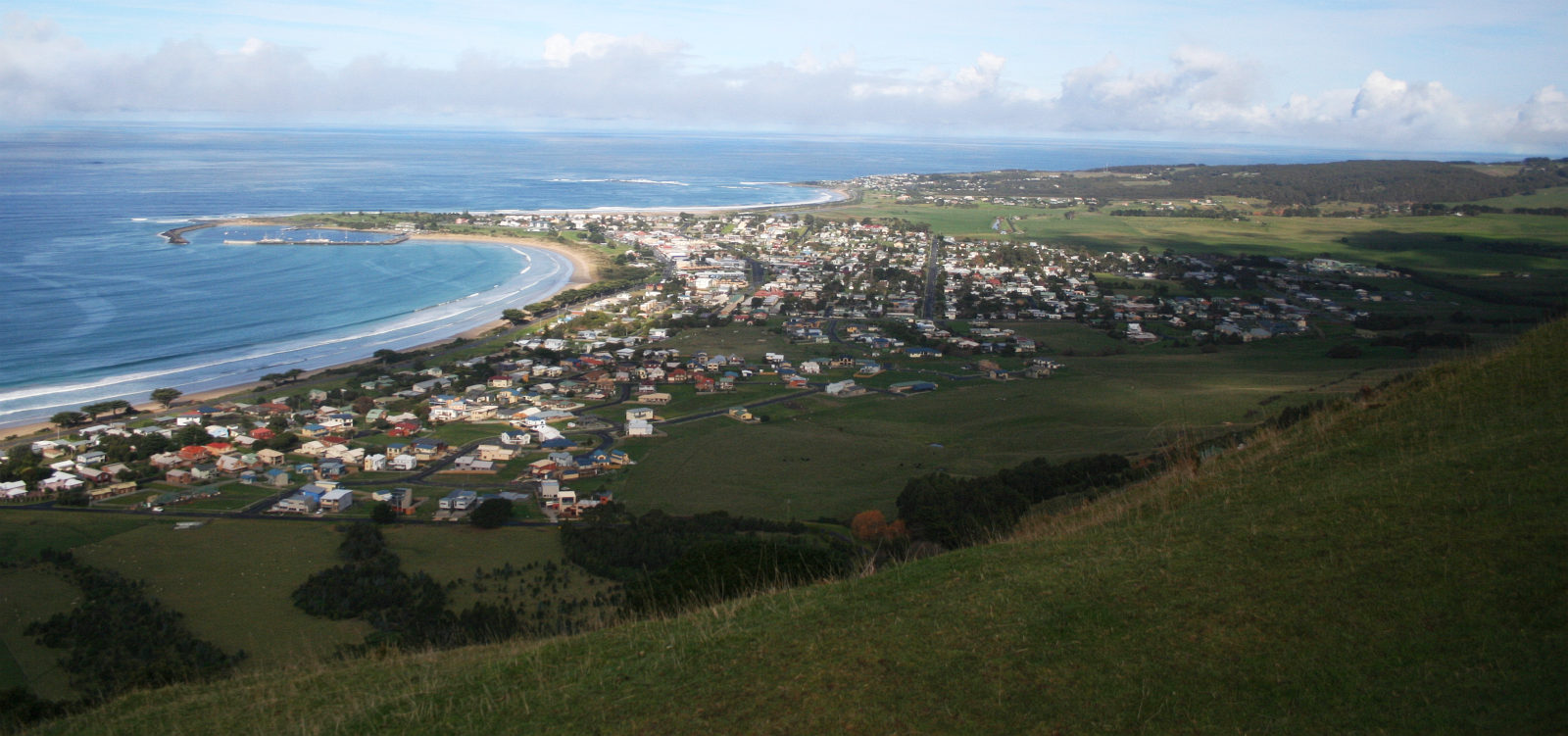
A panoramic view of the town, showing the main shopping strip on the Great Ocean Road (Collingwood Street), the foreshore reserve with surrounding hills in background, and the Apollo Bay Golf Club backed by the beach and bay

People born or raised in Apollo Bay

[edit]
Marriner's Falls, Apollo Bay, 1935
  • Neil Melville – an actor born in Sydney, but spent his childhood in Apollo Bay
  • Sid O'Neil, Ted O'Neil, Michael Fitzgerald – members of the rock band The Vasco Era
  • H. A. Willis – essayist, spent his early childhood in Apollo Bay

References

[edit]
[edit]
Revisions and contributorsEdit on WikipediaRead on Wikipedia
from Grokipedia
Apollo Bay is a coastal town in the Colac Otway Shire of southwestern Victoria, , situated along the at the eastern edge of the Otway Ranges (38°45′S 143°40′E) and on the traditional lands of the Gadubanud people of the Eastern Maar nation. With a permanent population of approximately 1,800 (or over 2,000 including adjacent Marengo) as of the 2021 census that expands to more than 15,000 during the peak summer tourist season, it functions as a vibrant and port, renowned for its crescent-shaped sandy beaches, protected swimming waters, and bustling harbor. Originally settled in the mid-19th century by timber cutters who established coastal mills around 1850, Apollo Bay was named in 1845 after the schooner Apollo and served as an early anchorage for shipping timber and other goods. The town's growth accelerated in the 1920s with the construction of the , a scenic coastal highway built by returned soldiers as a memorial to their comrades, transforming Apollo Bay into a key gateway to the dramatic coastline and the ancient rainforests of the . Today, Apollo Bay's economy revolves around , , and , supporting activities such as , , deep-sea , and exploration, while its natural attractions—including nearby seal colonies, waterfalls, and the Cape Otway Lightstation, mainland Australia's oldest lighthouse—draw visitors year-round. The town also hosts events like the Running Festival and a weekly foreshore market, underscoring its role as a cultural and recreational hub in one of Victoria's most iconic regions.

Geography and Environment

Location and Physical Features

Apollo Bay is a coastal town located in southwestern Victoria, , at coordinates 38°45′S 143°40′E. It lies within the Colac Otway Shire, on the eastern side of Cape Otway, approximately 280 kilometers southwest of . The town fronts the , serving as a gateway to the rugged coastal landscapes of the region. Physically, Apollo Bay is positioned at the mouth of the Barham River, where the waterway meets the sea, creating a natural harbor sheltered by breakwaters. The area features a mix of sandy beaches, rocky headlands, and elevated coastal dunes, with the urban footprint extending along roughly 3 kilometers of east-facing shoreline backed by low dunes and the town center. To the hinterland, it transitions into dense rainforests and tall eucalypt forests characteristic of the , which encompasses much of the surrounding terrain with deep valleys, fern gullies, and dramatic cliff faces along the coast. Prominent landmarks include Marengo Beach to the west, a sweeping sandy stretch known for its calm waters and proximity to the Marengo Reefs Marine Sanctuary, and Point Bunbury to the east, a rocky headland featuring a 500-meter beach backed by dunes and fronted by reefs. The town is integrated into the scenic route, lying approximately 18 kilometers east of the historic Cape Otway Lighthouse, enhancing its role as a base for exploring the area's natural coastal features. The overall urban area covers approximately 2.5 square kilometers, bounded by the to the south and west.

Climate and Weather Patterns

Apollo Bay experiences a temperate classified as Köppen Cfb, characterized by mild temperatures year-round and no distinct , strongly influenced by its proximity to the and the protective barrier of the Otway Ranges, which moderate extremes and enhance moisture from westerly winds. The annual average maximum temperature is 17.6°C, with minimums averaging 10.6°C, based on long-term records from 1908 to 1952. Summers are mild, with highs reaching 21.9°C on average, while winters are cool, featuring lows around 7.3°C. These patterns reflect the oceanic moderation, keeping daytime highs below 22°C even in peak summer and preventing severe cold snaps. totals approximately 1,057 mm annually, distributed relatively evenly but with a winter peak, averaging about 120 mm per month from June to August, driven by frequent frontal systems from the . The driest period occurs in summer, with February seeing around 50 mm, though rain days number about 127 per year, ensuring consistent moisture. Weather extremes include occasional southerly cold fronts that bring gusty winds up to force and sudden cooling, as observed in local patterns from influences. Frosts are rare, with temperatures seldom dropping below 5°C, though record lows have reached -1.1°C. In the , climate trends indicate increasing frequency and intensity of storms and heavy rainfall events in southwest Victoria, linked to broader warming patterns that enhance atmospheric moisture.

Ecology and Conservation

Apollo Bay is situated within the diverse ecosystems of the Otway Ranges, supporting a rich characteristic of the Cool Temperate Rainforest. The region hosts iconic Australian wildlife, including koalas and eastern grey kangaroos inhabiting eucalyptus woodlands, as well as southern right whales that migrate along the coastline from May to October during their breeding season. Cool temperate rainforests dominated by myrtle beech () and adjacent wet eucalypt forests form key habitats, providing food sources for and contributing to the area's ecological complexity. The Great Otway National Park, encompassing Apollo Bay and established in 2005, protects approximately 108,000 hectares of this landscape, safeguarding habitats from development pressures. Managed by Parks Victoria, the park implements habitat restoration programs, such as revegetation efforts to enhance native forest connectivity and support species recovery. These initiatives focus on maintaining the integrity of cool temperate rainforests and associated wetlands. Environmental challenges in the region include heightened bushfire risks, as demonstrated by the 2019-2020 fires that scorched parts of the Otways, threatening habitats and wildlife. Coastal erosion, exacerbated by rising sea levels and storm events, endangers shorelines and around Apollo Bay. Additionally, in the Barham River is monitored to address potential pollution from runoff and climate influences, ensuring the health of estuarine ecosystems. Conservation initiatives emphasize sustainable practices, including guidelines for responsible that recommend maintaining a 100-meter from marine mammals to minimize disturbance. Invasive species control targets predators like foxes through baiting and monitoring programs in the , reducing threats to native . Community-led efforts following 2020s climate events, such as post-fire planting in the Otways, aim to restore degraded areas and bolster resilience against future environmental stresses.

History

Indigenous Heritage

The Gadubanud (also known as Katabanut or King Parrot people) are the traditional custodians of the Apollo Bay region, part of the broader Gadubanud nation that inhabited the rainforest plateau, estuaries, wetlands, and rugged coastline of Cape Otway for thousands of years. Their territory encompassed the areas now known as Apollo Bay and nearby Lorne, where they maintained a deep connection to the land through sustainable resource management and cultural traditions. Archaeological evidence indicates continuous occupation dating back at least 2,500 years in coastal sites, with broader regional human presence in Victoria extending to tens of thousands of years. The Gadubanud relied on seasonal patterns for sustenance, utilizing the coastal environment for fishing, shellfish gathering, and crafting tools from local materials such as stone and bone. Communities gathered shellfish like limpets, turbos, abalone, and mussels from rock platforms, as evidenced by the composition of middens containing up to 65% limpet shells alongside fish bones and cooking hearths. They employed spears and fishing lines with bone hooks for catching eels and other marine life, while inland resources supported a varied diet including ducks and plant foods. Tool-making occurred at specialized sites, producing flint artefacts and other implements from available coastal stones, reflecting adaptive practices tied to the seasonal abundance of the Otways' ecosystems. Spiritual and cultural ties to the landscape, including sacred sites along the coast, underscored their holistic relationship with Country, though specific songlines associated with Cape Otway are part of broader Indigenous knowledge systems preserved through oral traditions. Archaeological sites provide key evidence of Gadubanud presence, including shell middens, scar trees, and artefact scatters registered in the Victorian Aboriginal Heritage Register within the , which surrounds Apollo Bay. These middens, some over 2,500 years old, contain charcoal-rich soils, animal bones, and tools indicating repeated seasonal use for feasting and resource processing. Scar trees, marked for cultural purposes like tool extraction or ceremonies, further attest to their enduring footprint. Oral histories of the Gadubanud, detailing their societal structure and connections to neighboring groups like the and , have been preserved through contemporary Victorian Aboriginal communities, despite the near-extinction of the Gadubanud following early colonial contact. In modern times, the Gadubanud's heritage is recognized through official acknowledgments by the Colac Otway Shire, which identifies them as traditional custodians alongside the Gulidjan people and commits to respecting their cultural legacy. The Eastern Maar Aboriginal Corporation serves as the Registered Aboriginal Party (RAP) for the Apollo Bay area under the Aboriginal Heritage Act 2006 (Vic.), responsible for protecting and managing Aboriginal cultural heritage. Local signage in the Apollo Bay area highlights Indigenous history at sites like middens, promoting awareness of their sacred significance. Welcome to Country ceremonies, led by Traditional Owners or representatives, are incorporated into community events and tourism activities, fostering reconciliation and ongoing cultural vitality in the region.

European Exploration and Settlement

The first recorded European sighting of the Apollo Bay area occurred in 1802, when French explorer passed through aboard the Le Géographe and named nearby Cape Marengo. Whalers and sealers began using the bay seasonally in the early , establishing temporary stations as part of broader operations along Victoria's southwest coast. In 1845, Captain James Loutit, master of the Apollo, sought shelter in the bay during a gale while trading between and , leading to its informal naming after his vessel. European settlement commenced in the late 1840s with the arrival of timber cutters, drawn by the abundant hardwood forests of the Otway Ranges. By 1849, operations had begun, and in , the Apollo Bay Company established large-scale sawmills along the Barham River, including a tramway and at Point Bunbury to facilitate export. Timber splitters floated logs down the river to small schooners anchored in the bay, marking a shift from transient activities to a more permanent economic base centered on timber export to . This industry boom spurred population growth, reaching approximately 300 residents by the 1880s, supported by the construction of the first around 1880 to improve loading efficiency. The Gadubanud people, the bay's Indigenous inhabitants, experienced rapid displacement during this period due to introduced diseases and forest clearance for . The settlement, initially known informally as Apollo Bay, was officially renamed from Krambruk to Apollo Bay in 1898 by the post office department. Infrastructure developments continued, including a telegraph and cable station established in 1936 that linked the bay to via , enhancing communication for the isolated community.

20th Century Development

The completion of the in November 1932 marked a pivotal infrastructural advancement for Apollo Bay, connecting the town to Lorne and significantly enhancing accessibility for both residents and visitors. Constructed primarily by returned soldiers as a and , the road's final section to Apollo Bay facilitated the of timber and goods while opening the area to , transforming the isolated coastal settlement into a more viable holiday destination. In the mid-20th century, key milestones further supported community growth, including the establishment of the Apollo Bay Fishermen's Co-operative in 1948, which spurred a post-World War II influx of workers and families drawn to the expanding . This period also saw the transition from a timber-dependent economy, which had declined by the due to over-logging in the Otways, toward greater reliance on and emerging . Communication improvements arrived with the 1936 installation of a telephone and telegraph cable from Apollo Bay to via King Island, providing the mainland's first direct link to the island state and aiding administrative and commercial coordination. By the 1960s, rising traffic volumes prompted upgrades to the , including widening of sections between Lorne and Apollo Bay to accommodate increasing tourist numbers while preserving the route's scenic character. The 1980s brought economic shifts as conservation efforts intensified, with groups like Save the Otways forming to protest logging practices, contributing to a gradual reduction in native forest harvesting and reinforcing Apollo Bay's pivot to and fisheries. The early 21st century tested the community's resilience during the 2019-2020 bushfires, which scorched over 1.5 million hectares across Victoria, including areas near the Otways, leading to evacuations, property losses, and ecological damage in the broader region. Recovery efforts, supported by state and federal funding, focused on habitat restoration, infrastructure reinforcement, and community support programs, with ongoing rebuilding initiatives through 2025 emphasizing fire-resilient landscaping and economic diversification to bolster tourism recovery.

Demographics and Society

Population and Demographics

As of the , Apollo Bay had a permanent of 1,790 residents. The demographic composition shows a near even distribution, with females comprising 49.8% and males 50.2% of the ; the age stands at 52 years, reflecting an ageing community where 29.0% of residents are aged 65 years or older. Aboriginal and/or Islander people make up 1.3% of the . The average household size is 2.0 persons, and indicates that 67.8% of occupied private dwellings are owner-occupied (45.3% owned outright and 22.5% with a ), while 27.8% are rented. The town's population has exhibited steady growth in recent decades, increasing from 1,598 in the 2016 to 1,790 in , a rise of approximately 12% over five years driven by interstate and intrastate migration attracted to its coastal and opportunities. Recent estimates place the permanent population at approximately 1,800 (including nearby Marengo) as of 2024. Historically, Apollo Bay's population expanded from roughly 500 residents in the early 1900s—around 581 by 1911—to approximately 1,500 by the early 2000s, transitioning from a small settlement to a retiree and hub. Seasonally, the population experiences significant fluctuations, swelling to more than 15,000 during peak summer periods due to holidaymakers and tourists along the . This influx places pressure on local services such as healthcare and , as detailed in community infrastructure discussions.

Community Services and Education

Apollo Bay's educational infrastructure centers on the Apollo Bay P-12 College, a public school serving students from preparatory year through to , with an enrollment of approximately 325 students as of 2024. The institution traces its origins to the establishment of the first local school in 1878, following a community petition to the Minister for Education, which initially provided to the growing settlement. While the college now offers comprehensive locally, students seeking additional options may attend schools in Colac, located about 63 kilometers inland via the . Adult education opportunities are provided through the statewide Learn Local program, with courses in literacy, numeracy, and foundational skills delivered by providers such as South West TAFE in nearby Colac, tailored to regional needs in the Colac Otway Shire and accessible to Apollo Bay residents. Healthcare services in Apollo Bay are primarily provided by Great Ocean Road Health, which operates a campus at 75 McLachlan Street offering consultations, programs, and aged care facilities including residential accommodation, respite, and palliative support. The Apollo Bay Medical Centre complements these with a team of experienced GPs and practice nurses handling routine check-ups, minor procedures, and chronic disease management. For urgent care, the campus maintains 24/7 availability with on-call medical support, though complex emergencies requiring advanced hospitalization are typically transferred to facilities in , approximately 170 kilometers away. Community services enhance resident well-being through facilities like the Apollo Bay Library, located at 6 Pengilley Avenue and managed by the Colac Otway Shire in partnership with Regional Libraries, providing internet access, e-books, and children's resources. Childcare is available via Apollo Bay Child Care Services, a 24-place center open weekdays from 9:15 a.m. to 5:45 p.m., supporting working families with long-day care. The volunteer-based Apollo Bay (CFA) brigade plays a vital role in emergency response, recruiting community members for firefighting and support roles to protect the area from bushfires and other hazards. Social programs operate from community hubs such as the Apollo Bay Seniors Centre at 4 Whelan Street, offering exercise classes, yoga, and art workshops for older adults, while the Apollo Bay Community Youth Club provides weekly gatherings for ages 12 to 18 at a nominal membership fee to foster social connections. The community's aging demographic, with a notable proportion of residents over 65, places additional pressure on these services, particularly in healthcare and aged care provisions. In response, initiatives have expanded since 2020, including an after-hours pilot program at Health campuses in Apollo Bay and nearby Lorne, enabling remote consultations with specialist emergency doctors to improve access for isolated or mobility-limited individuals.

Economy and Tourism

Primary Industries

Fishing has been a cornerstone of Apollo Bay's economy since the mid-19th century, evolving from early European settlement activities to a modern commercial sector focused on high-value . The local fleet, based in the sheltered harbor, primarily targets southern rock lobster () and blacklip , alongside species such as scallops, snapper, and (flake). The Apollo Bay Fishermen's Co-operative, established in the late , supports this industry by processing and exporting catches, with rock lobster forming a significant portion destined for Asian markets. Historically, the fleet's operations date back to the 1850s when timber cutters supplemented their work with coastal , but commercial scaling occurred in the early as the town developed port infrastructure. The combined annual catch from Apollo Bay's fleets contributes to Victoria's broader quotas, with rock lobster landings historically fluctuating between 400 and 500 tonnes statewide in the late , though recent figures show stabilization around 250 tonnes due to management controls. Abalone harvests from the western zone, including areas near Apollo Bay, are regulated under individual transferable quotas, supporting sustainable yields estimated at over 300 tonnes annually across the state. These activities are overseen by the Victorian Fisheries Authority (VFA), which enforces licensing, size limits, and seasonal closures to maintain stock health. In recent years, charters have emerged as a bridge to , allowing visitors to experience the industry's operations. Agriculture in the Apollo Bay hinterland consists of small-scale operations centered on and production, leveraging the fertile Otway Ranges soils for pasture-based farming. Dairying, a traditional pursuit in the Colac Otway Shire, involves around 200-300 local herds producing milk for regional processors, while grazing supports niche markets for grass-fed products. Experimental initiatives, including trials for mussels and oysters, are being explored in nearby coastal waters to diversify production amid land constraints. These efforts align with broader Victorian strategies for low-impact farming in coastal zones. The region's primary industries have undergone significant shifts since the early , with timber harvesting—dominant from the sawmills—declining sharply after the due to and logistical challenges in sea transport. Today, and together employ approximately 10-12% of the Colac Otway Shire workforce, reflecting a stabilized but modest role in the local economy. Sustainability measures are integral to these sectors, with the VFA implementing quota systems for rock lobster and abalone to curb overfishing, complemented by no-take zones in marine parks like the Otway bioregion. As of 2025, stock assessments indicate recovery in southern rock lobster populations, with catch per unit effort rising to support a classified sustainable status, enabling stable quotas for the upcoming season starting November 16.

Tourism and Attractions

Apollo Bay serves as a prominent tourist hub along Victoria's , drawing visitors to its stunning coastal landscapes, temperate rainforests, and relaxed seaside atmosphere. The town experiences significant seasonal fluctuations in visitation, with numbers peaking during the summer months from December to February when families and road-trippers flock to the area for holidays. In 2023, the broader region welcomed 6.3 million visitors, underscoring Apollo Bay's role as a key overnight and day-trip destination within this corridor. contributes substantially to the local economy, generating an estimated $50 million annually in the Apollo Bay area based on 2023 data, a figure that has remained stable into 2025 amid post-pandemic recovery. Key attractions revolve around natural wonders and adventure experiences. Scenic drives along the iconic offer breathtaking views of cliffs and ocean vistas, making it a must-do for road trip enthusiasts. Whale watching is a highlight from May to , when southern right whales migrate close to shore, often visible from beaches or guided boat tours without needing to venture far offshore. Beach activities, including swimming, surfing, and picnicking on the golden sands of Apollo Bay Beach, provide accessible recreation for all ages. Nearby, the Otway Fly Treetop Adventures features a 600-meter elevated walkway through the rainforest canopy, reaching up to 30 meters high, along with zipline options for thrill-seekers exploring the ancient Otway Forests. Accommodation options abound to support the influx of , with more than 20 hotels, , campgrounds, and rentals available, ranging from beachfront resorts to family-oriented caravan parks. Establishments like BIG4 Apollo Bay Pisces Park and Apollo Bay Park cater to campers and groups, while such as the Southern Motor Inn offer convenient stays near the town center. Weekly markets and informal events further attract day-trippers, boosting short visits and local commerce. In response to the 2019-20 bushfires that impacted the surrounding Otways, Apollo Bay has emphasized eco- initiatives to promote sustainable recovery and resilience. Developments include upgraded beach access ramps, new boardwalks, and viewing platforms completed by 2025, enhancing safe and environmentally sensitive access to coastal and forest areas. Local industries, such as and , provide supplementary tours that highlight sustainable practices, integrating with the tourism offerings.

Culture and Recreation

Events and Festivals

Apollo Bay hosts several annual cultural and community events that celebrate its coastal heritage, local produce, and artistic spirit, drawing participants and visitors to the town throughout the year. These gatherings emphasize community involvement, with volunteers playing a key role in organization and execution. The Apollo Bay Seafood Festival, traditionally held over two days in late February or early March on the town foreshore, showcases fresh local catches through cooking demonstrations, live music performances, and family-friendly activities. Established as a highlight of the summer season, it has featured seafood tastings, vendor stalls, and educational sessions on sustainable fishing practices. The event was paused in 2024 due to financial challenges and volunteer fatigue, and it did not resume in 2025 amid ongoing uncertainties related to harbour redevelopment. Past editions attracted up to 8,000 visitors, providing a significant boost to local tourism. The Running Festival, occurring in May and spanning Lorne and Apollo Bay, combines physical challenges with cultural elements such as live music, wellness workshops, and community celebrations along the . This multi-day event fosters a festive atmosphere, highlighting the region's natural beauty and encouraging participant engagement beyond athletics. In 2025, it drew a record 11,198 participants, underscoring its role in bringing diverse crowds to Apollo Bay. Winterwild Arts Festival, typically in late August, is a multidisciplinary celebration of dark arts, music, performance, feasting, and fire installations on the Apollo Bay foreshore and surrounding Otways areas. It embraces the wild essence of winter through immersive experiences like storytelling, visual arts, and communal gatherings, often opening with a ceremony. The full festival was cancelled in 2024 due to logistical challenges, with no confirmed return in 2025, though smaller pop-up events have been considered in prior years. The Apollo Bay Farmers and Makers Market operates monthly on the third from 9 a.m. to 1 p.m. at the Youth Club Hall, offering local produce, artisanal crafts, and direct interactions with Otways growers and creators. This ongoing staple supports regional by promoting fresh, seasonal goods and handmade items. Historically, the Apollo Bay ran annually from 1993 to 2013, presenting a lineup of , folk, and artists in a volunteer-driven, family-oriented format that transformed the town into a vibrant music hub over three days at the end of summer. In recent years, events have shifted toward sustainable, low-impact formats to minimize environmental effects while maintaining cultural vibrancy, with volunteers ensuring inclusive participation. These gatherings collectively attract over 10,000 visitors annually across major events, enhancing local and social ties through volunteer efforts.

Media and Arts

Apollo Bay's media landscape is dominated by community-driven radio and regional print outlets that provide coverage of local events, news, and cultural happenings. The primary local radio station is Apollo Bay Radio, broadcasting on 87.6 FM as a not-for-profit featuring live programs across diverse genres, news updates, and shows highlighting community interests. Commercial radio access includes Mixx FM on 95.9 FM, a of the Colac-based station that delivers contemporary hits and local announcements. In print and digital media, the Colac Herald serves as the key regional newspaper, regularly reporting on Apollo Bay matters such as community developments, sports, and environmental issues within the broader Colac Otway district. Local newsletters and online platforms, including the Apollo Bay community website, disseminate updates on town activities, events, and resident announcements through dedicated news sections. The arts scene in Apollo Bay emphasizes community-supported visual and literary expressions rooted in the Otway region's natural inspiration. The Apollo Bay Arts Inc. Gallery, established in 2012 and housed in the heritage Mechanics Hall, showcases works by local and emerging Otway artists, including paintings of seascapes, ceramics, and abstracted ocean themes through rotating exhibitions. Literary connections are evident through H.A. Willis, an essayist and novelist who grew up in Apollo Bay and whose writings, including essays on colonial history and personal narratives, draw from his early experiences in the area. Recent developments in media include a surge in podcasts and audio content focused on since 2020, such as ABC Radio's explorations of Apollo Bay's coastal heritage and recordings produced by Apollo Bay Radio featuring residents' stories from the district. While no major film productions have been based in Apollo Bay, the town's dramatic coastal scenery frequently serves as a backdrop for videos and promotional media highlighting the .

Sports and Outdoor Activities

Apollo Bay offers a vibrant array of organized sports clubs and outdoor pursuits, reflecting its coastal location and proximity to the Otway Ranges. The Apollo Bay Surf Life Saving Club, established in , is one of the region's key organizations, with members patrolling local beaches during the summer season to ensure swimmer safety along the . The club, affiliated as the ninth member of Surf Life Saving Victoria, focuses on rescue operations, training, and community education on ocean hazards. Team sports are well-represented by the Apollo Bay Football Netball Club, known as the Hawks, which traces its origins to informal games in the early and formally joined the Polwarth Football League in 1935 before competing in the Colac & District Football Netball League. The club fields senior and junior teams in and , playing home games at the Apollo Bay Recreation Reserve. Other clubs include the Apollo Bay Sailing Club, founded in 1985, which hosts weekly yacht races from October to May for sailors of all skill levels, emphasizing accessibility and social engagement. The Apollo Bay , established in 1923, maintains a challenging 9-hole links-style course with ocean views, open year-round to members and visitors. Public tennis courts are available at the recreation reserve, supporting casual and club play, while the Apollo Bay Sharks Cricket Club competes in the Colac district league with senior men's, women's, and junior teams. Fishing enthusiasts participate in annual tournaments such as the SIMRAD Victorian Tuna Classic, held in August at Apollo Bay, attracting anglers for offshore competitions targeting tuna and other species. These events highlight the area's rich marine resources and draw competitors from across Victoria. Popular outdoor activities center on the natural environment, with surfing being a staple due to consistent waves at beaches like Marengo and Point Franklin, suitable for beginners and experienced surfers alike. Hiking trails in the nearby Otway National Park, such as sections of the Great Ocean Walk starting from Apollo Bay, offer multi-day treks through rainforests and coastal cliffs, showcasing diverse flora and wildlife. Cycling routes along the Great Ocean Road and inland paths provide scenic rides, with options for road biking past iconic landmarks or mountain biking in the Otways for more adventurous terrain. Central to these pursuits is the Apollo Bay Recreation Reserve, which serves as the community's main sports ground hosting football, , , and other events. Upgrades to the reserve since 2023, including new all-weather and surfaces, player shelters, and improved amenities, have enhanced year-round usability through a masterplan led by the Coast and Parks Authority in partnership with local groups. These facilities support both competitive sports and recreational activities, complementing Apollo Bay's appeal by providing accessible outdoor experiences.

Infrastructure and Governance

Local Government

Apollo Bay is located within the Colac Otway Shire, a in Victoria's Barwon South West region established on 23 September 1994 through the amalgamation of the City of Colac, Shire of Colac, most of the Shire of Otway, and parts of the Shires of and . The shire encompasses diverse landscapes from inland volcanic plains to coastal areas along the , with Apollo Bay serving as a key coastal community. Governance is provided by the Colac Otway Shire Council, an unsubdivided municipality where seven councillors are elected every four years to represent the entire shire, including Apollo Bay residents. The mayor is selected annually by the councillors from among themselves, ensuring shire-wide leadership; as of November 2025, Councillor Jason Schram holds the position for his fourth term. The council delivers core services to Apollo Bay, including through and programs, statutory planning for development approvals and , and oversight covering , control, and hazard mitigation. These services are funded through the shire's annual , which for 2025-26 totals over $11 million in capital works, with specific allocations supporting Apollo Bay such as reconstructions exceeding $2.5 million and renewals for community facilities like the Visitor Information Centre. Key policies emphasize and resilience. The Destination Action Plan 2020-2025 promotes by aiming to boost visitor numbers, length of stay, and dispersal while enhancing and community satisfaction across the shire's coastal regions, including Apollo Bay. Bushfire mitigation strategies are outlined in the Otway District Strategic Fire Management Plan 2025-28, which prioritizes fuel reduction and in high-hazard areas, and the Colac Otway Shire Municipal Plan 2024-27, focusing on preparedness, response, and community evacuation protocols. Community representation and input are integrated through advisory committees that provide resident feedback on shire-wide issues affecting Apollo Bay, such as the Roads Advisory Committee for priorities and specialized groups like the Lake Colac Advisory Committee for environmental management. These mechanisms ensure local perspectives inform council decisions, complementing the electoral system.

Transportation and Utilities

Apollo Bay is primarily accessed via the (B100), a scenic coastal highway that serves as the main route into the town. This iconic road connects Apollo Bay to , approximately 190 kilometers away, with a typical driving time of about three hours under normal conditions. Public bus services operated by provide connectivity, involving a train from to followed by a coach along the to Apollo Bay, with the full journey taking around four hours. These transport options are essential for the town's , enabling visitors to explore nearby attractions without relying solely on private vehicles. There is no passenger rail service directly to Apollo Bay, as the nearest rail line terminates at . The closest airport is Colac Airport, a small facility located about 60 kilometers inland, offering limited commercial options and requiring ground transport for onward travel. Bus services also link Apollo Bay eastward to and westward to Port Campbell, facilitating regional connectivity along the coast. Additionally, dedicated bike paths, such as the Apollo Bay Foreshore Reserve trail, provide safe cycling routes along the shoreline for locals and tourists. Essential utilities in Apollo Bay are managed by regional providers to support the community's needs. Potable water is sourced from the Barham River in the Otway Ranges and treated and distributed by Barwon Water, ensuring supply to the town and surrounding areas like Marengo and Skenes Creek. Electricity distribution is handled by Powercor, which maintains the network serving the region and has implemented reliability enhancements, such as auto-switchover schemes, to minimize outages. primarily relies on on-site management systems (OWMS), including septic tanks, for most residential properties outside the central sewered areas, while a local plant processes effluent from the town core under Barwon Water's oversight. Recent infrastructure upgrades focus on enhancing resilience against environmental challenges. In 2025, the Coast and Parks Authority initiated projects in Apollo Bay to combat , relocating sand to protect dunes and revetments at sites like the southern end of the town's . Broader road stabilization efforts along the between Lorne and Apollo Bay are scheduled for 2025-26 as part of Victoria's inland and coastal route improvement program. To support growing use, new EV charging stations have been installed in public locations, such as the Pascoe Street carpark, and at accommodations like the Apollo Bay Motel.

References

Add your contribution
Related Hubs
User Avatar
No comments yet.