Hubbry Logo
Olive (color)Olive (color)Main
Open search
Olive (color)
Community hub
Olive (color)
logo
8 pages, 0 posts
0 subscribers
Be the first to start a discussion here.
Olive (color)
Olive (color)
from Wikipedia
Olive
 
About these coordinates     Color coordinates
Hex triplet#808000
sRGBB (r, g, b)(128, 128, 0)
HSV (h, s, v)(60°, 100%, 50%)
CIELChuv (L, C, h)(52, 57, 86°)
SourceX11 color names
ISCC–NBS descriptorLight olive
B: Normalized to [0–255] (byte)
H: Normalized to [0–100] (hundred)
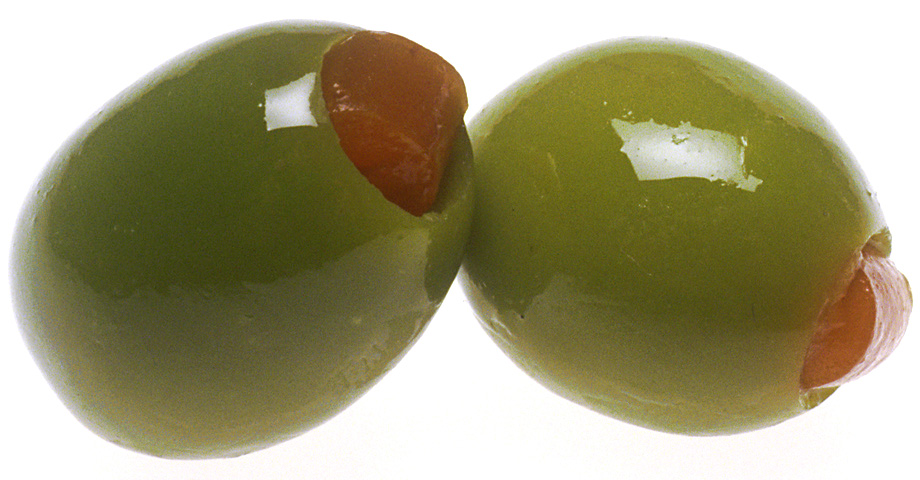
Green olives

Olive is a dark yellowish-green color,[1] like that of unripe or green olives.

As a color word in the English language, it appears in late Middle English.

Variations

[edit]

Olivine

[edit]
Olivine
 
About these coordinates     Color coordinates
Hex triplet#9AB973
sRGBB (r, g, b)(154, 185, 115)
HSV (h, s, v)(87°, 38%, 73%)
CIELChuv (L, C, h)(71, 48, 108°)
Source99colors.net[2]/Maerz & Paul[3]
ISCC–NBS descriptorModerate yellow green
B: Normalized to [0–255] (byte)

Olivine is the typical color of the mineral olivine.

Olivine crystals
Olivine crystals

The first recorded use of olivine as a color name in English was in 1912.[4]

Olive drab

[edit]
Olive drab
 
About these coordinates     Color coordinates
Hex triplet#6B8E23
sRGBB (r, g, b)(107, 142, 35)
HSV (h, s, v)(80°, 75%, 56%)
CIELChuv (L, C, h)(55, 60, 107°)
SourceX11 color names
ISCC–NBS descriptorStrong yellow green
B: Normalized to [0–255] (byte)
Olive drab camouflage
 
About these coordinates     Color coordinates
Hex triplet#544F3D
sRGBB (r, g, b)(84, 79, 61)
HSV (h, s, v)(47°, 27%, 33%)
CIELChuv (L, C, h)(34, 14, 73°)
SourceFederal Standard 595 33070
ISCC–NBS descriptorGrayish olive
B: Normalized to [0–255] (byte)

Olive drab is variously described as a "A brownish-green colour" (Oxford English Dictionary);[5] "a shade of greenish-brown" (Webster's New World Dictionary);[6] "a dark gray-green" (MacMillan English dictionary); "a grayish olive to dark olive brown or olive gray" (American Heritage Dictionary);[7] or "A dull but fairly strong gray-green color" (Collins English Dictionary). It is widely used as a camouflage color for uniforms and equipment in the armed forces.

The first recorded use of olive drab as a color name in English was in 1892.[8] Drab is an older color name, from the middle of the 16th century. It refers to a dull light brown color, the color of cloth made from undyed homespun wool. It took its name from the old French word for cloth, drap.[9]

There are many shades and variations of olive drab. Various shades were used on United States Army uniforms in World War II. The shade used for enlisted soldier's uniforms at the beginning of the war was officially called Olive Drab #33 (OD33), while officer's uniforms used the much darker Olive Drab #51 (OD51). Field equipment was in Olive Drab #3 (OD3), a very light, almost khaki shade. In 1943 new field uniforms and equipment were produced in the darker Olive Drab #7 (OD7). This was in turn replaced by the slightly grayer Olive Green 107 (OG-107) in 1952,[10] which continued as the color of combat uniforms through the Vietnam War until the adoption in 1981 of the four-color-camouflage-patterned M81 Battle Dress Uniform, which retained olive drab as one of the color swatches in the pattern. The shade used for painting vehicles is defined by Federal Standard 595 in the United States.[11]

As a solid color, it is not as effective for camouflage as multi-color patterns, though it is still used by the U.S. military to color webbing and accessories. The armies of Israel, India, Cuba, and Venezuela wear solid-color olive drab uniforms.

In the American novel A Separate Peace, Finny says to Gene, "...and in these times of war, we all see olive drab, and we all know it is the patriotic color. All others aren't about the war; they aren't patriotic."

Pantone 448 C, "the ugliest color in the world" commonly used in plain tobacco packaging, was initially described as a shade of olive green.[12]

Black olive

[edit]
An example of black olives
Black olive
 
About these coordinates     Color coordinates
Hex triplet#3B3C36
sRGBB (r, g, b)(59, 60, 54)
HSV (h, s, v)(70°, 10%, 24%)
CIELChuv (L, C, h)(25, 4, 93°)
SourceRAL[13] / ColorsData[14]
ISCC–NBS descriptorDark grayish olive green
B: Normalized to [0–255] (byte)

Black olive is a color in the RAL color matching system. It is designated as RAL 6015.

The color "black olive" is a representation of the color of black olives.

Olive in culture

[edit]

Ethnography

  • The term "olive-skinned" is sometimes used to denote shades of medium-toned skin that is darker than the average color for White people, especially in connection with a Mediterranean ethnicity.

See also

[edit]

References

[edit]
Revisions and contributorsEdit on WikipediaRead on Wikipedia
from Grokipedia
Olive is a dark yellowish-green color, evoking the hue of unripe olives, with the standard hexadecimal code #808000 in web color standards, composed of equal parts red and green (128, 128, 0 in RGB) and no blue. This muted, earthy tone sits between green and yellow on the color wheel, often described as subdued and complex due to its balanced warmth and coolness. The name "olive" derives from the fruit of the Olea europaea tree, entering Middle English in the 14th century from ancient Greek elaia, reflecting its long association with Mediterranean cultures where the olive has been cultivated for millennia. Historically, the color gained prominence in military contexts during World War II, when the U.S. Army adopted olive drab—a variant of olive green—as the standard camouflage for uniforms and vehicles to blend with temperate earth and foliage tones, symbolizing resilience and practicality in warfare. Post-war, olive tones influenced fashion and design, particularly in the 1960s and 1970s counterculture, where they represented non-conformity alongside denim blues. Symbolically, olive draws from the 's ancient role as an emblem of , originating in Greek and Roman traditions where victors were crowned with olive wreaths, and later adopted in via the biblical story of Noah's dove returning with an olive branch to signify the receding flood. In broader cultural contexts, it conveys , , and , as seen in its use across for themes of and . Olive remains popular in and palettes for its calming, nature-inspired versatility, often paired with neutrals or accents like mustard yellow.

Etymology and Characteristics

Etymology

The term "olive" as a color name derives from the dusky yellowish-green hue of unripe , the fruit of the Olea europaea tree native to the Mediterranean region. The word itself entered the in the early 13th century during the period, borrowed from olive, which referred to both the fruit and the tree, ultimately tracing back to Latin olīva and elaía (ἐλαία), denoting the olive tree and its oil-yielding produce. These linguistic roots are tied to the ancient cultivation of olive trees across the Mediterranean, where the plant held economic and cultural significance from at least the onward. By the late , "olive" began to be applied descriptively in English to shades resembling the fruit's color, with the compound "olive-coloured" first attested in 1612 in the works of playwright , describing a or tint akin to the olive's subdued green. The specific term "olive green" emerged later, with its earliest documented use in 1699, as noted in contemporary writings, marking its establishment in color nomenclature to evoke the muted, earthy tone of unripe olives. This evolution reflects broader Indo-European influences on terms for natural hues, where the olive's prominence in Mediterranean agriculture shaped its adoption for visual description.

Color Properties

The standard olive color is defined as a dark yellowish-green hue with the code #808000, equivalent to RGB values of (128, 128, 0) and CMYK values of (0%, 0%, 100%, 50%). In the , it corresponds to a hue of 60°, 100% saturation, and 25% , while in the HSB model, it features 100% saturation and 50% brightness. Perceptually, olive presents as a muted, earthy tone that evokes and neutrality due to its subdued vibrancy and natural appearance. Its low perceptual saturation arises from the dim despite the high HSL saturation value, resulting in a desaturated effect that blends harmoniously with environmental tones. This medium brightness level contributes to its versatile, non-dominant presence in visual compositions. Compared to related greens, olive is less vibrant than lime green (#00FF00), which exhibits high brightness and pure hue, and more subdued than (#228B22), a cooler shade with added components for depth. The equal and RGB components with zero create olive's distinctive yellowish undertone, distinguishing it from cooler, more saturated greens. Olive is mixed using primarily and pigments in traditional applications, such as cadmium combined with sap to achieve the earthy balance. In digital contexts, the balanced RGB values of 128 for and against 0 for produce the characteristic desaturated effect without requiring additional adjustments.

Historical Development

Ancient and Medieval Periods

In and Egyptian cultures, dating back to before 500 BCE, the tree held profound cultural significance, integral to daily life and rituals in the Mediterranean environment where olive groves symbolized prosperity. These societies used early hues in dyes and pigments from various plant materials to evoke natural landscapes, though specific olive-derived dyes are not documented. By the 1st century BCE in , green earth pigments—derived from natural clay minerals and used since —were employed in artistic and practical contexts, yielding olive-like shades for frescoes and textiles to represent earthy terrains. Green earth, known from earlier Greek applications, was traded and utilized in . While Roman legionary attire primarily featured white or red tunics, auxiliary equipment such as cloaks occasionally incorporated olive green shades. During the medieval period in (500–1500 CE), olive green shades gained prominence through green earth pigments (terre verte) in illuminated manuscripts and textiles, where they depicted scenes, foliage, and humble figures to convey themes of and renewal. In , particularly from the 6th to 15th centuries, artists used green earth for natural motifs like trees and landscapes in wall paintings and icons, enhancing the spiritual connection to the divine creation. These uses persisted in monastic scriptoria and royal workshops, blending artistic tradition with symbolic restraint.

Modern Era

In the 19th century, the development of synthetic dyes revolutionized production in , improving the consistency and affordability of muted earth tones like olive for military uniforms amid expanding colonial conflicts. William Henry Perkin's in 1856 marked the start, offering greater stability than natural alternatives. The , for instance, initially transitioned from bright red coats to —a dusty olive-like hue—during the Anglo-Indian campaigns of the and using natural dyes such as and , with synthetic formulations later patented (e.g., by 1899) to ensure colorfastness in harsh conditions. This shift influenced European powers, including and , adopting similar olive-drab variants for colonial expeditions in and by the late 1800s. The saw olive drab formalized as a camouflage standard during the World Wars, particularly in U.S. and Allied forces. Introduced by the U.S. Army in 1898 for the Spanish-American War as an adaptation of British khaki, olive drab evolved into a designated shade for field uniforms and equipment by , providing effective concealment in European theaters. By 1928, the U.S. military adopted a specific olive drab shade—often referenced as No. 6 in paint specifications—for vehicles and aircraft under standards, emphasizing lusterless finishes to reduce visibility. This color persisted through , applied to everything from tanks to soldier garb, with variations like the darker Olive Drab No. 7 for fabrics, underscoring its role in tactical concealment across global battlefields. Following , olive transitioned from exclusively military use to civilian spheres, notably influencing and fashion trends that evoked resilience and sentiments. Surplus army clothing in olive drab became staples in wardrobes, symbolizing defiance against conventional norms as youth adopted rugged, utilitarian styles amid protests and environmental movements. Earthy olive greens featured prominently in bohemian and aesthetics, paired with for a grounded, enduring vibe that rejected synthetic glamour. This civilian embrace extended olive's legacy into everyday apparel, blending wartime durability with cultural rebellion. In the , olive achieved digital standardization through inclusion in web color systems, facilitating its use in modern design. As one of the original 16 named colors from early specifications, olive was integrated into CSS standards by the mid-1990s, drawing from X11 color to ensure cross-platform consistency in digital palettes. This enabled precise rendering of the shade in websites, graphics, and interfaces, perpetuating its versatility from historical contexts to contemporary virtual applications.

Variations and Shades

Standard Olive

The standard olive color serves as the reference shade for the olive hue family, defined by the hexadecimal code #808000 in digital color systems. This color corresponds to RGB values of (128, 128, 0), making it a balanced mix of yellow and green components with no blue influence, which positions it as a foundational benchmark for deriving lighter or darker variations in design palettes. Historical standardization of olive as a distinct color name occurred in early 20th-century color dictionaries, with A Dictionary of Color by Aloys John Maerz and Morris Rea Paul (1930) providing one of the earliest systematic definitions and swatches for it, building on prior 19th-century naming conventions in pigment charts. This codification helped establish as a neutral greenish-yellow distinct from pure greens like or lime. Visually, standard olive presents as a muted, earthy yellow-green that lacks the cool undertones of blue-infused greens, resulting in a versatile, neutral appearance ideal for blending with both warm and cool palettes without dominating. Its subdued saturation and medium contribute to a , evoking natural earthiness while remaining adaptable in compositions. In , standard olive is commonly employed for earthy themes, such as environmental , organic branding, or backgrounds that convey stability and growth, leveraging its non-militaristic neutrality to enhance and in digital interfaces.

Military and Drab Variants

Olive drab (OD), defined by the hexadecimal code #6B8E23 and RGB values (107, 142, 35), was introduced by the U.S. Army in 1902 as a practical color to enhance concealment in field environments. This shade marked a shift from brighter traditional uniforms toward desaturated tones better suited for tactical operations. In , the U.S. Army revised it to shade #7, a darker and greener variant, specifically to improve effectiveness in zones during the ongoing . Military olive variants drew influences from international developments, such as the British Army's adoption of khaki-olive service dress in , which emphasized durable, earth-toned fabrics for overseas campaigns. Similarly, the German , a muted field gray introduced in 1907, paralleled these efforts by prioritizing low-visibility hues for . The term "drab" itself originates from drap, referring to undyed or dull cloth, underscoring the utilitarian focus of these colors. These shades excel in camouflage due to their high efficacy in temperate zones, where they absorb visible light wavelengths to blend with foliage and undergrowth, reducing detection by observers. Their matte finish and balanced green-yellow undertones mimic natural vegetation without stark contrasts. Post-military, surplus olive drab materials from World War II stockpiles permeated civilian sectors, shaping 20th-century workwear like rugged jackets and trousers for laborers. This legacy extended the color's role beyond battlefields into everyday durable apparel.

Other Shades

Olivine is a brighter yellowish-green shade of olive, defined by the hexadecimal code #9AB973 and RGB values (154, 185, 115). This color derives its name from the , part of the forsterite-fayalite series, known for its olive-like green hues ranging from pale yellow-green to deeper tones depending on iron and magnesium content. In , appears as the , valued for its vibrant, transparent crystals that exhibit this lighter variant, often used in jewelry to evoke natural earth tones. Black olive represents a darker, more subdued iteration of the palette, with code #3B3C36 and RGB values (59, 60, 54). Mimicking the deep, almost blackish hue of fully ripened olives, this shade adds depth and sophistication in , where it serves as a grounding neutral for walls, , and accents to create moody, earthy atmospheres. Other variants draw from specific natural and cultural inspirations. Russian olive, a pale, muted gray-green named after the silvery foliage of the plant, uses code #646350 and RGB values (100, 99, 79). These shades differ from standard by originating from distinct botanical or artistic sources, emphasizing aesthetic and cultural nuance over utilitarian applications.

Cultural and Symbolic Uses

Symbolism

The olive color, particularly in its green hues, derives much of its primary symbolism from the olive branch in mythology, where it represents and as a gift from the goddess to the city of , signifying prosperity and the resolution of conflict. This association extends to broader notions of goodwill and reconciliation, rooted in the olive tree's enduring presence in Mediterranean landscapes. In Christian iconography, the olive tree and its earthy tones evoke humility and groundedness, as seen in biblical metaphors like Psalm 52:8, where the "green olive tree" symbolizes the righteous person's steadfast reliance on divine mercy amid adversity, emphasizing simplicity and connection to the soil. Psychologically, olive green promotes a calming effect, fostering feelings of reliability and stability while evoking a deep connection to , which can reduce stress and enhance emotional balance. It is linked to perseverance and , reflecting the resilience of natural environments like olive groves that thrive in harsh conditions, and in some interpretations, it suggests as a means of protecting inner vulnerabilities without overt display. In Western cultures, especially following , the color gained connotations of military resilience, embodied in olive drab uniforms that represented durability and collective strength during times of global conflict. In Middle Eastern cultures, olive green evokes the olive tree's longevity, abundance, and resilience, reflecting its ability to thrive in harsh environments. In modern contexts, olive green often conveys eco-friendliness in branding, aligning with and environmental harmony due to its natural, organic undertones that appeal to conscious consumers. It also suggests neutrality, serving as a balanced, non-confrontational choice in political and diplomatic visuals, where it promotes and approachability without strong ideological leanings.

Applications in Art, Fashion, and Military

In , the olive color has been employed to evoke natural landscapes and earthy tones, particularly during the . Venetian painter frequently used olive-green mixtures for foliage in his landscapes, blending , yellow earth, and lead white to create subdued, realistic depictions of trees and grass that mimicked the muted hues of the Venetian countryside. This approach grounded his works, such as those featuring pastoral scenes, in a palette that emphasized depth and atmospheric perspective over vibrant greens. In the , modernists like incorporated olive green within the restrained color schemes of analytical cubism, where it served alongside grays, browns, and blacks to fragment forms and focus on geometric abstraction rather than naturalistic representation. For instance, Picasso's works from 1909–1912, including still lifes and portraits, utilized hints of olive green to unify fractured planes, drawing from Cézanne's influence on subdued earth tones. In fashion, olive emerged as a versatile neutral during the and through the adoption of clothing, which appealed to movements for its affordability and symbolism. College students and youth subcultures repurposed olive drab army jackets and pants from surplus stores, blending them with to create casual, rebellious ensembles that challenged traditional menswear. Contemporary designers have since elevated olive in utility-focused apparel, pairing it with neutrals like and for its adaptability across seasons and skin tones. , drawing from its heritage originally designed for British officers, offers olive green variants in trenches, which provide weather-resistant functionality while aligning with modern palettes for urban versatility. High-impact collections, such as Helmut Lang's 1997 olive bulletproof vest and Prada's Fall/Winter 1998 use of olive in layered outerwear, underscore its shift from utilitarian to high-fashion staple. Military applications of olive extend beyond historical camouflage to contemporary standards for durability and concealment. In NATO protocols, olive drab, specified under Federal Standard 595 as color 34088, forms the base for Chemical Agent Resistant Coating (CARC) paints on vehicles and equipment, offering resistance to chemical warfare agents while providing low-infrared reflectivity for tactical stealth. This three-color scheme applies olive drab as the primary ground tone over disruptive patterns in brown and black to blend with temperate environments. Modern digital camouflage patterns, such as and the U.S. Army's (OCP)—which replaced the Universal Camouflage Pattern (UCP; used 2005–2015)—incorporate olive green as a foundational pixelated base, enhancing disruption against varied terrains like woodlands and urban edges through algorithmic pixel arrangements. Crossovers between these fields highlight olive's adaptability, with fashion frequently borrowing military olive for utility wear that echoes art's naturalistic inspirations. Designers like in his 2006 collection drew from military olive to craft rugged, olive-dominant ensembles reminiscent of filmic rebellion, while art's earthy palettes—seen in Titian's landscapes—have indirectly influenced dye techniques for olive tones in apparel, promoting sustainable, plant-based extractions for muted greens. This interplay fosters versatile garments, such as olive utility jackets, that symbolize resilience in both defense and style.

Occurrences in Nature

In Plants and Flora

The unripe fruits of the olive tree (Olea europaea) exhibit a characteristic green-olive hue, primarily due to the presence of pigments and in the pericarp. , which imparts a bluish-green tone, and chlorophyll b, contributing a yellowish-green shade, combine with carotenoids such as and β-carotene to produce this coloration in photosynthetic tissues before ripening begins. As the fruits mature, levels decline more rapidly than , shifting the color from intense green-olive to lighter shades. The leaves of Olea europaea display a silvery-green appearance, with the upper surface typically gray-green and the underside featuring a distinctive silver-gray sheen from a dense layer of trichomes. This bicolored foliage enhances the tree's aesthetic appeal and aids in in arid environments. Similar olive-like shades appear in other plants, such as the gray-green to silvery-green leaves of common sage (Salvia officinalis), where the pebbly, fuzzy texture contributes to a muted olive tone. Ecologically, the green-olive coloration of unripe olive fruits serves as , allowing them to blend with the tree's foliage and surrounding Mediterranean scrub, thereby deterring herbivorous birds and mammals that might otherwise target the seeds. In the harsh , and in the fruits and leaves provide benefits, including UV-B radiation absorption and protection against from intense sunlight. These pigments help mitigate and accumulation, supporting the olive tree's resilience in drought-prone, high-UV regions. Human cultivation has influenced olive coloration through , particularly for ornamental varieties where and shades are prioritized for over oil production. Cultivars like '' exhibit enhanced silvery-green foliage for shade and decorative planting, with breeding efforts focusing on uniform color retention. In , the olive shade is classified as a standard descriptor in , often denoted in floras for and pigmentation to distinguish species in the Oleaceae family.

In Animals, Fauna, and Minerals

The olive color appears prominently in various animal species, often serving adaptive purposes such as in their natural habitats. The (Lepidochelys olivacea) derives its name from the olive-green hue of its heart-shaped , which provides effective concealment in open ocean environments and coastal waters by mimicking surrounding water tones and algal growths. This coloration, combined with pale yellow undersides, enhances for protection against predators during foraging and migration. Similarly, the olive python (Liasis olivaceus) exhibits scales in shades of olive green to brownish tones, enabling it to blend seamlessly with rocky gorges, escarpments, and arid landscapes in and . This cryptic patterning aids in ambush predation and evasion of threats, as the snake's uniform coloration matches the subdued earth tones of its preferred habitats like riverine areas and caves. In avian fauna, the grey-green fruit dove (Ptilinopus purpuratus) displays olive-green upperparts that facilitate among forest foliage in the , allowing it to forage inconspicuously on fruits while avoiding detection by . Ecological adaptations involving olive hues are evident in and , where the color supports survival strategies. The (Palomena prasina), with its olive-tinged green exoskeleton, relies on this pigmentation to mimic leaf surfaces and avoid predation in European woodlands and gardens. In marine ecosystems, green sea turtles (Chelonia mydas) feature olive-brown carapaces that blend with beds and algal mats, providing during grazing and resting to deter predators like sharks. These adaptations highlight how olive tones enable integration into verdant or mottled backgrounds, reducing visibility to hunters and enhancing efficiency. In minerals, the gemstone represents a classic olive-green variety of , an iron-magnesium (Mg,Fe)₂SiO₄ that owes its color to trace iron content. Prized for its vitreous luster and translucency, peridot is sourced from volcanic rocks and basalts, where it forms in magnesium-rich environments, and has been used in jewelry since ancient times for its durable yet soft (Mohs 6.5-7) quality. Geologically, olivine constitutes up to 50% of Earth's , contributing olive-green phenocrysts to basaltic lavas that weather into darker greens, influencing the overall hue of igneous formations like . This mineral's prevalence underscores its role in and volcanic processes.

References

Add your contribution
Related Hubs
User Avatar
No comments yet.