Hubbry Logo
PicualPicualMain
Open search
Picual
Community hub
Picual
logo
8 pages, 0 posts
0 subscribers
Be the first to start a discussion here.
Picual
Picual
from Wikipedia
Picual
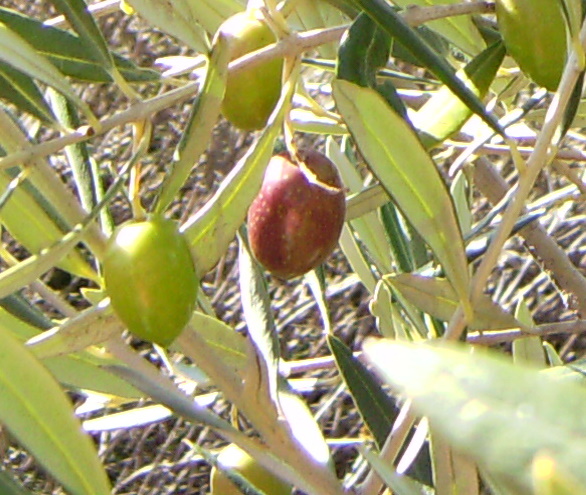
Picual olives in Catalonia
Olive (Olea europaea)
OriginSpain
UseOil and table

The Picual, also known as Marteña or Lopereña, is an olive cultivar from Spain. Picual olives are the most commonly grown olive today for olive oil production,[1] with production centered in the Spanish province of Jaén.[2] Picual trees are estimated to account for 25% of all olive oil production in the world.[3][4] Naturally, this varietal is very high in oil content, at 20-27% by weight.[5][1]

Characteristics

[edit]

Virgin olive oil from Picual olives has high levels of polyphenols (a class of organic compounds which are known to have antioxidant effects),[3] typically between 300 and 700ppm.[4] Many Picual groves are primarily harvested when ripe or overripe to maximize oil content, and thus produce oil with poor taste qualities.[5][1] Less than one quarter of the harvest each year qualifies as Extra Virgin.[5]

Synonyms

[edit]

Aceite (de), Albaideño, Andaluza, Blanca, Calidad (de), Carlon, Corriente, Doncel, Fina, Grosal, Jabata, Javata, Lopereño, Marteño, Marteño Basto, Fino, Molejona, Moradillo, Moradillo Negro, Moradillo Temprano, Morcona, Morenillo, Nevadillo, Nevadillo Blanco, Nevadillo de Martos, Nevado, Nevado Blanco, Nevado Blanco Productivo, Olive Grosse de Tlemcen, Olivo Macho de Santisteban del Puerto, Picua', Picual de Hoja Clara, Picual de Hoja Oscura, Picual de Jaẽn, Picuda, Picual de Almeria, Picudo, Picudo de Martos, Picudo Loporeño, Picudo Marteño, Picvalles, Redondilla, Salgar, Salgares, Sevillano, Sir George Grey's Spanish, Temprana, Tetudilla, Picual de Almeria, Picual de Almeria (Gordal), Picual de Almeria (Picual), Picual de Estepa, Picual de Estepa (Picual), and Picudo (Picual)[6][7]


References

[edit]
Revisions and contributorsEdit on WikipediaRead on Wikipedia
from Grokipedia
Picual is a prominent olive (Olea europaea) cultivar originating from Spain, particularly Andalusia, where it is the most extensively cultivated variety, comprising about 900,000 hectares primarily in the provinces of Jaén, Córdoba, and Granada. Known for its high productivity and suitability for oil extraction, Picual accounted for approximately 30% of global olive oil production as of 2019, making it a cornerstone of the international olive industry. The variety derives its name from the pointed tip ("pico" meaning beak in Spanish) of its fruit, and it is also recognized by numerous synonyms including Marteña, Lopereña, and Nevadillo Blanco. The Picual tree exhibits medium vigor with a spreading growth habit and dense canopy, producing medium-sized, asymmetrically elongated fruits that ripen early to a color at maturity. Agronomically, it is self-fertile, highly productive with consistent yields, and tolerant to , , and , though it shows sensitivity to , soils, , , and the . This adaptability has facilitated its diffusion beyond to regions such as , , , , and , where it thrives in diverse climates. Early bearing and ease of mechanical harvesting further enhance its commercial value. Picual olives yield a high oil content of 20–27%, resulting in extra virgin oils characterized by exceptional stability due to elevated levels of and polyphenols, which confer resistance to oxidation and health benefits. Sensorially, these oils typically present a full-bodied profile with intense fruitiness reminiscent of green , , and , accompanied by balanced bitterness and pungency that evoke freshly cut grass and a light peppery finish. Less than a quarter of Picual olives are processed into virgin or extra virgin grades, though demand is rising owing to award-winning examples that highlight its robust, versatile flavor suitable for both cooking and finishing dishes.

Origin and History

Early Origins

The olive traces its origins to southern , particularly the region of in the province of Jaén, where it emerged as a prominent variety adapted to the local . While the specific naming and widespread recognition of Picual occurred later, its lineage stems from ancient olive plantings introduced or intensified during the Roman , around 200–300 AD, as part of Hispania's agricultural expansion under Roman influence. This period saw the establishment of olive groves across the , with Jaén becoming a key area for cultivation due to its fertile soils and suitable topography. Archaeological evidence indicates that olive cultivation in the dates back much further, to times between 3000 and 4000 BC, with charred olive stones and records from sites in southern demonstrating early exploitation and management of wild olives (Olea europaea var. sylvestris). While general olive processes began in the (around 4500–4000 BP), predating Phoenician and Roman introductions by millennia, the Picual variety itself originated later, during the medieval period (711–1492 AD) in southern , derived from ancient lineages selected for traits like high oil yield and resilience. This adaptation involved shifting from gathering wild oleasters to intentional propagation, evidenced by changes in stone morphology from round wild forms to the more elongate shapes characteristic of early cultivars. Picual played a significant role in early Mediterranean trade and agriculture, contributing to the economic backbone of ancient through olive oil production for local use, export, and rituals. Roman agronomists, such as Lucius Junius Moderatus Columella—a native of southern —documented advanced cultivation techniques in his first-century AD treatise De Re Rustica, emphasizing the importance of selecting hardy varieties for optimal yields in the region's dry conditions, thereby integrating olives into the broader Roman agricultural system. Genetic studies confirm Picual as a distinct lineage within the south Iberian Q1 chlorotype group, exhibiting low attributable to centuries of clonal via cuttings and , which preserved select genotypes while limiting variability from a narrow founder pool. This clonal history, linked to ancient practices, underscores Picual's stability as a but also highlights the risks of vulnerability to diseases due to its homogenized .

Modern Cultivation Expansion

The Picual variety rose to prominence in the , driven by its exceptionally high oil yield of 20-27% of fruit weight, which surpassed many traditional cultivars and supported its widespread adoption for commercial production. This efficiency contributed to a significant expansion of olive acreage in during the first half of the century, as growers sought to replace animal fats with amid dietary shifts and economic needs. By the 2020s, Picual accounted for approximately 25-30% of global production, solidifying its status as the world's most cultivated variety. In the mid-20th century, post-Spanish Civil War replanting programs in Jaén province accelerated Picual's dominance due to its productivity and adaptability to the region's dry conditions. These efforts, spanning the to 1970s, rebuilt and modernized olive landscapes devastated by conflict, focusing on high-yield varieties like Picual to revive rural economies. Further growth occurred in the 1980s through subsidies, which provided substantial grants following Spain's accession to the Common Market in 1986, expanding national olive acreage by over 27% to more than 2 million hectares and prioritizing Picual for its economic viability. Picual cultivation spread internationally from the 1990s onward, with introductions in leading to rapid commercialization and production reaching 12,000 tonnes by 2008, as the variety proved suitable for super-high-density systems. Similar expansions occurred in , , and , where Picual was planted alongside local cultivars for its high oil content and resilience, contributing to South American and U.S. olive industries that now cover thousands of hectares. By 2019, these global adoptions helped maintain Picual's 30% share of worldwide production. The economic impact of Picual's expansion is evident in Spain's olive oil sector, where exports reached €4.56 billion in , with the variety's prevalence driving over half of the output. As of the 2023/24 crop year, exports exceeded €6 billion, supporting annual values well above previous levels into 2025. This growth has bolstered rural employment and positioned as the top global exporter, with Picual's high yields enabling competitive pricing and market dominance.

Botanical Description

Tree Morphology

The Picual tree (Olea europaea 'Picual') typically reaches a mature height of 6 to 10 meters, though it can exceed 10 meters under optimal conditions, with a spreading canopy that forms an open, expansive structure often measuring 3 to 4 meters in diameter. The trunk is sturdy and often develops a gnarled appearance with age, characteristic of vigorous olive cultivars, while young trees exhibit a slow to moderate growth rate of approximately 30 to 60 cm per year in height during the first decade. Leaves of the Picual are elliptic-lanceolate in , measuring 3 to 7 cm in and about 1 cm in width, with a dense arrangement that contributes to the canopy's thickness, averaging high foliage density along branches, and incurved curvature. The upper surface is dark green, while the underside displays a silvery-gray sheen due to fine pubescence, enhancing the tree's aesthetic and . The features a deep that can extend up to 6 meters in porous soils, complemented by extensive lateral roots spreading 8 to 10 meters or more, which supports the tree's renowned by accessing subsurface moisture during dry periods. This architecture allows Picual trees to thrive in arid Mediterranean environments with minimal irrigation once established. Picual olive trees produce hermaphroditic flowers with partial self-compatibility that bloom in spring, typically from to May in their native regions, with shoots bearing 20 to 30 inflorescences, each containing 10 to 30 small white flowers clustered in panicles; cross-pollination with compatible cultivars can enhance yields.

Fruit and Inflorescence

The of the Picual is a paniculate structure, typically comprising 10 to 20 small, white flowers arranged in compound racemes emerging from the axils of leaves on new shoots. These flowers are andromonoecious, featuring a mix of perfect (hermaphroditic) and staminate types, with perfect flowers averaging around 7 to 11 per in Picual trees. Under optimal environmental and nutritional conditions, the fruit set rate—defined as the proportion of pollinated flowers developing into mature drupes—typically reaches 1-2% overall, though initial set can be 10-30% before significant fruit drop. The is a single-seeded characterized by an elongated, asymmetrical shape, with a pointed apex that inspired its Spanish name, "picual," meaning "pointed," and absent or weak . The fruit exhibits moderate elongation (length-to-width ratio greater than 1.5) and strong asymmetry in longitudinal section, with a rounded apex and truncate base. Medium in size, individual fruits typically measure 1.5-2.5 cm in length and weigh 2-4 grams, contributing to the variety's suitability for high-density oil production. During maturation, which spans approximately 5-6 months from fruit set to harvest, the thin skin transitions from vibrant green in early stages to purple hues during veraison and finally to black at full ripeness, accompanied by progressive softening and oil accumulation in the mesocarp. The fruit's high drupelet density refers to the compact mesocarp tissue surrounding the stone, which supports efficient oil extraction. The single seed, or pit, is elongated and occupies 20-25% of the total fruit weight, featuring an acute apex, strong surface rugosity, and 7-10 evenly distributed grooves at the base, with strong asymmetry.

Cultivation

Growing Regions

The Picual olive variety is predominantly grown in Spain's Jaén province, where it occupies over 550,000 hectares and constitutes more than 95% of the region's olive groves. This area accounts for approximately 40% of Spain's total olive oil production, underscoring Jaén's central role in the variety's cultivation. Cultivation extends into adjacent provinces of and , where Picual similarly dominates local olive landscapes and contributes to Andalusia's overall output. Beyond its core Andalusian base, Picual is cultivated in secondary Spanish regions including Castilla-La Mancha and , reflecting the variety's adaptability within the country's diverse olive-growing zones. As of 2023, the total Spanish acreage under Picual exceeds 900,000 hectares, representing nearly half of the nation's olive cultivation dedicated to oil production. Internationally, Picual has expanded into , particularly in and , where it forms a key component of the country's approximately 10,000-15,000 hectares of olive groves; in , it is established in alongside local varieties; in the United States, it thrives in California's Central Valley; in , it is grown in various regions; and in , plantings are increasing. Emerging plantings are also noted in and , capitalizing on the variety's resilience. Picual performs best in Mediterranean climates characterized by 400-700 mm of annual rainfall and elevations typically ranging from 200 to 600 meters, conditions that mirror its native Spanish habitats.

Agronomic Requirements

Picual trees thrive in Mediterranean-type climates characterized by mild winters and hot, dry summers. They tolerate minimum temperatures down to -7°C, though substantial damage occurs below this threshold, and require a period of chilling below 11-12°C for about one month to support proper bud development and flowering. The variety exhibits strong drought resistance, enabling survival in arid conditions, but optimal yields are achieved with annual rainfall of 400-600 or equivalent supplemental to mitigate stress effects on quality. High summer temperatures exceeding 35°C are well-tolerated and can naturally suppress populations of certain pests like the . Suitable soils for Picual cultivation are well-drained loams with a balanced texture, typically comprising 20-75% , 5-35% , and 5-35% clay, and a depth of at least 60-80 cm to accommodate the . The optimal ranges from 7 to 8, with tolerance up to 8.3 in the presence of , though the variety adapts to nutritionally poor soils while remaining highly sensitive to waterlogging, which can lead to . Planting in sites prone to stagnation should be avoided, and measures like double basins may be employed to enhance drainage in heavier soils. In traditional orchards, Picual trees are planted at densities of 200-400 trees per , commonly spaced at 6 m × 6 m (approximately 278 trees/ha) or 7 m × 7 m to facilitate mechanical harvesting with trunk shakers while allowing for canopy development up to 4.7 m in . is essential every 1-2 years to maintain an open vase-shaped canopy with 3-4 main branches starting from a trunk of 1-1.2 m, promoting , light penetration, and balance between vegetative growth and fruit production; light annual or medium every 2-3 years removes drooping limbs and stiffens branches, ideally performed in winter using disinfected tools to prevent spread. Picual demonstrates resistance to olive knot (caused by Pseudomonas savastanoi pv. oleae) but is susceptible to the olive fruit fly (Bactrocera oleae) and highly susceptible to Verticillium wilt (Verticillium dahliae), with field trials confirming significant defoliation and mortality in infected groves. Integrated pest management is the standard approach, incorporating cultural practices such as pruning for better canopy access, soil turning to disrupt pest cycles, and monitoring with McPhail or pheromone traps; biological controls like Bacillus thuringiensis or Spinosad are preferred, supplemented by targeted chemical applications (e.g., dimethoate for mites or deltamethrin for moths) only when infestation thresholds are exceeded to minimize environmental impact.

Production

Yield and Harvesting

Picual olive trees are characterized by alternate bearing, a common trait in many olive cultivars where high-yield "on" years alternate with low-yield "off" years, resulting in average fruit yields of 3 to 5 tons per under traditional rain-fed conditions. This variability is influenced by environmental factors, but can mitigate the cycle and boost output by up to 100%, particularly in deficit irrigation systems that maintain productivity without excessive water use. The cultivar's high oil content in the fruit, typically 20-27% by weight, allows for efficient extraction rates approaching these levels in modern mills, making Picual a favored choice for commercial production. Harvesting of Picual olives generally occurs between and in the , timed to coincide with optimal fruit maturity for oil , with early harvesting preferred to minimize oxidation and preserve sensory attributes. Common methods include mechanical shaking using trunk or canopy harvesters for large-scale operations, which efficiently collect the fruit onto tarps or conveyors, or hand-picking with combs for smaller groves or premium lots to reduce bruising. Early harvest, often starting in late , targets firmer green olives that yield higher-polyphenol oils, though it may slightly lower overall fruit volume compared to later picks. Post-harvest handling is critical to prevent quality degradation, with olives transported immediately to mills—ideally within 24 hours—to avoid and rancidity from microbial activity or heat. Fruits are stored in ventilated crates or bins that promote and prevent piling, reducing moisture buildup and accumulation that could accelerate spoilage. Proper management at this stage ensures the integrity of the subsequent oil extraction process.

Oil Extraction Methods

The extraction of oil from Picual olives traditionally involves stone mills to crush the fruit into a paste, followed by pressing with hydraulic or screw presses to separate the oil from the solids and water. This labor-intensive method, still employed in small-scale operations in regions like Andalusia for its authenticity and minimal mechanical intervention, allows for slower processing that can enhance flavor complexity but typically results in lower efficiency and higher labor costs. In contrast, the modern continuous system begins with hammer mills to grind the olives into a fine paste, followed by malaxation—a conducted at 25-27°C for 30-60 minutes to coalesce oil droplets and facilitate release—before separation via . This approach, widely adopted in large Picual plantations in , yields approximately 18-22% oil by weight from the fruit, depending on maturity and processing efficiency, and enables higher throughput while maintaining quality standards. replaces traditional pressing, using horizontal decanters to spin out the oil without excessive heat or additives. Cold extraction, a of both traditional and modern methods, keeps all processing temperatures below 27°C to qualify the resulting oil as extra virgin and preserve heat-sensitive polyphenols, which contribute to Picual oil's stability and health benefits. Within modern setups, this often employs two-phase decanters that separate oil and wet without added , reducing environmental impact and retaining more hydrophilic compounds compared to three-phase systems, which produce separate oil, vegetation , and drier but consume more during dilution. Two-phase processing is particularly suited to Picual's high oil content, minimizing while yielding comparable extraction rates. Byproduct management in Picual oil production has evolved with these methods; the remaining from is repurposed for secondary oil extraction via methods or as , while modern two-phase systems significantly reduce water usage—often by up to 80% compared to three-phase—lowering in olive-growing areas.

Oil Characteristics

Chemical Composition

Picual olive oil exhibits a fatty acid profile dominated by monounsaturated fatty acids, with comprising 70-80% of the total s, contributing to its high oxidative stability. , a polyunsaturated fatty acid, is present at lower levels of 3-10%, which further enhances resistance to oxidation. This composition results in high oxidative stability, with induction times often exceeding 60 hours at 100°C, as determined by the Rancimat method. Polyphenols in Picual olive oil range from 300 to 800 mg/kg and include prominent antioxidants such as and , which play a crucial role in protecting against oxidative degradation. These compounds support a exceeding 18 months when the oil is stored in cool, dark conditions away from oxygen exposure. Other notable minor compounds include tocopherols at 200-300 mg/kg, primarily , which act as additional antioxidants, and squalene at 0.3-0.5% of the total composition, known for its potential health benefits. Extra virgin Picual olive oil maintains low values below 20 meq O₂/kg, ensuring high initial quality and minimal early oxidation. Harvest timing significantly influences composition, particularly polyphenols; early harvesting increases their concentration by 20-50% relative to late-harvest oils, due to reduced fruit maturation and lower enzymatic degradation.

Sensory Profile

Picual extra virgin olive oil (EVOO) typically exhibits a greenish-gold color, appearing clear with subtle golden reflections that reflect its early harvest and high content. This visual profile is characteristic of oils produced from unripe olives, distinguishing it from more golden hues in riper varieties. The aroma of Picual EVOO is distinctly fruity, dominated by green herbaceous notes reminiscent of , , and , often accompanied by subtle undertones of and . These volatile compounds arise from the enzymatic breakdown of during milling, creating a complex, fresh profile that evokes the Mediterranean grove. Sensory panels consistently identify these , vegetal aromas as prominent in early-season extractions, with intensities rated medium to high on standardized scales. In terms of taste, Picual EVOO delivers a balanced profile with medium fruitiness, complemented by moderate bitterness and that manifests as a peppery, throat-tingling sensation akin to a mild Scoville effect. This stems from elevated levels, which enhance the oil's intensity without overpowering the overall harmony. Early-harvest examples rarely exhibit defects such as rancidity or fustiness, maintaining a clean, vibrant . On (IOC) panel tests, Picual oils frequently classify as intense extra virgin, achieving fruitiness medians exceeding 6 out of 10, alongside zero median defects.

Uses

Culinary Applications

Picual olive oil is highly versatile in culinary applications due to its robust flavor and stability, making it suitable for both raw and cooked preparations. With a smoke point of approximately 210°C, it excels in high-heat methods such as , , and , where it imparts a crisp texture and enhances browning without breaking down quickly. It is particularly effective for vegetables or proteins, and for meats and , adding depth to dishes like roasted potatoes or seared fish. In raw uses, Picual oil serves as an ideal base for salad dressings and vinaigrettes, often combined with or to complement its peppery notes, and it finishes soups, stews, and grain salads effectively. As table olives, Picual varieties are processed through or curing to mitigate their natural bitterness, resulting in black olives with a milder flavor profile compared to the . These cured olives are commonly used in platters, salads, or as stuffings for and fish, providing a subtle essence that pairs well with cheeses, cured meats, and crusty . Picual complements robust ingredients like , herbs such as and , and strong cheeses, enhancing their intensity without overpowering. In regional , it is a staple in cold soups like , where it emulsifies the mixture for a silky texture, and in alioli, a garlic-based that accompanies grilled meats and . Its bold, peppery sensory profile makes it a natural match for tomato-based dishes and hearty marinades. To achieve balanced flavors, Picual is frequently blended with milder varieties like or Hojiblanca, creating oils suitable for broader palates while retaining stability and fruitiness for everyday cooking. These blends are ideal for dressings, sauces, casseroles, and marinades, offering versatility in both traditional and modern recipes.

Health and Nutritional Benefits

Picual extra virgin offers a favorable nutritional profile, delivering about 120 calories per tablespoon, with the majority derived from approximately 10 grams of monounsaturated fats that promote cardiovascular health by improving lipid profiles and reducing oxidation. It is also a good source of , providing approximately 1.9 milligrams per tablespoon, which acts as a lipid-soluble to safeguard cell membranes against free radical damage. The oil's elevated levels of polyphenols, such as and , provide strong effects that mitigate by neutralizing and protecting against cellular damage. These properties contribute to reduced cardiovascular risk, as evidenced by the PREDIMED trial, where a supplemented with extra virgin (such as those produced in , including from Picual varieties) resulted in a 30% lower incidence of major cardiovascular events compared to a low-fat control diet. Oleuropein, a key phenolic compound abundant in Picual , demonstrates activity by inhibiting (COX-2) enzymes, thereby suppressing pro-inflammatory mediators like prostaglandins. This mechanism may benefit conditions such as , where it reduces joint inflammation, and , by alleviating and improving insulin sensitivity. Research from the 2020s underscores the neuroprotective role of hydroxytyrosol, which is particularly concentrated in Picual olive oil, in countering Alzheimer's disease pathology. A 2022 study showed that an olive-derived extract rich in hydroxytyrosol prevented β-amyloid aggregation and oxidative stress in neuronal models, key factors in Alzheimer's progression, suggesting potential for cognitive preservation through regular consumption.

Nomenclature

Synonyms

The Picual olive cultivar, predominant in Spain, is referred to by a variety of regional synonyms that highlight its widespread cultivation across and beyond. Primary among these are Marteña, a name derived from the town of Martos in Jaén province where the variety has deep historical roots, Lopereña associated with the Lopera region in Jaén, and Nevadillo Blanco used in parts of . The term "Picual" originates from the Spanish word pico, meaning "" or "point," alluding to the distinctive pointed tip of the fruit that sets it apart morphologically. Regional synonyms often stem from local dialects, geographic origins, or descriptive traits, such as Marteño (a variant of Marteña) tied to Jaén's olive heritage. The (IOC) database catalogs 19 synonyms for Picual, encompassing both historical and vernacular names used in olive-growing provinces like Jaén, , and . Notable examples include Andaluza, Blanca, , Fina, Picúa, Sevillano, Albaideño, Grosal, Jabata, Morcona, Nevado, Redondilla, Salgar, and Temprana. These names reflect adaptations to local farming contexts, where formal designations like Aceituna Picual prevail in commercial and scientific settings, while colloquial terms like Marteño persist in provincial usage. Picual is often compared to the cultivar, another prominent Spanish olive variety, due to their widespread cultivation and contrasting traits. Picual exhibits a higher oil yield, typically around 22%, compared to Arbequina's approximately 18-20%, making it more efficient for large-scale oil production. However, Picual oil tends to have a more bitter and robust flavor profile, while Arbequina produces a milder, fruitier oil that is less pungent. Additionally, Arbequina olives ripen earlier, often harvested from October to November, whereas Picual ripens later, extending into December or January, which influences harvest timing and oil characteristics. In relation to Hojiblanca, another Andalusian variety, Picual shares regional origins but Hojiblanca demonstrates greater , enabling it to thrive in arid conditions with minimal . Picual is moderately tolerant to but shows sensitivity relative to Hojiblanca. Picual is primarily cultivated for oil production, yielding high-quality extra virgin with elevated levels, whereas Hojiblanca serves a dual purpose, being used both for oil and as table olives due to its larger size and balanced flesh-to-pit ratio. Compared to the Greek , Picual offers comparable or higher content in its , typically ranging from 300-800 mg/kg versus Koroneiki's 400-800 mg/kg, contributing to enhanced stability and health benefits in both. Koroneiki produces smaller fruit, which can complicate harvesting but supports high-density planting, while both varieties are renowned for their substantial yields and suitability for intensive orchards. Breeding efforts have led to hybrids such as Sikitita, a cross between Picual (as the female parent) and (as the male parent), aimed at combining Picual's high yield and resistance with Arbequina's compact growth and early bearing. These hybrids, selected for improved traits like higher content and better adaptability to super-high-density systems, have been registered in variety catalogs since the , facilitating their commercial adoption across .

References

Add your contribution
Related Hubs
User Avatar
No comments yet.