Hubbry Logo
Cuban solenodonCuban solenodonMain
Open search
Cuban solenodon
Community hub
Cuban solenodon
logo
8 pages, 0 posts
0 subscribers
Be the first to start a discussion here.
Cuban solenodon
Cuban solenodon
from Wikipedia

Cuban solenodon[1]
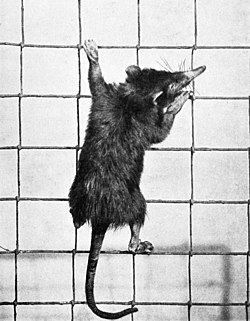
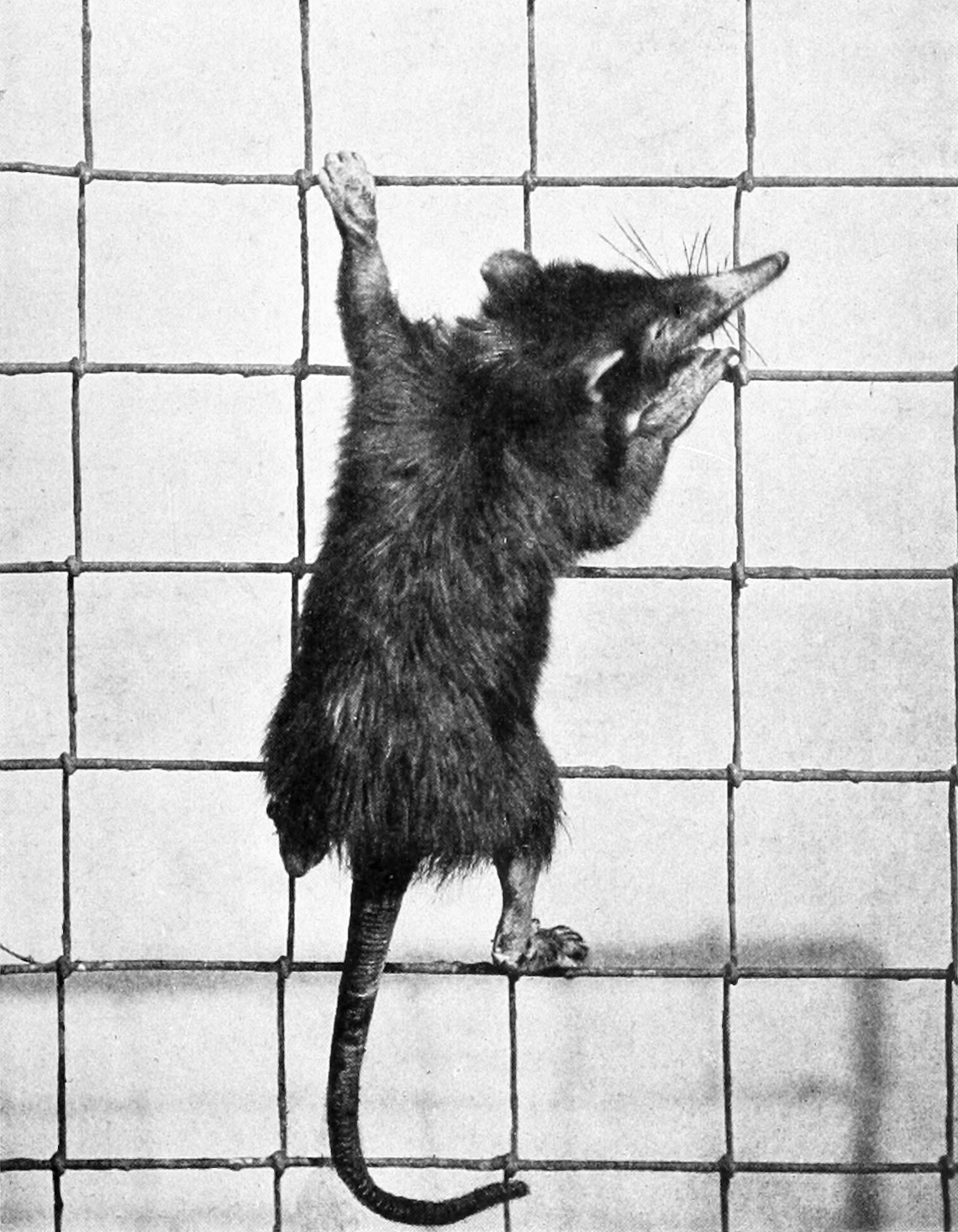
Specimen at the Bronx Zoo, 1913
Scientific classification Edit this classification
Kingdom: Animalia
Phylum: Chordata
Class: Mammalia
Order: Eulipotyphla
Family: Solenodontidae
Genus: Atopogale
Cabrera, 1925
Species:
A. cubana
Binomial name
Atopogale cubana
(Peters, 1861)
Cuban solenodon range
Synonyms
  • Solenodon cubanus
Skeleton

The Cuban solenodon or almiquí (Atopogale cubana) is a small, furry, shrew-like mammal endemic to mountainous forests on Cuba. It is the only species in the genus Atopogale. An elusive animal, it lives in burrows and is only active at night when it uses its unusual toxic saliva to feed on insects. The solenodons (family Solenodontidae), native to the Caribbean, are one of only a few mammals that are venomous.

The Cuban solenodon is endangered and was once considered extinct due to its rarity. It and the Hispaniolan solenodon (Solenodon paradoxus) are the only surviving solenodon species; the others are extinct.

Taxonomy

[edit]

Although formerly classified in the genus Solenodon, phylogenetic evidence supports it being in its own genus, Atopogale.[3]

Rediscovery

[edit]
Illustration

Since its discovery in 1861 by the German naturalist Wilhelm Peters, only 36 had ever been caught. By 1970, some thought the Cuban solenodon had become extinct, since no specimens had been found since 1890. Three were captured in 1974 and 1975, and subsequent surveys showed it still occurred in many places in central and western Oriente Province, at the eastern end of Cuba; however, it is rare everywhere. Prior to 2003, the most recent sighting was in 1999, mainly because it is a nocturnal burrower, living underground, and thus is very rarely seen. The Cuban solenodon found in 2003 was named Alejandrito. It had a mass of 24 oz (0.68 kg) and was healthy. It was released back into the wild after two days of scientific study were completed.

Appearance

[edit]

With small eyes, and dark brown to black hair, the Cuban solenodon is sometimes compared to a shrew, although it most closely resembles members of the family Tenrecidae of Madagascar. It is 16–22 in (41–56 cm) long from nose to tail-tip and resembles a large brown rat with an extremely elongated snout and a long, naked, scaly tail.

Status

[edit]

Willy Ley wrote in 1964 that the Cuban solenodon was, if not extinct, among "the rarest animals on earth".[4] It was declared extinct in 1970, but was rediscovered in 1974. Since 1982, it has been listed as an endangered species, in part because it only breeds a single litter of one to three in a year (leading to a long population recovery time), and because of predation by invasive species, such as small Indian mongooses, black rats, feral cats, and feral dogs. The species is also thought to be threatened by deforestation as well as habitat degradation due to logging and mining. However, there is very little conservation attention given to the species.[5]

Distribution and habitat

[edit]

It is endemic to mountainous forests in the Nipe-Sagua-Baracoa mountain range of eastern Cuba, in the provinces of Holguín, Guantánamo, and Santiago de Cuba, though subfossil evidence showed it once inhabited throughout the island. It is nocturnal and travels at night along the forest floor, looking for insects and small animals on which to feed.

Behavior

[edit]

This species has a varied diet. At night, they search the forest floor litter for insects and other invertebrates, fungi, and roots. They climb well and feed on fruits, berries, and buds, but have more predatory habits, too. With venom from modified salivary glands in the lower jaw, they can kill lizards, frogs, small birds, or even rodents. They seem not to be immune to the venom of their own kind, and cage mates have been reported dying after fights.

Mating

[edit]
Taxidermied specimens at the Cambridge University Museum of Zoology

Cuban solenodons only meet to mate, and the male practices polygyny (i.e. mates with multiple females). The males and females are not found together unless they are mating. The pair will meet up, mate, then separate. The males do not participate in raising any of the young.

References

[edit]
[edit]
Revisions and contributorsEdit on WikipediaRead on Wikipedia
from Grokipedia
The Cuban (Atopogale cubana) is a small, insectivorous eulipotyphlan mammal endemic to , distinguished by its elongated, flexible snout, coarse dark brown fur, tiny eyes, and venom-delivering salivary glands—an ancient trait linking it to a lineage that originated over 70 million years ago during the period. Measuring 280–390 mm in head-body length with a 175–255 mm scaly tail and weighing approximately 1 kg, it exhibits a chunky build with short legs, large ears partially hidden by fur, and a musky , making it one of the world's rarest and most primitive surviving mammals. As the sole species in its genus within the family Solenodontidae, the Cuban solenodon shares its taxonomic family only with the closely related (Solenodon paradoxus), with molecular evidence indicating their divergence around 3.7–4.8 million years ago via over-water dispersal. Nocturnal and largely terrestrial despite some climbing ability, it forages solitarily in dense, humid forests and shrublands of eastern Cuba's mountainous regions, such as the and Nipe-Sagua-Baracoa, retreating to burrows, rock crevices, or hollow logs during the day. Its omnivorous diet emphasizes like insects, earthworms, and arthropods, occasionally including small reptiles, amphibians, carrion, and vegetable matter such as roots and fruits, which it detects using its sensitive and toxic saliva to immobilize prey via grooved lower incisors. Once feared extinct after the , the was rediscovered through live captures in 2003 and 2011, confirming its persistence in remote protected areas like Alejandro de Humboldt National Park. Assessed as Endangered on the in 2015 (version 2018), the Cuban solenodon faces ongoing decline due to a small and decreasing population, primarily threatened by from and , and predation by including dogs, cats, rats, and mongooses. Conservation initiatives, supported by organizations like the IUCN Small Mammal Specialist Group, include camera-trap surveys, scent-detection dog deployments, and species action plans to map distribution and mitigate invasive threats, underscoring its role as a flagship for preservation.

Taxonomy and phylogeny

Classification

The Cuban solenodon is formally classified in the genus Atopogale, family Solenodontidae, and order . It is the sole species in its monotypic genus, Atopogale cubana, which distinguishes it from the closely related ( paradoxus), though some authorities retain both in due to ongoing taxonomic debate. Originally described as cubanus by German zoologist Wilhelm Peters in based on specimens from , the species has undergone taxonomic revisions reflecting advances in phylogenetic understanding. The order unites solenodons with , moles, and hedgehogs, a monophyletic grouping established through molecular and morphological analyses that replaced the polyphyletic former order . Within Solenodontidae, the family containing the two extant solenodon species, A. cubana represents the Cuban lineage. Phylogenetic studies place Solenodontidae as the basalmost family in , with divergence from other eulipotyphlan lineages estimated at approximately 57 million years ago during the . The genus Atopogale was proposed by in 1925 to separate the Cuban solenodon from based on cranial and dental morphology, though it was not universally adopted initially. Subsequent molecular evidence has supported distinctions, with a 2016 analysis of nuclear genes estimating divergence between the Cuban and Hispaniolan lineages at 3.7–4.8 million years ago (95% credibility interval: 2.6–6.4 million years), indicating independent evolution on via over-water dispersal in the Early ; older studies suggested ~25 million years ago, but nuclear data is considered more reliable. This separation has led to the formal recognition of Atopogale in some taxonomic treatments, including by the IUCN since 2016, though debate persists. Historical synonyms include Solenodon cubanus poeyanus (Varona, 1979), reflecting subspecies proposals that are no longer recognized.

Evolutionary history

The Solenodontidae family, which includes the Cuban solenodon (Atopogale cubana), represents one of the most ancient lineages among extant placental mammals, often described as a "living fossil" due to its persistence through major extinction events. Molecular analyses of the solenodon genome indicate that the family diverged from other eulipotyphlans approximately 73.6 million years ago during the Late Cretaceous period. This early split positions solenodons as a basal group within the order Eulipotyphla, predating the diversification of related families such as shrews (Soricidae), moles (Talpidae), and hedgehogs (Erinaceidae). The ancestors of solenodontids survived the Cretaceous-Paleogene (K-Pg) mass extinction event around 66 million years ago, which eliminated non-avian dinosaurs and profoundly reshaped mammalian evolution, allowing this archaic insectivoran line to persist while many contemporaneous groups vanished. Phylogenetically, the Cuban solenodon shares its most recent common ancestor with the Hispaniolan solenodon (S. paradoxus), with nuclear gene analyses estimating their divergence at 3.7–4.8 million years ago in the Early Pliocene. Among extinct relatives, the Oligocene North American genus Apternodus (dating to approximately 30 million years ago) exhibits morphological similarities to modern solenodons, including zalambdodont dentition and cranial features, supporting a close phylogenetic relationship and suggesting that solenodontids once had a broader continental distribution. This connection underscores the family's North American origins, with subsequent isolation on Caribbean islands contributing to their endemism following the tectonic formation of the Greater Antilles arc in the Eocene-Oligocene. The record provides limited for the Cuban , with no pre-Holocene remains identified on the island, reflecting the challenges of preserving small fossils in Cuba's karstic terrains. However, mainland fossils of zalambdodont insectivores, such as those of Apternodus from n deposits, indicate an ancient continental ancestry for solenodontids, consistent with vicariance models where tectonic separation of the proto-Antilles from isolated early populations. data further support this scenario, showing that while the family arose post-K-Pg, the Cuban lineage likely resulted from over-water dispersal from rather than direct vicariance, highlighting a complex interplay of dispersal and isolation in their evolutionary history.

Physical characteristics

External appearance

The Cuban solenodon (Solenodon cubanus) is a medium-sized eulipotyphlan with a head-body ranging from 28 to 39 cm, a tail of 17.5 to 25.5 cm, and a body weight of 0.5 to 1 kg. For instance, a live specimen captured in 2003 weighed 0.68 kg. Its pelage is dark brown to black on the dorsum and sides, with a coarser and longer texture than that of ; the muzzle and shoulders feature a contrasting to yellow patch that sometimes extends to the flanks and venter. The tail is strong, flexible, scaly, and nearly hairless, often used for support. Distinctive external features include an elongated, tubular that is stouter than a shrew's but highly flexible like a , tiny eyes indicative of reduced vision, prominent vibrissae () for sensory detection, short legs adapted for terrestrial movement, and large, rabbit-like ears that project prominently. The sexes are externally similar, with no pronounced in size.

Anatomy and physiology

The Cuban solenodon exhibits a robust skeletal structure adapted for a lifestyle, featuring strong forelimbs equipped with clawed digits that facilitate digging into soil and leaf litter for prey extraction. Its follows the formula 3/3, 1/1, 3/3, 3/3, totaling 40 teeth, with enlarged anterior incisors that include specialized grooves in the second lower incisors for delivery. The lacks a complete and auditory bullae, contributing to a lightweight yet sturdy cranial framework suited to its insectivorous habits. Sensory systems in the Cuban solenodon emphasize non-visual cues, with poor eyesight reflected in its tiny eyes, leading to primary reliance on olfaction, hearing, and tactile sensation for and prey detection. Long, sensitive (vibrissae) on the elongated snout enhance tactile exploration, while a highly developed allows for effective foraging in low-light conditions. The is notably large relative to body size among insectivores, supporting complex sensory integration for environmental . The venom apparatus is a defining physiological trait, with toxic saliva produced by enlarged submaxillary glands and delivered through grooves in the lower incisors, immobilizing invertebrate prey through rapid injection. The venom's composition includes multiple paralogous kallikrein-1-like serine protease peptides, which induce hypotensive effects and contribute to prey paralysis, distinct from but convergent with systems in other venomous mammals like the platypus and the closely related Hispaniolan solenodon. This mechanism underscores the solenodon's predatory efficiency despite its primitive morphology.

Distribution and habitat

Geographic range

The Cuban solenodon (Atopogale cubana) is endemic to Cuba, with no known populations outside the island. Its current geographic range is confined to the eastern portion of the country, specifically within the Nipe-Sagua-Baracoa massif. This region encompasses the provinces of Holguín, Guantánamo, and Santiago de Cuba, where the species persists in fragmented montane forests. Core areas of occupancy include protected sites such as Alejandro de Humboldt National Park in the northeastern part of the massif and Sierra Cristal National Park in . These locations represent the primary strongholds for the species, supported by targeted surveys confirming its presence, including field surveys in 2024 that detected signs of the species above 740 m in Alejandro de Humboldt National Park. Historically, the Cuban solenodon occupied a broader distribution across both eastern and western , including pre-colonial forest habitats, as evidenced by subfossil remains. As of the 2018 IUCN assessment, its range is severely restricted due to extensive habitat alteration, limiting it to remnant suitable areas within the eastern . In contrast to its closest living relative, the (Solenodon paradoxus), which is distributed across the island of , the Cuban solenodon exhibits no trans-island range and remains strictly limited to Cuban territory.

Habitat requirements

The Cuban solenodon (Atopogale cubana) primarily inhabits montane and submontane primary forests in eastern , favoring ecosystems such as moist broadleaf, wet broadleaf, and pine forests at elevations ranging from 400 to 800 meters. These habitats feature dense vegetation, thick layers of leaf litter, and rocky outcrops that provide cover and opportunities, while the species actively avoids open areas or agricultural lands. Exhibiting a semi-fossorial lifestyle, the constructs burrows in loose or occupies existing shelters such as hollow logs and rock crevices for resting and nesting. These refuges are essential for protection from predators and environmental stressors, allowing the animal to remain concealed during the day in its nocturnal routine. The species thrives in humid tropical climates characteristic of its habitats, where annual rainfall typically exceeds 2,000 mm and supports consistently moist conditions without a pronounced . It demonstrates high sensitivity to habitat drying and fragmentation through , which disrupts the microhabitat structure necessary for its survival.

Behavior

Activity and locomotion

The Cuban solenodon exhibits a strictly nocturnal , emerging from its daytime refuges at to engage in activity and returning to shelter before dawn. During the diurnal period, it rests in burrows, rock clefts, hollow trees, or dense vegetation cover, minimizing exposure to predators and environmental stresses. Locomotion in the Cuban solenodon is predominantly quadrupedal, characterized by a slow and deliberate walking gait in which only the toes of the hind feet contact the ground while the heel remains elevated. It employs powerful forepaws equipped with robust claws for digging and probing the soil, facilitating movement through leaf litter and . Although primarily terrestrial, it occasionally climbs low vegetation or vertical surfaces using its forelimbs and stout for balance and propulsion; when disturbed, it can accelerate into a surprisingly rapid run despite its generally lumbering demeanor. For orientation in the dimly lit forest understory, the Cuban solenodon relies on multimodal sensory , including echolocation-like clicks generated by rapid tongue movements against the , which produce ultrasonic pulses (5–150 kHz) to detect obstacles and prey. These are complemented by acute senses of smell and hearing, tactile feedback from a flexible, elongated and prominent vibrissae, and chemical cues from located in the axillae and regions, which enable marking of trails and territories.

Foraging and diet

The Cuban solenodon (Solenodon cubanus) is primarily an with an omnivorous diet that emphasizes arthropods such as (including beetles and ), spiders, and earthworms, comprising the bulk of its food intake, while also incorporating small vertebrates like and frogs, carrion, roots, fruits, and leaves. This varied composition allows adaptation to fluctuating resource availability in its forested habitat, where invertebrate prey dominates but plant matter provides seasonal supplements. Foraging occurs mainly at night, with the solenodon using its elongated, flexible —supported by a —to probe , litter, and rotten logs for hidden prey, often digging shallow pits or tearing into decaying wood with robust foreclaws. This methodical strategy targets concealed and occasionally larger items, minimizing energy expenditure in dense undergrowth. To capture more challenging prey, the Cuban solenodon employs delivered via grooved lower incisors, which immobilizes vertebrates like small reptiles or amphibians, facilitating consumption without prolonged struggle. Its overall low metabolic demands, characteristic of solenodons relative to smaller insectivores, align with sporadic success in resource-poor environments.

Social structure

The Cuban solenodon exhibits a primarily solitary , but forms small, loosely social family groups centered around a and her offspring, with up to eight individuals sharing systems or dens. These groups typically include an adult female with 1–2 young, and occasionally an adult male, though males do not remain with the family unit long-term. Multiple such family units may coexist in the same network, promoting shared shelter while independently at night. Communication among Cuban solenodons occurs through vocalizations such as twitters, chirps, squeaks, and clicks, which are used during social interactions, greetings, or minor disputes within the group. They also rely on chemical signals, produced by musky glands in the armpits and groin regions that emit a strong, goat-like for marking and recognition. Physical cues, including open-mouthed approaches possibly involving ultrasonic sounds inaudible to humans, further aid in social bonding and navigation within burrows. Territorial behaviors are minimal, with individuals maintaining sedentary home ranges that show limited overlap except within groups, reflecting their low-density, elusive nature in dense forest habitats.

Reproduction

Mating behavior

The Cuban exhibits a polygynous in which males mate with multiple females throughout their lives, with no evidence of long-term pair bonding between sexes. Males compete for access to receptive females primarily through scent marking from specialized glands in the and armpit regions, which produce a musky , and through vocalizations including bird-like chirps and short "piff" calls. Breeding occurs year-round, though observations suggest a peak during the rainy season from May to October, potentially aligned with increased food availability. During courtship, males approach estrous females with a combination of vocal chirps, mutual sniffing of the urogenital area, and nose-to-nose contact, culminating in brief copulation lasting approximately 5 minutes. Females typically produce litters of 1 to 2 young per pregnancy, though reports of up to 3 exist; the gestation period is unknown but thought to exceed 84 days, inferred from studies of the closely related (Solenodon paradoxus). Increased social tolerance among individuals, including occasional grouping of adults and juveniles, has been noted during the breeding period.

Parental care

Much of what is known about reproduction in the Cuban solenodon is inferred from limited observations and studies of the closely related Hispaniolan solenodon, due to the Cuban species' rarity. The Cuban solenodon produces altricial young that are born blind and hairless in underground burrows, where the female provides exclusive care following a gestation period of unknown duration but inferred to exceed 84 days based on the related species. Litters typically consist of 1–2 offspring, reflecting the species' low reproductive rate of up to two litters per year, which limits population recovery and heightens vulnerability to threats. Females nurse their young for approximately 75 days using two posterior mammary glands that deliver high in content, essential for the rapid growth of these energy-demanding insectivores. Males play no role in rearing, leaving females solely responsible for and provisioning during this period; however, subadult from previous litters may occasionally remain in the natal , potentially assisting indirectly through group cohesion. Developmental milestones include the young remaining dependent on the mother for several months post-weaning, which occurs around 2–3 months of age, as they gradually learn skills in the system. Individuals attain adult body size by about 8 months; is unknown but may occur around 1 year of age or later, inferred from related . In the wild, lifespan is estimated at up to 5 years, though captive counterparts may exceed this. This prolonged underscores the ' K-selected life history strategy.

Conservation status

Population and threats

The Cuban solenodon (Atopogale cubana, synonym Solenodon cubanus) is classified as Endangered (EN) on the since 1982, with the last full assessment in 2015, due to its restricted range, ongoing habitat degradation, and vulnerability to invasive predators. No reliable current population estimate exists, but the species is believed to number in the low thousands or fewer mature individuals, with the overall trend decreasing; precise counts remain elusive owing to the species' nocturnal habits and low detection rates during surveys. Historical records indicate severe declines following European colonization, with the species now confined to fragmented montane forests in eastern , primarily within protected areas like Alejandro de Humboldt National Park. Habitat loss represents the foremost threat, with approximately 85% of Cuba's original vegetation cover cleared for , , and settlement, severely fragmenting the solenodon's preferred lowland and montane forests. Introduced predators, including mongooses (Herpestes auropunctatus), black rats (Rattus rattus), feral dogs, and cats, exert intense predation pressure, as the solenodon evolved without such threats and exhibits slow, clumsy locomotion that offers little escape. These invasives also compete for resources and destroy burrows, compounding the impact on this burrowing . The species' low reproductive rate—with females producing up to two litters of 1–2 young per year—hinders recovery, as even moderate mortality rates outpace recruitment. Secondary threats include diseases potentially transmitted by invasive and carnivores, which could further suppress survival in already isolated subpopulations. may exacerbate habitat stress through increased and altered patterns in eastern Cuba's montane regions, indirectly affecting prey availability and integrity.

Rediscovery and surveys

The Cuban solenodon (Atopogale cubana) was first described scientifically in 1861 by the German naturalist Wilhelm Peters based on specimens from . The last confirmed sighting in the occurred in 1890 near in eastern , after which no further live individuals were documented for decades. By 1970, the species was widely presumed extinct due to the absence of verified records and ongoing habitat pressures. The first modern rediscovery came in 1974 when a single live individual was captured in Alejandro de Humboldt National Park, followed by two more captures in 1975, confirming the species' persistence in remote eastern Cuban forests. A visual sighting was reported in 1999 in the eastern province of by local residents and researchers, providing the first evidence since the 1970s captures. In 2003, a healthy male specimen weighing approximately 0.68 kg—nicknamed Alejandrito after the farmer who found it—was captured in the , examined, and released after two days; this brought the total number of documented live captures to 37. No direct captures occurred between 2003 and 2012, but indirect evidence from field surveys, including characteristic burrows, scats, and nose-poke holes in soil, indicates ongoing presence in suitable habitats. A joint Cuba-Japan expedition in 2012 captured seven individuals (four males and three females) on the El Toldo plateau within Alejandro de Humboldt National Park, offering the most recent direct encounters and highlighting localized populations in montane forests. Modern surveys since around 2010 have increasingly relied on non-invasive methods to address the species' extreme rarity and elusive nature. Camera traps have been deployed in protected areas like Alejandro de Humboldt National Park to detect activity, while genetic sampling of from scats and soil has helped confirm occupancy without live captures. Ongoing efforts, including 2020 field expeditions and community-based monitoring in the park, continue to document indirect signs, though the solenodon's strictly nocturnal habits and preference for dense vegetation pose significant detection challenges, often requiring thermal imaging or extended trap arrays for success.

Protection efforts

The Cuban solenodon (Atopogale cubana) is protected under Cuban national legislation, including laws enacted since 1959 such as Law No. 81 of 1997 on the Environmental Policy and Decree-Law 201 of 1999, which established the National System of Protected Areas (SNAP) covering approximately 19.9% of the country's territory. These protections encompass all 11 endemic terrestrial mammals, with the solenodon classified as endangered by the IUCN Red List. Key habitats fall within SNAP-designated areas, including Alejandro de Humboldt National Park—a UNESCO World Heritage Site since 2001 that safeguards diverse endemic species through strict conservation management—and Sierra del Cristal National Park. Conservation initiatives are led by the IUCN Species Survival Commission's Small Mammal Specialist Group, which has conducted field surveys since 2021 in collaboration with Cuban biologists from the Ministry of Science, Technology, and Environment, employing camera traps, scent-detection dogs, and indirect sign searches to map distribution and threats. Zoo New England supports these efforts through funding and partnerships, contributing to a three-year project (2021–2023) focused on developing targeted action plans, while the ZSL EDGE of Existence programme has funded prior assessments to evaluate population status and habitat needs. Community engagement programs include ecological knowledge surveys in rural villages near protected areas to raise awareness and identify local threats, fostering participation in monitoring. Pilot efforts to control invasive predators, such as feral dogs, are integrated into these surveys to mitigate predation risks in core habitats. Future strategies emphasize the completion and implementation of a comprehensive Species Action Plan, anticipated post-2023, which will consolidate survey data into long-term management recommendations. Expansion of networks across eastern Cuba, including the and Cristal regions, aims to enhance ongoing monitoring and detect trends. restoration initiatives, such as within protected areas, support broader ecosystem recovery to bolster solenodon populations, though sustained international funding from organizations like IUCN and ZSL remains essential for scaling these activities.

References

Add your contribution
Related Hubs
User Avatar
No comments yet.