Hubbry Logo
search
logo
2121388

Autofocus

logo
Community Hub0 Subscribers
Read side by side
from Wikipedia
Autofocus
Several green focus points/areas indicating where the autofocus has locked
One selected green focus point using pinpoint autofocus

An autofocus (AF) optical system uses a sensor, a control system and a motor to focus on an automatically or manually selected point or area. An electronic rangefinder has a display instead of the motor; the adjustment of the optical system has to be done manually until indication. Autofocus methods are distinguished as active, passive or hybrid types.

Autofocus systems rely on one or more sensors to determine correct focus. Some AF systems rely on a single sensor, while others use an array of sensors. Most modern SLR cameras use through-the-lens optical sensors, with a separate sensor array providing light metering, although the latter can be programmed to prioritize its metering to the same area as one or more of the AF sensors.

Through-the-lens optical autofocusing is usually speedier and more precise than manual focus with an ordinary viewfinder, although more precise manual focus can be achieved with special accessories such as focusing magnifiers. Autofocus accuracy within 1/3 of the depth of field (DOF) at the widest aperture of the lens is common in professional AF SLR cameras.

Most multi-sensor AF cameras allow manual selection of the active sensor, and many offer automatic selection of the sensor using algorithms which attempt to discern the location of the subject. Some AF cameras are able to detect whether the subject is moving towards or away from the camera, including speed and acceleration, and keep focus — a function used mainly in sports and other action photography. Canon cameras call this AI servo; Nikon cameras call it "continuous focus".

The data collected from AF sensors is used to control an electromechanical system that adjusts the focus of the optical system. A variation of autofocus is an electronic rangefinder, in which focus data are provided to the operator, but adjustment of the optical system is still performed manually.

The speed of the AF system is highly dependent on the widest aperture offered by the lens at the current focal length. F-stops of around f/2 to f/2.8 are generally considered best for focusing speed and accuracy. Faster lenses than this (e.g.: f/1.4 or f/1.8) typically have very low depth of field, meaning that it takes longer to achieve correct focus, despite the increased amount of light. Most consumer camera systems will only autofocus reliably with lenses that have a widest aperture of at least f/5.6, whilst professional models can often cope with a widest aperture of f/8, which is particularly useful for lenses used in conjunction with teleconverters. [citation needed]

History

[edit]

Between 1960 and 1973, Leitz (Leica)[1] patented an array of autofocus and corresponding sensor technologies. In 1976, Leica had presented a camera based on their previous development at Photokina, named Correfot, and in 1978 they displayed an SLR camera with fully operational autofocus.

The first mass-produced autofocus camera was the Konica C35 AF, a simple point and shoot model released in 1977. The Polaroid SX-70 Sonar OneStep was the first autofocus single-lens reflex camera, released in 1978.

The Pentax ME-F, which used focus sensors in the camera body coupled with a motorized lens, became the first autofocus 35 mm SLR in 1981.

In 1983 Nikon released the F3AF, their first autofocus camera, which was based on a similar concept to the ME-F.[2]

The Minolta 7000, released in 1985, was the first SLR with an integrated autofocus system, meaning both the AF sensors and the drive motor were housed in the camera body, as well as an integrated film advance winder — which was to become the standard configuration for SLR cameras from this manufacturer, and also Nikon abandoned their F3AF system and integrated the autofocus-motor and sensors in the body.

Canon decided to discontinue their FD mount and switched to the completely electronic EF mount with motorised lenses in 1987.

Pentax was the first to introduce focusing distance measurement for SLR cameras with the FA and FA* series lenses from 1991. Their first KAF-mount Pentax lenses with AF had been introduced in 1989.[3]

In 1992, Nikon changed back to lens integrated motors with their AF-I and AF-S range of lenses; today their entry-level DSLRs do not have a focus motor in the body due to the availability of motors in all new developed AF-Lenses.

Active

[edit]

Active AF systems measure distance to the subject independently of the optical system, and subsequently adjust the optical system for correct focus.

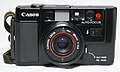
There are various ways to measure distance, including ultrasonic sound waves and infrared light. In the first case, sound waves are emitted from the camera, and by measuring the delay in their reflection, distance to the subject is calculated. Polaroid cameras including the Spectra and SX-70 were known for successfully applying this system. In the latter case, infrared light is usually used to triangulate the distance to the subject. Compact cameras including the Nikon 35TiQD and 28TiQD, the Canon AF35M, and the Contax T2 and T3, as well as early video cameras, used this system. A newer approach included in some consumer electronic devices, like mobile phones, is based on the time-of-flight principle, which involves shining a laser or LED light to the subject and calculating the distance based on the time it takes for the light to travel to the subject and back. This technique is sometimes called laser autofocus, and is present in many mobile phone models from several vendors. It is also present in industrial and medical[4] devices.

An exception to the two-step approach is the mechanical autofocus provided in some enlargers, which adjust the lens directly.

Passive

[edit]

Passive AF systems determine correct focus by performing passive analysis of the image that is entering the optical system. They generally do not direct any energy, such as ultrasonic sound or infrared light waves, toward the subject. (However, an autofocus assist beam of usually infrared light is required when there is not enough light to take passive measurements.) Passive autofocusing can be achieved by phase detection or contrast measurement.

Phase detection

[edit]
Phase detection: In each figure (not to scale), the purple skyline represents the object to be focused on, the red and green lines represent light rays passing through apertures at the opposite sides of the lens, and the yellow rectangle represents sensor arrays (one for each aperture). Figures 1 to 4 represent conditions where the lens is focused (1) too near, (2) correctly, (3) too far and (4) much too far. The phase difference between the two skyline profiles can be used to determine in which direction and how much to move the lens to achieve optimal focus.

Phase detection (PD) is achieved by dividing the incoming light into pairs of images and comparing them. Through-the-lens secondary image registration (TTL SIR) passive phase detection is often used in film and digital SLR cameras. The system uses a beam splitter (implemented as a small semi-transparent area of the main reflex mirror, coupled with a small secondary mirror) to direct light to an AF sensor at the bottom of the camera. Two micro-lenses capture the light rays coming from the opposite sides of the lens and divert it to the AF sensor, creating a simple rangefinder with a base within the lens's diameter. The two images are then analysed for similar light intensity patterns (peaks and valleys) and the separation error is calculated in order to find whether the object is in front focus or back focus position. This gives the direction and an estimate of the required amount of focus-ring movement.[5]

PD AF in a continuously focusing mode (e.g. "AI Servo" for Canon, "AF-C" for Nikon, Pentax and Sony) is a closed-loop control process. PD AF in a focus-locking mode (e.g. "One-Shot" for Canon, "AF-S" for Nikon and Sony) is widely believed to be a "one measurement, one movement" open-loop control process, but focus is confirmed only when the AF sensor sees an in-focus subject. The only apparent differences between the two modes are that a focus-locking mode halts on focus confirmation, and a continuously focusing mode has predictive elements to work with moving targets, which suggests they are the same closed-loop process.[6]

Although AF sensors are typically one-dimensional photosensitive strips (only a few pixels high and a few dozen wide), some modern cameras (Canon EOS-1V, Canon EOS-1D, Nikon D2X) feature TTL area SIR[citation needed] sensors that are rectangular in shape and provide two-dimensional intensity patterns for a finer-grain analysis. Cross-type focus points have a pair of sensors oriented at 90° to one another, although one sensor typically requires a larger aperture to operate than the other.

Some cameras (Minolta 7, Canon EOS-1V, 1D, 30D/40D, Pentax K-1, Sony DSLR-A700, DSLR-A850, DSLR-A900) also have a few "high-precision" focus points with an additional set of prisms and sensors; they are only active with "fast lenses" with certain geometrical apertures (typically f-number 2.8 and faster). Extended precision comes from the wider effective measurement base of the "range finder"

Some modern sensors (for example one in Librem 5) include about 2% phase detection pixels on the chip. With suitable software support, that enables phase detection auto focus.

Phase detection system: 7 – Optical system for focus detection; 8 – Image sensor; 30 – Plane of the vicinity of the exit pupil of the optical system for photography; 31, 32 – Pair of regions; 70 – Window; 71 – Visual field mask; 72 – Condenser lens; 73, 74 – Pair of apertures; 75 – Aperture mask; 76, 77 – Pair of reconverging lenses; 80, 81 – Pair of light receiving sections

Contrast detection

[edit]

Contrast-detection autofocus is achieved by measuring contrast (vision) within a sensor field through the lens. The intensity difference between adjacent pixels of the sensor naturally increases with correct image focus. The optical system can thereby be adjusted until the maximal contrast is detected. In this method, AF does not involve actual distance measurement at all. This creates significant challenges when tracking moving subjects, since a loss of contrast gives no indication of the direction of motion towards or away from the camera.

Contrast-detect autofocus is a common method in digital cameras that lack shutters and reflex mirrors. Most DSLRs use this method (or a hybrid of both contrast and phase-detection autofocus) when focusing in their live-view modes. A notable exception is Canon digital cameras with Dual Pixel CMOS AF. Mirrorless interchangeable-lens cameras typically used contrast-measurement autofocus, although phase detection has become the norm on most mirrorless cameras giving them significantly better AF tracking performance compared to contrast detection.

Contrast detection places different constraints on lens design when compared with phase detection. While phase detection requires the lens to move its focus point quickly and directly to a new position, contrast-detection autofocus instead employs lenses that can quickly sweep through the focal range, stopping precisely at the point where maximal contrast is detected. This means that lenses designed for phase detection often perform poorly on camera bodies that use contrast detection.

Assist lamp

[edit]

The assist light (also known as AF illuminator) "activates" passive autofocus systems in low-light and low-contrast situations in some cameras. The lamp projects visible or IR light onto the subject, which the camera's autofocus system uses to achieve focus.

Many cameras and nearly all camera phones[a] lack a dedicated autofocus assist lamp. Instead, they use their built-in flash, illuminating the subject with bursts of light. This aids the autofocus system in the same fashion as a dedicated assist light, but has the disadvantage of startling or annoying people. Another disadvantage is that if the camera uses flash focus assist and is set to an operation mode that overrides the flash, it may also disable the focus assist. Thus, autofocus may fail to acquire the subject.

Similar stroboscopic flashing is sometimes used to reduce the red-eye effect, but this is only intended to constrict the subject's eye pupils before the shot.

Some external flash guns have integrated autofocus assist lamps that replace the stroboscopic on-camera flash. Many of them are red and less obtrusive. Another way to assist contrast based AF systems in low light is to beam a laser pattern on to the subject. The laser method is commercially called Hologram AF Laser and was used in Sony CyberShot cameras around the year 2003, including Sony's F707, F717 and F828 models.

Hybrid autofocus

[edit]

In a hybrid autofocus system, focus is achieved by combining two or more methods, such as:

  • Active and passive methods
  • Phase detection and contrast measurement

The double effort is typically used to mutually compensate for the intrinsical weaknesses of the various methods in order to increase the overall reliability and accuracy or to speed up AF function.

A rare example of an early hybrid system is the combination of an active IR or ultrasonic auto-focus system with a passive phase-detection system. An IR or ultrasonic system based on reflection will work regardless of the light conditions, but can be easily fooled by obstacles like window glasses, and the accuracy is typically restricted to a rather limited number of steps. Phase-detection autofocus "sees" through window glasses without problems and is much more accurate, but it does not work in low-light conditions or on surfaces without contrasts or with repeating patterns.

A very common example of combined usage is the phase-detection auto-focus system used in single-lens reflex cameras since the 1985s. The passive phase-detection auto-focus needs some contrast to work with, making it difficult to use in low-light scenarios or on even surfaces. An AF illuminator will illuminate the scene and project contrast patterns onto even surfaces, so that phase-detection auto-focus can work under these conditions as well.

A newer form of a hybrid system is the combination of passive phase-detection auto-focus and passive contrast auto-focus, sometimes assisted by active methods, as both methods need some visible contrast to work with. Under their operational conditions, phase-detection auto-focusing is very fast, since the measurement method provides both information, the amount of offset and the direction, so that the focusing motor can move the lens right into (or close to) focus without additional measurements. Additional measurements on the fly, however, can improve accuracy or help keep track of moving objects. However, the accuracy of phase-detection auto-focus depends on its effective measurement basis. If the measurement basis is large, measurements are very accurate, but can only work with lenses with a large geometrical aperture (e.g. 1:2.8 or larger). Even with high contrasty objects, phase-detection AF cannot work at all with lenses slower than its effective measurement basis. In order to work with most lenses, the effective measurement basis is typically set to between 1:5.6 and 1:6.7, so that AF continues to work with slow lenses (at least for as long as they are not stopped down). This, however, reduces the intrinsical accuracy of the autofocus system, even if fast lenses are used. Since the effective measurement basis is an optical property of the actual implementation, it cannot be changed easily. Very few cameras provide multi-PD-AF systems with several switchable measurement bases depending on the lens used in order to allow normal auto-focusing with most lenses, and more accurate focusing with fast lenses. Contrast AF does not have this inherent design limitation on accuracy as it only needs a minimal object contrast to work with. Once this is available, it can work with high accuracy regardless of the speed of a lens; in fact, for as long as this condition is met, it can even work with the lens stopped down. Also, since contrast AF continues to work in stopped-down mode rather than only in open-aperture mode, it is immune to aperture-based focus shift errors phase-detection AF systems suffer since they cannot work in stopped-down mode. Thereby, contrast AF makes arbitrary fine-focus adjustments by the user unnecessary. Also, contrast AF is immune to focusing errors due to surfaces with repeating patterns and they can work over the whole frame, not just near the center of the frame, as phase-detection AF does. The down-side, however, is that contrast AF is a closed-loop iterative process of shifting the focus back and forth in rapid succession. Compared to phase-detection AF, contrast AF is slow, since the speed of the focus iteration process is mechanically limited and this measurement method does not provide any directional information. Combining both measurement methods, the phase-detection AF can assist a contrast AF system to be fast and accurate at the same time, to compensate aperture-based focus-shift errors, and to continue to work with lenses stopped down, as, for example, in stopped-down measuring or video mode.

Recent developments towards mirrorless cameras seek to integrate the phase-detection AF sensors into the image sensor itself. Typically, these phase-detection sensors are not as accurate as the more sophisticated stand-alone sensors, but since the fine focusing is now carried out through contrast focusing, the phase-detection AF sensors are only need to provide coarse directional information in order to speed up the contrast auto-focusing process.

In July, 2010, Fujifilm announced a compact camera, the F300EXR, which included a hybrid autofocus system consisting of both phase-detection and contrast-based elements. The sensors implementing the phase-detection AF in this camera are integrated into the camera's Super CCD EXR.[7] Currently it is used by Fujifilm FinePix Series,[8] Fujifilm X100S, Ricoh, Nikon 1 series, Canon EOS 650D/Rebel T4i and Samsung NX300.

Comparison of active and passive systems

[edit]

Active systems will typically not focus through windows, since sound waves and infrared light are reflected by the glass. With passive systems this will generally not be a problem, unless the window is stained. Accuracy of active autofocus systems is often considerably less than that of passive systems.

Active systems may also fail to focus a subject that is very close to the camera (e.g., macro photography).

Passive systems may not find focus when the contrast is low, notably on large single-colored surfaces (walls, blue sky, etc.) or in low-light conditions. Passive systems are dependent on a certain degree of illumination to the subject (whether natural or otherwise), while active systems may focus correctly even in total darkness when necessary. Some cameras and external flash units have a special low-level illumination mode (usually orange/red light) which can be activated during auto-focus operation to allow the camera to focus.

Trap focus

[edit]

A method variously referred to as trap focus, focus trap, or catch-in-focus uses autofocus to take a shot when a subject moves into the focal plane (at the relevant focal point); this can be used to get a focused shot of a rapidly moving object, particularly in sports or wildlife photography, or alternatively to set a "trap" so that a shot can automatically be taken without a person present. This is done by using AF to detect but not set focus – using manual focus to set focus (or switching to manual after focus has been set) but then using focus priority to detect focus and only release the shutter when an object is in focus. The technique works by choosing the focus adjustment (turning AF off), then setting the shooting mode to "Single" (AF-S), or more specifically focus priority, then depressing the shutter – when the subject moves into focus, the AF detects this (though it does not change the focus), and a shot is taken.[9][10][11]

The first SLR to implement trap focusing was the Yashica 230 AF. Trap focus is also possible on some Pentax (e.g. K-x and K-5), Nikon, and Canon EOS cameras. The EOS 1D can do it using software on an attached computer, whereas cameras like the EOS 40D and 7D have a custom function (III-1 and III-4 respectively) which can stop the camera trying to focus after it fails.[citation needed] On EOS cameras without genuine trap focus, a hack called "almost trap focus" can be used, which achieves some of the effects of trap focus.[12] By using the custom firmware Magic Lantern, some Canon DSLRs can perform trap focus.

AI Servo

[edit]

AI Servo is an autofocus mode found on Canon SLR cameras, and in other brands such as Nikon, Sony, and Pentax, under the name "continuous focus" (AF-C).[13] Also referred to as focus tracking, it is used to track a subject as it moves around the frame, or toward and away from the camera. When in use, the lens will constantly maintain its focus on the subject, hence it is commonly used for sports and action photography. AI refers to artificial intelligence: algorithms that constantly predict where a subject is about to be based on its speed and acceleration data from the autofocus sensor.

Focus motors

[edit]

Modern autofocus is done through one of two mechanisms; either a motor in the camera body and gears in the lens ("screw drive") or through electronic transmission of the drive instruction through contacts in the mount plate to a motor in the lens. Lens-based motors can be of a number of different types, but are often ultrasonic motors or stepper motors.

Magnets are often used in electromagnetic motors, such as Voice coil motors (VCMs) and Stepper motor, which move the lens elements to achieve precise focusing.[14] The magnetic field interacts with coils to produce motion for adjusting the lens position quickly and accurately based on focus requirements.[15] Magnets are ideal for this purpose because they enable smooth and rapid adjustments without direct physical contact, enhancing durability and response time.[16]

Some camera bodies, including all Canon EOS bodies and the more budget-oriented among Nikon's DX models, do not include an autofocus motor and therefore cannot autofocus with lenses that lack an inbuilt motor. Some lenses, such as Pentax' DA* designated models, although normally using an inbuilt motor, can fall back to screwdrive operation when the camera body does not support the necessary contact pins.

Notes

[edit]

See also

[edit]

References

[edit]
[edit]
Revisions and contributorsEdit on WikipediaRead on Wikipedia
from Grokipedia
Autofocus (AF) is a camera technology that automatically adjusts the lens position to produce a sharp image of a subject by analyzing distance or image quality through sensors, a control system, and a motor.[1] It revolutionized photography by eliminating manual focusing, enabling faster and more reliable image capture in various conditions, from consumer point-and-shoot cameras to professional single-lens reflex (SLR) and mirrorless systems.[2] The concept of autofocus dates back to early patents, with the first filed in 1932 by Luther G. Simjian for a self-focusing camera using photocells and electromagnets (US 1,866,581).[1][3] In 1975, Honeywell developed the Visitronic system (VAF), an active triangulation method patented as US 4,002,899, which measured subject distance via infrared light patterns.[1] This technology powered the world's first mass-produced autofocus camera, the Konica C35 AF, released in 1977, marking the commercial breakthrough.[2] Subsequent innovations included Polaroid's 1978 SX-70 Sonar model, the first autofocus SLR using active ultrasonic time-of-flight (TOF) ranging.[1] Autofocus systems are broadly classified into active and passive types. Active systems emit energy beams—such as infrared light for triangulation or ultrasonic waves for TOF—to directly measure subject distance, effective in low light but limited by range (typically under 20 feet) and potential interference from reflective surfaces.[4][1] Passive systems, more common in modern digital cameras, do not emit signals and instead evaluate the incoming image: contrast detection analyzes pixel sharpness via charge-coupled devices (CCDs) to maximize edge contrast, while phase detection compares light phase shifts across sensor arrays for faster, bidirectional focusing.[2][4] Hybrid approaches, like Canon's Dual Pixel CMOS AF (introduced in 2013), integrate on-sensor phase and contrast detection for video and stills, enhancing tracking for moving subjects.[2]

History

Early Patents and Prototypes

The earliest known patent for an autofocus mechanism in photography was filed on June 16, 1931, by inventor Luther G. Simjian for a "self-focusing camera" that utilized photoelectric cells to detect variations in reflected radiant energy from the subject to determine distance and automatically adjust the lens position via electromagnets.[3] This design aimed to eliminate manual focusing errors by mechanically linking a split-image rangefinder to the lens mount, though it remained a conceptual prototype and was never commercialized due to the technological limitations of the era, such as imprecise mechanical linkages and the lack of electronic components.[5] In the early 1960s, research advanced toward active autofocus systems that emitted signals to measure distance. Canon demonstrated the world's first autofocus camera prototype at the 1963 Photokina trade show, employing an active infrared triangulation method where an infrared beam was projected onto the subject, and the reflected light's angle was analyzed to compute focus adjustments.[5] This approach represented a shift from purely mechanical designs to electro-optical ones, but prototypes faced significant hurdles, including limited range (typically under 3 meters) and susceptibility to interference from ambient light or reflective surfaces, which could skew distance calculations.[1] By the mid-1970s, efforts focused on more sophisticated prototypes for single-lens reflex (SLR) cameras. Leica developed the Correfot system, unveiled in 1976 as a fully operational prototype integrated into a Leicaflex SL2 body, marking the first autofocus SLR design; it used a correlation-based sensor to compare image patterns for focus detection, driven by early computational algorithms.[6] However, the system's complexity—requiring custom electronics, multiple sensors in the viewfinder, and a bulky motorized lens drive—combined with high production costs exceeding $1,000 per unit, prevented commercialization, as it was deemed impractical for consumer markets.[7] Concurrent research by companies like Honeywell and Polaroid in the 1960s and 1970s explored active systems for instant cameras, with Honeywell patenting infrared-based ranging technologies.[1] Polaroid's early experiments with active ultrasonic ranging for their SX-70 instant cameras encountered accuracy issues with non-reflective surfaces and in low-light conditions below EV 5.[8] These prototypes laid foundational work that paved the way for commercial viability in point-and-shoot cameras by the late 1970s.

First Commercial Cameras

The Konica C35 AF, introduced in November 1977, became the world's first mass-produced autofocus camera, featuring Honeywell's Visitronic active infrared triangulation system in a compact, fixed-lens point-and-shoot format designed for ease of use.[9] With its 38mm f/2.8 Hexanon lens and fully automatic exposure, the C35 AF simplified sharp image capture for everyday users, ranging from 0.9 meters to infinity.[10] In 1979, Canon followed with the AF35M (also known as the Autoboy in Japan and Sure Shot in the US), which introduced infrared active autofocus to a similarly compact 35mm format and pioneered beam-based distance measurement via triangulation.[11] Equipped with a 38mm f/2.8 lens, the camera automated focusing from 0.7 meters to infinity, emphasizing portability and user-friendliness in its leaf-shutter design.[12] Polaroid entered the autofocus market in 1981 with the Autofocus 660 model, the first instant camera to employ ultrasonic active ranging, or sonar, for distance measurement in its SX-70 system.[13] This innovation used sound waves to achieve focus from 0.45 meters to infinity, integrating seamlessly with Polaroid's instant film process for quick, sharp results.[14] These early commercial cameras revolutionized amateur photography by offering affordable, point-and-shoot simplicity that eliminated manual focusing, making high-quality imaging accessible to non-professionals without complex adjustments.[10] The Konica C35 AF, in particular, achieved significant market success, with over one million units sold during its production run through 1980.[9]

Advancements in SLR and Digital Eras

The Minolta Maxxum 7000, released in 1985, marked a pivotal advancement as the first production single-lens reflex (SLR) camera with integrated autofocus, employing passive phase detection technology and in-body drive motors to enable lens interchangeability without external focusing mechanisms.[15] This innovation shifted autofocus from compact cameras—building briefly on 1970s active systems in point-and-shoots—to professional-grade SLRs, allowing for faster and more reliable focusing in interchangeable lens setups.[15] In the 1990s, major manufacturers expanded autofocus capabilities within SLR systems. Canon's EOS lineup, launched in 1987 with the EOS 650 featuring a single AF point, evolved to include multiple points by the mid-decade, as seen in the 1992 EOS 5 with five selectable AF areas and eye-controlled focus selection for intuitive operation.[16][17] Similarly, Nikon's F4 in 1988 introduced professional-level autofocus with focus tracking and lock-on capabilities, enhancing performance for dynamic subjects despite its initial single wide-area sensor.[18] These developments prioritized speed and accuracy, setting the stage for broader integration in pro workflows. The transition to digital SLRs in the late 1990s and 2000s further refined autofocus adaptation. Nikon's D1, introduced in 1999 as its first in-house digital SLR, incorporated the Multi-CAM 1300 module with five AF points directly from film-era designs like the F100, enabling seamless porting of proven phase detection to CCD sensors without compromising viewfinder performance.[19] Early digital models, such as the Sony Alpha 100 in 2006, relied on contrast detection autofocus for live view modes on the rear LCD, complementing phase detection through the viewfinder and facilitating hybrid approaches for emerging video and preview needs. By the early 2010s, innovations like Canon's Dual Pixel CMOS AF, debuted in 2013 with the EOS 70D, embedded phase detection pixels across the sensor for smooth, continuous focusing during video recording, revolutionizing hybrid shooting in digital SLRs.[20] Key milestones underscored this era's progress, including the Minolta Maxxum 9000's 1985 debut as the first pro AF SLR and the Nikon F4's 1988 introduction of advanced focus tracking in a pro body, which by 2000 contributed to widespread adoption, making autofocus the dominant method in professional photography and minimizing manual focusing to niche applications.[21][18][19]

Active Autofocus Systems

Infrared Triangulation

Infrared triangulation represents a foundational active autofocus method that employs near-infrared light to measure subject distance independently of ambient conditions. The system operates by emitting a narrow beam of infrared light from an LED positioned near the camera's viewfinder or lens assembly. This beam strikes the subject and reflects back toward the camera, where it is captured by a dedicated receiver offset from the emitter by a fixed baseline distance, typically on the order of several millimeters. The geometry of this setup—known as triangulation—allows the camera to compute distance based on the angular deviation of the reflected beam, which shifts proportionally with subject proximity.[22] The reflected infrared spot is detected by a linear array sensor, such as a charge-coupled device (CCD), which precisely locates the beam's position along its length. This displacement on the sensor serves as the key measurement for distance calculation. The simplified triangulation formula is $ d = \frac{b \cdot f}{s} $, where $ d $ is the subject distance, $ b $ is the baseline between emitter and receiver, $ f $ is the focal length of the receiving optics, and $ s $ is the measured displacement of the spot on the sensor. This approach enables rapid distance determination, often within milliseconds, by processing the sensor output through the camera's microprocessor to adjust the lens position accordingly. Unlike passive methods, infrared triangulation excels in low-contrast or dark environments where image-based focusing fails, as it relies solely on the controlled light emission rather than scene luminance.[23][24] This technique gained prominence in compact cameras during the 1970s and 1990s, offering reliable performance for consumer point-and-shoot models. A seminal example is the Canon AF35M (marketed as Sure Shot in some regions), introduced in 1979, which utilized infrared triangulation with a near-infrared emitting diode (IRED) for focusing from 0.9 meters to infinity. Such systems were integral to series like the Canon Sure Shot lineup, providing consistent results in varied lighting without the need for visible illumination.[11][22]

Ultrasonic Ranging

Ultrasonic ranging autofocus operates by emitting inaudible sound waves, typically above 20 kHz, toward the subject and measuring the time-of-flight of the echo to determine distance.[25] The system calculates distance using the formula $ d = \frac{v \cdot t}{2} $, where $ d $ is the distance, $ v $ is the speed of sound (approximately 343 m/s at standard temperature and pressure), and $ t $ is the round-trip time for the pulse.[25] In practice, cameras transmit a short burst of ultrasonic energy via a piezoelectric transducer acting as both an emitter and receiver by switching modes, often operating at around 50 kHz to ensure the waves are beyond human hearing.[23] This method was notably implemented in 1980s instant cameras, such as the Polaroid 600 series.[23] These systems excelled in complete darkness, as they rely on active acoustic signaling rather than ambient light or scene contrast, enabling reliable focusing from approximately 0.9 m to several meters.[25] However, accuracy is sensitive to environmental factors; temperature and humidity alter the speed of sound, potentially introducing errors of up to several centimeters without compensation, while surfaces like glass can block or distort echoes.[25][26] Typical effective ranges for these camera systems spanned 0.9 to 7 meters, sufficient for portrait and general instant photography from close-up to infinity focus settings.[25] The technology supported automatic lens adjustment via a motor driven by the computed distance signal, providing quick focusing in low-light scenarios where passive methods failed.[25] By the early 2000s, ultrasonic ranging saw declining use in consumer cameras, as the relatively bulky transducers and supporting electronics were outpaced by more compact infrared-based alternatives that offered similar active ranging with smaller footprints.[23]

Limitations and Applications

Active autofocus systems are highly susceptible to environmental interference, which can compromise their reliability. Infrared-based methods, for instance, often fail to focus accurately through glass or windows because the emitted light reflects off these surfaces rather than reaching the intended subject.[27] Similarly, ultrasonic ranging can be disrupted by soft or absorbent materials that dampen or scatter sound waves, leading to inaccurate distance measurements. These systems also have a limited effective range, typically under 10 meters, beyond which the signal strength diminishes significantly, restricting their utility to close-distance scenarios. The hardware requirements of active autofocus contribute to higher power consumption and larger physical footprints compared to passive alternatives, making them less suitable for integration into slim, compact modern camera designs.[28] This has confined their primary applications to macro and close-up photography in point-and-shoot cameras, where precise short-range focusing is essential, as well as in certain video cameras for stable near-field operation.[29] In well-lit environments, passive systems generally offer superior accuracy without these hardware demands. Despite these drawbacks, active autofocus persists in niche low-light applications as of the 2020s, where their ability to function without ambient illumination provides a key advantage over passive methods that require visible contrast.[29] Additionally, infrared implementations raise safety concerns regarding potential eye damage from prolonged exposure to the emitted beams, prompting adherence to international regulations such as IEC 62471 for photobiological safety in consumer devices.[30][31]

Passive Autofocus Systems

Phase Detection Autofocus

Phase detection autofocus is a passive optical method that determines focus by analyzing the phase difference of light rays originating from a subject, enabling rapid and precise adjustments in camera systems. This technique relies on dedicated autofocus sensors or split-prism arrangements that divide incoming light into two separate beams, typically through a beam splitter or microlens array. By projecting these beams onto a linear sensor array, the system measures the relative displacement—or phase shift—between the images formed by each beam. If the images are in phase (aligned), the subject is in focus; a phase mismatch indicates defocus, with the direction and magnitude of the shift dictating whether the lens must move forward or backward, and by how much. This process employs autocorrelation algorithms to compute the offset efficiently, providing direct feedback on focus error without iterative searching. In traditional off-sensor implementations, common in digital single-lens reflex (DSLR) cameras, a semi-silvered mirror or beam splitter redirects a portion of the light from the main optical path to a dedicated autofocus module below the camera body. This module contains an array of phase detection sensor pairs, often numbering up to 153 points in professional models like the Nikon D850, which covers a wide area of the frame for subject tracking. Each sensor pair consists of two photodiodes separated by a microlens, mimicking a split-image rangefinder to detect horizontal or vertical phase shifts. The advantage lies in its speed, as the system calculates the exact defocus amount in a single measurement, allowing the lens to adjust directly rather than through trial-and-error peaking, achieving focus lock in as little as 0.05 seconds under optimal conditions. On-sensor phase detection variants have evolved to integrate these sensors directly onto the image sensor, enhancing coverage and compatibility with live view modes. For instance, Canon's Dual Pixel CMOS AF technology pairs photodiodes within each pixel to form phase detection points across 100% of the sensor area, enabling full-frame autofocus without the limitations of off-sensor modules. This design splits each pixel into two independent photodiodes, allowing simultaneous phase detection and image capture, which supports continuous autofocus during video recording or real-time viewing. Introduced in cameras like the Canon EOS 70D in 2013, it maintains the directional accuracy of traditional phase detection while mitigating issues like viewfinder blackout in live view scenarios. The origins of phase detection autofocus trace back to its commercial debut in the Minolta Maxxum 7000 in 1985, the first autofocus SLR camera to employ this method for both stills and action photography. Early systems excelled in bright light, where sufficient contrast allowed reliable phase differentiation, but performance could degrade in low light without assist beams. Typical configurations in professional cameras, such as the 153-point array in the Nikon D850, distribute sensitive cross-type points at the center for enhanced accuracy on intricate subjects.

Limitations and challenges

Phase detection autofocus (PDAF), while faster than contrast detection in many scenarios, has specific limitations. It relies on detecting phase shifts in light rays from opposite sides of the lens to determine focus direction and amount. However, subjects with highly repetitive or uniform patterns—such as the pixel grid on LCD/LED television or computer monitors—can confuse the system. The regular structure often produces moiré interference patterns or aliasing effects when imaged, resulting in low effective contrast or misleading phase information in the autofocus sensor areas. This leads to prolonged focus hunting (back-and-forth adjustments), slow acquisition, or complete failure to lock focus. In contrast, natural scenes with irregular textures, edges, and varying contrast provide clear phase differences, enabling quick and accurate PDAF. This issue is commonly reported across PDAF-equipped cameras, including DSLRs, mirrorless systems, smartphones, and specialized modules like the Raspberry Pi Camera Module 3. Workarounds include switching to contrast detection (if available in hybrid systems), manual focus, or slightly angling the camera to reduce pattern alignment.

Contrast Detection Autofocus

Contrast detection autofocus is a passive method that relies on analyzing the sharpness of an image captured by the camera's sensor to determine focus. The system evaluates contrast in specific regions of the image, as higher contrast typically indicates sharper focus. To achieve this, the camera moves the lens incrementally while repeatedly capturing images and measuring contrast levels, effectively scanning the scene via sensor pixels to identify the position of maximum sharpness. This process follows a hill-climbing algorithm, where the lens position is adjusted iteratively to "climb" the contrast curve until the derivative approaches zero, signaling the peak contrast or optimal focus.[32][22] This technique is commonly employed in compact cameras and mirrorless systems during live view modes, where it provides high precision for still subjects by fine-tuning focus through multiple small adjustments. However, it is generally slower than phase detection due to the need for repeated image captures and lens movements, making it less suitable for fast-action scenarios but effective for video recording where continuous adjustments maintain focus. An early implementation appeared in the Panasonic Lumix DMC-G1, the first digital interchangeable-lens camera released in 2008, which used contrast detection exclusively via the main sensor readout.[33][34] Key limitations include its unidirectional nature, which can lead to focus hunting—oscillating back and forth around the peak if the initial position overshoots—requiring correction mechanisms to stabilize. It performs poorly in low-contrast scenes, such as foggy or evenly lit areas, where the contrast curve is flat, prolonging the search or causing failure. In smartphone cameras, contrast detection is widely used, often enhanced by computational tweaks like edge detection algorithms to accelerate the process and mitigate hunting in constrained hardware.[34][35] Phase detection can provide faster initial acquisition to complement these systems in hybrid setups.

Focus Assist Methods

Focus assist methods provide supplementary illumination or auditory cues to overcome the limitations of passive autofocus systems in low-light environments, where insufficient contrast hinders accurate focusing. These techniques, often integrated with phase or contrast detection, project light patterns onto subjects to create temporary contrast, enabling the camera's sensors to lock focus more reliably.[36] AF assist lamps, typically LED or infrared emitters, emit patterned beams—such as grids or stripes—to illuminate subjects in dim conditions, thereby boosting the performance of passive autofocus by enhancing edge detection. These lamps were historically introduced in single-lens reflex cameras during the 1990s, coinciding with advancements in passive systems, as seen in Canon EOS models like the EOS 5, which incorporated red AF assist beams to aid focusing in low light.[37][38] In professional setups, modeling lights from studio strobes serve a similar role by providing continuous low-level illumination to facilitate autofocus acquisition before the main flash fires, particularly useful in controlled dark environments for portraits or product photography. Auditory aids, such as focus confirmation beeps, complement visual methods by signaling successful lock-on, allowing photographers to verify focus without relying solely on visual indicators in noisy or low-visibility scenarios.[39][40] Prominent examples include Canon's AF-assist beam in Speedlite flashes, which projects a series of LED pulses covering an effective range of approximately 4 meters to support one-shot autofocus modes. Modern implementations, like Sony's infrared illuminators in cameras such as the ILCE-6600, offer invisible assistance for discreet night portraiture, minimizing disturbance while aiding passive sensors in dark surroundings.[41][42] Despite their utility, focus assist methods have notable drawbacks: visible beams from LED lamps can annoy or startle subjects, potentially causing blinks or discomfort during candid shooting, and their effectiveness diminishes beyond short ranges, typically 3 meters or less due to light falloff. Infrared variants mitigate visibility issues but may still fail in reflective or obstructed scenes, prompting photographers to disable them in sensitive contexts.[43][44][45]

Hybrid Autofocus Systems

Combined Phase and Contrast

Hybrid autofocus systems that combine phase detection and contrast detection leverage the strengths of both methods to achieve faster and more accurate focusing. Phase detection provides rapid initial acquisition by determining the direction and magnitude of defocus through separate light paths, allowing the lens to move quickly toward the correct focus position.[29] Once near focus, the system hands over to contrast detection, which analyzes image sharpness gradients to fine-tune the lens for optimal precision, minimizing errors in complex scenes.[46] The algorithmic handover in these systems is designed to use phase detection primarily for detecting focus direction and rough distance, followed by contrast detection to confirm peak sharpness by evaluating edge contrasts in the image. This process reduces the "hunting" effect—where the lens oscillates back and forth searching for focus—especially during video recording, where smooth continuous autofocus is essential to avoid visible focus shifts.[47] By integrating these steps, hybrid systems achieve acquisition speeds up to several times faster than pure contrast detection while maintaining higher accuracy than standalone phase detection in low-contrast or low-light environments.[48] An early implementation of this combined approach appeared in the Olympus OM-D E-M1 (2013), which used 37 on-sensor phase detection points for initial fast acquisition alongside contrast detection as a fallback for refinement, marking a significant advancement in mirrorless autofocus performance.[49] Similar hybrid designs, such as Sony's Fast Hybrid AF introduced in the NEX-5R (2012), employed phase detection for quick response and contrast for final peaking, setting the stage for broader adoption.[50] By the mid-2010s, combined phase and contrast systems had become standard in mirrorless cameras from manufacturers like Sony, Olympus, and Fujifilm, offering improved accuracy across varied lighting without relying on bulky dedicated autofocus modules found in DSLRs.[51] These systems excelled in dynamic scenarios, such as portraits or action shots, by balancing speed and reliability, and often integrated on-sensor phase detection for seamless operation directly on the imaging sensor.[52] A notable variation is Panasonic's Depth from Defocus (DFD) technology, first implemented in the Lumix GH4 (2014), which approximates phase detection using contrast data. DFD captures two images at slightly different focus positions, analyzes the defocus blur patterns to estimate distance and direction, and drives the lens accordingly, effectively mimicking phase detection's directional speed within a contrast-based framework to reduce hunting and enable faster continuous autofocus.[53] This approach has been refined in subsequent Panasonic models, achieving focus speeds comparable to hybrid systems while relying solely on sensor data analysis.[54]

On-Sensor Implementations

On-sensor implementations of hybrid autofocus integrate phase detection directly into the image sensor's pixels, allowing for seamless combination with contrast detection across the entire frame without dedicated off-sensor modules. This approach provides full-frame coverage by dedicating a significant portion—or all—of the sensor's pixels to autofocus tasks while simultaneously capturing image data.[55] A prominent example is Canon's Dual Pixel CMOS AF, where each pixel on the sensor is divided into two independent photodiodes, enabling phase-difference detection for rapid focusing alongside normal imaging. This pixel-level design supports 100% autofocus coverage, eliminating blind spots at the frame edges and improving subject tracking in dynamic scenes, including face and eye detection for precise focusing on human subjects.[56] Introduced in the Canon EOS 70D DSLR in 2013, it marked a breakthrough for live view shooting by delivering autofocus speeds comparable to traditional viewfinder performance, without the need to flip the mirror up and down repeatedly.[55][57] Sony's on-sensor phase detection, as seen in the Alpha A9 mirrorless camera released in 2017, employs 693 phase detection points that cover approximately 93% of the sensor area, facilitating real-time eye and subject tracking even during high-speed bursts up to 20 frames per second. More recent examples include the Sony α1 (2021), featuring 759 phase-detection points covering 92% of the frame in a hybrid system.[58][59][60][61] In mirrorless systems, these implementations inherently avoid mirror slap vibrations present in DSLRs during mechanical operations, while ensuring consistent autofocus behavior in live view mode across all shooting scenarios.[60] To achieve optimal precision in close-up applications like macro photography, on-sensor phase detection is often hybridized with contrast detection, leveraging the latter's superior accuracy for fine-tuning focus on static subjects where minute adjustments are critical. This combination balances the speed of phase detection with contrast's reliability, enhancing overall performance in demanding scenarios. On-sensor hybrids also provide a speed advantage over off-sensor systems by minimizing data readout and processing latency directly at the sensor level.[48][62]

Benefits Over Single Systems

Hybrid autofocus systems provide a broader operational dynamic range compared to single active or passive approaches by integrating phase detection for rapid initial acquisition in low-light or low-contrast environments—where active systems like infrared may falter due to interference—and contrast detection for precise refinement in texture-rich scenes. This combination minimizes errors in mixed lighting conditions, enabling reliable performance across diverse scenarios that challenge individual methods.[63][29] One key advantage is significantly faster focus lock-on, with hybrid systems achieving acquisition times as low as 0.02 seconds in modern implementations, such as the Sony α6400 (2019), versus up to 0.2 seconds or more in pure contrast detection setups. This speed enhancement supports seamless tracking of dynamic subjects and is especially valuable for video applications, where it ensures smooth focus pulls and reduces visible hunting artifacts during transitions.[64][65] In mirrorless designs, hybrid autofocus promotes cost-efficiency by integrating phase and contrast detection directly on the image sensor, obviating the need for separate autofocus modules typical in DSLR architectures. This on-sensor approach not only streamlines manufacturing but also results in more compact camera bodies with reduced weight, enhancing portability without sacrificing versatility.[66] Empirical evaluations demonstrate superior accuracy in hybrid systems; for instance, the Nikon Z6's hybrid implementation delivers hit rates exceeding 90% in continuous burst shooting under varied conditions, outperforming standalone passive systems that often exhibit lower reliability in similar tests.[67][68]

Autofocus Modes and Techniques

Single-Shot Autofocus

Single-shot autofocus, also known as One-Shot AF in Canon systems or AF-S (single-servo AF) in Nikon systems, is a focusing mode designed for stationary subjects where the camera achieves and locks focus on a single occasion.[69][70] It activates when the photographer presses the shutter button halfway, prompting the autofocus system to evaluate and adjust focus based on the selected AF point.[69] Upon achieving sharp focus, the camera provides confirmation through an audible beep and a steady green light in the viewfinder or LCD, indicating that the focus is locked and the shutter can be released.[69] This lock persists as long as the shutter button remains half-pressed, allowing the photographer to recompose the frame without refocusing, which is particularly useful for precise subject isolation.[70] This mode excels in scenarios involving static subjects, such as portraits, landscapes, or macro photography, where maintaining consistent focus is essential to avoid unintended shifts or drift during composition adjustments.[71] By prioritizing accuracy over continuous adjustment, it minimizes errors in controlled, still environments and supports creative techniques like selective focusing on specific elements within the scene.[71] In contrast to continuous autofocus modes, single-shot does not track subject movement, making it unsuitable for dynamic action but ideal for deliberate, composed shots.[69] Single-shot autofocus can leverage various underlying systems, including phase detection or contrast detection, but emphasizes precision in focus confirmation rather than rapid acquisition, ensuring reliable lock-on for high-quality results.[71] For instance, Canon EF lenses equipped with Ultrasonic Motor (USM) technology, such as the EF 70-300mm f/4-5.6 IS II USM, can achieve and lock focus in approximately 0.1 to 0.2 seconds under optimal conditions.[72] As the foundational autofocus mode, single-shot became the historical standard with the introduction of the first 35mm autofocus SLR cameras in the mid-1980s, including Canon's T80 in 1985 and Nikon's N2020 in 1986.[73][74] Photographers can override this mode manually by switching to a manual focus (MF) setting on the lens barrel or camera body, providing flexibility when autofocus struggles with low-contrast or obstructed subjects.[71]

Continuous Autofocus

Continuous autofocus, also referred to as AF-C in Nikon and Sony systems or AI Servo in Canon cameras, is a predictive focusing mode designed for tracking moving subjects by continuously updating the focus plane in real time.[75] This mode engages when the shutter button is half-pressed, employing servo loops to monitor and adjust lens position based on frame-to-frame analysis of subject distance, speed, and direction.[76] The system anticipates subject motion by calculating the required focus adjustment for the next frame, ensuring the subject remains sharp even as it moves across the frame or changes distance from the camera.[77] Canon introduced AI Servo autofocus in 1989 with the EOS 630 camera, with the EOS-1 providing further advancements later that year, marking a significant advancement for dynamic shooting by incorporating predictive algorithms that account for subject acceleration and deceleration.[78][79] This feature revolutionized sports photography by allowing the camera to forecast focus shifts based on multiple distance measurements, maintaining lock on erratically moving targets.[76] Sony's AF-C mode, meanwhile, supports high-speed tracking in modern mirrorless bodies, enabling continuous autofocus during burst shooting at up to 20 frames per second with real-time subject recognition.[80] These brand-specific implementations build on the initial focus confirmation of single-shot modes but extend it through ongoing recalculation for fluid motion handling. In applications such as sports and wildlife photography, continuous autofocus excels at capturing fast-action sequences, where it improves keeper rates for in-focus shots during burst shooting in professional-grade cameras under optimal conditions.[77] Photographers rely on it to track athletes in team sports or elusive animals in their natural habitats, with the system's predictive capabilities reducing focus hunting and improving keeper rates during extended bursts.[77] However, continuous autofocus is resource-intensive, demanding powerful processors to perform rapid frame-to-frame computations and servo adjustments, which can lead to higher battery consumption compared to static focusing modes.[81] The ongoing AF operations, including sensor polling and lens motor drives, accelerate power drain, particularly during prolonged use in burst or video modes, necessitating larger batteries or spares for extended field sessions.[82]

Specialized Techniques

Trap focus, also known as focus trap or catch-in-the-focus, is a technique where the camera is pre-focused on a specific point or plane, and the shutter only releases when a subject enters that focused zone, preventing out-of-focus shots in scenarios like low-light events or with skittish wildlife.[83] This method relies on single-shot autofocus (AF-S) mode with manual triggering, where the lens is set to autofocus but the camera ignores the shutter until focus confirmation, making it particularly useful for capturing unpredictable entries into the frame, such as animals approaching a bait point.[84] In Canon systems, trap focus has been employed in event photography to ensure precise timing without constant refocusing, enhancing reliability in dim conditions.[83] Zone and expandable AF areas extend basic point selection by incorporating multiple sensors for improved subject tracking, especially in group scenarios or when subjects move erratically within a defined region. Zone AF automatically selects focus points within a larger clustered area, prioritizing the nearest or most relevant subject based on factors like motion or faces, which aids in maintaining lock on groups during sports or wildlife shoots.[71] Expandable AF, meanwhile, uses a primary AF point assisted by four or eight surrounding points to detect and track movement if the main point loses the subject, providing a buffer for horizontal, vertical, or diagonal shifts without fully committing to wide-area selection.[85] These techniques support group tracking by dynamically expanding the focus net, reducing the need for constant manual adjustments. Back-button focus decouples autofocus activation from the shutter release, assigning it to a dedicated rear button like AF-ON, which allows independent control over focusing and shooting for greater precision.[86] This separation enables photographers to lock focus on a subject, recompose the frame without refocusing, and pause continuous tracking if an obstacle intervenes—such as in wildlife photography—before resuming shots seamlessly, a feature introduced by Canon in 1989 and standard across modern EOS models.[86] Nikon’s 3D-tracking mode exemplifies specialized motion handling by sampling color, contrast, and patterns under an initial focus point to follow subjects across the frame, ideal for erratic movements like birds in flight or playful pets.[87] When integrated briefly with continuous autofocus, it predicts subject paths in real-time, adjusting focus points dynamically to accommodate sudden direction changes.[88] The evolution of these techniques accelerated in the 2010s with mirrorless cameras, where firmware updates introduced touch AF, allowing users to tap the screen for instant focus point selection and tracking, as seen in early models like the Olympus OM-D E-M5 (2012) and subsequent Sony Alpha 7 series enhancements.[89]

Focus Drive Mechanisms

In-Lens Motors

In-lens motors are integrated directly into interchangeable camera lenses to precisely control the movement of focusing elements, enabling rapid and efficient autofocus operation in response to signals from the camera body.[90] These motors represent a shift from earlier body-driven systems, allowing for tailored designs that enhance performance in modern digital photography and videography. Ultrasonic motors (USM), pioneered by Canon, utilize piezoelectric elements that generate high-frequency ultrasonic vibrations to produce rotational force for focusing.[91] The ring-type USM, the most common variant in Canon's EF lens lineup, delivers fast and nearly silent operation, making it suitable for professional applications where speed and discretion are essential.[92] In contrast, micro USM motors are compact and lightweight, ideal for smaller prime and zoom lenses, while maintaining similar vibrational principles for rotation but with reduced size and power draw.[93] Stepping motors (STM), also developed by Canon and first introduced in 2012 with lenses like the EF-S 18-135mm f/3.5-5.6 IS, operate by advancing in discrete steps via synchronized electrical pulses, ensuring precise and smooth focus transitions.[90] This design excels in video recording, providing whisper-quiet performance without the "hunting" noise common in other motors, and supports continuous autofocus modes effectively.[94] Linear motors, employed in high-end lenses such as Sony's G Master series, drive focusing elements along a straight path using electromagnetic coils interacting with permanent magnets to generate force.[95] Sony's XD (extreme dynamic) linear motors enhance this with higher thrust and efficiency, enabling micron-level precision and rapid response, particularly beneficial for telephoto lenses where heavy elements must move quickly and silently.[96] The primary advantages of in-lens motors include lens-specific optimization, where the motor's characteristics—such as torque, speed, and size—are customized to the optical design for superior autofocus performance.[90] They also ensure seamless compatibility with the camera body's autofocus signals, allowing electronic communication for accurate focus control across various systems.[95] This integration contrasts briefly with in-body drive systems by decentralizing the mechanics to the lens, reducing wear on the camera and enabling quieter, more efficient operation in diverse shooting scenarios.[97]

In-Body Drive Systems

In-body drive systems for autofocus position the focusing motor within the camera body, transmitting mechanical torque to the lens through a physical coupling in the lens mount, rather than relying on self-contained lens mechanisms. This approach, common in early autofocus designs from the mid-1980s, allowed for centralized power and control but introduced mechanical dependencies between body and lens compatibility.[98] The most prominent implementation is the screw-drive autofocus system, where a dedicated motor in the camera body rotates a protruding helical screw or shaft that engages with a compatible mechanism inside the lens to adjust focus elements. Nikon introduced this with its F-mount autofocus lenses starting in 1986 alongside the F-501 camera, using a flat-head screwdriver-like coupler in the mount to drive the lens helicoid. Similar screw-drive setups were employed in Pentax K-mount cameras from the late 1980s, with the body motor turning a metal rod embedded in the mount to rotate the lens's internal screw, and in Minolta's Maxxum series following the 1985 Maxxum 7000, the first SLR with integrated body-housed AF components. These systems typically utilized compact DC motors in the body to generate the necessary torque, enabling focus adjustments across the lens's full range.[99][100][98] One advantage of in-body drive systems was cost efficiency for lenses, as they omitted individual motors, allowing manufacturers to produce lighter and less expensive optics that remained compatible with upgraded bodies containing more powerful drives. For instance, Nikon F-mount screw-drive lenses from the 1980s and 1990s could pair with later bodies like the D7000 series for improved performance without lens replacement. However, drawbacks included audible noise from the gearing and motor operation, potential wear on the mount's mechanical interface over time, and variable focusing speeds dependent on the body's motor strength and lens friction—often achieving full travel in under a second for standard primes but slower for telephoto zooms.[101][102] As digital SLRs proliferated in the 2000s, in-body drive systems largely gave way to in-lens motors for quieter operation and greater design flexibility, though Pentax maintained support in K-mount bodies through the 2010s, with models like the K-5 II (2012) featuring robust in-body DC motors for legacy screw-drive lenses.[98]

Modern Motor Technologies

Canon's Nano USM, introduced in 2016, represents a hybrid autofocus motor combining ultrasonic and linear drive technologies, delivering up to four times the focusing speed of previous stepping motor systems while maintaining quiet and smooth operation ideal for video recording.[103][104] This compact design builds briefly on in-lens stepping motor (STM) principles but enhances torque and responsiveness, and it has been widely adopted in RF-mount lenses for mirrorless cameras, enabling rapid subject tracking in dynamic scenarios.[90] Voice coil motors (VCM), electromagnetic actuators that generate precise linear motion through current-induced magnetic fields, have gained prominence in the 2020s for their smooth, silent performance in video autofocus applications.[105] Commonly integrated into smartphone camera modules supplied by companies like Sony, VCMs excel at micro-adjustments with sub-millisecond response times, minimizing focus breathing and supporting continuous tracking without mechanical noise.[106] In mirrorless systems, third-party lenses such as Viltrox models for Sony E-mount leverage VCM for high-precision control, offering advantages in low-power consumption and infinite variability in focus speed. Piezoelectric actuators utilize the expansion and contraction of crystalline materials under electric voltage to achieve ultra-fast focusing, particularly suited for macro photography where sub-micron precision is essential.[107] Developed in the 2010s for compact camera modules, these actuators enable focus shifts in microseconds, far surpassing traditional motors in speed for close-up work, as demonstrated in specialized lenses requiring exact positioning over short distances.[108] Their high stiffness and lack of backlash make them ideal for applications demanding repeatability, though they typically require dedicated drivers for optimal performance. A key trend in modern motor technologies is their integration with in-body image stabilization (IBIS) in mirrorless cameras, allowing synchronized lens adjustments for enhanced responsiveness and reduced latency in focus acquisition. This coordination, seen in systems like Canon's RF lineup with Nano USM, optimizes power efficiency and tracking accuracy by aligning motor drive signals with sensor-shift stabilization, improving overall performance in handheld shooting.

Comparison of Autofocus Systems

Performance Characteristics

Autofocus performance is primarily evaluated using metrics such as speed, accuracy, and coverage, which quantify a system's ability to achieve and maintain sharp focus across various shooting scenarios. Speed encompasses initial focus acquisition time and subject tracking capability. Acquisition time measures the duration from shutter half-press to confirmed focus lock, with ideal performance under 0.1 seconds; class-leading systems, like those in the Canon EOS R5 and R6, achieve 0.05 seconds under standard conditions.[109] Tracking rate indicates the frame-per-second (fps) support for continuous autofocus, enabling reliable focus on dynamic subjects; professional cameras such as the Canon EOS R3 sustain AF/AE tracking at up to 30 fps for extended bursts.[110] Accuracy evaluates focus precision and reliability, typically through hit rate—the percentage of images with correct focus—and low-light sensitivity. Hit rates for professional systems often exceed 95%, with top performers like the Sony α1 achieving nearly 100% in standardized tests.[111] Low-light sensitivity is expressed in exposure value (EV) ratings, where capabilities of -5 EV or better support autofocus in very dim environments; for instance, the Canon EOS R5 operates down to -6 EV, comparable to indoor twilight.[112] Coverage defines the effective autofocus area within the frame and the system's management of depth of field variations. Modern on-sensor phase-detection systems provide up to 100% frame coverage, utilizing the entire sensor for focus points rather than limited viewfinder areas.[71] Depth of field handling assesses focus consistency across shallow or deep zones, ensuring minimal defocus errors at wide apertures where precision is critical.[63] Standardized testing protocols promote comparability across autofocus implementations. The DXOMARK protocol measures speed via shooting time lag (e.g., 18 ms in high-performing devices) and accuracy through acutance irregularity (under 5% for reliable systems), using controlled targets under bright and low-light conditions per ISO 12233.[113] CIPA guidelines influence these evaluations by specifying consistent measurement conditions for camera performance, though specific autofocus benchmarks often adapt ISO standards for sharpness and repeatability.[109]

Active vs. Passive vs. Hybrid

Active autofocus systems excel in low-light conditions by emitting their own illumination, such as infrared light, independent of ambient lighting, allowing operation in complete darkness. However, they are range-limited, typically effective up to about 5 meters due to the power and spread of the emitted beam, and can be error-prone in scenes with reflective surfaces that interfere with the returning signal.[114][29] Passive autofocus, relying on ambient light and scene contrast, offers unlimited range since it uses natural or available illumination without emission limits. Modern passive systems deliver high accuracy in standard settings but can slow in low-contrast scenarios; they perform reliably from -6 EV or lower in professional cameras, with acquisition times under 0.1 seconds in good conditions.[63] Hybrid autofocus combines phase and contrast detection methods to achieve superior overall performance, operating down to -6 EV with high hit rates even in challenging mixed-lighting conditions. For instance, the Canon EOS R5's Dual Pixel CMOS AF II hybrid system provides enhanced accuracy and speed across varied lighting through compensatory mechanisms that mitigate individual weaknesses. DxOMARK evaluations demonstrate hybrid systems leading in repeatability, with irregularity under 5% and shooting lags below 20 ms in bright light.[112][115]

Use Cases and Limitations

Active autofocus systems, common in 1980s-1990s compact cameras, excel in scenarios requiring focus in complete darkness or low-contrast environments, such as macro photography or indoor party settings where ambient light is minimal, as they emit their own infrared or ultrasonic signals to measure distance independently of scene illumination. However, these systems often fail when encountering transparent surfaces like glass or highly reflective materials, which distort the return signal, and their bulky hardware components can add size and weight to compact devices.[116][117] Passive autofocus, relying on contrast or phase detection from available light, performs best in well-lit conditions for portraits and fast-action sports photography using DSLRs, where phase detection enables rapid subject tracking across a wide area. Modern implementations handle low light down to -6 EV or better. Limitations arise in foggy conditions or low-contrast scenes, where the system "hunts" by repeatedly adjusting focus without achieving lock, particularly in contrast-detection modes that require iterative scene analysis.[116][112] Hybrid autofocus, integrating phase and contrast detection on-sensor in mirrorless cameras, offers versatility for video production and wildlife shooting, providing seamless transitions between fast acquisition and precise fine-tuning in varying lighting, including down to -6 EV. Drawbacks include elevated costs due to sophisticated sensor integration and potential processing delays in entry-level models, which may lag during complex scene analysis.[116][118] In the 1980s, active autofocus was prominently featured in compact cameras like the Canon AF35M (Autoboy), enabling reliable indoor photography in dim environments without reliance on flash or external light.[117] More recently, hybrid systems in 2020s mirrorless cameras, such as the Nikon Z8, have enhanced astrophotography by delivering accurate focus on faint celestial objects in near-darkness through combined detection methods.[119]

Modern Developments

Sensor-Integrated Autofocus

Sensor-integrated autofocus represents a significant advancement in camera technology, where phase detection autofocus (PDAF) capabilities are directly embedded into the image sensor itself, obviating the need for separate autofocus modules. This approach typically employs specialized pixel structures, such as split photodiodes or offset microlenses, to enable pixels to perform both imaging and phase detection functions simultaneously. In systems like Canon's Dual Pixel CMOS AF, introduced in 2013 with the EOS 70D DSLR, each pixel is divided into two independent photodiodes that capture light from slightly different angles, allowing for phase difference calculations across the sensor.[20] Similarly, Sony's on-sensor PDAF utilizes microlenses positioned over pairs of pixels to split incoming light rays, facilitating rapid focus detection without compromising the sensor's primary imaging role.[120] Notable implementations include Sony's Alpha 1 camera from 2021, which features 759 on-sensor phase-detection points covering 92% of the frame for precise subject tracking.[121] Canon's EOS R series, starting with the 2018 model, employs Dual Pixel CMOS AF with up to 5,655 selectable points, achieving near-100% coverage in many scenarios.[122] These designs provide key benefits, including seamless autofocus performance in electronic viewfinders (EVF) and live view modes, as the sensor directly supports real-time focusing without mechanical interruptions.[123] The full-frame coverage enhances tracking across the entire image area, making it ideal for dynamic compositions. By integrating AF directly into the sensor, these systems contribute to more compact camera bodies, particularly in mirrorless designs, by eliminating bulky dedicated AF hardware.[124] The evolution of sensor-integrated autofocus began in 2013 with its debut in DSLRs like the Canon EOS 70D and mirrorless cameras such as the Sony A7, which incorporated 117 phase-detection points.[124] This marked a shift from traditional off-sensor systems, extending to advanced full-frame mirrorless models by the late 2010s, where point counts and coverage expanded dramatically for professional applications. Despite these advantages, a primary challenge is the slightly reduced light-gathering efficiency per pixel, as the split or masked structures direct less light to each photodiode compared to standard imaging pixels, potentially impacting low-light performance.[125] Modern systems often incorporate AI-assisted subject selection to mitigate such limitations and improve overall accuracy.[71]

AI-Enhanced Autofocus

AI-enhanced autofocus integrates artificial intelligence, particularly machine learning, to improve subject detection, recognition, and tracking in digital cameras, enabling more reliable performance across diverse scenarios. This approach builds on extensive sensor coverage by adding computational layers that analyze image data in real time for intelligent decision-making.[126] Machine learning models, trained on large datasets of annotated images, power subject-specific detection for elements like eyes, faces, animals, and vehicles. For instance, Sony's Real-time Tracking system, introduced in 2019 via firmware update for the Alpha a9, uses deep learning to maintain continuous focus on moving subjects, including human eyes and faces. This capability expanded in 2022 with the integration of a dedicated AI processing unit in models like the Alpha 7R V, enhancing recognition for animals, birds, insects, cars, trains, and airplanes through pose estimation and contextual analysis. Similarly, convolutional neural networks (CNNs) have been adapted for camera systems to differentiate and track wildlife or vehicles in complex environments, drawing from broader computer vision research.[127][128][126][129] Dedicated neural processors further advance motion prediction and tracking accuracy. Canon's DIGIC X image processor, first featured in the EOS-1D X Mark III in 2020 and refined in subsequent models like the EOS R5, incorporates deep learning for head and eye detection in humans and animals, enabling predictive autofocus that anticipates subject movement with high precision. This on-device processing allows for rapid subject recognition and stable tracking, even in low-light or dynamic conditions, by leveraging trained neural networks to forecast trajectories.[130][71] Key milestones from 2020 to 2025 highlight the rapid evolution of these systems. Nikon's Z9, released in 2021, introduced advanced animal eye autofocus using machine learning to detect and prioritize eyes in birds, mammals, and other wildlife, significantly improving tracking reliability for action photography. Building on this, Sony's Alpha 7R V in 2022 combined 693 phase-detection autofocus points with AI-driven subject recognition, boosting real-time eye autofocus performance by 60% for humans and animal detection by 40%, particularly for birds in flight. These developments have set benchmarks for professional wildlife and sports imaging. In 2023, Sony's A9 III integrated global shutter technology with AI-enhanced AF for blackout-free shooting and improved low-light tracking. The Nikon Z6 III (2024) advanced part detection AF, recognizing eyes, heads, and bodies for people, animals, and vehicles. Canon's EOS R5 Mark II (2024) expanded AI recognition to 23 subject types, including aircraft and trains, and introduced eye-control autofocus for intuitive focusing.[131][132][126][133][134][135] AI enhancements also address practical challenges like occlusion and resource efficiency. Deep learning-based pose estimation in systems like Sony's AI unit enables 3D-like modeling of subjects, allowing the camera to maintain focus through partial obstructions or cluttered backgrounds by inferring hidden elements from visible cues. Additionally, edge computing via integrated neural processors optimizes battery life by performing complex computations locally, minimizing data transfer and power draw during extended tracking sessions.[126][128] Liquid lens technology, utilizing electrowetting principles to enable rapid focal adjustments without mechanical motors, is poised to revolutionize autofocus systems by achieving response times as low as 10 milliseconds.[136] Prototypes from Corning Varioptic demonstrate this capability through an 8-electrode design that alters liquid droplet curvature via electric fields, offering superior speed and durability for consumer and industrial applications.[137] As of 2025, adoption remains primarily in smartphones, with trials in compact cameras ongoing. Market analyses project the liquid lens module sector to grow from USD 2.8 billion in 2024 to USD 12.4 billion by 2034, driven by demand for compact, power-efficient focusing in smartphones and cameras.[138] LiDAR integration, already enhancing low-light autofocus in devices like recent iPhones with sub-centimeter depth accuracy, is expected to broaden to more consumer cameras, including potential adaptations for mirrorless and DSLR systems.[139] This expansion supports hybrid focusing mechanisms that combine time-of-flight measurements with phase detection, improving precision in dynamic environments. The global smartphone 3D camera market, encompassing LiDAR-enabled autofocus, is forecasted to reach USD 7.078 billion by 2030, reflecting accelerated adoption in photography and augmented applications.[139] In AR and VR ecosystems, hybrid autofocus systems are emerging to facilitate seamless mixed reality experiences, leveraging computational photography and global shutter sensors to eliminate motion artifacts during real-time tracking. OmniVision's OG0TC sensor, released in July 2024 for inward-facing AR/VR cameras, provides ultra-low-power global shutter operation optimized for spatial mapping and focus adjustment in headsets.[140] These advancements enable forward-facing cameras to capture environmental data for instant depth-based focusing, with industry reports indicating global shutter integration in mid-range devices by the late 2020s.[141] Looking toward 2030, AI-driven autofocus is anticipated to approach full autonomy, minimizing user intervention through advanced predictive algorithms, while neuromorphic chips promise sustainability by reducing power consumption in edge-based imaging by up to 80% compared to traditional systems.[142] The neuromorphic computing market, applicable to low-power autofocus processing in cameras, is projected to expand from USD 28.5 million in 2024 to USD 1.325 billion by 2030, supporting energy-efficient AI for real-time focus in portable devices.[143]

References

User Avatar
No comments yet.