Hubbry Logo
British Aerospace EAPBritish Aerospace EAPMain
Open search
British Aerospace EAP
Community hub
British Aerospace EAP
logo
8 pages, 0 posts
0 subscribers
Be the first to start a discussion here.
British Aerospace EAP
from Wikipedia

The British Aerospace EAP (standing for Experimental Aircraft Programme) is a British technology demonstrator aircraft developed by aviation company British Aerospace (BAe) as a private venture. It was designed to research technologies to be used for a future European combat aircraft, and for the multinational Eurofighter Typhoon.

Key Information

The EAP has its roots within the earlier Agile Combat Aircraft (ACA), a collaborative initiative studying advanced technologies to produce more capable fighter aircraft. Upon the announcement of the EAP during October 1983, it was intended to be a multinational European effort; however, neither West Germany nor Italy would ultimately contribute financially, thus the programme relied upon a combination of British public and British and European private funding instead. Having been manufactured in sections across multiple facilities, the sole EAP aircraft (serial ZF534) was rolled out during April 1986. Performing its maiden flight on 8 August 1986, the EAP would fly over 250 sorties prior to its grounding on 1 May 1991, by which point the aircraft had fulfilled its intended purpose as a development aid.

The British House of Commons Accounts Committee credited the EAP with reducing the development of the Eurofighter by a year for a saving of £850 million.[1]

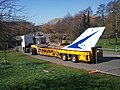
During the second half of 1991, the Aeronautical and Automotive Engineering department of Loughborough University received the EAP aircraft, where it was used as a static instructional aid in the teaching of Aeronautical Engineering students for many years. In early 2012, in response to a request from the Royal Air Force (RAF), the EAP was transported to the Royal Air Force Museum Cosford; it has since been reassembled and put on public display in the museum's collection.

Design and development

[edit]

Background

[edit]

The origins of the EAP can be found within the Agile Combat Aircraft (ACA) programme performed by British Aerospace (BAe) during the late 1970s and early 1980s.[2][3] It is known that ACA had involved the combining of several years of private venture research conducted by BAe, costed at around £25 million, together with similar contemporary studies that had been performed by West German aircraft manufacturer Messerschmitt-Bölkow-Blohm (MBB) (such as the TKF-90 project) and Italian aviation company Aeritalia. Seeking to develop a new generation of fighter aircraft to equip the various air forces of Western Europe, the three companies had recognised the benefits of cooperation and the sharing of critical technologies to achieve this goal. Technologies which became central to the ACA included full-authority digital fly-by-wire controls, which would enable a significantly aerodynamically unstable aircraft to be flown, and multiple advanced manufacturing processes.[2][3]

During the early 1980s, it was recognised that, due to the high extent of cutting-edge technologies involved, a reasonable risk reduction measure ahead of launching a full-scale production programme would be the completion of several technology demonstrator aircraft. During the 1982 Farnborough Airshow, a mockup of the ACA was publicly exhibited; this mockup also appeared at the Paris Air Show in May 1983. It was at the 1983 Paris Air Show that the official launch of the Experimental Aircraft Programme (EAP), under which a pair of technology demonstrators would be manufactured and flown, was announced. At the programme's launch, it was intended for the EAP to be a partnership between Britain and several of its European neighbours, including West Germany and Italy.[2][3]

The initial project definition of what became the Eurofighter Typhoon commenced shortly after the EAP project was initiated. While the similarity between the EAP and the Eurofighter Typhoon is striking, there are numerous important design differences; the cranked delta wings of the EAP have been replaced with a straight delta, while the size of the fin has been much reduced and the rectangular air intake of the prototype has been replaced with one with a "smiling" configuration.[citation needed]

Funding and construction

[edit]

The EAP was intended to be financed by multiple countries.[2] Early on, the British Government announced that it would make a financial contribution to the EAP; however, funding would not prove to be forthcoming from the West German government, which heavily contributed to the decision to cancel the planned second airframe prior to major work commencing. The UK Ministry of Defence (MOD) reportedly invested almost £80m into the EAP. The initiative became exclusively funded by the UK, from both the public and the private sector, the latter in the form of the aviation industry itself.[2][3] Following German government instructions to withdraw support, MBB withdrew but other German companies stayed in.[1]

Assembly of the sole EAP aircraft was performed within British Aerospace's development facility (No. 2 Hangar) at Warton. Structurally, it comprised three major fuselage structures; front, centre & rear. The front fuselage contained many innovative structures in Carbon-fiber-reinforced polymer composites and aluminium-lithium alloy, while the centre and rear fuselage structures were conventional - a result of MBB withdrawal.[1] The right hand wing assembly, manufactured at BAe's Samlesbury plant, was a co-bonded carbon fibre composite assembly, proving new tooling and manufacturing techniques which were put to good use later on the Eurofighter programme. The left hand wing assembly was manufactured at the Corso Marche facility of Aeritalia in Turin. The foreplanes were manufactured in carbon composite at Preston/Samlesbury; detail design and manufacture of the windscreen and canopy assemblies was done by Aerostructures Hamble, in Southampton.[citation needed]

The EAP was designed to research technologies to be used for a future European combat aircraft. Accordingly, the EAP was fitted with a variety of advanced electronic equipment, including three cathode-ray tube (CRT) displays and a Head-up display (HUD) similar to the American General Dynamics F-16 Fighting Falcon. The flight controls were Hands On Throttle-And-Stick (HOTAS)-compatible and incorporated a departure prevention system.[3] Power was provided by a pair of Turbo-Union RB199-104 afterburning turbofans, previously used as the Panavia Tornado ADV's powerplant. To reduce costs, the rear fuselage and tailfin of a Tornado was used as the basis of the unit that was eventually fitted to the EAP prototype.[4] Due to its experimental nature, no operational armaments or military systems were ever installed; several dummy munitions were routinely fitted in low-drag positions however.[3] The radome was used for flight test instrumentation. [1]

Flight testing

[edit]
EAP at Loughborough University

On 18 April 1986, the sole EAP aircraft (serial ZF534) was officially rolled out at BAe's Warton facility, being unveiled by BAe Chief Executive Sir Raymond Lygo.[2][5] On 8 August 1986, after multiple delays due to unfavourable weather conditions, the EAP conducted its maiden flight, flown by BAe’s Executive Director of Flight Operations David Eagles.[6][5] During this initial flight, it reportedly attained a maximum speed of Mach 1.1, exceeding the speed of sound, as well as altitudes of up to 30,000ft.[2][3] Nine further flights were performed within a week of the maiden flight.[3] The EAP was shown publicly for the first time at Farnborough in September.[1]

During its initial months of flight, the EAP was principally involved in early proving flights. In addition to testing the aircraft itself, test frequently involved using the EAP in its capacity as a flying testbed for investigating and validating around 36 individual technological developments.[2] During one test flight in September 1986, all cockpit displays went down due to computer failure, leading to the aircraft returning safely to Warton using backup instrumentation; the cause was quickly identified and resolved. During May 1987, the main phase of the test flight programme commenced, by which point the EAP had been equipped with an anti-spin parachute and the control laws also upgraded to Paris Standard, featuring angle-of-attack and side-slip feedback.[5]

Following the initial flights of the type, in addition to continuing flight testing, an increasing emphasis was placed on the performance of pre-arranged aerial displays at various airshows; in such a capacity, the EAP would demonstrate its capabilities, such as its high level of agility, to a wide audience, often consisting of both the general public and figures interested in the prospective production programme.[2] The EAP's one hundredth flight was performed during the 1987 Paris Air Show. During December 1987, the third phase of test flying commenced, after which an increasing emphasis was placed upon testing various technologies for the future Eurofighter Typhoon, such as the direct voice input interface and multi-function displays.[5] The flight control laws would also be progressively refined, improving the handling and enabling the EAP to reach a recorded maximum speed of Mach 2.0 during its latter years of operation; the aircraft also demonstrated an ability to maintain controlled flight while flown at very high angles of attack, reportedly in excess of 35 degrees.[2] The final round of test flights involved exploring the functionality of the in-flight flutter and structural coupling mode.[5]

By the end of its flying career, the EAP had reportedly flown 259 sorties and accumulated a total of 195 flight hours.[2] According to aviation historian Nick Sturgess, the EAP's flight testing had contributed heavily to the development of computerised flight control systems, new construction techniques, and the exploration of advanced aerodynamics.[2] Chris Boardman, a managing director at BAe's successor company, BAE Systems, commented in 2013 that the EAP was fundamentally important to defining and developing both the characteristics and capabilities of the subsequent Eurofighter Typhoon.[2]

Preservation

[edit]

On 1 May 1991, the sole EAP aircraft was retired from the flight test programme; it was subsequently transported to the display area of the Aeronautical and Automotive Engineering department of Loughborough University. For the next two decades it was used as an instructional aid for teaching Aeronautical Engineering students the components and systems of a modern fighter jet. For this purpose, its port wing had been removed at the root, providing a better view of both the aerofoil cross-section and several internal components. Furthermore, other components had been removed from the aircraft and could be separately examined.[citation needed]

On 26 March 2012, the EAP departed the Aeronautical & Automotive Engineering Department at Loughborough University following the RAF's request to have the aircraft displayed at the Royal Air Force Museum Cosford instead. During November 2013, following limited restoration work, the reconstituted EAP was placed on public display as part of the museum’s Test Flight collection.[2]

Specifications (EAP)

[edit]
EAP at Royal Air Force Museum Cosford, 2016

Data from Jane's All The World's Aircraft 1988–89,[6] BAE Systems[3]

General characteristics

  • Crew: 1
  • Length: 48 ft 2.75 in (14.7003 m)
  • Wingspan: 38 ft 7 in (11.76 m)
  • Height: 18 ft 1.5 in (5.525 m)
  • Wing area: 560 sq ft (52 m2)
  • Empty weight: 22,050 lb (10,002 kg)
  • Max takeoff weight: 32,000 lb (14,515 kg)
  • Powerplant: 2 × Turbo-Union RB199-104D 3-spool turbofan engine, 9,000 lbf (40 kN) thrust each dry, 17,000 lbf (76 kN) with afterburner

Performance

  • Maximum speed: Mach 2 at 11,000 m (36,100 ft)[1]
  • Service ceiling: 60,000 ft (18,000 m)

See also

[edit]

Related development

References

[edit]
[edit]
Revisions and contributorsEdit on WikipediaRead on Wikipedia
from Grokipedia
The British Aerospace Experimental Aircraft Programme (EAP) was a twin-engine technology demonstrator aircraft developed by (BAe) in the during the 1980s as a private venture to showcase advanced fighter technologies, featuring a cranked with foreplanes, controls, and relaxed static stability, ultimately serving as a key precursor to the multirole fighter. The EAP's development originated from earlier European collaborative efforts in the late 1970s and early 1980s, including the European Combat Fighter (ECF) study in 1979 and the European Combat Aircraft (ECA) in 1980, evolving into a joint proposal for the Agile Combat Aircraft (ACA) by BAe, Messerschmitt-Bölkow-Blohm (MBB) of , and Aeritalia of in April 1982. Although initially conceived as a tri-national project, and withdrew, leaving BAe to proceed independently with support from its suppliers; the programme was formally initiated in December 1983 to demonstrate future technologies for agile combat aircraft. The sole prototype (serial number ) was rolled out on 18 April 1986 at BAe's Warton Division and made its on 8 August 1986, lasting 67 minutes and reaching Mach 1.1 at 30,000 feet (9,144 meters). Technically, the EAP measured 17.72 meters (58 feet 2 inches) in length, with a wingspan of 11.97 meters (39 feet 3 inches) and a height of 5.52 meters (18 feet 1 inch), powered by two Turbo-Union RB199-104D turbofan engines each producing 40 kN (9,000 lbf) dry thrust and 75.6 kN (17,000 lbf) with afterburner. Its design emphasized supermaneuverability, achieving a maximum speed of Mach 2 at 11,000 meters (36,089 feet), a service ceiling of 18,000 meters (59,055 feet), and an empty weight of 10,000 kg (22,046 lb) with a maximum takeoff weight of 14,515 kg (32,000 lb). The aircraft's cockpit incorporated advanced digital flight controls with multifunction screens replacing traditional dials, and its delta-canard configuration enabled testing of high-angle-of-attack maneuvers up to 25 degrees and roll rates of 200 degrees per second. Over its operational life, the EAP completed 259 test flights totaling 195.21 hours, including its 100th flight at the 1987 Paris Air Show, before its final flight on 1 May 1991. The EAP played a pivotal role in the evolution of European fighter design by validating critical systems such as controls, active flight controls, and aerodynamic features that were later refined for the programme, which BAe later joined; this demonstration effort is credited with saving approximately £850 million in development costs for the , as reported by the Accounts Committee. Post-testing, the aircraft served as an instructional airframe at until 2012, after which it was preserved and placed on display at the RAF Museum Midlands at Cosford, where it remains as of 2025.

Development

Origins and Background

The Experimental Aircraft Programme (EAP) traced its origins to the early 1980s Agile Combat Aircraft (ACA) programme, building on studies from the late , a -led initiative that explored advanced fighter concepts to enhance agility and combat effectiveness. This effort was motivated by tensions, particularly the need for the Royal Air Force to replace its aging fleet of English Electric Lightnings and McDonnell Douglas Phantoms, which were increasingly outmatched by evolving Soviet threats such as advanced interceptors and bombers. The ACA studies incorporated emerging technologies like controls to enable superior maneuverability in beyond-visual-range engagements. In 1981, following the collapse of the broader European Combat Aircraft (ECA) efforts due to disagreements on design and leadership, announced the EAP as a technology demonstrator, initially envisioned as a multinational project involving the , , and . The proposal built on a joint ACA mock-up presented at the 1982 Farnborough Air Show by , Messerschmitt-Bölkow-Blohm, and Aeritalia, aiming to pool resources for a prototype that could validate shared technologies. However, and soon withdrew from the EAP due to budgetary constraints, transforming it into a predominantly British endeavour funded primarily by the UK government and industry. As a private venture initiative by , the EAP sought to demonstrate critical technologies for the prospective Future European Fighter Aircraft (FEFA) programme, emphasizing enhanced agility and initial efforts toward reduced radar observability to counter Soviet air superiority challenges. This positioned the project as a strategic response to maintain technological leadership in European aviation amid shifting alliances. Key to its advancement was Sir Raymond Lygo, British Aerospace's managing director from 1983 to 1986 and later chief executive, who championed the EAP to safeguard industrial interests and influence multinational fighter development.

Funding and Project Initiation

The British Aerospace Experimental Aircraft Programme (EAP) was initiated through a contract awarded in May 1983 by the UK (MoD) to (BAe) for the development of an "agile demonstrator aircraft," rather than a full , as part of efforts to advance technology for future combat aircraft. This contract, valued at approximately £185 million, marked the formal launch of the project as a demonstrator for the Agile Combat Aircraft (ACA) programme to secure national funding commitments. In December 1983, the initiative was officially renamed the Experimental Aircraft Programme (EAP) to emphasize its role in demonstrating advanced technologies. Funding for the EAP was jointly provided by the MoD and industry partners, with the MoD contributing approximately £80 million from public funds, supplemented by investments from BAe and collaborators, bringing the total program cost to around £185-190 million. This financial structure highlighted the UK's strategic investment in domestic capabilities, enabling BAe to lead the effort while distributing risks across the sector. The program's budget supported the integration of cutting-edge features, positioning it as a key technology demonstrator without the full scope of a production development. The project involved a collaborative industry effort, with key subcontractors including Dowty Aerospace, which supplied the main and nose landing gears, and Smiths Industries, responsible for critical systems such as the Utilities Management System. This partnership underscored the national scope of the initiative, leveraging specialized expertise to accelerate development. In the broader geopolitical context, the EAP served as the 's demonstration of commitment to the multinational Future European Fighter Aircraft (FEFA) program, proceeding unilaterally after initial European partners, including and , withdrew their funding support.

Design and Construction

The Experimental Aircraft Programme (EAP) featured a cranked configuration augmented by foreplanes, or canards, to achieve inherent aerodynamic instability that would support advanced through digital controls. This relaxed approach demanded precise engineering to ensure , with the foreplanes integrated specifically to enhance high-angle-of-attack (AoA) during envelope expansion. Construction of the single EAP prototype, serial ZF534, began following project initiation in December 1983 and culminated in its rollout on 18 April 1986 at British Aerospace's Warton facility in , where the assembly was led by BAe engineers emphasizing rapid prototyping techniques suitable for a technology demonstrator. The incorporated , including carbon fibre composites for the wings via co-bonded manufacturing to minimize weight and cross-section, alongside aluminium-lithium in key structural elements such as skins. Additional components utilized superplastically formed and diffusion-bonded between the engine bays to optimize strength and reduce part count. A core innovation in the EAP's build process was its modular , dividing the into independent benches that housed equipment, wiring, and monitoring interfaces, facilitating straightforward modifications and ground testing prior to integration. This approach, supported by funding that enabled the adoption of these cutting-edge materials and methods, allowed BAe to accelerate development while validating concepts for combat aircraft. The foreplanes themselves were fabricated from carbon composite at the nearby site, underscoring the collaborative effort across BAe's facilities to realize the demonstrator's ambitious design goals.

Flight Testing

Maiden Flight and Early Tests

The British Aerospace Experimental Aircraft Programme (EAP) prototype, designated ZF534, was publicly rolled out at the company's Warton airfield facility in , , on 18 April 1986, marking the culmination of its construction phase. This event allowed initial visual inspections and media coverage, highlighting the aircraft's canard-delta configuration as a demonstrator for advanced European fighter technology. Following rollout, ground testing commenced over the summer of 1986, including engine runs and systems integration checks, during which were made to address integration challenges with the RB199-104 engine and refinements to the digital control software to ensure stable response characteristics. These pre-flight activities confirmed the aircraft's basic airworthiness, with early flights prioritized to validate overall stability, given the inherent aerodynamic instability of the design that necessitated full-authority controls for safe operation. The EAP achieved its on 8 August 1986, departing from Warton airfield under the control of chief David (Dave) Eagles, who served as the company's of Flight Operations. The 67-minute reached an altitude of 30,000 feet and a speed of Mach 1.1, successfully breaking early in the flight and demonstrating initial supersonic capability without incident. Eagles reported positive handling qualities, with the aircraft exhibiting responsive controls during the climb and basic maneuvers, providing preliminary confirmation of the system's effectiveness in managing the unstable . Subsequent early tests in late 1986 and focused on expanding the through subsonic handling assessments, validation of the quadruplex , and evaluation of the foreplane canards' deployment and control authority at various attitudes. These sorties, conducted primarily from Warton, progressively cleared the aircraft for higher speeds and altitudes while gathering data on aerodynamic interactions, with no major anomalies reported beyond routine software tweaks inherited from ground testing. By June , the EAP had completed its 100th flight during a demonstration at the , underscoring the efficiency of the initial testing phase with an average of 10 sorties per month and affirming the prototype's reliability for further development.

Testing Program and Achievements

The testing program for the British Aerospace Experimental Aircraft Programme (EAP) involved 259 sorties totaling 195 flight hours from 1986 to 1991, validating 36 key technologies central to advanced fighter design. These technologies encompassed high angle-of-attack (AoA) maneuvers exceeding 35 degrees, capabilities, and fully digital flight control systems with quadruplex redundancy. The program progressed through seven phases, focusing on systems integration, aerodynamic validation, and performance envelope expansion, building confidence from initial flights for broader technological assessments. Key achievements included demonstration of a top speed of Mach 2.0 at altitude, showcasing the advantages of relaxed static stability for enhanced agility, and successful integration of controls with multifunction displays. The flight data collected directly informed refinements to Future European (FEFA) concepts, contributing to substantial efficiencies in subsequent programs by de-risking critical innovations. From 1988 to 1990, later phases emphasized and supersonic regime testing to evaluate structural loads, engine performance, and control authority under high-speed conditions, with observations by representatives from European partner nations during demonstrations such as at the . The EAP achieved all objectives, including cost savings estimated at £850 million and a one-year reduction in development timeline for the , before retirement on 1 May 1991. Primary testing occurred at British Aerospace's Warton facility, with select evaluations at the Ministry of Defence's Boscombe Down for specialized handling and spin recovery trials.

Design and Specifications

Airframe and Aerodynamics

The of the British Aerospace EAP incorporated a cranked configuration with a span of 38 ft 7 in (11.76 m), optimized for and supersonic performance through analysis. Close-coupled canards served as primary control surfaces for pitch authority, enhancing low-speed handling and high-angle-of-attack (AoA) capabilities while interacting with the main to generate beneficial vortex flows. The adopted an area-ruled profile to reduce in the regime, contributing to overall aerodynamic efficiency. The area was 560 sq ft (52 m²). Central to the EAP's aerodynamic design was the implementation of relaxed static stability, an inherently unstable configuration that improved maneuverability and agility by allowing rapid response to control inputs. This approach leveraged generated by the delta 's leading-edge extensions, which augmented lift at high AoA without excessive trim drag. The foreplane-canard arrangement further stabilized the during aggressive maneuvers, mitigating pitch departure tendencies through controlled vortex bursting and flow reattachment over the . These principles were validated through extensive testing on scaled models, emphasizing the integration of foreplane positioning relative to the for optimal lift distribution. The EAP's dimensions reflected its role as a compact demonstrator: a of 48 ft 2.75 in (14.70 m), height of 18 ft 1.5 in (5.525 m), empty weight of 22,050 lb (10,000 kg), and of 32,000 lb (14,515 kg). Construction utilized carbon fiber reinforced polymer (CFRP) composites extensively in the wings and forward fuselage, alongside aluminum-lithium alloys, to achieve significant weight savings over conventional metallic structures and support a favorable . This inherent instability was actively controlled via a system, enabling the exploitation of the unstable aerodynamics without compromising safety margins.

Avionics and Propulsion

The propulsion system of the British Aerospace EAP demonstrator featured twin Turbo-Union RB199-104D afterburning turbofans, each delivering 9,000 lbf (40 kN) of dry thrust and 17,000 lbf (76 kN) with afterburner. These engines were derived from the Panavia Tornado's powerplant. The avionics suite centered on a quadruplex digital fly-by-wire (FBW) flight control system, derived from the Jaguar Active Control Technology aircraft and operating without mechanical backup for the first time in a British design. This system included full authority digital engine control (FADEC) integration with the FBW for enhanced stability augmentation and testing of relaxed stability modes, addressing the aircraft's inherent aerodynamic instability. The pilot interface comprised three cathode-ray tube (CRT) multi-function color displays driven by dual waveform generators, a wide-angle head-up display (HUD), and hands-on throttle-and-stick (HOTAS) controls for efficient operation. The adopted a single-seat configuration with a 25° seat recline to improve high-g tolerance during agile maneuvers. It lacked an operational but included provisions for future integration, emphasizing the demonstrator's role in validating architecture for advanced fighters.

Performance Characteristics

The British Aerospace EAP achieved a maximum speed of Mach 2.0, equivalent to 1,320 mph (2,130 km/h) at high altitude. Its service ceiling reached 60,000 ft (18,000 m), while structural g-limits were rated at +9/-3.6. In terms of maneuverability, the EAP demonstrated high angle-of-attack (AoA) capability exceeding 35°, supported briefly by its flight control system that enabled controlled flight in this regime. The aircraft's was approximately 1.15 at combat weight, with a roll rate of 200°/sec. The EAP successfully tested supercruise capability at Mach 1.5 without afterburner engagement. Other key metrics included provisions for up to 13,000 lb (5,900 kg) of .

Legacy and Preservation

Influence on the Eurofighter Typhoon

The Experimental Aircraft Programme (EAP) made direct contributions to the 's design through the adoption of its (FBW) , canard-delta , and advanced composite manufacturing techniques, which were validated during EAP's flight tests and carried forward to reduce structural weight and enhance maneuverability. These elements de-risked the Typhoon's development, shortening the overall timeline by one year and saving an estimated £850 million in costs, as credited by the Accounts Committee. The EAP served as a critical platform, validating approximately 36 key technologies essential for the , including relaxed static stability for and hands-on-throttle-and-stick () controls that optimized pilot workload in air superiority missions. data from the EAP, encompassing over 100 sorties that confirmed high-angle-of-attack performance up to 35 degrees, informed multinational negotiations for the Future European Fighter Aircraft (FEFA) programme, providing that shaped the 's agile, multirole capabilities. Beyond direct design inputs, the EAP demonstrated the 's technical leadership in advanced fighter aviation, facilitating the formation of the Eurofighter consortium involving the , , , and by showcasing viable European collaborative technologies amid shifting national priorities. This programme also advanced the 's composites industry through pioneering co-bonded carbon-fibre structures, which were refined for production and bolstered long-term manufacturing expertise. Following its retirement in 1991, EAP findings from post-flight analysis were integrated into early prototypes by the early 1990s, enabling seamless progression to the demonstrator phase and ensuring the aircraft's operational readiness as a of European air defence.

Current Status and Preservation

Following its final flight on 1 May 1991, after completing 259 sorties and accumulating 195.21 flying hours, the sole British Aerospace EAP prototype (serial ZF534) was retired from the flight test program and initially stored at ' Warton facility in . The aircraft remained in storage there until mid-1996, when it was transferred to the Aeronautical and Automotive Engineering department at . From 1996 to 2012, the EAP served as an instructional airframe for aerospace engineering students at Loughborough University, where it supported training focused on systems disassembly and design appreciation, including the removal of its port wing to allow detailed examination of internal components. In March 2012, it was transported by road to the Royal Air Force Museum Cosford in Shropshire for preservation. BAE Systems donated the aircraft to the museum and conducted minor restoration work at the Michael Beetham Conservation Centre in late summer 2013, preparing it for public display. Since 22 November 2013, the EAP has been on static display in the museum's Test Flight hangar (Hangar Two), maintained in its original RAF markings as ZF534, and remains on display as of 2025. Ongoing conservation efforts at the museum emphasize its , serving as a preserved testament to the technological foundations of the .
Add your contribution
Related Hubs
User Avatar
No comments yet.