Hubbry Logo
Battle of StiloBattle of StiloMain
Open search
Battle of Stilo
Community hub
Battle of Stilo
logo
8 pages, 0 posts
0 subscribers
Be the first to start a discussion here.
Battle of Stilo
Battle of Stilo
from Wikipedia
Battle of Stilo

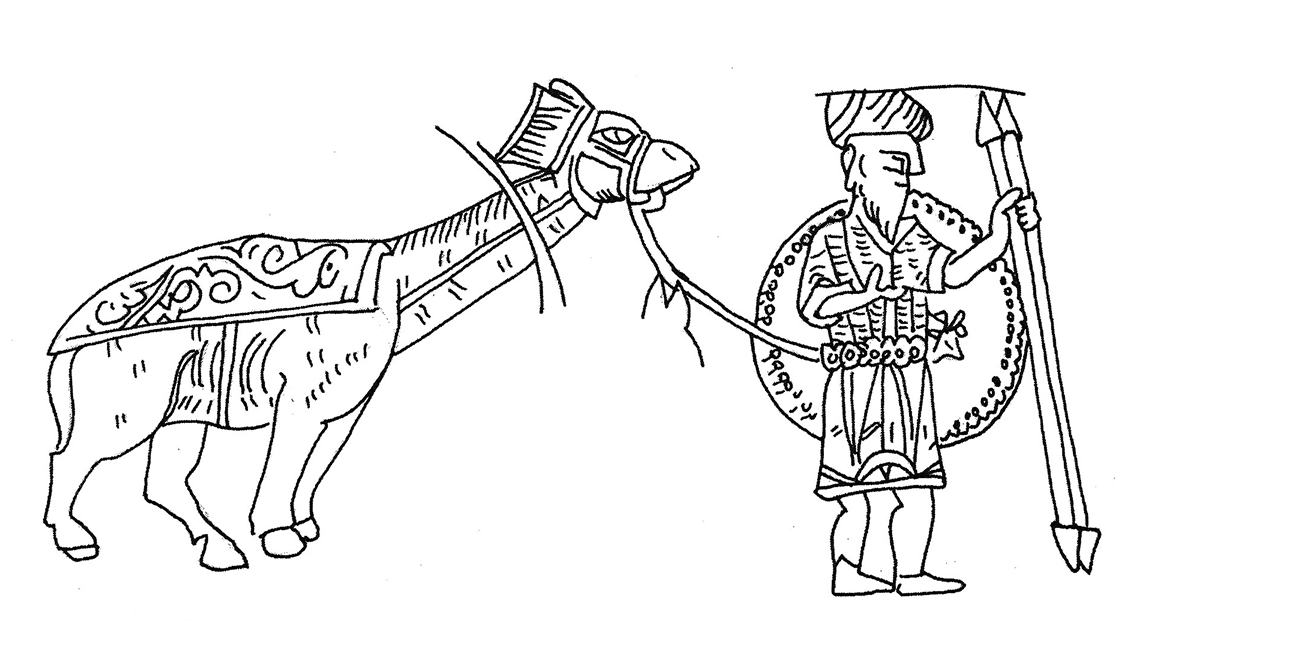
Warrior of the Fatimid / Kalbid period
11th century Sicily
Date14 July 982
Location
Result Fatimid-Sicilian victory
Belligerents
Holy Roman Empire
Principality of Benevento

Fatimid Caliphate

Commanders and leaders
Emperor Otto II
Landulf IV of Benevento 
Pandulf II of Salerno 
Emir Abu'l-Qasim 
Strength
2,100+ armored cavalry, the rest unknown Unknown
Casualties and losses
4,000 killed
including many nobles
Fewer than Imperial army

The Battle of Stilo (also known as Cape Colonna and Crotone) was fought on 13 or 14 July 982 near Crotone in Calabria between the forces of Holy Roman Emperor Otto II and his Italo-Lombard allies and those of the Kalbid emir of Sicily, Abu'l-Qasim, who had declared a holy war against the Germans. Some sources claim that the Muslims received support from the Byzantines, in retaliation for Otto's invasion of their province of Apulia, but this is unconfirmed.[citation needed]

Pitched battle

[edit]

Abu'l-Qasim was not far from Rossano Calabro when he noticed the unexpected strength of Otto's troops, and retreated. Tipped off to the retreat by ships,[clarification needed] Otto left his wife Theophanu and their children in Rossano, along with the baggage and the imperial treasure, and set off to pursue the enemy. When Abu'l-Qasim recognized that he would not be able to flee, he readied his army for a pitched battle at Capo Colonna, south of Crotone. After a violent clash, a corps of German heavy cavalry destroyed the Muslim centre and then pushed towards the emir's guards. Abu'l-Qasim was ultimately killed during the battle, but his troops were not shaken, going on to surround Otto's forces with a hidden reserve of approximately 5,000 cavalry and[1] inflicting heavy losses. According to Ibn al-Athir's history, casualties numbered around 4,000, among them Landulf IV of Benevento, Henry I, Bishop of Augsburg, Günther, Margrave of Merseburg, the Abbot of Fulda, and 19 other German counts.[2] Otto was forced to flee the battle, ultimately securing shelter only by swimming out to a Byzantine merchant ship.[3][4] He then rested in Rossano, only returning to Rome on 12 November 982.

Election of Otto III

[edit]

After fleeing northward, Otto held an assembly consisting primarily of local magnates in Verona. There, he secured the election of his son as King of Italy and called for reinforcements from Germany. Saxon losses in the battle had been the most severe, and Duke Bernard I of Saxony had been heading south to Verona for the assembly, but raids from Danish Vikings forced him to turn back. Otto had sent his nephew Duke Otto I of Swabia and Bavaria north to Germany to deliver the news of the battle at Stilo, but the Duke perished en route. Nevertheless, word did travel, reaching as far as Wessex—a testament to the magnitude of the disaster. Ultimately, Otto would die the next year before being able to resume the campaign in southern Italy.

Succession in Capua, Benevento, and Salerno

[edit]

The Mezzogiorno was shaken by the battle. With Landulf and his brothers Atenulf and Pandulf II of Salerno having died fighting, the holdings of Capua and Benevento passed on to cadet branches of the Landulfid family—with Salerno ultimately being snatched up by Duke Manso I of Amalfi.

Consequences in Southern Italy and the Elbe

[edit]

Although the Kalbid troops had been forced to retreat back to the island of Sicily, the Muslims retained a presence in southern Italy, continuing to harass local Greeks and Lombards. Additionally, when the Slavic peoples living on the Elbe heard of the emperor's defeat, they immediately rose up against imperial suzerainty in what would ultimately prove to be a decades-long setback for efforts to Germanise and Christianise them.

Notes

[edit]

Sources

[edit]
  • Barkowski, Robert F. (2015). Crotone 982 (in Polish). Warszawa: Bellona. ISBN 978-83-11-13732-5.
  • Reuter, Timothy. Germany in the Early Middle Ages 800–1056. New York: Longman, 1991.

39°01′31.60″N 17°12′07.80″E / 39.0254444°N 17.2021667°E / 39.0254444; 17.2021667

Revisions and contributorsEdit on WikipediaRead on Wikipedia
from Grokipedia
The Battle of Stilo was a decisive clash in July 982 CE between the army of Otto II, comprising German, Italian, and Lombard contingents, and a raiding force dispatched from Muslim Sicily under the Kalbid emir , operating as vassals of the . Fought near Capo Colonna in , the engagement stemmed from Otto's southward expedition to subdue Byzantine and Muslim strongholds in Italy's mezzogiorno, following his recent capture of from the Byzantines. Otto's forces, estimated at several thousand including , encamped vulnerably along the coast, where the emperor was reportedly bathing or resting when the launched a surprise assault, exploiting the and imperial disarray. The battle unfolded as a , with the Muslim horsemen—likely numbering in the thousands and adept at mobile warfare—overwhelming the fragmented imperial ranks, leading to heavy slaughter amid the summer heat and coastal chaos. Otto II escaped personal capture only by fleeing into the sea, clinging to wreckage before being rescued by a Byzantine vessel, an ironic twist given prior tensions with . Casualties inflicted catastrophic losses on the , including the deaths of key figures such as Bishop Henry I of , of Merseburg, and numerous counts and knights, decimating the German aristocracy's leadership cadre. The victory bolstered Kalbid influence in and temporarily, staving off immediate Christian reconquest and prompting opportunistic Slavic uprisings against Otto's northern domains, though the emperor regrouped in to negotiate truces. Chronicled in contemporary annals like those of , the battle underscored the limits of Ottonian overreach into the fragmented, multi-ethnic south, where lighter Muslim tactics prevailed over ponderous Frankish formations.

Historical Context

Otto II's Ambitions in Southern Italy

Following his coronation as co-emperor by on 25 December 967, Otto II prioritized extending Ottonian dominion beyond the Lombard heartlands of northern and , targeting the Byzantine-influenced territories of and to unify the peninsula under imperial control and counter eastern imperial pretensions. This ambition stemmed from the need to secure stable southern frontiers against recurrent Arab incursions from while integrating fractious Italo-Lombard elites, whose allegiance Otto I had partially harnessed through grants of authority but not fully subordinated. By 980, with northern Italian duchies like incorporated via strategic marriages and appointments, Otto II viewed the south as essential for realizing a comprehensive regnum Italiae that mirrored Charlemagne's integrated realm, thereby legitimizing his Roman imperial title against Byzantine rivals. A pivotal element of this strategy involved alliances with Lombard princes, foremost among them Pandulf Ironhead, whom Otto I had elevated in 968 to oversee , , , and as a bulwark against both Byzantines and . Pandulf's consolidation of these principalities under imperial oversight provided Otto II with a network of local levies and fortified bases, enabling coordinated pressure on Byzantine themas in ; by 981, this alliance had facilitated preliminary advances, including the submission of and other coastal enclaves. However, Pandulf's death in March 981 fragmented these holdings among his sons—Landulf IV inheriting and , Pandulf II receiving —prompting Otto II to intervene personally that summer to reassert , redistribute territories like to loyalists such as Thrasimund IV, and prevent Byzantine or Arab exploitation of the vacuum. Otto II's military preparations underscored reliance on drawn from German vassals and Italo-Lombard contingents, supplemented by ecclesiastical obligations; records from 981 detail demands for 2,100 armed knights from 19 bishops and 12 abbots to bolster the expeditionary force, reflecting the Ottonian system's integration of feudal and institutional levies for sustained southern operations. These troops, comprising armored milites suited for against Byzantine tagmata and Arab light horsemen, supported sieges of key Calabrian and Apulian strongholds like Rossano and in late 981, where initial successes yielded tribute and defections from local Greek and Lombard garrisons. This phase highlighted Otto II's causal focus on territorial consolidation through princely alliances and cavalry dominance, aiming to sever Byzantine supply lines from the Adriatic and pave the way for full annexation, though logistical strains from extended campaigns foreshadowed vulnerabilities.

Arab Raids and the Emirate of Sicily

The Kalbid dynasty, established as Fatimid vassals in 948, governed the Emirate of Sicily with increasing autonomy, leveraging naval superiority to project power across the . Under emir ibn al-Hasan al-Kalbi (r. 970–982), the emirate pursued aggressive expansion into Byzantine-held territories on the Italian mainland, particularly , where fragmented local defenses and tribute-paying communities offered opportunities for plunder. These operations, conducted from the 970s onward, involved coordinated land and sea assaults aimed at securing slaves, , and temporary territorial footholds rather than permanent conquest, reflecting pragmatic opportunism amid Fatimid distractions in and the . Abu al-Qasim's campaigns intensified in the late 970s, with his forces sacking coastal settlements such as Reggio and Santa Agata di Militello, while his brother's fleet targeted Apulian shores to disrupt Byzantine supply lines. Arab chroniclers and Byzantine records portray these raids as driven by economic imperatives—capturing thousands of captives for enslavement and extracting annual from subjugated areas—rather than ideological , as Sicily's rulers balanced internal stability with external revenue needs. By 978–981, such incursions had eroded Byzantine control in lower , compelling local strategoi to prioritize over counteroffensives. In 981, escalated with major expeditions, capturing the port of from Byzantine forces and raiding inland to Rossano, where residents paid heavy ransoms to avert destruction. These actions, timed amid Byzantine commitments elsewhere, yielded significant booty, including slaves funneled into Sicilian markets and Mediterranean trade networks. Opportunistic rather than strategically coordinated, the raids exploited seasonal naval advantages but faced limits from overextended and local resistance. The raids inflicted verifiable demographic and economic strain on Byzantine , with contemporary sources attributing mass migrations and depopulation to repeated enslavements and tribute burdens, reducing taxable populations and agricultural output in affected themes. Disillusioned provincials, facing inadequate imperial protection, appealed to external powers like Otto II for intervention, framing the incursions as existential threats that destabilized the region's frontier economy. This pressure, compounded by of key ports, underscored the emirate's role in fracturing Byzantine cohesion in .

Prelude to the Engagement

Otto's Southern Campaign

In early 982, following successes against Byzantine forces in the previous year, Otto II advanced southward from into , bypassing several fortified Byzantine positions to assert imperial authority over contested territories. This push reflected ambitions to integrate southern principalities, but it exposed vulnerabilities in extended operations distant from core German support bases. Mobilization drew on select levies from regions including and , augmenting local Lombard contingents, though primary chroniclers like provide no precise totals. The imperial army, estimated at 5,000 to 6,000 men primarily consisting of German heavy cavalry (knights) and Lombard infantry, suffered from splintered cohesion as detachments were assigned to besiege or secure key sites such as , which fell in after a prolonged effort. These diversions reduced the main force's effectiveness, complicating unified maneuvers amid rugged terrain and protracted logistics. Long supply lines stretching from exacerbated strains, as northern troops contended with inadequate provisioning over extended distances. Campaigning into during summer amplified fatigue, with the intense heat and arid conditions debilitating soldiers unadapted to Mediterranean climes, while intelligence likely underestimated Arab forces' superior mobility and capacity for swift coastal reinforcement. This overextension, rooted in optimistic assessments of rapid consolidation without fully securing rear areas, highlighted causal miscalculations in balancing offensive momentum against logistical realities.

Mobilization of Arab Forces

Abu'l-Qasim, the Kalbid emir of Sicily, assembled an opportunistic coalition of raiders in response to opportunities arising from the weakening of local Christian defenses in Calabria after the death of Lombard prince Pandulf Ironhead in 981. Drawing from Sicilian garrisons and irregular bands experienced in cross-strait incursions, his forces emphasized mobility over , relying on drawn from settlers and Berber mercenaries accustomed to the island's martial traditions. This decentralized structure allowed rapid assembly without the logistical burdens of a formal expeditionary army, funded in part by spoils from prior raids that yielded captives, livestock, and precious goods sold in markets. Contemporary chronicler estimates place the mobilized horsemen at 3,000 to 5,000, though figures vary due to the fluid nature of raiding bands rather than fixed levies; Leo of Synnada and similar Byzantine observers highlight the emphasis on mounted skirmishers over massed formations. Tactical doctrine favored hit-and-run engagements exploiting Calabria's hilly terrain and coastal paths, where could evade pursuit and strike supply lines—contrasting the for decisive pitched battles. There is no indication of coordinated Fatimid oversight from ; the operated with significant , treating the incursion as a profit-oriented venture rather than part of a broader caliphal campaign against the Ottonians.

Course of the Battle

Forces and Deployment

Otto II's imperial army, drawn from German levies and reinforced by Italo-Lombard contingents under princes such as and , emphasized units clad in mail armor and equipped with lances and swords, forming the core of its deployable strength. These forces, numbering in the thousands but with exact figures unrecorded in contemporary accounts, arrayed in a conventional Frankish or wedge formation typical of Ottonian warfare, positioning the emperor's mounted at the center for shock charges. The army's coastal encampment near Cape Colonna, south of , exposed it to terrain disadvantages, as the sandy dunes and restricted maneuver space hindered the cohesion of armored knights accustomed to continental plains. Primary chronicles, including Thietmar of Merseburg's Chronicon, note the presence of non-combatants—such as the empress and noblewomen—in the imperial train, suggesting logistical overextension and misplaced security in the advance toward . Opposing them, the Arab army under Emir Abu'l-Qasim of the Kalbid dynasty in relied on lighter, more agile troops suited to raiding expeditions, including horsemen with composite bows for ranged harassment, spearmen for close engagement, and drawn from Sicilian garrisons and North African recruits. Deployment favored defensive mobility, with forces concealed among dunes and leveraging the Adriatic shoreline to channel the enemy into kill zones, exploiting the numerical and tactical parity against heavier foes. The exact size remains obscure in sources like the Annales Quedlinburgenses, which prioritize the surprise element over inventories, but the composition reflected standard Fatimid-era tactics emphasizing speed over sustained melee. The engagement's disputed date—13 or 14 July 982 per Latin annals versus 15 July in some Islamic reckonings—ties to Stilo's ruins and nearby Byzantine coastal watchposts, underscoring the ' rapid response to Otto's incursion.

Combat and Defeat

The engagement began with an imperial charge led by Otto II's against the center, but the attackers were met with volleys of arrows from the mobile horse archers, disrupting their formation and inflicting initial casualties. According to , the Germans, unaccustomed to such tactics prevalent in Mediterranean warfare, dismounted to fight on foot as in their northern engagements, a decision that sacrificed their mobility and exposed them to by the more agile cavalry. The Lombard contingents on the flanks, less disciplined and motivated than the imperial core, faltered under Arab pressure, allowing the enemy to outmaneuver and surround Otto's main force; this collapse stemmed from inadequate securing of the wings and overreliance on unreliable allies, exacerbating the tactical mismatch. Otto II reportedly joined the melee personally, wielding a amid the chaos until the rout became inevitable. The emperor then fled toward the coast, where, as recounted by the 11th-century chronicler William of , he plunged into the sea in full armor seeking escape on a passing vessel, an act underscoring the desperation of the defeat. German losses were catastrophic, with chroniclers estimating around 4,000 dead—potentially half the invading army—including prominent figures like Bishop Henry I of and Margrave Gunther of Merseburg, while Arab casualties remained low despite the death of their , , highlighting the effectiveness of their hit-and-run and flanking maneuvers against rigid tactics.

Immediate Aftermath

Otto II's Flight and Recovery

Following the catastrophic defeat at Stilo on 13 or 14 July 982, Emperor II narrowly escaped capture by swimming from the beach near Capo Colonna to a passing , whose crew provided him shelter despite ongoing imperial-Byzantine rivalries. This improvised flight underscored the battle's chaos, as , separated from his disintegrating forces, relied on opportunistic aid from Greek sailors to evade pursuing Arab warriors. The emperor's personal command was profoundly disrupted, with loyalists like Bishop Henry of Wurzburg perishing in the melee, leaving isolated amid the rout. Otto was conveyed by the vessel to Rossano, a Byzantine-held stronghold in approximately 50 kilometers north of the battlefield, where he recuperated from exhaustion and minor wounds sustained in the engagement. There, he remained for several months, leveraging local Byzantine tolerance—possibly extended due to shared enmity toward the Arab raiders—to stabilize his immediate situation without further pursuit. The remnants of his army dissolved rapidly, with scattered survivors fleeing northward or falling into Arab hands for ransom, though Otto's own escape prevented total annihilation of imperial leadership. By late 982, had regrouped sufficiently to depart Rossano and travel overland to , reestablishing contact with northern Italian allies and avoiding the collapse of his southern campaign's command structure. This return marked a short-term personal recovery, as the emperor, though physically debilitated, retained enough authority to convene assemblies and redirect resources northward, forestalling immediate dynastic crisis.

Arab Exploitation of Victory

Despite the death of Abu'l-Qasim during the engagement on July 13 or 14, 982, his son Jabir al-Kalbi assumed command of the Kalbid forces and secured the victory by plundering the defeated imperial army's camp, which included portions of II's treasury transported for the campaign. This immediate exploitation focused on capturing spoils rather than pursuit, as the Kalbid troops, numbering around 5,000-6,000 and supported by naval elements from , lacked the capacity for sustained occupation. Jabir opted for a prudent withdrawal to shortly after, forgoing deeper incursions into or Calabria's interior, thereby limiting post-battle actions to localized scavenging in the battle zone near Cape Colonna. Logistical constraints of the raiding expedition—dependent on seasonal naval resupply and vulnerable to Byzantine naval —combined with the , precluded conquest; the Fatimid overlords, preoccupied with consolidating after 969 and suppressing Berber revolts, provided no reinforcements for expansion. By early 983, Jabir had returned to , ending his brief interim rule amid dynastic succession to al-Kalbi. The outcome yielded temporary disruption to imperial and Byzantine garrisons in , with some outposts weakened by the loss of Otto's reinforcements, but no verifiable territorial shifts or long-term footholds, as local Lombard and Greek forces regrouped without strategic collapse. accounts, such as those preserved in Kalbid correspondence, frame the event as a defensive triumph preserving Sicilian interests, not an ideological advance, checked by the rising Norman presence in the region by the 990s. This pragmatic restraint underscores the tactical bounds of Kalbid operations, prioritizing booty over overextension amid multipolar Italian power dynamics.

Broader Consequences

Political Shifts in Italian Principalities

The death of Pandulf Ironhead in early 981, compounded by Otto II's defeat at Stilo on 13–14 July 982, triggered immediate fragmentation across the Lombard principalities of , , and , as unified overlordship under the Ironhead dynasty dissolved amid a . devolved to Landenulf, a younger brother of Pandulf who capitalized on the emperor's southern entanglement to assert control without imperial ratification. similarly splintered to a collateral branch of the family, where internal rivalries among Landulfid kin exacerbated succession disputes and eroded prior cohesion. In Salerno, the instability enabled opportunistic seizure by Manso I, duke of Amalfi, who deposed Prince Pandulf II and installed himself as ruler by late 982, leveraging Amalfi's maritime strength to dominate the principality. These maneuvers reflected calculated betrayals of imperial fealty, with Lombard elites exploiting Otto's incapacity for intervention—evident in his flight north and focus on northern revolts—to prioritize parochial gains over broader allegiance. Principalities like Benevento and Salerno, per accounts in the Chronicon Salernitanum, pivoted toward pragmatic ties with Byzantine catapanates or local potentates, sidelining Frankish-Ottonian oversight. The resultant autonomy entrenched feuds and , as seen in Benevento's protracted kin-based conflicts that weakened defenses against raids and Byzantine encroachments. This disarray deferred imperial reassertion until the Norman influx circa 1016, when mercenaries under Rainulf Drengot began consolidating fractured domains under , marking a shift from Lombard infighting to foreign overlordship.

Imperial Succession and Otto III

Otto II succumbed to on December 7, 983, in , mere months after convening an imperial assembly at on May 27 to designate his son as heir. The emperor's sudden demise at age 28, following a retreat from , left the realm vulnerable amid ongoing threats from Slavic revolts and internal factionalism. At the assembly, three-year-old Otto III was elected associate king by German and Italian nobles, a preemptive measure to safeguard Ottonian succession before Otto II's health deteriorated further. Otto III was formally crowned king at on Christmas Day 983, with his mother assuming regency alongside her mother-in-law , leveraging Byzantine administrative acumen to stabilize governance. This rapid elevation underscored the dynasty's reliance on familial networks to counter aristocratic ambitions during a minor's rule. The Battle of Stilo's defeat in July 982 eroded Otto II's prestige, indirectly hastening these succession maneuvers by exposing imperial overextension and prompting nobles to prioritize dynastic continuity over rival claims. Rivals such as —known as the Wrangler—sought to exploit the vacuum, briefly seizing Otto III in an bid for regency control, yet Theophanu's preserved the Ottonian line by securing noble oaths and quelling unrest. This preserved legitimacy despite the risks of child kingship, averting fragmentation akin to prior Carolingian breakdowns.

Repercussions on Northern Frontiers

The defeat of Emperor Otto II at the Battle of Stilo on July 13 or 14, 982, diverted significant imperial military resources to , creating a vulnerability on the northern frontiers east of the River that opportunistic Slavic groups exploited. With Otto II engaged in recovery efforts and unable to reinforce the marches promptly, Polabian Slavic tribes—including the , Luticians (Liutizi), and Hevelli (often termed )—initiated coordinated raids and uprisings beginning on July 29, 983. These actions targeted German-held fortifications and missionary outposts, reflecting a rejection of Ottonian overlordship rather than solely religious motives, as some leaders like Mstivoj of the had prior Christian ties but prioritized autonomy amid perceived weakness. The rebels systematically destroyed key strongholds, such as the fortress and bishopric of , along with Havelberg, effectively dismantling decades of Saxon expansion and Christianization efforts established under I's campaigns from the 930s onward. Chronicler documented the devastation, noting the expulsion or slaughter of clergy and the reversal of missionary gains, which had been precarious due to ongoing tribute demands and cultural impositions. This uprising weakened enforcement of prior subjugation agreements, such as those following I's victories that imposed tribute and nominal vassalage on Slavic confederations, as imperial forces were stretched thin by southern commitments and internal contingencies like Otto II's sudden death in May 983. The temporal proximity of the Stilo defeat to the revolt—mere months apart—illustrates causal ripple effects of overstretch, though not inevitability, as Slavic discontent predated 982 but escalated due to the absence of deterring garrisons. Consequently, the empire relinquished effective control over territories east of the for generations, requiring reconquest campaigns under Otto III from the 990s and Henry II into the early , which involved renewed warfare against the same confederations to reimpose tribute and borders.

Significance and Legacy

Military Lessons and Strategic Failures

Otto II's campaign against the in exemplified strategic failures rooted in a mismatch between his forces' composition and the operational environment. His army, reliant on and armored cavalry optimized for the open fields and temperate climates of , proved vulnerable in Calabria's rugged, mountainous terrain during the 982 heat. Troops unaccustomed to prolonged exposure in high summer temperatures and arid conditions experienced rapid fatigue, compounded by elongated supply lines stretching from , which hindered sustained mobility and resupply. Command deficiencies further exacerbated these issues, including inadequate that allowed forces to maneuver undetected and launch opportunistic strikes. Otto's inexperience in orchestrating battles within Mediterranean frameworks led to disharmony among his multinational contingents—German, Lombard, and Byzantine allies—undermining cohesive action against the more unified Kalbid emirs. In contrast, commanders demonstrated superior adaptability, employing for rapid maneuvers that capitalized on local , evading direct confrontation while harassing Imperial lines effectively. The battle highlighted inherent limits of Carolingian-derived warfare tactics, which prioritized massed heavy units for decisive charges, when transposed to theaters demanding , logistical , and environmental acclimation. Otto's pursuit without sufficient or assessment mirrored earlier Frankish overextensions, revealing how such rigid formations faltered against mobile foes in southern landscapes. While the yielded immediate gains for the , affirming their defensive efficacy, Fatimid strategic priorities—centered on expansions in and following the 969 of the latter—precluded follow-up offensives capable of permanent territorial gains.

Historiographical Debates

The primary accounts of the Battle of Stilo derive predominantly from Christian chroniclers, such as , whose Chronicon (Book III, chapters 20–21) describes Emperor Otto II's defeat and his subsequent flight from the Calabrian coast, portraying the emperor's personal valor amid catastrophe but omitting granular tactical details. These Latin sources, written decades later by imperial sympathizers, exhibit a toward framing the loss as a temporary setback influenced by or logistical woes rather than systemic military shortcomings, potentially understating the scale of Arab tactical superiority to preserve the Ottonian narrative of resilience. In contrast, Arab historiography offers sparse but corroborative details, with Ibn al-Athīr's Al-Kāmil fī al-Tārīkh recording approximately 4,000 imperial casualties, including named nobles like Landulf IV of and Günther of Merseburg, emphasizing the decisiveness of the victory without embellishing Otto's escape. The paucity of contemporary Muslim records—limited to victory notices in Sicilian emiral annals—reflects a focus on regional consolidation rather than exhaustive battle reportage, introducing credibility gaps where Christian accounts fill voids with potentially romanticized elements, such as myths of Otto's near-capture and improvised survival during his sea voyage north. Debates among historians center on quantitative discrepancies, particularly army sizes and losses, where Thietmar implies a core of elite (estimated at over 2,100 armored horsemen) but provides no totals, while Ibn al-Athīr's casualty figure aligns with archaeological and logistical inferences of an imperial force strained by southern Italy's terrain and supply lines, numbering perhaps 5,000–6,000 overall against a more mobile Arab contingent bolstered by local levies. persists regarding inflated Christian estimates of Arab numbers to justify the , as empirical analysis of the campaign's prelude—Otto's prior successes in —suggests disparities arose less from sheer manpower than from mismatched compositions: imperial reliance on dismounted infantry and knights ill-suited to Calabria's heat and , versus Arab light cavalry's adaptability. Survival myths, including unverified tales of Otto stripping to swim or being aided by fishermen, stem from hagiographic tendencies in sources like the Annales Quedlinburgenses, which modern scrutiny dismisses in favor of verifiable causality, such as the emperor's documented arrival in Rossano post-battle. Contemporary scholarship, drawing on interdisciplinary German-Islamic encounter studies, critiques Otto's southern expedition as a strategic overreach precipitated by imperial ambitions to reclaim Byzantine-influenced territories, rather than a proto-crusading venture romanticized in older narratives; recent analyses attribute the defeat to causal factors like prolonged campaigning eroding cohesion and environmental unfamiliarity, evidenced by the army's fragmentation after initial charges. Absent major interpretive controversies, these works privilege primary cross-verification over embellished heroism, highlighting how source biases—Christian defensiveness versus triumphalism—obscure but do not negate the battle's role as a pivot in Mediterranean power dynamics, with no evidence supporting exaggerated claims of total annihilation.

References

Add your contribution
Related Hubs
User Avatar
No comments yet.