Hubbry Logo
BatucadaBatucadaMain
Open search
Batucada
Community hub
Batucada
logo
8 pages, 0 posts
0 subscribers
Be the first to start a discussion here.
Batucada
Batucada
from Wikipedia
Not found
Revisions and contributorsEdit on WikipediaRead on Wikipedia
from Grokipedia
Batucada is a dynamic percussive style within , originating in , that features ensemble performances by a group of drummers called a bateria, emphasizing complex, syncopated rhythms played on traditional percussion instruments such as the , , and . This style is renowned for its call-and-response structure and communal energy, serving as the rhythmic backbone of Rio de Janeiro's parades and rehearsals. The origins of batucada trace back to the late 1920s in Rio de Janeiro's Estácio neighborhood, where it was pioneered by the , founded in , as a structured evolution of earlier Afro-Brazilian forms like de roda, maxixe, and . It gained prominence during the 1929 carnival and spread through influential schools like Portela, becoming standardized in samba recordings and performances by the 1930s and 1940s, reflecting a blend of African rhythmic traditions—particularly from Angolan influences—and European elements. Key figures, including conductors like Oscar Bigode and Alcebíades Barcelos (inventor of the around 1927), shaped its development, emphasizing harmonic tuning and rhythmic precision over improvisation. In performance, batucada is led by a mestre de bateria who directs the ensemble through composed patterns categorized as marca (steady beats), cortar (divisions), ripica (syncopated African-derived rhythms), and floriados (ornamented variations), often tuned in harmonic intervals like seconds and thirds for tonal cohesion. Essential instruments include the deep bass for marking the pulse, the high-pitched repique for calls, friction for vocal-like effects, frame for accents, and shaker-like ganzá and reco-reco for texture, all contributing to the style's infectious balanço (swing). Today, batucada symbolizes Brazil's Afro-Brazilian heritage and , performed globally in cultural festivals while preserving its roots in resistance and community celebration.

History

Origins in Early 20th-Century Brazil

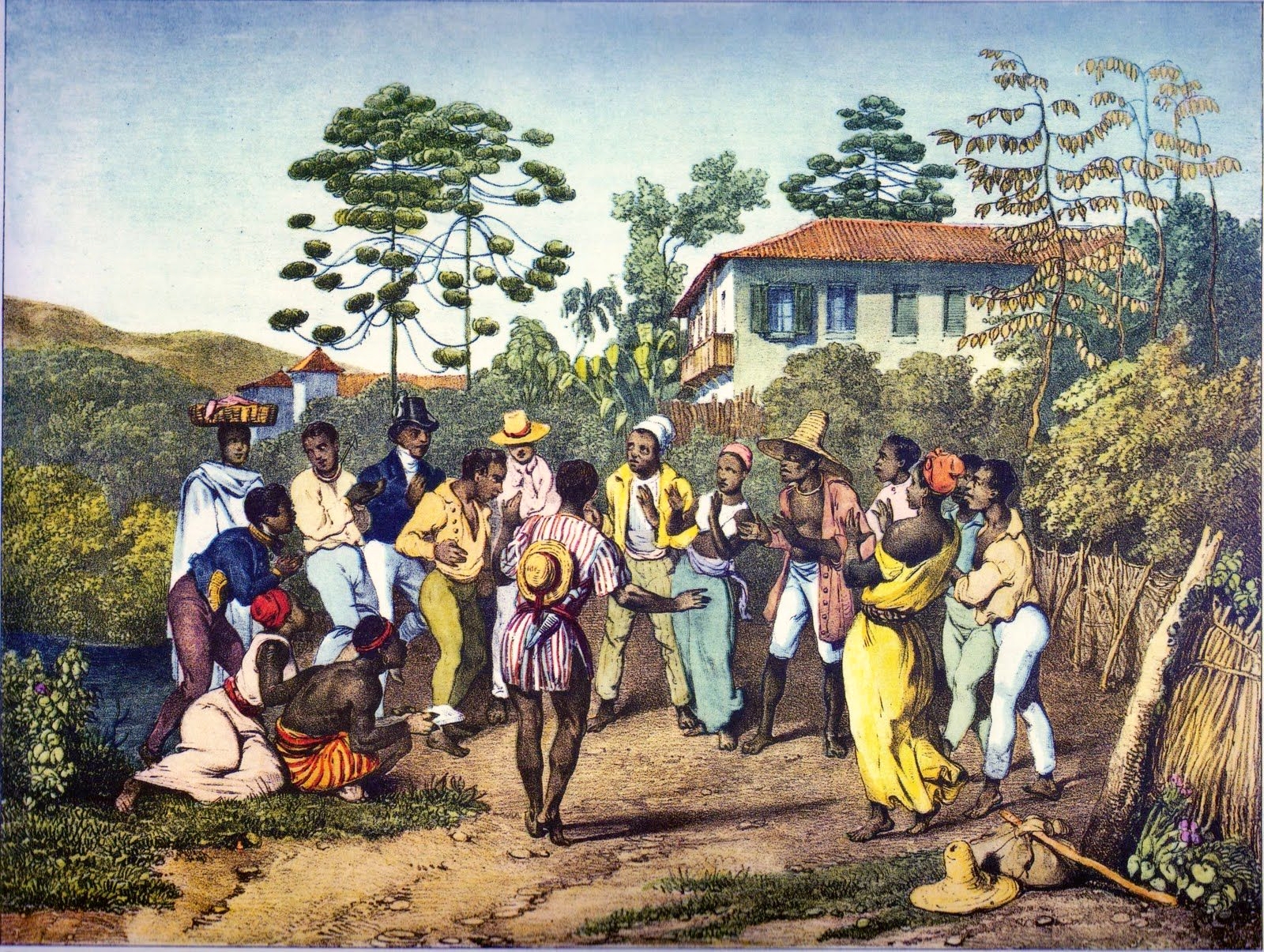
Batucada emerged as a percussive ensemble style in the early 20th century, characterized by intense, polyrhythmic drumming derived from Afro-Brazilian traditions, particularly the rhythms of religious ceremonies. These influences stemmed from the cultural practices of enslaved Africans brought to during the colonial period, where Bantu and Sudanic rhythmic patterns were adapted using locally available materials to create instruments like drums and shakers. By the , batucada began to crystallize in Rio de Janeiro's urban landscape as a communal form of expression, blending these African elements with European harmonic structures from genres like maxixe and . The tradition took shape through informal carnival groups known as blocos carnavalescos, which formed in Rio's working-class neighborhoods and favelas starting around 1917. These early blocos evolved from rudimentary percussion using household items like pots and pans during street processions, gradually organizing into more structured drumming ensembles by the late . A pivotal moment came in with the establishment of the first schools, such as Deixa Falar in the Estácio neighborhood, where batucada was formalized as a core component of parades. Portuguese colonial rhythms, including march-like beats, intermingled with African slave contributions to shape batucada's syncopated style, as seen in early compositions that incorporated percussive elements. Pioneering figures like Ismael Silva, a key composer from the Estácio de Sá group, played a crucial role by integrating batucada rhythms into sambas such as those recorded in the late , emphasizing heavier percussion to evoke urban vitality. Amid Brazil's rapid in the early , batucada rose among working-class communities in Rio's favelas as a means of cultural resistance and social bonding, countering marginalization faced by Afro-Brazilian populations during economic shifts and rural-to-urban migration. These ensembles provided a platform for in the face of socioeconomic exclusion, transforming informal street gatherings into symbols of resilience by the 1930s.

Integration into Samba Schools and Carnival

The first official samba school, Deixa Falar, was established on August 12, 1928, in the Estácio de Sá neighborhood of Rio de Janeiro by Ismael Silva, Bide, Armando Marçal, Nilton Bastos, and others, transforming informal carnival blocks into organized groups that adopted batucada as the core percussion ensemble for their parades to enhance rhythmic drive and communal participation. Precursors like Portela, founded in 1923, and Estação Primeira de Mangueira, founded in 1928, also quickly integrated batucada sections featuring surdo drums and other percussion to structure their processions, setting a model for subsequent schools. These early adoptions formalized batucada's role, shifting from spontaneous street rhythms to disciplined parade accompaniments that unified singers, dancers, and instrumentalists. A pivotal milestone occurred in 1932 when the Brazilian government regulated celebrations, organizing the first official competitive parade of samba schools at Praça Onze in Rio de Janeiro, where nineteen groups showcased their batucada-driven performances, effectively mandating structured percussion sections as essential to the format. This regulation elevated samba schools from marginal community associations to sanctioned cultural institutions, with batucada ensembles required to synchronize with enredo themes and choreography during the event. By the mid-1930s, under President , samba schools received official recognition in 1935, permitting their downtown parades and embedding batucada as a symbol of national unity. Vargas' cultural policies from onward promoted , including its batucada elements, as a cornerstone of Brazilian , using state radio like Rádio Nacional to broadcast percussion-heavy recordings that celebrated racial mixture while monitoring content to suppress overtly political or dissenting Afro-Brazilian expressions. This approach romanticized batucada's Afro-Brazilian roots in songs like "" (1939), positioning it as an emblem of harmonious mestiçagem, though it curtailed some unfiltered candomblé-influenced rituals to align with authoritarian control. Through these policies, batucada evolved from a practice to a state-endorsed spectacle, influencing school repertoires to emphasize patriotic themes during . From the 1940s to the 1960s, samba school batucada ensembles expanded significantly in scale and complexity, growing from around 20 percussionists in the early years to over 100 members by the period, enabling more intricate polyrhythms and visual synchronization in parades. Competitions intensified, with innovations like the introduction of samba-enredo—narrative sambas tailored to parade themes—further centering batucada as the rhythmic backbone. By the 1970s, standardized sizes of 200-300 musicians were established through league regulations, professionalizing roles such as mestre de bateria and ensuring consistent power for the Sambódromo-era spectacles.

Instruments and Ensemble

Core Percussion Instruments

The core percussion instruments of batucada form the rhythmic foundation of this Brazilian ensemble style, primarily consisting of drums and bells derived from Afro-Brazilian traditions adapted in early 20th-century Rio de Janeiro. These instruments, including the , repique, , , and , are typically constructed from wood or metal shells with animal skin or synthetic heads, evolving from rudimentary homemade versions using butter barrels and nailed leathers to professional models with tunable hardware by the mid-20th century. Their acoustic properties emphasize layered tones, from deep bass resonances to high-pitched calls, enabling the dense polyrhythms characteristic of batucada. The , or , serves as the heartbeat of the ensemble and traces its origins to African ngoma drums brought by enslaved people and adapted in 1920s Rio samba schools, with its invention credited to Alcebíades Barcelos around 1927 for the Deixa Falar group. It features a single-headed construction with a wooden or metal body and leather or synthetic skin head, typically measuring 20–24 inches in diameter and 18–24 inches in height, allowing for tunable pitches via metal rods or keys. Variations include the surdo primeiro (first, largest at 24 inches for the lowest tone), segundo (second, mid-range), and terceiro (third, smallest at around 20 inches for higher bass), producing a deep, resonant boom with warm sustain from leather heads lasting about two seconds. The repique, a high-pitched drum related to but distinct from the surdo, was incorporated into samba percussion in the 1930s, becoming established by the 1950s in Rio samba schools. Constructed similarly with a single head on a wooden or metal shell and tunable synthetic or leather skin, it is smaller, typically 10–14 inches in diameter, enabling clear, singing tones higher than those of the surdos. Its acoustic profile offers a sharp, dense resonance suited for melodic variation, with modern models featuring metal tuning hardware for precise pitch control. The , a small of Afro-Portuguese origin integrated into by the late , is handheld with a single synthetic or animal skin head stretched over a wooden or metal frame, usually 5–8 inches in diameter and 2 inches deep. Historically, early versions used skins, as noted in 1950s Portela practices, evolving to durable heads post-World War II for consistent performance. It produces a sharp, high-pitched crack with minimal tonal sustain, often tuned to D or G for within the ensemble. The , a friction drum of African Bantu roots introduced to popular by Deixa Falar in the , consists of a wooden or metal body with a single animal skin head connected internally to a stick rubbed with a damp cloth to vary tension. Sizes vary from portable 12-inch models to larger versions, with heads tuned to pitches like G# or C# for undulating tones spanning up to a minor tenth. Its distinctive squeaky, vocal-like glissandi mimic human cries, achieved through that creates long, open sounds resembling "a/u" vowels. The , a double-bell instrument of Yoruba African origin adopted in Brazilian percussion by the early 20th century, is forged from welded steel or aluminum sheets, typically measuring 14–15 inches long with two conjoined bells of differing sizes for contrasting pitches. Early homemade versions used recycled metal, transitioning to chromed or lacquered professional models by the to prevent and enhance durability. It yields a bright, penetrating with the larger bell providing a lower tone and the smaller a higher one, cutting through dense ensembles. The , a hand-held tambourine-like instrument of and African origin, features a single-headed frame with jingles (platinelas), typically 10–12 inches in diameter, used in batucada for rhythmic accents and fills since the early days of schools. It is played by shaking, striking the head with hand or , and muffling, producing versatile tones from crisp jingles to muffled thumps. The caixa, or , adapted from military traditions, provides sharp backbeats and rolls in batucada ensembles, with a wooden or metal shell, double-headed with snares, usually 12–14 inches in diameter. Introduced to in the 1930s, it adds crisp, cutting accents to the rhythmic layers. The reco-reco, a scraped percussion idiophone of African origin, consists of a metal or bamboo tube or serrated surface scraped with a stick, producing rasping textures that enhance syncopation in batucada. Adopted in the early 20th century, it provides continuous rhythmic drive. The chocalho, or ganzá, a shaker made of metal sheets with beads or pebbles, delivers high-frequency sibilance and swing, typically 8–12 inches tall, integrated into samba for textural support from the 1920s onward.

Ensemble Organization and Roles

A batucada ensemble, known as a in the context of schools, typically comprises 50 to 300 or more percussionists, depending on the group's scale and affiliation with parades. These members are organized into distinct sections based on instrument function, ensuring rhythmic layering and cohesion. The marcação section, anchored by drums, forms the foundational pulse, with surdo de primeira providing the primary downbeat, surdo de segunda handling call-and-response patterns, and surdo de terceira introducing variations. Leading and sustaining elements come from the conduction section, including repique drums for melodic cues and fills, caixa (snare drums) for sharp accents and rolls, and for intricate high-pitched rhythms. Supporting textures are added by the acompanhamento section, featuring instruments like for vocal-like effects, reco-reco for scraped rhythms, bells, chocalho shakers, and tambourines for melodic fills. Leadership of the is provided by the , the conductor who directs the ensemble through , whistles, and repique calls to maintain , dynamics, and synchronized breaks known as paradinhas. The oversees the overall sound balance and cues transitions, drawing on deep knowledge of all instruments to guide the group without disrupting the flow. Additional roles include support staff such as roadies, who handle instrument transport, maintenance, and setup during parades and rehearsals, ensuring logistical efficiency for large-scale performances. Musicians within sections specialize in their instruments, with players emphasizing steady foundation, repique performers leading variations, caixa drummers delivering accents, and players adding improvisational fills. Rehearsals for batucada ensembles occur weekly in community centers called quadras, beginning several months before —often as early as —and intensifying through sectional practices and full-group sessions to build and physical stamina. These sessions focus on rhythmic precision and , preparing performers for parades lasting 60 to 90 minutes, where the bateria must sustain high energy amid marching. Technical rehearsals in venues like the follow, allowing final adjustments to timing and formations. Batucada has traditionally been male-dominated, with women historically sidelined from percussion roles in baterias due to sexist attitudes and cultural stereotypes associating drumming with . Since the , following Brazil's return to and rising feminist movements, female participation has increased, including in all-female groups formed in the that challenge gender norms by featuring women as drummers, composers, and leaders. Specific roles continue to evolve, with more women now playing , caixa, and repique, though all-female ensembles remain a minority amid ongoing efforts to promote inclusivity.

Rhythms and Musical Structure

Fundamental Rhythmic Patterns

Batucada's fundamental rhythmic patterns revolve around polyrhythmic structures that interlock to create a driving, syncopated groove, typically in 2/4 time with a binary feel emphasizing duple subdivisions. The core rhythm is anchored by the , which delivers a steady quarter-note acting as the ensemble's heartbeat, often notated as a low "boom" on the (beat 1) and a higher "chick" on beat 2, with variations introducing rests or accents for call-and-response dynamics. This binary pattern provides stability while allowing higher instruments to weave syncopated fills around it. Interlocking layers build complexity on this foundation: the surdo maintains quarter-note pulses, while the tamborim introduces eighth-note syncopations that cross and fill the gaps, such as patterns accenting the "&" of beats for a propulsive swing. The cuíca contributes sliding glissandi and vocal-like accents to punctuate transitions, enhancing the polyrhythmic texture without overpowering the base. In standard samba de batucada grooves, these elements coalesce at tempos of 120-160 BPM, fostering an energetic forward motion suitable for carnival processions. A simple notational example for the in a 4/4 (common for transcription) illustrates this base:

| boom - chick | boom - | | 1 & 2 | 3 & 4 |

| boom - chick | boom - | | 1 & 2 | 3 & 4 |

This pattern repeats, with the second measure often shortened for response cues. Harmonic rhythm emerges subtly through fluctuations in percussion density, where swells and layered accents imply underlying chord progressions, blending Afro-Brazilian with European harmonic sensibilities despite the percussion-only format.

Composition and Improvisation Techniques

Batucada compositions are built on a layered rhythmic foundation, typically starting with the drums establishing the marca (marker) rhythm in 2/4 time to provide the core pulse. This introduction features a gradual buildup as additional instruments like caixas and cuicas join, creating tension before the full engages. The structure progresses to verses defined by call-and-response interactions, where the repique de mão leads short phrases that the ensemble echoes, maintaining over the 's steady beat. Choruses then intensify with high-density participation from all sections, amplifying harmonic pairs formed by tuned s to evoke tonal progressions, while the outro fades by reducing layers back to the foundational s. Improvisation within batucada remains structured and directed by the , emphasizing variations within established patterns rather than free-form exploration. Techniques include corta-jaca breaks, which involve cutting s derived from clave patterns—often 8-beat sequences in 2/4 meter—allowing sections like tamborims to deliver rapid runs or solos that punctuate the flow. The repique signals these moments through floriados, syncopated clave-based fills that introduce timbral shifts without disrupting the overall balanço (swing). Paradinhas, or sudden halts cued by the repique, create dramatic pauses, enabling brief respites that heighten excitement before resuming the . Enredo themes from parades shape batucada by integrating narrative elements into rhythmic motifs, where the percussion supports the samba-enredo song through adaptive patterns that evoke the theme's mood or story. Transmission and teaching of batucada prioritize , with rhythms learned aurally through live rehearsals, onomatopoeic vocalizations (e.g., "bum bum" for ), and direct guidance from experienced mestres in a novice-master dynamic. This folk-based approach fosters intuitive feel over precision, though analytical notations—such as fraction-based systems without bar lines or TUBS (text-based) representations—have supplemented it since the mid-20th century to document patterns and aid ensemble coordination. These written aids, derived from recordings like those of Portela's Os 27 Amigos, emphasize rhythmic segmentation into basic, diminished, and melodic levels while preserving the tradition's emphasis on collective groove.

Performance Practices

Traditional Carnival Performances

The traditional Carnival performances of batucada form the rhythmic backbone of Rio de Janeiro's parades, held annually in the Sambódromo, a purpose-built venue stretching approximately 700 meters along Avenida Marquês de Sapucaí. Each is allotted 70 to 80 minutes to traverse the route, presenting a synchronized of up to 5,000 participants that must maintain continuous forward momentum to avoid penalties. The batucada ensemble, known as the ala de bateria, typically positions itself shortly after the school's opening elements, including the commission flag carried by the porta-bandeira and escorted by the mestre-sala, providing the pulsating drive that propels the entire parade. Preparation for these performances spans the entire year, with schools commencing rehearsals as early as July or August and intensifying efforts from January onward, culminating in technical run-throughs in the Sambódromo during the weeks leading up to the pre-Lent dates in or . These sessions focus on honing the collective precision of the batucada while integrating it with thematic elements such as elaborate costumes for dancers and intricately designed floats that visually amplify the percussion's energy. The floats, often numbering 8 to 10 per school and adorned to reflect the parade's enredo (theme), move in tandem with the drummers, creating a multisensory spectacle where the batucada's rhythms underscore the narrative conveyed through visuals. Judging of batucada performances occurs as part of the broader competition, formalized since the 1935 establishment of structured criteria by Rio's authorities, with the percussion band () evaluated in one of ten equal categories worth up to 40 points each out of a total 400. Criteria emphasize precision through consistent maintenance, volume for powerful projection without overpowering harmony, and overall energy to sustain the parade's momentum, as assessed by panels of four judges per category positioned along the route. Schools like Beija-Flor de Nilópolis, which has secured 15 titles including the 2025 championship, exemplify success in these aspects by delivering flawlessly coordinated batucada displays that elevate their scores. Executing batucada amid the presents significant logistical challenges, particularly for ensembles of 250 to 300 drummers who must navigate the moving formation while maintaining . Safety protocols include hydration stations along the route to combat Rio's humid , which can exacerbate during the intense 70- to 80-minute , alongside guidelines for spacing to prevent collisions in the crowded ala de bateria. Noise levels from the percussion can reach up to 120 dB at the drummers' positions, necessitating ear protection recommendations to mitigate hearing risks during the high-volume performance.

Choreography and Visual Elements

Batucada performances integrate synchronized that combines marching precision with rhythmic , enhancing the auditory experience of the percussion . Drummers, or ritmistas, advance in coordinated sections known as alas within the samba school parade, maintaining tight formations to sustain the bateria's momentum across the sambódromo avenue. Dancers called passistas execute samba no pé footwork—characterized by alternating steps, hip isolations, and spins—that aligns directly with the surdo's bass pulses, creating a unified wave of motion across the group. These movements allow for dynamic shifts, such as coordinated passes where sections interchange positions, directed by the mestre de bateria through whistles and gestures to heighten the performance's energy. Costumes form an essential visual component, featuring vibrant, themed ensembles crafted by specialized Carnival artists to embody the samba school's annual narrative. Adorned with feathers, sequins, plumes, and intricate , these outfits typically weigh 5 to 10 kg but incorporate lightweight materials and flexible designs to ensure mobility for drummers and dancers alike during the strenuous procession. For instance, passistas often wear sequined bikinis with elaborate headdresses, while ala das baianas sections don traditional wide hoop skirts accented with bijouterie, all contributing to the parade's kaleidoscopic aesthetic. The visual flair extends to symbolic elements like flags and banners borne by the porta-bandeira and mestre-sala, which represent the school's identity and flutter dramatically against the backdrop of the sambódromo's illuminated arches. Lighting effects in the venue amplify the spectacle, casting glowing highlights on the moving masses for the benefit of up to 90,000 spectators. Passistas frequently interweave with the for improvised solos, showcasing acrobatic twists and sensual gestures that punctuate the and draw focus. Choreography training occurs through dedicated year-round rehearsals in spaces like terreiros, separate from pure musical to build physical coordination and thematic cohesion. Since the , these sessions have emphasized , focusing on to withstand the half-mile parade route and showmanship to elevate the overall presentation, with specialized drills for samba no pé and formation transitions.

Cultural Significance

Role in Brazilian Society

Batucada, as the rhythmic backbone of performances, plays a pivotal role in Brazilian society by fostering community cohesion in urban neighborhoods, particularly in Rio de Janeiro's favelas. schools serve as vital social hubs, offering free music education and youth programs that engage thousands of participants annually, drawing primarily from low-income areas to promote skill-building and . For instance, as of 1998, children's schools in Rio, such as the Empire of the Future supported by initiatives like the Inter-American Development Bank's projects, enrolled over 1,200 young people aged 7 to 17 in percussion and performance training, with thousands more across nine similar programs, helping to alleviate by providing structured activities that deter involvement in crime and build employable skills. These ensembles, often exceeding 4,000 members per adult school, create inclusive spaces where batucada rehearsals reinforce communal bonds and cultural continuity. Beyond community building, batucada embodies Afro-Brazilian identity and resistance against historical marginalization, evolving as a symbol of cultural affirmation during periods of political . Rooted in African diasporic rhythms, it has been instrumental in samba schools' enredos—the thematic narratives of parades—that highlight Black heritage and challenge systemic exclusion. In the 1980s, as transitioned from (1964–1985), batucada-infused sambas subtly critiqued , fostering collective resilience and national dialogue on . This resistive function persists, positioning batucada as a tool for voicing Afro-Brazilian narratives against ongoing social inequalities. Economically, batucada drives significant tourism revenue through its central role in Carnival, supporting local artisans, musicians, and related industries. The , featuring batucada-led parades, generates over R$5.5 billion (approximately $1 billion USD) annually for the city, creating tens of thousands of temporary jobs in costume-making, float construction, and performance support, primarily benefiting favela-based workers. Nationally, the event contributes more than R$12 billion to Brazil's economy each year, underscoring batucada's impact in sustaining creative livelihoods amid economic challenges. In recent decades, batucada has advanced inclusivity within samba schools, addressing historical and exclusions through targeted initiatives. Since the 2000s, all-female groups have emerged to reclaim space in the traditionally male-dominated percussion sections. Similarly, LGBTQ+ inclusion efforts have gained momentum, with majority-queer ensembles like Bangay Samba Group debuting in Rio's street parades in 2022, and schools such as Paraíso do Tuiuti spotlighting trans rights in their 2025 enredo, which honors Xica Manicongo, Brazil's first known woman, promoting broader societal acceptance. These developments reflect batucada's adaptation to foster equity, transforming it into a platform for diverse voices in Brazilian cultural life.

Global Spread and Adaptations

Batucada's global dissemination began accelerating in the 1980s through international tours by influential Brazilian groups such as , a Bahian bloco-afro founded in 1979 that pioneered samba-reggae rhythms and performed across , , and , inspiring percussion ensembles worldwide. This exposure helped popularize batucada's syncopated percussion outside Brazil, particularly in urban festivals. The 2005 UNESCO inscription of Samba de Roda from Bahia's Recôncavo region as Intangible Cultural Heritage of Humanity further elevated samba traditions, including batucada elements, fostering international awareness and participation in percussion-based performances. Prominent international batucada groups emerged in the late , notably in the UK with the London School of Samba, established in 1984 as the first samba school outside and instrumental in introducing batucada to events like starting that year. In Europe, the network, originating in in 1997 under Brazilian musician Giba Gonçalves, expanded to over 20 countries with samba-reggae batucada ensembles that perform at festivals including , blending Afro-Brazilian percussion with local multicultural celebrations. Adaptations of batucada abroad often involve fusions with other genres, such as and rock; for instance, the group Stone Alliance incorporated batucada rhythms into tracks like "Amigos" on their 1977 album, while saxophonist featured it in his 2013 release "Batucada (The Beat)," creating electric, amplified versions suitable for concert settings. The global spread has sparked debates on authenticity versus cultural exchange, with concerns over dilution emerging in the as non-Brazilian groups adapted rhythms without full historical context, sometimes leading to accusations of appropriation in places like France's batucada scene. Brazilian institutions have countered this through preservation efforts, including international workshops by schools since the 2010s, such as those offered by Rio-based groups in and the to transmit traditional techniques and maintain cultural integrity amid transnational diffusion.

References

Add your contribution
Related Hubs
User Avatar
No comments yet.