Hubbry Logo
Billy CoxBilly CoxMain
Open search
Billy Cox
Community hub
Billy Cox
logo
8 pages, 0 posts
0 subscribers
Be the first to start a discussion here.
Billy Cox
Billy Cox
from Wikipedia

Key Information

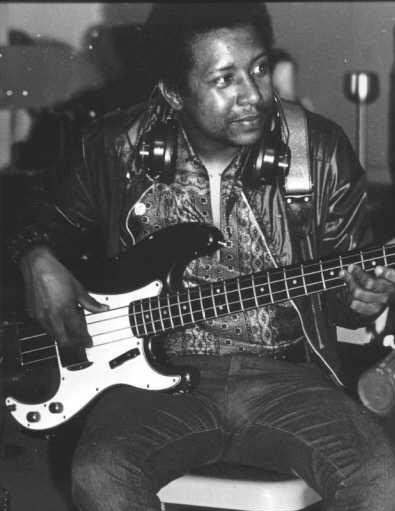
William Cox (born October 18, 1941[1]) is an American bassist, best known for performing with Jimi Hendrix. Cox is the only surviving musician to have regularly played with Hendrix: first when both were in the Army, then in 1969 with the interim group that backed Hendrix at Woodstock (informally referred to as "Gypsy Sun and Rainbows"), followed by the trio with drummer Buddy Miles that recorded the live Band of Gypsys album, and, lastly, The Cry of Love Tour trio with Mitch Mitchell back on drums. Cox continues to perform dates with the Band of Gypsys Experience and the Experience Hendrix Tour.

In addition to Hendrix, he has either been a member of the house or touring band or recorded sessions for Sam Cooke, Slim Harpo, Joe Simon, Charlie Daniels, John McLaughlin, Rufus Thomas, Carla Thomas, Lou Rawls, Etta James, Jackie Wilson and Little Richard.

Early years

[edit]

Born in Wheeling, West Virginia, Billy Cox was raised in Pittsburgh, Pennsylvania, and attended Schenley High School.[2]

Cox met Jimi Hendrix when they were serving in the Army at Fort Campbell, Kentucky, in 1961. While using the bathroom at Service Club No. 1 during a sudden rainstorm, he heard guitar playing inside. Impressed with what he heard, he introduced himself, told Hendrix he played bass, and they were jamming soon after. They became, and remained, fast friends. They left the military around the same time and they played clubs around Clarksville, Tennessee, finally moving to Nashville. They formed a group called the King Kasuals, and played at several Nashville clubs, mostly the Del Morocco. Occasionally the band would play outlying gigs in the southeast, once as far north as Indianapolis playing what was called the "Chitlin' Circuit". Cox and Hendrix also played in the backing band for Marion James around this time.[3]

Hendrix eventually left Nashville, playing all over the U.S. in the backing groups of several famous artists (most notably Little Richard and the Isley Brothers) until he was "discovered" by Chas Chandler in New York City's Greenwich Village. Chandler took Hendrix to England, but before Hendrix left, he called Cox and asked him to join him. As Cox "only had three strings on [his] bass" and no money to travel to New York, he simply thanked Hendrix and wished him well.

During this period, Cox played bass on such pioneering R&B television shows as Nashville's "Night Train" and "The!!!! Beat" from Dallas, Texas, working closely with Hoss Allen and John Richbourg of WLAC Radio.

With Jimi Hendrix

[edit]

In 1969, several months before bassist Noel Redding left the Jimi Hendrix Experience, Hendrix called his old friend Cox, who joined him in New York as his studio bassist. Following the break-up of the Experience, Cox performed with Hendrix's interim group, informally called Gypsy Sun and Rainbows. This group played at Woodstock and two low-key New York gigs. Hendrix then formed another short-lived group with Cox and Buddy Miles, that recorded Band of Gypsys, the live album that he owed former manager Ed Chalpin as part of a legal settlement. Following their demise, Cox recorded and toured with Hendrix and Mitch Mitchell for The Cry of Love Tour, when promoters sometimes billed them as the "Jimi Hendrix Experience".

Cox contributed most of the bass parts on the first group of posthumously released Hendrix albums, including The Cry of Love (1971), Rainbow Bridge (1971), War Heroes (1972), and Loose Ends (1974). Most of the tracks from these albums were consolidated as First Rays of the New Rising Sun (1997), which is the most complete attempt to present Hendrix's fourth studio album (see Hendrix's posthumous discography and videography for a complete list). Additionally, Cox appears on many live albums and films from the Cry of Love Tour.

After Hendrix's death

[edit]

1970s–1980s

[edit]

In 1971, Cox released his album Nitro Function with Char Vinnedge (from Luv'd Ones) and Robert Tarrant. Cox played with others, including the Charlie Daniels Band, as well as session work and live dates. Throughout the 1970s and 1980s, Cox would continue to be a part of Jimi's music as posthumous releases continued to pour out.

1990s

[edit]

In 1993, Cox, Buddy Miles, and a relative of Jimi Hendrix, Riki Hendrix appeared on stage to play at a tribute event for Jimi Hendrix.[4][5]

In 1995, Cox along with Mitchell, Redding and Miles began participating in Hendrix tributes and tours. In 1999, Cox appeared on the late Bruce Cameron's album, Midnight Daydream, that included other Hendrix alumni Mitchell and Miles along with Jack Bruce and others. Cox has also performed some dates along with Mitchell and guitarist Gary Serkin with a Hendrix-tribute outfit called the Gypsy Sun Experience.[6]

Cox worked on First Rays of the New Rising Sun, Hendrix's fourth studio album, which was cut off by Hendrix's death. Cox has also been known to guest speak at University level music seminars. In this capacity, he spends time with aspiring musicians in discussion and demonstration sessions at Electric Lady Studios.

2000s

[edit]

In 2004, Miles reunited yet again with Cox of the Band of Gypsys to re-record songs from the original live album of 1970 with guitarists Eric Gales, Kenny Olsen, Sheldon Reynolds, Andy Aledort and Gary Serkin. The album, titled The Band of Gypsys Return, was released in 2006.

Cox currently plays with the Experience Hendrix, a semi-regular touring Hendrix tribute band featuring top guitarists and former Hendrix collaborators. Cox's solo album Last Gypsy Standing was released in 2009.

In 2009, he was inducted into the Musicians Hall of Fame and Museum in Nashville.[7]

2010s

[edit]

Today, Billy Cox owns a video production company. He has produced numerous blues and a myriad of gospel shows. He co-authored the books Jimi Hendrix Sessions and Ultimate Hendrix with John McDermott and Eddie Kramer. Cox has been the recipient of numerous awards and honors, including these: In 2009 he was inducted into The Musicians Hall of Fame; he received the Founders Award in 2010, given by Microsoft co-founder Paul Allen. In 2011, Cox was inducted into the West Virginia Music Hall Of Fame. He released Old School Blue Blues in 2011, and continues to tour with "The Experience Hendrix Tour" each year and his own Band of Gypsys Experience. He released the single "Run" featuring the androgynous singer and songwriter Marlon Alarm in November 2011, and his latest release, Unfiltered, came out in late 2014. On June 23, 2019, Cox was inducted into the Rhythm and Blues Music Hall of Fame along with his bandmates, Hendrix and Miles for their groundbreaking work as the Band of Gypsys. Cox was on hand to accept the award in Detroit, Michigan, and performed with guitarist Dani Robinson and drummer Richie Monica.[8]

Discography

[edit]

Solo

[edit]
  • Nitro Function (1971)
  • Last Gypsy Standing (2009)
  • Old School Blue Blues (2011)
  • Unfiltered (2014)

Collaboration

[edit]

With Jimi Hendrix

[edit]

Studio recordings

[edit]

Live recordings

[edit]

August 18, 1969 Woodstock performance ("Gypsy Sun and Rainbows")

December 31, 1969 – January 1, 1970 Fillmore East performances ("Band of Gypsys")

April–September 1970 U.S./European tour ("The Cry of Love Tour")

Anthologies

[edit]

References

[edit]
Revisions and contributorsEdit on WikipediaRead on Wikipedia
from Grokipedia
Billy Cox is an American bassist, singer, and songwriter, best known for his decades-long musical partnership with , beginning in the U.S. Army in the early 1960s and continuing through seminal bands like the Band of Gypsys, of which he remains the sole surviving member. Born on October 18, 1941, in , Cox grew up in a musical family, with his mother as a concert pianist and uncles who were saxophonists, which inspired him to learn instruments including , , , and before settling on bass after being influenced by artists like . His family relocated to , , during his teenage years, where exposure to the city's scene further shaped his musical foundation. After enlisting in the U.S. Army's , Cox met Hendrix at , , in 1961; the two bonded over their shared passion for music, frequently rehearsing together and forming a lifelong that extended beyond their military service. Following their discharge, Cox and Hendrix performed on the "chitlin' circuit" and local Nashville venues, eventually forming the King Kasuals band, which featured a Muscle Shoals horn section and toured regionally. In 1969, Cox rejoined Hendrix for key performances, including Woodstock with the Gypsy Sun and Rainbows ensemble and the formation of the Band of Gypsys alongside drummer Buddy Miles, whose New Year's Eve concerts at the Fillmore East were later ranked among the greatest live shows by Rolling Stone. He also contributed to the Jimi Hendrix Experience's 1970 European tour, solidifying his role in Hendrix's evolving sound until the guitarist's death later that year. Beyond Hendrix, Cox built a prolific career as a in Nashville, playing on approximately 50% of the city's black gospel recordings and collaborating with icons such as , , , and . From 1999, he led the Experience Hendrix Tour, performing over 225 concerts. He released solo albums like Last Gypsy Standing (2009) and Unfiltered Billy Cox (2014), and co-authored books including Jimi Hendrix Sessions and Ultimate Hendrix. His contributions have earned him induction into the Musicians Hall of Fame (2009), the Music Hall of Fame (2011), and the Founders Award from the (2010). Now residing in Nashville, Cox continues to perform and produce through his Experience and a video production company, including tribute events and charitable contributions such as a 2025 donation aiding wildfire victims.

Early Life

Childhood and Family Background

Billy Cox was born on October 18, 1941, in , where his family resided near the Capitol Music Hall. During his early teenage years, the family relocated to , , immersing him in the city's dynamic African American community and its renowned scene. Cox grew up in a musically inclined household; his father, the Reverend James Cox, served as a Baptist minister and mathematics teacher, while his mother, LaVern Cox, was a classical who performed in church, exposing him to composers like Brahms, Handel, Beethoven, and Mozart from a young age. Additionally, his two uncles were saxophonists who occasionally substituted for players in bands led by and . His parents actively encouraged his musical pursuits, fostering an environment that blended spiritual, classical, and rhythmic influences. As a child in Wheeling, Cox's early exposure to music came through eavesdropping on live performances at the Capitol via an open side door, sparking his initial fascination with the sounds of the era. In , this interest deepened through church services, where his mother's playing highlighted rhythmic and harmonic elements, and family settings that emphasized musical expression. His parents' support led him to explore and initially, instruments that laid the groundwork for his appreciation of melody and ensemble playing. By his teenage years, Cox attended and ventured into 's jazz-dominated club scene, where the prevalence of skilled bassists and rhythm sections in local venues captivated him and directed his focus toward the foundational role of the bass in group dynamics. During his adolescence, Cox began learning the before transitioning to , and later picked up the guitar through experiences, developing basic skills through practice and immersion in the local music culture. At around age 17, while attending a performance in a club, he encountered the electric bass for the first time, an instrument that immediately resonated with his growing interest in rhythm sections; he borrowed the bass player's instrument during a break and began experimenting, marking his shift toward bass as his primary focus. This self-directed exploration in the clubs and through personal practice honed his foundational techniques, setting the stage for his later musical endeavors.

Military Service and Early Musical Ventures

In 1961, at the age of 19, Billy Cox enlisted in the U.S. Army and was assigned to , , where he served with the . While stationed there, Cox met fellow soldier James Marshall Hendrix in November 1961 after hearing him play guitar in the base's Service Club No. 1; the two quickly bonded over their mutual passion for and blues music, often jamming together in their barracks. In 1962, Cox and Hendrix formed the King Kasuals with drummer Alphonso Young and other local musicians, serving as the house band at Nashville's Club Del Morocco and touring the across and surrounding Southern states, performing R&B covers in small clubs and venues. Following his honorable discharge in 1962, Cox returned to Nashville and continued leading the King Kasuals, securing regular gigs in the Southeast's vibrant R&B scene and making television appearances on pioneering shows like WLAC-TV's Night Train, a precursor to that featured live performances by Black artists.

Career with Jimi Hendrix

Joining Hendrix and the Gypsy Sun and Rainbows

In 1969, as tensions mounted within the Experience, Hendrix reached out to his old army friend Billy Cox with a personal invitation to relocate to New York and serve as his bassist, aiming to infuse their collaboration with a stronger foundation drawn from Cox's extensive experience backing R&B artists. Cox, who had been performing with R&B acts in the Midwest, initially hesitated due to financial concerns but accepted after Hendrix assured him of logistical support, arriving in to commence studio sessions at the . Their prior friendship stemmed from serving together in the U.S. Army's in the early 1960s, where they had first jammed informally. To prepare for the Woodstock Music and Art Fair, Hendrix assembled the short-lived ensemble known as Gypsy Sun and Rainbows in mid-1969, incorporating Cox on bass alongside drummer from the , rhythm guitarist Larry Lee, and percussionists Juma Sultan and Jerry Velez for a fuller, groove-oriented sound. The group's name emerged spontaneously during rehearsals, reflecting Hendrix's improvisational ethos and desire for a collective, free-form identity. On August 18, 1969, Gypsy Sun and Rainbows took the stage at Woodstock as the festival's closing act, performing a dawn set before a diminished but still vast crowd amid rainy, chaotic conditions that tested the musicians' adaptability. Cox anchored the rhythm section with steady bass lines, contributing to highlights like the extended blues workout "Red House," where his R&B phrasing complemented Hendrix's guitar solos, and the high-energy closer "Voodoo Child (Slight Return)," which showcased the band's raw power. He later described the experience as confronting an "ocean of people" in an unprecedented environment, yet maintaining a positive, unifying energy despite sound issues and the event's scale. Though the Woodstock performance marked the band's public debut, Gypsy Sun and Rainbows proved ephemeral, undertaking only a few subsequent gigs before dissolving later in 1969 amid internal tensions over musical direction and Hendrix's ongoing experimentation with new lineups.

Band of Gypsys Performances and Recordings

In late 1969, following the dissolution of the Jimi Hendrix Experience earlier that year, Hendrix transitioned to a new configuration known as the , featuring longtime friend and bassist Billy Cox alongside drummer . This lineup, which evolved from the larger Gypsy Sun and Rainbows ensemble that performed at Woodstock in August 1969, sought to emphasize a funkier, groove-oriented sound rooted in R&B and soul influences, departing from Hendrix's earlier psychedelic explorations. Cox, who had collaborated with Hendrix since their U.S. Army days in the early , provided a solid rhythmic foundation that allowed for extended improvisations blending rock, , and elements. The Band of Gypsys' most significant performances occurred during a landmark four-show residency at New York City's Fillmore East, spanning December 31, 1969, and January 1, 1970, with two sets each night. Billed as "Jimi Hendrix: A Band of Gypsys," these concerts captured the trio's raw energy and improvisatory style, particularly during the sets, where Cox's prominent bass lines anchored extended jams like the 12-minute anti-war epic "." The performances, attended by enthusiastic audiences amid the venue's intimate atmosphere, showcased Hendrix's evolving guitar techniques, including heavy use of effects pedals, while Cox and Miles delivered tight, syncopated grooves that highlighted the band's communal harmony. These recordings formed the basis for the live Band of Gypsys, released on March 25, 1970, by as part of a contractual obligation stemming from Hendrix's deal. The , edited from the January 1 sets, includes six tracks—"Who Knows," "," "Changes," "Power to Love," "," and "We Gotta Live Together"—that exemplify the trio's fusion of hard funk rhythms and Hendrix's expressive solos, with Cox's bass work providing crucial depth to songs like "Changes" and "." Critically, it was hailed as a vital to Hendrix's more experimental studio work, praised for its visceral intensity and influence on subsequent funk-rock hybrids, though Hendrix himself later expressed dissatisfaction with the editing process. The record achieved double platinum status in the U.S., underscoring its enduring impact. Beyond shows, the Band of Gypsys engaged in limited studio experiments, including rehearsals and demos at Baggy's Studios in New York during late December 1969, where they refined tracks like "Izabella" and an early version of "." These sessions captured the trio's collaborative spirit but were overshadowed by mounting creative tensions, exacerbated by Hendrix's frustrations with management disputes and legal battles over his publishing rights. The band dissolved shortly after a troubled performance at on January 28, 1970, with Cox subsequently stepping away from the project amid the group's internal strains.

The Cry of Love Tour and Posthumous Involvement

In the summer of 1970, Billy Cox rejoined to form the rhythm section of Hendrix's final touring band alongside drummer , embarking on that spanned the and to promote material from Hendrix's forthcoming album. The tour, which ran from April through September 1970, featured performances at major venues including the Forum, , and , where the trio debuted evolving compositions amid demanding travel schedules. Key highlights included the Isle of Wight Festival on August 31, 1970, before an audience of approximately 600,000, where extended sets incorporated fresh arrangements of classics and new tracks. The tour showcased Cox's seamless integration into Hendrix's shifting jazz-rock fusion style, with his bass lines providing a soulful, grounded foundation for improvisational explorations on songs like "Freedom," "Ezy Ryder," "Dolly Dagger," and "In From the Storm." These performances, often lasting over two hours, tested audience responses to Hendrix's ambitious new material while occasionally revisiting staples like "" with enhanced rhythmic depth influenced by the Band of Gypsys era. Cox's contributions emphasized a collaborative dynamic, blending his R&B roots with Hendrix's experimental edge to create a more expansive sound during the tour's 30-plus dates. Hendrix's sudden death on September 18, 1970, abruptly ended the tour, but Cox immediately participated in the posthumous assembly of , released in March 1971, by providing bass on unfinished recordings and contributing to the selection of tracks from sessions at . As the primary on most of the album's cuts—except "My Friend" and "Belly Button Window"—Cox worked alongside engineer and Mitchell to finalize mixes of songs like "" and "Ezy Ryder," ensuring fidelity to Hendrix's vision for his fourth studio album. Over the ensuing decades, Cox has served as a key surviving collaborator in managing Hendrix's legacy through Experience Hendrix LLC, approving and contributing to archival releases such as First Rays of the New Rising Sun in 1997, which resequenced and remastered tracks from the Cry of Love era with his bass performances intact on selections including "Angel" and "Earth Blues." His oversight has emphasized authenticity in posthumous projects, from studio overdubs to live compilations, safeguarding the integrity of Hendrix's unfinished works against unauthorized releases.

Post-Hendrix Career

1970s–1980s Projects and Collaborations

Following Jimi Hendrix's death in September 1970, Billy Cox transitioned to independent musical endeavors, focusing on solo recordings and session contributions during a period of personal and professional rebuilding. In 1971, he released his debut solo album, Nitro Function, with his band Billy Cox's Nitro Function, which featured original R&B and funk-infused tracks showcasing his bass work and songwriting. The album, produced in a vein with heavy grooves, received positive notices from niche audiences but achieved limited commercial success, remaining a rare collector's item today. Throughout the mid-1970s, Cox established himself as a versatile in Nashville's vibrant music scene, performing with prominent acts such as the on tours and recordings that blended and elements. He also contributed bass lines to various TV shows and film soundtracks, including R&B programs like Nashville's Night Train and session work supporting soul and blues artists in broadcast media. Concurrently, Cox remained involved in Hendrix's posthumous catalog, providing bass overdubs and consultative input for early releases; he played on key tracks for Rainbow Bridge (1971), including live and studio material from the Cry of Love sessions, and supplied bass parts for several songs on Crash Landing (1975), helping shape these compilations amid ongoing estate efforts. In the late , Cox relocated to Nashville, where he had earlier roots from his pre-Hendrix days, to deepen his ties to the city's studio ecosystem and diversify beyond live performance. There, he founded a company, merging his musical expertise with media production to create content for and events, stage shows, and promotional videos—a pursuit that extended into the and sustained his career during a time of industry shifts.

1990s–2000s Reunions and Releases

In the 1990s, Billy Cox experienced a resurgence in his career through participation in Jimi Hendrix tribute concerts, beginning in 1995 with performances alongside original Hendrix collaborators such as drummer , bassist , and drummer . These ensembles recreated key moments from Hendrix's catalog, including songs from the era, at festivals and special events, helping to introduce Hendrix's music to younger audiences while honoring Cox's foundational role in the guitarist's late-period work. Cox's Nashville base during this period facilitated production collaborations on Hendrix-related projects, including contributions to archival releases like the 1990 Lifelines: The Jimi Hendrix Story box set, which featured rare live recordings and demos from sessions involving Cox, underscoring his ongoing involvement in curating and contextualizing Hendrix's legacy. The early 2000s saw Cox revive the Band of Gypsys lineup in 2004 with a reunion alongside Buddy Miles, enlisting guest guitarists including Eric Gales and Kenny Wayne Shepherd to reinterpret classics like "Machine Gun" and "Power of Soul." This effort culminated in the 2006 live album The Band of Gypsys Return, recorded during a series of performances that captured the group's raw, funk-infused energy and paid homage to the original 1970 Fillmore East shows. The release emphasized Cox's bass lines as the rhythmic anchor, blending studio overdubs with live fervor to evoke Hendrix's innovative spirit. Cox also pursued personal artistic endeavors, releasing the solo album Last Gypsy Standing in 2009, which reflected deeply on his lifelong friendship with Hendrix through introspective tracks like the title song, exploring themes of survival, loss, and musical kinship. Produced in Nashville, the album featured Cox's blues-rooted compositions and marked a poignant chapter in his post-Hendrix output, blending autobiography with soulful instrumentation. That same year, Cox was inducted into the Musicians Hall of Fame in Nashville alongside other Hendrix associates, recognizing his enduring contributions to rock and bass playing during the induction ceremony where he performed "Voodoo Child."

2010s–2020s Activities and Recent Engagements

In 2009, Cox co-authored Ultimate Hendrix: An Illustrated Encyclopedia of Live Concerts and Sessions with John McDermott, providing a detailed chronicle of Jimi Hendrix's performances and recordings, building on his earlier contributions to documenting the guitarist's career. That same year [wait, no: the book is 2009, but the next is 2011 album], he released his solo Old School Blue Blues through Gypsy Sun Music, featuring original tracks that reflected his roots in R&B and traditions. This was followed by the 2014 Unfiltered, a collection of and vocal pieces showcasing Cox's bass work and songwriting in a contemporary framework. Throughout the 2010s, Cox maintained an active presence on the road, regularly participating in the Experience Hendrix Tour, a traveling to Hendrix that featured rotating lineups of musicians performing the icon's catalog, with Cox often anchoring the Band of Gypsys segment. He also led performances with the Band of Gypsys Experience, a project that revived the trio's repertoire from earlier reunions, emphasizing live interpretations of songs like "" and "Who Knows." In 2019, Cox was inducted into the Music Hall of Fame as part of the Band of Gypsys, recognizing the group's pioneering fusion of rock, , and soul during their 1969-1970 run; as the sole surviving member, he accepted the honor at the ceremony in . Entering the 2020s, Cox's official presence teased upcoming new releases, with posts signaling fresh material as recently as 2025, keeping fans engaged with hints of projects drawing from his and Hendrix influences. In August 2024, he performed at the inaugural Music & Food Experience, a multi-day event on the island that raised funds for Lahaina's recovery from the 2023 , joining artists like and in tribute sets. Cox continued his philanthropic efforts in 2025, donating a Jimi Hendrix-inspired to a charity auction benefiting wildfire victims and participating in a November Chicago fundraiser organized by the Hua Momona Foundation, where he joined a Q&A panel and expressed openness to performing. At age 84 as of October 2025, Cox resides in , and remains focused on preserving Hendrix's legacy through his role with Experience Hendrix LLC, the entity overseeing the musician's catalog, tours, and archival releases.

Discography and Legacy

Solo and Independent Recordings

Billy Cox's debut solo album, Nitro Function, released in 1971 under the moniker Billy Cox's Nitro Function, marked his initial foray into independent recording, drawing on his R&B influences from early musical ventures. Featuring drummer Robert Tarrant and guitarist Char Vinnedge from 1960s bands, the album blends heavy with elements, including covers like ' "" and originals such as "Message" and "Powerhouse." Released on the Pye International label, it showcased Cox's bass-driven style in a raw, acid-infused sound that reflected his post-military transition to civilian music scenes. After a period focused on collaborations, Cox returned to solo work with Last Gypsy Standing in 2009, a reflective that emphasized personal introspection and his enduring legacy as a . Self-produced in Nashville, the release features tracks like the title song, which contemplates survival and musical journey, delivered through straightforward structures with Cox on vocals and bass. The received positive notes for its authentic, unpretentious approach to traditions, highlighting Cox's vocal maturity and rhythmic precision. In 2011, Cox issued Old School Blue Blues, another Nashville-based, self-produced effort that delved into classic themes of daily struggles and resilience, with songs like the title track evoking communal histories and emotional depth. Spanning 12 tracks, it underscores Cox's commitment to integrity, blending his signature bass lines with guitar and harmonica accents for a fervent, energetic sound. Critics praised its vitality, noting it as a testament to Cox's lifelong passion for the genre. Cox's most recent solo album to date, Unfiltered, arrived in 2014, offering a psychedelic-tinged blues rock collection that captures unvarnished personal narratives through tracks such as "Gonna Be Big" and "13th Hour." Self-produced once more in Nashville, the 10-song set highlights Cox's versatile bass work and gravelly vocals, prioritizing raw expression over polished production. It earned acclaim for its bold, genre-blending energy, reinforcing Cox's evolution as an independent artist. Throughout these releases, Cox's solo output consistently explores foundations with personal reflections on life and music, often produced independently in Nashville to maintain artistic control. As of the , Cox has teased upcoming new music via his official , signaling continued creative activity without specific release details announced.

Key Collaborations Outside Hendrix

Following Jimi Hendrix's death in 1970, Billy Cox returned to Nashville and contributed bass to ' self-titled debut album, providing rhythmic foundation on tracks that blended and elements. He subsequently joined the Band as a touring and recording member during the mid-1970s, participating in live performances and sessions that showcased his versatile R&B-inflected style amid the group's rising sound. In 1979, Cox lent his bass work to J.J. Cale's album 5, specifically on the track "Thirteen Days," where his groove complemented Cale's laid-back blues-rock arrangements alongside session drummer Karl Himmel. This collaboration highlighted Cox's ability to integrate into understated, groove-oriented productions outside the high-energy rock context of his prior work. During the late 1990s, Cox appeared on Bruce Cameron's posthumously released Midnight Daydream (1999), playing bass on multiple tracks including the title song "Midnight Daydream," "Born to Lose," and "A Thousand Moons," reuniting with drummer Buddy Miles for a fusion of hard rock and blues that featured guitarists like Joe Satriani and Steve Vai. Entering the 2000s, he guested on Gov't Mule's The Deep End, Volume 2 (2002), delivering bass lines on the cover of Muddy Waters' "Catfish Blues," part of the band's collaborative tribute to lost bassist Allen Woody amid a roster of guest musicians. Cox's session contributions extended to blues and jam-oriented projects in Nashville throughout the 2000s, often involving local session players in informal live sets and recordings that echoed his Chitlin' Circuit roots in R&B ensemble playing. These partnerships underscored his enduring role as a connective figure in southern music scenes, bridging rock, blues, and R&B traditions.

Contributions to Jimi Hendrix Catalog

Billy Cox provided foundational bass lines for several key live recordings capturing Jimi Hendrix's performances with the Gypsy Sun and Rainbows and Band of Gypsys ensembles. On the 1970 album Woodstock, released from the 1969 festival, Cox played bass during Hendrix's headline set, contributing to improvisational tracks like "Jam Back at the House" and "Red House" alongside guitarist Larry Lee and drummer Mitch Mitchell. Similarly, the 1970 live album Band of Gypsys, drawn from Fillmore East shows on New Year's Eve 1969 and New Year's Day 1970, features Cox's rhythmic foundation on all tracks, including the extended funk-infused opener "Who Knows" and the explosive "Machine Gun," performed with drummer Buddy Miles. Cox's bass work extended to live tracks from the Cry of Love Tour (1970), appearing on various posthumous releases such as Hendrix in the West (1972), where he anchors songs like "Lover Man" and "In from the Storm" with Mitchell on drums. In studio sessions, Cox's bass contributions shaped Hendrix's final recordings before his death in 1970. He performed on the majority of tracks for the 1971 posthumous album The Cry of Love, providing the core rhythm section with Mitchell on cuts like "Freedom," "Ezy Ryder," and "Night Bird Flying," while Buddy Miles drummed on "Drifting" and "My Friend." For Rainbow Bridge (1971), Cox added bass to select tracks, including "Pali Gap" and "Hey Baby (New Rising Sun)," recorded at Electric Lady Studios and the Record Plant. Cox contributed bass to original tracks on First Rays of the New Rising Sun, assembled in 1997 under Experience Hendrix LLC oversight, of which he is a co-founder, enhancing bass elements on songs such as "Angel" and "1983... (A Merman I Should Turn to Be)" to align with Hendrix's original vision. Cox's performances appear across numerous anthologies and later compilations, preserving his integral role in Hendrix's evolving sound. The 2000 box set The Experience includes unreleased tracks and alternate takes from 1969–1970 sessions featuring Cox on bass, such as early versions of "Burning of the Midnight Lamp" and live material. The 2006 release Burning Desire, compiling instrumental jams from 1969–1970 sessions, credits Cox's bass on five of its eight tracks, including "" and "Midnight," alongside Miles on drums. While Cox had no direct playing involvement in the original 1968 —recorded before he rejoined Hendrix—subsequent reissues, such as the 2018 50th Anniversary Edition, reflect his input through Experience Hendrix LLC oversight. As a co-founder of Experience Hendrix LLC, established in 1995 to manage Hendrix's catalog, Cox has played a pivotal role in approving and authenticating 2020s archival releases, ensuring the integrity of bass elements from his original performances without adding new material. This includes endorsements for projects like the box set : A Jimi Hendrix Vision, which draws from 1970 sessions with Cox, and the remixed First Rays of the New Rising Sun, included in the same box set, prioritizing fidelity to Hendrix's intent. As of 2025, Cox continues to oversee Hendrix archival releases through Experience Hendrix LLC, with no new solo material announced beyond teases on .

References

Add your contribution
Related Hubs
User Avatar
No comments yet.