Hubbry Logo
BlairismBlairismMain
Open search
Blairism
Community hub
Blairism
logo
8 pages, 0 posts
0 subscribers
Be the first to start a discussion here.
Blairism
Blairism
from Wikipedia

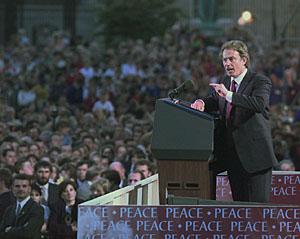
Blair speaks in support of the Northern Ireland peace process while visiting Armagh in September 1998.

In British politics, Blairism is the political ideology of Tony Blair, the former leader of the Labour Party and Prime Minister between 1997 and 2007, and those that support him, known as Blairites. It entered the New Penguin English Dictionary in 2000.[1] Elements of the ideology include investment in public services, expansionary efforts in education to encourage social mobility, and increased actions in terms of mass surveillance alongside a ramping up of law enforcement powers, both of these latter changes advocated in the context of fighting organised crime and terrorism. Blairites have additionally been known for their contrast with the traditional support for socialism by those believing in left-wing politics, with Blair himself and others speaking out against the nationalisation of major industries and against also heavy regulations of business operations. On foreign policy, Blairism is supportive of close relations with the United States and liberal interventionism, including advocacy for both the Iraq war and the War in Afghanistan (2001–2021).

Ideology

[edit]
U.S. President Bill Clinton (left) meets with Prime Minister Blair (right) in November 1999, with the American leader being a close political partner given their mutual Atlanticist views and shared emphasis on the Special Relationship.

Politically, Blair has been identified with record investment into public services, an interventionist and Atlanticist foreign policy, support for stronger law enforcement powers, a large focus on surveillance as a means to address terrorism and a large focus on education as a means to encourage social mobility. In the early years (circa 1994–1997), Blairism was also associated with support for European integration and particularly British participation in the European single currency, though this waned after Labour took office.

The term is used in particular in contrast to Brownite, to identify those within the Labour Party who supported Gordon Brown rather than Blair. However, with Blair and Brown typically in agreement on most political issues[2] (from Iraq to public sector reform), some commentators have noted that "the difference between Brownites and Blairites [...] is more tribal than ideological".[3] This is believed to stem from a personal disagreement between Blair and Brown over who should run for the leadership following the death of John Smith in 1994. Though Brown was originally considered the senior of the two, he waited until after Smith's funeral to begin campaigning, by which point Blair had gathered too much momentum to be defeated.[4] However, in his book Whatever it Takes, Steve Richards offered an alternate view: that there were significant disagreements between the two about relative poverty, the level of public spending and the potential for choice in public services.[5]

In a 1999 article, The Economist stated:

Mr Blair will doubtless do his duty and lavish praise on Labour's glorious past. But, in truth, Mr Blair has always displayed a marked ambivalence towards Labour history. His greatest achievement in opposition was to get the party to ditch their historic commitment to nationalisation, and to water down its traditional links with the unions. At times he has even hinted that the very foundation of the Labour Party was a mistake, since it divided "progressive" politics and led to a century dominated by the Conservatives. Mr Blair knows that all this makes many of his party faithful deeply uneasy.[6]

Blair's tenure is known for an expansion of LGBT rights, such as the introduction of civil partnerships. Blair told the LGBT organisation Stonewall that "what has happened is that the culture of the country has changed in a definable way" and that "it's a thing that doesn't just give me a lot of pride, but it has actually brought a lot of joy". Blair has also stated that he got up off his seat and danced upon seeing the first civil partnership ceremonies on television.[7]

Relationship to prior administrations

[edit]

The Daily Telegraph stated in April 2008 that Blair's programme, with its emphasis on "New Labour", accepted the free-market ideology of Thatcherism. The article cited deregulation, privatisation of key national industries, maintaining a flexible labour market, marginalising the role of trade unions and devolving government decision making to local authorities as evidence. He also sought a closer, better relationship with Europe, and considered joining the Euro currency, but Gordon Brown was not in favour.[8]

In the BBC Four documentary film Tory! Tory! Tory!, Blair is described as personally admiring Margaret Thatcher deeply and making the decision that she would be the first outside person he formally invited to visit him in 10 Downing Street.[9]

Former Conservative Prime Minister John Major, who Blair defeated in a landslide at the 1997 general election; was one of the original figures behind the Northern Ireland peace process that Blair continued and both of them campaigned together in support of the Good Friday Agreement.

Blair privately called Thatcher "unhinged", a description that later became public knowledge.[10] Blair criticised the Thatcher government's record on poverty and made that a key issue for Labour economic policy. He made the goal to eradicate child poverty in Britain within 20 years based on the fact that one-third of British children were in poverty post-Thatcher compared to the 9% rate in 1979 (although these statistics are disputed).[6]

In a 2001 speech to a Conservative election rally, Thatcher called New Labour 'rootless and soulless' saying at least Old Labour stood for certain principles, that respected them, and also said Blair does not truly believe in liberty. She also claimed the Labour government would give up the British pound to join the Euro.[11]

Blair also abolished Section 28 and created more pro-European initiatives compared to Thatcher.[citation needed]

In his 2010 autobiography, A Journey, Blair remarked:

In what caused much jarring and tutting within the party, I even decided to own up to supporting changes Margaret Thatcher had made. I knew the credibility of the whole New Labour project rested on accepting that much of what she wanted to do in the 1980s was inevitable, a consequence not of ideology but of social and economic change. The way she did it was often very ideological, sometimes unnecessarily so, but that didn't alter the basic fact: Britain needed the industrial and economic reforms of the Thatcher period.[12]

Relationship to later administrations

[edit]

Gordon Brown succeeded Tony Blair as Prime Minister after Brown's long tenure as the Chancellor of the Exchequer. Although viewed in the media as somewhat personally close, Blair later wrote in his autobiography A Journey that a "maddening" Brown effectively blackmailed him while he was in 10 Downing Street. Blair accused Brown of orchestrating the investigation into the Cash-for-Honours scandal and stated that the personal animosity was so strong that it led him to frequent drinking, a big change for Blair. Blair also has told journalist Andrew Marr that as their years working together went on, co-operation became "hard going on impossible".[13]

Blair criticised the departure from much of New Labour ideology under Gordon Brown's premiership, who blamed it for Labour's defeat in the 2010 General Election:

Why did Labour lose the 2010 election? The answer to that, I'm afraid is obvious. Labour won when it was New Labour. It lost because it stopped being New Labour...Had he [Brown] pursued New Labour policy, the personal issue would still have made victory tough, but it wouldn't have been impossible. Departing from New Labour made it so. Just as the 2005 election was one we were never going to lose, 2010 was one we were never going to win – once the fatal strategic decision was taken to abandon the New Labour position.[14]

Impact on the Labour Party

[edit]

The Labour Party leadership of Jeremy Corbyn was seen as a departure from Blairism, and a return of Old Labour, and was described as a 'return of the 1940s Labour Party' by The Guardian, with its emphasis on re-nationalisation of energy, water, and railways and massive public investment in housing and the NHS. Jeremy Corbyn was critical of Blair's involvement in Iraq and voted against it at the time, garnering much support particularly from the youth vote. Labour increased its vote share by over 9% in 2017, costing Theresa May her majority in Parliament, but with the party split by Brexit policy and identitarian infighting, it lost the 2019 election to Boris Johnson's Conservatives.[15]

Since the election of Keir Starmer as Leader of the Labour Party in 2020, some in the British media [who?] have noted the ideological shift from the left back to the centre, allowing comparisons to be drawn between the current policy platform of the Labour Party and its Shadow Ministers (some of whom served in the cabinets of Blair and Brown) and that of New Labour.[16]

The November 2021 shadow cabinet reshuffle was seen to be giving more power to Blairites in the Parliamentary Labour Party. This was criticised by former Shadow Chancellor of the Exchequer John McDonnell.[17] In May 2022, on the 25th anniversary of Labour's landslide victory in the 1997 election, Blair in a video looked back at the victory and his achievements and showed his support for Starmer.

The 2023 British shadow cabinet reshuffle was seen as giving even more power to Blairites within the Labour Party.[18]

Blairites

[edit]

Other than Blair himself, the following prominent Labour politicians are often considered Blairites, but may not identify themselves as such:

Alastair Campbell
Peter Mandelson
Ruth Kelly
David Miliband

See also

[edit]

Footnotes

[edit]
Revisions and contributorsEdit on WikipediaRead on Wikipedia
from Grokipedia

Blairism is the political ideology and policy framework associated with 's leadership of the Labour Party from 1994 to 2007 and his premiership from 1997 to 2007, defined by the "Third Way" as a modernized that reconciles centre-left commitments to with market-oriented economics, individual opportunity, and pragmatic state intervention rather than traditional state control or .
Central to Blairism was the rebranding of the Labour Party as , including the 1995 abolition of , which had enshrined public ownership of industry, shifting focus from egalitarian redistribution to expanding opportunities through education and welfare reforms like the national , working tax credits, and Sure Start programs for . These domestic initiatives, coupled with devolution of powers to , , and —culminating in the 1998 —aimed to modernize governance and promote , contributing to sustained , low , and three landslide election victories in 1997, 2001, and 2005. Blairism's foreign policy emphasized liberal interventionism, supporting military actions in , , , and most controversially the 2003 Iraq invasion, predicated on intelligence about weapons of mass destruction that subsequent inquiries found to be overstated or erroneous, resulting in over 100,000 Iraqi civilian deaths, regional instability, and eroded public trust in institutions. Domestically, while rates declined for some metrics due to targeted spending increases in and , income inequality rose to levels not seen since the , as the retention of Thatcher-era financial and via public-private partnerships preserved structural disparities despite redistributive efforts. Critics, including empirical analyses, argue this reflected Blairism's accommodation of neoliberal globalization over transformative class-based reforms, alienating traditional Labour supporters and fostering a perception of through "spin" tactics and policy-by-focus-group.

Origins and Development

Pre-Blair Labour Revisionism

Labour revisionism emerged in the period as an intellectual and political effort within the party to adapt socialist principles to the realities of a , prioritizing electoral viability and pragmatic governance over dogmatic commitments to widespread . Influenced by earlier European thinkers like , British revisionists argued that socialism's ends—greater equality and social welfare—could be achieved through means other than of all production, accepting private enterprise in consumer sectors while emphasizing redistribution, public services, and planning in key industries. This shift was evident in the 1945-1951 Attlee government, which strategic sectors like , , and railways but stopped short of wholesale , reflecting a revisionist approach amid reconstruction constraints. A pivotal figure was Anthony Crosland, whose 1956 book The Future of Socialism articulated a revisionist framework distinguishing socialist "ends" (equality, fellowship) from outdated "means" like mass nationalization, advocating instead for robust welfare provision, comprehensive education, and meritocratic reforms within a capitalist framework supplemented by public investment. Crosland, serving as a Labour MP and later in cabinet roles under Harold Wilson, contended that technological progress and affluence rendered Clause IV—Labour's 1918 constitutional pledge to collective ownership of production—an electoral liability, as public opinion favored private competition over state monopolies. His ideas influenced party policy in the 1960s, including the expansion of secondary education and housing initiatives, though implementation faced economic pressures like the 1967 devaluation. Hugh Gaitskell, Labour leader from 1955 to 1963, embodied pre-Blair revisionism's political dimension by challenging directly after the party's 1959 defeat, which he attributed partly to voter fears of extensive programs outlined in the . At the 1960 party conference, Gaitskell proposed revising the to emphasize democratic planning over mandatory public ownership, aiming to modernize the party's image and broaden appeal beyond core union and left-wing bases; however, fierce resistance from trade unions and the extra-parliamentary left led to its rejection, underscoring revisionism's internal tensions. Despite the failure, Gaitskell's stance marginalized hard-left elements and set precedents for future moderation, as seen in Wilson's 1964-1970 governments, which pursued "white heat" technological modernization and selective nationalizations like steel, while preserving market mechanisms. By the 1970s and early 1980s, revisionist impulses waned amid economic and party shifts leftward under Michael Foot's 1980-1983 leadership, which embraced unilateral and widespread renationalization, culminating in the 1983 election rout and the defection of right-wing figures to form the Social Democratic Party in 1981. Neil Kinnock's leadership from 1983 to 1992 revived revisionist elements by purging the Trotskyist and toning down radical pledges, though electoral losses in 1987 and 1992 highlighted persistent credibility issues on taxation and defense. These pre-Blair efforts established a social democratic tradition that Blair later radicalized into the Third Way, but they repeatedly faltered against entrenched left-wing and union opposition, revealing Labour's structural resistance to abandoning symbolic socialist orthodoxy.

Tony Blair's Rise and Clause IV Reform

Tony Blair entered Parliament as the Labour for in the 1983 general election, securing the seat in a constituency traditionally supportive of the party. He progressed through junior frontbench roles, including Shadow Secretary of State for Employment from 1988, before being appointed by John Smith in 1992, positioning him as a key figure in Labour's moderate wing amid the party's post-1979 electoral struggles. Following Smith's sudden death on 12 May 1994, Blair announced his candidacy for Labour leadership on 13 May, with Gordon Brown opting not to challenge him directly to unify the party against rivals John Prescott and Margaret Beckett. Blair won the election on 21 July 1994, securing approximately 57% of the vote in an electoral college system weighted across MPs, members, and trade unions, marking his ascent as the youngest Labour leader since 1908. As leader, Blair targeted Clause IV of Labour's 1918 constitution, which pledged "common ownership of the means of production, distribution and exchange" as a core socialist principle—a commitment that had become an electoral liability after four consecutive defeats to the Conservatives, symbolizing outdated nationalization dogma to voters. In October 1994, he launched a commission to revise the party's aims, framing the change as essential modernization to embrace a while pursuing , despite resistance from traditionalists who viewed it as abandoning . The special on 29 April 1995 approved the reformed by 65% to 35%, replacing the old text with a statement affirming Labour as a "democratic socialist party" committed to using public resources efficiently in a competitive , enabling the rebranding as . This reform, driven by Blair's personal authority and polling advantages, signaled a pragmatic shift toward , correlating with improved public perception and setting the stage for 1997's electoral landslide.

Ideological Core

The Third Way Framework

The Third Way framework, formalized by in his September 1998 Fabian Society pamphlet The Third Way: New Politics for a New Century, sought to modernize by synthesizing elements of and , rejecting the state-heavy interventionism of the traditional Labour left and the unchecked individualism of the neoliberal right. It positioned as responsive to post-Cold War realities, including , rapid technological advancement, and the decline of class-based politics, aiming to restore public faith in progressive governance through pragmatic adaptation rather than ideological purity. Influenced by sociologist , then-director of the London School of Economics, the framework emphasized equality of opportunity over , reorienting welfare from passive support—"a hand out"—to active enablement—"a hand up"—via policies promoting personal responsibility and employability. Core values included , , , mutual obligation, and internationalism, with the state reconceived as an enabler of enterprise and social cohesion rather than the primary provider or controller of economic activity. Blair articulated three central objectives: a chance for every child through early investment in ; opportunity for every adult via skills training and job creation; and security for every family by balancing rights with duties, such as work requirements for benefits. Economically, it endorsed market mechanisms for efficiency and competitiveness, committing to fiscal stability—evident in Labour's 1997 independence and initial adherence to Conservative spending plans—while directing public investment toward and to mitigate inequality without reverting to or heavy redistribution. Socially, the approach integrated conservative emphases on family, community, and with centre-left goals, advocating "tough on crime, tough on the causes of crime" and welfare-to-work programs like the launched in 1998, which targeted 18-24-year-olds with mandatory job search and training in exchange for benefits. Politically, it promoted renewal through —such as the 1998 referendums establishing the and Welsh Assembly—and reconciliation of patriotism with global engagement, as seen in Blair's support for alongside national sovereignty. Critics, including some within the Labour tradition, argued the framework masked acceptance of Thatcher-era market liberalization under a social democratic veneer, prioritizing electoral viability over structural economic overhaul. Nonetheless, as Blair outlined in his 1998 Florence speech, it aimed to unite and responsibility, fostering a dynamic economy that rewarded effort while safeguarding against exclusion.

Economic Liberalism and Market Reforms

Blairism integrated by endorsing market mechanisms for efficiency and growth while employing targeted state interventions to promote equity and opportunity, diverging from traditional Labour nationalization in favor of competitive frameworks inherited from prior Conservative governments. This approach maintained fiscal prudence through adherence to inherited spending plans in the 1997 budget, avoided broad tax increases on , and prioritized low and over redistributionist policies. Central to this was the of to an independent , reflecting trust in technocratic rule-making over political discretion to anchor expectations and stabilize prices. A cornerstone reform occurred on May 6, 1997, when Chancellor granted operational independence to the , empowering its Committee to set interest rates without government interference, targeting a 2.5% inflation rate. This measure, enacted via the Bank of England Act 1998, aimed to insulate decisions from electoral cycles, fostering credibility in financial markets and contributing to sustained low inflation throughout the 1997-2007 period, though critics later questioned its rigidity during downturns. Empirical data showed average CPI inflation at around 1.5-2% annually post-reform, supporting steady GDP growth averaging 2.8% per year until the 2008 crisis. In labor markets, Blairism advanced market-oriented welfare reforms emphasizing work incentives over passive benefits. The program, launched in 1998, targeted long-term unemployed individuals with mandatory job search, training subsidies, and wage top-ups, embodying a "something for something" principle that conditioned aid on active participation. By 2007, over 2 million people had engaged, with evaluations indicating reduced unemployment durations and net employment gains, though at costs exceeding £5 billion in administration and subsidies. Complementing this, the established the UK's first statutory floor at £3.60 per hour for adults over 21, effective April 1, 1999, with Low Pay Commission oversight for annual adjustments. Contrary to pre-implementation fears of mass job losses—projected by some economists at up to 2 million—the policy correlated with minimal disemployment effects and real wage gains for low earners, lifting 1.5 million out of by 2007. Public sector modernization incorporated private sector involvement to enhance efficiency without full . The (PFI), originally introduced in 1992 but aggressively expanded under Blair, financed over 700 projects worth £55 billion by 2007, including hospitals and schools, through consortia handling design, construction, and operations under long-term contracts. Proponents argued it transferred risk to private entities and accelerated infrastructure delivery off public balance sheets, but audits revealed higher lifetime costs—up to 8% above public procurement—due to profit margins and inflexibility. This reflected Blairism's causal logic: markets incentivize and cost-control where state monopolies falter, though empirical reviews highlighted uneven risk transfer and fiscal burdens persisting into subsequent decades. Overall, these reforms sustained a "golden age" of expansion, with falling to 5% by 2001, underpinned by acceptance of flexible labor markets and global integration rather than .

Social Policies and Constitutional Devolution

Blair's social policies emphasized reducing dependency through work incentives and targeted support for vulnerable families, aligning with the Third Way's focus on opportunity over redistribution. The established a statutory floor, effective from 1 April 1999 at £3.60 per hour for workers aged 22 and over, and £3.00 for those aged 18-21, aiming to protect low-paid workers without mandating wages councils. The for Young People, launched in 1998, offered personalized job search assistance, training, or subsidized employment to those aged 18-24 unemployed for six months, framed as a "something for something" contract requiring participation in exchange for benefits. Sure Start Local Programmes, initiated in 1999 with £450 million initial funding, provided integrated services like childcare and parenting support in deprived areas to improve and family stability. Complementing these, welfare reforms introduced the Working Families' Tax Credit in 1999 to supplement low earnings and make financially viable, later evolving into Child and Working Tax Credits in 2003. These measures sought to lower welfare costs by increasing labor market participation, with pledging reductions in and to redirect savings toward active support. Constitutional devolution formed a core element of Blair's modernization agenda, granting legislative powers to , , and to address nationalist demands and decentralize authority from Westminster. In the 11 September 1997 referendum, 74.3% of Scottish voters (on 60.4% turnout) approved a devolved parliament, and 63.5% endorsed its tax-varying powers, leading to the and the parliament's opening on 1 July 1999. ' 18 September 1997 referendum narrowly passed an assembly (50.3% yes on 50.0% turnout) without tax powers, enacted via the , with elections in 1999. The , negotiated under Blair's direct involvement and signed on 10 April 1998, established power-sharing in , endorsed by 71.1% in a Northern Ireland referendum and 94.4% in the on 22 May 1998, formalized in the Northern Ireland Act 1998. Further reforms included the , incorporating the into domestic law effective October 2000, enabling courts to declare incompatibilities without striking down primary legislation. The removed the voting rights of most hereditary peers, reducing their number from over 650 to 92 elected transitional members, as an interim step toward broader . These changes aimed to enhance and regional while preserving the , though critics argued they entrenched asymmetric without resolving English governance questions.

Policies in Practice (1997-2007)

Domestic Economic and Welfare Initiatives

Upon assuming office in May , the Blair government committed to fiscal prudence by adhering to the outgoing Conservative administration's public spending plans for the years -1999, avoiding immediate increases in borrowing or taxation to demonstrate economic credibility. This approach was intended to prioritize stability and rebuild trust in Labour's economic management following years of opposition critiques on fiscal irresponsibility. A cornerstone of macroeconomic policy was granting operational independence to the on 6 May 1997, empowering its Committee to set interest rates independently of government influence to achieve a 2.5% target, measured initially by the Retail Prices Index excluding mortgage interest payments. This reform, enacted via the Bank of England Act 1998, aimed to insulate monetary decisions from short-term political pressures and anchor long-term . To address unemployment and welfare dependency, the government introduced the programme in June 1998, initially targeting 18- to 24-year-olds unemployed for six months or longer, funded by a one-off on privatized utilities yielding approximately £5 billion. Participants received personalized jobsearch support, with options including employer subsidies of up to £60 per week for six months, placements in the , environmental task forces, or full-time training, under a "something for something" philosophy that conditioned benefits on active participation. The programme expanded to other groups, such as lone parents and those over 50, emphasizing elements to reduce long-term reliance on . In parallel, the National Minimum Wage was legislated through the and implemented on 1 April 1999, setting an initial adult rate of £3.60 per hour for workers aged 22 and over, with £3.00 for those aged 18-21, administered by the independent Low Pay Commission. This marked the first statutory national floor on wages in the UK, designed to protect low earners without distorting labor markets excessively, though critics argued it risked job losses among vulnerable workers. To incentivize employment among low-income families, the Working Families' Tax Credit was launched in October 1999, replacing family credit and providing means-tested supplements integrated into the tax system, benefiting around 1.3 million households by topping up earnings. This evolved into the Working Tax Credit and in April 2003 under the Tax Credits Act 2002, expanding support for childcare costs and child-related expenses while tapering benefits to encourage progression into higher earnings, as part of broader efforts to eradicate by making work financially superior to benefits.

Public Service Modernization

The modernization of public services under Blair's governments emphasized increased investment coupled with performance , greater accountability, and selective involvement to enhance and user choice, departing from both traditional monopoly models and full-scale . This approach was outlined in the Modernising Government of March 1999, which sought to make services more responsive through better use of , integrated policy-making across departments, and a focus on outcomes rather than processes. The also promoted electronic government services and regulatory simplification to reduce bureaucracy. To enforce delivery, the Prime Minister's Delivery Unit was established in 2001 within the , tasked with monitoring progress on key agreements and intervening where were at risk. In the health sector, reforms were anchored by the NHS Plan announced on 17 July 2000, which committed to annual real-terms spending increases of 5% above inflation, injecting an extra £12 billion by 2006 to address chronic underfunding and expand capacity. Overall NHS expenditure rose from £33.5 billion in 1997/98 to £76.4 billion in 2005/06, with projections to £96.4 billion by 2006/07, effectively trebling in nominal terms by the end of the decade. Key targets included reducing maximum outpatient waits to three months and inpatient waits to six months by 2005, alongside workforce expansion such as 7,500 additional consultants, 2,000 more general practitioners, and 20,000 extra nurses. Structural changes introduced foundation trusts from 2003, granting high-performing hospitals greater financial autonomy and the ability to retain surpluses, while national service frameworks set evidence-based standards for conditions like cancer and heart disease. Education reforms paralleled this model, with funding rising by an average 3.9% annually in real terms from 1997 onward, focusing on standards through national literacy and numeracy strategies introduced in 1997 and 1998, which mandated daily dedicated hours in primary schools and led to measurable improvements in test scores. The academies program, launched in March 2002, aimed to replace failing inner-city schools with independently sponsored state-funded institutions free from local authority control, emphasizing discipline, extended hours, and partnerships; the first academies opened in September 2002, with over 200 established by 2010, though initial rollout was modest under . Specialist schools, expanded from the Conservative era, received extra funding for designated subjects, reaching over 2,000 by 2007 to foster diversity and competition. A central mechanism across sectors was the expansion of the (PFI), inherited but aggressively scaled by to fund infrastructure without immediate public borrowing; by 2002, PFI had delivered 15 new hospitals with 100 more in pipeline, alongside rebuilding or modernizing 550 schools. This approach involved private consortia designing, building, financing, and operating facilities for 25-30 years, with public bodies paying unitary charges; health sector PFI investment reached £3.1 billion by the early 2000s, though critics later highlighted long-term costs exceeding £160 billion in commitments. These reforms prioritized measurable outputs like reduced waiting times—which fell from 18 months average in 1997 to under 6 months by 2007—but relied on top-down targets that sometimes incentivized gaming metrics over holistic improvements.

Foreign Policy and Interventionism

Tony Blair's foreign policy emphasized liberal interventionism, seeking to address humanitarian crises and promote democratic values through military means when necessary, marking a departure from traditional Labour Party . This approach was framed as part of a "Doctrine of the ," articulated in Blair's April 22, 1999, speech to the Economic Club, which justified intervention in cases of extreme human suffering within sovereign states, provided five tests were met: a clear case on facts, exhaustion of diplomatic options, viable military plans, reasonable prospects of success, and broad international consensus. The doctrine reflected post-Cold War optimism about using force to prevent atrocities, influenced by events like the , though Blair's government prioritized multilateral action via or UN where possible. Upon entering office in May 1997, Foreign Secretary announced an "ethical dimension" to , committing to , , and arms export controls, which aligned with interventionist goals by tying aid and trade to governance standards. However, implementation revealed tensions, as continued arms sales to regimes like underscored pragmatic limits to ethical rhetoric. Blair's strengthened the US-UK alliance, evident in joint operations and Blair's post-9/11 pledge of "shoulder-to-shoulder" support for American security interests, often elevating transatlantic ties above EU coordination. Key interventions included the 1999 NATO-led Operation Allied Force in , where UK aircraft conducted over 1,000 sorties to compel Yugoslav withdrawal and avert further of Kosovar , resulting in UN administration of the province. In May 2000, Operation Palliser in deployed 1,000 British paratroopers to secure , evacuate citizens, and bolster UN forces against rebels, stabilizing the government and facilitating peace by 2002. Following al-Qaeda's , 2001, attacks, UK joined the US invasion of on October 7, 2001, toppling the regime by December and establishing a NATO-led stabilization mission. These actions were presented as fulfilling the criteria, with and cited as models of effective limited intervention. The policy's most extensive commitment came with the March 20, alongside forces, involving 46,000 British troops to eliminate Saddam Hussein's alleged weapons of mass destruction and enforce UN resolutions, leading to within weeks but subsequent prolonged occupation. Blair's interventions totaled over 40,000 troops deployed across multiple theaters by 2003, reflecting a doctrinal willingness to project power for moral and strategic ends, though critics noted inconsistencies in applying tests, such as limited UN endorsement for . Overall, Blairism repositioned Britain as a "force for good" in global affairs, prioritizing intervention over isolation amid globalization's perceived threats.

Empirical Outcomes

Economic Growth and Employment Metrics

Under Tony Blair's government from 1997 to 2007, the achieved average annual GDP growth of 2.89%, with yearly rates fluctuating between 1.8% and 4.9% on a chained volume measure basis. This performance reflected a continuation of the post-1992 recovery, bolstered by favorable global economic conditions and domestic policies such as the 1997 granting of operational independence to the , which contributed to sustained low averaging around 2%.
YearGDP Growth Rate (%)
19974.9
19983.4
19993.1
20004.3
20012.6
20021.8
20033.2
20042.5
20052.7
20062.4
20072.6
The , measured as a percentage of the economically active aged 16 and over on a seasonally adjusted basis, declined from 6.9% in 1997 to a low of 4.8% in 2004 and 2005, before edging up to 5.3% by 2007. This trend aligned with initiatives like the welfare-to-work programs, which emphasized active labor market policies over passive benefits, though the overall decline built on pre-1997 momentum from under the prior administration. Employment rates for the working-age (aged 16 to 64, seasonally adjusted) rose modestly from 71.0% in 1997 to 72.9% by 2004, stabilizing around 72.7% in 2007, reflecting an increase in total by over 3 million jobs during the decade. Labour productivity growth, at 2.8% annually in the , was driven disproportionately by finance and business services, which accounted for key contributions, while broader sectoral gains remained uneven compared to the . Per capita GDP growth of 2.43% annually outperformed G6 peers like the (1.22% for the longer 1997-2010 period) and narrowed the gap with leading economies.

Fiscal and Inequality Indicators

Upon taking office in 1997, the Blair government inherited a net borrowing deficit of approximately 1.9% of GDP, which it reduced to surpluses averaging 1.5% of GDP between 1998–99 and 2000–01 through adherence to fiscal rules emphasizing current budget balance and . By the mid-2000s, however, structural deficits emerged, reaching 2.5% of GDP by 2006–07, driven by sustained increases in public spending that outpaced revenue growth despite . Public expenditure as a share of GDP rose from 37.5% in 1996–97 to 41.1% in 2006–07, with real-terms annual growth averaging 4.3% from 1999–2000 to 2007–08, particularly in , and welfare transfers. Net remained relatively stable at around 37–40% of GDP throughout the period, below the average and pre-1997 peaks, reflecting initial prudence but masking vulnerabilities from off-balance-sheet commitments like private finance initiatives.
Indicator1996–97 (Pre-Blair)2006–07 (End of Period)Change
Public spending (% GDP)37.5%41.1%+3.6 pp
PSNB (% GDP)-1.9% (deficit)-2.5% (deficit)Worsened by 0.6 pp
Net debt (% GDP)37.4%39.8%+2.4 pp
Income inequality, as measured by the Gini coefficient for equivalised disposable household income, showed limited change under Blair, fluctuating between 0.34 and 0.36 from 1997 to 2007, with a slight decline attributable to credits rather than broad structural shifts. This stability occurred amid rising top-end earnings in finance and professional services, offsetting gains at the bottom from policies like the 1999 national and working credits introduced in 2003, which boosted low-wage household incomes by up to 10–15% for targeted groups. Relative rates fell from 33% in 1997–98 to around 26% by 2006–07 (before housing costs), lifting approximately 600,000 children out of through means-tested benefits, though absolute reductions were smaller and uneven across regions. Overall, these outcomes reflected causal emphasis on in-work support over universal redistribution, with inequality metrics influenced by global market liberalization rather than domestic fiscal compression, as evidenced by sustained high executive pay and asset price growth. Despite official claims of halving by 2010, the government fell short of its 25% reduction target by 2004, highlighting limits of targeted interventions amid wage dispersion.

Key Controversies

The Iraq War and Intelligence Failures

Tony Blair's government committed the United Kingdom to supporting the United States in the invasion of Iraq, which commenced on March 20, 2003, primarily justified by intelligence assessments claiming that Saddam Hussein's regime possessed weapons of mass destruction (WMD) and posed an imminent threat. Blair had privately assured U.S. President George W. Bush of UK's support as early as July 2002, with a memo stating "I will be with you, whatever," indicating a firm alignment predating full cabinet or parliamentary debate. This decision was framed within the post-9/11 context of countering perceived global terrorism links, though Chilcot Inquiry later concluded that peaceful options to disarm Iraq via UN inspections had not been exhausted. The 's case for war hinged on the September 2002 , which asserted that could deploy WMD within 45 minutes and was actively reconstituting nuclear capabilities, drawing from Joint Intelligence Committee (JIC) assessments. However, these claims were presented with undue certainty; the Butler Review in 2004 identified "serious flaws" in the dossier's sourcing and over-reliance on single, unverified intelligence strands, noting that the 45-minute claim referred to munitions rather than strategic threats against the . personally shaped public communications, including a to the dossier implying a direct link between Saddam and , despite intelligence caveats that no operational connection existed. Post-invasion searches by the yielded no operational WMD stockpiles, exposing a major failure across Western agencies, including and the JIC, which had overestimated Iraq's capabilities based on outdated and defected source data. The Chilcot Inquiry, reporting in 2016, determined that the UK's pre-war judgments on WMD were flawed due to insufficient critical scrutiny of raw , , and failure to convey uncertainties to policymakers. It criticized for exaggerating the threat in presentations to , where the March 18, 2003 vote authorizing force passed 412-149, but found no deliberate deception, attributing issues to systemic rather than fabrication. These revelations eroded public trust in intelligence institutions and Blair's judgment, with Chilcot noting that the UK over-influenced by the "" pursued without adequate contingency planning for post-Saddam stability, contributing to and over 179 British military deaths by 2009. Subsequent inquiries, including the 2004 Butler Report, recommended reforms to intelligence handling, such as enhanced caveating in assessments, which were implemented to prevent similar overstatements. The episode highlighted vulnerabilities in politicized intelligence processes, where policy goals shaped evidentiary presentation, though defenders attribute errors to Saddam's deception tactics rather than Blair's intent.

Immigration Policies and Cultural Impacts

The Blair government significantly expanded immigration inflows through policy liberalization, including the removal of primary purpose rules in 1997 that had previously restricted family reunions based on suspected marriages of convenience, and the introduction of points-based elements for skilled workers while broadening work permit categories. These changes, coupled with a 2000 White Paper emphasizing managed migration for economic growth, facilitated higher non-EU entries, with net migration rising from 48,000 in 1997 to 140,000 in 1998 and averaging over 200,000 annually by the mid-2000s. Asylum applications also surged, peaking at 84,000 in 2002 amid global conflicts, prompting legislative responses like the 1999 Immigration and Asylum Act, which dispersed claimants to reduce urban concentrations but failed to curb overall numbers effectively. A pivotal decision came with the EU enlargement, where the opted against transitional restrictions on labor mobility from the eight new Eastern European states (A8), unlike nine other EU members; this allowed immediate access, resulting in over 1 million A8 migrants arriving by 2010, primarily Poles, who filled low-wage sectors but exceeded government forecasts of 5,000-13,000 annually. justified this as promoting free markets and EU solidarity, yet internal advice warned of integration challenges and wage suppression, with net migration contributing 1.8 million to the population from 1997 to 2007. Overall, these policies quadrupled net annual compared to pre-1997 levels, driven by economic imperatives but criticized for inadequate , as public services faced strains from rapid demographic shifts. Culturally, Blairism embraced state , funding ethnic minority organizations and promoting diversity as a strength in speeches like Blair's 2000 pledge to celebrate "the different dimensions of British identity," which prioritized group rights over assimilation. This approach, however, correlated with empirical indicators of segregation: by 2001, data showed over 50 ethnic enclaves where minorities exceeded 40% of the , fostering parallel communities with limited inter-ethnic mixing, as evidenced by low intermarriage rates (under 10% for South Asians) and concentrated poverty in areas like and Tower Hamlets. Post-2001 riots in northern cities and the 2005 bombings—perpetrated by British-born Islamists raised in multicultural environments—prompted a partial pivot to "community cohesion" under , acknowledging failures in integration where radical ideologies thrived unchecked. Public sentiment reflected these tensions, with surveys by 2005 showing 60% of Britons viewing as excessive and linking it to cultural erosion, including rising identity-based conflicts; analyses highlighted how unchecked inflows diluted social trust, contributing to a 20-point rise in anti-immigration voting from 1997 to 2005. While proponents cited economic benefits like GDP contributions from migrants (estimated at 0.5-1% annual growth), causal evidence from labor market studies indicated native wage stagnation in low-skill sectors and heightened ethnic tensions, as multiculturalism's undermined shared civic norms without enforcing language or values requirements until late reforms in 2007. These outcomes fueled long-term backlash, evidenced by UKIP's ascent and referendums, underscoring Blair-era policies' role in prioritizing volume over sustainable cultural cohesion.

Political Scandals and Trust Erosion

The Ecclestone affair in late 1997 marked one of the earliest scandals, when boss donated £1 million to the Labour Party shortly before the government exempted F1 from a planned ban on tobacco advertising, raising questions of . personally apologized on television on November 5, 1997, admitting the donation created an "unacceptable" perception despite denying any , which Labour later returned in full. This incident set a for over party funding, eroding the "clean break from sleaze" narrative had campaigned on against the prior Conservative government. Peter , a key ally, resigned twice amid financial impropriety allegations: first in 1998 over an undisclosed £373,000 interest-free loan from Geoffrey Robinson to purchase a home, which breached ministerial rules on conflicts of interest. He returned to cabinet but resigned again in January 2001 over the Hinduja affair, where he lobbied for British passports for Srichand Hinduja while the brothers pledged £1 million to the —though cleared of wrongdoing by an inquiry, the episode highlighted perceived . These events fueled accusations of a "courtier culture" around , with critics arguing they undermined ethical standards despite the government's establishment of the Committee on Standards in Public Life. The Cash for Honours scandal peaked in 2006-2007, involving allegations that secret loans totaling millions to Labour—arranged by fundraiser Lord Levy—were exchanged for nominations. Blair was interviewed three times by police as a , the first sitting to face such questioning, though no charges resulted after a review found insufficient evidence. Four nominees linked to the loans were blocked, amplifying perceptions of corruption at the top. Collectively, these scandals contributed to a sharp decline in public trust, with a June 2007 poll showing only 24% of voters trusted the government to tell the truth on important issues, down from higher levels post-1997 election. Approval ratings for Blair fell below 30% by mid-2006 amid overlapping sleaze claims, reflecting voter disillusionment with New Labour's governance despite economic successes. The affairs underscored systemic vulnerabilities in political financing, prompting calls for reform but leaving a legacy of cynicism toward Westminster elites.

Factionalism within Labour

Blairites versus Traditionalists and Brownites

Within the Labour Party during Tony Blair's premiership from 1997 to 2007, Blairites—supporters of Blair's centrist "New Labour" agenda, which prioritized public sector marketization, welfare conditionality, and reduced union dominance—faced opposition from traditionalists, who championed socialist orthodoxy including higher public spending without market incentives and stronger ties. Traditionalists viewed Blair's 1995 abandonment of , committing the party to public ownership, as a betrayal of core principles, leading to persistent backbench rebellions. For instance, on December 11, 1997, 47 Labour MPs defied the government over cuts to single-parent benefits, signaling early resistance to perceived neoliberal shifts. Further clashes arose over specific reforms: in 2003, around 100 MPs rebelled against foundation hospital trusts, which introduced in the NHS, arguing it undermined universal public provision; and in January 2004, 72 MPs opposed university tuition fees, seeing them as eroding access for working-class students. The Iraq War invasion in March 2003 provoked the largest , with 139 Labour MPs voting against, reflecting traditionalists' aversion to Blairite interventionism abroad alongside domestic market reforms. These divisions weakened , with Blair relying on his majority to pass legislation despite up to 20% of his MPs dissenting on welfare and bills between 1997 and 2001. Simultaneously, Blairites contended with Brownites, the faction orbiting Chancellor , whose 1994 Granita agreement with Blair deferred his leadership ambitions in exchange for autonomy but bred resentment over perceived slights, such as Peter Mandelson's covert 1994 briefings favoring Blair. Brownites prioritized fiscal caution—evident in Brown's 1997 grant of operational independence to the —and resisted Blair's enthusiasm for adoption, while blocking deeper public service to maintain traditional Labour emphases on redistribution. This rivalry manifested in parallel court operations and ministerial plots, such as the failed 2006 coup attempt by Blair allies against Brown, exacerbating policy gridlock on taxes and reforms until Blair's 2007 resignation paved Brown's path to power. Overall, these intra-party fractures, blending ideological rifts with personal animosities, undermined cohesive governance despite electoral successes in 1997, 2001, and 2005.

Intra-Party Conflicts and Leadership Transitions

Blair's leadership of the Labour Party began following the sudden death of John Smith on 12 May 1994, with Blair securing the position unopposed after Gordon Brown, his key rival, chose not to contest it following private discussions. These discussions culminated in the so-called Granita pact at a north London restaurant on 31 May 1994, where Blair and Brown reportedly agreed that Blair would lead the party to government while Brown served as chancellor, with Blair committing to relinquish power after a period—though the exact terms, including timelines, remained ambiguous and disputed. Brown later claimed in his 2017 memoirs that Blair had verbally promised a handover prior to the meeting, framing it as a family-motivated decision, but Blair's prolonged tenure fueled perceptions of betrayal. The pact underscored deeper factional divides between Blairites, who advocated market-oriented reforms and , and Brownites, who emphasized fiscal prudence and greater state intervention in . These tensions manifested in repeated power struggles, including Brown's allies operating parallel whipping operations to 's during parliamentary votes, and public rows over issues like health spending increases announced by in September 2000 without prior consultation. 's centralization of party management, shifting from the previous pluralist bargaining with unions and left-wing elements to top-down control, exacerbated rifts with traditional socialists opposed to reforms like the 1995 abolition of , which renounced public ownership of industry. Intra-party conflicts intensified post-2003 , with Brownites leveraging backlash against to press for an earlier handover, amid leaks and media briefings from Brown's camp. announced his resignation as Labour leader and on 10 May 2007, stating it would take effect on 27 June, after endorsing Brown as successor without a contest. Brown was formally elected unopposed on 24 June 2007, assuming the premiership on 27 June, marking the end of 's 13-year leadership amid lingering factional resentments that weakened party unity.

Long-Term Legacy

Transformations in the Labour Party

Tony Blair's election as Labour Party leader on July 21, 1994, following the death of John Smith, marked the beginning of a deliberate overhaul aimed at repositioning the party toward electoral viability after four successive defeats. Blair, alongside allies like Gordon Brown and Peter Mandelson, pursued a strategy of modernization that entailed abandoning outdated socialist rhetoric and structures inherited from the party's founding in 1900. This included the establishment of policy commissions to review and adapt platforms, emphasizing pragmatism over ideology. A pivotal transformation occurred with the revision of of the party constitution, enacted on April 29, 1995, at a special conference where secured a two-thirds after a campaign of regional consultations. The original clause, dating to , had enshrined commitment to " of the , distribution, and exchange" as a core aim, symbolizing aspirations that alienated middle-class voters. The amended version shifted focus to fostering a "dynamic " capable of generating prosperity, individual opportunity, and community responsibility, effectively jettisoning public ownership as an objective. This change, while criticized by traditionalists for diluting socialist principles, signaled acceptance of a and market mechanisms, aligning Labour with post-Thatcher realities. Blair further diminished trade union dominance, which had historically shaped policy through block voting and funding—unions contributed only 25% to the 1997 campaign under reformed rules. Building on John Smith's 1993 introduction of one-member-one-vote for leadership elections, Blair centralized authority, marginalizing hard-left elements and reducing union block votes at conferences to under 50% influence. These structural shifts repackaged Labour as "New Labour," appealing to aspirational voters by prioritizing education, welfare reform, and economic competence over redistribution or class conflict. The transformations embedded into Labour's DNA, enabling landslide victories in 1997 (418 seats, 43.2% vote share), 2001, and 2005, but sowed seeds of internal division between modernizers and socialists. Post-Blair leaders like retained core elements, though subsequent figures such as Corbyn in 2015 attempted partial reversals, underscoring the enduring yet contested legacy of Blair's reorientation toward electability and pragmatic governance.

Influence on Subsequent UK Governments

Gordon Brown's Labour government (2007–2010), which succeeded Blair's administration, largely perpetuated the framework established under Blairism, including the independence of the granted in 1997 and a commitment to fiscal prudence via rules limiting borrowing to fund current spending. Despite ideological tensions—Brown favoring more redistributive "tax and spend" policies compared to Blair's emphasis on market-oriented reforms—key continuities persisted in public service modernization, such as NHS target-setting and education academy expansions. Brown's chancellorship under Blair had embedded these elements, ensuring minimal rupture even as economic crisis prompted interventions like bank nationalizations in , which aligned with Blair-era regulatory approaches to finance. Subsequent Conservative-led governments under (2010–2016) and (2016–2019) adopted select Blairite policies, particularly in and welfare, reflecting cross-party endorsement of market-driven reforms. Cameron's coalition expanded Blair's model into free schools, with over 5,000 academies by 2015, building on the 2002 Act's framework to promote from local authorities. Welfare reforms, including the Universal Credit system introduced in 2010, echoed Blair's for unemployed workers from 1998, emphasizing conditionality and work incentives over unconditional benefits, though intensified under . Cameron reportedly drew informal advice from Blair on private sector involvement in public services, signaling Blairism's influence beyond Labour. Keir Starmer's Labour government, elected in July 2024 with a landslide majority, exhibits Blairite echoes in its centrist repositioning of the party away from Corbyn-era leftism, prioritizing economic stability, working-class service, and pragmatic governance over ideological purity. Like , Starmer has emphasized fiscal responsibility—rejecting immediate hikes for growth—and continuities from Blair's 1990s settlements, including further regional powers devolved in 2024. However, distinctions arise in skepticism toward interventionism and a less optimistic tone amid post-Brexit and post-COVID constraints, though has advised Starmer on statecraft and AI-driven reforms as of 2024. This selective inheritance underscores Blairism's enduring role in tempering Labour's traditionalism while influencing Conservative modernization efforts.

Blair's Post-Premiership Activities and Recent Advocacy

Upon resigning as Prime Minister on 27 June 2007, Blair accepted appointment as the special envoy of the —comprising the , , , and —a position he held until 27 May 2015. In this role, he prioritized in the Palestinian territories, institution-building for the Authority, and indirect facilitation of Israeli-Palestinian talks, though progress stalled amid ongoing conflicts and settlement expansions. His efforts yielded limited tangible outcomes, with critics attributing stagnation to his perceived alignment with Israeli positions and lingering associations. Post-envoy, Blair founded the Tony Blair Institute for Global Change (TBI) in 2016, evolving from his earlier established in 2008 to promote and counter . The TBI, a non-profit with offices in over 20 countries, advises governments and leaders on policy strategy, digital governance, and economic reform, emphasizing technology's role in state modernization; it has supported initiatives in , , and , including anti-corruption frameworks and service delivery improvements. Blair's personal consulting firm, initially Tony Blair Associates, facilitated high-value advisory contracts with entities in , , and , generating reported earnings exceeding £20 million annually in peak years through speeches, board roles, and geopolitical counsel. In recent years, Blair has advocated for recalibrating global strategies, arguing in a 2025 TBI report that rigid net-zero timelines risk public backlash and economic strain without technological breakthroughs like carbon capture, while urging a "reset" to prioritize affordable energy transitions amid dependencies in developing nations. This stance drew accusations of from oil-rich clients, though TBI maintains in policy recommendations. On , Blair has pushed for robust Western support in , framing it as essential to deterring authoritarian expansionism, and in 2025, contributed to Gaza reconstruction planning via TBI, including economic viability assessments for post-conflict governance. U.S. President-elect appointed him to a Gaza peace oversight board in September 2025, leveraging Blair's mediation experience despite Iraq-era skepticism from Arab stakeholders. Additionally, he has lobbied for AI adoption in the Global South, partnering with firms like to integrate data-driven governance tools in emerging economies.

References

Add your contribution
Related Hubs
User Avatar
No comments yet.