Hubbry Logo
Boeing Rotorcraft SystemsBoeing Rotorcraft SystemsMain
Open search
Boeing Rotorcraft Systems
Community hub
Boeing Rotorcraft Systems
logo
8 pages, 0 posts
0 subscribers
Be the first to start a discussion here.
Boeing Rotorcraft Systems
from Wikipedia
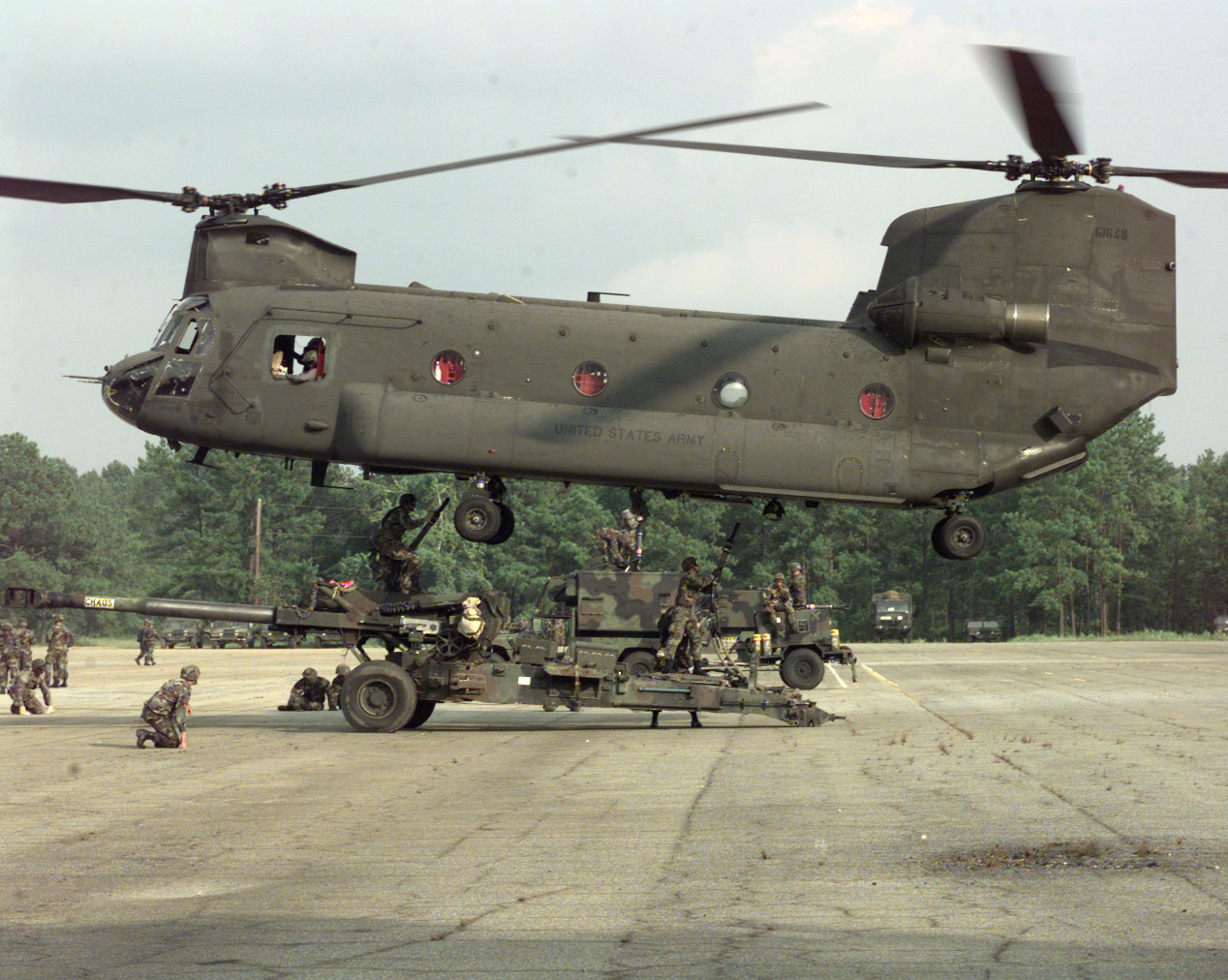
Boeing Vertol CH-47 Chinook

Key Information

Boeing Rotorcraft Systems (formerly Boeing Helicopters and before that Boeing Vertol) is the former name of an American aircraft manufacturer, now known as Vertical Lift division of Boeing Defense, Space & Security.

The headquarters and main rotorcraft factory is in Ridley Park, Pennsylvania, a suburb of Philadelphia. Production of Apache attack helicopters in Mesa, Arizona, formerly part of Rotorcraft Systems, is now under the Global Strike Division of Boeing Military Aircraft.

History

[edit]

Background

[edit]

Boeing Helicopters was created as Boeing Vertol when the Vertol Aircraft Corporation (formerly Piasecki Helicopter) company of Morton, Pennsylvania was acquired by Boeing in 1960; the Vertol name was an abbreviation for Vertical Take Off and Landing. Other names by which the division sometimes referred to itself in correspondence over the years were "Boeing Aircraft Company, Vertol Division" and "Boeing Philadelphia". The company was responsible for the design and production of the CH-46 Sea Knight and the CH-47 Chinook. The name became Boeing Helicopters in 1987, and the current name was adopted in 2002.[1]

When Boeing merged with McDonnell Douglas in 1997, the former Hughes Helicopters operations in Mesa, Arizona were placed under Boeing Helicopters. A year and a half later Boeing sold the civilian line of helicopters to MD Helicopter Holdings Inc., an indirect subsidiary of the Dutch company, RDM Holding Inc.

By December 2006 Columbia Helicopters of Aurora, Oregon had purchased the Type certificate of the Boeing Vertol 107-II and Boeing Model 234 Commercial Chinook from Boeing.[2][3] The Columbia Helicopters is seeking FAA issuance of a Production Certificate to produce parts with eventual issuance of a PC to produce aircraft.

Mass transit

[edit]

For much of the 1970s, Boeing Vertol entered the railroad rolling stock market in an attempt to keep government-funded contracts in the wake of the Vietnam War. During this period, Boeing Vertol manufactured the Morgantown Personal Rapid Transit system for West Virginia University, the 2400 series Chicago 'L' cars for the Chicago Transit Authority, and the US Standard Light Rail Vehicle (marketed as the Boeing LRV). It was the last vehicle, an attempt at a standardized light rail vehicle promoted by the federal Urban Mass Transportation Administration, that led to the company's ending rail production due to myriad problems. This cost Boeing and the vehicle's two buyers, Massachusetts Bay Transportation Authority and San Francisco Municipal Railway millions and led to premature retirement of the vehicles.[4][5][better source needed]

While the company's subway cars performed better, they did not continue in the railcar business, as competitors may have underbid on a key contract[citation needed] and the post-Vietnam War military build-up provided far more lucrative military contracts.

Boeing Vertol products

[edit]
Boeing Model 360
Boeing Vertol's US Standard Light Rail Vehicle on MBTA's C Branch. Boston, 1987.
A Boeing Vertol US Standard Light Rail Vehicle from San Francisco is preserved at the Oregon Electric Railway Museum.

Rotorcraft

[edit]

Rail

[edit]

See also

[edit]

Comparable major helicopter manufacturers:

References

[edit]
[edit]
Revisions and contributorsEdit on WikipediaRead on Wikipedia
from Grokipedia
Boeing Rotorcraft Systems was the rotorcraft division of The Boeing Company, designated as such from 2002 following prior iterations as Boeing Helicopters and Boeing Vertol, specializing in the design, manufacture, and sustainment of military helicopters. Originating from Boeing's acquisition of Vertol Aircraft Corporation on March 31, 1960, the division built upon Vertol's expertise in tandem-rotor configurations to develop enduring platforms like the CH-47 Chinook heavy-lift helicopter, which entered production in 1961 and remains in service with upgraded variants such as the CH-47F Block II. The unit also produced the CH-46 Sea Knight medium-lift helicopter and contributed to systems like the AH-64 Apache through integration post-McDonnell Douglas merger, emphasizing advancements in rotor dynamics, vibration reduction, and mission-specific avionics. Key achievements include delivering over 1,200 Chinooks to global operators, enabling heavy-lift capabilities in diverse combat and logistics roles, and pioneering technologies such as active vibration control documented in engineering overviews from the era. Recent developments under Boeing's Defense, Space & Security umbrella feature autonomous concepts like the Collaborative Transformational Rotorcraft, a modular tiltrotor designed for teaming with manned platforms to enhance operational flexibility. The division's focus on empirical rotorcraft engineering has sustained long-term U.S. military contracts, including a 2025 deal for nine CH-47F Block II aircraft valued at $461 million, underscoring its role in vertical lift innovation amid evolving defense requirements.

History

Origins as Vertol Aircraft Corporation

The Vertol Aircraft Corporation emerged in 1956 from the restructuring of the Piasecki Helicopter Corporation, which had been established by aviation pioneer Frank N. Piasecki in 1946 after his earlier formation of the P-V Engineering Forum in 1940. Piasecki's departure in 1955, prompted by management disputes and his preference for focusing on experimental vertical takeoff and landing (VTOL) research, led to the company's rebranding as Vertol— an acronym for "vertical takeoff and landing"—under new leadership including president Don R. Berlin, a former Sikorsky executive. This transition marked a shift from Piasecki's direct involvement to a more production-oriented operation, while retaining the core expertise in tandem-rotor helicopter designs that Piasecki had pioneered, such as the HRP-1 and H-21 "Workhorse" models. Vertol's early focus centered on enhancing turbine-powered tandem-rotor helicopters to meet growing military demands for heavy-lift and transport capabilities. The company continued development of the Model 107, a twin-engine design that had achieved its on August 22, 1955, prior to the rename but under Vertol's stewardship, incorporating turboshaft engines for improved performance over piston-powered predecessors. This effort produced prototypes that evolved into military variants, emphasizing reliability in tandem-rotor configurations for stability and payload capacity, with early testing demonstrating capacities exceeding 10,000 pounds. Concurrently, Vertol pursued the Model 114, a larger heavy-lift tandem-rotor helicopter initiated in response to U.S. Army requirements for a versatile troop and cargo transport, featuring synchronized rotors spanning over 90 feet in diameter. In parallel with production helicopters, Vertol advanced experimental VTOL technologies, notably designing and flying the VZ-2A (Model 76), the world's first successful tilt-wing aircraft, which transitioned from vertical to horizontal flight in 1958 using tilting propellers driven by 840-shaft-horsepower engines. This joint NACA-Army-Navy project validated tilt-wing concepts for potential short takeoff and landing applications, though it remained experimental. By integrating turbine engines like the T58 into designs, Vertol achieved significant performance gains, with prototypes demonstrating hover efficiencies and forward speeds up to 150 knots, laying groundwork for future innovations despite the company's brief independent existence. These developments solidified Vertol's reputation in Philadelphia-area facilities, producing over a dozen prototypes and securing contracts valued in the millions by the late 1950s.

Acquisition by Boeing and Expansion

In March 1960, The Airplane Company acquired Vertol Aircraft Corporation, the world's largest independent at the time, for an undisclosed sum that complemented 's existing portfolio by enabling entry into the sector. The deal, approved by both boards earlier that year, closed on March 31, integrating Vertol's Philadelphia-area operations (primarily in Morton, ) and its subsidiaries into 's structure as the Vertol Division. Vertol, originally founded as in 1943 and renamed in 1955, brought expertise in tandem-rotor designs and three active production programs, including military transports that had already secured U.S. Army contracts. The acquisition marked Boeing's strategic diversification into vertical lift technologies amid growing military demand during the , leveraging Vertol's established tandem-rotor technology to pursue heavy-lift contracts. Post-acquisition, the Vertol Division rapidly expanded production capabilities, securing a pivotal 1961 U.S. Army contract for the Model 234 (later designated CH-47 Chinook), a turbine-powered tandem-rotor designed for troop and cargo transport with a payload capacity exceeding 20,000 pounds. The Chinook's prototype achieved first flight in September 1961, entering service in 1962 and seeing extensive deployment in the , where over 750 units were produced by the late 1960s, driving workforce growth and facility expansions in . Concurrently, the division advanced the CH-46 Sea Knight, a medium-lift twin-turbine for the U.S. Marine Corps and , with deliveries commencing in 1964 and totaling more than 500 airframes by the 1970s, further solidifying Boeing's rotorcraft revenue stream. This period of expansion also included international outreach, such as licensing the civil Model 107 (a CH-46 variant) to in in 1965, enabling localized production and exports that broadened Boeing Vertol's global footprint. By the late , the division's contributions to defense programs had elevated to a core element of 's military offerings, with annual production rates for Chinooks and Sea Knights supporting thousands of engineering and manufacturing jobs, though exact figures remain proprietary in historical records. These developments underscored causal links between acquisition-enabled R&D investments and scaled military contracts, positioning Boeing Vertol as a leader in tandem-rotor systems amid escalating U.S. involvement in .

Evolution into Boeing Helicopters and Rotorcraft Systems

In 1987, the Boeing Vertol Division was reorganized and renamed Boeing Helicopters, marking a shift toward emphasizing the division's specialization in helicopter design, production, and sustainment amid growing military demand for heavy-lift and medium-transport . This evolution followed decades of production scaling, including the CH-47 Chinook's deployment in and subsequent upgrades, which solidified the unit's role in tandem-rotor technology. The rename reflected operational maturity, with facilities in , expanding to support international exports and naval variants like the CH-46 Sea Knight. During the 1990s, Boeing Helicopters advanced composite materials and systems, exemplified by the Model 360 demonstrator program initiated in 1981, which tested all-composite airframes for reduced weight and improved performance in future designs. The division contributed to joint programs such as the V-22 Osprey , partnering with Bell Helicopter to integrate rotorcraft expertise into vertical-lift innovations beyond conventional helicopters. These efforts, backed by U.S. Department of Defense contracts exceeding $1 billion annually by the late 1990s, positioned the unit for broader vertical lift applications. In 2002, Boeing Helicopters was renamed Boeing Rotorcraft Systems to encompass emerging technologies like tiltrotors, unmanned systems, and systems integration, aligning with 's defense portfolio diversification post-merger with McDonnell Douglas in 1997. This rebranding supported modernization programs, including CH-47D/F upgrades incorporating digital cockpits and T55 engine enhancements for extended range and payload up to 24,000 pounds. The change also facilitated integration of into , with over 7,000 Chinooks produced cumulatively by this period, underscoring sustained production dominance.

Integration into Boeing Defense, Space & Security

In 2002, Boeing underwent a major organizational restructuring of its defense operations, forming Boeing Integrated Defense Systems (IDS)—later rebranded as (BDS)—by merging its Military Aircraft and Missile Systems division with the Space and Communications division. This consolidation incorporated the existing Boeing Helicopters operations, which traced back to the 1960 acquisition of Vertol Aircraft Corporation, into the new entity. The helicopter unit was subsequently renamed Boeing Rotorcraft Systems to reflect its expanded role in vertical lift technologies within BDS's integrated defense framework. The integration positioned capabilities alongside BDS's , , and weapons systems, enabling synergies in mission-critical programs like heavy-lift transport and attack helicopters. Boeing Rotorcraft Systems contributed key assets, including production of the CH-47 Chinook tandem-rotor helicopter, which has been a cornerstone of U.S. Army logistics since the 1960s, with ongoing upgrades under BDS oversight. This alignment supported BDS's focus on development, production, and modernization of defense solutions, with representing a vital segment of its portfolio. By the 2010s, Boeing Rotorcraft Systems evolved into the Vertical Lift division within BDS, emphasizing advanced rotorcraft for military applications amid shifting defense priorities toward networked, multi-domain operations. This transition maintained continuity in facilities like those in , while integrating rotorcraft R&D with BDS's broader technological ecosystem.

Organizational Structure and Facilities

Key Locations and Operations

Boeing Rotorcraft Systems maintains its primary headquarters and manufacturing operations at the Boeing Center in Ridley Park, Pennsylvania, a suburb south of Philadelphia International Airport. This facility serves as a hub for engineering, design, and final assembly of heavy-lift tandem rotor helicopters, including the CH-47 Chinook and its variants. The Ridley Park complex, recognized as one of the world's most advanced helicopter manufacturing centers, supports production, upgrades, and testing for military rotorcraft programs. In April 2025, Boeing secured a $240 million U.S. Army contract to upgrade five additional Chinook helicopters, extending operations at the site through at least 2030 and sustaining local employment. In Mesa, Arizona, Boeing operates a dedicated facility for the production of the AH-64 Apache attack helicopter, including final assembly of the AH-64E Guardian variant near Falcon Field Airport. This site handles manufacturing for U.S. Army and international customers, with a 2023 contract modification valued at $1.9 billion for 184 aircraft ensuring continued output into the late 2020s. Mesa also supports light rotorcraft programs, such as the MH-6 and AH-6 Little Bird, contributing to Boeing's vertical lift capabilities within its Defense, Space & Security division. These locations form the core of Boeing Rotorcraft Systems' operational footprint, focused on military helicopter sustainment and innovation.

Workforce and Engineering Focus

Boeing's Rotorcraft Systems, now integrated into the Vertical Lift division of , maintains a workforce exceeding 6,000 employees primarily at its Ridley Park facility near , , where operations center on production and sustainment. This site, one of the world's most advanced manufacturing complexes, supports daily activities in assembly, testing, and engineering for platforms like the CH-47 Chinook tandem-rotor . The division's personnel include skilled machinists, assemblers, and technicians, with recent company-wide reductions affecting fewer than 200 positions in as of late 2024, minimally impacting rotorcraft-specific roles. Engineering within Rotorcraft Systems emphasizes and production processes, featuring linear assembly lines for heavy-lift helicopters where design engineers work in proximity to to facilitate rapid and quality control. The complex houses specialized teams focused on rotor dynamics, propulsion integration, and structural upgrades, contributing to programs like Chinook modernization and emerging vertical lift concepts, including support for electric vertical takeoff and landing () vehicle development through rotorcraft expertise in design and fabrication. Facilities include advanced modeling, , and analysis centers established as early as 2005 to enable network-centric evaluations for military customers, prioritizing empirical testing over alone to validate causal performance factors in rotorcraft and mission reliability. The division's engineering focus remains rooted in tandem-rotor and heavy-lift technologies, with over 4,100 employees dedicated to Chinook production lines that deliver aircraft to U.S. Army and international operators, emphasizing in austere environments through first-hand data from operational feedback loops rather than abstracted models. Despite program wind-downs for legacy platforms like the CH-46, sustainment contracts and upgrades sustain depth, though future shifts toward autonomous and hybrid propulsion require reallocating talent amid broader challenges in defense budgeting. This workforce composition, drawn from regional technical talent pools, underscores a commitment to hands-on validation of innovations, with historical expansions like the 280,000-square-foot H-47 focused in 2015 exemplifying efficiency gains from colocated and production.

Rotorcraft Products

Tandem Rotor Helicopters

Boeing's rotor helicopters utilize a configuration with two large s mounted one behind the other on the fuselage, eliminating the need for a and enabling superior heavy-lift capabilities through differential thrust for control. This design traces its roots to Vertol Aircraft Corporation's innovations, which Boeing acquired in March 1960, allowing continued development of models like the CH-47 Chinook and CH-46 Sea Knight. The CH-47 Chinook, derived from Vertol's Model 114, represents Boeing's most prominent tandem rotor platform. Its prototype, designated YCH-1B (serial 59-4983), achieved first flight on September 21, 1961, powered by twin Lycoming T55 turboshaft engines. Production of the CH-47A began in 1962, with initial models featuring 2,200 horsepower engines and capacity for up to 44 troops or 26,000 pounds in sling load. Over 1,200 units have been manufactured across variants including the CH-47D, CH-47F, and special operations MH-47E, with the CH-47F offering a maximum gross weight of 50,000 pounds, rotor diameter of 60 feet per rotor, and speed up to 170 knots. The CH-46 Sea Knight, based on Vertol's Model 107-II, serves as a medium-lift tandem rotor primarily for naval operations. It recorded its first flight in August 1962 and entered U.S. Marine Corps service as the HRB-1, later redesignated CH-46. More than 600 Sea Knights were delivered, featuring twin T58-GE-10 engines producing 1,400 horsepower each, a length of 44 feet 9 inches, and capacity for 20-25 troops or 7,000 pounds external load. Civilian and experimental tandem rotor developments include the Model 234, a commercial Chinook variant used for logging, firefighting, and offshore support since the 1980s, and the Model 360 demonstrator from 1987, which incorporated advanced composites for reduced weight and improved performance in a scaled tandem configuration.

Tiltrotor and Experimental Designs

Boeing Rotorcraft Systems has contributed significantly to tiltrotor technology through its partnership with Bell Helicopter in the Bell Boeing V-22 Osprey program. In this joint venture, Boeing is responsible for designing and manufacturing the wing, tilt-axis gearbox, and engine nacelles, integrating these components to enable the aircraft's transition from vertical to horizontal flight. The V-22 combines helicopter-like vertical takeoff and landing with fixed-wing speed and range, serving in multi-mission roles including troop transport and special operations for the U.S. Marine Corps, Air Force, and Navy. A proposed extension of V-22 technology, the (QTR), features four tilting proprotors and a larger for enhanced heavy-lift capabilities, potentially serving as a tactical or strategic transport platform. Development of the QTR has remained conceptual, with no full-scale constructed or production contract awarded, reflecting challenges in scaling designs for greater payloads. In October 2025, Boeing unveiled the Collaborative Transformational Rotorcraft (CxR), a family of modular, unmanned tiltrotor drones designed to operate alongside crewed helicopters such as the AH-64 Apache and CH-47 Chinook. These Group 4/5-sized autonomous systems leverage V-22-derived tiltrotor architecture for vertical takeoff, extended range, and speed, supporting missions in attack, reconnaissance, and logistics while reducing risk to manned aircraft. The CxR concepts emphasize modularity for rapid reconfiguration and integration with existing rotorcraft fleets. Among experimental designs, the Model 360 served as a privately funded advanced demonstrator for tandem rotor helicopters, featuring extensive composite materials in its , rotors, and transmission—comprising over 75% of structural weight—to reduce weight and improve . Powered by two Avco Lycoming AL5512 engines each rated at 4,200 shp, the Model 360 incorporated controls, a with cathode ray tube displays, and high-speed rotor blades aimed at achieving cruise speeds exceeding 200 knots (370 km/h). Development included over 5,000 hours of wind tunnel testing and simulator evaluations, with the prototype demonstrating hovering flight in 1987, though the program concluded without entering production and influenced subsequent composite applications in Boeing rotorcraft. Another key experimental effort, the , modified a CH-47A Chinook with added fixed wings for auxiliary lift, a stretched , and advanced stability augmentation systems, including early controls, to research handling qualities for heavy-lift helicopters. from 1970 accumulated approximately 350 hours, evaluating improved forward flight efficiency and control despite challenges like wing structural failures, ultimately contributing to enhancements in Chinook flying qualities and .

Upgrade and Modernization Programs

Boeing Rotorcraft Systems has led several upgrade and modernization initiatives for its primary platforms, focusing on enhancing payload capacity, , and integration with to extend amid evolving threats. These programs typically involve reinforcements, improvements, and updates, often through recapitalization of existing fleets rather than new builds. The CH-47F Block II Chinook upgrade program exemplifies these efforts, recapitalizing Block I aircraft with a reinforced and enhanced that boosts maximum gross weight by 4,000 pounds to 50,000 pounds, alongside and enhancements for improved range and efficiency. In October 2025, the U.S. awarded contracts totaling $461 million for nine CH-47F Block II helicopters under Lots 4 and 5, accelerating fielding to support heavy-lift requirements in contested environments. Parallel upgrades apply to the MH-47G Block II variant for U.S. Army Special Operations, incorporating structural improvements and weight reductions for greater performance and efficiency, including advanced and extended range capabilities. In March 2025, Boeing secured a $240 million to remanufacture five MH-47G Block II , building on prior deliveries to meet demands for increased payload, speed, and operational endurance in special missions. For the AH-64E Apache, Boeing's modernization centers on Version 6.5 and beyond, integrating launched effects for stand-off strikes, improved survivability features, and compatibility with ecosystems, with plans for new engine integration via the to sustain operations into the 2060s. These enhancements emphasize lethality through advanced sensors and connectivity, drawing from combat lessons to counter peer adversaries.

Non-Aviation Products

Rail Transit Systems

![1977 Boeing LRV 3466 of MBTA (Boston)][float-right] Boeing Vertol, the rotorcraft division of Boeing, diversified into rail transit in the early 1970s through the Urban Mass Transportation Administration's (UMTA) Urban Rapid Rail Vehicle and Systems Program. In June 1971, UMTA selected Boeing Vertol to lead the development of standardized vehicles (LRVs) for American cities, aiming to modernize aging streetcar fleets with domestically produced, high-capacity cars. In May 1973, Boeing Vertol secured contracts to manufacture the (SLRV), an articulated, three-truck design using lightweight steel construction for high-speed operation on both street-level tracks and elevated or subway lines. The vehicles featured asynchronous AC motors, compatibility, and capacities of 68 seated passengers for San Francisco's order of 100 units (numbered 1200–1299) and initially 52 for Boston's comparable fleet. A was completed in 1975, with Boston's MBTA deploying the first cars into revenue service on the Green Line by late 1976, followed by (Muni) in 1979. Despite initial optimism for a scalable standard, the SLRVs encountered severe operational challenges, including frequent door malfunctions, brake failures, and structural cracks, resulting in high downtime and maintenance expenses that exceeded projections. In San Francisco, early testing in 1977–1978 revealed propulsion and suspension issues, while Boston operators reported similar reliability shortfalls, contributing to public dissatisfaction and costly retrofits. These problems stemmed partly from the ambitious design's unproven integration of aviation-derived technologies into rail applications, without sufficient prototyping. Boeing Vertol's rail efforts extended briefly to rapid transit, producing 150 cars for the Chicago Transit Authority's 2400-series elevated trains between 1976 and 1979, which shared some SLRV components but operated in married pairs. However, persistent defects across projects led Boeing to abandon rail manufacturing by the early 1980s, with SLRV fleets phased out—Boston's fully replaced by Type 7 and Type 8 vehicles by 1987 and beyond, and San Francisco's by Breda LRVs starting in 1996. The program's legacy highlights the risks of cross-industry without rigorous validation, though it represented a rare U.S.-built attempt at standardized urban rail equipment.

Technological Innovations

Rotor and Propulsion Advances

Boeing Rotorcraft Systems has pursued rotor advancements emphasizing composite materials, reduced noise and , and active control technologies. In the , Boeing Vertol developed advanced rotors incorporating three-dimensional aerodynamic modeling to optimize performance and minimize operational noise. The Model 360 experimental tandem-rotor , first flown on February 12, 1987, demonstrated these innovations through extensive use of composites in rotor blades, achieving a design speed exceeding 200 knots while validating controls and advanced suppression. The (Smart Material Actuator Rotor Technology) program further advanced rotor control by integrating piezoceramic actuators for real-time blade twist adjustments, tested in full-scale evaluations to quantify reductions in power requirements and vibration. For production platforms like the CH-47F Block II Chinook, introduced Advanced Chinook Rotor Blades aimed at increasing external load capacity to 16,000 pounds, though early testing revealed excessive vibrations leading to temporary shelving in 2021; subsequent refinements enabled deployment in upgraded variants by 2025, supporting a maximum gross weight of 54,000 pounds. In the AH-64 , improvements include the Improved Tail Rotor Blade, enhancing propulsion efficiency and maneuverability as part of modernization efforts extending service to the 2060s. Propulsion advances have focused on transmission efficiency and engine integration for higher power density. The Advanced Rotorcraft Transmission (ART) program developed a single-stage planetary gearbox for tiltrotor applications, sized for tactical vehicles and demonstrating reduced weight and improved reliability over legacy designs. Boeing's collaboration on the Sikorsky-Boeing DEFIANT X incorporates a rigid coaxial rotor system paired with a pusher propeller, enabling speeds up to 250 knots through vectored thrust augmentation, as validated in flight tests for the U.S. Army's Future Long-Range Assault Aircraft competition. Recent concepts, such as the 2025 Collaborative Transformational Rotorcraft tiltrotor drone, leverage modular propulsion for unmanned operations, integrating high-speed vertical takeoff capabilities with manned helicopter fleets. These developments prioritize empirical performance gains, with wind tunnel and flight data confirming improvements in lift-to-drag ratios and fuel efficiency.

Avionics and Control Systems

Boeing rotorcraft incorporate advanced digital suites designed to integrate , communication, and sensor data, reducing pilot workload through multifunction displays and automated systems. These systems emphasize modularity and open architecture for rapid upgrades, enabling compatibility with evolving threats and missions. The CH-47F Chinook features a fully digital cockpit based on the Common Architecture System (CAAS), supplied by , which includes multifunction displays, electronic , and integrated voice/data communication. This setup supports goggle compatibility and from onboard sensors. Paired with it is the Digital Automatic Flight Control System (DAFCS), introduced in the F-model around 2007, providing automatic stabilization, coupled hover hold, and terrain-following modes to enhance low-level flight precision. In the AH-64E Apache Guardian, avionics upgrades from the D-model baseline include the Modernized Apache Pilot Station with high-resolution displays, helmet-mounted cues, and improved data links such as for real-time battlefield information sharing. The Version 6.5 configuration, first flown in testing by 2023, adds software-defined capabilities for greater autonomy, enhanced pilot interfaces, and integration of extended-range sensors like the radar. Control systems retain hydraulic augmentation with digital overlays for stability, avoiding full to maintain redundancy in combat environments. Boeing has pursued technologies, as demonstrated in 2012 flight tests of the Adaptive Vehicle Management System (AVMS) on a , which dynamically adjusts control laws based on flight conditions, environmental factors, and pilot inputs to optimize handling and reduce vibration. These efforts build toward future implementations in production models, prioritizing reliability over experimental full-authority digital controls seen in canceled programs like the RAH-66 .

Military Applications and Achievements

Combat and Logistics Roles

The AH-64 Apache, produced by Boeing Rotorcraft Systems, functions as the U.S. Army's principal , executing such as armed reconnaissance, , and precision strikes against armored threats. Equipped with up to 16 missiles, 76 Hydra 2.75-inch rockets, and a 30mm carrying 1,200 rounds, the Apache achieves speeds exceeding 150 knots and operates at altitudes up to 20,000 feet, enabling all-weather and night engagements. Over 2,700 Apaches have been delivered worldwide, with more than 1,280 in active service as of recent records, accumulating over 5 million flight hours including 1.3 million in combat. In logistics operations, the CH-47 Chinook provides heavy-lift capabilities for troop transport, cargo delivery, and equipment movement, supporting full-spectrum missions including and . With a maximum gross weight of 54,000 pounds and useful load of 27,700 pounds, it can carry up to 33 troops with gear or sling-load payloads reaching 16,000 pounds for intra-theater transport, cruising at 157 knots with a mission radius of 165 nautical miles. More than 950 Chinooks operate across 20 countries, routinely delivering thousands of pounds of supplies like ammunition, fuel, and vehicles in austere environments. Boeing's rotorcraft integrate into joint operations, where Apaches often escort Chinooks during insertions, enhancing through networked targeting and sharing. The Chinook's tandem rotor configuration allows pinnacle landings on unprepared sites, critical for rapid resupply in combat zones, as demonstrated in contingency operations since its Vietnam-era introduction. Recent U.S. Army acquisitions, including nine additional CH-47F Block II variants contracted in October 2025, underscore ongoing enhancements to and range for sustained support.

Operational Deployments and Performance Data

The CH-47 Chinook has seen extensive operational deployment across major U.S. military conflicts, serving primarily in heavy-lift logistics and troop transport roles. Introduced during the in 1962, it facilitated rapid resupply, artillery repositioning, and casualty evacuation in contested environments, accumulating thousands of combat sorties that underscored its tandem-rotor design's advantages in payload capacity under hot-and-high conditions. In Operation Desert Storm (1991), more than 163 CH-47D models supported coalition forces with sling-load operations and internal cargo transport, enabling sustained ground maneuvers in desert terrain. Subsequent deployments in and highlighted the Chinook's adaptability, with the MH-47 special operations variant proving indispensable for the 160th (Night Stalkers) in high-altitude insertions and extractions amid mountainous regions where conventional helicopters struggled. By 2021, Chinooks participated in the evacuation, transporting thousands during the U.S. withdrawal from . Performance data reflects robust reliability: the CH-47F variant achieves a maximum speed of 302 km/h and cruise speed of 291 km/h at sea level, with Block II upgrades extending range and payload by approximately 20% through advanced rotor blades and airframe enhancements. The platform's T55 engines have logged over 12 million operational hours across the fleet, contributing to mission completion rates exceeding 90% in tested configurations. The AH-64 Apache, Boeing's premier attack rotorcraft, has amassed over 5 million total flight hours as of 2023, with 1.3 million accrued in combat across Operations Enduring Freedom, Iraqi Freedom, and subsequent missions. Deployed initially in the 1991 , Apaches conducted deep strikes against armored formations, achieving a kill ratio exceeding 300:1 in early engagements through Hellfire missile and chain-gun integration. In and , the AH-64E Guardian variant supported and armed reconnaissance, often operating in networked formations with unmanned systems for enhanced . Performance metrics include a climb rate of 889 m/min, maximum speed of 279 km/h, and endurance suited for 2-3 hour missions, with availability rates typically above 70% in forward-deployed units despite harsh operational demands. The U.S. Army fields approximately 791 AH-64E models, projected to remain viable through 2060 via incremental upgrades.
Rotorcraft ModelKey Performance MetricsNotable Deployment Highlights
CH-47F ChinookMax speed: 302 km/h; Payload increase via Block II: ~20%; Engine hours: >12M fleet-wideVietnam logistics; Desert Storm (163+ units); Afghanistan special ops
AH-64E ApacheFlight hours: >5M total, 1.3M combat; Climb: 889 m/min; Max speed: 279 km/h strikes; / CAS; >300:1 early kill ratio

Challenges and Criticisms

Development Delays and Cost Overruns

The RAH-66 Comanche and program, developed jointly by and Sikorsky under Boeing Rotorcraft Systems' involvement, spanned 22 years from inception in 1982 until its cancellation on February 23, 2004, due to escalating costs and shifting Army priorities. Initial projections estimated unit costs at around $9 million, but by cancellation, program expenditures reached approximately $6.9 billion without transitioning to full-rate production, as technical challenges in integrating stealth features, advanced sensors, and composite materials repeatedly drove redesigns and testing shortfalls. The program's six restructurings reflected persistent delays from evolving requirements, including enhanced survivability amid post-Cold War doctrinal changes, ultimately rendering it unaffordable against alternatives like upgraded existing platforms. Subsequent Boeing rotorcraft efforts, such as the CH-47F Block II Chinook modernization, encountered funding-driven delays that extended low-rate initial production (LRIP) from an anticipated August 2021 award to January 2027, compressing the timeline and risking industrial base erosion. In 2019, the U.S. Army considered further postponing upgrades at Boeing's Ridley Park facility to redirect budgets, citing affordability pressures amid broader fiscal constraints, though production resumed with contracts awarded in 2025 for initial lots. These setbacks stemmed from performance enhancements—like increased payload to 10,000 kg and extended range—necessitating airframe redesigns that amplified integration risks without corresponding overrun disclosures in public acquisition reports. AH-64 Apache upgrade initiatives under , including the (ITEP), have similarly grappled with delays and cost growth from technical integration hurdles, such as adapting new engines to legacy airframes while maintaining interoperability. Program timelines slipped due to certification complexities and variances, contributing to broader concerns over sustainment expenses exceeding initial bids, though specific overrun figures remain classified in defense justifications. In contrast to fixed-price commercial contracts, these cost-plus arrangements mitigated direct financial exposure for but prolonged fielding of capabilities critical for roles.

Safety Incidents and Reliability Issues

Boeing rotorcraft, including the CH-47 Chinook and AH-64 Apache, have experienced several safety incidents linked to mechanical failures, component durability, and manufacturing quality, though many operational losses stem from or human factors rather than inherent design flaws. In the CH-47 Chinook program, a 1994 crash of RAF helicopter ZD576 on the , , killed 29 people aboard, initially attributed to in foggy conditions but later contested due to potential faults in the full-authority digital engine control () software, with pilots cleared by a 2011 review amid calls for further inquiry into mechanical causes. Earlier concerns arose in 1990 when U.S. Representative highlighted recurring mechanical issues, including transmission oil cooler fan seizures and explosions, as well as cracked transmission mounting bolts, prompting questions about fleet reliability. Additional problems have included droop stop bolt failures causing rotor blades to strike the during shutdown and mechanical breakdowns, leading to a 2021 FAA airworthiness directive mandating inspections on CH-47D models to prevent loss of control. The AH-64 Apache has faced reliability challenges, particularly with the AH-64E variant, where the U.S. halted deliveries from in 2018 due to insufficient durability data for the duplex bearing, a critical component prone to under operational stress. In 2023, an increase in electrical generator failures produced cockpit smoke, impairing visibility and causing breathing difficulties for pilots, described as "potentially hazardous" by officials. Manufacturing quality issues at 's facility in 2020 involved inadequate parts testing, system defects, transmission problems, and 30mm gun malfunctions, contributing to broader sustainment difficulties noted in earlier GAO assessments of low availability rates. A 2019 blade nut defect further eroded readiness, requiring extensive retrofits equivalent to nine months of additional man-hours. A cluster of AH-64E crashes in early 2024—four incidents within two months during flights—prompted investigations, with preliminary findings citing factors like engine issues and control failures, though final causes remain under review and include potential lapses. These events, combined with a 2025 lawsuit alleging an "uncrashworthy" design in an crash that killed a pilot, underscore ongoing scrutiny of structural integrity and 's quality controls. Despite these issues, maintains that programs meet military requirements, with enhancements like aimed at mitigating risks.

Recent Developments

Ongoing Upgrades and Contracts

In October 2025, the U.S. Army awarded two contracts totaling $461 million for nine additional CH-47F Block II Chinook helicopters, comprising production lots 4 and 5, increasing the total under contract to 18 aircraft. The Block II configuration incorporates a strengthened , enhanced , and Advanced Chinook Rotor Blades, enabling a 23% increase in capacity to approximately 10,000 kg under high-hot conditions and extending operational range. The Army approved rapid fielding of the Block II in October 2025, with initial operational capability anticipated by 2027 following the prototype's first flight in 2024. Separately, holds contracts for 51 MH-47G Block II Chinooks as of March 2025, featuring similar and blade upgrades for improved performance in contested environments. Boeing secured a $173 million U.S. Air Force contract in October 2025 for eight more MH-139A Grey Wolf helicopters, bringing the total under contract to 34 units for replacing the aging UH-1N Huey fleet in intercontinental ballistic missile field security and VIP transport roles. The MH-139A, derived from the commercial AW139, offers nearly double the speed, range, and payload of the UH-1N, with deliveries of the 9th through 11th production aircraft completed in September 2025 and initial operational capability achieved earlier in the year. The program plans for up to 80 helicopters, supported by ongoing low-rate initial production and completed operational testing. For the AH-64 , Boeing received a $30.2 million U.S. Army modification in September 2025 to remanufacture helicopters for , enhancing capabilities with modern and sensors as part of . In October 2024, expanded support for the UK's AH-64E fleet through a long-term services focused on sustainment and upgrades to extend . Future modernization efforts aim to integrate advanced joint-all-domain capabilities, targeting operational viability into the 2060s via phased upgrades to , electronic warfare systems, and unmanned teaming interfaces.

Future Programs and Emerging Technologies

Boeing's future rotorcraft programs emphasize unmanned autonomous systems to augment manned platforms, particularly within the U.S. Army's Family of Systems framework. In October 2025, the company unveiled the Collaborative Transformational Rotorcraft (CxR), a modular family of tiltrotor unmanned aerial vehicles designed for multi-mission roles including , logistics, and intelligence, , and reconnaissance. The CxR supports payloads of 1,000 to 2,000 pounds, accommodating weapons, sensors, cargo, or smaller launched effects, with autonomy enabling teaming alongside crewed helicopters like the AH-64 Apache or CH-47 Chinook. Emerging technologies in Boeing's rotorcraft portfolio center on advanced autonomy architectures, tiltrotor propulsion for enhanced speed and range, and open-system integration for rapid mission adaptation. The CxR leverages Boeing's prior work in unmanned systems, such as the MQ-25 , to incorporate AI-driven decision-making and collaborative tactics that reduce risk to human pilots while extending operational reach. These developments address capability gaps exposed by the U.S. Army's termination of the (FARA) program in February 2024, after Boeing's compound coaxial-rotor prototype competed unsuccessfully, and the December 2022 FLRAA award to Bell Textron's V-280 Valor tiltrotor. Boeing anticipates scaling these technologies for broader vertical lift applications, including predictive maintenance via digital twins and simulation models tested in operational environments. The firm's Vertical Lift division forecasts integration of such systems to meet evolving defense requirements, prioritizing modularity and unmanned scalability over traditional manned replacements amid budget constraints and procurement shifts.

References

Add your contribution
Related Hubs
User Avatar
No comments yet.