Hubbry Logo
BoobaBoobaMain
Open search
Booba
Community hub
Booba
logo
8 pages, 0 posts
0 subscribers
Be the first to start a discussion here.
Booba
Booba
from Wikipedia

Key Information

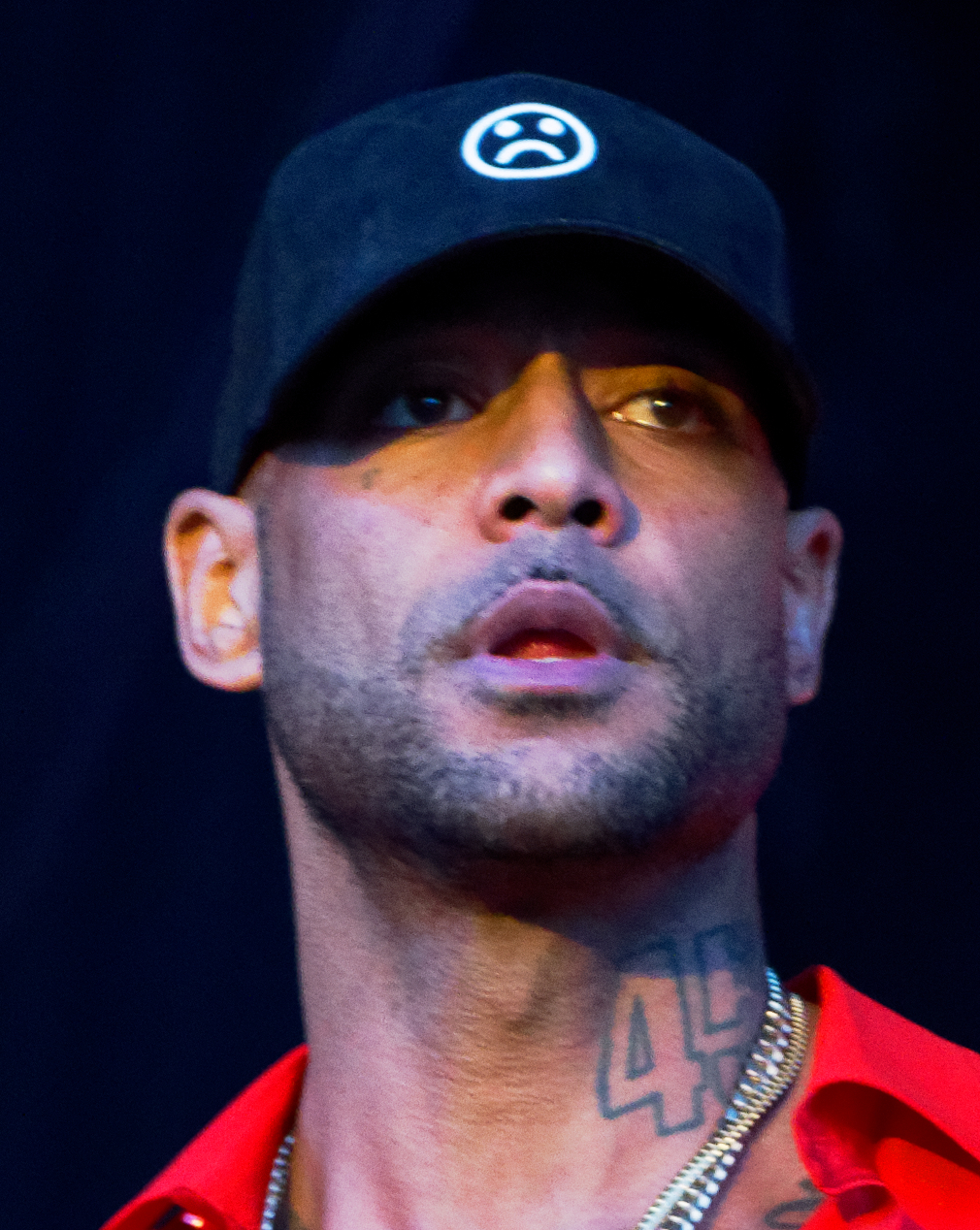
Élie Thitia Yaffa (French pronunciation: [eli jafa]; born 9 December 1976), better known under his stage name Booba, is a French rapper.

After a brief stint as a break dancer in the early 1990s, Booba partnered with his friend Ali to form Lunatic. The duo released a critically acclaimed album in 2000 but disbanded in 2003. Booba has since embarked on a successful solo career, selling more than 10 million discs over his career[2] and becoming the most downloaded artist (legally) in France.[3] Booba is praised for the quality of his flow and beats but often criticized because of the controversial nature of his lyrics. He has also established the rap label Tallac Records, and developed a line of jewellery.

Life and career

[edit]

Élie Yaffa was born on 9 December 1976 in the outskirts of Paris in Sèvres. His father is Senegalese and his mother is French of Mosellan and Belgian descent.

With his friend Ali they formed the duo Lunatic in 1994. Unable to secure a record deal from a major label because of their controversial lyrics, they created their own independent record label 45 Scientific in 1999. The following year, Lunatic released its first and only album entitled Mauvais œil.

In 2002, Booba released his debut solo album Temps mort. He followed this up with four further albums: Panthéon, Ouest Side (the most successful),[4] 0.9 and Lunatic. In late 2012, he released his sixth solo album Futur. In whole, Booba has ten disks certified, six Disques d'Or (Gold album), three Disques de platine (Platinum album) and one Double disque de platine (Double-Platinum album).[5] In 2011, Booba won the "My Youtube" contest, ahead of popular artists like Rihanna, Justin Bieber, Lady Gaga, Eminem, Jay-Z, Sexion D'Assaut, Shakira, and Stromae.[6]

Musical style

[edit]

Booba was influenced by the American hip-hop scene of the late 1980s and early 1990s – Mobb Deep, Wu-Tang Clan, 2Pac, and Biggie Smalls. Dark melodies accompanied with raw lyrics, typical of the rap from New York, are present on every album of his. He is often criticized for being an apologist for easy money and murder. Booba advocates a reduction in the taxes and claims himself in support of individual freedom.[7] Racism is a recurring topic of his songs (see for example "Couleur ébène", "Pitbull", "Ma Couleur"), although he sometimes deliberately advocates communitarian positions.[8]

Other ventures

[edit]

Booba is also the creator of a streetwear brand, Ünkut, one of the most popular brands of this type in France.[9][10]

Discography

[edit]

Studio albums

[edit]
Year Album Peak positions Certifications
FRA
[11]
BEL
(Fl)

BEL
(Wa)

[12]
SWI
[13]
2002 Temps mort 2 41
2004 Panthéon 3 26 25
2006 Ouest Side 1 12 18
2008 0.9 6 27 60
2010 Lunatic 1 1 24
  • FRA: 2× Platinum[14]
2012 Futur 4 74 5 14
  • FRA: 3× Platinum[15]
2013 Futur 2.0 (reissue) 6 28
2015 D.U.C 1 40 1 2
2015 Nero Nemesis 7 127 7 9
2017 Trône 1 39 3 12
2021 Ultra 2 4 2 2
2024 Ad vitam æternam 1
[16]
137 1 3

Mixtapes

[edit]
Year Album Peak positions Certifications
FRA
[11]
BEL
(Wa)

[12]
SWI
[13]
2005 Autopsie Vol. 1 66
2007 Autopsie Vol. 2 8 98
2009 Autopsie Vol. 3 2 19
2011 Autopsie Vol. 4 2 32 64
2017 Autopsie 0 20 48 * FRA: Gold[14]

Singles

[edit]

As lead artist

[edit]
Year Single Peak positions Certification Album
FRA
[11]
BEL
(Wa)

[12]
SWI
[13]
2002 "Destinée"
(featuring Kayna Samet)
41  –  – Temps mort
2004 "Avant de partir"
(featuring Léya Masry)
24 17
(Ultratip*)
 – Panthéon
2006 "Au bout des rêves"
(featuring Trade Union & Mister Rudie)
22 4
(Ultratip*)
 – Ouest Side
2010 "Caesar Palace"
(featuring P. Diddy)
 –  –  –
"Ma couleur"  – 24
(Ultratip*)
 – Lunatic
"Jour de paye"  –  –  –
2011 "Paradis" 99  –  –
"Comme une étoile"  – 36
(Ultratip*)
 –
"Paname" 48  –  – Autopsie Vol. 4
"Bakel City Gang" 30 43*(Ultratip*)  –
"Vaisseau Mère"  –  –  –
"Scarface" 20 33
(Ultratip*)
 –
2012 "Caramel" 10 42  – Futur
"Tombé pour elle" 16 44  –
2013 "A.C. Milan" 7 19  – Futur 2.0
"T.L.T" 16 44  –
"Turfu" 11 34  –
"RTC" 13 15
(Ultratip*)
 –
"Parlons peu" 5 27  –
"Longueur d'avance"
(featuring Maître Gims)
13 48  –
2014 "La mort leur va si bien" 7  –  – D.U.C
"OKLM" 1 7 72
2015 "Tony Sosa" 14 46  –
"LVMH" 28 35
(Ultratip*)
 –
"Mon pays" 37  –  –
"Validée"
(featuring Benash)
2 41  – Nero Nemesis
"Attila" 35  –  –
"Génération Assassin" 40  –  –
2016 "JDC" 10 21
(Ultratip*)
 – Autopsie 0
"Salside" 8 23
(Ultratip*)
 –
"E.L.E.P.H.A.N.T." 1 39  – Trône
"DKR" 1 42 42
2017 "Daniel Sam" 27
[17]
11
(Ultratip*)
 – Non-album single
"Nougat" 2
[18]
42 61 Trône
2018 "Gotham"  – 17 48
"BB"  – 17 42
"Kyll"
(with Médine)
2 34 62
2019 "PGP" 1 9 22 Non-album singles
"Arc-en-Ciel" 1 16 37
"Freestyle Pirate" 42 28
(Ultratip*)
 –
"Glaive" 10 13
(Ultratip*)
 –
2020 "Cavaliero" 28 29
(Ultratip*)
 –
"Jauné"
(featuring Zed)
1 25 26
"Dolce Vita" 6 47 51
"5G" 1 16 28
2021 "Ratpi World" 1 27 34
"Mona Lisa"
(featuring JSX)
1 2 1 Ultra
"Azerty" 11 23  –
"Kayna" 4 40 55 Non-album singles
"Plaza Athénée" 10  –  –
"Dragon" 22  – 77
"Variant" 7 47 65
"Geronimo"  – 41 35
"Leo Messi"  – 48 72
2022 "Koa"  – 47  –
2023 "Sport Billy" 10  –  –
2024 "6G"  – 32 44 Ad vitam æternam
"Rebel" 7 45  –
"Saga" 4 41  –
"Dolce Camara"
(featuring SDM)
2 14  –
2025 "Ici c'est Paris"
(featuring Blessd)
 –  –  – Non-album singles
2026 "Seychelles" 16[19]  – 92

*Did not appear in the official Belgian Ultratop 50 charts, but rather in the bubbling under Ultratip charts.

[edit]
Year Single Peak positions Certifications Album
FRA
[11]
BEL
(Wa)

[12]
SWI
[13]
2011 "Corner"
(Gato featuring Booba & Philly Poe)
"Cruella"
(Shay featuring Booba)
2012 "Call of Bitume"
(Rim'K featuring Booba)
72 Rim'K album
Chef de famille
2013 "L.E.F"
(Kaaris featuring Booba)
122
2014 "Même tarif "
(Alonzo featuring Booba)
8 39 Alonzo album
Règlement de comptes
2015 "A.T.R"
(Twinsmatic featuring Booba)
145 Twinsmatic album
Nowhere
2016 "Here"
(Christine and the Queens featuring Booba)
52
"Rouge et bleu"
(Kalash featuring Booba)
15 33
(Ultratip)
* FRA: Platinum[14] Kalash album
Kaos
"N.W.A."
(Kalash featuring Booba)
49
"M.L.C"
(Niska featuring Booba)
46 Niska album
Zifukoro
"Infréquentables"
(Dosseh featuring Booba)
19 13
(Ultratip*)
* FRA: Diamond[14]
"Kiname"
(Fally Ipupa featuring Booba)
10 38 * FRA: Gold[14]
2017 "Mula"
(Siboy featuring Booba)
9 32
(Ultratip*)
"Ghetto"
(Benash featuring Booba)
10 16
(Ultratip*)
* FRA: Diamond[14]
"Oh bah oui"
(Lacrim featuring Booba)
2 48 * FRA: Platinum[14] Lacrim album
Force & Honneur
"Tuba Life"
(Niska featuring Booba)
2 9
(Ultratip*)
29 * FRA: Diamond[14] Niska album
Commando
2018 "MQTB"
(Dosseh featuring Booba)
1 25
(Ultratip*)
"Madrina"
(Maes featuring Booba)
24 31 * FRA: Diamond[14] Maes album
Pure
"Sale mood"
(Bramsito featuring Booba)
1 48 * FRA: Platinum[14]
2019 "Médicament"
(Niska featuring Booba)
1 26 43 * FRA: Platinum[14] Niska album
Mr Sal
"Haï"
(Gato featuring Booba)
21
2020 "Blanche"
(Maes featuring Booba)
2 49 10 * FRA: Diamond[14] Maes album
Les derniers salopards
"La zone"
(SDM featuring Booba)
28
"Charbon"
(Leto featuring Booba)
27 Leto album
100 visages
"Tout gâcher"
(Green Montana featuring Booba)
25 9
(Ultratip*)
80 Green Montana album
Alaska
"Pompeii"
(JSX featuring Booba)
8 23
(Ultratip*)
* FRA: Gold[14]
2021 "Daddy"
(SDM featuring Booba)
14 SDM album
Ocho
"32"
(Dala featuring Booba)
65
"Kayna"
(Kayna Samet featuring Booba)
106
"GTA"
(JSX featuring Booba)
20

*Did not appear in the official Belgian Ultratop 50 charts, but rather in the bubbling under Ultratip charts.

Other charted songs

[edit]
Year Single Peak positions Album Certifications
FRA
[11]
BEL
(Wa)

[12]
SWI
[13]
2012 "Jimmy" 108  –  – Futur
"Kalash" (featuring Kaaris) 116  –  –
"Wesh Morray" 121  –  –
"Rolex" (featuring Gato) 131  –  –
"Tout c'que j'ai" 150  –  –
"C'est la vie" (featuring 2 Chainz) 153  –  –
"1.8.7" (featuring Rick Ross) 158  –  –
"2Pac" 191  –  –
2013 "2.0" 41  –  – Future 2.0
"Une vie" 44  –  –
"Billets verts" 87  –  –
2015 "Temps mort 2.0"
(featuring Lino)
58  –  – D.U.C
"G-Love"
(featuring Farruko)
69  –  –
"3 G" 70  –  –
"Caracas" 116  –  –
"D.U.C" 84  –  –
"Bellucci"
(featuring Future)
86  –  –
"Loin d'ici" 112  –  –
"Les meilleurs"
(featuring 40 000 Gang)
151  –  –
"Billets violets" 161  –  –
"All Set"
(featuring Jeremih)
163  –  –
"Jack Da" 165  –  –
"Mr. Kopp" 146  –  –
"Comme les autres" 169  –  – Nero Nemesis
"Habibi" 119  –  –
"4G" 109  –  –
"Walabok" 124  –  –
"Talion" 137  –  –
"92I Veyron" 57 16
(Ultratip*)
 – * FRA: Diamond[14]
"Charbon" 168  –  –
"Pinocchio"
(featuring Damso and Gato)
115  –  –
"Zer'"
(featuring Siboy and Benash)
120  –  –
2017 "Petite fille" 28  – 32 Trône * FRA: Diamond[14]
"Trône" 32  – 34 * FRA: Platinum[14]
"113"
(featuring Damso)
 –  – 38 * FRA: Platinum[14]
"Ridin'" 40  –  – * FRA: Platinum[14]
"Ça va aller"
(featuring Niska and Sidiki Diabaté)
40  –  – * FRA: Gold[14]
"Friday" 43 30 74 * FRA: Diamond[14]
"Drapeau noir" 48  – 91 * FRA: Platinum[14]
"À la folie" 55  –  – * FRA: Gold[14]
"Terrain" 74  –  – * FRA: Gold[14]
"Centurion" 85  –  – * FRA: Gold[14]
"Bouyon"
(featuring Gato)
98  –  – * FRA: Gold[14]
"Magnifique" 130  –  – * FRA: Gold[14]
2021 "GP" 2  –  – Ultra * FRA: Gold[14]
"VVV" 3  – 26 * FRA: Gold[14]
"Ultra" 4  – 27 * FRA: Gold[14]
"RST" 5  –  – * FRA: Gold[14]
"Bonne journée"
(featuring SDM)
6  –  –
"Vue sur la mer"
(featuring Dala)
8  –  –
"Je sais" 9  –  –
"Dernière fois"
(featuring Bramsito)
10  –  – * FRA: Gold[14]
"L'olivier" 12  –  –
"Grain de sable"
(featuring Elia)
13  –  –
"31"
(featuring Gato)
14  –  –
2024 "Abidal" 18  –  – Ad vitam æternam
"Bénigni" 21  –  –
"Signé" 27  –  –
"GM" 36  –  –
"CVBSP" 41  –  –

*Did not appear in the official Belgian Ultratop 50 charts, but rather in the bubbling under Ultratip charts.

Awards and nominations

[edit]
Award Ceremony Year Nominee/Work Category Result
Berlin Music Video Awards 2024 6G Best Cinematography Nominated
Saga Best Director

See also

[edit]

References

[edit]
[edit]
Revisions and contributorsEdit on WikipediaRead on Wikipedia
from Grokipedia
Élie Yaffa (born 9 December 1976), known professionally as Booba, is a French rapper of Senegalese and French descent. Born in Sèvres near Paris, he began his career in the mid-1990s as a breakdancer before forming the hip-hop duo Lunatic with Ali, releasing their debut and only studio album Mauvais Œil in 2000, which established their reputation in the French underground rap scene. After Lunatic disbanded in 2003 amid internal tensions, Booba launched a prolific solo career starting with Temps Mort (2002), achieving multiple platinum certifications and amassing over 3 million album sales, making him one of the most commercially successful artists in French rap history. Renowned for his raw lyricism, technical prowess, and incorporation of trap elements into French hip-hop, Booba has exerted significant influence on the genre's evolution, while also founding the independent label Tallac Records and diversifying into business ventures like jewelry. His career has been marked by high-profile feuds with peers such as Rohff and Kaaris, often playing out publicly and amplifying his notoriety, alongside criticisms for lyrics promoting street culture and materialism.

Early Life and Background

Family Origins and Childhood

Élie Yaffa, known professionally as Booba, was born on December 9, 1976, in , a suburb of , to Seydou Nourou Yaffa, a Senegalese father of Soninke ethnicity from Bakel in eastern , and Borsenberger, a French mother of Mosellan and Belgian descent who worked as a teacher. His parents separated during his early years, leaving him primarily under his mother's care in a modest household that included an older brother ten years his senior and a sister. Yaffa's childhood unfolded in the multicultural banlieues of , such as , amid environments marked by , high from and elsewhere, and associated socioeconomic strains including and social tensions between communities and authorities. He spent portions of his early years further south in Colle-sur-Loup and , where exposure to as a child of mixed heritage reinforced a sense of outsider status in both urban and provincial French settings. Formal education remained limited; Yaffa completed his schooling with a Brevet d'études professionnelles (BEP), a vocational diploma equivalent to basic technical training, rather than advancing to higher academic paths. This backdrop of absent paternal influence, maternal single-parent provisioning in challenging conditions, and direct encounters with cultivated an early emphasis on individual agency and resilience over reliance on institutional or communal supports, traits evident in his later personal narrative of overcoming adversity through .

Entry into Hip-Hop Culture

Élie Yaffa, professionally known as Booba, entered the French hip-hop scene through in the early 1990s, participating in the street-level elements of the culture amid the Parisian suburbs. This phase reflected a pragmatic pursuit of quick earnings, which Yaffa equated with independence, rather than idealized subcultural immersion. By 1994, Yaffa shifted to , aligning with local collectives like La Cliqua, initially contributing as a dancer before laying down verses. His debut recording occurred that summer in the basement of the Ticaret clothing store in Paris's Stalingrad district, a hub for B-boys, resulting in an unreleased track featuring the full La Cliqua lineup for the Le Bout du Tunnel compilation. These grassroots endeavors in areas including fostered an unrefined style drawn from American precedents, emphasizing street realism over polished production. Yaffa's emerging approach prioritized verifiable personal experience and economic drive, establishing a foundation wary of subsequent commercial dilutions in the genre.

Musical Career

Lunatic Formation and Mixtape Era (1994–2002)

Booba and formed the rap duo in 1994 in the Paris suburbs of and , drawing from shared experiences in immigrant-heavy banlieues to craft raw, confrontational verses. Unable to secure contracts with major labels owing to lyrics deemed too incendiary—frequently invoking , cultural alienation, and disdain for authority—the pair relied on underground circuits. Their early output consisted of and freestyles circulated via cassette tapes and radio appearances, such as contributions to compilations and the 1995 track "Civilisé," which established their signature tandem flow and unfiltered bravado. Lunatic's breakthrough came with the September 28, 2000, release of their debut album Mauvais Œil on the independent label 45 Scientific, a 17-track project produced amid limited resources but marked by dense production and lyrical interplay. The record captured themes of suburban isolation, inter-ethnic tensions, and defiant , resonating with disenfranchised youth despite widespread bootlegging that hampered official distribution. It achieved gold certification in , surpassing 100,000 units sold after two years of grassroots promotion, cementing cult status in the French hip-hop scene without mainstream radio play. Tensions escalated post-album, exacerbated by unequal creative contributions and binding group contracts with 45 Scientific, which restricted individual ambitions. Booba later attributed the 2002 dissolution to irreconcilable divergences, including his intent to exit the label—a move infeasible under the duo's joint agreement—highlighting how ego clashes and restrictive deals often precipitate instability in rap partnerships. The split precluded further collaborative releases, though unauthorized compilations like the Black Album surfaced afterward, underscoring persistent demand amid acrimony.

Solo Debut and Initial Success (2002–2006)

Following the dissolution of amid internal conflicts, Booba launched his solo career with the album Temps mort, released on January 22, 2002, via the independent imprint 45 Scientific, which he co-founded. The project, featuring 17 tracks with production emphasizing raw, hardcore hip-hop beats, sold 100,000 copies, demonstrating viability without major label backing. This independent rollout contrasted with the duo's prior major-label experience, relying on grassroots promotion within France's underground rap circuits to achieve commercial traction. Tracks on Temps mort, such as "Nouvelle école" (remixed with ), underscored Booba's shift toward unfiltered street narratives and confrontational lyricism, positioning him as a dominant voice in French rap's competitive landscape. Provocative cuts like "Repose en paix" asserted lyrical superiority over peers, contributing to his reputation for aggression that helped solidify fan loyalty amid rivalries. These elements, devoid of mainstream polish, resonated in an era predating widespread digital streaming, where physical sales and distribution drove momentum. By 2006, Booba's ascent continued with Ouest Side, released on via Barclay/Universal, which earned platinum certification from for exceeding threshold sales, reflecting broadened appeal and over units moved. The album's success, peaking amid France's evolving rap commercialization, highlighted Booba's navigation from indie roots to wider distribution, bolstered by self-directed marketing rather than institutional support. This period established empirical benchmarks—100,000 for debut, platinum escalation—for his independent-to-mainstream trajectory in a genre often reliant on personal hustle over subsidized channels.

Mainstream Ascendancy and Album Dominance (2007–2015)

Booba's 0.9, released on , , marked a pivotal escalation in his commercial trajectory, attaining double platinum certification in for exceeding 200,000 equivalent units sold, driven by hits like "Doucement" featuring and strategic singles rollout. This success reflected Booba's shift toward polished production with international influences, including beats from American producers, which broadened appeal beyond underground rap circles. The debuted at number one on French charts and maintained dominance through consistent streaming and physical sales, underscoring his ability to leverage via early engagement on platforms like , where he cultivated direct fan interaction to amplify visibility. Subsequent releases reinforced this ascendancy. Futur, issued on June 25, 2012, sold over 150,000 units in , bolstered by its re-edition Futur 2.0 that captured 19,000 copies in its debut week alone, capitalizing on residual momentum from the original. Booba's Temps Mort, distributed digitally in 2012, further exemplified his output consistency, achieving high volumes equivalent to status through exclusive online drops that bypassed traditional retail constraints. These projects highlighted causal factors in his edge over contemporaries: deliberate sequencing of free mixtapes to build hype for paid albums, coupled with provocative online persona that generated organic publicity without heavy label dependence. By 2015, Booba's dominance peaked with dual major releases. D.U.C., launched April 13, 2015, earned double for over 200,000 units, featuring trap-infused tracks with U.S.-style production that appealed to evolving listener tastes. Nero , following on December 4, 2015, similarly secured status by December 2016 with more than 100,000 equivalent , later upgraded to double , and topped French charts upon release. These s, aggregated across the period, contributed to millions in total album equivalents by the mid-2010s, evidencing sustained demand rather than transient hype, as Booba's independent label Tallac Records enabled agile responses to market shifts like rising digital consumption. His integration of global beats—sourcing from producers attuned to trap sounds—causally expanded his sonic palette, differentiating him in a saturated French scene and sustaining supremacy through verifiable metrics over peers with less adaptive strategies.

Later Evolution and Ongoing Releases (2016–Present)

Following the commercial peaks of his mid-2010s work, Booba continued to evolve his sound toward trap-influenced production, releasing Trône on December 1, 2017, which debuted at number one on the French albums chart and maintained positions for 123 weeks. The album emphasized minimalist beats and aggressive flows characteristic of trap, solidifying his adaptation to contemporary hip-hop trends while amassing significant streams, including over 93 million for the track "DKR" on . This release underscored Booba's streaming dominance, as he ranks among France's most streamed rappers, with career exceeding 10 million discs and legal downloads positioning him as the top-downloaded French artist historically. In 2021, Booba announced ULTRA—his tenth studio album—as a potential career finale on February 16 via , before its digital release on , marking a pivot with global-leaning trap elements and collaborations that extended his influence beyond . The project quickly surpassed 300 million worldwide streams in its initial months, reflecting sustained commercial viability into his mid-40s despite industry in rap, where veteran artists often face diminished relevance. Defying the retirement tease, Booba surprise-dropped his eleventh , AD VITAM ÆTERNAM, on February 9, 2024, blending trap and hardcore hip-hop over 10 tracks in 28 minutes, which maintained his chart presence and streaming momentum amid a competitive French rap landscape. By October 2025, he featured on the single "Nwar Mentality" with Roni0block, released on October 9, further evidencing ongoing activity through targeted collaborations. Signaling diversification, Booba launched Sub Life, an electro and label, in September 2024, assembling French and American talents to explore beyond rap's trap dominance, with early releases like "Nautilus" featuring Ghenda on November 14, 2024, demonstrating resilience and expansion into electronic genres. This venture highlights his strategic , prioritizing cross-genre ventures to sustain influence as he approaches 50.

Artistic Identity

Musical Style and Influences

Booba's musical style draws heavily from the gritty production aesthetics of 1990s American hip-hop, particularly East Coast influences from artists like and , blended with West Coast intensity exemplified by 2Pac. This foundation manifests in hard-hitting beats featuring prominent bass lines and dark, atmospheric melodies that evoke suburban tension rather than polished experimentation. Early outputs emphasized raw, unadorned rhythms adapted from U.S. imports, prioritizing sonic aggression to mirror realities over melodic or introspective elements common in contemporaneous French rap. As trends shifted, Booba integrated Southern trap motifs in the 2010s, incorporating deep 808 bass and sparse arrangements while largely eschewing melodic trap's sing-song cadences until later adaptations. appeared selectively in mid-career tracks to enhance vocal edge, though he reverted to percussive, untreated flows for emphasis on rhythmic punch and clarity. Production choices consistently favor high-impact beats that underscore resilience and confrontation, collaborating with specialists attuned to dense, bass-driven soundscapes over or sample-heavy innovation. This approach yields a polished yet unyielding evolution from raw grit to contemporary , reflecting causal ties to urban hardship without contrivance.

Lyrical Themes and Evolution

Booba's lyrics during the Lunatic era (1994–2002) centered on , violence, and defiance against institutional authority, drawing from suburban hardships and the pursuit of economic independence. Tracks from mixtapes such as Mauvais Œil (1996) depicted raw street confrontations, gunplay, and the allure of luxury as escapes from , with punchlines glorifying hustle over complacency. This phase rejected victimhood narratives prevalent in some French rap, prioritizing individual agency and confrontation with systemic barriers through aggressive storytelling rather than lamentation. Booba frequently stylized his Franco-Senegalese heritage in lyrics, referring to himself as "le métisse café crème" or "l'MC cappuccino" in tracks like "Tout c’qu’on connaît" and "Les rues de ma vie," using culinary and colorimetric metaphors to provocatively assert his singular identity and style within French rap. A recurring social critique emerged in solo work, exemplified by "RMiste" from Futur (2006), where Booba lambasts (RMI recipients), portraying it as a cycle of laziness and lost ambition: lines deride those "living off 300 euros" without striving, urging self-made success amid France's . This theme underscores his emphasis on personal responsibility, contrasting with dependency mindsets, and aligns with broader motifs of , as he critiques societal excuses for stagnation. Post-2010, lyrical evolution incorporated fatherhood's influence, softening bravado with reflections on legacy and protection, as paternity reshaped his worldview toward maturity and restraint—evident in Trône (2017) and subsequent releases where family anchors boasts of achievement. Anti-extremism motifs intensified, rejecting radical ideologies; in ULTRA (2021), lines like " ne reviendra pas, il est cloué sur une croix en bois" provoke on religious dogmas, critiquing unyielding faiths while condemning , as Booba stated post-Charlie Hebdo attacks that attacking invites backlash but remains unjustifiable. The shift from Lunatic's visceral narratives to ULTRA's introspective flexing—blending opulence with philosophical undertones—mirrors life-stage changes, with sustained fan engagement evidenced by ULTRA's 14-week chart-topping run and diamond certification in , indicating resonance beyond early aggression. Booba frequently explores themes of solitude, success, and isolation at the top in his lyrics and persona. A widely attributed punchline states: "Quand t'es seul au sommet t'as pas sommeil, je me sens tellement seul que je trouve pas mon groupe sanguin" ("When you're alone at the top you don't sleep, I feel so alone that I can't find my blood type"), using wordplay to emphasize loneliness despite achievement. Similar motifs appear in reviews of his album Trône (2017), describing him as "seul au sommet" (alone at the top), unable to form attachments due to his position.

Commercial and Extramusical Pursuits

Business Enterprises

Booba launched the clothing brand Ünkut in , marking his entry into apparel as a means to leverage his rap persona for commercial ventures independent of album sales. The brand focused on targeted at urban youth, generating revenue through direct sales and collaborations that paralleled his music output. Subsequently, he introduced the 92i line, which features hoodies, t-shirts, and accessories emblazoned with motifs tied to his 92i imagery, distributed via official outlets and online platforms. These clothing enterprises have formed a core non-musical income stream, with merchandise sales contributing to his estimated net worth of 40 to 60 million dollars as reported in 2021 analyses. In parallel, Booba has pursued investments to build long-term wealth stability, acquiring properties in and . In , he sold a Miami Beach villa for 6.1 million dollars, demonstrating appreciation in high-value assets. By 2024, he acquired another luxury residence in Miami Beach valued at 6.1 million dollars, underscoring a pattern of diversification into tangible assets amid music industry fluctuations. These holdings, alongside unspecified investments, exemplify his shift from banlieue origins to self-sustained through calculated risk in volatile markets. Such pursuits earned Booba recognition as GQ's "Businessman of the Year" in , highlighting his acumen in navigating entrepreneurial opportunities outside recording contracts. By prioritizing merchandise empires and property portfolios, these ventures serve as buffers against sector-specific downturns, with and cited as key pillars in estimates placing his overall fortune at around 50 million euros by 2023.

Label Expansions and Collaborations

In 2004, Booba founded Tallac Records, an independent hip-hop label based in , , licensed through Barclay Records under . The label has focused on developing emerging rap talent, with Booba personally discovering, recording, and releasing artists such as , Shay, and Bramsito, whose projects have achieved commercial viability through structured distribution partnerships. These efforts expanded Tallac's roster by emphasizing artist output aligned with market demand rather than external mandates, contributing to sustained releases in the competitive French rap landscape. By September 2024, Booba launched Sub Life as an electro imprint under Tallac Records, marking a strategic diversification into and electronic music by integrating rap elements with specialized production. This initiative recruits French and American producers, fostering tracks that blend genres, as evidenced by releases like "Nautilus" featuring Booba and Ghenda, produced by Dany Synthé and released in November 2024. Sub Life's formation reflects adaptation to evolving listener preferences, with Booba articulating ambitions to extend his influence beyond traditional hip-hop boundaries through cross-genre experimentation. Tallac's expansions, including Sub Life, have supported Booba's broader commercial footprint, with label-distributed projects like the 2021 album Ultra generating over 300 million global streams in its initial months. These outputs align with Booba's career totals surpassing 1.5 million sales, underscoring the label's role in merit-driven artist progression and revenue diversification without reliance on subsidized quotas.

Conflicts and Public Disputes

Rivalries Within French Rap

Booba's most enduring rivalry within French rap unfolded with Rohff, originating in the early 2000s amid competition for dominance in the genre's burgeoning commercial scene. Initial tensions arose from subtle disses in tracks and interviews, escalating into direct confrontations by 2009 when Rohff targeted Booba in lyrics accusing him of inauthenticity and commercial sellout, prompting Booba's retaliatory "Autopsie en V," a track dissecting Rohff's career and street credibility. This exchange of diss tracks, continuing through the 2010s with releases like Rohff's "R.I.P." series and Booba's "Carte Blanche" era shots, functioned as a mechanism to elevate lyrical standards, compelling both artists to innovate flows and production to outpace rivals, thereby sustaining fan engagement in a market prone to stagnation without such pressures. Rohff has framed these clashes as responses to Booba's provocations, portraying himself as defending regional pride against Booba's perceived arrogance from the 92i collective, while Booba has justified preemptive strikes as necessary to assert supremacy and deter imitators in a zero-sum industry. The feud's persistence, marked by intermittent revivals via taunts into the , amplified visibility for both, with streams and sales spiking post-diss releases, illustrating how intra-rap competition incentivizes output over complacency. Tensions with former Lunatic partner Ali emerged post-2003 group dissolution, after their collaborative album Mauvais Œil achieved platinum status but highlighted diverging artistic visions. Ali pursued independent releases emphasizing social themes, occasionally shading Booba's mainstream pivot in interviews, while Booba referenced Ali's lesser commercial traction in subtle bars, culminating in explicit 2024 criticisms labeling Ali as persistently resentful and overly reliant on their shared history. Ali has countered by emphasizing mutual exploitation in their split, claiming Booba overshadowed his contributions, yet both maintain the rivalry spurred individual evolution, with Booba crediting the separation for honing his solo aggression. A parallel dynamic appeared in Booba's 2013 fallout with protégé , triggered when Kaaris declined alignment during the escalation, leading to diss tracks like Booba's "Pitbull" and Kaaris's "Blow," exchanged via platforms like Skyrock and for rapid dissemination. This social media-fueled intensification, peaking in 2018, boosted algorithmic exposure and forced adaptive content creation, underscoring feuds' role in catalyzing innovation amid French rap's label-driven inertia. Kaaris accused Booba of emerging talent, whereas Booba positioned his responses as enforcing and in mentorship dynamics.

High-Profile Feuds and Incidents

On August 1, 2018, Booba and rival rapper , along with members of their entourages totaling 14 individuals, engaged in a large-scale brawl in the departure lounge of Paris's , resulting in the temporary closure of the terminal and delays to multiple flights as authorities intervened. The incident escalated rapidly from verbal confrontations to physical altercations involving luggage and scuffles among groups, with video footage captured by bystanders spreading widely online and amplifying media coverage across French and international outlets. Both artists and their associates were detained immediately, held in custody for three weeks before release on , highlighting the public disruption caused by personal animosities spilling into a high-traffic international hub. From late 2022 onward, Booba initiated a sustained social media campaign on Twitter (now X) targeting influencer agency head Magali Berdah, accusing her and her firm Shauna Events of engaging in fraudulent practices such as misleading promotions and scamming followers through deceptive endorsements. His posts, framing the effort as an exposé of "thieving influencers," prompted a complaint from Booba that triggered a judicial investigation into Shauna Events for potential deceptive commercial practices, though the probe was later classified without charges in March 2024. The campaign escalated as Booba's followers mobilized, leading to widespread online harassment against Berdah—including threats and doxxing—that courts later deemed cyberbullying, resulting in the conviction and jailing of dozens of participants in March 2024 for aggravated moral harassment spurred by the rapper's rhetoric. Critics, including Berdah herself, portrayed Booba's actions as to , culminating in her complaints against him for and against the platform X for complicity in , while Booba maintained the posts were intended to highlight verifiable influencer deceptions without endorsing violence or threats. Media amplification via viral threads and news coverage intensified the feud's visibility, transforming targeted accusations into a broader public spectacle that divided opinions between those viewing it as accountability for industry and others as disproportionate online . In October 2018, Booba and rival rapper were convicted in a French court for their involvement in a brawl at Orly Airport on August 1 of that year, which disrupted flights and involved their entourages. Both received 18-month suspended prison sentences—meaning no actual incarceration—and were each fined 50,000 euros, while nine associates faced lesser suspended terms. The rulings reflected the physical documented on video, including assaults with chairs and bottles, but emphasized probationary measures over imprisonment, aligning with French judicial patterns for non-recidivist offenders in public disturbances. In 2023, Booba faced backlash in leading to the cancellation of his scheduled concert on at Casablanca's Mohammed V Sports Complex. Local authorities revoked the permit amid a campaign citing perceived as misogynistic, sexist, and insulting to Moroccan women, such as references in tracks like "Caravane" and earlier works. The Club of Moroccan Lawyers filed a formal complaint against Booba for and public insults targeting Moroccan women, prompting legal proceedings under Moroccan penal code provisions on honor and dignity. Defenders of Booba argued the actions constituted of artistic expression, noting that rap often employ and cultural without intent to incite harm, while critics maintained that repeated derogatory references warranted accountability to protect public morals. No conviction has been reported from the Moroccan case as of late 2023, highlighting tensions between free speech defenses in music and local sensitivities to gendered language.

Personal Profile

Family and Private Life

Booba, whose real name is Élie Yaffa, is the father of two children, Luna and Omar, born from his past relationship with Patricia Cerqueira Vinces, a former . Luna was approximately 4 years old in 2018, and Omar, her brother, was of similar young age at that time, indicating births around the early . Yaffa has demonstrated a hands-on approach to , including decisions to withdraw his children from French preschool systems shortly after enrollment, citing dissatisfaction with the educational environment after observing it for mere days in Omar's case. This reflects a commitment to alternative upbringing methods, prioritizing direct involvement over institutional norms. In 2008, Yaffa relocated to Miami, , where his companion and children resided, seeking a more private existence away from the intense media scrutiny and regulatory constraints associated with life in . The move facilitated fiscal advantages and a less intrusive environment, allowing for a normalized routine despite his high-profile career. He has periodically shared glimpses of family life via social media, such as posts depicting outings with his children, underscoring a paternal role focused on stability and quality time. This domestic setup contrasts with his public feuds, enabling upward mobility for his offspring—opportunities in education and lifestyle unavailable in his own Seine-Saint-Denis upbringing amid socioeconomic challenges. Yaffa maintains discretion regarding romantic partnerships beyond the documented history with Vinces, avoiding public disclosure of subsequent relationships.

Sociopolitical Commentary

Booba has publicly criticized the French state's handling of urban unrest and radical , describing the government as "beaucoup trop mou et faible" in response to the 2023 riots following the police shooting of Nahel Merzouk, arguing that a lack of deterrence allows in banlieues to act without fear of consequences. He explicitly linked this leniency to broader failures against islamisme, stating in an August 2023 interview that authorities exhibit excessive laxity, contributing to persistent insecurity in suburban areas often characterized as zones de non-droit where struggles to maintain order. These views contrast with narratives framing such critiques as right-wing , which Booba counters as grounded realism drawn from lived experiences in , emphasizing causal links between unchecked radical influences and social breakdown rather than abstract multicultural ideals. Regarding the Israeli-Palestinian conflict, Booba adopted a neutral position during the 2014 Gaza escalation, rejecting partisan alignments by declaring himself "ni pro-israéliens, ni pro-palestiniens" and condemning massacres of civilians on either side, while decrying hypocritical activism—particularly from African voices silent on continental atrocities—as performative rather than substantive. This stance led to a heated exchange with , whom Booba accused of distorting his words and prioritizing ideological posturing over balanced condemnation, highlighting his aversion to one-sided narratives that overlook empirical patterns of violence. Following the , 2023, attacks, Booba's commentary aligned with defenses of Israel's right to respond, framing support for targeted operations against Islamist militants as pragmatic security rather than ideological bias, amid broader critiques of radical ideologies infiltrating European suburbs. On immigration and societal integration, Booba advocates for stricter border controls and personal accountability, citing the 2022 murder of 12-year-old Lola by an Algerian national under an expulsion order as emblematic of policy failures that prioritize leniency over public safety. In 2024 statements, he reiterated calls for robust enforcement to prevent inflows exacerbating banlieue dysfunction, debunking multiculturalist platitudes through anecdotes of self-reliant success amid systemic neglect, where individual merit and effort—rather than victimhood or subsidies—drive outcomes. He positions these as empirical observations from immigrant-rooted communities, rejecting portrayals of his emphasis on assimilation and responsibility as politically incorrect, instead attributing suburban malaise to causal realities like unvetted migration and eroded deterrence, supported by data on rising crime correlations in high-immigration areas.

Discography

Studio Albums

Booba released his debut studio album Temps Mort on 26 March 2002 through 45 Scientific and BMG Entertainment. Subsequent releases followed at intervals of one to three years, establishing a pattern of regular output amid his solo career following the Lunatic group's dissolution. Panthéon arrived in 2004 via Tallac Records. Ouest Side, issued on 13 February 2006 by Tallac and Barclay Records, marked his third studio effort. The 2008 album 0.9, released on 24 November through Tallac, Universal, and Barclay, achieved double platinum certification from the Syndicat National de l'Édition Phonographique (SNEP), denoting over 200,000 equivalent units sold in France. Lunatic followed in 2010. Futur came out in 2012, preceding a pair of 2015 releases: D.U.C. on 13 April via Tallac and AZ, and Nero Nemesis on 4 through Tallac. Trône was released on 1 December 2017 by Tallac. ULTRA debuted on 5 March 2021. The most recent, AD VITAM ÆTERNAM, launched on 9 February 2024 and earned gold certification from for exceeding 50,000 equivalent units. This progression underscores Booba's sustained commercial presence, with multiple albums attaining SNEP certifications reflecting sales exceeding hundreds of thousands of units collectively.

Mixtapes and Extended Plays

Booba's mixtapes, particularly the Autopsie series, functioned as supplementary releases to sustain momentum and cultivate underground loyalty in the pre-streaming landscape of French rap, where physical CDs and tapes were disseminated through independent networks and limited runs rather than major label polish. These projects embodied a raw, DIY approach, featuring freestyles, , and collaborations over beats sourced from international producers, allowing Booba to experiment with street narratives and rapid output between full albums. Unlike his studio efforts, which prioritized commercial production values, the mixtapes prioritized volume and immediacy to hype fanbases in banlieues and urban circuits. The inaugural Autopsie Vol. 1 emerged in May 2005 as a double-CD compilation mixtape, mixed for continuous play and including tracks with guests like Kennedy and Riddla, marking Booba's pivot to solo street releases post-Temps mort. Autopsie Vol. 2 followed on January 22, 2007, via Tallac Records, expanding with features from and alongside French peers like Mala, reinforcing Booba's transatlantic sound while amassing roughly 50,000 units through grassroots distribution. This volume underscored the mixtape's role in bridging gaps, released amid delays for Ouest Side. Autopsie Vol. 3, dropped June 29, 2009, represented a commercial breakthrough for the format, debuting at number one on French charts with about 8,000 first-week via Because distribution—the first such street album to top rankings—and hosting appearances by Seth Gueko and DeMarco. The series culminated in Autopsie Vol. 4 on November 14, 2011, a shorter 17-track effort with emerging talents like and Niro, sustaining hype ahead of Futur. In 2017, Autopsie 0 recompiled Booba's solo cuts from volumes 2 through 4, achieving gold certification from for over 50,000 cumulative units by June 2020. Prior to his solo mixtapes, as part of with Ali, Booba contributed to early 1990s underground tapes and radio freestyles circulating in suburbs, fostering initial DIY buzz through cassette demos before their 2000 debut , though these remained unofficial and unquantified in distribution. Booba has released no major extended plays distinct from mixtapes or album variants, with recent output favoring full-lengths over short-form EPs.

Key Singles and Features

Booba's breakthrough single "92i Veyron", released in December 2014 as part of the album Nero Nemesis, peaked at number 57 on the French Singles Chart but garnered significant long-term success through streaming, earning diamond certification from for exceeding 50 million equivalent units. The track amassed over 121 million streams on by 2025, underscoring its enduring popularity in the streaming era. In the 2020s, Booba achieved multiple number-one hits on the French charts. "" featuring JSX, released in February 2021 ahead of the Ultra, topped the Singles Chart and received diamond certification, reflecting over 50 million units. "Dolce Camara" with SDM, from the 2024 Ad Vitam Æternam, peaked at number 2 and sustained chart presence for over 90 weeks, driven by high streaming volumes exceeding 1.8 million weekly plays at peaks. Other notable lead singles include "Validée" featuring Benash and "", both certified by for substantial sales and streams. As a featured artist, Booba contributed to several chart successes, including Niska's "Médicament" (2018), which peaked in the French top 10 and earned diamond status, boosting its crossover appeal. His verse on Leto's "Charbon" (2020) similarly propelled the track to high rotation and , highlighting Booba's influence in collaborative hits within French rap. These features often amplified streaming metrics, with combined plays contributing to Booba's over 4 billion total streams on by late 2025.

Impact and Assessment

Accolades and Sales Milestones

Booba's recorded works have garnered extensive commercial certifications from the in , totaling 17 platinum records and 15 gold certifications as of 2021, reflecting thresholds of 100,000 and 50,000 equivalent units per certification, respectively. These include multiple double and triple awards for such as Trône (2014), which surpassed 500,000 units. Career sales exceed 10 million equivalents, encompassing physical sales, downloads, and streaming conversions, establishing him as one of French rap's top-selling artists by market metrics rather than subjective honors. Streaming data further quantifies his reach, with over 4.26 billion total plays on as of October 2025, including 3.14 billion as lead artist and 2.17 billion solo equivalents. This positions Booba among the most streamed French rappers globally, driven by hits like those from Trône exceeding 594 million album streams. Such figures prioritize empirical consumption over industry awards, which often favor curated selections amid noted biases in mainstream music institutions toward less commercially dominant acts. His sustained 5 million monthly listeners underscore enduring demand, outpacing many peers in raw listener engagement. While Booba has received limited formal accolades from major ceremonies like the Music Awards—prioritizing instead verifiable sales data—his milestones reflect public validation through purchases and streams, bypassing potential institutional preferences for narrative-driven recognition. Live performances have also set benchmarks, with sold-out arena tours reinforcing his commercial stature beyond recorded metrics.

Influence on French Hip-Hop and Beyond

Booba's integration of American trap elements, characterized by dark, minimalist beats, marked a pivotal shift in French hip-hop during the 2000s, moving the genre toward a more globalized aesthetic that prioritized street authenticity over traditional French lyrical complexity. This stylistic evolution, drawn from U.S. influences like Southern trap, enabled subsequent artists to experiment with and moody production, broadening rap's appeal beyond suburban narratives to international production standards. Peers such as PNL have echoed this paradigm through their atmospheric soundscapes, with Booba himself acknowledging their textual depth in a 2025 post, highlighting intergenerational continuity in the scene. His high-profile feuds, beginning with the 2003 rivalry against —escalating via tracks like "Rohff vs. Booba"—institutionalized diss culture as a core competitive mechanism in French rap, fostering publicity-driven rivalries that successors adopted to build visibility and . This approach contrasted with earlier collaborative norms, emphasizing individual bravado and causal rivalries over subsidized cultural consensus, thereby elevating rap's commercial viability independent of state-backed arts institutions. Booba's independent ventures, including founding Tallac Records and entrepreneurial extensions like branded merchandise, demonstrated a self-sustaining that peers emulated, transforming hip-hop into a merit-driven ecosystem generating millions annually without reliance on major label subsidies. Critics have accused Booba of prioritizing over artistic purity, yet his sustained relevance—evidenced by peer endorsements and adoption—underscores merit-based success rooted in lyrical precision and cultural resonance rather than diluted concessions. Internationally, this influence manifested in 2024 collaborations like "Ici C'est " with Colombian artist , blending French trap with rhythms and extending French rap's causal footprint beyond . Such cross-border engagements affirm Booba's role in countering insular narratives, proving rap's adaptability through unfiltered market dynamics over protected cultural outputs.

References

Add your contribution
Related Hubs
User Avatar
No comments yet.