Hubbry Logo
Boston BalletBoston BalletMain
Open search
Boston Ballet
Community hub
Boston Ballet
logo
8 pages, 0 posts
0 subscribers
Be the first to start a discussion here.
Boston Ballet
Boston Ballet
from Wikipedia

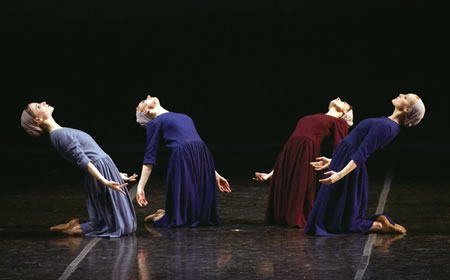
Boston Ballet dancers perform Antony Tudor's Dark Elegies (1937) under the direction of Tudor expert Donald Mahler in 2008.

Key Information

The Boston Ballet is an American professional classical ballet company based in Boston, Massachusetts. It was founded in 1963 by E. Virginia Williams[1] and Sydney Leonard, and was the first professional repertory ballet company in New England. It has been led by Violette Verdy (1980–1984), Bruce Marks (1985–1997), and Anna-Marie Holmes (1997–2000). Mikko Nissinen has been artistic director of Boston Ballet since 2001. Nissinen leads the company in partnership with Executive Director Ming Min Hui.

History

[edit]

1956-1979

[edit]

In 1956, E. Virginia Williams moved the ballet school she founded from a studio in Back Bay to 186 Massachusetts Avenue, across from the Loew's State Theatre in Boston. At this point in time, the school offered classes starting at a children's level all the way to a professional division.

In 1958, out of her Boston School of Ballet (which was sometimes called The New England School of Ballet), E. Virginia Williams formed a small dance group named The New England Civic Ballet. The group primarily performed at small local festivals and venues around New England.[2]

From 1958 to 1962, the New England Civic Ballet performed regionally, dancing various pieces such as a three-act Nutcracker, Les Sylphides, and repertory works by E. Virginia Williams, Sydney Leonard, Lev Ianov, and Jean Paige.[2]

In August 1962, the New England Civic Ballet performed as part of the 30th year of the Jacob's Pillow Dance Festival. At this point, the New England Civic Ballet was considered a semi-professional company and began calling themselves the Boston Ballet.

In December 1963, The Boston Globe reported that a Ford Foundation grant of US$144,000 to the Boston Ballet School had given birth to Boston's first and only professional ballet company. The total Ford Grant was $7,756,000, the largest private subsidy made to a single art form at the time. In part, based on the recommendations of George Balanchine and W. McNeil Lowry, the grant provided for the formation of several professional ballet companies. This included the Boston Ballet, Pennsylvania Ballet, Cincinnati Ballet, and Washington Ballet. Balanchine was a strong supporter of this initiative. He was Boston Ballet's artistic advisor for several years and gave the new company several of his works.[3]

1979–1989

[edit]

In 1979, Boston Ballet opened the Nervi Festival in Italy, and in 1980 was the first American dance company to perform in the People's Republic of China.[4][5] The company made its London premiere in 1981, with a full-length production of Swan Lake.[5] In 1983, Boston Ballet presented Don Quixote on Broadway with Rudolf Nureyev as a guest artist, after touring the United States, Mexico, France, and Italy. Boston Ballet performed Mark Morris's Mort Subite at the PepsiCo Festival in Purchase, New York in 1986,[5] and performed at the BESSIE Dance and Performance award ceremony at New York City Center in 1987.

1990–1999

[edit]

Boston Ballet made its debut at the Kennedy Center in Washington DC, in January 1990. Thay May Natalia Dudinskaya, Konstantin Sergeyev, and assistant artistic director Anna-Marie Holmes staged a new production of Swan Lake with Boston Ballet dancers performing with dancers from the Kirov Ballet and the Bolshoi Ballet.[citation needed] In 1991, Boston Ballet moved into their current headquarters at 19 Clarendon Street in Boston's South End,[6] after touring throughout Spain in July.

2000–2010

[edit]

In 2005, the company added James Kudelka's Cinderella, George Balanchine's Coppélia, Jewels, Midsummer Night's Dream, the American premiere of Jirí Kylián's Black and White, John Cranko's Onegin, The Taming of the Shrew, and Romeo and Juliet to its repertoire. Boston Ballet additionally appointed Jorma Elo as its resident choreographer. Elo created at least six works for the company, including Plan to B, Brake the Eyes, and Le Sacre du Printemps. During the summer of 2007, the company completed a second tour of Spain. Boston Ballet's touring included appearances at the Guggenheim Museum's Works & Process series, the "Fall for Dance" festivals held at New York City Center and Orange County Performing Arts Center, and performances at the Spoleto Festival USA and the Kennedy Center's Ballet Across America series in the spring of 2008. Boston Ballet embarked on its first tour to Seoul, South Korea in the summer of 2008, presenting works by George Balanchine, Twyla Tharp, and Christopher Wheeldon not previously performed there.[citation needed] In the fall of 2009, Boston Ballet's sole performance venue became the Boston Opera House.[7]

Since 2010

[edit]

Boston Ballet maintains a repertoire that includes classics such as Marius Petipa's The Sleeping Beauty and August Bournonville's La Sylphide, contemporary versions of classics such as Mikko Nissinen's Swan Lake and John Cranko's Romeo and Juliet, and works by contemporary choreographers including William Forsythe, Jirí Kylián, Mark Morris, David Dawson, Val Caniparoli, Christopher Wheeldon, and Helen Pickett. Over 35 performances employ the entire company and more than 250 Boston Ballet School students who join in the production every year. Boston Ballet's The Nutcracker has been performed annually since 1963.[8]

Boston Ballet II

[edit]

Boston Ballet has no official apprentice company. However, they have a secondary company, Boston Ballet II (BBII). For some Boston Ballet II dancers, their work in BBII is their first paid dancer experience.[9] BBII members usually practice and perform with the main company, and also perform in their own productions.[10] Boston Ballet II is currently under the direction of Joan Boada.

Boston Ballet Graduate Program

[edit]

The Graduate Program under the guidance of Kathleen Mitchell is widely regarded as one of the most prestigious and exclusive pre-professional ballet programs in the United States. Dancers in the program don't get paid, nor are they bound by contracts, but they do have the privilege of training with Boston Ballet II. This is a one-year program primarily for dancers who've graduated high school.[11]

Boston Ballet School

[edit]

The Boston Ballet School (BBS) continues to operate as part of Boston Ballet. The program was officially incorporated as Boston Ballet School in 1979. The studio serves male and female ballet students starting at age 3. The BBS is the largest dance school in North America, providing professional dance education at locations in Boston, Newton, and specialized training at Walnut Hill School For Performing Arts.[12]

Boston Ballet Studios

[edit]

Clarendon Street Boston Ballet School Headquarters: The main studio location of the Boston Ballet School. The Clarendon Street Studio also acts as the Headquarters for the school and the greater company, including administrative offices and the marketing team. The Clarendon Street Studio is also home to the Pre-Professional Program.[13]

Boston Ballet Newton Studio: Originally based in Norwell, Massachusetts, the newer Newton studio opened its doors in August 2017.

Boston Ballet Brookline Studio: The Brookline Ballet School, founded by former Boston Ballet principal dancers, will be operated by Boston Ballet starting in July 2025.[14]

Boston Ballet Marblehead Studio: Located on the second floor of the Lynch Van Otterloo YMCA in Marblehead Massachusetts, the third studio was opened in 2009. It was the smallest of the three studios and closed in 2021.[15][16]

Specialized Programs

[edit]

Pre-Professional Program at Boston Ballet School: The pre-professional program at the Boston Ballet is a steppingstone to the professional company. It is not the same as Boston Ballet II. It is competitive and accepts about 80 students a year. Students worldwide participate in this program and train directly under the head of the Boston Ballet School and the professional company members.[17] The program is delivered at and in partnership with Walnut Hill School for the Arts for students in grades 9–12. Pre-Professional students occasionally perform in Boston Ballet company performances.

Boston Ballet School and Walnut Hill School For Performing Arts: Walnut Hill Academy for the Performing Arts will utilize Boston Ballet School's teachers and students while offering access to Walnut Hill School's academic curriculum, housing, and facilities. The new partnership focused exclusively on Boston Ballet School's pre-professional division, currently made up of 81 students - the school's smallest branch.[18]

Citydance: A community program established in 1991 which introduces third-grade students from Boston Public Schools to a free introduction to dance and movement. Citydance faculty travel to Boston Public School classrooms to host an introductory dance workshop. After this introduction, select students are invited to the Clarendon Street Boston Ballet Studios for additional dance and ballet training.[19] Students who choose to continue their training at the Boston Ballet following Citydance receive free tuition for the remainder of their tenure at the Boston Ballet School.[20]

Dancers

[edit]

Principal Dancers

[edit]
Dancer Nationality Training Joined Boston Ballet Promoted to Principal Other Companies
Ji Young Chae South Korea Seoul Arts High School
Korea National University of Arts
2013 2018 Washington Ballet
Jeffrey Cirio United States Central Pennsylvania Youth Ballet
Boston Ballet School
Orlando Ballet School
2009, 2022 2012, N/A, Rejoined as Principal American Ballet Theatre
English National Ballet
Lia Cirio Swarthmore Ballet Theatre
Central Pennsylvania Youth Ballet
2004 2010
Paul Craig Conservatory of Dance
Virginia School of the Arts
Boston Ballet School
2008 2017
Derek Dunn Edna Lee Dance Studio
The Rock School for Dance Education
2017 2018 Houston Ballet
Chyrstyn Mariah Fentroy Joffrey Ballet School 2022 Dance Theatre of Harlem
Seo Hye Han South Korea Korea National University of Arts 2012 2016 Universal Ballet Company
Viktorina Kapitonova Russia Kazan Ballet School
Bolshoi Academy
2018 N/A, Joined as Principal Kazan Ballet
Stanislavsky Theatre Ballet
Ballett Zurich
Lasha Khozashvili Georgia Vakhtang Chabukiani Tbilisi Ballet Art State School 2010 N/A, Joined as Principal Tbilisi Z. Paliashvili Opera and Ballet State Theatre
State Ballet of Georgia
Samsun Opera and Ballet Theater
Chisako Oga United States San Francisco Ballet School 2019 2023
Yue Shi China Liaoning Ballet School

Royal Winnipeg Ballet School

2023 N/A, Joined as Principal Royal Winnipeg Ballet
Patrick Yocum United States Pittsburgh Ballet Theatre School 2011 2017

Soloists

[edit]
Name Nationality Training Jointed Boston Ballet Promoted to Soloist
María Álvarez Spain Mariemma Royal Conservatory
Carmina Ocean Dance School
2012 2022
Daniel R. Durrett United States Dr. Lyrica Joy Ministries Ballet School
UpTown Arts
Cincinnati Ballet Otto M. Budig Academy
2017 2024
Evelina Godunova Latvia Royal Ballet School

Moscow State Academy of Choreography Riga Ballet Academy

2024 N/A, Joined as Soloist
Lauren Herfindahl United States Boston Ballet School 2013 2024
Sun Woo Lee South Korea Korea National Institute for the Gifted Arts
Yewon School
Seoul Arts High School
Korea National University of Arts
2018 2023
Sangmin Lee Korea National University of Arts 2019 2024
Ángel García Molinero Spain Real Conservatorio de Danza Mariemma 2021 N/A, Joined as Soloist
Lawrence Rines United States School of American Ballet
The Rock School for Dance Education
2011 2019
Haley Schwan Kirov Academy of Ballet
Vaganova Ballet Academy
2017 2022

Second Soloists

[edit]
Name Nationality Training Joined Boston Ballet Promoted to Second Soloist
Kaitlyn Casey United States School of American Ballet 2023 2024
Tyson Ali Clark Mary Flynn Murphy Dance Studio

Gold School with Project Moves Dance Company Boston Ballet School

2019 2023
Louise Hautefeuille Menlo Park Academy of Dance

Boston Ballet School

Sage Humphries Dance Academy SoCal

Dmitri Kulev Classical Ballet Academy

2017
Chenxin Lu China Beijing Dance Academy

Royal Winnipeg Ballet School

2023 N/A, Joined as Second Soloist
Courtney Nitting United States New Jersey School of Ballet

School of American Ballet

2024
Daniel Rubin Kirov Academy of Ballet

Moscow State Academy of Choreography

2022 2023

Corps de Ballet (Artists)

[edit]
  • Rasmus Ahlgren
  • Emily Aston
  • Matthew Bates
  • Lara Bircak
  • Finn Duggan
  • Daniela Fabelo
  • Madysen Felber
  • Henry Griffin
  • Louise Hautefeuille
  • Sage Humphries
  • Graham Johns
  • SeokJoo Kim
  • Alexa Malone
  • Abigail Merlis
  • Wesley Miller
  • Isaac Mueller
  • Kyra Muttilainen
  • Alexander Nicolosi
  • Deanna Pearson
  • Alainah Grace Reidy
  • Alec Roberts
  • Sydney Santo Domingo
  • Gearoid Solan
  • Sam Stampleman
  • Emma Topalova
  • Schuyler Wijsen
  • Sydney Williams
  • Alexis Workowski
  • Samuel Yuan

Boston Ballet II

[edit]
  • Madeline Austin
  • Sebastian Bondar
  • Natalia Cardona
  • Minseo Chung
  • Ethan Clarisey
  • Michael Dadlez
  • Kylie Dyson
  • Kallie Green
  • Sophia Jones
  • Pavel Kulev
  • Sumin Lee
  • Layla Porter
  • Olivia Santos

References

[edit]
[edit]
Revisions and contributorsEdit on WikipediaRead on Wikipedia
from Grokipedia
The Boston Ballet is a premier professional repertory ballet company based in , , founded in 1963 by E. , with instrumental contributions from Sydney Leonard, making it the first such company in . Comprising 69 dancers from 14 nationalities, it presents a diverse repertoire spanning 19th-century classics like The Sleeping Beauty and , neoclassical works by , and contemporary ballets by choreographers such as William Forsythe, Jirí Kylián, and . The company performs primarily at the 2,500-seat Citizens Opera House and has built an international reputation through global tours, innovative productions, and a commitment to artistic excellence over its more than 60-year history. Since 2001, Mikko Nissinen has served as , guiding the company in partnership with Ming Min Hui to foster innovation, diversity, and community engagement. Boston Ballet operates the affiliated Boston Ballet School, a leading dance education institution that has served over 5,000 students annually for nearly 70 years, alongside programs like Boston Ballet II for emerging artists and tuition-free initiatives such as Citydance, reaching approximately 4,000 individuals each year through education and outreach. The company's mission emphasizes the transformative power of dance to inspire change, promote equity and inclusion, and reflect the diversity of its community.

History

Founding and Early Years (1956–1979)

The origins of Boston Ballet trace back to the mid-1950s, when , alongside co-founder Sydney Leonard, a dedicated teacher, relocated her Boston School of Ballet to 186 Massachusetts Avenue in 1956, offering classes for children and aspiring professionals across from the Loew's State Theatre. By 1958, Williams had formalized these efforts into the Civic Ballet, a small concert troupe drawn from her students and local talent, which performed at regional and venues throughout , including a presentation of The Young Loves at the First Annual Northeastern Regional Festival in in 1959. This precursor group laid the groundwork for professional aspirations amid Boston's limited dance infrastructure, emphasizing classical training and community engagement. In June 1963, the company was officially incorporated as , Inc., under Williams' leadership, marking New England's first professional repertory ensemble and supported by a pivotal $144,000 grant from the as part of a broader $7.7 million initiative to bolster regional companies. Williams served as founding , focusing on rigorous classical technique while handling administrative, choreographic, and even custodial duties in resource-scarce conditions, with costumes sewn at home and records maintained in shoeboxes. acted as artistic advisor from the outset, recommending the grant and contributing works like Scotch Symphony and Concerto Barocco to the early repertoire. The company's debut professional engagement occurred at the in June 1964, featuring , followed by its first full subscription season in January 1965 at Hall with Balanchine's Apollo, Scotch Symphony, and Pas de Quatre. That December, presented its inaugural professional production of , building on earlier amateur versions by the Civic Ballet. Throughout the 1960s and 1970s, Boston Ballet grappled with persistent financial instability, relying heavily on local philanthropy, ticket sales, and additional grants—$350,000 in 1970 and $470,460 from 1972 to 1976—to offset deficits from ambitious programming and touring. A severe crisis in 1971 forced a temporary operational halt and board intervention, prompting Williams to step back from administrative roles while retaining artistic oversight; the company stabilized by shifting toward more accessible full-length classics, such as excerpts from in 1971 featuring guest artist and the premiere of The Sleeping Beauty in 1976. Samuel Kurkjian served as resident choreographer and from 1967 to 1973, contributing to productions like the world premiere of the rock ballet Gamete Garden in 1971. By 1979, the company had acquired its affiliated school and marked its growth with guest appearances by luminaries like in Les Sylphides (1970), alongside its first international tour to in 1972, where joined for Apollo.

Expansion and Artistic Growth (1979–1989)

During the late 1970s and 1980s, Boston Ballet underwent substantial expansion and artistic development, transitioning from a regional ensemble to an internationally recognized company through ambitious tours, enhanced programming, and strategic leadership. The period began with heightened visibility abroad, as the company opened the Nervi Festival in in 1979. In 1980, Boston Ballet achieved a historic milestone by becoming the first American dance company to perform in the , embarking on a 12-week tour across 11 cities in five countries, which underscored its growing global stature. That same year, the company received funding from the , providing crucial financial support for its broadening activities. Additionally, Boston Ballet commenced performances at the newly rededicated , marking a shift to a more prominent venue that accommodated larger-scale productions. Under the artistic direction of Bruce Marks, who assumed leadership in 1985 after serving as a principal dancer with and the Royal Danish Ballet, the company prioritized the recruitment of international talent to elevate its technical and artistic caliber. Marks' tenure emphasized professionalization and diversification, expanding the roster to support ambitious full-length works and contemporary pieces. In 1980, the company completed its first full-length production of , a cornerstone of its holiday repertoire that drew widespread audiences and solidified its local prominence. This growth aligned with the formal establishment of the Boston Ballet School in 1978, which provided a structured training pipeline for emerging dancers. Anna-Marie Holmes, who joined as ballet mistress in 1985, played a pivotal role in advancing the company's commitment to classical full-length ballets during this era. She staged an acclaimed adaptation of in 1987, drawing from the Kirov Ballet version with coaching by Natalia Dudinskaya, which introduced nuanced Russian stylistic elements and became a highlight of the season. Other key premieres included the full-length in 1981, which toured to London's Coliseum with as guest artist, and Nureyev's in 1982, which enjoyed successful runs on Broadway and in . These initiatives, coupled with world premieres like Choo-San Goh's in 1984, reflected the company's artistic maturation and its ability to balance classical traditions with innovative choreography. By the end of the decade, Boston Ballet had firmly established itself as a leading American troupe, with a repertoire that attracted diverse audiences and critical acclaim.

Institutional Challenges and Recovery (1990–1999)

The 1990s represented a phase of artistic achievement and institutional transition for Boston Ballet, building on the foundation laid by , who had guided the company since 1985. Following financial strains in the late , the decade saw expansion in facilities and educational outreach, including the opening of new studios at 19 Clarendon Street in 1991 and the launch of the Citydance program that , which introduced tuition-free education to public school students across . Under Marks' leadership, the company staged ambitious collaborations, such as the 1990 "Glastnost Swan Lake" featuring dancers from the Kirov and ballets, enhancing its international profile. Audience subscriptions, which had risen from 9,000 to 14,000 by 1990, continued to reflect growing public support amid a period of fiscal restraint typical of arts organizations at the time. A pivotal production during this era was the full-length The Sleeping Beauty in 1996, staged by associate artistic director Anna-Marie Holmes after Marius Petipa's choreography to Tchaikovsky's score. Premiering as part of the company's classical repertoire, it showcased technically demanding and ensemble work, with principal dancers like Kathleen Breen and Patrick Armand in lead roles, drawing praise for its visual splendor despite some critiques of pacing. This staging underscored Boston Ballet's commitment to grand narrative ballets, attracting larger audiences and reinforcing the company's reputation for polished classicism. The decade's challenges intensified in with the tragic of 22-year-old corps dancer from , amid reports of company pressure to maintain extreme thinness, sparking national scrutiny of eating disorders in professional . Guenther's mother filed a wrongful lawsuit against the company and Holmes, alleging in addressing the dancer's decline after she was advised to lose weight in 1995. The incident highlighted broader institutional pressures on dancers' physical and mental , contributing to internal strain during ' final year. retired that after a 12-year tenure marked by artistic growth but also operational demands. Recovery efforts gained momentum with Holmes' appointment as in July 1998, succeeding Marks and leveraging her prior role since 1985 to implement focused programming and resource management. Holmes prioritized new commissions, such as Christopher Wheeldon's Corybantic Ecstasies in 1999, alongside cost-conscious stagings of classics, while bolstering fundraising through community partnerships like Citydance. These initiatives helped stabilize operations, with audience engagement surging—evidenced by sold-out runs for productions like Ben Stevenson's in 1993—and subscriptions climbing further by decade's end, positioning the company for renewed vitality into the 2000s.

Leadership Transition and Innovation (2000–2010)

In 2001, Boston Ballet underwent a significant leadership transition with the appointment of Mikko Nissinen as on September 5, succeeding Anna-Marie Holmes amid ongoing recovery from prior financial difficulties. Nissinen, a Finnish-born choreographer and former with , brought a vision to revitalize the company through expanded artistic programming. Under his direction, the company emphasized a balanced repertoire that integrated classical ballets with neo-classical and contemporary works, fostering collaborations with prominent choreographers and composers to broaden its appeal. Nissinen's innovative approach included commissioning new choreography, such as his own creations and those from resident artists, while maintaining core classics. In 2005, he appointed Jorma Elo as resident choreographer, leading to 14 world premieres over the decade, including Elo's Plan to B (2004) and works blending athleticism with musicality. Nissinen himself contributed original pieces, such as Haparanda (2002), and directed productions like a new staging of The Nutcracker beginning in the 2004 holiday season, which incorporated fresh interpretations while honoring tradition. This period also saw infrastructural advancements, including the company's shift to the newly restored Boston Opera House in 2005 for key performances like The Nutcracker, following an eviction from the Wang Theatre and a temporary stint at the Colonial Theatre; the venue's 2,600-seat capacity and improved facilities enhanced production quality. To support emerging talent, Boston Ballet introduced initiatives like the Adaptive Dance program in 2002, providing inclusive training for students with disabilities, marking an early commitment to accessibility and education. Financially, the decade brought stabilization through strategic corporate sponsorships and endowment growth, enabling recovery from earlier deficits; by the late , partnerships with institutions like bolstered operations, allowing for a dancer roster of around 45 by 2010 despite mid-decade budget adjustments. Touring expanded notably in the mid-, with U.S. engagements at in 2004 and , followed by the company's first international tour in 15 years to in 2007, showcasing repertoires like (revived 2003) to wider audiences. These efforts positioned Boston Ballet as a dynamic force in American dance by 2010.

Contemporary Developments (2011–present)

Under the continued leadership of Mikko Nissinen, who has guided Boston Ballet since 2001, the company navigated significant challenges in the , including budget recoveries and repertory expansions that solidified its position as a leading American ballet ensemble. By the early 2020s, Nissinen's vision emphasized innovative programming and institutional resilience, particularly in response to the , which forced a complete shutdown of live performances in March 2020. To maintain artistic momentum and community connection, Boston Ballet launched the "BB@yourhome" virtual season in September 2020, featuring six programs of new creations, signature works, and classical favorites captured live in-studio and streamed directly to audiences worldwide. The company reopened for in-person performances in fall 2021 at the Citizens Bank Opera House, implementing rigorous health protocols that included proof of or a negative test for all patrons, enhanced cleaning, improved ventilation, and full vaccination requirements for dancers. Hybrid programming bridged virtual and live formats, with virtual subscriptions offering four streamed ballets through June 2022, allowing broader access amid ongoing uncertainties. This period marked an expansion of digital outreach, including online ballet classes through Boston Ballet School and sustained streaming of full productions, which not only preserved revenue—growing the audience base during —but also introduced the company to global viewers. Key productions in this era highlighted Nissinen's approach to reimagining classics for contemporary audiences, such as his adaptation of Swan Lake after Petipa and Ivanov, which premiered in 2004 but returned in a riveting 2022 run praised for its elegant grandeur and technical demands, and again in 2025 during a U.S. tour to Los Angeles. The 2025 Spring Experience featured Nissinen's re-envisioned Raymonda, a classical ballet emphasizing strong technique and lavish costumes, performed alongside Jiří Kylián's Petite Mort and 27'52" from May 15–25 at the Citizens Bank Opera House. The 2024–2025 season showcased bold contrasts with world premieres like Lia Cirio's After and Jean-Christophe Maillot's Roméo et Juliette, alongside Boston Ballet premieres such as Crystal Pite's The Seasons' Canon, all accompanied by live performances from the Boston Ballet Orchestra featuring scores by Tchaikovsky and Prokofiev. By 2025, Boston Ballet had advanced its initiatives through a dedicated steering committee, reimagining productions like to better reflect multicultural narratives, and community partnerships that amplified underrepresented voices in and performances. These efforts, coupled with free outdoor workshops during tours, enhanced audience engagement by fostering accessibility and belonging across demographics. The announcement of the 2025–2026 season in early 2025 introduced an ambitious lineup, including the return of George Balanchine's Jewels, debuts of works by William Forsythe and , and a world premiere commission, underscoring the company's ongoing evolution toward innovative, inclusive artistry.

Leadership and Administration

Artistic Directors

The Boston Ballet's artistic leadership has evolved through a series of visionary directors who shaped its repertoire, training, and global presence. E. Virginia Williams founded the company in 1963 as the first professional ballet ensemble in and served as its artistic director until 1983. Under her guidance, the company established classical foundations while emphasizing early American works and bold programming, including guest appearances by icons like , , and , as well as experimental pieces such as Merce Cunningham's Winterbranch. Williams also choreographed original ballets like The Young Loves and Green Season, fostering the company's growth from regional tours to national recognition. Violette Verdy succeeded Williams as co-artistic director in 1981 and became sole from 1983 to 1985, bringing her experience as the first female director of the . Verdy emphasized neoclassical works and dancer development, staging productions like in collaboration with resident choreographer Bruce Wells and introducing repertoires that highlighted musicality and technical precision. Her tenure, though brief amid financial challenges, elevated the company's artistic profile by attracting international talent and prioritizing the cultivation of versatile performers. Bruce Marks led as artistic director from 1985 to 1997, transforming Boston Ballet into an internationally acclaimed ensemble during a period of recovery and expansion. Marks integrated the affiliated school more deeply with the professional company, pioneering innovative education and outreach initiatives such as the Citydance program in 1991, which reflected Boston's multicultural community through diverse training opportunities. His leadership secured high-profile collaborations, including the historic " " with Kirov Ballet artists in 1990, and elevated the company's touring presence, solidifying its stature on the global stage. Anna-Marie Holmes served as co-artistic director starting in 1993 alongside Marks and assumed full artistic directorship from 1998 to 2001, marking a non-consecutive period of influence that bridged classical traditions with fresh interpretations. Drawing on her background as the first North American to perform with the Kirov Ballet, Holmes contributed new stagings of canonical works, including , , , , and the full-length The Pirate in 1997, which emphasized dramatic storytelling and technical rigor. Her efforts stabilized the repertoire during transitional years, enhancing dancer training and production quality. Mikko Nissinen has directed the company since 2001, blending classical mastery with contemporary innovation to create a dynamic hybrid style. Over his tenure, Nissinen has overseen more than 20 original ballets and world premieres, including his own full-length Swan Lake (2003), The Nutcracker (2012), and reimagined Raymonda, alongside works by resident choreographer Jorma Elo and commissions from artists like William Forsythe, Helen Pickett, and Justin Peck. He expanded the company's holdings of George Balanchine (32 ballets) and Jiří Kylián (10 works) repertoires, the largest among North American ensembles, while resuming international tours to cities like Paris, London, and Seoul. Post-pandemic, Nissinen introduced inclusive innovations such as evolving the Chinese Tea divertissement in The Nutcracker for cultural sensitivity in 2023 and premiered introspective pieces like La Mer in 2023, alongside robust season programming featuring debuts and revivals to rebuild audience engagement by 2025.

Executive Leadership

The executive leadership of Boston Ballet oversees the organization's operational, financial, and strategic functions, ensuring the sustainability of its activities as a nonprofit institution. Ming Min Hui has served as since August 2023, partnering with Mikko Nissinen to manage budget, operations, and long-term planning. Prior to her appointment, Hui held roles as and at Boston Ballet for eight years, bringing expertise in financial strategy and organizational leadership. Historically, executive leadership has navigated significant fiscal challenges. Valerie Wilder, who led as from 2002 to 2008, played a key role in addressing financial distress during the early , including implementing staff reductions and revenue adjustments after the loss of a primary performance venue in 2004, which impacted annual earnings by an estimated $1.5 million. Following Wilder's tenure, Mikko Nissinen briefly served as Executive Director in 2008, providing interim organizational oversight during a transitional period. Meredith (Max) Hodges succeeded in 2014, focusing on fiscal recovery and growth until 2023; under her leadership, the endowment expanded from $14 million to $36 million, bolstering financial stability. Key initiatives under recent executive leadership emphasize strategic growth and inclusivity. The organization has pursued endowment expansion through targeted fundraising, achieving the $36 million milestone by 2023 to support ongoing operations and programming. Diversity, equity, and inclusion policies have been prioritized, with commitments to building a more racially diverse administrative and artistic team, evolving hiring practices to reflect Boston's communities, and fostering an inclusive workplace. Boston Ballet's administrative structure includes a Board of Trustees, chaired by Susan Y. Friedman, which governs policies and provides oversight on strategic decisions. The board collaborates with executive leadership on governance and fundraising. Partnerships with Boston institutions, such as , , and , enhance community engagement and resource sharing for educational and outreach programs. In response to the 2020 financial impacts from the , which severely reduced revenue—such as from the annual production dropping from over $8 million in 2019—executive leadership secured grants from sources like the Boston Foundation and implemented cost management measures to maintain operations. These efforts, including federal relief funding, helped stabilize the organization amid widespread industry disruptions.

Company Structure

Professional Ranks

The Boston Ballet's professional ranks form a hierarchical structure designed to facilitate artistic progression and performance demands within the main company. The four primary levels—Principals, Soloists, Second Soloists, and (also known as Artists)—reflect dancers' experience, technical proficiency, and interpretive abilities, with responsibilities scaling from ensemble support to starring roles in full-length ballets and new works. Principals, typically 10–15 in number, lead principal roles in classical repertoire such as Swan Lake and contemporary pieces, embodying the company's highest artistic standards and often mentoring junior ranks. Soloists, numbering 8–12, take on featured supporting roles and select principal parts, bridging lead and ensemble functions to enhance narrative depth. Second Soloists, usually 6–10 dancers, perform emerging lead variations and solos, gaining exposure to more demanding choreography while contributing to group dynamics. The Corps de Ballet/Artists, the largest group at 30–40 members, forms the ensemble foundation, executing synchronized formations and character roles essential to ballets' visual and emotional impact. Promotions across ranks are merit-based and overseen by the through annual evaluations conducted before January 15, focusing on technical skill, artistry, and potential for growth to ensure equitable advancement. For the 2025–2026 season, the main company roster comprises 69 members, including five promotions and new additions announced in August 2025, such as elevations from Second Soloist to Soloist and from the to Second Soloist. To join the professional ranks, dancers must be at least 18 years old, having typically completed advanced training, and sign contracts that provide weekly salaries scaled by rank and seniority—ranging from approximately $1,170 for new dancers to over $2,100 for principals as of the 2022–2025 contract—along with benefits including contributions, matching at 6% of compensation, access, and paid vacation. The company prioritizes gender balance and diversity goals throughout its ranks, fostering an inclusive environment through ongoing initiatives; the 2025–2026 roster reflects this with 33% of members self-identifying as BIPOC or multi-racial and representation from 14 nationalities, promoting equitable opportunities for underrepresented artists.

Boston Ballet II

Boston Ballet II (BBII) is the trainee company of Boston Ballet, offering young dancers a structured pathway to professional careers by combining intensive training with real-world performance opportunities. Established as a second company for dancers aged 17 to 21, BBII enables participants to integrate into the professional environment, performing in supporting roles with the main company while refining their technique under the guidance of artistic director Mikko Nissinen and associate director Joan Boada. The program typically features 10 to 12 dancers each season, selected through an invitation-only audition process targeted at graduates of the Boston Ballet School and other elite training programs. Candidates submit videos and resumes, followed by in-person auditions assessed for technical proficiency, artistry, physical attributes, and readiness for professional demands. Dancers sign one-year contracts that are renewable for a second year, providing a focused two-year maximum tenure to build experience without long-term commitment. BBII dancers contribute to main company productions by filling secondary and corps roles, such as in annual favorites like and narrative ballets like , while also staging independent shows and community outreach tours that highlight emerging talent through classical excerpts and contemporary works. These performances not only expose dancers to diverse repertory but also extend Boston Ballet's reach to schools, regional venues, and underserved audiences. For the 2025–2026 season, the company announced the addition of seven new members to BBII. As a key bridge to the professional ranks, BBII boasts a high success rate, with alumni comprising 43 percent of the main company's roster as of the 2025–2026 season, demonstrating the program's effectiveness in nurturing talent for sustained careers.

Education and Training

Boston Ballet School

The Boston Ballet School, founded in the 1930s by E. Virginia Williams, serves as the educational arm of Boston Ballet, providing foundational training in to students aged 4 through 18. Initially located in Malden in the 1930s before relocating to by 1953, the school has grown into a leading institution in , enrolling over 5,000 students annually across its various programs, including those focused on . Its curriculum emphasizes technical proficiency, artistic expression, and holistic development, with daily technique classes that incorporate live music, cognitive skill-building, and collaborative elements to foster a lifelong appreciation for dance. The school's programs are structured into progressive levels. In 2025, the school updated its to include Preparatory (ages 16 months–6), Foundations (ages 7–9), and the division for ages 10–18, which features a pre-professional track designed to prepare advanced students for professional careers through rigorous training in , pointe work, partnering, and opportunities. Under the leadership of Mikko Nissinen, the faculty comprises experienced professionals with backgrounds in and , supplemented by international guest teachers who bring diverse perspectives and master classes to enhance instruction. This approach ensures a culturally responsive that adapts to individual needs, including options for students of all abilities. Facilities span multiple locations in the area, such as the Boston Studio at 19 Clarendon Street and the Newton Studio, providing state-of-the-art spaces for classes and rehearsals. To promote , the school offers merit-based and need-based scholarships, enabling talented students from varied socioeconomic backgrounds to participate without full financial barriers. Upon completion of the pre-professional track, graduates often advance to Boston Ballet II, the company's second company, or secure positions with other professional ballet ensembles worldwide, underscoring the school's role in talent nurturing.

Graduate Program

The Donna Egan Graduate Program is a tuition-free, one-year advanced training initiative offered by Boston Ballet School for aspiring professional dancers aged 18 to 20 who have completed high school. It serves as a bridge between pre-professional education and entry into programs like Boston Ballet II, immersing participants in the rigorous daily routine of a professional ballet company. The program runs from early August to early June, aligning with the company's season, and includes a brief winter break in January. Enrollment is limited to a maximum of 15 dancers, selected exclusively through auditions by Boston Ballet's artistic team. Applicants submit video recordings of classical and contemporary variations, barre and center work, along with resumes and photos via an online form, with materials due by late January; internal evaluations apply to students from the school's Professional Division at Walnut Hill. International participants may apply for M1 visas, though associated fees are not covered. No salary, housing, or health insurance is provided, emphasizing the program's focus on intensive preparation rather than compensation. The curriculum emphasizes professional-level immersion, including daily company classes, repertoire rehearsals, and performances in mainstage productions such as , , , and The Seasons’ Canon. Participants receive coaching in pointe work, partnering, and varied repertory, alongside access to and mentoring to refine technique and artistry. Faculty oversight involves direct guidance from company artists, guest choreographers like Jorma Elo and Lia Cirio, and stagers, fostering personalized development. Many graduates transition to professional roles, with notable placements in Boston Ballet II and the main company; for instance, Zoe Cartier, a 2024–2025 Graduate Program dancer, was promoted to Boston Ballet II for the 2025–2026 season. The program builds on foundational training from institutions like Boston Ballet School, prioritizing career readiness through real-world performance experience.

Community and Specialized Programs

Boston Ballet's Community and Specialized Programs emphasize and inclusion, offering initiatives that extend beyond traditional training to engage diverse participants across ages, abilities, and backgrounds. These efforts aim to make relevant and available to non-professional dancers, fostering a broader appreciation for the art form within the Boston community. The Adaptive Dance Program, founded in as the world's first of its kind, provides inclusive for individuals with disabilities from age 2 to adulthood. This full school-year program features age-based classes in Newton and on weekends, with an average class size of eight students supported by faculty, assistants, therapists, and musicians. The integrates creative movement, imagination, elements, , self-expression, body awareness, and musicality, tailored to accommodate various disabilities. It received the 2007 Allen C. Crocker Award for its innovative approach to inclusive arts . Complementing this, the Adult Dance Program offers community ballet classes for participants aged 16 and older, ranging from beginners to advanced levels with flexible scheduling. Open classes operate on a drop-in basis for those with prior knowledge, while 18-week Foundations of Ballet courses introduce fundamentals in a supportive environment without requiring experience. Additional options include master classes with company dancers and weekend intensives covering diverse styles, repertoire, and conditioning, all designed to build a sense of community and provide personalized feedback. Outreach initiatives, such as Citydance established in 1991, partner with to deliver tuition-free introductions to for third-grade students across city neighborhoods. These programs include 60-minute Fall for Dance workshops and 70-minute weekly classes from to April, focusing on movement styles, technique, cultural awareness, and integration with academic standards, serving over 1,500 students annually. Free or low-cost performances and related events further extend access through school collaborations. Diversity efforts have expanded in the 2020s to support underrepresented groups, with 11% of Boston Ballet School students receiving financial aid covering 10-100% of tuition and merit-based scholarships available for the Professional Division. Initiatives include a 2019 revision allowing self-selected colors for greater inclusivity, 2021 updates to choreography to highlight diverse cultural elements, and the launch of ÜNI Public Art as a pop-up experience showcasing underrepresented voices. Collaborations with local arts organizations enhance these programs through tiered partnerships that provide discounted tickets, digital promotion, field trips, backstage tours, and workshops. For instance, organizations serving limited-income communities receive free or $10 tickets to performances, along with preparatory materials and opportunities for classroom visits by dancers. Collectively, these programs serve over 3,000 individuals each year in and surrounding areas, promoting lifelong engagement with through , collaboration, and innovation tailored to multiple and abilities.

Facilities and Venues

Training Studios

The Boston Ballet's primary training facilities are located at 19 Clarendon Street in 's South End neighborhood, serving as the for both the company and its school. This 60,000-square-foot, air-conditioned complex, designed by architect , opened on September 4, 1991, and includes seven fully equipped studios suitable for daily rehearsals and classes. The studios feature sprung WoodSpring flooring with Cascade surfaces to support dancers' movements and reduce injury risk, along with standard infrastructure such as mirrored walls and ballet barres. A $3 million completed in the early modernized the , enhancing Studio 7—the largest rehearsal space—for both training and intimate performances while improving overall functionality for company and school use. These facilities accommodate the professional company's 69 dancers (as of 2025) as well as students from the Boston Ballet School, which enrolls over 5,000 participants annually across its programs. To enhance accessibility, Boston Ballet maintains additional studio sites, including the Brookline Studio in , the state-of-the-art Newton Studio opened in 2017, and the Brighton Studio opened in 2024 at 640 Washington Street. These locations support the school's diverse offerings, from preparatory classes to professional divisions, without overlapping with performance venues.

Primary Performance Venue

The primary performance venue for Boston Ballet is the Citizens Bank Opera House, located in Boston's Theater District. Originally constructed in 1928 as the B.F. Keith Memorial Theatre, the venue served various purposes before a comprehensive $50 million renovation restored its historic interiors and modernized its facilities, leading to its reopening in 2004 as the . Boston Ballet established it as its exclusive main stage in 2009, marking a shift from prior use of the nearby . The theater boasts a of 2,500 across orchestra, mezzanine, and balcony levels, with an that supports live musical accompaniment for the company's productions. Its technical infrastructure, upgraded during the 2004 restoration, includes a robust for efficient scenery handling and advanced lighting rigs optimized for the dynamic visuals of performances, enabling seamless transitions in elaborate sets and costumes. Boston Ballet utilizes the venue for over 100 performances annually during its main season, featuring a mix of classical revivals and contemporary works, including extended holiday runs of that draw large audiences. Backstage, the facility supports the company's operations with 20 dedicated dressing rooms and comprehensive wardrobe areas equipped to manage over 100 costumes per production, ensuring quick preparations for the of 69 dancers (as of 2025).

Repertoire and Productions

Classical and Signature Works

The Boston Ballet's classical features timeless ballets that form the cornerstone of its artistic identity, blending traditional with thoughtful stagings that honor historical precedents while adapting to contemporary sensibilities. These works, often full-length productions, showcase the company's technical prowess and narrative depth, drawing on 19th-century masterpieces by composers like Tchaikovsky and Glazunov. Signature productions under artistic director Mikko Nissinen have revitalized these classics, emphasizing emotional resonance and visual splendor through collaborations with renowned designers. Central to the company's holiday tradition is , a full-length first performed by Boston Ballet in 1963 and established as an annual staple since 1965. Mikko Nissinen's version, which premiered in 2012 at the , reimagines E.T.A. Hoffmann's tale with innovative , lavish sets and costumes by Robert Perdziola, and Tchaikovsky's score, transforming the Silberhaus family home into a magical Victorian wonderland. This production has become a defining work, attracting over 100,000 attendees annually and ranking among the most popular Nutcracker interpretations worldwide due to its blend of whimsy, spectacle, and professional polish. Another enduring classic is , adapted by Nissinen after and Lev Ivanov, which premiered in 2014 and received a notable revival in 2022. This reimagining introduces a prologue illustrating Odette's abduction by the sorcerer Von Rothbart, heightening the drama of love, betrayal, and redemption against Tchaikovsky's evocative score. The production's ethereal white acts and opulent highlight the company's ensemble strength, with sets and costumes by Perdziola evoking a misty, enchanted lake. Performed regularly, it underscores Boston Ballet's commitment to evolving classical narratives for modern audiences. Giselle, a of innocence and vengeance, has been a fixture since its 1968 debut, with a significant 1987 by Anna-Marie Holmes after the Kirov Ballet tradition and coached by Natalia Dudinskaya. This version, performed at the , emphasizes the contrast between the earthy first act and the spectral Wilis in the second, set to Adolphe Adam's haunting music. Principal dancers Lori Nowak as and William Pizzuto as Albrecht brought emotional intensity to the premiere, cementing its place as a vehicle for dramatic storytelling and virtuosic technique in the company's canon. Signature pieces also include The Sleeping Beauty, staged in 1996 by Anna-Marie Holmes after , which revived the fairy-tale grandeur of Tchaikovsky's score with opulent designs. This production, featuring the Rose Adagio and visions of courtly splendor, highlighted the company's classical lineage during Bruce Marks' directorship. More recently, the current staging by after Nicolai Sergeyev preserves Petipa's intricate mime and Ashton additions, reinforcing its status as a pinnacle of artistry. In 2025, the mixed-repertoire Spring Experience program features Nissinen's reimagined Raymonda, a classical ballet after Petipa with rechoreographed sections by Florence Clerc and Alla Nikitina, set to Alexander Glazunov's score. Premiering in 2024, this version strips away outdated elements while showcasing bravura variations and national dances, paired with lavish costumes that celebrate technical precision and romantic flair. It exemplifies the company's approach to refreshing 19th-century works for vitality. Historical milestones include the full-length , premiered in 1982 under co-artistic director Violette Verdy in Rudolf Nureyev's staging, with Nureyev himself as Basilio alongside principals Laura Young and Marie-Christine Mois as Kitri. This vibrant adaptation of Cervantes' tale, filled with flamenco-infused divertissements and Minkus' score, marked a bold step in the repertoire expansion, later revived under Marks' leadership from 1985 onward. Stagings often draw from Royal Danish Ballet influences, reflecting former director Bruce Marks' tenure as the first American principal there in the 1960s and subsequent collaborations. Productions like Harald Lander's Études (1980s premiere with dancer Alexander Kolpin from the Royal Danish Ballet) and guest coaching by artists such as Sorella Englund infuse Bournonville-style lightness and musicality into classical works, enhancing Boston Ballet's interpretive depth.

Contemporary Commissions and Premieres

Under the artistic direction of Mikko Nissinen since 2001, Boston Ballet has emphasized contemporary commissions to expand its neoclassical roots, fostering collaborations with renowned international choreographers and nurturing in-house talent. This approach has resulted in a that integrates innovative movement vocabularies, often blending athletic precision with emotional depth and elements. Resident choreographer Jorma Elo, appointed in 2005, has been central to this evolution, creating over 15 world premieres for the company, including works like Sharp Side of Dark (2002) and Plan to B (2024), which explore fluid, asymmetrical phrasing inspired by his Finnish heritage and contemporary influences. Elo's commissions highlight the company's commitment to dynamic, character-driven pieces that challenge traditional lines. Guest commissions have brought seminal voices to Boston Ballet, notably from Jiří Kylián and William Forsythe, whose works underscore neoclassical experimentation with theatricality and . Kylián's Bella Figura (1995), a on set to and modern scores, was first performed by the company in 2011 and revived for international tours, including in 2024, emphasizing fragmented costumes and dramatic lighting to evoke human fragility. In the 2025 Spring Experience, Boston Ballet presented Kylián's Petite Mort (1991), featuring swords and flowing dresses to symbolize sensuality and power, alongside 27'52" (2002), a precisely timed piece with spoken text and ensemble interactions that blend dance with narrative tension. Forsythe's influence permeates the repertoire through revivals like In the Middle, Somewhat Elevated (1987), known for its high-energy, improvisational edge, and The Second Detail (1991), which deconstructs classical partnering with percussive rhythms, performed regularly since the early 2000s to push dancers toward intellectual and physical innovation. The 2024–2025 season exemplified this commissioning momentum with world premieres by company-affiliated choreographers, including Lia Cirio's untitled work in the Fall Experience, set to live music and exploring fragmented emotional landscapes, and My'Kal Stromile's Form and Gesture in The Dream program, which fused contemporary flow with Ashton's classicism through multimedia projections. These pieces often incorporate live scores and visual elements, such as projections or unconventional props, to bridge neoclassical technique with modern storytelling, reflecting broader themes of identity and transformation. Boston Ballet's development process for contemporary works relies on in-house residencies and international partnerships, enabling choreographers to immerse in the company's studios for iterative creation. The ChoreograpHER Initiative, launched to empower female voices, has supported premieres by artists like through studio residencies and mentorship, while partnerships with global figures like Elo—via collaborations with for the Arts—facilitate cross-cultural exchanges and new work incubation. These efforts, often spanning weeks of rehearsal with company dancers, ensure pieces are tailored to Boston Ballet's ensemble strengths and toured internationally for broader impact.

Achievements and Outreach

Awards and Recognitions

The Boston Ballet has garnered significant recognition for its artistic direction and contributions to the field. In 1995, Bruce Marks, then artistic director, received the Capezio Award from the Capezio Foundation for his innovative work in embracing inner-city youth programs and broadening access to in America. This honor highlighted the company's early efforts to integrate community outreach with professional performance standards. Individual dancers within the company have also achieved prestigious international honors, elevating Boston Ballet's reputation for nurturing elite talent. For instance, Misa Kuranaga won the in 2006 before joining the company, where she performed leading roles until 2019 and earned further acclaim, including a nomination for the Benois de la Danse in 2017. Similarly, Ji Young Chae, who joined in 2013 and rose to principal rank in 2018, has been celebrated for her technical precision and expressive artistry in major productions. Critical reviews have consistently praised the company's productions, particularly its 2025 revival of Swan Lake under artistic director Mikko Nissinen, which was described as a "triumph" for its lavish staging, precise corps de ballet, and emotional depth during its Los Angeles tour and Boston run. The Boston Ballet School, the company's training arm, has been highlighted in Dance Magazine's pre-professional program guides as offering "top-notch" instruction through its partnership with Walnut Hill School for the Arts, emphasizing rigorous classical training alongside academics. In the 2020s, Boston Ballet has received acclaim for its inclusive programming and diversity efforts, with the company noted as one of the most ethnically diverse major U.S. ballet ensembles, featuring dancers from 14 nationalities, with 33 percent identifying as BIPOC, and initiatives like reimagining The Nutcracker to reflect broader cultural representation. These commitments have been recognized in industry discussions on equity in ballet, positioning the company as a leader in fostering accessibility and representation on stage and in education.

Tours and Community Engagement

Boston Ballet has a rich history of international touring that began in earnest during the , marking the company as a pioneer in global diplomacy. In 1980, it became the first American ballet company to perform in the , presenting a three-week tour in , , and . Subsequent European engagements in the decade included performances in , , and , expanding the company's reputation abroad. In the and , tours shifted toward Asia and additional European destinations, such as the 2008 debut in —the company's second Asian outing—and returns to in 2007 and 2010, alongside visits to in 2012. These efforts culminated in ambitious world tours, including a 2013 itinerary with 53 performances across two continents, featuring a historic return to as the first American company to perform there since the end of the . Domestically, Boston Ballet maintains an active touring schedule through both the main company and Boston Ballet II (BBII), its second company for emerging professionals, reaching audiences in over 20 cities annually across the . Recent examples include coastal engagements like the 2025 presentation of Mikko Nissinen's at the in from June 26 to 29, closing the season for Gloria Kaufman Presents Dance at The Music Center. BBII contributes significantly to this outreach with regional performances in and beyond, bridging professional training with public access to ballet. Community engagement forms a cornerstone of Boston Ballet's mission, with initiatives designed to democratize access to the art form. Through programs like Community Partnerships and the CARD TO CULTURE initiative, the company provides free or low-cost tickets ($10) to performances for underserved schools and organizations, enabling thousands of youth to experience live ballet each year. For instance, CITYDANCE offers tuition-free dance introductions to over 3,000 third graders annually, while broader efforts reach more than 4,000 individuals through workshops and activations. In 2025, expansions like Boston Family Days further amplified this impact, granting free tickets to events including Boston Ballet for students. Strategic partnerships enhance these experiences, notably collaborations with the (BSO) for live music in select productions, such as the 2018 Fancy Free at and a 2024 program featuring Stravinsky and Rimsky-Korsakov. Following the disruptions of , Boston Ballet adapted by launching virtual streaming platforms to sustain global connections. The 2020-2021 BB@yourhome season delivered six programs of new and classic works directly to online audiences, growing viewership beyond traditional theater capacities and reaching tens of thousands worldwide. This pivot not only preserved artistic output during closures but also expanded accessibility, with streamed content like and contemporary pieces attracting diverse international viewers and setting a model for hybrid engagement post-pandemic.

References

Add your contribution
Related Hubs
User Avatar
No comments yet.