Hubbry Logo
Bridgeport, West VirginiaBridgeport, West VirginiaMain
Open search
Bridgeport, West Virginia
Community hub
Bridgeport, West Virginia
logo
8 pages, 0 posts
0 subscribers
Be the first to start a discussion here.
Bridgeport, West Virginia
from Wikipedia

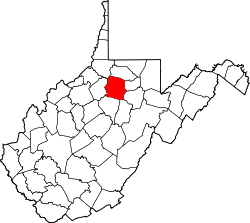
Bridgeport is a city in eastern Harrison County, West Virginia, United States. The population was 9,325 at the 2020 census.[3] It is part of the Clarksburg micropolitan area in North Central West Virginia.

Key Information

History

[edit]

Bridgeport had its beginning in pre-American Revolutionary War times. In 1764, John Simpson entered the area and gave his name to Simpson Creek. Bridgeport was chartered in 1816. Bridgeport was first settled between 1771 and 1774 with the establishment of Simpson Creek Baptist Church, one of the first churches west of the Allegheny Mountains, and surrounding log cabins.[6] The town is believed to have been named for a bridge across Simpson Creek, but it is unclear what bridge was the namesake. Future Virginia governor Joseph Johnson was said to have seen the bridge as a port and named the town as such.[6] Others claim that the town name was meant to be "Bridge Fort," for the two forts built by early settlers, but the name was changed to Bridgeport after a mapmaker mislabeled it.[7] Bridgeport was chartered in 1816 and incorporated in 1887.[6]

The Northwestern Turnpike from Winchester to Clarksburg opened its portion in Bridgeport in 1838; stagecoaches began operating on the line in 1852.[6] During the American Civil War, the town had split loyalties. The Confederate Jones–Imboden Raid of 1863 attacked much of the town's businesses and residents.[6] Establishing stockyards in the early century, the arrival of the Baltimore and Ohio Railroad in the 1850s led Bridgeport to be a center of trade for the cattle industry.[6] Manufacturers opened in the town in the early 1900s, including the West Virginia Pottery Company, Bridgeport Lamp Chimney Company, and later the Master Glass Company.[6]

In 1969, a painting of Jesus by Walter Sallman, called "Head of Christ", was hung on a wall outside the Bridgeport High School principal's office, and it stayed there for 37 years,[8] despite multiple requests to have it taken down over the years.[9] In 2006, Americans United for Separation of Church and State and the West Virginia American Civil Liberties Union sued the city in federal court, saying that hanging painting in a public school indicates that the school endorses Christianity as its official religion.[8][a] On August 17, 2006, a thief stole the painting from the wall.[11] On September 1, some students gave the principal a framed mirror to hang in place of the stolen painting.[12] The mirror was inscribed with "To know the will of God is the highest of all wisdom. The love of Jesus Christ lives within each of us."[12] Because the painting was no longer hanging in the school, the school board decided to drop its defense of the lawsuit, and the parties settled out of court.[12][13]

Geography

[edit]

Bridgeport is located at 39°17′48″N 80°15′5″W / 39.29667°N 80.25139°W / 39.29667; -80.25139 (39.296544, -80.251305),[14] along Simpson Creek.[15]

According to the United States Census Bureau, the city has a total area of 10.56 square miles (27.35 km2), of which 10.52 square miles (27.25 km2) is land and 0.04 square miles (0.10 km2) is water.[16]

Demographics

[edit]
Historical population
CensusPop.Note
1880395
189045515.2%
19004642.0%
191057724.4%
19201,346133.3%
19301,56716.4%
19401,5810.9%
19502,41452.7%
19604,19973.9%
19704,77713.8%
19806,60438.2%
19906,7392.0%
20007,3068.4%
20108,14911.5%
20209,33614.6%
2021 (est.)9,257[3]−0.8%
U.S. Decennial Census[17]

2020 census

[edit]

As of the 2020 census, Bridgeport had a population of 9,336. The median age was 43.6 years. 20.8% of residents were under the age of 18 and 22.4% of residents were 65 years of age or older. For every 100 females there were 93.5 males, and for every 100 females age 18 and over there were 89.8 males age 18 and over.[18][19]

95.2% of residents lived in urban areas, while 4.8% lived in rural areas.[20]

There were 3,992 households in Bridgeport, of which 27.7% had children under the age of 18 living in them. Of all households, 51.2% were married-couple households, 17.4% were households with a male householder and no spouse or partner present, and 26.7% were households with a female householder and no spouse or partner present. About 32.7% of all households were made up of individuals and 14.9% had someone living alone who was 65 years of age or older.[18]

There were 4,267 housing units, of which 6.4% were vacant. The homeowner vacancy rate was 1.5% and the rental vacancy rate was 10.4%.[18]

Racial composition as of the 2020 census[19]
Race Number Percent
White 8,393 89.9%
Black or African American 106 1.1%
American Indian and Alaska Native 12 0.1%
Asian 269 2.9%
Native Hawaiian and Other Pacific Islander 0 0.0%
Some other race 52 0.6%
Two or more races 504 5.4%
Hispanic or Latino (of any race) 255 2.7%

2010 census

[edit]

At the 2010 census there were 8,149 people, 3,458 households, and 2,383 families living in the city. The population density was 774.6 inhabitants per square mile (299.1/km2). There were 3,678 housing units at an average density of 349.6 per square mile (135.0/km2). The racial makeup of the city was 95.5% White, 1.1% African American, 0.2% Native American, 1.9% Asian, 0.2% from other races, and 1.1% from two or more races. Hispanic or Latino of any race were 1.7%.[21]

Of the 3,458 households 30.2% had children under the age of 18 living with them, 56.7% were married couples living together, 9.2% had a female householder with no husband present, 3.1% had a male householder with no wife present, and 31.1% were non-families. 28.2% of households were one person and 12.8% were one person aged 65 or older. The average household size was 2.34 and the average family size was 2.86.

The median age was 44.7 years. 21.9% of residents were under the age of 18; 5.1% were between the ages of 18 and 24; 23.5% were from 25 to 44; 30.8% were from 45 to 64; and 18.8% were 65 or older. The gender makeup of the city was 47.7% male and 52.3% female.

2000 census

[edit]

At the 2000 census there were 7,306 people, 2,988 households, and 2,103 families living in the city. The population density was 880.4 inhabitants per square mile (339.9/km2). There were 3,190 housing units at an average density of 384.4 per square mile (148.4/km2). The racial makeup of the city was 96.93% White, 1.25% African American, 0.05% Native American, 1.05% Asian, 0.19% from other races, and 0.52% from two or more races. Hispanic or Latino of any race were 1.29%.[4]

Of the 2,988 households 30.5% had children under the age of 18 living with them, 60.8% were married couples living together, 7.9% had a female householder with no husband present, and 29.6% were non-families. 26.9% of households were one person and 13.5% were one person aged 65 or older. The average household size was 2.41 and the average family size was 2.94.

The age distribution was 23.0% under the age of 18, 5.7% from 18 to 24, 25.0% from 25 to 44, 26.7% from 45 to 64, and 19.6% 65 or older. The median age was 43 years. For every 100 females, there were 87.2 males. For every 100 females age 18 and over, there were 83.1 males.

The median household income was $49,310 and the median family income was $58,825. Males had a median income of $46,590 versus $29,861 for females. The per capita income for the city was $25,132. About 3.7% of families and 5.0% of the population were below the poverty line, including 6.6% of those under age 18 and 3.6% of those age 65 or over.

Economy

[edit]

Bridgeport is home to Meadowbrook Mall, a super-regional shopping complex. The mall has a gross leasable area of 849,206 square feet (78,894 m2) and 109 stores.[22] In September 2022, battery startup SPARKZ announced it would convert a former glass plant in Bridgeport into a production facility for zero-cobalt lithium batteries.[23]

Culture

[edit]

Pete Dye Golf Club opened in 1993, rated the number one golf course in West Virginia and number 60 on America's 100 Greatest Golf Courses by Golf Digest.[24]

Simpson Creek Baptist Church is recognized as the oldest Baptist church in West Virginia by the West Virginia Baptist Convention and is also generally accepted as being the oldest Protestant church west of the Allegheny Mountains. The first formal records of the church are dated 1774.

There are two historic bridges in the city, the Simpson Creek Covered Bridge built in 1881, and the Bridgeport Lamp Chimney Company Bowstring Concrete Arch Bridge built in 1924.

The Governor Joseph Johnson House, also known as Oakdale, was the residence of Joseph Johnson, the 32nd Governor of Virginia. Johnson was the only governor of Virginia from the Trans-Allegheny region.

Education

[edit]

Bridgeport is served by the public Harrison County Schools district. Schools serving the city include Bridgeport High School, Bridgeport Middle School, Johnson Elementary School and Simpson Elementary School.[25]

Bridgeport is home to a library, the Bridgeport Public Library.

Transportation

[edit]

North Central West Virginia Airport is located in Bridgeport. Allegiant Air has scheduled service to Orlando–Sanford and Myrtle Beach. United Express offers flights to Chicago–O'Hare and Washington–Dulles.

Notable people

[edit]

Notes

[edit]

References

[edit]
[edit]
Revisions and contributorsEdit on WikipediaRead on Wikipedia
from Grokipedia
Bridgeport is a city in eastern Harrison County, West Virginia, United States, along the West Fork River in the North Central region of the state. As of the 2020 United States Census, its population was 9,336, reflecting steady growth from 7,306 residents in 2010. Originally settled in the 1750s as part of Virginia and known as Wilsonburg after early resident Benjamin Wilson, the community was renamed Bridgeport in 1816 for the bridge over the river; it incorporated as a town in 1887 and became a city in 1992. The city maintains a small-town atmosphere while providing robust , contributing to its status as one of West Virginia's faster-growing communities. Economically, Bridgeport benefits from diversification including healthcare at United Hospital Center, aviation via the , and proximity to facilities, alongside its role in supporting regional federal operations like the nearby FBI Criminal Justice Information Services Division in Clarksburg. Notable historical sites include the Governor Joseph Johnson House, associated with West Virginia's early statehood figure. The area features low crime rates and high median household incomes relative to state averages, underscoring its appeal as a family-oriented hub.

History

Early Settlement and Civil War Era

The area now known as Bridgeport was first settled by European pioneers between 1771 and 1774 along Simpson Creek, a named in 1764 by trapper John Simpson who established a temporary camp there. Homestead improvements began as early as 1771, with significant activity in 1772, including Aaron Smith's patent for 400 acres and construction of a cabin on Lower Simpson Creek in of that year. These early settlers faced severe hardships, including repeated Indian raids by tribes such as the and , which targeted isolated cabins and required construction of forts like the Harbert , attacked in 1778 resulting in several deaths. Simpson Creek Baptist Church, founded in 1770, served as an early community anchor and represents one of the oldest Baptist congregations in the region. The town's name derives from a constructed by settlers across Simpson Creek in the 1770s, facilitating travel along emerging routes; a permanent bridge followed in 1811. Land grants and farming along the creek supported initial , contributing to Harrison County's expansion from scattered settlements to a recorded population of 2,080 by the 1790 census. Prominent families, including the Johnsons who relocated to the area in 1801, established homes and influenced local development; Joseph Johnson, later Virginia's governor from 1852 to 1856, secured Bridgeport's chartering in 1816 on 15 acres of his land. The strategic location near the West Fork River aided trade and defense, though pioneer life remained marked by rudimentary log cabins, , and vulnerability to conflicts until the post-Revolutionary stabilization. During the Civil War era, Bridgeport's proximity to key transportation routes positioned it amid divided loyalties in predominantly Unionist Harrison County, which had minimal slavery with only 582 enslaved individuals in 1860. The county played a pivotal role in West Virginia's statehood movement, hosting the Clarksburg Convention in April 1861 that advocated separation from Confederate and eventual admission as a on June 20, 1863. Confederate forces targeted the area during the Jones-Imboden Raid in April 1863, leading to a skirmish on April 30 when Union Company E, 3rd West Virginia Infantry, engaged raiders, destroying businesses and supplies in retaliation for local support. This event underscored the town's vulnerability as a supply point, though Harrison County's overall allegiance bolstered Union control in northwestern .

Industrial Expansion and 20th Century Growth

Bridgeport's incorporation as a town on February 14, 1887, coincided with the maturation of West Virginia's rail network, which by 1883 had connected key coal-producing regions to eastern markets, spurring extraction and shipment of from Harrison County's fields. The Baltimore and Ohio Railroad's line through the area, operational since 1857 as part of the Northwestern Virginia Railroad, provided efficient access to timber and mineral resources, enabling local mills and initial manufacturing ventures while reducing dependency on overland wagons. This infrastructure directly catalyzed , as rail-facilitated trade drew laborers to process and transport coal, timber, and emerging outputs, with the town's residents increasing from approximately 464 in 1900 to 1,346 by 1920—a 190% rise tied to resource-driven employment. Early 20th-century manufacturing diversified Bridgeport's economy beyond raw extraction, leveraging abundant local clay, timber for fuel, and for kilns and processing. The Pottery Company, established in 1907, produced and employed dozens in firing operations powered by regional gas fields discovered in the Kanawha Valley and extending northward. Similarly, the Bridgeport Lamp Chimney Company and glassworks utilized rail-supplied silica and coal-derived coke, capitalizing on Harrison County's topographic advantages for water-powered machinery and low-cost energy inputs that predated extensive federal oversight of resources. These firms sustained growth by converting natural endowments into finished goods for national distribution, with timber harvests peaking statewide around 1910 to supply construction and fuel needs. The World Wars amplified industrial demands, drawing Bridgeport's workforce into coal and manufacturing surges. During , heightened coal needs for steel production and elevated output to record levels, indirectly bolstering local employment as Harrison County mines supplied over 10 million tons annually by the . further intensified this, with state coal employment reaching 43% of the workforce by 1945 amid Allied fuel requirements, enabling Bridgeport's factories to pivot toward war materials like components and for military use. Postwar, these pressures reinforced self-reliant resource utilization, though mechanization began eroding peak labor intensities by mid-century.

Post-2000 Economic and Urban Development

Bridgeport's population grew from 7,306 in 2000 to 9,325 in 2020, reflecting an influx tied to the Marcellus Shale extraction surge that accelerated in after 2008, drawing workers to Harrison County's proximity to sites amid a regulatory framework favoring rapid permitting and private leasing. This expansion contrasted with broader Appalachian narratives of stagnation, as deregulated access to shale reserves—enabled by state policies minimizing environmental and zoning hurdles—spurred ancillary infrastructure and service sector investments without heavy subsidization. Private-led initiatives anchored this trajectory, notably the Charles Pointe development, conceived in the early 2000s by Genesis Partners as a 1,700-acre mixed-use corridor along the I-79 corridor, integrating commercial offices, residential neighborhoods, and retail to leverage access for and energy-related firms. By 2025, the $1.5 billion project supported nearly 1,000 jobs through phased builds, including office parks and hotels, with expansions like a $11 million in July 2024 enhancing utility and roadway capacity for further private tenants. Complementing these were targeted municipal incentives, such as the Bridgeport Development Authority's and grant programs enacted post-2000 to incentivize job-creating ventures in high-growth areas, prioritizing repayments tied to employment thresholds over indefinite welfare models. Recreational amenities, including enhancements to the Golf Club established at the century's turn, further bolstered appeal for relocating professionals, evidencing market-driven vitality over fiscal dependency.

Geography and Environment

Location and Topography

Bridgeport occupies a position in eastern Harrison County, West Virginia, within the north-central region of the state. The city center is located approximately 5 miles northeast of Clarksburg, the county seat. Its geographic coordinates are 39°17′11″N 80°15′22″W. The terrain consists of rolling Appalachian foothills, characteristic of the region's unglaciated Allegheny Plateau, with elevations averaging around 1,020 feet above sea level. Simpson Creek, a tributary of the West Fork River, flows through the vicinity, shaping local hydrology and contributing to the area's varied topography of valleys and low ridges. This creek has periodically presented flood hazards, underscoring the influence of fluvial features on the landscape. Bridgeport's layout includes direct adjacency to Interstate 79, with exits such as 119 and 121 providing immediate highway access, facilitating integration with surrounding transportation networks. The total land area spans 8.30 square miles, predominantly featuring developed urban and suburban zones amid residual rural pockets.

Climate and Natural Features

Bridgeport experiences a characterized by hot, humid summers and cold winters, with average high temperatures reaching approximately 85°F in and average lows dropping to around 23°F in . Annual averages 46 inches, distributed relatively evenly throughout the year, with being the wettest month at about 4.5 inches, supporting agricultural activities that influenced early settlement patterns by enabling crop cultivation in fertile valleys. Winter snowfall averages 35 inches, contributing to seasonal water recharge for local streams but also increasing flood potential during thaws. The surrounding landscape features forests dominated by , , , and tulip poplar species, which foster high including diverse populations adapted to Appalachian wetlands and streams. Local creeks, tributaries of the system, provide habitats for aquatic species and enhance ecological connectivity, though their steep gradients promote erosion during heavy rains, historically leading to sediment loads that affect and downstream fisheries. These natural elements have supported timber and resources that bolstered economic activities like in the 19th and early 20th centuries, with aiding in and per regional ecological studies. Flood risks remain significant, with approximately 17.8% of properties vulnerable to inundation over the next 30 years due to intense precipitation events, exacerbating in forested and riparian zones. Resource extraction, particularly underground in Harrison County producing over 7 million short tons annually, has generated economic growth enabling infrastructure but resulted in measurable trade-offs such as localized stream sedimentation and , though data indicate these impacts are mitigated through regulatory reclamation efforts yielding net forest regrowth in disturbed areas. Empirical assessments prioritize these causal realities over exaggerated narratives, noting that extraction has sustained population stability amid broader Appalachian decline by funding diversification into .

Demographics

The population of Bridgeport grew from 7,306 residents recorded in the 2000 United States Census to 8,118 in 2010 and 9,336 in 2020. This steady expansion equated to an average annual growth rate of approximately 1.3% between 2000 and 2010 and 1.4% between 2010 and 2020. Post-2020 estimates show moderation in this trend, with the population reaching 9,292 by 2023 according to American Community Survey data, corresponding to a 0.4% annual increase from the 2020 census base. Recent Census Bureau projections place the 2024 figure at 9,397, indicating continued but tempered positive change amid broader West Virginia demographic challenges. Net in-migration has been the primary driver of Bridgeport's growth, outpacing natural increase (births minus deaths) in a state context marked by negative domestic migration flows. The city's position as a suburban hub adjacent to Clarksburg has attracted inflows from nearby areas, including commuters and retirees drawn to its residential amenities and proximity to regional employment centers. Harrison County's overall net county-to-county migration remained negative in recent ACS estimates (e.g., -1,250 for the 2016-2020 period), underscoring Bridgeport's relative pull through internal state relocations. Bridgeport exhibited demographic resilience following the 2008 financial recession, sustaining population gains while experienced stagnation and net losses statewide. Municipal planning efforts, including zoning for residential development outlined in the 2019 Comprehensive Plan, supported this stability by enhancing the city's appeal for inflow without reliance on volatile external factors.

Socioeconomic Characteristics

Bridgeport displays robust socioeconomic metrics, with a of $99,936 based on the 2019-2023 (ACS), substantially exceeding West Virginia's statewide of approximately $60,410 for 2023. reached $60,644, underscoring individual earning capacity well above regional norms. The rate stood at 3.78% in 2023, far below the state's 16.7%, indicative of broad-based prosperity and minimal reliance on public assistance programs. Educational attainment reinforces this affluence, with 96.8% of residents aged 25 and older holding a or higher in 2019-2023, and approximately 40% possessing a or above. These levels surpass state averages, where high school completion hovers around 88% and attainment near 24%, fostering skilled labor participation and intergenerational mobility. The racial composition, dominated by 91.4% alone per 2019-2023 data, aligns with homogeneous communities often exhibiting cohesive social structures. Stable family units contribute causally to these outcomes, with 54.8% of adults aged 15 and over married and 62.4% of households classified as family-based, patterns linked empirically to reduced and higher incomes via dual-earner households and resource pooling. Such dynamics challenge narratives of pervasive decline in Appalachian locales, as Bridgeport's low welfare dependency—evident in its sub-4% —stems from intact families rather than external aid, promoting amid broader regional challenges.

Government and Politics

Municipal Structure and Elections

Bridgeport operates under a manager-mayor form of government, established by its city charter adopting Plan V ("Manager-Mayor Plan") from West Virginia Code Article 3, Chapter 8, Section 2. This structure features an elected governing body comprising a mayor, a recorder, and five council members, who set policy, approve budgets, and oversee core municipal services including police and fire protection. The appointed city manager serves as the chief administrative officer, responsible for day-to-day operations, implementing council directives, and managing executive functions under the mayor's general supervision. Municipal elections are nonpartisan and governed by state law integrated with permanent , with procedures outlined in the city and West Virginia Code Chapter 3. Elections occur on dates set by , such as June 10 for the 2025 cycle, to fill positions including the and staggered council seats. The and council members serve four-year terms, with elections staggered—typically electing the and three council members in one cycle, followed by two council members in the next—to maintain continuity. The recorder's term aligns with council cycles, also four years in practice. The city council, as the legislative authority, conducts regular meetings on the second and fourth Mondays of each month to deliberate ordinances, budgets, and service allocations. Budget oversight involves annual approval of expenditures for , funded partly through levies capped by state at $0.125 per $100 of assessed value for Class I (the lowest rate class). As a municipality under West Virginia's pilot program, Bridgeport benefits from enhanced local autonomy, enabling tailored governance decisions independent of broader state mandates where authorized.

Recent Administrative Controversies

In April 2025, the Bridgeport City Council voted 5-1 to terminate Pat Ford less than six months after his appointment, citing an internal investigation he had initiated into operations, unapproved expenditures, and potential issues as key factors in the decision. The probe, pursued by Ford himself, reportedly uncovered irregularities in contract approvals and spending authorizations, prompting council members to act amid concerns over managerial overreach and procedural lapses. Ford contested the termination as wrongful, filing a civil against the on May 2, 2025, alleging improper dismissal without cause and seeking reinstatement or damages; officials maintained the action was justified under provisions. In September 2025, the council rejected Ford's settlement demands, escalating the dispute into ongoing litigation. Parallel controversies arose in 2025 over the extension of tax increment financing (TIF) districts tied to the Charles Pointe development, sparking multiple lawsuits that highlighted tensions between development incentives and municipal fiscal responsibilities. Genesis Partners, the project's developers, initiated federal litigation against the City of Bridgeport and former Mayor Andy Lang in September 2025, challenging state amendments to TIF laws that eliminated prior consent requirements for pre-2020 agreements and seeking to validate a 15-year extension projected to divert significant property tax revenues from the city. Bridgeport countered by filing suit in Kanawha County Circuit Court against the West Virginia Department of Economic Development, arguing the legislative change was unconstitutional on its face and would impose undue financial burdens by reducing local tax bases without voter or municipal approval. Harrison County intervened in deliberations, with commissioners debating support for the extension amid concerns over regional economic spillover versus Bridgeport's projected revenue shortfalls exceeding millions in captured taxes; developers defended the TIF as essential for project viability and job creation, while city officials critiqued it as fiscally unsustainable favoritism skewing incentives toward private gains. As of October 13, 2025, the council discussed settlement options but took no action, leaving the cases unresolved in state and federal courts. A federal lawsuit filed on June 30, 2025, by former city engineer Christina Fox against the City of Bridgeport, ex-City Manager Pat Ford, Police Chief John Walker, and other officials alleged sex-based discrimination, harassment, FMLA retaliation, and defamation stemming from her supervised role and approved medical leave in 2024. Fox claimed supervisors, including Ford, created a hostile work environment through derogatory comments and retaliatory actions post-leave, culminating in her resignation; the complaint sought damages for emotional distress and lost wages. City defendants, in responses filed October 15-16, 2025, denied all allegations, asserting performance-based decisions and no evidence of bias, while portraying the suit as an attempt to leverage internal disputes amid Ford's own ouster. The case, pending in the U.S. District Court for the Northern District of West Virginia, intersects with broader probes into city management, including a separate internal investigation approved by council in August 2025 to examine related personnel matters.

Economy

Key Sectors and Employment

The economy of Bridgeport centers on the sector, particularly extraction and related activities, alongside healthcare and retail trade. In 2023, total employment in the city reached approximately 4,800 workers, reflecting a 3.6% growth from levels. Harrison County's labor force, encompassing Bridgeport, employed around 29,000 individuals in the same year, with natural resources and mining contributing disproportionately to payroll despite comprising only about 2% of total jobs, due to high-wage positions in oil and gas operations. Job listings in extraction remain abundant, with over 30 openings reported in Bridgeport as of late 2024, underscoring the sector's ongoing demand. A notable feature of Bridgeport's is the relatively high proportion of female participation in , quarrying, and and gas extraction, ranking the city among the top 101 U.S. locales for this metric based on census-derived occupational . West Virginia's broader transition from coal dominance to , facilitated by Marcellus Shale since the early , has sustained regional employment amid coal's decline; the state now ranks fifth nationally in gas production, generating severance tax revenues that exceeded coal's in for the first time. This shift correlates with stable job numbers in extraction, as output rose while coal employment fell from over 234,000 nationwide in 1979 to 38,000 by recent years, with mirroring the trend but offsetting losses through gas-related gains. Healthcare services employ a significant share of workers, with and health sectors accounting for 15% of Harrison County employment, led by United Hospital Center in Bridgeport as a major local anchor. Retail trade adds to workforce diversity, comprising about 12% of Bridgeport's industry breakdown, supported by outlets like . Public administration rounds out key areas at roughly 16%. Unemployment in Bridgeport and hovers at 3-4%, with city-specific rates as low as 1.8% in recent assessments and county figures at 3.2% in November 2023, indicating a tight labor market. These and service jobs have empirically reduced risks in the region by providing high-output employment, as gas sector expansions demonstrably outpaced coal's contraction in sustaining livelihoods, notwithstanding critiques from environmentally focused sources that often undervalue fossil fuels' causal contributions relative to intermittent renewables' limited job equivalents to date.

Major Developments and Incentives

One of the flagship developments in Bridgeport is Charles Pointe, a 1,700-acre master-planned community initiated in the early 2000s by Genesis Partners to foster mixed-use growth through public-private partnerships. The project encompasses residential, retail, office, industrial, and recreational spaces, with ongoing phases driving substantial private investment; for instance, millions were invested in 2022, followed by further commitments in 2023. In July 2024, an $11 million infrastructure expansion broke ground, anticipated to catalyze up to $500 million in additional development across the site. Within Charles Pointe, the Market Place complex continues to expand, featuring over 230,000 square feet of office, retail, and residential space across six buildings. Construction on the latest building accelerated in 2025, targeting an early 2026 opening to accommodate new tenants amid sustained demand. This phase builds on prior successes, including the addition of businesses like First Guaranty Bank and Casa D'Amici in 2024, enhancing the area's commercial vitality. The Bridge Sports Complex, spanning 126 acres, underwent a significant upgrade in 2025 with a $7.5 million multipurpose turf facility, including 219,000 square feet of adaptable fields for various sports. Groundbreaking occurred in August 2025, supported by $1.8 million in state matching funds allocated in January 2025 to construct multiple turf fields, positioning the complex as a regional hub for youth and amateur athletics. Bridgeport employs (TIF) as a key tool to fund in developments like Charles Pointe, capturing the incremental revenue from new improvements to repay bonds or loans without raising overall tax rates. This mechanism has demonstrated through tax base expansion, as heightened development activity generates sustained revenue growth exceeding initial public outlays; for example, TIF districts in enable reinvestment that has historically amplified local economic output by leveraging private capital inflows.

Achievements and Critiques

In 2023, Bridgeport surpassed $100 million in investments, exceeding the prior record of over $93 million set in 2019 and reflecting sustained momentum in industrial, commercial, retail, and residential projects. City officials have cited this as evidence of effective pro-business strategies, including targeted incentives like authority loans and economic grants, which have facilitated business expansions and positioned Bridgeport as a regional leader in job creation and revitalization efforts. Critics, often from policy organizations emphasizing fiscal conservatism, argue that heavy reliance on such incentives risks distorting market signals and crowding out unsubsidized private investment, potentially leading to unsustainable growth dependent on public funds. State-level data supports this view, showing West Virginia's job growth lagging national averages—1.1% from February 2020 to July 2025—despite hundreds of millions spent on tax abatements and credits, with calls for audits to assess return on investment. In Bridgeport's case, while development metrics indicate positive short-term outcomes, ongoing fiscal monitoring is essential to verify long-term viability amid broader West Virginia trends of modest employment gains.

Education

K-12 System

The K-12 education system in Bridgeport operates under the Harrison County Schools district, encompassing Johnson Elementary School (K-5), Bridgeport Middle School (grades 6-8), and Bridgeport High School (grades 9-12). These schools serve approximately 2,000 students collectively, with Bridgeport High School enrolling 814 students and maintaining a student-teacher ratio of 17:1, Bridgeport Middle School serving 581-603 students at a ratio of about 12:1, and elementary enrollment contributing to the district's localized focus on core academic preparation. Performance metrics indicate strengths relative to state benchmarks, including a high school graduation rate of 95-99% at Bridgeport High School, exceeding the average of 92%. Proficiency rates surpass state averages in key areas, such as 37% in and 72% in reading at the high school level, compared to statewide high school figures of approximately 21% in math; district-wide, Harrison County reading proficiency stands at 44% versus lower state norms in recent assessments. Advanced Placement participation reaches 49% at Bridgeport High, supporting preparation for postsecondary pathways aligned with the region's energy and sectors through vocational emphases in STEM-related coursework. Challenges have emerged in 2025, with Harrison County Board of Education members expressing concerns over increasing class sizes at Bridgeport High School, potentially diminishing instructional quality amid enrollment pressures and ongoing district consolidations. These issues, discussed in July 2025 board sessions, stem from broader efforts to manage resources, though empirical data shows sustained above-average outcomes despite such strains.

Higher Education Access

Bridgeport provides residents with direct access to postsecondary education through the (WVJC) campus located in the city, offering associate degrees in , clinical medical assisting, and medical , as well as diplomas in practical and related vocational fields tailored to healthcare and technical workforce needs. These programs emphasize practical skills development, enabling local adults to pursue career advancement without extensive . Proximity to regional institutions further enhances access, with Fairmont State University situated 17 miles away in Fairmont—a 23-minute drive—offering over 40 bachelor's and programs, including specialized tracks in aviation, engineering technology, and energy-related fields that align with North Central West Virginia's industrial base. Adjacent to Fairmont State, Pierpont Community & Technical College delivers affordable certificates and s in technical trades, health sciences, and business, supporting commuter enrollment for short-term workforce training. West Virginia University Extension maintains a Harrison County office, providing non-degree , workshops, and certification programs in areas such as , community leadership, and , which cater to adult learners and facilitate upskilling in and sectors without full-time campus relocation. This network of local and nearby options correlates with Harrison County's relatively high , where 85.4% of residents held at least a or equivalent as of 2006—above state and national averages—suggesting effective barriers to out-migration for higher education pursuits.

Infrastructure and Transportation

Road Networks and Connectivity

Bridgeport's road network centers on its position along (I-79), a primary north-south artery spanning from , to , passing through the city via Exit 119. This exit intersects , enabling seamless east-west linkages across north-central West Virginia. The configuration supports rapid regional access, with approximate driving times of two hours to , Pennsylvania, and similar durations southward toward Charleston. Local roadways, including segments of West Virginia Route 20 and West Virginia Route 279, complement interstate connectivity by linking residential, commercial, and industrial zones within and around Bridgeport. Maintenance of these state and municipal roads falls under the Division of Highways, funded through state allocations from fuel taxes, vehicle registrations, and federal aid, with local enhancements possible via impact fees from development projects. Traffic engineering emphasizes capacity for commercial hauling, given the area's economic hubs, though specific volumes for Bridgeport corridors are tracked via West Virginia Department of Transportation counts. The network's design prioritizes efficiency, minimizing bottlenecks through direct interstate ramps and auxiliary routes that distribute local flow away from high-volume I-79 segments. This setup contributes to relatively fluid movement, supporting commutes and logistics without the congestion typical of more urbanized interstate junctions.

Public Facilities and Utilities

The City of Bridgeport operates its own municipal water works and sewer system, providing essential services to residents and businesses through a combined sewer infrastructure that handles both sanitary sewage and stormwater. The system encompasses approximately 116 miles of water mains and 102 miles of sewer lines, serving over 5,100 customers as of 2023. Recent upgrades to the wastewater treatment facility have expanded capacity to 3.0 million gallons per day, including enhanced lift station capabilities, mainline replacements, and improvements to reduce effluent foam and manage sludge handling, supporting population growth and industrial demands. To fund ongoing maintenance and expansions, water rates increased by 22% in the first year, followed by 6%, 5%, and 5% annually over the subsequent three years, as approved by city council in 2023. Electricity for Bridgeport is provided by Appalachian Power Company, a major utility serving Harrison County and much of northern West Virginia, ensuring reliable grid access amid regional demands from commercial and residential users. The utility has undergone state-mandated independent audits ordered by the West Virginia Public Service Commission in 2025 to evaluate service reliability and compliance, reflecting broader regulatory oversight on infrastructure performance. Public facilities such as the Bridgeport Conference Center and The Bridge Sports Complex depend on these utility systems for operations, with investments enhancing service reliability to accommodate economic activities. The conference center, featuring over 16,000 square feet of meeting and ballroom space, integrates with municipal water and power for events supporting local commerce. Similarly, The Bridge Sports Complex, a 160,000-square-foot indoor venue with pools, courts, and fitness areas, received $1.8 million in state funding in January 2025 for turf field expansions, bolstering utility demands from increased visitation while city contributions have totaled millions since its 2021 opening. These developments have yielded consistent service uptime, though West Virginia's utility sector faces delays from regulatory processes, such as Public Service Commission approvals and federal infrastructure mandates, which have historically extended project timelines by seasons in related grid and broadband attachments.

Culture and Recreation

Community Events and Sports

The Bridge Sports Complex serves as the primary venue for organized sports and recreational activities in Bridgeport, hosting youth and adult leagues, tournaments, camps, and special events year-round. Opened as West Virginia's premier sports destination, it features indoor and outdoor facilities supporting programs from early childhood development to competitive athletics, including pickleball tournaments, softball leagues such as the Zombie Night Crawl in January, and the Mountain State Storm youth football club for ages 9-17. Additional offerings include the Bridge to Victory challenge series, comprising a triathlon, night crawl, and trail race, alongside combat sports events like Brawl at the Bridge mixed martial arts competitions. Bridgeport High School (BHS) athletics, under the Indians mascot, emphasize competitive participation across multiple sports, including football, , , soccer, , , , , and wrestling. The program, led by Tom Sears since July 2023, has achieved recognition such as nine All-Harrison County selections in 2025, with six earning first-team honors. These activities foster local engagement, with varsity schedules drawing community support through regular seasons and playoffs. Community events centered on participation include the Bridgeport FFA Chapter's annual FFAll Fest, hosted by BHS students in , featuring family-oriented activities such as pie-eating contests, pumpkin , sack races, a , craft vendors, and food trucks to promote and . The chapter also organizes the Bridgeport Cattle Battle in , a bull-riding fundraiser with food trucks and vendor booths supporting FFA initiatives like state forestry contests and national conventions. Consignment sales contribute to community involvement through events like the Little Lambs Closet at Heritage Christian School, a biannual pop-up resale of children's clothing, toys, and gear organized by over 200 consignors, held in September and March to facilitate affordable family exchanges. Similarly, the Mom2Mom sale in February provides used children's items, enhancing local resource sharing. These gatherings, promoted by the Bridgeport Convention and Visitors Bureau, support social ties by enabling direct participation and economic circulation within the 8,800-resident community.

Local Attractions

The Pete Dye Golf Club, a private 18-hole course designed by architect Pete Dye, stands as a premier attraction on dramatically contoured terrain in Bridgeport, drawing regional golfers through its superior layout and private operation without public funding. Dye himself praised the site's potential, stating it allows for an unmatched golf experience. Similarly, the Bridgeport Country Club offers a challenging par-72 course alongside amenities like tennis courts, emphasizing privately managed recreation that bolsters local economic activity via memberships and events. Bridgeport's parks and trails capitalize on the region's hilly and creek systems, providing low-maintenance options along the West Fork River and tributaries. Notable paths include the West Fork River Trail for riverside walks and the White Oak Loop Trail through wooded areas, accessible via city-maintained green spaces that promote outdoor exploration. These facilities, supported by municipal efforts rather than extensive subsidies, attract visitors whose extends to nearby commerce, generating indirect tourism revenue.

Notable Residents

Joseph Johnson (December 19, 1785 – February 27, 1877), a farmer, businessman, and politician, established the town of Bridgeport in 1815 on 15 acres of his land and resided there from around 1801; he served as the 32nd from January 16, 1852, to January 1, 1856, and was the only governor from west of the . His nephew, Waldo P. Johnson (September 16, 1817 – August 14, 1885), was born in Bridgeport and later became a U.S. Senator from (1861) and a Confederate soldier. Michael Late Benedum (July 16, 1869 – June 30, 1959), a prominent businessman and philanthropist in the oil and gas industry, was born in Bridgeport. Mike Florio (born June 8, 1965), founder of .com and an analyst covering the , has lived in Bridgeport for more than 30 years. Sam Cann (born January 26, 1954), a Democratic politician who served in the (District 12, 2009–2012) and House of Delegates, resides in Bridgeport.

References

Add your contribution
Related Hubs
User Avatar
No comments yet.