Hubbry Logo
Brook BentonBrook BentonMain
Open search
Brook Benton
Community hub
Brook Benton
logo
8 pages, 0 posts
0 subscribers
Be the first to start a discussion here.
Brook Benton
Brook Benton
from Wikipedia

Key Information

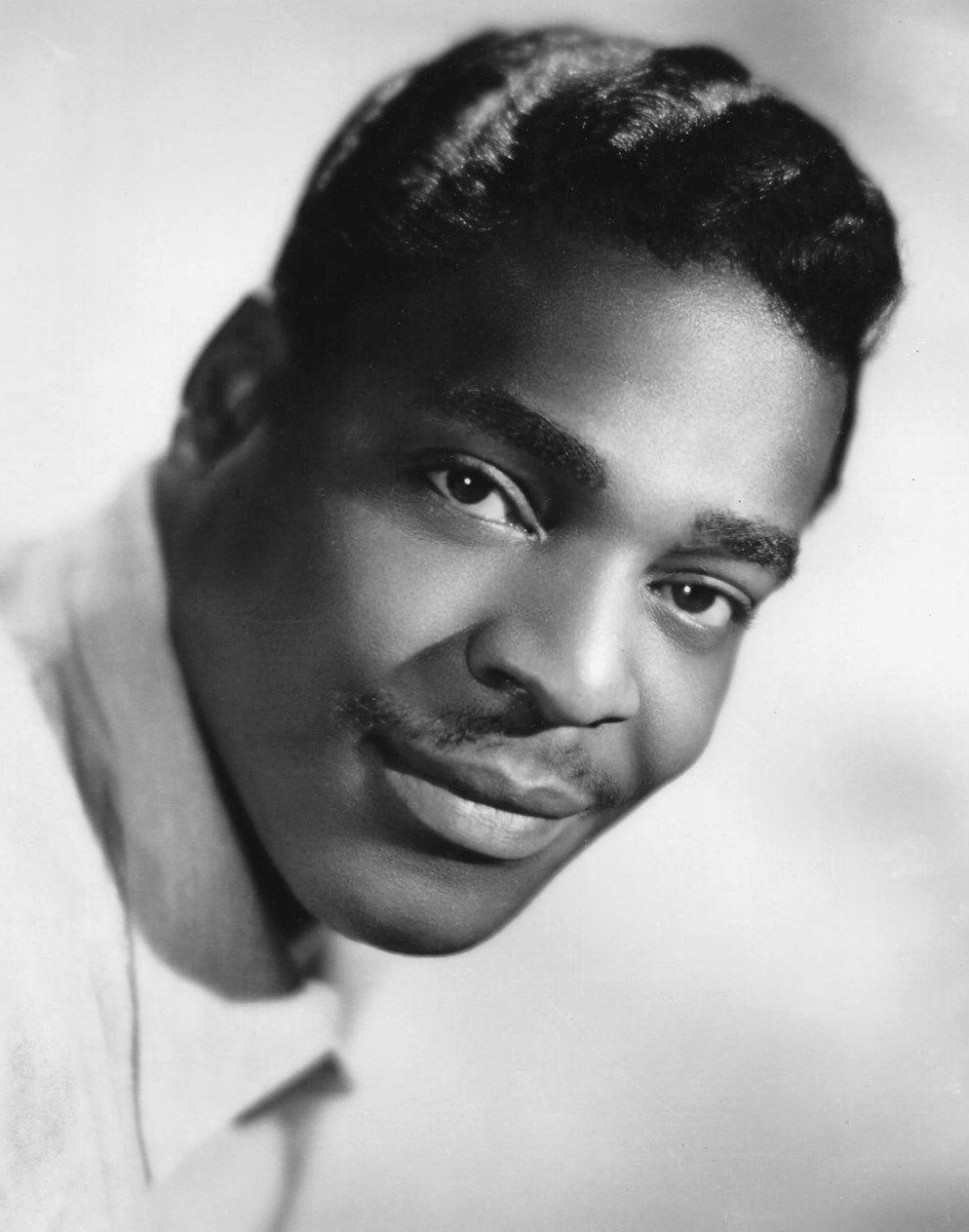
Benjamin Franklin Peay (September 19, 1931 – April 9, 1988), known professionally as Brook Benton, was an American singer and songwriter whose music transcended rock and roll, rhythm and blues, and pop music genres in the 1950s and 1960s, with hits such as "It's Just a Matter of Time" and "Endlessly".

His last hit was the 1970 ballad "Rainy Night in Georgia". Benton scored more than 50 Billboard chart hits as a singer/songwriter and with hits he wrote for other performers.[1]

Early life and career

[edit]

Benton began singing gospel music in a Methodist church choir in Lugoff, South Carolina, where his father was choir master.[2]

In 1948, Benton went to New York where he joined The Langfordaires and The Jerusalem Stars before joining The Sandmen. Epic Records signed The Sandmen in 1954, immediately sending the group to record at the Columbia studios in New York. Columbia placed The Sandmen on its Okeh Records. Upon a second recording session, Okeh decided to push Benton as a solo artist. Benton recorded his first solo, "The Kentuckian Song", the theme from a movie of the same name.[3]

Benton switched to RCA's Vik subsidiary in 1957, where he had a single chart appearance, 1958's "A Million Miles From Nowhere", which peaked at No. 82 on U.S. charts. He wrote two songs that charted for other performers, Clyde McPhatter's "A Lover's Question" and Nat King Cole's "Looking Back".[3]

In 1958, Benton signed with Mercury Records, where he recorded hits "It's Just A Matter Of Time", "Endlessly", "Thank You Pretty Baby", "So Many Ways", "Baby (You've Got What It Takes)", "A Rockin' Good Way" (both duets with Dinah Washington), "Kiddio", "The Boll Weevil Song", and "Hotel Happiness".[3]

One of Benton's sisters was the original artist to record "Baby (You've Got What It Takes)", in 1958, under the title "You've Got What It Takes", using the stage name Dorothy Pay,[4] as the B-side of her single "Strollin' with My Baby".[5][6] In August 1959 Benton partnered with Dinah Washington to record the song and their version, released in January 1960, was hugely successful on both the pop and R&B charts, reaching No. 5 on the Billboard Hot 100 and No. 1 on the Hot R&B sides chart for 10 weeks,[7] becoming one of the most successful R&B singles of the 1960s.

Success

[edit]

In 1959, he finally made his breakthrough with hits like "It's Just a Matter of Time" and "Endlessly". "It's Just a Matter of Time" peaked at No. 3 on the United States Billboard Hot 100 chart, sold over one million copies and was awarded a gold disc by the RIAA.[8] "Endlessly" made it to No. 12. Both of the first two hits were written by Benton with Clyde Otis. They were originally offered to Nat King Cole, but when Otis became an A&R manager and producer at Mercury, he convinced Benton to sign with the label and record them himself, while asking Cole not to record the songs as planned.[9] Benton followed this success with a series of hits, including "So Many Ways" (No. 6), "Hotel Happiness" (No. 3), "Think Twice" (No. 11), "Kiddio" (No. 7), and "The Boll Weevil Song" (No. 2). In 1960, he had two top 10 hit duets with Dinah Washington: "Baby (You've Got What It Takes)" (No. 5) and "A Rockin' Good Way (to Mess Around and Fall in Love)" (No. 7).[10]

In the mid 1960s, Benton recorded for RCA Records and Reprise Records with minimal commercial success. Then, in 1968, he signed with Cotillion Records, a subsidiary of Atlantic Records, where, the following year, he enjoyed his last major hit with "Rainy Night in Georgia", written by Tony Joe White and produced and arranged by Arif Mardin, a million-seller which topped the Billboard R&B chart.[10] Cornell Dupree played guitar on the song.[11] Benton recorded a total of five albums with Mardin, including a gospel album, during his stay at Cotillion.[citation needed]

Benton eventually charted a total of 49 singles on the Billboard Hot 100, with other songs charting on Billboard's rhythm and blues, easy listening, and Christmas music charts.[12] The last album made by Benton was Fools Rush In, which was released posthumously in 2005. He also had records released on various other labels, including All-Platinum, Brut, Olde Worlde, Stax and Groove Records.[13]

Death

[edit]

Weakened from spinal meningitis, Benton died of pneumonia in Queens, New York City, at the age of 56 on April 9, 1988.[14] He was survived by his wife, Mary Benton, and six children: Brook Jr., Vanessa, Roy, Is'real, Gerald, and Benjamin.[2]

Discography

[edit]
Benton in 1970

Albums

[edit]
Year Album Peak chart positions
US 200
[15]
US R&B
[15]
1959 It's Just a Matter of Time
Endlessly
1960 I Love You in So Many Ways
The Two of Us (with Dinah Washington)
Songs I Love to Sing
1961 Golden Hits 82
The Boll Weevil Song and 11 Other Great Hits 70
1962 If You Believe 77
Singing the Blues – Lie to Me 40
1963 Golden Hits, Volume 2 82
Best Ballads of Broadway
1964 Born to Sing the Blues
Laura (What's He Got That I Ain't Got) 156
1969 Do Your Own Thing 189
1970 Brook Benton Today 27 4
Brook Benton I Wanna Be With You
Homestyle 199
1971 The Gospel Truth
1972 Story Teller
1973 Something for Everyone
1976 This is Brook Benton
(released in the UK as "Mister Bartender")
1977 Makin' Love Is Good for You
The Incomparable Brook Benton – 20 Greatest Hits (Warwick)
1979 Ain't No Good
So Close
1981 Brook Benton Sings the Standards
1983 20 Golden Pieces of Brook Benton
Beautiful memories of Christmas
1984 Soft
1989 Forty Greatest Hits (compilation)
2002 Rainy Night in Georgia (compilation, remastered)
2021 Just A Matter of Time (compilation)
"—" denotes releases that did not chart or were not released in that territory.

Singles

[edit]
Year Title Peak chart positions Album
US Pop
[15]
CB Pop
US R&B
[15]
US AC
[15]
Canada
[16][17]
UK
[18]
1955 "The Kentuckian Song"
b/w "Ooh" (Non-album track)
Brook Benton at His Best!!!
"Some of My Best Friends"
b/w "Bring Me Love"
1956 "Love Made Me Your Fool"
b/w "Give Me a Sign"
1957 "The Wall"
b/w "All My Love Belongs to You" (from The Soul of Brook Benton)
"Come On, Be Nice"
b/w "I Wanna Do Everything for You" (from Brook Benton)
Non-album track
1958 "A Million Miles from Nowhere"
b/w "Devoted"
82 Brook Benton
1959 "It's Just a Matter of Time" 3 2 1 6 It's Just a Matter of Time
"Hurtin' Inside" 78 23 Golden Hits
"Endlessly" 12 11 3 11 28 Endlessly
"So Close" 38 60 5 I Love You In So Many Ways
"Thank You Pretty Baby" 16 10 1 19 Golden Hits
"With All of My Heart" 82 66
"So Many Ways" 6 3 1 18 I Love You In So Many Ways
"I Want You Forever" 103 Non-album track
"This Time of the Year"
b/w "Nothing In The World (Could Make Me Love You More Than I Do)" (first pressings)
"How Many Times" (later pressings)
66 65 12 Non-album tracks
1960 "Baby (You've Got What It Takes)"
b/w "I Do"
(Both sides with Dinah Washington)
5 2 1 14 The Two of Us
"The Ties That Bind" 37 23 15 31 Golden Hits
"Hither and Thither and Yon" 58 49
"A Rockin' Good Way (To Mess Around and Fall In Love)"
b/w "I Believe"
(Both sides with Dinah Washington)
7 5 1 17 The Two of Us
"Kiddio" 7 3 1 16 41 Golden Hits
"The Same One" 16 16 21 16
"Fools Rush In (Where Angels Fear to Tread)" 24 15 5 18 50 Songs I Love to Sing
"Someday You'll Want Me to Want You" 93 Non-album track
"This Time of the Year"
b/w "Merry Christmas, Happy New Year"
Non-album tracks
1961 "Think Twice" 11 6 18 Golden Hits Volume 2
"For My Baby" 28 24 2 18 Non-album track
"The Boll Weevil Song" 2 2 2 1 12 30 The Boll Weevil Song
"Your Eyes" 115 Non-album track
"Frankie and Johnny" 20 16 14 6 13 The Boll Weevil Song
"It's Just a House Without You" 45 71 8 13 Golden Hits Volume 2
"Revenge"
b/w "Really, Really" (Non-album track)
15 16 12
1962 "Shadrack" 19 29 4 If You Believe
"The Lost Penny" 77 94 4
"Walk on the Wild Side"
b/w "Somewhere in the Used to Be" (Non-album track)
43 42 33 Golden Hits Volume 2
"Hit Record" 45 36 19 34
"Thanks to the Fool" 106 86 Non-album track
"Lie to Me" 13 10 3 36 Singing the Blues
"With the Touch of Your Hand" 120 126 Non-album track
"Still Waters Run Deep" 89 81 Golden Hits Volume 2
1963 "Hotel Happiness" 3 6 2
"I Got What I Wanted" 28 22 4 14 39 Singing the Blues
"Dearer Than Life" 59 72 Non-album track
"My True Confession" 22 29 7 8 Singing The Blues
"Tender Years" 87
"Two Tickets to Paradise"
b/w "Don't Hate Me"
32 30 15 8 Non-album tracks
"Baby, You've Got It Made" (w/ Damita Jo) 111 133
"Stop Foolin'" (w/ Damita Jo) 108 87
"You're All I Want for Christmas"
b/w "This Time of the Year"
59
1964 "Going Going Gone"
b/w "After Midnight"(from Born to Sing the Blues)
35 30 5 11 On the Countryside
"Another Cup of Coffee" 47 40 4 13 Non-album track
"Too Late to Turn Back Now" 43 38 8 14 This Bitter Earth
"A House Is Not a Home"
b/w "Come On Back"
75 50 6 13 Non-album tracks
"Lumberjack"
b/w "Don't Do What I Did (Do What I Say)"
53 47 11 15 This Bitter Earth
"Do It Right" 67 58 33
"Please, Please Make It Easy" 119
1965 "The Special Years"
b/w "Where There's a Will (There's a Way")
129 109 Non-album tracks
"Love Me Now"
b/w "A Sleepin' at the Foot of the Bed"
100 97 37
"Mother Nature, Father Time"
b/w "While There's Life (There's Still Hope)"
53 43 26 9 27 Mother Nature, Father Time
1966 "Only a Girl Like You"
b/w "While There's Life (There's Still Hope)"
122 102 Non-album tracks
"Too Much Good Lovin'"
b/w "A Sailor Boy's Love Song"
126
"Break Her Heart"
b/w "In the Evening by Moonlight"
37
"If Only You Knew"
b/w "So True in Life, So True in Love"
"Our First Christmas Together"
b/w "Silent Night"
1967 "All My Love Belongs to You"
b/w "Wake Up"
"Keep the Faith, Baby"
b/w "Going to Soulsville"
"Laura (What's He Got That I Ain't Got)"
b/w "You're the Reason I'm Living"
78 88 37 Laura, What's He Got That I Ain't Got
1968 "Weakness in a Man"
b/w "The Glory of Love" (from Laura, What's He Got That I Ain't Got)
36 Non-album tracks
"Lonely Street"
b/w "Instead (of Loving You)"
"Do Your Own Thing"
b/w "I Just Don't Know What to Do with Myself"
99 128 26
1969 "Touch 'Em with Love"
b/w "She Knows What to Do for Me"
"Nothing Can Take the Place of You"
b/w "Woman Without Love"
74 67 11 68
1970 "Rainy Night in Georgia"
b/w "Where Do I Go from Here"
4 2 1 2 2 Brook Benton Today
"My Way"
b/w "A Little Bit of Soap"
72 48 25 35 49
"Don't It Make You Want to Go Home"
b/w "I've Gotta Be Me" (from Brook Benton Today)
45 48 31 4 41 Home Style
1971 "Shoes"
b/w "Let Me Fix It" (from Home Style)
67 52 18 18 83 Story Teller
"Heaven Help Us All"
b/w "Whoever Finds This (I Love You)" (from Home Style)
120 The Gospel Truth
"Take a Look at Your Hands"
b/w "If You Think God Is Dead"
"Please Send Me Someone to Love"
b/w "She Even Woke Me Up to Say Goodbye"
Story Teller
"A Black Child Can't Smile"
b/w "If You Think God Is Dead" (from The Gospel Truth)
Non-album tracks
"Soul Santa"
b/w "Let Us All Get Together with the Lord" (from The Gospel Truth)
1972 "Movin' Day"
b/w "Poor Make Believer"
Story Teller
"If You Got the Time"
b/w "You Take Me Home Honey"
104 Something for Everyone
1973 "Lay Lady Lay"
b/w "A Touch of Class"
107 Non-album tracks
1974 "South Carolina"
b/w "All That Love Went to Waste"
1976 "Can't Take My Eyes Off You"
b/w "Weekend with Feathers"
This Is Brook Benton
1978 "Making Love Is Good for You"
b/w "Better Times"
49 Makin' Love Is Good for You
"Soft"
b/w "Glow Love"
Soft
"–" denotes releases that did not chart or were not released in that territory.

References

[edit]
[edit]
Revisions and contributorsEdit on WikipediaRead on Wikipedia
from Grokipedia
Brook Benton (September 19, 1931 – April 9, 1988) was an American singer, songwriter, and record producer celebrated for his smooth baritone voice and crossover success bridging , pop, and genres in the late and early . Born Peay in , he rose from roots to achieve 49 singles on the , including 24 Top 40 hits and eight Top 10 entries, with his emotive ballads like "It's Just a Matter of Time" and "" defining an era of soulful R&B-pop fusion. Over his three-decade career, Benton co-wrote numerous songs including hits for other artists such as Nat King Cole's "Looking Back", collaborated with artists such as on chart-topping duets, and earned 18 gold records, leaving a lasting legacy as a versatile performer whose humanitarian efforts complemented his musical influence. The youngest of seven children in a musical family, Benton grew up singing in his father's church choir in Lugoff, , and with local gospel groups like the Camden Jubilee Singers, fostering his early passion for harmony and composition. At age 17, he relocated to in 1948 to pursue songwriting, taking odd jobs while performing with gospel ensembles such as the Langfordaires and the . His professional breakthrough came in the mid-1950s when he joined the vocal group the Sandmen, recording his first single "The Wall" in 1956, though it achieved only modest success; soon after, he adopted the stage name Brook Benton and signed with in 1958 under producer Clyde Otis, who helped craft his signature sound. Benton's commercial peak arrived in 1959 with the release of "It's Just a Matter of Time," co-written with Otis, which peaked at No. 3 on the Billboard Hot 100 and No. 1 on the R&B chart, launching a string of hits including "Endlessly" (No. 12 pop, No. 1 R&B), "Thank You Pretty Baby" (No. 16 pop, No. 1 R&B), and "So Many Ways" (No. 6 pop). His duets with Dinah Washington, such as "Baby (You've Got What It Takes)" (No. 5 pop, 1960) and "A Rockin' Good Way (To Mess Around and Fall in Love)" (No. 7 pop, 1960), further solidified his stardom, while novelty tracks like "The Boll Weevil Song" (No. 2 pop, 1962) showcased his range. After a career lull in the mid-1960s, Benton revitalized his chart presence with "Rainy Night in Georgia" in 1970, reaching No. 4 on the Hot 100 and earning a Grammy nomination for Best Contemporary Vocal Performance, Male; he continued touring extensively in the U.S. and Europe into the 1980s. In addition to his recording achievements, Benton contributed as a songwriter for artists including and was recognized for his philanthropy, often aiding fellow musicians and community causes. He received South Carolina's highest civilian honor, the , in 1985, and posthumous inductions into halls of fame such as the Hit Parade Hall of Fame (2009), Goldmine Hall of Fame (2013), and Singer's Hall of Fame (2015). Benton died of in , New York, on April 9, 1988, at age 56, after being weakened by spinal , survived by his wife Mary and five children. His enduring appeal lies in his warm, velvety and ability to convey deep emotion, influencing generations of R&B and soul artists.

Early life and education

Childhood and family

Brook Benton was born Benjamin Franklin Peay on September 19, 1931, in . He was the youngest of seven children—two boys and five girls—born to Mattie Lee Hollis and Willie L. Peay, a bricklayer who also served as choir director at the Ephesus in the area. The Peay family lived a modest life in rural Kershaw County, where economic opportunities were limited for African American families during the and beyond. As a child in the segregated , Peay contributed to the household by delivering milk for a local in Camden, learning the value of hard work from his parents' example. His early exposure to music was deeply rooted in the church, where he sang in his father's choir alongside family members, fostering a love for singing that shaped his vocal style. He also performed with the Camden Singers, a group affiliated with Jackson High School, the local segregated school for students. Benton attended Jackson High School and graduated in 1948. In 1948, at age 17, Peay left for to pursue songwriting ambitions, initially staying with an older sister while taking odd jobs to support himself.

Musical beginnings

Brook Benton, born Benjamin Franklin Peay, began his musical journey in the Methodist church choirs of Lugoff and , where he sang from childhood under the direction of his father, Willie Peay, who served as choir master. This early immersion in profoundly shaped his vocal style, fostering a rich, emotive delivery rooted in spiritual traditions that emphasized harmony and fervor. Alongside church performances, Benton contributed to local ensembles like the Camden Jubilee Singers, honing his skills in group singing and gospel arrangements. As a teenager, Benton supplemented his gospel foundation with exposure to secular music broadcast on the radio, sparking an interest in broader vocal styles beyond the church. This blend of influences helped cultivate his distinctive smooth , which drew inspiration from the polished phrasing of and the velvety of . In 1948, at age 17, Benton relocated to , where he supported himself with odd jobs while immersing in the city's vibrant music scene. There, he joined several amateur groups, including The Sandmen, an ensemble of former singers transitioning toward . These experiences refined his ensemble dynamics and vocal technique, bridging his sacred roots with emerging secular opportunities in the late and early .

Professional career

Songwriting and early recordings

In the mid-1950s, Brook Benton established himself as a professional songwriter in , collaborating with figures like Clyde Otis to craft material for established artists. One of his early successes came in 1958 when he co-wrote "A Lover's Question" with Jimmy T. Williams, which became a major R&B and pop hit for , reaching number six on the Billboard Hot 100. That same year, Benton and Otis penned "Looking Back," a smooth ballad that recorded and took to number five on the pop chart, marking Benton's growing reputation as a composer of emotive, crossover material. These songs highlighted Benton's talent for blending gospel influences with pop sensibilities, drawing from his prior experiences in vocal groups. Benton's own recording career began modestly in 1955 after his gospel quartet, the Sandmen, secured an audition at , a Columbia subsidiary, where talent scout Danny Kessler recognized his solo potential. He debuted as a solo artist that August with "The Kentuckian Song," the theme from the film, backed with "Ooh" on Okeh 4-7058; the single received limited but failed to chart significantly. Follow-up releases on Okeh and its sister label Epic, such as "Bring Me Love" b/w "Some of My Best Friends" in early 1956, similarly garnered modest attention without breaking through commercially. By 1957, Benton had moved to Vik Records, an RCA Victor subsidiary, where he issued singles like "Love Made Me Your Fool" and "A Million Miles from Nowhere." The latter became his first entry on the pop chart in spring , peaking at number 82, though it did little to elevate his profile beyond niche audiences. Despite persistent efforts, including additional label auditions, Benton faced rejections that underscored the challenges for emerging R&B talents in a competitive market. His persistence paid off later that year when a demo he co-wrote, "The Stroll," hit big for on , prompting the label to sign Benton as both an artist and songwriter under A&R executive Clyde Otis.

Rise to fame

In 1959, Brook Benton signed with , marking a pivotal shift in his career as he transitioned from behind-the-scenes songwriting to front-and-center performing. His debut single for the label, "It's Just a Matter of Time," co-written with Clyde Otis, became an immediate breakthrough, peaking at No. 3 on the and No. 1 on the Hot R&B Sides chart. The track sold over one million copies, earning a gold disc from the RIAA and establishing Benton as a rising star in the pop-R&B crossover scene. Building on this momentum, Benton's follow-up single, "Endlessly"—also co-authored with Otis—reached No. 12 on the in 1959, while topping the Hot R&B Sides chart for three weeks. These early hits showcased Benton's signature smooth and emotive style, blending R&B influences with broad pop accessibility that appealed to diverse audiences. From this point, Benton amassed 49 entries on the over his career, solidifying his trajectory as a prolific chart artist. That same year, Mercury released Benton's debut , It's Just a Matter of Time, which featured the title track alongside standards and originals that highlighted his velvety vocal delivery. The played a key role in cultivating Benton's persona as a sophisticated , bridging roots with mainstream appeal and setting the stage for his enduring popularity in the late music landscape.

Peak success and collaborations

In the early 1960s, Brook Benton achieved his greatest commercial success as a solo artist and collaborator, dominating both the pop and R&B charts with a string of hits produced under his partnership with Clyde Otis at Mercury Records. His smooth baritone delivery, often backed by lush orchestral arrangements, appealed to a broad audience, blending R&B, pop, and easy listening styles. Notable solo releases included "Thank You Pretty Baby" in 1959, which peaked at No. 16 on the Billboard Hot 100 and No. 1 on the R&B chart for four weeks, co-written and produced by Otis. This was followed by "Kiddio" in 1960, another R&B No. 1 that crossed over to No. 7 on the pop chart. By 1961, Benton's novelty adaptation of the traditional folk tune "The Boll Weevil Song" became his highest-charting single, reaching No. 2 on the Hot 100 and No. 1 on the R&B chart for five weeks, showcasing his versatility in transforming blues roots into mainstream appeal. Benton's peak era was further elevated by his acclaimed duets with , which expanded his reach and highlighted his chemistry with one of R&B's leading vocalists. Their collaboration "Baby (You've Got What It Takes)," released in 1960, climbed to No. 5 on the Hot 100 and held the No. 1 R&B position for ten weeks, earning widespread radio play and sales success. The follow-up, "A Rockin' Good Way (To Mess Around and Fall in Love)," also from 1960, peaked at No. 7 on the Hot 100 and No. 1 on the R&B chart, solidifying their partnership as a commercial powerhouse. These tracks, produced by Otis with Washington's Mercury label affiliation facilitating the pairing, demonstrated Benton's ability to harmonize effectively in duet format while maintaining his signature warmth. Building on his 1959 breakthrough singles like "It's Just a Matter of Time," these efforts helped Benton amass over a dozen Top 40 pop hits by mid-decade. The duo's joint album The Two of Us, released in 1960 on Mercury, captured their synergy with a collection of standards and originals, including the hit singles, and contributed to Benton's chart dominance in both genres during this period. Otis's production role was pivotal, as he not only co-wrote many of Benton's successes but also shaped the artist's sound through innovative arrangements that bridged racial and stylistic divides in American music. By , with releases like The Song and 11 Other Great Hits entering the at No. 70, Benton's output reflected sustained popularity, though he would soon transition labels amid evolving industry trends.

Later career and challenges

In 1965, Benton signed with RCA Victor, reuniting with longtime producer and collaborator Clyde Otis, which led to the release of the single "Mother Nature, Father Time," peaking at No. 53 on the Billboard Hot 100. This modest success reflected the shifting musical landscape, as Benton's smooth style struggled to compete with the rising dominance of rock and harder-edged acts. Despite the label move, his pop chart presence began to wane, with subsequent RCA singles failing to recapture his early 1960s momentum. By the late 1960s, Benton shifted labels again to , where he recorded the title track from his album Do Your Own Thing (1968), which briefly charted at No. 99 on the . A significant resurgence came in 1970 after signing with , a of Atlantic, when he covered Tony Joe White's "." The languid ballad reached No. 4 on the and No. 1 on the R&B chart, serving as the from the album Brook Benton Today. Produced by , the track showcased Benton's enduring interpretive depth amid a more contemporary soul arrangement. The 1970s brought ongoing challenges for Benton, including multiple label transitions and a broader industry evolution toward , , and rock-infused soul that diminished his crossover appeal. Remaining with , he released albums such as Home Style (1970) and The Gospel Truth (1971), exploring personal and spiritual themes, but these efforts yielded no major hits and received limited commercial attention. His pop relevance faded as younger artists dominated the charts, though he continued performing live and occasionally recording. In the 1980s, Benton's recording output slowed considerably due to deteriorating health, including complications from and . A compilation of his earlier recordings, Fools Rush In, was released posthumously in 2005.

Personal life

Marriage and family

Brook Benton married Mary Vanessa Askew in 1954, and their union lasted until his death in 1988. The couple raised five children—Brook Jr., Vanessa, Roy, Gerald, and Benjamin—in , New York, where they established a stable family home amid Benton's demanding performance schedule. Benton was survived by his wife, Mary, who passed away in 2010, and their children.

Health issues

In the 1980s, Brook Benton developed , a serious that marked the beginning of his progressive decline. Diagnosed in 1986, the condition severely weakened his and overall physical condition over the subsequent years. This illness increased his susceptibility to respiratory , including , which became a recurring threat due to his compromised health. The and related complications limited his mobility and energy levels, impacting his ability to maintain a regular routine and necessitating periods of rest and medical care. Benton's health struggles in this period also placed additional strain on his family, as his wife Mary and children provided support during his hospitalizations and recovery attempts. These ongoing issues contributed to a scaled-back schedule of public appearances in his later career.

Death and legacy

Final years and passing

In early 1988, Brook Benton developed that complicated his prior spinal , leading to his hospitalization. Benton died on April 9, 1988, at the age of 56, at Mary Immaculate Hospital in , New York, from the . His body was returned to for burial the following Saturday, April 16, at Unity Family Life Center Cemetery in Lugoff. He was survived by his wife Mary and their five children—Brook Jr., Vanessa, , Gerald, and Benjamin. Benton's passing drew immediate coverage in major outlets, with obituaries praising his velvet baritone and enduring ballads like "It's Just a Matter of Time," reflecting the public's fond remembrance of his contributions to R&B and .

Influence and recognition

Brook Benton's smooth baritone voice and emotive delivery established him as a trailblazer in and R&B, influencing subsequent artists who emulated his ability to infuse deep into performances. This vocal approach also resonated in later circles, where vocalists adopted similar lush, relaxed interpretations of standards, extending Benton's legacy into more instrumental-oriented genres. Benton's music exemplified genre transcendence, seamlessly bridging gospel roots with R&B, pop, and early rock elements to achieve widespread crossover appeal. Tracks like "It's Just a Matter of Time" and duets with , such as "Baby (You've Got What It Takes)," blended rhythmic drive with polished orchestration, appealing across racial and stylistic divides during the late and . His versatility extended to folk-tinged numbers like "The Song" and even country covers, underscoring his role in popularizing hybrid sounds that anticipated soul's mainstream evolution. Posthumously, Benton's contributions have been recognized through several honors affirming his enduring impact. He was inducted into the Hall of Fame in 2009 and the Goldmine Hall of Fame in 2013. Further acclaim came with his 2015 induction into the 2 Singer's Hall of Fame. His chart legacy includes 24 and 18 gold records, reflecting overall sales exceeding 18 million units. Songs like "" continue to inspire covers by prominent artists, including Rod Stewart's 2009 rendition, which highlighted the track's timeless melancholy. Renewed interest is evident in releases like the 2005 Fools Rush In, which gathered his hits and demonstrated ongoing appreciation for his catalog.

Discography

Studio albums

Brook Benton's studio albums chronicle his career trajectory from intimate balladry to deeper explorations, beginning with lush, romantic arrangements on and evolving into more rhythmic, contemporary sounds amid label transitions to and others. His early works often featured standards and original compositions with orchestral backing, showcasing his velvety in themes of love and longing, while later releases incorporated influences and modern R&B production to reflect personal and musical maturation. A posthumous compilation of hits rounded out his catalog decades after his death. The following table lists his original studio albums chronologically, including key duet and thematic releases:
TitleYearLabel
It's Just a Matter of Time1959Mercury
Endlessly1960Mercury
The Two of Us (with )1960Mercury
The Boll Weevil Song and 11 Other Great Hits1961Mercury
1962Mercury
1962Mercury
This Bitter Earth1963Mercury
Brook Benton Today1970
Home Style1971
The Gospel Truth1971
Do Your Own Thing1969
Sings a Love Story1975
Fools Rush In (posthumous compilation)2005
These albums highlight Benton's versatility, with early Mercury efforts like Endlessly prioritizing emotional ballads and the duet project emphasizing harmonious vocal interplay, contrasting the soul-infused introspection of Cotillion-era works such as Brook Benton Today, which blended covers and originals amid his label shift from Mercury. Later releases like Sings a Love Story further embraced soul sensibilities before his passing, while the 2005 posthumous effort assembled previously released hits to capture his enduring stylistic depth.

Singles

Brook Benton amassed 49 appearances on the chart between 1958 and 1972, alongside numerous entries on the R&B and adult contemporary charts, reflecting his enduring popularity in pop and markets. His singles often featured smooth ballads and uptempo tracks, many backed by early in his career before shifting to RCA and . Key early successes included "It's Just a Matter of Time," which reached No. 3 on the Hot 100 and No. 1 on the R&B chart in 1959, with "Hurtin' Inside" as its B-side that charted at No. 78 Hot 100 and No. 23 R&B. That same year, "So Many Ways" peaked at No. 6 Hot 100 and No. 1 R&B, while "Endlessly" hit No. 12 Hot 100 and No. 3 R&B, and "Thank You Pretty Baby" attained No. 16 Hot 100 and No. 4 R&B. In 1960, the duet "Baby (You've Got What It Takes)" with climbed to No. 5 Hot 100 and No. 1 R&B. Other notable 1960 releases were "Kiddio" (No. 7 Hot 100, No. 1 R&B) and "The Same One" (No. 16 Hot 100, No. 21 R&B).
YearSingleHot 100 PeakR&B PeakNotes
1959It's Just a Matter of Time31B-side: Hurtin' Inside
1959So Many Ways61-
1959Endlessly123-
1960Baby (You've Got What It Takes) (with )51Duet
1961The Boll Weevil Song22B-side: Your Eyes
1961Think Twice116-
1962Hotel Happiness32-
1962133-
1963My 227-
197041B-side: Where Do I Go from Here
Benton's mid-career singles continued to chart modestly, such as "Do Your Own Thing" in 1968, which reached No. 99 on the Hot 100 and No. 26 adult contemporary. He secured multiple R&B No. 1 hits, including "So Many Ways" (1959), "Kiddio" (1960), and "Rainy Night in Georgia" (1970). Later efforts like "Love Me Now" (1965, No. 100 Hot 100) and "My Way" (1970, No. 72 Hot 100, No. 25 R&B) exemplified his persistence amid fluctuating commercial success. For completeness, Benton released several non-charting singles and B-sides, such as "So Close" (No. 38 Hot 100 in 1959, but with lesser follow-ups) and "The Special Years" (1965, bubbling under at No. 129), alongside tracks that appeared on albums like Today (1970). His discography also encompasses duets with , such as "A Rockin' Good Way (To Mess Around and Fall in Love)" (1960, No. 7 Hot 100, No. 1 R&B), and later collaborations like "Baby, You've Got It Made" with Damita Jo (1968).

References

Add your contribution
Related Hubs
User Avatar
No comments yet.