Hubbry Logo
Captive bolt pistolCaptive bolt pistolMain
Open search
Captive bolt pistol
Community hub
Captive bolt pistol
logo
8 pages, 0 posts
0 subscribers
Be the first to start a discussion here.
Captive bolt pistol
Captive bolt pistol
from Wikipedia
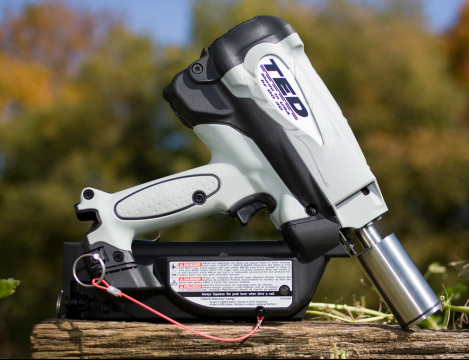
A captive bolt pistol
A modern captive bolt device

A captive bolt pistol (also known as a captive bolt gun, a cattle gun, a stunbolt gun, a bolt gun, a stun gun and a stunner) is a device used for the stunning of animals prior to slaughter.

A captive bolt pistol is intended to deliver a single, powerful strike to the forehead of an animal in order to quickly induce unconsciousness by either inducing a concussion or directly destroying brain tissue. Depending on the variation and usage, the bolt may or may not penetrate the skull and cause direct damage to the brain.

The bolt consists of a heavy rod or piston, typically made of a corrosion-resistant material such as stainless steel. The bolt is actuated by a trigger pull and is propelled forward by either compressed air, a spring mechanism, or by the discharge of a blank round. After moving a short distance, spring tension causes the bolt to recoil back into the barrel.

The captive bolt pistol was invented in 1903 by Hugo Heiss, the former director of a slaughterhouse in Straubing, Germany.[1]

Variations

[edit]

Captive bolt pistols are of three types: penetrating, non-penetrating, and free bolt. The use of penetrating captive bolts has largely been discontinued in commercial situations in order to minimize the risk of transmission of disease.

In the penetrating variation, the bolt penetrates the skull of the animal and catastrophically damages the cerebrum and part of the cerebellum. Concussion causes destruction of vital centers of the brain and an increase in intracranial pressure, causing the animal to lose consciousness. This method is considered the most effective type of stunning. It ensures a high probability of a successful stun by physically destroying brain matter but does not damage the brain stem; as a result, the heart continues to pump after the animal is incapacitated, which aids in the exsanguination process.[2] One disadvantage of this method is that brain matter is allowed to enter the blood stream, possibly contaminating other tissue with bovine spongiform encephalopathy (BSE, colloquially known as mad cow disease).[3]

The action of a non-penetrating stunner is similar, but the bolt is blunt with a mushroom-shaped tip. The bolt strikes the forehead with great force and immediately retracts. The subsequent concussion is responsible for the unconsciousness of the animal. This type of stunner is less reliable at causing immediate unconsciousness than penetrating types; however, it has undergone a resurgence of popularity because of concerns about mad cow disease. In the European Union, this captive bolt design is required for slaughter of animals that will be used for pharmaceutical manufacture.[4]

The free bolt stunner is used for emergency, in-the-field euthanasia of large animals that cannot be restrained. It differs from a true captive bolt gun in that the projectile is not retractable; it is similar in operation to a powder-actuated nail gun or a conventional firearm. Capable of firing only when pressed firmly against a surface (typically the animal's forehead), the device fires a small projectile through the animal's skull. The veterinarian can then either leave the animal to die from the projectile wound or administer lethal drugs.

Use

[edit]
A captive bolt pistol in use on a cow

With cattle, goats, sheep, rabbits, and horses,[5] failure to adequately stun using a penetrating stunner can largely be attributed to incorrect positioning.[2] In commercial operations, rates of failure can be significant and multiple shots are often used. One study looking at cattle found that 12% were shot multiple times, and 12.5% were inadequately stunned.[6] Other research has recorded higher error rates, such as a study looking at young kangaroos which found that 38% of attempts failed to adequately stun the animal.[7]

Captive bolts allow for meat trimmings from the head to be salvaged. In some veal operations, a non-penetrating concussive stunner is used in order to preserve the brain of the animal for further processing. Captive bolt stunners are safer to use for operators in most red meat slaughter processes. There is no danger of ricochet or overpenetration as there is with regular firearms.

The cartridges typically use 2 to 3 grains (130 to 190 mg) of smokeless powder but can use up to 7 grains (450 mg) in the case of large animals, such as bulls. The velocity of the bolt is usually 55 metres per second (180 ft/s) in the case of small animals and 75 metres per second (250 ft/s) in the case of large animals.

Use for homicide

[edit]

There have been a number of cases where a captive bolt pistol has been used for homicide, including:

  • In 1966, in murder of 17-year-old Anna Neumayer, for which Josef Fritzl is among the suspects.[8]
  • In 1991, a 46-year-old German man with a history of alcohol abuse and aggressive behaviour killed his wife.[9]
  • In 2009, a 40-year-old English slaughterhouse worker killed a woman with two shots to the chest.[10]

Suicide

[edit]

In medical literature, at least one case report of suicide by captive bolt pistol has been published. The report states this method of suicide is not uncommon in central European countries with less strict laws surrounding the possession and use of such tools.[11]

In fiction

[edit]

Benny's Video from 1992 uses a captive bolt pistol in a murder.

A captive bolt pistol is used by Anton Chigurh as a murder weapon in the 2005 novel No Country for Old Men and its 2007 film adaptation.

The farmers in the 2011 post-apocalyptic film Hell use captive bolt pistols to slaughter people.

In the season finale of the Fox police procedural series Bones, protagonist Temperance Brennan's mother Christine is found dead in storage of her office of employment, murdered from a shot to her head with a captive bolt pistol.

In the season two finale of Severance, a blank round style pistol intended for the sacrifice of a young goat inadvertently kills Mr. Drummond (Ólafur Darri Ólafsson).

References

[edit]
[edit]
Revisions and contributorsEdit on WikipediaRead on Wikipedia
from Grokipedia
The captive bolt pistol, also known as a captive bolt gun, is a handheld pneumatic or cartridge-powered device used to stun livestock by driving a metal bolt into the animal's skull, thereby disrupting brain activity and inducing immediate unconsciousness prior to exsanguination in slaughter operations. Primarily employed for cattle, sheep, goats, pigs, horses, and deer, the tool features a retractable bolt that penetrates the cranium in penetrating models or delivers concussive force in non-penetrating variants, with the captive design preventing the bolt from detaching and ensuring operator safety compared to free projectiles. Developed in the early 20th century to address demands for more controlled and humane slaughter methods, the captive bolt pistol originated from innovations like the 1903 design attributed to German slaughterhouse director Hugo Heiss, evolving into standardized equipment powered by blank cartridges or compressed air for reliable skull penetration. When applied correctly with appropriate velocity and placement, empirical assessments confirm its capacity to produce rapid cerebral trauma sufficient for welfare-compliant stunning, as validated in veterinary euthanasia protocols and abattoir guidelines. However, failures such as incomplete penetration or inadequate power—often due to equipment maintenance lapses or operator error—can result in ineffective stuns, prompting multiple applications and raising documented concerns over animal welfare outcomes in some cases.

History

Invention and Early Development

The captive bolt pistol was invented in 1903 by Dr. Hugo Heiss, the director of a slaughterhouse in Straubing, Bavaria, Germany, as a humane alternative to manual stunning methods like the poleaxe, which often caused prolonged suffering and inconsistent results in livestock. Heiss's design featured a bolt propelled by a blank cartridge that penetrated the animal's skull to induce immediate unconsciousness without exiting the device, addressing inefficiencies in prior techniques that risked stray projectiles or incomplete stunning. Early prototypes emerged amid broader efforts to reform slaughter practices in the late 19th and early 20th centuries, including an international contest in 1902 for improved humane methods, which spurred devices like Behr's Flash Cattle Killer—a cartridge-fired stunner predating Heiss's captive mechanism but lacking the retractable bolt feature. Heiss's innovation gained traction in German abattoirs for its reliability and safety, reducing operator injury risks associated with free-fire firearms or mechanical hammers. Development accelerated in the 1910s with European manufacturers refining the pistol's ergonomics and power consistency; in the United Kingdom, Christopher Cash proposed enhancements inspired by continental models, leading Accles & Shelvoke to produce the CASH Captive Bolt Pistol in 1913 after iterative testing with blank cartridges and bolt retraction springs. This model emphasized controlled penetration depth to ensure brain disruption while minimizing skull damage, facilitating commercial viability. By 1922, captive bolt devices were available for widespread use in British slaughterhouses, marking a shift toward standardized humane stunning protocols.

Commercialization and Adoption

The captive bolt pistol transitioned from experimental designs to commercial production in the early 20th century, with Accles & Shelvoke manufacturing the first CASH pistol in 1913 following its conception by Christopher Cash around 1910. This cartridge-powered device represented a practical advancement over manual stunning tools like the pole-axe, enabling consistent delivery of a penetrating bolt to induce immediate unconsciousness in livestock. Commercial availability expanded in the United Kingdom by 1922, coinciding with growing emphasis on humane slaughter methods in Europe. Accles & Shelvoke's innovations positioned the company as an industry leader, supplying tools that became integral to abattoir operations for cattle, sheep, and other species where penetrating stunning was feasible. Adoption proliferated globally post-World War II, driven by animal welfare regulations such as the UK's humane slaughter advocacy and the U.S. Humane Methods of Slaughter Act of 1958, which mandated pre-slaughter stunning and elevated captive bolt guns as the preferred method for cattle in commercial facilities. By the late 20th century, penetrative models dominated U.S. slaughterhouses, with surveys indicating their use in the majority of operations for effective, reversible immobilization prior to exsanguination. Later developments, including pneumatic variants introduced by Jarvis in 2000, further enhanced adoption by addressing cartridge supply limitations and improving operator safety.

Design and Operation

Mechanism of Action

The mechanism of action in a captive bolt pistol involves the rapid propulsion of a metal bolt toward the animal's forehead, typically at the intersection of lines drawn from the base of each ear to the opposite eye, to target the brain. Upon trigger activation, the bolt is driven forward by a power source such as a blank cartridge charge or compressed air, achieving velocities sufficient to fracture the skull and either penetrate or deliver concussive force. In penetrating variants, the bolt extends 8-12 cm into the cranial cavity, creating a primary wound track that lacerates brain tissue, induces contusions, and generates cavitation cavities due to the bolt's kinetic energy, resulting in widespread neuronal disruption and immediate cerebral dysfunction. This trauma destroys critical brain regions, including the brainstem, leading to instantaneous insensibility characterized by loss of consciousness, absence of pain perception, and cessation of integrated reflexes. The bolt's retraction, facilitated by an internal spring mechanism, prevents it from detaching and allows reuse after resetting. Effective stunning requires precise placement and adequate muzzle velocity, typically 50-70 m/s for large ruminants, to ensure the bolt's momentum overcomes skull resistance and delivers energy exceeding 50 joules to the brain. Physiologically, the procedure induces a concussive shock wave and direct tissue shearing that interrupt neural signaling pathways, akin to high-impact trauma, rendering the animal unaware and immobile within milliseconds; failure occurs if the bolt lacks sufficient penetration depth or velocity, potentially allowing residual consciousness.

Power Sources and Components

Captive bolt pistols derive their propulsive energy from two principal sources: blank cartridge ammunition or compressed air in pneumatic variants. Blank cartridges, consisting of a casing filled with smokeless powder propellant but lacking a projectile, generate the rapid expansion of gases required to drive the bolt forward upon ignition. These cartridges are classified by caliber, typically .22 or 9 mm, and by propellant charge strength, measured in grains, to match animal size and skull thickness; for instance, lighter loads suit small livestock like pigs under 40 kg, while heavier charges handle cattle. Color-coding standardizes selection, with yellow indicating medium power (e.g., 390 mg propellant), blue for strong (410 mg), and red for heavy-duty applications. Pneumatic systems, less common but favored in some portable or controlled environments for safety and reusability without expendable ammunition, operate via compressed air reservoirs delivering pressures such as 190 psi for penetrating bolts or 210–220 psi for non-penetrating models. Key components include the bolt itself, a hardened steel rod either tapered for penetration into the cranium or mushroom-headed for concussive impact without entry, constrained by a captive design to prevent detachment. The barrel houses and guides the bolt's linear motion, while the firing mechanism—trigger-activated for cartridges or valve-released for air—initiates propulsion via a striker or piston. Recuperating springs or sleeves automatically retract the bolt post-firing, ensuring readiness for reuse and minimizing operator handling risks. The pistol body, often ergonomic with a pistol-grip handle, incorporates a cartridge chamber or air inlet, safety interlocks to prevent misfires, and sometimes adjustable power settings via spacers or regulators. Maintenance demands regular inspection of seals, springs, and bolt alignment to sustain consistent velocity, as degradation can reduce stunning efficacy.

Variations

Penetrating Models

Penetrating captive bolt pistols propel a retractable steel bolt through an animal's skull into the brain, causing immediate unconsciousness via direct tissue destruction and concussive trauma. The bolt, powered by blank cartridge explosion or compressed air, extends at velocities of 55-70 m/s, penetrates 10-15 cm depending on model and species, and retracts via spring action to remain captive within the barrel. This design ensures irreversible neural damage, with indicators of success including instant collapse, tonic-clonic seizures, loss of corneal reflex, and halted rhythmic breathing. Unlike non-penetrating models that rely solely on skull fracture and rebound concussion, penetrating variants achieve higher efficacy rates, stunning 96-98% of cattle insensible on the first shot when correctly positioned perpendicular to the forehead midline. Application targets the intersection of lines from the rear corner of the eye to the base of the opposite horn in bovines, or equivalent anatomical landmarks in other species like horses and swine for maximal brain disruption. Maintenance involves regular velocity testing and adherence to manufacturer cartridge or pressure specifications to prevent under-penetration, particularly in mature animals with thicker skulls. Common models include Jarvis USSS-1 and USSS-21, evaluated for consistent performance across stunning repetitions, though all require backup devices to avoid sequential firing delays from overheating. While highly effective for euthanasia and pre-slaughter stunning in livestock such as cattle, sheep, and pigs, penetrating bolts risk carcass contamination from fragments, prompting shifts to non-penetrating alternatives in some regulated food processing environments.

Non-Penetrating Models

Non-penetrating captive bolt devices propel a blunt or mushroom-shaped bolt to deliver a concussive blow to the animal's forehead, fracturing the skull and transmitting kinetic energy to the brain without penetration. This mechanism induces immediate unconsciousness through traumatic brain injury, evidenced by physiological indicators such as loss of jaw tone and rhythmic breathing cessation. Unlike penetrating models, these avoid direct cranial entry, reducing risks of bolt fragmentation or infection but requiring sufficient force to ensure skull fracture for efficacy. Power sources for non-penetrating models include blank cartridges, pneumatic systems operating at 210–220 psi, or cordless gas cartridges like butane, enabling portability for on-farm use. Devices such as the TED stunner, a battery- and butane-powered model, deliver up to 1000 shots per cartridge and are designed for smaller livestock including swine, turkeys, and poultry, achieving irreversible insensibility in a single strike when applied correctly. Other examples include the Zephyr-EXL and Blitz-LO, optimized for animals under 40 pounds with non-penetrating concussion tips. Efficacy studies indicate non-penetrating models effectively stun neonates, lambs, and poultry, with one trial demonstrating brain damage and jaw relaxation in sheep via single application. However, for larger cattle, they prove less reliable than penetrating counterparts, with pneumatic non-penetrating guns at 210–220 psi failing to consistently induce loss of consciousness compared to penetrating guns at 190 psi across 92 versus 363 applications. Optimal placement on the frontal bone is critical, as woolly-headed breeds like Herefords show reduced effectiveness without skull fracture. Despite these limitations, non-penetrating devices are employed in euthanasia for swine and poultry, where portability and avoidance of penetration align with welfare and operational needs.

Other Types

Free-bolt stunners constitute a distinct variation of bolt-based stunning devices, characterized by the projection of a non-retractable bolt that penetrates and remains embedded in the animal's brain, thereby inducing immediate unconsciousness through tissue destruction. Unlike retractable captive bolts, which return to the device after impact, free-bolt models propel the bolt in a manner akin to a low-velocity projectile, ensuring deeper penetration suitable for larger or harder-to-restrain animals. These stunners are typically employed for emergency euthanasia in field settings, such as for downed livestock where physical restraint or standard pistols are infeasible, and are powered by blank cartridges delivering sufficient kinetic energy—often equivalent to .22 caliber or higher—to target the brainstem. Manufacturers like Accles & Shelvoke produce models such as the CASH Magnum XL, which incorporate free-flight bolt options for enhanced travel distance and impact on heavy bovids, with features like robust construction and compatibility with high-power cartridges to accommodate skull thickness variations in mature cattle. Empirical assessments indicate that free-bolt application requires precise aiming to avoid incomplete brain disruption, as suboptimal placement can result in prolonged sensibility, underscoring the need for operator training in anatomical landmarks. While less common in commercial abattoirs due to safety and reusability advantages of retractable designs, free-bolt stunners offer a targeted alternative to firearms for on-farm depopulation, minimizing ricochet risks associated with free bullets.

Primary Applications

Stunning in Commercial Slaughter

In commercial livestock slaughter, captive bolt pistols are routinely applied to stun animals such as cattle, sheep, goats, and pigs immediately prior to exsanguination, aiming to induce rapid unconsciousness and insensibility to pain. The device is positioned against the forehead at the intersection of imaginary lines drawn from the base of each ear to the opposite eye, where the bolt is fired to penetrate or concuss the brain, disrupting cerebral function. This method complies with humane slaughter requirements under U.S. federal regulations, which mandate rendering animals insensible before shackling or hoisting, though certain penetrating models injecting compressed air into the cranium are prohibited to avoid brain tissue embolism risks. In European abattoirs, operators must hold a Certificate of Competence for using captive bolt equipment, with ongoing monitoring of stun quality required to minimize welfare compromises from misapplications. Penetrating captive bolt guns predominate in cattle slaughter due to their superior efficacy in causing immediate and irreversible brain trauma compared to non-penetrating variants, which may necessitate multiple shots and yield lower success rates. Studies in commercial beef plants report adequate stunning in approximately 84% of cattle cases on the first attempt, with failures more frequent in bulls (13.6%) and occasionally in accurately placed shots (10.4%), often linked to factors like gun velocity, animal size, or operator error. Effective stunning manifests as absence of rhythmic breathing, palpebral reflex, or coordinated movements within seconds, followed by pithing or bleeding within 45-60 seconds in some jurisdictions to ensure death. For smaller ruminants like sheep and goats, both penetrating and non-penetrating models suffice, though penetrating types deliver comparable severe cranial damage. While electrical stunning is preferred for pigs in many facilities due to speed in restrained lines, captive bolt pistols serve as an alternative or backup, particularly for free-moving animals or in non-continuous systems, ensuring compliance with welfare standards by avoiding prolonged distress. Empirical assessments underscore that proper maintenance—such as verifying bolt protrusion and cartridge power—critically influences outcomes, with underpowered devices risking incomplete concussion and welfare violations. In high-throughput operations, trained personnel mitigate variables like horn presence or thick skulls in mature cattle, which can reduce penetration depth and necessitate adjusted gun lengths or power settings. Overall, when executed correctly, captive bolt stunning upholds causal efficacy in preventing conscious suffering during commercial decapitation or bleeding processes.

Euthanasia and Depopulation

Captive bolt pistols, particularly penetrating models, are recommended for the euthanasia of large livestock such as cattle, horses, and mature swine when performed by trained personnel, as they induce rapid unconsciousness through mechanical disruption of the brain. The American Veterinary Medical Association (AVMA) classifies penetrating captive bolt as an acceptable method for these species, requiring a secondary step—such as pithing, exsanguination, or intravenous potassium chloride—to confirm death and prevent recovery. Non-penetrating variants are suitable only for smaller animals like neonatal calves or suckling pigs, where they cause concussion without skull penetration, but must also be followed by a secondary procedure due to risks of incomplete insensibility. Proper application involves positioning the device perpendicular to the frontal bone at interspecies-specific anatomical landmarks, such as the intersection of lines from the base of each ear to the opposite eye in cattle, with cartridge strength calibrated to animal size—typically .22 or .25 caliber for adults. Operators must verify insensibility via absence of rhythmic breathing, palpebral reflex, and corneal reflex before secondary steps, as incomplete stunning can prolong suffering. Veterinary guidelines emphasize training to avoid misses, which occur in up to 10-20% of untrained applications, and restrict use to non-ambulatory or moribund animals on-farm where injectable agents are unavailable. In depopulation scenarios, such as foreign animal disease outbreaks, captive bolt devices facilitate rapid culling of confined livestock to contain pathogens, with portable pneumatic penetrating models validated for mass euthanasia of cattle in feedlots, achieving over 95% immediate insensibility in trials on animals up to 600 kg. For swine, penetrating captive bolt has been empirically confirmed effective for nursery and market-weight pigs up to 120 kg during emergencies like African swine fever responses, though non-penetrating options are limited to lighter cohorts. These methods align with AVMA and USDA protocols prioritizing welfare in high-volume operations, where alternatives like carbon dioxide gassing may be logistically infeasible, but require adjunctive disposal to mitigate biosecurity risks. Empirical studies underscore their reliability when equipment is maintained and operators adhere to placement protocols, reducing variability seen in manual gunshot alternatives.

Efficacy and Animal Welfare

Physiological Effects and Indicators of Success

The physiological effects of a penetrating captive bolt pistol involve the rapid transfer of from the bolt to the animal's cranium, resulting in penetration, focal hemorrhage, and diffuse trauma that disrupts cerebral function and induces immediate . The bolt, propelled at velocities sufficient to and lacerate neural tissue, causes and shearing forces within the parenchyma, leading to instantaneous insensibility prior to . This mechanism contrasts with non-penetrating models, which rely on concussive impact to the and generate intracranial pressure waves, producing similar but potentially less consistent cerebral concussion without direct tissue penetration. In both cases, successful application halts higher functions, evidenced by cessation of voluntary movement and sensory processing, though spinal reflexes may persist briefly due to isolated cord activity. Indicators of successful stunning include immediate collapse with rigid extension of the head and flexion of hind limbs toward the abdomen, accompanied by absence of rhythmic breathing or gasping, which signal potential recovery if present. Fixed, non-responsive eyes with dilated pupils and loss of the palpebral (eyelid) reflex, alongside a protruded tongue and lack of corneal reflex, confirm brainstem disruption. The pedal reflex (withdrawal response to hoof pinching) should be absent or markedly diminished, while any vocalization, coordinated limb movements, or return of rhythmic respiration during exsanguination indicates failure, often necessitating pithing to destroy residual brain and spinal cord function. Empirical assessments in cattle show that low-airline-pressure stunning correlates with higher incidences of incomplete insensibility, such as persistent respiration in 27% of cases versus 8% with high pressure. These signs, derived from veterinary protocols, prioritize observable neural shutdown over subjective welfare assumptions.

Factors Influencing Effectiveness

The of captive bolt depends on parameters such as bolt , , and , which must be sufficient to critical structures like the and to induce immediate . Studies indicate that inadequate fails to the necessary cerebral trauma, leading to incomplete evidenced by post-stun movements or retained reflexes. Animal-specific factors, including , , , and morphology, significantly modulate outcomes; for instance, larger or horned breeds require longer bolts or higher muzzle energies to achieve adequate penetration through thicker skulls, with evaluations of 2,850 Holstein steers showing breed variations in post-stun leg activity. In and , skull thickness and head restraint influence bolt trajectory and , potentially necessitating adjusted parameters to avoid glancing blows. Procedural elements like precise bolt placement—typically at the intersection of imaginary lines from the base of each ear to the opposite eye in ruminants—are essential, as deviations reduce brain damage and increase failure rates. Operator skill, including consistent application and avoidance of multiple shots, further impacts success, with research linking inexperienced handling or device malfunctions to higher incidences of ineffective stuns requiring secondary interventions. Device type and power source also play roles; penetrating captive bolt guns outperform non-penetrating models in inducing loss of consciousness in bovines, while pneumatic variants with extended bolt protrusion minimize post-stun movements compared to cartridge-fired units. Regular maintenance, such as verifying charge levels and cleaning to prevent misfires, is critical to sustaining performance across repeated uses in commercial settings.

Criticisms and Empirical Evidence

Criticisms of captive bolt pistols center on instances of ineffective stunning, where animals may retain or exhibit signs of distress post-application, potentially prolonging during slaughter or . Operator error in bolt placement is frequently cited as a primary factor, with studies indicating that misaimed shots fail to critical structures like the , leading to incomplete . Equipment variables, such as cartridge power and bolt , also contribute to variability, as insufficient kinetic can result in shallow penetration or deflection, particularly in animals with thicker skulls or horns. Animal-specific challenges, including head movement or anatomical differences, exacerbate these issues, raising concerns about reliability in high-throughput commercial settings. Empirical evidence from abattoir observations and controlled studies quantifies these shortcomings. In cattle, one analysis of 594 animals found that gun type significantly influenced outcomes, with less powerful models requiring precise placement to avoid failures, though overall success rates exceeded 90% when properly executed. However, a study on bulls reported 13.6% inadequate stunning even with accurate shots, evidenced by persistent EEG activity or rhythmic breathing, indicating potential awareness during exsanguination. For horses, 16% of penetrating shots missed the brain entirely, rising to 30% for poll-position attempts versus 12% for frontal, as confirmed by necropsy examination of bolt trajectories. In sheep, horn presence altered bolt paths, with some cases showing insufficient brainstem damage despite correct aiming. Further data highlight post-stunning recovery risks, such as return to sensibility in cattle, observable via eye reflexes or coordinated movements, which occurred in low but non-negligible percentages under suboptimal conditions like inadequate bolt velocity from blank cartridge inconsistencies. Kangaroo studies revealed only 62% immediate insensibility in pouch young, attributed to small skull size and rapid recoil. These findings underscore that while penetrating models generally outperform non-penetrating ones in inducing rapid unconsciousness, efficacy hinges on operator training, maintenance, and species-specific adaptations, with failure rates underscoring welfare risks when standards lapse.

Regulations and Standards

International Guidelines

The (WOAH), formerly known as the Office International des Épizooties (OIE), establishes international standards for during slaughter through its , particularly Chapter 7.5 on during slaughter. These guidelines endorse captive bolt as a humane method for inducing rapid in mammals prior to killing, provided the device is species-appropriate, correctly positioned, and delivers sufficient to function irreversibly or prolong insensibility until . Penetrative captive bolt guns are specified for large ruminants like cattle, water buffaloes, and bison, targeting the or via frontal ( of eye-base-of-ear lines) or occipital positions to ensure tissue penetration and vital center destruction; for water buffaloes, a heavy-duty, contact-fired penetrative device directed at the nose in occipital orientation is required due to skull thickness. Non-penetrating captive bolt methods are permitted for smaller mammals, neonates, or species with thinner skulls, relying on concussive force rather than penetration, but are deemed ineffective for adults with robust cranial structures like mature bulls or buffalo, where they risk inadequate insensibility. Effectiveness indicators mandated by WOAH include immediate of posture, absence of palpebral and corneal reflexes, lack of eye or tongue protrusion, and transition from tonic to clonic seizures followed by rhythmic without response to stimuli; any signs of recovery, such as vocalization or coordinated limb movement, necessitate immediate re-stunning. Equipment standards require to achieve minimum muzzle energies (e.g., equivalent to 300-500 joules for large , calibrated by bolt and charge), with operators trained to verify charge and anatomical placement; backup stunning or killing methods must be available for failures. Post-stunning, or must commence within seconds to prevent welfare risks from potential recovery, aligning with the principle that serves only as a reversible prelude to irreversible death. Complementary guidance from the (FAO) of the reinforces these principles in its manual on humane handling, , and slaughter of , advocating captive bolt pistols for non-avian terrestrial while prohibiting their use in birds like ostriches to insufficient from the bolt's impact on lobulated structures. FAO emphasizes operator competence in -specific landmarks—for sheep and , frontal positioning midway between the eyes—and regular device testing to avoid misfires that could non-lethal wounding; it also highlights the need for restrained application to minimize excitation, with non-penetrating suitable for calves but requiring verification of insensibility duration exceeding . These frameworks prioritize empirical welfare outcomes over procedural uniformity, with WOAH's standards adopted or referenced by over 180 member to harmonize global practices and facilitate while addressing risks like ineffective stuns observed in field studies (e.g., up to 13.6% failure rates in bulls without optimized equipment).

National and Regional Requirements

In the United States, the USDA's Federal Meat Inspection Act mandates that captive bolt stunning must render livestock insensible to pain before slaughter, with acceptable instruments including both penetrating and non-penetrating types under 9 CFR § 313.15, provided they are properly maintained and operated by trained personnel to ensure immediate unconsciousness. Penetrative devices injecting air into the cranial cavity are prohibited for cattle to avoid risks of brain tissue dissemination, as established in 2004 amendments following detection of such contaminants in beef products. On-farm euthanasia lacks federal mandates but aligns with AVMA guidelines recommending penetrating captive bolt for cattle over 300 kg, emphasizing correct bolt placement and cartridge power calibrated to animal size. In the European Union, Council Regulation (EC) No 1099/2009 outlines specific criteria for captive bolt devices, classifying penetrative stunning as inducing severe, irreversible brain damage via bolt penetration and shock, suitable for ruminants, equines, and pigs, while non-penetrative variants rely on concussion-induced severe brain damage without penetration, applicable to similar species for reversible stunning followed by bleeding. Devices must meet velocity and energy standards to ensure immediate loss of consciousness, with operators required to undergo training and verification of effectiveness through indicators like tonic/clonic spasms and absence of rhythmic breathing; gas stunning has been phased out for certain species. Member states enforce additional national controls, such as equipment calibration and post-stun monitoring. Post-Brexit United Kingdom regulations, derived from retained EU law and supplemented by Welfare of Animals (Slaughter or Killing) Regulations 1995, permit captive bolt stunning for cattle using penetrating devices that drive a bolt into the brain or non-penetrating devices that apply concussive force; firearms are sometimes used as an alternative for stunning or killing in approved facilities, with devices operated per manufacturer specifications. The Food Standards Agency mandates operator competence certification for commercial slaughter, including precise forehead placement for cattle and verification of insensibility signs, while on-farm use follows similar guidelines without routine recording systems for bolt devices. In Australia, captive bolt guns are approved for humane slaughter and euthanasia under state animal welfare acts, such as Queensland's Animal Care and Protection Act 2001, requiring compliance with firearms licensing for cartridge possession where applicable and operator training to achieve brain disruption via correct positioning and power. Federal export standards via the Department of mandate penetrating captive bolt for in abattoirs, with procedures validated against empirical indicators of unconsciousness, though wildlife applications fall under variable state biosecurity laws emphasizing minimal animal movement prior to stunning. Variations persist globally; for instance, cartridge purchases may require licenses in select European nations despite guns being unregulated as non-firearms, reflecting differing emphases on operator access versus safety controls.

Misuse and Incidents

Suicidal Applications

Captive bolt pistols, primarily designed for livestock stunning, have been used in rare instances of suicide, almost exclusively by individuals with direct access to the devices, such as farmers, butchers, or veterinarians, who are familiar with their operation. Forensic pathology reports indicate that the majority—approximately 85%—of human fatalities involving these guns are self-inflicted, reflecting their high lethality when directed at the head due to the bolt's ability to penetrate the skull and cause irreversible brain trauma. These acts typically result in immediate unconsciousness or death, though survival with severe neurological deficits has occurred in non-fatal attempts transported to medical care. Documented cases often feature a single shot to the frontal or temporal region, exploiting the pistol's penetrating mechanism without projectile expulsion, which distinguishes it from conventional firearms. For example, an 80-year-old former cattle breeder in 2011 inflicted a self-shot wound leading to coma and death, with computed tomography revealing extensive cerebral hemorrhage and midline shift. In another instance, a 29-year-old butcher combined a frontal captive bolt shot with hanging in a planned complex suicide, embedding the bolt in the forehead while suspended, resulting in rapid fatality from combined cranial penetration and asphyxia. Multiple-shot suicides, though exceptional, underscore the devices' reliability for lethal intent; one case involved simultaneous discharges from two different captive bolt guns—one with dual outlets—to the head, ensuring complete incapacitation. Regional forensic analyses, such as three suicides in Siena Province, Italy, from 1968 to 2015, describe consistent entrance wounds with charred margins and bone imprimatums, aiding differentiation from homicidal uses. Such patterns emphasize the pistols' role in occupation-related self-harm, where accessibility overrides typical firearm restrictions.

Homicidal and Accidental Cases

Captive bolt pistols have been infrequently implicated in incidents, with documented cases primarily appearing in forensic . A describes a in which the victim was killed by from a captive bolt pistol to the head, resulting in penetrating trauma consistent with the device's mechanism of driving a bolt into the cranium to disrupt brain function. Forensic analysis in such cases highlights the weapon's capacity for lethal injury despite its design for animal stunning, as the bolt's propulsion can fracture the skull and cause extensive cerebral damage. A review notes three additional murder victims, each sustaining multiple captive bolt injuries, underscoring the rarity but feasibility of using the device intentionally against humans. Accidental cases more commonly involve occupational mishaps among workers or farmers handling the devices. In one reported incident, a 28-year-old accidentally discharged a captive bolt into his right , causing a penetrating femoral requiring surgical intervention but not resulting in death. Three cases of accidental injuries to personnel, including cranial and extremity trauma, were detailed in a 1994 forensic study, attributing the events to improper handling during loading or firing near the body. A fatal accidental shooting occurred in March 2002 at a UK foot-and-mouth disease culling site, where 27-year-old slaughterman Steven Smart was killed by a bolt discharge to the head from a colleague's device; the operator, Keith Hubbard, was cleared of manslaughter after evidence indicated an unintended activation. Non-fatal abdominal injuries from accidental self-discharge have also been recorded, as in a 2022 Australian workplace incident emphasizing the risks of inadvertent activation near the body. These events highlight the device's potential for severe trauma due to its high-velocity bolt, even in non-intentional uses, often exacerbated by familiarity bias among experienced handlers.

Cultural and Media Representations

Depictions in Fiction and Film

In the 2007 film No Country for Old Men, directed by Joel and Ethan Coen and adapted from Cormac McCarthy's 2005 novel, the antagonist Anton Chigurh employs a pneumatic captive bolt pistol as his primary weapon for multiple murders, including compressing air to drive a retractable bolt into victims' foreheads and using its force to breach door locks. The device, sourced from slaughterhouse equipment, underscores Chigurh's methodical and impersonal approach to killing, with scenes depicting its use against a motorist and in pursuits, though it proves ineffective in one instance against a locked safe. This portrayal popularized the captive bolt pistol in popular culture as a silent, improvised human weapon, despite its real-world design for animal stunning via cerebral penetration without full lethality in larger subjects. The tool appears in the It (2017), where a captive bolt inflicts visible on Pennywise, highlighting its against threats in a beyond agricultural use. In the Western Brimstone (2016), an Accles & Shelvoke Cash model is first shown for before being repurposed by a character in a violent confrontation, emphasizing its dual role in routine animal dispatch and human conflict. Television depictions include The Walking Dead, where captive bolt pistols are wielded to euthanize infected humans pre-reanimation, as seen with Doctor Bethany Exner in the series' outbreak scenarios, extending the device's association with mercy killing amid apocalyptic survival. In Endeavour Season 6, Episode 3 ("Confection," aired 2019), a veterinarian uses one to euthanize a horse with a broken leg, portraying its standard veterinary application in a period crime drama setting. Other films tagged with the device in media databases, such as The Final (2010), feature it in revenge-themed narratives, though specifics remain tied to improvised brutality rather than technical accuracy.

References

Add your contribution
Related Hubs
User Avatar
No comments yet.