


Community hub
0 subscribers8 pages, 0 posts
Recent from talks
All channels
Be the first to start a discussion here.
Be the first to start a discussion here.
Be the first to start a discussion here.
Be the first to start a discussion here.
Contribute something
Welcome to the community hub built to collect knowledge and have discussions related to Centella.
Nothing was collected or created yet.
Centella
View on Wikipediafrom Wikipedia
 | This article needs additional citations for verification. (December 2017) |
| Centella | |
|---|---|

| |
Scientific classification 
| |
| Kingdom: | Plantae |
| Clade: | Tracheophytes |
| Clade: | Angiosperms |
| Clade: | Eudicots |
| Clade: | Asterids |
| Order: | Apiales |
| Family: | Apiaceae |
| Subfamily: | Mackinlayoideae |
| Genus: | Centella L. |
| Species | |
| Synonyms | |
|
Trisanthus Lour. | |
.jpg)
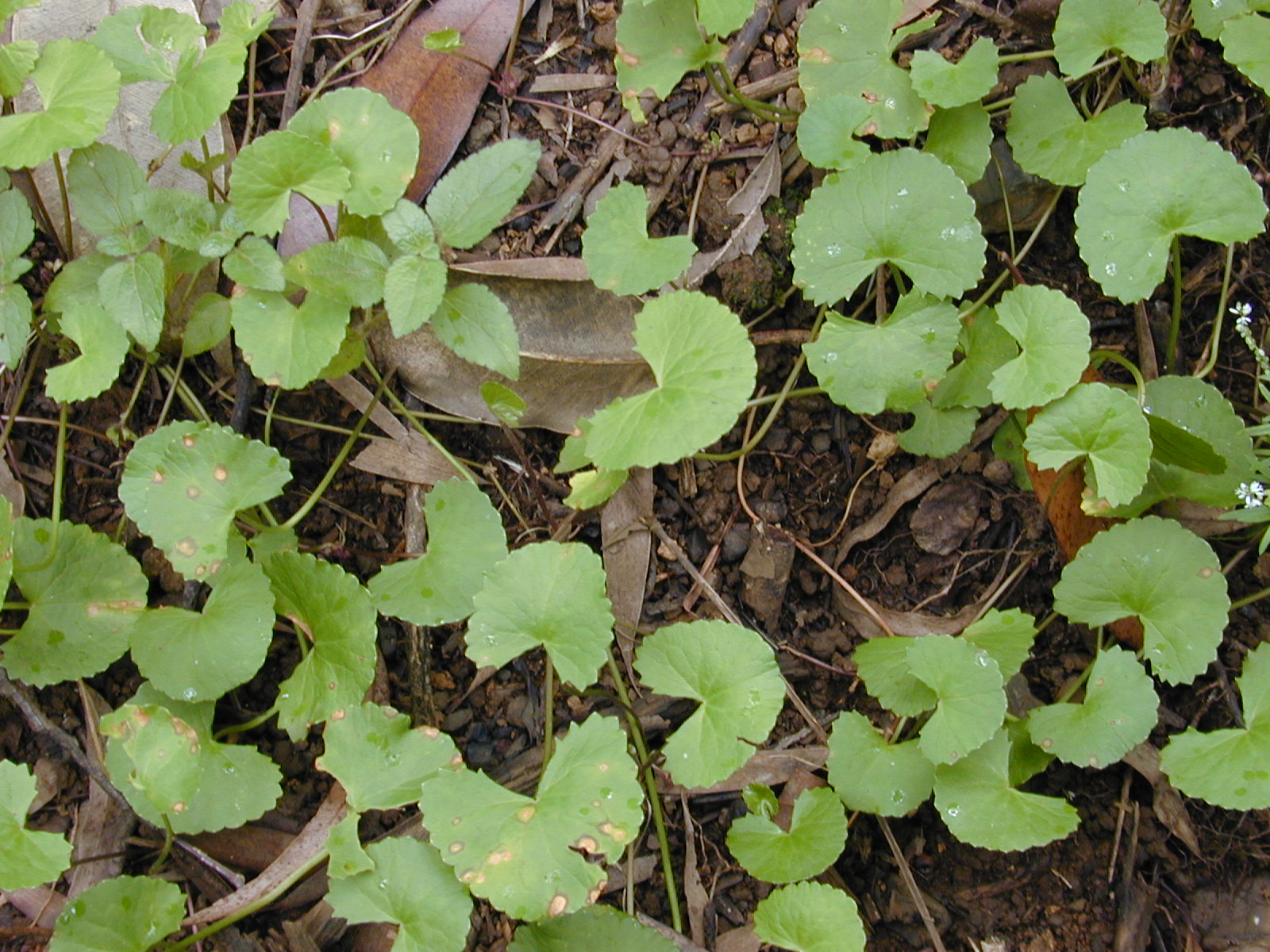
Centella is a genus of 53 species of flowering plants in the subfamily Mackinlayoideae. The genus is sometimes placed in family Araliaceae; however, recent studies utilising molecular data place Centella within Apiaceae.
Species
[edit].jpg)
- Centella abbreviata (A. Rich.) Nannf.
- Centella affinis (Eckl. & Zeyh.) Adamson
- Centella annua M.Schub. & B.-E.van Wyk
- Centella asiatica (L.) Urb.
- Centella brachycarpa M.Schub. & B.-E.van Wyk
- Centella caespitosa Adamson
- Centella calcaria M.Schub. & B.-E.van Wyk
- Centella callioda (Cham. & Schltdl.) Drude
- Centella capensis (L.) Domin
- Centella cochlearia (Domin) Adamson
- Centella comptonii Adamson
- Centella cordifolia (Hook.f.) Nannf.
- Centella coriacea Nannf.
- Centella cryptocarpa M.T.R.Schub. & B.-E.van Wyk
- Centella debilis (Eckl. & Zeyh.) Drude
- Centella dentata Adamson
- Centella didymocarpa Adamson
- Centella difformis (Eckl. & Zeyh.) Adamson
- Centella dolichocarpa M.Schub. & B.-E.van Wyk
- Centella erecta (L.f.) Fernald
- Centella eriantha (A.Rich.) Drude
- Centella flexuosa (Eckl. & Zeyh.) Drude
- Centella fourcadei Adamson
- Centella fusca (Eckl. & Zeyh.) Adamson
- Centella glabrata L.
- Centella glauca M.Schub. & B.-E.van Wyk
- Centella graminifolia Adamson
- Centella gymnocarpa M.T.R.Schub. & B.-E.van Wyk
- Centella laevis Adamson
- Centella lanata Compton
- Centella lasiophylla Adamson
- Centella linifolia (L.f.) Drude
- Centella linifolia var. depressa Adamson
- Centella longifolia (Adamson) M.T.R.Schub. & B.-E.van Wyk
- Centella macrocarpa (A.Rich.) Adamson
- Centella macrodus (Spreng.) B.L.Burtt
- Centella montana (Cham. & Schltdl.) Domin
- Centella obtriangularis Cannon
- Centella pilosa M.Schub. & B.-E.van Wyk
- Centella pottebergensis Adamson
- Centella recticarpa Adamson
- Centella restioides Adamson
- Centella rupestris (Eckl. & Zeyh.) Adamson
- Centella scabra Adamson
- Centella sessilis Adamson
- Centella stenophylla Adamson
- Centella stipitata Adamson
- Centella ternata M.Schub. & B.-E.van Wyk
- Centella thesioides M.Schub. & B.-E.van Wyk
- Centella tridentata (L.f.) Drude ex Domin
- Centella tridentata var. dregeana (Sond.) M.Schub. & B.-E.van Wyk
- Centella tridentata var. hermaniifolia (Eckl. & Zeyh.) M.Schub. & B.-E.van Wyk
- Centella tridentata var. litoralis (Eckl. & Zeyh.) M.Schub. & B.-E.van Wyk
- Centella triloba (Thunb.) Drude
- Centella umbellata M.Schub. & B.-E.van Wyk
- Centella villosa L.
- Centella villosa var. latifolia (Eckl. & Zeyh.) Adamson
- Centella virgata (L.f.) Drude
References
[edit]- ^ "Centella — The Plant List". www.theplantlist.org. Retrieved 2016-09-14.
 | This Apiaceae article is a stub. You can help Wikipedia by adding missing information. |
Centella
View on Grokipediafrom Grokipedia
Taxonomy and Description
Morphological Characteristics
Plants in the genus Centella are primarily low-growing, herbaceous perennials, often procumbent or sprawling, with slender, creeping stolons that root at the nodes and can extend up to 1 meter in length.[5][6] These stolons enable the formation of dense mats, with plants typically reaching heights of 5–20 cm, though some species may grow taller up to 1.5 m in erect forms.[6] The root system is fibrous and shallow, facilitating rapid vegetative spread in suitable conditions.[6] Leaves are long-stalked (petiolate), with petioles ranging from 5–168 mm, and blades that are simple, rounded to reniform in shape, measuring 2–6 cm in diameter, often featuring palmate or reticulate venation.[5][6] The leaf margins vary from entire to serrate or crenate, and the blades may be solitary or clustered, with cordate bases and no stipules.[5][6] Flowers are small, actinomorphic, and hermaphroditic or polygamous, borne in simple axillary umbels on short peduncles, with 1–9 flowers per umbellule surrounded by 2–4 bracts.[5] Petal color ranges from greenish-white to pinkish, crimson, or purple, with incurved petals lacking distinct apical lobules and obsolete calyx teeth.[5][6] The fruits are schizocarpic, dorsiventrally flattened mericarps, 1.5–7 mm long and wide, with prominent primary and secondary ribs, a narrow commissure, and glabrous to pilose surfaces; some species exhibit thin wings along the margins.[5][6] While shared traits define the genus, variations occur among species, including differences in stolon thickness, leaf margin dentation (from entire to deeply lobed with up to 41 teeth), and indumentum (glabrous to pubescent).[6] Some species are semi-aquatic, adapting to wetter habits with more robust stolons, whereas others remain strictly terrestrial.[6] The genus belongs to the Apiaceae subfamily Mackinlayoideae, reflecting its distinctive umbelliferous morphology.[5]Classification and Etymology
Centella is a genus within the family Apiaceae, subfamily Mackinlayoideae, placed in the order Apiales under the class Magnoliopsida (eudicots), subclass Asterids, phylum Angiospermae (flowering plants), clade Tracheophyta (vascular plants), and kingdom Plantae.[1][7][8] Historically, species now assigned to Centella were often classified under the genus Hydrocotyle within the Apiaceae or sometimes placed in the family Araliaceae due to morphological similarities such as umbellate inflorescences.[9][10] Molecular phylogenetic studies, including analyses of 18S rDNA and rbcL sequences, have confirmed the distinct placement of Centella within the Apiaceae subfamily Mackinlayoideae since the early 2000s, resolving earlier ambiguities based on vegetative and reproductive traits.[11][12] The genus Centella L., first validly published by Carl Linnaeus in 1763, has the synonym Trisanthus Lour. and currently includes 55 accepted species according to recent taxonomic assessments.[1][13] The name "Centella" derives from the Latin words centum (hundred) and folium (leaf), likely referring to the plant's tendency to produce numerous leaves in dense growth.[14] Common names such as pennywort arise from the coin-like shape of the leaves in many species.[7] The type species is Centella asiatica (L.) Urb., originally described as Hydrocotyle asiatica by Linnaeus in 1753 and later transferred to Centella by Ignatz Urban in 1879.[1][15]Distribution and Habitat
Global Range
Centella species exhibit a predominantly pantropical native distribution, spanning tropical and subtropical regions across Africa, Asia, Australasia, the Pacific, and parts of the Americas and Europe. In Africa, the genus is native to numerous countries including Angola, Benin, Botswana, Madagascar, South Africa, and Zimbabwe, with high species diversity concentrated in tropical zones south of the equator. Asian native ranges encompass the Indian subcontinent, Southeast Asia (e.g., Thailand, Indonesia, Philippines), and China, while extensions reach Australia (e.g., New South Wales, Queensland, Northern Territory) and Pacific islands such as Fiji, New Caledonia, and Samoa. Some species occur in temperate areas, such as the Caucasus region.[1][16] Introduced ranges of Centella have expanded globally through human activities, particularly ornamental and medicinal trade, leading to widespread establishment in the Americas and additional subtropical areas. In the Americas, species like C. asiatica are introduced in the southeastern United States (e.g., Florida, Alabama), Brazil, Colombia, and Mexico, often in disturbed habitats. Further introductions occur in Pacific islands (e.g., Hawaii, Cook Islands) and Atlantic territories (e.g., Bermuda, Ascension Island). C. asiatica is particularly noted as invasive in wetlands, such as those in Dongting Lake, China, and disturbed coastal areas in the US Gulf region, where it forms dense mats that outcompete native vegetation.[1][17][7] Biogeographic patterns reveal centers of diversity in Asia and tropical Africa, reflecting the genus's adaptation to diverse tropical ecosystems. Disjunct distributions in the southern hemisphere, from Madagascar to Australia and parts of South America, suggest ancient dispersal mechanisms, potentially tied to historical continental connections, though modern spreads are largely human-mediated via trade routes established from the 18th century onward.[1][7]Environmental Preferences
Centella species thrive in moist, sandy loam or clay-rich soils, with a preferred pH range of 5.0 to 7.5 that supports nutrient uptake and root development.[18][19] These plants tolerate poorly drained conditions to facilitate their semi-aquatic tendencies but are sensitive to extreme waterlogging, which can lead to root rot and reduced vigor.[7] The genus favors tropical to subtropical climates, where optimal temperatures range from 20°C to 30°C promote robust growth and secondary metabolite production. High humidity levels, often exceeding 70%, are essential to prevent desiccation and mimic their native wetland habitats. While most species are frost-sensitive, certain ones, such as Centella asiatica, can endure light frost down to -5°C for short periods.[20][21][22] In terms of light and water, Centella accommodates partial shade to full sun exposure, though filtered light in humid understories enhances leaf expansion and photosynthetic efficiency. Many species exhibit semi-aquatic adaptations, flourishing along riverbanks, in marshes, and wetlands where consistent soil moisture—without stagnation—sustains their creeping habits.[7][23] Centella demonstrates ecological adaptations including rapid colonization of disturbed, moist sites via stolons, enabling quick establishment in dynamic environments. Allelopathic compounds released by the roots inhibit nearby competitors, particularly in saturated soils, conferring a competitive edge in wet ecosystems. Limitations include intolerance to arid conditions, where drought rapidly impairs growth, and sensitivity to heavy pollution, as the plants readily absorb contaminants from water and soil. Some species are confined to lowlands below 2000 m altitude, beyond which cooler temperatures and reduced humidity hinder survival.[24][25][26][27]Species Diversity
List of Accepted Species
The genus Centella comprises approximately 55 accepted species according to Plants of the World Online (as of 2025), with ongoing taxonomic revisions based on molecular phylogenetic studies that have resolved many historical synonyms since 2000.[1][28] Approximately 20 names remain provisionally accepted pending further clarification.[6] A comprehensive revision in 1995 recognized 45 species, with subsequent additions including endemics such as C. gypsophila Humbert from Madagascar.[6] The majority of species are distributed in the Old World tropics, particularly in Africa, Asia, and Australia, with a few in the New World; most exhibit a creeping habit typical of the genus.[1] Below is an alphabetical list of accepted species with authorities, drawn from the 1995 revision and updated databases (synonyms noted where resolved post-revision). This list includes species from the 1995 revision and select updates; for a full current list, refer to Plants of the World Online.| Species | Authority | Key Notes/Synonyms |
|---|---|---|
| Centella affinis | (Eckl. & Zeyh.) Adamson | - |
| Centella alpina | (Eckl. & Zeyh.) M. Schubert & B.-E. van Wyk | - |
| Centella annua | M. Schubert & B.-E. van Wyk | New species described in revision |
| Centella asiatica | (L.) Urb. | Type species; synonym: Hydrocotyle asiatica L. |
| Centella brachycarpa | M. Schubert & B.-E. van Wyk | New species |
| Centella calcaria | M. Schubert & B.-E. van Wyk | New species |
| Centella calliodus | (Cham. & Schltdl.) Drude | - |
| Centella capensis | (L.) Domin | - |
| Centella cochlearia | (Domin) Adamson | - |
| Centella cordata | (Thunb.) Adamson | Elevated from varietal status |
| Centella crenata | M. Schubert & B.-E. van Wyk | New species |
| Centella cryptocarpa | M. Schubert & B.-E. van Wyk | New species |
| Centella debilis | (Eckl. & Zeyh.) Drude | - |
| Centella difformis | (Eckl. & Zeyh.) Adamson | Synonym: Hydrocotyle difformis Eckl. & Zeyh. |
| Centella dolichocarpa | M. Schubert & B.-E. van Wyk | New species |
| Centella erecta | (L.f.) Fernald | - |
| Centella eriantha | (A.Rich.) Drude | - |
| Centella flexuosa | (Eckl. & Zeyh.) Drude | - |
| Centella fourcadei | Adamson | Possible hybrid |
| Centella fusca | (Eckl. & Zeyh.) Adamson | Synonyms: Hydrocotyle fusca, H. trichophylla |
| Centella glabra | (Adamson) A.Pillai & S.Muraleedharan | Post-revision addition |
| Centella glabrata | L. | Synonym: Hydrocotyle glabrata (L.) L.f. |
| Centella glauca | M. Schubert & B.-E. van Wyk | New species; related to C. macrocarpa |
| Centella graminifolia | (Burm.f.) Adamson | Varieties include var. graminifolia, var. natalensis |
| Centella gymnocarpa | M. Schubert & B.-E. van Wyk | New species |
| Centella gypsophila | Humbert | Endemic to Madagascar; post-revision |
| Centella lanata | Compton | - |
| Centella linifolia | (L.f.) Drude | - |
| Centella longifolia | (Adamson) M. Schubert & B.-E. van Wyk | Elevated from C. montana var. longifolia |
| Centella macrocarpa | (A.Rich.) Adamson | Transitional with C. virgata |
| Centella macrodus | (Spreng.) B.L. Burtt | - |
| Centella montana | (Cham. & Schltdl.) Domin | - |
| Centella obtriangularis | Cannon | - |
| Centella pilosa | M. Schubert & B.-E. van Wyk | New species; possible hybrid |
| Centella pottebergensis | Adamson | - |
| Centella restioides | Adamson | - |
| Centella rigescens | (Eckl. & Zeyh.) M. Schubert & B.-E. van Wyk | Reinstated species |
| Centella rotundifolia | (Adamson) M. Schubert & B.-E. van Wyk | Elevated to species rank |
| Centella rupestris | (Eckl. & Zeyh.) Adamson | Synonym: Hydrocotyle rupestris Eckl. & Zeyh. |
| Centella sessilis | (L.) Fernald | Synonym: C. didymocarpa |
| Centella stenophylla | Adamson | - |
| Centella ternata | M. Schubert & B.-E. van Wyk | New species |
| Centella thesioides | M. Schubert & B.-E. van Wyk | New species |
| Centella tridentata | (L.f.) Domin | Varieties include var. tridentata, var. litoralis |
| Centella triloba | (Thunb.) Drude | - |
| Centella umbellata | M. Schubert & B.-E. van Wyk | New species |
| Centella villosa | L. | Synonyms: C. lasiophylla, C. scabra |
| Centella virgata | (L.f.) Drude | Transitional with C. macrocarpa |
Notable Species
Centella asiatica (L.) Urb. is the most prominent and widely distributed species in the genus, occurring pantropically in damp, lowland habitats across tropical and subtropical regions, including wetlands where it can form dense mats and become invasive in non-native areas. This creeping perennial herb is the primary focus of research within the genus, comprising the vast majority of studies due to its longstanding use in traditional medicine for conditions like wound healing, with asiaticoside identified as a key bioactive triterpenoid compound.[24][6][29] Centella erecta (L.f.) Fernald represents a deviation from the typical sprawling growth form of the genus, exhibiting an upright habit as a low-growing perennial herb with heart-shaped leaves and clusters arising from nodes. Native to tropical and subtropical regions of the Americas, particularly wetlands in the southeastern United States, it shares ecological preferences with other Centella species but is less documented, with local significance for its potential in traditional remedies similar to C. asiatica.[30][31] In Australia, Centella cordifolia (Hook.f.) Nannf., known as swamp pennywort, is a notable endemic adapted to moist coastal dunes, floodplains, and swamps in southern regions such as Victoria and South Australia. This trailing perennial features round to heart-shaped leaves and serves as a minor ornamental groundcover in boggy garden settings, contributing to local biodiversity in wetland ecosystems.[32][33][34] Comparative analyses indicate that C. asiatica dominates genus-wide research, accounting for over 80% of publications on Centella phytochemistry and ecology, while species like C. erecta and C. cordifolia share similar triterpenoid profiles but receive far less attention due to narrower distributions.[24][6] Among rarer taxa, Centella gypsophila Humbert stands out as a threatened endemic to Madagascar, vulnerable to habitat loss.[6]Ecology and Biology
Growth and Reproduction
Centella species are perennial herbaceous plants characterized by a life cycle that emphasizes vegetative persistence over rapid turnover. They exhibit chromosome numbers of 2n = 18–54, reflecting diploid and polyploid forms with intraspecific variation supporting long-term clonal populations.[7] The primary mode of expansion involves horizontal growth through slender, creeping stolons that root at nodes, forming interconnected mats that enhance survival in moist environments.[35] This vegetative strategy allows for efficient resource allocation, with stolons extending up to 2.5 meters and producing adventitious roots that anchor and nourish new ramets.[36] Sexual reproduction occurs via small, inconspicuous flowers arranged in umbels, typically producing 3-6 flowers per node across 1-4 umbels. These actinomorphic blooms, measuring less than 3 mm and ranging from white to pink-purple, are self-compatible and predominantly self-pollinated, though they attract crawling insects such as ants and flies for occasional cross-pollination.[26][37] Flowering can happen year-round in tropical settings, but seed production is limited by low viability (often 20-30% germination) and poor fruit set, which favors reliance on asexual propagation over seedling establishment. The mechanisms of seed dispersal in Centella species remain poorly studied.[38][39] Asexual reproduction dominates through stolon fragmentation, where detached segments with nodes readily regenerate via adventitious roots, enabling rapid clonal spread without bulbils or specialized structures. This process supports biomass accumulation primarily through horizontal expansion, with plants achieving maturity and substantial mat coverage (up to several square meters) within 2-4 months under favorable conditions.[40] In tropical habitats, Centella remains evergreen, maintaining foliage year-round, though some populations experience seasonal dieback during dry periods, resuming growth with moisture return.[35]Interactions with Other Organisms
Centella species, particularly C. asiatica, exhibit various ecological interactions that influence their persistence in wetland and moist habitats. Pollination primarily occurs through self-pollination, though cross-pollination is facilitated by floral visitors including Diptera (flies) and Hymenoptera (bees and wasps), which are attracted to the small, inconspicuous flowers. These insects contribute to outcrossing and geitonogamous selfing, enhancing genetic diversity in populations. Herbivory on Centella involves both vertebrates and invertebrates. Livestock, such as ruminants, browse on C. asiatica foliage, utilizing it as a fodder source due to its nutritional value and palatability, which can lead to overgrazing in pastoral areas. Insect herbivores include aphids (Aphididae), which colonize leaves and stems, potentially vectoring diseases, and caterpillars like Spodoptera litura, which feed on foliage under laboratory conditions. Defensive triterpenoids, such as asiatic acid and madecassic acid, serve as phytoanticipins that deter certain insect pests and microbial herbivores by disrupting their feeding or growth, though these compounds may paradoxically attract specialist herbivores like aphids that tolerate or exploit them. Symbiotic relationships with soil microbes play a key role in Centella's adaptation to nutrient-poor soils. Arbuscular mycorrhizal fungi (AMF), such as species from the Glomeraceae family, form associations with roots, enhancing phosphorus and nutrient uptake, which improves plant growth and triterpenoid production in stressful conditions. These symbioses are particularly beneficial in wetlands with low fertility, increasing biomass and drought tolerance. As an invasive species in introduced regions, C. asiatica impacts native flora through competitive exclusion and chemical interference. It outcompetes native wetland plants by rapid stoloniferous spread and allelopathic effects from aqueous leaf extracts, which inhibit seed germination, shoot, and root growth in species like pearl millet (Pennisetum typhoides) and cowpea (Vigna unguiculata).[41] This leads to reduced biodiversity in invaded wetlands, as seen in Pacific islands where it forms dense mats, displacing indigenous vegetation and altering habitat structure. Centella is susceptible to several pathogens, particularly in saturated soils. Fungal rots, such as white rot caused by Sclerotium rolfsii, affect stems and roots in wet conditions, leading to wilting and plant death. Other fungi like Septoria centellae cause leaf spots, while oomycete pathogens such as Pythium spp. contribute to root rot in overly moist environments, exacerbating decay in high-humidity habitats.[42] Viral infections are rarely documented, with limited records suggesting low susceptibility compared to fungal threats.Human Uses
Medicinal Applications
Centella asiatica is the primary species utilized for medicinal purposes within the genus, owing to its rich profile of bioactive compounds. Key phytochemicals include pentacyclic triterpenoids such as asiaticoside, madecassoside, asiatic acid, and madecassic acid, alongside flavonoids like quercetin and kaempferol. Approximately 124 chemical compounds have been isolated and identified from C. asiatica, encompassing triterpenoids, polyphenols, essential oils, and alkaloids, which contribute to its pharmacological effects.[43] In traditional medicine systems, Centella has been employed for wound healing and treating skin conditions, including leprosy and eczema in Ayurvedic practices. It is revered as "Brahmi" in Ayurveda for cognitive enhancement and memory improvement. In Chinese medicine, it serves as an anti-inflammatory agent for conditions like fever and diarrhea. These uses stem from its historical application across Asia for promoting tissue repair and reducing inflammation. Modern research highlights its topical applications for varicose veins and keloid scars, where asiaticoside stimulates collagen synthesis and fibroblast proliferation to aid healing. Oral administration has shown potential in alleviating anxiety through anxiolytic effects and improving microcirculation in venous insufficiency. Recent studies as of 2025 also indicate benefits in improving sleep quality and quantity, particularly in aged populations, via neuroprotective mechanisms.[44] Additionally, cosmeceutical uses have expanded for treating skin diseases, demonstrating anti-inflammatory, antioxidant, and moisturizing properties.[45] However, a 2024 review indicates risks of liver toxicity with prolonged high-dose use, including rare cases of acute liver injury.[2] Common forms include standardized extracts containing 10% asiaticoside, administered orally at 60–120 mg daily or topically in creams at 0.5–5% concentration. Contraindications encompass pregnancy due to insufficient safety data and hypersensitivity reactions like contact dermatitis.[46] Evidence from randomized controlled trials (RCTs) supports promising outcomes in dermatological applications, such as enhanced wound closure and reduced scar formation. Systematic reviews, however, find insufficient high-quality data for cognitive enhancement claims, with mixed results on memory and alertness.[47][48]Culinary and Other Traditional Uses
Centella asiatica leaves are utilized in various culinary preparations across Asia, often valued for their slightly bitter flavor that is typically balanced with coconut milk or other ingredients. In Sri Lanka, the leaves are a key component of kola kenda, a traditional herbal porridge made by grinding the herb with raw rice and simmering it in diluted coconut milk, commonly consumed as a nutritious breakfast to support child health. Similarly, in Thailand, fresh leaves are incorporated into nam prik or sour chopped meat salads (yam), where their bitterness complements spicy and tangy elements, while the juice is extracted for thirst-quenching drinks.[35] Regional traditions highlight diverse applications of the plant. In Myanmar (Burma), young leaves known as myin-hkwa are eaten raw in fresh salads, deep-fried as tempura-like snacks, or added to soups with roselle for a tangy flavor profile. Indonesian cuisine features the leaves in gado-gado salads or fresh preparations mixed with coconut milk, and they are also brewed into herbal teas or drinks for daily consumption.[35][35] Beyond food, Centella asiatica serves ornamental purposes as a low-growing, evergreen ground cover in shaded, moist garden settings, forming dense mats that suppress weeds and enhance landscape aesthetics in tropical regions. The plant also demonstrates potential in phytoremediation, effectively accumulating heavy metals such as lead from contaminated soils, with studies showing tolerance and uptake in roots and shoots without significant growth inhibition. In Hindu traditions tied to Ayurveda, it holds ritual significance as a symbol of longevity, incorporated into ceremonies promoting vitality and mental clarity, drawing from its ancient classification as a rasayana herb.[49][50][51] Nutritionally, Centella asiatica is low in calories (approximately 44 kcal per 100 g fresh leaves) and rich in vitamins, including vitamin C (7 mg/100 g) and B vitamins such as B1 (0.09 mg/100 g), alongside minerals like calcium (171 mg/100 g) and iron (5.6 mg/100 g), making it a valuable addition to diets for detoxification and overall nourishment in traditional practices. Its historical use dates back to 1st-century texts like the Charaka Samhita, where it is described as promoting vitality and longevity through rejuvenative properties.[35][51]Cultivation and Conservation
Propagation Methods
Centella asiatica is primarily propagated vegetatively through stem cuttings taken from stolons or nodes, a method preferred for both commercial and home cultivation due to its reliability and production of superior plants compared to those from seeds.[52] These cuttings, typically 5-10 cm long with roots or nodes, are planted directly in moist, well-drained soil, where they root within 1-2 weeks under warm, humid conditions.[53] This approach achieves high establishment rates, often exceeding 90% in suitable environments, and allows for rapid clonal multiplication.[54] Seed propagation is less common owing to the plant's low natural germination rates, typically 10-20% for fresh seeds sown on the soil surface, as light exposure is required to break dormancy.[39] Germination occurs in 14-21 days under controlled moist conditions, though viability decreases rapidly with storage; pretreatments such as gibberellic acid (GA3) at 1 mg/L can improve rates to over 80% in vitro by alleviating dormancy.[55] Scarification, either mechanical or chemical, further enhances seed coat permeability and germination success in challenging conditions.[56] For optimal growth, plants are spaced at 30 cm intervals to accommodate their creeping habit, with application of balanced fertilizers like NPK 10-10-10 at 50-100 kg/ha to support vigorous leaf production. Leaves can be harvested starting 8 weeks after planting, with multiple cuts possible annually; hydroponic systems show promise in tropical regions, enabling year-round cultivation with nutrient solutions at EC 0.9 dS/m and pH 5.6, yielding comparable biomass to soil-based methods.[57] In commercial settings, tissue culture techniques, such as temporary immersion systems (TIS) using Murashige and Skoog medium, produce disease-free stock for mass propagation, achieving up to 3.6 shoots per explant and 100% survival after 5 weeks. These methods support yields of 5-10 tons of fresh biomass per hectare per year for medicinal varieties, with elite accessions reaching 13-14 tons/ha under optimized conditions.[59] Challenges in propagation include managing the plant's potential invasiveness through physical barriers around planting beds to prevent unwanted spread, particularly in non-native areas where it can become weedy.[60] Pest control relies on organic approaches, such as neem-based formulations, to target common insects like aphids and mites without residues affecting medicinal quality.[61]Threats and Status
Centella species face significant conservation challenges, primarily due to habitat loss driven by urbanization, agricultural expansion, and deforestation in tropical regions where they are native. These activities degrade the wetland and riparian ecosystems essential for their growth, leading to fragmentation and reduction of suitable habitats. Additionally, overharvesting for medicinal purposes poses a major threat, particularly for C. asiatica in biodiversity hotspots like India and Madagascar, where wild populations are heavily exploited to meet global demand for herbal products.[24][62][63] While many Centella species exhibit invasive tendencies outside their native ranges, C. asiatica is classified as a high-risk invasive in parts of the United States and Australia, where it forms dense mats that smother native wetland vegetation and reduce biodiversity. In the US, it is reported as invasive in several states and national parks, altering ecosystem dynamics in marshes and floodplains. In Australia, introduced populations can proliferate in moist areas, competing with indigenous flora.[64][65][7] Regarding conservation status, most Centella species have not been formally assessed by the IUCN, reflecting limited data on their global populations. C. asiatica is categorized as Least Concern globally due to its wide distribution, though it is considered vulnerable in specific local contexts affected by intense harvesting and habitat pressures. Endemic species, such as C. cryptocarpa in South Africa, are listed as Critically Rare on regional red lists, highlighting risks to narrow-range taxa from habitat specialization.[66][24][67] Conservation efforts include protection within reserves, such as those in the Western Ghats of India, where C. asiatica occurs in protected wetland areas to mitigate habitat loss. The World Health Organization promotes sustainable harvesting through Good Agricultural and Collection Practices (GACP) for medicinal plants like Centella, emphasizing selective collection and habitat restoration to prevent depletion. Climate change exacerbates these threats, with models predicting range shifts and contractions due to wetland drying and altered precipitation patterns, potentially reducing suitable habitats by disrupting hydrological cycles.[68][24][69]References
- https://www.[mdpi](/page/MDPI).com/2311-7524/9/6/638