
Recent from talks
Charles Wilkes
Knowledge base stats:
Talk channels stats:
Members stats:
Charles Wilkes
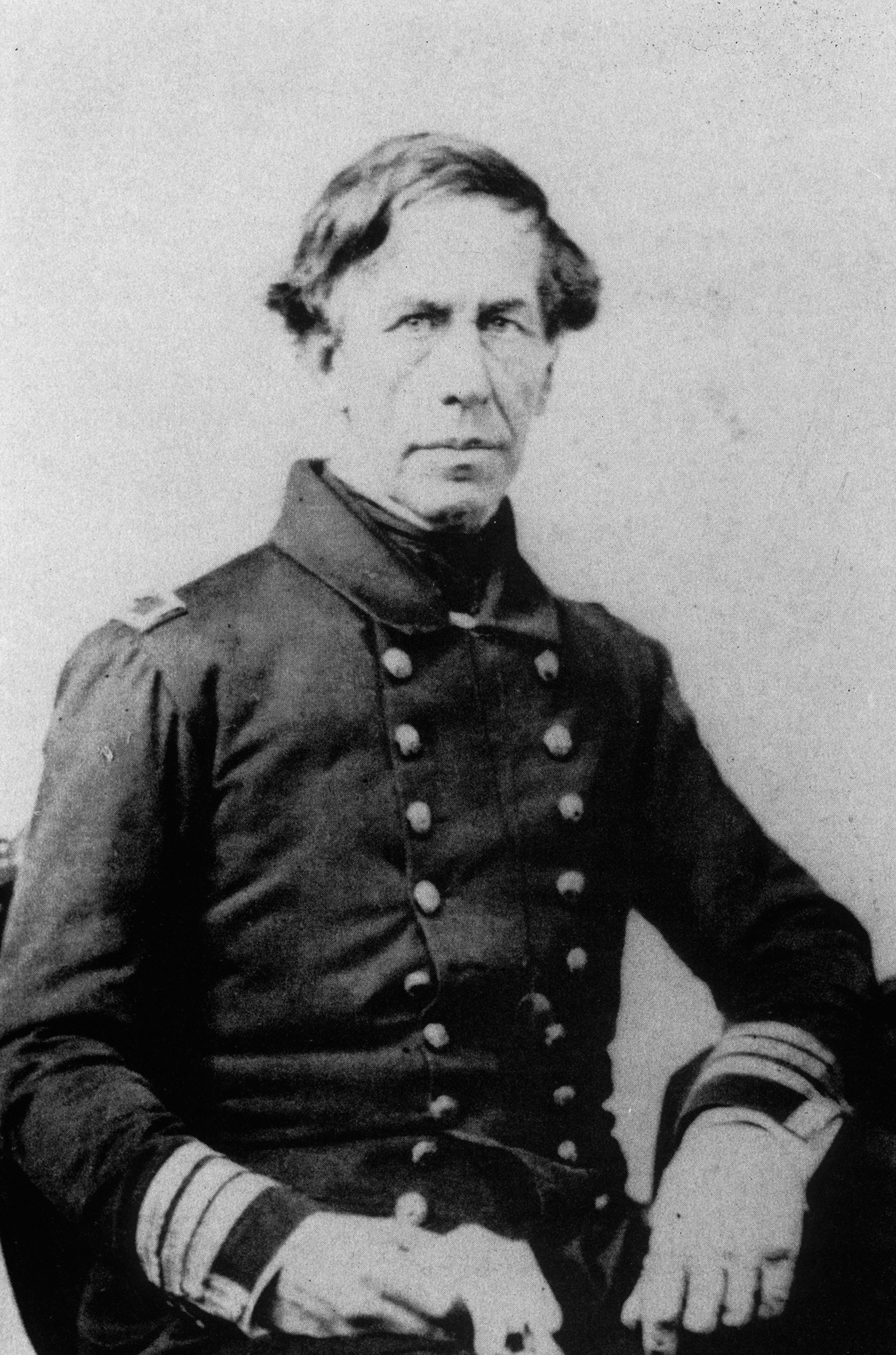
Charles Wilkes (April 3, 1798 – February 8, 1877) was an American naval officer, ship's captain, and explorer. He led the first United States Exploring Expedition (1838–1842). During the American Civil War (1861-1865), he commanded USS San Jacinto during the Trent Affair incident in which he stopped a British Royal Mail ship and forcibly removed two Confederate diplomats, almost leading to war between the United States and United Kingdom.
Wilkes was born in New York City on April 3, 1798, the great nephew of former Lord Mayor of London John Wilkes. His mother, Mary Seton Wilkes, died in 1802 when Charles was just three years old. As a result, Charles was raised and home-tutored by his aunt, Elizabeth Ann Seton, who was fluent in French from her own upbringing in New Rochelle, New York in a French Huguenot settlement. Charles also became fluent in French, which served him well throughout his career, including an extended stay in Europe (1830-1831). His fluency was also demonstrated during exploration of Puget Sound in 1841 with French-speaking guide Simon Plamondon. Since Elizabeth Seton was the widowed mother of five, Charles was early on sent to a boarding school, then on to Columbia College (present-day Columbia University).
Wilkes entered the United States Navy as a midshipman in 1818, and became a lieutenant in 1826. Based on the experience he gained in the nautical charting of Narragansett Bay (1833), he was placed in charge of the Navy's Department of Charts and Instruments, out of which developed the Naval Observatory and Hydrographic Office. The standards set here were to be invaluable during the United States Exploring Expedition of 1838-1842, which set a physical oceanography benchmark for the Office's first superintendent, Matthew Fontaine Maury, to maintain. Wilkes was elected to the American Philosophical Society in 1843.
During the 1820s, Wilkes was a member of the prestigious Columbian Institute for the Promotion of Arts and Sciences, counting among its members Presidents Andrew Jackson and John Quincy Adams and many prominent men of the day - including well-known representatives of the military, government service, medicine, and other professions.
In 1838, Wilkes, although not yet a seasoned naval line officer, was experienced in nautical survey work and collaborating with civilian scientists. With this background, he was given command of the government's first Exploring Expedition: "...for the purpose of exploring and surveying the Southern Ocean, ... as well to determine the existence of all doubtful islands and shoals, as to discover, and accurately fix, the position of those which [lay] in or near the track of our vessels in that quarter, and [might] have escaped the observation of scientific navigators." The U.S. Exploring Expedition was authorized by an act of Congress on May 18, 1836.
The Exploring Expedition, commonly known as the 'Wilkes Expedition' and the American Exploratory Expedition (or the American Ex. Ex. by many) included naturalists, botanists, taxidermists, artists, a mineralogist, and a philologist. Vessels in the Expedition were USS Vincennes (780 tons) and USS Peacock (650 tons), the brig USS Porpoise (230 tons), the store-ship USS Relief, and two schooners, USS Sea Gull (110 tons) and USS Flying Fish (96 tons). Departing from Hampton Roads, Chesapeake Bay on August 18, 1838, the expedition stopped at the Madeira Islands and Rio de Janeiro; visited Tierra del Fuego, Chile, Peru, the Tuamotu archipelago, Samoa, and New South Wales, Australia. In December 1839, they sailed from Sydney into the Antarctic Ocean where, west of the Balleny Islands, they sighted the coast of Antarctica on January 25, 1840. After charting 1500 miles of Antarctic coastline, the expedition went on to Fiji. There, the expedition kidnapped the chief Ro Veidovi, charging him with the murder of American whalers. July 1840 on Malolo Island, two sailors (one of whom was Wilkes' nephew Midshipman Wilkes Henry) were killed while bartering for food. Wilkes' retribution was swift and severe. According to an old man from Malolo Island, some 80 Fijians were killed in the incident.
The expedition then sailed on to the Hawaiian Islands. From December 1840 to March 1841, he employed hundreds of native Hawaiian porters and many of his own men to haul a pendulum to the summit of Mauna Loa to measure gravity. Instead of using the existing footpath, he blazed his own trail, taking much longer than anticipated. The conditions on the mountain reminded him of Antarctica: many of his crew suffering from snow blindness, altitude sickness, and foot injuries caused by shoes that had been torn on the sharp lava rock. While in Hawai'i the Expedition made the first measurements of the height of the islands' major mountains and created nautical charts of the coastlines. These charts were in use up to World War II.
In 1841 the Exploring Expedition went on to the West Coast of North America, exploring the Strait of Juan de Fuca, Puget Sound, the Columbia River, San Francisco Bay, and the Sacramento River. The first American Independence Day celebration west of the Mississippi River was held at Dupont, Washington, on July 5, 1841. The expedition then sailed to the Ellice Islands (now known as Tuvalu), visiting Funafuti, Nukufetau and Vaitupu. The expedition returned to the U.S. East Coast by way of Borneo, Singapore, the Philippines, the Sulu Archipelago, Polynesia and the Cape of Good Hope, reaching New York on June 10, 1842.
Hub AI
Charles Wilkes AI simulator
(@Charles Wilkes_simulator)
Charles Wilkes
Charles Wilkes (April 3, 1798 – February 8, 1877) was an American naval officer, ship's captain, and explorer. He led the first United States Exploring Expedition (1838–1842). During the American Civil War (1861-1865), he commanded USS San Jacinto during the Trent Affair incident in which he stopped a British Royal Mail ship and forcibly removed two Confederate diplomats, almost leading to war between the United States and United Kingdom.
Wilkes was born in New York City on April 3, 1798, the great nephew of former Lord Mayor of London John Wilkes. His mother, Mary Seton Wilkes, died in 1802 when Charles was just three years old. As a result, Charles was raised and home-tutored by his aunt, Elizabeth Ann Seton, who was fluent in French from her own upbringing in New Rochelle, New York in a French Huguenot settlement. Charles also became fluent in French, which served him well throughout his career, including an extended stay in Europe (1830-1831). His fluency was also demonstrated during exploration of Puget Sound in 1841 with French-speaking guide Simon Plamondon. Since Elizabeth Seton was the widowed mother of five, Charles was early on sent to a boarding school, then on to Columbia College (present-day Columbia University).
Wilkes entered the United States Navy as a midshipman in 1818, and became a lieutenant in 1826. Based on the experience he gained in the nautical charting of Narragansett Bay (1833), he was placed in charge of the Navy's Department of Charts and Instruments, out of which developed the Naval Observatory and Hydrographic Office. The standards set here were to be invaluable during the United States Exploring Expedition of 1838-1842, which set a physical oceanography benchmark for the Office's first superintendent, Matthew Fontaine Maury, to maintain. Wilkes was elected to the American Philosophical Society in 1843.
During the 1820s, Wilkes was a member of the prestigious Columbian Institute for the Promotion of Arts and Sciences, counting among its members Presidents Andrew Jackson and John Quincy Adams and many prominent men of the day - including well-known representatives of the military, government service, medicine, and other professions.
In 1838, Wilkes, although not yet a seasoned naval line officer, was experienced in nautical survey work and collaborating with civilian scientists. With this background, he was given command of the government's first Exploring Expedition: "...for the purpose of exploring and surveying the Southern Ocean, ... as well to determine the existence of all doubtful islands and shoals, as to discover, and accurately fix, the position of those which [lay] in or near the track of our vessels in that quarter, and [might] have escaped the observation of scientific navigators." The U.S. Exploring Expedition was authorized by an act of Congress on May 18, 1836.
The Exploring Expedition, commonly known as the 'Wilkes Expedition' and the American Exploratory Expedition (or the American Ex. Ex. by many) included naturalists, botanists, taxidermists, artists, a mineralogist, and a philologist. Vessels in the Expedition were USS Vincennes (780 tons) and USS Peacock (650 tons), the brig USS Porpoise (230 tons), the store-ship USS Relief, and two schooners, USS Sea Gull (110 tons) and USS Flying Fish (96 tons). Departing from Hampton Roads, Chesapeake Bay on August 18, 1838, the expedition stopped at the Madeira Islands and Rio de Janeiro; visited Tierra del Fuego, Chile, Peru, the Tuamotu archipelago, Samoa, and New South Wales, Australia. In December 1839, they sailed from Sydney into the Antarctic Ocean where, west of the Balleny Islands, they sighted the coast of Antarctica on January 25, 1840. After charting 1500 miles of Antarctic coastline, the expedition went on to Fiji. There, the expedition kidnapped the chief Ro Veidovi, charging him with the murder of American whalers. July 1840 on Malolo Island, two sailors (one of whom was Wilkes' nephew Midshipman Wilkes Henry) were killed while bartering for food. Wilkes' retribution was swift and severe. According to an old man from Malolo Island, some 80 Fijians were killed in the incident.
The expedition then sailed on to the Hawaiian Islands. From December 1840 to March 1841, he employed hundreds of native Hawaiian porters and many of his own men to haul a pendulum to the summit of Mauna Loa to measure gravity. Instead of using the existing footpath, he blazed his own trail, taking much longer than anticipated. The conditions on the mountain reminded him of Antarctica: many of his crew suffering from snow blindness, altitude sickness, and foot injuries caused by shoes that had been torn on the sharp lava rock. While in Hawai'i the Expedition made the first measurements of the height of the islands' major mountains and created nautical charts of the coastlines. These charts were in use up to World War II.
In 1841 the Exploring Expedition went on to the West Coast of North America, exploring the Strait of Juan de Fuca, Puget Sound, the Columbia River, San Francisco Bay, and the Sacramento River. The first American Independence Day celebration west of the Mississippi River was held at Dupont, Washington, on July 5, 1841. The expedition then sailed to the Ellice Islands (now known as Tuvalu), visiting Funafuti, Nukufetau and Vaitupu. The expedition returned to the U.S. East Coast by way of Borneo, Singapore, the Philippines, the Sulu Archipelago, Polynesia and the Cape of Good Hope, reaching New York on June 10, 1842.
Recent media