Hubbry Logo
NototheniidaeNototheniidaeMain
Open search
Nototheniidae
Community hub
Nototheniidae
logo
8 pages, 0 posts
0 subscribers
Be the first to start a discussion here.
Nototheniidae
Nototheniidae
from Wikipedia
In some scientific literature, the term "cod icefish" is used to identify members of this family. This should not be confused with the term "icefish," which refers to the "white-blooded" fishes of the family Channichthyidae. See Icefish (disambiguation).

Cod icefishes
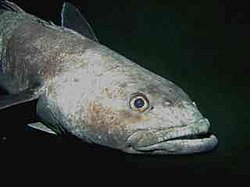
Head of Antarctic toothfish (Dissostichus mawsoni) in McMurdo Sound
Scientific classification Edit this classification
Kingdom: Animalia
Phylum: Chordata
Class: Actinopterygii
Order: Perciformes
Suborder: Notothenioidei
Family: Nototheniidae
Günther, 1861[1]
Genera

see text

Nototheniidae, the notothens or cod icefishes, is a family of ray-finned fishes, part of the suborder Notothenioidei which is traditionally placed within the order Perciformes. They are largely found in the Southern Ocean.

Taxonomy

[edit]

Nototheniidae was described as a family in 1861 by the German-born British ichthyologist Albert Günther with the type genus being Notothenia which had been described in 1844 by Sir John Richardson with the species Notothenia coriiceps which Richardson had also described in 1844 subsequently being designated as the type in 1862 by Theodore Nicholas Gill.[2] The name Notothenia means "coming from the south", a reference to the Antarctic distribution of the genus.[3] They are traditionally placed in the order Perciformes together with their relatives,[4] Actual phylogenetic relationships among species of suborder Notothenioidei have not yet been determined with certainty.[5]

Genera

[edit]
Longfin icedevil (Aethotaxis mitopteryx)
Emerald rockcod (Trematomus bernacchii)

The following subfamilies[1] and genera are classified within the family Nototheniidae:[6][2]

Characteristics

[edit]

Nototheniidae fishes have fusiform or elongate and oblong bodies. They typically have two dorsal fins, the first having 3 to 11 spines and the second having 25–42 segmented fin rays. The anal fin is similar to the second dorsal fin and has 22 to 40 segmented rays. All but the last dorsal and anal fin rays are branched. The caudal fin is rounded to forked and the pectoral fins are large. The mouth is terminal and may be horizontal or angled with a protrusible upper jaw. There are no teeth on the roof of the mouth. in most species there are no spines on the preoperculum or operculum. Any scales are usually ctenoid although the spinules may be reduced or absent. They have between 1 and 3 lateral lines.[7] They vary in size from. Total length of 11 cm (4.3 in) in Patagonotothen cornucola to 215 cm (85 in) in the Patagonian toothfish (Dissostichus eleginoides).[6]

Distribution and habitat

[edit]

Nototheniidae species are largely found in the Southern Ocean and are particularly abundant off the shores of Antarctica.[7] As the dominant Antarctic fish taxa, they occupy both sea-bottom and water-column ecological niches.[8]

Nototheniidae is a family of teleost fishes found mainly in the Southern Ocean, surrounding the continent of Antarctica. The family comprises about 50 species of fish that are adapted to living in the cold, nutrient-rich waters of the Southern Ocean. The Nototheniidae family includes some of the most ecologically and evolutionarily important fish in the Antarctic ecosystem, making them a crucial subject for scientific study.[citation needed]

Nototheniidae is a family of perciform fish that are primarily found in the Southern Ocean surrounding Antarctica, with some species also occurring in the sub-Antarctic regions of the southern hemisphere. They are known for their unique adaptations to the cold, such as the ability to produce antifreeze proteins to prevent their bodily fluids from freezing. The family includes over 100 species, making it the most diverse group of fish in the Southern Ocean. Nototheniidae inhabits a variety of habitats, from shallow coastal waters to deep ocean trenches. Many species are bottom-dwellers and can be found in rocky areas or on the seafloor, while others are pelagic and swim in the water column. Some species migrate seasonally to different habitats for feeding or spawning purposes. Due to their abundance in the Southern Ocean, Nototheniidae is an important part of the food chain for many marine predators, including seals, whales, and birds.[citation needed]

Biology

[edit]

Nototheniidae species have no swim bladder, however, they have other depth-related adaptations, such as increased fatty tissues and reduced mineralization of the bones, resulting in a body density approaching neutral, to fill a variety of niches.[8] The spleen may be used to remove ice crystals from circulating blood.[9][10] As the chilly Antarctic and sub-Antarctic waters of the Southern Ocean average −1 to 4 °C (30–39 °F),[11] most species of these regions produce antifreeze glycoproteins to prevent the formation of ice crystals in blood and other body fluids.[12]

The concentration of antifreeze glycoproteins can vary with differing environmental conditions, such as colder environments caused by location. Larger amounts of the proteins have been found in species with habitats in higher latitudes, due to the higher expression of the protein and longer degradation time compared to relatives in more temperate regions, portraying flexible temperature regulation.[13]

Some species exhibit polymorphism, for example, the circum-Antarctic Trematomus newnesi exists as two morphs in the Ross Sea, the typical morph and a large-mouthed/broad-headed morph.[14]

Fisheries

[edit]

Nototheniidae species are the major fish resource in the Southern Ocean, many notothens are under increasing pressure from commercial fishing, particularly the Patagonian toothfish and the Antarctic toothfish.[15]

References

[edit]
Revisions and contributorsEdit on WikipediaRead on Wikipedia
from Grokipedia
Nototheniidae, commonly known as cod icefishes or notothens, is a family of ray-finned fishes in the suborder Notothenioidei of the order , characterized by scaled bodies, protrusible mouths, gill membranes fused across the , a spinous with 3–11 spines followed by 25–42 soft rays, 1–3 lateral lines, and 45–59 vertebrae. This family comprises approximately 14 genera and 50 , primarily marine with rare occurrences in brackish waters, and is distinguished by the absence of a , compensated by high content and low bone mineralization for near-neutral buoyancy. As the basal family within the notothenioid radiation, Nototheniidae originated from an ancestral stock around 40–60 million years ago, with as the likely , and its members are red-blooded perciforms featuring robust skeletons and functional hemoglobins. Endemic to high-latitude waters of the , including coastal and sub-Antarctic regions, these fishes exhibit diverse habits ranging from benthic to pelagic and cryopelagic lifestyles; the suborder Notothenioidei, to which they belong, dominates the Southern Ocean's fish fauna with about 46% of total and up to 90% of at the highest latitudes. Key adaptations to the frigid, ice-laden environment include glycoproteins (AFGPs) evolved from trypsinogen-like genes to prevent freezing, efficient cold-stable assembly for cellular function, and specialized lens crystallins for vision in subzero conditions, enabling occupation of niches vacated by less cold-tolerant taxa during Antarctic cooling. Ecologically significant, Nototheniidae species form a of the , serving as prey for higher predators and supporting commercial fisheries for species like the (Dissostichus mawsoni) and (Dissostichus eleginoides), while their secondary pelagicism has expanded into the water column, enhancing overall ecosystem productivity.

Taxonomy and Systematics

Phylogenetic Position

Nototheniidae is a family of fishes within the suborder Notothenioidei of the order Perciformes, encompassing 13 genera and 54 valid species as per the most recent taxonomic catalog. The family was formally established by Albert Günther in 1861, with the type genus Notothenia originally described by John Richardson in 1844. Phylogenetically, Nototheniidae occupies a position within the monophyletic suborder Notothenioidei, which comprises eight and sub-Antarctic fish families adapted to cold waters. However, molecular analyses using and mitochondrial genes, such as 12S and 16S rRNA, have revealed that Nototheniidae as traditionally delimited is not monophyletic, exhibiting with genera like Lepidonotothen and others interspersed among lineages of families such as (icefishes). These studies indicate close sister relationships to other notothenioid families, reflecting a shared evolutionary history tied to the . The divergence of notothenioid lineages, including Nototheniidae, is estimated to have accelerated around 10-15 million years ago during cooling events that isolated waters and promoted adaptive radiations. This timing aligns with fossil-calibrated molecular clocks derived from nuclear and mitochondrial sequences, marking the expansion of cold-tolerant forms. Shared synapomorphies with other notothenioids include the production of glycoproteins, which prevent formation in bodily fluids and are unique to this suborder, as well as the complete absence of a and modifications to the pelvic fins that support benthic lifestyles. These traits underscore the family's evolutionary adaptations to subzero environments, though their precise distribution within the paraphyletic Nototheniidae varies across genera.

Genera and Species Diversity

The family Nototheniidae includes 13 recognized genera encompassing 54 valid species as of November 2025, representing a significant portion of the notothenioid diversity in the . This tally reflects updates from earlier estimates, with the species count for notothenioids overall increasing by about 15% between 2000 and 2021 due to new descriptions and taxonomic revisions, and further minor adjustments since. Modern classifications, drawing on Eschmeyer's Catalog of Fishes, emphasize efforts toward within the family while addressing historical inconsistencies in delimitation. The genera vary widely in species richness, with Trematomus and Patagonotothen being the most diverse. Other genera include Aethotaxis, Cryothenia, , Gobionotothen, Gvozdarus, Indonotothenia, Lepidonotothen, Notothenia, Pagothenia, Paranotothenia, Pleuragramma, and Nototheniops. These distributions highlight the family's concentration in Antarctic and sub-Antarctic waters, though some genera like Patagonotothen extend to temperate South American coasts.
GenusNumber of Species
Aethotaxis1
Cryothenia2
2
Gobionotothen5
Gvozdarus1
Indonotothenia1
Lepidonotothen6
Notothenia4
Pagothenia2
Paranotothenia2
Patagonotothen14
Pleuragramma1
Trematomus13
Subfamilies such as Nototheniinae (including Notothenia and allies) and Trematominae (including Trematomus) are sometimes recognized in classifications, though contemporary often treats the family as undivided based on molecular evidence. Taxonomic challenges persist, including varying species counts across —such as older estimates of 56 species in 14 genera versus the current 54 in 13 from Eschmeyer's Catalog—due to ongoing debates over synonymies, such as proposals to merge Cryothenia and Pagothenia into Trematomus based on phylogenetic studies, though these are not yet reflected in standard nomenclature. Eschmeyer's Catalog of Fishes, last updated in November 2025, continues to serve as the authoritative reference for resolving these discrepancies through rigorous nomenclature validation.

Morphology and Physiology

External Morphology

Nototheniidae, commonly known as cod icefishes, display a body form ranging from to elongate, adapted to their benthic or pelagic lifestyles in cold waters. Species vary significantly in size, with the smallest reaching a maximum length of about 20 cm, as seen in Gobionotothen marionensis, while the largest, such as Dissostichus eleginoides, can exceed 200 cm total length. The body is covered in small, embedded scales that provide minimal protection and flexibility in icy environments. Unlike many fishes, Nototheniidae lack a , relying instead on lipid-rich tissues for . The fin structure is characteristic of the suborder Notothenioidei, featuring two dorsal fins: the anterior one with 3–11 flexible spines and the posterior one with 25–42 soft rays. The anal fin mirrors the second dorsal in length and has 22–40 segmented rays, often branching in the posterior portion. Pelvic fins are thoracic or jugular in position, each with one spine and five soft rays, aiding in precise maneuvering over substrates. Head morphology includes a protrusible that is notably large in predatory species like the toothfishes ( spp.), facilitating capture of prey in low-visibility conditions. A fold of membranes spans the , and the sensory system features 1–3 lateral lines with enlarged canals and neuromasts tuned for detecting weak hydrodynamic signals in cold, dim waters. Coloration is typically drab, with browns and grays providing against benthic substrates, though sub- species may show paler or mottled patterns compared to the darker hues of Antarctic forms. Sexual dimorphism is generally minor, manifesting in subtle differences such as females being slightly larger in some species or variations in fin ray counts, with no pronounced secondary sexual characteristics across the family.

Physiological Adaptations

Nototheniids, as dominant members of the Antarctic fish fauna, exhibit remarkable physiological adaptations to the subzero temperatures of the , where seawater freezes at approximately -1.9°C. These adaptations primarily involve biochemical mechanisms that prevent freezing, maintain without gas-filled structures, and optimize metabolic and sensory functions in cold, low-oxygen environments. Central to their survival is the production of antifreeze glycoproteins (AFGPs), which were first identified in the in Antarctic notothenioids. These AFGPs bind to nascent crystals in the blood and body fluids, inhibiting their growth through thermal hysteresis—a depression of the freezing point by 1.0–1.5°C below the —without significantly altering the colligative freezing point. This mechanism arose from a unique event in the notothenioid lineage, where a trypsinogen-like evolved into the AFGP-coding sequence, enabling these to avoid lethal propagation in their supercooling body fluids. Studies on species like Notothenia rossii show that AFGP concentrations in serum vary with habitat temperature, reaching higher levels in colder polar waters to enhance freeze avoidance. Buoyancy in nototheniids is achieved without a swim bladder, a trait lost early in the notothenioid radiation, necessitating alternative strategies to counteract negative buoyancy from dense tissues. High lipid content serves as the primary compensator, comprising up to 30% of body mass in some species, stored in subcutaneous layers, liver, and specialized sacs that provide neutral buoyancy for midwater or benthic lifestyles. For instance, in Pleuragramma antarcticum, lipids account for significant portions of white muscle (up to 23% dry weight) and overall body composition, reducing specific gravity to near neutrality. Additionally, reduced skeletal mineralization contributes to lower density; nototheniid bones exhibit osteopenia with diminished hydroxyapatite deposition, retaining more cartilage and resulting in skeletons that are 20–50% lighter than those of temperate relatives. This combination allows efficient vertical migration and energy conservation in oxygen-rich but cold waters. Metabolic adjustments in nototheniids reflect to chronically low temperatures (-1.9°C to ), featuring reduced overall rates to match sluggish environmental kinetics while ensuring oxygen delivery. activities are tuned for efficiency at cold temperatures, with lower basal rates preventing wasteful expenditure, as seen in mitochondrial capacities that support routine without excess heat production. High concentrations in red muscle—up to 6–8% of cellular protein in some species—facilitate and in viscous cold fluids, compensating for lower convective transport. exhibit high oxygen affinity under these conditions, with P50 values around 10–20 mmHg at -1.5°C and pH 7.8–8.1, enabling efficient loading in the high-solubility waters despite the absence of effect in most nototheniids. Osmoregulation in nototheniids maintains internal fluids slightly hypoosmotic to (around 85–90% of ambient osmolality) through elevated levels of and free like , which lower the freezing point and reduce osmotic stress in cold brines. Plasma concentrations reach 100–150 mM, augmented by glycine betaine and other methylamines to stabilize proteins against urea-induced denaturation. This strategy minimizes energy costs for pumping via gills and kidneys, as the cold slows and , allowing nototheniids like Notothenia coriiceps to thrive in saline conditions without excessive water loss. Sensory physiology in nototheniids is enhanced for the dim, turbid waters, with olfaction and vision adapted to low-light . Olfactory rosettes possess densely packed lamellae rich in sensory , enabling detection of chemical cues at thresholds 10–100 times more sensitive than temperate , crucial for locating prey in darkness or under . Visual systems feature large eyes relative to body size, with retinas containing high densities of rod photoreceptors (up to 10^6/mm²) and oil droplets for improved light capture, supporting in the blue-green spectrum dominant below 100 m depth. Species like Trematomus bernacchii exhibit spectral tuning via genes optimized for 450–500 nm wavelengths, balancing energy for low-visibility navigation and predation.

Distribution and Ecology

Geographic Range

The family Nototheniidae is predominantly distributed across the , exhibiting a circum-Antarctic range from approximately 40°S northward to the continental shelf and surrounding sub-Antarctic islands, including and the . This distribution reflects the family's adaptation to cold, high-latitude marine environments in the . Species-specific distributions vary widely within this range, with many Nototheniidae being high-Antarctic endemics confined to continental shelf waters; for instance, several species in the genus Trematomus are primarily found in regions like the . In contrast, sub-Antarctic species such as Notothenia rossii occur around the and other northern sub-Antarctic localities. Wide-ranging or migratory forms include Dissostichus mawsoni, which inhabits deep continental slope and shelf waters from the across to the in a circumpolar pattern south of 60°S. Latitudinal gradients in distribution show that approximately 79% of notothenioid , including the majority of the 56 Nototheniidae across 14 genera, are endemic to and sub- waters, while around 30 in the broader suborder extend to non- southern temperate regions. A 2021 checklist confirms 77 , 33 sub-, and 30 non- for the suborder Notothenioidei, underscoring Nototheniidae's dominance in polar distributions. Historical range shifts are evident from fossil records, with the adaptive radiation of Nototheniidae beginning during the Oligocene-Miocene transition around 25-34 million years ago, followed by post-glacial expansions during the Pleistocene that facilitated their current circum-Antarctic spread.

Habitat and Ecological Roles

Nototheniidae species inhabit a wide range of depths in the Southern Ocean, from shallow benthic zones to pelagic waters extending beyond 2000 meters. For instance, Pleuragramma antarcticum primarily occupies the upper 200 meters of the water column, often beneath ice cover, while species like Dissostichus mawsoni and Dissostichus eleginoides are typically found at depths of 1000–2000 meters or deeper in demersal and pelagic-oceanic environments. Many nototheniids, such as Trematomus newnesi, exhibit polymorphic adaptations, with up to four morphs varying in buoyancy and morphology to exploit different depth strata, from inshore shallows below 20 meters to mid-depths up to 400 meters. These fishes thrive in cold, stable water conditions characteristic of and sub-Antarctic regions, with temperatures ranging from -1.9°C near the freezing point of to about 4°C in warmer sub-Antarctic areas. High oxygen in these frigid waters supports their , and many species associate with ice-covered continental shelves, where anchor ice and seasonal influence habitat availability up to depths of around 500 meters. In sub-Antarctic zones, certain nototheniids, such as Patagonotothen tessellata, inhabit kelp forests dominated by pyrifera, providing structured benthic habitats in shallower coastal waters. Ecologically, Nototheniidae occupy diverse trophic positions as both predators and key prey in food webs. Species like Notothenia coriiceps serve as important forage for higher predators, including and seals, particularly in coastal assemblages. They also function as mid-level predators, contributing to the regulation of lower trophic levels such as crustaceans and smaller fishes, thereby maintaining structure in benthic, epibenthic, and pelagic niches. Nototheniids are particularly abundant in biodiversity hotspots like the and , where they dominate fish assemblages and support high levels of . The hosts over 50 notothenioid species, representing a significant portion of the regional ichthyofauna below 1000 meters. Similarly, the features rich nototheniid communities, with diverse depth-adapted forms enhancing overall marine . Climate change poses significant threats to Nototheniidae habitats through ocean warming and deoxygenation, leading to projected range contractions and reduced viable habitat overlap. For example, (Dissostichus mawsoni) may experience up to 40% subsurface habitat loss by the end of the due to these stressors. Warming also disrupts early life stages, as seen in Notothenia coriiceps, where elevated temperatures impair embryonic development and hatching success. Sub-Antarctic species face northern range shifts under severe scenarios, exacerbating vulnerability across the family.

Life History and Behavior

Reproduction and Development

Members of the Nototheniidae family are primarily oviparous, with occurring through broadcast spawning in most species, though some produce demersal eggs deposited in nests or crevices. is limited overall but present in several taxa, including egg guarding by males until hatching, as observed in species like Nototheniops nudifrons, where fathers defend nests against predators. In Trematomus species, such as T. eulepidotus and T. loennbergii, demersal eggs are guarded, contributing to higher survival rates in benthic habitats. Reproductive cycles are typically annual, with spawning timed to austral seasons that optimize larval survival; Antarctic species often spawn in spring to summer (September–February), while sub-Antarctic forms like Patagonotothen cornucola spawn in winter (July–August). Group-synchronous ovarian development predominates, featuring two oocyte clutches: one for immediate spawning and another for the following season, as seen in Notothenia rossii and N. coriiceps. Fecundity varies widely but is generally low to moderate, ranging from 1,000 to over 100,000 eggs per female, with common values of 1,000–20,000; for example, Trematomus species produce 2,000–20,000 eggs, while Patagonotothen cornucola reaches up to 27,000 s. Egg sizes are larger in species (up to 5 mm diameter in N. coriiceps), correlating with reduced fecundity and enhanced yolk reserves for cold-water development. Sexual maturity is attained at ages of 3–10 years, depending on species and environmental conditions, with first spawning often at 50–80% of maximum lifespan; for instance, Nototheniops nudifrons matures at 4–5 years. Size at maturity spans 20–100 cm total length, as exemplified by Notothenia rossii reaching maturity at approximately 49 cm. Early life stages involve pelagic larvae in many species, hatching with yolk sacs that provide initial nutrition; in Notothenia coriiceps, eggs develop over 6–7 months at near-freezing temperatures before at about 14 mm, with large fins aiding early swimming. Larval durations extend 6–12 months, culminating in marked by skeletal and settlement, during which high predation mortality affects survival rates. In Nototheniops nudifrons, occurs after 124 days, followed by a post-hatch larval phase of at least 38 days with daily increments indicating growth.

Feeding and Behavior

Nototheniidae exhibit a predominantly carnivorous diet, with most species classified as benthopelagic feeders consuming a range of and . Common prey includes (euphausiids), amphipods, polychaetes, and gastropods, alongside occasional macro in some nearshore species like Notothenia coriiceps, which opportunistically grazes on benthic algae during spring and summer. Larger predatory members, such as Dissostichus eleginoides and Dissostichus mawsoni, primarily target , cephalopods, crustaceans, and other , reflecting their role as apex predators in deeper waters. In contrast, smaller benthic species like those in the Trematomus focus on amphipods and polychaetes, with dietary overlap minimized through resource partitioning in sympatric assemblages. Foraging strategies among nototheniids are generally opportunistic and adapted to the low-productivity environment, with many species acting as ambush visual hunters on benthic or semi-pelagic prey. Notothenia coriiceps, for instance, displays year-round feeding with no significant seasonal shifts in diet, relying on constant availability of prey like amphipods and euphausiids. Pelagic species such as Pleuragramma antarcticum employ schooling behaviors to facilitate group foraging on , forming large aggregations that enhance prey encounter rates in open water. Solitary predators like toothfishes ( spp.) show size-dependent foraging scales, with larger individuals undertaking broader movements to pursue mobile prey such as . Diurnal patterns are evident in some taxa, though overall activity is constrained by the cold temperatures, which result in metabolic rates approximately 10 times lower than those of temperate-zone fishes at equivalent environmental conditions, allowing sustained low-energy foraging. Social behaviors in Nototheniidae are limited, with juveniles of some species like Pleuragramma antarcticum exhibiting schooling to reduce predation risk during feeding migrations, while adults often remain solitary or form loose aggregations. Territorial agonistic displays occur in benthic species, such as Dissostichus mawsoni, where individuals compete for prime feeding grounds through aggressive interactions. Many nototheniids undertake seasonal migrations to optimize feeding, with offshore movements in species like Notothenia rossii targeting productive zones rich in crustaceans and fish. Sensory capabilities, particularly the system, play a crucial role in prey detection within the dark, low-visibility waters; for example, Pagothenia borchgrevinki uses neuromasts tuned to low-frequency vibrations from planktonic prey movements. Polymorphism influences feeding in certain species, notably Trematomus newnesi, where benthic morphs with larger mouths target deeper invertebrate prey, while pelagic morphs feed higher in the on , reflecting adaptive divergence in foraging depth. This intraspecific variation underscores the family's ecological flexibility, enabling coexistence across microhabitats.

Fisheries and Conservation

Commercial Exploitation

The family Nototheniidae includes several commercially important species, particularly the (Dissostichus eleginoides) and (D. mawsoni), which are prized for their firm white flesh suitable for high-end fillets and steaks. The marbled rockcod (Notothenia rossii) was historically valued for its white, delicate meat used in filleting for frozen products, though current exploitation is limited due to past and ongoing stock recovery. These species, especially the toothfishes, dominate the finfish trade due to their slow-growing nature and premium market appeal. Commercial exploitation of Nototheniidae began intensifying in the with Soviet and fleets targeting N. rossii around sub- islands, leading to a boom in the 1970s and 1980s when annual catches of finfish, including nototheniids, reached peaks exceeding 200,000 tonnes. The fishery expanded rapidly from the late 1980s off , , and the , with Soviet discovery of stocks near Kerguelen in 1985 accelerating development eastward to and beyond. By the mid-, reported landings for toothfish alone peaked at over 40,000 tonnes amid growing global demand, though illegal, unreported, and unregulated (IUU) fishing—peaking with over 55 vessels in the late —nearly doubled effective harvests and threatened stocks until curbed by international efforts in the early . Today, fisheries are regulated under the Commission for the Conservation of Marine Living Resources (CCAMLR), which sets precautionary catch limits. As of 2024-2025, total allowable catches (TACs) for toothfish across key CCAMLR areas, including 3,298 tonnes in the region, contribute to overall sustainable quotas of approximately 10,000–15,000 tonnes annually. Fishing methods primarily involve demersal longlining, with lines up to 10 km deploying thousands of baited hooks to target deep-water (300–2,000 ), though some sub-Antarctic operations use trawls. of seabirds, such as albatrosses, has been a significant issue in longline fisheries, prompting mandatory mitigation like weighted lines, bird-scaring devices (tori lines), and offal discharge restrictions to achieve sink rates that reduce hooking mortality by up to 76% in some cases. Economically, Nototheniidae fisheries generate substantial revenue, with toothfish exports primarily to the (41% of volume), (37%), and other Asian and European markets under names like "Chilean ," fetching prices up to €25/kg. Regional operations center on the , (20,000–50,000 tonnes annually in peak periods), and (around 5,200 tonnes in 2020–2022), supporting jobs in processing and export, with many certified sustainable by the Marine Stewardship Council.

Conservation Status and Management

Nototheniidae species face multiple threats, primarily from , which historically depleted key stocks such as (Dissostichus eleginoides) by up to 80% in the 1990s due to illegal, unreported, and unregulated (IUU) fishing in the . exacerbates these pressures by warming Antarctic waters, reducing suitable cold-water habitats for these stenothermal fishes and potentially shifting distributions northward, with models predicting habitat loss of 20-50% for some species by 2100. in trawl and longline fisheries targeting or other species also contributes to mortality, particularly for juveniles of smaller nototheniids like Trematomus spp., though mitigation measures such as bird-scaring lines have reduced impacts indirectly benefiting fish populations. Conservation statuses vary across the family, with many endemic Nototheniidae classified as due to limited population data in remote habitats; for instance, over 40% of assessed notothenioids fall into this category according to the 2020 IUCN evaluations, though many including commercial ones remain as of 2025. , including the (D. mawsoni), are currently by the (Version 2025-1), though they face ongoing risks from exploitation. In contrast, some sub- like the Notothenia coriiceps are listed as Least Concern, but overall, the family's endemic nature underscores the need for enhanced monitoring. Management efforts are coordinated by the Commission for the Conservation of Antarctic Marine Living Resources (CCAMLR), established in , which implements precautionary quotas for commercially exploited species such as toothfish, limiting catches to sustainable levels based on stock assessments (e.g., 12,000 tonnes annually for in key areas). The 2016 designation of the Region (MPA), covering 1.55 million km², prohibits directed fishing for nototheniids in core zones while allowing limited research, aiming to protect hotspots including spawning grounds. Additionally, several toothfish fisheries have achieved (MSC) certification for sustainability in the 2020s, such as the South Georgia longline fishery recertified in 2022, ensuring adherence to ecosystem-based principles. Recent studies indicate partial population recoveries following strengthened regulations; for example, CCAMLR assessments show approximately 20% biomass increase in stocks from 2010 to 2020 in managed sub-Antarctic areas, attributed to quota compliance and reduced IUU fishing, with continued monitoring into 2025 suggesting sustained trends. Genetic monitoring programs, including and SNP analyses, have been employed to detect signals, revealing high among populations that supports stock delineation but also highlights vulnerabilities to localized depletion in species like Notothenia rossii. Updates from CCAMLR reports (2021-2025) emphasize ongoing challenges, including integrating climate projections into management, to address gaps in post-2010 data for many species.

References

Add your contribution
Related Hubs
User Avatar
No comments yet.