Hubbry Logo
Compression fossilCompression fossilMain
Open search
Compression fossil
Community hub
Compression fossil
logo
8 pages, 0 posts
0 subscribers
Be the first to start a discussion here.
Compression fossil
Compression fossil
from Wikipedia
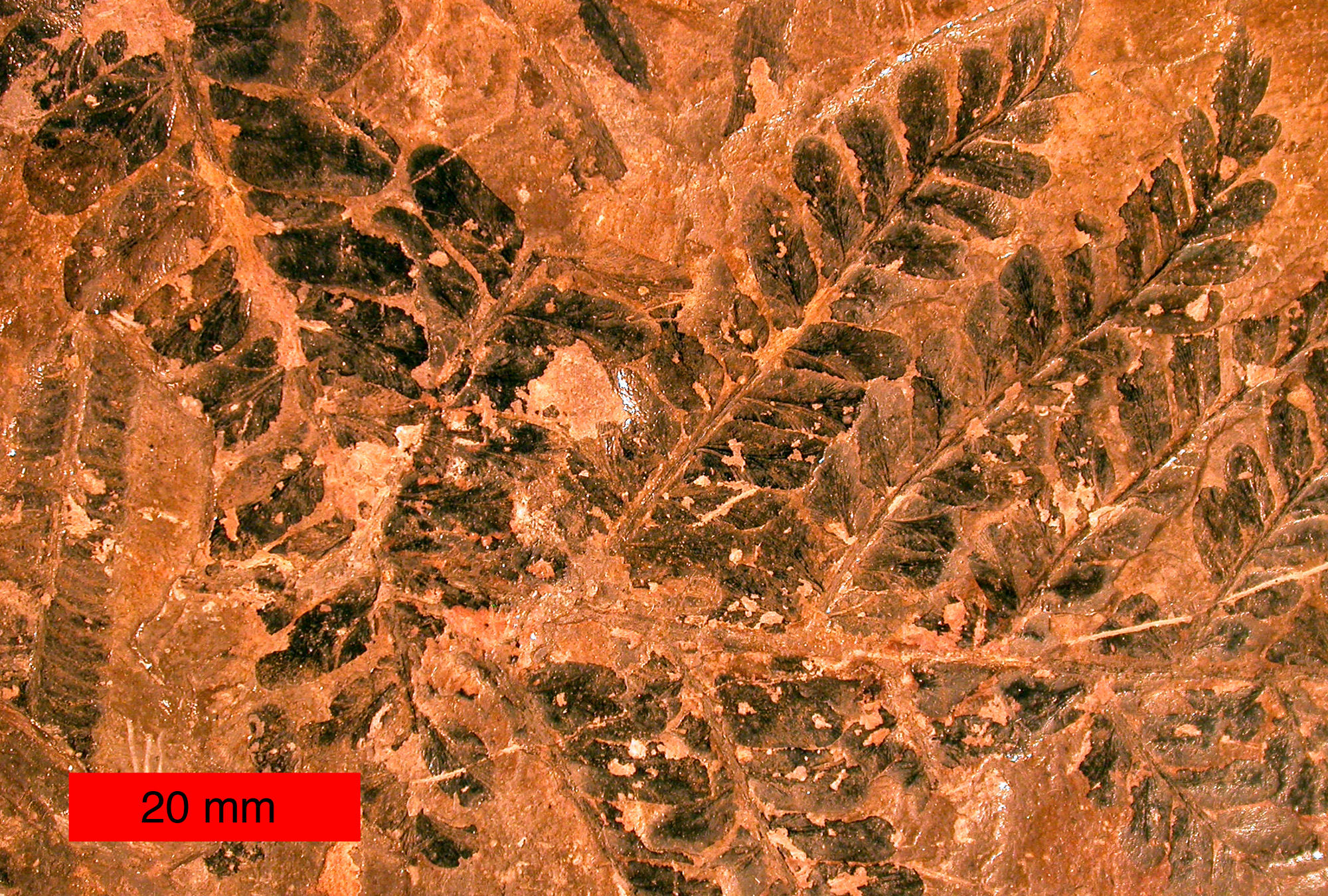
Fossil seed fern leaves from the Late Carboniferous of northeastern Ohio.

A compression fossil is a fossil preserved in sedimentary rock that has undergone physical compression. While it is uncommon to find animals preserved as good compression fossils, it is very common to find plants preserved this way. The reason for this is that physical compression of the rock often leads to distortion of the fossil.

The best fossils of leaves are found preserved in fine layers of sediment that have been compressed in a direction perpendicular to the plane of the deposited sediment.[1] Since leaves are basically flat, the resulting distortion is minimal. Plant stems and other three-dimensional plant structures do not preserve as well under compression. Typically, only the basic outline and surface features are preserved in compression fossils; internal anatomy is not preserved. These fossils may be studied while still partially entombed in the sedimentary rock matrix where they are preserved, or once lifted out of the matrix by a peel or transfer technique.[2]

Compression fossils are formed most commonly in environments where fine sediment is deposited, such as in river deltas, lagoons, along rivers, and in ponds. The best rocks in which to find these fossils preserved are clay and shale, although volcanic ash may sometimes preserve plant fossils as well.[3]

Slabs

[edit]
Counter slab (left) and slab (right) of Pterodactylus
Slab (left) and counter slab (right) of Longipteryx

A slab and counter slab, more often called a part and counterpart in paleoentomology[4] and paleobotany,[5] are the matching halves of a compression fossil, a fossil-bearing matrix formed in sedimentary deposits. When excavated the matrix may be split along the natural grain or cleavage of the rock. A fossil embedded in the sediment may then also split down the middle, with fossil remains sticking to both surfaces, or the counter slab may simply show a negative impression or mould of the fossil.[6] Comparing slab and counter slab has led to the exposure of a number of fossil forgeries.

Differences between the impressions on slab and counterslab led astronomer Fred Hoyle and applied physicist Lee Spetner in 1985 to declare that some Archaeopteryx fossils had been forged, a claim dismissed by most palaeontologists.[7]

In its November 1999 edition, National Geographic magazine announced the discovery of Archaeoraptor, a link between dinosaurs and birds, from a 125 million-year-old fossil that had come from Liaoning Province of China. Chinese palaeontologist Xu Xing came into possession of the counter slab through a fossil hunter. On comparing his fossil with images of Archaeoraptor it became evident that it was a composite fake. His note to National Geographic led to consternation and embarrassment. Lewis Simons investigated the matter on behalf of National Geographic. In October 2000, he reported what he termed:

a tale of misguided secrecy and misplaced confidence, of rampant egos clashing, self-aggrandizement, wishful thinking, naïve assumptions, human error, stubbornness, manipulation, backbiting, lying, corruption, and, most of all, abysmal communication.

It was eventually determined that Archaeoraptor had been constructed from parts of an Early Cretaceous bird Yanornis martini and a small dinosaur Microraptor zhaoianus.[8]

In order to increase their profit, fossil hunters and dealers occasionally sell slab and counter slab separately. A reptile fossil also found in Liaoning was described and named Sinohydrosaurus in 1999 by the Beijing Natural History Museum. In the same year the Institute of Vertebrate Paleontology and Paleoanthropology in Beijing described and named Hyphalosaurus lingyuanensis, unaware they were working with the counter slab of the same specimen. Hyphalosaurus is now the accepted name.[9]

References

[edit]
Revisions and contributorsEdit on WikipediaRead on Wikipedia
from Grokipedia
A compression fossil is a type of fossil preservation in which an or its parts, such as leaves, , or soft tissues, are flattened between layers of fine-grained , resulting in a two-dimensional carbonized residue that captures the external morphology and sometimes microscopic details of the original structure. This process, often involving , occurs when organic material is rapidly buried in environments like lakes or floodplains, where low oxygen levels slow decay, and subsequent pressure from overlying sediments squeezes out volatile compounds, concentrating carbon into a thin black or brown film. Unlike mere impressions, which are hollow imprints lacking organic residue, compressions retain this carbonaceous layer, making them valuable for studying ancient ecosystems, particularly in and plant and insect records. Notable examples include Eocene crane flies from Florissant Fossil Beds National Monument and Eocene sycamore leaves from John Day Fossil Beds National Monument, where the preserved films reveal details like venation and wing patterns. Compression fossils differ from three-dimensional molds or casts by their planar nature and organic preservation, though they can be fragile and prone to degradation in older rocks due to the instability of the carbon film.

Overview

Definition

A compression fossil is formed by the physical compression of organic remains into fine-grained , resulting in a flattened impression where some original organic material may be preserved, often chemically altered into a thin carbon film. This process creates a two-dimensional representation of the , with the side retaining more organic residue termed the "part" and the corresponding mold on the opposing rock surface called the "counterpart." Compression fossils are particularly common among remains due to the inherently flat and soft of structures, such as leaves and stems, which compress readily under overburden without significant resistance. In contrast, they are rarer in animals, as the distortion of three-dimensional body forms, especially those with hard parts like shells or bones, typically prevents clear preservation through this mechanism unless the organisms are small or soft-bodied. The term "compression" specifically denotes pressure-induced flattening of the actual organic material, distinguishing it from mere , where a mold is filled by minerals to replicate the without retaining the original remains.

Distinction from Other Fossils

Compression fossils differ from impression fossils primarily in the retention of organic material. While both types result from the flattening of organisms under sedimentary , impressions form as mere external molds or prints on rock surfaces without any preserved organic residue, capturing only the and texture of the organism's exterior. In contrast, compression fossils preserve a thin film of carbonized , often derived from the or of the original tissues, which provides additional chemical and structural information beyond mere morphology. Unlike permineralized fossils, which involve the infiltration of minerals such as silica or calcite into the organism's pores and tissues, filling them to create a three-dimensional preservation of the original structure and internal details, compression fossils undergo external flattening without significant mineralization of internals. This process preserves the overall outline and some surface details but results in a two-dimensional representation, as the original volume is lost to compaction. Permineralization, by preserving both external form and internal anatomy in 3D, allows for detailed study of cellular structures, whereas compression emphasizes flattened external features. Compression fossils also contrast with those preserved in or as casts. Amber entrapment encases organisms in hardened , maintaining three-dimensional integrity and often soft tissues without flattening or compression, primarily seen in , and occasionally in small vertebrates such as and frogs. Cast fossils, formed when fills a mold left by a decayed and hardens into a , replicate the external shape in 3D but lack original material entirely. Compression, occurring in sedimentary contexts without encasement or molding, focuses on the partial degradation and flattening of organic remains in fine-grained sediments.
Fossil TypePreservation MethodRetained StructuresCommon Taxa
CompressionFlattening under with 2D outline, carbon film, some surface details (e.g., leaves, ferns)
ImpressionExternal molding without organics2D shape and texture only,
PermineralizedMineral infiltration into tissues3D form, internal (wood), some animals
Encase in resin3D unaltered, soft tissues, occasionally small vertebrates
CastSediment filling of mold3D external replicaShells, vertebrates, tracks

Formation

Environmental Conditions

Compression fossils typically form in fine-grained, low-energy depositional environments that promote rapid burial and minimize exposure to oxygen and physical disturbance, such as river deltas, lagoons, ponds, swamps, oxbow lakes, and areas affected by falls. These settings allow organic remains, particularly from and soft-bodied organisms, to be quickly covered by , preventing aerobic decay by , fungi, and while facilitating the exclusion of oxygen to create anoxic conditions essential for preservation. The sediments involved are predominantly clay-rich shales, mudstones, and siltstones, which compact evenly under the weight of overlying , squeezing out and flattening the remains into thin carbon films without significant distortion. Volcanic ash (tuff) and diatomite can also serve as effective media due to their fine texture and ability to entomb specimens rapidly. Such low-energy, waterlogged environments, often anaerobic, inhibit activity and enhance the retention of delicate structures like leaves and wings. These conditions were particularly prevalent during the and eras, when extensive swampy, anoxic landscapes—such as those in the coal forests and Mesozoic floodplains—supported lush vegetation and provided ideal sites for compression preservation. Humid, tropical to temperate climates with stagnant waters in these periods fostered organic accumulation without widespread decay. Preservation is hindered in high-energy environments, such as fast-flowing rivers or stormy coastal zones, where currents or scatter remains before , or in coarse sediments like sandstones and conglomerates that do not compact uniformly and disrupt the flattening . Exposure to oxygenated waters or bioturbation further promotes rapid decomposition, limiting the formation of detailed compressions.

Process of Compression

The process of compression fossil formation begins with the rapid of organic remains, typically or soft-bodied animals, in fine-grained sediments such as or , often in low-energy environments like lakes or floodplains. This occurs under anaerobic conditions that limit oxidative decay, allowing the remains to be preserved before significant . Once buried, the overlying layers exert increasing , initiating as water is expelled from the matrix and the organic material. Over time—spanning thousands to millions of years—this compaction flattens the three-dimensional remains into two-dimensional films or impressions, with the degree of flattening depending on the rigidity of the tissues and the of the enclosing . Experimental simulations using plant materials like stems and leaves buried in clay or under controlled pressures (0.3–1.2 kg/cm²) demonstrate vertical reductions of up to 97% in fine-grained matrices, while horizontal dimensions may expand slightly due to plasticity. Diagenesis follows burial and compaction, involving chemical alterations that transform the into durable carbon films. In anoxic settings, bacterial activity plays a key role by mediating the early breakdown of complex organic compounds, driving off volatile elements like , oxygen, and while enriching the residue in carbon through various anaerobic bacterial processes, such as and sulfate reduction where applicable. This results in a thin, coalified layer that outlines the original morphology, often enhanced by microbial biofilms that encase and protect the remains from further degradation. Mineralization may also occur as fine sediments infiltrate voids in the remains, such as stems or exoskeletons, forming internal casts that contribute to the fossil's structural integrity without complete replacement. Subsequent burial under deeper sediment layers introduces moderate heat and pressure, akin to low-grade metamorphism, which further consolidates the carbon film and sharpens fine details like venation or texture without obliterating them. Temperatures around 50–100°C and pressures from can promote this stabilization over geological timescales, ensuring the withstands uplift and exposure. Conceptually, this sequence can be visualized in stages: initial preserves the full form; compaction squeezes it flat, expelling fluids; diagenetic coats it in a dark residue; and metamorphic enhancement refines the outline, yielding the characteristic compressed .

Characteristics and Preservation

Morphological Features

Compression fossils exhibit flattened, two-dimensional outlines that represent the compressed remnants of originally three-dimensional organisms, often preserving fine surface details such as venation patterns in leaves or wing structures in through thin carbon films. These outlines arise from the physical deformation of organic material during , where the loss of internal volume results in a planar representation that retains external morphological contours. Distortions in compression fossils commonly include wrinkling, shearing, or elongation, caused by uneven from overlying sediments that alter the original shape to varying degrees depending on the thickness and flexibility of the preserved material. Thinner structures, such as leaves or delicate appendages, tend to show less severe deformation compared to thicker ones, though overall compaction leads to a generalized flattening effect. Compression fossils preserve fine surface details visible to the or low , such as venation patterns in leaves. With microscopic techniques, cuticular details and sometimes cell outlines can be observed, though the complete loss of three-dimensional volume prevents reconstruction of internal . This surface preservation allows for the measurement of gross morphological traits like vein density, though deformation may slightly bias such observations. Key identification markers for compression fossils include dark carbonized films that contrast sharply with the lighter surrounding matrix rock, providing a visible imprint of the original organism's . These films, resulting from the compaction process, enhance the detectability of fine details under proper lighting conditions.

Remaining Organic Material

In compression fossils, the remaining organic material primarily consists of thin films of carbonized organic compounds, often coalified into a black, coal-like residue derived from the original tissues of plants or occasionally animals. These films, which represent the partially preserved biochemical remnants after decay and , are typically 0.01 to 0.1 mm thick and composed mainly of complex aliphatic and aromatic hydrocarbons, with kerogen-like insoluble forming the bulk of the structure. The chemistry of preservation involves rapid burial in anaerobic, low-oxygen sediments that inhibit aerobic decomposers, such as and fungi, thereby halting full mineralization and allowing selective retention of resistant organic components. This process results in the partial of tissues, where volatile compounds are lost but stable elements like cuticles, spores, and grains endure as thin carbonaceous layers, preserving fine details of these structures without complete degradation. Advanced analytical methods, particularly and , enable the detection of preserved biomolecules within these fossils, including derivatives in plant compressions that indicate the original photosynthetic apparatus. Such techniques reveal spectral signatures of pheophytin and other remnants, offering direct evidence of ancient biochemical pathways despite the altered state of the material. A key limitation of organic preservation in compression fossils is the absence of soft tissues, such as muscles or internal organs, which decay too rapidly under even mildly aerobic conditions; only highly resistant, lignified, or cuticularized parts survive the taphonomic process to form these durable carbon films.

Examples

Plant Examples

Compression fossils of seed ferns, such as those belonging to the genus Pecopteris and Sphenopteris, provide detailed impressions of fronds and leaflets from coal swamp environments, illustrating the dominance of fern-like pteridosperms in late forests. These fossils, often found in the Illinois Basin, preserve fine details of pinnule margins and vein patterns, offering insights into the reproductive strategies and ecological roles of early seed-bearing plants. A notable example from the Permian of is the flora, where compressed leaves exhibit characteristic tongue-shaped forms with reticulate venation, enabling reconstructions of high-latitude forest dynamics and atmospheric conditions. These fossils, widespread across southern continents like and , reveal adaptations such as thick cuticles and vein densities indicative of cooler, seasonal climates, aiding paleoclimate models for the late ice age. Venation patterns in leaves have been analyzed to estimate photosynthetic rates and water-use efficiency, linking to Gondwanan environmental shifts. In the of the , compression fossils of (e.g., Cladophlebis) and (e.g., Zamites) preserve entire fronds and leaflets, capturing the transitional flora before angiosperm dominance. These specimens from and show sori on fern fronds and pinnate cycad leaves with parallel veins, documenting competitive interactions in settings and contributing to understandings of decline amid rising diversity. Such fossils highlight the persistence of non-angiosperm lineages, providing morphological evidence for evolutionary pressures during the mid-Cretaceous radiation. The Mazon Creek Lagerstätte in exemplifies swamp ecosystems through compressed lycopods like and , where bark impressions and branching patterns detail arborescent growth in habitats. These fossils, preserved in siderite concretions from the Pennsylvanian Francis Creek Shale, reconstruct dense, peat-forming vegetation that supported diverse invertebrate communities, offering a snapshot of tropical lowland around 300 million years ago. Plant compression fossils play a crucial role in tracing diversification following the , by preserving leaf architectures and reproductive structures that document the shift from simple vascular to complex forests, informing timelines of lignophyte and radiations.

Animal Examples

Compression fossils of animals are less common than those of , primarily because animal tissues, especially in vertebrates and soft-bodied forms, are more prone to complete decay before compression can occur. Insects represent one of the most abundant groups preserved as compression fossils, particularly from the Upper in , a renowned known for its fine-grained lithographic deposits that capture delicate structures. Dragonflies () from this site often exhibit exceptional preservation of wing venation, allowing detailed study of their morphology and contributing significantly to understanding insect evolution and . For instance, fossils like those of the Sphenostoma reveal intricate vein patterns that aid in reconstructing flight capabilities and phylogenetic relationships among early odonates. Vertebrate compression fossils are rarer but include iconic examples from the same , such as Archaeopteryx lithographica, where slab impressions preserve skeletal outlines and feather impressions despite some in the s. These compressions highlight transitional features between dinosaurs and birds, with flattened feathers showing barb and vane details that inform avian origins. The poor preservation of three-dimensional bone structure in these specimens underscores the flattening process typical of compression. Soft-bodied animals and those with minimal hard parts are occasionally preserved in compression fossils from shales, as seen in deposits like the Soom Shale in , where trilobites exhibit compressed exoskeletons alongside traces of soft tissues such as appendages and gills. These examples, from the Late Hirnantian stage, provide insights into anatomy under anoxic conditions, though the preservation is more akin to Burgess Shale-style lagerstätten but distinctly compressive in clay-rich matrices. A key challenge in studying animal compression fossils is the distortion caused by sediment compaction, which flattens three-dimensional anatomy into two-dimensional outlines and can warp features like limbs or body segments, limiting reconstructions of locomotion or internal structures. This deformation complicates allometric analyses and functional interpretations, often requiring statistical models to account for variability in shape.

Preparation and Study

Fossil Slabs

Fossil slabs in compression fossils consist of the two complementary halves of a layer, termed the part and the counterpart, obtained by splitting the rock along the bedding plane that preserves the . The part slab usually retains the flattened organic remains, often as a thin carbonaceous film resulting from coalification, while the counterpart slab displays the corresponding negative impression or mold where the organic material was pressed into the . These slabs together provide a more complete view of the fossil's morphology than either alone, as the impressions on each side mirror and supplement the details on the other. This phenomenon occurs predominantly in thinly bedded shales and fine-grained mudstones, where the sediment's laminar structure allows for precise splitting that reveals mirrored details without excessive distortion. Compression in shales, as described in the formation process, facilitates this preservation by compacting organic material into thin layers amenable to such division. For instance, in formations like the Florissant paper shales, fossils split cleanly into slabs mere millimeters thick, exposing delicate structures on both surfaces. Handling fossil slabs poses risks during the separation process, as improper splitting can fracture the rock unevenly, damage fragile organic films, or cause parts of the specimen to adhere to the wrong slab. In , notable examples include fern fronds such as those of Pecopteris, preserved in Illinois coal measure shales, where the part slab shows the coalified surface and the counterpart reveals fine venation patterns essential for taxonomic identification. The use of part and counterpart slabs for reconstructing complete specimens has been integral to paleontological study since the 19th century, enabling early researchers to infer three-dimensional forms from two-dimensional compressions.

Techniques for Extraction and Analysis

Compression fossils are typically prepared by first splitting the enclosing rock slab along natural planes to expose the flattened organic remains on the part and counterpart surfaces. To reveal finer morphological details without compromising the integrity of the slab, several non-destructive or minimally invasive preparation methods are employed. Acid maceration, involving the use of (HF) to dissolve the siliceous matrix, effectively isolates cuticles and other organic components from compression fossils, allowing for their separation and mounting on slides for further study. This technique is particularly useful for compressions where the organic layer is thin and adherent to the . Alternatively, the transfer technique utilizes or films dissolved in solvents like acetone to adhere to and peel away the fossilized organic material, creating transparent replicas for light . Gentle grinding or with fine abrasives can also enhance surface relief on the slab, exposing microstructures while preserving the overall specimen. Advanced imaging techniques provide detailed visualization of compression fossils beyond traditional photography. Scanning electron microscopy (SEM), especially in backscattered electron mode, reveals subsurface anatomical features and mineral distributions in organic compressions that are obscured under optical methods, enabling high-resolution analysis of cellular structures. For instance, SEM has been instrumental in studying the cuticular patterns of fossil leaves without requiring physical sectioning. Computed tomography (CT) scans, including micro-CT and synchrotron-based variants, allow non-invasive exploration of hidden layers within the compressed matrix, reconstructing internal morphologies that compression flattens. These methods have proven effective for plant fossils. Chemical analysis techniques target the remaining organic material in compression fossils to infer biochemical composition and taphonomic history. Fourier transform infrared (FTIR) maps functional groups such as aliphatic and aromatic C-H bonds in fossil cuticles, providing insights into the degree of decay and preservation of original biomolecules. This approach has been applied to gymnosperm compressions to detect preserved and protein residues. Pyrolysis-gas chromatography-mass spectrometry (Py-GC-MS) thermally degrades the organic matrix to identify volatile products, revealing coalification stages and original tissue types, such as lignin-derived compounds in fossils. Such analyses confirm the persistence of recalcitrant molecules like cutin in compressions subjected to diagenetic alteration. Digital reconstruction enhances the study of compression fossils by integrating data from part and counterpart slabs. High-resolution scanning of both surfaces, followed by image merging and volumetric modeling software, generates 3D representations of the original organism's morphology, compensating for flattening distortions. This method, often combined with CT data, has been used to model and compressions, revealing bilateral symmetries and internal features non-destructively.

Historical and Scientific Significance

History of Study

The study of compression fossils emerged in the late 18th and early 19th centuries in , as naturalists distinguished flattened organic remains in sedimentary rocks from mere mineral curiosities. German scholars led initial efforts, with Friedrich von Schlotheim publishing descriptions of fossil , including compressions from Permian deposits, in his 1804 work Beschreibung merkwürdiger Kräuter-Abdrücke und Pflanzen-Versteinerungen: ein Beitrag zur Flora der Vorwelt, marking an early systematic approach to these preservations. The 1820s witnessed a surge in German paleobotany, driven by key figures such as Kaspar Maria von Sternberg, whose multi-volume Versuch einer geognostisch-botanischen Darstellung der Flora der Vorwelt (1820–1838) cataloged numerous compression fossils, emphasizing their stratigraphic significance. In , Adolphe-Théodore Brongniart solidified the field as the "father of " through his 1828 Prodrome d'une histoire des végétaux fossiles, where he analyzed compression fossils to establish evolutionary links between ancient and modern plants, often drawing from European coal measures. Sites like the in became focal points during this era, with 19th-century quarrying yielding compression-impression fossils of plants and that illuminated . The 20th century brought expanded excavations at exceptional Lagerstätten, such as Mazon Creek in , where 1960s field efforts uncovered diverse Pennsylvanian compression fossils in concretions, revealing intact plant and animal assemblages. Preparation techniques evolved from manual methods, including the acetate peel process introduced in the 1920s–1930s to create thin sections of compressed plant tissues for microscopic examination. By the post-2000 period, molecular analyses enabled detection of preserved biomolecules in compression fossils, such as stable carbon isotopes and organic compounds, enhancing insights into ancient without altering specimens.

Importance in Paleontology

Compression fossils play a pivotal role in by offering evolutionary insights into major biological s, particularly among during the period. These fossils preserve detailed impressions of foliage, enabling researchers to track the diversification of early seed and forests in response to changing climates and landscapes. For example, the Early Pennsylvanian Wamsutta Lagerstätte in yields over 130 plant taxa, including 83 foliage morphotypes dominated by cordaitaleans, revealing a of xeromorphic and mesomorphic species adapted to subhumid alluvial fans and highlighting co-evolutionary plant-insect interactions such as oviposition and . Such assemblages document the establishment of complex terrestrial ecosystems, with symbiotic plant-fungal associations underscoring the role of compression fossils in understanding the buildup of coal-forming swamps. Additionally, these fossils capture rare animal behaviors, including early insect herbivory; the oldest leaf-mine trace fossils from , found in compression impressions of Cladophlebis fronds in , show U-shaped larval feeding trails, providing evidence of developmental strategies and nutritional flows in ancient plant-herbivore interactions that inform the timing of holometabolous insect . In , compression fossils facilitate the reconstruction of ancient environments through analysis of assemblage diversity and spatial patterns, revealing structures and ecological dynamics across geological epochs. Parautochthonous deposits of compressed leaves and axes allow for transect-based studies that map vegetational gradients, such as those in Pennsylvanian wetlands where lycopsids and pteridosperms partitioned based on and substrate stability. By integrating taphonomic models with , these assemblages elucidate responses to environmental perturbations, including post-extinction recovery in forests where angiosperm dominance suppressed vertebrate body sizes, or floras indicating shifts from humid to arid conditions via margin analysis. Statistical approaches like non-metric on assemblages from sites such as the Late Pennsylvanian Calhoun coal bed further quantify interactions and preferences, offering a framework for inferring assembly rules driven by regional pools and local . This approach has been instrumental in modeling tropical ecosystems, where compression fossils demonstrate niche partitioning at high taxonomic levels during the Late . Compression fossils have also sparked significant controversies that underscore challenges in verifying paleontological evidence. Early debates surrounding , a iconic Jurassic compression fossil, included 19th-century about its transitional features, but authenticity challenges peaked in the 1980s when astronomers and claimed the London specimen was a modern based on mismatched slab details; these assertions were refuted by microscopic revealing hairline cracks and infills consistent across the main slab and counterslab, confirming its genuineness. A more recent scandal involved the 1999 "" , promoted as a dinosaur-bird missing link but revealed as a composite of at least two unrelated compression fossils from the : the body of the enantiornithine bird Yanornis and the tail of the dromaeosaurid dinosaur , glued together by unscrupulous dealers to exploit the fossil trade. This fabrication, exposed through CT scanning and , eroded public trust and prompted stricter protocols for fossil authentication, emphasizing the vulnerability of compression specimens to manipulation due to their delicate, two-dimensional preservation. Looking ahead, compression fossils hold promise for advancing climate modeling by serving as proxies for atmospheric CO₂ levels through preserved floras. Fossil leaves from Pennsylvanian compression assemblages, such as those of medullosan seed ferns like Macroneuropteris scheuchzeri, yield stomatal indices and densities that correlate with paleo-pCO₂; calibrations using nearest-living relatives estimate fluctuations between 200 and 700 ppm over 16 million years, synchronized with glacial-interglacial cycles and sea-level changes in the Illinois Basin. Mechanistic models incorporating cuticular δ¹³C and dimensions further validate these estimates, revealing vegetation feedbacks that amplified CO₂ variability and influenced tropical forest restructuring. Such data enhance predictive simulations of dynamics, aiding forecasts of future climate scenarios by linking ancient floral responses to greenhouse conditions.

References

Add your contribution
Related Hubs
User Avatar
No comments yet.