Hubbry Logo
PteridospermatophytaPteridospermatophytaMain
Open search
Pteridospermatophyta
Community hub
Pteridospermatophyta
logo
8 pages, 0 posts
0 subscribers
Be the first to start a discussion here.
Pteridospermatophyta
from Wikipedia

Pteridospermatophyta
Temporal range: 376 –50 Ma Late Devonian – Early Eocene
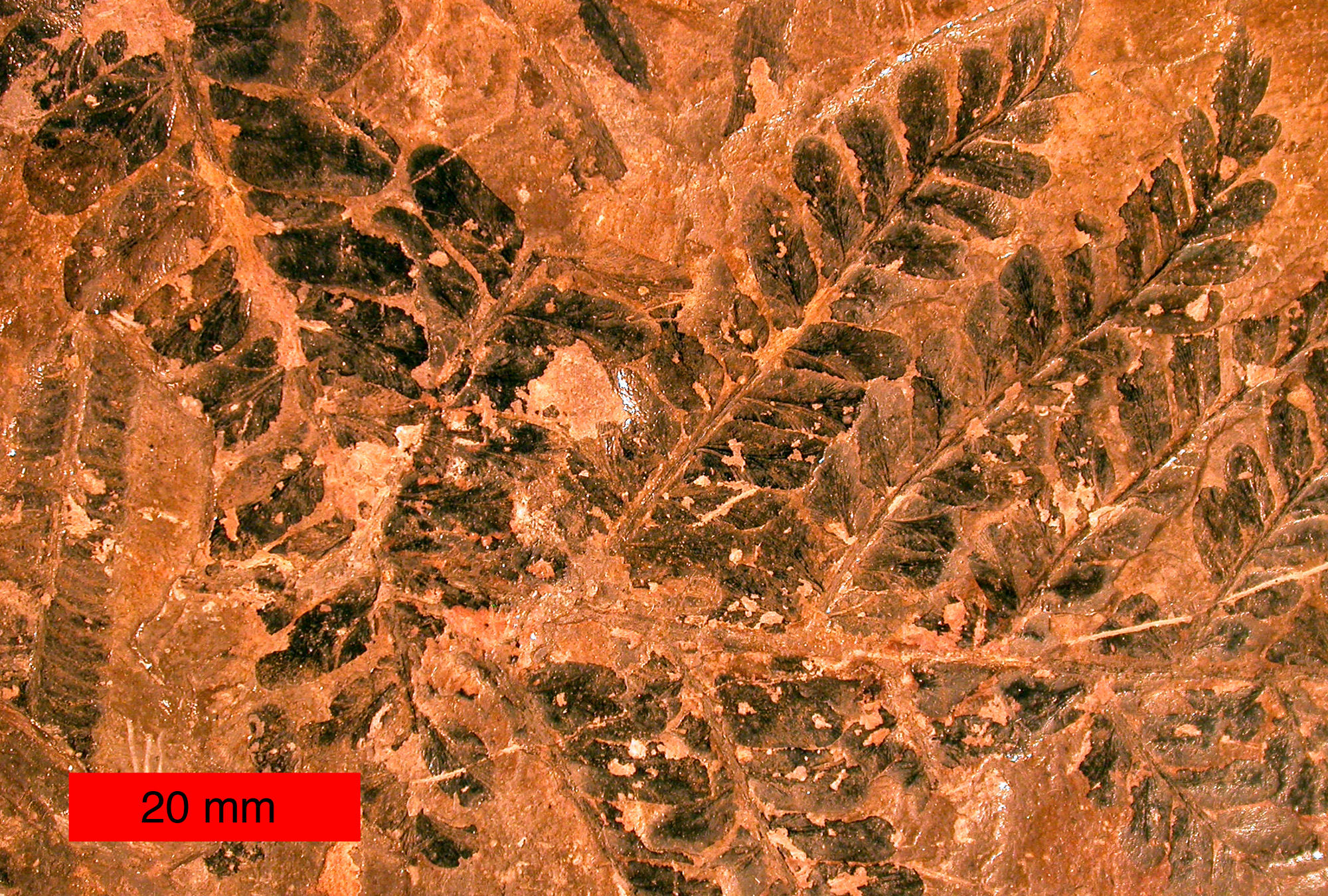
Fossil seed fern leaves of Neuropteris (Medullosales) from the Late Carboniferous of northeastern Ohio.
Life restoration of Lepidopteris (Peltaspermales)
Scientific classificationEdit this classification
Kingdom: Plantae
Clade: Tracheophytes
Clade: Spermatophytes
Division: Pteridospermatophyta
Groups included
Excluded
Synonyms

Pteridospermatopsida

Pteridospermatophyta, also called pteridosperms or seed ferns, are a polyphyletic[1] grouping of extinct seed-producing plants. The earliest fossil evidence for plants of this type are the lyginopterids of late Devonian age.[2] They flourished particularly during the Carboniferous and Permian periods. Pteridosperms declined during the Mesozoic Era and had mostly disappeared by the end of the Cretaceous Period, though Komlopteris seem to have survived into Eocene times, based on fossil finds in Tasmania.[3]

With regard to the enduring utility of this division, many palaeobotanists still use the pteridosperm grouping in an informal sense to refer to the seed plants that are not angiosperms, coniferoids (conifers or cordaites), ginkgophytes (ginkgos or czekanowskiales), cycadophytes (cycads or bennettites), or gnetophytes. This is particularly useful for extinct seed plant groups whose systematic relationships remain speculative, as they can be classified as pteridosperms with no invalid implications being made as to their systematic affinities. Also, from a purely curatorial perspective the term pteridosperms is a useful shorthand for describing the fern-like fronds that were probably produced by seed plants, which are commonly found in many Palaeozoic and Mesozoic fossil floras.

History of classification

[edit]
Life restoration of the seed fern Dicroidium (Corystospermales/Umkomasiales, top right), in an Early Triassic Australian landscape

The concept of pteridosperms goes back to the late 19th century when palaeobotanists came to realise that many Carboniferous fossils resembling fern fronds had anatomical features more reminiscent of the modern-day seed plants, the cycads. In 1899 the German palaeobotanist Henry Potonié coined the term "Cycadofilices" ("cycad-ferns") for such fossils, suggesting that they were a group of non-seed plants intermediate between the ferns and cycads.[4] Shortly afterwards, the British palaeobotanists Frank Oliver and Dukinfield Henry Scott (with the assistance of Oliver's student at the time, Marie Stopes) made the critical discovery that some of these fronds (genus Lyginopteris) were associated with seeds (genus Lagenostoma) that had identical and very distinctive glandular hairs, and concluded that both fronds and seeds belonged to the same plant.[5] Soon, additional evidence came to light suggesting that seeds were also attached to the Carboniferous fern-like fronds Dicksonites,[6] Neuropteris[7] and Aneimites.[8] Initially it was still thought that they were "transitional fossils" intermediate between the ferns and cycads, and especially in the English-speaking world they were referred to as "seed ferns" or "pteridosperms". Today, despite being regarded by most palaeobotanists as only distantly related to ferns, these spurious names have nonetheless established themselves. Nowadays, four orders of Palaeozoic seed plants tend to be referred to as pteridosperms: Lyginopteridales, Medullosales, Callistophytales and Peltaspermales, with "Mesozoic seed ferns" including the Petriellales, Corystospermales and Caytoniales.[9]

Their discovery attracted considerable attention at the time, as the pteridosperms were the first extinct group of vascular plants to be identified solely from the fossil record. In the 19th century the Carboniferous Period was often referred to as the "Age of Ferns" but these discoveries during the first decade of the 20th century made it clear that the "Age of Pteridosperms" was perhaps a better description.[citation needed]

During the 20th century the concept of pteridosperms was expanded to include various Mesozoic groups of seed plants with fern-like fronds, such as the Corystospermaceae. Some palaeobotanists also included seed plant groups with entire leaves such as the Glossopteridales and Gigantopteridales, which was stretching the concept. In the context of modern phylogenetic models,[10] the groups often referred to as pteridosperms appear to be liberally spread across a range of clades, and many palaeobotanists today would regard pteridosperms as little more than a paraphyletic 'grade-group' with no common lineage.[clarification needed] One of the few characters that may unify the group is that the ovules were borne in a cupule, a group of enclosing branches, but this has not been confirmed for all "pteridosperm" groups.[citation needed]

It has been speculated that some seed fern groups may be close to the ancestry of flowering plants (angiosperms). A 2009 study concluded that "phylogenetic analysis techniques have surpassed the hard data needed to formulate meaningful phylogenetic hypotheses" regarding the relationships of "seed ferns" to living plant groups.[11]

Taxonomy

[edit]

Major groups

[edit]
  • Order †Calamopityales Němejc (1963)
  • Order †Corystospermales Petriella (1981) [= Umkomasiales Doweld (2001)]
  • Order †Callistophytales Rothwell (1981) emend. Anderson, Anderson & Cleal (2007) [Poroxylales Němejc (1968)]
  • Order †Petriellales Taylor et al. (1994)
  • Order †Peltaspermales Taylor (1981) [Lepidopteridales Němejc (1968)]
  • Order †Gigantopteridales Li & Yao (1983) [Gigantonomiales Meyen (1987)]
  • Order †Pentoxylales Pilger & Melchior (1954)
  • Order †Glossopteridales Plumstead, 1956
  • Order †Caytoniales Gothan (1932)
  • Order †Medullosales Corsin (1960)
  • Order †Lyginopteridales (Corsin (1960)) Havlena (1961) [Lagenostomatales Seward ex Long (1975); Lyginodendrales Nemejc (1968); Sphenopteridales Schimper 1869]
    • Family †Angaranthaceae Naugolnykh (2012)
    • Family †Heterangiaceae Němejc (1950) nom. nud.
    • Family †Physostomataceae Long (1975)
    • Family †Lyginopteridaceae Potonie (1900) emend. Anderson, Anderson & Cleal (2007) [Lagenostomataceae Long (1975; Pityaceae Scott (1909); Lyginodendraceae Scott (1909); Sphenopteridaceae Gopp. (1842); Pseudopecopteridaceae Lesquereux (1884); Megaloxylaceae Scott (1909), nom. rej.; Rhetinangiaceae Scott (1923), nom. rej.; Tetratmemaceae Němejc (1968)]
    • Family †Moresnetiaceae Němejc (1963) emend. Anderson, Anderson & Cleal (2007) [Genomospermaceae Long (1975); Elkinsiaceae Rothwell, Scheckler & Gillespie (1989) ex Cleal; Hydraspermaceae]

Other minor groups

[edit]

References

[edit]
[edit]
Revisions and contributorsEdit on WikipediaRead on Wikipedia
from Grokipedia
Pteridospermatophyta, commonly known as seed ferns, were a paraphyletic or polyphyletic group of extinct gymnosperms characterized by fern-like fronds bearing true seeds rather than spores, marking an early evolutionary step in seed plant development. These plants originated in the Late Devonian period around 372 million years ago and diversified extensively during the Carboniferous and Permian periods, dominating late Paleozoic swamp forests and coastal environments before declining sharply during the Permian-Triassic mass extinction (~252 million years ago), with most lineages becoming extinct by the end of the Mesozoic Era (~66 million years ago), though some persisted longer. The Pteridospermatophyta encompassed several major orders, including the Lyginopteridales, , Callistophytales, and Peltaspermales, each exhibiting distinct morphological and anatomical features that reflected their adaptation to varied ecological niches. Growth habits ranged from scrambling vines and climbing lianas to arborescent trees reaching up to 10 meters in height, with stems often displaying a polyvascular structure composed of multiple independent vascular wedges surrounding a central . Foliage typically consisted of large, compound fronds that were bi-, tri-, or quadri-pinnate, with pinnules showing asymmetric shapes, diverse venation patterns (from open to reticulate), and sometimes specialized structures like hydathodes for water regulation in wet habitats. Anatomically, these plants produced secondary in wedges that could form internally, externally, or circumferentially around the , resulting in wood resembling that of modern in some lineages, though overall more primitive. Their seeds were borne directly on the undersides of fronds, a key innovation that freed reproduction from reliance on water for fertilization, contributing to their success in terrestrial ecosystems. Ecologically, pteridosperms demonstrated remarkable tolerance to environmental stresses, surviving events like the Late Devonian extinction (with 75% species loss) and the late ice age, while preferring tropical to warm-temperate climates but adapting to arid and cooler conditions through physiological traits such as mesomorphic cuticles and non-anastomosing venation. Notable genera include Medullosa (with massive fronds), Alethopteris (abundant in deposits), and Glossopteris (widespread in Gondwanan floras), highlighting their global distribution and role as foundational to phylogeny.

Overview

Definition and characteristics

Pteridospermatophyta, also known as pteridosperms or informally as "seed ferns," comprise a polyphyletic assemblage of extinct -producing distinguished by their combination of fern-like foliage and advanced reproductive structures bearing . This group represents early gymnosperms that played a foundational role in evolution, with their discovery revealing that seed habit originated among with frond-like leaves rather than more derived forms. These plants spanned a broad temporal range, appearing in the Late Devonian approximately 376 million years ago and persisting until the Early Eocene around 50 million years ago, though most lineages declined sharply after the Permian. Their diversity peaked during the and Permian periods, when they dominated many tropical wetland and forest ecosystems as key components of vegetation. Key morphological characteristics of pteridosperms include large, pinnate fronds that closely resemble those of extant ferns but bear ovules and seeds, typically enclosed within protective cupules on the frond undersides. Their stems exhibited secondary vascular tissues, including secondary that supported woody growth, yet lacked vessels in the conduction system and produced no true flowers. Pteridosperms displayed significant variation in habit and stature, from small herbaceous or forms to robust trees attaining heights of up to 10 meters, reflecting adaptations to diverse ecological niches. Major clades such as Lyginopteridales, , Callistophytales, and Peltaspermales exemplify this range, with the former often vine-like and the latter forming substantial arborescent structures.

Evolutionary role

Pteridospermatophyta, commonly known as seed ferns, represent a polyphyletic grouping of early gymnosperms that bridged the evolutionary gap between spore-bearing pteridophytes and more advanced , providing critical insights into the transition to seed reproduction in vascular . This group encompasses diverse lineages that shared fern-like foliage but possessed s, forming a heterogeneous assemblage rather than a single , with stem-group gymnosperms anchoring key phylogenetic relationships among seed . Their fern-like appearance, while superficial, highlights the from free-sporing ancestors to seed-bearing forms. A pivotal in pteridosperms was the evolution of the seed habit from , where the production of distinct microspores and megaspores led to the retention of megasporangia on the parent , culminating in enclosed ovules protected by integuments. This enabled direct nourishment and dispersal without reliance on external for fertilization, markedly enhancing terrestrial colonization by vascular during the late . in pteridosperms thus served as a foundational step in seed radiation, repeated iteratively across lineages but most prominently realized in this group. Certain pteridosperm lineages, such as the Caytoniales, have been proposed as potential precursors to angiosperms due to morphological parallels in reproductive structures, including cupule-enclosed resembling early carpel-like enclosures. A 2009 analysis of late and seed ferns, including , Peltaspermales, Corystospermales, and Petriellales, evaluated these links, noting partial ovule enclosure and stigmatic features that echo angiosperm innovations, though direct ancestry remains speculative pending further evidence. These connections underscore pteridosperms' role in exploring gymnosperm-to-angiosperm transitions. In swampy habitats, pteridosperms dominated tropical wetlands as arborescent and scrambling forms, contributing vast organic matter that fueled extensive accumulation and subsequent formation across Euramerica and . Their abundance in these ecosystems, alongside lycopsids and sphenopsids, shaped the period's lush vegetation, with decay-resistant tissues preserving biomass that transformed into major deposits. This ecological prominence highlights their influence on late carbon cycling and global climate.

Discovery and classification history

Early discoveries

The initial discoveries of fossils now known to belong to Pteridospermatophyta occurred in the 1820s and 1830s, primarily from coal measures in Europe, where frond-like impressions were recovered from shales and sandstones. These early finds included fronds of Neuropteris, first described by Adolphe-Théodore Brongniart in from deposits in and , which were interpreted as true ferns due to their pinnate structure and venation patterns resembling modern filicales. Similarly, Sphenopteris fronds, established as a genus by Brongniart in , were documented from similar European localities, such as the Coal Measures of , and initially classified within fern-like taxa based on their dissected, fernoid foliage. These impressions, often preserved as compressions in fine-grained sediments, provided the first glimpses of pteridosperm vegetative remains but lacked reproductive evidence, leading to their placement among ferns in early paleobotanical classifications. A key breakthrough came in the late with the recognition of seed-like structures associated with -like fronds, challenging the interpretation. In 1872, William Crawford Williamson described permineralized stems and associated reproductive organs from English , including the stem genus Lyginopteris oldhamia (originally named by Edward William Binney in 1863 but anatomically detailed by Williamson), recovered from sites like in . These specimens, preserved in nodules (), revealed vascular connections between Sphenopteris-type fronds and seed-bearing structures initially mistaken for sporangia or , such as Crossotheca organs and Lagenostoma ovules. Excavations in and during this period, including permineralized material from the Ruhr Valley and coalfields, yielded additional evidence of stems, roots, and seeds, highlighting the gymnospermous nature of these . This emerging evidence generated significant confusion in the paleobotanical community, as the fossils had long been regarded as true ferns since their initial descriptions, aligning with prevailing views of vegetation dominated by pteridophytes. The discovery of integumented and pollen chambers in association with fronds upended these ideas, demonstrating that seed habit had evolved earlier than previously thought and bridging ferns and gymnosperms in plant evolution. These 19th-century finds laid the groundwork for later 20th-century expansions recognizing pteridosperm groups.

Development of the concept

The concept of Pteridospermatophyta, commonly known as seed ferns, emerged in the late as paleobotanists grappled with fossils exhibiting fronds resembling ferns but bearing seeds akin to those of gymnosperms. In 1899, German paleobotanist Henry Potonié proposed the term "Cycadofilices" to describe these enigmatic plants, interpreting them as intermediates between ferns (Pteridophyta) and cycads based on their vegetative and reproductive features preserved in coal measures. This classification highlighted their transitional morphology, including fern-like foliage with secondary xylem suggestive of seed plant affinities, though Potonié initially viewed them as a distinct group rather than true seed-bearing plants. A pivotal advancement came in 1904 when British botanists Francis Wall Oliver and Dukinfield Henry Scott demonstrated, through detailed anatomical studies of permineralized fossils, that the fern-like frond genus produced the seed . Their analysis of coal-ball petrifications from the revealed shared epidermal features, such as multicellular glands, linking the vegetative and reproductive organs and confirming pteridosperms as a novel class of rather than fern-cycad hybrids. This discovery formalized the group as Pteridospermatophyta, emphasizing their role as early gymnosperms with cupulate ovules enclosed in fern-like structures, and spurred further investigations into floras. Throughout the 20th century, the concept expanded to encompass taxa, incorporating groups like the Corystospermaceae based on fossils from Gondwanan deposits. In 1933, H. H. described key reproductive structures such as Pteruchus (microsporangiate organs) and Umkomasia (ovulate structures) from sediments, linking them to foliage like Dicroidium and extending the pteridosperm beyond forms to include these diverse, geographically widespread representatives. Concurrently, studies on medullosans advanced understanding of their anatomy; notably, in the 1960s, N. Taylor's permineralized analyses elucidated the complex vascular of Medullosa stems, revealing polystelic and reinforcing medullosans as a major pteridosperm lineage with advanced gymnosperm-like wood production. Post-1980s cladistic analyses, integrating morphological characters such as enclosure and pollen organ structure, revealed that pteridosperms form a polyphyletic assemblage unified primarily by plesiomorphic traits like cupulate ovules rather than shared derived synapomorphies. This shift, exemplified by phylogenetic frameworks treating them as a grade leading to more derived gymnosperms, underscored their evolutionary diversity across Lyginopteridales, , and Callistophytales, without constituting a single monophyletic . Concurrent with Oliver and Scott, Kidston's studies on Scottish material further supported these connections.

Morphology

Vegetative features

Pteridospermatophyta exhibited diverse vegetative structures adapted to their Carboniferous and Permian environments, with stems showing secondary growth typical of early seed plants. In the Lyginopteridales, such as Lyginopteris oldhamia, stems were protostelic with a central xylem column surrounded by phloem, and they developed manoxylic secondary xylem characterized by wide medullary rays and sparse tracheids, enabling flexible support. Leaf traces in these stems formed distinctive girdling patterns around the stele, facilitating vascular supply to large fronds. In contrast, Medullosales stems, like those of Medullosa, were eustelic, comprising multiple disconnected xylem strands embedded in a large pith, with secondary xylem ranging from manoxylic to denser pycnoxylic types that supported greater mechanical strength. Fronds of Pteridospermatophyta were fern-like and often massive, serving as the primary photosynthetic organs. These were typically pinnate or bipinnate, reaching lengths of up to 7 meters in species like those affiliated with Alethopteris, with open venation featuring a prominent midvein and dichotomously branching lateral veins that rarely anastomosed, though venation s varied from open dichotomous in Alethopteris to reticulate in some other clades. Cuticles preserved on pinnules showed stomatal complexes similar to those in extant ferns, with arranged in a syndetocheilic and subsidiary cells aiding in . Pinnule shapes varied, from lanceolate and decurrent bases in to more lobed or toothed forms in other clades, reflecting adaptations for light capture in or canopy positions. Roots in Pteridospermatophyta were adventitious, arising from stems or rhizomes to anchor and absorb nutrients. In , such as Medullosa noei, roots were protostelic with triarch to tetrarch xylem arrangements, branching dichotomously and capable of forming extensive systems to support arborescent habits. Fossil evidence from coal balls indicates mycorrhizal associations in these roots, with fungal hyphae penetrating cortical cells, suggesting symbiotic nutrient uptake similar to modern gymnosperms. Lyginopterid roots were similarly adventitious but smaller, often clustered near stem bases for climbing or scrambling support. Growth forms among Pteridospermatophyta ranged from herbaceous vines to tall trees, showcasing their ecological versatility. Lyginopteridales, exemplified by , typically formed scrambling or climbing vines with slender, flexible stems up to several meters long, often supported by hooks or tendrils on fronds. In Medullosales, plants like achieved arborescent forms, with trunks reaching diameters of 1 meter and heights estimated at 10-15 meters, featuring a crown of large fronds for canopy dominance. These variations highlight the group's transition from fern-like habits to more woody architectures.

Reproductive structures

The reproductive structures of Pteridospermatophyta, which distinguish this group from ferns, consist of ovules and seeds borne on fern-like fronds, often enclosed within protective cupules, alongside specialized organs. Early pteridosperms, such as those represented by Hydrasperma from the Late Devonian, produced simple ovules less than 5 mm in diameter, characterized by radial symmetry, a single functional megaspore within an indehiscent nucellus, and an formed by unfused or partially fused lobes lacking a prominent micropyle. These ovules featured a modified nucellar apex forming a pollen chamber closed by a plinth and extended by a cylindrical salpinx (lagenostome), with a central parenchymatous column aiding reception. Hydrasperma-like ovules were typically positioned terminally or subterminally on short branches and enclosed singly or multiply in cupules derived from dichotomous divisions, such as four-lobed units in Moresnetia-type or eight-part structures in Dorinnotheca-type cupules. In groups like the Lyginopteridales, ovules such as Lagenostoma were larger (7–8 mm), flask-shaped, and borne on the margins of pinnules or under specialized sporophylls, with a multi-layered surrounding the nucellus and a prominent salpinx projecting into a cupule. The cupules in these forms were multi-lobed, providing enclosure and possibly protection during development, though they were lost in advanced lineages like the , where seeds reached up to 10 cm and were directly attached to fronds without such structures. More derived pteridosperms, including the Peltaspermales, exhibited greater complexity with multi-ovulate cupules that more fully surrounded the seeds, often arranged on lax, cone-like or umbrella-shaped megasporophylls, as seen in genera like Umkomasia and Matatiella. Pollen organs in Pteridospermatophyta were microsporangiate structures attached to fronds, varying from simple clusters to fused syncarps, and produced wind-dispersed grains adapted for siphonogamous fertilization. In early forms like Hydrasperma, resembled progymnosperm trilete microspores, while Lyginopteridales featured synangiate organs such as Crossotheca, with terminal clusters of bilocular sporangia on branched rachises bearing boat-shaped, monosulcate grains. organs formed multi-lobed syncarps with large (100–600 µm), bilateral , and Callistophytales produced saccate with branched prepollen tubes facilitating growth toward the . Fertilization was likely siphonogamous across the group, involving within the pollen chamber and tube extension through the salpinx to the nucellus, with prepollen tubes evident in some clades like Callistophytales. This diversity in reproductive organs underscores the transitional role of pteridosperms in evolution, from simple hydrasperman s to complex, multi-ovulate systems in later forms.

Taxonomy

Major clades

Pteridospermatophyta encompasses a paraphyletic assemblage of several major clades, traditionally classified into around 11 orders, with growth habits varying from herbaceous forms to large arboreal trees. The Lyginopteridales represent one of the earliest major clades, appearing in the Late and persisting through the period, typically as small shrubs or scrambling vines. These plants, such as , featured simple cupules enclosing small seeds (≤5 mm in diameter) and monostelic stems with a sclerenchymatous cortex, often exhibiting climbing or thicket-forming habits in environments. The Medullosales dominated during the Carboniferous to Permian, forming large trees up to 10 m tall with complex, multi-lobed fronds and multi-seeded cupules containing the largest known Paleozoic seeds (up to 12 cm). These K-selected plants, exemplified by Medullosa, had polystelic anatomy and were prevalent in coal swamp habitats, contributing significantly to Carboniferous peat formation through their diverse foliage and prepollen grains. The Callistophytales, confined to the , consisted primarily of vine-like shrubs or scramblers with small, flexible fronds and the most intricate reproductive systems among early pteridosperms, including small seeds (4-5 mm) borne in cupules. Plants like Callistophyton formed dense stands, with bifurcate fronds adapted for and short lifespans. The Peltaspermales extended from the Permian into the , encompassing subgroups such as Umkomasiales and Peltaspermales proper, characterized by leaf heterophylly and some forms with Caytonia-like seeds in cupulate structures. These shrubs and small trees, including callipterids, exhibited slender axes and adaptations for periodically dry substrates, with diverse foliar forms aiding survival through the Permian- boundary. Among other significant clades, the Corystospermales (synonymous with Umkomasiales in some classifications) occurred in the , particularly on southern continents, as shrubs with pteridosperm-like foliage and cupulate ovules such as Umkomasia. The Glossopteridales were prominent in Permian , featuring tongue-shaped leaves and seed-bearing structures aligned with pteridosperm traits, forming key components of high-latitude forests. The Gigantopteridales, from the late Permian, included advanced forms with exceptionally large leaves and vine-liana habits, such as Aculeovinea yunguiensis, indicating specialized growth in tropical settings.

Phylogenetic position

Pteridospermatophyta, commonly known as seed ferns, represent a paraphyletic assemblage of extinct plants positioned as stem-group members within the lignophyte , basal to the crown-group collectively termed Acrogymnospermae, which includes extant , cycads, Ginkgo, and gnetophytes. This positioning underscores their role as a diverse plexus from which modern lineages diverged, rather than a monophyletic group unified by unique shared derived traits. Key synapomorphies linking pteridosperms to plants include the presence of cupulate ovules, which provided protective enclosures for developing , and fern-like megaphylls characterized by pinnate or dissected fronds adapted for . However, the absence of exclusive apomorphies binding all pteridosperm clades together confirms their paraphyletic nature, with fern-like foliage serving as a symplesiomorphy shared with more basal euphyllophytes. Cladistic relationships among pteridosperm clades reveal graded connections to both ferns and higher gymnosperms. The Lyginopteridales, one of the earliest diverging pteridosperm orders from the Late to , occupy a position near the fern-gymnosperm split, forming a monophyletic group sister to the enigmatic Stenokoleales and collectively sister to aneurophytalean progymnosperms, marking a transitional zone in lignophyte evolution. In contrast, the Peltaspermales, prominent in the Permian and , are positioned as ancestral to lineages leading to Ginkgo and , with shared features such as bilaterally symmetrical ovuliferous structures and multi-ovulate cupules supporting their role in the diversification of Acrogymnospermae. The Caytoniales, known from the , remain debated in their affinities, with some analyses suggesting a potential precursor role to angiosperms due to their follicle-like seed-enclosing structures resembling primitive carpels, though most cladograms place them as a peripheral pteridosperm lineage outside the core clades. Evidence for these relationships derives primarily from morphological cladistic analyses, as molecular data are unavailable for these extinct groups. A seminal 2006 study compiled a matrix of 54 taxa and 102 characters, rooted with progymnosperms, recovering pteridosperms as a paraphyletic grade subtending monophyletic crown gymnosperms, with progressive specialization in reproductive and vegetative traits. More recent 2018 cladistic work using 28 taxa and 49 characters (including continuous traits like stem diameter) reinforced the basal positioning of Lyginopteridales, highlighting synapomorphies such as pulvinus-like branch bases in early s. calibrations in broader phylogenies, incorporating records like Elkinsia and Moresnetia, support a Middle origin for the habit around 374–382 million years ago, aligning pteridosperms with the initial radiation of lignophytes.

Fossil record

Geological distribution

Pteridospermatophyta, commonly known as seed ferns, first appeared in the fossil record during the Late Devonian Famennian stage (approximately 372–359 million years ago), with the earliest representatives belonging to the lyginopterid group. These initial forms, such as those bearing cupulate seed organs, mark the origin of seed-producing plants and were documented in deposits from Euramerica. The group reached its peak diversity and abundance during the Late Carboniferous Pennsylvanian subperiod (approximately 323–299 million years ago) through the Permian period (approximately 299–252 million years ago), where pteridosperms often formed a dominant component of tropical floras, particularly in coal-forming swamp environments. In these assemblages, they contributed significantly to the canopy and , co-occurring with ferns, sphenopsids, and lycopods. Pteridosperms experienced a gradual decline beginning in the and periods (approximately 252–145 million years ago), represented by Mesozoic clades such as the corystosperms (Umkomasiales), which were particularly prominent in Gondwanan vegetation. Their presence became rare in the , with sporadic records, and the youngest confirmed fossils are from the Early Eocene (approximately 52–51 million years ago), consisting of Komlopteris foliage in , indicating survival of relictual lineages into the . Globally, pteridosperms dominated floras in the Euramerican and Cathaysian provinces, with lyginopterids and medullosans being widespread in tropical settings. In contrast, Permian Gondwanan floras featured glossopterids, a group classified among pteridosperms, which prevailed in higher-latitude assemblages across southern continents.

Key fossil localities

Key fossil localities for Pteridospermatophyta include several significant sites from the Carboniferous to the Eocene, each offering distinct preservation types that have advanced understanding of this group's diversity and anatomy. In the Carboniferous Coal Measures of the United Kingdom and Germany, permineralized remains of Lyginopteris and Medullosa are commonly found within siderite nodules, or coal balls, which preserve three-dimensional cellular details of stems, roots, and reproductive organs. These nodules occur in seams from the Lower Coal Measures of Yorkshire and Lancashire in England, as well as equivalent strata in the Ruhr region of Germany, enabling reconstructions of climbing and scrambling growth habits among early pteridosperms. The Mazon Creek locality in , , from the Late Francis Creek Shale, has provided abundant compression fossils of medullosan pteridosperms, including fronds, , and organs that reveal high diversity within this . These concretions yield well-articulated specimens, such as those of Pachytesta and Stephanospermum, highlighting the ecological roles of seed ferns in environments. Studies using computed on Mazon Creek material have further elucidated internal structures, confirming medullosan affiliations for various isolated organs. In Permian Gondwana, Glossopteris-dominated floras in coal basins of , , and represent arborescent pteridosperms adapted to high-latitude settings. The Basin in preserves Glossopteris leaves and associated reproductive structures in fine-grained shales, while Indian sites in the Supergroup yield similar assemblages indicative of seasonal climates. The Newcastle Formation in the of is notable for its permineralized and compressed remains of arborescent forms, contributing evidence of pteridosperm dominance in southern hemisphere peat-forming mires. Mesozoic sites further document pteridosperm persistence, particularly among corystosperms. The Triassic Fremouw Formation in Antarctica's contains permineralized stems, ovules of Umkomasia, and pollen of Alisporites, offering insights into high-latitude adaptations during 's fragmentation. In and , these assemblages include upright tree-like forms preserved in silicified volcanic tuffs. Additionally, Eocene fossils of Komlopteris in , such as those from coastal sites, indicate survival of corystosperm lineages into the , with fronds showing affinities to earlier taxa and preserved as impressions in lacustrine sediments. A 2024 study of the Macquarie Harbour Formation describes this assemblage as part of a near-polar , including Komlopteris cenozoicus alongside cycads and ferns, providing further evidence of relictual pteridosperm persistence in early . Collectively, these localities provide a range of preservation modes—compression for external morphology, for , and palynomorphs for reproductive details—facilitating comprehensive reconstructions of pteridosperm and paleoenvironments across hemispheres.

Paleobiology and ecology

Habitats and growth forms

Pteridospermatophyta, commonly known as seed ferns, primarily inhabited swamps and tropical lowlands during the period, where they often occupied the of forests dominated by lycopsids such as . These environments, characterized by high humidity and peat-forming conditions, supported dense vegetation in Euramerican coal swamps, allowing pteridosperms to contribute significantly to organic accumulation and coal formation. In the Permian, certain lineages like glossopterids thrived in seasonal floodplains across , adapting to more variable moisture regimes in distal floodplain and marginal lacustrine settings. Growth forms among pteridosperms varied by , reflecting their ecological roles in ancient forests. Members of the Lyginopteridales exhibited vine-like or habits, with narrow stems enabling them to lean on or supporting in shaded understories. The Callistophytales formed shrubs or vines, often on supporting and reaching modest heights in ecosystems. In contrast, included larger arborescent forms, with bifurcating trunks achieving heights up to 10 meters, occasionally adopting or liana-like growth in disturbed swamp margins. These plants displayed structural adaptations that enhanced their persistence in diverse paleo-environments. via allowed for increased height and mechanical support, particularly in tree-like forms, enabling competition in crowded settings. Early pteridosperms succeeded progymnosperms in Mississippian successional habitats following their decline, before diversifying into dominant roles. Later, in the Permian, groups like peltasperms developed thick cuticles, conferring inferred in seasonally dry clastic soils and deposits. By the late Permian, they faced increasing competition from in drying landscapes, while continuing to bolster peat accumulation in remnant wetlands.

Reproduction and dispersal

Pteridospermatophyta exhibited a heterosporous life cycle characterized by , with a dominant diploid phase and reduced haploid phase developed endosporically within spores. The produced microspores and megaspores in separate sporangia; microspores were released as tetrads forming prepollen grains, while megaspores were retained within the for in situ development of the female . This endosporic development minimized exposure to , marking an early adaptation in . In some groups, such as lyginopterids, reproductive structures occurred on the same fronds, potentially facilitating within individual plants. Pollination in pteridosperms was primarily wind-mediated, with prepollen grains captured by drops secreted at the micropyle of ovules. These drops retracted to draw the prepollen into a pollen chamber, often featuring a lagenostome structure that directed growth. Prepollen tubes then extended from the toward the within the female gametophyte, enabling siphonogamous fertilization without free-swimming . While wind dominated early forms, evidence from later groups, such as peltasperms, suggests possible vectors, inferred from associations with long-proboscid insects like scorpionflies. Seed dispersal mechanisms in pteridosperms varied but were adapted for short-distance transport in humid, swampy habitats. Seeds were often enclosed in cupules that provided protection and possibly aided flotation in waterlogged environments, while some featured wing-like extensions on the for wind dispersal. Inferred arillate structures in certain taxa may have attracted dispersers, though direct evidence is limited. Overall, these strategies supported colonization of ecosystems during the , with dispersal distances likely limited to tens of meters.

Decline and extinction

Temporal decline

Following the Permian, Pteridospermatophyta underwent a marked decline in diversity and abundance, transitioning from dominant components of late floras—often comprising a substantial portion of and tropical ecosystems—to minor elements by the . The glossopterids, a key Permian group widespread in , vanished entirely at the Permian-Triassic boundary, marking the collapse of these characteristic late Permian floras. In the early Mesozoic, pteridosperms persisted at reduced levels, with corystosperms (Umkomasiaceae) and peltasperms (Peltaspermaceae) remaining locally abundant in Triassic Gondwanan floras, such as those from and during the to stages. Peltasperms also appeared shortly after the end-Permian extinction in eastern , around 252 Ma, while corystosperms dominated high-latitude assemblages before declining toward the . In Laurasia, the Caytoniales were represented in deposits, including well-preserved specimens from , , where they formed part of diverse coastal plain floras. Pteridosperm records became increasingly rare through the , with isolated occurrences such as the peltasperm-like seeds Ktalenia and Ruflorinia in Lower strata of . The Caytoniales, exemplified by Sagenopteris foliage, showed a gradual decline in floristic importance from the into the across both hemispheres. The youngest confirmed representatives are Eocene Komlopteris leaves from , , dated to approximately 53–50 Ma, which co-occurred with early angiosperms in settings. Overall patterns reveal regionally variable trajectories, with near-complete disappearance of fructifications in by the end of the and sporadic persistence in southern high latitudes into the , ultimately giving way to more specialized lineages like and gnetophytes.

Possible causes

The of most Pteridospermatophyta groups has been attributed to a combination of biotic competition and environmental perturbations that disadvantaged their ecological niches. Advanced , particularly , outcompeted pteridosperms through superior adaptations such as pycnoxylic wood, which provided greater mechanical strength and drought resistance compared to the primitive manoxylic wood typical of many pteridosperm lineages like the medullosans. This allowed to dominate in increasingly seasonal and arid landscapes during the late , where pteridosperms' large-pith wood, with wide tracheids prone to embolism and decay, limited height and hydraulic efficiency. In the , the rise of angiosperms further intensified competition, as their rapid growth rates, efficient , and diverse reproductive strategies enabled them to exploit and canopy roles previously held by pteridosperms, correlating with the decline of seed fern diversity through the . Environmental changes played a pivotal role in eliminating key pteridosperm clades, notably during the Permian-Triassic mass extinction. The glossopterids, a dominant Gondwanan group of pteridosperms, collapsed around 252.3 million years ago, approximately 370,000 years before the main marine extinction event, triggered by the onset of volcanism that caused rapid warming, anoxia, and ecosystem disruption in southern high latitudes. In regions like Peninsular India, glossopterid extinction coincided with a gradual of habitats, reducing the environments essential for their survival and favoring drought-tolerant . Earlier, the late around 305 million years ago initiated a broader decline by promoting drier conditions that curtailed the humid, swampy biomes where many pteridosperms thrived. Inherent biological limitations further hampered pteridosperm resilience to these pressures. Their vascular systems, often manoxylic with extensive and limited secondary , were less effective for long-term water transport and in non-wetland settings, making them vulnerable to environmental stress compared to the compact wood of later gymnosperms. was also constrained, as pteridosperm seeds typically lacked aerodynamic structures like wings, relying instead on passive release from fern-like fronds, which restricted colonization in fragmented or windy habitats unlike the wind-dispersed seeds of . Hypothesized factors such as increased herbivory from evolving communities targeted pteridosperm foliage during the late , potentially exacerbating declines, though direct causal links remain limited. Post-extinction events, pteridosperms showed no significant recovery, with only isolated late survivors like Komlopteris persisting into the early in refugial settings.

References

Add your contribution
Related Hubs
User Avatar
No comments yet.