Hubbry Logo
Plant stemPlant stemMain
Open search
Plant stem
Community hub
Plant stem
logo
8 pages, 0 posts
0 subscribers
Be the first to start a discussion here.
Plant stem
Plant stem
from Wikipedia
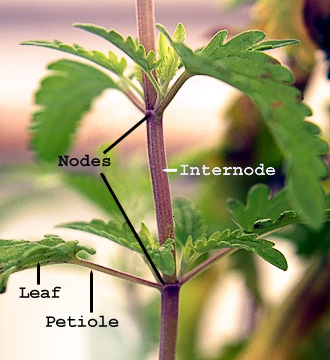
Stem showing internode and nodes plus leaf petioles
This above-ground stem of Polygonum has lost its leaves, but is producing adventitious roots from the nodes.
Xylem and Phloem

A stem is one of two main structural axes of a vascular plant, the other being the root. It supports leaves, flowers and fruits, transports water and dissolved substances between the roots and the shoots in the xylem and phloem, engages in photosynthesis, stores nutrients, and produces new living tissue.[1] The stem can also be called the culm, halm, haulm, stalk, or thyrsus.

The stem is normally divided into nodes and internodes:[2]

The term "shoots" is often confused with "stems"; "shoots" generally refers to new fresh plant growth, including both stems and other structures like leaves or flowers.[2]

In most plants, stems are located above the soil surface, but some plants have underground stems.

Stems have several main functions:[3]

  • Support for and the elevation of leaves, flowers, and fruits. The stems keep the leaves in the light and provide a place for the plant to keep its flowers and fruits.
  • Transport of fluids between the roots and the shoots in the xylem and phloem.
  • Storage of nutrients.
  • Production of new living tissue. The normal lifespan of plant cells is one to three years. Stems have cells called meristems that annually generate new living tissue.
  • Photosynthesis.

Stems have two pipe-like tissues called xylem and phloem. The xylem tissue arises from the cell facing inside and transports water by the action of transpiration pull, capillary action, and root pressure. The phloem tissue arises from the cell facing outside and consists of sieve tubes and their companion cells. The function of phloem tissue is to distribute food from photosynthetic tissue to other tissues. The two tissues are separated by cambium, a tissue that divides to form xylem or phloem cells.

Specialized terms

[edit]
Illustration and diagram of some types of stems

Stems are often specialized for storage, asexual reproduction, protection, or photosynthesis, including the following:

Climbing stem of Senecio angulatus.
  • Acaulescent: Used to describe stems in plants that appear to be stemless. Actually these stems are just extremely short, the leaves appearing to rise directly out of the ground, e.g. some Viola species.
  • Arborescent: Tree with woody stems normally with a single trunk.
  • Axillary bud: A bud which grows at the point of attachment of an older leaf with the stem. It potentially gives rise to a shoot.
  • Branched: Aerial stems are described as being branched or unbranched.
  • Bud: An embryonic shoot with immature stem tip.
  • Bulb: A short vertical underground stem with fleshy storage leaves attached, e.g. onion, daffodil, and tulip. Bulbs often function in reproduction by splitting to form new bulbs or producing small new bulbs termed bulblets. Bulbs are a combination of stem and leaves so may better be considered as leaves because the leaves make up the greater part.
  • Caespitose: When stems grow in a tangled mass or clump or in low growing mats.
  • Cladode (including phylloclade): A flattened stem that appears leaf-like and is specialized for photosynthesis,[4] e.g. cactus pads.
  • Climbing: Stems that cling or wrap around other plants or structures.
  • Corm: A short enlarged underground storage stem, e.g. taro, crocus, gladiolus.
Decumbent stem in Cucurbita maxima.
  • Decumbent: A stem that lies flat on the ground and turns upwards at the ends.
  • Fruticose: Stems that grow shrublike with woody like habit.
  • Herbaceous: Non woody stems which die at the end of the growing season.
  • Internode: An interval between two successive nodes. It possesses the ability to elongate, either from its base or from its extremity depending on the species.
  • Node: A point of attachment of a leaf or a twig on the stem in seed plants. A node is a very small growth zone.
  • Pedicel: Stems that serve as the stalk of an individual flower in an inflorescence or infrutescence.
  • Peduncle: A stem that supports an inflorescence or a solitary flower.
  • Prickle: A sharpened extension of the stem's outer layers, e.g. rose thorns.
  • Pseudostem: A false stem made of the rolled bases of leaves, which may be 2 to 3 m (6 ft 7 in to 9 ft 10 in) tall, as in banana.
  • Rhizome: A horizontal underground stem that functions mainly in reproduction but also in storage, e.g. most ferns, iris.
  • Runner: A type of stolon, horizontally growing on top of the ground and rooting at the nodes, aids in reproduction. e.g. garden strawberry, Chlorophytum comosum.
  • Scape: A stem that holds flowers that comes out of the ground and has no normal leaves. Hosta, lily, iris, garlic.
  • Stolon: A horizontal stem that produces rooted plantlets at its nodes and ends, forming near the surface of the ground.
  • Thorn: A modified stem with a sharpened point.
  • Tuber: A swollen, underground storage stem adapted for storage and reproduction, e.g. potato.
  • Woody: Hard textured stems with secondary xylem.
  • Sapwood: A woody stem, the layer of secondary phloem that surrounds the heartwood; usually active in fluid transport

Stem structure

[edit]
Flax stem cross-section, showing locations of underlying tissues. Ep = epidermis; C = cortex; BF = bast fibres; P = phloem; X = xylem; Pi = pith

Stem usually consist of three tissues: dermal tissue, ground tissue, and vascular tissue.[5]

Dermal tissue covers the outer surface of the stem and usually functions to protect the stem tissue, and control gas exchange. The predominant cells of dermal tissue are epidermal cells.[6]

Ground tissue usually consists mainly of parenchyma, collenchyma and sclerenchyma cells, and they surround vascular tissue. Ground tissue is important in aiding metabolic activities (eg. respiration, photosynthesis, transport, storage) as well as acting as structural support and forming new meristems.[7] Most or all ground tissue may be lost in woody stems.

Vascular tissue, consisting of xylem, phloem and cambium; provides long distance transport of water, minerals and metabolites (sugars, amino acids); whilst aiding structural support and growth. The arrangement of the vascular tissues varies widely among plant species.[8]

Dicot stems

[edit]

Dicot stems with primary growth have pith in the center, with vascular bundles forming a distinct ring visible when the stem is viewed in cross section. The outside of the stem is covered with an epidermis, which is covered by a waterproof cuticle. The epidermis also may contain stomata for gas exchange and multicellular stem hairs called trichomes. A cortex consisting of hypodermis (collenchyma cells) and endodermis (starch containing cells) is present above the pericycle and vascular bundles.

Stems of two Roystonea regia palms showing characteristic bulge, leaf scars and fibrous roots, Kolkata, India

Woody dicots and many nonwoody dicots have secondary growth originating from their lateral or secondary meristems: the vascular cambium and the cork cambium or phellogen. The vascular cambium forms between the xylem and phloem in the vascular bundles and connects to form a continuous cylinder. The vascular cambium cells divide to produce secondary xylem to the inside and secondary phloem to the outside. As the stem increases in diameter due to production of secondary xylem and secondary phloem, the cortex and epidermis are eventually destroyed. Before the cortex is destroyed, a cork cambium develops there. The cork cambium divides to produce waterproof cork cells externally and sometimes phelloderm cells internally. Those three tissues form the periderm, which replaces the epidermis in function. Areas of loosely packed cells in the periderm that function in gas exchange are called lenticels.

Secondary xylem is commercially important as wood. The seasonal variation in growth from the vascular cambium is what creates yearly tree rings in temperate climates. Tree rings are the basis of dendrochronology, which dates wooden objects and associated artifacts. Dendroclimatology is the use of tree rings as a record of past climates. The aerial stem of an adult tree is called a trunk. The dead, usually darker inner wood of a large diameter trunk is termed the heartwood and is the result of tylosis. The outer, living wood is termed the sapwood.

Monocot stems

[edit]

Vascular bundles are present throughout the monocot stem, although concentrated towards the outside. This differs from the dicot stem that has a ring of vascular bundles and often none in the center. The shoot apex in monocot stems is more elongated. Leaf sheathes grow up around it, protecting it. This is true to some extent of almost all monocots. Monocots rarely produce secondary growth and are therefore seldom woody, with palms and bamboo being notable exceptions. However, many monocot stems increase in diameter via anomalous secondary growth.

Gymnosperm stems

[edit]
The trunk of this redwood tree is its stem

All gymnosperms are woody plants. Their stems are similar in structure to woody dicots except that most gymnosperms produce only tracheids in their xylem, not the vessels found in dicots. Gymnosperm wood also often contains resin ducts. Woody dicots are called hardwoods, e.g. oak, maple and walnut. In contrast, softwoods are gymnosperms, such as pine, spruce and fir.

Fern stems

[edit]
Tasmanian tree fern

Most ferns have rhizomes with no vertical stem. The exception is tree ferns, which have vertical stems that can grow up to about 20 metres. The stem anatomy of ferns is more complicated than that of dicots because fern stems often have one or more leaf gaps in cross section. A leaf gap is where the vascular tissue branches off to a frond. In cross section, the vascular tissue does not form a complete cylinder where a leaf gap occurs. Fern stems may have solenosteles or dictyosteles or variations of them. Many fern stems have phloem tissue on both sides of the xylem in cross-section.

Relation to xenobiotics

[edit]

Foreign chemicals such as air pollutants,[9] herbicides and pesticides can damage stem structures.

Economic importance

[edit]
White and green asparagus – crispy stems are the edible parts of this vegetable

There are thousands of species whose stems have economic uses. Stems provide a few major staple crops such as potato and taro. Sugarcane stems are a major source of sugar. Maple sugar is obtained from trunks of maple trees. Vegetables from stems are asparagus, bamboo shoots, cactus pads or nopalitos, kohlrabi, and water chestnut. The spice, cinnamon is bark from a tree trunk. Gum arabic is an important food additive obtained from the trunks of Acacia senegal trees. Chicle, the main ingredient in chewing gum, is obtained from trunks of the chicle tree.

Medicines obtained from stems include quinine from the bark of cinchona trees, camphor distilled from wood of a tree in the same genus that provides cinnamon, and the muscle relaxant curare from the bark of tropical vines.

Wood is used in thousands of ways; it can be used to create buildings, furniture, boats, airplanes, wagons, car parts, musical instruments, sports equipment, railroad ties, utility poles, fence posts, pilings, toothpicks, matches, plywood, coffins, shingles, barrel staves, toys, tool handles, picture frames, veneer, charcoal and firewood. Wood pulp is widely used to make paper, paperboard, cellulose sponges, cellophane and some important plastics and textiles, such as cellulose acetate and rayon. Bamboo stems also have hundreds of uses, including in paper, buildings, furniture, boats, musical instruments, fishing poles, water pipes, plant stakes, and scaffolding. Trunks of palms and tree ferns are often used for building. Stems of reed are an important building material for use in thatching in some areas.

Tannins used for tanning leather are obtained from the wood of certain trees, such as quebracho. Cork is obtained from the bark of the cork oak. Rubber is obtained from the trunks of Hevea brasiliensis. Rattan, used for furniture and baskets, is made from the stems of tropical vining palms. Bast fibers for textiles and rope are obtained from stems of plants like flax, hemp, jute and ramie. The earliest known paper was obtained from the stems of papyrus by the ancient Egyptians.

Amber is fossilized sap from tree trunks; it is used for jewelry and may contain preserved animals. Resins from conifer wood are used to produce turpentine and rosin. Tree bark is often used as a mulch and in growing media for container plants. It also can become the natural habitat of lichens.

Some ornamental plants are grown mainly for their attractive stems, e.g.:

See also

[edit]

References

[edit]

Further reading

[edit]
[edit]
Revisions and contributorsEdit on WikipediaRead on Wikipedia
from Grokipedia
The plant stem is the main structural axis of the shoot system in vascular plants, typically extending above ground from the roots and serving as the primary conduit for water, nutrients, and photosynthetic products throughout the plant. It typically consists of nodes—points where leaves, buds, or branches attach—and internodes, the segments between nodes that contribute to the stem's length and rigidity. Anatomically, stems are organized into three primary tissue systems: the dermal tissue (outer epidermis or periderm for protection), the (xylem for water transport and phloem for nutrient distribution), and the (for storage and support). The primary functions of stems include mechanical support for aerial organs like leaves and flowers, transport of essential substances via the vascular system, and in some species, storage of carbohydrates or water. Stems exhibit diverse forms, from herbaceous and flexible in annuals to woody and lignified in trees, adapting to environmental needs such as climbing, protection, or .

Terminology and Basic Features

Key Terms

In botany, a stem is the main axis of a vascular plant's shoot system, typically above ground, that supports leaves, buds, and reproductive structures while facilitating the transport of water, nutrients, and photosynthates between roots and other organs. A node refers to the specific point along the stem where leaves, branches, or buds attach, serving as a key site for lateral growth and branching. The region between two consecutive nodes is termed the internode, which represents the elongated portion of the stem responsible for overall height and spacing of attachments. A bud is an undeveloped shoot or flower enclosed by protective scales, with two primary types: the terminal bud, located at the apex of the stem to promote apical growth and dominance, and the axillary bud, positioned in the leaf axil at a node, enabling lateral branching and potentially suppressed by the terminal bud. A vascular bundle consists of a discrete strand of conducting tissues—primarily xylem for water transport and phloem for nutrient distribution—often arranged in a cylindrical pattern within the stem and sometimes enclosed by a sheath. Lenticels are specialized, porous regions in the periderm of woody stems, composed of loosely packed cells that facilitate gas exchange between the internal tissues and the atmosphere. The vascular cylinder, also known as the stele, denotes the central core of vascular and ground tissues in the stem (and roots), encompassing the vascular bundles and surrounding parenchyma to form a structural and conductive unit. Specialized stem types include the , a horizontal underground stem that produces roots and shoots at its nodes; the term derives from the Ancient Greek rhízōma, meaning "mass of roots," reflecting its root-like appearance despite being a stem. Similarly, a stolon is a slender, above-ground horizontal stem that roots at nodes to form new plants; its name originates from the Latin stolo, denoting a "shoot" or "sucker," a usage adopted in botany from classical descriptions of propagating branches. Terminologically, stems are distinguished from roots by the presence of nodes and internodes, which roots lack, and from leaves by their role as axial supports rather than flattened photosynthetic organs attached at nodes.

External Morphology

The external morphology of plant stems encompasses the observable surface characteristics that facilitate support, protection, and interaction with the environment. The epidermis forms the outermost layer, consisting of a single sheet of cells often coated with a waxy cuticle to minimize water loss and provide a barrier against pathogens. Nodes appear as distinct swellings or joints along the stem where leaves, buds, or branches attach, serving as sites for lateral growth initiation. Internodes constitute the elongated segments between consecutive nodes, varying in length based on species and environmental conditions to optimize light capture or structural stability. The apical meristem, located at the stem tip, drives primary elongation through continuous cell division. In woody stems, the is eventually replaced by bark, a tough, multilayered protective covering that develops from corky tissues and shields the inner structures from mechanical damage and . Surface variations enhance functionality; for instance, trichomes or hairs cover the epidermis in many to reduce or deter herbivores, while thorns—modified stem projections—provide defense, as seen in hawthorns. Ridges or grooves often sculpt the stem surface for increased surface area or structural reinforcement, and lenticels manifest as raised, lens-shaped pores in bark, enabling in woody tissues where stomata are absent. Stem orientation and shape adapt to ecological niches: erect forms, such as those in sunflowers, support upright growth for , while prostrate stems in groundcovers like strawberries spread horizontally for vegetative propagation. Climbing stems, exemplified by twining vines like or pole beans, coil or adhere to supports for elevation. Herbaceous stems remain soft, green, and flexible throughout their lifespan, contrasting with woody exteriors that harden via , forming durable trunks and branches in trees like oaks. These external traits often correlate with underlying vascular bundles, which influence stem rigidity and patterning.

Anatomy of Stems

Primary Structure

The primary structure of a plant stem refers to the initial organization of tissues derived from the shoot apical during primary growth, before any secondary thickening occurs. This embryonic arrangement arises from the differentiation of three primary s: the protoderm, procambium, and ground . The protoderm gives rise to the outermost epidermal layer, providing a protective covering for the young stem. Meanwhile, the procambium develops into the primary vascular tissues, consisting of and organized within vascular bundles, which facilitate water and nutrient transport. The ground differentiates into the internal ground tissues, including the cortex and , which contribute to storage and structural support. In a typical primary stem cross-section, the tissues are arranged in concentric layers from the periphery inward. The epidermis forms a single layer of tightly packed cells, often covered by a cuticle to minimize water loss and protect against pathogens. Beneath it lies the cortex, a region of parenchyma cells that serves for temporary storage of nutrients and starch, as well as providing mechanical support through collenchyma or sclerenchyma in some areas. The vascular bundles, embedded within or at the inner boundary of the cortex, contain primary xylem toward the center and primary phloem on the outer side, separated by cambium in open bundles capable of further division. At the core is the pith, composed of large, thin-walled parenchyma cells that store water, nutrients, and sometimes starch, occupying the central portion of the stem. The arrangement of vascular tissues varies among vascular , reflecting evolutionary adaptations. In dicotyledons, the vascular bundles are organized in a ring around the , forming an eustele that allows for efficient radial transport and potential . In contrast, monocotyledons exhibit an atactostele, where numerous vascular bundles are scattered throughout the , providing distributed support and conduction suited to herbaceous growth. These patterns originate from the procambial strands during stem elongation, ensuring coordinated tissue development from the apical . Differences in bundle arrangement are more pronounced across groups, as detailed in .

Secondary Structure

Secondary growth in plant stems occurs through the activity of lateral meristems, primarily the , which enables radial expansion and the development of woody tissues in many species. The forms a continuous sheath of undifferentiated cells between the primary and , dividing periclinally to produce secondary toward the interior and secondary toward the exterior. This process thickens the stem, with secondary accumulating as wood that provides and water conduction, while secondary facilitates nutrient transport. Additionally, the , or phellogen, arises in the cortex or pericycle and produces the periderm, a protective outer layer consisting of phellem (cork), phelloderm, and phellogen itself, which replaces the as the stem expands. In temperate climates, secondary xylem formation results in distinct annual rings visible in cross-sections of woody stems, reflecting seasonal variations in growth. Each ring comprises earlywood, formed in spring under favorable conditions with larger, thinner-walled vessels or tracheids for efficient , and latewood, produced in summer with smaller, thicker-walled cells that contribute to density and strength. Ring width varies based on environmental factors such as and , which influence cambial activity, as well as the plant's age, where younger stems typically exhibit wider rings that narrow with maturity due to competition for resources. These rings serve as records of annual growth increments, with narrower rings often indicating stressful conditions like . Secondary xylem tissues differentiate into sapwood and heartwood, with ray cells facilitating radial transport throughout. Sapwood, the outer pale layer, consists of functional, living and conducting elements that actively transport water and minerals longitudinally. In contrast, heartwood forms the inner, darker core where cells become non-conductive, filled with extractives like , gums, and resins that enhance decay resistance and structural integrity. Ray cells, originating from cambial initials, extend radially as parenchyma strands, enabling lateral movement of nutrients, water, and storage compounds between xylem vessels and the cambium. This organization supports the longevity of perennial plants by balancing conduction, storage, and protection.

Comparative Anatomy

Dicotyledonous Stems

Dicotyledonous stems are characterized by a primary structure in which discrete vascular bundles are arranged in a ring around the periphery of the central pith, a condition known as an eustele. Each vascular bundle consists of primary xylem located toward the center and primary phloem toward the periphery, often separated by a layer of procambium that can develop into fascicular cambium. The epidermis forms the outermost protective layer, typically covered by a cuticle, while the cortex beneath it comprises parenchyma cells, often with collenchyma strands providing mechanical support just below the epidermis. The central pith is composed of large, thin-walled parenchyma cells that store nutrients and water. In young herbaceous dicots, such as the sunflower (Helianthus annuus), a cross-section reveals approximately 8 to 15 vascular bundles arranged in a distinct ring, enclosing the and surrounded by the cortex. The cortex in sunflower stems features prominent collenchyma ridges for added strength, contributing to the stem's toughness despite its non-woody nature, with the occupying a significant portion of the stem's interior. An innermost layer of the cortex, known as the starch sheath, contains -laden cells that function in reserve storage, analogous to an in regulating internal transport. Secondary growth in dicotyledonous stems begins when the fascicular within each connects with interfascicular cambium from the rays, forming a continuous cylindrical ring of that encircles the stem. This lateral produces secondary cells toward the interior and secondary cells toward the exterior, resulting in radial thickening of the stem. Over time, the extensive accumulation of secondary forms the bulk of the woody tissue, creating durable trunks in perennial dicots and producing annual growth rings from seasonal variations in cell size and density. In woody dicots like the (Quercus spp.), a cross-section of an older stem displays concentric layers of secondary , with distinct annual rings marking each year's growth: earlywood with large, thin-walled vessels for efficient water conduction in spring, followed by denser latewood with smaller cells for support in summer./03:_Plant_Structure/3.03:_Stems/3.3.03:_Secondary_Stem) The secondary is confined to a thin layer beneath the cork cambium-derived bark, while the inner secondary differentiates into heartwood (non-functional, lignified core) and sapwood (active outer zone). This robust enables oaks and similar to achieve substantial girth, supporting tall canopies and long lifespans./03:_Plant_Structure/3.03:_Stems/3.3.03:_Secondary_Stem)

Monocotyledonous Stems

Monocotyledonous stems exhibit a primary structure adapted primarily for herbaceous growth, lacking the vascular cambium that enables secondary thickening in many other plants. The vascular bundles, which conduct water, nutrients, and sugars, are distributed irregularly throughout the stem, a condition known as an atactostele. This scattered arrangement contrasts with the ring-like organization of vascular bundles in dicotyledonous stems. Each vascular bundle is conjoint, with phloem positioned externally to the xylem, and is typically enclosed by a sheath of thick-walled sclerenchyma cells that provide mechanical reinforcement and structural integrity to the bundle. The in monocot stems forms the bulk of the stem's interior and is composed of thin-walled cells that are generally homogeneous, serving functions such as storage and metabolic support. In certain aquatic monocots, this develops extensive intercellular air spaces, forming tissue that enhances buoyancy and facilitates in submerged environments. This adaptation is particularly evident in species like those in the family , where reduces tissue density to aid flotation. Growth in monocot stems is confined to primary meristems, as the absence of secondary meristems limits radial expansion and promotes a mostly herbaceous habit. Elongation occurs through the activity of intercalary meristems located at the base of internodes or leaves, allowing for continued vertical growth even after the apex has ceased activity; this is prominently observed in grasses () and bamboos (Bambusoideae), where basal meristematic zones enable rapid height increases under favorable conditions.

Gymnosperm Stems

Gymnosperm stems exhibit distinct anatomical features adapted to their roles in production and environmental resilience, differing from those of angiosperms through the absence of vessel elements and the presence of specialized resin-producing structures. These stems typically undergo both primary and , with the latter contributing to the characteristic woody texture observed in many species. In the primary structure of stems, a central is surrounded by primary composed primarily of tracheids, which facilitate conduction through bordered pits on their walls. Resin ducts, lined with secretory cells, are embedded within the xylem and surrounding tissues, serving as channels for flow that deters herbivores and pathogens. This arrangement is evident in young stems of , where the pith is often small and the cortex contains additional resin canals for . Secondary growth in gymnosperm stems arises from the , producing thick layers of secondary consisting exclusively of tracheids without vessels, resulting in denser, more uniform suited for mechanical support and axial transport. The generates extensive periderm, including multiple layers of cork cells that provide robust bark protection against and injury. This secondary thickening allows gymnosperms to form durable trunks, with tracheids enabling efficient conduction via their pitted walls. Representative examples include such as pines (Pinus spp.), where stems bear needle-like or scale-like leaves and feature prominent resin ducts interspersed among tracheid-rich for defense against . In contrast, cycads exhibit manoxylic wood in their secondary , characterized by abundant rays and fewer tracheids, reflecting an ancient with a wide and limited woody thickening.

Pteridophyte Stems

Pteridophyte stems, found in ferns and their allies, exhibit a relatively simple vascular organization centered around the , which serves as the primary conducting tissue without the extensive secondary thickening typical of seed plants. These stems often function as rhizomes or erect structures supporting fronds, with vascular tissues arranged in patterns that reflect evolutionary advancements in complexity. The absence of a limits girth increase to primary growth and limited apical or intercalary activity. The most primitive stele type in pteridophytes is the protostele, characterized by a solid core of xylem surrounded by a cylinder of phloem, lacking any pith. This arrangement is seen in early-diverging groups such as the whisk ferns (Psilotum) and some lycophytes, providing efficient conduction in small-diameter stems. In contrast, the siphonostele represents a more advanced configuration, featuring a cylindrical ring of xylem enclosing a central pith, with phloem distributed either externally (ectophloic siphonostele) or on both inner and outer surfaces (amphiphloic siphonostele). This type occurs in marattialean ferns and some ophioglossaleans, allowing for greater structural support and accommodation of expanding pith tissue. More derived ferns, particularly in the Polypodiopsida, possess a dictyostele, where the siphonostele is fragmented into a network of interconnected vascular strands due to overlapping leaf gaps. These strands incorporate leaf traces that supply the fronds, creating a dictyostelic pattern that enhances flexibility and distribution of vascular supply in larger, more complex stems. This organization is evident in leptosporangiate ferns, facilitating the integration of reproductive and vegetative functions. In arborescent pteridophytes like tree ferns of the genus (Dicksoniaceae), the stem forms a pseudotrunk through persistent leaf bases and rhizome elongation, with limited thickening achieved via sclerenchyma bands in the cortical and ground tissues rather than true production. These sclerenchymatous reinforcements provide mechanical stability, supporting heights up to several meters, while the central remains dictyostelic with incorporated leaf traces. deposition in these tissues contributes to durability, highlighting adaptations for upright growth in lineages.

Stem Modifications

Storage Modifications

Plant stems have evolved various modifications to store nutrients, , and carbohydrates, enabling survival in environments with seasonal or adverse conditions. These adaptations often involve the transformation of stems into underground or swollen structures that prioritize storage over primary growth functions. Such modifications are particularly common in plants, where stems serve as reservoirs during periods of or stress. One prominent type is the , a horizontal underground stem that grows parallel to the surface and stores starches and other reserves in its thickened tissues. For instance, the rhizome of ginger ( officinale) facilitates accumulation, allowing the plant to persist through unfavorable seasons and produce new shoots. Rhizomes typically exhibit nodes and internodes similar to aboveground stems but with a higher proportion of storage for efficient resource hoarding. Tubers represent another storage form, characterized by swollen, terminal portions of underground stems that accumulate large quantities of . The ( tuberosum) exemplifies this, with its developing from tips and serving as a primary site for storage, supporting regrowth after . Anatomically, tubers feature extensive parenchymal tissues that expand to maximize storage capacity while maintaining minimal vascular connections for distribution. Corms are short, vertical that are solid and thickened for storage, enclosed by a of dry bases. In ( spp.), the stores carbohydrates and nutrients, enabling the plant to survive and produce new shoots and from buds on its surface. Bulbs consist of short, vertical surrounded by fleshy scale leaves that together form layered storage organs rich in nutrients. In the onion (Allium cepa), the bulb's central stem is compact and disc-like, with the modified leaves providing the bulk of water and carbohydrate reserves. This structure allows for prolonged , with the stem base enabling the production of adventitious upon favorable conditions. In all these modifications, anatomical adaptations include a marked increase in cells, enhancing the capacity for osmotic storage of solutes and water. Proportionally, vascular tissues such as and are reduced to conserve space for storage, though they remain sufficient for minimal needs during active phases. These changes optimize allocation toward rather than elongation. Evolutionarily, these storage modifications confer advantages by promoting during droughts, cold, or nutrient scarcity, while also aiding asexual through fragmentation and resprouting. Such traits have been selected in diverse lineages, from monocots like ginger to like potatoes, enhancing resilience in fluctuating habitats. This storage capacity further supports broader stem functions, such as nutrient provision during regrowth.

Reproductive and Propagative Modifications

Plant stems exhibit modifications specialized for and vegetative , enabling the production of genetically identical clones through horizontal or basal extensions that develop independent systems. These adaptations enhance dispersal and , particularly in environments where via seeds is less reliable. Key structures include stolons, offsets, and suckers, each facilitating propagule detachment and establishment via hormonal regulation and adventitious formation. Stolons, or runners, are slender, horizontal stems that extend above the surface from axillary buds at the nodes of the parent . At these nodes, adventitious emerge to anchor the developing daughter , while hormones, such as , drive root primordia initiation by promoting and elongation in the pericycle and cortex. Once rooted, the stolon segment separates due to differential growth or mechanical breakage, forming an autonomous individual; for instance, strawberry plants (Fragaria × ananassa) utilize runners to rapidly spread and are commercially propagated by severing and planting these rooted nodes to produce uniform crops. Offsets consist of short, condensed shoots that arise laterally from the base of the parent, often with abbreviated internodes and immediate root development at the base. These structures rely on localized auxin gradients to induce adventitious roots, supplemented by cytokinins that promote shoot meristem activity for balanced growth. In houseleeks (Sempervivum spp.), offsets form dense clusters around the maternal rosette, detaching easily to colonize arid or rocky terrains through this clonal mechanism. Suckers emerge as upright shoots from adventitious buds at or below ground level, typically from a thickened rhizome-like base, and develop extensive adventitious roots influenced by signaling that overrides to allow independent establishment. Banana plants (Musa spp.) produce suckers from the corm base, which are selected and transplanted in to propagate elite varieties without . Commercially, mint (Mentha spp.) is cloned using similar runner-like extensions or suckers, harvested and rooted under controlled conditions to yield consistent profiles, leveraging node-based for efficient scaling.

Protective and Supportive Modifications

Plant stems exhibit various modifications that enhance against herbivores and environmental stresses, as well as provide for growth in challenging habitats. Defensive structures such as thorns primarily deter herbivory by inflicting physical damage to potential predators. Thorns are modified stems or branches originating from axillary buds, often developing into sharp, pointed structures that arise from . For instance, in hawthorn ( spp.), thorns serve as rigid extensions that protect the plant from browsing animals. Associated with stems but not stem modifications themselves, spines (derived from leaves or stipules) and prickles (epidermal outgrowths without ) also provide ; for example, roses (Rosa spp.) have prickles, while cacti like spp. have spines from areoles that reduce water loss by shading. Supportive modifications enable stems to access and stability in vertical or growth forms. Tendrils represent slender, coiling stem derivatives that actively twine around supports, facilitating upward mobility for vining plants. In grapevines (), branched stem tendrils emerge from leaf axils and exhibit , responding to touch by spiraling to anchor the plant. Cladodes, or phylloclades, are flattened, leaf-like stem expansions that provide both photosynthetic capacity and mechanical rigidity, allowing plants to withstand wind and support weight in sparse environments. species ( spp.) feature green, needle-like cladodes that replace leaves, offering structural resilience while minimizing . In arid regions, succulence emerges as a protective where stems swell to store , buffering against prolonged and enhancing survival. This modification involves enlarged cells in the cortex that retain moisture, as seen in many cacti where succulent stems constitute the primary , enabling resilience to . Succulence thus fortifies stems against environmental extremes, complementing other defensive traits.

Functions of Stems

Mechanical Support

The mechanical support provided by plant stems ensures the elevation and positioning of leaves, flowers, and fruits for optimal light capture and , primarily through specialized tissues that confer flexibility, tensile strength, and rigidity. Collenchyma tissue, composed of living cells with thickened walls, offers flexible support in young, growing stems, allowing elongation without breakage under mechanical stress such as wind or self-weight. This tissue is strategically located in the cortex beneath the , providing tensile strength while permitting bending, as seen in herbaceous plants like petioles. In contrast, sclerenchyma cells, which are dead at maturity with secondary walls reinforced by , deliver rigid, long-term support through high tensile strength, resisting compression and tension in mature stems. The , particularly its lignified components, plays a crucial role in rigidity by forming a central core that bears compressive loads in upright stems. impregnation in xylem cell walls creates a akin to , enabling stems to withstand gravitational forces and maintain posture. In woody stems, secondary xylem accumulates to form , which provides substantial load-bearing capacity; for instance, the modulus of elasticity in wood can exceed 10 GPa, supporting heights over 100 meters in trees like redwoods. This lignified structure integrates with to enhance overall stiffness, as referenced in discussions of development. Biomechanical adaptations further optimize support against environmental loads. Woody stems often exhibit tapering, where diameter decreases upward, distributing bending stress evenly and improving wind resistance by reducing the moment arm for lateral forces. This allometric scaling minimizes material use while maximizing stability. In large tropical trees, buttress integrate with the stem base to anchor the structure against overturning moments, enhancing mechanical stability in shallow soils by increasing the root plate's . These plank-like extensions can extend several meters outward, supporting boles over 50 meters tall without deep taproots.

Fluid Conduction

The vascular system in stems, consisting of and tissues, facilitates the essential transport of water, minerals, and organic compounds throughout the body. In stems, these tissues are organized into vascular bundles, which vary in arrangement depending on the group but collectively enable efficient long-distance conduction. Xylem conducts and dissolved minerals unidirectionally from to shoots, driven by the cohesion-tension mechanism. This process, first proposed by Dixon and Joly in 1895, relies on at leaves creating negative pressure that pulls upward through conduits, with cohesion between molecules and to conduit walls maintaining continuous columns despite tensions exceeding . conduits include tracheids, found in all vascular plants, and vessels, which evolved in angiosperms and are generally more efficient for due to their wider diameter and lower resistance compared to tracheids. In angiosperms, vessels form from stacked vessel elements connected by perforation plates at their end walls, which can be simple (single large opening) or scalariform (multiple bars), reducing flow resistance and enhancing . Phloem, in contrast, transports sugars and other organic nutrients bidirectionally, primarily from photosynthetic sources to non-photosynthetic sinks. This translocation occurs via the pressure-flow hypothesis, originally formulated by Münch in 1930, where osmotic gradients generate differences that drive mass flow through conduits. sieve tubes, the primary conducting cells, are elongated and enucleate, featuring sieve plates with pores for movement, while companion cells—densely cytoplasmic and nucleated—provide metabolic support, including loading and unloading of solutes via plasmodesmata connections. This specialized structure ensures sustained translocation rates, with phloem sap velocities often reaching several centimeters per hour in stems.

Storage and Photosynthesis

Plant stems play a crucial role in resource storage, primarily through cells located in the and cortex, which accumulate essential reserves such as , sugars, and water to support periods of growth, , or environmental stress. These thin-walled, living cells function as metabolic hubs, converting and storing carbohydrates produced during into granules that serve as reserves. For instance, in tubers—modified cells densely pack , enabling the plant to sustain and new growth from stored reserves. Similarly, the , a central region in many herbaceous stems, consists largely of storage that holds sugars and other nutrients, facilitating rapid mobilization during developmental needs. In succulent plants like cacti, stem parenchyma cells are adapted for , expanding to hold large volumes that prevent in arid environments; this hydration also supports metabolic activities by maintaining . Additionally, some parenchyma cells synthesize and store secondary metabolites, including that can act as toxins for defense against herbivores and pathogens, particularly in the transition zones of stems where such accumulation enhances tissue protection. These storage functions are vital for survival, as they buffer against nutrient shortages or by providing on-site reserves without relying on distant production. Certain stems contribute directly to photosynthesis, especially in with reduced or absent leaves, where is embedded in the and outer cortex layers to capture for carbon fixation. In leafless shrubs and succulents such as cacti, the stem surface, rich in chloroplasts within these tissues, performs the majority of photosynthetic activity, minimizing water loss through reduced surface area compared to broad leaves. Cacti exemplify this adaptation by employing the (CAM) pathway in their stems, opening stomata at night to fix CO₂ and storing it as malic for daytime use, which enhances -use in dry habitats. Some stems also utilize C4 photosynthetic pathways, concentrating CO₂ in bundle sheath-like cells to boost under high and temperature stress, as observed in non-leaf tissues of various . Hormonal regulation, particularly by auxins, orchestrates resource allocation in stems during stress, directing carbohydrates toward storage in parenchyma or modulating photosynthetic gene expression to optimize energy use. Under abiotic stresses like drought or heat, auxin signaling promotes the redistribution of reserves from source to sink tissues in stems, enhancing tolerance by prioritizing storage over growth. For example, local auxin biosynthesis and transport from storage pools in stem cells help acclimate plants to low-light or osmotic stress, fine-tuning photosynthetic capacity in chlorophyll-bearing cortex regions. This auxin-mediated control ensures balanced resource partitioning, preventing depletion of stem reserves while sustaining vital functions.

Economic and Ecological Importance

Economic Uses

Plant stems serve as a vital resource in economies, particularly through their direct utilization in food production, structural materials, and various industrial applications. Edible stems provide essential nutrition and are harvested commercially worldwide. For instance, (Asparagus officinalis) spears, which are young stems, are a low-calorie rich in , vitamins A, C, E, K, and , offering about 20 calories per half-cup serving while contributing significantly to daily vitamin requirements. , the tender stems of various species, are valued in Asian cuisines for their high protein, essential , carbohydrates, and minerals like and , with low fat content making them a healthful dietary option. () stems are primarily processed for extraction, yielding a major global source of sugar that also provides nutritional carbohydrates and antioxidants in forms like , supporting food industries and direct consumption. In materials production, woody stems from trees like (Quercus spp.) supply high-quality timber essential for , furniture, and barrels, with white oak logs commanding premium prices due to their and demand in housing and whiskey production markets. Bast fibers derived from the of (Linum usitatissimum) stems are processed into , a strong, absorbent used in and household goods, where the long bast fibers are separated via to create versatile yarns. Beyond food and materials, certain stems hold medicinal and value. ( spp.) rhizomes, considered , are harvested for their , which exhibit adaptogenic properties supporting immunity, cognitive function, and stress reduction in traditional and modern . Fast-growing stems of (Miscanthus x giganteus), a grass, are cultivated as feedstocks for , yielding up to 12 tons per acre annually with high energy output suitable for production and combustion.

Ecological Roles

Plant stems serve as critical microhabitats that enhance in ecosystems, particularly in forests where tree trunks and branches support epiphytic communities. Epiphytes, such as orchids, bromeliads, and lichens, colonize the rough bark and crevices of woody stems, utilizing them for anchorage and access to and moisture without drawing nutrients from the host. This relationship boosts overall ; for instance, in tropical rainforests, epiphyte assemblages on larger stems can comprise up to 30% of the vascular plant flora, fostering specialized food webs for pollinators, herbivores, and decomposers. In ecological succession, stems of woody plants play a pivotal role by providing structural complexity that facilitates community development. During primary succession on disturbed sites, with herbaceous or shrubby stems stabilize soil and create shaded understories, enabling the establishment of taller trees whose lignified stems form canopies in later stages. In secondary forests, the accumulation of from fallen stems further promotes by creating nurse logs that germinate seedlings and harbor fungi and invertebrates, accelerating the transition to mature climax communities. Stems contribute to nutrient cycling through and symbiotic . As stems senesce and break down, microbial activity releases stored carbon and back into the , with woody stems decomposing more slowly than leaves and thus sustaining long-term nutrient availability. Certain , like species, host in stem glands, converting atmospheric N2 into bioavailable forms that enrich surrounding soils, particularly in nitrogen-poor wetlands. In environmental interactions, stems aid and pollutant remediation. Woody stems accumulate substantial , storing carbon in lignin-rich tissues; global forests sequester approximately 7.6 billion metric tons of CO₂ annually (as of 2020), with much of the carbon stored in woody stems and tissues, mitigating through secondary thickening that locks away carbon for decades. Additionally, vascular tissues in stems facilitate by translocating and organic xenobiotics from to aboveground parts, where they accumulate or volatilize; species like willows demonstrate high stem uptake of and PCBs, reducing soil toxicity in contaminated sites.

References

Add your contribution
Related Hubs
User Avatar
No comments yet.