Hubbry Logo
Final goodFinal goodMain
Open search
Final good
Community hub
Final good
logo
8 pages, 0 posts
0 subscribers
Be the first to start a discussion here.
Final good
Final good
from Wikipedia

A final good or consumer good is a final product ready for sale that is used by the consumer to satisfy current wants or needs, unlike an intermediate good, which is used to produce other goods. A microwave oven or a bicycle is a final good.

When used in measures of national income and output, the term "final goods" includes only new goods. For example, gross domestic product (GDP) excludes items counted in an earlier year to prevent double counting based on resale of items. In that context, the economic definition of goods also includes what are commonly known as services.

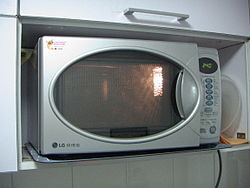
A microwave oven, c. 2005: an example of a final good or consumer good

Manufactured goods refer to products that have undergone processing or assembly, distinguishing them from raw materials.

Law

[edit]

Various legal definitions exist for consumer products, depending on jurisdiction. One such definition is found in the United States' Consumer Product Safety Act, which provides extensive explanation of consumer products.

CONSUMER PRODUCT.- The term ‘‘consumer product’’ means any article, or component part thereof, produced or distributed (i) for sale to a consumer for use in or around a permanent or temporary household or residence, a school, in recreation, or otherwise, or (ii) for the personal use, consumption, or enjoyment of a consumer in or around a permanent or temporary household or residence, a school, in recreation, or otherwise; but such term does not include— (A) any article which is not customarily produced or distributed for sale to, or use or consumption by, or enjoyment of, a consumer,

It then goes on to list eight additional specific exclusions and further details.[1]

Durability

[edit]

Final goods can be classified into the following categories:

  1. Durable goods
  2. Nondurable goods
  3. Services

Consumer durable goods usually have a significant lifespan, which tends to be at least one year, based on the guarantee or warranty period. The maximum life depends upon the durability of the product or goods. Examples include tools, cars, and boats. On the other hand, capital goods, which are tangible in nature, such as machinery or building or any other equipment that can be used in manufacturing of final product, are durable goods with limited lifespans that are determined by manufacturers before their sale. The longevity and the often-higher cost of durable goods usually cause consumers to postpone expenditures on them, which makes durables the most volatile (or cost-dependent) component of consumption.

Consumer nondurable goods are purchased for immediate use or for use very soon. Generally, the lifespan of nondurable goods is from a few minutes to up to three years: food, beverages, clothing, shoes and gasoline are examples. In everyday language, nondurable goods get consumed or "used up".

Consumer services are intangible in nature. They cannot be seen, felt or tasted by the consumer but still give satisfaction to the consumer. They are also inseparable and variable in nature: they are thus produced and consumed simultaneously. Examples are haircuts, medical treatments, auto repairs and landscaping.

Buying habits

[edit]

Final goods can be classified into the following categories, which are determined by consumers' buying habits:

  1. Convenience goods
  2. Shopping goods
  3. Specialty goods
  4. Unsought goods

Convenience goods, shopping goods, and specialty goods are also known as "red goods", "yellow goods", and "orange goods", respectively, under the yellow, red and orange goods classification system.

Convenience goods

[edit]

Convenience goods are frequently used and readily available. Generally, convenience goods fall under the category of nondurable goods, such as fast food, cigarettes and tobacco, which are typically low-cost. Convenience goods are primarily sold by wholesalers or retailers in large volumes to ensure widespread availability to consumers. Convenience goods can further be classified into staple and impulse categories.

Staple convenience consumer goods are basic necessities for consumers. These goods are easily available and in large quantities, such as milk, bread, and sugar.

Impulse convenience consumer goods do not belong to the priority list of the consumer. They are purchased without any prior planning, just on the basis of the impulse: potato wafers, candies, ice cream, cold drinks, etc.

Shopping consumer goods

[edit]

Shopping consumer goods are the goods which take lot of time and proper planning before making purchase decision; in this case consumer does a lot of selection and comparison based on various parameters such as cost, brand, style, comfort etc., before buying an item. Shopping goods are costlier than convenience goods and are durable in nature. Consumer goods companies usually try to set up their shops and show rooms in active shopping areas to attract customer attention and their main focus is to do much advertising and promotion to attract more customers.

Examples, include clothing items, televisions, radios, footwear, home furnishings, etc.

Specialty consumer goods

[edit]

Specialty goods are unique in nature; these are unusual and luxurious items available in the market. Specialty goods are mostly purchased by the upper classes of society as they are expensive in nature and difficult to afford for the middle and lower classes. Companies advertise their goods targeting the upper class. These goods do not fall under the category of necessity; rather they are purchased on the basis personal preference or desire. Brand name, uniqueness, and special features of an item are major attributes which attract customers and make them buy such products.

Examples include antiques, jewelry, wedding dresses, cars, etc.

Unsought consumer goods

[edit]

Unsought goods belong to neither the necessity group of consumer goods list nor to specialty goods. They are always available in the market but are purchased by very few consumers, either based on their interest or their need for some specific reasons. The general public does not purchase such goods often.

Examples include snowshoes, fire extinguishers, flood insurance, etc.

See also

[edit]

References

[edit]
Revisions and contributorsEdit on WikipediaRead on Wikipedia
from Grokipedia
A final good, in economics, refers to a commodity or service that is purchased by its for direct consumption or use, without undergoing further or resale as an input in the production of another good. These goods represent the ultimate output of economic activity and are central to the calculation of (GDP), which measures the of all final produced within a country's borders over a specific period, typically a year. By focusing exclusively on final goods, economists avoid the error of double-counting, as their value inherently includes the contributions of all intermediate inputs used in their production. In contrast, intermediate goods—such as raw materials, components, or semi-finished products—are those acquired by businesses for incorporation into final goods and are explicitly excluded from GDP to prevent inflation of economic output figures. For instance, purchased by a to produce is an , while the finished loaf of sold to a qualifies as a final good. This distinction ensures that GDP captures only the at each stage of production without , providing a clearer picture of an economy's overall performance and growth. Final goods encompass a broad range of categories, including consumer durables like automobiles, nondurables such as and , and services like healthcare or , all of which contribute to personal consumption expenditures—a major component of GDP. Their production and consumption reflect household, government, and business spending on end-use items, influencing economic indicators such as , , and national . Understanding final goods is essential for policymakers, as shifts in their and supply can signal broader economic trends, including recessions or expansions.

Fundamental Concepts

Definition

In , a final good is a or service that is produced and used directly by the end user for its intended purpose, without undergoing further processing, resale, or incorporation into another product. This distinguishes it as the endpoint of the production chain, where its value represents the complete economic output ready for consumption or utilization. Key attributes of final goods include their readiness for immediate use and their inclusion of both tangible items, such as a purchased for personal transportation, and intangible services, like a haircut provided to an individual. For instance, a new household appliance acquired by a for daily use qualifies as a final good, in contrast to raw materials like that are destined for . The concept of final goods emerged within 20th-century national accounting frameworks, notably through the work of economist in the 1930s, who developed methods to measure U.S. by focusing on the value of such end products to avoid overstating economic activity. These systems formalized the tracking of final goods to provide a standardized gauge of economic production.

Distinction from Intermediate Goods

Intermediate goods, also known as producer goods or inputs, are products or services that are purchased and used by firms to produce other goods or services, rather than being consumed directly by end-users. For instance, purchased by a bakery serves as an in the production of , while acquired by an automaker is an input for vehicles. These goods are typically transformed, incorporated, or depleted during the production process and do not reach the final stage of the on their own. The primary distinction between final goods and intermediate goods lies in their position within the production process and their end-use. Final goods represent the culmination of the production chain, where all value-adding stages have been completed, and they are ready for direct consumption or investment by households, businesses, or governments without further processing. In contrast, intermediate goods are embedded earlier in value chains, serving solely as components or facilitators in creating higher-value outputs, and are not intended for direct end-use. This differentiation ensures that economic analysis captures only the ultimate value created, avoiding the inclusion of partially processed items that contribute to multiple layers of production. The economic rationale for this distinction is to prevent overcounting in aggregate economic measures, as intermediate goods' values are already reflected in the pricing of the final products that incorporate them. For example, in the production of an automobile—a final good—the tires represent an ; while the tires have their own production cost, only the complete vehicle's is counted fully to reflect the total without duplicating the tire's embedded worth. Similarly, functions as an when milled into for production, but the finished loaf of qualifies as a final good, encompassing the value from all prior inputs.

Economic Role

Contribution to GDP

Gross domestic product (GDP) measures the market value of all final goods and services produced within an economy over a specific period, typically a year or quarter, providing a comprehensive indicator of economic output. In the expenditure approach, the most commonly used method for calculating GDP, the total is derived from summing household consumption (C), gross private domestic investment (I), government spending (G), and net exports (X - M), where these components reflect expenditures on final goods and services. This approach ensures that GDP captures the end-use value added by production without overlapping intermediate stages. Only newly produced final are included in GDP calculations; resales of used goods or intermediate inputs used in further production are excluded to focus solely on current-period economic activity. For instance, the of a new house qualifies as a final good and contributes its full to GDP under the investment component, whereas the subsequent resale of that same house does not add to GDP since no new production occurs. The conceptual framework for emphasizing final goods in GDP emerged in the United States during the 1930s and 1940s, driven by the U.S. Department of Commerce under economists like Simon Kuznets, who developed the national income and product accounts to guide Depression-era policy and wartime planning. This was standardized internationally through the United Nations' System of National Accounts (SNA) in 1953, with subsequent revisions including the 2025 SNA endorsed in March 2025, which established and refined a unified methodology for measuring final goods and services across economies, promoting comparability in global economic statistics.

Prevention of Double Counting

In national income accounting, double counting arises when the values of intermediate goods and final goods are both included in aggregate measures like (GDP), leading to an inflated total that overstates economic output. For instance, if is valued separately from (an intermediate good derived from ) and (a final good made from ), the value of the wheat would be counted multiple times across the production chain, distorting the true measure of economic activity. This methodological error was a significant concern in early attempts to quantify national income, as it failed to capture only the net addition to economic value at each stage. The prevention of double counting is achieved by focusing exclusively on the value of final goods in expenditure-based GDP calculations, ensuring that the full value-added chain is incorporated only once through the price of the end product. This core principle has been maintained through updates to international standards, including the 2025 SNA. In the bread example, only the market price of the is recorded, implicitly including the contributions of and without separate valuation, thus providing an accurate reflection of total output. This approach aligns with the core principle of , which measure unduplicated production by excluding intermediate inputs entirely from the final tally. As a result, GDP via the expenditure method—encompassing consumption, , , and net exports—avoids redundancy while capturing the economy's overall scale. An equivalent method to prevent double counting involves summing the at each production stage, calculated as the difference between an industry's total output and its intermediate purchases, which nets out inter-industry flows and yields the same GDP figure as the final goods approach. However, the final goods method is generally preferred for its simplicity in expenditure-based estimates, as it directly observes market transactions for end-use items without requiring detailed breakdowns of production processes across sectors. This technique is particularly useful in production-based GDP computations but complements rather than replaces the focus on final outputs. The standardization of these practices emerged from early 20th-century critiques of national income estimates, particularly during the when incomplete data hindered policy-making. In 1934, economist , commissioned by the U.S. Department of Commerce, presented the first comprehensive national income report (National Income, 1929–1932), which addressed double counting by emphasizing final goods and value-added metrics, laying the groundwork for modern systems like the U.S. National Income and Product Accounts established in 1947. These reforms ensured consistent, non-duplicative measurement and influenced global standards, such as the of National Accounts.

Classification by Purpose

Consumer Goods

Consumer goods are final goods and services purchased by individuals or households for personal or non-business use, directly satisfying human needs and wants such as sustenance, apparel, or activities. These items represent the ultimate output of production processes, intended for end consumption rather than further or resale. Consumer goods encompass several subtypes based on their nature and usage patterns, including nondurable goods like groceries that are consumed quickly, durable goods such as furniture that provide longer-term , and services like streaming subscriptions that deliver intangible value. While durability varies among these categories—nondurables typically lasting less than three years and durables extending beyond that—their common thread is direct personal consumption. In developed economies, consumer goods and services typically account for 60-70% of , underscoring their role as the primary driver of and overall economic activity. For instance, , personal consumption expenditures have hovered around 68% of GDP in recent quarters. A key distinction arises in examples like a bought for personal communication and entertainment, which qualifies as a consumer good, versus one acquired by a for employee use and added to inventory, classifying it differently in economic .

Capital Goods

Capital goods, also known as investment goods or producer durables, are final goods that businesses use in the production of other , such as machinery, , and structures. These include items like factory robots for automated assembly lines and commercial vehicles for transporting raw materials. In economic terms, capital goods serve to enhance and support future output by enabling more efficient production processes. They depreciate over time due to wear and , representing a decline in the asset's value or as it ages. Purchases of new capital goods contribute to the investment component of (GDP), reflecting additions to the economy's , while resales of used capital goods are not counted as new production since their value was already included in prior GDP calculations. Unlike consumer goods, which are purchased for direct personal use and satisfaction, capital goods are intended solely for applications in production and are not for end-user consumption. For instance, a acquired by a for agricultural operations qualifies as a capital good, whereas the same model bought by an individual for personal recreation is a consumer good. The prominence of capital goods expanded significantly following the , when innovations in machinery and fixed investments outpaced circulating capital, driving sustained through increased capital accumulation. This shift marked a transition from labor-intensive methods to capital-intensive production, with capital growing in tandem with output thereafter.

Key Characteristics

Durability

Tangible final goods are classified by durability into two main categories: durable goods and nondurable goods, while services represent a separate category of intangible final outputs. Durable goods are tangible products expected to last three years or more, such as household appliances and , which provide repeated use over an extended period. Nondurable goods, in contrast, have a useful life of less than three years and are typically consumed quickly, including items like and cleaning supplies. The of final is measured based on their expected useful , which estimates the period during which the product remains functional under normal conditions. For instance, automobiles are generally expected to last 12 to 15 years or more with proper , while household refrigerators have an average useful of about 12 years. In comparison, nondurable like have a much shorter lifespan, often just days before consumption. This influences decisions, as purchases of durable involve larger upfront costs and longer-term planning compared to frequent buys of nondurables. Economically, durable final goods resemble spending due to their and higher , leading to more volatile consumption patterns that signal and during economic expansions. They are tracked separately through indicators like the U.S. Durable Goods Orders report, a monthly survey of new orders for long-lasting items, which has been published by the U.S. Census Bureau since February 1992 to gauge industrial activity. For example, a qualifies as a durable final good with its multi-year , whereas is a nondurable one depleted in a single use.

Tangibility and Services

Final goods are categorized based on their , distinguishing between physical, tangible products and intangible services. Tangible final goods are physical items that can be touched, stored, inventoried, and traded independently of their consumption, such as or clothing. These goods retain their form and over time, allowing for deferred use or resale in markets. In contrast, services qualify as intangible final goods when they represent the ultimate output consumed by end-users, typically produced and consumed simultaneously without leaving a physical residue. Examples include education, which delivers knowledge transfer, and transportation, which provides mobility. Unlike tangible goods, services cannot be stored or inventoried post-production, as their value is realized in the act of delivery. In national accounts, both are valued at market prices to reflect their contribution to final demand. The prominence of services as final outputs has grown substantially in modern economies, accounting for approximately 73% of GDP in countries as of 2023, with even higher shares in service-oriented nations like the at about 77% as of 2023. This expansion underscores the shift toward knowledge- and experience-based consumption in advanced economies. Measuring services poses unique challenges in economic accounting due to their immaterial nature, which complicates valuation, quality assessment, and separation from intermediate inputs compared to tangible goods. For example, a concert ticket serves as a tangible final good that enables access to the intangible service of live performance, blurring lines in some transactions but highlighting storage limitations for the service itself. Historically, OECD countries experienced a pronounced transition to service-dominated economies starting in the post-1950s era, evolving from agrarian and industrial bases as productivity gains in manufacturing freed labor for non-physical sectors. This trend has intensified with globalization and technological advancements, elevating services' role in overall economic output.

Definitions in Law

In legal contexts, final goods, often termed consumer products or goods, are defined statutorily to delineate the scope of regulatory oversight, particularly for items intended for end-use by individuals rather than intermediate production or resale. In the United States, the Consumer Product Safety Act (CPSA) of 1972 establishes a foundational definition under 15 U.S.C. § 2052(a)(5), describing a "consumer product" as any article, or component part thereof, produced or distributed for sale to a for use in or around a permanent or temporary or residence, a , in , or otherwise, or for the personal use, consumption, or enjoyment of a in such settings. This definition explicitly excludes items not customarily produced for consumer use, such as tobacco products, motor vehicles, pesticides, firearms and ammunition, aircraft, boats, drugs, devices, cosmetics, and food as defined under related federal s. Internationally, definitions vary but similarly emphasize end-use by consumers to facilitate harmonized protections. For instance, the 's Directive (EU) 2019/771 on certain aspects concerning contracts for the sale of goods, which entered into force on 1 January 2022 and replaced Directive 1999/44/EC, defines "goods" in Article 2(5) as (a) any tangible movable items; (b) , or any other form of power when sold in limited volumes or set quantities; (c) tangible movable items that incorporate or are inter-connected with or digital services in such a way that the absence of such digital content or digital services would prevent the goods from performing their functions. This framework implicitly underscores final use without intent for resale, as it applies to sales contracts between sellers and consumers for personal or household purposes, thereby excluding transactions or . These statutory definitions serve to enable targeted regulation of safety standards and liability for final goods, ensuring that oversight applies to products reaching end-users. For example, toys qualify as final consumer goods under the CPSA, falling within the jurisdiction of the Consumer Product Safety Commission (CPSC) for risk assessment and enforcement. Key exclusions, such as business-use items or production intermediates, prevent regulatory overlap with industrial or commercial frameworks, focusing protections on personal consumption contexts.

Safety and Consumer Protection Regulations

In the United States, the Consumer Product Safety Commission (CPSC) plays a central role in overseeing the safety of consumer final goods by establishing mandatory standards, conducting investigations, and enforcing recalls for products posing unreasonable risks of injury or death. Established under the Consumer Product Safety Act of 1972, the CPSC has authority over thousands of consumer products, including toys, appliances, and furniture, ensuring compliance through laboratory testing and market surveillance. A notable example is the 1978 ban on lead-containing paint for consumer use, which prohibited paints exceeding 0.06% lead by weight and extended to toys and furniture accessible to children, significantly reducing childhood risks. In the European Union, the REACH regulation (Regulation (EC) No 1907/2006) addresses chemical safety in final goods by requiring registration, evaluation, authorization, and restriction of substances that could harm human health or the environment. This framework applies to consumer products such as textiles, electronics, and cosmetics, mandating that manufacturers and importers provide data on chemical compositions to prevent exposure to hazardous substances like certain phthalates or heavy metals. Enforcement mechanisms across both regions include rigorous testing protocols, mandatory labeling for hazards, and severe penalties for non-compliance; for instance, the CPSC requires warning labels on products like small parts in toys to alert about choking risks, while REACH enforces safety data sheets and product labeling through national inspections, with fines potentially reaching millions of euros or imprisonment in extreme cases. These regulations profoundly impact producers of final goods by necessitating design modifications to meet thresholds, often increasing production costs but enhancing product reliability. The (NHTSA), established by the Highway Safety Act of 1970, exemplifies this through that require features like seat belts, airbags, and crash-resistant structures in automobiles, compelling automakers to redesign vehicles and conduct recalls for defects. Globally, the standard provides voluntary guidance on , encouraging organizations to integrate considerations into final product supply chains, such as ethical sourcing and transparency in consumer goods to address issues like child labor or environmental impacts.

Consumer Behavior Patterns

Convenience Goods

Convenience goods are low-priced consumer products purchased frequently and with minimal effort or search, often as part of routine shopping habits. These items, such as , , and , are widely available in everyday retail settings, allowing consumers to make quick decisions without extensive comparison or deliberation. The low cost and habitual nature of these purchases minimize perceived risk, making them integral to daily consumption patterns. Convenience goods can be categorized into subtypes based on purchase . Staples represent essential necessities bought regularly to fulfill , including items like , , and , which consumers acquire on a predictable schedule with little variation in choice. In contrast, impulse goods are unplanned acquisitions triggered by immediate stimuli, such as gum or displayed at checkout counters, capitalizing on spontaneous desires rather than premeditated intent. Marketing strategies for goods prioritize extensive distribution to maximize accessibility, with products placed prominently in , convenience stores, and multiple store locations to facilitate effortless buying. Branding efforts focus on building long-term through distinctive packaging and promotional tools like coupons, a approach that emerged prominently in the amid the rise of mass advertising, which used emotional appeals and repetition to encourage habitual repeat purchases. From an economic perspective, convenience goods involve low-involvement decisions, where consumers engage in repetitive, low-risk buying with minimal cognitive effort or information processing. This habitual behavior underscores their role in streamlining routine expenditures, as buyers rely on familiarity and availability rather than active evaluation.

Shopping Goods

Shopping goods are a category of final consumer goods that typically involve moderate pricing and require consumers to engage in comparison to evaluate options based on factors such as suitability, quality, price, and style. Examples include , furniture, and major household appliances, where purchases are less frequent than everyday items and demand deliberate decision-making to maximize value. The purchase process for shopping goods generally entails greater involvement, often including visits to multiple stores, consultation of online reviews, or examination of product specifications to assess attributes like and . This research-oriented approach contrasts with the routine buying of convenience goods, reflecting higher perceived risk and the desire for informed choices that align with personal preferences and budget constraints. Historically, the prominence of goods emerged in the late alongside the rise of department stores, which centralized diverse merchandise under one roof and encouraged comparative browsing as a activity; notable examples include founding in 1858 and the expansion of similar establishments in urban centers. This trend has been significantly amplified since the by the advent of , enabling broader access to product comparisons through online platforms and reviews, thereby transforming traditional patterns. In economic terms, shopping goods represent a notable share of expenditures, often encompassing categories with higher such as furniture and appliances; for instance, in the United States in 2023, apparel and services accounted for 2.6 percent, household furnishings and equipment for 3.2 percent, and (including ) for 4.7 percent of total average annual expenditures. These proportions underscore the sector's role in driving retail activity while highlighting the emphasis on longer-lasting items compared to more perishable products.

Specialty Goods

Specialty goods are a category of consumer products characterized by their unique features, strong brand identification, and lack of close substitutes, prompting buyers to exert significant effort in acquisition despite the inconvenience involved. According to marketing scholars and Kevin Lane Keller, specialty products are defined as goods with unique characteristics or brand identification for which a sufficient segment of buyers is willing to make a special purchase effort. Examples include high-end timepieces like watches and luxury accessories such as designer handbags from brands like , where consumers prioritize the product's prestige and exclusivity over price or availability. This classification distinguishes specialty goods from broader shopping goods by emphasizing intense and minimal willingness to accept alternatives. Consumer behavior toward specialty goods is marked by deliberate and tolerance for effort, often driven by emotional or social motivations rather than mere . Buyers exhibit high involvement, frequently traveling long distances, waiting in lines, or seeking out exclusive retailers to obtain these items, reflecting a deep-seated that overrides typical convenience-seeking patterns. Such stems from the ' role as status symbols, where ownership signals social standing or , leading to repeat purchases and within niche communities. In contrast to routine acquisitions, this proactive pursuit underscores how specialty fulfill aspirational needs, with consumers viewing the acquisition process itself as part of the . The market for specialty goods operates through niche targeting, focusing on affluent segments with tailored distribution channels like flagship stores or limited-edition releases to maintain exclusivity. Post-World War II, the luxury sector—encompassing many specialty goods—experienced accelerated growth due to and reduced trade barriers under agreements like the General Agreement on Tariffs and Trade (GATT), enabling brands to expand internationally and access emerging markets in and beyond. This era saw European fashion houses and American jewelers capitalize on rising global incomes, transforming specialty goods from localized luxuries into worldwide phenomena. Economically, specialty goods represent a relatively small volume within the broader consumer goods market but yield disproportionately high profit margins due to and low production . For instance, items, a of this category, generate returns 3-4 times higher per unit compared to mainstream products, allowing retailers to prioritize them for profitability despite limited sales quantities. This dynamic supports sustainable business models in fragmented markets, where high perceived value sustains demand even amid economic fluctuations.

Unsought Goods

Unsought goods are consumer products or services that individuals do not normally consider purchasing, either due to lack of awareness or because the associated needs are unpleasant or not immediately apparent. These items often require significant efforts to bring them to consumers' attention and stimulate demand. Common examples include policies, which protect against future financial risks, and burial plots, which address end-of-life arrangements that most people prefer to avoid contemplating. Other instances encompass and pre-planned services, where the product's relevance emerges only in specific circumstances. Purchases of are typically prompted by sudden emergencies, major life events, or direct initiatives rather than routine behavior. For example, the need for a might arise during a home emergency, while often follow targeted outreach during family milestones like or . High levels of personal selling and promotional campaigns are essential to overcome and convert latent needs into actual transactions. From a behavioral perspective, consumers generally maintain low of , leading to passive avoidance until external factors intervene. Awareness campaigns play a critical role in shifting perceptions; residential smoke alarms, for instance, transitioned from minimal adoption in the early to near-universal use by the following national public safety initiatives that emphasized fire hazards and prevention benefits, ultimately saving tens of thousands of lives. This low proactive engagement distinguishes from more routinely considered categories. Economically, unsought goods frequently manifest as services rather than tangible items, contributing to sectors like and funeral planning by fulfilling unforeseen protective or preparatory demands. Their market presence depends heavily on and educational outreach to build recognition and trust, enabling providers to address risks that consumers might otherwise overlook.

References

Add your contribution
Related Hubs
User Avatar
No comments yet.