
Recent from talks
Cretan Muslims
Knowledge base stats:
Talk channels stats:
Members stats:
Cretan Muslims
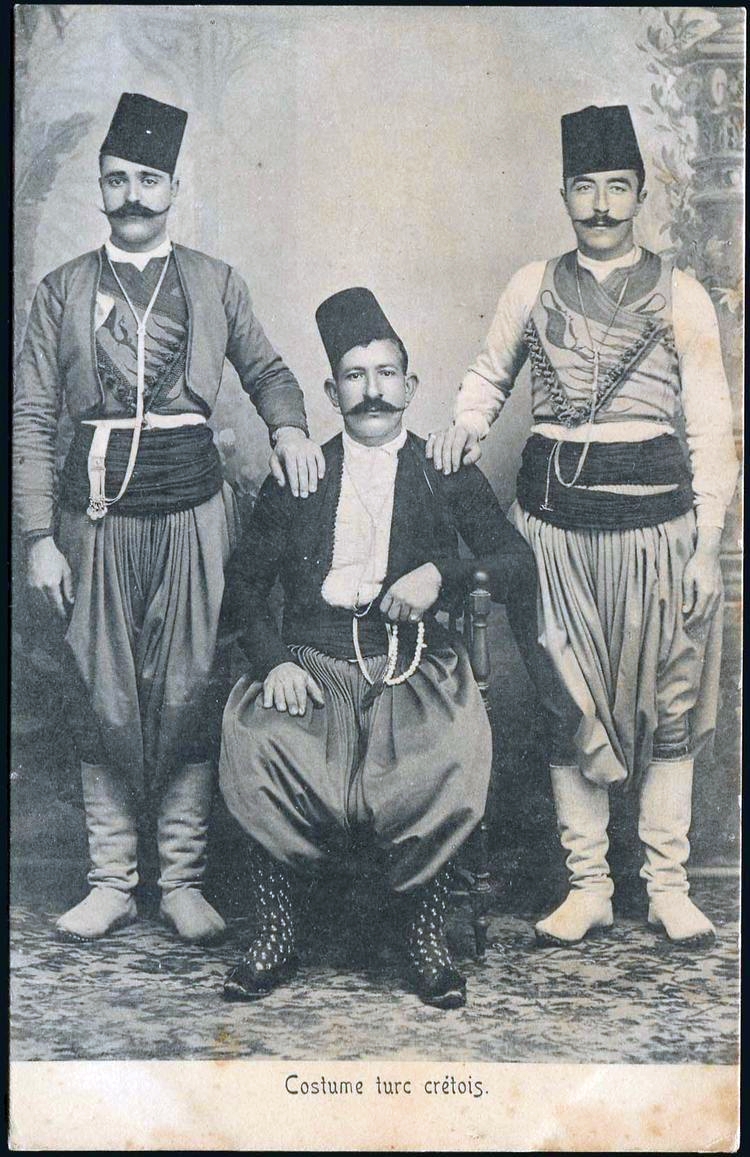
The Cretan Muslims or Cretan Turks (Greek: Τουρκοκρητικοί or Τουρκοκρήτες, Tourkokritikí or Tourkokrítes; Turkish: Giritli, Girit Türkleri, or Giritli Türkler; Arabic: أتراك كريت) were the Muslim inhabitants of the island of Crete. Their descendants settled principally in Turkey, the Dodecanese Islands under Italian administration (part of Greece since 1947), Syria (notably in the village of Al-Hamidiyah), Lebanon, Palestine, Libya, and Egypt, as well as in the larger Turkish diaspora.
Cretan Muslims were descendants of ethnic Greeks who had converted to Islam after the Ottoman conquest of Crete in the seventeenth century. They identified as Greek Muslims, and were referred to as "Turks" by some Christian Greeks due to their religion; not their ethnic background. Many Cretan Greeks had converted to Islam in the wake of the Ottoman conquest of Crete. This high rate of local conversions to Islam was similar to that in Bosnia-Herzegovina, Albania, parts of western Greek Macedonia (such as the Greek Muslim Vallaades), and Bulgaria; perhaps even a uniquely high rate of conversions rather than immigrants. The Greek Muslims of Crete continued to speak Cretan Greek. European travellers' accounts note that the "Turks" of Crete were mostly not of Turkic origin, but were Cretan converts from Orthodoxy.
Sectarian violence during the 19th century caused many Muslims to leave Crete, especially during the Cretan Revolt (1897–1898), and after Crete's unilateral declaration of union with Greece in 1908. Finally, after the Greco-Turkish War of 1919–1922 and the Turkish War of Independence, the remaining Muslims of Crete were compulsorily exchanged for the Greek Christians of Anatolia under the terms of the Treaty of Lausanne (1923).
At all periods, most Cretan Muslims were Greek-speaking, using the Cretan Greek dialect, but the language of administration and the prestige language for the Muslim urban upper classes was Ottoman Turkish. In the folk tradition, however, Cretan Greek was used to express Muslims' "Islamic—often Bektashi—sensibility". Today, the highest number of the Turkocretan descendants can be found in Ayvalık. Those who left Crete in the late 19th and early 20th centuries settled largely along Turkey's Aegean and Mediterranean coast. Alongside Ayvalık and Cunda Island, they settled in İzmir, Çukurova, Bodrum, Side, Mudanya, Adana and Mersin.
Starting in 1645, the Ottoman Empire gradually took Crete from the Republic of Venice, which had ruled it since 1204. In the final major defeat, Candia (modern Iraklion) fell to the Ottomans in 1669 (though some offshore islands remained Venetian until 1715). Crete remained part of the Ottoman Empire until 1897.
The fall of Crete was not accompanied by an influx of Muslims. At the same time, many Cretans converted to Islam – more than in any other part of the Greek world. Various explanations have been given for this, including the disruption of war, the possibility of receiving a timar (for those who went over to the Ottomans during the war), Latin-Orthodox dissension, avoidance of the head-tax (cizye) on non-Muslims, the increased social mobility of Muslims, and the opportunity that Muslims had of joining the paid militia (which the Cretans also aspired to under Venetian rule).
It is difficult to estimate the proportion which became Muslim, as Ottoman cizye tax records count only Christians: estimates range from 30 to 40% By the late 18th century, as many as 30% of the islanders may have been Muslim. The Muslim population declined through the 19th century, and by the last Ottoman census, in 1881, Muslims were only 26% of the population, concentrated in the three large towns on the north coast, and in Monofatsi.
People who claim descent from Cretan Muslims are still found in several Muslim countries today, and principally in Turkey.
Hub AI
Cretan Muslims AI simulator
(@Cretan Muslims_simulator)
Cretan Muslims
The Cretan Muslims or Cretan Turks (Greek: Τουρκοκρητικοί or Τουρκοκρήτες, Tourkokritikí or Tourkokrítes; Turkish: Giritli, Girit Türkleri, or Giritli Türkler; Arabic: أتراك كريت) were the Muslim inhabitants of the island of Crete. Their descendants settled principally in Turkey, the Dodecanese Islands under Italian administration (part of Greece since 1947), Syria (notably in the village of Al-Hamidiyah), Lebanon, Palestine, Libya, and Egypt, as well as in the larger Turkish diaspora.
Cretan Muslims were descendants of ethnic Greeks who had converted to Islam after the Ottoman conquest of Crete in the seventeenth century. They identified as Greek Muslims, and were referred to as "Turks" by some Christian Greeks due to their religion; not their ethnic background. Many Cretan Greeks had converted to Islam in the wake of the Ottoman conquest of Crete. This high rate of local conversions to Islam was similar to that in Bosnia-Herzegovina, Albania, parts of western Greek Macedonia (such as the Greek Muslim Vallaades), and Bulgaria; perhaps even a uniquely high rate of conversions rather than immigrants. The Greek Muslims of Crete continued to speak Cretan Greek. European travellers' accounts note that the "Turks" of Crete were mostly not of Turkic origin, but were Cretan converts from Orthodoxy.
Sectarian violence during the 19th century caused many Muslims to leave Crete, especially during the Cretan Revolt (1897–1898), and after Crete's unilateral declaration of union with Greece in 1908. Finally, after the Greco-Turkish War of 1919–1922 and the Turkish War of Independence, the remaining Muslims of Crete were compulsorily exchanged for the Greek Christians of Anatolia under the terms of the Treaty of Lausanne (1923).
At all periods, most Cretan Muslims were Greek-speaking, using the Cretan Greek dialect, but the language of administration and the prestige language for the Muslim urban upper classes was Ottoman Turkish. In the folk tradition, however, Cretan Greek was used to express Muslims' "Islamic—often Bektashi—sensibility". Today, the highest number of the Turkocretan descendants can be found in Ayvalık. Those who left Crete in the late 19th and early 20th centuries settled largely along Turkey's Aegean and Mediterranean coast. Alongside Ayvalık and Cunda Island, they settled in İzmir, Çukurova, Bodrum, Side, Mudanya, Adana and Mersin.
Starting in 1645, the Ottoman Empire gradually took Crete from the Republic of Venice, which had ruled it since 1204. In the final major defeat, Candia (modern Iraklion) fell to the Ottomans in 1669 (though some offshore islands remained Venetian until 1715). Crete remained part of the Ottoman Empire until 1897.
The fall of Crete was not accompanied by an influx of Muslims. At the same time, many Cretans converted to Islam – more than in any other part of the Greek world. Various explanations have been given for this, including the disruption of war, the possibility of receiving a timar (for those who went over to the Ottomans during the war), Latin-Orthodox dissension, avoidance of the head-tax (cizye) on non-Muslims, the increased social mobility of Muslims, and the opportunity that Muslims had of joining the paid militia (which the Cretans also aspired to under Venetian rule).
It is difficult to estimate the proportion which became Muslim, as Ottoman cizye tax records count only Christians: estimates range from 30 to 40% By the late 18th century, as many as 30% of the islanders may have been Muslim. The Muslim population declined through the 19th century, and by the last Ottoman census, in 1881, Muslims were only 26% of the population, concentrated in the three large towns on the north coast, and in Monofatsi.
People who claim descent from Cretan Muslims are still found in several Muslim countries today, and principally in Turkey.
Recent media