


Community hub
0 subscribers8 pages, 0 posts
Recent from talks
All channels
Be the first to start a discussion here.
Be the first to start a discussion here.
Be the first to start a discussion here.
Be the first to start a discussion here.
Contribute something
Welcome to the community hub built to collect knowledge and have discussions related to Douglas DC-3.
Nothing was collected or created yet.
Douglas DC-3
View on Wikipediafrom Wikipedia
Not found
Douglas DC-3
View on Grokipediafrom Grokipedia
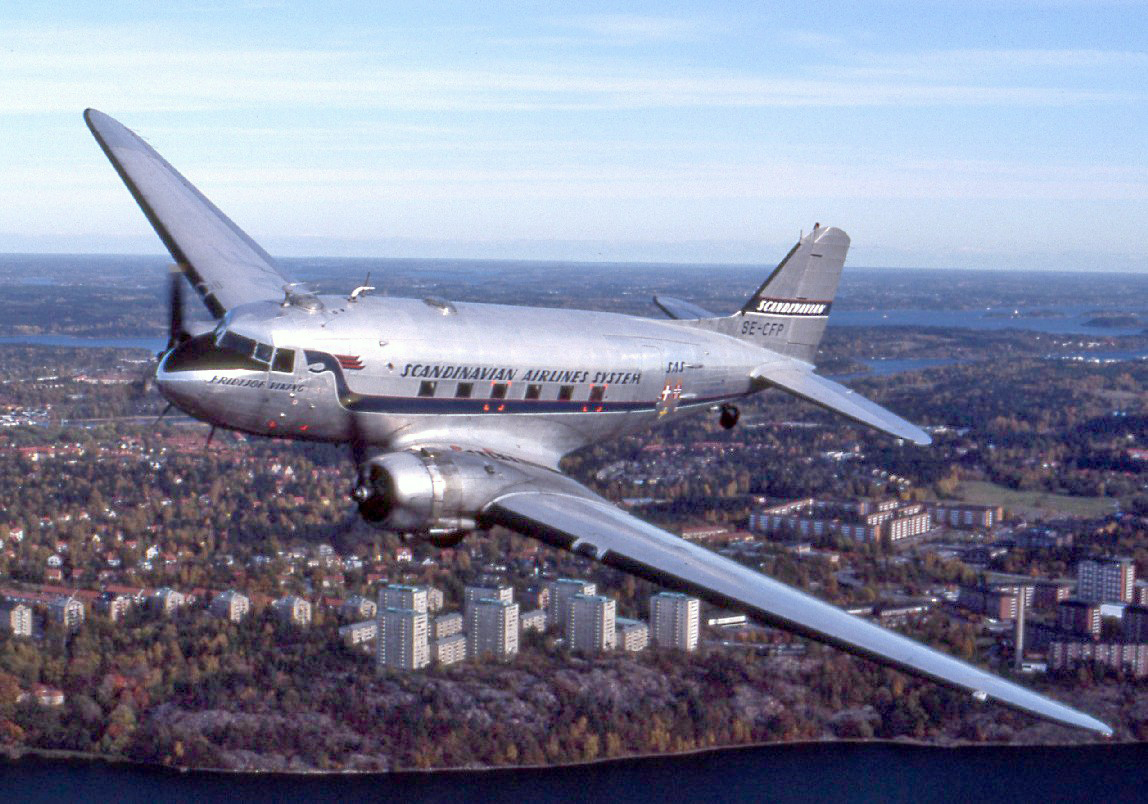
The Douglas DC-3 is a twin-engine propeller-driven airliner developed by the Douglas Aircraft Company in the 1930s, renowned for its role in revolutionizing commercial aviation by enabling profitable passenger transport without government subsidies.[1][2] First flown on December 17, 1935, as an enlarged variant of the DC-2, it featured a capacity for 21 passengers, a cruising speed of approximately 200 mph (322 km/h), and a range of up to 1,500 miles (2,414 km), powered by two 1,200-horsepower radial engines such as the Wright Cyclone or Pratt & Whitney Twin Wasp.[3][1] With dimensions including a 95-foot (29 m) wingspan, 64-foot-6-inch (19.7 m) length, and maximum takeoff weight of 25,200 pounds (11,431 kg), the DC-3 offered enhanced reliability, safety, and comfort compared to predecessors, including options for sleeper berths in its DST variant.[3][2] 607 civil versions were produced, alongside more than 10,000 military variants like the C-47 Skytrain, which played a pivotal role in World War II operations, including troop and cargo transport.[4][2][3]
The DC-3's development stemmed from the need to address the limitations of earlier airliners, evolving directly from the DC-2, which had increased passenger capacity to 14 and improved performance over the prototype DC-1 that first flew in 1933.[5] Key figures included Donald W. Douglas, the company founder, and chief engineer Arthur E. Raymond, who incorporated innovations like retractable landing gear, NACA engine cowlings, and a multi-spar wing design for better structural integrity and efficiency.[5] Prompted by a 1934 request from American Airlines president C.R. Smith for a more spacious and economical aircraft, the DC-3 entered commercial service on June 25, 1936, quickly becoming the backbone of U.S. airlines and serving 90% of the world's carriers by 1939.[3][2] Its all-metal construction, conventional tailwheel landing gear, and ability to operate from shorter runways made it versatile for both domestic and international routes, carrying over 2 million passengers annually by the late 1930s and shifting airline economics from mail subsidies to passenger revenue.[2][1]
Militarily, the DC-3 was adapted as the C-47 Skytrain (or Dakota in British service), with over 10,000 units built for the U.S. Army Air Forces and Allies, facilitating critical logistics such as the D-Day invasion paratroop drops and supply chains across theaters.[3][2] Post-World War II, surplus military models flooded the civilian market, sustaining the type's use in passenger, cargo, and specialized roles worldwide, with some aircraft accumulating over 50,000 flight hours.[1] The DC-3's enduring legacy lies in its influence on modern air travel, demonstrating that safe, efficient, and comfortable flight could be commercially viable, and as of 2025, hundreds remain airworthy for bush operations, firefighting, and heritage flights, underscoring its timeless design.[3][1][6]
Design and Development
Origins and Initial Design
In 1934, American Airlines president C.R. Smith approached Douglas Aircraft Company with a request for a new aircraft design capable of accommodating 21 passengers in a sleeping car configuration, aiming to enhance transcontinental comfort and profitability over the existing DC-2.[7] This demand stemmed from the growing emphasis on passenger services, as mail revenue had been surpassed by commercial air travel by 1933, prompting airlines to seek larger, more efficient planes.[7] Douglas responded by initiating the project for the Douglas Sleeper Transport (DST), an evolution of the 14-seat DC-2, with design work beginning that December following a pivotal two-hour phone call between Smith and Douglas founder Donald Douglas, who committed to producing at least 20 units—10 sleepers and 10 day planes.[7][8] The DST prototype incorporated iterative improvements from the DC-2, including a widened fuselage measuring 92 inches across to allow for upper and lower berths, a strengthened wing and tail structure, and more powerful Wright R-1820 Cyclone radial engines rated at 1,000 to 1,200 horsepower each.[8][1] These enhancements addressed airline needs for greater capacity and range while maintaining the DC-2's reputation for speed and reliability, resulting in an all-metal, low-wing monoplane optimized for economic operation without government subsidies.[1] The prototype rolled out in December 1935 and achieved its first flight on December 17, 1935, from Santa Monica, California—coinciding with the 32nd anniversary of the Wright brothers' historic flight.[8][7] Initial ground and flight testing emphasized the aircraft's range exceeding 1,100 nautical miles, cruising speeds up to 207 miles per hour, and passenger comfort through its spacious interior and smooth handling.[8] These evaluations confirmed the design's viability for commercial service, leading to Civil Aeronautics Authority (CAA) certification on May 21, 1936.[7] No separate prototype was constructed for the standard DC-3 variant; instead, the first production DC-3, configured for 21 daytime seats, followed the initial DST units and was delivered to American Airlines in August 1936, marking the transition from sleeper-focused origins to broader passenger applications.[8]Key Design Features
The Douglas DC-3 featured an all-metal semi-monocoque fuselage construction, which provided structural integrity through a stressed skin design reinforced by internal frames and stringers, eliminating the need for external bracing common in earlier aircraft. This fuselage accommodated 21 to 28 passengers in a spacious cabin, with configurations allowing for either standard seating or sleeper berths in early variants like the Douglas Sleeper Transport. The cabin incorporated soundproofing materials to reduce engine noise and vibration, along with an advanced heating and ventilation system that circulated up to 1,000 cubic feet of heated air per minute, ensuring passenger comfort even in cold weather.[9][1][10] The wing design utilized a low-mounted cantilever structure with a high aspect ratio of 9.13, employing NACA 2215 airfoil sections at the root tapering to NACA 2206 at the tip for efficient lift generation and low drag. Split trailing-edge flaps, covering a significant portion of the wing's trailing edge and deflecting up to 45 degrees, enhanced short-field performance by increasing lift during takeoff and landing. The wings incorporated corrugated aluminum sheeting on the upper surfaces to bolster compressive strength without adding excessive weight, contributing to the aircraft's overall durability.[9][9][10] Landing gear consisted of hydraulically retractable main wheels that folded inward into the engine nacelles, paired with a fixed, swiveling tailwheel that could be locked for straight-line taxiing, forming a conventional tail-dragger configuration. This setup, combined with the aircraft's robust oleo strut shock absorption, allowed operations on unprepared or rough fields, a key factor in its versatility for both civilian and military roles.[9][1] Power was provided by two Wright R-1820 Cyclone radial engines, each rated at approximately 1,000 horsepower, cowled for aerodynamic efficiency and equipped with three-bladed constant-speed propellers featuring alcohol-based de-icing systems to prevent ice buildup. The fuel system included integral wing tanks with a total capacity supporting a range of about 1,500 miles, optimized for economical long-haul operations. Hydraulic systems powered critical functions including landing gear retraction, flap extension, and flight controls, with balanced surfaces and trim tabs ensuring precise handling. These elements collectively emphasized low operating costs, as the DC-3 was the first airliner to achieve profitability without government subsidies due to its reliable design and fuel efficiency.[1][1][11]Production
Manufacturing Process
The Douglas DC-3 was primarily manufactured at the company's Santa Monica facility in California, where initial production began in 1936, yielding 527 aircraft including early military variants by December 1941.[12] As demand surged during World War II, production expanded to the newly opened Long Beach plant in 1941, which spanned approximately 2.8 million square feet across 18 buildings, including massive air-conditioned assembly halls designed for 24-hour operations and blackout compliance.[13] A third major site emerged in Oklahoma City, focusing on military C-47 production and employing thousands to support the war effort.[14] These facilities employed advanced streamlined assembly lines, with components fabricated in dedicated areas before integration, enabling efficient scaling from civilian airliners to militarized transports. Assembly began with fuselage construction using jig-based riveting techniques to ensure precise alignment and structural integrity, where aluminum sections were flush-riveted in fixed jigs to form the monocoque frame.[13] Wing spars were fabricated separately from high-strength aluminum alloys, featuring a main spar at about 25% chord and a rear spar carrying additional lift loads, then bolted directly to the fuselage for a robust, cantilever design that simplified assembly and maintenance.[15] Engine installation followed, mounting the twin radial engines—typically Pratt & Whitney Twin Wasp models—onto the wing leading edges with sequences that included wiring harness integration and variable-pitch propeller attachment, all performed on moving lines to minimize downtime.[13] This modular approach, supported by specialized tooling, allowed for rapid progression from raw materials to completed airframes in under a month per unit during peak periods. Wartime adaptations transformed the process for C-47 military variants, with rapid retooling to incorporate reinforced floors for cargo handling, larger two-panel cargo doors on the starboard side, and provisions for armor plating in critical areas like the cockpit and cargo bay.[15] Subcontractors supplied components such as empennage assemblies to augment Douglas's capacity, though core airframe production remained in-house at the primary plants.[12] Output peaked in 1944 at over 350 units per month across facilities, driven by three-shift operations and a workforce exceeding 43,000 at Long Beach alone, where women comprised more than half the labor force.[13] Quality control emphasized durability in harsh environments, with multi-stage inspections for corrosion resistance using zinc chromate primers on all aluminum surfaces and rigorous checks on rivet integrity to prevent fatigue.[13] Each completed aircraft underwent ground vibration tests, systems functional checks, and mandatory flight testing protocols, including low-speed handling and engine performance evaluations, to verify airworthiness before delivery.[15] These measures ensured the DC-3's reputation for reliability, with minimal structural failures attributed to manufacturing defects even under wartime stresses.[12]Total Production Figures
The Douglas DC-3 achieved remarkable production scale, with approximately 16,000 units of the aircraft and its military C-47 equivalents manufactured during its primary production run from 1936 to 1945.[16] Civilian production by Douglas totaled 607 DC-3 airliners between 1936 and 1941, primarily at facilities in Santa Monica and Long Beach, California, before wartime demands shifted focus to military variants.[17] Military production surged during World War II, with Douglas building over 10,000 C-47 Skytrains and related derivatives like the C-53 Skytrooper, representing the bulk of the type's output.[18] International licensed production added significantly to the totals, including 4,937 Lisunov Li-2 transports constructed in the Soviet Union from 1940 to 1954 at Factory No. 84 in Khodynka and other sites.[19] Additionally, Japanese manufacturers Nakajima and Showa produced 487 L2D "Tabby" variants between 1940 and 1945 for Imperial Japanese Navy use.[20] Post-war, no new DC-3s were produced by Douglas, as the civilian market was supplied by converted surplus military C-47s. A proposed improved variant, the Super DC-3, resulted in only two prototypes built in 1949 before development ceased in favor of more advanced designs.[21]Operational History
Pre-World War II Civilian Service
The Douglas DC-3 entered commercial service in 1936, marking a significant advancement in passenger aviation. American Airlines became the first operator, introducing the Douglas Sleeper Transport (DST) variant on June 25, 1936, for nonstop New York-to-Chicago flights, followed by standard DC-3 service in September on transcontinental routes.[1] Trans World Airlines (TWA) adopted the aircraft in April 1937, initiating sleeper service on June 1 with its "Super Skyliner" configuration, while United Airlines introduced its DC-3 "Mainliners" later that year, expanding efficient day and night operations across major U.S. routes.[22][23] The DC-3 transformed route networks by enabling profitable coast-to-coast flights in under 20 hours, typically around 15 to 18 hours with three refueling stops, compared to the previous 25-hour journeys requiring multiple aircraft changes.[24][25] This efficiency stemmed from its cruising speed of approximately 200 miles per hour and range exceeding 1,500 miles, allowing airlines to operate without heavy reliance on airmail subsidies for the first time.[1] By 1938, DC-3s handled 95 percent of all U.S. commercial airline traffic, underscoring their dominance in expanding domestic passenger networks.[26] Economically, the DC-3 drove down operating costs dramatically, reducing the cost per passenger-mile from 5.7 cents in 1935 to 0.05 cents by 1940, which enabled lower fares and broader accessibility.[24] This contributed to a surge in air travel, with U.S. passenger numbers rising from about 462,000 in 1934 to nearly 1.9 million by 1939.[27] Coast-to-coast round-trip fares, for instance, stood at $300 in 1940, making long-distance flights more viable for the general public and boosting overall industry profitability.[24] Internationally, Pan American Airways (Pan Am) incorporated the DC-3 into its Latin American operations during the late 1930s, deploying it on key routes such as Miami to Buenos Aires starting in 1939 to complement its flying boat fleet.[28][29] These services faced navigation challenges in remote areas, relying on emerging radio aids like four-course radio ranges and non-directional beacons, which provided basic directional guidance amid variable weather and limited ground infrastructure.[30]World War II Military Role
The Douglas DC-3 was adapted by the U.S. Army Air Forces as the C-47 Skytrain, becoming the primary military transport aircraft for troops, cargo, and medical evacuations during World War II.[31] It also excelled in airborne roles, dropping paratroopers and towing gliders laden with infantry and equipment into combat zones.[32] Over 9,300 C-47s were procured by the U.S. military, enabling its widespread use across all theaters.[33] In major operations, C-47s were pivotal during the Normandy invasion on June 6, 1944, when more than 800 aircraft from the U.S. Troop Carrier Command airlifted approximately 13,000 paratroopers of the 82nd and 101st Airborne Divisions behind German lines, while towing gliders for additional reinforcements.[34] They supported the "Hump" airlift from India to China and Burma, flying perilous routes over the Himalayas to deliver about 650,000 tons of supplies, fuel, and personnel to sustain Allied forces against Japanese advances.[35] In the Pacific theater, C-47s facilitated island-hopping strategies by transporting troops and cargo between islands, aiding amphibious assaults and logistical sustainment from Guadalcanal to the Philippines.[36] Specialized adaptations enhanced the aircraft's versatility; the C-53 Skytrooper variant featured strengthened floors and doors for efficient paratroop deployment, while the U.S. Navy's R4D supported carrier-based operations with modifications for naval environments.[37] These missions came at a high cost, with roughly 1,000 C-47s lost to enemy action, weather, and mechanical failures across the war, including over 500 in the Hump airlift alone.[38] Allied nations extensively employed DC-3 derivatives; the Royal Air Force's Dakota conducted vital transport and resupply missions in North Africa, supporting operations from Egypt to Tunisia amid the desert campaign.[39] The Soviet Union license-built the Lisunov Li-2 for logistical support on the Eastern Front, using it to ferry supplies, troops, and partisans across vast fronts from Stalingrad to Berlin.[40]Post-War and Modern Operations
Following World War II, thousands of surplus military C-47 variants of the DC-3 were converted for civilian use, enabling airlines to rapidly expand their fleets at low cost. Over 5,000 ex-military aircraft entered commercial service worldwide, supporting the post-war aviation boom by providing reliable transport for passengers, mail, and cargo on routes where larger jets were impractical.[41] In the United States, carriers like Braniff International Airways integrated DC-3s extensively, operating a fleet of 46 aircraft—including 25 acquired through the 1952 merger with Mid-Continent Airlines—to serve regional routes until the type's retirement in the mid-1950s.[42] Similarly, Capital Airlines relied on DC-3s for short-haul operations, including three Super DC-3 variants introduced in 1950, which carried up to 31 passengers at higher speeds before transitioning to newer propeller aircraft.[43] The DC-3's adaptability ensured its persistence in global niche roles, particularly in remote and developing regions. In Africa and Asia, converted DC-3s continue to haul cargo on unpaved airstrips, supporting mining, agriculture, and humanitarian efforts where modern aircraft struggle with rough terrain.[41] For example, Buffalo Airways in Canada's Northwest Territories operates a fleet of DC-3s for freight, fuel transport, and charter services in Arctic conditions, including the challenging "Koala Airlift" operations since the 1990s.[44] The type also excels in specialized tasks like aerial firefighting, where its sturdy airframe allows for low-level drops of retardant in forested areas, and remote passenger services in areas lacking infrastructure.[41] Into the 21st century, approximately 200 DC-3s remain airworthy worldwide, sustained by ongoing maintenance and upgrades that extend their operational life.[45] In Europe, DDA Classic Airlines' PH-PBA, a veteran C-47A, was saved from retirement in late 2024 after a successful season of sightseeing flights, allowing continued heritage operations into 2025.[46] Conversions by Basler Turbo Conversions have modernized many airframes; the company's 70th BT-67 upgrade, featuring Pratt & Whitney PT6A turboprops for enhanced performance, was completed in April 2025.[47] Recent milestones underscore the DC-3's enduring appeal, including the world's only floatplane-equipped DC-3 (N130Q) resuming flights over Moosehead Lake in Greenville, Maine, during the International Seaplane Fly-In on September 5, 2025, after nearly two decades grounded.[48] Additionally, the DC-3 Society organized 90th anniversary commemorations at EAA AirVenture Oshkosh in July 2025, featuring flyovers, exhibits, and tributes to the aircraft's legacy.[49]Variants
Civil Variants
The Douglas Sleeper Transport (DST), introduced in 1936, was the first civil variant of the DC-3, designed primarily for overnight passenger service with accommodations for 14 to 16 berths in seven upper and seven lower compartments, including a private lounge area.[1] It was powered by two 1,000-hp Wright R-1820 Cyclone radial engines and could be reconfigured for up to 28 daytime passengers, marking a significant advancement in comfortable long-haul air travel.[50] The prototype DST achieved its first flight on December 17, 1935, and entered commercial service with American Airlines the following year, revolutionizing airline economics by enabling profitable sleeper operations.[26][51] The DC-3A variant, optimized for major U.S. carriers, featured two 1,200-hp Pratt & Whitney R-1830 Twin Wasp radial engines and a standard 21-passenger seating configuration, offering improved performance and reliability over the initial DST.[52][53] Airlines such as Eastern Air Lines adopted the DC-3A for extensive domestic routes, where its all-metal construction and efficient cruise speed of around 200 mph supported high-utilization schedules in the pre-war era.[1] This model used conventional tailwheel landing gear.[54] The DC-3B, tailored for airlines like Trans World Airlines (TWA), retained the tailwheel landing gear and was equipped with two Wright R-1820 Cyclone engines, maintaining the core 21-passenger layout while incorporating convertible seating options in the forward cabin for flexibility between day and limited night use.[55] This variant prioritized cost-effective operations with its proven radial powerplants, achieving a range of approximately 1,500 miles and becoming a staple for transcontinental services by the late 1930s.[56] Post-war, the DC-3C designation was applied to surplus military aircraft, such as C-47s and R4Ds, that were refurbished by Douglas for civilian passenger and cargo roles, typically retaining 21 seats and original engine types while undergoing structural updates for commercial certification.[57][58] In 1949, Douglas introduced the Super DC-3 as an enhanced civil model with a stretched fuselage for 24 passengers, redesigned square-tipped wings spanning 93 feet for better lift, and two 1,450-hp Pratt & Whitney R-2000 engines, though only five examples were produced due to the rise of modern jet competitors.[43][59]Military Variants
The military variants of the Douglas DC-3 were extensively developed to meet the demands of World War II, with the C-47 family, including subtypes like the C-53, totaling over 10,000 units produced primarily for transport roles across U.S. and Allied forces. These adaptations featured reinforced structures, cargo doors, and enhanced engines compared to the civilian DC-3, enabling them to serve as troop carriers, paratroop transports, glider tugs, and supply aircraft in diverse theaters. The U.S. military alone designated more than 20 subtypes, reflecting modifications for specific operational needs such as high-altitude flights or naval compatibility.[31][60] The C-47 Skytrain, introduced in 1941, was the primary U.S. Army Air Forces transport variant, featuring a strengthened rear fuselage, large cargo doors on the port side, a reinforced cabin floor for heavy loads, and Pratt & Whitney R-1830 engines producing 1,200 horsepower each. It accommodated a crew of three and up to 28 paratroopers or 6,000 pounds of cargo, with a maximum speed of 224 mph and a range of 1,600 miles. A total of 10,174 C-47s were built, serving in every major Allied campaign, including D-Day where over 1,000 participated in airborne assaults. The C-47A subtype, produced with an aluminum-skinned fuselage for desert operations, included 5,774 units and was similarly equipped but optimized for hotter climates with improved cooling systems.[31][60] The C-53 Skytrooper, a specialized paratroop version delivered starting in 1942, omitted the cargo floor to reduce weight and facilitate rapid troop deployment, while retaining the reinforced structure and engines of the C-47 but with smaller side doors. It could carry 28 troops or serve as a glider tug, and 159 C-53Ds were produced specifically for airborne operations, including D-Day and the Rhine crossing. Unlike the C-47, the C-53 prioritized personnel transport over mixed cargo duties, contributing to missions like the resupply of Bastogne during the Battle of the Bulge.[61][31] For the U.S. Navy and Marine Corps, the R4D series provided carrier-capable adaptations, with early models like the R4D-1 featuring folding wings for storage on aircraft carriers and a crew of four. The R4D-6 variant, built in 1944, mirrored the C-47's transport capabilities but included naval avionics and arrestor gear hooks. Postwar, 98 R4D-8s (redesignated C-117D in 1962) were converted from Super DC-3 standards with longer fuselages, redesigned tails, and Wright R-1820 engines for 1,475 horsepower, achieving a top speed of 270 mph and capacity for 35 passengers; these served until the mid-1970s. The AC-47 gunship, a Vietnam War modification of surplus C-47s, mounted side-firing miniguns and sensors for close air support, marking a significant evolution beyond WWII roles.[62][63] Allied forces adopted similar designations, with the British Royal Air Force receiving over 1,900 Dakotas starting in 1942. The Dakota Mk.I corresponded to the C-47, equipped for general transport in campaigns like Burma and D-Day; the Mk.II used British instruments and propellers for local production compatibility; and the Mk.III, based on the C-47B, featured uprated engines for high-altitude operations over the Himalayas. These variants supported RAF airborne drops and supply runs until retirement around 1950. In Japan, the Imperial Japanese Navy licensed the DC-3 design in 1938, producing 487 L2D aircraft (Allied codename "Tabby") by Showa and Nakajima firms, powered by Mitsubishi Kinsei engines and used extensively for troop and supply transport across Pacific islands until 1945.[64][65][66]Conversions and Derivatives
The Basler BT-67 represents a prominent turboprop conversion of the Douglas DC-3/C-47 airframe, developed by Basler Turbo Conversions in Oshkosh, Wisconsin, to enhance utility for cargo and extended-range operations. This modification replaces the original radial engines with Pratt & Whitney Canada PT6A-67 turboprops, providing improved performance, reliability, and a range exceeding 2,000 nautical miles while carrying up to 7,000 pounds of payload. As of June 2025, Basler had completed its 71st BT-67 conversion, with ongoing production revitalizing surplus military DC-3s for modern missions including humanitarian aid and remote logistics.[67][47] Post-production modifications to DC-3 airframes often include the installation of reinforced cargo doors to facilitate freight loading and auxiliary fuel tanks in the fuselage or wings to extend operational range beyond the standard 1,500 miles. These upgrades, typically performed by specialized firms, strengthen the floor and airframe for heavier loads while maintaining the aircraft's STOL capabilities, allowing adaptations for bush operations or specialized transport without full overhauls.[68][69] A notable recent modification is the recreation of the XC-47 floatplane configuration by HBF Inc., converting a standard DC-3 into the world's only operational float-equipped example after nearly 20 years of inactivity. This project, based on the 1942 U.S. Army Air Forces prototype, equips the aircraft with large EDO floats for water-based operations and first flew in September 2024, with successful water landings resuming in late 2024. In 2025, the floatplane (N130Q) continued demonstrations, including flights at the International Seaplane Fly-In in Greenville, Maine, highlighting its potential for remote aquatic access.[70][71][72] Foreign derivatives of the DC-3 emerged during and after World War II under license agreements. The Soviet Lisunov Li-2, produced from 1939 to 1950, adapted the design with wooden wings and landing gear due to material shortages, serving as a versatile transport and bomber; a total of 4,937 units were built across variants. Similarly, Japan's Showa and Nakajima firms manufactured the L2D "Tabby" from 1941, a close copy with 487 aircraft produced primarily for Imperial Japanese Navy logistics, featuring minor structural tweaks for local production.[19][73][74][75] Ongoing relevance of DC-3 conversions persists into 2025, with HBF Inc. operating the floatplane for demonstration and potential utility flights, and Basler continuing BT-67 upgrades for international roles, including support for United Nations peacekeeping and African humanitarian missions through enhanced avionics and payload systems.[71][76][77]Incidents and Accidents
Notable Crashes
The Douglas DC-3 and its military variants, such as the C-47 Skytrain, were involved in numerous accidents throughout their service, with notable crashes often highlighting operational challenges like weather, combat, or human factors. During World War II, the aircraft played a critical role in airborne operations, but this exposed them to significant risks from enemy fire. On June 6-7, 1944, during the D-Day invasion of Normandy, 42 U.S. Army Air Forces C-47s failed to return from missions, many shot down by German anti-aircraft flak while towing gliders or dropping paratroopers over the Cotentin Peninsula.[78] For example, C-47A 42-93095 of the 91st Troop Carrier Squadron was likely downed by flak near Beuzeville-au-Plain.[79] In pre-World War II civilian service, icing conditions posed a deadly hazard to early DC-3 operations. On October 30, 1941, American Airlines Flight 1, a Douglas DC-3-277B registered NC25663, crashed near St. Thomas, Ontario, Canada, while en route from New York to Detroit. The aircraft encountered severe fog and icing, causing it to enter an uncontrollable spiral dive from which it briefly recovered before stalling into the ground, killing 13 of the 14 people on board; the sole survivor was the pilot. The Civil Aeronautics Board investigation attributed the accident to the accumulation of ice on the wings, propellers, and carburetors, which impaired lift and engine performance in instrument meteorological conditions.[80] Mid-air collisions also marked significant DC-3 incidents during the war era. On November 4, 1942, a Transcontinental & Western Air (TWA) Douglas DC-3 registered NC18951 collided with a U.S. Army C-53 Skytrooper (41-20116) near Kansas City, Missouri, at approximately 3,000 feet altitude in overcast weather. The TWA aircraft, operating a scheduled flight from Albuquerque to New York and carrying three people, struck the military transport from above; the DC-3 was destroyed in a crash landing, while the C-53 sustained major damage but landed safely. There were no fatalities, though the DC-3 captain sustained minor injuries.[81] The Civil Aeronautics Board report cited inadequate air traffic control coordination and failure to maintain visual separation in clouds as primary causes.[82] Post-war accidents continued to underscore the DC-3's enduring use in remote and military operations. On December 3, 1945, a U.S. Army Air Forces Douglas C-47B-5-DK (43-48602) crashed into a hill near Carlos Pellegrini, Argentina, while flying at low altitude during a transport mission, killing all 14 occupants due to controlled flight into terrain.[83] Overall, these crashes influenced safety enhancements like improved de-icing systems and air traffic procedures, extending the type's long service life.Safety Record Overview
The Douglas DC-3 and its military variants, including the C-47, were produced in excess of 16,000 units between 1935 and 1947, establishing it as one of the most widely manufactured aircraft types. This extensive production contributed to a substantial operational history, with the type demonstrating a safety record superior to its predecessor, the DC-2; as the DC-3 became the dominant airliner in U.S. domestic service, the fatal accident rate for airlines declined from eight incidents over 63 million passenger miles in 1936 to four over 133 million miles in 1941.[22][55] The overall hull-loss rate reflected the era's challenges in aviation, but excluded World War II combat losses from civil statistics, focusing instead on peacetime operations. Common causes of DC-3 accidents encompassed adverse weather conditions, particularly icing, which posed significant risks to the unpressurized airframe; mechanical failures, often related to radial engines; and human error in navigation or piloting. These factors were prevalent in the pre-jet age, where limited instrumentation and meteorological forecasting amplified vulnerabilities, though the aircraft's design mitigated some risks compared to wood-and-fabric contemporaries.[16][84] The DC-3's safety was bolstered by its over-engineered, all-metal monocoque structure, which provided exceptional durability and allowed many aircraft to withstand impacts that proved fatal to less robust designs. Post-war modifications, including enhanced pneumatic de-icing boots on wings and tail surfaces, addressed icing-related incidents by improving anti-icing capabilities and reducing the likelihood of stall in adverse conditions.[16][85] In modern operations, the airworthy DC-3 fleet—estimated at 160 to 400 aircraft worldwide as of 2025—benefits from stringent maintenance regimes, resulting in a near-zero fatal accident rate during the 2020s for passenger-carrying flights, with incidents largely limited to non-fatal mechanical or operational issues.[45][86]Preservation
Surviving Aircraft
As of 2025, approximately 200 Douglas DC-3 and its variants, predominantly C-47 military conversions, remain operational worldwide, serving in cargo, passenger, and heritage roles. These aircraft continue to fly despite their age, with estimates ranging from 160 to 400 airworthy examples based on active registrations and operator reports.[45][6] Major operators include Buffalo Airways in Canada, which maintains a fleet of several DC-3s for northern freight and charter services in remote areas. Other notable users encompass airlines in South America, Africa, and other regions, where the type excels in rugged terrain operations.[87] Many DC-3 airframes are preserved in storage globally, including desert boneyards such as those near Tucson, Arizona, for potential restoration or parts salvage. Recent restoration projects highlight ongoing efforts to preserve flyable examples, including a Basler BT-67 conversion delivered in August 2025 after extensive modernization from a stored DC-3 airframe, and an Australian DC-3 Dakota returned to service in April 2025 following multi-month refurbishment.[88][89] In late 2024, DDA Classic Airlines in the Netherlands saved a Douglas DC-3 from retirement, committing to maintain it in airworthy condition for heritage flights.[46] Operating these vintage aircraft presents challenges, including parts scarcity due to the cessation of original production, requiring reliance on aftermarket Parts Manufacturer Approvals (PMAs) or cannibalization from stored hulls. Regulatory hurdles involve FAA and ICAO certifications, often under experimental or restricted categories to accommodate modern safety standards while preserving historical integrity.[90][91]Museum and Display Examples
Numerous preserved Douglas DC-3 and derivative aircraft are on static display in museums around the world, showcasing the type's enduring historical significance. In the United States, the National Air and Space Museum's Steven F. Udvar-Hazy Center in Chantilly, Virginia, houses an original 1936 production DC-3 (c/n 1935), which exemplifies the early civil airliner that revolutionized commercial aviation by enabling profitable passenger operations.[1] This aircraft, acquired from Eastern Air Lines after over 56,000 flight hours, highlights the DC-3's reliability and role in popularizing air travel during the 1930s and 1940s. Another prominent U.S. example is the C-47A "That's All, Brother" (c/n 19410), a D-Day invasion veteran that led the airborne assault on Normandy in 1944, now restored and displayed at the Military Aviation Museum in Virginia Beach, Virginia, where it serves as a memorial to World War II paratrooper operations.[92] Internationally, the Royal Air Force Museum at Cosford, United Kingdom, features a Douglas Dakota Mk.III (c/n 25558, RAF serial KN645), a military variant that participated in key wartime supply missions, underscoring the DC-3's adaptability for troop and cargo transport. In Russia, the Central Air Force Museum in Monino exhibits a Lisunov Li-2 (c/n 23440808, CCCP-93914), the Soviet-licensed production version of the DC-3 that saw extensive use in World War II and postwar civilian service with Aeroflot, demonstrating the aircraft's global proliferation through licensed manufacturing.[93] The Pima Air & Space Museum in Tucson, Arizona, displays a Douglas C-47 Skytrain, representing the military adaptations of the type.[94] Notable recent restorations have brought attention to the DC-3's legacy through public exhibitions, such as those featured at the 2025 EAA AirVenture in Oshkosh, Wisconsin, where the DC-3 Society showcased multiple restored examples to commemorate the 90th anniversary of the type's first flight, including airworthy and static aircraft highlighting postwar modifications.[49] In Australia, the preserved Qantas VH-EAP (c/n 13569) at the Qantas Founders Museum in Longreach, delivered in 1944 and later operated by the airline, symbolizes early transpacific expansion and Qantas's wartime contributions.[95] Worldwide, numerous DC-3 variants are maintained as static museum displays.Specifications
General Characteristics
The Douglas DC-3 is a low-wing, twin-engine monoplane with an all-metal semi-monocoque fuselage designed for efficient passenger and cargo transport in civil aviation. Its baseline configuration features a conventional tail and retractable conventional tailwheel landing gear, emphasizing durability and ease of maintenance. The aircraft's structure utilizes aluminum alloy for the primary airframe, contributing to its lightweight yet robust build suitable for commercial operations.[1] Key physical dimensions include a length of 64 feet 8 inches, a wingspan of 95 feet 2 inches, and a height of 16 feet 11 inches, with a wing area of 987 square feet providing stable lift characteristics.[96][97] The empty weight stands at 16,865 pounds, while the maximum takeoff weight is 25,200 pounds, allowing for a useful load that supports versatile mission profiles.[1] Fuel capacity totals 822 US gallons, enabling extended routes without frequent refueling.[98] In terms of capacity, the standard civil DC-3 accommodates 21 to 32 passengers in an unpressurized cabin arrangement, or up to 6,000 pounds of cargo when configured for freight, though payload with full fuel is reduced to approximately 3,446 pounds to account for operational reserves.[96][99] The crew consists of two pilots and one to two flight attendants, with no armament provisions in the civil variant to prioritize passenger comfort and safety.[98] Power is provided by two radial piston engines driving three-bladed Hamilton Standard 23E50 series constant-speed propellers, each with a diameter of 11 feet 6 inches for optimal thrust efficiency.[98]| Characteristic | Specification |
|---|---|
| Length | 64 ft 8 in (19.7 m) |
| Wingspan | 95 ft 2 in (29.0 m) |
| Height | 16 ft 11 in (5.16 m) |
| Wing area | 987 sq ft (91.7 m²) |
| Empty weight | 16,865 lb (7,650 kg) |
| Max takeoff weight | 25,200 lb (11,431 kg) |
| Fuel capacity | 822 US gal (3,112 L) |
| Passenger capacity | 21–32 |
| Cargo capacity (max) | 6,000 lb (2,722 kg) |
| Crew | 2 pilots + 1–2 attendants |
| Propeller type | 3-bladed Hamilton Standard 23E50, 11 ft 6 in (3.51 m) diameter |
Performance Data
The Douglas DC-3 is equipped with two Wright R-1820-92 Cyclone radial engines, each delivering 1,200 horsepower at takeoff.[100] These powerplants enable a normal cruise speed of 207 mph (180 knots) at optimal altitude and a maximum speed of 230 mph (200 knots).[100] The never-exceed speed (Vne) is limited to 230 mph to ensure structural integrity during dives or high-speed operations.[101] Operational range varies by configuration, achieving 1,500 miles with maximum payload for typical passenger or cargo missions, while ferry range extends to 2,100 miles with reduced load and maximum fuel.[55] The service ceiling reaches 23,200 feet under standard conditions, allowing the aircraft to operate above most weather systems of its era.[96] Fuel consumption at cruise is approximately 94 gallons per hour, supporting efficient long-haul flights when managed with economy settings. Takeoff performance includes a ground run of about 1,500 feet at sea level under standard conditions, demonstrating the DC-3's short-field capabilities for diverse airfields.[102] Landing speed with full flaps is 73 mph, facilitating operations on unprepared strips while maintaining control margins.[85] The initial climb rate stands at 1,130 feet per minute, providing reliable ascent even at gross weights.[100] Maximum gross weight varies by variant, reaching up to 27,000 pounds for cargo-configured models approved under supplemental type certificates, which enhances payload flexibility without compromising core aerodynamics.[101]| Parameter | Value | Notes |
|---|---|---|
| Cruise Speed | 207 mph | At 10,000 ft, economy power |
| Maximum Speed | 230 mph | Level flight limit |
| Range (Max Payload) | 1,500 mi | 21 passengers or equivalent cargo |
| Ferry Range | 2,100 mi | Maximum fuel, no payload |
| Service Ceiling | 23,200 ft | All engines operating |
| Takeoff Ground Run | 1,500 ft | Sea level, standard day |
| Landing Speed (Flaps) | 73 mph | Over threshold |
| Fuel Consumption (Cruise) | 94 gal/hr | 100-octane fuel, lean mixture |
| Climb Rate | 1,130 ft/min | Sea level, gross weight |
| Vne | 230 mph | Structural limit |
| Max Gross Weight (Variants) | 27,000 lb | Cargo configurations |
Legacy
Influence on Aviation
The Douglas DC-3 established foundational standards in aircraft design that profoundly shaped subsequent generations of airliners. Its all-metal monoplane construction with cantilevered wings and retractable landing gear provided enhanced structural integrity and aerodynamic efficiency, influencing the development of larger successors such as the four-engine Douglas DC-4, which doubled passenger capacity while building on the DC-3's reliable twin-engine layout.[24][1][103] The DC-3's emphasis on passenger comfort, including a soundproofed cabin and supercharged engines capable of reliable operation in adverse weather, set benchmarks for safety and usability that carried forward to pressurized designs in later models like the DC-6.[24] Although the DC-3 itself featured conventional tailwheel gear, its overall engineering philosophy contributed to the adoption of tricycle landing gear in post-war airliners for improved ground handling.[104] Economically, the DC-3 revolutionized commercial aviation by becoming the first airliner to operate profitably on passenger revenue alone, without relying on government mail subsidies, thereby transforming airlines from subsidized operations into viable businesses.[1][24] By 1940, it accounted for approximately 90% of the world's airline passenger traffic, enabling faster cross-country flights—reducing New York to Los Angeles travel from 25 hours in 1934 to under 19 hours—and slashing fares by up to 50%, which democratized air travel and boosted U.S. passenger numbers to over 2 million annually.[105] This profitability model directly influenced the jet age, paving the way for efficient designs like the Boeing 707, which further accelerated global connectivity.[24] The DC-3's impact extended to the broader aviation industry, with surplus military variants post-World War II enabling the establishment of new carriers, particularly in developing regions.[41] Its economical operation and versatility influenced the development of smaller regional propeller aircraft for short-haul routes.[104] In modern aviation, the DC-3 remains a cornerstone of niche cargo fleets, with an estimated 150-200 examples still operational globally as of 2025 due to its rugged durability and low maintenance costs, supporting operations in remote areas like Alaska and Antarctica.[6][45] Its timeless reliability was highlighted in 2025 celebrations marking the 90th anniversary of its first flight, including events by the DC-3 Society at EAA AirVenture Oshkosh, underscoring its enduring influence on aviation standards.[49]Appearances in Media
The Douglas DC-3 has frequently appeared in film and television as an emblem of mid-20th-century aviation adventure and resilience. In the 1965 survival drama The Flight of the Phoenix, directed by Robert Aldrich, a DC-3 cargo plane crashes in the desert, serving as the central plot device where survivors repurpose its wreckage to construct a smaller aircraft for escape; the production utilized a real DC-3 for filming in Libya. Similarly, the 2002 biographical crime film Catch Me If You Can, directed by Steven Spielberg, features a DC-3 painted in Trans World Airlines (TWA) livery during a scene depicting con artist Frank Abagnale's impersonation of a pilot, highlighting the aircraft's iconic role in commercial aviation history. In depictions of World War II, the military variants of the DC-3, such as the C-47 Skytrain, have been prominently showcased. Documentaries have also honored specific aircraft, blending archival footage with modern interviews to illustrate its enduring legacy. Beyond screen media, the DC-3 features in video games and literature that celebrate its engineering and cultural impact. Microsoft Flight Simulator includes detailed DC-3 models, allowing players to simulate flights in historical liveries, with expansions like the 2020 premium edition replicating its cockpit and performance for immersive virtual aviation experiences. In print, Peter M. Bowers' 1986 book The DC-3: 50 Years of Legendary Flight provides an illustrated history of the aircraft's development and operations, drawing on photographs and pilot accounts to position it as a cornerstone of air travel.[106] The DC-3's iconic status extends to philately, scale modeling, and promotional art. Several nations have issued postage stamps honoring the aircraft, such as the U.S. Postal Service's 1997 stamp depicting a DC-3 in flight as part of its Classic American Aircraft pane, and Monaco's 1985 issue commemorating aviation milestones.[107] Hobbyists produce numerous scale models, including 1:72 kits from manufacturers like Revell, which replicate variants like the C-47 with accurate panel lines and engines. Early Pan American Airways posters from the 1930s promoted the DC-3's luxury service across the Atlantic, featuring stylized illustrations of the aircraft soaring over oceans to evoke speed and reliability. In recent media, the DC-3 continued to garner attention in 2025 coverage of milestone events. Reports highlighted a rare floatplane conversion of a DC-3 conducting flights over Moosehead Lake, Maine, symbolizing adaptations for remote operations, as covered in aviation journals.[70] At the Experimental Aircraft Association's AirVenture Oshkosh in July 2025, multiple DC-3s performed flyovers and static displays, drawing crowds and featured in live broadcasts that underscored its timeless appeal.[49]References
- https://en.wikisource.org/wiki/Aviation_Accident_Report:_1942_TWA_DC-3_and_Army_C-53_mid-air_collision