


Community hub
Recent from talks
Contribute something
Nothing was collected or created yet.
Complementary DNA
View on Wikipedia
 | This article needs additional citations for verification. (October 2010) |

In genetics, complementary DNA (cDNA) is DNA that was reverse transcribed (via reverse transcriptase) from an RNA (e.g., messenger RNA or microRNA). cDNA exists in both single-stranded and double-stranded forms and in both natural and engineered forms.
In engineered forms, it often is a copy (replicate) of the naturally occurring DNA from any particular organism's natural genome; the organism's own mRNA was naturally transcribed from its DNA, and the cDNA is reverse transcribed from the mRNA, yielding a duplicate of the original DNA. Engineered cDNA is often used to express a specific protein in a cell that does not normally express that protein (i.e., heterologous expression), or to sequence or quantify mRNA molecules using DNA based methods (qPCR, RNA-seq). cDNA that codes for a specific protein can be transferred to a recipient cell for expression as part of recombinant DNA, often bacterial or yeast expression systems.[1] cDNA is also generated to analyze transcriptomic profiles in bulk tissue, single cells, or single nuclei in assays such as microarrays, qPCR, and RNA-seq.
In natural forms, cDNA is produced by retroviruses (such as HIV-1, HIV-2, simian immunodeficiency virus, etc.) and then integrated into the host's genome, where it creates a provirus.[2]
The term cDNA is also used, typically in a bioinformatics context, to refer to an mRNA transcript's sequence, expressed as DNA bases (deoxy-GCAT) rather than RNA bases (GCAU).
Patentability of cDNA was a subject of a 2013 US Supreme Court decision in Association for Molecular Pathology v. Myriad Genetics, Inc. As a compromise, the Court declared, that exons-only cDNA is patent-eligible, whereas isolated sequences of naturally occurring DNA comprising introns are not.
Synthesis
[edit]RNA serves as a template for cDNA synthesis.[3] In cellular life, cDNA is generated by viruses and retrotransposons for integration of RNA into target genomic DNA. In molecular biology, RNA is purified from source material after genomic DNA, proteins and other cellular components are removed. cDNA is then synthesized through in vitro reverse transcription.[4]
RNA purification
[edit]RNA is transcribed from genomic DNA in host cells and is extracted by first lysing cells then purifying RNA utilizing widely used methods such as phenol-chloroform, silica column, and bead-based RNA extraction methods.[5] Extraction methods vary depending on the source material. For example, extracting RNA from plant tissue requires additional reagents, such as polyvinylpyrrolidone (PVP), to remove phenolic compounds, carbohydrates, and other compounds that will otherwise render RNA unusable.[6] To remove DNA and proteins, enzymes such as DNase and Proteinase K are used for degradation.[7] Importantly, RNA integrity is maintained by inactivating RNases with chaotropic agents such as guanidinium isothiocyanate, sodium dodecyl sulphate (SDS), phenol or chloroform. Total RNA is then separated from other cellular components and precipitated with alcohol. Various commercial kits exist for simple and rapid RNA extractions for specific applications.[8] Additional bead-based methods can be used to isolate specific sub-types of RNA (e.g. mRNA and microRNA) based on size or unique RNA regions.[9][10]
Reverse transcription
[edit]First-strand synthesis
[edit]Using a reverse transcriptase enzyme and purified RNA templates, one strand of cDNA is produced (first-strand cDNA synthesis). The M-MLV reverse transcriptase from the Moloney murine leukemia virus is commonly used due to its reduced RNase H activity suited for transcription of longer RNAs.[11] The AMV reverse transcriptase from the avian myeloblastosis virus may also be used for RNA templates with strong secondary structures (i.e. high melting temperature).[12] cDNA is commonly generated from mRNA for gene expression analyses such as RT-qPCR and RNA-seq.[13] mRNA is selectively reverse transcribed using oligo-dT primers that are the reverse complement of the poly-adenylated tail on the 3' end of all mRNA. The oligo-dT primer anneals to the poly-adenylated tail of the mRNA to serve as a binding site for the reverse transcriptase to begin reverse transcription. An optimized mixture of oligo-dT and random hexamer primers increases the chance of obtaining full-length cDNA while reducing 5' or 3' bias.[14] Ribosomal RNA may also be depleted to enrich both mRNA and non-poly-adenylated transcripts such as some non-coding RNA.[15]
Second-strand synthesis
[edit]The result of first-strand syntheses, RNA-DNA hybrids, can be processed through multiple second-strand synthesis methods or processed directly in downstream assays.[16][17] An early method known as hairpin-primed synthesis relied on hairpin formation on the 3' end of the first-strand cDNA to prime second-strand synthesis. However, priming is random and hairpin hydrolysis leads to loss of information. The Gubler and Hoffman Procedure uses E. Coli RNase H to nick mRNA that is replaced with E. Coli DNA Polymerase I and sealed with E. Coli DNA Ligase. An optimization of this procedure relies on low RNase H activity of M-MLV to nick mRNA with remaining RNA later removed by adding RNase H after DNA Polymerase translation of the second-strand cDNA. This prevents lost sequence information at the 5' end of the mRNA.
Applications
[edit]Complementary DNA is often used in gene cloning or as gene probes or in the creation of a cDNA library. When scientists transfer a gene from one cell into another cell in order to express the new genetic material as a protein in the recipient cell, the cDNA will be added to the recipient (rather than the entire gene), because the DNA for an entire gene may include DNA that does not code for the protein or that interrupts the coding sequence of the protein (e.g., introns). Partial sequences of cDNAs are often obtained as expressed sequence tags.
With amplification of DNA sequences via polymerase chain reaction (PCR) now commonplace, one will typically conduct reverse transcription as an initial step, followed by PCR to obtain an exact sequence of cDNA for intra-cellular expression. This is achieved by designing sequence-specific DNA primers that hybridize to the 5' and 3' ends of a cDNA region coding for a protein. Once amplified, the sequence can be cut at each end with nucleases and inserted into one of many small circular DNA sequences known as expression vectors. Such vectors allow for self-replication, inside the cells, and potentially integration in the host DNA. They typically also contain a strong promoter to drive transcription of the target cDNA into mRNA, which is then translated into protein.
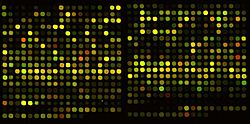
cDNA is also used to study gene expression via methods such as RNA-seq or RT-qPCR.[18][19][20] For sequencing, RNA must be fragmented due to sequencing platform size limitations. Additionally, second-strand synthesized cDNA must be ligated with adapters that allow cDNA fragments to be PCR amplified and bind to sequencing flow cells. Gene-specific analysis methods commonly use microarrays and RT-qPCR to quantify cDNA levels via fluorometric and other methods.
On 13 June 2013, the United States Supreme Court ruled in the case of Association for Molecular Pathology v. Myriad Genetics that while naturally occurring genes cannot be patented, cDNA is patent-eligible because it does not occur naturally.[21]
Viruses and retrotransposons
[edit]Some viruses also use cDNA to turn their viral RNA into mRNA (viral RNA → cDNA → mRNA). The mRNA is used to make viral proteins to take over the host cell.
An example of this first step from viral RNA to cDNA can be seen in the HIV cycle of infection. Here, the host cell membrane becomes attached to the virus' lipid envelope which allows the viral capsid with two copies of viral genome RNA to enter the host. The cDNA copy is then made through reverse transcription of the viral RNA, a process facilitated by the chaperone CypA and a viral capsid associated reverse transcriptase.[22]
cDNA is also generated by retrotransposons in eukaryotic genomes. Retrotransposons are mobile genetic elements that move themselves within, and sometimes between, genomes via RNA intermediates. This mechanism is shared with viruses with the exclusion of the generation of infectious particles.[23][24]
See also
[edit]- cDNA library – Type of DNA library
- cDNA microarray – Collection of microscopic DNA spots attached to a solid surface
- RNA-Seq – Lab technique in cellular biology
- Real-time polymerase chain reaction – Laboratory technique of molecular biology (RT-qPCR)
References
[edit]Mark D. Adams et al. "Complementary DNA Sequencing: Expressed Sequence Tags and Human Genome Project." Science (American Association for the Advancement of Science) 252.5013 (1991): 1651–1656. Web.
Philip M. Murphy, and H. Lee Tiffany. "Cloning of Complementary DNA Encoding a Functional Human Interleukin-8 Receptor." Science (American Association for the Advancement of Science) 253.5025 (1991): 1280–1283. Web.
- ^ Hastings, P. J. (1 January 2001), "Complementary DNA (cDNA)", in Brenner, Sydney; Miller, Jefferey H. (eds.), Encyclopedia of Genetics, New York: Academic Press, p. 433, ISBN 978-0-12-227080-2, retrieved 29 November 2022
- ^ Croy, Ron. "Molecular Genetics II - Genetic Engineering Course (Supplementary notes)". Durham University durham.ac.uk; 20 April 1998. Archived from the original on 24 August 2002. Retrieved 4 February 2015.
- ^ Ying, Shao-Yao (1 July 2004). "Complementary DNA libraries". Molecular Biotechnology. 27 (3): 245–252. doi:10.1385/MB:27:3:245. ISSN 1559-0305. PMID 15247497. S2CID 25600775.
- ^ "5 Steps to Optimal cDNA Synthesis - US". www.thermofisher.com. Retrieved 12 May 2020.
- ^ Tavares, Lucélia; Alves, Paula M.; Ferreira, Ricardo B.; Santos, Claudia N. (6 January 2011). "Comparison of different methods for DNA-free RNA isolation from SK-N-MC neuroblastoma". BMC Research Notes. 4 (1): 3. doi:10.1186/1756-0500-4-3. ISSN 1756-0500. PMC 3050700. PMID 21211020.
- ^ R, Kansal; K, Kuhar; I, Verma; Rn, Gupta; Vk, Gupta; Kr, Koundal (December 2008). "Improved and Convenient Method of RNA Isolation From Polyphenols and Polysaccharide Rich Plant Tissues". Indian Journal of Experimental Biology. 46 (12): 842–5. PMID 19245182.
- ^ I, Vomelová; Z, Vanícková; A, Sedo (2009). "Methods of RNA Purification. All Ways (Should) Lead to Rome". Folia Biologica. 55 (6): 243–51. doi:10.14712/fb2009055060243. PMID 20163774.
- ^ Sellin Jeffries, Marlo K.; Kiss, Andor J.; Smith, Austin W.; Oris, James T. (14 November 2014). "A comparison of commercially-available automated and manual extraction kits for the isolation of total RNA from small tissue samples". BMC Biotechnology. 14 (1): 94. doi:10.1186/s12896-014-0094-8. ISSN 1472-6750. PMC 4239376. PMID 25394494.
- ^ "mRNA Isolation with Dynabeads in 15 minutes - US". www.thermofisher.com. Retrieved 20 May 2020.
- ^ Gaarz, Andrea; Debey-Pascher, Svenja; Classen, Sabine; Eggle, Daniela; Gathof, Birgit; Chen, Jing; Fan, Jian-Bing; Voss, Thorsten; Schultze, Joachim L.; Staratschek-Jox, Andrea (May 2010). "Bead Array–Based microRNA Expression Profiling of Peripheral Blood and the Impact of Different RNA Isolation Approaches". The Journal of Molecular Diagnostics. 12 (3): 335–344. doi:10.2353/jmoldx.2010.090116. ISSN 1525-1578. PMC 2860470. PMID 20228267.
- ^ Haddad, Fadia; Baldwin, Kenneth M. (2010), King, Nicola (ed.), "Reverse Transcription of the Ribonucleic Acid: The First Step in RT-PCR Assay", RT-PCR Protocols: Second Edition, Methods in Molecular Biology, vol. 630, Humana Press, pp. 261–270, doi:10.1007/978-1-60761-629-0_17, ISBN 978-1-60761-629-0, PMID 20301003
- ^ Martin, Karen. "Reverse Transcriptase & cDNA Overview & Applications". Gold Biotechnology. Retrieved 20 May 2020.
- ^ "qPCR, Microarrays or RNA Sequencing - What to Choose?". BioSistemika. 10 August 2017. Retrieved 20 May 2020.
- ^ "cDNA Synthesis | Bio-Rad". www.bio-rad.com. Retrieved 28 May 2020.
- ^ Herbert, Zachary T.; Kershner, Jamie P.; Butty, Vincent L.; Thimmapuram, Jyothi; Choudhari, Sulbha; Alekseyev, Yuriy O.; Fan, Jun; Podnar, Jessica W.; Wilcox, Edward; Gipson, Jenny; Gillaspy, Allison (15 March 2018). "Cross-site comparison of ribosomal depletion kits for Illumina RNAseq library construction". BMC Genomics. 19 (1): 199. doi:10.1186/s12864-018-4585-1. ISSN 1471-2164. PMC 6389247. PMID 29703133.
- ^ Invitrogen. "cDNA Synthesis System" (PDF). Thermofisher. Archived (PDF) from the original on 22 December 2018. Retrieved 27 May 2020.
- ^ Agarwal, Saurabh; Macfarlan, Todd S.; Sartor, Maureen A.; Iwase, Shigeki (21 January 2015). "Sequencing of first-strand cDNA library reveals full-length transcriptomes". Nature Communications. 6 (1): 6002. Bibcode:2015NatCo...6.6002A. doi:10.1038/ncomms7002. ISSN 2041-1723. PMC 5054741. PMID 25607527.
- ^ Derisi, J.; Penland, L.; Brown, P. O.; Bittner, M. L.; Meltzer, P. S.; Ray, M.; Chen, Y.; Su, Y. A.; Trent, J. M. (December 1996). "Use of a cDNA microarray to analyse gene expression patterns in human cancer". Nature Genetics. 14 (4): 457–460. doi:10.1038/ng1296-457. ISSN 1546-1718. PMID 8944026. S2CID 23091561.
- ^ White, Adam K.; VanInsberghe, Michael; Petriv, Oleh I.; Hamidi, Mani; Sikorski, Darek; Marra, Marco A.; Piret, James; Aparicio, Samuel; Hansen, Carl L. (23 August 2011). "High-throughput microfluidic single-cell RT-qPCR". Proceedings of the National Academy of Sciences. 108 (34): 13999–14004. Bibcode:2011PNAS..10813999W. doi:10.1073/pnas.1019446108. ISSN 0027-8424. PMC 3161570. PMID 21808033.
- ^ Hrdlickova, Radmila; Toloue, Masoud; Tian, Bin (January 2017). "RNA-Seq methods for transcriptome analysis". Wiley Interdisciplinary Reviews. RNA. 8 (1) e1364. doi:10.1002/wrna.1364. ISSN 1757-7004. PMC 5717752. PMID 27198714.
- ^ Liptak, Adam (13 June 2013). "Supreme Court Rules Human Genes May Not Be Patented". The New York Times. Archived from the original on 1 January 2022. Retrieved 14 June 2013.
- ^ Altfeld, Marcus; Gale, Michael Jr. (1 June 2015). "Innate immunity against HIV-1 infection". Nature Immunology. 16 (6): 554–562. doi:10.1038/ni.3157. ISSN 1529-2908. PMID 25988887. S2CID 1577651.
- ^ Havecker, Ericka R.; Gao, Xiang; Voytas, Daniel F. (18 May 2004). "The diversity of LTR retrotransposons". Genome Biology. 5 (6): 225. doi:10.1186/gb-2004-5-6-225. ISSN 1474-760X. PMC 463057. PMID 15186483.
- ^ Cordaux, Richard; Batzer, Mark A. (October 2009). "The impact of retrotransposons on human genome evolution". Nature Reviews Genetics. 10 (10): 691–703. doi:10.1038/nrg2640. ISSN 1471-0064. PMC 2884099. PMID 19763152.
External links
[edit]Types of nucleic acids | |||||||
|---|---|---|---|---|---|---|---|
| Constituents | |||||||
| Ribonucleic acids (coding, non-coding) |
| ||||||
| Deoxyribonucleic acids | |||||||
| Analogues | |||||||
| Cloning vectors | |||||||

Complementary DNA
View on GrokipediaDefinition and Characteristics
Molecular Structure and Formation
Complementary DNA (cDNA) consists of a double-stranded DNA molecule whose sequence is derived from a mature messenger RNA (mRNA) template, lacking introns and thus representing only the exons of the transcribed gene.[6] Unlike genomic DNA, cDNA features a standard B-form double helix structure with a deoxyribose-phosphate backbone, adenine-thymine and guanine-cytosine base pairing via hydrogen bonds, and thymine substituting for uracil present in the original RNA.[12] The first strand of cDNA is synthesized as a single-stranded DNA polymer complementary (antisense) to the mRNA, with a 5' to 3' polarity opposite to the RNA template.[2] The formation of cDNA occurs via reverse transcription, a process catalyzed by reverse transcriptase (RT), an RNA-dependent DNA polymerase originally discovered in retroviruses.[7] RT initiates synthesis at the 3' end of the mRNA, often primed by an oligo(dT) primer annealing to the poly(A) tail, incorporating dNTPs to extend a complementary DNA strand in the 5' to 3' direction.[13] This produces a RNA-DNA hybrid, where the nascent cDNA strand displaces the RNA template through RT's helicase-like activity.[4] Second-strand synthesis follows, typically after partial RNase H-mediated degradation of the RNA strand by the same or a separate enzyme, exposing the first-strand cDNA as a template.[14] DNA polymerase then synthesizes the complementary second strand, yielding blunt-ended or cohesive-ended double-stranded cDNA ready for cloning or amplification. This ds cDNA mirrors the sense sequence of the original mRNA on one strand, enabling it to serve as a template for protein-coding gene expression in heterologous systems.[16]Key Properties and Differences from Genomic DNA
cDNA consists exclusively of sequences derived from mature messenger RNA (mRNA), which has undergone splicing to remove introns, resulting in a DNA molecule that lacks the non-coding intron sequences present in eukaryotic genomic DNA.[6][17] This structure enables cDNA to represent only the protein-coding exons of expressed genes, excluding regulatory elements such as promoters, enhancers, and intergenic regions that comprise a significant portion—often over 98%—of genomic DNA in humans.[18][6] A primary functional property of cDNA is its compatibility for heterologous expression, particularly in prokaryotic hosts like Escherichia coli, where the absence of introns bypasses the need for eukaryotic splicing machinery, allowing straightforward production of eukaryotic proteins from the contiguous coding sequence.[19] In contrast, genomic DNA clones from eukaryotes would require accurate intron removal, which bacteria cannot perform, often leading to non-functional transcripts.[5] cDNA libraries reflect tissue- or condition-specific gene expression profiles, capturing only transcribed and processed genes at a given time, whereas genomic DNA encompasses the complete, unchanging genome, including silent or pseudogenic regions.[19] This selectivity makes cDNA smaller in scale—typically yielding libraries with 10^5 to 10^6 clones for a eukaryotic transcriptome versus billions for full genomic coverage—and more targeted for functional studies of coding potential.[5] Additionally, cDNA synthesis introduces potential biases, such as underrepresentation of low-abundance transcripts or regions with strong secondary structures in mRNA, which do not affect genomic DNA representation.[19]Historical Development
Discovery of Reverse Transcriptase
The discovery of reverse transcriptase, an enzyme capable of synthesizing DNA from an RNA template, occurred independently in 1970 through studies on retroviruses, fundamentally altering understandings of genetic information flow. Howard Temin, working at the University of Wisconsin-Madison with Satoshi Mizutani, identified the enzyme in virions of the Rous sarcoma virus, providing direct enzymatic evidence for Temin's earlier provirus hypothesis, which posited that retroviral RNA genomes are reverse-transcribed into DNA intermediates for integration into host genomes.[20] [21] Concurrently, David Baltimore at the Massachusetts Institute of Technology detected the same activity in Rauscher murine leukemia virus extracts, demonstrating DNA polymerase activity dependent on RNA templates and viral RNA-directed synthesis.[22] [23] Their back-to-back publications in Nature on June 27, 1970, confirmed the enzyme's presence via assays showing incorporation of radiolabeled deoxyribonucleotides into acid-insoluble material using purified viral RNA as template, with optimal activity at 37°C and magnesium ions.[24] This overturned the prevailing unidirectional interpretation of the central dogma, as articulated by Francis Crick, by establishing a RNA-to-DNA transcription mechanism in nature.[25] The enzyme's characterization revealed it as a DNA-dependent DNA polymerase with RNA-dependent activity, distinguishing it from conventional polymerases by its lower fidelity and ability to initiate synthesis without a primer in some assays, though later clarified to use tRNA primers in retroviruses.[26] Temin's work built on indirect evidence from inhibition studies in the 1960s, where actinomycin D blocked retroviral replication without affecting RNA synthesis, implying a DNA intermediate, while Baltimore's approach focused on biochemical fractionation of viral particles to isolate the polymerase.[27] Skepticism persisted initially due to technical artifacts concerns, but replication in multiple retroviral systems and purification to near-homogeneity validated the findings.[28] For complementary DNA (cDNA) development, this discovery supplied the essential enzymatic tool; within months, researchers adapted purified retroviral reverse transcriptase for in vitro synthesis of DNA copies from eukaryotic mRNA, marking the inception of cDNA libraries by 1972.[29] [30] Recognition came with the 1975 Nobel Prize in Physiology or Medicine, shared by Temin, Baltimore, and Renato Dulbecco for insights into tumor virus-host interactions, underscoring the enzyme's role in oncogenesis via proviral integration.[27] Subsequent structural studies confirmed reverse transcriptase's multidomain architecture, including polymerase and RNase H activities for primer removal, enabling efficient cDNA production.[31] These advances, grounded in empirical viral assays rather than speculative models, laid the causal foundation for synthetic biology applications beyond natural retroviral replication.Early cDNA Synthesis and Cloning Milestones
In 1972, Inder M. Verma and colleagues at the Massachusetts Institute of Technology synthesized the first complementary DNA (cDNA) copies from eukaryotic messenger RNA (mRNA), using purified rabbit globin mRNA as template and reverse transcriptase from avian myeloblastosis virus (AMV). This marked a pivotal advance following the 1970 discovery of reverse transcriptase, enabling the conversion of RNA sequences into stable DNA for study, though initial products were single-stranded and partial in length due to limitations in enzyme processivity and RNA secondary structure. Progress toward double-stranded cDNA (ds cDNA) occurred in the mid-1970s, with Tom Maniatis, Argiris Efstratiadis, and Fotis C. Kafatos developing methods for second-strand synthesis using Escherichia coli DNA polymerase I on rabbit beta-globin cDNA templates, achieving near full-length copies averaging 600-700 nucleotides by 1976. Concurrently, François Rougeon, Philippe Kourilsky, and Bernard Mach reported the first cloning of a eukaryotic cDNA insert—a rabbit beta-globin sequence—into an E. coli plasmid vector in 1975, demonstrating stable propagation in bacteria and laying groundwork for cDNA libraries. These efforts culminated in 1976 with Maniatis and colleagues amplifying and characterizing cloned ds cDNA of the rabbit beta-globin gene, confirming its fidelity to mRNA via sequencing and hybridization, which facilitated detailed structural analysis of expressed genes without genomic introns. By enabling the isolation of coding sequences from complex eukaryotic transcriptomes, these milestones shifted molecular biology toward recombinant DNA applications, though early yields remained low (often <1% full-length clones) due to inefficiencies in tailing, linker addition, and transformation.Synthesis Methods
RNA Extraction and Preparation
RNA extraction serves as the foundational step in complementary DNA (cDNA) synthesis, involving the isolation of intact RNA molecules, primarily messenger RNA (mRNA), from biological samples such as cells, tissues, or organisms to ensure faithful reverse transcription. High-quality RNA is essential, as degradation or contamination can lead to incomplete or biased cDNA libraries; for instance, RNA integrity numbers (RIN) above 7 are recommended to minimize fragmentation effects on downstream synthesis efficiency.[32] Common extraction methods include organic solvent-based approaches like phenol-chloroform extraction using reagents such as TRIzol, which denature proteins and separate RNA into the aqueous phase through phase partitioning, yielding high quantities suitable for low-input samples but requiring careful handling to avoid chemical hazards.[33] [34] Silica-based column purification kits, such as those employing spin columns or magnetic beads, have become prevalent for their speed and scalability, binding RNA under chaotropic salt conditions (e.g., guanidinium thiocyanate) while removing contaminants like proteins, DNA, and phenols; these methods typically recover 70-90% of input RNA with reduced RNase exposure time compared to traditional organic methods.[34] [35] Post-extraction, on-column or solution-based DNase I treatment is critical to eliminate genomic DNA carryover, which could otherwise generate artifactual cDNA strands via non-specific priming during reverse transcription; protocols often specify 10-30 minutes incubation at 37°C followed by inactivation.[13] Quality control involves spectrophotometric assessment (A260/A280 ratio of 1.8-2.1 indicating purity free of proteins or phenols) and integrity evaluation via agarose gel electrophoresis or automated systems like the Agilent Bioanalyzer, where clear 28S and 18S ribosomal RNA bands confirm minimal degradation.[36] [13] For cDNA applications focused on expressed genes, total RNA is often enriched for polyadenylated mRNA using oligo(dT)-cellulose columns or magnetic beads, which hybridize to the 3' poly-A tails of eukaryotic mRNAs, achieving 1-5% recovery of total RNA as mRNA while depleting abundant rRNA and tRNA; this step enhances representation of coding sequences in cDNA libraries, though it excludes non-polyadenylated RNAs like histones or prokaryotic transcripts.[37] Modern variants integrate mRNA capture directly into reverse transcription via oligo(dT) primers, bypassing separate purification for total RNA workflows in high-throughput sequencing.[2] RNase-free practices throughout—such as using diethyl pyrocarbonate (DEPC)-treated water, gloves, and aerosol-resistant tips—are non-negotiable to prevent ubiquitous RNase degradation, with inhibitors like RNasin added during lysis to stabilize RNA yields up to 100-200 μg per gram of tissue.[13]Reverse Transcription Process
Reverse transcription is the enzymatic process by which single-stranded complementary DNA (cDNA) is synthesized from a messenger RNA (mRNA) template, utilizing a reverse transcriptase enzyme that functions as an RNA-dependent DNA polymerase.[3] This step inverts the central dogma of molecular biology by copying RNA into DNA, enabling downstream applications such as cloning and expression analysis.[4] The enzyme, typically derived from retroviral sources like avian myeloblastosis virus (AMV RT) or Moloney murine leukemia virus (MMLV RT), catalyzes the addition of deoxyribonucleotide triphosphates (dNTPs) complementary to the RNA bases, starting from a primer annealed to the template's 3' end.[38] AMV RT exhibits thermostability, allowing reactions at 42–70°C to minimize RNA secondary structures and improve specificity, while MMLV RT variants often lack RNase H activity to preserve the RNA-DNA hybrid for subsequent steps.[39][38] The process requires key components including purified RNA template (often poly-A selected mRNA), primers such as oligo(dT) for priming at the poly-A tail, random hexamers for broader coverage, or gene-specific primers for targeted synthesis, along with dNTPs, divalent cations like Mg²⁺, and reaction buffer to maintain optimal pH and ionic conditions.[40][2] Reverse transcriptases possess three core activities: RNA-dependent DNA polymerase for first-strand synthesis, DNA-dependent DNA polymerase for second-strand extension in some contexts, and RNase H for degrading the RNA strand in RNA-DNA hybrids, though truncated versions omit RNase H to yield longer cDNA products.[38] Reaction efficiency depends on enzyme processivity (ability to synthesize long strands without dissociating, typically 1–10 kb for engineered RTs) and fidelity, with thermostable variants from group II introns achieving higher accuracy than standard retroviral RTs.[42] In a standard protocol, the reaction initiates with primer annealing at 65–70°C to disrupt secondary structures, followed by cooling to the extension temperature (e.g., 42°C for MMLV or 50°C for AMV), where the RT enzyme extends the primer by incorporating dNTPs at a rate of approximately 10–50 nucleotides per second, producing a first-strand cDNA-RNA hybrid.[40][43] Incubation lasts 30–60 minutes, after which the enzyme is inactivated by heat (e.g., 70–95°C for 5–10 minutes) or EDTA chelation to prevent non-specific activity.[43] Variability in yield arises from factors like RNA quality, secondary structure, and GC content, with high-temperature reactions reducing biases from stable hairpins but potentially introducing thermal degradation.[44] Recent engineered RTs, such as fusion proteins with group II intron elements, enhance processivity up to full-length transcripts and fidelity by incorporating proofreading mechanisms, addressing limitations in traditional viral-derived enzymes.[45][46]Second-Strand Synthesis and Amplification Techniques
Second-strand synthesis in complementary DNA (cDNA) production converts the single-stranded RNA-DNA hybrid formed during reverse transcription into double-stranded DNA (dsDNA), enabling downstream applications such as cloning, sequencing, and library construction. This step typically follows first-strand synthesis, where mRNA serves as the template for reverse transcriptase to generate complementary cDNA. Traditional protocols employ RNase H to create nicks in the RNA strand of the hybrid, generating short RNA primers that E. coli DNA polymerase I extends to synthesize the second strand via nick translation, often supplemented by E. coli DNA ligase to seal nicks and improve yield for longer transcripts.[47][48] An alternative classical approach involves forming a hairpin loop at the 3' end of the first-strand cDNA, which self-primes second-strand synthesis using DNA polymerase, though this method risks incomplete extension and bias toward shorter fragments. More efficient enzymatic strategies utilize high-processivity polymerases like T7 DNA polymerase, which leverages its strong 3' exonuclease activity to displace RNA primers and synthesize full-length second strands, particularly when primed with oligo(dA) annealed to poly(dT) tails, yielding longer clones from polyadenylated RNAs.[49] In contemporary full-length cDNA library construction, template-switching reverse transcription (TSRT) integrates second-strand initiation during or immediately after first-strand synthesis; a template-switching oligonucleotide (TSO) with degenerate nucleotides anneals to the 3' overhang created by terminal transferase activity of certain reverse transcriptases (e.g., M-MuLV variants), enabling primer extension for the second strand without RNase H digestion.[50] This method, commercialized in systems like SMART cDNA, preserves 5' ends and facilitates unbiased amplification of low-abundance transcripts.[51] Amplification techniques expand ds cDNA for analysis, often via polymerase chain reaction (PCR) following second-strand completion. In traditional workflows, blunt-end ds cDNA is ligated to adapters or vectors before PCR using universal primers flanking the insert, as in 5'/3' rapid amplification of cDNA ends (RACE) protocols.[52] For quantitative reverse transcription PCR (qRT-PCR), first-strand cDNA is frequently used directly as a template, with PCR cycles synthesizing the second strand de novo using gene-specific primers, bypassing dedicated second-strand synthesis to minimize bias and artifacts from low-input RNA.[53] TSRT-based systems amplify via PCR with primers targeting the TSO and poly(A) adapter, enabling exponential increase (up to 10^6-fold) while maintaining representation of transcript abundance.[51] Commercial kits, such as those employing dUTP incorporation for strand-specificity, further refine amplification by allowing selective degradation of unwanted strands post-PCR.[54] These techniques prioritize fidelity and coverage, though challenges like primer dimers and GC bias necessitate optimized cycling conditions (e.g., 94–98°C denaturation, 50–60°C annealing).[55]Applications in Research and Biotechnology
Gene Cloning and Expression Studies
Complementary DNA (cDNA) facilitates gene cloning by providing intron-free coding sequences derived from mature mRNA, enabling the isolation and amplification of eukaryotic genes that would otherwise be interrupted by non-coding introns in genomic DNA.[56] This approach is particularly valuable for cloning expressed genes, as cDNA represents only the transcribed and processed portions of the genome, simplifying downstream manipulation and expression in heterologous systems.[57] cDNA libraries, collections of cloned cDNA fragments inserted into vectors such as plasmids or bacteriophages, serve as primary resources for gene cloning.[58] These libraries are constructed by reverse transcribing polyadenylated mRNA from specific tissues or cell types, followed by ligation of double-stranded cDNA into vectors and transformation into host cells like Escherichia coli. Screening methods, including hybridization with oligonucleotide probes complementary to known sequences or functional assays for phenotypic complementation, allow identification of target clones.[59] For instance, functional cDNA expression cloning identifies full-length cDNAs based on their ability to confer selectable phenotypes, such as enzyme activity or resistance, upon expression in target cells.[60] In expression studies, cloned cDNA inserts are placed under control of strong promoters in expression vectors to drive recombinant protein production.[61] Since cDNA lacks native eukaryotic regulatory elements like introns and enhancers, vectors supply prokaryotic or eukaryotic promoters, ribosome-binding sites, and terminators tailored to the host—such as T7 promoters for bacterial systems or CMV promoters for mammalian cells.[61] This enables high-yield protein expression; for example, cDNA-derived open reading frames (ORFs) are routinely used to produce fusion proteins with affinity tags like His-tags for purification and analysis.[62] Applications include characterizing protein function, structure determination via X-ray crystallography, and generating antigens for diagnostics, with yields often reaching milligrams per liter in optimized bacterial or yeast systems.[63] Challenges in expression, such as codon bias or post-translational modifications, are addressed by codon-optimization of cDNA sequences or selection of eukaryotic hosts like Pichia pastoris.[64] Over the past three decades, advancements in cDNA cloning have expanded its utility in expression studies, including the creation of comprehensive libraries from human tissues for proteome-wide analysis.[65] These tools have enabled the recombinant expression of thousands of human proteins, supporting functional genomics and therapeutic protein development, though success rates vary due to factors like mRNA abundance and secondary structure during synthesis.[66]Gene Expression Profiling and Diagnostics
Complementary DNA (cDNA) synthesized from messenger RNA (mRNA) serves as a stable intermediate for gene expression profiling by converting transient RNA transcripts into durable DNA copies amenable to amplification and hybridization techniques.[67] In cDNA microarray analysis, RNA from a sample is reverse-transcribed into labeled cDNA targets, which are then hybridized to arrays containing thousands of immobilized cDNA probes derived from known genes; differential fluorescence intensities quantify relative expression levels across the transcriptome.[67] This method, pioneered in the early 1990s with initial radioactive labeling approaches, enables simultaneous monitoring of thousands of genes, facilitating the identification of expression patterns associated with cellular states or perturbations.[68] In diagnostics, cDNA microarrays provide expression profiles that distinguish pathological from normal tissues, aiding in disease classification and biomarker discovery.[69] For instance, in oncology, they have been applied to profile gene expression in melanoma cell lines, revealing tumorigenic signatures through comparisons of normal and malignant samples as early as 1996.[70] Clinical applications include screening for differentially expressed genes to identify novel therapeutic targets or prognostic markers, such as in breast cancer subtyping where specific expression patterns correlate with treatment response.[69] Microarrays also support infectious disease diagnostics by detecting pathogen-specific transcripts or host responses, though their use has been supplemented by higher-resolution methods like RNA sequencing, which similarly relies on cDNA synthesis for library preparation.[71] Validation of microarray findings often employs reverse transcriptase polymerase chain reaction (RT-PCR) on cDNA to confirm expression changes, ensuring reliability in diagnostic contexts.[72] Advances in cDNA-based profiling have improved diagnostic precision, with targeted amplification methods like cDNA single-molecule molecular inversion probes enabling multiplexed quantification of low-abundance transcripts for applications in cancer biomarker detection.[73] Despite limitations such as probe cross-hybridization, these techniques have informed personalized medicine by linking expression profiles to clinical outcomes, as seen in regulatory perspectives on microarray use for drug selection and therapy monitoring.[74] Overall, cDNA's role underscores its utility in bridging RNA dynamics to actionable diagnostic insights grounded in empirical expression data.Therapeutic and Drug Development Uses
Complementary DNA (cDNA) enables the production of recombinant therapeutic proteins by providing intron-free coding sequences that can be cloned into bacterial, yeast, or mammalian expression systems for large-scale manufacturing. This approach has been fundamental to developing biologics such as interferons, erythropoietin, and factor VIII, which are expressed from cDNA-derived genes to treat conditions like anemia, hemophilia, and hepatitis.[75] For example, recombinant human erythropoietin, approved by the FDA in 1989, was produced using cDNA cloned into Chinese hamster ovary cells, revolutionizing treatment for chronic kidney disease-related anemia.[76] In gene therapy, cDNA serves as the transgene payload in viral vectors to restore functional protein expression in genetic disorders. Gamma-retroviral vectors carrying IL2RG cDNA successfully treated severe combined immunodeficiency (SCID-X1) in early trials starting in 2000, achieving long-term immune reconstitution in patients.[77] Similarly, Strimvelis, approved by the European Medicines Agency in 2016, delivers ADA cDNA via a gamma-retroviral vector to hematopoietic stem cells for adenosine deaminase deficiency-SCID, offering a one-time curative option.[78] Zynteglo, approved in the European Union in 2019 and later by the FDA, uses a lentiviral vector with β-globin cDNA to treat transfusion-dependent β-thalassemia, enabling sustained hemoglobin production in treated patients.[76] cDNA libraries and expression profiling support drug development by identifying novel targets and elucidating mechanisms of action or resistance. High-throughput screening of cDNA libraries has facilitated the discovery of tumor antigens for targeted therapies and vaccines, as demonstrated in phage display systems constructed from patient-derived cDNA.[79] In pharmacogenomics, cDNA microarray-based gene expression databases have been applied to cancer pharmacology, correlating expression patterns with drug sensitivity to prioritize candidates, such as in NCI-60 cell line panels analyzed since 1999.[80] Additionally, cDNA-derived sequences provide templates for in vitro transcription in developing mRNA therapeutics, including vaccines, where the coding region is amplified from cDNA for synthetic mRNA production.[81]Natural Biological Roles
In Retroviruses
In retroviruses, complementary DNA (cDNA) serves as the essential intermediate in converting the single-stranded positive-sense RNA genome into a double-stranded DNA form capable of integrating into the host cell's genome, thereby establishing persistent infection. This reverse transcription process occurs in the cytoplasm shortly after viral entry and is catalyzed by the virally encoded reverse transcriptase (RT) enzyme, which possesses both RNA-dependent DNA polymerase and RNase H activities.[82] The resulting cDNA, initially single-stranded and complementary to the RNA template (the minus strand), undergoes further synthesis to form a linear double-stranded provirus.[83] Reverse transcription begins when a host transfer RNA (tRNA) primer binds to the primer binding site (PBS) adjacent to the 5' unique region (U5) of the viral RNA genome, supplying the 3'-hydroxyl group required for nucleotide extension. RT then polymerizes deoxyribonucleotides along the RNA template, synthesizing the minus-strand strong-stop DNA (approximately 100-200 nucleotides) up to the 5' cap of the RNA. RNase H activity simultaneously degrades the RNA in the RNA-DNA hybrid, except for resistant segments like the polypurine tract (PPT), which primes plus-strand synthesis.[84] A critical first strand transfer follows, where the newly synthesized minus-strand DNA anneals to the complementary repeat (R) region at the 3' end of the RNA genome via homologous base pairing, allowing extension to copy the full-length template.[82] The process concludes with plus-strand synthesis initiating from the PPT primer, RNase H-mediated removal of the tRNA primer, a second strand transfer aligning the plus-strand U3 region with the minus-strand counterpart, and completion of both strands to yield full-length double-stranded cDNA flanked by long terminal repeats (LTRs). This LTR-capped cDNA is substrate for the viral integrase enzyme, which catalyzes its insertion into host chromatin as a provirus, from which viral genes are transcribed by host machinery.[83] The fidelity of cDNA synthesis is low due to RT's error-prone nature, contributing to high mutation rates (approximately 10^{-4} to 10^{-5} errors per nucleotide per replication cycle) that enable viral evasion of host defenses and antiviral drugs.[82] In human immunodeficiency virus type 1 (HIV-1), for instance, reverse transcription completes within 1-2 hours post-entry, with partial cDNA intermediates detectable if blocked by inhibitors like non-nucleoside RT inhibitors.[85]In Retrotransposons and Host Genomes
Retrotransposons, a class of transposable elements, replicate and propagate within host genomes through an RNA-mediated mechanism that centrally involves the synthesis of complementary DNA (cDNA). Unlike DNA transposons, which excise and reintegrate directly, retrotransposons are first transcribed into RNA by host RNA polymerases, serving dual roles as mRNA for protein translation (including reverse transcriptase) and as the template for cDNA production.[86] Reverse transcription converts this single-stranded RNA into double-stranded cDNA, typically in the cytoplasm or nucleus depending on the element type, enabling retrotransposition by inserting the cDNA copy at new genomic loci.[87] This process amplifies retrotransposon sequences, with long terminal repeat (LTR) retrotransposons employing an integrase enzyme analogous to retroviruses to catalyze cDNA integration, while non-LTR retrotransposons like LINE-1 utilize target-primed reverse transcription (TPRT), where the 3' hydroxyl of a cleaved target DNA site primes cDNA synthesis directly on the chromosome.[88][89] Integration of retrotransposon-derived cDNA profoundly shapes host genomes, contributing to structural variation and functional evolution but also posing mutagenic risks. In eukaryotes, retrotransposons account for substantial portions of genomic DNA; for instance, they comprise over 40% of the human genome, with LINE-1 elements alone occupying about 17%.[90] Successful cDNA insertion relies on host cofactors, including chromatin remodelers and DNA repair proteins, which facilitate access to integration hotspots such as gene-rich regions or heterochromatin boundaries, as observed in yeast Ty1 elements targeting upstream of tRNA genes.[91] [92] While parasitic in amplifying their own copies, retrotransposons provide hosts with genetic raw material: cDNA insertions can donate exons, create alternative promoters, or rearrange host genes, influencing expression in contexts like oocyte development where they regulate early embryonic transcripts.[93] However, erroneous integrations disrupt genes, promote genomic instability, and contribute to diseases including cancer via insertional mutagenesis.[94] Certain retrotransposon families exhibit specialized cDNA handling that modulates host interactions. DIRS-like elements, for example, generate linear single-stranded cDNA intermediates rather than conventional double-stranded forms, which are then circularized and integrated via tyrosine recombinase, bypassing typical integrase dependency and potentially evading host silencing mechanisms.[86] Non-integrase pathways also exist, as demonstrated in some LTR elements where cDNA recombines with homologous sequences independently of integrase, fostering genetic diversity through shuffling.[95] These dynamics underscore a bidirectional relationship: hosts evolve suppressors like piRNAs and DNA methylation to curtail retrotransposition, yet tolerate or co-opt cDNA-derived sequences for adaptive traits, such as telomerase-related reverse transcription in maintaining chromosome ends.[96] Empirical studies, including genetic screens in model organisms, reveal conserved host factors across species that either promote or restrict cDNA integration, highlighting the evolutionary arms race between retrotransposons and genomes.[97]Advancements and Challenges
Recent Technological Improvements
Recent advancements in complementary DNA (cDNA) synthesis have focused on enhancing reverse transcriptase (RT) processivity, fidelity, and adaptability to low-input samples and challenging RNA templates, particularly for integration with next-generation sequencing (NGS) workflows. Engineered RT variants, such as those derived from group II introns, enable ultraprocessive end-to-end RNA-to-cDNA conversion in a single enzymatic pass at ambient temperatures, overcoming limitations of traditional retroviral RTs in handling structured, long, or repetitive sequences.[98] This approach improves transcript coverage and detection of rare isoforms or long noncoding RNAs, as demonstrated in commercial kits launched in 2025.[98] Modifications to template-switching mechanisms have boosted sensitivity and coverage in high-throughput RNA analysis. A 2025 comparative study optimized template-switching cDNA synthesis using oligo(dT)23-VN primers combined with random hexamers, achieving up to 2.2-fold higher relative read abundance and 85.7% genome coverage for poly-A-tailed viral RNAs in complex plant matrices via Nanopore and Illumina platforms.[99] These refinements reduce bias against full-length transcripts and enhance multiplex detection of latent viruses, outperforming anchored random priming in quarantine diagnostics.[99] For long-read sequencing, the ordered two-template relay (OTTR) method saw iterative improvements in early 2025, incorporating Bombyx mori R2 RT mutants (e.g., W403A/F753A) and DNA-only 3' adapters capped with dideoxycytidine. These changes yielded 84% 3' end precision, coefficient of variation (CV) of 0.57–0.65 for bias reduction, and compatibility with 2.8 pg RNA inputs while minimizing contaminants below 10% at 3 pg.[100] Biotinylated dideoxyadenosine labeling further streamlined gel-free duplex enrichment, facilitating low-bias libraries for noncoding RNA profiling.[100] Automation and enzyme fidelity enhancements have also addressed error rates in RT-dependent DNA synthesis, with NGS-based assays quantifying reduced mutation frequencies in advanced RTs for precise gene expression studies.[101] These developments collectively lower technical hurdles in single-cell and spatial transcriptomics, where full-length cDNA amplification via RTs with terminal transferase activity captures diverse transcript populations more comprehensively.[102]Limitations and Technical Hurdles
One primary technical hurdle in cDNA synthesis is the inherent error rate of reverse transcriptase enzymes, which lack 3'-5' exonuclease proofreading activity, leading to frequent nucleotide misincorporations during RNA-to-DNA conversion.[103] Error rates can reach approximately 1 in 10,000 to 1 in 100,000 bases, depending on the enzyme variant, resulting in sequence inaccuracies that propagate into downstream applications like sequencing or cloning.[104] High-fidelity engineered reverse transcriptases mitigate this but do not eliminate it entirely, and validation via sequencing is often required.[105] Biases introduced during reverse transcription further distort the cDNA pool relative to the original mRNA transcriptome, including preferential amplification of shorter or more stable transcripts and underrepresentation of those with complex secondary structures.[106] For instance, 3'-end bias arises from oligo(dT) priming strategies, which favor polyadenylated tails and overlook non-poly(A) RNAs or internal sequences, compromising comprehensive gene expression profiling.[107] Ligation steps in library construction exacerbate this through sequence- or GC-content-dependent inefficiencies, necessitating bias-correction algorithms in data analysis.[108] Achieving full-length cDNA remains challenging due to the limited processivity of reverse transcriptases and mRNA degradation, often yielding truncated products that miss 5'-ends critical for promoter studies or complete coding sequences.[109] RNA quality is paramount; contaminants like salts, phenols, or genomic DNA inhibit the reaction or introduce artifacts, requiring stringent purification protocols such as DNase treatment.[36][110] Additionally, spurious second-strand synthesis by some reverse transcriptases generates aberrant DNA products, complicating single-molecule analyses.[111] In cDNA library construction, these issues compound with chimeric clones and size biases from random priming or fragmentation, reducing library diversity and representational accuracy compared to genomic libraries, which inherently lack introns and regulatory elements absent in mature mRNA.[58] Scaling for high-throughput applications demands optimized conditions to minimize inter-sample variability, yet enzyme- and protocol-specific biases persist, as evidenced by comparative studies showing up to 2-fold distortions in transcript abundance.[112] Ongoing advancements, such as template-switching methods, address some hurdles but introduce new ones like adapter dimer formation.[113]References
- https://www.sciencedirect.com/topics/[neuroscience](/page/Neuroscience)/reverse-transcriptase
- https://pubmed.ncbi.nlm.nih.gov/23697550/