


Community hub
Recent from talks
Contribute something
Nothing was collected or created yet.
Dan Snaith
View on Wikipedia
Key Information


Daniel Victor Snaith (born 29 March 1978) is a Canadian composer, musician, and recording artist. He has released 11 studio albums since 2000 and has recorded and performed under the stage names Caribou, Manitoba, and Daphni. His Caribou album Andorra (2008) was awarded the 2008 Polaris Music Prize, and his Caribou album Swim (2010) was a shortlisted nominee for the 2010 Polaris Music Prize and was named the Best Album of 2010 by Resident Advisor. His follow-up Our Love (2014) was also shortlisted for the 2015 Polaris Music Prize and was nominated for the Grammy Award for Best Dance/Electronic Album.
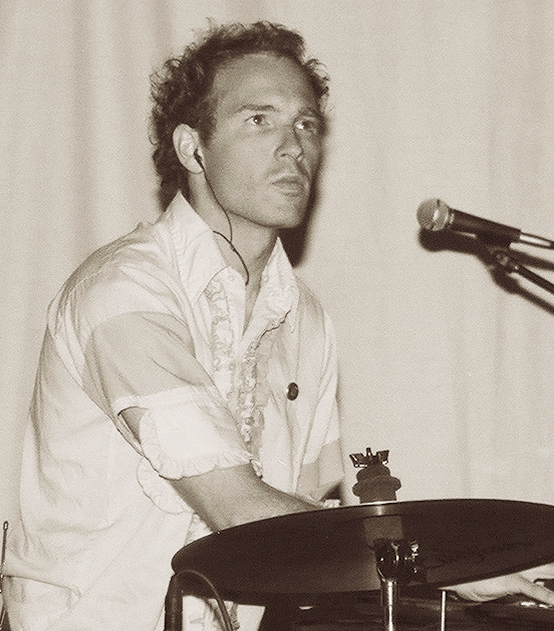
During live Caribou performances, Snaith is joined by his longtime bandmates, Ryan Smith (guitar, keyboards), John Schmersal (bass, keyboards) and Brad Weber (drums), who expand upon Snaith's material for a live environment. Regarding their performances as a four-piece, Snaith has stated: "The whole idea is it’s not just me, and it’s not just hired guns. The live show is its own thing and they’re a proper band – in the sense that we’re all equally part of it."[1]
Career
[edit]Snaith originally recorded under the stage name Manitoba; however, after being threatened with a lawsuit by Richard "Handsome Dick" Manitoba in 2004, Snaith changed his performance name to Caribou. Snaith's previous full-length albums were then re-released under the new moniker.
When playing gigs as Caribou, Snaith performs with a live band. Currently,[when?] the live band consists of Snaith, Ryan Smith, Brad Weber, and John Schmersal. Caribou have toured worldwide since the early 2000s. The band has performed at festivals including Coachella, Glastonbury, Primavera Sound, Field Day, Bonnaroo, All Points East, Reading and Leeds, Parklife, Osheaga, amongst many others. In 2012, Caribou supported Radiohead on their ‘King of Limbs’ tour. When performing as Daphni, Snaith performs as a DJ. "I'm not the type of person who takes physical things apart and plays around with them, but I like taking mental ideas apart and playing around with them. That's what appeals to me about what I've spent my life doing", said Snaith in an interview. [2]
Caribou's 2007 album Andorra won the 2008 Polaris Music Prize,[3] and his subsequent Caribou albums Swim (2010), Our Love (2014) and Suddenly (2020) have appeared on the Polaris Music Prize shortlist.
In 2011, looking for an outlet for more dancefloor influenced output, he began releasing music under the name Daphni, which included three studio albums: Jiaolong (2012), Joli Mai (2017) and Cherry (2022).
In December 2011, Caribou curated the All Tomorrow's Parties "Nightmare Before Christmas" festival in Minehead, England, alongside co-curators Battles and Les Savy Fav.[4]
Caribou was awarded Essential Mix of the Year in 2014 by Mixmag for his "Essential Mix" on 18 October 2014.[5]
Caribou's 2014 album Our Love received the IMPALA Album of the Year Award.
In 2015, Caribou’s album Our Love was nominated for a Grammy for ‘Best Electronic/Dance Album’ and in 2021 Caribou’s single ‘You Can Do it' was nominated for the Grammy for ‘Best Dance Recording’.
In 2011, 2015 and 2021, Caribou’s albums Swim, Our Love and Suddenly won the Juno Award for Electronic Album of the Year.
In 2021, he also received the Libera Awards as Best Dance/Electric Record 2021 for his album Suddenly (Merge Records) by the American Association of Independent Music (A2IM).[6]
In 2024, he released his 8th studio album as Caribou, Honey, which was also longlisted for the 2025 Polaris Music Prize.[7]
Caribou live band
[edit]Current members
- Ryan Smith – guitar, keyboards, percussion (2003–present)
- Brad Weber – drums (2007–present)
- John Schmersal – bass guitar, keyboards, backing vocals (2009–present)
Former members
- Peter Mitton – drums, guitar, keyboards, glockenspiel (2003–2007)
- Andy Lloyd – bass guitar (2007–2009)
Personal life
[edit]In 2005, Snaith received a PhD degree in mathematics from Imperial College London, for work on Overconvergent Siegel Modular Symbols under Kevin Buzzard.[8] Snaith described his work ironically in a modest manner as "original, but I would still call it trivial."[9] He is the son of mathematician Victor Snaith and brother of mathematician Nina Snaith. Snaith has two daughters, with the youngest born in 2016.[10]
Discography
[edit]Studio albums
[edit]as Manitoba
[edit]- Start Breaking My Heart (2001)
- Up in Flames (2003)
as Caribou
[edit]- The Milk of Human Kindness (2005)
- Andorra (2007)
- Swim (2010)
- Our Love (2014)
- Suddenly (2020)
- Honey (2024)
as Daphni
[edit]- Jiaolong (2012)
- FabricLive.93 (2017)
- Joli Mai (2017)
- Cherry (2022)
EPs
[edit]as Manitoba
[edit]- People Eating Fruit EP (30 October 2000)
- give'r EP (26 November 2001)
- If Assholes Could Fly This Place Would Be an Airport 12" (13 January 2003)
Most of Snaith's older Manitoba material has been rereleased under the Caribou name.
as Caribou
[edit]- Tour CD 2005 (2005) Super Furry Animals Tour
- Marino EP (2005)
- Tour CD 2007 (2007)
- Tour CD 2010 (2010)
- Caribou Vibration Ensemble (2010, ATP) Live album featuring Marshall Allen. Caribou 'side project'.
- CVE Live 2011 EP (2014) Caribou Vibration Ensemble. Caribou 'side project'.
as Daphni
[edit]- Resident Advisor, February 2011 (5 tracks of episode 246)[11][12]
- Daphni Edits Vol. 1, 12" [Resista], March 2011
- Pinnacles / Ye Ye, 12" split with Four Tet [Text], March 2011
- Daphni Edits Vol. 2, 12" [Resista], August 2011
- JIAOLONG001, 12" [Jiaolong], October 2011
- Ahora, 12" [Amazing Sounds], November 2011
- Julia / Tiberius, 12" featuring Owen Pallett [Jiaolong], April 2014
- Sizzling EP, June, 2019
Singles
[edit]as Manitoba
[edit]- "Paul's Birthday" CDS (26 February 2001)
- "Jacknuggeted" CDS (24 February 2003)
- "Hendrix with Ko" CDS (14 July 2003)
as Caribou
[edit]- "Yeti" CDS/12" (22 March 2005)
- "Barnowl" (2005)
- "Melody Day" CDS (August 2007)
- "She's the One" (March 2008)
- "Eli" (2008)
- "Odessa" (24 April 2010)
- "Leave House" (2010)
- "Bowls" (19 July 2010)
- "Can't Do Without You" (15 July 2014)
- "Our Love" (September 2014)
- "Your Love Will Set You Free" (2014)
- "All I Ever Need" (2014)
- "Mars" (2015)
- "Home" (2019)[13]
- "You and I" (2020)
- "Never Come Back" (2020)[14]
- "You Can Do It" (2021)
- "Honey" (2024)
as Daphni
[edit]- "Sizzling" (2019)
- "Cherry" (2022)
- "Cloudy" (2022)
- "Clavicle" (2022)
- "Mania" (2022)
Music videos
[edit]as Caribou
- Marino: The Videos DVD (2005) 16 videos for 'Up In Flames' (8), and 'Milk Of Human Kindness' (8), and 'The Milk Of Human Kindness (Story Edit)' featurette.
- Can't Do Without You - 2014
- Sun - 2010
- Odessa - 2010
- You Can Do It - 2021
Awards and recognition
[edit]- 2010 Polaris Music Prize – short list (Swim)[15]
- 2011 Juno Awards – winner, Electronic Album of the Year (Swim)[16]
- 2015 IMPALA Album of the Year Award (Our Love)[17]
- 2015 Polaris Music Prize – short list (Our Love)[18]
See also
[edit]
.svg)
References
[edit]- ^ Milo, Jeff (26 May 2010). "Caribou: "People have always been fascinated with making watery-sounding music, I guess."". Tiny Mix Tapes. Retrieved 6 February 2025.
- ^ Interview with Caribou, David Shankbone, Wikinews, 6 November 2007
- ^ "Music - HuffPost Canada". HuffPost Canada. Archived from the original on 25 July 2011. Retrieved 8 January 2018.
- ^ "ATP Nightmare Before Christmas - Thank You! - All Tomorrow's Parties". All Tomorrow's Parties. Retrieved 8 January 2018.
- ^ Swift, Patrick (22 December 2014), CARIBOU WINS ESSENTIAL MIX OF THE YEAR, Mixmag, archived from the original on 22 December 2014, retrieved 22 December 2014
- ^ "A2IM Libera Awards 2021 winners". liberaawards.com. Archived from the original on 19 October 2021. Retrieved 21 September 2021.
- ^ Gregory, Allie. "Polaris Music Prize Unveils 2025 Long List, Announces Song Prize". Exclaim!. Retrieved 10 June 2025.
- ^ Daniel Snaith. "Overconvergent Siegel Modular Symbols" (PDF). 2.imperial.acuk. Retrieved 29 May 2023.
- ^ "More Madness Than Method: Dan Snaith on the poetics of a blank slate – Telekom Electronic Beats". Electronicbeats.net. 16 May 2013. Retrieved 8 January 2018.
- ^ "Caribou's Dan Snaith: the Family Man Surrounded By Change". FLOOD. Retrieved 15 July 2025.
- ^ Benson, Denise (3 March 2011). "Caribou's Dan Snaith reveals new project, Daphni". Eye Weekly. Retrieved 19 May 2011.[permanent dead link]
- ^ Hughes, Josiah (15 February 2011). "Caribou's Dan Snaith Introduces New Daphni Project". Exclaim!. Retrieved 19 May 2011.
- ^ "Home – Single by Caribou". Apple Music. Archived from the original on 8 October 2019. Retrieved 9 October 2019.
- ^ "Caribou plots his escape on new song "Never Come Back": Stream". 28 January 2020.
- ^ "Polaris Music Prize 2010". Archived from the original on 22 January 2012.
- ^ Doole, Kerry (27 March 2011). "Neil Young, Arcade Fire, Shad Take Home Early Junos". Exclaim!. Retrieved 27 March 2011.
- ^ "City Slang's CARIBOU pockets IMPALA European Album of the Year Award". Impalamusic.org. 12 February 2015. Archived from the original on 6 July 2015. Retrieved 26 February 2015.
- ^ "Our Love - Polaris Music Prize". Polarismusicprize.ca=. Retrieved 8 January 2018.
External links
[edit]
- Official website

- Caribou on The Leaf Label
- Caribou discography at MusicBrainz
- Caribou at AllMusic
|


| International | |
|---|---|
| National | |
| Artists | |
| People | |
Dan Snaith
View on GrokipediaEarly life and education
Childhood and family
Daniel Victor Snaith was born on March 29, 1978, in Dundas, Ontario, Canada.[9] He grew up in a family of educators; his parents, who immigrated from England to Canada before his birth, included a father who worked as a mathematics professor and a mother who had studied mathematics before becoming a homemaker to care for Snaith and his two older sisters.[3] The family's home environment in the Victorian houses of Dundas emphasized intellectual pursuits and provided a stable backdrop for Snaith's early development.[3] From a young age, Snaith was introduced to music through his parents' record collection, which included British folk albums like Morris On that left a lasting impression on him.[3] His father further shaped this exposure by insisting on piano lessons during childhood, an activity Snaith initially viewed as a chore but which sparked his interest in music production.[2] In his teenage years, spent in the Dundas area, Snaith expanded his musical horizons significantly, playing in a local covers band called Kaptain Hairdo that performed rock tracks he found unexciting.[3] A piano tutor introduced him to progressive rock, including the elaborate solos of Rick Wakeman and Keith Emerson, while a friend at age 15 shared The Orb's electronic album U.F.Orb, prompting Snaith to experiment with a basic synthesizer and his father's computer to create techno-inspired tracks.[2][3] He also began frequenting dance clubs in nearby Toronto, where he discovered the energy of dance music and felt drawn to the DJ booth.[10] In his late teens, Snaith immersed himself in jazz through records by Pharoah Sanders, Sun Ra, Alice Coltrane, and John Coltrane's A Love Supreme, appreciating their blend of improvisation and melody.[3]Academic pursuits
Snaith completed his undergraduate studies in mathematics at the University of Toronto in the late 1990s.[11][3] In 2003, he relocated to London, United Kingdom, to pursue graduate studies at Imperial College London.[3] There, he earned a PhD in mathematics in 2005, with a thesis titled Overconvergent Siegel Modular Symbols under the supervision of Kevin Buzzard; the work centered on analytic number theory, adapting concepts from p-adic modular forms to higher-dimensional Siegel modular forms.[3][12] Throughout his doctoral program, Snaith maintained a balance between rigorous academic research and creative musical pursuits, continuing to compose electronic music alongside his scholarly work.[3] During his undergraduate years, he had already begun early experiments with electronic music production as a hobby.[11]Musical career
Manitoba era
In the late 1990s, Dan Snaith adopted the pseudonym Manitoba, named after the Canadian province.[13] Snaith's debut album under this alias, Start Breaking My Heart, was recorded in 1999 and released in 2001 on the Leaf Label, showcasing an experimental electronic style that blended intelligent dance music (IDM) with glitchy percussion, acoustic textures, and subtle folk-like melodies, evoking a post-Boards of Canada aesthetic.[14][15] His follow-up, Up in Flames (2003, also on Leaf), expanded on these foundations with more melodic and psychedelic structures, incorporating samples like those from jazz drummer Idris Muhammad, and earned critical acclaim for its innovative shift from pastoral IDM toward warmer, more emotive electronic compositions.[16] In 2004, Snaith faced a trademark infringement lawsuit from Richard "Handsome Dick" Manitoba, frontman of the punk band The Dictators—who had never released music under that name—resulting in a cease-and-desist order that forced the alias change to Caribou and incurred significant legal costs, temporarily disrupting his career momentum just as acclaim was building.[17][13] During this period, Snaith embodied a DIY ethos through bedroom production using rudimentary tools like Acid software and a Radio Shack microphone, while undertaking early tours that supported his growing profile, often alongside artists like Four Tet.[13][18]Caribou development
In 2004, Dan Snaith rebranded his musical project from Manitoba to Caribou following a trademark lawsuit filed by punk musician Handsome Dick Manitoba.[19] This change prompted the re-release of his earlier Manitoba albums under the new moniker, allowing Snaith to continue evolving his sound without legal interruption.[13] Snaith debuted as Caribou with the album The Milk of Human Kindness, released on April 18, 2005, via The Leaf Label and Domino Recording Company.[20] The record marked an initial foray into layered electronic and psychedelic elements, blending folk influences with experimental production techniques drawn from Snaith's mathematical background.[21] His follow-up, Andorra (2007), released August 21 via Merge Records and City Slang, refined this approach with intricate psychedelic pop arrangements and vocal harmonies, earning the 2008 Polaris Music Prize.[22][7] The 2010 album Swim, released April 20 by Merge Records and City Slang, represented a pivotal breakthrough for Caribou, shifting toward a fusion of psych-pop and dance rhythms that emphasized propulsive beats and emotive melodies.[23] This evolution captured widespread critical acclaim for its immersive, euphoric soundscapes, often described as a seamless blend of indie electronics and club energy.[24] Swim peaked at number 54 on the UK Albums Chart and sold over 175,000 copies worldwide by 2015, establishing Snaith's international profile.[25] Subsequent releases built on this foundation, exploring deeper emotional terrains through innovative electronic arrangements. Our Love (2014), released October 6 via Merge and City Slang, delved into themes of romantic obsession, disconnection, and familial bonds with introspective lyrics and house-inflected grooves.[26] It achieved commercial success, reaching number 8 on the UK Albums Chart.[27] Suddenly (2020), issued February 28 by the same labels, grappled with sudden life changes, including love, loss, and parenthood, using fragmented samples and warm synths to evoke vulnerability and resilience.[28] The album debuted at number 3 on the Canadian iTunes Albums Chart.[29] Most recently, Honey (2024), released October 4 via Merge and City Slang, pushed electronic experimentation further with AI-manipulated vocals simulating diverse ages, genders, and synthetic timbres, alongside upbeat house tracks centered on joy and relational flux.[6] Snaith's occasional overlap with his Daphni alias informed the dance-oriented edges of these Caribou works, channeling club rhythms into album structures.[30] Caribou's albums have garnered consistent critical praise, with Our Love shortlisted for the 2015 Polaris Music Prize and Suddenly shortlisted for the 2020 Polaris Music Prize. Earlier recognition came via the 2008 Polaris win for Andorra, underscoring Snaith's enduring impact on Canadian electronic music.[7] Chart performance has varied but trended upward, reflecting growing commercial viability amid indie acclaim. In 2025, Caribou extended touring momentum from Honey with an Australian run in January, including headline shows in Brisbane, Sydney, Melbourne, Adelaide, and Fremantle, following a New Year's appearance at Lost Paradise Festival.[31] Snaith also headlined the End of the Road Festival in Dorset, England, in August, marking the project's return to the event after 15 years.[32]Daphni project
Dan Snaith launched the Daphni project in 2011 as an outlet for his club-focused music, drawing inspiration from the Toronto rave scene where he had been active since the mid-1990s, including organizing parties like Social Work.[33][34] This alias allowed Snaith to explore house and techno in a more immediate, dancefloor-oriented manner, distinct from the structured songwriting of his Caribou work, while occasionally sharing production techniques like modular synthesis across both projects.[35] The debut release, the album Jiaolong (2012), appeared on Snaith's own Jiaolong label and emphasized vinyl edits of funk, disco, and African pop records, blended with analog elements such as rubbery basslines and acid lines generated via modular synthesizers.[36][37][35] Tracks were often improvised in a single day to capture raw energy for DJ sets, reflecting an ephemeral style suited to underground club environments like Fabric and Panorama Bar.[35][38] Subsequent releases built on this foundation, with Joli Mai (2017) expanding from an all-original FabricLive mix into a full LP of extended, unmixed tracks that prioritized spontaneity and groove over polished arrangements.[39][40] Daphni's output continued to bridge underground dance scenes through its fusion of reissued vinyl sources with contemporary electronic production, influencing and connecting disparate genres like tech house and deep house.[37][41] Key later releases include the improvisational Cherry (2022), which featured gleaming synths and deep melodies evoking dancefloor euphoria while maintaining the project's raw ethos. In 2025, following Caribou's Australian tour, Snaith teased and performed extended Daphni DJ sets in cities like Melbourne, Sydney, and Byron Bay, extending the project's live, communal spirit.[42][43] In November 2025, Snaith announced the upcoming Daphni album Butterfly, scheduled for release on February 6, 2026, via Jiaolong, featuring collaborations and new singles like 'Waiting So Long' (feat. Caribou).[44]Artistic style and influences
Sound evolution
Dan Snaith's sonic palette began with the intricate, lo-fi electronica of his Manitoba moniker in the late 1990s and early 2000s, characterized by IDM-inspired chopped beats, jittery polyrhythms drawn from UK garage and broken beat influences, and layered sampling using rudimentary tools like a Radio Shack microphone and inexpensive keyboards.[13] This era emphasized dense, neurotic textures and avoidance of conventional song structures, creating a sense of disorientation through overlapping samples and unpredictable rhythmic shifts.[45] As Snaith transitioned to the Caribou alias in the 2000s and into the 2010s, his sound integrated psych-rock elements, expanding the lo-fi foundations into warmer, more expansive arrangements influenced by bands like Can and My Bloody Valentine, with bigger, blurred electronic layers and melodic hooks that balanced experimentation and accessibility.[13] Following the release of Swim, Snaith increasingly incorporated live instrumentation, such as Fender Rhodes electric piano, drum kits, and band performances with dual drummers, to infuse organic dynamism into his electronic frameworks, moving away from purely laptop-based sequencing.[46] In later works, he adopted modular synthesizers, particularly Eurorack systems, to generate detuned, rich timbres that complemented software-based production, enhancing the analog warmth amid digital precision.[46] Thematically, Snaith's music evolved from personal introspection—exploring family turmoil, grief, and vulnerability through tape-warped effects, detuned synths, and collage-like structural disruptions in Suddenly—to a sense of communal joy and welcoming energy in Honey, where club-oriented rhythms and AI-altered vocals foster shared euphoria.[47][48] Throughout, his production techniques relied on heavy layering of samples and loops (often hundreds per track), polyrhythmic interplay for fluid, non-linear flow, and deliberate evasion of verse-chorus norms to prioritize emotional and textural immersion.[47][13] Snaith adapted to advanced digital tools like Ableton Live for looping and editing, while preserving an analog-esque warmth through hardware like spring reverbs and minimalistic tracking.[46]Key inspirations
Dan Snaith's early exposure to electronic music was profoundly shaped by pioneers like Aphex Twin and Boards of Canada, whose glitchy, ambient textures and rule-breaking approaches informed his initial forays into IDM as Manitoba. In a 2014 interview, Snaith described these artists as fringe influences that deconstructed traditional musical structures, paralleling the creative freedom he discovered in mathematics and allowing him to experiment with intricate, looping soundscapes in his compositions.[3] His immersion in dance music drew heavily from the Toronto club scene, particularly the live sets of Theo Parrish, which Snaith credits as a pivotal moment sparking his shift toward more rhythmic, floor-oriented work under the Daphni alias. Parrish's catalytic performances at venues like Plastic People reignited Snaith's passion for club culture, influencing the propulsive grooves and house elements that emerged in albums like Swim.[3] Beyond electronic realms, Snaith has expressed admiration for psych-folk innovators like Animal Collective, whose experimental layering and communal energy resonated with his own psychedelic leanings during the mid-2000s indie scene. He has cited their influence in interviews as inspiring the raw, emotive textures in his early Caribou releases. Additionally, J Dilla's beat-making prowess, particularly on Donuts, served as a gateway to sampled hip-hop loops and soulful production techniques, with Snaith noting how the album's cohesive yet disparate tracks broadened his approach to rhythm and melody during extensive touring periods.[49][50] Non-musical inspirations stem from Snaith's academic background in mathematics, where he found parallels between abstract problem-solving and musical composition, viewing both as creative outlets for generating patterns and structures. His family's scholarly environment further nurtured this interdisciplinary mindset, leading him to analogize mathematical creativity with the iterative processes in his music-making.[3] Over time, Snaith's inspirations have evolved from the introspective, rave-adjacent IDM of the late 1990s to a synthesis of indie-dance elements in the 2020s, blending ambient experimentation with accessible club rhythms while retaining a core of emotional depth, as seen in the 2025 announcement of Daphni's Butterfly, which includes a collaboration with his Caribou persona.[51][52] This progression reflects a broader integration of his influences into a personal sound that prioritizes live energy and human connection.Live performances
Caribou concerts
In the mid-2000s, Dan Snaith began assembling a live band for Caribou performances to translate his studio recordings into dynamic, communal experiences, marking a shift from his earlier solo electronic sets. By 2009, the core lineup solidified with longtime collaborators Ryan Smith on guitar and keyboards, drummer Brad Weber, and bassist John Schmersal, enabling Snaith to focus on vocals, multiple instruments, and overall direction during shows.[53] Caribou's stage setup emphasizes immersion, featuring synchronized lighting that pulses with the music's rhythms and kaleidoscopic visuals projected across large backdrops to create a hypnotic, shared atmosphere. The band employs two drum kits and a array of keyboards, guitars, and percussion, allowing for fluid multi-instrumental jams where members switch roles mid-song, blending structured tracks with spontaneous energy.[54][55] The 2010 world tour supporting the album Swim showcased the band's growing prowess, with sold-out venues across North America, Europe, and Australia highlighting tracks like "Odessa" in expansive, dance-driven sets that drew widespread acclaim for their emotional depth. This tour extended into a January 2025 Australian leg promoting Honey, with live shows in Brisbane, Sydney, Melbourne, and Fremantle.[2][31] More recently, the 2024-2025 tour promoting Honey has included high-demand UK stops, such as the sold-out matinee and evening shows at London's HERE at Outernet on December 7, 2025, and the scheduled performance at Depot Mayfield in Manchester on December 13, 2025.[56] Festival appearances have been pivotal, with Caribou's 2015 Coachella set on the Mojave Stage captivating audiences through its blend of psychedelic grooves and live instrumentation, solidifying the project's festival appeal. In 2025, Snaith headlined the Friday night at End of the Road Festival in Dorset, England, returning after a 15-year absence to close the Woods Stage with a triumphant performance of Honey tracks and classics, praised for its reliable, anthemic reliability in an outdoor setting.[57][58] Central to Caribou concerts is audience interaction, where extended improvisations extend songs into communal rituals, encouraging crowd participation through call-and-response vocals and synchronized dancing that transforms venues into collective celebrations. These elements foster a sense of closeness, contrasting Snaith's more solitary DJ outings under other monikers.[59][60]Daphni sets
Dan Snaith began developing his Daphni DJ alias around 2011, with early performances such as a set at Berlin's Panorama Bar billed under his own name, emphasizing vinyl digging to source obscure tracks and incorporated live edits to reshape them on the fly.[61][62] Daphni sets are characterized by an eclectic blend of house, techno, and disco, drawing from global influences such as African rhythms and spacey synths, often without fixed setlists to allow real-time adaptation to the venue's energy and crowd response.[63][64] Notable recent events include free pop-up DJ sets in Australian cities like Melbourne, Sydney, and Byron Bay in January 2025, offering four-hour performances that highlighted his spontaneous style. Snaith is scheduled to perform a Daphni DJ set at the 2025 Warehouse Project's Repercussion edition in Manchester on December 13, alongside a Caribou live show as part of the lineup.[65][66] Snaith typically employs Technics turntables for vinyl playback and effects pedals to enable on-the-fly remixing during Daphni sets, enhancing the improvisational quality of his performances.[67] Through Daphni, Snaith has contributed to reviving edit culture in electronic music by releasing collections of reworked tracks that bridge underground dance scenes with broader accessibility, establishing the alias as a staple in club environments.[68][62] These performances trace back briefly to Snaith's early experiences in Toronto clubs as a teenager, where he first developed a passion for dance music that informed his DJ approach.[69]Personal life
Residence and family
Dan Snaith has resided primarily in London, England, since moving there in the early 2000s to pursue a PhD in mathematics at Imperial College London.[70][3] As of 2025, he remains based in London. He lives in an old row house in northeast London, where he maintains a small basement studio for his music production.[71] Despite his long-term base in the UK, Snaith occasionally returns to Canada, where he was born and raised in Dundas, Ontario.[1][2] Snaith is married, though he maintains privacy regarding his wife's identity and their relationship, with limited public details available.[72] He and his wife have two daughters, born in the 2010s, who were approximately three and eight years old around the release of his 2019 album Suddenly.[73][74] The album explores themes of family dynamics, including the impact of his wife's sister's divorce and the joys and challenges of parenthood.[75] These personal experiences have influenced his creative output, infusing his work with reflections on sudden life changes.[76] Snaith emphasizes a focus on work-life balance and keeps his family life largely out of the public eye, prioritizing privacy amid his musical career.[77][78]Interests outside music
Snaith has sustained his engagement with mathematics beyond his 2005 PhD in pure mathematics from Imperial College London, where his thesis focused on overconvergent Siegel modular symbols in number theory. He frequently draws parallels between the creative processes in advanced mathematics and music production, describing pure mathematics as an abstract, exploratory field that mirrors the intuitive connections he seeks in composition.[2][12][79] This mathematical mindset informs his approach to electronic music, where he applies abstract problem-solving to experimental sound design and structural innovation, though he emphasizes the shared elements of beauty and discovery over rigid formulas. Snaith has noted that both disciplines thrive on uncovering unexpected relationships, a principle evident in the layered, evolving arrangements of his Caribou and Daphni projects.[74][35] Outside intellectual pursuits, Snaith engages in environmental activism as part of his commitment to sustainable touring. Since 2020, he has partnered with the nonprofit PLUS1.org to donate one dollar per ticket sold on his tours to climate justice initiatives, aiming to offset the carbon footprint of live performances and promote broader industry accountability.[80][81] Snaith also supports philanthropy through direct contributions to charitable causes. In 2015 and 2020, he donated hundreds of personal vinyl records and music equipment to Oxfam shops in London, helping fund the organization's global humanitarian efforts. While not exclusively focused on music education, his involvement in Canadian award systems like the Polaris Music Prize has indirectly benefited initiatives such as MusiCounts, the country's leading music education charity, through associated fundraising.[82][83][84]Discography
Studio albums
Dan Snaith has released studio albums under the aliases Manitoba, Caribou, and Daphni, spanning experimental electronic, psychedelic pop, and house music. His early work as Manitoba laid the foundation for his shift to Caribou, while Daphni represents his dance-oriented output. The following lists his full-length studio albums chronologically by alias, including release details where available.Manitoba
- Start Breaking My Heart (2001, The Leaf Label) – Snaith's debut full-length, featuring lo-fi electronic textures and field recordings.[85]
- Up in Flames (2003, The Leaf Label) – A folktronica exploration that marked his transition toward more structured compositions.[86]
Caribou
- The Milk of Human Kindness (2005, The Leaf Label) – Snaith's first album under Caribou, blending indie rock and IDM; peaked at No. 29 on the UK Independent Albums Chart.[20][87]
- Andorra (2007, Merge Records) – A psychedelic pop record emphasizing melody and harmony.[88][89]
- Swim (2010, Merge Records) – Shifted toward house-influenced electronics; peaked at No. 54 on the UK Albums Chart.[90]
- Our Love (2014, Merge Records/City Slang) – Incorporated live instrumentation and personal themes; peaked at No. 8 on the UK Albums Chart.[91]
- Suddenly (2020, Merge Records) – Reflected on family and change amid electronic rhythms; peaked at No. 13 on the UK Albums Chart.[92]
- Honey (2024, Merge Records) – Explored joy and collaboration in a post-pandemic context; peaked at No. 67 on the UK Albums Chart.[93]
Daphni
- Jiaolong (2012, Jiaolong) – A house-focused debut emphasizing club tracks and global influences.[94]
- Joli Mai (2017, Jiaolong) – Derived from a FabricLive mix but released as a standalone album of original productions.[95][96]
- Cherry (2022, Jiaolong) – A collection of deep house cuts built from live jams.[97][98]