Hubbry Logo
Deep-cycle batteryDeep-cycle batteryMain
Open search
Deep-cycle battery
Community hub
Deep-cycle battery
logo
8 pages, 0 posts
0 subscribers
Be the first to start a discussion here.
Deep-cycle battery
Deep-cycle battery
from Wikipedia
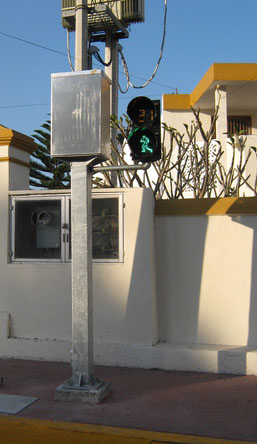
A deep-cycle battery powering a traffic signal

A deep-cycle battery is a battery designed to be regularly deeply discharged using most of its capacity. The term is traditionally mainly used for lead–acid batteries in the same form factor as automotive batteries; and contrasted with starter or cranking automotive batteries designed to deliver only a small part of their capacity in a short, high-current burst for starting an engine.

For lead–acid deep-cycle batteries there is an inverse correlation between the depth of discharge (DOD) of the battery and the number of charge and discharge cycles it can perform;[1] with an average depth of discharge of around 50% suggested as the best for storage vs cost.[2]

Newer technologies such as lithium-ion batteries are becoming commonplace in smaller sizes in uses such as in smartphones and laptops. The new technologies are also beginning to become common in the same form factors as automotive lead–acid batteries, although at a large price premium.[3]

Types of lead–acid deep-cycle battery

[edit]
A deep-cycle battery hooked up to a charger

The structural difference between deep-cycle and cranking lead–acid batteries is in the lead battery plates. Deep-cycle battery plates have thicker active plates, with higher-density active paste material and thicker separators. Alloys used for the plates in a deep-cycle battery may contain more antimony than that of starting batteries.[4] The thicker battery plates resist corrosion through extended charge and discharge cycles.

Deep-cycle lead–acid batteries generally fall into two distinct categories; flooded and valve-regulated lead–acid (FLA and VRLA), with the VRLA type further subdivided into two types, absorbent glass mat (AGM) and gel. The reinforcement of absorbed glass mat separators helps to reduce damage caused by spilling and jolting vibrations.[5] Further, flooded deep-cycle batteries can be divided into subcategories of tubular-plated opzs or flat-plated. The difference generally affects the cycle life and performance of the cell.

Flooded

[edit]

The term flooded is used because this type of battery contains a quantity of electrolyte fluid so that the plates are completely submerged. The electrolyte level should be above the tops of the plates which serves as a reservoir to make sure that water loss during charging does not lower the level below the plate tops and cause damage. Flooded batteries will decompose some water from the electrolyte during charging, so regular maintenance of flooded batteries requires inspection of electrolyte level and addition of water. Major modes of failure of deep-cycle batteries are loss of the active material due to shedding of the plates, and corrosion of the internal grid that supports active material. The capacity of a deep-cycle battery is usually limited by electrolyte capacity and not by the plate mass, to improve life expectancy.[4]

OPzS batteries

[edit]

OPzS stands for German ortsfest Panzerplatte, Säure, meaning stationary tubular plate, acid.[6]

OPzS batteries are a type of deep-cycle battery commonly used for backup power systems and renewable energy applications.[7] OPzS is recommended for storing energy from intermittent supplies, such as wind and solar supplies for off-grid use.

OPzV batteries

[edit]

OPzV stands for ortsfest Panzerplatte, verschlossen, meaning stationary tubular plate, sealed.[6]

OPzV batteries are very similar to OPzS batteries, with the only technical difference being that OPzV batteries are sealed. OPzV batteries are relatively maintenance-free, while OPzS batteries require the occasional top-up with distilled water.[8]

New technologies

[edit]

Although still much more expensive than traditional lead–acid, a wide range of rechargeable battery technologies such as lithium-ion are increasingly attractive for many users.[citation needed]

Applications

[edit]
Deep-cycle batteries in an electric boat refit

Recycling

[edit]

According to the Battery Council International (BCI) – a lead–acid battery industry trade group – the vast majority of deep-cycle batteries on the market today are lead acid batteries. BCI says lead acid batteries are recycled 98% by volume, 99.5% by weight. According to BCI, the plastic cases, lead plates, sulfuric acid, solder, and other metals are 100% recovered for reuse. BCI says the only part of a battery that is not recyclable is the paper separators that wrap the plates (due to the acid bath the paper sits in, the fiber length is reduced so far that it cannot be rewoven).

BCI says that, industry wide, there is a greater than 98% rate of recovery on all lead acid batteries sold in the United States, resulting in a virtually closed manufacturing cycle.[9]

See also

[edit]

References

[edit]
[edit]
Revisions and contributorsEdit on WikipediaRead on Wikipedia
from Grokipedia
A deep-cycle battery is a designed to deliver sustained, steady power over extended periods at relatively low rates, while being capable of deep discharges—typically up to 80% or more of its capacity—without significant damage or reduced lifespan. Unlike starting (or cranking) batteries, which provide short bursts of high current to power ignitions, deep-cycle batteries are optimized for repeated charge-discharge cycles that utilize most of their stored , making them suitable for applications requiring prolonged runtime rather than instantaneous power. These batteries are available in several types, primarily based on their chemistry and construction, each offering trade-offs in performance, , and cost. Lead-acid variants include flooded lead-acid (FLA) batteries, which use liquid and require regular like watering and venting to manage gas emissions; absorbed glass (AGM) and batteries, which are sealed valve-regulated lead-acid (VRLA) types that eliminate spillage risks and reduce needs through immobilized . Lithium-ion deep-cycle batteries, often using (LiFePO4) chemistry, provide advantages such as higher , faster charging, deeper discharge capabilities (up to 100%), and longer cycle life—potentially 10 times that of lead-acid models—though at a higher upfront cost. Key characteristics across types include capacity measured in ampere-hours (Ah), (DoD) ratings that determine usable energy, and cycle life varying from 500 cycles for some lead-acid models to thousands for lithium variants, influenced by factors like and charging practices. Deep-cycle batteries play a critical role in off-grid and mobile power systems, powering applications such as storage in solar setups, marine vessels, recreational vehicles (RVs), electric golf carts, wheelchairs, and industrial equipment like forklifts. Their durability and ability to handle frequent cycling make them essential for scenarios where consistent energy supply is needed without access to , with options increasingly favored for their lightweight design and efficiency in modern electric vehicles and portable systems. Lifespans typically range from 4-8 years for lead-acid deep-cycle batteries to over 10 years for lithium-ion, depending on usage, maintenance, and environmental conditions.

Fundamentals

Definition and Characteristics

A deep-cycle battery is a specifically engineered for repeated deep discharges, typically involving 50% to 80% of its total capacity—known as (DoD)—followed by full recharges, distinguishing it from shallow-cycle starting batteries that provide short, high-amperage bursts with discharges limited to 5% to 20% to avoid damage. This design enables consistent power delivery over extended periods rather than instantaneous peaks, making deep-cycle batteries suitable for applications requiring sustained energy output. Key characteristics of deep-cycle batteries include a robust cycle life of 500 to 5,000 cycles, varying by chemistry and DoD levels, which allows for numerous discharge-recharge sequences before capacity retention falls below 80%. They exhibit high tolerance to deep discharges without irreversible sulfation or structural degradation, unlike starting batteries, while delivering lower cold cranking amps but maintaining steady current over hours. Nominal voltages are commonly 12V or 24V for lead-acid types, with capacity rated in amp-hours (Ah) to indicate total deliverable charge, such as 100 Ah representing 100 amps for one hour or equivalent combinations. Lead-acid remains the most prevalent chemistry for these batteries due to its cost-effectiveness and reliability. Deep-cycle batteries originated in the mid-20th century to address off-grid and mobile power demands, evolving from lead-acid technology with early specialized variants patented around the . For instance, the first deep-cycle battery tailored for carts was developed in 1952, marking a pivotal advancement for repeated deep-discharge applications. Performance metrics for deep-cycle batteries emphasize (DoD) as the usable capacity percentage, (SoC) indicators—often derived from voltage readings to assess remaining energy—and amp-hour (Ah) ratings that quantify overall storage, ensuring users can predict runtime based on load demands.

Operating Principles

Deep-cycle batteries operate on electrochemical principles that enable repeated deep discharges by maximizing the utilization of active materials in reversible reactions. In lead-acid variants, the consists of lead (Pb) that converts to () during discharge, while the features () also forming , with () facilitating ion transport and concentration changes. These reactions are highly reversible, allowing up to 80% (DoD) without irreversible damage, as the design promotes uniform conversion of active materials across the surfaces, unlike starting batteries with thinner plates optimized for brief high-current bursts. Capacity delivery in deep-cycle batteries is governed by , which accounts for reduced effective capacity at higher discharge rates due to and incomplete active material utilization. The is expressed as C=IktC = I^k t, where CC is capacity, II is discharge current, tt is time, and k>1k > 1 (typically 1.1-1.3 for lead-acid), indicating that faster discharges yield less than the nominal rating. Deep-cycle designs mitigate this by employing thicker plates and optimized paste formulations to sustain lower current densities, thereby maximizing usable capacity over multiple cycles at moderate rates. Degradation in deep-cycle batteries arises primarily from sulfation, where prolonged undercharge or deep discharge forms large, irreversible PbSO4 crystals that increase and reduce active surface area; plate shedding, involving the mechanical breakdown and loss of active material from electrodes; and gassing, which depletes during over-discharge. These mechanisms accelerate with high DoD, but deep-cycle configurations incorporate thicker plates to enhance structural integrity, minimizing shedding and allowing 500-1,000 cycles at 50% DoD before capacity falls below 80%. Key efficiency metrics for lead-acid deep-cycle batteries include coulombic efficiency of 85-95%, reflecting near-complete charge recovery minus losses from side reactions, and of 30-50 Wh/kg, limited by the weight of lead components. Cycle life is strongly influenced by DoD, with shallower discharges (e.g., 20-30%) extending lifespan to over 1,000 cycles, while deeper ones shorten it due to cumulative degradation.

Lead-Acid Deep-Cycle Batteries

Flooded Lead-Acid Batteries

Flooded lead-acid batteries represent a traditional subtype of deep-cycle lead-acid batteries, characterized by their use of electrolyte in vented cells that allow for gas escape and periodic maintenance. These batteries are designed to handle repeated deep discharges, typically up to 50% (DoD) to maximize longevity, as discharges exceeding 80% can significantly shorten service life. Their construction relies on the general principles of lead-acid , where and sponge lead plates react reversibly with electrolyte during charge and discharge cycles. The core construction features lead plates immersed in a dilute (specific gravity approximately 1.240 at 20°C), housed in vented containers often made of transparent materials like styrene acrylonitrile for easy . To enhance deep-cycle durability, positive electrodes typically employ tubular plates made from low-antimony lead alloys, which encase active material in gauntlets to resist shedding and warping under repeated cycling. Negative electrodes use pasted flat plates, while microporous separators prevent short circuits and allow circulation. Vented caps with flame arrestors manage gas emissions, and terminals are constructed from lead alloys with inserts for reliable connections. This design supports high thermal capacity and recovery from deep discharges, making it suitable for stationary applications. Key subtypes include OPzS and OPzV batteries, standardized under DIN 40736 for stationary use. OPzS batteries are fully flooded with liquid and feature tubular positive plates using low-antimony alloys, enabling a long float life of up to 20 years at 20°C and excellent cyclability with up to 1500 cycles at 80% DoD. These are optimized for telecom backups and other standby , with reduced water consumption allowing topping-up intervals of up to three years. OPzV batteries, while sharing the tubular plate design, incorporate a valve-regulated with immobilized , providing a flooded-like performance but with enhanced spill resistance and minimal maintenance needs; they offer superior deep-cycling capability and lifespan compared to OPzS, though at higher cost. Flooded lead-acid batteries offer several advantages, including low upfront costs of approximately $100–200 per kWh, making them accessible for large-scale installations. They provide high surge capacity for short bursts of power and allow straightforward inspection of electrolyte levels through transparent cases, facilitating proactive . Additionally, their mature technology supports broad availability and compatibility with existing charging . However, these batteries have notable limitations, requiring regular maintenance such as adding after charging to compensate for and gassing, which can lead to spills if tilted or damaged. They are prone to and oxygen gas emissions during overcharging, necessitating proper ventilation to avoid risks. rates range from 3–5% per month at 20°C, higher in antimony-based grids, which can reduce readiness in standby roles without periodic recharging. Tubular designs originated in the early , with significant adoption in the for backup systems due to their reliability in float service.

Valve-Regulated Lead-Acid Batteries

Valve-regulated lead-acid (VRLA) batteries represent a sealed of traditional lead-acid technology, designed for deep-cycle applications without the need for maintenance. In these batteries, the is immobilized to prevent free liquid flow, enabling an internal oxygen recombination cycle where oxygen generated during charging reacts with at the negative plate to form , minimizing gas emissions and allowing operation in a sealed environment. This relies on relief valves to safely vent excess gases only under abnormal conditions, such as overcharging, ensuring safe, spill-proof performance. The absorbed glass mat (AGM) subtype immobilizes the within a fine mat that separates the lead plates, providing structural support and preventing stratification. This design enhances resistance by securely holding components in place, making AGM batteries particularly suitable for high-shock environments like systems, where they gained widespread adoption in the 1980s due to their durability under mechanical stress. AGM batteries also exhibit superior charge acceptance, allowing them to recharge at rates up to 25-30% higher than equivalent flooded types, which supports faster recovery in deep-cycle duty cycles. In contrast, the gel subtype achieves electrolyte immobilization by adding silica to form a semi-solid , which remains stable even in tilted or inverted orientations, ideal for deep-discharge scenarios in off-grid or storage where batteries may be mounted non-upright. The 's immobility reduces the risk of acid stratification during prolonged discharges, enabling consistent performance in applications requiring frequent deep cycles, such as solar backups, though it charges more slowly than AGM due to higher . VRLA batteries, including both AGM and gel variants, offer key advantages such as complete spill-proof for safe installation in any position, low self-discharge rates of approximately 1-3% per month for extended up to two years, and maintenance-free operation without watering. However, they come at a higher upfront cost, typically $200-300 per kWh of capacity, compared to flooded alternatives, and are susceptible to if overcharged, where excessive heat buildup can lead to venting or failure without proper charge controls. These innovations trace back to the 1970s, when Gates Energy Products introduced the first commercial AGM-based VRLA batteries, building on earlier concepts to address the maintenance drawbacks of flooded lead-acid predecessors.

Alternative Deep-Cycle Technologies

Lithium-Ion Deep-Cycle Batteries

Lithium-ion deep-cycle batteries primarily utilize lithium iron phosphate (LiFePO4, or LFP) chemistry for its inherent stability and thermal runaway resistance, making it suitable for repeated deep discharges up to 100% depth of discharge (DoD). This cathode material pairs with a graphite anode, enabling a nominal voltage of 3.2 V per cell and round-trip efficiency exceeding 95%. Variants include lithium titanate oxide (LTO) anodes, which prioritize ultra-fast charging and longevity with over 10,000 cycles at 80% DoD, though at lower energy density, and nickel-manganese-cobalt (NMC) cathodes for higher energy applications where cycle life reaches 1,000–2,000 cycles but with reduced safety margins compared to LFP. These batteries are constructed using pouch, prismatic, or cylindrical cell formats, with prismatic cells favored in stationary storage for their space efficiency and robustness against swelling. A (BMS) is integral, monitoring cell balancing, temperature, and to prevent over-discharge below 2.5 V per cell, which could otherwise lead to irreversible capacity loss. typically ranges from 100–160 Wh/kg for LFP configurations, allowing compact designs that achieve 200–300 Wh/L volumetrically. Compared to lead-acid batteries, lithium-ion deep-cycle variants offer significant advantages, including approximately one-third the weight for equivalent capacity, enabling easier installation in off-grid systems. They support fast charging, reaching 80% capacity in as little as 30 minutes at 1C rates, and operate across a wide range of -20°C to 60°C for discharge, outperforming lead-acid in extreme conditions. However, their higher upfront cost—around $100–120 per kWh for complete packs with BMS as of 2025—poses a barrier, though lifecycle improve due to minimal needs. Adoption surged post-2010 for storage, driven by falling prices and incentives for renewables. As of 2025, solid-state prototypes incorporating electrolytes promise over 10,000 cycles with enhanced safety, though commercialization remains in early stages.

Nickel-Based Deep-Cycle Batteries

Nickel-based deep-cycle batteries primarily encompass nickel-cadmium (NiCd) and nickel-metal hydride (NiMH) chemistries, which have been valued for their robustness in applications requiring repeated deep discharges, such as backup power systems and industrial equipment, though their use has diminished due to environmental concerns and superior alternatives. These batteries operate with a nominal cell voltage of 1.2 V and can tolerate (DoD) up to 80%, enabling reliable performance in demanding cycles. The chemistry of NiCd batteries features a nickel oxyhydroxide (NiOOH) cathode and a (Cd) anode in an alkaline (KOH) electrolyte, providing robust electrochemical stability that supports 1000–2000 deep-discharge cycles in industrial variants. In contrast, NiMH batteries replace the anode with a hydrogen-absorbing metal , offering higher capacity but increased sensitivity to overcharge, which can lead to degradation and reduced cycle life of 500–1000 cycles. Construction of these batteries typically involves sintered nickel plaques for the positive to enhance tolerance to deep discharges, paired with an alkaline and a separator to prevent shorting, allowing operation in flooded or sealed configurations suitable for deep-cycle use. NiCd cells are particularly prone to a "memory effect," where repeated partial discharges reduce usable capacity, but this can be mitigated through periodic full discharges to restore performance. Key advantages include excellent low-temperature performance down to -40°C with minimal capacity loss, making them ideal for harsh environments, and the ability to handle high discharge rates without significant . However, disadvantages are notable: NiCd's toxic content has led to restrictions under the Battery Directive 2006/66/EC, which bans concentrations exceeding 0.002% by weight in most applications since 2006, except for specific industrial exemptions. Both types exhibit lower , ranging from 40–80 Wh/kg, compared to modern alternatives. NiCd deep-cycle batteries have been employed in military applications since the 1950s, providing reliable power in rugged conditions during conflicts like the . NiMH batteries peaked in popularity during the for hybrid vehicles, powering early models like the , but their adoption declined post-2010 as lithium-ion technologies offered higher and efficiency. By 2025, environmental regulations, including the EU's updated Batteries Regulation, further limit new NiCd production through stricter recycling efficiency targets of 80% for cadmium recovery and bans on portable uses, accelerating the shift to lithium-based replacements for most deep-cycle needs.

Sodium-Ion Deep-Cycle Batteries

Sodium-ion batteries represent an emerging alternative for deep-cycle applications as of 2025, leveraging abundant sodium resources for lower costs and improved sustainability compared to lithium-ion. These batteries typically feature hard carbon anodes and layered oxide cathodes, with nominal cell voltage around 3.1 V and energy densities of 100–175 Wh/kg, suitable for stationary storage and some mobile uses. They support deep discharges up to 80–100% DoD and offer cycle lives exceeding 3,000 cycles, with excellent performance in wide temperature ranges including below 0°C without degradation. Commercial products are entering the market for solar storage and low-speed EVs, with prices projected below $100/kWh, though lower energy density limits high-performance applications.

Applications

Stationary Energy Storage

Deep-cycle batteries play a crucial role in stationary energy storage applications, where they provide reliable, long-duration power support in fixed installations such as and backups. These batteries are designed to handle repeated deep discharges without significant degradation, making them ideal for scenarios requiring sustained energy delivery over hours or days, unlike starting batteries that prioritize short bursts of high power. In stationary setups, lead-acid variants like flooded and valve-regulated lead-acid (VRLA) batteries are often selected for their cost-effectiveness in large-scale deployments, while lithium-ion options are increasingly preferred for higher and . In off-grid solar photovoltaic (PV) systems, deep-cycle battery banks, typically configured at 48V using lead-acid or lithium-ion chemistries, store excess daytime generation for nightly or cloudy-day use, enabling daily cycling to meet household or remote site demands. Sizing these banks involves calculating ampere-hour (Ah) capacity based on daily energy needs; for instance, a 5 kWh daily load at 48 V requires approximately 200 Ah total capacity, providing about 100 Ah usable at 50% depth of discharge to preserve battery health. This setup ensures self-sufficiency in remote locations, with lithium-ion batteries offering deeper discharges (up to 80-90%) compared to lead-acid's 50%, allowing for more compact installations. For (UPS) and backup power systems, VRLA deep-cycle batteries are widely used due to their sealed design and ability to provide 8-12 hours of runtime under moderate loads, such as in data centers or hospitals, while maintained on float charging to keep them at full charge without overstress. Float charging operates at a constant (typically 2.25-2.30V per cell) to compensate for , extending service life in standby mode. In sites, flooded OPzS (tubular plate) batteries are favored for their robustness, delivering over 20 years of expected life in float service at 20-25°C, with up to 2,000-3,000 deep cycles for occasional discharges during outages. Hybrid stationary systems integrate deep-cycle batteries with inverters to enable peak shaving, where stored energy offsets high-demand periods to reduce utility costs or grid strain, often in commercial buildings or microgrids combining with diesel generators. These configurations discharge batteries during peak hours (e.g., evenings) to shave load spikes, with inverters managing seamless transitions between sources for efficiency. Global storage deployments have seen rapid growth, with annual capacity additions projected to increase by over 20% in 2025, driven by lithium-ion batteries' dominance due to their and cost declines. Key sizing considerations for stationary deep-cycle systems include —typically 2-3 days of to cover extended low-generation periods—and accounting for inverter efficiency losses of 10-15%, which reduce usable output. For example, a system designed for 3 days of autonomy multiplies daily Ah needs by the autonomy factor and derates for these losses, ensuring reliable performance without oversizing, which could increase costs unnecessarily. Flooded lead-acid batteries are particularly suited for cost-sensitive large arrays in such setups due to their scalability.

Mobile and Transportation Uses

In marine applications, deep-cycle batteries are essential for powering trolling motors, banks, and auxiliary systems on boats, where they must withstand constant and deep discharges from intermittent high loads. Absorbed mat (AGM) and lead-acid batteries are commonly used for these purposes due to their resistance to spills and ability to handle regular deep cycling up to 80% (DOD) without maintenance. These batteries support typical draws of 100-200 amperes for trolling motors and onboard accessories like lights and , providing reliable performance in wet, dynamic environments. Lithium-ion variants, particularly (LiFePO4), are increasingly adopted for electric propulsion auxiliaries and hybrid systems, offering higher and faster recharge times to extend range in electric boats. For recreational vehicles (RVs) and golf carts, deep-cycle batteries form large-capacity banks to support off-grid living and mobility, often configured as pairs of 6-volt flooded lead-acid units to achieve 12-volt systems with capacities exceeding 400 ampere-hours (Ah). These setups power inverters for alternating current (AC) loads such as appliances and lighting during extended travel or play. By 2025, the RV market has seen a notable shift toward lithium-ion batteries, driven by their approximately 50% weight reduction compared to equivalent lead-acid banks, which improves fuel efficiency and payload capacity. Deep-cycle batteries also find use in mobility aids like wheelchairs and electric bicycles (e-bikes), where compact AGM or sealed lead-acid models provide sustained power for daily navigation, while remnants of nickel-metal hydride (NiMH) technology persist in some legacy e-bike designs for their tolerance to partial discharges. Industrial carts, such as those in warehouses, rely on similar deep-cycle configurations for repeated short-haul operations under load. These applications demand batteries certified for vibration resistance, as outlined in standards like SAE J537, which tests endurance through simulated automotive shocks and discharges to ensure reliability in mobile settings. A key challenge in mobile and transportation uses of deep-cycle batteries is the weight of lead-acid types, which typically range from 27 to 32 kilograms for a 100 Ah capacity, imposing limits on vehicle efficiency and handling compared to lithium alternatives that achieve similar capacity in about half the weight for greater compactness. This disparity underscores the push toward lighter technologies to meet the demands of vibration-prone, space-constrained environments.

Charging and Maintenance

Charging Procedures

Charging deep-cycle batteries requires careful procedures to prevent damage from undercharging or overcharging, thereby maximizing cycle life and performance. For lead-acid deep-cycle batteries, the recommended multi-stage charging process includes bulk, absorption, and float stages. In the bulk stage, a is applied until the battery reaches approximately 80% (SoC), restoring the majority of capacity efficiently. The absorption stage follows, where a constant voltage of 14.4-14.7 volts is maintained for a 12-volt battery, allowing the current to taper as the battery approaches full charge, typically completing the process to 100% SoC. This stage is crucial for desulfation in deep-cycle applications. The float stage then applies a maintenance voltage of 13.5-13.8 volts to keep the battery at full charge without overcharging, suitable for standby use. For flooded lead-acid deep-cycle batteries, an additional equalization stage is periodically applied at around 15 volts to balance cells and remove buildup, performed monthly or as needed after full absorption. Smart multi-stage chargers automate these phases, outperforming basic single-stage chargers by preventing gassing and extending life, while compensation adjusts voltage by reducing it 0.03 volts per degree Celsius above 25°C to avoid . Lithium-ion deep-cycle batteries use a constant current-constant voltage (CC-CV) profile, starting with until reaching the maximum voltage of 3.65 volts per cell (14.6 volts for a 12-volt battery), then switching to constant voltage as current decreases to complete charging. Unlike lead-acid, no equalization is required, as the chemistry avoids sulfation, though a (BMS) must oversee the process to halt charging at full capacity. In solar applications for deep-cycle batteries, charge controllers integrating (MPPT) technology have become standard over the 2020s, delivering 20-30% efficiency gains over (PWM) alternatives by optimizing power extraction from panels. Proper monitoring during charging is essential to avoid under- or overcharge conditions. For flooded lead-acid batteries, a measures electrolyte specific gravity (ideally 1.265-1.299 at full charge) to assess SoC and cell balance. Lithium-ion deep-cycle batteries rely on an integrated BMS to monitor voltage, temperature, and current in real-time, disconnecting if thresholds are exceeded to prevent damage.

Maintenance and Lifespan Factors

Routine maintenance practices are essential for preserving the performance and extending the lifespan of deep-cycle batteries across various chemistries. For lead-acid batteries, monthly voltage checks are recommended to ensure the battery remains fully charged, with a resting voltage of 12.65–12.70 V indicating 100% for a 12 V system. Cleaning battery terminals regularly prevents buildup, which can increase resistance and reduce ; this involves using a non-conductive pad followed by application of anti- grease. Adequate ventilation is critical for flooded lead-acid batteries to dissipate heat and prevent gas accumulation, requiring airflow rates sufficient to handle gassing during charging, such as 100 ft³/min for large installations. For lithium-ion deep-cycle batteries, updating the () periodically optimizes charge control and thermal management, enhancing safety and longevity. Several environmental and operational factors significantly influence the lifespan of deep-cycle batteries. Elevated temperatures accelerate degradation, with each 8–10 °C rise above 25 °C roughly halving the expected life due to increased rates and breakdown. (DoD) is another key variable; limiting discharges to 50% DoD can achieve over 1,000 cycles for many lead-acid and lithium-ion deep-cycle batteries, compared to fewer than 500 cycles at 100% DoD, as shallower cycles reduce stress on the electrodes. Calendar aging, the gradual capacity loss during idle periods, typically results in 1–3% annual degradation for lead-acid batteries stored at moderate temperatures and , influenced by and side reactions, while lithium-ion variants may lose 2–5% per year under similar conditions. Type-specific maintenance further tailors care to battery chemistry. Flooded lead-acid batteries require watering with every 1–3 months, or more frequently in hot environments, to maintain levels above the plates but below the vent well, performed only after full charging to avoid dilution. For nickel-cadmium (NiCd) deep-cycle batteries, although the classic is largely a , avoiding repeated partial discharges without occasional full cycles below 50% DoD helps prevent crystalline formation on the electrodes, which can reduce capacity; periodic deep discharges every few months are advised to recondition the cells. The average lifespan of deep-cycle batteries ranges from 3 to 10 years, depending on chemistry, usage, and , with lead-acid models often lasting 3–8 years and lithium-ion up to 10–15 years under optimal conditions. Recent studies, including those from 2024–2025, indicate that IoT-based monitoring systems can extend battery life by 20–40% through real-time predictive alerts for issues like over-temperature or imbalance, enabling proactive interventions.

Recycling and

Recycling Processes

Deep-cycle batteries, particularly lead-acid variants, are recycled through a well-established that begins with the mechanical breaking of the battery casing using a hammer mill to separate the components, including lead plates, , and housing. The lead plates are then smelted in furnaces at temperatures around 1,000°C to recover metallic lead, achieving a recovery rate of approximately 95-98% for the lead content, which is subsequently refined into pure lead for in new batteries. The is neutralized with or lime to produce for or applications, while the casing undergoes and is repurposed for manufacturing new battery cases or other products. This closed-loop system has been operational since the 1990s, with secondary smelters processing recycled materials to minimize waste and supply over 80% of the lead used in new batteries. Globally, lead-acid batteries achieve a 99% recycling rate, making them the most recycled consumer product, according to data from the Battery Council International. In the United States, the industry processes approximately 2.5 million tons of lead-acid batteries annually through this efficient infrastructure, diverting millions from landfills each year. For lithium-ion deep-cycle batteries, recycling employs emerging hydrometallurgical methods that involve acid leaching to dissolve and extract valuable metals such as from the and materials, followed by and solvent extraction for purification. These processes, which are scaling up commercially, can achieve up to 95% recovery rates for in LiFePO4 variants as of 2025 through direct techniques that preserve structures without high-temperature , reducing energy use compared to traditional . Nickel-based deep-cycle batteries, such as - types, undergo recycling via hydrometallurgical separation where is selectively leached and recovered through or to isolate it from , though volumes remain low due to post-2000s regulations phasing out use in consumer products for environmental and reasons. As of 2025, advancements include U.S. Department of Energy-supported direct recycling for LiFePO4 achieving over 95% recovery with 50% less energy than , enhancing sustainability for deep-cycle applications in renewables.

Environmental Impact

The production of deep-cycle batteries, particularly lead-acid types, involves significant environmental burdens from extraction and . Lead and for lead-acid batteries contribute approximately 30-60 kg of CO2 equivalent emissions per kWh of battery capacity, primarily due to energy-intensive processes that release gases and particulate matter. In contrast, lithium-ion deep-cycle batteries face challenges from extraction, which can require up to 2 million liters (approximately 2,000 metric tons) of freshwater per metric ton of equivalent, straining in arid regions like South America's and potentially exacerbating local . During the use phase, deep-cycle batteries in applications, such as solar storage, offer substantial emission reductions by displacing fossil fuel-based grid ; for instance, each kWh of storage capacity can offset 0.1-0.5 tons of CO2 emissions annually, depending on cycle (e.g., 300 cycles/year) and grid emission factors (0.4-0.5 kg CO2/kWh). However, flooded lead-acid variants release volatile organic compounds (VOCs) and mists during gassing, which can contribute to if not properly vented, posing risks to in enclosed installations. Disposal of deep-cycle batteries without proper management amplifies ecological risks, including acid spills from ruptured lead-acid units that contaminate soil and waterways with , and heavy metal leaching of lead or compounds into if batteries are landfilled. The European Union's Battery Regulation (Regulation 2023/1542) addresses these concerns by mandating collection rates of at least 63% for batteries by 2027 and minimum recycled content thresholds of 4% for and 85% for lead by 2030, aiming to curb such environmental hazards through enhanced collection and recovery obligations. Advancements in battery chemistry are mitigating these impacts; the shift to (LFP) cathodes eliminates , reducing ethical and associated with mining, such as and toxic runoff in the of Congo. Recent 2025 lifecycle assessments indicate that lithium-ion deep-cycle batteries exhibit approximately 50% lower overall environmental impact compared to lead-acid counterparts over a 10-year lifespan, driven by higher efficiency, longer cycle life, and reduced operational emissions in stationary applications.

References

Add your contribution
Related Hubs
User Avatar
No comments yet.