Hubbry Logo
PolypropylenePolypropyleneMain
Open search
Polypropylene
Community hub
Polypropylene
logo
8 pages, 0 posts
0 subscribers
Be the first to start a discussion here.
Contribute something
Polypropylene
Polypropylene
from Wikipedia
Polypropylene (PP)
Polypropylene isotactic
Polypropylene syndiotactic
Names
IUPAC name
Poly(1-methylethylene)
Other names
Polypropylene; Polypropene;
Polipropene 25 [USAN]; Propene polymers;
Propylene polymers; 1-Propene; [-Ch2-Ch(Ch3)-]n
Identifiers
ChemSpider
  • None
ECHA InfoCard 100.117.813 Edit this at Wikidata
UNII
Properties
(C3H6)n
Density 0.855 g/cm3, amorphous
0.946 g/cm3, crystalline
Melting point 130 to 171 °C (266 to 340 °F; 403 to 444 K)
Except where otherwise noted, data are given for materials in their standard state (at 25 °C [77 °F], 100 kPa).
checkY verify (what is checkY☒N ?)

Polypropylene (PP), also known as polypropene, is a thermoplastic polymer used in a wide variety of applications. It is produced via chain-growth polymerization from the monomer propylene.

Polypropylene belongs to the group of polyolefins and is partially crystalline and non-polar. Its properties are similar to polyethylene, but it is slightly harder and more heat-resistant. It is a white, mechanically rugged material and has a high chemical resistance.[1]

Polypropylene is the second-most widely produced commodity plastic (after polyethylene).

History

[edit]

Phillips Petroleum chemists J. Paul Hogan and Robert Banks first demonstrated the polymerization of propylene in 1951.[2] The stereoselective polymerization to the isotactic was discovered by Giulio Natta and Karl Rehn in March 1954.[3] This pioneering discovery led to large-scale commercial production of isotactic polypropylene by the Italian firm Montecatini from 1957 onwards.[4] Syndiotactic polypropylene was also first synthesized by Natta. Interest in polypropylene development is ongoing to the present. For example, making polypropylene from bio-based resources is a topic of interest in the 21st century.[5]

Chemical and physical properties

[edit]
Micrograph of polypropylene

Polypropylene is, in small aspects, similar to polyethylene, especially in solution behavior and electrical properties. The methyl group improves mechanical properties and thermal resistance, although the chemical resistance decreases.[6]: 19  The properties of polypropylene depend on the molecular weight and molecular weight distribution, crystallinity, type and proportion of comonomer (if used) and the isotacticity.[6] In isotactic polypropylene, for example, the methyl groups are oriented on one side of the carbon backbone. This arrangement creates a greater degree of crystallinity and results in a stiffer material that is more resistant to creep than both atactic polypropylene and polyethylene.[7]

Mechanical properties

[edit]

The density of PP is between 0.895 and 0.93 g/cm3. Therefore, PP is the commodity plastic with the lowest density. With lower density, moldings parts with lower weight and more parts of a certain mass of plastic can be produced. Unlike polyethylene, crystalline and amorphous regions differ only slightly in their density. However, the density of polyethylene can significantly change with fillers.[6]: 24 

The Young's modulus of PP is between 1300 and 1800 N/mm².

Polypropylene is normally tough and flexible, especially when copolymerized with ethylene. This allows polypropylene to be used as an engineering plastic, competing with materials such as acrylonitrile butadiene styrene (ABS). Polypropylene is reasonably economical.[citation needed]

Polypropylene has good resistance to fatigue.[8]: 3070 

Thermal properties

[edit]

The melting point of polypropylene occurs in a range, so the melting point is determined by finding the highest temperature of a differential scanning calorimetry chart. Perfectly isotactic PP has a melting point of 171 °C (340 °F). Commercial isotactic PP has a melting point that ranges from 160 to 166 °C (320 to 331 °F), depending on atactic material and crystallinity. Syndiotactic PP with a crystallinity of 30% has a melting point of 130 °C (266 °F).[8] Below 0 °C, PP becomes brittle.[9]

The thermal expansion of PP is significant, but somewhat less than that of polyethylene.[9]

Chemical properties

[edit]

Propylene molecules prefer to join together "head-to-tail", giving a chain with methyl groups on every other carbon, but some randomness occurs.[10] Polypropylene at room temperature is resistant to fats and almost all organic solvents, apart from strong oxidants. Non-oxidizing acids and bases can be stored in containers made of PP. At elevated temperature, PP can be dissolved in nonpolar solvents such as xylene, tetralin and decalin. Due to the tertiary carbon atom, PP is chemically less resistant than PE (see Markovnikov rule).[11]

Most commercial polypropylene is isotactic and has an intermediate level of crystallinity between that of low-density polyethylene (LDPE) and high-density polyethylene (HDPE). Isotactic & atactic polypropylene is soluble in p-xylene at 140 °C. Isotactic precipitates when the solution is cooled to 25 °C and atactic portion remains soluble in p-xylene.

The melt flow rate (MFR) or melt flow index (MFI) is a measure of molecular weight of polypropylene. The measure helps to determine how easily the molten raw material will flow during processing. Polypropylene with higher MFR will fill the plastic mold more easily during the injection or blow-molding production process. As the melt flow increases, however, some physical properties, like impact strength, will decrease.

There are three general types of polypropylene: homopolymer, random copolymer, and block copolymer. The comonomer is typically used with ethylene. Ethylene-propylene rubber or EPDM added to polypropylene homopolymer increases its low temperature impact strength. Randomly polymerized ethylene monomer added to polypropylene homopolymer decreases the polymer crystallinity, lowers the melting point and makes the polymer more transparent.

Molecular structure – tacticity

[edit]

Polypropylene can be categorized as atactic polypropylene (aPP), syndiotactic polypropylene (sPP) and isotactic polypropylene (iPP). In case of atactic polypropylene, the methyl group (-CH3) is randomly aligned, alternating (alternating) for syndiotactic polypropylene and evenly for isotactic polypropylene. This has an impact on the crystallinity (amorphous or semi-crystalline) and the thermal properties (expressed as glass transition point Tg and melting point Tm).

The term tacticity describes for polypropylene how the methyl group is oriented in the polymer chain. Commercial polypropylene is usually isotactic. This article therefore always refers to isotactic polypropylene, unless stated otherwise. The tacticity is usually indicated in percent, using the isotactic index (according to DIN 16774). The index is measured by determining the fraction of the polymer insoluble in boiling heptane. Commercially available polypropylenes usually have an isotactic index between 85 and 95%. The tacticity affects the polymer's physical properties. As the methyl group is in isotactic propylene consistently located at the same side, it forces the macromolecule in a helical shape, as also found in starch. An isotactic structure leads to a semi-crystalline polymer. The higher the isotonicity(the isotactic fraction), the greater the crystallinity, and thus also the softening point, rigidity, e-modulus and hardness.[6]: 22 

Atactic polypropylene, on the other hand, lacks any regularity, which prevents it from crystallization, thereby creating an amorphous material.

Crystal structure of polypropylene

[edit]

Isotactic polypropylene has a high degree of crystallinity, in industrial products 30–60%. Syndiotactic polypropylene is slightly less crystalline, atactic PP is amorphous (not crystalline).[12]: 251 

Isotactic polypropylene (iPP)
[edit]

Is polypropylene can exist in various crystalline modifications which differ by the molecular arrangement of the polymer chains. The crystalline modifications are categorized into the α-, β- and γ-modification as well as mesomorphic (smectic) forms.[13] The α-modifications is predominant in iPP. Such crystals are built from lamellae in the form of folded chains. A characteristic anomaly is that the lame are arranged in the so-called "cross-hatched" structure.[14] The melting point of α-crystalline regions is given as 185[15][16] to 220 °C,[15][17] the density as 0.936 to 0.946 g·cm−3.[18][19] The β-modification is in comparison somewhat less ordered, as a result of which it forms faster[20][21] and has a lower melting point of 170 to 200 °C.[15][22][23][17] The formation of the β-modification can be promoted by nucleating agents, suitable temperatures and shear stress.[20][24] The γ-modification is hardly formed under the conditions used in industry and is poorly understood. The mesomorphic modification, however, occurs often in industrial processing, since the plastic is usually cooled quickly. The degree of order of the mesomorphic phase ranges between the crystalline and the amorphous phase, its density is with 0.916 g·cm−3 comparatively. The mesomorphic phase is considered as cause for the transparency in rapidly cooled films (due to low order and small crystallites).[12]

Syndiotactic polypropylene (sPP)
[edit]

Syndiotactic polypropylene was discovered much later than isotactic PP and could only be prepared by using metallocene catalysts. Syndiotactic PP has a lower melting point, with 161 to 186 °C, depending on the degree of tacticity.[25][26][27]

Atactic polypropylene (aPP)
[edit]

Atactic polypropylene is amorphous and has therefore no crystal structure. Due to its lack of crystallinity, it is readily soluble even at moderate temperatures, which allows to separate it as by-product from isotactic polypropylene by extraction. However, the aPP obtained this way is not completely amorphous but can still contain 15% crystalline parts. Atactic polypropylene can also be produced selectively using metallocene catalysts, atactic polypropylene produced this way has a considerably higher molecular weight.[12] Atactic polypropylene has lower density, melting point and softening temperature than the crystalline types and is tacky and rubber-like at room temperature. It is a colorless, cloudy material and can be used between −15 and +120 °C. Atactic polypropylene is used as a sealant, as an insulating material for automobiles and as an additive to bitumen.[28]

Copolymers

[edit]

Polypropylene copolymers are in use as well. A particularly important one is polypropylene random copolymer (PPR or PP-R), a random copolymer with polyethylene used for plastic pipework.

PP-RCT

[edit]

Polypropylene random crystallinity temperature (PP-RCT), also used for plastic pipework, is a new form of this plastic. It achieves higher strength at high temperature by β-crystallization.[29]

Degradation

[edit]
Effect of UV exposure on polypropylene rope

Polypropylene is liable to chain degradation from exposure to temperatures above 100 °C. Oxidation usually occurs at the tertiary carbon centers leading to chain breaking via reaction with oxygen. In external applications, degradation is evidenced by cracks and crazing. It may be protected by the use of various polymer stabilizers, including UV-absorbing additives and anti-oxidants such as phosphites (e.g. tris(2,4-di-tert-butylphenyl)phosphite) and hindered phenols, which prevent polymer degradation.[1] Microbial communities isolated from soil samples mixed with starch have been shown to be capable of degrading polypropylene.[30] Polypropylene has been reported to degrade while in the human body as implantable mesh devices. The degraded material forms a tree bark-like layer at the surface of mesh fibers.[31]

Optical properties

[edit]

PP can be made translucent when uncolored but is not as readily made transparent as polystyrene, acrylic, or certain other plastics. It is often opaque or colored using pigments.

Production

[edit]

Polypropylene is produced by the chain-growth polymerization of propene:

The industrial production processes can be grouped into gas phase polymerization, bulk polymerization and slurry polymerization. All state-of-the-art processes use either gas-phase or bulk reactor systems.[1]

  • In gas-phase and slurry-reactors, the polymer is formed around heterogeneous catalyst particles. The gas-phase polymerization is carried out in a fluidized bed reactor, propene is passed over a bed containing the heterogeneous (solid) catalyst and the formed polymer is separated as a fine powder and then converted into pellets. Unreacted gas is recycled and fed back into the reactor.
  • In bulk polymerization, liquid propene acts as a solvent to prevent the precipitation of the polymer. The polymerization proceeds at 60 to 80 °C and 30–40 atm are applied to keep the propene in the liquid state. For the bulk polymerization, typically loop reactors are applied. The bulk polymerization is limited to a maximum of 5% ethene as comonomer due to a limited solubility of the polymer in the liquid propene.
  • In the slurry polymerization, typically C4–C6 alkanes (butane, pentane or hexane) are utilized as inert diluent to suspend the growing polymer particles. Propene is introduced into the mixture as a gas.

Catalysts

[edit]

The properties of PP are strongly affected by its tacticity, the orientation of the methyl groups (CH
3
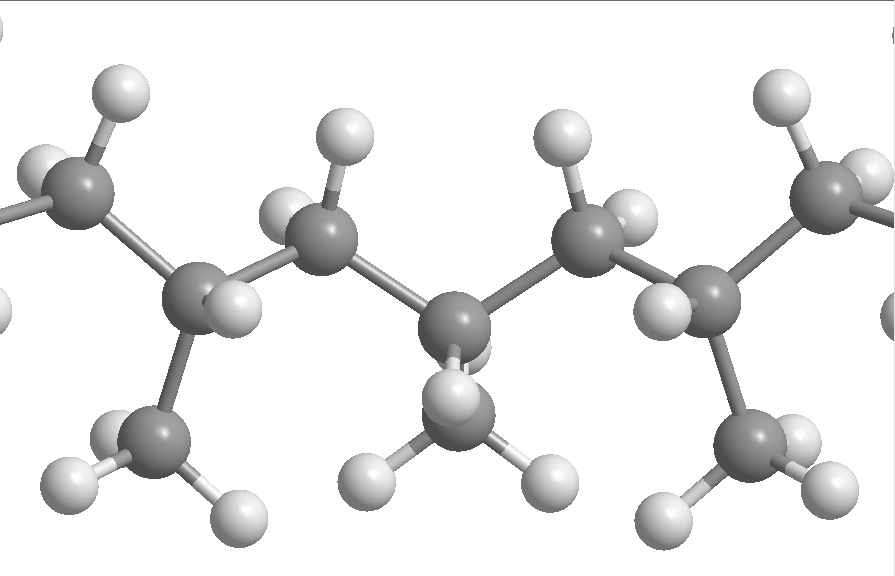
) relative to the methyl groups in neighboring monomer units. A Ziegler–Natta catalyst is able to restrict linking of monomer molecules to a specific orientation, either isotactic, when all methyl groups are positioned at the same side with respect to the backbone of the polymer chain, or syndiotactic, when the positions of the methyl groups alternate.

Commercially available isotactic polypropylene is made with two types of Ziegler-Natta catalysts. The first group of the catalysts encompasses solid (mostly supported) catalysts and certain types of soluble metallocene catalysts. Such isotactic macromolecules coil into a helical shape; these helices then line up next to one another to form the crystals that give commercial isotactic polypropylene many of its desirable properties.

Modern supported Ziegler-Natta catalysts developed for the polymerization of propylene and other 1-alkenes to isotactic polymers usually use TiCl
4
as an active ingredient and MgCl
2
as a support.[32][33][34] The catalysts also contain organic modifiers, either aromatic acid esters and diesters or ethers. These catalysts are activated with special co-catalysts containing an organoaluminium compound such as Al(C2H5)3 and the second type of a modifier. The catalysts are differentiated depending on the procedure used for fashioning catalyst particles from MgCl2 and depending on the type of organic modifiers employed during catalyst preparation and use in polymerization reactions. Two most important technological characteristics of all the supported catalysts are high productivity and a high fraction of the crystalline isotactic polymer they produce at 70–80 °C under standard polymerization conditions. Commercial synthesis of isotactic polypropylene is usually carried out either in the medium of liquid propylene or in gas-phase reactors.

A ball-and-stick model of syndiotactic polypropylene

Commercial synthesis of syndiotactic polypropylene is carried out with the use of a special class of metallocene catalysts. They employ bridged bis-metallocene complexes of the type bridge-(Cp1)(Cp2)ZrCl2 where the first Cp ligand is the cyclopentadienyl group, the second Cp ligand is the fluorenyl group, and the bridge between the two Cp ligands is -CH2-CH2-, >SiMe2, or >SiPh2.[35] These complexes are converted to polymerization catalysts by activating them with a special organoaluminium co-catalyst, methylaluminoxane (MAO).[36]

Atactic polypropylene is an amorphous rubbery material. It can be produced commercially either with a special type of supported Ziegler-Natta catalyst or with some metallocene catalysts.

Manufacturing from polypropylene

[edit]

Melting process of polypropylene can be achieved via extrusion and molding. Common extrusion methods include production of melt-blown and spun-bond fibers to form long rolls for future conversion into a wide range of useful products, such as face masks, filters, diapers and wipes.

The most common shaping technique is injection molding, which is used for parts such as cups, cutlery, vials, caps, containers, housewares, and automotive parts such as batteries. The related techniques of blow molding and injection-stretch blow molding are also used, which involve both extrusion and molding.

The large number of end-use applications for polypropylene are often possible because of the ability to tailor grades with specific molecular properties and additives during its manufacture. For example, antistatic additives can be added to help polypropylene surfaces resist dust and dirt. Many physical finishing techniques can also be used on polypropylene, such as machining. Surface treatments can be applied to polypropylene parts in order to promote adhesion of printing ink and paints.

Expanded Polypropylene (EPP) has been produced through both solid and melt state processing. EPP is manufactured using melt processing with either chemical or physical blowing agents. Expansion of PP in solid state, due to its highly crystalline structure, has not been successful. In this regard, two novel strategies were developed for expansion of PP. It was observed that PP can be expanded to make EPP through controlling its crystalline structure or through blending with other polymers.[37][38]

Biaxially oriented polypropylene (BOPP)

[edit]

When polypropylene film is extruded and stretched in both the machine direction and across machine direction it is called biaxially oriented polypropylene. Two methods are widely used for producing BOPP films, namely, a bi-directional stenter process or a double-bubble blown film extrusion process.[39] Biaxial orientation increases strength and clarity. BOPP is widely used as a packaging material for packaging products such as snack foods, fresh produce and confectionery. It is easy to coat, print and laminate to give the required appearance and properties for use as a packaging material. This process is normally called converting. It is normally produced in large rolls which are slit on slitting machines into smaller rolls for use on packaging machines. BOPP is also used for stickers and labels[40] in addition to OPP. It is non-reactive, which makes BOPP suitable for safe use in the pharmaceutical and food industry. It is one of the most important commercial polyolefin films. BOPP films are available in different thicknesses and widths. They are transparent and flexible.

Applications

[edit]
Polypropylene lid of a Tic Tac box, with a living hinge and the resin identification code under its flap

As polypropylene is resistant to fatigue, most plastic living hinges, such as those on flip-top bottles, are made from this material. However, it is important to ensure that chain molecules are oriented across the hinge to maximise strength.

Polypropylene is used in the manufacturing of piping systems, both ones concerned with high purity and ones designed for strength and rigidity (e.g., those intended for use in potable plumbing, hydronic heating and cooling, and reclaimed water).[41] This material is often chosen for its resistance to corrosion and chemical leaching, its resilience against most forms of physical damage, including impact and freezing, its environmental benefits, and its ability to be joined by heat fusion rather than gluing.[42][43][44]

A chair with a polypropylene seat

Many plastic items for medical or laboratory use can be made from polypropylene because it can withstand the heat in an autoclave. Its heat resistance also enables it to be used as the manufacturing material of consumer-grade kettles[citation needed]. Food containers made from it will not melt in the dishwasher, and do not melt during industrial hot filling processes. For this reason, most plastic tubs for dairy products are polypropylene sealed with aluminum foil (both heat-resistant materials). After the product has cooled, the tubs are often given lids made of a less heat-resistant material, such as LDPE or polystyrene. Such containers provide a good hands-on example of the difference in modulus, since the rubbery (softer, more flexible) feeling of LDPE with respect to polypropylene of the same thickness is readily apparent. Rugged, translucent, reusable plastic containers made in a wide variety of shapes and sizes for consumers from various companies such as Rubbermaid and Sterilite are commonly made of polypropylene, although the lids are often made of somewhat more flexible LDPE so they can snap onto the container to close it. Polypropylene can also be made into disposable bottles to contain liquid, powdered, or similar consumer products, although HDPE and polyethylene terephthalate are commonly also used to make bottles. Plastic pails, car batteries, wastebaskets, pharmacy prescription bottles, cooler containers, dishes and pitchers are often made of polypropylene or HDPE, both of which commonly have rather similar appearance, feel, and properties at ambient temperature. An abundance of medical devices are made from PP.[45]

Polypropylene items for laboratory use. Blue and orange closures are not made of polypropylene.

A common application for polypropylene is as biaxially oriented polypropylene (BOPP). These BOPP sheets are used to make a wide variety of materials including clear bags. When polypropylene is biaxially oriented, it becomes crystal clear and serves as an excellent packaging material for artistic and retail products. Polypropylene, highly colorfast, is widely used in manufacturing carpets, rugs and mats to be used at home.[46] Polypropylene is widely used in ropes, distinctive because they are light enough to float in water.[47][48] For equal mass and construction, polypropylene rope is similar in strength to polyester rope. Polypropylene costs less than most other synthetic fibers. Polypropylene is also used as an alternative to polyvinyl chloride (PVC) as insulation for electrical cables for LSZH cable in low-ventilation environments, primarily tunnels. This is because it emits less smoke and no toxic halogens, which may lead to production of acid in high-temperature conditions. Polypropylene is also used in particular roofing membranes as the waterproofing top layer of single-ply systems as opposed to modified-bit systems. Polypropylene is most commonly used for plastic moldings, wherein it is injected into a mold while molten, forming complex shapes at relatively low cost and high volume; examples include bottle tops, bottles, and fittings.

It can also be produced in sheet form, widely used for the production of stationery folders, packaging, and storage boxes. The wide color range, durability, low cost, and resistance to dirt make it ideal as a protective cover for papers and other materials. It is used in Rubik's Cube stickers because of these characteristics.

The availability of sheet polypropylene has provided an opportunity for the use of the material by designers. The light-weight, durable, and colorful plastic makes an ideal medium for the creation of light shades, and a number of designs have been developed using interlocking sections to create elaborate designs.

Polypropylene fibres are used as a concrete additive to increase strength and reduce cracking and spalling.[49] In some areas susceptible to earthquakes (e.g., California), PP fibers are added with soils to improve the soil's strength and damping when constructing the foundation of structures such as buildings, bridges, etc.[50]

Clothing

[edit]
Various polypropylene yarns and textiles

Polypropylene is a major polymer used in nonwovens, with over 50% used[citation needed] for diapers or sanitary products where it is treated to absorb water (hydrophilic) rather than naturally repelling water (hydrophobic). Other non-woven uses include filters for air, gas, and liquids in which the fibers can be formed into sheets or webs that can be pleated to form cartridges or layers that filter in various efficiencies in the 0.5 to 30 micrometre range. Such applications occur in houses as water filters or in air-conditioning-type filters. The high surface-area and naturally oleophilic polypropylene nonwovens are ideal absorbers of oil spills with the familiar[citation needed] floating barriers near oil spills on rivers.

Polypropylene, or 'polypro', has been used for the fabrication of cold-weather base layers, such as long-sleeve shirts or long underwear. Polypropylene is also used in warm-weather clothing, in which it transports sweat away from the skin. Polyester has replaced polypropylene in these applications in the U.S. military, such as in the ECWCS.[51] Although polypropylene clothes are not easily flammable, they can melt, which may result in severe burns if the wearer is involved in an explosion or fire of any kind.[52] Polypropylene undergarments are known for retaining body odors which are then difficult to remove. The current generation of polyester does not have this disadvantage.[53]

Medical

[edit]

Its most common medical use is in the synthetic, nonabsorbable suture Prolene, manufactured by Ethicon Inc.

Polypropylene has been used in hernia and pelvic organ prolapse repair operations to protect the body from new hernias in the same location. A small patch of the material is placed over the spot of the hernia, below the skin, and is painless and rarely, if ever, rejected by the body. However, a polypropylene mesh will erode the tissue surrounding it over the uncertain period from days to years.

A notable application was as a transvaginal mesh, used to treat vaginal prolapse and concurrent urinary incontinence.[54] Due to the above-mentioned propensity for polypropylene mesh to erode the tissue surrounding it, the FDA has issued several warnings on the use of polypropylene mesh medical kits for certain applications in pelvic organ prolapse, specifically when introduced in close proximity to the vaginal wall due to a continued increase in number of mesh-driven tissue erosions reported by patients over the past few years.[55] On 3 January 2012, the FDA ordered 35 manufacturers of these mesh products to study the side effects of these devices. Due to the outbreak of the COVID-19 pandemic in 2020, the demand for PP has increased significantly because it is a vital raw material for producing meltblown fabric, which is in turn the raw material for producing facial masks.

Recycling

[edit]

Most polypropylene recycling uses mechanical recycling, as for polyethylene: the material is heated to soften or melt it, and mechanically formed it into new products.[56] As of 2015, less than 1% of polypropylene generated was recycled.[57] Heating degrades the carbon backbone more severely than for polyethylene, breaking it into smaller organic molecules, because the methyl side group of PP is susceptible to thermo-oxidative and photo-oxidative degradation.[57]

Polypropylene has the number "5" as its resin identification code:[58]

Repairing

[edit]

PP objects can be joined with a two-part epoxy glue or using hot-glue guns.[59]

PP can be melted using a speed tip welding technique. With speed welding, the plastic welder, similar to a soldering iron in appearance and wattage, is fitted with a feed tube for the plastic weld rod. The speed tip heats the rod and the substrate, while at the same time it presses the molten weld rod into position. A bead of softened plastic is laid into the joint and the parts and weld rod fuse. With polypropylene, the melted welding rod must be "mixed" with the semi-melted base material being fabricated or repaired. A speed tip "gun" is essentially a soldering iron with a broad, flat tip that can be used to melt the weld joint and filler material to create a bond.

Health concerns

[edit]

PP is dope-dyed; no water is used in its dyeing, in contrast with cotton.[60] Polypropylene was the most common microplastic fiber found in the olfactory bulbs in 8 of 15 deceased individuals in a study.[61]

Combustibility

[edit]

Like all organic compounds, polypropylene is combustible.[62] The flash point of a typical composition is 260 °C; autoignition temperature is 388 °C.[63]

References

[edit]
[edit]
Revisions and contributorsEdit on WikipediaRead on Wikipedia
from Grokipedia
Polypropylene (PP), also known as polypropene, is a derived from the of () , with the repeating (C₃H₆)ₙ. It is a linear characterized by s attached to alternate carbon atoms in the chain, existing in three primary stereoisomeric forms: isotactic (highly ordered methyl groups on one side, most common for commercial use), syndiotactic (alternating methyl groups), and atactic (random methyl group placement, typically amorphous and less crystalline). This structure contributes to its semi-rigid, lightweight nature, making it one of the most versatile and widely produced plastics globally. Global production was approximately 91 million metric tons in 2025, second only to . Discovered in 1954 by Italian chemist , building on Karl Ziegler's earlier work with organometallic catalysts, polypropylene was first commercialized in 1957. The typically employs Ziegler-Natta or metallocene catalysts to achieve high isotacticity (90–95%), resulting in a crystalline homopolymer or copolymers blended with for enhanced properties. Polypropylene exhibits a of 0.898–0.908 g/cm³, a of 160–165°C for homopolymers (lower for copolymers at 135–159°C), and a temperature around 0°C. It demonstrates strong resistance to dilute acids, alkalis, alcohols, and bases, while showing poor tolerance to hydrocarbons, chlorinated solvents, and aromatics; it is also water-repellent and electrically insulating. These attributes, along with excellent mechanical properties such as tensile strength of 25–33 MPa and elongation at break of 150–300%, enable its widespread use in packaging, automotive components, consumer goods, textiles, and medical devices. Additionally, its recyclability and low cost further enhance its role in sustainable manufacturing and diverse industrial sectors.

History

Discovery

Early attempts to polymerize propylene date back to the 1930s, when researchers achieved limited success in forming low-molecular-weight products or amorphous materials under high-pressure conditions similar to those used for polyethylene synthesis. These early experiments, often conducted in industrial laboratories, yielded polymers with poor mechanical properties, such as low strength and elasticity, rendering them unsuitable for practical applications. A significant breakthrough occurred in 1951 at , where chemists J. Paul Hogan and Robert L. Banks, while investigating catalysts for converting to , unexpectedly produced a solid, crystalline . Using a modified catalyst on a silica-alumina support, they obtained high-molecular-weight polypropylene that exhibited crystallinity, marking the first instance of a viable stereoregular form. This discovery highlighted the potential of as a feedstock, though initial samples still required refinement. In 1954, Italian chemist at Montecatini (now part of Versalis) achieved the first laboratory synthesis of high-molecular-weight isotactic polypropylene using Ziegler-Natta catalysts, consisting of and aluminum alkyls. Natta's team polymerized at moderate pressures and temperatures, yielding a highly crystalline material with superior rigidity and thermal stability compared to earlier amorphous variants. Initial challenges centered on the distinction between atactic and isotactic forms: atactic polypropylene, produced in uncontrolled polymerizations, was amorphous, rubbery, and lacked structural integrity due to random orientations along the chain, limiting its utility. In contrast, isotactic polypropylene featured regular, identical stereochemical configurations, enabling and desirable properties, but early syntheses often resulted in heterogeneous mixtures requiring extraction to isolate the crystalline fraction. These differences underscored the need for stereospecific catalysts to achieve commercial viability.

Commercial Development

The commercialization of polypropylene followed closely after its laboratory synthesis, propelled by strategic patent filings that protected the underlying polymerization technologies. In 1953, chemists at filed a U.S. for propylene , predating similar efforts elsewhere. Independently, submitted a German on August 3, 1954, describing the use of organoaluminum-titanium catalysts for olefin . Giulio Natta, building on Ziegler's work, filed an Italian patent on June 8, 1954, specifically for the production of isotactic polypropylene, which exhibited superior crystallinity and mechanical properties suitable for industrial applications. These patents, amid legal disputes over priority, enabled licensing and scaled production, culminating in the 1963 awarded jointly to Ziegler and Natta for their pioneering contributions to and technology. The transition to industrial production occurred swiftly, with Montecatini—the Italian firm collaborating with Natta—inaugurating the world's first commercial polypropylene plant in , , in 1957. This facility, utilizing the Ziegler-Natta catalyst system, had an initial annual capacity of around 6,000 tons, focusing on isotactic grades for fibers and injection-molded products. The plant's success validated the process economics, overcoming early challenges in catalyst efficiency and polymer purification, and set the stage for broader adoption. The 1960s witnessed explosive global expansion as polypropylene's low density, chemical resistance, and processability attracted investment from major chemical companies. Hercules Incorporated in the United States launched commercial production in 1957 alongside Montecatini, licensing Natta's technology to produce fibers and resins. Phillips Petroleum, leveraging its earlier patent claims, entered the market with its own high-activity catalyst variant, establishing plants that emphasized slurry-phase for broader applications. Hoechst AG in also scaled up operations during this decade, contributing to a proliferation of facilities across and . By the mid-1960s, these efforts had transformed polypropylene from a novelty into a , with production capacities multiplying through technology transfers and plant constructions. Sustained demand in —for films, bottles, and containers—and automotive components—for bumpers, interiors, and under-hood parts—drove remarkable growth in global production capacity. From modest beginnings in the thousands of tons annually during the late , capacity expanded to exceed 97 million tons per year by 2022, reflecting advancements in productivity, process efficiencies, and regional manufacturing hubs in and the . This scale underscores polypropylene's role as one of the most versatile and widely used plastics, with annual output surpassing that of many traditional materials.

Chemical Structure

Monomer and Polymerization

Polypropylene is synthesized from the monomer , which has the CH₂=CHCH₃ and features a carbon-carbon that facilitates addition . This unsaturated structure allows propylene to undergo chain-growth reactions, where the double bond is broken to form extended chains. The general polymerization reaction involves the addition of multiple propylene units, represented by the equation n\ceCH2=CHCH3[\ceCH2CH(CH3)]nn \ce{CH2=CH-CH3} \to [-\ce{CH2-CH(CH3)}-]_n, where nn denotes the . This process yields a linear polymer backbone with pendant methyl groups attached to every other carbon atom. Polypropylene formation proceeds via mechanisms using Ziegler-Natta catalysts or metallocene catalysis. Coordination approaches, such as Ziegler-Natta, employ catalysts (e.g., titanium-based) to coordinate with the and insert it into the growing chain with controlled . Metallocene catalysts, often single-site systems like complexes, enable precise control over chain length and uniformity. In these methods, the catalyst is essential for activating the , initiating chain propagation by forming a reactive intermediate, and enabling the stepwise addition of monomers to build the carbon-carbon backbone.

Tacticity and Isotactic Forms

in polypropylene refers to the stereochemical configuration of the methyl side groups along the backbone, which arises from the stereospecific of monomers. This arrangement significantly influences the material's properties, with three primary forms distinguished by the regularity of methyl group placement: isotactic, syndiotactic, and atactic. In isotactic polypropylene, the methyl groups are regularly positioned on the same side of the chain, creating a highly ordered structure. Syndiotactic polypropylene features alternating methyl group orientations along the backbone, while atactic polypropylene exhibits a random distribution of these groups, leading to a disordered chain. Isotactic polypropylene is the predominant commercial form, typically exhibiting 95-99% isotacticity, owing to its enhanced crystallinity and mechanical strength compared to the other variants; in contrast, atactic polypropylene remains amorphous and tacky, limiting its utility to niche applications such as adhesives. Tacticity is determined primarily through (NMR) , particularly 13C NMR, which quantifies the distribution of stereosequences such as pentads (e.g., mmmm for isotactic segments) by analyzing peak intensities in spectra obtained from solutions at elevated temperatures. X-ray diffraction complements this by revealing tacticity distributions through patterns of crystalline reflections, allowing differentiation between highly isotactic and more atactic fractions in samples. These methods enable precise characterization essential for in commercial production.

Crystal Structure

Polypropylene, particularly its isotactic form, exhibits polymorphism, with three primary crystal structures that determine its semi-crystalline morphology and influence material performance. The most prevalent is the α-form, characterized by a monoclinic lattice with C2/c, featuring chains in a conformation packed in a parallel arrangement; this form is thermodynamically the most stable and predominates under standard conditions from the melt. The β-form adopts a hexagonal (trigonal) lattice with C2, where chains form a three-fold and exhibit a more open packing; it is metastable and typically forms under , rapid cooling, or with specific nucleating agents like aromatic amides or quinacridones, often leading to sheaf-like spherulites. The γ-form, with an orthorhombic lattice ( F2mm), arises in copolymers with or under high pressure, displaying parallel chain packing similar to the α-form but with shifted layers; it is less common and coexists with other polymorphs in modified polypropylenes. The degree of crystallinity in isotactic polypropylene typically ranges from 30% to 70%, varying with , molecular weight, and processing conditions such as cooling rate and ; higher isotacticity promotes greater crystallinity by enabling ordered chain folding into lamellae. This crystallinity directly impacts the material's , which falls between 0.90 and 0.91 g/cm³ for semi-crystalline samples, lower than fully crystalline values due to amorphous interlamellar regions. In the disordered amorphous or interfacial regions, a smectic-like mesophase can develop, particularly in rapidly quenched samples, where chains adopt a locally ordered, layered without full three-dimensional crystallinity; this phase enhances optical transparency by reducing from large spherulites. X-ray diffraction (XRD) is the primary technique for identifying these polymorphs, with wide-angle XRD patterns revealing distinct reflections: the α-form shows strong peaks at 2θ ≈ 14.1° (110), 16.9° (040), and 18.6° (130); the β-form is distinguished by a peak at 2θ ≈ 16.1° (300), often overlapping with α reflections; and the γ-form exhibits peaks around 2θ ≈ 20° (117/008). These patterns allow quantification of phase content through peak deconvolution, confirming the relative proportions in mixed polymorph samples.

Physical and Chemical Properties

Mechanical Properties

Polypropylene exhibits a range of mechanical properties that make it suitable for applications requiring a balance of strength, flexibility, and durability, particularly in its homopolymer form. The material's tensile strength typically ranges from 30 to 40 MPa for homopolymer grades, providing adequate resistance to pulling forces in structural components. This yield strength value is derived from standard ASTM D638 testing on injection-molded samples, reflecting the polymer's semi-crystalline which contributes to its load-bearing capacity. The tensile modulus, or , for polypropylene homopolymers is generally 1 to 1.5 GPa, indicating moderate that allows deformation under stress without permanent damage. This enables the material to recover from bending or stretching, a key factor in its use for flexible and automotive parts. Elongation at break varies significantly by grade, reaching 400 to 600% in more flexible variants, which highlights its and ability to absorb energy before failure. Impact resistance, measured by notched tests, falls between 2 and 10 kJ/m² for standard homopolymers, offering good toughness against sudden loads without . Polypropylene demonstrates notable fatigue resistance, enduring repeated cyclic loading without rapid crack propagation, which supports its application in living hinges and synthetic fibers that undergo flexing over time. Its creep behavior involves gradual, time-dependent deformation under sustained stress, with strain increasing linearly in typical operating conditions, though this can be mitigated by optimizing processing parameters. Higher molecular weight distributions enhance impact strength and overall toughness by promoting better chain entanglement, while reducing processability. The addition of fillers, such as or fibers, increases tensile modulus and strength—often raising modulus to over 5 GPa in filled composites—but can lower elongation and impact resistance unless compatibilizers are used. Crystallinity levels, as influenced by , further elevate modulus and tensile strength by up to 20-30% in highly crystalline forms.

Surface Energy and Adhesion

Polypropylene possesses a low surface energy, typically 29–31 mJ/m², which results in poor wettability and complicates reliable adhesion of sealants and adhesives. This non-polar surface resists chemical bonding, often requiring preparation such as mechanical sanding, flame treatment, corona discharge, or application of primers to enhance surface energy and enable effective attachment. Most caulks, including silicone- and polyurethane-based varieties, bond poorly to untreated polypropylene, depending primarily on mechanical interlocking rather than chemical adhesion.

Thermal Properties

Polypropylene exhibits distinct thermal behavior influenced by its semicrystalline structure, particularly in its isotactic form, which is the most common commercial variant. The temperature (Tg) for isotactic polypropylene typically ranges from -10°C to 0°C, marking the point where the amorphous regions shift from a glassy to a rubbery state, allowing flexibility at low temperatures but potential below this range. The of isotactic polypropylene is between 160°C and 170°C, varying slightly with crystallinity and molecular weight; this transition involves the disruption of crystalline domains, with higher crystallinity leading to sharper and higher melting peaks. forms, such as the alpha and beta phases, can modestly affect the melting behavior by altering packing efficiency, though the overall range remains consistent for commercial grades. Key indicators of thermal stability include the , approximately 150°C for homopolymer grades, which measures the temperature at which a specified load causes a defined penetration under controlled heating. The (HDT) under load, such as at 1.8 MPa, is around 50–70°C for unfilled isotactic polypropylene, indicating the point of deformation under combined thermal and mechanical stress. These values highlight polypropylene's suitability for applications requiring moderate heat resistance, though it softens significantly above 140°C. Thermal transport properties are characteristic of an insulating polymer: the thermal conductivity of solid isotactic polypropylene is 0.1–0.2 /m·, enabling effective thermal barrier functions in and insulation. The is approximately 1.9 J/g· at , reflecting the energy required to raise its temperature, which is relevant for processing energy calculations. Additionally, the coefficient of linear is 80–100 × 10^{-6}/, indicating moderate dimensional changes with temperature fluctuations, which must be considered in molded parts to avoid warping.

Chemical Resistance and Degradation

Polypropylene demonstrates strong chemical resistance to many substances, particularly non-oxidizing acids and bases at ambient and moderately elevated temperatures. It remains inert to dilute acids such as 10% and 37% up to 60°C, with minimal weight change or degradation observed during immersion tests. For bases, it exhibits excellent compatibility with solutions like 10-50% , showing no significant attack even at 60°C. This inertness stems from polypropylene's non-polar, hydrophobic structure, which limits penetration by aqueous reagents. However, resistance diminishes with concentrated or oxidizing acids, where polypropylene can suffer surface etching or dissolution; for instance, 98% causes moderate attack at 20°C and severe degradation at 100°C, while fuming leads to poor performance even at . With solvents, polypropylene tolerates polar types like and acetone well at 20-60°C, but non-polar hydrocarbons pose risks at higher temperatures, causing swelling and partial dissolution—xylene, for example, induces noticeable swelling above 60°C due to increased chain mobility. Strong oxidants, such as 30% , also compromise integrity, accelerating oxidative breakdown. These behaviors are assessed via standardized tests like ASTM D543, emphasizing temperature's role in shifting resistance from good to limited or poor. Degradation of polypropylene proceeds mainly through abiotic pathways, including thermal oxidation and photodegradation, with hydrolysis affecting certain copolymers. Thermal oxidation initiates via free-radical reactions with oxygen, forming hydroperoxides that decompose into carbonyl compounds and cause chain scission, particularly above 100°C where rates accelerate. Photodegradation, driven by UV radiation, involves Norrish Type I and II cleavages in amorphous regions, yielding ketones, carboxylic acids, and vinyl groups that embrittle the material. In copolymers like ethylene-propylene variants with ester groups, hydrolysis can occur under prolonged aqueous exposure, breaking ester linkages and reducing molecular weight, though this is less pronounced in homopolymer polypropylene. To mitigate these processes, additives such as primary antioxidants (e.g., hindered phenols) are blended into polypropylene formulations to scavenge free radicals and halt auto-oxidation propagation. The extent of degradation is quantified using the carbonyl index, derived from by measuring absorbance at 1715-1735 cm⁻¹ relative to a reference peak, where values rising above 0.5 indicate significant oxidation after UV exposure. Without such stabilizers, outdoor exposure reduces polypropylene's lifespan, leading to embrittlement and up to 70% loss in mechanical strength within 1-2 years under natural , as UV initiates rapid chain scission. Stabilized variants extend durability by neutralizing radicals and blocking UV absorption, preserving properties for years in applications like .

Optical Properties

Polypropylene exhibits a of approximately 1.49, which governs its light bending characteristics in various applications. In oriented films, such as biaxially oriented polypropylene (BOPP), this property leads to significant , where the varies with the direction of light polarization due to molecular alignment during processing. The optical transparency of polypropylene is highly dependent on its morphology and form. In its crystalline state, polypropylene appears opaque because light scatters at the interfaces between amorphous and crystalline regions, where differences in cause . However, in thin films or grades with low crystallinity, it can achieve translucency, allowing partial light transmission while maintaining some . Standard polypropylene typically shows high values of 80-90%, indicating substantial light scattering that reduces clarity, though clarifying additives can lower this for improved visual appeal. Polypropylene demonstrates UV absorption primarily in the near-ultraviolet range, often exacerbated by impurities such as catalytic residues that act as chromophores and promote photo-oxidative degradation. This absorption can lead to yellowing over time, as conjugated double bonds form and alter the material's color. In BOPP films, these optical traits contribute to high gloss, enhancing surface sheen and printability for uses.

Production

Industrial Synthesis

Polypropylene is produced on an industrial scale through several processes, with the gas-phase method being the most prevalent, accounting for approximately 69% of the polypropylene catalyst market revenue as of 2023. This process utilizes a where gaseous is polymerized in the presence of , which acts as a agent to regulate molecular weight and prevent excessive chain growth. In contrast, slurry processes employ a medium to suspend the growing polymer particles, while bulk liquid processes, also known as liquid polymerization, occur directly in liquid without additional solvents, often in loop reactors for efficient mixing and heat removal. These methods collectively enable high-volume output, with global polypropylene capacity exceeding 100 million metric tons annually as of 2023. Typical reactor conditions for gas-phase include temperatures of 60–80°C and pressures of 20–40 bar to maintain optimal reaction kinetics and product quality. concentration, typically around 1–2 mol%, is adjusted to control the polymer's molecular weight distribution, yielding resins with tailored properties for diverse applications. and bulk processes operate under similar temperature ranges but may require additional solvent recovery steps in systems, whereas bulk methods leverage as both and for simplified downstream separation. The resulting polypropylene resins exhibit a range of melt flow indices (MFI) from 0.5 to 100 g/10 min, determined by the extent of chain termination during ; lower MFI values indicate higher molecular weight for structural applications, while higher values suit flow-intensive processes like thin films. for the polymerization stage is approximately 15–19 MJ/kg for process fuel.

Catalysts and Processes

The synthesis of polypropylene relies on catalytic systems that enable precise control over microstructure, particularly , to achieve desired mechanical properties. Ziegler-Natta catalysts, developed in the mid-20th century, form the cornerstone of industrial polypropylene production. These heterogeneous catalysts typically consist of (TiCl₄) supported on (MgCl₂), activated by an aluminum alkyl co-catalyst such as triethylaluminum (AlEt₃). The MgCl₂ support provides a crystalline lattice that mimics the coordination environment for monomers, facilitating stereospecific insertion and favoring the formation of isotactic polypropylene through 1,2-insertion mechanisms. To enhance isotactic control and suppress atactic byproducts, internal electron donors like ethyl benzoate or external donors such as alkoxysilanes are incorporated, which selectively poison non-stereospecific active sites on the catalyst surface. Metallocene catalysts represent a significant advancement over traditional Ziegler-Natta systems, offering single-site homogeneity for superior uniformity. These organometallic complexes, often based on zirconocene or hafnocene frameworks bridged by ligands like cyclopentadienyl (Cp) or indenyl groups, are activated by methylaluminoxane (MAO) to generate cationic active . The constrained geometry of the metallocene ligands enforces specific approach angles, enabling the production of not only isotactic but also syndiotactic polypropylene, which became commercially viable in the through tailored catalyst designs. Unlike multi-site Ziegler-Natta catalysts, metallocenes yield polymers with narrow molecular weight distributions and uniform defect placement, resulting in enhanced clarity and elasticity in the final material. Process variations in polypropylene distinguish between supported heterogeneous systems and homogeneous alternatives, each suited to different production scales and requirements. Supported catalysts, such as MgCl₂- or silica-immobilized Ziegler-Natta and metallocene variants, dominate industrial applications due to their ability to control particle morphology and prevent , which is a common issue with soluble homogeneous catalysts. Homogeneous metallocene systems, while offering precise comonomer incorporation for copolymers, are typically adapted to supported forms for or gas-phase processes to achieve high throughput and consistent bead-like granules. This shift to supported metallocenes has improved or incorporation uniformity, leading to copolymers with better impact resistance compared to those from heterogeneous Ziegler-Natta catalysts. Recent advances in catalyst have focused on high-activity formulations to boost and . High-yield Ziegler-Natta catalysts, incorporating advanced internal donors like diesters, have been optimized using data-driven modeling and high-throughput experimentation, achieving up to twofold increases in rates while maintaining high isotacticity. These developments, including prealkylation strategies, reduce the required aluminum-to- by optimizing density, effectively lowering usage in catalyst formulations by approximately 50% relative to earlier generations as of 2023. In metallocene systems, supports like metal-organic frameworks (e.g., ) have doubled catalytic activity and enhanced molecular weight control, further advancing the synthesis of specialty polypropylenes.

Copolymers and Modified Polypropylenes

Polypropylene copolymers are produced by incorporating or other comonomers during the process, resulting in materials with altered chain structures compared to homopolymer polypropylene. These variants include random and block copolymers, which distribute the comonomer units differently to achieve specific microstructural features. Random copolymers consist of and units randomly distributed along the chain, typically with an ethylene content of 1-7 wt%, which disrupts the regularity of the isotactic polypropylene backbone. This random incorporation is achieved through copolymerization using metallocene or Ziegler-Natta catalysts, leading to a more uniform comonomer distribution than in block variants. Block copolymers feature distinct alternating segments of polypropylene and ethylene-rich sequences, often containing 5-15 wt% ethylene overall, where the ethylene blocks form polyethylene-like domains within the structure. These are synthesized via sequential steps or chain shuttling techniques to create the blocky , enabling phase-separated morphologies. PP-RCT, or polypropylene random with controlled , represents an advanced random variant developed in the early , featuring a tailored distribution through specialized metallocene catalysis to enhance crystallinity control. This results in a higher of 140-150°C compared to standard random copolymers. Beyond copolymerization, polypropylene is modified post-polymerization or during compounding to introduce specific enhancements. Nucleated polypropylenes incorporate nucleating agents, such as β-nucleators like N,N'-dicyclohexyl-2,6-naphthalenedicarboxamide, to promote the formation of metastable β-crystals alongside α-crystals. Filled variants, exemplified by talc-reinforced polypropylene, blend 5-40 wt% talc particles into the polymer matrix to modify the composite structure. Long-chain branched polypropylenes are generated by introducing branches via reactive extrusion or irradiation, creating a branched topology that differs from the linear homopolymer chain. Recent developments include bio-circular polypropylenes, such as those launched by Braskem in 2024, produced from renewable or recycled feedstocks to improve sustainability.

Processing and Manufacturing

Injection Molding and Extrusion

Injection molding is a primary processing technique for polypropylene, involving the melting of resin pellets in a heated barrel, followed by injection into a mold under high pressure to form precise parts such as containers, housings, and automotive components like bumpers and interior trim. Key process parameters include barrel temperatures ranging from 200–280°C, with the feed section typically 15–30°C cooler than the to ensure uniform melting without degradation, and mold temperatures of 40–60°C to facilitate rapid cooling and part ejection. Injection pressures are generally set at 7–10 MPa, comprising about 50–75% of the machine's capacity, while is maintained low at 0.3–0.7 MPa to minimize shear heating. These parameters are influenced by polypropylene's thermal properties, such as its of 160–170°C, which allows for efficient flow in the molten state. Extrusion processes for typically involve forcing molten resin through a die to produce continuous profiles, sheets, pipes, or , with applications in packaging , drainage pipes, and textile yarns. Barrel temperatures are controlled between 200–250°C across zones, with the die at 230–260°C to achieve optimal melt and prevent thermal degradation. In blown or sheet , the draw —the of the die opening to the final product thickness—ranges from 5:1 to 15:1, influencing molecular orientation and enhancing tensile strength in the final product. For production, higher draw ratios up to 18:1 are applied post- to align chains and improve mechanical properties. Shrinkage in molded polypropylene parts typically occurs at rates of 1–2.5%, varying with wall thickness, cooling rate, and filler content, which can lead to dimensional inaccuracies if not managed. Warpage is controlled through uniform cooling, often achieved by maintaining mold temperatures at the lower end of the range and extending cooling times to ensure even contraction, reducing internal stresses. Recent developments in energy-efficient screw designs, such as optimized barrier and mixing sections, have improved throughput and energy efficiency in polymer extrusion lines.

Films and Biaxially Oriented PP (BOPP)

Biaxially oriented polypropylene (BOPP) films are produced through a specialized extrusion and orientation process that enhances the material's mechanical and barrier properties for applications primarily in flexible packaging. The process begins with the extrusion of polypropylene resin into a thick cast sheet at temperatures around 200-230°C, which is then rapidly quenched to form an amorphous or semi-crystalline structure. This sheet is subsequently heated to its softening point and subjected to biaxial stretching, either sequentially in a tenter frame (first in the machine direction [MD], then transverse direction [TD]) or simultaneously via a bubble inflation method, to align the polymer chains and induce crystallinity. In the sequential stretching method, which is the most common for BOPP, the film is stretched 4-5 times in the MD using heated rollers, followed by 8-10 times in the TD within a tenter frame at temperatures typically between 150-160°C to prevent tearing while allowing controlled deformation. Simultaneous stretching, used for certain high-clarity films, inflates the extruded tube into a bubble and expands it evenly in both directions under similar thermal conditions. These stretch ratios result in a significant increase in film area (up to 40-50 times the original) and impart anisotropic properties, with the orientation process occurring above the temperature but below the of polypropylene (around 160-170°C). Post-stretching, the film is annealed at 100-130°C to stabilize dimensions and relieve internal stresses, followed by cooling and winding. BOPP films are typically manufactured in thicknesses ranging from 10 to 60 μm, with thinner gauges (e.g., 15-30 μm) favored for due to their lightweight nature and cost efficiency. To improve barrier properties against moisture, oxygen, and light, films often undergo metallization via of aluminum, creating a thin metallic layer (optical 2.0-2.5) that reduces oxygen transmission rates to below 1 cm³/m²/day/. Additionally, coatings such as acrylic or (PVDC) are applied inline or offline, while multilayer coextrusion incorporates (EVOH) layers for superior oxygen barrier performance, achieving permeability as low as 0.1-0.5 cm³/m²/day/ in composite structures. These modifications make BOPP suitable for , where they extend by minimizing oxidation and aroma loss. The orientation process significantly boosts mechanical properties, such as tensile strength to 150-200 MPa in the TD and 100-150 MPa in the , providing the and clarity detailed in the mechanical properties section. Globally, BOPP production reached approximately 9.7 million tons in 2024, with steady growth driven by demand, though volumes were approximately 8.5 million tons in 2022, projected to exceed 10 million tons by 2025. Bio-based BOPP variants, derived from renewable feedstocks like , began emerging commercially in 2023 to address concerns, representing a small but expanding segment valued at about USD 0.85 billion in 2024.

Applications

Packaging and Consumer Goods

Polypropylene plays a pivotal role in packaging applications, particularly for containers, bottles, and caps, which constitute a major share of its global consumption. These items leverage the material's inherent chemical resistance, enabling safe contact with acidic or oily without leaching harmful substances. According to the U.S. Food and Drug Administration (FDA), polypropylene is approved for direct contact under 21 CFR 177.1520, as it does not migrate significant levels of monomers or additives into foodstuffs under normal conditions. This resistance, combined with its lightweight and durable nature, makes it ideal for items like cups, bottles, and bottle closures, where it accounts for a substantial portion of rigid production. A key advantage of polypropylene in is its microwave safety, allowing containers to withstand temperatures up to 100°C without softening or releasing chemicals, which supports convenient reheating of prepared meals. Technical assessments confirm that polypropylene's high softening point, around 130-160°C, and transparency to prevent absorption of that could cause deformation during typical use. represents one of the largest markets for polypropylene, with industry analyses indicating it consumes over 40% of total production, driven by demand for cost-effective, versatile solutions in the consumer sector. Polypropylene is also used in cosmetic packaging, particularly for pots and jars holding creams, balms, and masks. It offers superior chemical resistance to cosmetic ingredients such as oils, acids, and fragrances compared to PET, minimizing degradation or interactions. Its greater flexibility and impact resistance provide durability for containers with closures, while suitability for heat processes like sterilization up to approximately 120°C, along with affordability and ease of molding, supports its common industry application. Beyond rigid forms, polypropylene films are extensively used for flexible such as wraps, labels, and overwraps, valued for their clarity, gloss, and barrier properties against moisture and oxygen. These films, often biaxially oriented for enhanced strength, are applied in products like wrappers and product labeling, where high print quality and sealability are essential. Reusable polypropylene bags, commonly made from non-woven or woven variants, offer durability for multiple uses and support efforts, with post-consumer recovery rates reaching up to 10-20% in advanced systems, though overall recycling remains low at around 5-9% globally. In consumer goods, polypropylene's low production cost—typically ranging from $1.00 to $1.50 per in North American markets—facilitates its use in everyday items like luggage shells, children's toys, and furniture components such as chair bases or storage bins. This affordability, coupled with impact resistance and ease of molding, positions it as a preferred for high-volume, non-specialized products that prioritize functionality and . Recent innovations include variants of polypropylene for food-contact surfaces, incorporating FDA-approved additives like silver ions or organic acids to inhibit , enhancing in reusable containers and wraps without compromising .

Textiles and Fibers

Polypropylene is extensively utilized in the production of melt-spun fibers, which are created by extruding molten through spinnerets and drawing it into continuous filaments. These fibers typically range from 2 to 25 denier per filament, enabling versatile applications in durable such as carpets, ropes, and geotextiles. The resilience and chemical resistance of polypropylene make it ideal for these uses, where it provides strength and longevity in high-wear environments like indoor and systems. Fibers account for a significant share of polypropylene consumption in the textile sector, supporting industrial and consumer demands for cost-effective, robust materials. Nonwoven fabrics derived from polypropylene, produced via spunbond and meltblown techniques, play a crucial role in hygiene and protective products. In spunbond processes, continuous filaments are laid down and bonded, while meltblown methods create finer fibers for enhanced filtration. These fabrics are prominently featured in disposable diapers, where they form absorbent cores and leak-proof barriers, and in face masks, providing outer layers that block particulates. The inherent hydrophobicity of polypropylene, which repels and prevents wetting, is a primary advantage, ensuring breathability while maintaining dryness in moisture-exposed applications. This property enhances product performance in personal care items without compromising comfort or efficiency. In apparel, polypropylene fibers are valued for and due to their minimal absorption, typically under 0.1%, which allows sweat to evaporate quickly while retaining body heat. This low hygroscopicity—far below that of natural fibers like —makes it suitable for base layers in activewear, where it wicks away from the skin and dries rapidly, reducing the risk of chill or during . Its lightweight nature and further contribute to comfort in outdoor and performance clothing. Recent advancements include the integration of recycled polypropylene fibers into , driven by initiatives. These recycled materials, often derived from , are melt-spun into yarns for eco-friendly garments, reducing reliance on virgin polymers. The recycled fibers market has shown robust growth, with projections indicating a of approximately 7.6% from onward, reflecting increasing adoption in apparel to meet environmental regulations and consumer demand for green textiles.

Automotive and Industrial Uses

Polypropylene is extensively utilized in the automotive sector for structural and functional components such as bumpers, dashboards, and under-hood parts, where its lightweight nature and versatility are highly valued. These applications frequently incorporate 30% glass-filled polypropylene to enhance rigidity and mechanical strength, enabling manufacturers to replace heavier materials like metal. Such substitutions contribute to lightweighting efforts that enable overall vehicle weight reductions of approximately 10%, improving and reducing emissions. A primary advantage of polypropylene in automotive engines and under-hood environments is its superior chemical resistance to oils, fuels, and coolants, ensuring long-term durability under harsh conditions. Additionally, polypropylene provides effective vibration damping, which mitigates (NVH) in engine compartments and interior assemblies, enhancing passenger comfort. In industrial applications, polypropylene serves as a reliable material for battery cases, offering impact resistance, electrical insulation, and dimensional stability essential for housing lead-acid and lithium-ion batteries. It is also widely used in labware, such as beakers and containers, due to its chemical inertness and non-reactivity with acids and bases. For systems, polypropylene random (PP-R) is employed in hot water distribution, capable of withstanding temperatures up to 95°C while resisting and scaling. Emerging trends in polypropylene usage include the integration of bio-based variants in electric vehicles (EVs) to promote and reduce reliance on fossil fuels, driven by lightweighting needs for improved range. The bio-based polypropylene market is projected to expand rapidly, from approximately USD 358 million in 2025 to over USD 6.9 billion by 2034, reflecting increasing adoption in automotive applications.

Medical and Pharmaceutical Applications

Polypropylene (PP) is widely utilized in medical and pharmaceutical applications due to its , chemical inertness, and ability to maintain sterility, making it suitable for devices that contact human tissues or drugs. Medical-grade PP resins comply with USP Class VI standards, which assess biological reactivity and ensure minimal risk of adverse effects in prolonged contact with body fluids or tissues. These properties allow PP to be autoclaved at 121°C without degradation, supporting steam sterilization processes essential for infection control. In disposable medical devices, PP is commonly employed for syringes, vials, and intravenous (IV) bags, where its non-reactive nature prevents leaching of contaminants into solutions. For instance, multilayer PP IV bags meet USP Class VI and requirements, offering excellent chemical resistance and low interaction with parenteral drugs, enabling safe fluid administration. Similarly, PP syringes and vials provide durability and clarity, facilitating precise dosing while withstanding repeated autoclaving cycles up to 121°C for up to 20 minutes. These applications leverage PP's lightweight and impact-resistant structure to ensure reliability in clinical settings. For surgical applications, porous PP meshes serve as implants for and reconstruction, promoting tissue integration through their open structure that allows infiltration and deposition. Studies demonstrate that PP evokes a moderate to low inflammatory response , comparable to or less than other synthetic meshes, supporting long-term . The porosity facilitates vascularization and reduces reactions, though lightweight variants show improved outcomes in minimizing and erosion compared to heavyweight PP. In pharmaceutical packaging, PP forms blister packs that protect solid oral with minimal extractables, ensuring drug stability and compliance with pharmacopeial standards for leachables. Healthcare-grade PP, such as Bormed™ resins, exhibits low extractable levels, reducing potential interactions with sensitive pharmaceuticals during storage and transport. These packs also support recyclability, aligning with goals in systems. Recent advancements include 3D-printed PP components for customized medical devices, such as prosthetics and scaffolds, enabled by PP's printability and for patient-specific solutions. Antimicrobial-modified PP variants are under investigation for enhanced infection resistance in implants, with in vitro trials demonstrating efficacy against common pathogens as of 2024.

Recycling and Environmental Impact

Recycling Methods

Polypropylene waste is primarily recovered through mechanical recycling, which involves collecting and sorting the material based on its #5, allowing for separation from other plastics using automated systems like near-infrared (NIR) spectroscopy. Once sorted, the polypropylene is shredded into flakes, washed to remove contaminants, and then melted in an extruder at temperatures typically ranging from 200°C to 250°C to form pellets suitable for reuse. This process requires high material purity, generally exceeding 95%, to ensure the recycled polypropylene maintains mechanical properties comparable to virgin material and avoids degradation from impurities. Chemical recycling methods offer an alternative for polypropylene that cannot be mechanically processed due to contamination or degradation, with being a prominent technique that thermally decomposes the polymer at 400–600°C in an oxygen-free environment to produce liquid hydrocarbons and gases, including recoverable like , with overall yields of 70–80% for valuable products. processes, which break polypropylene back into its units more selectively, are emerging, with pilot-scale demonstrations reported in 2023 using advanced catalytic or pulsed heating methods to achieve recovery rates up to 36% without catalysts. These approaches complement mechanical by handling mixed or low-quality feedstocks, though they require significant input and development. As of 2025, international efforts like the UN plastics aim to end by 2040, potentially boosting PP . A key challenge in polypropylene recycling is contamination from multilayer packaging, where polypropylene is often laminated with materials like aluminum or , complicating separation and reducing recyclate quality. NIR spectroscopy addresses this by identifying types based on molecular vibrations, enabling precise sorting at high speeds, though limitations persist with thin layers or additives that alter spectral signatures. Globally, polypropylene rates remain low at approximately 1–8%, reflecting inadequate collection infrastructure and market demand for recycled material. In the , under the Packaging and Packaging Waste Regulation (PPWR), which entered into force in 2025, there is a binding target of at least 30% recycled content in by 2030, driving investments to increase recovery and processing capacities.

Biodegradation and Sustainability

Polypropylene exhibits high resistance to due to its stable carbon-carbon backbone, which is minimally susceptible to microbial attack under environmental conditions. In landfills, where anaerobic conditions prevail, polypropylene persists for extended periods, with studies indicating only initial surface deterioration after five years of exposure and viable microbial colonization but no significant mass loss. Estimated half-lives for polypropylene in marine environments range from 50 to 58 years, suggesting even longer persistence in oxygen-limited landfill settings. Recent research has focused on microorganisms to enhance polypropylene degradation, addressing the polymer's inherent recalcitrance. For instance, studies from 2022 to 2024 have identified bacterial consortia, including strains of and , capable of limited in laboratory settings, with degradation rates of approximately 0.1-1% per month under optimized conditions such as pre-treatment and enrichment cultures. These efforts often involve metagenomic analysis of environmental samples, like sediments, to isolate enzymes that initiate oxidation of the polymer chain, though scalability remains a challenge due to slow kinetics and the need for abiotic pre-treatments. To improve sustainability, bio-based polypropylene derived from renewable feedstocks like has emerged as a viable alternative to petroleum-derived variants. Produced via of sugarcane-derived bioethanol into monomers, this material currently holds a very small , approximately 0.05% of total polypropylene production as of 2025. Life cycle assessments indicate that bio-based polypropylene can achieve at least 50-81% lower compared to conventional polypropylene, primarily due to the sequestration of biogenic carbon during growth and reduced reliance on fuels. Polypropylene contributes substantially to global microplastic pollution, as its widespread use in packaging and textiles leads to fragmentation during use and disposal. While exact figures for polypropylene-specific releases vary, it accounts for a significant portion of the estimated 2.7 million tons of entering ecosystems annually as of 2020, with projections to double by 2040, exacerbating contamination in soils, waterways, and marine environments. Efforts to mitigate this include the incorporation of oxo-degradable additives, which promote abiotic oxidation and fragmentation to accelerate breakdown; however, these pro-oxidants often result in smaller microplastic particles rather than complete mineralization, potentially worsening persistent . As a result, regulatory bodies and researchers emphasize that such additives are not a reliable solution and may interfere with recycling streams.

Safety and Health Considerations

Health Concerns

Polypropylene (PP) is generally regarded as safe for contact applications due to its and low migration of substances into foodstuffs under normal conditions. The sets an overall migration limit of 10 mg/dm² for plastics like PP in contact with , which encompasses additives and oligomers; studies confirm that PP complies with this threshold, exhibiting minimal leaching of antioxidants and stabilizers. However, under hot contact scenarios, such as heating or storage above 100°C, small amounts of polypropylene oligomers—short polymer chains—can migrate into , though levels remain below regulatory limits and do not pose acute risks. Unlike , PP does not typically incorporate as plasticizers, resulting in negligible leaching of these endocrine-disrupting additives. In manufacturing settings, exposure to polypropylene fibers or respirable poses risks, primarily causing upon prolonged contact. The (OSHA) establishes a (PEL) of 5 mg/m³ for the respirable fraction of particulates not otherwise regulated, including PP , to mitigate and potential chronic effects like . Safety data sheets for PP emphasize ventilation and to prevent accumulation, as fine particles can act as mechanical irritants without evidence of deeper lung penetration in typical exposures. During thermal processing, such as melting polypropylene granules at temperatures around 160–170°C, irritating or toxic fumes may be released, requiring proper ventilation to avoid respiratory risks; home or small-scale melting using general ovens or microwaves is not recommended without specialized equipment for safe control. Regarding long-term health effects, the International Agency for Research on Cancer (IARC) classifies polypropylene as Group 3, not classifiable as to its carcinogenicity to , based on insufficient evidence from and . Debates persist over potential endocrine disruption from trace impurities or leached additives in PP; while some studies indicate weak antiandrogenic activity in extracts of certain PP products, assays show no significant effects, and no definitive causal links to health outcomes have been established. Recent 2024 research has detected trace amounts of polypropylene nanoplastics in samples, though concentrations were below quantifiable levels and their health implications remain under investigation. As of 2025, a has highlighted concerns regarding degradation of PP in surgical meshes, where particles may accumulate in surrounding tissues, potentially causing chronic and complications in medical implants.

Combustibility and Fire Safety

Polypropylene is a flammable thermoplastic polymer with a UL 94 HB flammability rating in its unmodified form, indicating it burns slowly in a horizontal orientation but does not self-extinguish readily under vertical flame exposure. Its autoignition temperature is approximately 390°C, above which it can ignite spontaneously in air without an external flame source. In fire tests such as the cone calorimeter, unmodified polypropylene exhibits a high peak heat release rate, typically ranging from 700 to 1700 kW/m² under a 50 kW/m² external heat flux, contributing significantly to fire growth and intensity. During combustion, polypropylene primarily produces (CO₂) and (CO) as gaseous products, along with and a variety of toxic hydrocarbons such as oxygenated and aromatic compounds formed from incomplete oxidation. The smoke density generated is notably high due to the formation of particulate and volatile organics, which can obscure visibility and exacerbate fire hazards in enclosed spaces. To mitigate these risks, halogen-free flame retardants such as ammonium polyphosphate (APP) are commonly incorporated into polypropylene formulations, promoting intumescence by forming a protective char layer that reduces availability to the . These additives enable polypropylene composites to achieve a V-0 rating, where samples self-extinguish within 10 seconds without dripping flaming particles, even at loadings of 20-25 wt%. For building applications, polypropylene materials must comply with standards like ASTM E84, which measures flame spread index and to assess surface burning characteristics; unmodified polypropylene typically shows high flame spread (over 200), but flame-retardant variants can achieve Class B or better ratings for interior use. Recent advancements include low-smoke, halogen-free polypropylene formulations developed in 2023 specifically for components, such as battery enclosures, offering UL 94 V-0 performance while minimizing toxic smoke emission during potential events.

References

Add your contribution
Related Hubs
Contribute something
User Avatar
No comments yet.