Hubbry Logo
Lead dioxideLead dioxideMain
Open search
Lead dioxide
Community hub
Lead dioxide
logo
8 pages, 0 posts
0 subscribers
Be the first to start a discussion here.
Lead dioxide
Lead dioxide
from Wikipedia
Lead dioxide
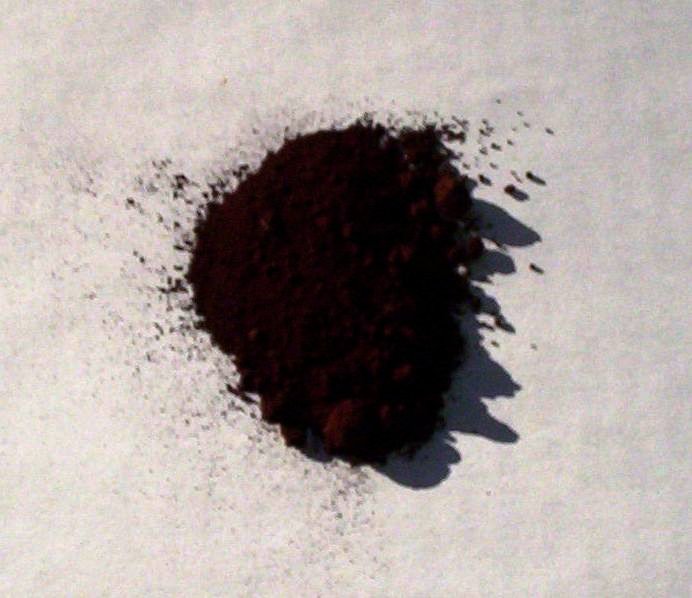
Sample of lead dioxide
Names
IUPAC name
Lead(IV) oxide
Other names
Plumbic oxide
Plattnerite
Identifiers
3D model (JSmol)
ChemSpider
ECHA InfoCard 100.013.795 Edit this at Wikidata
EC Number
  • 215-174-5
RTECS number
  • OGO700000
UNII
UN number 1872
  • InChI=1S/2O.Pb
    Key: YADSGOSSYOOKMP-UHFFFAOYSA-N
  • O=[Pb]=O
Properties
PbO2
Molar mass 239.1988 g/mol
Appearance dark-brown, black powder
Density 9.38 g/cm3
Melting point 290 °C (554 °F; 563 K) decomposes
insoluble
Solubility soluble in acetic acid
insoluble in alcohol
2.3
Structure
hexagonal
Hazards
GHS labelling:
GHS03: OxidizingGHS07: Exclamation markGHS08: Health hazardGHS09: Environmental hazard
Danger
H272, H302, H332, H360, H372, H373, H410
P201, P202, P210, P220, P221, P260, P261, P264, P270, P271, P273, P280, P281, P301+P312, P304+P312, P304+P340, P308+P313, P312, P314, P330, P370+P378, P391, P405, P501
NFPA 704 (fire diamond)
Flash point Non-flammable
Safety data sheet (SDS) External MSDS
Related compounds
Other cations
Carbon dioxide
Silicon dioxide
Germanium dioxide
Tin dioxide
Related lead oxides
Lead(II) oxide
Lead(II,IV) oxide
Related compounds
Thallium(III) oxide
Bismuth(III) oxide
Except where otherwise noted, data are given for materials in their standard state (at 25 °C [77 °F], 100 kPa).
☒N verify (what is checkY☒N ?)

Lead(IV) oxide, commonly known as lead dioxide, is an inorganic compound with the chemical formula PbO2. It is an oxide where lead is in an oxidation state of +4.[1] It is a dark-brown solid which is insoluble in water.[2] It exists in two crystalline forms. It has several important applications in electrochemistry, in particular as the positive plate of lead acid batteries.

Properties

[edit]

Physical

[edit]
Crystal structure of α-PbO2
Crystal structure of β-PbO2

Lead dioxide has two major polymorphs, alpha and beta, which occur naturally as rare minerals scrutinyite and plattnerite, respectively. Whereas the beta form had been identified in 1845,[3] α-PbO2 was first identified in 1946 and found as a naturally occurring mineral 1988.[4]

The alpha form has orthorhombic symmetry, space group Pbcn (No. 60), Pearson symbol oP12, lattice constants a = 0.497 nm, b = 0.596 nm, c = 0.544 nm, Z = 4 (four formula units per unit cell).[4] The lead atoms are six-coordinate.

The symmetry of the beta form is tetragonal, space group P42/mnm (No. 136), Pearson symbol tP6, lattice constants a = 0.491 nm, c = 0.3385 nm, Z = 2[5] and related to the rutile structure and can be envisaged as containing columns of octahedra sharing opposite edges and joined to other chains by corners. This contrasts with the alpha form where the octahedra are linked by adjacent edges to give zigzag chains.[4]

Chemical

[edit]

Lead dioxide decomposes upon heating in air as follows:

24 PbO2 → 2 Pb12O19 + 5 O2
Pb12O19 → Pb12O17 + O2
2 Pb12O17 → 8 Pb3O4 + O2
2 Pb3O4 → 6 PbO + O2

The stoichiometry of the end product can be controlled by changing the temperature – for example, in the above reaction, the first step occurs at 290 °C, second at 350 °C, third at 375 °C and fourth at 600 °C. In addition, Pb2O3 can be obtained by decomposing PbO2 at 580–620 °C under an oxygen pressure of 1,400 atm (140 MPa). Therefore, thermal decomposition of lead dioxide is a common way of producing various lead oxides.[6]

Lead dioxide is an amphoteric compound with prevalent acidic properties. It dissolves in strong bases to form the hydroxyplumbate ion, [Pb(OH)6]2−:[2]

PbO2 + 2 NaOH + 2 H2O → Na2[Pb(OH)6]

It also reacts with basic oxides in the melt, yielding orthoplumbates M4[PbO4].

Because of the instability of its Pb4+ cation, lead dioxide reacts with hot acids, converting to the more stable Pb2+ state and liberating oxygen:[6]

2 PbO2 + 2 H2SO4 → 2 PbSO4 + 2 H2O + O2
2 PbO2 + 4 HNO3 → 2 Pb(NO3)2 + 2 H2O + O2
PbO2 + 4 HClPbCl2 + 2 H2O + Cl2

However these reactions are slow.

Lead dioxide is well known for being a good oxidizing agent, with an example reactions listed below:[7]

2 MnSO4 + 5 PbO2 + 6 HNO3 → 2 HMnO4 + 2 PbSO4 + 3 Pb(NO3)2 + 2 H2O
2 Cr(OH)3 + 10 KOH + 3 PbO2 → 2 K2CrO4 + 3 K2PbO2 + 8 H2O

Electrochemical

[edit]

Although the formula of lead dioxide is nominally given as PbO2, the actual oxygen to lead ratio varies between 1.90 and 1.98 depending on the preparation method. Deficiency of oxygen (or excess of lead) results in the characteristic metallic conductivity of lead dioxide, with a resistivity as low as 10−4 Ω·cm and which is exploited in various electrochemical applications. Like metals, lead dioxide has a characteristic electrode potential, and in electrolytes it can be polarized both anodically and cathodically. Lead dioxide electrodes have a dual action, that is both the lead and oxygen ions take part in the electrochemical reactions.[8]

Production

[edit]

Chemical processes

[edit]

Lead dioxide is produced commercially by several methods, which include oxidation of red lead (Pb3O4) in alkaline slurry in a chlorine atmosphere,[6] reaction of lead(II) acetate with "chloride of lime" (calcium hypochlorite),[9][10] The reaction of Pb3O4 with nitric acid also affords the dioxide:[2][11]

Pb3O4 + 4 HNO3 → PbO2 + 2 Pb(NO3)2 + 2 H2O

PbO2 reacts with sodium hydroxide to form the hexahydroxoplumbate(IV) ion [Pb(OH)6]2−, soluble in water.

Electrolysis

[edit]

An alternative synthesis method is electrochemical: lead dioxide forms on pure lead, in dilute sulfuric acid, when polarized anodically at electrode potential about +1.5 V at room temperature. This procedure is used for large-scale industrial production of PbO2 anodes. Lead and copper electrodes are immersed in sulfuric acid flowing at a rate of 5–10 L/min. The electrodeposition is carried out galvanostatically, by applying a current of about 100 A/m2 for about 30 minutes.

The drawback of this method for the production of lead dioxide anodes is its softness, especially compared to the hard and brittle PbO2 which has a Mohs hardness of 5.5.[12] This mismatch in mechanical properties results in peeling of the coating which is preferred for bulk PbO2 production. Therefore, an alternative method is to use harder substrates, such as titanium, niobium, tantalum or graphite and deposit PbO2 onto them from lead(II) nitrate in static or flowing nitric acid. The substrate is usually sand-blasted before the deposition to remove surface oxide and contamination and to increase the surface roughness and adhesion of the coating.[13]

Applications

[edit]

Lead dioxide is used in the production of matches, pyrotechnics, dyes and the curing of sulfide polymers. It is also used in the construction of high-voltage lightning arresters.[6]

Lead dioxide is used as an anode material in electrochemistry. β-PbO2 is more attractive for this purpose than the α form because it has relatively low resistivity, good corrosion resistance even in low-pH medium, and a high overvoltage for the evolution of oxygen in sulfuric- and nitric-acid-based electrolytes. Lead dioxide can also withstand chlorine evolution in hydrochloric acid. Lead dioxide anodes are inexpensive and were once used instead of conventional platinum and graphite electrodes for regenerating potassium dichromate. They were also applied as oxygen anodes for electroplating copper and zinc in sulfate baths. In organic synthesis, lead dioxide anodes were applied for the production of glyoxylic acid from oxalic acid in a sulfuric acid electrolyte.[13]

Lead acid battery

[edit]

The most important use of lead dioxide is as the cathode of lead acid batteries. Its utility arises from the anomalous metallic conductivity of PbO2. The lead acid battery stores and releases energy by shifting the equilibrium (a comproportionation) between metallic lead, lead dioxide, and lead(II) salts in sulfuric acid.

Pb + PbO2 + 2 HSO4 + 2 H+ → 2 PbSO4 + 2 H2O   E° = +2.05 V

Safety

[edit]

Lead compounds are poisons. Chronic contact with the skin can potentially cause lead poisoning through absorption, or redness and irritation in the short term.[14]

PbO2 is not combustible, but it enhances flammability of other substances and the intensity of the fire. In case of a fire it gives off irritating and toxic fumes.[15][better source needed]

Lead dioxide is poisonous to aquatic life, but because of its insolubility it usually settles out of water.[16][15]

References

[edit]
[edit]
Revisions and contributorsEdit on WikipediaRead on Wikipedia
from Grokipedia
Lead dioxide, also known as lead(IV) oxide, is an with the PbO₂, in which lead exhibits an of +4. It occurs as a dark-brown or brown hexagonal crystals and serves primarily as a strong in various industrial applications. Naturally found as the rare minerals plattnerite (β-form) and scrutinyite (α-form), lead dioxide is insoluble in water but dissolves in acids like hydrochloric and , especially in the presence of reducing agents. Lead dioxide exists in two main crystalline polymorphs: the α-form with an orthorhombic structure related to columbite, and the β-form with a tetragonal rutile-type structure, both of which influence its electrochemical behavior. The compound has a density of 9.375 g/cm³ and decomposes upon heating to 290 °C, releasing oxygen to form lead(II) oxide. As a potent oxidizer, it reacts violently with reducing agents such as hydrogen sulfide and accelerates the combustion of flammable materials, though it is noncombustible itself. The most significant application of lead dioxide is as the positive electrode material ( during discharge) in lead-acid batteries, where it enables the storage and release of electrical energy through reversible reactions. It is also employed in the production of , explosives, pyrotechnics, dyes, and rubber substitutes due to its oxidative properties. Additionally, lead dioxide finds use in electrochemical processes, such as anodes for and , and as a catalyst in certain . Despite its utility, lead dioxide is highly toxic, posing risks of through ingestion, inhalation, or skin contact, which can lead to neurological damage, , kidney impairment, and reproductive harm; it is classified as a probable by the International Agency for Research on Cancer. Handling requires strict safety measures to mitigate environmental and health hazards associated with lead contamination.

Overview

Chemical identity

Lead dioxide, systematically known as lead(IV) oxide, is an with the PbO₂, in which lead is in the +4 . This compound represents the highest stable for lead in its s, distinguishing it from lower-valence forms. The molecular weight of lead dioxide is 239.20 g/mol, and it typically appears as a dark brown to black solid powder or crystalline material. It is insoluble in but soluble in acids such as (with evolution of gas) and , often in the presence of reducing agents, with evolution of gases. Lead dioxide exhibits amphoteric behavior, capable of reacting with both acids and strong bases to form corresponding salts. In the broader context of lead-oxygen compounds, it contrasts with lead(II) oxide (PbO), which features lead in the +2 state and is more basic, and red lead or minium (Pb₃O₄), a mixed-valence oxide with an average lead oxidation state of +8/3, used historically as a pigment.

Natural occurrence

Lead dioxide occurs in nature primarily as the mineral plattnerite (β-PbO₂), the beta polymorph of lead(IV) oxide, which forms in the oxidized zones of hydrothermal lead-bearing ore deposits. This mineral develops through weathering processes in environments rich in lead sulfides, such as , under conditions of high oxygen availability. Plattnerite is encountered in rare, localized deposits within arid and oxidizing settings, including desert regions, where its stability is favored by low moisture and minimal reducing agents. Notable occurrences include the Ojuela Mine in Mapimí, Durango, Mexico, where high-purity samples (up to 99.6% PbO₂) have been documented; the Coeur d’Alene district in , ; and sites in such as the Broken Hill area in . Other examples span (e.g., Leadhills, , the type locality), (e.g., Tsumeb, ), and (e.g., mines near Anarak, ). These formations typically appear as jet-black, acicular crystals or botryoidal masses, often just millimeters in size. Plattnerite is commonly associated with other secondary lead minerals in these supergene zones, including (PbCO₃) and (PbSO₄), as well as zinc carbonates like and hemimorphite. Its limited natural abundance stems from the compound's sensitivity to reducing conditions, which prevail in most geological settings and lead to its reduction to lower-valence lead species; consequently, it is not commercially mined and serves no significant economic role.

Properties

Physical properties

Lead dioxide appears as a dark-brown to black crystalline powder or solid. It has a of 9.375 g/cm³ for the β form and approximately 9.77 g/cm³ for the α form. The compound decomposes at 290 °C without melting, rendering a inapplicable. Lead dioxide exists in two polymorphs: α-PbO₂, which adopts an orthorhombic structure (scrutinyite type, Pbcn), and β-PbO₂, which has a tetragonal rutile-type structure ( P42/mnm). The lattice parameters for the α form are a = 0.497 nm, b = 0.596 nm, and c = 0.544 nm. Upon heating above 290 °C, lead dioxide undergoes according to the equation: 2PbO22PbO+O22 \mathrm{PbO_2} \rightarrow 2 \mathrm{PbO} + \mathrm{O_2} Lead dioxide is insoluble in and organic solvents. It exhibits a specific of approximately 9.38 and a Mohs of about 5.5.

Chemical properties

Lead dioxide (PbO₂) serves as a strong , attributable to the +4 of lead, which facilitates its reduction to more stable lower oxidation states. This property is reflected in its standard of +1.46 V for the half-reaction PbO₂(s) + 4H⁺ + 2e⁻ → Pb²⁺(aq) + 2H₂O(l) in acidic media. The compound reacts vigorously with reducing agents, such as or , often leading to ignition or explosion, underscoring its sensitivity to reductants. In acidic conditions, lead dioxide demonstrates its oxidizing capability through dissolution in hot nitric acid, yielding lead(II) nitrate, water, and oxygen gas via the balanced equation: \ce2PbO2+4HNO3>2Pb(NO3)2+2H2O+O2\ce{2 PbO2 + 4 HNO3 -> 2 Pb(NO3)2 + 2 H2O + O2} Similarly, it reacts with hydrochloric acid to produce lead(II) chloride, chlorine gas, and water, as shown in the equation: \cePbO2+4HCl>PbCl2+Cl2+2H2O\ce{PbO2 + 4 HCl -> PbCl2 + Cl2 + 2 H2O} This reaction highlights its role in liberating chlorine, a process exploited in certain chemical syntheses. Lead dioxide exhibits amphoteric behavior, dissolving in strong bases to form plumbate species. For instance, with sodium hydroxide, it forms sodium plumbate according to: \cePbO2+2NaOH>Na2PbO3+H2O\ce{PbO2 + 2 NaOH -> Na2PbO3 + H2O} This reaction demonstrates its ability to act as an acid toward bases, forming the plumbate ion [PbO₃]²⁻. The compound is thermally unstable, decomposing upon heating above approximately 290°C to lead(II) oxide and oxygen gas via: \ce2PbO2>2PbO+O2\ce{2 PbO2 -> 2 PbO + O2} This decomposition proceeds stepwise through intermediate oxides like Pb₁₂O₁₉ and Pb₃O₄ before yielding PbO, releasing oxygen that can support combustion. Regarding bonding, the Pb–O bonds in lead dioxide possess significant covalent character, arising from the high +4 oxidation state of lead, which increases orbital overlap and polarization compared to the predominantly ionic Pb–O bonds in lower oxides like PbO. This covalent nature contributes to the compound's dark color and relative insolubility in water.

Electrochemical properties

Lead dioxide (PbO₂) is a with an indirect of approximately 1.4 eV. It exhibits degenerate n-type conductivity, arising from oxygen vacancies that create donor states resonant within the conduction band, leading to high carrier concentrations and metallic-like electrical resistivity on the order of 10⁻³–10⁻⁴ Ω·cm. This intrinsic conductivity facilitates efficient in processes without requiring external doping for basic functionality. The behavior of PbO₂ is characterized by a high for the PbO₂/Pb²⁺ couple of +1.455 V versus the (SHE) in acidic media, reflecting its strong oxidizing nature in electrochemical environments. The primary is: \cePbO2(s)+4H+(aq)+2ePb2+(aq)+2H2O(l)\ce{PbO2(s) + 4 H+(aq) + 2 e- ⇌ Pb^2+(aq) + 2 H2O(l)} As an material, PbO₂ demonstrates a relatively high for the reaction (OER), typically around 1.9 V at practical current densities in acidic electrolytes, which minimizes parasitic oxygen gas evolution and enhances selectivity for other anodic processes in . This property stems from the thermodynamic stability of the Pb(IV) state and surface kinetics that favor alternative reaction pathways over O₂ formation. Doping PbO₂ with elements such as (Bi) or (F) modifies its electronic structure and conductivity; for example, Bi incorporation can refine the microstructure and increase charge acceptance by adjusting the near the , while F doping enhances overall electrochemical activity by increasing the OER potential and improving compactness.

Production

Chemical methods

Lead dioxide can be synthesized through several non-electrochemical chemical routes, primarily involving oxidation of lower lead oxides or lead salts under controlled conditions. One common method is the oxidation of red lead (Pb₃O₄, also known as minium) with dilute . In this process, red lead is suspended in 5 M nitric acid and boiled for approximately 15 minutes, leading to the partial dissolution and oxidation to form lead dioxide precipitate alongside lead nitrate. The balanced reaction is: Pb3O4+4HNO32Pb(NO3)2+PbO2+2H2O\mathrm{Pb_3O_4 + 4 HNO_3 \rightarrow 2 Pb(NO_3)_2 + PbO_2 + 2 H_2O} This method is suitable for small-scale preparation and yields a brown precipitate of lead dioxide after filtration and washing. Another established chemical synthesis involves the wet oxidation of litharge (PbO, lead monoxide) in an alkaline slurry using chlorine gas, sodium hypochlorite, or bleaching powder as oxidants. The reaction proceeds via the oxidation of plumbite ions to plumbate, ultimately precipitating lead dioxide: Pb(OH)3+ClOPbO2+Cl+OH+H2O\mathrm{Pb(OH)_3^- + ClO^- \rightarrow PbO_2 + Cl^- + OH^- + H_2O} This approach is versatile for laboratory and semi-industrial scales, producing a fine, dark brown powder. The process typically requires an alkaline medium to stabilize the intermediate species and prevent over-reduction. Thermal methods also contribute to lead dioxide production, such as the fusion of lead monoxide with a mixture of sodium nitrate and sodium chlorate at elevated temperatures (around 400–500°C). This solid-state oxidation generates lead dioxide through the release of oxygen from the oxidants, suitable for obtaining crystalline forms. Additionally, historical small-scale preparations have utilized hydrogen peroxide to oxidize lead(II) salts, such as lead acetate, in alkaline conditions, forming lead dioxide precipitate via peroxo-intermediates, though this method is less common due to safety concerns with peroxide handling. These chemical syntheses generally afford lead dioxide with high purity after washing; impurities like residual lead(II) oxides or nitrates can be minimized through thorough rinsing with water or dilute acid.

Electrochemical methods

Lead dioxide is commonly produced through electrolytic methods involving anodic oxidation, which allows for scalable industrial production of high-quality material. In this process, lead(II) ions in solution or metallic lead substrates are oxidized at the anode in acidic electrolytes, such as sulfuric acid or nitrate baths. The fundamental anodic half-reaction is \cePb2++2H2O>PbO2+4H++2e\ce{Pb^{2+} + 2 H2O -> PbO2 + 4 H+ + 2 e-}, which facilitates the deposition of lead dioxide as a solid phase on the electrode surface. Typical substrates include lead sheets for direct anodization or inert materials like , often precoated with β-lead dioxide seeds to promote uniform deposition and enhance adhesion. baths, typically around 4-5 M concentration, are favored for their compatibility with lead substrates and ability to yield the β-polymorph, while baths (e.g., 1 M lead ) are used for depositing on inert substrates to achieve denser coatings. Electrodeposition conditions are optimized for the β-form, with current densities ranging from 50 to 200 mA/cm² and temperatures maintained at 40-60°C to control morphology and deposition rate. These methods offer significant advantages, including high purity exceeding 99% and precise control over the polymorph (β-PbO₂ being preferred for its electrochemical activity), enabling tailored properties for applications like battery electrodes. However, the process is energy-intensive due to the high overpotentials required for suppression and sustained current densities. To mitigate issues like poor or irregular morphology, variants such as pulse electrolysis are employed, where intermittent current application (e.g., for several hours followed by ) improves uniformity and yield, often achieving up to 99% efficiency on pretreated lead substrates.

History

Discovery

Lead dioxide was known in impure forms since ancient times, formed through the oxidation of lead during and use in artifacts such as Roman water pipes and cooking vessels, though these contained mixtures of lead oxides rather than the pure compound. In the 1770s, lead oxides played a key role in the debates surrounding the discovery of oxygen. heated red lead (Pb₃O₄), which incorporates lead dioxide, using a burning lens to liberate "dephlogisticated air"—a gas that supported far more vigorously than ordinary air—but the starting material was impure and the product gas was oxygen, not isolated PbO₂. Similarly, obtained oxygen, termed "fire air," by heating various metal oxides including red lead with , again involving impure lead dioxide without achieving the pure compound. The first systematic preparation of pure lead dioxide occurred in the late 18th and early 19th centuries through chemical oxidation methods. In the 19th century, Jöns Jacob Berzelius confirmed the empirical formula PbO₂ via precise elemental analysis, establishing its composition as containing lead and oxygen in a 1:2 ratio by weight. Early nomenclature for the compound shifted from "brown oxide of lead" or "lead peroxide," reflecting its color and perceived higher oxygen content relative to litharge (PbO), to the modern term "lead dioxide" as its structure and properties became better understood. The beta polymorph, plattnerite, was first described as a distinct mineral in 1845.

Industrial development

The industrial development of lead dioxide accelerated with the invention of the lead-acid battery in 1859 by French physicist Gaston Planté, who formed PbO₂ on the positive lead plates through electrolytic charging in a electrolyte, marking the first practical and establishing PbO₂ as a key electrode material. Commercialization advanced in the 1880s through the work of Camille Alphonse Faure, who developed pasted electrodes by applying a paste of lead oxide (which forms PbO₂ upon oxidation) to lead grids, significantly increasing battery capacity and enabling their use in emerging automotive starter applications. In the , electrolytic production methods for PbO₂ saw improvements that enhanced purity and efficiency. During in the , PbO₂ found wartime applications in military pyrotechnics, serving as a stable oxidizer in incendiary mixtures for —due to its high of 9.38 g/cm³, at 290°C, and available oxygen of 0.07 g/g—and in gasless delay compositions (e.g., 72% PbO₂ with 28% ) for ordnance fuzes, contributing to reliable ignition and timing in scenarios. By the 1970s, the focus shifted to doped PbO₂ anodes for processes, such as copper recovery from electrolytes, where additives like or iron(III) improved resistance and operational lifetimes of several years at current densities of 10–100 mA/cm², outperforming traditional lead alloys in stability. Post-1980s, non-battery uses of PbO₂ declined sharply due to stringent environmental regulations on lead emissions and toxicity, including phaseouts of lead in paints, solders, and , redirecting demand primarily toward battery applications.

Applications

Lead-acid batteries

Lead dioxide (PbO₂) functions as the primary active material in the positive of lead-acid batteries, where it is applied as a paste onto a lead grid to form the structure. This paste, typically composed of lead oxides mixed with and binders, cures to produce a porous matrix that adheres to the grid, enabling efficient electrochemical reactions. The resulting PbO₂ can crystallize in either the α-PbO₂ (orthorhombic) or β-PbO₂ (tetragonal) form, with the α-phase offering a more compact structure for better interparticle contact and higher discharge capacity, while the β-phase provides greater for easier access. During discharge, the positive electrode undergoes the reduction reaction: PbO2+4H++SO42+2ePbSO4+2H2O\text{PbO}_2 + 4\text{H}^+ + \text{SO}_4^{2-} + 2\text{e}^- \rightarrow \text{PbSO}_4 + 2\text{H}_2\text{O} This half-cell reaction contributes to the overall cell potential of approximately 1.68 V, with the full cell voltage around 2.0 V under standard conditions. Charging reverses this process, oxidizing PbSO₄ back to PbO₂, but overcharging leads to oxygen evolution at the positive electrode (2H₂O → O₂ + 4H⁺ + 4e⁻), causing gassing that can result in electrolyte loss and reduced efficiency if not managed. Lead-acid batteries come in several types, including flooded (with liquid electrolyte), absorbed glass mat (AGM, where electrolyte is held in fiberglass separators), and gel (with immobilized electrolyte), all relying on PbO₂ for the positive electrode to achieve specific energy densities of 30–50 Wh/kg. Cycle life is limited by issues such as sulfation, where insoluble PbSO₄ crystals form and clog pores, increasing internal resistance, and shedding of the PbO₂ active material, which reduces capacity over repeated cycles. These problems can be mitigated through additives like lithium sulfate, which enhances charge efficiency and reduces sulfation by improving electrolyte conductivity and crystal dissolution, or zinc sulfate and lignins, which influence PbSO₄ nucleation to maintain electrode integrity.

Other industrial uses

Lead dioxide serves as an anode material in and processes, notably for recovery from acidic leach solutions in hydrometallurgical operations. The formation of a dense lead dioxide layer on lead-based s provides resistance, enabling operational lifetimes of 4 to 6 years—equivalent to over 35,000 hours—under typical current densities of 200–400 A/m² and temperatures around 50–60°C. As a potent , lead dioxide is utilized in the manufacture of and , where it facilitates ignition and reactions, and in the for dye production, including oxidative coupling in synthesis from aromatic amines. Prior to environmental regulations in the 1970s, lead dioxide was employed as a to impart coloration in and ceramics, leveraging its dark hue for decorative and functional applications; its use declined sharply due to lead concerns and subsequent bans on in consumer products. In , lead dioxide functions as a heterogeneous catalyst in involving , promoting the decomposition of H₂O₂ to generate hydroxyl radicals (•OH) that degrade recalcitrant organic pollutants such as dyes and pharmaceuticals. Although lead-acid batteries dominate global lead dioxide consumption, non-battery industrial applications represent a smaller but established market segment.

Emerging applications

Recent research has explored lead dioxide (PbO₂) as an electrocatalytic material for the degradation of persistent organic pollutants in . Lead dioxide electrodes, particularly those modified with substrates like or boron-doped , demonstrate high oxygen evolution overpotentials and generate hydroxyl radicals for , achieving degradation efficiencies exceeding 90% for compounds such as perfluorooctane (PFOS) under optimized conditions like neutral and moderate current densities. For instance, a 2023 study on yttrium-mediated three-dimensional graphene-PbO₂ anodes reported 97.16% PFOS removal after 40 minutes of , highlighting their potential for treating per- and polyfluoroalkyl substances (PFAS) in contaminated water. A comprehensive 2022 review further emphasizes PbO₂'s efficacy in oxidizing dyes, pesticides, pharmaceuticals, and landfill , with single-metal-oxide variants outperforming multi-metal alternatives in stability and mineralization rates. Modified forms of PbO₂ have shown promise in systems beyond traditional lead-acid batteries, particularly in flow batteries and hybrid capacitors integrated with sources. In soluble lead flow batteries (SLFBs), PbO₂ serves as the positive material, offering high theoretical and compatibility with acidic s; recent optimizations, including electrolyte circulation enhancements, have extended cycle life to hundreds of cycles while addressing degradation mechanisms like passivation. Lead-carbon hybrid systems, incorporating PbO₂ nanoparticles with oxide or carbon additives, improve charge-discharge rates and suppress sulfation, as detailed in a 2022 analysis of carbonaceous interfaces that boosts capacity retention for applications in hybrid electric vehicles and grid storage. These modifications enhance overall system efficiency, with lead-carbon variants achieving up to 12% higher compared to unmodified counterparts. Electrocatalytic ammonia synthesis represents another emerging avenue, leveraging PbO₂ electrodes to facilitate reduction under ambient conditions. A educational study prepared PbO₂ catalysts via a water bath method on a carbon cloth substrate and evaluated their performance in a lab-scale setup, demonstrating Faradaic efficiencies for via the reduction reaction (NRR), though yields remain modest due to competing evolution. This approach positions PbO₂ as a cost-effective alternative to catalysts, with potential scalability for sustainable production. High-pressure crystallographic studies of PbO₂ provide insights into , serving as an analog for silica polymorphs in Earth's deep mantle and aiding in geophysical modeling. Investigations up to 140 GPa reveal phase transitions from rutile-type to post-rutile structures, with bulk moduli indicating akin to predicted SiO₂ behaviors at lower pressures. Doped PbO₂ variants, such as those incorporating and , enhance performance in by increasing potential and reducing side reactions. A 2021 study on Co-Mn-modified PbO₂ anodes reported superior electrocatalytic activity, with the ternary PbO₂–MnO₂–Co₃O₄ composition exhibiting lower cell voltage and higher stability than conventional Pb-Sn-Sb anodes, leading to improved current efficiencies approaching 100% in simulated electrowinning conditions. These dopants refine the electrode's microstructure, boosting overall process in recovery.

Safety and environmental impact

Health hazards

Lead dioxide exposure primarily occurs through of dust or fumes in occupational settings or via contaminated water or food, leading to acute . Symptoms of acute toxicity include , , , and neurological effects such as headaches, , and . can also irritate the respiratory tract, nose, and throat. Chronic exposure to lead dioxide contributes to , particularly in children, where even low lead levels are associated with reduced IQ and developmental delays. It also causes reproductive harm, including and developmental toxicity, and affects the , , and cardiovascular system. Inorganic , including lead dioxide, are classified as probably carcinogenic to humans (), with limited evidence in humans for and sufficient evidence in experimental animals for and tumors. In the , lead dioxide nanoparticles dissolve into bioavailable Pb²⁺ ions, with a 2019 in vivo study in medaka fish demonstrating leading to in tissues. Lead from such exposure accumulates in bones, where it can persist for decades and be released during conditions like or . Occupational exposure to lead dioxide is regulated by OSHA with a (PEL) of 0.05 mg/m³ as lead, averaged over an 8-hour workday. According to the World Health Organization's 2024 update, there is no known safe level of lead exposure, as even concentrations as low as 3.5 µg/dL in blood can cause harm.

Ecological effects

Lead dioxide (PbO₂) is highly persistent in the environment due to its low and strong binding to and matrices. Although insoluble in neutral ( <0.01 mg/L), PbO₂ weathers slowly in acidic soils or under acidic rainfall, releasing bioavailable Pb²⁺ ions that enhance mobility and bioavailability. This transformation is pH-dependent, with increasing significantly below pH 5, where protonation facilitates dissolution into more toxic forms. In aquatic ecosystems, PbO₂ contributes to toxicity primarily through gradual dissolution to Pb²⁺, with acute LC50 values for fish species ranging from 1 to 10 mg/L, causing gill damage and osmoregulatory disruption. Chronic exposure inhibits fish reproduction by impairing gonad development and reducing egg viability at concentrations as low as 0.05 mg/L. Lead from PbO₂ sources undergoes bioaccumulation in primary producers and invertebrates, with limited but documented biomagnification in pelagic food chains, leading to elevated concentrations in predatory fish (biomagnification factor up to 2-3). Soil contamination by PbO₂ occurs mainly from lead-acid battery waste and mining residues, where concentrations often exceed 300 mg/kg near recycling sites, facilitating plant uptake of Pb²⁺ via roots. Plants absorb Pb at rates influenced by soil pH and organic matter, with reduced growth (e.g., 20-40% biomass decrease) observed at soil Pb levels >50 ppm, particularly in leafy that translocate Pb to edible parts. During fires involving PbO₂-containing materials, such as battery disposal or industrial accidents, thermal decomposition releases toxic lead oxide fumes into the atmosphere, contributing to particulate lead pollution. These emissions exacerbate global lead dispersal. Remediation of PbO₂-contaminated sites faces challenges due to its low solubility, rendering phytoremediation ineffective as plants cannot efficiently extract the insoluble form, achieving <10% removal without chelators. Alternative methods like soil washing or stabilization are often required to mobilize or immobilize PbO₂ for effective cleanup.

References

Add your contribution
Related Hubs
User Avatar
No comments yet.