
Recent from talks
Dnyaneshwar
Knowledge base stats:
Talk channels stats:
Members stats:
Dnyaneshwar
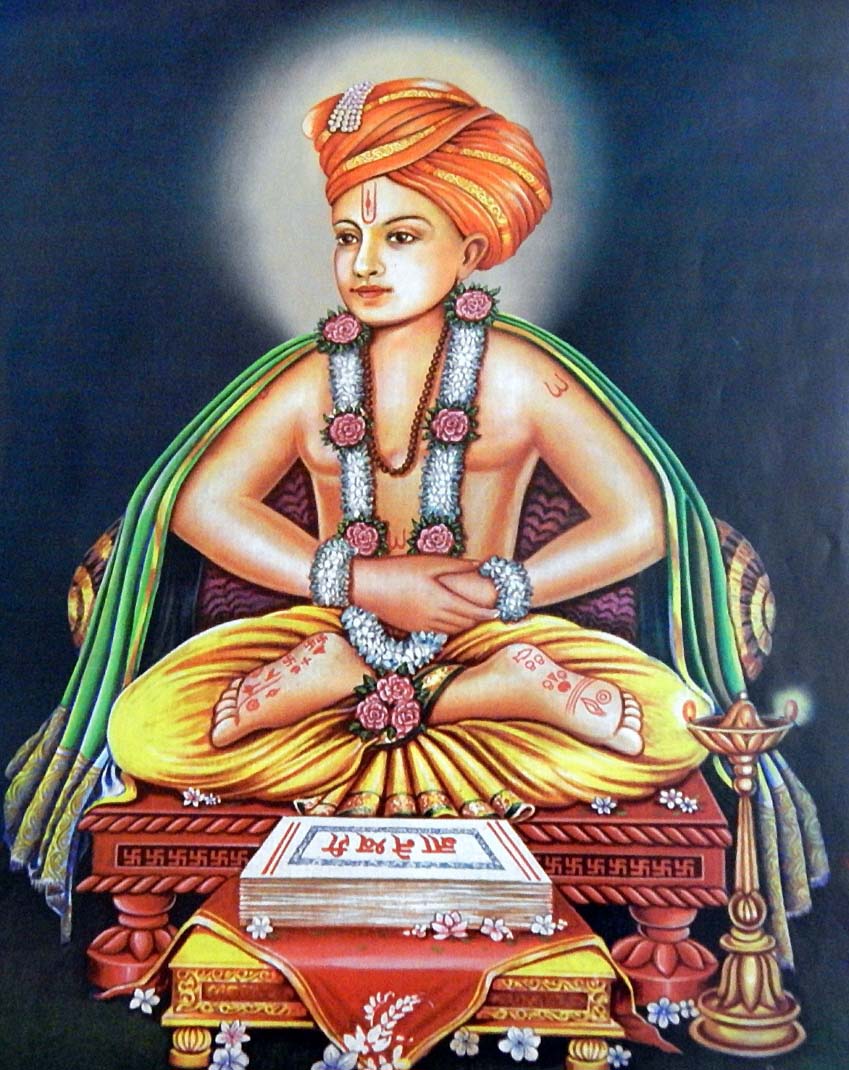
Sant Dnyaneshwar (Marathi pronunciation: [d̪ɲaːn̪eʃʋəɾ]), (Devanagari : सन्त ज्ञानेश्वर), ⓘalso referred to as Jñāneśvara, Jñānadeva, Dnyandev or Mauli or Dnyandev Vitthal Kulkarni (1275–1296 (living samadhi)), was a 13th-century Indian Marathi saint, poet, philosopher and yogi of the Nath and Varkari tradition. In his short life of 21 years, he authored Dnyaneshwari (a commentary on the Bhagavad Gita) and Amrutanubhav. These are the oldest surviving literary works in the Marathi language, and considered to be milestones in Marathi literature. Sant Dnyaneshwar's ideas reflect the non-dualistic Advaita Vedanta philosophy and an emphasis on Yoga and bhakti towards Vithoba, an incarnation of Vishnu. His legacy inspired saint-poets such as Eknath and Tukaram, and he is one of the founders of the Varkari (Vithoba-Krishna) Bhakti movement tradition of Hinduism in Maharashtra. Dnyaneshwar undertook samadhi at Alandi in 1296 by entombing himself in an underground chamber.
Dnyaneshwar was born in 1275 (on the auspicious day of Krishna Janmashtami) in a Marathi-speaking Deshastha Brahmin family in Apegaon village on the banks of Godavari river near Paithan in Maharashtra during the reign of the Yadava king Ramadevarava. The kingdom with its capital Devagiri enjoyed relative peace and stability, and the king was a patron of literature and arts.
Biographical details of Sant Dnyaneshwar's life are preserved in the writings of his disciples, Satyamalanath and Sachchidanand. The various traditions give conflicting accounts of details of Dnyaneshwar's life. The date of composition of his work Dnyaneshwari (1290 CE), however is undisputed. According to the more accepted tradition on Dnyaneshwar's life, he was born in 1275 CE and he attained samadhi in 1296 CE. Other sources state he was born in 1271 CE.
The biographical details of Dnyaneshwar's short life of about 21 years are well established. The available accounts are filled with hagiographic legends and miracles he performed, such as his ability to make a buffalo sing the Vedas and humble a sadhak (Changdev) by riding a moving wall.
According to the accounts that have survived, Dnyaneshwar's father Vitthal pant was the kulkarni (accountant who maintained land and tax records in villages) of a village called Ape gaon on the banks of the Godavari River in Maharashtra, a profession he had inherited from his ancestors. He married Rakhna Bai, the daughter of the Kulkarni of Alandi. Even as a householder, Vitthal pant longed for spiritual learning. His disillusionment with life grew as a result of the death of his father and because he had no children from his marriage. Eventually, with his wife's consent, he renounced worldly life and left for Kashi to become a sannyasin (renunciate). According to another version of these events Dnyaneshwar's father Vitthalapant came from a long line of teachers of the Nath yogi sect and being deeply religious, he went on a pilgrimage to Varanasi. There he met a guru (spiritual teacher), decided to renounce without his wife's consent.
Vitthalapant was initiated by his spiritual teacher, Ramashrama (according to abhanga of Saint Namdeva), in Kashi. When Ramashrama Swami visited Alan-di and met Rukminibai by chance, he blessed her saying, “May you lead a happy married life.” With tears in her eyes, Rukmini said that it was not possible since her husband had gone away to Kashi and become a sanyasin. On finding out that her husband was none other than his disciple Vitthalapant, Swami, on returning to Kashi, reprimanded Vitthalapant and sent him back to Alandi. At Alandi, he rejoined his wife and again became a householder. After Vitthalapant returned to his wife and settled down in Alandi, Rakhumabai gave birth to four children—Nivruttinath (1273 CE), Dnyaneshwar (1275 CE), Sopan (1277 CE) and Muktabai (1279 CE).
Orthodox Brahmins of the day saw a renunciate returning to his life as a householder as heresy. Dnyaneshwar and his brothers were denied the right to have the sacred thread ceremony for the full admission to the Brahmin caste. The orthodox brahmins excommunicated the Kulkarni family, denied them work, the right to buy food from the market or even interact with other villagers.
Vitthal Kulkarni eventually left the town for Nashik with his family. One day while performing his daily rituals, Vitthal came face to face with a tiger. Vitthal and three of his four children escaped, but Nivruttinath became separated from the family and hid in a cave. While hiding in the cave he met Gahaninath, who initiated Nivruttinath into the wisdom of the Nath yogis. Later, Vitthal Kulkarni returned to Alandi and asked the Brahmins to suggest a means of atonement for his sins; they suggest committing suicide as penance. Vitthal and his wife gave up their lives, within a year of each other by jumping into the Indrayani river in the hope their children might be able to lead lives free of persecution. Other sources and local folk tradition claim that the parents committed suicide by jumping in the Indrayani River. Another version of the legend states that Vitthalapant, the father threw himself into Ganges River to expiate his sin.
Hub AI
Dnyaneshwar AI simulator
(@Dnyaneshwar_simulator)
Dnyaneshwar
Sant Dnyaneshwar (Marathi pronunciation: [d̪ɲaːn̪eʃʋəɾ]), (Devanagari : सन्त ज्ञानेश्वर), ⓘalso referred to as Jñāneśvara, Jñānadeva, Dnyandev or Mauli or Dnyandev Vitthal Kulkarni (1275–1296 (living samadhi)), was a 13th-century Indian Marathi saint, poet, philosopher and yogi of the Nath and Varkari tradition. In his short life of 21 years, he authored Dnyaneshwari (a commentary on the Bhagavad Gita) and Amrutanubhav. These are the oldest surviving literary works in the Marathi language, and considered to be milestones in Marathi literature. Sant Dnyaneshwar's ideas reflect the non-dualistic Advaita Vedanta philosophy and an emphasis on Yoga and bhakti towards Vithoba, an incarnation of Vishnu. His legacy inspired saint-poets such as Eknath and Tukaram, and he is one of the founders of the Varkari (Vithoba-Krishna) Bhakti movement tradition of Hinduism in Maharashtra. Dnyaneshwar undertook samadhi at Alandi in 1296 by entombing himself in an underground chamber.
Dnyaneshwar was born in 1275 (on the auspicious day of Krishna Janmashtami) in a Marathi-speaking Deshastha Brahmin family in Apegaon village on the banks of Godavari river near Paithan in Maharashtra during the reign of the Yadava king Ramadevarava. The kingdom with its capital Devagiri enjoyed relative peace and stability, and the king was a patron of literature and arts.
Biographical details of Sant Dnyaneshwar's life are preserved in the writings of his disciples, Satyamalanath and Sachchidanand. The various traditions give conflicting accounts of details of Dnyaneshwar's life. The date of composition of his work Dnyaneshwari (1290 CE), however is undisputed. According to the more accepted tradition on Dnyaneshwar's life, he was born in 1275 CE and he attained samadhi in 1296 CE. Other sources state he was born in 1271 CE.
The biographical details of Dnyaneshwar's short life of about 21 years are well established. The available accounts are filled with hagiographic legends and miracles he performed, such as his ability to make a buffalo sing the Vedas and humble a sadhak (Changdev) by riding a moving wall.
According to the accounts that have survived, Dnyaneshwar's father Vitthal pant was the kulkarni (accountant who maintained land and tax records in villages) of a village called Ape gaon on the banks of the Godavari River in Maharashtra, a profession he had inherited from his ancestors. He married Rakhna Bai, the daughter of the Kulkarni of Alandi. Even as a householder, Vitthal pant longed for spiritual learning. His disillusionment with life grew as a result of the death of his father and because he had no children from his marriage. Eventually, with his wife's consent, he renounced worldly life and left for Kashi to become a sannyasin (renunciate). According to another version of these events Dnyaneshwar's father Vitthalapant came from a long line of teachers of the Nath yogi sect and being deeply religious, he went on a pilgrimage to Varanasi. There he met a guru (spiritual teacher), decided to renounce without his wife's consent.
Vitthalapant was initiated by his spiritual teacher, Ramashrama (according to abhanga of Saint Namdeva), in Kashi. When Ramashrama Swami visited Alan-di and met Rukminibai by chance, he blessed her saying, “May you lead a happy married life.” With tears in her eyes, Rukmini said that it was not possible since her husband had gone away to Kashi and become a sanyasin. On finding out that her husband was none other than his disciple Vitthalapant, Swami, on returning to Kashi, reprimanded Vitthalapant and sent him back to Alandi. At Alandi, he rejoined his wife and again became a householder. After Vitthalapant returned to his wife and settled down in Alandi, Rakhumabai gave birth to four children—Nivruttinath (1273 CE), Dnyaneshwar (1275 CE), Sopan (1277 CE) and Muktabai (1279 CE).
Orthodox Brahmins of the day saw a renunciate returning to his life as a householder as heresy. Dnyaneshwar and his brothers were denied the right to have the sacred thread ceremony for the full admission to the Brahmin caste. The orthodox brahmins excommunicated the Kulkarni family, denied them work, the right to buy food from the market or even interact with other villagers.
Vitthal Kulkarni eventually left the town for Nashik with his family. One day while performing his daily rituals, Vitthal came face to face with a tiger. Vitthal and three of his four children escaped, but Nivruttinath became separated from the family and hid in a cave. While hiding in the cave he met Gahaninath, who initiated Nivruttinath into the wisdom of the Nath yogis. Later, Vitthal Kulkarni returned to Alandi and asked the Brahmins to suggest a means of atonement for his sins; they suggest committing suicide as penance. Vitthal and his wife gave up their lives, within a year of each other by jumping into the Indrayani river in the hope their children might be able to lead lives free of persecution. Other sources and local folk tradition claim that the parents committed suicide by jumping in the Indrayani River. Another version of the legend states that Vitthalapant, the father threw himself into Ganges River to expiate his sin.
Recent media