Hubbry Logo
Evan HunterEvan HunterMain
Open search
Evan Hunter
Community hub
Evan Hunter
logo
8 pages, 0 posts
0 subscribers
Be the first to start a discussion here.
Evan Hunter
Evan Hunter
from Wikipedia

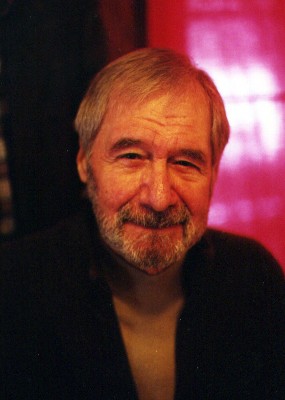
Evan Hunter (born Salvatore Albert Lombino; October 15, 1926 – July 6, 2005) was an American author of crime and mystery fiction. He is best known as the author of the 87th Precinct novels, published under the pen name Ed McBain, which are considered staples of police procedural genre.

Key Information

His other notable works include The Blackboard Jungle, a semi-autobiographical novel about life in a troubled inner-city school, which was adapted into a hit 1955 film of the same name. He also wrote the screenplay for Alfred Hitchcock’s 1963 film The Birds, based on the Daphne du Maurier short story.

Hunter, who legally adopted that name in 1952, also used the pen names John Abbott, Curt Cannon, Hunt Collins, Ezra Hannon and Richard Marsten, among others.

Life

[edit]

Early life

[edit]

Salvatore Lombino was born and raised in New York City. He lived in East Harlem until age 12, when his family moved to the Bronx. He attended Olinville Junior High School (later Richard R. Green Middle School #113), then Evander Childs High School (now Evander Childs Educational Campus), before winning a New York Art Students League scholarship. Later, he was admitted as an art student at Cooper Union. Lombino served in the United States Navy during World War II and wrote several short stories while serving aboard a destroyer in the Pacific. However, none of these stories was published until after he had established himself as an author in the 1950s.

After the war, Lombino returned to New York and attended Hunter College, where he majored in English and psychology, with minors in dramatics and education, and graduated Phi Beta Kappa in 1950.[2] He published a weekly column in the Hunter College newspaper as "S.A. Lombino". In 1981, Lombino was inducted into the Hunter College Hall of Fame, where he was honored for outstanding professional achievement.[3]

While looking to start a career as a writer, Lombino took a variety of jobs, including 17 days as a teacher at Bronx Vocational High School in September 1950. This experience would later form the basis for his novel The Blackboard Jungle (1954), written under the pen name Evan Hunter, which was adapted into the film Blackboard Jungle (1955).

In 1951, Lombino took a job as an executive editor for the Scott Meredith Literary Agency, working with authors such as Poul Anderson, Arthur C. Clarke, Lester del Rey, Richard S. Prather, and P.G. Wodehouse. He made his first professional short story sale the same year, a science-fiction tale titled "Welcome, Martians!", credited to S. A. Lombino.[4]

Name change and pen names

[edit]

Soon after his initial sale, Lombino sold stories under the pen names Evan Hunter and Hunt Collins. The name Evan Hunter is generally believed to have been derived from two schools he attended, Evander Childs High School and Hunter College, although the author himself would never confirm that. (He did confirm that Hunt Collins was derived from Hunter College.) Lombino legally changed his name to Evan Hunter in May 1952, after an editor told him that a novel he wrote would sell more copies if credited to Evan Hunter than to S. A. Lombino. Thereafter, he used the name Evan Hunter both personally and professionally.

Evan Hunter c. 1953

As Evan Hunter, he gained notice with his novel The Blackboard Jungle (1954) dealing with juvenile crime and the New York City public school system. The film adaptation followed in 1955.

During this era, Hunter also wrote a great deal of genre fiction. He was advised by his agents that publishing too much fiction under the Hunter byline, or publishing any crime fiction as Evan Hunter, might weaken his literary reputation. Consequently, during the 1950s Hunter used the pseudonyms Curt Cannon, Hunt Collins, and Richard Marsten for much of his crime fiction. A prolific author in several genres, Hunter also published approximately two dozen science fiction stories and four science-fiction novels between 1951 and 1956 under the names S. A. Lombino, Evan Hunter, Richard Marsten, D. A. Addams, and Ted Taine.

Ed McBain, his best known pseudonym, was first used with Cop Hater (1956), the first novel in the 87th Precinct crime series. Hunter revealed that he was McBain in 1958 but continued to use the pseudonym for decades, notably for the 87th Precinct series and the Matthew Hope detective series. He retired the pen names Addams, Cannon, Collins, Marsten, and Taine around 1960. From then on crime novels were generally attributed to McBain and other sorts of fiction to Hunter. Reprints of crime-oriented stories and novels written in the 1950s previously attributed to other pseudonyms were reissued under the McBain byline. Hunter stated that the division of names allowed readers to know what to expect: McBain novels had a consistent writing style, while Hunter novels were more varied.

Under the Hunter name, novels steadily appeared throughout the 1960s, 1970s, and early 1980s, including Come Winter (1973) and Lizzie (1984). Hunter was also successful as screenwriter for film and television. He wrote the screenplay for the Alfred Hitchcock film The Birds (1963), loosely adapted from Daphne du Maurier's eponymous 1952 novelette. Following The Birds, Hunter was again hired by Hitchcock to complete an in-progress script adapting Winston Graham's novel Marnie. However, Hunter and the director disagreed on how to treat the novel's rape scene, and the writer was sacked.[5] Hunter's other screenplays included Strangers When We Meet (1960), based on his own 1958 novel; and Fuzz (1972), based on his eponymous 1968 87th Precinct novel, which he had written as Ed McBain.

After having thirteen 87th Precinct novels published from 1956 to 1960, further 87th Precinct novels appeared at a rate of approximately one a year until his death. Additionally, NBC ran a police drama called 87th Precinct during the 1961–62 season, based on McBain's work.

From 1978 to 1998, McBain published a series about lawyer Matthew Hope; books in this series appeared every year or two, and usually had titles derived from well-known children's stories. For about a decade, from 1984 to 1994, Hunter published no fiction under his own name. In 2000, a novel called Candyland appeared that was credited to both Hunter and McBain. The two-part novel opened in Hunter's psychologically based narrative voice before switching to McBain's customary police procedural style.

Aside from McBain, Hunter used at least two other pseudonyms for his fiction after 1960: Doors (1975), which was originally attributed to Ezra Hannon before being reissued as a work by McBain, and Scimitar (1992), which was credited to John Abbott.

Hunter gave advice to other authors in his article "Dig in and get it done: no-nonsense advice from a prolific author (aka Ed McBain) on starting and finishing your novel". In it, he advised authors to "find their voice for it is the most important thing in any novel".[6]

Dean Hudson controversy

[edit]

Hunter was long rumored to have written an unknown number of pornographic novels, as Dean Hudson, for William Hamling's publishing houses. Hunter adamantly and consistently denied writing any books as Hudson until he died. However, apparently his agent Scott Meredith sold books to Hamling's company as Hunter's work (for attribution as "Dean Hudson") and received payments for these books in cash. While notable, it is not definitive proof: Meredith almost certainly forwarded novels to Hamling by any number of authors, claiming these novels were by Hunter simply to make a sale. Ninety-three novels were published under the Hudson name from 1961 to 1969, and even the most avid proponents of the Hunter-as-Hudson theory do not believe Hunter is responsible for all 93.[7][8]

Personal life

[edit]

He had three sons: Richard Hunter, an author, speaker, retired advisor to chief information officers on business value and risk issues, and harmonica player;[9][10] Mark Hunter, an academic, educator, investigative reporter, and author;[citation needed] and Ted Hunter, a painter, who died in 2006.[11]

Death

[edit]

A heavy smoker for many decades, Hunter had three heart attacks over a number of years (his first in 1987) and needed heart surgery.[12] A precancerous lesion was found on his larynx in 1992. This was removed, but the cancer later returned. In 2005, Hunter died in Weston, Connecticut from laryngeal cancer. He was 78.[13]

Awards

[edit]
  • Edgar Award nomination for Best Short Story, "The Last Spin" (Manhunt, Sept. 1956)
  • Edgar Award nomination Archived 2012-08-28 at the Wayback Machine for Best Motion Picture, The Birds (1964)
  • Edgar Award nomination for Best Short Story, "Sardinian Incident" (Playboy, Oct. 1971)
  • Grand Master, Mystery Writers of America (1986)
  • Diamond Dagger, British Crime Writers Assn (first American recipient, 1998)
  • Anthony Award nomination Archived 2012-02-07 at the Wayback Machine for Best Series of the Century (2000)
  • Edgar Award nomination for Best Novel, Money, Money, Money (2002)

Works

[edit]
Hunter's "Silent Partner" was the cover story on the August 1952 issue of Science Fiction Quarterly, credited to S. A. Lombino

Novels

[edit]
Year Title Credited
author
Series Notes
1952 Find The Feathered Serpent Evan Hunter YA novel
1952 The Evil Sleep! Evan Hunter Reprinted in 1956 as "So Nude, So Dead" under the name Richard Marsten[14]
1953 Don't Crowd Me Evan Hunter
1953 Danger: Dinosaurs! Richard Marsten YA novel
1953 Rocket to Luna Richard Marsten YA novel
1954 The Blackboard Jungle Evan Hunter
1954 Runaway Black Richard Marsten Later credited as Ed McBain
1954 Cut Me In Hunt Collins Later republished as The Proposition
1955 Murder in the Navy Richard Marsten Later republished as Death of a Nurse by Ed McBain
1956 Second Ending Evan Hunter
1956 Cop Hater Ed McBain 87th Precinct
1956 The Mugger Ed McBain 87th Precinct
1956 The Pusher Ed McBain 87th Precinct 1960 film adaptation The Pusher
1956 Tomorrow's World Hunt Collins Later republished as Tomorrow And Tomorrow by Hunt Collins, and as Sphere by Ed McBain
1957 The Con Man Ed McBain 87th Precinct
1957 Killer's Choice Ed McBain 87th Precinct
1957 Vanishing Ladies Richard Marsten Later republished as by Ed McBain
1957 The Spiked Heel Richard Marsten
1958 Strangers When We Meet Evan Hunter
1958 The April Robin Murders Craig Rice and Ed McBain Hunter finished this novel started by Rice, using his McBain pen name.
1958 Killer's Payoff Ed McBain 87th Precinct
1958 Lady Killer Ed McBain 87th Precinct
1958 Even The Wicked Richard Marsten Later republished as by Ed McBain
1958 I'm Cannon—For Hire Curt Cannon Later revised and republished as The Gutter and the Grave by Ed McBain
1959 A Matter of Conviction Evan Hunter 1961 film adaptation The Young Savages
1959 The Remarkable Harry Evan Hunter Children's book
1959 Big Man Richard Marsten Later republished as by Ed McBain
1959 Killer's Wedge Ed McBain 87th Precinct
1959 'til Death Ed McBain 87th Precinct
1959 King's Ransom Ed McBain 87th Precinct
1960 Give the Boys a Great Big Hand Ed McBain 87th Precinct
1960 The Heckler Ed McBain 87th Precinct
1960 See Them Die Ed McBain 87th Precinct
1961 Lady, Lady I Did It! Ed McBain 87th Precinct
1961 Mothers And Daughters Evan Hunter
1961 The Wonderful Button Evan Hunter Children's book
1962 Like Love Ed McBain 87th Precinct
1963 Ten Plus One Ed McBain 87th Precinct
1964 Buddwing Evan Hunter
1964 Ax Ed McBain 87th Precinct
1964 He Who Hesitates Ed McBain 87th Precinct
1965 Doll Ed McBain 87th Precinct
1965 The Sentries Ed McBain
1965 Me And Mr. Stenner Evan Hunter Children's book
1965 Happy New Year, Herbie Evan Hunter
1966 The Paper Dragon Evan Hunter
1966 80 Million Eyes Ed McBain 87th Precinct
1967 A Horse's Head Evan Hunter
1968 Last Summer Evan Hunter
1968 Fuzz Ed McBain 87th Precinct
1969 Sons Evan Hunter
1969 Shotgun Ed McBain 87th Precinct
1970 Jigsaw Ed McBain 87th Precinct This novel was adapted as the Columbo episode "Undercover" in 1994.
1971 Nobody Knew They Were There Evan Hunter
1971 Hail, Hail the Gang's All Here Ed McBain 87th Precinct
1972 Every Little Crook And Nanny Evan Hunter
1972 Let's Hear It for the Deaf Man Ed McBain 87th Precinct
1972 Seven Evan Hunter
1972 Sadie When She Died Ed McBain 87th Precinct
1973 Come Winter Evan Hunter
1973 Hail to the Chief Ed McBain 87th Precinct
1974 Streets Of Gold Evan Hunter
1974 Bread Ed McBain 87th Precinct
1975 Where There's Smoke Ed McBain
1975 Blood Relatives Ed McBain 87th Precinct
1975 Doors Ezra Hannon Later republished as by Ed McBain
1976 So Long as You Both Shall Live Ed McBain 87th Precinct This novel was adapted as the Columbo episode "No Time to Die" in 1992.
1976 The Chisholms Evan Hunter
1976 Guns Ed McBain
1977 Long Time No See Ed McBain 87th Precinct
1977 Goldilocks Ed McBain Matthew Hope
1979 Walk Proud Evan Hunter
1979 Calypso Ed McBain 87th Precinct
1980 Ghosts Ed McBain 87th Precinct
1981 Love, Dad Evan Hunter
1981 Heat Ed McBain 87th Precinct
1981 Rumpelstiltskin Ed McBain Matthew Hope
1982 Beauty & The Beast Ed McBain Matthew Hope
1983 Far From The Sea Evan Hunter
1983 Ice Ed McBain 87th Precinct
1984 Lizzie Evan Hunter
1984 Lightning Ed McBain 87th Precinct
1984 Jack & The Beanstalk Ed McBain Matthew Hope
1984 And All Through the House Ed McBain 87th Precinct Short-story length work, issued (with illustrations) as a limited-edition novel. Reissued in 1994.
1985 Eight Black Horses Ed McBain 87th Precinct
1985 Snow White & Rose Red Ed McBain Matthew Hope
1986 Another Part of the City Ed McBain
1986 Cinderella Ed McBain Matthew Hope
1987 Poison Ed McBain 87th Precinct
1987 Tricks Ed McBain 87th Precinct
1987 Puss in Boots Ed McBain Matthew Hope
1988 The House that Jack Built Ed McBain Matthew Hope
1989 Lullaby Ed McBain 87th Precinct
1990 Vespers Ed McBain 87th Precinct
1990 Three Blind Mice Ed McBain Matthew Hope Adapted as a TV Movie in 2001, starring Brian Dennehy
1991 Downtown Ed McBain
1991 Widows Ed McBain 87th Precinct
1992 Kiss Ed McBain 87th Precinct
1992 Mary, Mary Ed McBain Matthew Hope
1992 Scimitar John Abbott
1993 Mischief Ed McBain 87th Precinct
1994 There Was A Little Girl Ed McBain Matthew Hope
1994 Criminal Conversation Evan Hunter
1995 Romance Ed McBain 87th Precinct
1996 Privileged Conversation Evan Hunter
1996 Gladly The Cross-Eyed Bear Ed McBain Matthew Hope
1997 Nocturne Ed McBain 87th Precinct
1998 The Last Best Hope Ed McBain Matthew Hope
1999 The Big Bad City Ed McBain 87th Precinct
2000 Candyland Evan Hunter and Ed McBain Two-part novel that was billed as a "collaboration" between Hunter and his pseudonym.
2000 Driving Lessons Ed McBain
2000 The Last Dance Ed McBain 87th Precinct
2001 Money, Money, Money Ed McBain 87th Precinct
2002 The Moment She Was Gone Evan Hunter
2002 Fat Ollie's Book Ed McBain 87th Precinct
2003 The Frumious Bandersnatch Ed McBain 87th Precinct
2004 Hark! Ed McBain 87th Precinct
2005 Alice in Jeopardy Ed McBain
2005 Fiddlers Ed McBain 87th Precinct

Collections

[edit]

Autobiographical

[edit]
  • 1998: Me & Hitch! (by Evan Hunter)
  • 2005: Let's Talk (by Evan Hunter)

Plays

[edit]

Screenplays

[edit]

Teleplays

[edit]

As editor

[edit]

Incomplete novels

[edit]
  • Becca in Jeopardy (Near completion at the time of Hunter's death. Apparently to remain unpublished.)

Film adaptations

[edit]

References

[edit]
[edit]
Revisions and contributorsEdit on WikipediaRead on Wikipedia
from Grokipedia
Evan Hunter (born Salvatore Albert Lombino; October 15, 1926 – July 6, 2005) was an American author and screenwriter renowned for pioneering the police procedural genre through his extensive 87th Precinct series written under the pseudonym Ed McBain. Born to Italian immigrant parents in New York City, Hunter legally changed his name from Lombino in 1952 after early struggles in publishing, adopting multiple pen names including Ed McBain for crime fiction, while using his legal name for other works. His breakthrough came with the semi-autobiographical novel The Blackboard Jungle (1954), depicting challenges in urban education based on his brief teaching career, which sold millions and was adapted into a successful film. Hunter also penned the screenplay for Alfred Hitchcock's thriller The Birds (1963), adapting Daphne du Maurier's story into a seminal work of suspense cinema. Under Ed McBain, he authored over 50 novels in the 87th Precinct series, set in a fictionalized version of New York City and featuring ensemble detectives solving diverse crimes with procedural realism, influencing the genre profoundly and achieving consistent commercial success. Hunter succumbed to laryngeal cancer at age 78 in Weston, Connecticut, leaving a legacy of prolific output across genres, including science fiction and young adult novels under various pseudonyms.

Biography

Early life and family background

Salvatore Albert Lombino, later known as Evan Hunter, was born on October 15, 1926, in the kitchen of his parents' apartment in , , . He was the only child of Italian immigrant parents Charles E. Lombino, a substitute letter carrier who earned approximately $8 per week during the and also played drums in local bands such as the Louisiana Five, and Marie Coppola Lombino, a mail-room clerk at the Harcourt, Brace publishing house. The Lombino family lived at 120th Street between First and Second Avenues in until Salvatore was 12 years old, after which they relocated to in 1938 amid ongoing economic challenges. During periods of hardship in the Depression era, Lombino stayed with his maternal grandparents, where his grandfather, a , crafted his . These early experiences in working-class Italian-American neighborhoods of shaped his familiarity with urban diversity and street life, which later influenced his writing.

Education and early professional experiences

Lombino graduated from Evander Childs High School in in 1943 before briefly attending Art School from 1943 to 1944. After his service ended in 1946, he enrolled at , majoring in English and with minors in dramatics and education; he graduated in 1950. Leveraging his education minor to secure an emergency teaching license, Lombino took a short-term position as a substitute English teacher at Bronx Vocational High School in September 1950, lasting approximately 17 days. This brief tenure exposed him to the challenges of urban , which later shaped elements of his debut novel The Blackboard Jungle. In 1951, Lombino joined the Scott Meredith Literary Agency in New York as an executive editor, a role that immersed him in manuscript evaluation, author development, and the mechanics of short story markets. He supplemented his income with miscellaneous jobs, including performing as a in a , while continuing to submit fiction to magazines. These experiences provided practical insights into and storytelling craft before his full transition to professional authorship.

Military service

Salvatore Albert Lombino, who later adopted the name Evan Hunter, enlisted in the United States Navy in 1944, shortly before his 18th birthday on October 15. He served from 1944 to 1946 during the final years of , primarily aboard a in the Pacific theater. During his naval service, Lombino began writing short stories, composing several while stationed at sea, though none were published at the time. In June 1946, he declined a reenlistment bonus, opting instead to pursue civilian life and education upon discharge. His military experience provided early discipline and material that influenced his later literary career, but no specific combat engagements or commendations are documented in primary accounts.

Personal life and relationships

Evan Hunter married Anita Melnick, a classmate from , in 1949; the couple had three sons—Mark, Richard, and Ted—before divorcing. His second was to Mary Vann Finley (also referred to as Mary Vann Hughes) in 1973, which produced one stepdaughter and ended prior to his third marriage. Hunter wed Dragica Dimitrijevic in September 1997; she was his wife at the time of his death on July 6, 2005, in .

Literary Career

Adoption of pseudonyms and name change

Born Salvatore Albert Lombino on October 15, 1926, the author faced perceived barriers in the publishing industry due to his Italian heritage, prompting him to adopt a more Anglo-Saxon-sounding name to appeal to mainstream editors and readers. In 1952, following advice from an editor that crediting a to "Evan Hunter" would boost sales, Lombino legally changed his name to Evan Hunter, using it for both personal and professional purposes thereafter. This transition marked his shift from ethnic-associated identity to a neutral that facilitated entry into literary markets skeptical of non-WASP authors. Prior to the legal change, Lombino had already employed multiple pseudonyms for early short stories and novels across genres like , Westerns, and mysteries, including Hunt Collins, Richard Marsten, Curt Cannon, and Ezra Hannon, to maximize publication opportunities in and avoid oversaturating markets under one name. These aliases allowed him to sell works rapidly in the competitive freelance market of the late and early , where outlets like Argosy and Manhunt demanded prolific output. The most enduring pseudonym, Ed McBain, emerged in 1956 with the publication of Cop Hater, the debut of the series, as Hunter sought to compartmentalize his "serious" —written under his legal name—from the procedural crime novels he viewed as commercial genre work. This separation preserved Evan Hunter's reputation for standalone novels like The (1954), while Ed McBain became synonymous with ensemble police stories drawing from his experiences sketching courtroom scenes in . Hunter maintained the dual identity rigorously, rarely acknowledging the connection publicly until later in his career, enabling distinct branding and readerships for each.

Breakthrough works and initial success

Evan Hunter achieved his literary breakthrough with the 1954 publication of The Blackboard Jungle by , a inspired by his brief tenure teaching English at vocational high schools. The work depicted the challenges of classroom discipline amid and racial tensions, resonating with postwar American concerns over and urban education. It garnered immediate critical acclaim and commercial triumph as a , marking Hunter's transition from pulp fiction and short stories to mainstream recognition. The novel's success propelled Hunter's career, leading to its into a 1955 film directed by , featuring as the protagonist teacher and in a breakout , which amplified its cultural impact through its soundtrack's inclusion of and His Comets' "." Building on this momentum, Hunter followed with Second Ending in 1956, a story of a fading musician's existential struggles, further solidifying his output of socially observant dramas. By 1958, Strangers When We Meet reinforced his initial acclaim, chronicling suburban adultery and moral ambiguity in a adapted by Hunter himself into a film starring and , released the following year. This New York Times bestseller exemplified Hunter's skill in probing mid-century domestic tensions, contributing to his establishment as a versatile author capable of blending psychological depth with broad appeal before his deeper immersion in crime genres under pseudonyms.

Development of the Ed McBain persona and police procedurals

Evan Hunter adopted the pseudonym Ed McBain in 1956 specifically for his police procedural novels, separating them from his literary fiction published under his legal name, which had gained prominence with The Blackboard Jungle (1954). This distinction allowed Hunter to maintain distinct authorial voices: Evan Hunter for character-driven, socially conscious narratives, and McBain for terse, ensemble-focused crime stories emphasizing institutional routines over individual heroics. Publishers at the time often restricted authors to one book per year per name to avoid market saturation, prompting the use of pseudonyms for prolific output. The Ed McBain persona debuted with Cop Hater, the first novel, published by in September 1956 following a 1955 contract for three such works. Hunter developed the persona through meticulous research into New York Police Department operations, including visits to precincts and consultations with officers to capture authentic procedures, jargon, and bureaucratic dynamics—elements he contrasted with the lone-detective tropes of earlier American . This approach innovated the police procedural subgenre, pioneered in the U.S. by McBain's shift toward depicting an urban precinct as a collective entity, with rotating ensembles of detectives like Steve Carella and Meyer Meyer handling diverse crimes amid personal interruptions, administrative hurdles, and the city's multicultural grit. McBain's style evolved rapidly in subsequent novels, such as The Mugger (November 1956) and The Pusher (December 1956), establishing a formula of short chapters, clipped dialogue, and procedural realism that prioritized causal chains of investigation over psychological introspection. Hunter revealed his identity as McBain in 1958, yet continued the pseudonym exclusively for the series, which spanned 55 volumes until 2005, influencing later procedurals by grounding narratives in empirical depictions of law enforcement teamwork rather than stylized vigilantism. The persona's enduring appeal lay in its causal fidelity to real-world policing, avoiding romanticization while acknowledging systemic flaws like interdepartmental rivalries and resource constraints.

Later career, screenplays, and collaborations

In the decades following his early successes, Evan Hunter sustained a high level of productivity, particularly through the ongoing series under the Ed McBain pseudonym, releasing one or two installments annually from 1958 until his death in 2005, resulting in over 50 novels in the police procedural genre. He also authored standalone works under his own name, including Criminal Conversation (1994), which examined ethnic tensions and infidelity in , and The Moment She Was Gone (2004), a centered on sibling disappearance. These later novels under Hunter often delved into social issues like and dynamics, diverging from the procedural focus of his McBain output while maintaining his emphasis on realistic character portrayals. Hunter extended his influence into screenwriting, adapting material for prominent directors. He penned the screenplay for Alfred Hitchcock's The Birds (1963), transforming Daphne du Maurier's short story into a narrative of avian terror in a town, earning an Oscar nomination for his contributions despite tensions with Hitchcock over script revisions. Earlier, he scripted Strangers When We Meet (1960), directed by and starring and , based on his 1958 novel about suburban adultery. Other credits include Fuzz (1972), a comedic of his 1968 McBain novel featuring detectives battling a serial arsonist, and Walk Proud (1979), which he wrote and produced, depicting gang life in with a focus on redemption through music. His work King's Ransom (1959, as Ed McBain) was adapted by into High and Low (1963), a Japanese film exploring and class disparity, though Hunter had no direct scripting role. Notable among Hunter's collaborative efforts was Candyland (2001), presented as a joint novel by Evan Hunter and Ed McBain—pseudonyms of the same author—to contrast a protagonist's internal fantasies (Hunter's voice) with external realities (McBain's procedural style) in a tale of sexual compulsion and murder. This structural innovation highlighted his versatility without involving external co-authors. Hunter also contributed to television, including episodes for the short-lived 87th Precinct series (1961–1962) based on his novels, though his later involvement shifted primarily to literary output.

Major Works

Novels under Evan Hunter

Evan Hunter, the legal name adopted by Salvatore Albert Lombino in 1952, published a diverse array of standalone novels distinct from his police procedurals under the Ed McBain pseudonym. These works often explored themes of urban alienation, adolescence, family dynamics, and , drawing on Hunter's experiences as and New Yorker. Notable early successes include The Blackboard Jungle (1954), a semi-autobiographical depiction of high school teaching amid , which sold millions and was adapted into a 1955 starring and . Similarly, Strangers When We Meet (1958) examined suburban infidelity and ambition, later adapted into a 1960 with and . Later novels shifted toward suspense and psychological drama, such as Last Summer (1968), which provoked controversy for its portrayal of teenage sexuality and was adapted into a 1969 film, and Mothers and Daughters (1961), a multi-generational saga spanning over 700 pages that became a bestseller. Hunter's output under this name totaled over 20 novels, with many receiving film or TV adaptations, reflecting his versatility beyond genre fiction. The following table lists key novels published under Evan Hunter, ordered by publication year:
TitleYearPublisher (First Edition)
Don't Crowd Me1953Popular Library
The Blackboard Jungle1954
Second Ending1956
Strangers When We Meet1958
A Matter of Conviction1959
Mothers and Daughters1961
Happy New Year, Herbie1963
The Paper Dragon1966Delacorte Press
A Horse's Head1967Delacorte
Last Summer1968Doubleday
Sons1969Doubleday
Nobody Knew They Were There1971Doubleday
1972Doubleday
Come Winter1973Little Brown
Streets of Gold1974
1976
Love, Dad1981Crown Publishers
Far From the Sea1983Atheneum
1984Arbor House
1994Warner Books
Privileged Conversation1996Warner Books
Candyland2001
The Moment She Was Gone2002

87th Precinct series under Ed McBain

The series comprises 55 novels authored by Evan Hunter under the Ed McBain, spanning from Cop Hater in 1956 to Fiddlers in 2005. The books depict the routine and high-stakes investigations of detectives in the fictional 87th Precinct of Isola, a stand-in for divided into districts like Calm's Point and Riverhead, emphasizing ensemble teamwork over a single hero. Central to the series is Steve Carella, a dedicated family man and the precinct's lead investigator, whose wife appears recurrently, adding personal stakes to cases. Supporting characters include Meyer Meyer, Carella's observant Jewish partner known for his bald pate and dry wit; the red-haired Cotton Hawes, distinguished by a white forelock from a past injury; rookie-turned-veteran Bert Kling, often entangled in romantic subplots; and others like Hal Willis and Arthur Brown, contributing to a rotating cast that reflects precinct diversity and dynamics. The novels prioritize procedural realism, detailing authentic police methods such as squad room banter, forensic processes, and inter-departmental coordination, informed by McBain's consultations with . Early entries like The Mugger (1956) and (1956) rapidly followed the debut, establishing a pattern of annual or near-annual releases that built a loyal readership through gritty urban crimes ranging from murders and heists to kidnappings. Later volumes, such as (2001) and (2004), incorporated evolving societal issues like while maintaining the core focus on precinct operations.
Key NovelsPublication Year
Cop Hater1956
Killer's Wedge1959
Hail, Hail, the Gang's All Here!1971
Bread1974
Fiddlers2005
This tabular selection highlights milestones in the series' progression, from foundational whodunits to more serialized narratives, without exhaustive enumeration of all titles. The precinct itself functions as a character, with recurring locations like the squad room underscoring the bureaucratic and human elements of policing.

Other pseudonyms and genres

In addition to his primary identities as Evan Hunter for literary and suspense novels and Ed McBain for police procedurals, Salvatore A. Lombino employed several other pseudonyms during the early phases of his career, particularly in the , to publish short stories and novels across and markets. These included Hunt Collins for taut thrillers, Curt Cannon for tales, and Richard Marsten for and military mysteries. Under Richard Marsten, Hunter produced juvenile novels such as Rocket to Luna (1953), which depicts a space mission fraught with technical and human challenges, and adventure stories blending speculative elements with thriller pacing, like Find the (1952). He also wrote crime-oriented works under this name, including Murder in the Navy (1955), set amid naval intrigue, reflecting his interest in procedural realism applied to non-police settings. The Hunt Collins pseudonym appeared on suspense novels such as Don't Crowd Me (1953), featuring isolated protagonists entangled in psychological tension and , often drawing from urban alienation themes later refined in his mainstream work. Curt Cannon, meanwhile, headlined short stories about hard-boiled Matt Cordell in pulp outlets, emphasizing gritty investigations in a style akin to contemporary fiction but with Hunter's emerging focus on ensemble dynamics. Later, Ezra Hannon was used for The Sentries (1965), a exploring duty and moral ambiguity among soldiers during the era, venturing into military drama distinct from his crime-centric output. These pseudonyms allowed Hunter to experiment with conventions, test , and maintain prolific output amid editorial demands for variety, though they yielded modest commercial success compared to his core personas.

Screenplays, plays, and adaptations

Evan Hunter penned the screenplay for Strangers When We Meet (1960), directed by Richard Quine and starring Kirk Douglas and Kim Novak, adapted from his own 1959 novel of the same name. He collaborated with Alfred Hitchcock on The Birds (1963), writing the script based on Daphne du Maurier's short story, which incorporated ornithological details and expanded the narrative into a thriller set in Bodega Bay, California. Additional feature film screenplays include Fuzz (1972), a crime comedy directed by Richard A. Colla and based on his novel under the Ed McBain pseudonym, featuring Burt Reynolds and Raquel Welch as Boston police tackling a serial arsonist; and Walk Proud (1979), which he wrote and produced, depicting Chicano gang life in East Los Angeles with Desi Arnaz Jr. in the lead. Hunter also contributed teleplays for anthology series, such as "Appointment at Eleven" for (1956), involving a man seeking revenge on his former boss. Other television work encompassed episodes of , Ironside, and adaptations like Ed McBain's 87th Precinct: Heatwave (1997), a made-for-TV directed by . In theater, Hunter wrote The Easter Man (1964), a about two college students borrowing a for a escapade, which premiered at London's before Broadway production as A Race of Hairy Men! (opened April 29, 1965, at Henry Miller's Theatre), critiquing campus heterosexuality and closing after 21 performances. He additionally authored The Conjuror (1969), staged at the University of Michigan's Power Center. Adaptations of Hunter's novels include Blackboard Jungle (1955), directed by from his 1954 novel, starring and as a teacher confronting in a New York high school. The Young Savages (1961), based on A Matter of Conviction (1959), was directed by with as a investigating gang violence. Under the Ed McBain pseudonym, Cop Hater (1958) adapted the first novel into a directed by William Berke. Akira Kurosawa's High and Low (1963) reimagined King's Ransom (1959) as a Japanese industrialist facing a kidnapping, starring . Further adaptations comprise the TV series (1961–1962, 30 episodes starring as Steve Carella) and 1990s telefilms: Ice (1988, aired 1996), Heatwave (1997), and Lightning (1995). Fuzz (1972) and Blood Relatives (1977, from the 1975 novel) also reached screens, the latter directed by as a Quebec-set murder mystery.

Controversies and Disputes

Dean Hudson pseudonym issue

In the early , Evan Hunter was alleged to have authored approximately 20 adult-oriented novels under the Dean Hudson for publisher William Hamling's imprints, including Nightstand Books and Greenleaf Classics, which specialized in pulp erotica. Titles such as Lust (Nightstand Books NB1579, 1961) and Sinville (Nightstand Books, 1962) were among those attributed to him, characterized by themes of , , and explicit that aligned with Hamling's output but contrasted sharply with Hunter's mainstream reputation from works like . These writings reportedly stemmed from assignments funneled through Hunter's early employer and agent, Scott Meredith, who secured contracts with Hamling and whose records documented payments to Hunter for the Hudson material. Hunter vehemently denied any involvement with the Dean Hudson books throughout his career, including in direct interviews where he claimed ignorance of the pseudonym, maintaining this stance until his death on July 6, 2005. The preserved his image as a serious literary figure and pioneer of police procedurals under Ed McBain, amid a literary where pseudonymous pulp work could damage credibility. Counterevidence emerged from publishing insiders, notably Earl Kemp, a former Nightstand editor, who identified Hunter as the primary author behind the Hudson pen name based on agency submissions and internal records. Meredith's transaction logs with Hamling further linked Hunter to the output, suggesting the denials served reputational purposes rather than reflecting authorship reality, as no alternative writer consistently matched the stylistic fingerprints or volume. This discrepancy highlights tensions in mid-20th-century pulp markets, where established authors supplemented income via anonymous while compartmentalizing their public personas.

Public and critical debates on realism in fiction

Evan Hunter, writing as Ed McBain, pioneered the police procedural subgenre with the 87th Precinct series, which emphasized collective police efforts, bureaucratic routines, and urban crime's contingencies over the lone detective's ratiocination, sparking critical discussions on achieving realism in crime fiction. Critics such as Stephen Knight highlighted this shift as a more accurate reflection of post-World War II policing, portraying institutional teamwork and factual procedures rather than romanticized individualism seen in earlier works by authors like Dashiell Hammett. McBain's inclusion of authentic details, such as official documents and investigative dead ends, was intended to mirror real police operations, drawing from consultations with law enforcement despite the author's lack of direct experience. Academic analyses, including Christopher Routledge's examination of early novels like Cop Hater (1956), The Mugger (1956), and The Pusher (1956), argue that McBain achieved a novel form of realism by negating traditional genre elements—such as pivotal clues or logical deduction—in favor of chance-driven leads and the inherent chaos of city environments. This approach underscored procedural inefficiencies and personal instincts resolving cases, creating tension between genre affirmation (narrative resolution) and realism's embrace of contingency, where forensic evidence often proved narratively irrelevant. Such innovations positioned McBain's work as a critique of detective fiction's illusions of control, yet critics debated whether this contingency diluted procedural authenticity by prioritizing dramatic splits between professional failure and ad hoc solutions. Later critiques, such as Robin W. Winks' review of Ice (1983), acknowledged the series' gritty realism in depicting precinct dynamics, drug trade, and scams with "real-sounding" characters and non-padded irrelevancies akin to actual investigations. However, Winks contended that McBain's fidelity to genre constraints—formulaic plotting and urban sensationalism—prevented transcendence into broader literary realism, dismissing hyperbolic claims of its significance as overstated compared to novelists like John le Carré. These debates extended to public perceptions, where McBain rejected strict procedural labeling, insisting his blunt prose captured sophisticated urban truths beyond pigeonholing, though some reviewers noted the emphasis on methodical accuracy often sidestepped deeper sociological inquiries into crime's roots.

Reception and Legacy

Critical assessments and viewpoints

Critics have praised Ed McBain's series for pioneering the modern , emphasizing ensemble casts, bureaucratic realities, and multiple interwoven cases per novel, which mirrored actual precinct operations rather than relying on solitary detectives. This approach distinguished McBain from traditions, earning acclaim for procedural authenticity; for instance, the debut Cop Hater (1956) was hailed by as exemplifying the finest in contemporary police fiction. Reviewers like Anthony Boucher commended the humanized portrayals of officers, blending gritty urban cynicism with relatable personal struggles. Assessments of Evan Hunter's literary novels present a more mixed picture, with early breakthroughs like The Blackboard Jungle (1954) receiving widespread recognition for its raw depiction of juvenile delinquency in urban schools, influencing social discourse on . However, subsequent works such as Strangers When We Meet (1958) and Paper Dragon (1974) faced critiques for slower pacing, underdeveloped characters, and reliance on clichéd dramatic tensions, failing to sustain the initial critical momentum. Hunter himself acknowledged the stylistic divide between his "serious" persona and McBain's procedural voice, noting the latter's appeal to a broader audience despite constraints. Divergent viewpoints highlight tensions between commercial popularity and literary prestige; while McBain's output won over skeptics of through innovative realism, Hunter's ambitions for mainstream acclaim often yielded uneven reception, with some observers attributing this to the perceived limitations of genre boundaries over narrative depth. Later assessments, such as those evaluating (1983), affirm McBain's skill in metaphorical layering within procedurals, yet underscore a formulaic evolution in extended series output that occasionally prioritized volume over variation. Overall, Hunter/McBain's dual oeuvre is valued for democratizing procedural techniques, though purists debate its elevation beyond pulp entertainment.

Awards and recognitions

Evan Hunter received the Edgar Award for Best Short Story from the in 1957 for "The Last Spin," published in Manhunt magazine in September 1956. Under the pseudonym Ed McBain, he was honored with the 's Grand Master Award in 1986, recognizing lifetime achievement in the mystery genre. In 1998, McBain became the first American recipient of the British Crime Writers' Association's Diamond Dagger Award, the organization's highest honor for sustained excellence in crime writing. These accolades underscored his pioneering contributions to fiction and broader literary output, with no other major literary prizes documented in primary genre associations. Evan Hunter, writing as Ed McBain, virtually invented the American genre through the series, which debuted with Cop Hater in and emphasized gritty, team-based investigations over individualistic detectives. The series, spanning 55 novels until 2005, depicted an ensemble of detectives like Steve Carella and Meyer Meyer handling multiple cases per book, incorporating realistic procedures such as lab reports reproduced as faux documents within the text. This approach shifted from lone-hero narratives to departmental realism, influencing two generations of mystery authors by prioritizing procedural accuracy and diverse character backgrounds over clichéd archetypes. McBain's innovations extended to portraying urban police work as chaotic yet methodical, blending personal cop lives with caseloads in a fictionalized New York analog called Isola, which avoided romanticized heroism in favor of bureaucratic and human frailties. Critics credit this formula with elevating the subgenre's credibility, as the series sold over 100 million copies worldwide and set a template for sustained in . In popular culture, the 87th Precinct's ensemble dynamics and precinct-focused storytelling directly shaped television procedurals, inspiring series like Hill Street Blues (1981–1987), which mirrored its chaotic squad-room atmosphere and overlapping narratives, prompting McBain to threaten lawsuits over perceived similarities. Subsequent shows including NYPD Blue and Law & Order echoed the blend of procedural grit and character-driven subplots, establishing a blueprint for modern cop dramas. Adaptations of McBain's works, such as the 1993 TV movie Ed McBain's 87th Precinct: Ice, further disseminated his influence into visual media, reinforcing the genre's transition from page to screen.

Enduring impact and post-mortem developments

Hunter's innovations in the police procedural genre, exemplified by the 87th Precinct series spanning 55 novels from 1956 to 2005, have persisted as foundational to American crime fiction, emphasizing ensemble detective work over lone-hero narratives and drawing from real urban policing dynamics. This approach influenced later procedural television, including claims of inspiration for Hill Street Blues, though creators acknowledged procedural roots without direct attribution. The series' over 100 million global sales reflect sustained reader interest, with volumes remaining in print through commercial platforms and reissues like the 50th anniversary edition of The Blackboard Jungle. Post-2005, no new 87th Precinct entries emerged following the final novel Fiddlers, aligning with Hunter's death on July 6, 2005, from at age 78, but critical retrospectives have reinforced the works' structural rigor and thematic realism. A assessment highlighted the "enduring excellence" of the precinct novels for their procedural authenticity and character depth, while ongoing reader projects, such as a complete series reread documented in 2024, demonstrate active engagement among contemporary audiences. Similarly, a 2025 profile affirmed McBain's ground-breaking status in procedural fiction, underscoring its separation from pulp traditions through detailed squad-room operations. Publisher maintenance via sites like edmcbain.com ensures archival access, with no reported posthumous disputes over estate or pseudonyms altering the corpus, allowing the oeuvre to function as a benchmark for ensemble-driven narratives amid evolving trends toward .

References

Add your contribution
Related Hubs
User Avatar
No comments yet.