Hubbry Logo
Ernie FreemanErnie FreemanMain
Open search
Ernie Freeman
Community hub
Ernie Freeman
logo
8 pages, 0 posts
0 subscribers
Be the first to start a discussion here.
Ernie Freeman
Ernie Freeman
from Wikipedia

Key Information

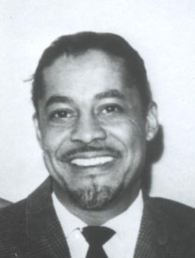
Ernest Aaron Freeman (August 16, 1922 – May 16, 1981) was an American pianist, organist, bandleader, and arranger. He was responsible for arranging many successful rhythm and blues and pop records from the 1950s to the 1970s.

Birth and family

[edit]

Freeman was born in Cleveland, Ohio. His parents were Ernest Freeman Sr. and Gertrude Freeman (née Richardson). He had a brother, Art Freeman, that was in music and recording and sometimes collaborated with Ernest Freeman. Freeman's wife was Isabelle Freeman (née Collier), who also collaborated with him in some songs. Freeman had a daughter Janis.[1]

Career

[edit]

In 1935, he began playing in local Cleveland area nightclubs, and also formed a classical music trio for local social functions with his father and his sister Evelyn. Around 1939, he and Evelyn formed a new band, The Evelyn Freeman Swing Band, with fellow teenagers from Cleveland Central High School. Evelyn played piano, while Ernie played saxophone and also began writing arrangements for the band. The band began a regular engagement at the Circle Ballroom in Cleveland, and broadcast shows for WHK radio station. In 1942, most of the band, apart from Evelyn, joined the US Navy together, and became the first all-black Navy Band, called The Gobs of Swing with Ernie as its leader.[2]

After leaving the navy in 1945, Freeman entered the Cleveland Institute of Music, from which he graduated with a BA degree. In 1946 he moved with his family to Los Angeles, to attend the University of Southern California where he received his master's degree in music composition. In Los Angeles, he played in clubs, accompanying Dinah Washington and Dorothy Dandridge among others, as well as recording under his own name for the Mambo label.[3] After a spell as arranger for Woody Herman he joined the Ernie Fields Orchestra, playing the piano. Other members of the band included saxophonists Earl Bostic and Plas Johnson, guitarist René Hall, and drummer Earl Palmer. In 1951 Freeman also began playing with the Billy Hadnott Sextet, but left in 1954 to form his own combo with Johnson, Palmer and guitarist Irving Ashby. In 1955 they released their first record, "No No Baby" on the Middle-Tone label. They also recorded with a vocal group, the Voices, who included Bobby Byrd and Earl Nelson of the Hollywood Flames (later Bob & Earl).[2]

Freeman played on numerous early rock and R&B sessions in Los Angeles, California, in the 1950s, particularly on the Specialty, Modern, and Aladdin labels, as well as for white artists such as Duane Eddy and Bobby Vee. He played piano on the Platters' "The Great Pretender" in 1955, and began releasing a number of instrumental records of his own, at first on Cash Records.[3] These included "Jivin' Around" (No. 5 on the R&B chart in 1956). In 1956 the Ernie Freeman Combo and the Platters appeared in Columbia Pictures' Rock Around The Clock introduced by Alan Freed. In the same year he was signed by Imperial Records, where he released 29 singles and seven LPs over the next seven years. His first single for the label was "Lost Dreams", which reached No. 7 on the R&B chart. His cover version of Bill Justis' "Raunchy", his biggest solo success, reached No. 4 on the pop chart and No. 1 on the R&B chart in 1957. He returned to the charts in 1958, when his version of "Indian Love Call" reached No. 58 on the Billboard pop chart.[4]

External media
Media links for Ernie Freeman
Images
image icon The Stripper Imperial Records (1962), one of Freeman's album covers
image icon Jivin "O" Round 1958 album cover by Freeman
Audio
audio icon Audio clips of Freeman's music, on deezer.com
Video
video icon Raunchy, by Ernie Freeman in 1957

Freeman performed for the famed Cavalcade of Jazz concert produced by Leon Hefflin Sr. held at the Shrine Auditorium in Los Angeles on August 3, 1958. The other headliners were Little Willie John, Ray Charles, Sam Cooke, and Bo Rhambo.  Sammy Davis Jr. was there to crown the winner of the Miss Cavalcade of Jazz beauty contest. The event featured the top four prominent disc jockey of Los Angeles.[5]

In 1958 the Ernie Fields Orchestra, including Freeman, became the house band for the newly formed Rendezvous record label. In 1961, with Palmer, Johnson, and René Hall, they began recording as B. Bumble and the Stingers, and Freeman played piano on their first hit, "Bumble Boogie" (but not their later hit, "Nut Rocker"). In the same year, Lew Bedell, the owner of Doré Records, suggested to him that he record a version of a Maxwell House advertising jingle.[6] The record, "Percolator (Twist)", an album by Earl Palmer but was inaccurately credited to Billy Joe & the Checkmates. Earl's album rose to no.10 on the Billboard Hot 100 in early 1962.[7] Freeman also performed with and arranged for the Routers and their parallel group the Marketts.[2]

He continued a successful session career in the 1960s, arranging and appearing on material by Frank Sinatra ("That's Life", "Strangers in the Night"), Connie Francis ("Jealous Heart", "Addio, mi' amore"), Dean Martin ("Everybody Loves Somebody", "Somewhere There's a Someone"), Johnny Mathis, and Petula Clark ("This Is My Song", "For Love"), and becoming musical director with Reprise Records. From 1960 to 1969 he arranged virtually every session for Snuff Garrett at Liberty Records including artists Julie London, Bobby Vee, Johnny Burnette, Gene McDaniels, Timi Yuro, and Walter Brennan, as well as a series of over 25 instrumental albums with the title "The 50 Guitars of Tommy Garrett" that featured a who's who of Los Angeles session musicians, Tommy Tedesco, Laurindo Almeida, Howard Roberts, Bob Bain, and Barney Kessel, among many, many others. As a footnote, "National City" by the Joiner Arkansas Junior High School Band charted at 53 in May 1960 was made by a group of studio musicians led by Freeman.[8] Freeman also composed music for several films, including The Cool Ones (1967), The Double Man (1967), The Pink Jungle (1968), and Duffy (1968); and arranged Carol Burnett's 1972 Columbia Records album Carol Burnett Featuring If I Could Write a Song.

In 1970 Freeman contributed string arrangements to Simon and Garfunkel's Bridge Over Troubled Water album before his retirement later in the decade.[2] In 1972, he had a single "The Overture" released on the Oak Records label.[9] Freeman was a board member and served as secretary of the National Academy of Recording Arts & Sciences in 1964.[10]

According to several sources, Freeman suffered from alcoholism.[3] He died at his home in Los Angeles in 1981 from a heart attack and is buried at Forest Lawn Memorial Park, Glendale, California.[2]

Awards

[edit]

Freeman won Grammy awards for his arrangements of Frank Sinatra's "Strangers in the Night" (1966) and Simon and Garfunkel's "Bridge Over Troubled Water" (1970).[11]

Discography

[edit]

Singles (as named performer)

[edit]
Year Single (A-side, B-side)
Both sides from same album except where indicated
Chart Positions Album
US Pop[4] US
R&B
[12]
1955 "Jivin' Around"—Part 1
b/w Part 2
- 5 Jivin "O" Round
"The Shuck"
b/w "Our Love"
- - Non-album tracks
1956 "Lost Dreams"
b/w "Rockin' Around"
- 7 Jivin "O" Round
"Rainy Day"
b/w "Funny Face"
- -
"Spring Fever"
b/w "Walking The Beat"
- -
"A Touch Of The Blues"
b/w "Return To Me"
- -
1957 "Without a Love"
b/w "Night Life"
- - Non-album tracks
"River Boat"
b/w "Swing It" (Non-album track)
- - Twistin' Time
"Dumplin's"
b/w "Beautiful Weekend"
75 -
"Raunchy"
b/w "Puddin'" (Non-album track)
4 1 Raunchy
1958 "The Tuttle"
b/w "Leaps and Bounds"
- - Non-album tracks
"Theme From Igor"
b/w "Shape Up"
- -
"Indian Love Call"
b/w "Summer Serenade"
59 - Dreaming With Freeman
"Rose Marie"
b/w "After Sunset" (from Dreaming With Freeman)
- - Non-album tracks
"Jamboree"
b/w "Junior Jive"
- -
"School Room Rock"
b/w "Blues After Hours"
- -
1959 "Live It Up"
b/w "Whispering Hope"
- -
"Marshmallows, Popcorn and Soda Pop"
b/w "Honey"
- - Twistin' Time
"A Summer Love"
b/w "Always With You"
- - Non-album tracks
"One More Time Around"
b/w "Lost Dreams"
- -
"Big River"
b/w "Night Sounds" (from Twistin' Time)
- -
1960 "Beautiful Obsession"
b/w "Tenderfoot"
Shown as "Sir Chauncey and His Exciting Strings"
- -
"Rockin' Red Wing"
b/w "Dark Eyes"
106 -
"Prayers"
b/w "Autumn and Eve"
- -
"Theme from The Dark at the Top of the Stairs"
b/w "Come On Home" (from Raunchy)
70 - The Dark At The Top Of The Stairs
"Midi-Midinette"
b/w "Beyond Our Love"
Shown as "Sir Chauncey"
- - Non-album tracks
"Hawaiian Eye"
b/w "Heartbreak Hotel"
- -
1961 "That's All"
b/w "Swamp Meeting"
- - Raunchy
"Warsaw Concerto"
b/w "Theme From Return To Peyton Place"
- - Non-album tracks
"The Swingin' Preacher"
b/w "Conquest" (from Twistin' Time)
- -
1962 "The Twist"
b/w "Shine On, Harvest Moon" (from The Stripper)
93 - Twistin' Time
"What Am I Living For"
b/w "I Didn't Want To Do It"
- - The Stripper
"The Stripper"
b/w "I Hear You Knocking" (Non-album track)
- -
"The Freeloader"
b/w "Say It Isn't So" (from Ernie Freeman Plays Irving Berlin)
- - Non-album tracks
"Half as Much"
b/w "I'm Sorry for You, My Friend"
- - Soulful Sound Of Country Classics
1965 "Raunchy '65"
b/w "Jivin' Around"
- - Non-album tracks

Selected albums

[edit]

As lead musician

[edit]
  • Plays Irving Berlin (Imperial, 1956)
  • Jivin' O Round (Imperial, 1957)
  • Raunchy (Imperial, 1957)
  • Theme from The Dark at the Top of the Stairs (Imperial, 1960)
  • Twistin' Time (Imperial, 1962)
  • Limbo Dance Party (Liberty, 1962)
  • Ernie Freeman at the Organ (Liberty, 1963)
  • Hit Maker (ABC, 1967)

Others

[edit]

."Stay With Me" Vic Damone 1966 RCA Victor.

.Album, "THAT'S Life!" Arranger & Conductor. Vocals by Frank Sinatra. Reprise 1966

References

[edit]
[edit]
Revisions and contributorsEdit on WikipediaRead on Wikipedia
from Grokipedia
Ernie Freeman (August 16, 1922 – May 16, 1981) was an American , arranger, conductor, and composer renowned for his contributions to , pop, , and film music during the mid-20th century. Born in , , to Ernest and Gertrude Freeman, he graduated from Central High School and earned a bachelor's degree from the before obtaining a master's degree from the . His early career included performing with his sister Evelyn's "Swing Club" dance band in and working as a and arranger for vocalists such as and . After , Freeman relocated to , where he became a prominent studio musician and arranger, joining Imperial Records in the 1950s to conduct and arrange sessions. He later served as musical director for Frank Sinatra's from 1966 to 1971, contributing to hits like "" and "Everybody Loves Somebody" for . Freeman also composed scores for films including (1967) and The Pink Jungle (1968), conducted Dick Clark's concerts for three years, and arranged music for television specials featuring artists like and . Freeman's arrangements earned him two Grammy Awards in the category of Best Arrangement Accompanying Vocalist(s): one in 1967 for Frank Sinatra's "" and another in 1971 for Simon & Garfunkel's "." Over his career, he amassed credits on 60 gold albums and 150 gold singles, while releasing his own instrumental albums such as Limbo Dance Party (1963) and Comin' Home Baby (1963) on Liberty Records. He was married to Isabelle Collier and had a , Janis, and passed away in , , survived by his wife and .

Early Life

Birth and Family

Ernest Aaron "Ernie" Freeman was born on August 16, 1922, in , , to Ernest Freeman Sr. and Gertrude Evelyn Richardson Freeman, both of African American descent. He was the younger brother of pianist and arranger Evelyn Freeman Roberts, born in 1919, with whom he shared an early interest in music; the siblings, along with their father—a —performed together as "The Freeman Family" at local social events in Cleveland. Freeman grew up in Cleveland during the Great Depression era, in a family environment that fostered musical involvement from a young age.

Education and Early Influences

Freeman's early musical development was rooted in Cleveland's vibrant and scene during the 1930s and 1940s. As a young pianist, he gained practical experience by performing in local ensembles, including the "Swing Club," a dance band organized by his sister Evelyn Freeman. This amateur group provided Freeman with his initial opportunities to explore arrangement and improvisation in a live setting, honing his skills amid the swing era's popularity. In 1940, shortly after graduating from Central High School, Freeman enrolled at the , where he pursued formal training in music. His studies were interrupted by , during which he enlisted in the U.S. Navy in 1942 and led the all-Black "Gobs of Swing" band at the Bunker Hill Naval Air Station in , an experience that further solidified his ensemble playing abilities. Resuming his education after the war in 1945, he earned a from the institute in 1946, focusing on composition and performance fundamentals. Following his military service, Freeman relocated to in 1946 with his wife and young daughter to attend the . There, he obtained a in music composition and in 1949, building on his earlier training to develop advanced techniques in and scoring. This academic progression, combined with his immersion in Cleveland's swing culture—characterized by radio broadcasts and local performances of ensembles led by figures like and Count Basie—shaped his versatile style blending , classical, and popular elements.

Career

Early Career and Session Work

Following his service in the U.S. Navy during , Freeman relocated to in 1946 to attend the , where he earned a in music composition. In the late 1940s and early 1950s, he performed as a in Los Angeles clubs, specializing in light jazz and providing accompaniment for prominent vocalists including and . By the mid-1950s, Freeman entered the studio scene, establishing himself as a session pianist for independent labels such as Specialty, Modern, and Aladdin Records. Freeman's early session contributions included his piano work on The Platters' 1955 recording of "The Great Pretender," where he delivered the song's iconic stuttering piano riffs. He also participated in numerous other R&B sessions during the decade, supporting emerging artists and contributing to the foundational sound of through his rhythmic and improvisational keyboard parts. These anonymous roles allowed him to collaborate across a range of R&B acts, building his reputation in ' vibrant independent recording ecosystem. In January 1956, Freeman was signed by Imperial Records, where he served as a staff arranger and , arranging and performing on various label releases while developing his instrumental style. As a operating in an industry rife with and limited opportunities for African American professionals, Freeman faced significant barriers in securing consistent studio work amid the era's discriminatory practices. Through these session experiences, he refined a versatile approach that integrated phrasing, R&B grooves, and early rock energy, adapting seamlessly to the demands of uncredited ensemble performances.

Solo Recordings and Hits

In 1954, Ernie Freeman formed the Ernie Freeman Combo, featuring on , on drums, and Irving Ashby on guitar, marking his transition from session work to leading his own group. The combo's debut single, "No No Baby," appeared on Cash Records in 1955, but their breakthrough came with "Jivin' Around" (Parts 1 and 2) in early 1956, an upbeat riffing on Bill Doggett's "." This track climbed to No. 5 on Billboard's R&B chart, establishing Freeman's signature rocked-up R&B sound. The success of "Jivin' Around" led to a contract with Imperial Records in January 1956, where Freeman debuted as a solo artist with the single "Lost Dreams," which reached No. 25 on the R&B chart. His biggest hit followed in 1957 with "Raunchy," an organ-led adaptation of Bill Justis's Phillips International ; Freeman's version peaked at No. 4 on the pop chart, No. 1 on the R&B chart, and No. 11 on the country chart, selling over a million copies and earning gold certification. This track exemplified Freeman's piano- and Hammond organ-driven style, blending with emerging rock elements to appeal to both R&B and pop audiences. Freeman continued releasing singles on Imperial through the early 1960s, including twist-influenced numbers like his arrangement and co-write of "Percolator (Twist)" for Billy Joe & The Checkmates in 1961, capturing the dance craze's energy with percolating organ riffs. His recordings emphasized infectious, grooves that bridged R&B traditions and rock 'n' roll, contributing to seven albums issued by Imperial between 1956 and 1963, such as Jivin' O Round (1957) and Twistin' Time (1961). These efforts solidified his commercial peak as a , with "Raunchy" remaining his most enduring solo success.

Arrangements for Major Artists

In the , Ernie Freeman established himself as a prominent arranger and conductor for major recording artists, particularly through his orchestral work at , where he served as musical director from 1966 to 1971 and collaborated with on several key albums. His string arrangement for Sinatra's "" from the 1966 album of the same name earned him a Grammy Award for Best Arrangement Accompanying a Vocalist or Instrumentalist, contributing to the track's massive commercial success as a number-one hit. Freeman also provided lush, orchestral backings for Sinatra's Softly, as I Leave You (1964), blending big-band elements with contemporary pop sensibilities on tracks like the title song and "Then Suddenly Love," which showcased his ability to enhance Sinatra's vocal style with sweeping strings and brass. These contributions marked Freeman's shift toward more sophisticated, easy-listening arrangements that defined much of his later career. Freeman's orchestral expertise extended to other icons, including his Grammy-winning string arrangements for Simon & Garfunkel's "" on their 1970 album of the same name, where he crafted dramatic, gospel-infused swells that amplified the song's emotional depth and helped it become a chart-topping single. He also worked extensively with . at Reprise, arranging swinging big-band charts for albums like Lonely Is the Name (1968), featuring scat-heavy tracks supported by Freeman's energetic orchestrations. For , Freeman arranged the 1961 single "Tonight My Love, Tonight," delivering a smooth, framework that complemented Anka's crooning delivery and reached the upper echelons of the charts. These sessions exemplified Freeman's versatility in tailoring arrangements to diverse artists, from pop crooners to dynamic performers. Throughout the 1960s and into the 1970s, Freeman transitioned toward orchestral pop and easy-listening genres, arranging virtually every session for producer at from 1960 to 1969, which included work with pop acts like and . His contributions at also encompassed , where he provided accompanying orchestrations that bolstered Martin's laid-back style on mid-decade recordings. Despite his declining output as a solo performer, Freeman maintained a prolific pace as an arranger, amassing credits on over 150 recordings for major labels like Imperial, , and , many of which achieved gold status and underscored his enduring influence in the industry until his retirement in the late 1970s.

Awards and Recognition

Grammy Awards

Ernie Freeman received two for his work as an arranger, both in the category of Best Arrangement Accompanying Vocalist(s). His first win came at the in 1967 for the orchestral arrangement of Frank Sinatra's "," which served as the title track for both the single and the of the same name. Freeman's arrangement featured lush string sections and subtle rhythmic elements that enhanced Sinatra's vocal performance, contributing to the song's massive commercial success and its status as a defining pop standard of the era. In this arrangement, Freeman handled the conducting and scoring, drawing on his experience in session work to blend big-band influences with contemporary pop , a style that helped bridge traditional with 1960s mainstream radio hits. The award recognized the single's version specifically, though the same arrangement underpinned the album track, underscoring Freeman's pivotal role in elevating the composition's emotional depth and accessibility. Freeman's second Grammy arrived at the 13th Annual Grammy Awards in 1971 for his contributions to the string arrangement on Simon & Garfunkel's "Bridge Over Troubled Water," the title track from their acclaimed album. Shared with arrangers Jimmie Haskell, , , and , Freeman's input focused on the expansive orchestral layers that amplified the song's gospel-inspired swells and piano-driven melody, creating a symphonic pop that became emblematic of the duo's farewell recording. This win highlighted Freeman's versatility in adapting intricate arrangements to support folk-rock vocals, further solidifying his reputation for orchestral adaptations in . These awards, Freeman's only Grammy nominations, celebrated his ability to craft innovative orchestral frameworks that supported leading vocalists, influencing the production standards for pop recordings during a transitional period in the genre. No additional Grammy recognitions were recorded for Freeman throughout his career.

Gold Certifications and Other Honors

Freeman's arrangements and work significantly contributed to the commercial success of numerous recordings, amassing a total of 60 albums and 150 singles over the course of his career. Notable examples include his orchestration for Frank Sinatra's 1966 album , which earned RIAA platinum certification for sales exceeding one million units, and collaborations with , , , , , , , and . His own 1957 instrumental hit "Raunchy" reached number one on the R&B and number four on the pop , marking a key personal milestone in his discography. Beyond these certifications, Freeman received industry tributes for his foundational role in studio music scenes. Cleveland music heritage sources, such as the Encyclopedia of Cleveland History, highlight his rise from local origins to Hollywood prominence as a lasting contribution to the city's musical legacy. Posthumously, Freeman's influence has been celebrated through archival reissues and media features. In 1997, Ace Records released the compilation Raunchy: Ernie Freeman & His Combo, remastering his early Imperial sides for renewed appreciation. He is prominently mentioned in the 2008 documentary The Wrecking Crew, directed by Denny Tedesco, which chronicles the era's top session musicians and credits Freeman's arrangements for hits by Sinatra and others. In 2023, a book and film event titled Ernie Freeman: The Man in His Time by Agin A. Shaheed was held by the Southern Alliance for Racial , recognizing his achievements as a two-time Grammy winner and his role in breaking the color barrier in the Hollywood recording industry. These efforts underscore his enduring impact on pop and R&B production from the through the .

Discography

Singles as Named Performer

Ernie Freeman released a total of 29 singles with Imperial Records between 1956 and 1963, primarily as leader of the Ernie Freeman Combo, showcasing his skills as a and in formats. These recordings spanned R&B-driven jump instrumentals in the mid-1950s to upbeat twist-era tracks in the early , reflecting the evolving landscape. Among his most successful singles were "Jivin' Around" (Imperial X5421), which reached No. 5 on the R&B chart in 1956, featuring energetic riffs and a combo that captured the raw excitement of early rock-influenced R&B. His cover of "Raunchy" (Imperial X5474) in 1957 became his biggest hit, peaking at No. 4 on the pop chart and No. 1 on the R&B chart; this adaptation transformed Bill Justis's original saxophone-led into a - and organ-dominated version with a sultry, swinging vibe that appealed broadly. Later singles included tracks adapting to , though none matched the chart success of his earlier work. Freeman's singles often involved creative adaptations of existing hits, allowing him to infuse his signature keyboard style into familiar tunes while maintaining commercial viability through Imperial's promotion. This approach, evident in the piano/organ twist on "Raunchy," helped bridge R&B roots with pop accessibility, contributing to his role as a prolific in the scene.
TitleYearLabel/CatalogPeak Chart Position
Jivin' Around1956Imperial X5421No. 5 R&B
Raunchy1957Imperial X5474No. 4 Pop / No. 1 R&B
1962Imperial 5841-

Albums as Leader

Ernie Freeman's albums as leader included seven LPs released on Imperial Records from 1956 to 1962, emphasizing his role as a and in the instrumental pop and R&B landscape. These recordings highlighted his versatile arrangements, often blending piano-driven melodies with rhythmic ensembles, and evolved stylistically over time. He also released additional albums on other labels later in his career. Early releases focused on rock-oriented and upbeat R&B interpretations. His debut, Plays (LP-9022, 1956), featured sophisticated covers of the composer's standards like "Blue Skies" and "," showcasing Freeman's clean technique and light swing elements. The following year, Jivin' O Round (LP-9030, 1957) shifted toward energetic rock 'n' roll, including tracks like "Jivin' Around" that captured the era's lively vibe with driving rhythms and horn sections. Similarly, Raunchy (LP-9148, 1957) capitalized on the title track's popularity, presenting instrumental takes on contemporary hits with a raw, saxophone-infused edge. Subsequent albums incorporated more varied pop standards while maintaining an instrumental focus. Sky High (LP-9101, 1958) explored airy, optimistic themes through organ and piano arrangements of tunes like "Tuxedo Junction." Theme from The Dark at the Top of the Stairs (LP-9174, 1959) drew from and soundtracks, blending dramatic strings with Freeman's keyboard work for a cinematic feel. By the early 1960s, releases like Twistin' Time (LP-9157, 1961) adapted to dance crazes with twist-infused versions of pop songs, while The Stripper (LP-9193, 1962) marked a lounge-style turn, featuring sultry, exotic s inspired by David Rose's hit. Freeman's later albums as leader included Limbo Dance Party (Liberty LRP-3240, 1963) and Comin' Home Baby (Liberty LRP-3272, 1963), which featured instrumental takes on popular tunes suited to emerging dance trends. He also released Hit Maker (Capitol ST 2764, 1967). These albums received moderate commercial attention, largely driven by tie-in singles such as "Raunchy," which peaked at No. 4 on the Billboard Hot 100 and boosted the parent LP's visibility. Freeman's work, particularly the later LPs, contributed to the space age pop genre through their polished, escapist soundscapes that evoked modernity and leisure.
TitleYearCatalog NumberLabel
Plays Irving Berlin1956LP-9022Imperial
Jivin' O Round1957LP-9030Imperial
Raunchy1957LP-9148Imperial
Sky High1958LP-9101Imperial
Theme from The Dark at the Top of the Stairs1959LP-9174Imperial
Twistin' Time1961LP-9157Imperial
1962LP-9193Imperial
Limbo Dance Party1963LRP-3240
Comin' Home Baby1963LRP-3272
Hit Maker1967ST 2764Capitol

Notable Session Contributions

Ernie Freeman contributed to over 200 recording sessions as a , arranger, and conductor throughout his career, spanning labels such as Capitol, , Specialty, Modern, and Aladdin from the 1950s R&B era to pop productions. One of his prominent arrangements was the title track of Frank Sinatra's album Strangers in the Night (), where Freeman crafted the orchestral backing that helped the single reach number one on the Hot 100. In the early 1950s, Freeman provided on sessions for , including their breakthrough hit "The Great Pretender" (1955, Mercury), contributing the distinctive stuttering riffs that became a signature element of the track. Later, in 1970, he conducted the string arrangements for Simon & Garfunkel's (Columbia), enhancing the title song's emotional depth and earning a Grammy for Best Arrangement Accompanying Vocalist(s). Freeman's supportive roles extended to gold-certified projects, such as his arrangement and conduction for Paul Anka's single "Tonight My Love, Tonight" (1961, ABC-Paramount), which peaked at number 17 on the and contributed to Anka's string of commercial successes. He also played uncredited organ parts on various early rock recordings, including sessions for Los Angeles indie labels where his keyboard work underpinned emerging R&B and rock acts without formal billing.
ArtistReleaseYearLabelContribution
(title track)1966RepriseArranger
""1955MercuryPianist
(title track)1970ColumbiaConductor (strings)
"Tonight My Love, Tonight"1961ABC-ParamountArranger, Conductor

References

Add your contribution
Related Hubs
User Avatar
No comments yet.