


Community hub
Recent from talks
Contribute something
Nothing was collected or created yet.
Light meter
View on Wikipedia | This article needs additional citations for verification. (September 2012) |

A light meter (or illuminometer) is a device used to measure the amount of light. In photography, an exposure meter is a light meter coupled to either a digital or analog calculator which displays the correct shutter speed and f-number for optimum exposure, given a certain lighting situation and film speed. Similarly, exposure meters are also used in the fields of cinematography and scenic design, in order to determine the optimum light level for a scene.
Light meters also are used in the general field of architectural lighting design to verify proper installation and performance of a building lighting system, and in assessing the light levels for growing plants.
If a light meter is giving its indications in luxes, it is called a "luxmeter".[1]
Evolution
[edit]- Photographic exposure meters
-
 Watkins Bee Meter - a type of actinometer
 -
![Leudi extinction meter[2]](//upload.wikimedia.org/wikipedia/commons/thumb/1/17/Leudi_extinction_meter.jpg/250px-Leudi_extinction_meter.jpg) Leudi extinction meter[2]
Leudi extinction meter[2] -
 Metrophot
 -
 Norwood Director
Model No. 56646 -
 Norwood Director
Pat. 2,214,238 -
 Sekonic "Twinmate" L208
 -
 Kodalux
 -
 Tessina Meter
 -
 Voigtlander VC Meter
 -
 Leica IIIC with Voigtlander VC Meter II
 -
 Sekonic L-358 "Flash Master"

![Leudi extinction meter[2]](https://en.wikipedia.org/wiki/File:Leudi_extinction_meter.jpg)


Actinometers
[edit]
The earliest exposure meters were called actinometers (not to be confused with the scientific instrument with the same name), described as early as 1840[3]: 415 but developed in the late 1800s after commercial photographic plates became available with consistent sensitivity. These photographic actinometers used light-sensitive paper; the photographer would measure the time required for the paper to darken to a control value, providing an input to a mechanical calculation of shutter speed and aperture for a given plate number.[4]: 69 They were popular between approximately 1890 and 1920.[5]
Extinction types
[edit]_(15494003563).jpg)
The next exposure meters, developed at about the same time[3]: 415 but not displacing actinometers in popularity until the 1920s and 1930s, are known as extinction meters, evaluating the correct exposure settings by variable attenuation.[5] One type of extinction meter contained a numbered or lettered row of neutral density filters of increasing density. The photographer would position the meter in front of their subject and note the filter with the greatest density that still allowed incident light to pass through. In another example, sold as Heyde's Aktino-Photometer starting from the early 1900s, the photographer views the scene through an eyepiece and turns the meter to vary the effective density until the scene can no longer be seen.[7] The letter or number corresponding to the filter strength causing the "extinction" of the scene was used as an index into a chart of appropriate aperture and shutter speed combinations for a given film speed.[4]: 72
Extinction meters tended to provide inconsistent results because they depended on subjective interpretation and the light sensitivity of the human eye, which can vary from person to person.[8]
Photoelectric types
[edit]
Starting in 1932,[9]: 20 electronic light meters removed the human element and relied on technologies incorporating (in chronological order) selenium, CdS (1960s), and silicon (semiconductor, 1970s) photodetectors.[10] Most modern light meters use silicon sensors.[11]: 91 They indicate the exposure either with a needle galvanometer or on an LCD screen.
Selenium light meters use sensors that are photovoltaic: they generate a voltage proportional to light exposure. Selenium sensors generate enough voltage for direct connection to a meter; they need no battery to operate and this made them very convenient in completely mechanical cameras.[3]: 416 [10]: 87–88 Selenium sensors however cannot measure low light accurately (ordinary lightbulbs can take them close to their limits) and are altogether unable to measure very low light, such as candlelight, moonlight, starlight etc.[12]: 56
CdS light meters use a photoresistor sensor whose electrical resistance decreases proportionately to the intensity of light exposure. These require a battery to operate,[10]: 89–90 but are significantly more sensitive to low light, able to detect lighting levels approximately 1⁄100 of the lower sensitivity limit of selenium cells.[3]: 417 However, CdS sensors fell out of favor due to their slower response and extended sensitivity to red and infrared wavelengths.[3]: 417 [12]: 58
Semiconductor sensors are also photovoltaic, but the voltage generated is much weaker than selenium cells and semiconductor-based light meters need an amplification circuit and therefore require a power source such as batteries to operate. These are usually named after the materials and filtration used to ensure the spectral response is similar to the human eye or photographic film, such as 'Silicon Blue Cell' (SBC) or 'GaAs'.[12]: 59

Many modern consumer still and video cameras include a built-in meter that measures a scene-wide light level and are able to make an approximate measure of appropriate exposure based on that. Photographers working with controlled lighting and cinematographers use handheld light meters to precisely measure the light falling on various parts of their subjects and use suitable lighting to produce the desired exposure levels.
Reflected and incident measurements
[edit]Exposure meters generally are sorted into reflected-light or incident-light types, depending on the method used to measure the scene.
Reflected-light meters measure the light reflected by the scene to be photographed.[10] All in-camera meters are reflected-light meters. Reflected-light meters are calibrated to show the appropriate exposure for "average" scenes.[12]: 74 An unusual scene with a preponderance of light colors or specular highlights would have a higher reflectance; a reflected-light meter taking a reading would incorrectly compensate for the difference in reflectance and lead to underexposure. Badly underexposed sunset photos are common exactly because of this effect: the brightness of the setting sun fools the camera's light meter and, unless the in-camera logic or the photographer take care to compensate, the picture will be grossly underexposed and dull.

This pitfall (but not in the setting-sun case) is avoided by incident-light meters which measure the amount of light falling on the subject using a diffuser with a flat or (more commonly) hemispherical field of view placed on top of the light sensor.[13] Because the incident-light reading is independent of the subject's reflectance, it is less likely to lead to incorrect exposures for subjects with unusual average reflectance. Taking an incident-light reading requires placing the meter at the subject's position and pointing it in the general direction of the camera, something not always achievable in practice, e.g., in landscape photography where the subject distance approaches infinity.
.jpg)
Another way to avoid under- or over-exposure for subjects with unusual reflectance is to use a spot meter: a specialized reflected-light meter that measures light in a very tight cone, typically with a one degree circular angle of view.[14] An experienced photographer can take multiple readings over the shadows, midrange, and highlights of the scene to determine optimal exposure, using systems like the Zone System.[11]: 102, 126
Many modern cameras include sophisticated multi-segment metering systems that measure the luminance of different parts of the scene to determine the optimal exposure.[11]: 102 When using a film whose spectral sensitivity is not a good match to that of the light meter, for example orthochromatic black-and-white or infrared film, the meter may require special filters and re-calibration to match the sensitivity of the film.[11]: 89–92

There are other types of specialized photographic light meters. Flash meters are used in flash photography to verify correct exposure. Color meters are used where high fidelity in color reproduction is required. Densitometers are used in photographic reproduction.
Exposure meter calibration
[edit]In most cases, an incident-light meter will cause a medium tone to be recorded as a medium tone, and a reflected-light meter will cause whatever is metered to be recorded as a medium tone. What constitutes a "medium tone" depends on meter calibration and several other factors, including film processing or digital image conversion.
Meter calibration establishes the relationship between subject lighting and recommended camera settings. The calibration of photographic light meters is covered by ISO 2720:1974.
Exposure equations
[edit]For reflected-light meters, camera settings are related to ISO speed and subject luminance by the reflected-light exposure equation:

where
- is the relative aperture (f-number)
- is the exposure time ("shutter speed") in seconds
- is the average scene luminance
- is the ISO arithmetic speed
- is the reflected-light meter calibration constant


For incident-light meters, camera settings are related to ISO speed and subject illuminance by the incident-light exposure equation:

where
- is the illuminance
- is the incident-light meter calibration constant


Calibration constants
[edit]Determination of calibration constants has been largely subjective; ISO 2720:1974 states that
The constants and shall be chosen by statistical analysis of the results of a large number of tests carried out to determine the acceptability to a large number of observers, of a number of photographs, for which the exposure was known, obtained under various conditions of subject manner and over a range of luminances.
In practice, the variation of the calibration constants among manufacturers is considerably less than this statement might imply, and values have changed little since the early 1970s.
ISO 2720:1974 recommends a range for of 10.6 to 13.4 with luminance in cd/m2. Two values for are in common use: 12.5 (Canon, Nikon, and Sekonic[15]) and 14 (Minolta,[16] Kenko,[16] and Pentax); the difference between the two values is approximately 1⁄6 EV.
The earliest calibration standards were developed for use with wide-angle averaging reflected-light meters (Jones and Condit 1941). Although wide-angle average metering has largely given way to other metering sensitivity patterns (e.g., spot, center-weighted, and multi-segment), the values for determined for wide-angle averaging meters have remained.
The incident-light calibration constant depends on the type of light receptor. Two receptor types are common: flat (cosine-responding) and hemispherical (cardioid-responding). With a flat receptor, ISO 2720:1974 recommends a range for of 240 to 400 with illuminance in lux; a value of 250 is commonly used. A flat receptor typically is used for measurement of lighting ratios, for measurement of illuminance, and occasionally, for determining exposure for a flat subject.
For determining practical photographic exposure, a hemispherical receptor has proven more effective. Don Norwood, inventor of incident-light exposure meter with a hemispherical receptor, thought that a sphere was a reasonable representation of a photographic subject. According to his patent (Norwood 1938), the objective was
to provide an exposure meter which is substantially uniformly responsive to light incident upon the photographic subject from practically all directions which would result in the reflection of light to the camera or other photographic register.
and the meter provided for "measurement of the effective illumination obtaining at the position of the subject."
With a hemispherical receptor, ISO 2720:1974 recommends a range for of 320 to 540 with illuminance in lux; in practice, values typically are between 320 (Minolta) and 340 (Sekonic). The relative responses of flat and hemispherical receptors depend upon the number and type of light sources; when each receptor is pointed at a small light source, a hemispherical receptor with = 330 will indicate an exposure approximately 0.40 step greater than that indicated by a flat receptor with = 250. With a slightly revised definition of illuminance, measurements with a hemispherical receptor indicate "effective scene illuminance."
Calibrated reflectance
[edit]It is commonly stated that reflected-light meters are calibrated to an 18% reflectance,[17] but the calibration has nothing to do with reflectance, as should be evident from the exposure formulas. However, some notion of reflectance is implied by a comparison of incident- and reflected-light meter calibration.
Combining the reflected-light and incident-light exposure equations and rearranging gives

Reflectance is defined as


A uniform perfect diffuser (one following Lambert's cosine law) of luminance emits a flux density of ; reflectance then is

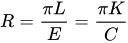
Illuminance is measured with a flat receptor. It is straightforward to compare an incident-light measurement using a flat receptor with a reflected-light measurement of a uniformly illuminated flat surface of constant reflectance. Using values of 12.5 for and 250 for gives
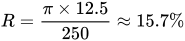
With a of 14, the reflectance would be 17.6%, close to that of a standard 18% neutral test card. In theory, an incident-light measurement should agree with a reflected-light measurement of a test card of suitable reflectance that is perpendicular to the direction to the meter. However, a test card seldom is a uniform diffuser, so incident- and reflected-light measurements might differ slightly.
In a typical scene, many elements are not flat and are at various orientations to the camera, so that for practical photography, a hemispherical receptor usually has proven more effective for determining exposure. Using values of 12.5 for and 330 for gives
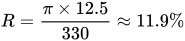
With a slightly revised definition of reflectance, this result can be taken as indicating that the average scene reflectance is approximately 12%. A typical scene includes shaded areas as well as areas that receive direct illumination, and a wide-angle averaging reflected-light meter responds to these differences in illumination as well as differing reflectances of various scene elements. Average scene reflectance then would be

where "effective scene illuminance" is that measured by a meter with a hemispherical receptor.
ISO 2720:1974 calls for reflected-light calibration to be measured by aiming the receptor at a transilluminated diffuse surface, and for incident-light calibration to be measured by aiming the receptor at a point source in a darkened room. For a perfectly diffusing test card and perfectly diffusing flat receptor, the comparison between a reflected-light measurement and an incident-light measurement is valid for any position of the light source. However, the response of a hemispherical receptor to an off-axis light source is approximately that of a cardioid rather than a cosine, so the 12% "reflectance" determined for an incident-light meter with a hemispherical receptor is valid only when the light source is on the receptor axis.
Cameras with internal meters
[edit]Calibration of cameras with internal meters is covered by ISO 2721:1982; nonetheless, many manufacturers specify (though seldom state) exposure calibration in terms of , and many calibration instruments (e.g., Kyoritsu-Arrowin multi-function camera testers[18] ) use the specified to set the test parameters.
Exposure determination with a neutral test card
[edit]If a scene differs considerably from a statistically average scene, a wide-angle averaging reflected-light measurement may not indicate the correct exposure. To simulate an average scene, a substitute measurement sometimes is made of a neutral test card, or gray card.
At best, a flat card is an approximation to a three-dimensional scene, and measurement of a test card may lead to underexposure unless adjustment is made. The instructions for a Kodak neutral test card recommend that the indicated exposure be increased by 1⁄2 step for a frontlighted scene in sunlight. The instructions also recommend that the test card be held vertically and faced in a direction midway between the Sun and the camera; similar directions are also given in the Kodak Professional Photoguide. The combination of exposure increase and the card orientation gives recommended exposures that are reasonably close to those given by an incident-light meter with a hemispherical receptor when metering with an off-axis light source.
In practice, additional complications may arise. Many neutral test cards are far from perfectly diffuse reflectors, and specular reflections can cause increased reflected-light meter readings that, if followed, would result in underexposure. It is possible that the neutral test card instructions include a correction for specular reflections.
Use in illumination
[edit]Light meters or light detectors are also used in illumination. Their purpose is to measure the illumination level in the interior and to switch off or reduce the output level of luminaires. This can greatly reduce the energy burden of the building by significantly increasing the efficiency of its lighting system. It is therefore recommended to use light meters in lighting systems, especially in rooms where one cannot expect users to pay attention to manually switching off the lights. Examples include hallways, stairs, and big halls.
There are, however, significant obstacles to overcome in order to achieve a successful implementation of light meters in lighting systems, of which user acceptance is by far the most formidable. Unexpected or too frequent switching and too bright or too dark rooms are very annoying and disturbing for users of the rooms. Therefore, different switching algorithms have been developed:
- difference algorithm, where lights are switched on at a lower light level than they switch off, thus taking ensuring the difference between the light level of the 'on' state and 'off' state is not too big
- time delay algorithms:
- a certain amount of time must pass since the last switch
- a certain amount of time at a sufficient illumination level must pass.
Other uses
[edit]In Scientific Research & Development uses, a light meter consists of a radiometer (the electronics/readout), a photo-diode or sensor (generates an output when exposed to electromagnetic radiation/light) a filter (used to modify the incoming light so only the desired portion of incoming radiation reaches the sensor) and a cosine correcting input optic (assures the sensor can see the light coming in from all directions accurately).
When the word light meter or photometer is used in place of radiometer or optometer, or it is often assumed the system was configured to see only visible light. Visible light sensors are often called illuminance or photometric sensors because they have been filtered to be sensitive only to 400-700 nanometers (nm) mimicking the human eyes' sensitivity to light. How accurately the meter measures often depends on how well the filtration matches the human eyes' response.
The sensor will send a signal to the meter that is proportional to the amount of light that reaches the sensor after being collected by the optics and passing through the filter. The meter then converts the incoming signal (typically current or voltage) from the sensor into a reading of calibrated units such as Foot-Candles (fc) or Lux (lm/m^2). Calibration in fc or lux, is the second most important feature of a light meter. It not only converts the signal from V or mA, but it also provides accuracy and unit to unit repeatability. National Institute of Standards and Technology (NIST) traceability and ISO/IEC 17025 accreditation are two well known terms that verify the system includes a valid calibration.
The meter/radiometer/photometer portion may have many features including:
Zero: subtracts ambient/background light levels, or stabilize the meter to the working environment
Hold: freezes the value on the display.
Range: for systems that are not linear and auto ranging this function allows the user to select the portion of the meter electronics that best handles the signal level in use.
Units: For illuminance the units are typically only lux and foot-candles but many light meters can also be used for UV, VIS and IR applications so the readout could change to W/cm^2, candela, Watts etc.
Integrate: sums up the values into a dose or exposure level i.e. lux*sec or J/cm^2.
Along with having a variety of features, a light meter may also be usable for a variety of applications. These may include the measurement of other bands of light such UVA, UVB, UVC and Near IR. For example, UVA and UVB light meters are used for phototherapy or treatment of skin conditions, germicidal radiometers are used for measuring the UVC level from lamps used for disinfection and sterilization, luminance meters are used to measure the brightness of a sign, display or exit sign, PAR quantum sensors are used to measure how much of a given light source's emission will help plants grow, and UV-curing radiometers test how much of the lights emission is effective for hardening a glue, plastic, or protective coating.
Some light meters also have the ability to provide a readout in many different units. Lux and footcandles are the common units for visible light, but so are Candelas, Lumens, and Candela per square meter. In the realm of disinfection, UVC is typically measured in watts per square centimeter, or watts for a given individual lamp assembly, whereas systems used in the context of the curing of coatings often provide readouts in Joules per Square centimeter. Regular measurements of UVC light intensity thus can serve to provide assurance of proper disinfection of water and food-preparation surfaces, or reliable coating hardness in painted products.
Although a light meter can take the form of a very simple handheld tool with one-button operation, there are also many advanced light-measurement systems available for use in numerous different applications. These can be incorporated into automated systems that can, for example, wipe lamps clean when a certain reduction in output is detected, or that can trigger an alarm when lamp-failure occurs.
See also
[edit]
- Selenium meter
- Photometer | Photodetector
- Colorimetry | Photometry | Radiometry
- Light value
- Photomultiplier tubes for detecting light at very low levels.
- PIN diode solid state electronic devices for detecting incident light.
References
[edit]- ^ Merriam-Webster Dictionary - luxmeter
- ^ "Leudi, 1934". Early Photography. Retrieved 8 September 2023.
- ^ a b c d e Clerc, Louis-Philippe; Mannheim, L.A. (1970). Spencer, D.A. (ed.). Photography: Theory and Practice. Vol. 3: Films | Subject and Exposure (Completely revised ed.). Focal Press. ISBN 0-240-50706-1.
- ^ a b Fraprie, Frank R., ed. (1915). The Secret of Exposure. Practical Photography. Vol. 1. Boston, Massachusetts: American Photographic Publishing Company. Retrieved 8 September 2023.
In [the Heyde] instrument, blue-glass prisms are used to cut out the light reflected from the object. One looks through the eyepiece and turns the thicker portion of the prisms (one or both, according to the luminosity of the object) into position until the shadow details are suppressed. By reference to Tables, the necessary exposure may readily be found.
- ^ a b "Exposure Meters". Early Photography. Retrieved 8 September 2023.
- ^ "Dremo, 1931". Early Photography. Retrieved 8 September 2023.
- ^ "Heyde Aktino-Photometer, 1904". Early Photography. Retrieved 8 September 2023.
- ^ Dunn, Jack F.; Wakefield, George L. (1974). "3: Extinction Meters". Exposure Manual (Third ed.). Hertfordshire, England: Fountain Press. pp. 82–86. ISBN 0-85242-361-6. Retrieved 8 September 2023.
- ^ Wright, George B.; Wright, Cora (1967). Guide to Perfect Exposure (Fourth ed.). Philadelphia: Chilton Book Company. LCCN 67-17795.
- ^ a b c d Dunn, Jack F.; Wakefield, George L. (1974). "4: Photoelectric Reflected-light Meters". Exposure Manual (Third ed.). Hertfordshire, England: Fountain Press. pp. 87–121. ISBN 0-85242-361-6. Retrieved 8 September 2023.
- ^ a b c d Hicks, Roger; Schultz, Frances (1999). "7: Exposure Meters". Perfect exposure: from theory to practice. David & Charles. pp. 88–103. ISBN 0-7153-0814-9.
- ^ a b c d Lynch, David (1978). The Focalguide to exposure. Focal Press. ISBN 0-8038-2364-9.
- ^ Dunn, Jack F.; Wakefield, George L. (1974). "5: Photoelectric Incident-light Meters and Attachments". Exposure Manual (Third ed.). Hertfordshire, England: Fountain Press. pp. 122–140. ISBN 0-85242-361-6. Retrieved 8 September 2023.
- ^ Dunn, Jack F.; Wakefield, George L. (1974). "6: Exposure Photometers". Exposure Manual (Third ed.). Hertfordshire, England: Fountain Press. pp. 141–177. ISBN 0-85242-361-6. Retrieved 8 September 2023.
- ^ Specifications for Sekonic light meters are available on the Sekonic web site under "Products."
- ^ a b Konica Minolta Photo Imaging, Inc. left the camera business on March 31, 2006. Rights and tooling for Minolta exposure meters were acquired by Kenko Co, Ltd. in 2007. Specifications for the Kenko meters are essentially the same as for the equivalent Minolta meters.
- ^ Some authors (Ctein 1997, 29) have argued that the calibrated reflectance is closer to 12% than to 18%.
- ^ Specifications for Kyoritsu testers are available on the C.R.I.S. Camera Services web site under "kyoritsu test equipment."
Bibliography
[edit]- Ctein. 1997. Post Exposure: Advanced Techniques for the Photographic Printer. Boston: Focal Press. ISBN 0-240-80299-3.
- Eastman Kodak Company. Instructions for Kodak Neutral Test Card, 453-1-78-ABX. Rochester: Eastman Kodak Company.
- Eastman Kodak Company. 1992. Kodak Professional Photoguide. Kodak publication no. R-28. Rochester: Eastman Kodak Company.
- ISO 2720:1974. General Purpose Photographic Exposure Meters (Photoelectric Type) — Guide to Product Specification. International Organization for Standardization.
- ISO 2721:2013. Photography — Film-based cameras — Automatic controls of exposure. International Organization for Standardization.
- Jones, Loyd A., and H. R. Condit. 1941. The Brightness Scale of Exterior Scenes and the Correct Computation of Photographic Exposure. Journal of the Optical Society of America. 31:651–678.
- US Patent 2214283, Donald W. Norwood, "Exposure Meter", published 10 September 1940.
External links
[edit]- The Problem with Lux Meters An article suggesting that Lux meter may read incorrectly when measuring light not from a tungsten source (i.e. fluorescent, metal halide, sodium, LED and other types).
- Exposure Metering: Relating Subject Lighting to Film Exposure (PDF) A discussion of meter calibration and its practical effects.
- Estimating Luminance and Illuminance (PDF) A Kodak guide to using a camera's exposure meter.
- Basic Light Measurement Principles An article from International Light Technologies on basic principles
Light meter
View on GrokipediaFundamentals
Definition and Purpose
A light meter is a device designed to measure the intensity of light, primarily illuminance—the amount of light falling on a surface, quantified in lux (the metric unit) or foot-candles (the imperial unit), where 1 foot-candle is approximately equivalent to 10.76 lux.[5] Some light meters also assess luminance, the brightness of light emitted or reflected from a surface, measured in candela per square meter (cd/m²). In photography and cinematography, specialized exposure meters focus on light levels to calculate optimal settings, distinguishing them from general-purpose luxmeters used for broader environmental assessments.[6][7][2] The primary purpose of light meters is to enable precise control of lighting conditions across diverse applications. In photography, they determine appropriate shutter speeds, apertures, and ISO sensitivities to achieve correct exposure and desired image tones. For energy efficiency, light meters evaluate illumination in buildings and facilities to identify over-lighting, supporting reductions in electricity consumption and compliance with sustainability goals. In industrial settings, they ensure adequate lighting to meet safety standards, such as those set by OSHA, preventing accidents and enhancing worker productivity. Additionally, in horticulture, light meters monitor light levels for optimal plant growth in greenhouses and indoor farming, adjusting supplemental lighting to improve yields without excess energy use.[2][8][9][10] The need for light meters emerged in the 19th century with the advent of photography, as early processes required accurate assessment of light sensitivity to control exposure times. Louis Daguerre's 1839 introduction of the daguerreotype process, which involved testing plate sensitivity to light, underscored the demand for reliable metering tools, paving the way for the first commercial exposure meters by the mid-1840s.[11]Basic Operating Principles
Light meters operate on the principles of photometry, which quantifies light in terms of its perception by the human eye rather than physical energy alone. The spectral sensitivity of the human visual system is described by the luminous efficiency function V(λ), which weights the contribution of different wavelengths to perceived brightness. For photopic vision (daylight conditions), V(λ) peaks at 555 nm in the green-yellow region, while for scotopic vision (low-light conditions), it shifts to a peak at 507 nm toward the blue-green spectrum.[12][13] This V(λ) curve is standardized by the International Commission on Illumination (CIE) and forms the basis for converting radiometric quantities (e.g., watts) to photometric ones (e.g., lumens), ensuring measurements align with human visual response.[12] The core components of a light meter include light-sensitive detectors that convert incident light into an electrical signal, followed by signal processing elements. Early detectors used selenium photocells, which generate a photovoltaic current proportional to light intensity without needing an external power source, though they suffer from degradation over time. Cadmium sulfide (CdS) cells, operating as photoresistors, reduce resistance with increasing light exposure and require a battery-powered circuit for measurement. Modern meters employ silicon photodiodes or phototransistors, which provide faster response and greater stability; these semiconductor devices produce a photocurrent that is amplified via transimpedance amplifiers to produce a measurable voltage. In digital models, an analog-to-digital converter (ADC) processes this signal for numerical display, often with microcontrollers for additional computations.[14][15] Light meters measure either illuminance or luminance, distinguishing between the total light incident on a surface and the light emitted or reflected from it. Illuminance (E), in lux (lumens per square meter), quantifies the flux falling on a surface, typically using a diffuser to approximate cosine response for wide-angle light collection. Luminance (L), in candela per square meter, measures the brightness of a surface in a specific direction, often requiring optics to focus on a small area. For a point source, illuminance follows the inverse square law: where is illuminance, is the luminous intensity (in candela), and is the distance from the source (in meters); this reflects how light flux spreads over a spherical surface, decreasing with the square of the distance.[16][17] Key error sources in light meter operation include deviations from ideal angular and spectral responses. The cosine law dictates that incident light should be weighted by the cosine of the angle of incidence to accurately measure illuminance, but imperfect diffusers in incident meters can lead to angular errors for off-axis light. Spectral mismatch occurs when the detector's response does not perfectly match the V(λ) curve or when measuring sources with spectra differing from the calibration standard, such as LEDs (peaking in blue) versus incandescent lamps (broader, warmer spectrum), potentially causing over- or underestimation by several percent.[12][18]Historical Development
Early Measuring Devices
The foundational principles for measuring light intensity, as outlined in Johann Heinrich Lambert's 1760 work Photometria, laid the groundwork for early photometric devices by establishing quantitative methods for assessing luminous flux, illumination, and brightness through comparisons of light sources.[19] These concepts influenced subsequent inventions in photography, where accurate light assessment became essential for exposure control. Chemical-based actinometers emerged in the mid-19th century as the first practical tools for estimating photographic exposure times. An early example was Claudet's Photographometer from 1848, which used a sliding plate with varying apertures to test exposure on sensitized materials.[11] These devices relied on photochemical reactions in papers or solutions, such as silver salts, where users exposed a small sample until it matched a reference density, providing a rough measure of acting light for daguerreotype or paper processes. By the 1890s, mechanical extinction meters introduced a non-chemical alternative, employing neutral density filters or adjustable diaphragms to progressively dim a viewed scene until a reference target—often a patterned card or the sky—became barely visible or "extinguished." A prominent example was the Decoudun meter from 1887, which used an iris diaphragm; users peered through the device to align the filter with the light source, estimating intensity via the step count, typically in logarithmic increments representing light reduction factors.[20] Into the 1920s, simplified actinometers using waxed or oiled papers for enhanced light sensitivity persisted for portable field use, particularly among amateur photographers, as they required no complex setup and could be prepared on-site with basic chemicals.[21] These evolved from earlier designs like the Watkins Standard, offering quick assessments in outdoor conditions but still dependent on manual comparison. The Watkins Bee Meter, a pocket-watch style actinometer patented in 1890 and popularized in the early 1900s, used numbered strips of sensitive paper exposed to light until matching a reference shade, combined with scales for film speed and conditions to yield an exposure index.[22][20] Despite their innovations, early measuring devices suffered from inherent limitations: subjective interpretation of color changes or visibility thresholds varied between users, chemical reactions were sensitive to temperature fluctuations affecting development speed, and measurements could not be obtained in real time, often requiring post-exposure processing that delayed usability.[20] This paved the way for later photoelectric advancements in the 1930s.Transition to Photoelectric Meters
The introduction of photoelectric cells revolutionized light measurement by enabling direct electrical detection of light intensity, marking the shift from mechanical and visual aids to electronic instruments in the early 1930s. The Weston Model 617, launched in 1932, became the first widely recognized commercial photoelectric exposure meter, employing a selenium cell that generated a current proportional to incident light without requiring batteries. This design, developed by the Weston Electrical Instrument Corporation, provided immediate needle-deflection readings on a microammeter scale, offering unprecedented convenience for photographers and filmmakers compared to prior methods reliant on subjective estimation or time-consuming chemical reactions.[23][4] Photoelectric meters quickly found adoption in professional cinematography during the 1930s, particularly in Hollywood, where precise exposure control was essential for motion picture production under varying lighting conditions. Early Weston meters were utilized on major films, including Gone with the Wind (1939), demonstrating their reliability in high-stakes environments. Similarly, General Electric's DW-series meters, introduced in 1937, gained popularity among film crews for their compact size and robust construction, facilitating on-set measurements of both ambient and artificial lighting. These milestones underscored the meters' role in streamlining workflows, with selenium cells enabling self-powered operation that enhanced portability on location shoots.[24][25] Over subsequent decades, sensor technology evolved to overcome limitations of selenium cells, which, while innovative, exhibited spectral sensitivities mismatched to photographic films and suffered from irreversible degradation after prolonged light exposure, leading to diminished output and inaccurate readings. In the 1960s, cadmium sulfide (CdS) cells emerged as a superior alternative, providing higher sensitivity across a broader range of light levels—particularly in low-light scenarios—though they required external battery power to amplify resistance changes induced by light. By the 1970s, silicon photodiodes supplanted both, offering linear response, greater long-term stability, and accuracy aligning closely with human visual perception, which facilitated their widespread integration into professional and consumer devices by the 1980s. This progression addressed selenium's decay issues, ensuring meters remained viable for decades without frequent replacement.[26][27] Early photoelectric meters also faced calibration hurdles stemming from variations in individual selenium cell responses to different wavelengths and temperatures, which could introduce inconsistencies in readings across units. These challenges were mitigated through standardized testing protocols established in the 1940s, involving controlled illumination sources to normalize meter outputs against reference standards, thereby ensuring reproducibility in exposure calculations. Such advancements in calibration, combined with the inherent advantages of real-time, objective measurements, solidified photoelectric meters as indispensable tools, vastly improving efficiency and precision over the subjective and labor-intensive devices of the pre-electronic era.[20][28]Types of Light Meters
Incident Light Meters
Incident light meters measure the illuminance falling on a subject by capturing incoming light directly, providing exposure recommendations based on the actual lighting conditions at the subject's position.[29] These devices are particularly suited for scenarios where precise control over subject illumination is essential, such as portraits or studio setups with artificial lighting.[30] The core design feature of an incident light meter is a hemispherical diffuser, typically a white translucent dome, placed over the sensor to integrate light arriving from all directions within a 180-degree field, simulating the light exposure experienced by a three-dimensional subject.[31] To take a reading, the meter is positioned at the subject's location, facing toward the primary light source, such as the camera or main illuminant.[30] This setup directly assesses the illuminance on the subject, with the meter's calibration constant of 340 for hemispherical diffusers or 250 for flat diffusers to align readings with an assumed 18% gray reflectance standard for accurate exposure determination.[32] A key advantage of incident light meters is their insensitivity to the subject's surface reflectivity or color, which eliminates metering errors caused by highly reflective or absorptive materials that could mislead reflected-light measurements.[33] This makes them especially effective in high-contrast scenes, where they reduce the risk of overexposing highlights or underexposing shadows by focusing solely on incident light levels.[34] For instance, in studio photography, an incident meter ensures balanced exposure for portraits under mixed lighting, preventing highlight clipping on skin tones even with dramatic key-to-fill ratios.[35] Incident light meters were popularized in the 1940s through innovations like the Norwood Director, which introduced the hemispherical receptor for practical use, paving the way for widespread adoption by manufacturers such as Sekonic in the postwar era.[36] Unlike reflected light meters, which evaluate bounced light from the scene, incident meters prioritize the light illuminating the subject for more consistent results in controlled environments.[30]Reflected Light Meters
Reflected light meters measure the intensity of light reflected from the subject toward the camera, providing readings from the photographer's viewpoint to simulate the exposure the image sensor or film will receive. These devices typically employ a photocell or sensor to detect luminance, the brightness of light bouncing off surfaces in the scene. In many modern cameras, this measurement occurs through-the-lens (TTL) metering, where light passes directly through the camera lens to the meter, accounting for lens filters, apertures, and focal lengths automatically. This design ensures that the meter's reading aligns with the actual light reaching the imaging plane.[37] The calibration of reflected light meters is based on a standard reflectance value, with the constant K typically set at 12.5, assuming an average scene reflectance of about 12.5% rather than the 18% of a standard gray card. This calibration aims to produce correct exposures for typical subjects with mixed tones, where the overall light reflection averages to this value; using an 18% gray card for metering can result in slight underexposure by approximately 1/2 stop. Unlike incident light meters, which measure illumination at the subject position, reflected meters capture the scene as seen by the camera, offering convenience without needing to approach the subject.[38][39] Common modes in reflected light metering include center-weighted and multi-segment (also known as evaluative or matrix metering). Center-weighted metering prioritizes the central portion of the frame, typically 60-80% of the reading from the center while considering the edges less, making it suitable for portraits or compositions where the subject is centrally placed. Multi-segment metering divides the scene into multiple zones—often 5 to 21 or more in digital single-lens reflex (DSLR) cameras—and computes a weighted average based on algorithms that analyze brightness distribution, contrast, and sometimes subject recognition to suggest balanced exposures. These modes enhance versatility for varied scenes, from landscapes to dynamic action.[37][40] Reflected light meters offer the advantage of quick, in-position readings that match the camera's perspective, ideal for general photography where repositioning is impractical. However, they are susceptible to errors in scenes with non-average reflectance, such as bright snow or dark foliage, which can lead to underexposure or overexposure; for example, metering a snowy landscape often requires +2 exposure value (EV) compensation to render the white tones correctly rather than gray. This limitation arises because the meter assumes an average scene tone, potentially misinterpreting high- or low-reflectance subjects.[33][41] A notable early example is the Pentax Spotmeter introduced in the 1960s, which provided precise 5° reflected readings for targeted luminance assessment in the scene. This handheld device, produced by Asahi Optical, allowed photographers to isolate small areas for more controlled exposure decisions, influencing professional practices during the transition to automated metering systems.[42][43]Specialized Variants
Spot meters are specialized reflected light meters designed for precise measurement of luminance in very small areas of a scene, typically using a narrow-angle viewfinder of 1 to 5 degrees. This allows photographers to isolate and evaluate the brightness of specific elements without interference from surrounding light, making them ideal for high-contrast situations where accurate tonal control is essential. For instance, in black-and-white photography, spot meters are commonly used with the Zone System, a method developed by Ansel Adams and Fred Archer to systematically place tones across the exposure scale from pure black to pure white by metering shadows and highlights individually.[44][45][46] A prominent example is the Minolta Spotmeter F, which features a 1-degree field of view for targeted readings of both ambient and flash light, enabling professionals to achieve exact exposures in complex lighting scenarios. These devices often include viewfinders with etched circles to indicate the exact metering area, ensuring readings reflect only the intended portion of the subject.[47] Flash meters, also known as strobe meters, are adapted to capture the brief, high-intensity bursts of electronic flash units, measuring both duration and output intensity to determine proper exposure settings. They support specialized modes for scenarios involving multiple flashes, such as cumulative measurement, where the meter accumulates light from successive bursts to calculate total exposure without requiring a corded connection, useful in setups where single flashes provide insufficient illumination. Additionally, advanced models like the Sekonic L-858D offer support for high-speed sync (HSS), measuring the rapid pulsed flashes that allow synchronization at shutter speeds beyond the camera's standard flash limit, typically up to 1/8000 second, for controlling motion blur in bright environments.[48][49][50] Partial meters represent a hybrid approach, emphasizing a central portion of the frame—typically 8 to 20% of the viewfinder area—while ignoring peripheral light to prioritize the main subject. This mode, found in cameras from manufacturers like Canon, provides a compromise between broad evaluative metering and pinpoint spot metering, reducing the influence of distracting highlights or shadows in unevenly lit compositions. For example, Canon's partial metering covers about 9% of the frame, making it suitable for portraits or isolated subjects against varied backgrounds.[51][52] In unique applications such as architectural photography, spot meters facilitate detailed highlight and shadow analysis to preserve intricate details in structures with extreme dynamic range, like sunlit facades against deep recesses. By metering critical areas separately—such as bright windows or shadowed cornices—photographers can adjust exposure to maintain tonal balance, ensuring faithful representation of the building's form and texture without clipping in post-processing.[53]Calibration and Standards
Exposure Value System
The Exposure Value (EV) system is a standardized method in photography that expresses equivalent combinations of lens aperture and shutter speed as a single numerical value, facilitating precise exposure control independent of individual settings. This approach allows photographers to balance creative choices, such as depth of field or motion freeze, while maintaining consistent exposure levels. The EV is calculated using the formula where is the f-number (aperture) and is the shutter speed in seconds; this formula assumes a reference ISO of 100, with each integer EV step representing a one-stop change in exposure.[54][55] The EV scale begins at EV 0, defined as an aperture of f/1.0 and a shutter speed of 1 second, providing a baseline for dim conditions. For most everyday photographic scenarios, EV values range from approximately 5 (e.g., dimly lit interiors or twilight) to 15 (bright outdoor daylight), though meters can measure extremes from -5 (very low light) to 18 (intense sunlight on reflective surfaces). Light meters typically output an EV reading based on scene illuminance, which users then translate to specific aperture-shutter pairs using printed charts or camera dials, enabling quick adjustments without recalculating exposure from scratch.[56][54] EV values are inherently tied to film or sensor sensitivity, with the standard Sunny 16 rule illustrating EV 15 as the typical exposure for a sunlit subject at ISO 100 (e.g., f/16 at 1/100 second). Adjusting for other ISOs shifts the effective EV by the logarithmic difference—for instance, at ISO 400, the same scene requires EV 17 to maintain equivalent exposure. Representative scene examples at ISO 100 include EV 13 for overcast daylight (e.g., f/8 at 1/125 second) and EV 8 for average indoor lighting with artificial sources (e.g., f/2.8 at 1/30 second), highlighting how EV quantifies relative light levels across environments.[54][57] The EV system originated in the 1950s, developed by German shutter manufacturer Friedrich Deckel to simplify exposure settings on coupled rangefinders and leaf shutters, and was subsequently standardized by organizations including the Deutsches Institut für Normung (DIN) in Europe and the American Standards Association (ASA) in the United States, with formal adoption into ISO standards by 1955. This framework became integral to light meter design, promoting interoperability among cameras and accessories during the transition to modern exposure automation.[58][59]Calibration Constants and Procedures
Light meters are calibrated using specific constants that relate measured light levels to photographic exposure settings, ensuring consistency across devices. For reflected light meters, the calibration constant represents the luminance (in cd/m²) that produces an exposure value of zero at ISO 100; the ISO 2720:1974 standard recommends a range of 10.6 to 13.4, though common values include 12.5 for manufacturers like Sekonic, Canon, and Nikon, and 14 for Minolta and Pentax.[60][61] For incident light meters, the constant denotes the illuminance (in lux) yielding the same exposure value at ISO 100; ISO 2720 specifies 240 to 400 for flat-disc receptors (with 250 common) and 320 to 540 for hemispherical domes (typically 320–340). ISO 2720:1974 remains the current international standard for photographic exposure meter calibration as of 2025.[62][63] These constants derive from the fundamental exposure equation for reflected metering, , where is the f-number, is exposure time in seconds, is scene luminance in cd/m², and is ISO arithmetic speed; for incident metering, it is , with as illuminance in lux.[57][64] Calibration procedures follow ISO 2720 guidelines, involving exposure to controlled light sources under specified conditions to verify and adjust meter response. For reflected meters, testing uses an extended source of known luminance, often with a diffuse surface simulating 12.5% reflectance (equivalent to middle gray, though 18% gray cards are commonly used for field verification under uniform illuminance).[65][66] Incident meters are calibrated against a point source of known luminous intensity, with the receptor oriented normally to the beam and zero adjustments performed to minimize offsets.[65] Tests occur at ambient temperatures of 20–30°C and 45–85% relative humidity, using sources like tungsten lamps at 2856 K filtered to 4700 K correlated color temperature.[67] Certifications ensure traceability to international standards, such as those from the National Institute of Standards and Technology (NIST) in the US for photometric quantities or the International Commission on Illumination (CIE) for spectral and colorimetric references.[12] Manufacturer variations in constants, such as Sekonic's use of versus Minolta's , arise from statistical optimization to match film or sensor responses, requiring users to note device-specific values for accurate exposure calculations.[68] Older selenium-based meters necessitate periodic recalibration due to sensor drift from material degradation, often every 1–2 years or after prolonged storage, as output voltage declines over time.[69] In contrast, modern silicon photodiode meters in digital devices incorporate firmware for user-adjustable calibration profiles and automatic compensation, reducing drift.[70]Applications in Imaging
Photography and Exposure Determination
In photography, light meters play a crucial role in determining optimal exposure for still images by measuring light intensity and translating it into camera settings such as aperture, shutter speed, and ISO, ensuring accurate rendition of tones and details.[71] These devices, including incident meters that measure light falling on the subject and reflected meters that assess light bounced back, allow photographers to achieve neutral exposure in varied conditions without relying solely on camera histograms or trial shots.[72] A common technique involves using an 18% gray card with a reflected light meter to establish neutral exposure, as the card simulates average scene reflectance and provides a reliable baseline reading.[73] To apply this, the photographer positions the gray card in the subject's lighting, fills the viewfinder with it, meters the reflected light, locks the exposure, and then captures the image, compensating slightly for very light or dark subjects to avoid underexposure or overexposure.[73] This method ensures consistent middle-gray rendering, particularly useful in controlled studio setups or when calibrating for creative tonal adjustments.[71] For scenes with high dynamic range, such as landscapes with bright skies and deep shadows, exposure bracketing guided by light meter readings helps capture a full tonal spectrum that can later be merged into HDR images.[74] Photographers typically take a base metered exposure, then add and subtract one or two stops (e.g., three frames at 0 EV, -1 EV, +1 EV) to bracket highlights and shadows, preventing clipping while preserving detail across the scene.[74] This approach, often using the meter's EV output as the reference, extends the effective dynamic range beyond a single sensor's limits, typically around 14 stops in modern digital cameras.[75] Ansel Adams' Zone System exemplifies precise exposure control using spot metering, dividing the scene into 11 zones from pure black (Zone 0) to pure white (Zone X), with Zone V representing 18% middle gray for accurate tonal placement.[71] In this method, detailed in Adams' book The Negative, photographers use a spot meter to read shadows and place them on Zone III for detail retention, while metering highlights and assigning them to Zone VII or VIII, adjusting exposure accordingly to pre-visualize the final print's tonality.[76] This systematic approach, reliant on narrow-angle spot readings (1-4 degrees), enables deliberate creative decisions about contrast and mood in black-and-white photography.[75] The standard workflow begins with reading the light using the meter—either incident for falling illumination or reflected for scene luminance—to obtain an Exposure Value (EV), a single number combining aperture and shutter speed at a given ISO, such as EV 15 for bright sunlight.[77] The photographer then sets the camera to match this EV, for instance f/8 at 1/125 second for ISO 100, before adjusting for creative intent, like underexposing by -1 EV to create silhouettes or overexposing for a high-key ethereal effect.[54] This process ensures exposures align with the scene's brightness while allowing artistic latitude, such as emphasizing mood through deliberate tonal shifts.[77] In available light photography with mixed lighting, such as indoor scenes blending window sunlight and artificial sources, reflected metering can mislead due to varying subject reflectances, leading to inconsistent exposures.[72] Incident metering addresses this challenge by measuring the actual light illuminating the subject with a diffuser dome, yielding unbiased readings that maintain accurate color and contrast regardless of background complexity.[72] This technique is particularly effective in dynamic environments, ensuring the primary light source dominates the exposure without interference from specular highlights or deep shadows.[72] Film photography requires additional adjustments for reciprocity failure during long exposures exceeding one second, where the film's chemical sensitivity diminishes, necessitating extended times beyond the meter's base reading— for example, a metered 10-second exposure on Ilford HP5 might need 20 seconds actual.[78] Digital sensors, by contrast, exhibit no such failure, maintaining linear response across durations, so light meter readings translate directly without compensation.[78] Photographers using film consult manufacturer data, like Ilford's charts, to add stops (e.g., +1 stop at 10 seconds), ensuring proper density in low-light scenarios such as astrophotography.[78]Cinematography and Video Production
In cinematography and video production, light meters enable precise exposure control in dynamic environments, where lighting conditions evolve rapidly during shoots. Continuous metering techniques involve taking repeated incident or spot readings to monitor and adjust for shifting natural or artificial light sources, ensuring consistent exposure across takes in scenes with movement or changing setups.[79] For practical effects involving strobes or flashes, such as simulated explosions or lightning, light meters integrate flash metering modes to capture peak output, allowing cinematographers to balance instantaneous bursts with ambient continuous light for seamless integration.[80] During the 35mm film era, tools like the Sekonic L-358 or Arri-compatible meters were standard for calculating f-stops at 24 frames per second, accounting for shutter angles typically set to 180 degrees, which equates to an effective exposure time of 1/48 second per frame.[81] This allowed crews to set lens apertures precisely for tungsten or daylight-balanced stocks, maintaining latitude in highlight and shadow detail essential for narrative continuity. Key considerations in video production include distinguishing T-stops from f-stops when metering for cine lenses, as T-stops measure actual light transmission through the lens—accounting for glass absorption and coatings—while f-stops represent theoretical aperture ratios; light meters calibrated for T-stops ensure accurate exposure indexing across matched lens sets.[82] For projected light in screening or preview setups, foot-lambert measurements quantify screen luminance, with professional standards targeting 14 foot-lamberts for theatrical projection to verify light meter readings against final output brightness.[83] In modern HDR video workflows, waveform monitors serve as advanced equivalents to traditional light meters, providing real-time luminance histograms and false color overlays to meter across extended dynamic ranges up to 14 stops or more, enabling precise placement of midtones, highlights, and shadows without clipping.[84] A notable case study in narrative films involves achieving an 8:1 key-to-fill lighting ratio using incident meter readings, as demonstrated in setups for dramatic chiaroscuro effects; for instance, directing the meter dome toward the key light yields an f/8 reading, while toward the fill gives f/2.8, creating deep shadows on one side of the subject's face to heighten emotional tension, a technique refined by cinematographers like Stephen H. Burum, ASC, in period dramas.[85]Applications in Lighting Design
Illumination Measurement
Light meters play a crucial role in assessing ambient lighting conditions for architectural and interior design, ensuring compliance with established standards for illuminance levels. In room environments, measurements typically involve horizontal illuminance mapping on work surfaces, such as desks or floors, and vertical illuminance mapping on walls to evaluate overall light distribution and uniformity. These methods allow designers to verify that lighting achieves balanced coverage, preventing glare or shadows that could affect visual comfort. For instance, the Illuminating Engineering Society (IES) recommends horizontal illuminance levels of 300-500 lux for general office spaces to support tasks like reading and computer work.[86] Specialized tools enhance the precision of these assessments. Integrating spheres, coated with highly reflective materials like barium sulfate, provide uniform light distribution for calibrating luminaires and measuring total luminous flux, which informs illuminance predictions in design simulations. Datalogging light meters, such as the Extech HD450, enable continuous recording of illuminance over time, making them ideal for daylight studies where variations in natural light throughout the day are analyzed to optimize building orientations and glazing.[87][88] In practical applications, light meters ensure safe and protective lighting environments. For museum artifact preservation, illuminance is kept below 50 lux for light-sensitive materials like textiles and works on paper to minimize fading and degradation over time. In workplace safety, the Occupational Safety and Health Administration (OSHA) mandates minimum illuminance levels, such as 54 lux (5 foot-candles) for general construction areas and corridors, to reduce accident risks from poor visibility.[89][90] Spectral considerations extend beyond mere intensity, incorporating evaluations of light quality. Advanced light meters, like the Konica Minolta CL-70F, simultaneously measure illuminance and the color rendering index (CRI), which quantifies how accurately a light source renders colors compared to a reference illuminant, with values above 80 considered suitable for most design applications to maintain visual fidelity.[91]Energy Management Systems
Light meters are integral to energy management systems in smart buildings, where they serve as sensors for real-time monitoring of illuminance to automate lighting controls and optimize energy use. These systems integrate light meters to detect ambient lux levels and trigger adjustments, such as dimming artificial lights when total illuminance exceeds 500 lux—a common target for office environments—to supplement natural light without over-illumination.[92][93] Control algorithms often employ hysteresis mechanisms, setting upper and lower thresholds to prevent rapid on-off cycling and flickering that could reduce system reliability.[94] A prominent application is daylight harvesting in commercial offices, where ceiling-mounted or wireless light meters measure combined natural and artificial light to dynamically reduce electric lighting, achieving energy savings of 20% to 50% annually depending on window orientation and climate.[95][92] For instance, Lutron's Quantum networked lighting control system incorporates distributed light sensors with a central dashboard to analyze illuminance data, enabling up to 60% lighting energy reduction through automated dimming and scheduling.[96] Similarly, Philips Hue ecosystems use integrated sensors in smart bulbs and bridges to support dimming scenes that lower energy consumption by adjusting output based on detected light levels.[97] Despite these benefits, challenges persist in deployment, including the need for intuitive user override features—such as manual switches or app-based controls—to accommodate personal preferences and prevent occupant frustration from overly rigid automation.[98] Calibration of light meters must be adjusted seasonally to account for varying daylight patterns, as unaddressed shifts can lead to suboptimal performance and reduced savings.[99] In the 2020s, IoT standards like Zigbee have addressed interoperability issues by enabling low-power wireless communication of light meter data to central energy management platforms, facilitating scalable integration across building systems.[100] To quantify impact, energy management systems track cumulative energy use by logging lux measurements over time and correlating them with lighting power draw; for example, integrating hourly illuminance data allows calculation of avoided kWh through reduced lamp operation, often yielding verifiable savings reports for compliance with standards like LEED.[101][102]Other Applications
Scientific and Industrial Uses
In scientific research, spectroradiometers serve as specialized light meters capable of full-spectrum analysis across ultraviolet (UV), visible, and infrared (IR) wavelengths, providing detailed spectral irradiance data essential for environmental and material studies.[103][104] These instruments measure radiometric quantities with high resolution, enabling applications such as solar radiation assessment and atmospheric monitoring.[105] In photobiology, light meters quantify the UV index to evaluate human exposure risks, particularly in studies linking ultraviolet radiation to skin cancer development; for example, portable UV dosimeters track erythemal doses that correlate with non-melanoma skin cancer incidence.[106][107] Such measurements support epidemiological research by establishing dose-response relationships between UV exposure and carcinogenesis.[108] In industrial contexts, light meters are integral to quality control processes for display technologies, where they assess luminance uniformity in organic light-emitting diode (OLED) panels to ensure consistent visual performance across production batches.[109][110] These evaluations often involve imaging photometers to detect variations at low luminance levels, which can affect display reliability and user experience.[111] Post-2020, amid heightened focus on pathogen control, 254 nm UV-C light meters have been widely adopted for validating disinfection efficacy, measuring irradiance doses required to inactivate SARS-CoV-2 on surfaces and in air systems.[112][113] This application ensures compliance with safety standards in healthcare and manufacturing environments by confirming sufficient UV-C exposure for microbial reduction.[114] Advanced light measurement tools, such as fiber-optic probes, facilitate precise readings in hard-to-reach or hostile areas, including high-temperature or UV-intense settings, by transmitting light signals without direct sensor exposure.[115][116] For legal metrology, where accuracy is mandated for regulatory compliance, light meters require NIST-traceable calibration to link measurements to international standards of luminous intensity and illuminance.[12][117] In semiconductor fabrication facilities, light meters monitor illuminance and spectral quality in cleanrooms to ensure compliance with standards, such as using yellow/amber lighting in photolithography areas to prevent unintended photoactivation of photoresists while maintaining adequate visibility (typically 300-1000 lux) without disrupting airflow or introducing particles.[118][119]Horticulture and Environmental Monitoring
In horticulture, light meters specialized as photosynthetically active radiation (PAR) meters are essential for measuring light in the 400-700 nm wavelength range, which corresponds to the spectrum utilized by plants for photosynthesis.[120] These devices quantify photosynthetic photon flux density (PPFD) in units of micromoles per square meter per second (μmol/m²/s), providing a direct assessment of the light available for plant growth.[121] Unlike lux meters, which measure illuminance based on human visual perception and are less accurate for plant biology, quantum sensors in PAR meters detect photon flux specifically within the PAR band to ensure precise horticultural applications.[122] For crops such as tomatoes, optimal PPFD levels typically range from 400 to 800 μmol/m²/s to support vegetative growth and fruiting, with higher intensities up to 1000 μmol/m²/s often targeted in controlled environments to maximize yield without inducing photoinhibition.[123] PAR meters play a key role in greenhouse optimization by enabling growers to assess and adjust supplemental lighting, such as LED systems, to maintain consistent light levels during periods of low natural sunlight.[124] For instance, measurements guide the deployment of LEDs to supplement daylight, ensuring uniform PPFD distribution across crop canopies and improving energy efficiency.[123] A critical application involves calculating the daily light integral (DLI), which integrates PPFD over a 24-hour period in moles per square meter per day (mol/m²/d), using data logged from PAR meters to quantify total photosynthetically usable light.[125] This helps prevent plant stress, such as leggy growth or reduced photosynthesis, by targeting DLI values of 20-30 mol/m²/d for fruiting crops like tomatoes, allowing timely adjustments to lighting duration and intensity.[121] In environmental monitoring, light meters facilitate the assessment of pollution's impact on ecosystems by measuring light attenuation through forest canopies, where airborne particles and gases reduce PAR penetration and alter understory plant growth.[126] The light extinction coefficient, derived from such measurements, quantifies scattering and absorption by pollutants like ozone and particulates, informing models of forest productivity under degraded air quality.[127] In wildlife studies, PAR meters are employed to evaluate lunar and artificial light influences on nocturnal animals, recording low-level illuminance to analyze behavioral shifts, such as reduced foraging in brighter conditions that disrupt circadian rhythms in species like scorpions or mammals.[128] These measurements reveal how light pollution masks natural cycles, affecting predator-prey dynamics and habitat use in ecological research.[129]Modern Advancements
Digital and Integrated Technologies
Digital light meters have evolved to incorporate advanced displays and connectivity options, enhancing usability for photographers and cinematographers. Modern devices feature LCD or touchscreen interfaces for intuitive operation and real-time data visualization. For instance, the Sekonic L-858D, introduced in the 2010s, utilizes a 2.7-inch color dot-matrix touchscreen LCD to display exposure readings, filter compensation, and flash duration measurements, allowing users to navigate settings efficiently without relying solely on physical buttons.[130][131] Additionally, these meters support USB connectivity for data logging and transfer to computers via dedicated software, enabling professionals to store multiple readings—up to nine per session on the L-858D—and analyze exposure profiles for calibration and workflow integration.[70][132] Smartphone applications have democratized light metering by leveraging built-in ambient light sensors or camera APIs to function as makeshift meters, particularly for incident and reflected light measurements in natural settings. Apps such as Pocket Light Meter and MyLightMeter Pro access device sensors to calculate lux and exposure values (EV), providing a portable alternative for hobbyists. However, their accuracy is limited compared to dedicated hardware, often deviating by approximately ⅔ to 1 EV due to uncalibrated sensors, inconsistent API responses, and inability to handle low-light or flash scenarios reliably.[133][134] Studies evaluating these apps against professional lux meters confirm significant inaccuracies, underscoring their suitability for rough estimates rather than precision work.[135] Integrated metering systems in contemporary cameras further advance digital technologies by embedding sophisticated sensors directly into the imaging pipeline. High-end mirrorless models like the Sony α1 (2021) employ 1200-zone evaluative metering via the Exmor RS CMOS image sensor, which analyzes brightness across the frame for balanced exposures in complex lighting. This on-sensor approach eliminates the need for separate handheld devices, offering seamless real-time adjustments during shooting. Post-2020 developments have introduced Bluetooth-enabled light meters, such as the Datacolor LightColor Meter (2025), which connect wirelessly to smartphones or editing software for live data streaming and remote monitoring of light intensity and color temperature. Emerging integrations also incorporate AI algorithms for exposure prediction, refining recommendations based on scene analysis to minimize over- or underexposure in dynamic environments.[136][137]Sensor Innovations and Future Trends
Recent innovations in light meter sensors have expanded capabilities beyond traditional visible light detection, incorporating multispectral imaging for applications like agriculture. Multispectral sensors, which capture light across multiple wavelengths including near-infrared and red-edge bands, enable precise monitoring of crop health and environmental conditions via drone-mounted systems. For instance, the DJI Mavic 3 Multispectral, released in 2023, integrates an RGB camera with a multispectral sensor to analyze vegetation indices such as NDVI for optimized field scouting.[138] Hyperspectral variants further enhance this by providing finer spectral resolution, as demonstrated in 2025 studies using UAVs to map cryptogamic vegetation with high accuracy in remote sensing workflows.[139] Organic photodetectors (OPDs) represent another breakthrough, offering flexibility and mechanical robustness for wearable light sensing devices. These sensors, based on organic semiconductors, excel in near-infrared detection and can be fabricated into stretchable arrays suitable for integration into flexible electronics. A 2024 review highlights their use in wearable health monitors, where they achieve high sensitivity (>10^12 Jones) under low light while conforming to body contours without performance degradation.[140] High-speed flexible NIR OPDs, developed in 2024, enable self-powered integrated sensing and communication for vital sign detection, surpassing rigid silicon alternatives in adaptability.[141] Emerging trends leverage artificial intelligence and machine learning to enable predictive light metering through scene recognition. AI algorithms in mobile photography apps analyze environmental contexts—such as portraits or landscapes—to automatically adjust exposure parameters, improving accuracy in dynamic conditions.[142] In daylighting systems, machine learning models predict optimal illumination based on real-time sensor data, as reviewed in 2023 studies on intelligent controllers that reduce energy use while maintaining visual comfort.[143] Complementing this, quantum dot sensors enhance dynamic range, capturing scenes from dim shadows to bright highlights exceeding 20 stops. Vertically stacked quantum dot photodetectors, prototyped in 2022, achieve high-resolution imaging with low noise, paving the way for compact light meters in professional cameras.[144] Looking ahead, light meter integration with augmented reality (AR) and virtual reality (VR) promises advanced virtual lighting simulation for design professionals. VR platforms simulate photometric conditions in architectural spaces, allowing real-time adjustments based on sensor-calibrated virtual light sources, as evaluated in 2025 research on adoption in lighting workflows.[145] Sustainability drives further innovation in low-power sensors for IoT environmental networks, where batteryless designs harvest ambient energy to monitor light pollution and ecosystems with minimal ecological footprint. Ambient IoT platforms, advanced in 2024, enable networks of sensors operating on microwatts, supporting long-term deployments in remote areas for climate data collection.[146] A notable 2024 development involves perovskite-based sensors for cost-effective, high-precision UV and IR detection. These materials enable broadband photodetectors with extended spectral response from UV to mid-IR, achieving sensitivities down to 1 nW/μm² at room temperature on flexible substrates.[147] Monolithic stacked perovskite arrays, refined in 2025, offer true-color imaging with nearly twice the external quantum efficiency of conventional color filter array sensors, ideal for portable light meters in harsh environments.[148]References
- https://camera-wiki.org/wiki/Watkins