Hubbry Logo
search
logo

Famicom Wars

logo
Community Hub0 Subscribers
Read side by side
from Wikipedia
Famicom Wars
Cover art
DevelopersNintendo R&D1
Intelligent Systems[2]
PublisherNintendo
DirectorsSatoru Okada
Kenji Nishizawa
ProducerGunpei Yokoi
DesignersHiroji Kiyotake
Hirofumi Matsuoka
ProgrammerToru Narihiro
ArtistMakoto Kano
ComposersHirokazu Tanaka
Kenji Yamamoto
SeriesWars
PlatformFamily Computer
Release
GenreTurn-based tactics
ModeSingle-player

Famicom Wars[a] is a turn-based strategy video game developed by Nintendo and Intelligent Systems and published by Nintendo for the Family Computer. It was released on August 12, 1988, in Japan.[1] It was later re-released on Virtual Console. It is the first game in the Wars series.

Gameplay

[edit]

Players take control of one of two warring nations, Red Star and Blue Moon, as they seek to establish turn-based dominance over each other. After selecting which stage to start the game and setting which, if either, player will be controlled by a person, the Red Star army is given the first turn. The objective in each stage is to either capture the enemy's headquarters or destroy all remaining enemy units in one turn. During each turn, the player is given a certain amount of funds which can be used to build units in factories, seaports, and airports under their command; additional funds are earned by conquering cities near their headquarters. Each unit has their own speciality and unique abilities, with ten land units (including two foot soldier units), four air units, and two sea units. Some units have heavier firepower than others, while others provide support to allies. Only foot soldier units are capable of conquering cities, which can then be used to repair or refuel damaged units. There are 15 maps available at the start of the game, with two secret ending maps dependent on which nation the player fights for when playing against the computer.

Development

[edit]

Development of Famicom Wars began as Intelligent Systems changed its direction from creating hardware to developing simulation games.[3]

Reception and legacy

[edit]

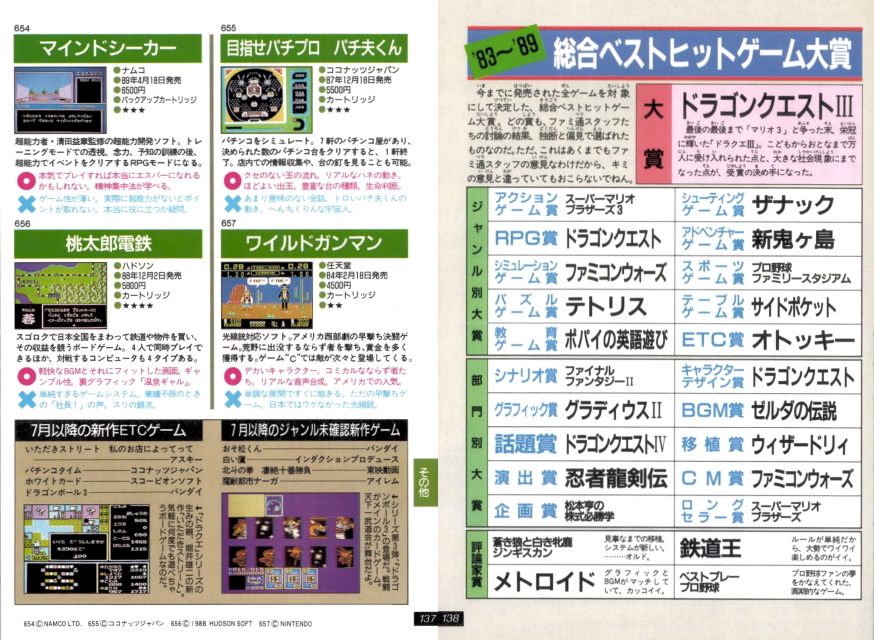
On release, Famicom Tsūshin four reviewers all complimented Famicom Wars. They all found it actively distinguishing itself from other simulation games which they described as dull or difficult to understand with information portrayed as numeric data. Two reviewers complimented the graphics and animation, with one saying the battle animations are realistic which will get the player more into the action.[1] The 1989 "All Soft Catalog" issue of Famicom Tsūshin included Famicom Wars in its list of the best games of all time, giving it the Best Simulation and Best Commercial awards.[5]

The original Famicom Wars was followed by a series of sequels which were released only in Japan as well, which includes Game Boy Wars in 1990 and Super Famicom Wars in 1998, both which were developed by Intelligent Systems and Nintendo, as opposed to a sub-series of sequels to the original Game Boy Wars, which were developed and published by Hudson Soft. The series eventually made its international debut with Advance Wars, released for the Game Boy Advance in 2001. The maps from both Famicom Wars and Super Famicom Wars were later included in Advance Wars and its sequels.[6]

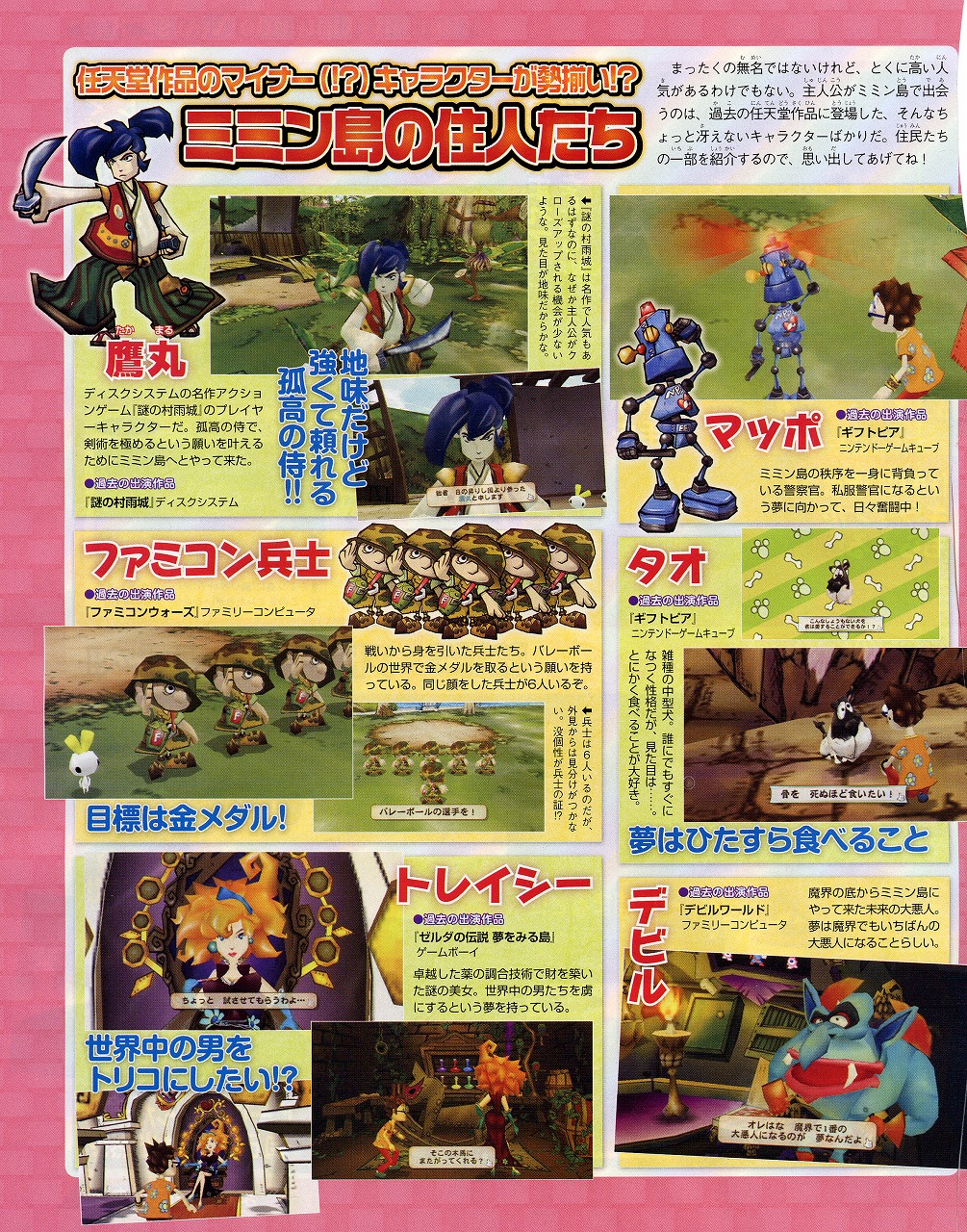
A group of six soldiers from the game appears in the Wii game Captain Rainbow. The soldiers aspire to win the volleyball gold medal.[7]

Super Famicom Wars

[edit]
Super Famicom Wars
Title screen
DeveloperIntelligent Systems
PublisherNintendo
DirectorToru Narihiro
ProducerTakehiro Izushi
DesignerShouzou Kaga
ArtistMasahiro Higuchi
ComposerKenichi Nishimaki
SeriesWars
PlatformSuper Famicom
Release
  • JP: May 1, 1998
GenreTurn-based tactics
ModesSingle-player, multiplayer

Super Famicom Wars is an enhanced remake of Famicom Wars developed by Intelligent Systems and released for the Super Famicom on May 1, 1998, exclusively via the Nintendo Power service in commemoration of the tenth anniversary of the original Family Computer version.[8]

Improvements over the original Famicom Wars include the inclusion of 8 new types of units in addition to the 16 original units, a faster decision-making process for the CPU, the introduction of Reconnaissance Mode (also known as "Fog of War" mode in later localizations, in which enemy units are invisible during the player's turn when they're not in proximity to the player's units) and the maximum amount of deployed units being increased from 48 to 60 units.[9] In addition to the original campaign between the Red Star and Blue Moon armies, there's a new campaign also consisting of 17 maps involving two new factions, Green Earth and Yellow Comet. In addition there is a 4-players mode consisting of 10 maps involving all four factions. This brings the total count of maps to 44. The player can also assign one of seven generals to each army, which mainly affects what kind of strategies the CPU will employ, although some of the generals do provide passive benefits even when assigned to a player-controlled faction.

The game was digitally released on Nintendo's Japanese Virtual Console for Wii,[10] Wii U,[11] and 3DS platforms.[12]

An English-language fan translation was released in 2018.[13][14]

Notes

[edit]

References

[edit]
[edit]
Revisions and contributorsEdit on WikipediaRead on Wikipedia
from Grokipedia
Famicom Wars is a turn-based strategy video game developed by Intelligent Systems and published by Nintendo for the Family Computer (Famicom) home console. Released exclusively in Japan on August 12, 1988, it serves as the debut title in Nintendo's long-running Wars series of military-themed tactical games. The game features players commanding either the Red Star or Blue Moon army in a series of 17 campaign maps, where the objective is to capture enemy properties, produce military units, and achieve victory through territorial control or unit elimination.[1] In Famicom Wars, gameplay revolves around grid-based tactics on diverse terrains, including land, sea, and air environments that influence unit movement and combat effectiveness. Players produce units such as infantry, tanks, artillery, aircraft, and naval vessels from factories, airports, and ports, using funds generated from captured cities to sustain their forces. A rock-paper-scissors system governs unit interactions—for instance, infantry captures properties but is weak against most vehicles, while anti-air units counter aircraft effectively—adding depth to strategic decision-making. The single-player campaign progresses across disconnected scenarios without an overarching narrative, emphasizing pure tactical simulation over storytelling.[2] Though never officially localized outside Japan during its initial release, Famicom Wars laid the foundational mechanics for subsequent entries in the series, including Game Boy Wars (1989), Super Famicom Wars (1998), and the globally released Advance Wars (2001) on the Game Boy Advance. Its influence extends to modern re-releases, with the game made available via Nintendo's Virtual Console services for Wii (2009), Nintendo 3DS (2012), and Wii U (2014) in Japan, and via Nintendo Switch Online as of 2025. The series' evolution from Famicom Wars' core systems highlights Intelligent Systems' expertise in tactical gameplay, later seen in franchises like Fire Emblem.[3][4]

Gameplay

Core Mechanics

Famicom Wars employs a turn-based structure where players alternate commanding units from either the Red Star or Blue Moon armies on a grid-based map. The map features diverse terrain types, including plains for open movement, mountains that impede traversal and provide defensive bonuses, and cities that serve as strategic capture points. Players issue commands to move, attack, or produce units during their turn, with the Red Star army typically initiating gameplay. This alternation allows for deliberate planning, emphasizing positioning and resource allocation over real-time action.[5] Gameplay revolves around achieving mission-specific objectives, such as capturing the enemy's headquarters by moving an infantry unit onto it, eliminating all opposing forces, or fulfilling unique goals like securing key locations within a restricted number of turns. These objectives drive campaign progression across 17 maps. Resource management is integral, as capturing neutral or enemy properties—such as cities, factories, bases, airports, and seaports—generates income at a rate of 1000 funds per property per turn. These funds enable unit production at appropriate facilities, balancing expansion with defensive needs.[6][5] Combat resolution hinges on unit attributes including hit points (HP), firepower, defense, and terrain influences, creating mostly deterministic outcomes with minor random variation in damage. All units possess a maximum of 10 HP, which depletes upon taking damage and regenerates partially at properties or via supply units. Damage is computed based on matchup-specific values adjusted by terrain modifiers—for instance, a medium tank inflicts roughly 8.5 HP damage to infantry on plains—resulting in the defender's HP reduction, capped at its current value to prevent overkill. Terrain can enhance defense (e.g., mountains doubling protection for certain units) or restrict attacks, while factors like ammunition, fuel, and range further shape engagements. Indirect units, such as artillery, cannot counterattack but strike from afar.[6][7][8][9] Sustaining forces relies on supply lines, where units refuel and repair at captured bases, cities, or through dedicated supply trucks that restore HP, ammunition, and fuel to adjacent ground units for a fee. Air and naval units resupply at airports and seaports, respectively, ensuring operational continuity amid prolonged conflicts. This system underscores logistical strategy, as isolated units risk depletion without access to rear-line support.[7][5]

Units and Strategies

Famicom Wars features a diverse roster of military units divided into land, air, naval, and support categories, each designed for specific tactical roles in turn-based combat. Land units form the backbone of ground operations, including infantry for capturing properties at a cost of 1000 funds and with a movement range of 3 tiles, mechs at 2000 funds that excel against armored vehicles despite limited ammo of 3 shots, and tanks at 6000 funds offering balanced firepower and mobility over 5 tiles. Armored options like medium tanks (16000 funds, 6-tile movement) provide high durability for frontline assaults, while indirect fire units such as artillery (5500 funds, 2-3 tile range) and howitzers (13000 funds, 3-5 tile range) deliver area support but cannot counterattack if approached closely. Anti-air variants, including missile launchers (11000 funds, 3-5 tile anti-air range) and anti-air tanks (5500 funds), specialize in neutralizing aerial threats, and armored personnel carriers (4200 funds, 6-tile movement) transport infantry or mechs for rapid deployment.[8] Air units emphasize speed and precision strikes, produced at airports with movement ranges up to 10 tiles; fighters (22000 funds, 5 ammo) dominate aerial engagements and light ground targets, scouts (15000 funds, 4 ammo) handle helicopters effectively, and bombers (16000 funds, 8-tile movement) focus on devastating ground attacks without anti-air capability. Helicopters (4000 funds, 6-tile movement, 6 ammo) serve as affordable transports for foot units but remain vulnerable to dedicated anti-air defenses. Naval units, built at seaports, control waterways with the battleship (28800 funds, 3-5 tile indirect range, high armor) providing long-range bombardment against all targets, and the lander (18500 funds, 5-tile movement) ferrying two ground units ashore while offering moderate combat utility against surface and air foes. Support units like supply trucks (3000 funds, 5-tile movement) resupply adjacent ground forces with fuel and ammunition, essential for sustaining extended operations without depleting unit resources.[8] The game's balance revolves around rock-paper-scissors dynamics among unit types, where counters dictate effective deployment; for instance, anti-air units like missile launchers and anti-air tanks neutralize aircraft and helicopters with superior firepower in those matchups, while mechs exploit weaknesses in tanks and artillery despite their own low mobility. Tanks overpower infantry and lighter vehicles but falter against mechs or indirect fire from afar, and bombers shred ground forces yet require fighter escorts to evade anti-air threats. Naval battleships outrange most opponents but succumb to concentrated air assaults from bombers or landers, creating layered vulnerabilities that reward matchup awareness over brute force.[8] Production occurs at specialized facilities—factories for land units, airports for air, and seaports for naval—with costs scaling from 1000 funds for basic infantry to 28800 for battleships, alongside varying fuel (e.g., 99 for air units, 50 for tanks) and ammo limits that necessitate logistical planning. Movement ranges differ significantly, from 2 tiles for mechs to 10 for scouts and fighters, influencing positioning on maps with terrain penalties like extra costs for rivers (up to 6 movement points for vehicles).[8] Strategic depth emerges from integrating economy management, where capturing cities generates funds for production against spending pressures, with terrain providing bonuses such as increased defense in forests or mountains to amplify unit survivability. Players must balance aggressive pushes with defensive setups, using supply trucks to extend operational endurance and indirect units for safe harassment, while avoiding overextension that exposes counters like air superiority to anti-air traps. In the two-player versus mode on custom or preset maps, success hinges on unit synergy, such as combining transports for amphibious assaults with air cover, fostering competitive tactics beyond single-player campaigns.[8]

Development and Release

Development

Development of Famicom Wars marked a pivotal shift for Intelligent Systems, a Nintendo subsidiary founded in 1986 by Toru Narihiro initially to handle hardware engineering tasks, such as developing the Famicom's arithmetic processing unit and porting Famicom Disk System games to standard ROM cartridges.[10] By the late 1980s, the company transitioned toward original software development under Nintendo's guidance, with Famicom Wars serving as their debut major simulation title, establishing them beyond technical support roles.[10] The project was led by producer Gunpei Yokoi, known for his work on Nintendo's handheld innovations and R&D1 titles, alongside director and programmer Toru Narihiro, who oversaw the core coding efforts.[2] Designers Hiroji Kiyotake and Hirofumi Matsuoka contributed to the strategic framework.[2] Additional key contributors included artists Hiroji Kiyotake and Hirofumi Matsuoka for visuals, and composer Hirokazu Tanaka for the soundtrack, all working to craft a military strategy experience tailored for the Famicom audience.[10][2] Inspired by the complex PC-based wargame series Daisenryaku from SystemSoft, the team simplified real-time elements into a turn-based format to suit younger players and the Famicom's capabilities, emphasizing asymmetry between the offensive Red Star and defensive Blue Moon armies for enhanced replayability across 17 campaign maps.[10] 16 unit types were balanced to avoid overwhelming the 8-bit processor, with design choices like a 1-10 health threshold system ensuring accessibility despite hardware constraints such as a limited color palette and slow map scrolling.[10] A major challenge involved optimizing the AI, which mimicked human player actions by navigating menus, resulting in predictable behaviors but noticeable delays during opponent turns to fit within the system's processing limits.[10] Development spanned roughly from 1987 to mid-1988, culminating in the game's completion for its August release, with extensive playtesting focused on reducing prototype complexity to maintain strategic depth without frustrating newcomers.[10]

Release and Distribution

Famicom Wars was released exclusively in Japan on August 12, 1988, for the Family Computer (Famicom) by Nintendo, with a suggested retail price of 5,500 yen.[2][11] The game came bundled solely with its standard cartridge and instruction manual, without additional peripherals, and was positioned as a turn-based strategy title appealing to older players seeking deeper tactical engagement beyond mainstream action genres.[12] The title saw no official international launch outside Japan, as Nintendo's localization efforts in the late 1980s prioritized high-volume action and platformer titles for Western markets over niche strategy games.[13] English-language access for global audiences emerged later through fan-driven ROM hacks and translations, with a notable complete patch released in 2008 and refined in subsequent years. Subsequent re-releases maintained the Japan-only exclusivity. It became available on the Wii Virtual Console in Japan on May 19, 2009, for 500 Wii Points.[14] The game was later ported to the Wii U Virtual Console on December 3, 2014, the Nintendo 3DS Virtual Console on December 26, 2012, priced at 434 yen, and Nintendo Switch Online on July 18, 2018.[15][4] As of November 2025, it remains accessible via Nintendo Switch Online in Japan.[16] Packaging followed the standard Famicom format: a gray cartridge housed in a plastic sleeve, accompanied by a full-color box and a comprehensive instruction manual illustrated with detailed diagrams of units, terrain effects, and strategic maps.[17] Variants were minimal, limited to the original release, with promotional support primarily through features in Japanese gaming magazines such as Famitsu, which included strategy guides and previews to build interest among dedicated readers.[18] Distribution faced challenges due to the Famicom's maturing lifecycle by 1988, resulting in lower initial visibility amid competition from newer titles and the platform's established library.[19] However, steady sales persisted in strategy gaming circles, driven by word-of-mouth recommendations that highlighted its innovative mechanics and replayability.[13]

Reception

Critical Response

Upon its release in 1988, Famicom Wars received warm critical reception in Japan for introducing turn-based strategy gameplay to home consoles at a time when such titles were rare, with reviewers highlighting its strategic depth and high replayability through varied missions and unit interactions.[10] Famitsu magazine awarded it a score of 33 out of 40, commending the innovative economy system where capturing cities generated funds for unit production, though it noted the steep learning curve for newcomers due to complex unit counters and terrain effects.[4] Critics appreciated the two-player mode for fostering competitive play, allowing friends to engage in head-to-head battles beyond the single-player campaign.[20] However, contemporary reviews also pointed to several shortcomings, including repetitive mission structures after the initial campaign stages, where objectives often reverted to capturing headquarters or eliminating enemy forces, and predictable AI behavior in later levels that reduced challenge once patterns were learned.[3] The game's limited 8-bit graphics were seen as functional but unremarkable, with small sprites and simple animations failing to convey the scale of military engagements, while the absence of English localization restricted international discussion and accessibility during its era.[10] In retrospective analyses, Famicom Wars has been praised for its foundational innovations in unit balance and resource management, establishing core mechanics like rock-paper-scissors unit dynamics that influenced subsequent strategy titles, despite its dated visuals and lack of narrative depth. A 2022 Destructoid article described it as a "solid foundation" for the series, emphasizing how its grid-based tactics and multi-unit arsenal provided engaging gameplay even today, though it critiqued the slow AI processing times on larger maps and occasional balance issues, such as overpowered battleships.[3] Often viewed as a spiritual precursor to Intelligent Systems' 1990 title Fire Emblem, Famicom Wars distinguished itself through its modern military theme rather than fantasy elements, prioritizing tactical simulation over character-driven storytelling.[21] Due to its age, no aggregated Metacritic score exists, but modern fan evaluations remain positive, with GameFAQs users averaging around 7.5 out of 10 based on dozens of ratings that highlight its enduring appeal for strategy enthusiasts.[22]

Commercial Performance

Famicom Wars was released exclusively in Japan on August 12, 1988, for the Family Computer at a suggested retail price of ¥5,500. Despite its acclaim within the strategy genre, initial production and shipment volumes were limited, resulting in chronic shortages at retail stores and a robust secondary market throughout the late 1980s and early 1990s. This scarcity reflected strong underlying demand for a title launched late in the Famicom's lifecycle, amid competition from blockbuster RPGs and action games like Dragon Quest III and Super Mario Bros. 3. To address the ongoing shortage, Nintendo issued a re-release in 1992 following a formal request from the Japan Television Game Chain Association, which also incorporated minor improvements to save data stability. Domestic shipment figures reached approximately 360,000 units, a solid performance for a niche strategy simulation during the Famicom era that bolstered Intelligent Systems' reputation as a developer of tactical titles.[23][24] The game saw no official international physical release, limiting its commercial reach beyond Japan, though fan-made English translations facilitated widespread emulation and play abroad. Digital re-releases were available on Nintendo's Virtual Console platforms, including Wii on May 19, 2009; Nintendo 3DS on December 26, 2012; and Wii U on December 3, 2014, all priced at 500 yen. Additionally, it was added to the Famicom – Nintendo Switch Online service in Japan on December 12, 2019, accessible via subscription.[25][26][4] These versions catered to enduring niche interest in the Wars series; the Wii U and 3DS Virtual Console versions were delisted alongside the closure of those eShops on March 27, 2023, after which existing owners retained access but new purchases ceased. The continued availability on Nintendo Switch Online as of 2025 underscores persistent demand for the title among strategy fans, even as physical copies appreciate in value due to original scarcity.

Legacy

Influence on the Wars Series

Famicom Wars established the foundational elements of the Wars series, including its turn-based strategy gameplay on grid-based maps, rock-paper-scissors unit interactions where direct combatants like infantry and tanks counter indirect units such as artillery, and an economy driven by capturing properties to generate funds for reinforcements.[10] These mechanics, emphasizing terrain effects on combat and persistent campaigns, were directly carried over and refined in all subsequent titles, providing a blueprint for strategic depth without real-time elements.[10] Direct sequels built upon this base with targeted expansions. Super Famicom Wars (1998) introduced eight new unit types, including helicopters for versatile transport and reconnaissance, alongside larger maps and four-player support to heighten asymmetry between armies like Red Star and Blue Moon.[27] Meanwhile, Game Boy Wars (1991) adapted the core systems—such as unit movement, combat resolutions, and property capture—to portable hardware, employing simplified monochrome graphics and staggered hexagonal tiles for efficient play on the Game Boy while retaining the original's economic and tactical focus.[28] The international expansion via the Advance Wars series (beginning 2001) globalized these foundations, polishing visuals for the Game Boy Advance and introducing Commanding Officers (COs) with unique bonuses to formalize the army asymmetries hinted at in Famicom Wars' national differences.[29] This evolution, crediting the 1988 original as the series progenitor, enabled broader accessibility and critical acclaim in the West.[3] Famicom Wars' emphasis on versus modes for two players influenced the franchise's multiplayer progression, culminating in online asynchronous battles in titles like Advance Wars: Dual Strike (2005).[29] As the debut entry, it cemented the military-themed turn-based formula, diverging from spin-offs like Battalion Wars (2005) that shifted to real-time action.[10] The 2021 remake Advance Wars 1+2: Re-Boot Camp includes subtle nods to these roots through remastered classic maps and unit behaviors.[29]

Re-releases and Cultural Impact

Famicom Wars has seen several official digital re-releases, primarily in Japan, which have extended its accessibility to later console generations. The game was first re-released on the Wii Virtual Console on May 19, 2009, allowing players to experience the original 1988 title through emulation on the home console.[4] This port preserved the game's core turn-based strategy mechanics while introducing it to Wii owners unfamiliar with the Famicom era. Subsequent releases included the Nintendo 3DS Virtual Console on December 26, 2012, which integrated with the system's portable playstyle and contributed to renewed interest in classic Nintendo strategy games during the early 2010s.[4] A further re-release arrived on the Wii U Virtual Console on December 3, 2013, broadening its reach within Nintendo's ecosystem of backward-compatible services.[4] In 2019, it was added to the Nintendo Switch Online service's Famicom library on December 12, making it playable on the Nintendo Switch, including internationally via a Japanese Nintendo Account. These efforts helped sustain the game's legacy by making it playable on modern hardware without requiring original Famicom cartridges. Fan communities have played a crucial role in globalizing Famicom Wars through unofficial modifications and translations. An English fan translation patch, developed by the AKA Translations group and hosted on Romhacking.net, was initially released around 2006 and has enabled non-Japanese speakers to fully engage with the game's narrative and interface.[30] This patch, applicable to good dumps of the original ROM, translates menus, dialogue, and unit names while maintaining gameplay fidelity, fostering international playthroughs via emulators. In 2023, an updated "NES Wars" patch refined the translation for improved accuracy and compatibility, further revitalizing community interest.[13] Additionally, ROM hacking communities on sites like Romhacking.net continue to produce modifications, including custom maps and unit balances, with ongoing discussions and updates as of 2025 that expand replayability for enthusiasts.[31] The game's cultural impact extends beyond official releases, influencing strategy game design and preservation efforts. Famicom Wars is recognized as a pioneering title in turn-based military simulation, with its unit production and terrain-based tactics cited in analyses of early Nintendo strategy titles.[32] A 2022 retrospective by Destructoid highlighted its foundational role in the Wars series, praising its enduring fun despite graphical limitations and crediting it with shaping later entries like Advance Wars.[3] Fan-driven preservation through emulators has sustained engagement, with online communities organizing informal tournaments and sharing patched versions to keep the game alive amid limited official support outside Japan.

Sequels

Super Famicom Wars

Super Famicom Wars is a turn-based strategy video game developed by Intelligent Systems and published by Nintendo exclusively for the Super Famicom in Japan. Released on May 1, 1998, via the Nintendo Power download service, it represented a significant upgrade from the 1988 Famicom Wars with 16-bit graphics, including animated unit sprites and expanded map sizes supporting up to 30×20 tiles for more strategic depth.[33][34][35] The game features 34 missions divided across two campaigns: 17 remastered maps from the original Famicom Wars pitting the Red Star army against Blue Moon, and 17 new maps introducing Yellow Comet and Green Earth factions in an ongoing global conflict with more cinematic cutscenes and narrative progression. Key enhancements include new units like transport helicopters for airlifting infantry and missile submarines for submerged naval strikes, alongside weather effects such as rain that reduce unit movement on certain terrains. The core economy system of capturing cities to generate funds for unit production is retained, but a new joint operations mode allows cooperative play, while deeper AI adapts strategies based on commanding officers' personalities—such as aggressive advances or defensive turtling.[36][33][37] Gameplay differences emphasize tactical nuance, with fog of war options limiting visibility, unit promotion for experience gains, and multiplayer support for up to four players via a single console using the link-up adapter. The 8 Mbit SF Memory cartridge utilized Mode 7 effects for dynamic map scaling during battles. Reception was positive for its increased scale and refinements, though some noted steep difficulty in later missions; it helped sustain series momentum despite limited distribution.[33][34]

Game Boy Wars Series

The Game Boy Wars series marked the transition of the Nintendo Wars franchise to portable gaming, beginning with the Japan-exclusive release of Game Boy Wars on May 21, 1991, for the Game Boy. Developed by Intelligent Systems and published by Nintendo, it retained the core turn-based strategy mechanics from Famicom Wars, such as capturing properties to generate funds for producing and reinforcing units, while optimizing for handheld constraints like limited battery life through shorter turns and monochrome graphics that emphasized tactical decision-making over visual flair. Players commanded the Red Star army against the rival White Moon forces across 16 maps, deploying up to 50 units per side from a selection of 24 types, including infantry, tanks, and aircraft, on smaller grids suited to on-the-go play.[38][39] The game supported single-player campaigns against AI opponents and two-player battles via the Game Boy link cable, fostering quick, competitive sessions without the need for complex setups. Its simplified interface and focus on essential unit interactions bridged the console-depth of Famicom Wars to portable viability, proving the series' adaptability to mobile formats. Subsequent entries expanded on this foundation under Hudson Soft's development: Game Boy Wars 2, released November 20, 1998, for the Game Boy Color, introduced enhanced artificial intelligence, 54 additional maps, and visual indicators for unit movement and attack ranges to streamline strategy.[40][41] Game Boy Wars 3, launched August 30, 2001, further refined the formula with a 45-map campaign mode featuring unit promotions, redeployable surviving forces across battles, and multiple endings based on performance, alongside a beginner tutorial for accessibility. All titles remained exclusive to Japan, highlighting the series' role in evolving the Wars gameplay for handheld audiences and setting precedents for future portable iterations like those on the Game Boy Advance.[42][43]

References

User Avatar
No comments yet.