


Community hub
Recent from talks
Contribute something
Nothing was collected or created yet.
ETH Zurich
View on Wikipedia
ETH Zurich (German: Eidgenössische Technische Hochschule Zürich; English: Federal Institute of Technology Zurich) is a public university in Zurich, Switzerland. Founded in 1854, the university primarily teaches and conducts research in science, technology, engineering, and mathematics (STEM).
Key Information


Like its sister institution École Polytechnique Fédérale de Lausanne (EPFL), ETH Zurich is part of the Swiss Federal Institutes of Technology Domain, a consortium of universities and research institutes under the Swiss Federal Department of Economic Affairs, Education and Research.[7] As of 2023[update], ETH Zurich enrolled 25,380 students from over 120 countries, of which 4,425 were pursuing doctoral degrees.[8]
Students, faculty, and researchers affiliated with ETH Zurich include 22 Nobel laureates, including Albert Einstein, two Fields Medalists, three Pritzker Prize winners, and one Turing Award recipient.[9] It is a founding member of the IDEA League and the International Alliance of Research Universities (IARU), as well as a member of CESAER, the League of European Research Universities (LERU), and the ENHANCE Alliance.


History
[edit]ETH Zurich was founded on 7 February 1854 by the Swiss Confederation and began giving its first lectures on 16 October 1855 as a polytechnic institute (eidgenössische polytechnische Schule) at various sites throughout the city of Zurich.[1] It initially consisted of six faculties: architecture, civil engineering, mechanical engineering, chemistry, forestry, and an integrated department for mathematics, natural sciences, literature, and social and political sciences.
Locally, it is still known as Polytechnikum or simply Poly, derived from the original name eidgenössische polytechnische Schule,[10] which translates to "federal polytechnic school".[11]
ETH Zurich is a federal institute under direct administration by the Swiss government. The creation of a new federal university was heavily disputed at the time; liberals advocated for a "federal university," while conservatives wanted universities to remain under cantonal control, fearing an increase in liberal political power.[12] Initially, ETH was co-located in the buildings of the University of Zurich.
From 1905 to 1908, under the presidency of Jérôme Franel, ETH Zurich restructured its course programs to those of a university and was granted the right to award doctorates. The first doctorates were awarded in 1909. In 1911, the institution received its current name, Eidgenössische Technische Hochschule. Another reorganization in 1924 structured the university into 12 departments. Today, it has 16 departments.
ETH Zurich, along with EPFL and four associated research institutes, forms the "ETH Domain" to collaborate on scientific projects.[13]
Campus
[edit] | This section needs additional citations for verification. (February 2018) |
ETH Zurich has two campuses, namely Zentrum and Hönggerberg. The Zentrum campus grew around the main building, which was constructed 1858–1864 outside and right above the eastern border of the town, but which is nowadays located right in the heart of the city. As the town and university grew, ETH Zurich spread into the surrounding vineyards and later quarters. Because this geographic situation substantially hindered the expansion of ETH Zurich, a new campus was built from 1964 to 1976 on the Hönggerberg, a northern hill in the outskirts of the city. The last major expansion project of this new campus was completed in 2003.[10]
Zentrum campus
[edit]The Zentrum campus consists of various buildings and institutions throughout the city of Zurich.
The Zentrum campus houses the:[14]
- Department of Mathematics (D-MATH)
- Department of Computer Science (D-INFK)
- Department of Humanities, Social and Political Sciences (D-GESS)
- Department of Information Technology and Electrical Engineering (D-ITET)
- Department of Mechanical and Process Engineering (D-MAVT)
- Department of Environmental Systems Science (D-USYS)
- Department of Earth and Planetary Sciences (D-EAPS)
- Department of Management, Technology, and Economics (D-MTEC)
- Department of Health Sciences and Technology (D-HEST)
_05.jpg)
The main building of ETH Zurich was built from 1858 to 1864 under Gustav Zeuner; the architect, however, was Gottfried Semper, who was a professor of architecture at ETH Zurich at the time and one of the most important architectural writers and theorists of the age. Semper worked in a neoclassical style that was unique to him; and the namesake and architect of the Semperoper in Dresden. It emphasized bold and clear massings with a detailing, such as the rusticated ground level and giant order above, that derived in part from the work of Andrea Palladio and Donato Bramante. During the construction of the University of Zurich, the south wing of the building was allocated to the University until its own new main building was constructed (1912–1914). At about the same time, Semper's ETH Zurich building was enlarged and received its cupola.[10]

The main building stands directly across the street from the University Hospital of Zurich and, right alongside the main building of the University of Zurich.
Hönggerberg campus
[edit]The Hönggerberg campus is a more classical university campus,[15] consisting mainly of university buildings and student accommodation.
The Hönggerberg campus houses the:[16]
- Department of Architecture (D-ARCH)
- Department of Civil, Environmental and Geomatic Engineering (D-BAUG)
- Department of Materials (D-MATL)
- Department of Biology (D-BIOL)
- Department of Chemistry and Applied Biosciences (D-CHAB)
- Department of Physics (D-PHYS)
There is also an ASVZ sports centre which is accessible to all students and faculty, and includes a gym, beach volleyball court, football field, and martial-arts rooms.[17][18] In 2005, ETH Zurich's 150th anniversary, an extensive project called "Science City" for the Hönggerberg Campus was started with the goal to transform the campus into an attractive district based on the principle of sustainability.
Research and education
[edit]Undergraduate education at ETH Zurich is marked by the distinctive Basisprüfungen ("base examinations"), intensive first-year examination blocks, typically encompassing foundational subjects in mathematics, physics, and engineering disciplines. These exams serve both as a filter and as preparation for advanced, research-oriented coursework. Students must pass these examinations within two attempts, with failure rates in mathematics-intensive programmes often reaching between 50% and 60%. Doctoral education at ETH emphasizes hands-on research experience, where PhD candidates are hired directly as paid employees in professors' laboratories, conducting independent research and actively contributing to teaching. Many departments further structure doctoral training through thematic graduate schools, promoting collaborative research with multiple advisers and international cooperation, notably with the University of Zurich.[10]
Its research is especially focused on the STEM areas and ETH hosts several research hubs.
ETH AI Center
[edit]The ETH AI Center is ETH Zurich's central hub for artificial intelligence research. It is an active member of the European Laboratory for Learning and Intelligent Systems (ELLIS), hosting the ELLIS unit in Zurich and offering ELLIS PhD fellowships. Through the Max Planck ETH Center for Learning Systems (CLS), it cooperates closely with the Max Planck Institute for Intelligent Systems, jointly funding research and supervising doctoral students.
Swiss National Supercomputing Center
[edit]The Swiss National Supercomputing Center is an autonomous organizational unit of the ETH Zurich. It is a national facility based in Lugano-Cornaredo,[19] offering high-performance computing services for Swiss-based scientists.[20] In 2024 it deployed the Alps Supercomputer, existing of over 10,000 H100 Nvidia GPUs, making it one of the largest academic supercomputers in the world.
ETH Laboratory of Ion Beam Physics
[edit]The ETH Laboratory of Ion Beam Physics (LIB) is a physics laboratory located in Science City. It specializes in accelerator mass spectrometry (AMS) and the use of ion beam based techniques with applications in archeology, earth sciences, life sciences, material sciences and fundamental physics.
Spin-offs
[edit]ETH Zurich promotes technology and knowledge transfer through an entrepreneurial ecosystem to foster spin-offs and start-ups.[21] As of 2022, 527 ETH Zurich spin-off companies had been created.[22]
Rankings and reputation
[edit]| University rankings | |
|---|---|
| Global – Overall | |
| ARWU World[23] | 20 (2023) |
| QS World[24] | 7 (2026) |
| THE World[25] | 11 (2026) |
| Regional – Overall | |
| QS Europe[26] | 1 (2025) |
| THE Europe[27] | 4 (2025) |
Historically, ETH Zurich has achieved its reputation particularly in the fields of chemistry, mathematics, physics and computer science. There are 22 Nobel laureates who are associated with ETH Zurich, the most recent of whom is Didier Queloz, awarded the Nobel Prize in Physics in 2019. Albert Einstein is perhaps its most famous alumnus.[28][29]
ETH Zurich is ranked 7th worldwide (first in Switzerland) in the QS World University Rankings 2025,[26] 11th worldwide (first in Switzerland) in the Times Higher Education World University Rankings 2024,[25] and 20th worldwide in the Academic Ranking of World Universities 2023.[23] ETH Zurich ranked 1st in Europe in the 2025 QS Europe rankings.[30] In the 2023 Nature Index of academic institutions, ETH Zurich ranked 20th worldwide and first in Switzerland.[31]
In the 2024 QS Word University Rankings by subject, ETH Zurich was ranked within the top 10 in the world in architecture, engineering and technology, and the natural sciences. It ranked first worldwide in the earth and marine sciences, geology, and geophysics.[32] In the 2024 THE World University Rankings by subject, it was the top Swiss university in all ranked subjects.[33] In the 2023 ARWU Subject Ranking, the university was ranked within the top 10 worldwide in civil engineering, water resources, environmental engineering, automation, mathematics, earth sciences, and ecology.[34]
Student life
[edit]_16.jpg)
Tuition and financial assistance
[edit]Being a public university, the subsidized (by Swiss federal tax) tuition fees are CHF 730 per semester, regardless of the student's nationality.[35] From the autumn semester 2025, tuition fees for foreign students will be tripled to CHF 2190 per semester.[36] Both merit and need based scholarships are also available.
Student associations
[edit]ETH Zurich has well over 100 student associations.[37] Most notable is the VSETH (Verband der Studierenden an der ETH) which forms the umbrella organization of all field of study specific student associations and comprises a large variety of committees such as the Student Sustainability Committee and the ETH Model United Nations. The associations regularly organize events with varying size and popularity. Events of the neighboring University of Zurich are well-attended by ETH Zurich students and vice versa.
The largest career fair on campus is the Polymesse which is organized by students in the Forum und Contact committee of VSETH. Many student associations however organize career fairs specifically for the students in their departments. The VSETH is also the official representation of the student body towards the school and has been working with ETH on various projects with the aim of improving the students' experience at ETH. The representation towards the various departments is handled by the respective student associations.
ETH Juniors is another student organization. It forms a bridge between industry and ETH Zurich and offers many services for students and companies alike as a student-led consulting group.[38]
Sports
[edit]The Academic Sports Association of Zurich (ASVZ) offers more than 120 sports.[39] The biggest annual sports event is the SOLA-Stafette (SOLA relay race) which consists of 14 sections over a total distance of 140 kilometres (87 mi).[40]
Student Project House
[edit]In 2017, ETH Zurich board approved the creation of a "Student Project House" to encourage student projects and foster innovation. A test consisting of a "makerspace" and co-working space was established on the Hönggerberg campus,[41][42] followed by a 6-story space near the ETH Zurich main building. Both locations function as a unified entity for the purpose of qualifications, staffing and decision making. While both makerspaces offer similar tools, the central one is significantly larger and also hosts a rentable auditorium, intended for pitching projects to faculty to gain funding, and a bar.
Both makerspaces include workspaces for wood- and metalworking, electronics fabrication, as well as an array of 3D-printers for students to use at a little over material cost. Both also feature a shop for students to buy items such as resistors in lower quantities than ordinarily, while passing down the savings of bulk purchases.[43] The makerspaces are managed and staffed entirely by students. A new space is expected to open on the Hönggerberg campus in 2024.[44][needs update]
Engineering competitions
[edit]The Swiss Academic Spaceflight Initiative (ARIS)[45] (German: Akademische Raumfahrt Initiative Schweiz) is an organisation at ETH Zurich that focuses on the development of space related technologies. The most prominent area of research is in the development of a sounding rocket that is flown yearly at the Spaceport America Cup. The AMZ - Academic Motorsports Association[46] (German: Akademischer Motorsportverein Zürich) is the ETH Zurich's Formula Student team. Swissloop is ETH Zurich's newest competition team that is working on the development of a hyperloop system.
Traditions
[edit]The Polyball, which is the biggest decorated ball in Europe,[citation needed] takes places annually in the main building of ETH and is organized by students and former students in the KOSTA foundation. It has been taking place since the 1880s.
The amicable rivalry between ETH Zurich and its neighbor, the University of Zurich, has been cultivated since 1951 (Uni-Poly). There has been an annual rowing match between teams from the two institutions on the river Limmat.
There are many regular symposia and conferences at ETH Zurich, most notably the annual Wolfgang Pauli Lectures, in honor of former ETH Zurich Professor Wolfgang Pauli. Distinct lecturers, among them 24 Nobel laureates, have held lectures of the various fields of natural sciences at this conference since 1962.
Notable alumni and faculty
[edit]ETH Zurich has produced and attracted many famous scientists, including Albert Einstein and John von Neumann. More than twenty Nobel laureates have either studied at ETH Zurich or were awarded the Nobel Prize for their work achieved at ETH Zurich. Other alumni include scientists who were distinguished with the highest accolades such as the Fields Medal, Pritzker Prize and Turing Award, among other distinctions in their respective fields. Academic achievements aside, ETH Zurich has been alma mater to many Olympic medalists and world champions.
-
 Albert Einstein, 1921 Nobel Prize in Physics for the photoelectric effect.
 -
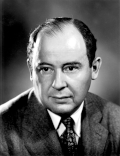 John von Neumann, polymath - pioneer in computing, quantum physics and game theory
 -
 Wolfgang Pauli, 1945 Nobel Prize in Physics for the Pauli-Exclusion principle.
 -
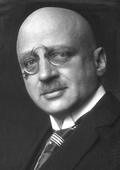 Fritz Haber, 1918 Nobel Prize in Chemistry for the Haber-Bosch Process
 -

-
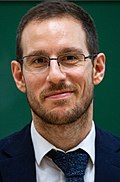


.jpg)
Related organizations
[edit]Collegium Helveticum
[edit]The Collegium Helveticum is an Institute for Advanced Study.[47] It is jointly supported and operated by the ETH Zurich, the University of Zurich and the Zurich University of the Arts. It is dedicated to transdisciplinary research and acts as a think tank as well. Fellows are elected for five years to work together on a particular subject. For the period 2016–2020, the research focus is on digital societies.[48]
ETH Zurich Foundation
[edit]The ETH Zurich Foundation is a legal entity on its own (a Swiss non-profit foundation) and as such not part of the ETH Zurich. Its purpose is to raise funds to support chosen institutes, projects, faculty and students at the ETH Zurich. It receives charitable donations from companies, foundations and private individuals. It can be compared with university endowments in the US. However, the ETH Zurich is a public university so that the funds of this foundation are much smaller than at comparable private universities.[49] Examples of funded teaching and research are:[50]
- New institutes such as the Wyss Translational Center Zurich[51]
- Additional professorships
- Rössler Prize[52]
- Pioneer fellowships
- Excellence scholarships[53]
Military Academy
[edit]The Military Academy is an institution for the education, training and development of career officers of the Swiss Armed Forces. The scientific part of this organization is attached to the ETH Zurich, while other parts such as training and an assessment center are under the direct management of the defense sector of the Swiss Federal Government.[54]
See also
[edit]
- EPFL
- Laboratory for Energy Conversion
- List of universities in Switzerland
- List of largest universities by enrollment in Switzerland
- List of forestry universities and colleges
- Science and technology in Switzerland
- Swiss Electromagnetics Research and Engineering Centre
- ETH Zurich University Archives
- Swiss Federal Institute for Vocational Education and Training
References
[edit]- ^ a b "1848–1855: The polytechnical realisation of a long-held dream". ETH Zurich. Retrieved 5 February 2018.
- ^ a b c "ETH in figures". Zurich, Switzerland: ETH Zurich. March 2021. Retrieved 3 April 2022.
- ^ a b c d e "Annual Report 2021" (PDF). Zurich, Switzerland: ETH Zurich. March 2021. Retrieved 9 June 2022.
- ^ "ETH identity". Retrieved 7 September 2021.
- ^ "ETH Zurich joins alliance of European universities". Zurich, Switzerland: ETH Zurich. 25 November 2023. Retrieved 14 August 2024.
- ^ "ETH Zurich boosts networking with Europe's top universities". Zurich, Switzerland: ETH Zurich. 17 November 2023. Retrieved 14 August 2024.
- ^ "ETH Board – Governance ETH Domain". ETH-Rat. Archived from the original on 2 November 2013. Retrieved 1 November 2013.
- ^ "Students". ETH Zurich.
- ^ How much Einstein is there in ETH Zurich? on YouTube
- ^ a b c d "ETHistory 1855–2005". ETHistory. ETH Zurich. 2005. Retrieved 19 July 2015.
- ^ "1855-1904: Striking a balance between university, factory and laboratory". ETH Zurich. Retrieved 19 December 2024.
- ^ "1848–1855: Polytechnical realization of an old dream". ETHistory. ETH Zurich. 31 March 2005. Retrieved 5 February 2018.
- ^ "ETH Domain". Zurich and Berne, Switzerland: ETH Board. Retrieved 23 February 2015.
- ^ "Zentrum campus". ETH Zurich. Retrieved 10 April 2024.
- ^ "Campus Hönggerberg". livingscience. Retrieved 10 April 2024.[permanent dead link]
- ^ "Hönggerberg campus". ETH Zurich. Retrieved 10 April 2024.
- ^ "Deutsche BauZeitschrift". www.dbz.de (in German). Retrieved 13 November 2020.
- ^ "Vereinigung der Schweizerischen Hochschuldozierenden, Bulletin" (PDF).
- ^ "CSCS moves into new computer centre in Lugano". CSCS. Retrieved 28 April 2020.
- ^ Swiss National Supercomputing Center. Retrieved 4 August 2019
- ^ Industry & Knowledge Transfer. ethz.ch/en/industry. Retrieved 14 October 2022.
- ^ "Spin-off companies of ETH Zurich".
- ^ a b "2023 Academic Ranking of World Universities". Academic Ranking of World Universities. Retrieved 15 August 2023.
- ^ "QS World University Rankings".
- ^ a b "World University Rankings 2024". Times Higher Education World University Rankings. 27 September 2023. Retrieved 27 September 2023.
- ^ a b "QS World University Rankings 2025". QS World University Rankings. Retrieved 8 June 2024.
- ^ "Best universities in Europe 2023". timeshighereducation.com. Retrieved 20 August 2023.
- ^ "ALBERT EINSTEIN (1879–1955)". Zuerich.com.
- ^ "Didier Queloz". queloz-group.ethz.ch.
- ^ "QS World University Rankings: Europe 2025". QS World University Rankings. Retrieved 28 July 2024.
- ^ "2023 tables: Institutions – academic | Annual tables | Nature Index". Nature. Retrieved 5 July 2023.
- ^ "QS World University Rankings by Subject 2024". QS World University Rankings. Retrieved 8 June 2024.
- ^ "World University Rankings by subject". Times Higher Education World University Rankings.
- ^ "ShanghaiRanking's Global Ranking of Academic Subjects 2023". Academic Ranking of World Universities.
- ^ Zurich, ETH. "ETH Zurich tuition fees". ethz.ch. ETH Zurich. Retrieved 9 November 2020.
- ^ Baumann, Pierre-Pascal (6 December 2024). "ETH Board reaches decision in principle for a future-proof organisation and structure within the ETH Domain". ETH-Rat. Retrieved 19 March 2025.
- ^ List of all Study Associations, Committees, Associated and Recognized Associations of VSETH. Retrieved 17 May 2023.
- ^ "ETH Juniors". Retrieved 29 August 2017.
- ^ "Academic Sports Association Zurich". Archived from the original on 2 February 2017. Retrieved 25 January 2017.
- ^ "SOLA-Stafette 2009". Archived from the original on 22 May 2009. Retrieved 16 July 2009.
- ^ "Home". ETH Student Project House.
- ^ "Student Project House". ETH Zurich.
- ^ "Our Offers". ETH Student Project House. Retrieved 8 January 2022.
- ^ Gasser, Bianca; Meyer, Florian (5 October 2020). "A place for students to develop their ideas". ETH Zurich.
- ^ "ARIS – ARIS Space and Rocket projects in Switzerland". Retrieved 8 January 2021.
- ^ "AMZ Racing". amzracing.ch. Retrieved 8 January 2021.
- ^ Collegium Helveticum. eurias Network of French Institutes for Advanced Study. Retrieved 4 August 2019
- ^ Website Collegium Helveticum. Retrieved 4 August 2019
- ^ René Donzé: ETH sucht Sponsoren in Deutschland. Neue Zürcher Zeitung am Sonntag, 7 April 2018. Retrieved 4 August 2019
- ^ Website ETH Foundation. Retrieved 4 August 2019
- ^ ETH Zurich and University of Zurich launch Wyss Translational Center. ETH Zurich, 12 December 2014. Retrieved 4 August 2019
- ^ Rössler Prize. ETH Zurich Foundation. Retrieved 4 August 2019
- ^ Ruf Lanz: Albert Einstein wirbt für Exzellenz-Stipendien. persoenlich.com, 19 November 2018. Retrieved 4 August 2019
- ^ Military Academy (MILAC). Website Military Academy, Swiss Armed Forces. Retrieved 4 August 2019
Further reading
[edit]- David Gugerli; Patrick Kupper; Daniel Speich (2005), Die Zukunftsmaschine. Konjunkturen der ETH Zürich 1855–2005. (in German), Zurich, Switzerland: CHRONOS – via www.ethistory.ethz.ch
External links
[edit] Media related to ETH Zurich at Wikimedia Commons
- Official website
- ETH Zurich's channel on YouTube

| ||||||||||||||||||||||||||||||||||||||||||||||||||


ETH Zurich
View on GrokipediaHistory
Founding and early development
The origins of ETH Zurich trace back to the Swiss Federal Constitution of 1848, which authorized the creation of a federal polytechnic institute to support the young nation's industrialization and technical education.[12] In 1853, National Councillor Jakob Stämpfli proposed using a budget surplus to fund higher technical education, leading to parliamentary approval in 1854.[12] The institution was formally established on February 7, 1854, by the Swiss Confederation and opened as the Eidgenössische Polytechnische Schule (Federal Polytechnic School) in Zurich in the autumn of 1855, with its first lectures commencing on October 16.[1] Key figures in its founding included Stefano Franscini, who gathered essential data on educational needs, and Alfred Escher, who oversaw planning and implementation.[12] From its inception, ETH Zurich operated as a federal institution emphasizing practical and theoretical training in science and technology, distinct from traditional universities by integrating laboratory work and industrial applications.[13] It began with six departments: Construction, Chemistry, Forestry, Mechanical Engineering, Agriculture, and Philosophy (encompassing mathematics and physics). The first rector was Karl Culmann, a professor of construction engineering, who helped shape its early academic direction.[12] Enrollment started modestly, with 64 students in the inaugural year, growing to around 200 by the 1860s, and attracting a significant international cohort—over 50% foreign students in some early years—due to its innovative curriculum.[12] Early development focused on balancing university-level research with factory-like practical training, fostering Switzerland's infrastructure and economy.[13] Notable professors included Rudolf Clausius in physics, Franz Reuleaux in mechanical engineering, and Gottfried Semper, who designed the main building opened in 1864.[13] Achievements included the establishment of specialized facilities, such as the Federal Institution for Testing Building Materials in 1880 and a physics building in 1890, which advanced experimental research.[13] The institution also pioneered gender inclusivity, admitting its first female student, Nadezda Smeckaja, in mechanical engineering in 1871, and graduating the first woman, Marie Kowalik, in agronomy and forestry in 1877.[13] By the late 19th century, ETH Zurich had expanded its departments to eight, adding dedicated sections for mathematics, physics, and teacher training, solidifying its role as a hub for technical innovation.[12]20th century expansions
In the early 20th century, ETH Zurich underwent significant infrastructural expansions to accommodate growing academic and research needs. The transformation of the main building, initiated in 1909 under architect Gustav Gull, included the addition of a prominent dome completed between 1918 and 1920, symbolizing the institution's increasing prominence and providing expanded space for administrative and teaching functions.[14] By 1929, the Laboratory of Hydraulics opened to support applied engineering research, funded through industry partnerships, while the same year saw the establishment of the Industrial Management Institute (BWI) to address management sciences in technical contexts.[14] These developments reflected ETH's shift toward interdisciplinary applied research, with further growth in 1933 through the opening of the Institute for Technical Physics, dedicated to advancing materials and energy studies, and in 1937 with the creation of the Department for Industrial Research (AFIF), which fostered collaborations between academia and Swiss industry.[14] Additionally, the remodeling of the Machine Laboratory in the early 1900s by Otto Rudolf Salvisberg enhanced facilities for mechanical engineering experiments, incorporating innovative construction techniques like reinforced concrete systems.[15] Mid-century expansions addressed spatial constraints in the central Zentrum campus, leading to the planning and construction of the Hönggerberg site. In 1959, ETH initiated development of this new campus to relieve overcrowding, particularly for expanding physics and biology departments, with construction formally beginning in 1961 and major buildings completed by 1976.[1] The project, approved with a 444 million Swiss franc loan in 1965, enabled the relocation and growth of science-oriented departments, incorporating modern facilities like the Natural Sciences Building for microscopy and experimental research.[14] This period also saw institutional advancements, such as ETH's role in founding the Swiss National Science Foundation in 1952—proposed by the institution in 1942—to bolster fundamental research funding nationwide.[14] Student enrollment surged from around 2,000 in the 1920s to over 8,000 by the late 1960s, necessitating these infrastructural investments and highlighting ETH's evolution into a national science flagship.[14] In the latter half of the century, expansions emphasized academic diversification and organizational flexibility amid global technological shifts. The 1970s brought challenges from a federal recruitment freeze, prompting resource reallocation rather than rapid physical growth, though the Hönggerberg campus continued to mature with additions like the Institute for Construction Engineering and Management in 1972.[16] Reforms under the 1970 transitional regulations and the 1993 Federal Institute of Technology Act (revised 2004) granted greater budgetary autonomy, facilitating new degree programs in Computer Science and Materials Science in 1981, Environmental Sciences in 1987, and Operational and Production Sciences in 1989.[17] The introduction of a matrix organizational structure in 1989 allowed flexible professorship assignments across departments, enhancing interdisciplinary research in emerging fields like information technology and environmental engineering.[17] By the 1990s, postgraduate and continuing education programs expanded significantly, with industry partnerships driving applied research units and contributing to ETH's international research profile, as evidenced by increased federal funding for computer-assisted processing and globalization initiatives.[17] These changes positioned ETH as a leader in adapting to post-industrial demands, with the Hönggerberg site ultimately housing six departments by the early 2000s.[18]Recent milestones and strategic initiatives
In recent years, ETH Zurich has solidified its position as a global leader in higher education and research through consistent high rankings and innovative outputs. In the 2026 QS World University Rankings (released in 2025), ETH Zurich secured the 7th place worldwide and the top spot among universities in continental Europe, excelling particularly in employer reputation and sustainability metrics. Similarly, the Times Higher Education World University Rankings 2026 (released in 2025) placed it 11th globally, with top scores in research environment and teaching quality. These achievements underscore ETH Zurich's ongoing commitment to excellence amid increasing international competition.[19][20] Scientific and technological milestones have marked significant progress, particularly in sustainability, health, and digital innovation. In 2025, ETH Zurich researchers developed ultrasound-controlled artificial muscles with potential applications in robotics and medical devices, advancing soft robotics capabilities. The institution also launched the spin-off MYNERVA in 2025, producing smart socks to manage neuropathic pain in diabetes patients through targeted stimulation. Furthermore, in November 2025, two ERC Synergy Grants were awarded to ETH faculty for pioneering work on chemical catalysts and wireless communication systems, highlighting breakthroughs in sustainable chemistry and 6G technology. In spin-off activity, 37 new companies emerged in 2024, including eight acquisitions, with ETH spin-offs dominating the 2025 Venture Awards—three winners and three runners-up among finalists—and eight from the Department of Mechanical and Process Engineering ranking in the TOP 100 Swiss Startups. These innovations reflect ETH Zurich's robust ecosystem for translating research into societal impact.[21][22][23] Strategically, ETH Zurich has advanced its Development Plan 2025–2028, emphasizing three thematic areas: Environment & Resources, Health & Wellbeing, and Responsible Digital Transformations. Key initiatives include the Student Project House fostering sustainable innovation through interdisciplinary student projects, and investments in high-performance computing via the HPCN-28 program and the Swiss Data Science Centre. Teaching reforms under the PAKETH project aim to simplify the academic calendar and examinations while promoting project-based learning through the Digital Campus and PBLabs platforms. In sustainability, the ETH Net Zero roadmap targets substantial greenhouse gas reductions by 2030, integrating competencies across operations, research, and education. Additionally, the October 2025 founding of the Albert Einstein School of Public Policy strengthens science-policy interfaces, and partnerships like the 2025 collaboration with industry leaders on plastic waste-to-chemicals conversion address circular economy challenges. These efforts align with the broader ETH Domain's Strategic Plan, focusing on societal relevance through joint initiatives in energy, climate, and health.[24][11][25][26]Governance and organization
Administration and leadership
The administration and leadership of ETH Zurich are structured to ensure effective governance of its educational, research, and operational activities, operating as a federal institute directly supervised by the Swiss Confederation through the ETH Board. The university's internal leadership is primarily managed by the Executive Board, which serves as the supreme executive body responsible for strategic direction, policy implementation, and oversight of all major functions including education, research, finance, personnel, infrastructure, and knowledge transfer. Established under the ETH Zurich Organizational Regulations, the Executive Board enacts administrative rules, organizes departmental structures, appoints key academic and administrative positions, and makes employment decisions for staff, while collaborating with participatory bodies such as the University Assembly.[27] As of January 2026, the Executive Board consists of the President, the Rector, and five Vice Presidents, a structure expanded in 2019 to enhance focus on key strategic areas. The President, Prof. Dr. Joël Mesot, has held the position since January 2019 and bears overall legal, political, and representational responsibility for the university, including relations with government authorities and external stakeholders; his second term concludes at the end of 2026. The Rector, Prof. Dr. Günther Dissertori, appointed in February 2022, oversees educational programs, curriculum development, and teaching quality, ensuring alignment with ETH Zurich's academic mission.[28][29] The Vice Presidents lead specialized domains critical to the university's operations. Prof. Dr. Annette Oxenius serves as Vice President for Research since August 2025, focusing on research promotion, funding strategies, and interdisciplinary initiatives to advance scientific excellence. Prof. Dr. Effy Vayena, Vice President for Knowledge Transfer and Corporate Relations since January 2026, manages industry partnerships, innovation commercialization, and societal impact efforts. Dr. Julia Dannath, Vice President for Personnel Development and Leadership since November 2020, directs HR policies, employee training, diversity initiatives, and leadership programs to foster a supportive work environment. Stefan Spiegel, Vice President for Finance and Controlling since April 2023, handles budgeting, financial planning, and resource allocation amid challenges like reserve depletion projected by the end of 2025. Finally, Prof. Dr. Ulrich Weidmann, Vice President for Infrastructure and Sustainability since January 2016, oversees campus facilities, environmental strategies, and sustainable development, with the vice presidency renamed in January 2025 to emphasize sustainability.[30][31][32][33][34] Overseeing ETH Zurich at the federal level is the ETH Board, a collegial body appointed by the Swiss Federal Council to govern the entire ETH Domain, which encompasses ETH Zurich, EPFL, and several research institutes. Chaired by President Prof. Dr. Michael O. Hengartner since February 2020, the ETH Board sets strategic priorities, approves budgets, and appoints Executive Board members upon recommendation by the university President, ensuring alignment with national innovation goals. The Board's 11 members, appointed by the Swiss Federal Council, meet regularly to address domain-wide issues such as funding and performance evaluations. This dual-layered governance model balances institutional autonomy with federal accountability, enabling ETH Zurich to maintain its position as a leading global research university.[35][36]Departments and institutes
ETH Zurich is structured around 16 departments that span the natural sciences, engineering, architecture, humanities, social sciences, and management, each responsible for teaching, research, and doctoral training in their respective fields.[37] These departments collectively house over 110 institutes, laboratories, and research groups, which conduct specialized research and provide educational programs.[7] The departmental framework promotes both disciplinary depth and interdisciplinary collaboration, with institutes often focusing on cutting-edge topics such as sustainable materials, quantum computing, and climate modeling. The departments are as follows:- Architecture (D-ARCH): Focuses on architectural design, urban planning, and history, integrating technology and sustainability in built environments.
- Biology (D-BIOL): Encompasses molecular biology, ecology, and evolutionary biology, with institutes like the Institute of Microbiology and the Institute of Biochemistry advancing research in cellular processes and biodiversity.
- Civil, Environmental and Geomatic Engineering (D-BAUG): Addresses infrastructure, geoinformatics, and environmental engineering, including institutes for structural engineering and transportation systems.
- Chemistry and Applied Biosciences (D-CHAB): Covers organic, inorganic, and physical chemistry, as well as chemical biology, through six institutes exploring molecular mechanisms and pharmaceutical applications.
- Computer Science (D-INFK): Leads in algorithms, software engineering, and data science, with institutes dedicated to theoretical computer science and visual computing.
- Earth Sciences (D-ERDW): Investigates geological processes, climate dynamics, and resource management via institutes in atmospheric science and solid earth geology.
- Environmental Systems Science (D-USYS): Integrates environmental sciences, policy, and modeling, featuring institutes for aquatic ecology and agricultural economics.
- Health Sciences and Technology (D-HEST): Promotes interdisciplinary health research, including neural engineering and translational medicine, through collaborative institutes.
- Humanities, Social and Political Sciences (D-GESS): Explores philosophy, economics, and public policy, with centers like the Center for Security Studies supporting societal impact research.[38]
- Information Technology and Electrical Engineering (D-ITET): Advances electronics, communications, and photonics, with institutes in neuroinformatics and energy systems.
- Management, Technology, and Economics (D-MTEC): Combines business strategy, innovation, and sustainability, hosting the KOF Swiss Economic Institute for economic forecasting.[39]
- Materials Science (D-MATL): Studies advanced materials for energy and biomedicine, including the Competence Center for Materials and Processes (MaP) for cross-disciplinary fabrication.
- Mathematics (D-MATH): Covers pure mathematics, applied analysis, and statistics, with research groups in numerical methods and algebra.
- Mechanical and Process Engineering (D-MAVT): Focuses on robotics, fluid dynamics, and manufacturing, through institutes like the Institute of Robotics and Intelligent Systems.
- Physics (D-PHYS): Conducts fundamental research in particle physics, condensed matter, and cosmology, supported by four main institutes and over 40 groups.[40]
- Biosystems Science and Engineering (D-BSSE): Specializes in synthetic biology and bioengineering at the Basel site, with platforms for systems biology and computational modeling.
Campuses and facilities
Zentrum Campus
The Zentrum Campus, situated in the heart of Zurich, Switzerland, forms the historic core of ETH Zurich and embodies the institution's longstanding tradition in science and engineering education. Established as the primary site following the university's founding in 1855, the campus centers around the iconic Main Building (HG), constructed between 1858 and 1864 on a slope overlooking the city's old town. This neoclassical structure, designed by architects Gottfried Semper and Karl Friedrich Schinkel, initially housed the Federal Polytechnic School and has since symbolized ETH Zurich's commitment to technical innovation. The campus has evolved organically, expanding from its original footprint to integrate with Zurich's urban fabric while preserving historical elements such as the 1905 Machine Laboratory and the distinctive dome added to the Main Building around 1918.[43] Over the decades, the Zentrum Campus has undergone continuous development to accommodate growing academic needs, blending heritage preservation with modern infrastructure. Opened in 2023 and officially inaugurated in 2024, the GLC Building on Gloriasstrasse is a state-of-the-art facility dedicated to health sciences teaching and research, enhancing interdisciplinary collaboration in biomedical fields. The renovation of the ML/FHK complex, which supports mechanical and process engineering, was completed in 2025. Ongoing upgrades to the Main Building, which began in mid-2025, ensure seismic resilience and energy efficiency through 2030. These efforts reflect ETH Zurich's strategy to maintain the campus as a vibrant hub amid urban constraints, with a focus on sustainable expansion that respects the site's protected status. The Main Building remains publicly accessible, open from 6 a.m. to 10 p.m. weekdays and extended hours on weekends, inviting visitors to explore its grand halls and exhibitions.[43][44][45][46] The campus's urban character distinguishes it from ETH Zurich's other sites, featuring a mosaic of over 20 buildings interspersed with gardens, plazas, and green spaces that foster interaction between students, researchers, and the public. Key facilities include advanced laboratories in departments like chemistry (housed in the CHN Building) and physics (in the ETF complex), alongside communal areas such as cafés, restaurants, and event spaces that host lectures, exhibitions, and guided tours. Sports and leisure amenities, including fitness centers and family support services, cater to the campus community of approximately 10,000 members, while residential options provide on-site housing for graduate students. This integration of educational, research, and social functions creates a lively environment that seamlessly connects with Zurich's cultural and commercial districts, promoting knowledge exchange beyond academia.[47][44]Hönggerberg Campus
The Hönggerberg Campus serves as ETH Zurich's second primary site, situated in the northern outskirts of Zurich atop the Hönggerberg hill in a rural, parkland environment. This location offers expansive grounds surrounded by forests and agricultural areas, providing a serene contrast to the densely built Zentrum Campus in the city center. The campus overlooks Zurich city and Lake Zurich, fostering an integrated setting for academic and research activities. It accommodates nearly half of ETH Zurich's students and academic personnel, emphasizing interdisciplinary collaboration in engineering and sciences.[48][49] Development of the Hönggerberg Campus commenced in 1961 to alleviate spatial limitations at the historic Zentrum site and enable the university's post-war growth. The initiative was driven by the need to relocate expanding departments, particularly Physics, which required larger facilities for experimental research. Construction progressed through the 1960s and 1970s, establishing a traditional campus model with clustered academic buildings, specialized laboratories, and integrated student housing. By the late 1970s, key infrastructure was operational, supporting ETH Zurich's evolution into a modern research institution.[1][50] Resident departments on the campus include Architecture (D-ARCH), Civil, Environmental and Geomatic Engineering (D-BAUG), Materials (D-MATL), Mechanical and Process Engineering (D-MAVT), and Physics (D-PHYS). These units house advanced research labs, such as the Arch_Tec_Lab for digital fabrication in architecture and high-energy physics facilities, enabling innovations in sustainable materials, structural engineering, and quantum technologies. Supporting infrastructure encompasses lecture halls, administrative centers, and recreational spaces, including sports fields and dining options, to create a comprehensive living-learning environment. Student dormitories, managed by ETH Zurich, provide on-site accommodation for thousands, promoting community among residents.[50][51][52] Recent strategic developments prioritize sustainable expansion and ecological integration. Since 2015, ETH Zurich has partnered with the city and canton of Zurich to revise zoning plans, resulting in updated special building regulations enacted on January 31, 2022. These guidelines facilitate new constructions, such as the HIC (House of Innovation and Collaboration) building, while emphasizing energy efficiency and green spaces to align with the campus's natural surroundings. In August 2025, ETH Zurich announced plans to transform the HIL building into a living lab for pioneering construction research, with remodeling and extension scheduled for completion by 2035. Such efforts ensure Hönggerberg remains a hub for forward-looking research amid growing enrollment and technological demands.[53][54]Basel and other sites
ETH Zurich maintains a presence in Basel through its Department of Biosystems Science and Engineering (D-BSSE), which focuses on interdisciplinary research and education in biosystems science, integrating biology, engineering, and computational methods to address challenges in biotechnology and health.[55] The department is housed on the Schällemätteli campus in the heart of Basel, on the left bank of the Rhine at Klingelbergstrasse 48, 4056 Basel, providing proximity to the University of Basel and its affiliated hospitals to foster collaborations in life sciences and clinical applications.[56] This location enables joint initiatives, such as shared expertise in molecular biology and systems engineering, enhancing ETH Zurich's contributions to personalized medicine and synthetic biology. The BSS research building, a modern facility completed in 2023 and officially inaugurated in May 2024, supports advanced labs for microbial engineering and bioprocessing, underscoring Basel's role as a hub for translational bioscience.[57][58] Beyond Basel, ETH Zurich operates several specialized facilities across Switzerland to support targeted research and teaching. In Lugano, the Swiss National Supercomputing Centre (CSCS), managed by ETH Zurich, provides high-performance computing resources essential for simulations in climate modeling, materials science, and bioinformatics, with the Alps supercomputer, inaugurated in September 2024, enhancing computational capabilities for national and international users.[59] The center, located at Via Trevano 131, 6900 Lugano, collaborates closely with the University of Lugano to advance computational sciences.[60][61] In Davos, the ETH Studio Davos serves as an outpost for applied research in alpine environments, emphasizing artificial intelligence, data science, remote sensing, and bioinformatics to study climate impacts and sustainable resource management in mountain regions.[62] Further sites include the ETH Research Station in Schlieren, a 7,000 m² facility dedicated to medical and life sciences research, accommodating 8 to 10 professorships in areas like regenerative medicine and biomedical engineering, with expansion completed in 2023 to boost interdisciplinary health innovations.[63] In Lindau, near Zurich but outside the main campuses, the ETH Research Station Lindau-Eschikon and AgroVet-Strickhof host agricultural and veterinary research, featuring greenhouses, climate chambers, laboratories, and experimental fields for studies in plant sciences, animal health, and sustainable farming practices.[64][65] These sites collectively extend ETH Zurich's reach, enabling field-based and specialized investigations that complement the core Zurich campuses. Internationally, ETH Zurich's primary outpost is the Singapore-ETH Centre (SEC), established in 2010 through a partnership with Singapore's National Research Foundation as part of the Campus for Research Excellence and Technological Enterprise (CREATE).[66] Located in Singapore, the SEC drives research on urban sustainability, resilience, and health via three flagship programs: the Future Cities Laboratory Global, which develops science-based designs for low-carbon cities; Future Resilient Systems, focusing on robust infrastructure against climate risks; and Future Health Technologies, advancing mobile digital solutions for patient-centric care.[67][68][69] This center, ETH Zurich's only research facility outside Switzerland, facilitates global knowledge exchange and joint PhD programs, contributing to solutions for densely populated urban environments.[70]Education
Academic programs and degrees
ETH Zurich offers a range of undergraduate, graduate, and postgraduate programs emphasizing technical and scientific disciplines, with a focus on engineering, natural sciences, and interdisciplinary studies. Bachelor's programs form the foundation, providing broad scientific training followed by specialization, while master's programs build on this with advanced coursework and research. Doctoral studies emphasize original research, often in collaboration with the University of Zurich. Continuing education options cater to professionals seeking further qualifications.Bachelor's Programs
Bachelor's degree programs at ETH Zurich typically span three years and comprise 180 ECTS credits, structured around a foundational first year of compulsory courses in mathematics, physics, and core sciences, followed by disciplinary deepening and a bachelor's thesis in the final year.[71] The primary language of instruction is German, though English is increasingly used in upper-level courses, requiring applicants to demonstrate C1-level German proficiency.[72] Programs are monodisciplinary, full-time, and designed to foster interdisciplinary skills through electives and projects, with a maximum study duration of five years.[73] Programs are grouped into five main categories, covering 24 distinct fields:- Architecture and Civil Engineering: Includes Architecture, Civil Engineering, Environmental Engineering, and Geospatial Engineering, emphasizing design, sustainability, and infrastructure.[71]
- Engineering Sciences: Encompasses Computer Science, Electrical Engineering and Information Technology, Mechanical Engineering, and Materials Science, focusing on applied technologies and systems.[71]
- Natural Sciences and Mathematics: Features Biology, Chemistry, Mathematics, Physics, and Pharmaceutical Sciences, alongside interdisciplinary options like Computational Science and Engineering.[71]
- System-oriented Natural Sciences: Covers Agricultural Sciences, Earth Sciences, Health Sciences and Technology, and Human Medicine, integrating biological and environmental systems.[71]
- Management and Social Sciences: Offers programs like Management, Technology, and Economics, bridging technical expertise with economic and policy perspectives.[71]
Master's Programs
Master's degree programs at ETH Zurich are divided into consecutive programs, which directly extend bachelor's studies in the same field, and specialized programs, which target interdisciplinary or niche topics for students from diverse backgrounds. Consecutive programs typically last two years (120 ECTS credits), while specialized ones range from 1.5 to two years (90-120 ECTS credits), culminating in a master's thesis representing 30 credits.[75] Most are taught in English, with some requiring German proficiency, enabling international accessibility and attracting a global student body.[76] ETH Zurich provides over 50 master's programs across its departments. Representative consecutive examples include Civil Engineering MSc, Computer Science MSc, and Physics MSc, which deepen core disciplinary knowledge with advanced electives and research projects.[75] Specialized programs, such as Data Science MSc, Biomedical Engineering MSc, and Management, Technology, and Economics MSc, emphasize cross-disciplinary applications, often incorporating industry partnerships and innovation challenges.[77] These programs stress research-oriented learning, with opportunities for internships and international exchanges, preparing graduates for academia, industry, or entrepreneurship.[78]Doctoral Programs
Doctoral studies at ETH Zurich primarily follow an individual doctorate model, where candidates work under a supervisor on an original research project, typically lasting three to four years and resulting in a dissertation defended publicly.[79] With around 4,351 doctoral students, the institution supports intensive research training through departmental resources and funding.[80] Additionally, 16 structured doctoral programs are offered jointly with the University of Zurich, providing coursework, seminars, and interdisciplinary networks in fields like Infection Biology, Neuroscience, and Systems Biology.[81] Instruction and supervision occur predominantly in English, fostering a collaborative, international research environment.[82]Continuing Education
For professionals, ETH Zurich's School for Continuing Education offers Master of Advanced Studies (MAS) programs, requiring at least 60 ECTS credits and completable full- or part-time over 1-6 years, alongside executive MBA options and certificate courses in areas like digital transformation and sustainable engineering. These programs blend academic rigor with practical application, often delivered in English or German.[83]Admissions, tuition, and financial aid
Admission to ETH Zurich's Bachelor's programs is governed by the institution's Admissions Ordinance and varies based on the applicant's educational background. For Swiss or Liechtensteinian students holding a federal or federally accredited Matriculation certificate (Matura), admission is generally unconditional, provided the certificate meets the required standards in subjects such as mathematics, physics, and languages. Applications must be submitted online via the eApply portal between December 1 and April 30 for the following autumn semester, accompanied by the original Matura certificate and other documents like school reports.[84] In oversubscribed programs, such as computer science or mechanical engineering, a selection procedure may apply, combining grade averages with a lottery system to allocate places.[85] For international applicants to Bachelor's programs, admission depends on the equivalence of their upper secondary school-leaving certificate to the Swiss Matura. Qualifications from certain countries or systems, like the International Baccalaureate (requiring at least 38 out of 42 points) or the European Baccalaureate (at least 70% average in key subjects), may qualify for direct admission without an entrance exam. Others require passing either a comprehensive ETH entrance examination (covering six subjects including mathematics, physics, chemistry, and biology) or a reduced version (four subjects). The application deadline for non-Swiss applicants is March 31, with required documents including school transcripts from the last three years, proof of university entrance eligibility, and a German language certificate at C1 level. Entrance exam fees are CHF 800 for comprehensive and CHF 550 for reduced, and exams occur in July.[86][87][88] Master's program admissions at ETH Zurich are highly competitive and based on the compatibility of the applicant's Bachelor's degree with the specific program's requirements profile, which outlines necessary credits in core areas like mathematics and engineering fundamentals. Applicants submit an online application via eApply, including academic transcripts, CV, letters of recommendation, and a statement of purpose; some programs require portfolios or GRE scores. Deadlines vary: November 1–30 for visa-requiring international applicants and April 1–30 for Swiss or non-visa applicants, with a non-refundable fee of CHF 150 per program. Selection considers academic performance (minimum GPA equivalent to 5.0 in the Swiss system for some), research potential, and fit, often involving departmental reviews or interviews. Swiss Bachelor's holders from ETH or other universities typically have streamlined processes, while international degrees are evaluated for equivalence by the Admissions Office.[89][90][91] Tuition fees at ETH Zurich are set per semester and include both tuition and compulsory semester contributions. As of the autumn semester 2025, Swiss nationals, Liechtenstein citizens, EU/EFTA nationals under the Agreement on the Free Movement of Persons (AFMP) residing in Switzerland, and their children resident in Switzerland pay CHF 730 in tuition plus CHF 74 in semester fees (covering sports facilities, student union, and scholarship fund), for a total of CHF 804. International students moving to Switzerland specifically for studies pay triple the tuition amount, or CHF 2,190, plus the CHF 74 semester fees, totaling CHF 2,264. This differentiation aims to address resource allocation while maintaining accessibility. Existing students enrolled before autumn 2025 continue paying the previous rate of CHF 730 tuition until completing their current degree program, though transferring to a new Master's triggers the updated rate. Doctoral students pay a one-time fee of CHF 1,500 before their oral exam, and continuing education programs like MAS have program-specific fees. All fees are adjusted every four years for inflation based on the Swiss consumer price index. Exemptions apply rarely, such as for certain exchange students or those on approved leaves without courses.[92][93][94] Financial aid at ETH Zurich emphasizes self-financing by students and families, with institutional support provided on a subsidiary basis to supplement other resources. The primary merit-based option is the Excellence Scholarship & Opportunity Programme (ESOP), awarded to top-performing Master's applicants based on academic excellence and potential; it provides CHF 12,000 per semester for living costs and a full tuition waiver for the two-year program duration. Approximately 60 scholarships are granted annually from over 500 applications. Need-based social scholarships are available for Bachelor's and Master's students demonstrating financial hardship through income assessments, covering partial study and living expenses up to CHF 6,000–10,000 per year, but require repayment if circumstances improve. International Bachelor's students become eligible after passing their first-year exams, while Master's students can apply upon admission.[95][96] Additional support includes the Solidarity Fund for foreign Bachelor's and Master's students with B permits facing unexpected financial difficulties, offering grants up to CHF 5,000 per semester. International students are encouraged to first pursue scholarships from their home countries or external foundations like the Swiss Government Excellence Scholarships. Doctoral funding typically comes from research assistantships or grants rather than need-based aid, though short-term scholarships up to three months (max CHF 10,000) are available for those in financial distress. Applications for all aids are processed through the Student Financial Aid Office, with decisions based on documented need and academic merit. Living costs in Zurich, estimated at CHF 18,000–27,000 annually for housing, food, and transport as of 2024, underscore the importance of these supports.[97][98][99]Teaching methods and innovations
ETH Zurich's teaching methods are designed to equip students with the skills to address complex, future-oriented challenges, emphasizing interdisciplinary thinking, critical analysis, and practical application. The university's Vision for Teaching 2040 outlines a shift toward student-centered approaches, integrating advanced technologies like AI and promoting continuous assessment over traditional lectures to enhance adaptability and resilience.[100] This vision, developed through extensive consultations with lecturers and students from 2020 to 2024, prioritizes linking teaching closely with cutting-edge research to prepare graduates for diverse professional roles. In February 2025, ETH announced plans to overhaul teaching activities, including simplifying the examination system and academic calendar while reducing workload.[101] Quality criteria for teaching, as defined in the university's policy, require curricula to incorporate current developments while allowing flexibility for innovative ideas, with regular evaluations involving students, alumni, and peers to ensure ongoing improvement.[102] The Unit for Teaching and Learning (UTL) coordinates ETH-wide efforts to advance teaching quality and innovation, offering programs, resources, and expert networks to support faculty in developing coherent curricula and novel pedagogical strategies.[103] UTL's Innovation group facilitates projects from conception to implementation, connecting lecturers with teaching specialists across departments and organizing events like the Innovation Learning & Teaching Fair to showcase and disseminate best practices.[104] To encourage experimentation, ETH provides dedicated funding through the Innovedum program, which has allocated CHF 2 million annually since 2004; as of 2017, it had supported 173 projects reaching over 50,000 students and staff with formats such as self-paced digital tutorials and interactive apps, and continues with new rounds as of autumn 2025 focusing on AI, digitalization, and inclusive teaching.[105][106][107] Additional incentives include the biennial KITE Award, offering CHF 10,000 for outstanding innovations, and the annual Golden Owl for teaching excellence, both fostering a culture of pedagogical advancement.[105] Key innovations include flipped classroom models, where students prepare with online materials before engaging in active, collaborative sessions, as implemented in the Center for Active Learning since 2016.[105] Project-based learning is prominent, exemplified by the ongoing Innovation Project involving approximately 500 students in real-world problem-solving as of 2024.[108] Massive Open Online Courses (MOOCs) extend access globally; as of 2018, offerings like "Future Cities" had attracted over 110,000 participants from more than 160 countries, and more recently, the Designing Resilient Regenerative Systems (DRRS) series engaged approximately 9,500 learners from over 100 countries as of August 2025.[105][109] In recent years, ETH has integrated generative AI responsibly into teaching, providing guidelines updated in December 2024 that promote transparency and academic integrity while funding AI-enhanced projects through Innovedum to support personalized learning and administrative efficiency.[110] Hands-on examples highlight these methods' impact: the Duckietown platform, developed by Professor Emilio Frazzoli, uses affordable robotic kits for autonomous driving education, enabling practical experimentation in computer science courses.[105] Similarly, mixed reality tools in drug design courses by Professor Gisbert Schneider allow students to visualize molecular interactions interactively. The Center for Project-Based Learning, marking five years in 2025, provides hands-on, interdisciplinary education across departments.[111] These approaches align with ETH's teaching policy, which mandates student engagement, diversity respect, and lecturer development to drive continuous innovation.[112]Research
Focus areas and interdisciplinary approaches
ETH Zurich's research focuses on addressing global challenges through strategic thematic areas, including Environment & Resources, Health & Wellbeing, and Responsible Digital Transformations.[24] These priorities align with Switzerland's needs and the United Nations Sustainable Development Goals, emphasizing fundamental discovery science alongside applied engineering solutions. For instance, in Health & Wellbeing, research integrates epidemiology, personalized medicine, and digital health tools to advance prevention and treatment strategies. Similarly, efforts in Environment & Resources target the transition to net-zero emissions, biodiversity conservation, and circular economy models, as outlined in the university's Development Plan 2025–2028.[24] Interdisciplinary approaches are central to ETH Zurich's research strategy, fostering collaboration across departments, institutions, and external partners to tackle complex problems that transcend traditional disciplinary boundaries. The university promotes this through Competence Centres that pool expertise from multiple fields; the ETH AI Center, for example, advances artificial intelligence by integrating foundational AI research with applications in engineering, medicine, and social sciences, ensuring ethical development and broad societal impact. The Energy Science Center coordinates interdisciplinary work on renewable energy systems, combining materials science, process engineering, and environmental modeling to support decarbonization initiatives like the Net-Zero Roadmap. These centers facilitate knowledge exchange, joint funding, and transdisciplinary projects that translate research into practical innovations.[113][42][114] National Centres of Competence in Research (NCCRs) further exemplify ETH Zurich's commitment to interdisciplinary excellence, involving the university as a leading or co-leading institution in several long-term programs funded by the Swiss National Science Foundation. NCCRs such as those on Automation, Digital Fabrication, and Microbiomes unite researchers from biology, engineering, computer science, and environmental sciences to drive breakthroughs in areas like robotic systems, sustainable manufacturing, and microbiome-based health therapies. These initiatives not only enhance research quality through interuniversity networks but also prioritize knowledge transfer to industry and society, with a focus on gender equality and international visibility. By 2036, ETH Zurich aims to deepen interdisciplinarity in AI and sustainability, investing in ethical AI literacy and collaborative infrastructures to amplify research impact.[115][116]Major centers and facilities
ETH Zurich's research infrastructure extends beyond its 16 academic departments through a network of interdisciplinary competence centers, national centers of competence in research (NCCRs), and affiliated facilities within the broader ETH Domain. These entities foster collaboration across disciplines, integrate advanced technologies, and support both fundamental and applied research initiatives. Competence centers coordinate strategic scientific efforts among professors and institutes from various fields, enabling focused advancements in areas such as artificial intelligence and sustainable energy.[42] The ETH AI Center serves as a flagship competence center, uniting over 130 professors and associated research groups to advance artificial intelligence applications in domains like robotics, health, and climate modeling.[117] Established in 2019, it emphasizes ethical AI development and interdisciplinary training, with core funding supporting dedicated professorships in machine learning and data science. Similarly, the Energy Science Center (ESC) coordinates research on renewable energy integration, energy-efficient systems, and the energy-water-land nexus, drawing expertise from engineering, environmental sciences, and economics to address global sustainability challenges. The Competence Center for Materials and Processes (MaP) facilitates innovation in advanced materials by linking materials science with chemical engineering and manufacturing, promoting breakthroughs in sustainable production techniques. Other notable competence centers include the World Food System Center, which tackles food security through agroecological and economic lenses, and the ETH Risk Center, focusing on systemic risks in climate, health, and finance.[42] ETH Zurich leads or co-leads several NCCRs, long-term programs funded by the Swiss National Science Foundation to drive excellence in strategically important fields. As of 2025, ETH hosts seven such centers as the home institution, including the NCCR Automation, which explores automation technologies for robotics and manufacturing; the NCCR Catalysis, advancing catalytic processes for chemical synthesis and energy conversion; and the NCCR Molecular Systems Engineering, developing programmable molecular machines for biomedical and materials applications. The NCCR Digital Fabrication innovates in additive manufacturing and computational design, while the NCCR Microbiomes investigates microbial ecosystems for health and environmental solutions. These centers emphasize knowledge transfer, with mandatory components for technology commercialization and young researcher training, contributing to Switzerland's innovation ecosystem.[115] Within the ETH Domain—a confederation including ETH Zurich, EPFL, and four federal research institutes—ETH Zurich collaborates closely with major facilities that provide specialized infrastructure and expertise. The Paul Scherrer Institute (PSI), Switzerland's largest natural sciences and engineering research center, hosts unique large-scale facilities such as the Swiss Light Source synchrotron and the SwissFEL free-electron laser, enabling atomic-level studies of materials, energy systems, and biomedicine; ETH researchers access these for experiments in particle physics and proton therapy. The Swiss Federal Laboratories for Materials Science and Technology (Empa) focuses on sustainable materials, nanotechnology, and energy technologies, with over 1,000 staff supporting joint ETH projects in areas like thin-film solar cells and biomaterials. The Swiss Federal Institute for Forest, Snow and Landscape Research (WSL) addresses environmental dynamics, including climate impacts on ecosystems and natural hazards, through field stations and modeling platforms shared with ETH's environmental sciences department. The Swiss Federal Institute of Aquatic Science and Technology (Eawag) advances water resource management and aquatic ecology, offering experimental facilities for pollution control and blue biotechnology, while supervising numerous ETH doctoral theses annually. These institutes enhance ETH Zurich's research capacity by providing applied testing grounds and interdisciplinary personnel exchanges.[118][119][120] Additional key facilities include the Binnig and Rohrer Nanotechnology Center (BRNC), a joint venture with IBM Research that operates state-of-the-art cleanrooms for nanoscale fabrication and characterization, supporting quantum computing and nanoelectronics research. The Swiss National Supercomputing Centre (CSCS), integrated within PSI, delivers high-performance computing resources exceeding 10 petaflops, crucial for simulations in climate modeling, drug discovery, and astrophysics by ETH scientists. These infrastructures underscore ETH Zurich's commitment to cutting-edge experimentation and computational power, positioning it as a global leader in scientific innovation.[121]Innovation, spin-offs, and technology transfer
ETH Zurich fosters innovation through a structured technology transfer ecosystem, emphasizing the commercialization of research via intellectual property protection, licensing, and entrepreneurial ventures. The university's Office of Knowledge Transfer, including ETH transfer—the dedicated IP and licensing group—plays a central role by safeguarding inventions and negotiating agreements with industry partners, thereby bridging academia and the market. This approach ensures that ETH's cutting-edge research contributes to societal and economic progress, with a focus on high-impact applications in fields like sustainability and health.[122][123] In 2024, ETH Zurich documented 141 inventions, resulting in 107 patent applications and 49 licenses issued, highlighting the scale of its technology transfer activities. These metrics reflect a deliberate strategy to evaluate inventions for patentability within three months and pursue licensing or spin-off opportunities where market potential is strong, as exemplified by the annual Spark Award, which in 2024 recognized innovations in rare earth element separation for their originality and commercial viability. ETH transfer's membership in swiTT, the Swiss technology transfer association, further amplifies these efforts through national collaboration and benchmarking.[124][125] Spin-offs form a primary vehicle for innovation at ETH Zurich, directly translating academic breakthroughs into viable businesses and reinforcing Switzerland's innovative prowess. As of 2025, the university has generated 615 spin-offs since the 1970s, with 37 new ones founded in 2024—primarily in artificial intelligence and biotechnology—and additional launches in 2025, such as Herencia Solutions AG in health sciences and UNOMR AG in information technology. This follows a 2023 record of 43 spin-offs, many originating from computer science and life sciences departments, demonstrating sustained growth in research commercialization.[126][127][128] Key sectors for these spin-offs include biotechnology and pharmaceuticals, information and communications technology, advanced materials, and medical devices, with high survival rates underscoring their viability: 93% after five years and 81% after ten. Notable examples illustrate their global impact; Climeworks AG commercializes carbon capture technology to combat climate change, while Sensirion AG leads in sensor innovations for environmental monitoring. Other successes, like ANYbotics (autonomous industrial robots, CHF 50 million in funding) and GetYourGuide (travel platform, CHF 70 million investment), have secured substantial capital and driven job creation, with spin-offs collectively raising CHF 47 million in grants in 2023 alone.[126][129][128] To streamline spin-off creation, ETH Zurich updated its policies in July 2025, capping university equity at 2% and introducing an "express path" allowing incorporation in less than a month, replacing prior guidelines to reduce barriers for founders.[130][131][132] Support extends to infrastructure like the ETH Hangar at Innovation Park Zurich, a dedicated space for collaborative projects between spin-offs, departments, and industry partners, enabling large-scale testing and interdisciplinary development. These mechanisms not only accelerate technology transfer but also enhance Switzerland's economy by fostering partnerships and innovation ecosystems.Rankings and reputation
Global and subject-specific rankings
ETH Zurich consistently ranks among the top universities worldwide in major global assessments. In the QS World University Rankings 2026, it is positioned 7th globally. The Times Higher Education (THE) World University Rankings 2026 places it 11th overall. In the Academic Ranking of World Universities (ARWU) 2025, ETH Zurich ranks 22nd. These positions reflect its strong performance in research output, international reputation, and industry collaboration, establishing it as Europe's leading technical university and the highest-ranked outside English-speaking countries in several metrics.| Ranking | Year | Global Position | Source |
|---|---|---|---|
| QS World University Rankings | 2026 | 7th | [133] |
| THE World University Rankings | 2026 | 11th | [134] |
| ARWU (Shanghai Ranking) | 2025 | 22nd | [135] |
Awards, accreditations, and societal impact
ETH Zurich has been associated with 22 Nobel Prize laureates, including Albert Einstein, who studied and taught there, and more recent recipients like Didier Queloz for Physics in 2019.[10] These affiliations span fields such as Physics, Chemistry, and Physiology or Medicine, underscoring the institution's contributions to groundbreaking discoveries like the photoelectric effect and exoplanet detection.[10] In mathematics, Professor Alessio Figalli received the Fields Medal in 2018 for his work on optimal transport and probability theory, highlighting ETH Zurich's excellence in pure and applied mathematics.[136] The university also honors its own researchers through prestigious internal awards, such as the Ružička Prize for outstanding chemistry research in Switzerland and the Latsis Prize for innovative scientific achievements across disciplines.[137] External recognitions include the Kyoto Prize and the Shaw Prize, awarded to ETH-affiliated scholars for advancements in basic sciences and life sciences, respectively.[138] In 2025, ETH Professor Nicola Aceto received the Cloëtta Prize for his contributions to cancer research, and climate researcher Sonia I. Seneviratne was awarded the German Environmental Award for her work on climate impacts.[139][140] For students, the ETH Medal recognizes exceptional Master's and doctoral theses, accompanied by financial awards to encourage high-caliber academic work. The number of medals is limited to 2.5% of master's degrees and 8% of dissertations per year. Receiving the medal twice (e.g., for both a master's and a doctoral thesis) is exceptionally rare.[141][142] In terms of accreditations, ETH Zurich obtained institutional accreditation from the Swiss Accreditation Council on September 24, 2021, under the Higher Education Act, affirming its quality assurance systems in teaching, research, and governance.[143] This accreditation, valid for ten years, positions ETH Zurich among the first Swiss universities to meet these rigorous national standards, ensuring alignment with international benchmarks for higher education.[144] ETH Zurich's societal impact extends through its research addressing global challenges, such as climate change and public health. For instance, studies from the university have quantified how the wealthiest 10% of individuals contribute two-thirds of historical carbon emissions, informing policies on inequality and environmental justice.[145] In urban planning, research demonstrates that neighborhoods with well-arranged trees correlate with lower mortality risks, guiding sustainable city designs to improve community health.[146] Additionally, tools like the CLIMADA platform, developed at ETH Zurich, help governments model and mitigate disaster risks, enhancing resilience in vulnerable regions.[147] The institution's annual output of over 5,700 graduates bolsters Switzerland's economy and innovation ecosystem, with alumni founding numerous spin-offs that drive technological advancements in areas like renewable energy and biotechnology.[148] Programs such as the Social Impact Pioneer Fellowship support entrepreneurial initiatives tackling poverty, education, and digital access in low-income countries, amplifying ETH Zurich's role in fostering equitable global development.[149]Student life
Demographics and campus community
ETH Zurich's student body comprises approximately 27,000 individuals, including around 4,350 doctoral candidates (total as of autumn 2025; doctoral as of 2024), drawn from over 120 countries (as of 2024).[150][80] Of these, 42 percent are international students (as of autumn 2025), reflecting the institution's emphasis on global talent recruitment, particularly at the master's and doctoral levels.[150] Women make up 33.4 percent of the total student population (as of 2024), with the proportion reaching about 35 percent among new bachelor's enrollees (as of 2024 and 2025).[151][150][152] Gender distribution varies by program level and department; for instance, bachelor's programs overall feature 34 percent female students, while certain fields like health sciences and technology exceed 60 percent female enrollment at the entry level.[153] Doctoral programs show similar trends, with ongoing efforts to address the underrepresentation of women through targeted initiatives.[154] Socioeconomic diversity is also notable, as ETH Zurich supports first-generation students—those from families without higher education backgrounds—who represent a growing segment of the community, countering broader Swiss trends where such students comprise only 53 percent of university enrollees compared to 78 percent of the general population.[155]| Category | Percentage of Women | Year/Source |
|---|---|---|
| Total Students | 33.4%[151] | 2024 |
| Bachelor's Programs Overall | 34%[153] | 2024 |
| New Bachelor's Enrollees | 35%[150][152] | 2024-2025 |
| Selected Fields (e.g., D-HEST at entry level) | 62%[153] | 2024 |
| Doctoral Programs | Varies by field (similar trends, with targeted initiatives)[154] | 2024 |