


Community hub
Recent from talks
Contribute something
Nothing was collected or created yet.
École Polytechnique Fédérale de Lausanne
View on Wikipedia
The École Polytechnique Fédérale de Lausanne (French: [ekɔl pɔlitɛknik fedeʁal də lɔzan]; abbreviated EPFL; English: Federal Polytechnic School of Lausanne) is a public research university in Lausanne, Switzerland, founded in 1969 with the mission to "train talented engineers in Switzerland".
Key Information


Like its sister institution ETH Zurich, EPFL is part of the Swiss Federal Institutes of Technology Domain[7] which groups several universities and research institutes under the Federal Department of Economic Affairs, Education and Research.[8] As of 2024, EPFL enrolled 14,012 students from over 130 countries.
EPFL has an urban campus that extends alongside Lake Geneva, and includes the EPFL Innovation Park as well as university research centers and affiliated laboratories.
History
[edit]

The roots of modern-day EPFL can be traced back to the foundation of a private school under the name École spéciale de Lausanne in 1853 at the initiative of Louis Rivier, a graduate of the École Centrale Paris and John Gay, the then professor and rector of the Académie de Lausanne. At its inception it had only 11 students and the offices was located at Rue du Valentin in Lausanne.
In 1869, it became the technical department of the Académie de Lausanne. When the Académie was reorganized and acquired the status of a university in 1890, the technical faculty changed its name to École d'ingénieurs de l'Université de Lausanne. In 1946, it was renamed the École polytechnique de l'Université de Lausanne (EPUL). In 1969, the EPUL was separated from the rest of the University of Lausanne and became a federal institute under its current name. EPFL, like ETH Zurich, is thus directly controlled by the Swiss Federal Council.
In contrast, all other universities in Switzerland are controlled by their respective cantonal governments. Following the nomination of Patrick Aebischer as president in 2000, EPFL has started to develop into the field of life sciences. It absorbed the Swiss Institute for Experimental Cancer Research (ISREC) in 2008.[9]
In 1946, there were 360 students at EPFL. In 1969, the university had grown to 1,400 students and 55 faculty members.
In the past two decades, EPFL has grown rapidly in reputation and size. As of 2023, EPFL has more than 13,000 full-time students.
The environment at modern day EPFL is highly international with the school attracting students and researchers from all over the world. More than 125 countries are represented on the campus and the university has two official languages, French and English.
Academics
[edit]Admission
[edit]Holders of a Swiss "maturité gymnasiale" are directly accepted with no other condition in the first year of their Bachelor's program of choice.
Holders of a Swiss Professional "Maturité" or a Swiss specialised "Maturité" are accepted in the Cours de mathématiques spéciales within the places available.
As such, EPFL is not selective in its undergraduate admission procedure for Swiss residents.
However, international students are required to have a final grade average of 80% or above of the maximum grade of the upper secondary school national system.
| Swiss Federal Institutes of Technology (ETH) Domain | ||||||||
|---|---|---|---|---|---|---|---|---|
 | ||||||||
| Ordinary budget 2024 (CHF Mio.) [10] | ||||||||
|
||||||||
| Federal institutes of technology | ||||||||
|
||||||||
| Federal research institutes | ||||||||
|
||||||||
The real selection process happens during the first year of undergraduate studies. This period is called the propaedeutic cycle and the students must pass a block examination of all the courses taken during the first year at the end of the cycle.
If the weighted average is insufficient, a student is required to retake the entire first year of coursework if they wish to continue their studies at EPFL. Roughly 60% of students fail the first year at EPFL all majors combined, and many choose to drop out rather than to repeat the propaedeutic cycle.[11]
The failure rate differs between majors, it is higher for Life Sciences Engineering, Physics, Mathematics and Electrical Engineering where only 30–40% of students pass the first year.
For foreign students, the selection procedure towards the undergraduate program is rather strict, and since most undergraduate courses are taught in French, foreign students must provide documentation of having acquired a level B2 proficiency in French as measured on the CEFR scale, though C1 proficiency is recommended.
The usual time till graduation is six semesters (3 years) for the Bachelor of Science degree and four additional semesters (2 years) for the Master of Science degree with the final semester dedicated to writing a thesis. Though only 58% of the students who manage to graduate are able to graduate within this time-period.[11]
The possibility to study abroad for one or two semesters is offered during the 3rd year of studies as EPFL maintains several long-standing student exchange programs, such as the junior year engineering and science program with Carnegie Mellon University in the United States, as well as a graduate Aeronautics and Aerospace program with the ISAE in France.
Entrepreneurship is actively encouraged at EPFL, as evident by the EPFL Innovation Park being an integral part of the campus. Since 1997, 12 start-ups have been created per year on average by EPFL students and faculty. In the year 2013, a total of 105 million CHF was raised by EPFL start-ups.[12]
Rankings
[edit]| University rankings | |
|---|---|
| Ecole polytechnique fédérale de Lausanne | |
| Global – Overall | |
| ARWU World[13] | 54 (2023) |
| QS World[14] | 26 (2025) |
| Reuters World[15] | 12 (2018) |
| RUR World[16] | 19 (2023) |
| THE World[17] | 33 (2024) |
In 2023, the QS World University Rankings ranks EPFL 16th worldwide across all fields, and among the 10 best universities in several engineering disciplines. Times Higher Education ranks EPFL as the world's 19th best school in the world for Engineering and Technology.[18][19]
EPFL typically scores high on faculty to student ratio, international outlook and scientific impact. The CWTS Leiden Ranking[20] that "aims to provide highly accurate measurements of the scientific impact of universities" ranks EPFL world 13th, and 1st in Europe in the 2013 rankings for all the sciences.
The Times 100 Under 50 Rankings is a ranking of the top 100 universities in the world under 50 years old. Since EPFL in its current form was formed in 1969, it is included in this ranking, and was ranked 1st in the world for three years in a row in 2015,[21] 2016 [22][23] and 2017,[24] and 2nd in the world in 2018 and 2019.[23][24][25][26]
Times Higher Education also ranked EPFL as the most international university in the world two years in a row 2014[27] and 2015.[28]
Campus
[edit]


The École d'ingénieurs de l'Université de Lausanne, from which EPFL in its modern-day form originates, was located in the center of Lausanne. In 1974, five years after EPFL was separated from University of Lausanne and became a federal institute under its current name, the construction of a new campus at Dorigny in Écublens, began. The inauguration of the first EPFL buildings of the new campus took place in 1978.[citation needed]
The EPFL campus has been evolving ever since. The first stage of development, with a total budget of 462 million Swiss francs, was completed in 1984; the second in 1990.[citation needed]
Construction of the northern parts of campus began in 1995 with the Microtechnology building (BM), completed in 1998, and the architecture building (SG), completed in 2000. In 2002, the department of architecture also moved to the campus in Écublens, uniting all departments of EPFL on the same site. The latest addition to the EPFL campus is the Rolex Learning Center completed in February 2010. The Rolex Learning Center is the main campus library and includes areas for work, leisure and services and is located at the center of the campus. The campus has also been expanded with the construction of the SwissTech Convention Center inaugurated in March 2014. As of 2022, RTS began the construction of a regional production center on campus in collaboration with EPFL.[29]
Together with the University of Lausanne, EPFL forms a vast campus complex at the shores of Lake Geneva with about 20,000 students combined.[citation needed]
The campus is served by the Lausanne Metro Line 1 (M1) and is equipped with an electric bicycle sharing system.[30] Since 2012, only electricity from certified hydroelectric generation is being bought by EPFL to power its campus. The university was the first campus to receive the International Sustainable Campus Excellence Award by the International Sustainable Campus Network.[31]
Of the 14,000 people that work and study at the École Polytechnique Fédérale de Lausanne campus, roughly 9.300 are students in either Bachelor, Master or Doctoral programs, the remaining 4,700 being administrative staff, scientists, technical staff, professors and the entrepreneurs located in the Science Park EPFL7. More than 125 nationalities are represented on campus with 48% of the student population being foreign nationals.[32]
Almost all of the structures are on its main campus. However, it also has branches in Neuchâtel ("Microcity"), in Sion ("Pôle EPFL Valais"),[33] in Geneva (Campus Biotech, including the Wyss Center for Bio- and Neuro-engineering) and in Fribourg ("Smart Living Lab"). There was also a research centre in Ras al-Khaimah (United Arab Emirates), EPFL Middle East, between 2009 and 2022.[34]
Buildings
[edit]
The campus consists of about 65 buildings on 55 hectares (136 acres). Built according to the growth of the school, the campus includes different types of architectures:
- Late 1970s–1980s: modularised building, used today by the Schools of Basic Sciences and Architecture, Civil and Environmental Engineering, Mechanical and Electrical Engineering.
- 1990s: buildings with institutes from the Schools of Engineering Sciences and Techniques, Computer and Communication Sciences, and the Scientific Park (PSE).
- Modern: new buildings (2002–2004) with Microengineering, Communications and Architecture institutes, the School of Life Sciences and the College of Management.
- The Rolex Learning Center, a new library (2010).
- 2014: The SwissTech Convention Center and the "Quartier Nord" (convention center, student accommodation, shops...).
- The EPFL-Pavilions building (previously Artlab), designed by Japanese architect Kengo Kuma, was opened in November 2016; it includes three spaces opened to the public. The first one hosts archives from the Montreux Jazz Festival; the second is a space for museum experimentations. The third space, named DataSquare, hosts an exposition on Big data, illustrated by two scientific projects from EPFL: the Human Brain Project and the Venice Time Machine.
- Museums: Musée Bolo, Archizoom (EPFL).
The EPFL and the University of Lausanne share an active sports centre on the shores of Lake Geneva, 1,250 metres (4,100 ft; 1.25 km; 0.78 mi) away from EPFL, about five minutes by car.[35]
Associated campuses
[edit]
Beyond its main campus, EPFL operates a network of associated campuses in Western Switzerland, often sharing these spaces with partner academic institutions and hospitals:
- Fribourg: Smart Living Lab[36]
- Neuchâtel: Microcity[37]
- Geneva: Campus Biotech[38][39]
- Sion: EPFL Valais/Wallis[40]
Language Centre
[edit]The Language Centre offers language and communication modules for French, German, Italian and English (CEFR levels A1 to C2)[41] to enable learners to participate more effectively in academic, professional and social situations in an internationalized multilingual and multicultural context. These modules are reserved for EPFL students, staff members and for their spouses.[42]
Tandems are also organized and set up within the framework of the Tandem Program of the Faculty of Arts/EFLE of the University of Lausanne. This concept includes two people of different first languages meeting regularly to teach each other their respective language.[43]
Students and traditions
[edit]Student body
[edit]The number of students attending studying at EPFL has been rising heavily since EPFL was formed in 1969 under its current name. In 1969 EPFL had roughly 1400 students; that number had grown to 2367 by 1982, 4302 by 1997, 9921 students in 2014, and 10,536 students at the end of 2016.[44] Within the student body, 112 different nationalities are represented. In the period from 1982 to 2014 the female proportion of the student body has increased from 12% to 27%. The proportion of female students is lowest at the School of Computer Science and Communication (15%) and highest at the School of Life Sciences (49%).[45]
Clubs
[edit]
The school encourages the formation of associations and sports activities on campus. As of 2023, there are nearly a hundred clubs and associations on campus for recreational and social purposes.[46] In addition, the school has its own monthly newspaper, Flash. Included in the 79 associations are
- AGEPoly is the Student's Association. Its purpose is to represent the EPFL's students, defend the general interests of the students and inform and consult its members on decisions of the EPFL Direction that concern them.[47]
- The Forum is a student association responsible for organization of the Forum EPFL. The Forum was founded in 1982 as a platform for exchange and meeting between the academic and professional communities. Today, it is one of the largest recruiting events in Europe, and the largest in Switzerland.[48]
- UNIPOLY is the EPFL Association for Ecology, the Association works to create awareness of ecology on campus and in western Switzerland. UNIPOLY is part of the World Student Community for Sustainable Development, an international network of student organizations for sustainable development consisting of EPFL, ETH Zurich, MIT, University of Tokyo, University of Fort Hare, University of Nairobi, Chalmers, and University of Yaounde.[49]
- The Anime and Manga club, PolyJapan, schedules viewings of seasonal anime on a regular basis.
- Polympiads is promoting mathematics and informatics through competitions. They organise the Helvetic Coding Contest, Switzerland's biggest programming competition.[50]
Music festivals
[edit]Several music festivals are held yearly. The largest one is the Balélec Festival, organized in May each year since 1981.[51] The festival welcomes 15,000 visitors to around 30 concerts.[52][53][54]
Archimedean Oath
[edit]EPFL was the birthplace of the Archimedean Oath, proposed by students in 1990.[55] The Archimedean Oath has since spread to a number of European engineering schools. The Archimedean Oath is an ethical code of practice for engineers and technicians, similar to the Hippocratic Oath used in the medical world.
Harassment and sexism
[edit]In 2020, the student association Polyquity published numerous testimonies from students via an Instagram account @payetonepfl denouncing cases of sexual, homophobic and racist harassment as well as cases of rape within the associations present on campus but also within the teaching staff.[56] The student association denounces serious failings of the institution that is supposed to manage harassment.[57]
Scientific partners
[edit]
- EPFL is the official scientific advisor of Alinghi, twice winners of the America's cup 2003 and 2007.
- Solar Impulse is a Swiss long-range solar powered aircraft project developed at EPFL, the project has now achieved the first circumnavigation of the world using only solar power.
- The Hydroptère, is an experimental sailing hydrofoil that in 2009 broke the world speed sailing record, sustaining a speed of 52.86 knots (97.90 km/h; 60.83 mph) for 500m in 30 knots of wind[58]
- EPFL contributed to the construction of SwissCube-1.[59] It is the first satellite entirely built in Switzerland. It was put into orbit on 23 September 2009 by the Indian launcher PSLV.
- To better understand the relationship between nutrition and the brain, EPFL and the Nestlé research center has signed a five-year agreement providing 5 million CHF each year for the creation of two new chairs at the EPFL Brain Mind Institute.
- Logitech and EPFL has announced the creation of the EPFL Logitech Incubator that will provide financial, educational and operational support in entrepreneurship to researchers and students.
- Breitling Orbiter 3 became the first balloon to circumnavigate the Earth non-stop in March 1999. The balloon was piloted by Bertrand Piccard and Brian Jones.
- Solar Impulse 2 completed the first circumnavigation of the Earth by a piloted fixed-wing aircraft using only solar power. The plane was piloted (alternatively) by André Borschberg and Bertrand Piccard.
- The Human Brain Project is the successor of the EPFL Blue Brain Project. The project is directed by EPFL and involves 86 institutions across Europe. The total cost is estimated at 1.190 billion euros.[60]
- EPFL has hosted the UNESCO Chair in Technologies for Development since 2007, where notable papers are presented by experts in the field. In 2014, Mobile Financial Services in Disaster Relief: Modeling Sustainability was presented by technology analyst, David Garrity.[61]
Schools & Colleges
[edit]


EPFL is organised into eight schools and colleges, themselves formed of institutes that group research units (laboratories or chairs) around common themes:
- School of Basic Sciences (SB, Paul Joseph Dyson)
- Institute of Mathematics (MATH, Maryna Viazovska)
- Institute of Chemical Sciences and Engineering (ISIC, Kevin Sivula)
- Institute of Physics (IPHYS, Harald Brune)
- European Centre of Atomic and Molecular Computations (CECAM, Ignacio Pagonabarraga Mora)
- Bernoulli Center (CIB, Martin Hairer)
- Biomedical Imaging Research Center (CIBM, Rolf Gruetter)
- Interdisciplinary Center for Electron Microscopy (CIME, Cécile Hébert)
- Max Planck-EPFL Centre for Molecular Nanosciences and Technology (CMNT, Thomas Rizzo)
- Swiss Plasma Center (SPC, Paolo Ricci)
- Laboratory of Astrophysics (LASTRO, Jean-Paul Kneib)
- School of Engineering (STI, Ali Sayed)
- Institute of Electrical Engineering (IEL, Giovanni De Micheli[62])
- Institute of Mechanical Engineering (IGM, Thomas Gmür[63])
- Institute of Materials (IMX, Michaud Véronique[64])
- Institute of Microengineering (IMT, Olivier Martin[65])
- Institute of Bioengineering (IBI, Matthias Lütolf[66])
- Center for Quantum Science and Engineering (QSE Center, Interdisciplinary between STI, SB, and IC)
- School of Architecture, Civil and Environmental Engineering (ENAC, Katrin Beyer)
- Institute of Architecture
- Civil Engineering Institute
- Environmental Engineering Institute
- School of Computer and Communication Sciences (IC, Rüdiger Urbanke)
- Algorithms & Theoretical Computer Science
- Artificial Intelligence & Machine Learning
- Computational Biology
- Computer Architecture & Integrated Systems
- Data Management & Information Retrieval
- Graphics & Vision
- Human-Computer Interaction
- Information & Communication Theory
- Networking
- Programming Languages & Formal Methods
- Security & Cryptography
- Signal & Image Processing
- Systems
- School of Life Sciences (SV, Andrew Oates)
- Bachelor-Master Teaching Section in Life Sciences and Technologies (SSV)
- Brain Mind Institute (BMI, Carmen Sandi)
- Institute of Bioengineering (IBI, Melody Swartz)
- Swiss Institute for Experimental Cancer Research (ISREC, Douglas Hanahan)
- Global Health Institute (GHI, Bruno Lemaitre)
- Ten Technology Platforms & Core Facilities (PTECH)
- Center for Phenogenomics (CPG)
- NCCR Synaptic Bases of Mental Diseases (NCCR-SYNAPSY)
- College of Management of Technology (CDM)
- Swiss Finance Institute at EPFL (CDM-SFI, Damir Filipovic)
- Section of Management of Technology and Entrepreneurship (CDM-PMTE, Daniel Kuhn)
- Institute of Technology and Public Policy (CDM-ITPP, Matthias Finger)
- Institute of Management of Technology and Entrepreneurship (CDM-MTEI, Ralf Seifert)
- Section of Financial Engineering (CDM-IF, Julien Hugonnier)
- College of Humanities (CDH, Thomas David)
- Human and social sciences teaching program (CDH-SHS, Thomas David)
In addition to the eight schools there are seven closely related institutions:
- Swiss Cancer Centre
- Center for Biomedical Imaging (CIBM)
- Centre for Advanced Modelling Science (CADMOS)
- École cantonale d'art de Lausanne (ECAL)
- Campus Biotech
- Wyss Center for Bio- and Neuro-engineering
- Swiss National Supercomputing Centre
Notable people
[edit]Presidents
[edit]The school had directors from 1853 to 1969. In 1969, the school was separated from the rest of the University of Lausanne and became a federal institute. The presidents are:[67]
- Maurice Cosandey (1969–1978)
- Bernard Vittoz (1978–1992)
- Jean-Claude Badoux (1992–2000)
- Patrick Aebischer (2000–2016)
- Martin Vetterli (2017–2025)
- Anna Fontcuberta i Morral (2025–)
Professors
[edit]- Adrian Mihai Ionescu (Professor, Micro/Nano-electronics, Nanoelectronic Devices Laboratory)
- Álvaro Siza Vieira, Portuguese architect, (Guest Professor, Architecture), Pritzker Prize 1992
- Amin Shokrollahi (Professor, Computer Science and Communication Systems and Mathematics. Best known for the invention of Raptor codes)
- Anastasia Ailamaki (Professor, database systems and applications)
- Anders Meibom (Professor, environmental bio-geochemistry)
- Andrea Ablasser (Assistant Professor, immunology)
- Andrew Oates (Professor, biological timing, patterning, oscillators, synchronisation)
- Arjen Lenstra (Professor, cryptographic algorithms)
- Babak Falsafi (Professor, computer architecture and digital platform design)
- Bart Deplancke (Professor, biology and genetics)
- Bernard Moret (Professor emeritus, computational phylogenetics)
- Boi Faltings (Professor, artificial intelligence)
- Beat Fierz (Professor, chemical biology)
- Carmela Troncoso (Professor, security and privacy engineering)
- Claude Nicollier (Professor, spatial technology and astronaut)
- Dario Floreano (Professor, intelligent systems)
- David Chipperfield, British architect, (Visiting Professor, Architecture)
- Denis Duboule (Professor, Life Sciences)
- Roger Boltshauser, Swiss architect, (Visiting Professor, architecture)
- Edouard Bugnion (Swiss software architect and businessman, VMware cofounder)
- Edoardo Charbon (Professor, electrical engineering)
- Eduardo Souto de Moura, Portuguese architect, (Visiting Professor, Architecture), Pritzker Prize 2011
- Francesco Mondada (Professor, mobile robotics)
- Friedhelm Hummel (Professor, neuroengineering)
- Georges Meylan (Professor, astrophysics and cosmology)
- Giovanni De Micheli (Professor, integrated systems)
- Gisou van der Goot (Professor, cell biology)
- Henry Markram (Professor, neurology, director of the Human Brain Project)
- Hubert Girault (Professor, physical and analytical electrochemistry)
- Jean-Daniel Nicoud (Professor, Computer science, inventor of the modern ball mouse)
- Jacques Lévy (Professor, geography and urbanism at the School of Architecture, Civil and Environmental Engineering)
- János Pach (Professor Emeritus, Mathematics, One of the few living Mathematicians with Erdős number 1)
- Jean-François Molinari (Professor, computational solid mechanics)
- Jean-Luc Sandoz (Professor, civil engineer, timber specialist, inventor of Sylvatest and Polux)
- Jean-Pierre Hubaux (Professor, security and privacy)
- Joseph Sifakis (Professor, Computer science, Turing Award laureate)
- Karen Scrivener (Professor of Material Sciences, founder of Nanocem and inventor of LC3[68])
- Luigi Snozzi
- Lyesse Laloui (Professor and director of Laboratory of Soil Mechanics)
- Martin Odersky (Professor, programming methods, inventor of Scala)
- Martin Hairer (Professor of Mathematics, developed the theory of regularity structures, awarded a Fields Medal in 2014)
- Martin Vetterli (Professor in the School of Computer and Communication Sciences EPFL)
- Maryna Viazovska (Professor, Mathematician, solved the Sphere packing problem in dimension 8 and 24, awarded a Fields Medal in 2022)
- Mathias Payer (Professor, software and system security)
- Michael Grätzel (Professor, Photonics and Interfaces Sciences, Inventor of the dye-sensitized solar cells)
- Minh Quang Tran (Professor, physics of energy and particles)
- Murat Kunt (Professor Emeritus, former Director of the Signal Processing Laboratory)
- Nicolas Grandjean (Professor, physics)
- Nicolas Thomä (Professor, structural biology and biochemistry)
- Pascal Vitali Fua (Professor, computer vision)
- Patrick Thiran (Professor, network and systems theory)
- Daniel Thalmann (Professor, Computer Science and Communication Systems, Pioneer in Virtual Humans)
- Philippe Thalmann (Professor, environmental and urban economics)
- Raphael Zuber, Swiss architect, (Visiting Professor, architecture)
- Reymond Clavel (Professor, robotics and micro engineering, inventor of the Delta robot)
- Rüdiger Urbanke (Professor, coding, communications, information theory, graphical models, statistical physics for communications and computing)
- Sabine Süsstrunk (Professor, images and visual representation), president of the Swiss Science Council
- Serge Vaudenay (Professor, security and cryptography)
- Victor Panaretos (Professor, mathematical statistics)
- Zhu Jieping (Professor, organic chemistry)
- Wilfried Kurz (Professor Emeritus, materials science and engineering)
Alumni
[edit]
.jpg)
- Guy Berruyer (chief executive of Sage Group)
- Mattia Binotto (former team principal of Scuderia Ferrari)
- Aart de Geus (chairman, founder and CEO of Synopsys)
- George de Mestral (electrical engineer, inventor of Velcro)
- Eric Favre (inventor of Nespresso, the first single-serve coffee container)[69]
- André Gorz (Austrian-French philosopher and economist)
- Daniel Borel (co-founder of Logitech)
- Franck Riboud (CEO of Danone)
- André Kudelski (CEO of Kudelski)
- Jean-Daniel Nicoud (Swiss computer scientist)
- Othman Benjelloun (Moroccan businessman)
- Daniel Brélaz (Swiss Mathematician, Politician and Environmentalist)
- Stefan Kudelski (Industrialist, inventor of the Nagra)
- Luc Recordon (Swiss politician)
- André Borschberg (businessman and pilot, founder of the Solar Impulse project)
- Jacques Dubochet (laureate of the 2017 Nobel Prize in Chemistry)
- Guillaume Pousaz (founder of Checkout.com)
- Alexandra Ros (German analytical chemist)
- Lucid Fall (South Korean singer-songwriter)
Gallery
[edit]Buildings and campus
[edit]-
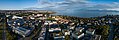 An aerial view of campus
 -
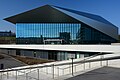
-
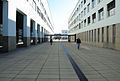 The BM and BP buildings
 -
 The BC building
 -
 The Esplanade
 -
 The CO building
 -
 The Odyssea building
 -
 Artlab
 -
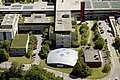 The Polydôme


Projects and partnerships
[edit]-
-
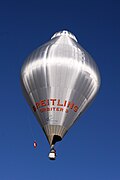
-
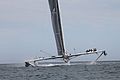 The Hydroptère
 -
 Boats of Alinghi
 -
 The Biowall
 -
 The Musée Bolo
 -
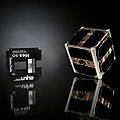 Swiss Cube 1, the first Swiss satellite
 -
 Solar Impulse achieved the first round-the-world solar flight.


- Human Brain Project: a large 10-year scientific research project, established in 2013, coordinated by Henry Markram (EPFL) and largely funded by the European Union.[70] It aims to provide a collaborative informatics infrastructure and first draft rodent and human whole brain models within its 10-year funding period. It includes 112 research partners in 24 countries in Europe as well as outside Europe.[71]
See also
[edit]Notes and references
[edit]- ^ "EPFL History". EPFL. Retrieved 18 April 2023.
- ^ "EPFL Annual Report 2023". EPFL.
- ^ a b "Biography".
- ^ "Statistiques Personnel". EPFL. Retrieved 7 March 2024.
- ^ a b c "EPFL in figures". EPFL.
- ^ "Colour" (PDF). Retrieved 31 December 2019.
- ^ "Presentation & Information EPFL". EPFL. Retrieved 31 October 2017.
- ^ "EPFL École polytechnique fédérale de Lausanne". academicpositions.com.
- ^ "Work with members in your community and make a difference! - ON Campus™. Apr 2023". www.suitsoncampus.com.
- ^ "Budgetbericht des ETH-Rats für den ETH-Bereich 2024" [Budget Report 2024] (PDF). ETH Board (in German). Retrieved 26 February 2024.
- ^ a b "Failure statistics - SAE". 26 July 2013. Retrieved 19 July 2015.
- ^ "EPFL in Figures 2013" (PDF). Archived from the original (PDF) on 28 May 2016. Retrieved 6 May 2015.
- ^ "ShanghaiRanking-Univiersities".
- ^ "EPFL – École polytechnique fédérale de Lausanne".
- ^ "Reuters Top 100: The World's Most Innovative Universities - 2018". 11 October 2018. Retrieved 18 April 2023 – via www.reuters.com.
- ^ "Ecole Polytechnique Federale de Lausanne".
- ^ "École Polytechnique Fédérale de Lausanne". 8 June 2023.
- ^ "QS World University Rankings 2023". Top Universities. Retrieved 4 April 2023.
- ^ "World University Rankings 2023 by subject: engineering". Times Higher Education. 4 April 2023. Retrieved 4 April 2023.
- ^ "Leiden ranking". Retrieved 4 October 2013.
- ^ "100 Under 50 Rankings". Times Higher Education. 4 June 2015. Retrieved 29 February 2016.
- ^ "EPFL keeps the lead of "THE Young Universities Ranking"". actu.epfl.ch. Retrieved 7 April 2016.
- ^ a b "150 Under 50 Rankings". Times Higher Education. 17 December 2015. Retrieved 7 April 2016.
- ^ a b "Young University Rankings 2017". Times Higher Education. 4 April 2017. Retrieved 22 June 2017.
- ^ "THE Young University Rankings 2018: results announced". Times Higher Education (THE). 6 June 2018. Retrieved 30 September 2020.
- ^ "Young University Rankings". Times Higher Education (THE). 20 June 2019. Retrieved 30 September 2020.
- ^ "The 100 most international universities in the world 2014". Times Higher Education. 24 January 2014. Retrieved 1 March 2016.
- ^ "The 100 most international universities in the world 2015". Times Higher Education. 23 January 2015. Retrieved 29 February 2016.
- ^ "Bienvenue dans notre futur bâtiment RTS à Lausanne". rts.ch. 29 May 2019.
- ^ Campus roule, www.publibike.ch (page visited on 15 May 2013).
- ^ "Quarante ans de campus durable" [Forty years of sustainable campus]. actualites.epfl.ch (in French). 12 June 2009. Archived from the original on 15 June 2009.
- ^ "présentation epfl". www.epfl.ch.
- ^ EPFL Valais (page visited on 23 August 2013).
- ^ "About EPFL Middle East". www.epfl.ae. Retrieved 30 March 2024.
- ^ "Service des sports UNIL-EPFL". sport.unil.ch. Retrieved 10 May 2013.
- ^ "Fribourg - EPFL". 8 July 2015. Retrieved 19 July 2015.
- ^ "Microcity". 30 June 2015. Retrieved 19 July 2015.
- ^ "Geneva". www.epfl.ch. Retrieved 11 March 2021.
- ^ "Campus Biotech sera inauguré cet après-midi". Tribune de Genève (in French). ISSN 1010-2248. Retrieved 11 March 2021.
- ^ "EPFL VALAIS WALLIS". www.epfl.ch. Retrieved 11 March 2021.
- ^ "Grille pour l'auto-évaluation du CECR". Portfolio européen des langues (PEL) (in French). Retrieved 8 December 2020.
- ^ "Language Centre". www.epfl.ch. Retrieved 8 December 2020.
- ^ "Programme Tandem". www.unil.ch (in French). Retrieved 8 December 2020.
- ^ "Facts and Figures EPFL". Retrieved 18 April 2023.
- ^ "EPFL at a glance - EPFL". 28 May 2015. Retrieved 19 July 2015.
- ^ "Student Associations". EPFL.
- ^ "AGEPoly at EPFL".
- ^ "Forum EPFL - Le plus grand salon de recrutement d'Europe". Forum EPFL.
- ^ "Unipoly – Association écologiste EPFL-UNIL". unipoly.ch.
- ^ "Polympiads". polympiads.ch. Retrieved 28 March 2024.
- ^ "Festival Balelec". People Magazine. Sacha Voeffray
- ^ "Balélec repart pour un tour". 24 heures, 27 October 2015
- ^ "Festival Balélec, EPFL Campus, Lausanne, 08.05.2015". Indie Nation, May 13, 2015
- ^ "Festival Balélec, EPFL Campus, Lausanne, 08.05.2015". Indie Nation, May 13, 2015.
- ^ "Serment d'Archimèdes" (PDF). Archived from the original (PDF) on 14 January 2014. Retrieved 10 December 2014.
- ^ "Harcèlement, sexisme, homophobie: Des étudiants sonnent l'alarme à l'EPFL". Le Temps. December 2020.
- ^ "EPFL: Des étudiants dénoncent des agressions et un sexisme latent".
- ^ "EPFL-Hydroptère". Archived from the original on 23 November 2012. Retrieved 5 October 2013.
- ^ "SwissCube Website".
- ^ "Human brain project". Retrieved 5 October 2013.
- ^ "DAY 2 - Thursday 5 June | CODEV". cooperation.epfl.ch. Retrieved 28 February 2017.
- ^ "Welcome from the Director | STI". sti.epfl.ch. Retrieved 29 May 2017.
- ^ "Section SGM | STI". sti.epfl.ch. Retrieved 29 May 2017.
- ^ "Commission d'enseignement - EPFL". Retrieved 18 April 2023.
- ^ "La Structure de la Section | STI". sti.epfl.ch (in French). Retrieved 29 May 2017.
- ^ "Contact | IBI". bioengineering.epfl.ch. Retrieved 29 May 2017.
- ^ President since 1853, official website of the École polytechnique fédérale de Lausanne (page visited on 24 February 2016).
- ^ "Home - LC3 - Limestone Calcined Clay Cement". LC3 - Limestone Calcined Clay Cement.
- ^ "Monodor". Archived from the original on 5 March 2016. Retrieved 20 February 2016.
- ^ "The Human Brain Project - Human Brain Project". www.humanbrainproject.eu. Retrieved 1 March 2016.
- ^ "Home - Partners - Human Brain Project". www.humanbrainproject.eu. Retrieved 1 March 2016.
Bibliography
[edit]- (in French) Histoire de l'École polytechnique de Lausanne : 1953-1978, Presses polytechniques et universitaires romandes, 1999 (ISBN 9782880743956).
- (in French) Michel Pont, Chronique de l'EPFL 1978-2000, Presses polytechniques et universitaires romandes, 2010 (ISBN 9782880748760).
- (in French) Libero Zuppiroli, La bulle universitaire. Faut-il poursuivre le rêve américain ? [The academic bubble. Should we pursue the American dream?], Éditions d'en bas, 2010, 176 pages (ISBN 978-2-8290-0385-1). The first part, entitled "Le parcours exemplaire du Swiss Institute of Technology Lausanne" [The exemplary path of the Swiss Institute of Technology in Lausanne], is about the change of the EPFL after the appointment of Patrick Aebischer as president.

| International | |
|---|---|
| National | |
| Geographic | |
| Academics | |
| Artists | |
| Other | |

École Polytechnique Fédérale de Lausanne
View on GrokipediaHistory
Founding and Early Development
The École Spéciale de Lausanne was established on November 7, 1853, as a private initiative by five founders inspired by the École Centrale des Arts et Manufactures in Paris, aiming to train engineers for the industrial needs of French-speaking Switzerland during the second industrial revolution.[3][6] On its opening day, the school enrolled eleven students in a curriculum encompassing chemistry, physics, mathematics, drawing, architecture, and civil engineering.[3] The first cohort graduated in 1855, shortly before the opening of the Institut Polytechnique de Zurich, establishing the school's reputation for rigorous standards and selectivity.[3] In 1869, the institution affiliated with the Académie de Lausanne and was redesignated as the academy's technical school, marking its transition from private to public oversight.[3] By 1890, following the Académie's elevation to university status as the University of Lausanne, the school became the École d’Ingénieurs de l’Université de Lausanne and introduced a major in electricity, reflecting emerging technological demands.[3] The 1903 commemoration of its 50th anniversary highlighted growth to 132 students and 24 professors.[3] In 1905, Cécile Butticaz became one of the first women in Switzerland to receive an engineering degree from the institution.[3] During the early 20th century, the school expanded its facilities and academic offerings, relocating to the Hôtel Savoy building in 1944 amid wartime constraints.[3] In 1946, it was renamed École Polytechnique de l’Université de Lausanne (EPUL) and incorporated a physics department, broadening its scope beyond engineering.[3] By its 1953 centennial, EPUL had approximately 500 students and 45 professors or lecturers, underscoring steady development in enrollment and faculty.[3]Postwar Expansion and Federal Integration
Following World War II, the institution, then known as the École d'ingénieurs de l'Université de Lausanne, underwent significant reorganization and growth. In 1946, it was renamed École Polytechnique de l'Université de Lausanne (EPUL) and established a dedicated physics department to broaden its scientific scope amid Switzerland's postwar economic recovery and increasing demand for engineers.[3] By 1953, enrollment had reached approximately 500 students, supported by 45 professors and lecturers, reflecting steady expansion driven by industrial needs in French-speaking Switzerland.[3] Efforts to achieve federal status intensified in the postwar era, building on prior rejections such as in 1943. From 1963, under the leadership of director Maurice Cosandey, advocacy focused on elevating the school to match the prestige and resources of ETH Zurich, emphasizing its role in national technical education and research.[3] This culminated in a federal reorganization of Swiss higher education and research institutions, leading to the passage of legislation that separated EPUL from the University of Lausanne.[3] [7] On January 1, 1969, the institution officially became the École Polytechnique Fédérale de Lausanne (EPFL), Switzerland's second federal polytechnic institute, granting it autonomy, direct federal funding, and integration into the ETH Domain for coordinated oversight of technical higher education.[3] Enrollment immediately surpassed 1,000 students, signaling rapid postwar momentum, while planning began for a new campus in Écublens-Dorigny to accommodate future expansion beyond Lausanne's urban constraints.[3] This federal elevation positioned EPFL to prioritize applied sciences and engineering, free from the broader humanities focus of its former university affiliation.[3]Modern Growth and Key Milestones
Following its establishment as a federal institute in 1969, with enrollment exceeding 1,000 students, EPFL initiated a major expansion under a Swiss federal government plan allocating CHF 700 million over 25 years to relocate and develop the institution on a unified campus.[3] The first buildings at the new Écublens-Dorigny site were inaugurated in 1978, marking the beginning of physical consolidation and infrastructure growth that transformed EPFL from a modest entity into a comprehensive research university.[3] By the 1980s, student numbers surpassed 2,000, reflecting early momentum in academic expansion amid the addition of disciplines such as computer science, microengineering, and communication systems.[3] The 1991 opening of the Science Park Foundation facilitated technology transfer and innovation, supporting subsequent growth in research output and industry partnerships.[3] In 2001, the architecture department relocated to Écublens, achieving full campus unification, while a 2002 restructuring organized EPFL into interdisciplinary schools, including new entities for life sciences and humanities.[3] Infrastructure milestones accelerated in the 2010s, with the 2010 inauguration of the Rolex Learning Center enhancing collaborative learning spaces, followed by the 2014 openings of the SwissTech Convention Center, EPFL Valais Wallis, and EPFL Fribourg campuses.[3] The Innovation Park reached over 2,300 employees by 2014, underscoring EPFL's role in fostering startups and economic impact.[3] Enrollment hit 10,000 students in 2015 alongside the launch of Campus Biotech in Geneva, exemplifying decentralized growth while maintaining core operations in Lausanne.[3] Later developments, such as the 2016 ArtLab and 2022 SPOT prototyping space, continued to bolster interdisciplinary research facilities.[3] Key academic and research achievements intertwined with this expansion, including the 1992 operationalization of the Tokamak at the Swiss Plasma Center and the 2022 Fields Medal awarded to mathematician Maryna Viazovska, highlighting EPFL's rising global prominence in science and engineering.[3][6] These milestones, supported by federal investment and strategic leadership, propelled EPFL's transformation into one of Europe's leading technical universities by the 21st century.[3]Governance and Funding
Administrative Structure and Leadership
The École Polytechnique Fédérale de Lausanne (EPFL) is governed as part of the ETH Domain, a confederation of Swiss federal higher education institutions under the strategic oversight of the ETH Board. The ETH Board, whose members are appointed by the Swiss Federal Council, manages the Domain's overall direction, supervises institutional performance, and ensures compliance with federal objectives in science, technology, and education. It proposes candidates for EPFL's presidency to the Federal Council for appointment and directly appoints vice presidents, fostering accountability through performance agreements and annual dialogues on strategic goals.[8][9][10] Internally, EPFL's administrative framework centers on the Direction, which provides executive leadership, supported by participatory bodies including the EPFL Assembly—responsible for proposals on normative acts, budgets, planning, and institutional changes—and the Council of EPFL Teachers, which advises on academic matters and represents faculty interests. The structure encompasses academic schools, interdisciplinary colleges, specialized research centers, and central administrative services, enabling coordinated decision-making across teaching, research, and operations.[11][2] The President serves as EPFL's chief executive, directing daily operations, strategic implementation, and representation to federal authorities while reporting to the ETH Board on progress toward institutional mandates. Anna Fontcuberta i Morral, a professor of materials science and nanoengineering, was appointed by the Federal Council on March 27, 2024, and took office on January 1, 2025, succeeding Martin Vetterli after an eight-year tenure; she is the first woman to hold the position.[12][13] The President's leadership is augmented by the Executive Board, comprising vice presidents appointed by the ETH Board for fixed terms, each heading a vice presidency focused on domains such as academic affairs (overseeing education and doctoral training), research (managing scientific priorities and funding), operations (handling infrastructure and sustainability), human development (addressing HR and diversity), and strategic initiatives (supporting innovation and partnerships). On September 19, 2024, the ETH Board confirmed appointments and renewals effective January 1, 2025, including Ambrogio Fasoli as Vice President for Research and renewals for roles in education and operations, to align with EPFL's emphasis on interdisciplinary excellence and global competitiveness.[14][10][15]Financial Model and Autonomy
The École Polytechnique Fédérale de Lausanne (EPFL) operates within the Swiss federal higher education framework as part of the ETH Domain, receiving its primary funding through allocations from the Swiss Confederation via the ETH Board. In 2023, the federal contribution, which covers core operations including teaching, research infrastructure, and administrative costs, accounted for approximately two-thirds of EPFL's total revenue, marking a 1.9% increase from the prior year amid stable support for federal institutes.[16] [17] The remaining revenue derives from external sources, comprising about 30% of the budget, sourced from public institutions, foundations, industry partnerships, and competitive grants such as those from the Swiss National Science Foundation (SNSF).[18] Tuition fees and continuing education contribute minimally, around 2% of operating revenue across the ETH Domain institutions including EPFL.[19] EPFL's budget is managed through "envelopes" of budgetary funds tied to federal allocations, overseen by the Vice Presidency for Finances and subject to annual performance agreements with the ETH Board, which emphasizes strategic objectives like research excellence and innovation.[20] These agreements grant EPFL flexibility in internal resource distribution but require alignment with national priorities, including contributions to open access policies and gender balance in research. External funding supports targeted projects, equipment sustainability, and overhead costs at rates defined by EPFL directives, enhancing diversification but not altering the federal core dependency.[18] Financial autonomy is constrained by reliance on Confederation appropriations, which are debated and approved by Parliament, leading to periodic shortfalls; for instance, the ETH Domain's 2024 funding requests exceeded available federal resources by CHF 14 million, prompting reallocations.[21] Recent federal budget proposals for 2025–2028 include cuts affecting the ETH Domain, though EPFL's basic teaching allocation sees a nominal increase, underscoring tensions between operational independence and fiscal oversight.[22] Buildings and major infrastructure remain federally owned, further linking capital expenditures to government decisions.[23] This model balances institutional self-governance—via the ETH Board's supervisory role—with accountability to ensure alignment with Switzerland's innovation and education mandates.[9]Academics
Degree Programs and Curriculum
EPFL provides bachelor's, master's, and doctoral degrees focused on engineering, natural sciences, architecture, and related interdisciplinary fields, with curricula designed to build rigorous quantitative skills and practical expertise. Bachelor's programs total 13 offerings across disciplines such as architecture, chemical engineering, chemistry, civil engineering, communication systems, computer science, electrical engineering, environmental sciences and engineering, life sciences engineering, materials science and engineering, mathematics, mechanical engineering, microengineering, and physics. Each program spans three years and comprises 180 European Credit Transfer System (ECTS) credits, structured with a foundational first-year propaedeutic cycle emphasizing core sciences like mathematics, physics, chemistry, and informatics to ensure broad competency before specialization. The subsequent two years intensify discipline-specific coursework, including laboratory sessions, design projects, and electives that integrate engineering principles with real-world applications.[24][25] Master's programs number 29, distributed across five schools (engineering, basic sciences, computer and communication sciences, life sciences, and architecture, civil and environmental engineering) and two colleges (management of technology and humanities), enabling students to deepen bachelor's-level knowledge through flexible pathways. For example, the Master in Physics is a two-year, 120 ECTS, English-taught program emphasizing research immersion, with students joining labs early and projects comprising approximately 50% of credits; it balances fundamental theory and computation through core courses in advanced quantum and statistical mechanics, including Physics Project I and II, and key electives such as Computational Quantum Physics (covering numerical Schrödinger solutions, Trotter decomposition for spin models, Hartree-Fock/DFT, variational/Monte Carlo methods, and quantum algorithms like VQE), Quantum Field Theory I/II/III, Statistical Physics of Computation, Quantum Information Theory, and Machine Learning for Physicists. Computational aspects feature strong programming components, including Python-based exercises and simulations of many-body quantum systems, electronic structure, and quantum computing, supported by research strengths in the Institute of Theoretical Physics in areas like quantum simulation, many-body theory, and high-performance computing; graduates achieve excellent placements in top global PhD programs and industry roles in quantum technologies, tech startups, and finance.[26][27] These typically require 90 to 120 ECTS credits, including a core master's cycle of advanced courses (60 or 90 ECTS) followed by a 30-ECTS thesis involving original research or design under faculty supervision. Engineering-focused programs incorporate mandatory elements like an eight-week industrial internship to bridge academia and professional practice, while options for minors or specializations—such as data science, cyber security, or sustainable development—allow customization aligned with emerging technological needs. Curricula prioritize analytical modeling, computational tools, and interdisciplinary integration, with many courses available in English to attract international talent.[28][29][30] Doctoral education at EPFL centers on 22 structured programs that span the institution's research domains, from neuroscience and electrical engineering to bioengineering and energy science, emphasizing independent inquiry over fixed coursework. Candidates, employed as salaried research or teaching assistants, complete a dissertation demonstrating novel contributions, alongside a minimum of 12 ECTS in doctoral-level courses tailored to their field, and contribute to teaching or outreach activities. Program durations average four to five years, with progression monitored through annual evaluations and committee oversight to ensure methodological rigor and impact. This research-driven model fosters expertise in areas like high-performance computing, advanced materials, and plasma physics, directly linking education to EPFL's innovation outputs.[31][32] Across all levels, EPFL's curriculum integrates mandatory humanities and social sciences components to contextualize technical training, alongside opportunities for enhanced learning tracks, such as accelerated paths or international exchanges, which reinforce adaptability in global challenges. Programs adhere to the Bologna Process for compatibility, with assessments combining exams, projects, and peer-reviewed outputs to evaluate both theoretical mastery and problem-solving under constraints.[33][29]Admission and Selectivity
Admission to EPFL's bachelor's programs is governed by stringent academic prerequisites tailored to the applicant's origin. Swiss applicants holding a federal gymnasiale maturity certificate must attain at least 38 out of 42 points overall (excluding bonus points) and minimum grades of 6 out of 7 in both mathematics and physics.[34] Candidates from EU or EFTA countries qualify with equivalent upper secondary certificates recognized by Swiss authorities, enabling direct entry into the propaedeutic cycle.[34] Those with alternative qualifications, such as Swiss maturité professionnelle or specialized maturity, are eligible via an entrance examination covering scientific and general knowledge subjects, administered annually in January and August-September.[35] Applications proceed online, with initial submissions due by April 30 and supplementary documents by July 10, followed by a non-refundable processing fee.[36] Selectivity intensifies during the first-year propaedeutic cycle, which emphasizes foundational sciences and mathematics through intensive coursework. Progression to the second year requires accumulating sufficient credits and passing all mandatory courses within a maximum of two years, enforcing rigorous performance standards.[37] This structure filters students based on demonstrated aptitude, as foundational modules often demand strong quantitative skills, with failure to meet thresholds resulting in program termination or remedial options limited to extensions or preparatory modules for underprepared entrants. Master's program admissions emphasize competitive evaluation of prior academic excellence. Applicants must hold a relevant bachelor's degree, typically from a recognized institution, with decisions rendered by program-specific expert committees assessing transcripts, grade point averages, recommendation letters, and research or professional experience.[38] Only those with superior records—often evidenced by high GPAs and strong references—secure admission, reflecting EPFL's priority on candidates poised for advanced research.[38] Online applications, including detailed forms and supporting documents, close on March 31 for the subsequent autumn intake.[39] Doctoral admissions, managed through EPFL's doctoral schools, prioritize research alignment and potential, requiring a master's degree or equivalent, a prospective supervisor's endorsement, and evidence of scholarly output such as publications or projects.[40] Overall, EPFL's multi-tiered process—combining qualification thresholds, performance gateways, and holistic reviews—ensures a highly capable student body, with initial access moderated by national regulations but sustained by internal rigor.Research Organization and Focus Areas
EPFL's research is structured across its five schools and two colleges, which integrate teaching and investigative activities, alongside transdisciplinary centers and administrative support units such as the Research Office and Technology Transfer Office. This framework supports nearly 350 faculty members overseeing more than 500 laboratories and research groups dedicated to advancing fundamental and applied science.[41] [11] Central to this organization are 18 specialized institutes that anchor disciplinary and cross-cutting research efforts, including the Brain Mind Institute for neuroscience, the Institute of Bioengineering for biological systems engineering, the Institute of Materials for advanced materials development, the Swiss Plasma Center for plasma physics and fusion energy, and the Global Health Institute for health-related innovations. These institutes facilitate targeted investigations while enabling collaborations on complex problems, such as those in electrical engineering, mechanical engineering, chemical sciences, mathematics, physics, and environmental engineering.[42] Interdisciplinary focus areas drive EPFL's strategic research agenda, pooling expertise to tackle societal challenges through initiatives in data science, personalized health, biomedical engineering, energy systems, robotics, and advanced manufacturing. Additional emphases include neuroscience, sustainable habitats via the Habitat Research Center, and digital technologies, with centers like the EPFL AI Center and Swiss Data Science Center providing platforms for innovation and ethical AI development. Research infrastructure is bolstered by technology platforms offering shared facilities for high-precision experimentation and data analysis.[41] [42]Reputation and Rankings
Global and Subject-Specific Assessments
In global university rankings, EPFL consistently places among the top institutions worldwide, particularly reflecting its strengths in research output and international collaboration. In the QS World University Rankings 2026, EPFL is ranked 22nd globally.[43] The Times Higher Education World University Rankings 2026 positions it at 35th, emphasizing its high scores in research quality (87.5) and industry engagement (99.9).[44] The Academic Ranking of World Universities (ARWU) 2025 ranks EPFL 44th, an improvement from 55th in 2024, driven by indicators such as highly cited researchers and publications in top journals.[45] Subject-specific assessments highlight EPFL's preeminence in engineering, technology, and sciences. In the QS World University Rankings by Subject 2025 for Engineering and Technology, EPFL ranks 10th globally.[46] The Times Higher Education World University Rankings by Subject 2025 places it 21st in Engineering and 20th in Computer Science, with additional top-20 rankings in Physical Sciences.[44] These positions stem from EPFL's focus on interdisciplinary research in areas like materials science, robotics, and sustainable energy, as measured by citation impacts and academic reputation surveys in these rankings.[47]| Ranking System | Global Rank | Key Subject Ranks (2025/2026) |
|---|---|---|
| QS World University | 22nd (2026) | Engineering & Technology: 10th; Computer Science: Top 20[43][46] |
| Times Higher Education | 35th (2026) | Engineering: 21st; Computer Science: 20th; Physical Sciences: 20th[44] |
| ARWU (Shanghai) | 44th (2025) | N/A (broad research metrics)[45] |
Metrics of Research Impact and Innovation Output
EPFL demonstrates strong research impact through normalized citation metrics and contributions to high-quality journals. In the period from 2009 to 2020, EPFL researchers produced 45,073 publications, garnering 595,204 citations, with a mean normalized citation score (MNCS) of 1.63, indicating performance 63% above the global average after field and year normalization.[50] This metric accounts for variations in citation practices across disciplines, using a four-year fixed window and excluding self-citations for robustness. In the Nature Index for 2024, which tracks fractional authorship shares in 82 high-impact natural science journals, EPFL achieved a share of 224.93, ranking second among Swiss academic institutions behind ETH Zurich.[51] Disciplinary strengths contribute to overall impact, with EPFL ranking seventh globally in electronics and electrical engineering based on aggregated D-index (a discipline-specific h-index variant) of 2,439 across affiliated scientists, as of data updated November 2024.[52] Approximately 19% of EPFL publications from the 2009–2020 cohort fell in the top 10% most-cited globally within their fields, with elevated impact in collaborations such as those with ETH Zurich (MNCS 2.02).[50] On innovation output, EPFL files nearly 100 priority patents annually under its name, reflecting consistent translation of research into intellectual property.[53] This activity supports Switzerland's position as the world's most innovative economy for 14 consecutive years per the 2025 Global Innovation Index, where EPFL ranks among Europe's top universities for value generated by technology spin-offs.[54] Spin-off creation underscores commercialization efforts, with one new company emerging every two weeks based on EPFL technology or by its researchers. In 2023, 23 startups were launched, raising CHF 470 million in funding despite economic challenges. The following year saw 24 new spin-offs, primarily in engineering, medtech, and ICT sectors, reinforcing EPFL's role in deep-tech entrepreneurship.[55][56]| Metric | Value | Year/Period | Source |
|---|---|---|---|
| Publications | 45,073 | 2009–2020 | [50] |
| MNCS | 1.63 | 2009–2020 (cites to 2021) | [50] |
| Nature Index Share | 224.93 | 2024 | [51] |
| Priority Patents Filed | ~100 | Annually (e.g., 2023–2024) | [53] |
| New Spin-offs | 24 | 2024 | [56] |
| Spin-off Funding Raised | CHF 470 million | 2023 | [55] |
Campus and Facilities
Main Campus Layout and Infrastructure
The main campus of the École Polytechnique Fédérale de Lausanne (EPFL) is located in Ecublens, a southwestern suburb of Lausanne, Switzerland, adjacent to the shores of Lake Geneva. Spanning approximately 55 hectares, the campus encompasses around 65 buildings developed progressively since the institution's relocation there in 1969. This layout supports over 11,500 students and hosts more than 500 research laboratories and groups, emphasizing integrated research, teaching, and innovation facilities.[57] The campus design follows strategic masterplans that anticipate long-term growth, incorporating modular infrastructure to accommodate expansion while maintaining spatial efficiency. Key axes, such as the south access avenue lined with green bands, organize pedestrian and vehicular flow, connecting peripheral laboratory and office buildings to central hubs. Sustainability features, including bio-based materials in newer structures and energy-efficient designs, underpin the infrastructure, with ongoing projects like the Double Deck auditorium complex set to add 1,500 seats by 2027 for enhanced teaching capacity.[58][59][60] Central infrastructure includes the Rolex Learning Center, a 20,000 m² undulating, hill-like structure completed in 2010 that integrates library services, study areas, and multipurpose spaces without internal divisions, fostering collaborative environments. Mobility is facilitated through dedicated parking, including reserved spots for reduced mobility users, real-time navigation via campus apps, and proximity to public transport links. The layout also features innovation parks and convention centers, such as the SwissTech Convention Center, supporting industry interactions amid landscaped green spaces that enhance usability and environmental integration.[61][62][63]Specialized Buildings and Laboratories
The EPFL main campus in Lausanne houses specialized buildings and laboratories integral to its research mission, including over 500 dedicated research groups and 40 shared facilities providing advanced infrastructure for fields such as materials science, life sciences, and engineering.[41][64] These facilities emphasize high-precision experimentation, with investments in vibration-isolated environments and state-of-the-art equipment to support interdisciplinary work. The Swiss Plasma Center (SPC), located in building SB at Station 13, is a flagship facility for fusion energy research, hosting the Tokamak à Configuration Variable (TCV), one of Europe's four major tokamaks operational since 1992.[65] The TCV enables plasma configuration studies critical for sustainable fusion power, mimicking solar processes, and supports applications in energy, medicine, and technology.[66] With around 200 personnel, the center advances global fusion efforts, including contributions to ITER.[67] The Blue Brain Project operates virtual neuroscience laboratories at EPFL, leveraging supercomputing resources to create biologically detailed digital reconstructions of brain regions, including the entire mouse brain.[68] Established in 2005, it has produced over 300 peer-reviewed publications and developed open-source tools like simulation platforms with 18 million lines of code, fostering simulation neuroscience worldwide.[68] These facilities integrate experimental data from the Laboratory of Neural Microcircuitry to model synaptic maps and neural dynamics.[69] The New Mechanics Hall (ME Building), renovated and expanded in 2016 by Dominique Perrault Architecture, serves as a 19,000-square-meter experimental hub for mechanical engineering, featuring two wings connected by a central atrium for large-scale testing and fabrication.[70] Originally constructed in the early 1970s, the updated structure includes automated metallic mesh facades for environmental control and supports research in dynamics, robotics, and materials under extreme conditions.[71] The forthcoming Advanced Science Building (ASB), slated for completion in 2029 at a cost of CHF 200 million, will provide seven floors of ultra-stable laboratories capable of tolerating vibrations below one hundredth of a micron per second, enabling precision experiments in quantum technologies and deep-tech fields.[72][73] Designed by KAAN Architecten, it prioritizes sustainability through natural lighting and energy-efficient materials while isolating sensitive instruments from external interference.[74]Associated Sites and International Extensions
EPFL maintains associated research-focused sites across four Swiss cantons beyond its primary Lausanne campus in Vaud: Geneva, Valais, Fribourg, and Neuchâtel. These extensions support specialized laboratories and interdisciplinary projects, often in collaboration with local institutions and industries, emphasizing applied research in fields such as energy, materials science, and biomedical engineering.[75] The EPFL Valais Wallis campus in Sion, established in 2010 and formally structured by 2014, concentrates on renewable energy systems, sustainable chemistry, water management, and health technologies. It houses four faculties and 16 expert laboratories, including facilities for energy storage, clean production processes, and advanced materials development, fostering innovation through partnerships like the Energypolis ecosystem shared with HES-SO Valais-Wallis.[76][77][78] In Geneva, EPFL's extension operates as a hub for international-oriented research, leveraging the city's diplomatic and organizational environment to advance projects in areas like biomedical imaging and global health initiatives, including collaborations with the University of Geneva on centers such as the Center for Biomedical Imaging (CIBM).[79][75] The sites in Fribourg and Neuchâtel primarily host targeted research outposts, such as joint programs in microtechnology and precision engineering in Neuchâtel, and interdisciplinary labs in Fribourg aligned with regional strengths in engineering and life sciences, without full-scale teaching facilities. These locations enable EPFL to integrate regional expertise while maintaining centralized governance from Lausanne.[75][80] EPFL lacks permanent physical campuses abroad but extends its influence internationally through over 150 exchange agreements with partner universities across North America, South America, Asia, Europe, and Oceania, facilitating student mobility, joint research ventures, and technology transfer without establishing independent overseas branches.[81][82]Student Life
Demographics and Enrollment Trends
As of 2024, EPFL enrolls 14,012 students across bachelor's, master's, and doctoral programs.[83] The institution's student body has expanded markedly over recent decades, driven by its emphasis on STEM fields and international recruitment; enrollment surpassed 10,000 in the mid-2000s and reached approximately 12,000 by 2020 before climbing further amid rising global demand for its engineering and sciences curricula.[43] This growth prompted administrative measures, including a planned cap of 3,000 first-year bachelor's admissions starting in 2025, aimed at managing infrastructure strain and prioritizing Swiss applicants amid a surge in enrollments from neighboring France, where 1,392 students were registered for the 2023–2024 academic year.[84][85] Demographically, the student population reflects EPFL's selective focus on technical disciplines, with a pronounced gender imbalance: approximately 31% female and 69% male overall.[44] This disparity persists across degree levels, though female representation has edged upward modestly over the past decade to an average of 29.5%, influenced by targeted recruitment in fields like life sciences but remaining lower in core engineering areas such as informatics (around 17.5%).[86] Nationally, students hail from over 130 countries, with non-Swiss students comprising roughly half the total, fostering a cosmopolitan environment but also highlighting reliance on international talent to sustain program scale.[44] Swiss-origin students, particularly from French-speaking regions, have increased in absolute terms by over 20% since 2005, yet their share has fluctuated amid broader internationalization.[87]| Metric | Value (2024 or latest) | Notes |
|---|---|---|
| Total Enrollment | 14,012 | Includes all degree levels; up from ~11,968 in prior QS data.[43][83] |
| Female Students | ~31% | STEM-driven skew; stable trend with slight gains.[44] |
| International Students | ~50% | Over 130 nationalities; higher in graduate programs.[44] |
| French Students | 1,392 (2023–2024) | Prompted enrollment caps.[85] |
Traditions, Clubs, and Extracurricular Activities
EPFL supports over 100 recognized student associations that organize weekly events to foster community, diversity, and interdisciplinary skills among students.[88] These groups, managed through the Office of Associative Affairs, receive institutional support including grants and integration into campus events.[88] Categories encompass cultural, sports, academic, and national associations, such as Aeropoly for aviation activities, Club Montagne for outdoor pursuits, and Dance Square for dance enthusiasts.[89] The Association Générale des Étudiant·e·s de l'École Polytechnique Fédérale de Lausanne (AGEPoly), established in 1951, serves as the primary student union representing and defending student interests in EPFL governance.[90] It oversees commissions including ArtePoly for arts, Challenge for annual ski competitions between EPFL and ETH Zurich, and Club Montagne for mountain sports, while also managing the student-run Satellite bar that hosts concerts and social gatherings.[90] Sports extracurriculars feature over 125 disciplines offered through the joint UNIL-EPFL Service Sport Santé, with on-campus facilities like ping-pong tables, pétanque courts, and free equipment loans via Box-Ups.[91] Programs include PolySports events, e-sports tournaments like E-Bou, and weekly MyBreak wellbeing sessions focused on physical and mental health.[91] A prominent annual tradition is the Balelec music festival, organized by students since 1981 and recognized as Europe's largest student-led event, drawing 15,000 attendees for over 20 concerts across multiple stages featuring genres from electro to hip-hop.[92] Other recurring activities include welcome ceremonies for new students at the SwissTech Convention Center and cultural exchanges through associations like those representing specific nationalities.[93] Student initiatives in arts and culture further enrich campus life with theatre, music performances, and exhibitions.[94]Policies on Conduct and Campus Culture
EPFL maintains a Code of Honour that outlines core principles for student and staff conduct, requiring adherence to the institution's ethical charter, respect for regulations governing school life, and integrity in academic work by rejecting cheating or plagiarism.[95] Community members are expected to foster constructive dialogue, contribute positively to teaching and knowledge acquisition, and use institutional resources such as IT facilities appropriately while respecting infrastructures and the environment.[95] The Compliance Guide serves as a reference framework for conduct, emphasizing essential rules, practices, and values that promote freedom within defined boundaries, including obligations to follow internal regulations listed in Polylex.[96] Students must respect the community and act in accordance with the Honour Code during their studies.[97] Policies on respect prohibit harassment, violence, discrimination, or bullying, with EPFL committing to a motivating environment that values personal dignity and diversity as a source of strength.[98] Violations based on gender, sexual orientation, disability, race, religion, or other protected characteristics trigger investigations and sanctions ranging from warnings and reprimands to exclusion for students.[97] The Respect Compliance Office (RCO) handles formal complaints, while the Trust and Support Network (TSN) offers confidential assistance; online training modules under "EPFL Essentials" educate on recognizing and addressing inappropriate behavior.[98] A Harassment Task Force, established in 2021, supports prevention efforts, alongside initiatives like the Respect@EPFL campaign and annual awareness events.[98] Campus culture reflects these policies through an emphasis on mutual respect, sustainability, and mental health support, aligning with the ETH Domain's Strategy for Diversity, Equality, and Inclusion (2025-2028), which prioritizes gender balance and inclusiveness without compromising academic freedom.[97] Disciplinary procedures, governed by ordinances such as LEX 2.4.0.2, involve investigating bodies, vice presidents, and committees to address misconduct, ensuring accountability while upholding institutional values.[99]Research Achievements and Societal Impact
Major Innovations and Breakthroughs
The Blue Brain Project, initiated at EPFL in 2005 under Henry Markram, represents a pioneering effort in computational neuroscience to digitally reconstruct and simulate mammalian brain tissue at the cellular level. A key breakthrough came in 2017 when researchers uncovered multi-dimensional geometrical structures and cavities within neural networks, revealing organized higher-dimensional spaces that emerge during brain development and learning.[100] In 2019, the project achieved a mathematical classification of neuron types solely from their morphological shapes, enabling automated identification without relying on electrophysiological data.[101] By 2022, algebraic topology methods allowed for the automatic reconstruction of digital neuron models from limited experimental data, facilitating scalable simulations of brain circuits.[102] ![Henry Markram visualizing synaptic maps][float-right] In fusion energy research, EPFL's Swiss Plasma Center operates the TCV tokamak, a medium-sized device commissioned in 1993 uniquely capable of producing non-standard plasma shapes for advanced confinement studies. This flexibility enabled breakthroughs in plasma shaping, including negative triangularity configurations that demonstrated improved stability and reduced turbulence in 2019 experiments.[66] A 2022 collaboration with DeepMind applied deep reinforcement learning to real-time magnetic control of TCV plasmas, achieving stable shaping of elongated and diverted configurations—tasks infeasible with traditional methods—thus accelerating progress toward viable tokamak reactors.[103][104] EPFL's contributions to sustainable aviation culminated in the Solar Impulse project, where researchers developed lightweight photovoltaic systems and energy management algorithms integral to the aircraft's design. The Solar Impulse 2 achieved the first solar-powered circumnavigation of the Earth in 2016, spanning 42,000 km over 17 legs without fossil fuels, validating innovations in high-efficiency solar cells and ultralight structures tested at EPFL labs.[105][106] In robotics, EPFL labs have driven bio-inspired designs, such as the 2025 development of variable-stiffness 3D-printed elephant trunks for dexterous manipulation, mimicking musculoskeletal systems with pneumatic actuators for adaptive gripping.[107] Modular soft robots using compressed air for haptic feedback and shape-morphing, reported in 2023, enable customizable prosthetics and medical devices with enhanced sensory integration.[108] These advances stem from EPFL's 25 specialized robotics laboratories, which integrate neuroscience and materials science for agile, autonomous systems.[109]Industry Collaborations and Technology Transfer
EPFL's Technology Transfer Office (TTO), operational since 1993, oversees the protection, licensing, and commercialization of intellectual property arising from university research, including inventions disclosed by faculty and students.[110][111] The TTO facilitates agreements such as exclusive or non-exclusive licenses for technologies available in fields like biotechnology, materials science, and microelectronics, while ensuring compliance with EPFL's directives on research contracts and IP management.[112][113] This process supports the transition of academic innovations into industrial applications, with EPFL filing nearly 100 priority patents annually under its name.[53] The EPFL Innovation Park serves as a hub for technology transfer, hosting over 350 spin-offs originating from EPFL research alongside additional startups and scale-ups, creating a ecosystem proximate to 500 university laboratories.[114][115] Since its inception, EPFL has generated more than 500 spin-offs, with 23 new ones created in 2023 alone, often in sectors such as medtech, cleantech, and artificial intelligence.[116][55] These entities have collectively raised over CHF 470 million in funding in 2023, demonstrating robust market validation despite economic challenges.[55] Through the Vice Presidency for Innovation, EPFL engages industry partners via tailored research collaborations, including joint R&D projects, sponsored research, and the KNOVA open innovation platform for flexible, one-year engagements.[117][118] Companies gain access to EPFL expertise for product development, talent recruitment, and on-campus R&D facilities within the Innovation Park, fostering bidirectional knowledge exchange.[117] The Industry Liaison Office coordinates these interactions, enabling partnerships that have contributed to Switzerland's innovation landscape by accelerating commercialization and supporting federal initiatives like Innosuisse grants.[119][115]Contributions to Swiss and Global Innovation
EPFL's technology transfer initiatives have significantly bolstered Switzerland's position as a global leader in innovation, with the institution's Technology Transfer Office (TTO) managing intellectual property disclosure, patenting, and commercialization of research outputs.[111] Between 2005 and 2014, the TTO evaluated twice as many inventions as in the prior decade, averaging approximately 100 disclosures per year from EPFL researchers.[120] This process often involves EPFL retaining patent ownership while granting exclusive licenses to inventors for spin-off development, enabling rapid market entry.[121] In 2019 alone, EPFL-founded startups raised over CHF 285 million in funding, including 10 spin-offs securing more than CHF 10 million each, while 23 new companies were established that year.[122] The annual number of spin-offs grew from 5 in 2005 to 33 by 2021, contributing to regional economic vitality in the Lake Geneva area through job creation and investment attraction.[123] Programs like Innogrant have supported 206 projects since inception, yielding 146 startups, of which 132 remain operational as of 2025.[124] These efforts align with Switzerland's high knowledge and technology transfer rates between universities and industry, underpinning its top ranking in global innovation indices.[125] On a national scale, EPFL's activities enhance Swiss prosperity by driving high-value sectors such as engineering and biotechnology, with its School of Engineering alone accounting for nearly 40% of all EPFL spin-offs in 2019.[126] EPFL, alongside ETH Zurich, ranks among Europe's top universities for value generated by tech spin-offs, supporting Switzerland's per capita patent leadership—nearly seven times the U.S. rate.[54] [127] Globally, EPFL's innovations transfer has produced scalable technologies, exemplified by spin-offs like Nexthink, which achieved unicorn status with a USD 1.1 billion valuation following a 2021 Series D round.[128] Research breakthroughs, such as versatile plasma sources for exotic gas chemistry and self-illuminating biosensors via inelastic electron tunneling, demonstrate potential for industrial applications in electronics and medicine.[129] [130] These outputs foster international collaborations and technology adoption, reinforcing EPFL's role in advancing fields like materials science and digital transformation.[131]Notable Individuals
Presidents and Key Administrators
The leadership of the École Polytechnique Fédérale de Lausanne (EPFL) traces its origins to the founding of the École spéciale de Lausanne in 1853, initially under directors who oversaw its development as a technical school before its federalization and renaming as EPFL in 1969.[132] Directors and later presidents have been responsible for strategic direction, expansion of research capabilities, and integration into the Swiss federal ETH Domain, with appointments typically made by the ETH Board on behalf of the Federal Council.[11] The role shifted from director to president post-1969, emphasizing academic and administrative oversight amid growth from under 1,500 students in 1969 to over 12,000 by the 2020s.[3] Key historical figures include early directors like Jules Marguet, who led multiple terms from 1853 to 1887 and contributed to establishing engineering curricula modeled on French polytechnic traditions.[132] Alfred Stucky directed from 1940 to 1963, guiding the institution through wartime challenges and post-war modernization.[132] Maurice Cosandey served as director from 1963 to 1978, bridging the transition to federal status.[132]| Name | Term | Role and Notes |
|---|---|---|
| Jules Marguet | 1853–1871; 1875–1887 | Founding director; established core technical programs.[132] |
| Samuel Cuénoud | 1871–1873; 1874 | Interim director.[132] |
| Adrien Palaz | 1898–1904 | Director focused on electrical engineering advancements.[132] |
| Alfred Stucky | 1940–1963 | Long-serving director during expansion and WWII recovery.[132] |
| Maurice Cosandey | 1963–1978 | Director then inaugural president; oversaw federal integration in 1969.[132] |
| Bernard Vittoz | 1978–1992 | President; emphasized microelectronics research growth.[132] |
| Jean-Claude Badoux | 1992–2000 | President; advanced interdisciplinary initiatives.[132] |
| Patrick Aebischer | 2000–2016 | President; drove campus relocation to Lake Geneva shore and innovation hubs.[12] |
| Martin Vetterli | 2017–2024 | President; prioritized digital transformation and sustainability.[12] |
| Anna Fontcuberta i Morral | 2025–present | Current president; materials science expert, first woman in role, appointed March 2024.[13][12] |