Hubbry Logo
Flora SandesFlora SandesMain
Open search
Flora Sandes
Community hub
Flora Sandes
logo
8 pages, 0 posts
0 subscribers
Be the first to start a discussion here.
Flora Sandes
Flora Sandes
from Wikipedia

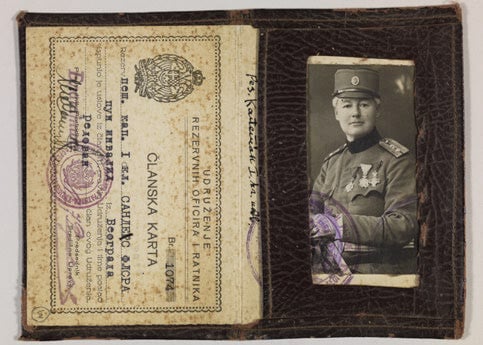
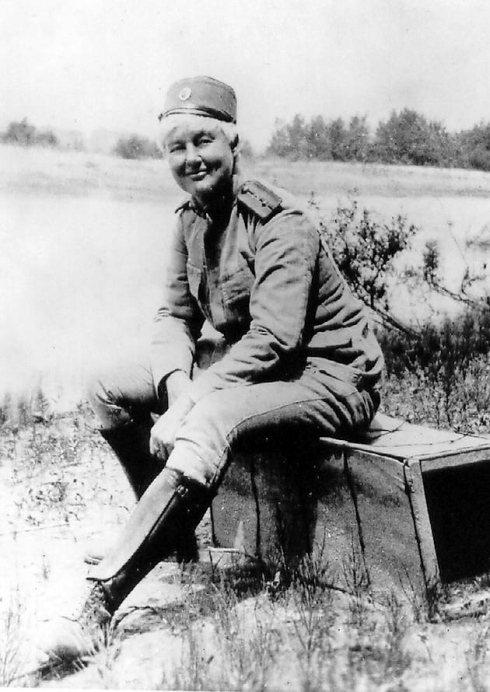
Flora Sandes (Serbian Cyrillic: Флора Сендс, 22 January 1876 – 24 November 1956) was a British woman who served as a member of the Royal Serbian Army in World War I. She was the only British woman officially to serve as a soldier in that war.[2] Initially a St John Ambulance volunteer, she travelled to the Kingdom of Serbia, where she was welcomed and formally enrolled in the Serbian army. She was subsequently promoted to the rank of sergeant major, and, after the war, to senior captain.[3] She was decorated with seven medals.[4]

Key Information

Biography

[edit]

Early life

[edit]

Flora Sandes was born on 22 January 1876 in Nether Poppleton, Yorkshire, the youngest daughter of an Irish family. Her father was Samuel Dickson Sandes (1822–1914), the former rector of Whitchurch, County Cork, and her mother was Sophia Julia (née Besnard).[5][6] When she was nine years old, the family moved to Marlesford, Suffolk; and later to Thornton Heath, near Croydon, Surrey.[5][7][8] As a child she was educated by governesses.[6] She enjoyed riding and shooting and said that she wished she had been born a boy.[9] She learned to drive, and drove an old French racing car.[9] She took a job as a secretary.[9]

In her spare time, Sandes trained with the First Aid Nursing Yeomanry (FANY), founded in 1907 as an all-women mounted paramilitary organisation, learning first aid, horsemanship, signalling and drill. She left the FANY in 1910, joining another renegade, Mabel St Clair Stobart, in the formation of the Women's Sick and Wounded Convoy Corps. The Convoy saw service in Serbia and Bulgaria in 1912 during the First Balkan War. At the outbreak of the First World War in 1914, she volunteered to become a nurse, but was rejected due to a lack of qualifications.[10]

Military career

[edit]

Sandes nonetheless joined a St John Ambulance unit raised by American nurse Mabel Grouitch, and on 12 August 1914 left England for Serbia with a group of 36 women to try to aid the humanitarian crises there.[5][9][11] They arrived at the town of Kragujevac which was the base for the Serbian forces fighting against the Austro-Hungarian offensive.[12] Sandes joined the Serbian Red Cross and worked in an ambulance for the Serbian Army's 2nd Infantry Regiment.[5] In 1914 she went riding with a Serbian soldier who, impressed with her equestrian skills, told her she was wasted as a nurse and should enlist as a soldier; she told Dr Isabel Emslie, "I've always wished to be a soldier and to fight."[citation needed]

In 1915 Sandes struggled persistently to get to the front (despite the efforts of people such as the British Consul, who instructed her to return to safety), eventually joining the ambulance of the Second Regiment at the Babuna Pass. During the Great Retreat through Albania, all the other ambulance staff fled or were killed. Sandes could no longer make herself useful as a nurse and was enrolled as a private by General Miloš Vasić. She quickly advanced to the rank of corporal.[9] She recounted later that to formalize the change she removed her Red Cross badge and replaced it with the brass regimental figures from Colonel Milich's epaulettes.[13] In 1916, during the Serbian advance on Bitola (Monastir), Sandes was seriously wounded by a grenade in hand to hand combat.[9] She subsequently received the highest decoration of the Serbian Military, the Order of the Karađorđe's Star.[14][15] At the same time, she was promoted to the rank of sergeant major.[11]

Also in 1916, Sandes published her autobiography, An English Woman-Sergeant in the Serbian Army, based on her letters and diaries. She used this account to help her raise funds for the Serbian Army,[16] and was compared with the writings for Dr Caroline Matthews 'Experiences of a Woman Doctor in Serbia'.[17] With Evelina Haverfield, Sandes founded the Hon. Evelina Haverfield's and Sergt-Major Flora Sandes' Fund for Promoting Comforts for Serbian Soldiers and Prisoners.[18] Unable to continue fighting due to her injury, she spent the remainder of the war running a hospital.[19] In June 1919, a special Act of Parliament was passed in Serbia that made her the Serbian Army's first female commissioned officer.[20] She was finally demobilised in October 1922.[6][14]

Later life

[edit]

In May 1927, Sandes married Yuri Yudenitch, a former Russian White Army general officer.[7] The couple lived for a time in France, but afterwards returned to Serbia (which had become part of the Kingdom of Yugoslavia), and settled in Belgrade. Among other jobs, Sandes drove Belgrade's first taxicab. Also in 1927, she published a second autobiography. She lectured extensively on her wartime experiences in the United Kingdom, Australia, New Zealand, France, Canada and the United States. She wore her military uniform while delivering her lectures.[21]

When, during the Second World War, Germany launched its attack on Yugoslavia in April 1941, Sandes and Yudenitch were recalled to military service, but the invasion was over before they could take up any military duties. They were briefly interned by the Germans, before being released on parole.[14] Yudenitch fell ill, was removed to hospital, and died there in September 1941.[6]

Sandes subsequently returned to England. She spent the last years of her life in Suffolk, living at Lower Hacheston near Wickham Market. She died at the East Suffolk and Ipswich Hospital on 24 November 1956.[6][22] She was cremated at Ipswich Crematorium and her ashes scattered in the Garden of Remembrance.[23] In St Andrew's Church in Marlesford, a memorial plaque on the south wall in the choir stalls is dedicated to her.[24]

Legacy

[edit]
Sandes on a 2015 stamp of Serbia
[edit]
  • Our Englishwoman, a television film based on the biography of Flora Sandes and directed by Slobodan Radovitch, was produced in 1997 by the Serbian broadcasting service RTS.[28][29]
  • The last track of the album England Green and England Grey by Reg Meuross is "The Ballad of Flora Sandes". It is an interpretation of her life.

See also

[edit]

Bibliography

[edit]

References

[edit]
[edit]
Revisions and contributorsEdit on WikipediaRead on Wikipedia
from Grokipedia
Flora Sandes (22 January 1876 – 24 November 1956) was a British who served as the only officially enlisted female combatant from Britain in the Royal during the First World War. Born in Nether Poppleton, , to a clergyman father, she volunteered at age 38 with the Serbian Relief Fund as a nurse amid the Austro-Hungarian invasion of in 1914, but soon transitioned to frontline service after her unit's decimation by typhoid, enlisting as a private in the 2nd Regiment. Over the course of the war, Sandes participated in combat during the Great Retreat in late 1915 and key battles such as the Monastir Offensive in 1916, endured wounds from shrapnel and blasts, survived by Bulgarian forces, and rose through the ranks to for her demonstrated and leadership, eventually receiving a commission as in 1919. For her valor, she was awarded 's highest military honor for non-commissioned officers, the with Swords, among other decorations, and documented her experiences in the 1916 memoir An English Woman-Sergeant in the , which highlighted the harsh realities of the Serbian campaigns and aided fundraising efforts for the Allied cause.

Early Life and Background

Family Origins and Childhood

Flora Sandes was born on 22 January 1876 in Nether Poppleton, near in , . She was the youngest of eight children in an Anglo-Irish of clerical background. Her father, Samuel Dickson Sandes, was a Dublin-born from a well-connected , while her mother, Sophia Julia Besnard, descended from Huguenot stock in Cork. The family relocated from to rural during Sandes' early years, where her father served as a country rector, providing a genteel, middle-class Victorian upbringing. Between 1891 and 1901, they moved again to in , then a suburban area. From childhood, Sandes displayed tomboyish tendencies, rejecting conventional feminine pursuits in favor of physical activities typically associated with boys, such as riding and shooting. Accounts describe Sandes as praying nightly to be reborn as a , reflecting her early dissatisfaction with norms and foreshadowing her later rejection of societal expectations for women. This adventurous disposition persisted despite the era's constraints on middle-class girls, shaping her into an independent figure even before her adult pursuits.

Education and Early Influences

Flora Sandes, born on 22 January 1876 in , , as the youngest of eight children to a Protestant Anglo-Irish rector's , received her initial at home under governesses, typical for middle-class girls of the era. This homeschooling occurred amid relocations, including time in rural near —where her father served as —and later , , between 1891 and 1901. She was later dispatched to a in , intended to instill conventional feminine accomplishments such as deportment and social graces, though Sandes chafed against such constraints. Her studies there contributed to fluency in French and German, languages she mastered alongside English, reflecting the multilingual emphasis in elite female education of the late Victorian period. Early influences shaped Sandes' unconventional path: displaying tomboyish traits from childhood, she relished riding horses and shooting rifles, activities more aligned with male pursuits, and openly wished she had been born a boy—a sentiment she voiced in nightly prayers during her years. These inclinations, fostered in a genteel yet mobile clerical household, foreshadowed her rejection of domestic norms and affinity for physical rigor and adventure, evident in her pre-war pursuits like driving motor vehicles.

Pre-War Career and Adventures

Professional Employment

Sandes trained as a around 1894, at the age of 18, with financial support from her uncle, which also enabled her to learn . She initially worked as a stenographer before transitioning to secretarial roles abroad, including a position in , . Her multilingual abilities in French and German facilitated these opportunities, as she was described as highly educated and independently wealthy from an inheritance, allowing flexibility in her pursuits. These roles supported her travels across locations such as , , where she engaged in outdoor activities. In parallel, she acquired practical skills like driving, though these were not formal employment.

Travels and Personal Development

Prior to World War I, Flora Sandes sustained herself as a typist and secretary to finance extensive travels, reflecting her rejection of conventional domestic roles in favor of adventure. She roamed across , embracing a rugged lifestyle that aligned with her childhood aspirations of soldiering, during which she galloped on horseback through fields and honed physical skills. Sandes worked briefly as a secretary in , , before venturing to around the early 1900s. There, she labored her way across —camping in the wilderness of —and continued through the , demonstrating resourcefulness in remote and challenging environments. During one such episode in , she shot a man in , underscoring her capacity for decisive action amid personal risks. These journeys cultivated practical abilities, including riding, shooting, and even operating an old French racing car, which she acquired in her pre-war years. By 1914, at age 38, Sandes resided in with her nephew, having joined the St John Ambulance Brigade, which further oriented her toward service-oriented pursuits amid her independent ethos.

World War I Military Service

Entry into Serbia as a Nurse

At the outbreak of World War I in August 1914, Flora Sandes, then aged 38, volunteered her services as a nurse to aid Serbia, which had mobilized against Austria-Hungary following the assassination of Archduke Franz Ferdinand. Unable to join British units due to restrictions on women in combat roles, she affiliated with a St John Ambulance volunteer unit organized by American nurse Mabel Grouitch, comprising 36 women primarily of American origin. The unit departed from England on 12 August 1914, traveling by ship to the Mediterranean and onward by train to Serbia. Sandes and her group arrived in Serbia toward the end of August 1914, initially stationed in , approximately 50 miles south of , where they established operations near the front lines. Almost immediately, the nurses confronted a severe epidemic ravaging Serbian military hospitals, particularly in , compounded by shortages of medical supplies and overwhelming casualties from early battles. Sandes, leveraging her pre-war first-aid training and linguistic skills in French and German, treated infected and wounded soldiers in makeshift facilities, enduring harsh conditions including extreme cold and disease exposure. Over the ensuing months, Sandes' dedication amid the epidemic—where typhus claimed thousands, including many medical staff—earned her respect among Serbian forces and civilians, facilitating her rapid integration into local relief efforts. By early , having gained proficiency in Serbian through daily interactions, she transferred to the Serbian Red Cross, continuing nursing duties closer to combat zones while deepening her commitment to the Allied cause in the . This initial phase as a nurse laid the foundation for her subsequent enlistment in the , marking her transition from volunteer aide to frontline participant.

Enlistment and Training in the Serbian Army

After recovering from during the 's 1915 retreat to , Flora Sandes declined repatriation to Britain and requested permission to enlist as a private in the Serbian forces. Her prior service as a nurse with the Serbian Red Cross, fluency in Serbian acquired through months of frontline work, and the allied status between Britain and facilitated approval for her enlistment, which occurred in early 1916. Sandes joined the Second Infantry Regiment of the Morava Division's First Iron Regiment, one of the few armies at the time permitting roles due to national exigencies and cultural precedents for female participation in . Sandes underwent standard training alongside male recruits, which included rigorous physical drills, marksmanship practice with the Serbian rifle, and instruction in bayonet fighting and marching maneuvers. Drawing on her pre-war experience in equestrian activities and target shooting from her time in the Women's Yeomanry Corps, she adapted quickly, cutting her hair short and adopting the male uniform to blend into the ranks while maintaining her identity as a woman . Her recounts the emphasis on amid the harsh conditions of the Salonika Front, where recruits practiced rapid assembly, entrenchment, and simulated assaults to prepare for against Bulgarian and forces. Within weeks of completing training, Sandes' proficiency led to her promotion to , reflecting the merit-based advancement in the , which valued practical skills over gender. This rapid progression underscored her integration into the unit, where she participated in patrols and defensive operations, transitioning from medical support to frontline combat duties.

Combat Roles and Key Battles

Sandes transitioned from nursing to active service in late 1915, enlisting as a private in the Serbian Army's 2nd Regiment, known as the Iron Regiment for its frontline . Assigned to the after the Serbian retreat through and reorganization on , she adopted the role of an infantryman, carrying a , participating in , and conducting assaults against Bulgarian and Austro-Hungarian positions. Her duties included throwing, charges, and scouting, as detailed in her 1916 memoir where she recounts direct engagements emphasizing the physical demands and tactical maneuvers required in Balkan terrain. In early 1916, Sandes received rapid promotions for battlefield performance, advancing to corporal and then sergeant amid ongoing skirmishes on the , where Allied forces, including Serbian units, sought to break Bulgarian lines. A pivotal action occurred during the (September–November 1916), a joint Franco-Serbian push to capture (Monastir) from Bulgarian control; on November 16, she led elements in hand-to-hand fighting over fortified hills, demonstrating marksmanship and close-quarters combat effectiveness against entrenched defenders. This offensive, culminating in Bitola's fall on November 19, marked one of the few Serbian territorial gains in the theater, with Sandes' regiment bearing heavy casualties in assaults on key heights like Hill 1248. Her combat roles extended to defensive operations and counterattacks through 1917, including patrols and spotting, contributing to the regiment's reputation for resilience in static warfare conditions exacerbated by and supply shortages. Sandes' firsthand account highlights instances of individual initiative, such as repelling raids on Mount Chukus, underscoring her adaptation to without formal male conscript training. By late 1916, her cumulative actions earned promotion to sergeant-major, reflecting command evaluations of her reliability in high-risk engagements.

Wounds, Capture, and Release

During the in late 1916, Sandes sustained severe injuries from a Bulgarian hand while participating in close-quarters combat against enemy positions. The explosion caused extensive shrapnel damage to her back, right side, and body, along with a broken right arm; she had instinctively grasped the grenade upon sighting it, delaying its detonation momentarily before collapsing unconscious. A dragged her to safety under fire, after which she was evacuated to a British treating Serbian forces, where she endured significant blood loss en route. Sandes recovered sufficiently to resume duties, receiving the Order of the Karađorđe's Star with Swords for her actions in the engagement, which reflected her demonstrated valor in holding the line despite the odds. Her promotion to sergeant-major followed soon after, affirming her continued utility in frontline roles amid the gruelling conditions. No records indicate her formal capture by enemy forces during this incident or subsequent operations; instead, her wounding marked a pivotal interruption resolved through and rehabilitation within Allied facilities.

Interwar Period in Yugoslavia

Settlement and Civilian Life

Following her demobilization from the in October 1922, at the rank of , Flora Sandes struggled to adapt to existence, likening the shift to "losing everything" due to her deep attachment to . She initially traveled between and the newly formed Kingdom of Serbs, Croats, and Slovenes, with periods spent in Paris and , reflecting her reluctance to fully sever ties with the region where she had served. By 1927, Sandes had established a civilian routine while remaining in Serbia, now integrated into the Kingdom of Yugoslavia established in 1918 and formalized under that name in 1929. Her settlement centered in , where she resided during much of the interwar years, supported by her military pension and emerging literary efforts amid the kingdom's post-war reconstruction. In the 1930s, Sandes briefly returned to before motoring across back to , underscoring her enduring connection to the despite the challenges of economic instability and political tensions in the multi-ethnic kingdom. This peripatetic yet rooted civilian phase allowed her to leverage her wartime experiences for personal reflection, away from active combat but within a familiar cultural milieu.

Marriage and Family Formation

In May 1927, Flora Sandes married Yuri Vladimirovich Yudenich, a former colonel in the Russian White Army who was twelve years her junior. The marriage took place amid her settlement in the Kingdom of Serbs, Croats, and Slovenes (later Yugoslavia), where the couple established their home after a brief period residing in France. No children were born to the union. Yudenich, who had fled the Bolshevik Revolution, shared Sandes's experiences of displacement and military life, though the couple transitioned to civilian pursuits, including her work as a taxi driver in Belgrade. Their life together endured until Yudenich's death in 1941 during the Axis invasion of Yugoslavia.

Later Life and Return to Britain

World War II Experiences

During the Axis invasion of Yugoslavia on April 6, 1941, Sandes, then 65 years old and residing in with her husband, retrieved her uniform and sought to reenlist in the Yugoslav Army to resist the German-led forces. However, the Yugoslav government capitulated on April 17, 1941, after only eleven days of fighting, foreclosing any opportunity for her active involvement. Sandes's husband, Yuri Yudenitch, a former Russian White Army officer whom she had married in , succumbed to heart failure in September 1941 amid the hardships of the occupation. She remained in Nazi-occupied for the duration of the , subsisting in conditions of severe poverty without engaging in or resistance activities. Following the liberation of Yugoslavia in 1945, Sandes departed for , arriving penniless and widowed, marking the end of her time in the .

Post-War Years and Death

Following the liberation of Yugoslavia in 1945, Flora Sandes returned to , where she faced financial hardship and isolation after her husband Yuri's death from in 1941. Penniless, she initially resided with her nephew Dick in before relocating to (present-day ). She later returned to her native , settling in a near Wickham Market. Sandes endured chronic injuries from her wartime service, necessitating the use of a for mobility. She died on 24 November 1956 at age 80, after a brief illness, while under care at Ipswich Hospital in .

Military Decorations and Official Recognition

Serbian Awards

Flora Sandes received the Order of Karađorđe's Star with Swords, Serbia's highest military decoration for non-commissioned officers, for her exceptional bravery during combat operations in November 1916, when she sustained severe wounds from a explosion while leading a charge against Bulgarian positions. The award was presented to her in her shortly after the incident, recognizing her leadership and valor in repelling enemy advances despite being gravely injured. This decoration, equivalent in prestige to the British within the Serbian forces, marked Sandes as one of the few recipients among Allied personnel and underscored her integration into the Serbian military hierarchy. Accompanying the medal was her promotion to , reflecting official acknowledgment of her combat effectiveness and discipline. Sandes' receipt of this honor was part of a broader set of seven Serbian medals earned over her service, though the stood as the pinnacle, awarded specifically for acts of heroism under direct enemy fire. No other individual Serbian awards are detailed in primary accounts of her military record, emphasizing the singular prominence of this decoration in her Serbian commendations.

British and International Honors

Despite her British nationality and frontline service in support of the Allied effort during , Flora Sandes received no formal military honors or decorations from the government. This absence likely stemmed from her enlistment in a foreign , which fell outside British military command structures and eligibility criteria for campaign medals such as the or Victory Medal, typically reserved for those serving under British or Dominion forces. Postwar efforts to recognize her, including lectures in Britain where she appeared in , elicited public admiration but no official commendations. International honors beyond Serbian military and ecclesiastical awards, such as the , are not documented in primary or secondary sources. Mentions of her in dispatches from appear tied to Serbian or Allied theater reports rather than British-specific gazetting in . Her prewar association with the Brigade yielded no recorded international medical honors, and claims of other foreign decorations, like a Russian Romanov commemorative medal, lack corroboration from reputable archives. This limited formal recognition underscores the era's constraints on acknowledging unconventional service by British women abroad.

Writings and Self-Documentation

Autobiographical Works

Sandes documented her experiences in two primary autobiographical works. Her first, An English Woman-Sergeant in the Serbian Army, was published in 1916 by Hodder and Stoughton and focused on her transition from nursing volunteer to enlisted soldier in the during the early phases of involvement in the . The narrative emphasized frontline combat, the 1915 Serbian retreat through , and her adoption of male military attire and customs to serve effectively. In 1927, Sandes issued The Autobiography of a Woman Soldier: A Brief Record of Adventure with the , 1916-1919, published by H.F. & G. Witherby in and Frederick A. Stokes in New York, extending coverage to her full wartime service including promotions to and , battles on the Salonika Front, and postwar demobilization. This volume incorporated reflections on camaraderie with Serbian troops, who reportedly nicknamed her "Brother" or "Our Englishwoman," and her receipt of the Order of the Karađorđe's Star with Swords for gallantry. Both texts relied on personal diaries and letters, presenting her service as a pragmatic response to wartime exigencies rather than ideological fervor, with minimal embellishment beyond verifiable events.

Key Themes in Her Accounts

In her 1916 memoir An Englishwoman-Sergeant in the Serbian Army, Flora Sandes recurrently emphasizes the resilience and virtues of the Serbian soldiers and civilians amid extreme wartime adversities, portraying them as enduring hunger, cold, and relentless marches with unyielding determination. She highlights their courtesy, faith in Allied support—particularly the English—and communal spirit, as seen in descriptions of soldiers sharing scarce resources like roasted corn cobs during retreats and maintaining morale through religious observances such as "Slava day." This theme underscores her growing attachment to Serbia, which motivated her to enlist formally in October 1915 after initial nursing work, resolving to "throw in my lot with the Army" despite the risks of combat and isolation as the sole foreign woman in a fighting unit. Sandes' accounts detail the visceral hardships of frontline service, including submarine-threatened voyages, grueling ascents like Mount Chukus (1,790 meters), and exposure to typhus epidemics during the 1915 retreat, where she herself fell ill but recovered to resume duties. She recounts personal involvement in skirmishes, such as firing artillery and sustaining wounds, framing these not as exceptional but as integral to soldiering's demands for physical endurance and quick adaptation, exemplified by 36-hour marches in pouring rain and sleeping on jolting wagon floors. These narratives prioritize the collective ordeal over individual complaint, reflecting her view of war as a forge for character, where ingenuity in foraging and mutual aid among comrades—such as her Fourth Company—sustained survival. A subtler but persistent theme is the transcendence of through merit-based action, with Sandes presenting herself as a professional whose capabilities earned promotion to sergeant-major by merit, rather than highlighting or barriers. She notes queries about her identity from locals but focuses on functional equality in and duties, aligning her heroism—climbing peaks with wounded comrades or leading charges—with male counterparts, thus illustrating soldiering as a pursuit of duty and agency unbound by sex. This approach in her writings, echoed in the 1927 Autobiography of a Woman Soldier, prioritizes national and personal resolve over gendered , portraying cross-national loyalty as a counter to war's chaos.

Legacy and Assessment

Contributions to Military History

Flora Sandes contributed to as the only British woman officially enlisted as a combat soldier during , joining the Serbian Army's 2nd , known as the Iron Regiment, after initially serving as a nurse with the Brigade in 1914. Her transition from medical volunteer to frontline infantryman in November 1915, amid Serbia's desperate defense against invasion, exemplified individual agency overriding gender norms in a era when women were barred from combat in most armies. Sandes participated in grueling campaigns, including the 1915 through , where Serbian forces suffered over 200,000 casualties from combat, disease, and starvation, and later engagements on the until 1918. Her battlefield exploits included and machine-gun operation, leading to promotion to sergeant-major by 1916, during which she sustained shrapnel wounds from a Bulgarian at Kayloba, yet continued service after recovery and . This rank and role, achieved through demonstrated marksmanship and endurance, provided empirical evidence of female competence in male units, predating formalized women-in- policies by decades and influencing assessments of gender capabilities in warfare. Sandes received Serbian decorations, including the Order of the Karađorđe's Star (Silver) for gallantry, underscoring her integration and valor within a force that repelled invasions despite numerical disadvantages. Sandes' 1916 autobiography, An English Woman-Sergeant in the Serbian Army, documented tactical realities, soldier morale, and logistical strains in Balkan theaters, offering primary-source insights into Serbia's Allied contributions often overshadowed by Western Front narratives. Her public lectures and writings post-1916 amplified awareness of Serbian sacrifices—estimated at 1.25 million and deaths, or 28% of the —countering underreporting in British media and bolstering historical recognition of peripheral fronts. While her singular case did not alter strategic outcomes, it stands as a verifiable for cross-gender efficacy, informing causal analyses of barriers to women's frontline roles rooted in presumed physical or psychological limitations rather than evidence.

Evaluations of Gender Roles and Individual Agency

Flora Sandes's enlistment in the in 1915, initially as a nurse before transitioning to duties, exemplified individual agency in circumventing Edwardian-era restrictions that barred women from frontline roles. Historians note that her adoption of male attire and participation in engagements, including the 1916 Battle of , empirically demonstrated a woman's capacity for sustained physical exertion and tactical under fire, challenging assumptions of inherent frailty rooted in 19th-century and social doctrines. This personal initiative, driven by her pre-war adventurous pursuits such as and riding, enabled her promotion to by October 1916 despite official policies limiting women to auxiliary functions. Evaluations by scholars emphasize how Sandes negotiated boundaries through class privilege and wartime exigencies, as Serbia's desperate manpower shortages in 1915–1916 permitted exceptions for capable volunteers regardless of . In analyses comparing her to figures like Grace McDougall of the , war is framed as a temporary disruptor of rigid norms, where Sandes's fluency in languages and independent means afforded her the to embed within male units, eventually earning the nickname "Brother" from comrades while retaining her female identity post-revelation in 1916. Yet, such agency was contingent on assimilation into masculine codes—evident in her cropped hair and use—rather than a wholesale rejection of , underscoring that her success validated individual variance over collective overhaul. Post-war reflections in Sandes's 1916 reveal a tension between expanded agency and societal reversion, as she described the difficulty of resuming "woman-soldier" distinctions after in 1922, when peacetime norms reimposed domestic expectations. Her 1927 marriage to Serbian officer Yuri Yudenitch and birth of in 1924 illustrate a pragmatic accommodation to traditional roles, prioritizing personal stability over sustained identity amid Yugoslavia's interwar . Historians interpret this not as capitulation but as evidence of resilient agency, where wartime gains informed lifelong independence, including her refusal of British offers to remain in . This trajectory counters narratives of uniform feminist radicalism, highlighting instead causal realism: her exceptional physicality and volition enabled norm-defiance, but broader institutional barriers persisted, with women's integration remaining anomalous until the late .

Modern Commemorations and Media

In Serbia, Flora Sandes continues to be honored as a symbol of wartime bravery, with her portrait featured on a 74-dinar postage stamp issued on December 7, 2015, as part of a series commemorating six British women who aided the Serbian effort in World War I. The stamp set, produced by Poste Srpske, also includes figures such as Dr. Elsie Inglis and recognizes Sandes specifically for her frontline service in the Serbian Army. This issuance reflects her enduring status as a celebrated figure in Serbian national memory, where she is recalled for enlisting as a combatant and rising to the rank of captain. Serbian public broadcasting has depicted her life in the 1997 television film Naša Engleskinja (Our Englishwoman), directed by Slobodan Radović and produced by Radio Television of Serbia (RTS), which draws on her autobiographical accounts to portray her transition from nurse to soldier during the 1915 Great Retreat. In the United Kingdom, Sandes' story has received renewed attention through documentaries and print media, including a 2024 BBC article and video profile emphasizing her as the sole British woman to engage German forces directly on the battlefield. British production company Mad As Birds Films announced a feature-length biopic, A Fine Brother, in November 2018, adapting Louise Miller's 2016 biography of the same name to highlight her military exploits and personal resilience. Despite limited formal monuments in Britain, where her contributions remain less prominent than in , Sandes' experiences have informed broader historical assessments of female agency in combat, appearing in academic discussions and online historical content focused on I's overlooked fronts.

References

Add your contribution
Related Hubs
User Avatar
No comments yet.