Hubbry Logo
Flora SolomonFlora SolomonMain
Open search
Flora Solomon
Community hub
Flora Solomon
logo
8 pages, 0 posts
0 subscribers
Be the first to start a discussion here.
Flora Solomon
Flora Solomon
from Wikipedia

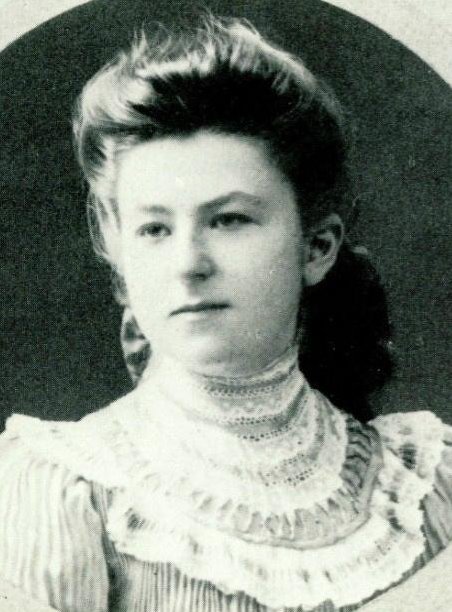
Flora Solomon, OBE (née Benenson; 28 September 1895 – 18 July 1984)[1] was an influential Zionist.[2] The first woman hired to improve working conditions at Marks & Spencer in London,[3] Solomon was later instrumental in the exposure of British spy Kim Philby.[4] She was the mother of Peter Benenson, founder of Amnesty International. She described her "personal trinity" as "Russian soul, Jewish heart, British passport".[4]

Key Information

Early life

[edit]

Flora Benenson was born on 28 September 1895 in Pinsk, in what is now Belarus. She was a daughter of Sophie Goldberg and the Jewish Russian financier Grigori Benenson, who was related to the Rothschild family. She had three siblings: an older brother, Jacob ("Yasha") who was interned in Germany during World War I and subsequently died of Spanish flu,[5] and two sisters--Fira Benenson (Countess Ilinska), who became a leading American dress designer, and Manya Harari, who became a noted translator of Russian literature.[6] The family's fortune was based on gold and oil; they settled in Britain in 1914, and lost much of their wealth as a result of the Russian Revolution in 1917.[4][7]

Career

[edit]

In the 1930s, prior to World War II, Solomon helped find homes for refugee children who fled to London from continental Europe.[8] During World War II she organised food distribution for the British government and was awarded the OBE for her work.

Marks and Spencer

[edit]

Solomon is also remembered for improving employee conditions at Marks & Spencer stores in the UK.[9]

In 1939, over dinner with Simon Marks, the son of a founder of Marks & Spencer, she complained to him about the company's salary policies. She learned that staff often did not eat lunch because they could not afford it. She said to Marks, "It's firms like Marks & Spencer that give Jews a bad name". Marks immediately gave Solomon the job of looking after staff welfare.[10]

In her new position, she "pioneered the development of the staff welfare system" (including subsidised medical services). These practices directly influenced the Labour concept of the welfare state and the creation of the British National Health Service in 1948. As a result, Marks & Spencer acquired the reputation of the "working man's paradise".[11]

Publishing

[edit]

She founded Blackmore Press, a British printing house. Her life was described in her autobiography A Woman's Way, written in collaboration with Barnet Litvinoff and published in 1984 by Simon & Schuster. The work was also titled Baku to Baker Street: The Memoirs of Flora Solomon.

Kim Philby

[edit]

Solomon was a long-time friend of British intelligence officer Kim Philby. She introduced him to his second wife Aileen, whom she knew from her work as a store detective at Marks and Spencers.[12] In 1937, while working in Spain as The Times correspondent on Franco's side of the Civil War, Philby proposed to Solomon that she might become a Soviet agent. His friend from Cambridge, Guy Burgess, was simultaneously trying to recruit her into MI6. But the Soviet resident in Paris, Ozolin-Haskin (code-name Pierre) rejected this as a provocation. Had both moves succeeded she would have become a double agent.[13]

In 1962 when Philby was the correspondent of the London Observer in Beirut, she objected to the anti-Israeli tone of his articles. She related the details of the 1937 contact to Victor Rothschild, who had worked for MI5 during the Second World War. In August 1962, during a reception at the Weizmann Institute, Solomon told Rothschild that she thought that Tomás Harris and Philby were Soviet spies.[14] She then went on to tell Rothschild that she suspected that Philby and Harris had been Soviet agents since the 1930s. "Those two were so close as to give me an intuitive feeling that Harris was more than a friend."[15] Solomon was then interviewed by MI5 officers and recounted Philby's attempt to recruit her in 1937, after he told her he was "doing important work for peace" and that "you should be doing it too."[4]

Soviet defector Anatoliy Golitsyn had already told the CIA about Philby's work for the KGB up to 1949. Nicholas Elliott, a former MI6 colleague of Philby's in Beirut, confronted him. Prompted by Elliott's accusations, Philby confirmed the charges of espionage and described his intelligence activities on behalf of the Soviets. However, when Elliott asked him to sign a written statement, he hesitated and requested a delay in the interrogation.[16] A week later he boarded a Soviet freighter the Dolmatova bound for Odessa, en route to Moscow, never to return.[17]

Before Harris was interviewed by MI5, he was killed in a motor accident at Lluchmayor, Majorca. Some people have suggested that Harris was murdered.[18] Chapman Pincher, the author of Their Trade is Treachery (1981), agrees that it is possible that Harris had been eliminated by the KGB: "The police could find nothing wrong with the car, which hit a tree, but Harris's wife, who survived the crash, could not explain why the vehicle had gone into a sudden slide. It is considered possible, albeit remotely, that the KGB might have wanted to silence Harris before he could talk to the British security authorities, as he was an expansive personality, when in the mood, and was outside British jurisdiction. The information, about which MI5 wanted to question him and would be approaching him in Majorca, could have leaked to the KGB from its source inside MI5."[19] Pincher goes onto argue that the source was probably Roger Hollis, the director-general of MI5.

Personal life

[edit]

Flora Benenson was married to Harold Solomon, a member of a London stockbroking family and a career soldier who was a brigadier-general in the First World War. They had one child, Peter Benenson, who would become the founder of Amnesty International.[8]

She was widowed in 1930 and raised Peter on her own.

Flora Solomon died on 18 July 1984.[1]

Works

[edit]
  • Solomon, Flora; Litvinoff, Barry (1984). A Woman's Way. New York: Simon & Schuster. ISBN 978-0-671-46002-0. (also titled Baku to Baker Street: The Memoirs of Flora Solomon)

Notes

[edit]

References

[edit]
Revisions and contributorsEdit on WikipediaRead on Wikipedia
from Grokipedia
Flora Solomon (née Benenson; 28 September 1895 – 18 July 1984) was a Russian-born British Zionist, welfare pioneer, and informant against Soviet espionage who revolutionized employee conditions at and helped unmask . Born in to Grigori Benenson, a Zionist oil and gold magnate, and Sophie Goldberg, she fled the Bolshevik Revolution with her family, eventually settling in after studies in . Married to Harold Solomon, she raised a son, , founder of . In 1931, Solomon joined as the first woman tasked with staff welfare, rising to head the department where she implemented reforms including higher wages, reduced hours, on-site cafeterias, health services like and clinics, and pension schemes, transforming the retailer's labor practices during economic hardship. Her innovations extended to wartime efforts, earning her an OBE for developing field restaurants that fed civilians and troops amid . A committed socialist and Zionist, she fundraised for the underground in , advocated for Arab-Jewish cooperation, and aided ' resettlement in post-1948. Solomon's most consequential act came in when, during a cocktail party, she confided suspicions of Philby's communist ties and betrayals to Victor Rothschild, prompting scrutiny that confirmed his Soviet allegiance and forced his defection to . This stemmed from decades-old acquaintance; she had introduced Philby to his communist wife Litzi Friedman in 1934, later dismissing concerns over Friedman's ideology despite learning of it from associates. Her disclosure, motivated by long-suppressed regret over Philby's "despicable" actions, marked a pivotal blow to operations in Britain.

Early Life

Family Background and Upbringing

Flora Solomon was born Flora Benenson on September 28, 1895, in , within the Russian Empire's , to a prosperous family. Her father, Grigori Benenson (1860–1939), amassed wealth as an oil and gold magnate, financier, and banker who served the , allowing the family to transcend many restrictions imposed on under Tsarist rule. Her mother, Sophie (née Goldberg, 1862–1926), oversaw the children's education amid the family's opulent lifestyle, which included residence in a palatial in St. Petersburg. Grigori's success as a committed Zionist further shaped the family's outlook, emphasizing heritage and aspirations. Flora grew up in this privileged yet precarious environment, marked by the broader of imperial , though her father's resources provided relative security and social elevation. She had two younger sisters, Fira (born 1898) and Manya (born circa 1905), reflecting a close-knit unit despite the era's challenges for . The family's affluence stemmed from Grigori's in resource extraction and finance, which insulated them from the poverty afflicting many in the Pale but did not shield them from revolutionary upheavals ahead. In 1905, at age ten, Flora was sent abroad by her mother to Fraulein Wolff’s boarding school for Jewish girls in , , to receive a structured away from Russia's instabilities; she remained there until 1910, acquiring proficiency in French and developing a disciplined character with minimal family interaction during this period. Upon returning to St. Petersburg, she continued her studies under a private Russian tutor, fostering intellectual independence described in later accounts as cultivating a "virile mind and ." This upbringing blended Russian cultural influences with , later articulated by Solomon as her ", Jewish heart." In , she accompanied her father to for his medical treatment, marking to the family's emigration amid and the impending .

Education and Revolutionary Influences

Flora Benenson was born on September 28, 1895, in , within the (now ), to Grigori Benenson, a wealthy Jewish timber magnate, oil industrialist, and banker to Tsar Nicholas II, and Sophie Goldberg. Her family's affluence and Jewish heritage exposed her early to Zionist ideals championed by her father, who instilled in her a commitment to Jewish national self-determination amid rising and political unrest in the Pale of Settlement. This paternal influence shaped her worldview, blending Russian cultural identity with Jewish particularism, though her direct engagement with revolutionary politics emerged later. In 1905, coinciding with the failed of that year—which sparked widespread strikes, pogroms, and demands for constitutional reform—ten-year-old Flora was sent to Fraulein Wolff’s exclusive school for Jewish girls in , . There, she received a rigorous education emphasizing languages, including French and German, while experiencing isolation from family, fostering independence described in her memoirs as developing a "virile mind and iron will." This period abroad insulated her from immediate revolutionary violence in Russia but highlighted the era's instability, as Jewish communities faced intensified persecution; her family's decision to relocate her reflected pragmatic responses to Tsarist repression rather than ideological alignment with radicals. Returning to St. Petersburg around 1910, Flora continued her education under a private Russian tutor, immersing her in the intellectual ferment of the imperial capital, a hub for socialist agitation, Marxist study circles, and debates between and . Though her family's liberal-leaning support for figures like —leader of the 1917 —indicated opposition to Bolshevik extremism, the surrounding revolutionary atmosphere influenced her exposure to ideas of social reform and anti-Tsarist dissent. By 1917, as the toppled the monarchy and seized power later that year, these currents prompted her to Britain, marking the end of her formative years amid Russia's collapse into .

Emigration to Britain

Arrival and Adaptation

Flora Solomon, née Benenson, arrived in in alongside her father, having initially traveled from to for his medical treatment; the outbreak of prompted their relocation to Britain. Upon arrival, she volunteered as a nurse to contribute to the war effort, navigating initial resource shortages and challenges in extracting remaining family members from amid the escalating instability following the 1917 Bolshevik Revolution. To adapt to her new environment, Solomon married Harold Solomon, a British Jewish and career army from a prominent London family, shortly after the war's end in 1918. The couple had one son, , born in 1921. She integrated into British Jewish society through this union and early welfare initiatives, including work at the Butler Street settlement house to support Jewish girls employed in East End sweatshops, where she advocated for improved conditions. In 1923, following her husband's paralyzing riding accident, Solomon returned permanently to London from abroad and established the Blackamore Press, a publishing venture that reflected her efforts to build economic independence and cultural engagement in her adopted homeland. These steps marked her transition from Russian émigré to active participant in Britain's Jewish community welfare structures, leveraging her multilingual skills and familial connections for stability.

Early Political Engagements

Upon arriving in in 1923 after brief stays in , Flora Solomon engaged in social reform efforts aligned with emerging socialist principles, working at the Butler Street settlement house to assist Jewish girls employed in East End sweatshops. This involvement reflected her early adaptation to British urban poverty and labor conditions, drawing on her Russian revolutionary family background to advocate for improved working environments for immigrant women. In the 1930s, Solomon became an active promoter of , leveraging her to host key figures such as Chaim and in her apartment, which served as a hub for Zionist discussions and fundraising. Her advocacy extended to charitable initiatives, including efforts to secure homes in Britain for Jewish refugee children fleeing , intertwining Zionist goals with broader humanitarian responses to European . These activities brought Solomon into contact with prominent British socialists, including politicians John Strachey and , whose visits to her Addison Road drawing room facilitated exchanges among the socialist elite on and international causes. Her Zionist pursuits specifically overlapped with socialist leaders sympathetic to Jewish national aspirations in , though she maintained a focus on practical welfare over formal party affiliation. This period marked her transition from personal survival to influential advocacy, positioning her within left-leaning circles that valued workers' protections and anti-fascist solidarity.

Professional Career

Entry into Marks & Spencer

Flora Solomon first engaged with through her meeting with Simon Marks, the company's managing director, at a dinner party in 1933. During the encounter, Solomon, drawing from her interests in labor welfare, challenged Marks on the need for improved staff conditions, prompting him to consider reforms. This interaction led to her appointment in 1934 as head of the newly established Staff Welfare Service, positioning her as the first woman hired specifically to address and enhance working conditions across the retailer's operations. In this pioneering role, Solomon focused on the largely female workforce of clerks, cleaners, and seamstresses supervised by men, implementing early assessments of store environments. Mentored by labor reformer Margaret Bonfield, she conducted visits to over 160 stores to evaluate conditions firsthand, laying the groundwork for systematic welfare improvements. Her entry marked a shift toward proactive employee support, influenced by her prior experiences and networks in social reform circles.

Welfare Reforms and Initiatives

In 1932, Flora Solomon was appointed as Marks & Spencer's first Personnel Welfare Officer, commissioning her to establish the Staff Welfare Service amid challenging economic conditions during the , where low employment and high living costs left many staff unable to afford basic meals. This initiative addressed immediate hardships by introducing subsidized canteens offering a midday meal of or fish with vegetables, bread, and pudding for sixpence, a measure that by the saw 90% staff utilization according to internal reports. Solomon's reforms emphasized comprehensive health and personal support, including on-site medical services with doctors, , and chiropody; subsidized hairdressing salons; and parlors to promote staff morale and dignity. She also advocated for structural improvements such as higher wages, shorter hours, paid , seaside outings, and holiday camps, while setting up welfare offices in each store for individualized counseling on personal issues and establishing a Welfare Committee—comprising an auditor, personnel representative, and staff member—to review dismissals weekly in . These steps included pensions and training schemes for new employees, fostering an "extended family" approach that mediated between workers and management. Additional provisions under her oversight extended to practical aids like instruction in staff clinics and pleasant restrooms, contributing to Marks & Spencer's reputation for pioneering employee welfare that influenced long-term benefits packages. Her efforts, endorsed by company leadership including Simon Marks, transformed staff treatment from mere employment to holistic support, with welfare offices enabling direct grievance resolution.

Long-Term Impact and Evaluations

Solomon's establishment of the Marks & Spencer Staff Welfare Service in 1933 introduced pioneering measures such as subsidized canteens, pension provisions, health and dental services, and staff training programs, which markedly improved working conditions for retail employees during an era when such benefits were rare in the industry. These initiatives, commissioned by chairman Simon Marks, formed the basis of a comprehensive welfare framework that emphasized employee as a core business principle, setting M&S apart from contemporaries reliant on minimal statutory requirements. Over the subsequent decades, her model influenced M&S's expansion and operational stability, with welfare enhancements credited for cultivating staff loyalty and reducing turnover amid postwar labor shortages; by 1962, Solomon herself authored internal reports evaluating personnel and human relations, underscoring the enduring application of her early reforms. Company assessments highlight how these programs evolved into a benefits package—encompassing ongoing pensions, medical support, and training—that persisted into the late 20th and early 21st centuries, underpinning M&S's reputation as a progressive employer. Evaluations of Solomon's contributions portray her as a trailblazer in retail welfare, with archival and corporate histories describing her service as "revolutionary" and foundational to modern at M&S, though some analyses note the company's broader paternalistic culture amplified rather than solely originated these gains. Independent reviews, including those in business responsibility studies, affirm the long-term efficacy of her approach in fostering sustainable employee relations, without documented criticisms of inefficacy or overreach in her welfare tenure.

Associations with British Intelligence Figures

Encounters with the Philby Family

Flora Solomon encountered in the 1930s amid London's left-wing intellectual circles, where both moved in overlapping social networks influenced by socialist and communist sympathies. She developed a friendship with Philby and his first wife, Alice "Litzi" , whom he had married in 1934 after meeting in . Philby later described Solomon as an "old family friend," indicating familiarity dating back to his early adulthood, though the precise initial connection remains tied to these shared ideological environments rather than direct familial links. A pivotal interaction occurred on , 1939—the day Britain declared war on —when , as personnel manager at , introduced Philby to Aileen Furse, a under her supervision. Furse, whom Solomon knew professionally and personally, soon became Philby's second wife in 1940, bearing him five children. acted as a at their wedding, alongside intelligence figure Tommy Harris, underscoring her established role within the Philby family's personal sphere. These encounters positioned Solomon as a longstanding associate of the Philbys, bridging professional and social domains, though retrospective accounts vary on the depth of her involvement with Philby himself during the decade. Her ties extended through Aileen's integration into the family, facilitating ongoing contact amid Philby's intelligence career and domestic life in Britain.

Personal Relationship with Kim Philby

Flora Solomon first encountered in 1921 in , where Philby's father introduced the boy—then aged nine—to the older Solomon during family visits. Philby later described her as "an old family friend," stating, "I had known her since I was a boy. My father used to take me to see her." Their paths diverged until the mid-1930s, when they reconnected as adults in social circles, including at gatherings hosted by mutual acquaintances like Dulcie Sassoon, where Philby introduced his first wife, . By 1937 or 1938, their friendship had deepened sufficiently for Philby to approach Solomon privately during a , urging her to join him in "working for "—a she interpreted as an invitation to support Soviet-aligned efforts, possibly via the Comintern. Solomon declined, citing her priorities in aiding Jewish refugees from Nazi persecution, though she remained personally fond of Philby and continued social ties. Accounts of romantic involvement vary: a 1953 memorandum alleged Solomon had been Philby's mistress in the 1930s, while her sister later claimed an emotional attachment where the younger Philby "swept her off her feet" amid Solomon's marital strains; Solomon herself denied any affair in 1962 interviews. On September 3, 1939—the day Britain declared war on —Solomon facilitated a pivotal personal connection by introducing Philby to Aileen Furse at her home; the two soon began cohabiting, with Solomon providing Aileen employment at and even witnessing aspects of their union. This matchmaking underscored Solomon's intimate role in Philby's life, blending friendship with influence over his domestic sphere, though their association persisted into the amid growing suspicions on her part.

Exposure of Soviet Espionage

Recruitment Attempt and Motives

In 1937, while serving as a correspondent for in during the , approached Flora Solomon with a recruitment proposition on behalf of Soviet intelligence. Philby, who had been recruited by Soviet handlers around 1934, confided in her that he was engaged in "important work for peace" and invited her to participate, a veiled reference to clandestine operations for the Comintern or Soviet network. Solomon, then a left-leaning social activist with family ties to the Philbys through social circles in , declined the overture, citing her unwillingness to commit to such secretive activities. Philby's motives in targeting Solomon aligned with standard Soviet recruitment strategies of the era, which prioritized individuals with ideological sympathies, access to influential networks, and personal connections that could facilitate intelligence gathering or further recruitment. As a Soviet asset embedded in British journalistic and social elite circles, Philby sought to exploit 's background—daughter of a prominent Russian-Jewish industrialist, exposed to revolutionary politics via her exile from Russia after the 1917 Bolshevik Revolution, and active in progressive causes—to expand the Cambridge Five's auxiliary support base. Her familiarity with the Philby , including interactions during his of Aileen Furse (whom Solomon knew socially), provided a trusted entry point for the pitch, though Soviet directives emphasized ideological alignment over mere opportunism to ensure agent reliability. The attempt occurred amid Philby's deepening commitment to Soviet operations, following his own ideological radicalization at Cambridge University and training under handlers like , who instructed recruits to infiltrate anti-fascist and journalistic fronts as covers. Soviet motives extended to building a broad web of sympathizers in Britain ahead of escalating European tensions, viewing figures like —cosmopolitan, multilingual, and networked in émigré and labor circles—as potential assets for , logistics, or low-level intelligence without immediate high-risk exposure. Solomon's rejection, however, severed any further engagement at the time, with no evidence of subsequent pressure or retaliation from Philby or his handlers.

Testimony and Consequences

In 1962, Flora Solomon approached through Victor Rothschild, prompted by her outrage over Philby's recent anti-Israel journalism from , including coverage sympathetic to causes that she perceived as betraying Jewish interests. She was interviewed by officers, during which she disclosed that Philby had attempted to recruit her as a Soviet agent in 1937, confiding that he was "100% on the Soviet side" and involved in "important work" aligned with communist goals; Solomon had rejected the overture outright. MI5 files indicate that Solomon's account corroborated suspicions from defectors like , providing the decisive evidence—described by officer Peter Wright as having "clinched" the case—that prompted further action against Philby. Despite an earlier missed opportunity in 1951, when intercepted communications involving Solomon were dismissed as inconsequential without follow-up, her 1962 shifted internal assessments, leading 's to confront Philby in in late 1962. The immediate consequence was Philby's confession under interrogation and his defection to the on January 23, 1963, after receiving a temporary from British authorities, marking the effective end of his covert operations and exposing vulnerabilities in Western intelligence. Solomon refused to provide public testimony, citing fears of KGB retaliation, which limited her role to confidential input but preserved her personal security. No documented reprisals against her ensued, and she continued her advocacy work without apparent disruption, though some MI5 assessments later questioned the completeness of her disclosures due to her complex past ties to Philby and Soviet circles.

Assessments of Reliability and Outcomes

Flora Solomon's 1962 testimony to , recounting Kim Philby's 1937 attempt to recruit her as a Soviet agent, was initially met with skepticism by British , as earlier reports from her in had been dismissed as inconsequential due to lack of corroboration and her own past communist sympathies. However, when combined with defector Anatoliy Golitsyn's leads pointing to a high-level mole, Solomon's detailed account—describing Philby's admission of working for and his probing of her loyalty—gained credibility, with files later noting it "clinched" the case against him by providing a motive-aligned personal link absent in prior . Critics, including historians, have questioned the account's full reliability, citing inconsistencies such as Solomon's delayed reporting despite decades of acquaintance with Philby, her own early Soviet affiliations, and potential embellishments motivated by personal grudges, including Philby's critical reporting on or his role in her friend Aileen Philby's . Philby himself denied the recruitment outright during his 1963 , labeling Solomon's claims a fabrication, though his subsequent flight undermined this defense. The testimony's outcomes were decisive in escalating scrutiny on Philby: MI5 and MI6 chiefs Roger Hollis and Dick White, armed with Solomon's statement and Golitsyn's data, concluded his guilt by late , prompting a formal confrontation that forced Philby's resignation from MI6 and a public "last chance" on November 8, 1963, where his evasive responses fueled suspicions. This sequence culminated in Philby's defection to the on January 23, 1963, via , confirming long-held fears of penetration and triggering a morale crisis within MI5, as theories of internal betrayal shifted from speculation to verified fact. Long-term, the exposure validated Solomon's role in countering Soviet infiltration, though it exposed systemic vetting failures in British intelligence from , contributing to reforms in background checks and defector handling protocols amid the Cambridge spy scandals. No direct reprisals against Solomon occurred, despite her fears of KGB retaliation, and her account remained pivotal in post-defection debriefings that quantified Philby's betrayals—estimated at compromising over 300 Western agents—without yielding further independent verification of the 1937 incident.

Zionist Commitments

Advocacy for Jewish Causes

Flora Solomon, née Benenson, embraced early in life, influenced by her father's commitments, and pursued these ideals by living in following . In during the British Mandate period, she fundraised for the , the underground Jewish paramilitary organization, while her husband served as a senior official in the Mandatory Government. She also contributed £25 monthly to the (), supporting maternal and infant welfare initiatives such as Tipat Halav centers in . These efforts reflected her direct involvement in building Jewish infrastructure and community welfare amid interwar tensions. In the 1930s, after relocating primarily to , Solomon actively promoted through social networks, advocating the justice of the Jewish cause in within her influential drawing rooms and among British socialist leaders. She prioritized rescuing persecuted European Jews over other political affiliations, organizing charity to house refugee children fleeing and declining opportunities with international communist groups to focus on this work. Her 1923 visit to further deepened these engagements, where she interacted with figures tied to the region's dynamics, including the Philby family. Post-World War II, Solomon emerged as a staunch supporter of the newly established State of Israel, making frequent trips and maintaining her apartment as a gathering point for Zionist leaders, whom she hosted to foster dialogue, including efforts to bridge Arab-Jewish relations. She aided by establishing soup kitchens and cottage industries, such as rug weaving and pottery production, and collaborated with in refugee camps. Close ties with Chaim and underscored her role in elite Zionist circles, sustaining her advocacy until her death in 1984.

Interactions with Israeli Interests

Following , Solomon relocated to in 1918, where she resided until 1923 and engaged directly with nascent Zionist institutions. She fundraised for the , the underground Jewish paramilitary organization, and hosted prominent Zionist leaders including Chaim and at her home to foster support for Jewish settlement efforts. In 1921, she launched the "A Drop of Milk" initiative, a program aimed at combating from contaminated water supplies, demonstrating her practical contributions to infrastructure in the region. In the late 1940s, Israeli Foreign Minister recruited Solomon to assist immigrating to the newly established State of , organizing soup kitchens, medical aid stations, and cottage industries to support their integration and economic self-sufficiency. Her residence served as a key salon for Zionist figures during this period, facilitating networking and advocacy for Israeli state-building amid post-war challenges. Solomon made frequent visits to thereafter, often staying with the Weizmann family, which underscored her ongoing personal ties to the country's founding elite. Solomon's advocacy extended into the early 1960s, during which she undertook work on behalf of Israeli interests, reflecting her deepened commitment to the nation's security and welfare. In August 1962, she attended a conference and reception at the in , where she interacted with figures connected to Israeli scientific and intelligence circles, including discussions that highlighted her vigilance against perceived threats to . This episode aligned with her broader pattern of leveraging personal networks—such as her acquaintance with Victor Rothschild at Weizmann-hosted events—to advance pro-Israel objectives, including countering anti-Zionist commentary in British media.

Personal Life

Marriage and Family Dynamics

Flora Benenson married Colonel Harold Solomon, a career officer from a prominent Jewish stockbroking family and a brigadier-general during , in 1918 shortly after fleeing the Russian Revolution for . The union, described in her memoirs as having formed with a relative stranger whose conservative outlook clashed with her Zionist and left-wing sympathies, nonetheless produced one child before shifting to periods of residence in amid her early advocacy for Jewish settlement there. Their son, , was born on 31 July 1921 in , prompting Flora's temporary return to from for the delivery; Peter later founded in 1961. Harold Solomon died on 31 July 1930 at age 44, leaving Flora widowed at 34 with a nine-year-old son to raise amid economic pressures following the couple's modest inheritance. Widowhood intensified Flora's self-reliance, as she managed family finances through employment at —initially as a canteen supervisor in 1931—while prioritizing Peter's education at institutions like Summer Fields preparatory school and , funded partly by her Benenson family connections and her own initiatives. No other children are recorded, and her memoirs portray a household shaped by her dominant influence post-1930, blending maternal provision with immersion in labor welfare and Zionist networks that distanced her from traditional domestic roles. She and Peter remained close, though his independent path into and activism reflected her instilled values of over her husband's military conservatism. Flora was buried beside Harold in 1984 at the Cimetière Israélite de La Tournelle in Vevey, Switzerland.

Later Years and Death

Following her retirement from Marks & Spencer in 1956, where she had directed the welfare department for over two decades, Solomon served as a consultant to the company in 1962, reviewing and advising on ongoing employee welfare initiatives. Throughout her later decades, she sustained her commitment to Zionist advocacy, maintaining an elegant apartment that served as a gathering place for Israeli leaders and Jewish activists. In 1984, Solomon co-authored her memoirs, From Baku to Baker Street, with Barnet Litvinoff, recounting her experiences from Russian aristocracy through British industrial welfare and intelligence matters. Flora Solomon died on 18 July 1984 at age 88. She was buried beside her husband, Colonel Harold Solomon, in the Cimetière Israélite de La Tour-de-Peilz, Vevey, Vaud, Switzerland.

Legacy

Contributions to Labor Welfare

In 1933, Flora Solomon met Simon Marks, the co-founder of , at a dinner party where she advocated for better treatment of the company's employees, leading to her appointment as the head of the newly established Staff Welfare Service in 1934. As the first woman hired specifically to enhance working conditions at the retailer, she investigated the plight of female staff, including long hours, inadequate facilities, and low morale, and implemented reforms such as improved ventilation, rest areas, and canteen services in stores. Her initiatives extended to creating comprehensive , including subsidized healthcare, schemes, programs, social clubs, and paid holidays, which formed the foundation of M&S's modern welfare system and influenced broader retail industry standards in the UK. Prior to her M&S role, Solomon had engaged in welfare efforts for Jewish immigrant girls employed in London's East End sweatshops during the 1920s and 1930s, organizing support networks to address exploitative conditions like poor pay and unsafe environments, drawing from her own experiences with labor hardships in Russia. These early activities informed her later professional approach, emphasizing preventive measures over reactive charity. During World War II, she contributed to national labor welfare by spearheading the British Restaurants program under government auspices, which provided affordable, nutritious meals to workers and civilians in bombed areas, serving millions and sustaining productivity amid rationing and disruption. Her welfare philosophy, rooted in viewing employees as assets rather than costs, yielded measurable outcomes at M&S, such as reduced staff turnover and higher retention, with benefits like these persisting into the company's operations decades later.

Role in Counterintelligence

Flora Solomon first encountered in the early 1930s through mutual social circles in Britain, where she knew him and his then-wife , both of whom she suspected of communist sympathies. In 1937 or 1938, during a private lunch conversation, Philby reportedly attempted to recruit her for Soviet intelligence, confessing that he was "100% on the Soviet side" and facing personal danger due to his commitments; Solomon declined the overture and kept the matter confidential at the time. This episode remained unreported for over two decades, during which monitored Solomon intermittently but dismissed her as "innocuous and fairly inconsequential" in 1951–1952 based on intercepted communications showing no overt subversive activity. In August 1962, while attending a reception at the Weizmann Institute in , Solomon confided her long-held suspicions about Philby to Victor , a former officer and her acquaintance, citing his recent anti- articles in as a trigger for her decision to speak out. promptly facilitated an interview with interrogator Arthur Martin, where Solomon reiterated the 1930s recruitment attempt and expressed belief that Philby had been a Soviet agent since at least that period. Her 1962 testimony proved pivotal, providing what MI5 officer Peter later described as evidence that "clinched" the case against Philby amid mounting suspicions following the 1951 defections of and Maclean; this contributed directly to Philby's confrontation by in and his defection to on January 23, 1963. However, Solomon's account faced internal MI5 skepticism, with characterizing her as "strange, rather untrustworthy" and questioning the completeness of her disclosures about her 1930s ties to Philby; subsequent reviews, including by in 1971, highlighted inconsistencies in dates and details, potential personal grudges over Philby's stances, and unexamined motives possibly linked to emotional or foreign influences. These doubts underscore that while her information accelerated Philby's exposure, its reliability relied on corroboration from other intelligence leads rather than standalone verification.

Publications and Memoirs

Flora Solomon's primary literary contribution was her memoir, Baku to Baker Street: The Memoirs of Flora Solomon, published by Collins in in 1984, with assistance from Barnet Litvinoff. An American edition appeared under the title A Woman's Way: The Memoirs of Flora Solomon, issued by in the same year, also crediting Litvinoff. These works, released five months before her death on July 18, 1984, represent her only known publications. The memoirs chronicle Solomon's life from her 1895 birth in Baku, Russian Empire, amid a privileged Jewish family, through the upheavals of the 1917 Revolution, her emigration to Britain, and her career at beginning in 1926. They detail her pioneering role as a welfare officer for employees, her Zionist advocacy, and previously undisclosed counterintelligence efforts for , including identifying Soviet agent Leo Long in 1964. Solomon recounts personal encounters, such as her 1962 accusation against based on his wartime conduct toward a female colleague, which contributed to scrutiny of the spy. Litvinoff, a British and , collaborated to structure Solomon's oral accounts into narrative form, preserving her direct voice while ensuring coherence. The books emphasize her resilience as a Russian émigré navigating British society, labor welfare innovations, and Jewish causes, without prior written works attributed to her.

References

Add your contribution
Related Hubs
User Avatar
No comments yet.