Recent from talks
Contribute something
Nothing was collected or created yet.
Podiatry
View on Wikipedia
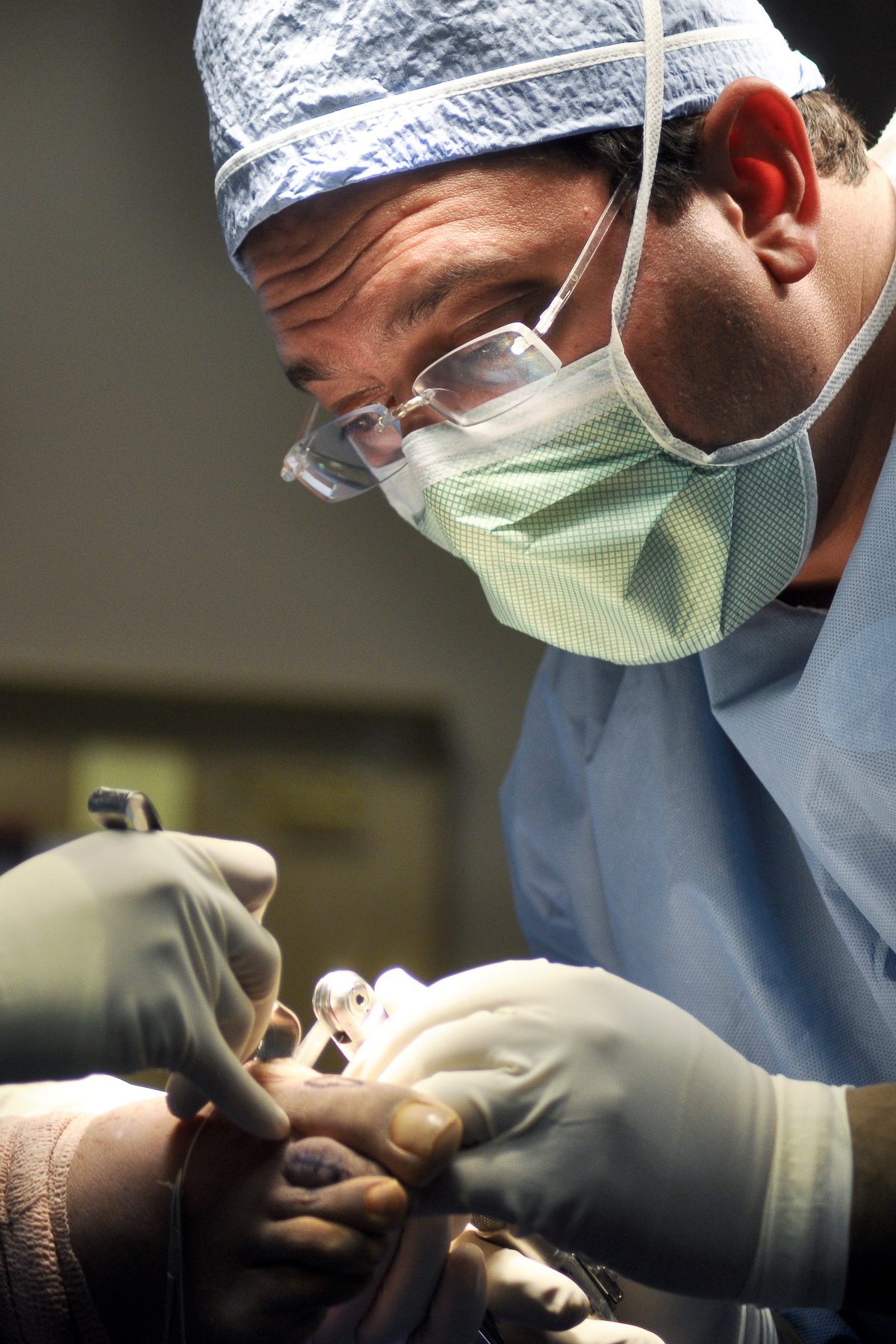
Podiatric surgeon performing reconstructive surgery | |
| Occupation | |
|---|---|
| Names |
|
Activity sectors | Medicine, sports medicine, orthopedics, plastic surgery, endocrinology, endocrinology, orthopedic surgery, dermatology, radiology, biomechanics, rheumatology, neurology |
| Description | |
| Competencies | Expertise in medicine, surgical skills, ethics, critical thinking, analytical skills, professionalism, management skills, and communication skills |
Education required | Doctor of Podiatric Medicine |
Fields of employment | Hospitals, private practices |
Podiatry (/poʊˈdaɪ.ətri/ poh-DY-ə-tree), also known as podiatric medicine and surgery (/ˌpoʊdiˈætrɪk, poʊˈdaɪ.ətrɪk/ POH-dee-AT-rik, poh-DY-ə-trik), is a branch of medicine devoted to the study, diagnosis, and treatment of disorders of the foot, ankle and lower limb. The healthcare professional is known as a podiatrist.[1] The US podiatric medical school curriculum includes lower extremity anatomy, general human anatomy, physiology, general medicine, physical assessment, biochemistry, neurobiology, pathophysiology, genetics and embryology, microbiology, histology, pharmacology, women's health, physical rehabilitation, sports medicine, research, ethics and jurisprudence, biomechanics, general principles of orthopedic surgery, plastic surgery, and foot and ankle surgery.
Podiatry is practiced as a specialty in many countries. In Australia, graduates of recognised academic programs can register through the Podiatry Board of Australia as a "podiatrist", and those with additional recognised training may also receive endorsement to prescribe or administer restricted medications and/or seek specialist registration as a "podiatric surgeon".
History
[edit]The professional care of feet existed in ancient Egypt, as depicted by bas-relief carvings at the entrance to Ankmahor's tomb from about 2400 BC.[2]
Hippocrates described the treatment of corns and calluses by physically reducing the hard skin and removing the cause. The skin scrapers which he invented for this purpose were the original scalpels.[3]
Until the turn of the 20th century, podiatrists were independently licensed physicians, separate from the rest of organized medicine. Lewis Durlacher, appointed as surgeon-podiatrist to the British royal household in 1823, called for podiatry to be a protected profession.
Prominent figures including Napoleon and French kings employed personal podiatrists. President Abraham Lincoln sent his personal podiatrist, Isachar Zachrie, on confidential missions to confer with leaders of the Confederacy during the U.S. Civil War.[4][5]
The first podiatric society was established in New York in 1895, and still operates there today as NYSPMA.[6] The first podiatric school opened in 1911. One year later, the British established a podiatric society at the London Foot Hospital; a school was added in 1919. The first American podiatric journal appeared in 1907, followed in 1912 by a UK journal. In Australia, professional podiatric associations were organized as early as 1924, followed by a podiatric training center and professional podiatric journal in 1939.
Specific country practices
[edit]Australia
[edit]In Australia, podiatry is considered an allied health profession and is practised by individuals licensed by the Podiatry Board of Australia.[7]
Australia recognizes two levels of professional accreditation (General Podiatrist and Podiatric Surgeon), with ongoing lobbying for the recognition of other subspecialties. Some Commonwealth countries recognize Australian qualifications, allowing Australian podiatrists to practise abroad.
Registration and regulation
[edit]Australian podiatrists must register with the Podiatry Board of Australia, which regulates podiatrists and podiatric surgeons. The board also assesses foreign-trained registrants in conjunction with the Australian & New Zealand Podiatry Accreditation Council (ANZPAC).[8] It recognizes three pathways to attain specialist registration as a podiatric surgeon:[9]
- Fellowship of the Australasian College of Podiatric Surgeons[10]
- Doctor of Podiatric Surgery, University of Western Australia[11]
- Eligibility for Fellowship of the Australasian College of Podiatric Surgeons
Until 21 November 2019, ANZPAC approved the Doctor of Podiatric Surgery program of study offered by the University of Western Australia as providing a qualification for the purpose of specialist registration as a podiatric surgeon.[12]
Education and training
[edit]To enter an undergraduate Podiatric Medicine program, applicants must have completed a Year 12 Certificate with an Australian Tertiary Admission Rank (ATAR). Cut-off scores from the Universities Admissions Centre (UAC) generally range from 70.00 to 95.00; prospective students who are 21 or older can instead apply directly to the university. The UWA DPM program has admission requirements of: completion of a UWA bachelor's degree or equivalent, a minimum GPA of 5.0 from the most recent three years (FTE) of valid study, suitable GAMSAT score, and English language competency. There is no interview requirement for the DPM at UWA (applications are handled via the university).
Australian podiatrists complete an undergraduate degree ranging from 3 to 4 years of education. The first 2 years of this program are generally focused on various biomedical science subjects, including functional anatomy, microbiology, biochemistry, physiology, pathophysiology, pharmacology, evidence-based medicine, sociology, and patient psychology, similar to the medical curriculum.[citation needed] The following year focuses on podiatry-specific areas such as podiatric anatomy & biomechanics, human gait, podiatric orthopaedics (the non-surgical management of foot abnormalities), podopaediatrics, sports medicine, rheumatology, diabetes, vascular medicine, mental health, wound care, neuroscience & neurology, pharmacology, general medicine, general pathology, local and general anaesthesia, minor and major podiatric surgical procedural techniques such as partial and total nail avulsions, matricectomy, cryotherapy, wound debridement, enucleation, suturing, other cutaneous and electro-surgical procedures and theoretical understanding of procedures performed by orthopaedic and podiatric surgeons.
Australian podiatric surgeons are specialist podiatrists with further advanced training in medicine and pharmacology, and training in foot surgery. Podiatrists wishing to pursue specialisation in podiatric surgery must meet the requirements for Fellowship with the Australasian College of Podiatric Surgeons. They must complete a 4-year degree, including 2 years of didactic study and 2 years of clinical experience, followed by a master's degree with a focus on biomechanics, medicine, surgery, general surgery, advanced pharmacology, advanced medical imaging, and clinical pathology. They then qualify for the status of Registrar with the Australasian College of Podiatric Surgeons. Following surgical training with a podiatric surgeon (3–5 years), rotations within other medical and surgeons' disciplines, overseas clinical rotations, and passing oral and written exams, Registrars may qualify for Fellowship status.[13] Fellows are then given Commonwealth accreditation under the Health Insurance Act, recognising them as providers of professional attention for the purposes of health insurance rebates.
Australian podiatric medical schools
[edit]The following podiatric teaching centres are accredited by the Australian and New Zealand Podiatry Accreditation Council (ANZPAC):
- University of Western Australia
- Charles Sturt University
- La Trobe University
- University of Western Sydney
- University of South Australia
- University of Newcastle (Australia)
- Queensland University of Technology
- Central Queensland University
- Southern Cross University
- Auckland University of Technology (in New Zealand)
Some, including Charles Sturt University and University of Western Sydney, offer the degree Bachelor of Podiatric Medicine; others offer postgraduate degrees, such as the University of Western Australia's Doctor of Podiatric Medicine, and La Trobe University's Master of Podiatric Practice.[14]
Two more podiatric schools are being developed, at the Australian Catholic University and the University of Ballarat.
Prescribing of scheduled medicines and referral rights
[edit]The prescribing rights of Australian podiatrists vary by state. All states allow registered podiatrists to use local anaesthesia for minor surgeries.[15]
In Victoria, Western Australia, Queensland, South Australia, New South Wales: registered podiatrists and podiatric surgeons with an endorsement of scheduled medicines may prescribe relevant schedule 4 poisons.
In Western Australia and South Australia, podiatrists with Master's degrees in Podiatry and extensive training in pharmacology are authorised to prescribe Schedule 2, 3, 4, or 8 medicines (Australian Health Practitioner Regulation Agency).
In Queensland, Fellows of the Australasian College of Podiatric Surgeons are authorised to prescribe a range of Schedule 4 drugs and one Schedule 8 drug.
Prescriptions written by podiatrists do not qualify for the Pharmaceutical Benefits Scheme, despite lobbying to change this.[16]
Some referrals from podiatrists (plain x-rays of the foot, leg, knee, and femur, and ultrasound examination of soft tissue conditions of the foot) are rebated by Medicare, while others (CTs, MRIs, bone scans, pathology testing, and other specialist medical practitioners) are not eligible for Medicare rebates.
Canada
[edit]In Canada, the definition and scope of the practice of podiatry varies by province. A number of provinces, including British Columbia, Alberta, and Quebec, accept the qualification of Doctor of Podiatric Medicine (DPM); in Quebec, other academic designations may also register.
In 2004, Université du Québec à Trois-Rivières started the first and only program of Podiatric Medicine in Canada based on the American definition of podiatry. This program enlists 25 students yearly across Canada and leads to a DPM upon obtaining 195 credits.[17]
The province of Ontario has been registering chiropodists since 1944, with 701 chiropodists and 54 podiatrists registered by the College of Chiropodists of Ontario as of December 31, 2019.[18] Ontario makes a distinction between podiatrists and chiropodists. Podiatrists are required to have a DPM, whereas chiropodists need to obtain a 3-year graduate diploma in chiropody offered by Michener Institute of Education at University health Network. Podiatrists, unlike chiropodists, may bill OHIP, "communicate a diagnosis" to their patients, and perform surgical procedures on the bones of the forefoot.[19] Registered podiatrists who relocate to Ontario are required to register with the province and practice as a chiropodist. Ontario legislation in 1991 imposed a cap on Ontario-trained chiropodists becoming podiatrists, while grandfathering in already-practising podiatrists.[citation needed]
Iran
[edit]There are no podiatric medical schools in Iran. The Ministry of Health and Medical Education (MoHME) reviews the dossier of podiatric applicants for medical registration according to the "Regulations on the Evaluation of the Educational Credentials of Foreign Graduates".[20]
Applicants with podiatric degrees from the United States qualify for registration in Iran if they meet the following criteria:
- possession of a bachelor's degree
- passing score on the MCAT
- completion of the podiatric curriculum of an accredited school, thereby obtaining the degree of Doctor of Podiatric Medicine (DPM)
- completion of a one-year postgraduate training (if required by the home jurisdiction)
- passing score on relevant board examinations
New Zealand
[edit]New Zealand established Chiropody (shortly thereafter renamed to Podiatry) as a registered profession in 1969, requiring all applicants to take a recognized three-year course of training. The New Zealand School of Podiatry was established at Petone in 1970, under the direction of John Gallocher. Later, the school moved to the Central Institute of Technology, Upper Hutt, Wellington. Today, Auckland University of Technology is the only provider of podiatry training in New Zealand.[21]
In 1976, podiatrists in New Zealand gained the legal right to use a local anaesthetic, and began to include minor surgical procedures on ingrown toenails in their scope of practice. They received the right to refer patients to radiologists for X-rays in 1984, and (with suitable training) to acquire licensing to take their own X-rays in 1989. Diagnostic radiographic training is now incorporated into the podiatric degree syllabus, and on successful completion of the course, graduates register with the New Zealand National Radiation Laboratory.
United Kingdom
[edit]
The scope of practice of podiatrists in the UK varies depending on their education and training, but may include simple skin care, the use of prescription-only medicines, injection therapy, and non-invasive surgery such as nail resection and removal.[22] Podiatrists also interface between patients and multidisciplinary teams, recognising systemic disease as it manifests in the foot and referring on to the appropriate health care professionals.[23]
To qualify as a podiatric surgeon, a podiatrist in the UK must undertake extensive postgraduate education and training, usually taking a minimum of 10 years to complete.[24] Appropriately qualified podiatric surgeons may perform invasive bone and joint surgery.
Legislation in the UK protects the professional titles 'chiropodist' and 'podiatrist', but does not distinguish between the two.[25] Those using protected titles must be registered with the Health and Care Professions Council (HCPC).[26] Registration is normally only granted to those holding a bachelor's degree from one of 13 recognized schools of podiatry in the UK. Professional bodies recognised by the HCPC are:
- The Society of Chiropodists and Podiatrists
- The Alliance of Private Sector Practitioners[27]
- The Institute of Chiropodists and Podiatrists
- The British Chiropody and Podiatry Association[28]
In 1979, the Royal Commission on the National Health Service reported that about six and a half million NHS chiropody treatments were provided to just over one and a half million people in Great Britain in 1977,[citation needed] an increase of 19% over the number from three years before. Over 90% of patients receiving these treatments were aged 65 or over. At that time there were about 5,000 state registered chiropodists, but only about two-thirds worked for the NHS. The Commission agreed with the suggestion of the Association of Chief Chiropody Officers that more foot hygienists should be introduced, who could undertake, under the direction of a registered chiropodist, "nail cutting and such simple foot-care and hygiene as a fit person should normally carry out for himself."[29]
United States
[edit]In the United States, medical and surgical care of the foot and ankle is mainly provided by two groups: podiatrists (with a Doctor of Podiatric Medicine degree) [citation needed] and orthopedic surgeons (with a Doctor of Medicine or Doctor of Osteopathic Medicine degree).[30] In most states, their scope of practice is limited to the foot and ankle; however, some states include the leg, hand, or both.[31] As of 2025[update], 9,700 podiatrists work in the United States.[32]
In order to be considered for admission to podiatric medical school, an applicant must first complete a minimum of 90 semester hours at the university level, or (more commonly), complete a bachelor's degree with an appropriate emphasis.[citation needed] In addition, potential students are required to take the Medical College Admission Test (MCAT). In 2019, the average MCAT for matriculants was 500[33] and 3.5 average undergraduate cGPA.[34]
The DPM degree itself takes a minimum of four years to complete. The first two years of podiatric medical school are similar to training that M.D. and D.O. students receive, but with greater emphasis on the foot and ankle.

The four-year podiatric medical school is followed by a surgical residency to provide hands-on training. As of July 2013, all residency programs in podiatry were required to transition to a minimum of three years of post-doctoral training.[35] This upgrading of training was spearheaded in California by the state Board of Podiatric Medicine (BPM) and its California Liaison Committee (CLC).[36] BPM’s Executive Officer James H. Rathlesberger included it in the Federation of Podiatric Medical Boards’ Model Law, which he wrote before becoming FPMB president in 2000.[37]
Podiatric residents rotate through core areas of medicine and surgery. They work in such rotations as emergency medicine, internal medicine, infectious disease, behavioral medicine, physical medicine and rehabilitation, vascular surgery, general surgery, orthopedic surgery, plastic surgery, dermatology, and podiatric surgery and medicine. Fellowship training is available after residency in such fields such as geriatrics, foot and ankle traumatology, and infectious disease.[38]


Upon completion of their residency, podiatrist candidates are eligible to sit for examinations for certification by one of two specialty boards accredited by the Council on Podiatric Medical Education (CPME), which itself is overseen and approved by the Department of Education. These are the American Board of Podiatric Medicine (ABPM)[39] and the American Board of Foot and Ankle Surgery (ABFAS).[40][41]
ABPM certification leads to fellowship in either the American Society of Podiatric Surgeons (ASPS) or the American College of Podiatric Medicine (ACPM). ABFAS certification leads to fellowship in the ASPS or the American College of Foot and Ankle Surgeons (ACFAS). ABPM is recognized by CPME as certification in primary podiatric medicine and orthopaedics[41] and the ABFAS as certification in podiatric surgery.[41] However, hospital credentialing committees often do not distinguish between the two.[42]
There are two surgical certifications under ABFAS:[43] foot surgery, and reconstructive rearfoot/ankle (RRA) surgery. In order to be board-certified in RRA, the sitting candidate has to have already achieved board certification in foot surgery. To receive ABFAS certification, the candidate must pass the written examination, submit surgical logs indicating experience and variety, pass an oral examination, and complete a computer-based clinical simulation.[43]
As of 2025[update], the median salary for a podiatrist in the United States is $152,800 a year.[32]
Practice characteristics
[edit]Podiatric physicians practice in a variety of different settings. Some practice solo in a private practice setting; some belong to larger group practices. There are podiatrists in larger multi-specialty practices as well (such as orthopedic groups or groups for the treatment of diabetes) or clinic practices (such as the Indian Health Service (IHS), the Rural Health Centers (RHC), or the Community Health Center (FQHC)). Some work for government organizations, such as for Veterans Affairs hospitals and clinics. [citation needed]
Some podiatrists have primarily surgical practices. They may complete additional fellowship training in reconstruction of the foot and ankle from the effects of diabetes or physical trauma, or practice minimally invasive percutaneous surgery for cosmetic correction of hammer toes and bunions.
Colleges and education
[edit]There are 11 schools of podiatric medicine in the United States. These are governed by the American Association of Colleges of Podiatric Medicine (AACPM) and accredited by the Council on Podiatric Medical Education.
- Arizona School of Podiatric Medicine at Midwestern University[44]
- Barry University School of Podiatric Medicine
- Des Moines University College of Podiatric Medicine and Surgery
- New York College of Podiatric Medicine
- Kent State University College of Podiatric Medicine
- Lake Erie College of Osteopathic Medicine School of Podiatric Medicine
- Dr. William M. Scholl College of Podiatric Medicine at Rosalind Franklin University of Medicine and Science
- Samuel Merritt University College of Podiatric Medicine
- Temple University School of Podiatric Medicine
- University of Texas Rio Grande Valley School of Podiatric Medicine
- College of Podiatric Medicine at Western University of Health Sciences
Podiatric subspecialties
[edit]Podiatrists treat a wide variety of foot and lower-extremity conditions through both nonsurgical and surgical approaches. While the terminology of subspecialties differ around the world, they generally fall into these categories:
- Reconstructive foot and ankle surgery
- Podiatric sports medicine (chronic overuse injuries and mechanical performance enhancement)[45]
- Podiatric dermatology
- Lower extremity plastic and reconstructive surgery, limb salvage, and wound care[46]
- Podopediatrics (podiatry in children)[47]
- Forensic podiatry (the study of footprints, footwear, shoeprints and feet associated with crime scene investigations)
Podiatric assistants work as a part of a podiatric medical team in a variety of clinical and non-clinical settings. Worldwide, there are common professional accreditation pathways to be a podiatric assistant; for instance, in Australia, the qualification is a Certificate IV in Allied Health Assistance specialising in podiatry.[48] Podiatric assistants may specialize in many different fields, such as:
- Podiatric nurse
- Podiatric surgical nurse
- Foot carer
- Podiatric support worker
- Podiatric technician
- Podiatric hygienist
- Foot hygienist
- Podiatric medical assistant
Professional societies and organizations
[edit]- Academy of Ambulatory Foot and Ankle Surgery (AAFAS)
- Alberta Podiatry Association (APA)
- Alpha Gamma Kappa fraternity
- Alliance of Private Sector Practitioners
- American Podiatric Medical Association (APMA)
- American Society of Podiatric Surgeons (ASPS)
- American Society of Forensic Podiatry
- American College of Foot and Ankle Surgeons (ACFAS)
- American Board of Foot and Ankle Surgery (ABFAS)
- American College of Podiatric Medicine (ACPM)
- American Board of Podiatric Medicine (ABPM
- American Board of Multiple Specialties in Podiatric Medicine
- American Board of Multiple Specialties in Podiatric Surgery
- American Academy of Podiatric Sports Medicine (AAPSM)
- American Society of Podiatric Dermatology (ASPD)
- Australian Podiatry Association (APODA)
- Association Belge des Podologues
- Canadian Podiatric Medical Association (CPMA)
- American Academy of Podiatric Practice Management (AAPPM)
- International Federation of Podiatrists – Fédération Internationale des Podologues (FIP-IFP)
- International Foot and Ankle Biomechanics Community (i-FAB)
- Student National Podiatric Medical Association (SNPMA)
- American Podiatric Medical Students' Association (APMSA)
- Australian College of Podiatric Surgeons (ACPS)
- Australian Podiatry Association (APodA)
- Australian Podiatry Council (APodC)
- Australasian Academy of Podiatric Sports Medicine (AAPSM)
- Australasian Podiatric Rheumatology Specialist Interest Group (APRSIG)
- Federation of Podiatric Medical Boards (FPMB)
- Institute of Chiropodists and Podiatrists (IOCP)
- Canadian Federation of Podiatric Medicine
- Royal College of Podiatry (RCoP)
References
[edit]- ^ "American Association of Colleges of Podiatric Medicine".
- ^ "Self-Care - Archaeology Magazine". www.archaeology.org. Retrieved 29 November 2022.
- ^ Hippocrates. On the Articulations. Translated by Adams, Francis. pp. pt. 62.
- ^ "Isachar Zacharie". Jewishvirtuallibrary.org. Retrieved 8 December 2013.
- ^ "MD Consult - Important Notice". www.mdconsult.com. Archived from the original on 4 March 2016. Retrieved 25 January 2022.
- ^ New York State Podiatric Medical Association. NYSPMA. Retrieved on 2010-11-27.
- ^ "When is it necessary to be registered as a podiatry practitioner?". Podiatric Board of Australia. Retrieved 29 October 2014.
- ^ "Overseas Trained Podiatrists". AHPRA Podiatric Board. Retrieved 28 August 2012.
- ^ "Overseas trained podiatrists and podiatric surgeons". Podiatry Board of Australia. 31 March 2020. Retrieved 16 December 2020.
- ^ ACPS. ACPS. Retrieved on 2010-11-27.
- ^ UWA Doctor of Podiatric Surgery. Retrieved on 2021-05-07
- ^ "Meeting of the Podiatry Board of Australia". Retrieved 23 December 2013.
Meeting of the Podiatry Board of Australia held on 17 December 2014
- ^ Fellowship Training Program, Australasian College of Podiatric Surgeons
- ^ "Approved Programs of Study". Australian Health Practitioner Regulation Agency (APHRA). Retrieved 29 October 2014.
- ^ Drugs and Poisons legislation in the States and Territories of Australia – How does it apply to Podiatry?, Podiatry Board of Australia.
- ^ APODC News Room. Podboardvic.vic.gov.au. Retrieved on 2012-04-14.
- ^ "Doctorat de premier cycle en médecine podiatrique (7017)". Retrieved 6 March 2019.
- ^ "2019 Annual Report" (PDF). www.cocoo.on.ca. 31 December 2019. Retrieved 16 December 2020.
- ^ "Ontario Podiatric Medical Association (OPMA) – Podiatry and Chiropody". www.opma.ca. Retrieved 21 December 2018.
- ^ http://edd.behdasht.gov.ir Center for Educational Services, Under-ministry for Education, Ministry of Health and Medical Education, Government of Iran. Retrieved on 2014-04-12
- ^ "Podiatry Degree - Bachelor of Health Science - AUT". www.aut.ac.nz. Retrieved 20 December 2024.
- ^ "Conditions of practise". Health Professions Council (UK). Retrieved 30 January 2010.
...must not perform any type of Podiatric Surgery. For the avoidance of doubt this prohibition does not prevent Mr ... from performing partial or total nail resection and removal, with chemical destruction of the tissues.
- ^ "Chiropodists/podiatrists" (PDF). Retrieved 21 December 2018.
- ^ "Find out about Podiatric Surgeons". Scpod.org. Retrieved 8 December 2013.
- ^ "Understand the difference between a chiropodist and a podiatrist". The College of Podiatry. Society of Chiropodists & Podiatrists. Archived from the original on 13 March 2016. Retrieved 22 October 2019.
- ^ "About registration: Protected titles". Health and Care Professions Council. Retrieved 7 December 2014.
- ^ "Alliance Of Private Sector Practitioners - Home". Alliance Of Private Sector Practitioners. Retrieved 29 November 2022.
- ^ "About registration: Professions: Chiropodists / podiatrists". Health and Care Professions Council. Retrieved 7 December 2014.
- ^ Royal Commission on the NHS Chapter 8. HMSO. July 1979. ISBN 978-0101761505. Retrieved 19 May 2015.
- ^ "Surgical Care of the Lower Extremities" (PDF). American Academy of Orthopaedic Surgeons. Retrieved 10 May 2020.
- ^ "State Scope of Practice Provisions for Podiatric Foot and Ankle Surgeons" (PDF). American College of Foot and Ankle Surgeons.
- ^ a b "Occupational Outlook Handbook: Podiatrists". U.S. Bureau of Labor Statistics. 18 April 2025. Retrieved 17 August 2025.
- ^ "Applicant MCAT Average 2015–2019" (PDF).
- ^ "Applicant MCAT Average 2017–2021" (PDF).
- ^ "Approval Information for Residencies | CPME". Apma.org. 6 August 2012. Retrieved 25 August 2012.
- ^ ”California Dreaming,”California Podiatric Physician, October November December 2006, CA Podiatric Medical Assn., pp. 6-7
- ^ "BPM Endorses Model Law - Podiatric Medical Board of California".
- ^ "Council on Podiatric Medical Education, Standard CPME 320, Accreditation of Podiatric Medicine and Surgery Residencies" (PDF). www.cothweb.org. Retrieved 25 May 2021.
- ^ "The American Board of Podiatric Medicine (ABPM)". www.abpmed.org. Retrieved 25 May 2021.
- ^ "American Board of Foot and Ankle Surgery". American Board of Foot and Ankle Surgery. Retrieved 25 May 2021.
- ^ a b c "Specialty Certifying Boards | CPME". www.cpme.org. Retrieved 25 May 2021.
- ^ LLC, American Podiatric Medical Association. "Guide To Podiatric Privileges". podiatryprivileges.com. Retrieved 25 May 2021.
- ^ a b US Podiatry. K12 Academics Retrieved on 2012-08-24.
- ^ "School of Podiatric Medicine in Glendale, AZ – Midwestern University". www.midwestern.edu. Retrieved 21 December 2018.
- ^ structural podiatry. Retrieved on 2012-12-30.
- ^ "Advanced Practicing Podiatrists – High Risk Foot". App-hrf.com.au. 23 October 2012. Archived from the original on 19 April 2013. Retrieved 8 November 2012.
- ^ "What is Podopaediatrics?". UK Health Centre. Retrieved 16 December 2020.
- ^ "Allied Health Courses – Certificate IV in Allied Health Assistance – Cert IV". Retrieved 21 December 2018.
External links
[edit]Podiatry
View on GrokipediaDefinition and Scope
Definition
Podiatry is a specialized branch of medicine dedicated to the diagnosis, medical and surgical treatment, and prevention of disorders affecting the foot, ankle, and lower leg structures.[2] This field addresses a wide range of conditions, from congenital deformities and injuries to chronic issues like diabetic foot complications, emphasizing the integral role these areas play in overall mobility and health.[2] In the United States, podiatrists, the trained practitioners in this discipline, hold the degree of Doctor of Podiatric Medicine (DPM) and are recognized as physicians specializing in lower extremity care. Qualifications and professional status vary by jurisdiction; for example, in the UK and Australia, podiatrists typically hold bachelor's degrees in podiatry and are allied health professionals.[2][12][13] The term "podiatry" originates from the Greek words "pous" (foot) and "iatreia" (healing or medical treatment), first appearing in English around 1914 to describe the professional treatment of foot ailments.[14] It evolved from earlier practices known as chiropody, but podiatry specifically denotes the modern medical field, while "podiatrist" refers to the individual professional. In certain countries, such as the United Kingdom, the terms "podiatrist" and "chiropodist" are used interchangeably to describe practitioners with equivalent qualifications and scopes, though "podiatry" has become the globally preferred nomenclature to reflect its medical status.[14][15] As of 2025, the profession includes over 85,000 podiatrists worldwide, with the highest concentrations in the United States (approximately 18,000 licensed practitioners) and Australia (over 6,000 registered podiatrists).[16][4][17] Core principles of podiatry prioritize conservative, non-invasive interventions—such as custom orthotics, physical therapy, and lifestyle modifications—to manage symptoms and promote healing before considering surgical options, ensuring patient-centered care that minimizes risks while optimizing function. The professional status and educational requirements for podiatrists vary by country, with some jurisdictions recognizing them as physicians and others as allied health specialists.[18][19][2][12]Scope of Practice
Podiatrists specialize in the medical and surgical treatment of conditions affecting the foot, ankle, and related structures of the lower leg, with a primary focus on foot and ankle anatomy, gait analysis, biomechanics, and lower extremity pathology. This encompasses the assessment of structural and functional aspects of the lower limb, including how biomechanical forces influence gait patterns and contribute to pathological conditions such as deformities or injuries.[2][20] Their expertise enables the identification and management of issues ranging from congenital anomalies to acquired disorders, emphasizing the interconnectedness of lower limb health with overall mobility.[21] The scope of podiatric practice includes a spectrum of interventions, from non-invasive procedures like wound debridement and the prescription of custom orthotics to support proper biomechanics, to invasive treatments such as bunionectomy for hallux valgus correction and fracture repair to restore structural integrity. These procedures are tailored to the patient's needs and jurisdictional permissions, with podiatrists trained to perform minor surgeries on skin, nails, and soft tissues, as well as more complex reconstructive work on bones and joints in the foot and ankle.[4][22] In permitted settings, podiatrists may also administer local anesthesia and prescribe medications to facilitate these treatments.[12] Legally, the scope of podiatric practice is typically confined to interventions below the knee in most countries, reflecting training focused on lower extremity specialization; for instance, in the United Kingdom and Australia, podiatrists are authorized to diagnose, treat, and perform surgery on foot and ankle conditions without extending to higher leg structures. In the United States, however, exceptions exist where podiatrists can address conditions up to the knee in certain states when medically necessary, such as for contiguous wounds or vascular issues, allowing for broader surgical privileges compared to international norms.[12][20][23] Podiatrists play an integral interdisciplinary role, collaborating with physicians and other healthcare professionals to manage systemic conditions like diabetes and peripheral vascular disease, often as part of multidisciplinary teams that coordinate care to prevent complications such as ulcers or amputations. This teamwork ensures comprehensive evaluation, with podiatrists contributing specialized lower extremity expertise to holistic treatment plans.[24][25] Ethical standards in podiatry mandate adherence to evidence-based practice, where clinical decisions are informed by the best available research and community standards of care, alongside commitments to patient education on foot health maintenance and preventive strategies to reduce injury and disease risk. Podiatrists are required to respect patient autonomy, promote informed consent, and prioritize limb salvage through proactive interventions.[26][27]History
Early Developments
The practice of foot care dates back to ancient civilizations, where treatments for foot ailments were documented in medical texts and artistic depictions. In ancient Egypt, tomb paintings from as early as the Fifth Dynasty (circa 2500–2340 BCE) illustrate scenes of foot washing, massage, reflexology, and pedicures, often performed by servants or specialized attendants using oils and tools to alleviate pain and maintain hygiene.[28] Evidence from mummified remains and papyri also shows the use of herbal poultices and salves for foot injuries and infections, reflecting an integrated approach to orthopedic care that combined practical remedies with ritualistic elements.[29] In ancient Greece, Hippocrates provided the first detailed written description of clubfoot around 400 BCE, attributing it to mechanical pressure during fetal development and recommending non-surgical interventions such as manipulation, bandaging, and extension to correct the deformity.[30] By the 19th century, foot care began to formalize as a distinct occupation amid the Industrial Revolution's social changes in Europe and North America. Urbanization and factory labor increased the prevalence of foot injuries from prolonged standing, ill-fitting shoes, and hazardous work environments, prompting demand for specialized non-surgical treatments among working-class populations with limited access to general physicians.[31] The term "chiropody," derived from Greek roots meaning "hand" and "foot," had been coined around 1785 to describe practitioners treating ailments of the hands and feet, but it gained prominence in the mid-1800s as chiropodists focused exclusively on conservative foot care like corn removal and orthotic devices.[32] In the United Kingdom, Lewis Durlacher emerged as a key figure, publishing influential works on foot disorders and serving as surgeon-chiropodist to the royal household from 1814, which helped elevate the practice's status.[33] In the United States, professionalization accelerated in the late 19th century, driven by the need to standardize training and distinguish chiropody from unregulated barbersurgeons. The Pedic Society of New York, founded in 1895, became the first professional organization dedicated to chiropody, advocating for ethical standards and education amid growing urban foot health issues.[34] This separation from general medicine stemmed from chiropody's emphasis on accessible, non-invasive interventions for common ailments, filling a gap in healthcare for industrial workers and the underserved. The society's efforts led to the establishment of the first dedicated chiropody school, the New York School of Chiropody, in 1911, marking the beginning of formal education in the field.[35] These developments laid the groundwork for podiatry's expansion across North America and Europe, influenced by the era's socioeconomic pressures on foot health.Modern Evolution
The 20th century marked significant milestones in the professionalization of podiatry, beginning with the formation of the American Podiatric Medical Association (APMA) in 1912, which unified practitioners and advocated for standardized education and practice standards across the United States.[36] Following World War II, podiatry saw the integration of formal surgical training, evolving from basic chiropody to include residency programs that emphasized foot and ankle surgery, reflecting the profession's response to wartime demands for advanced foot care and subsequent military integration efforts.[37] These developments elevated podiatry from ancillary care to a specialized medical field, with the degree shifting to Doctor of Podiatric Medicine (DPM) by the 1960s to underscore surgical competencies.[38] Legislative advances further solidified podiatry's role in healthcare systems. In the United Kingdom, the Professions Supplementary to Medicine Act 1960 established formal statutory regulation, creating a Chiropodists Board to maintain a register, ensure minimum training standards, and provide professional oversight.[39] In the United States, the Social Security Amendments of 1967 extended Medicare reimbursement to podiatric services, enabling broader access to care for elderly patients and recognizing podiatrists as physicians for billing purposes; this was reinforced by subsequent policies in the 1970s, such as loan guarantees under the Housing and Community Development Act of 1974.[40][41] These reforms addressed scope limitations and integrated podiatry into national health insurance, fostering growth in clinical services. Recent developments from 2024 to 2025 have emphasized global standardization. The International Federation of Podiatrists (FIP) has advanced initiatives for unified education benchmarks, including collaborations like the 2025 partnership with the Amputation and Limb Preservation Society to enhance worldwide training access and research.[16] In the UK, a 2024 Memorandum of Understanding (MOU) between the Royal College of Podiatry and the British Orthopaedic Foot and Ankle Society promotes collaboration in podiatric surgery, aiming to streamline referrals and elevate surgical standards.[42] Technological integration since the 2000s has transformed podiatric diagnostics and treatments. Digital imaging, including advanced X-rays and ultrasound, became widespread for precise foot pathology assessment, while 3D-printed orthotics emerged as a customizable solution, reducing production time and improving fit through scanning and additive manufacturing—early adoptions noted in clinical pilots by the mid-2010s.[43][44] Amid rising diabetes prevalence—estimated at 830 million adults worldwide in 2022 by the World Health Organization—podiatry has advocated for expanded scopes of practice to address complications like diabetic foot ulcers, emphasizing preventive care to reduce amputations and healthcare costs.[45] Organizations like the APMA have lobbied for legislative modernization, highlighting podiatrists' role in multidisciplinary teams to manage this global epidemic effectively.[46]Clinical Practice
Common Conditions Treated
Podiatrists commonly manage a range of foot and ankle disorders that significantly impair mobility, daily activities, and quality of life, often leading to chronic pain, gait abnormalities, and increased fall risk. These conditions encompass structural deformities, inflammatory pathologies, infectious and systemic diseases, and traumatic injuries, affecting millions worldwide and necessitating specialized intervention to restore function and prevent complications. Structural IssuesBunions, or hallux valgus, involve lateral deviation of the big toe at the metatarsophalangeal joint, causing pain, deformity, and difficulty with footwear, which limits walking and weight-bearing. This condition affects approximately 23% of adults aged 18-65 years. Hammertoes, characterized by flexion contracture of the proximal interphalangeal joint in the lesser toes, result from muscle imbalance and often exacerbate discomfort during ambulation, with prevalence estimates around 3-9% in adults. Flat feet, or pes planus, feature collapse of the medial longitudinal arch, leading to fatigue, instability, and overuse injuries that hinder prolonged standing or exercise, impacting up to 20-25% of the adult population. Inflammatory Conditions
Plantar fasciitis presents as heel pain from inflammation of the plantar fascia, severely restricting first-step mobility and contributing to altered gait patterns. Its annual incidence is approximately 10 cases per 1,000 individuals, accounting for about 1 million healthcare visits yearly in the United States. Achilles tendinitis involves irritation of the Achilles tendon, causing posterior ankle pain and stiffness that impairs push-off during walking or running, with an incidence of 2.35 per 1,000 adults annually. Infectious and Systemic Conditions
Fungal infections like onychomycosis affect the toenails, leading to thickening, discoloration, and pain that complicates footwear use and balance. Prevalence reaches 10-20% in the general adult population, rising with age and comorbidities. Diabetic neuropathy and ulcers stem from nerve damage and poor wound healing in diabetes, resulting in insensate feet, recurrent sores, and severe mobility loss; globally, these contribute to about 1 million lower-limb amputations yearly. Traumatic Conditions
Ankle sprains, the most common musculoskeletal injury, involve ligament damage from inversion or eversion forces, causing swelling, instability, and reduced weight-bearing capacity that affects up to 2 million individuals annually in the United States alone. Stress fractures, micro-damage to bones from repetitive loading, occur frequently in the metatarsals or tibia, leading to localized pain and activity limitation; they represent 1-7% of athletic injuries but are less prevalent in the general population. As of 2025, foot and ankle disorders account for 2-4% of primary care visits in developed countries, underscoring their substantial burden on healthcare systems and patient mobility.
