Hubbry Logo
Ford Global B-car PlatformFord Global B-car PlatformMain
Open search
Ford Global B-car Platform
Community hub
Ford Global B-car Platform
logo
8 pages, 0 posts
0 subscribers
Be the first to start a discussion here.
Ford Global B-car Platform
from Wikipedia
Ford B3 platform
Overview
ManufacturerFord Motor Company
Also calledFord B2E platform
Mazda DY platform
Mazda DE platform
Production2002–present
Body and chassis
ClassSubcompact platform (B)
Chronology
PredecessorFord B platform
Mazda D platform

The Ford global B-car platform (for "B-class") is a subcompact automobile platform that is jointly developed by Ford Motor Company and Mazda Motor Corporation at centers in Europe as well as North America and Australia.[1] Previously, Ford has used the Mazda-engineered D platform for its B-segment Ford Festiva (hatchback). This new global B-platform project was initiated by Ford in Dearborn, MI and is equipped with front MacPherson strut and twist-beam rear suspension.[1] The front suspension arms (wishbone) are attached to a pressed-steel welded subframe, which is directly bolted onto the bodyshell. The design is made to accommodate diverse engine options.

B3

[edit]

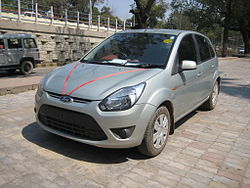
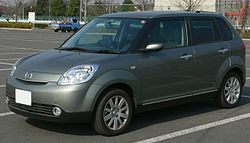
The first iteration of this platform was known as the B3. Vehicles utilising this platform include:

Mazda D Platform

[edit]

B2E

[edit]

The new B2E platform was designed and developed as Ford’s global B-segment platform. It is the first B-platform developed by Ford's global product development process.[2][3]

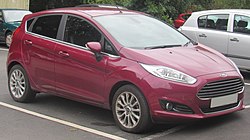
This global platform has been used since 2008 on the following vehicles:

References

[edit]
Revisions and contributorsEdit on WikipediaRead on Wikipedia
from Grokipedia
The Ford Global B-car Platform, also known as the B3 platform, is a modular unibody architecture developed by in partnership with for subcompact cars and crossover SUVs, designed to support front-wheel-drive layouts with optional all-wheel drive and a range of efficient engines including the 1.0L EcoBoost inline-three and 1.6L Ti-VCT inline-four. Introduced in the late as a successor to the earlier Ford B and Mazda D platforms, it was engineered to streamline global production and reduce development costs by up to 30 percent compared to region-specific designs, targeting annual volumes exceeding 1 million units across , , and the . Key features include a compact for agile handling, front suspension paired with a twist-beam rear , and electric power-assisted steering to enhance and low CO2 emissions, such as 114 g/km for certain petrol variants. The platform underpins a diverse lineup of vehicles launched from the late 2000s onward, including the sixth-generation subcompact hatchback (2008–2019 in many markets), the subcompact crossover (2012–2022), the innovative mini-MPV with pillarless doors (2012–2017), the subcompact hatchback (2016–2021), the Ford Tourneo Courier compact van (2014–present), and the subcompact crossover (2019–present as of 2025). These models emphasize practicality, with class-leading interior space for five passengers, versatile cargo capacities up to 270 liters in some configurations, and tuned for dynamic driving in urban environments. The collaboration with , which provided foundational elements derived from the Mazda2's DE platform, allowed for shared that optimized while maintaining brand-specific styling and characteristics. Although the Ford- has since evolved, the B-car Platform remains a of Ford's small-vehicle strategy in emerging and mature markets, contributing to models that achieved strong sales in and , with select applications continuing as of 2025.

History and Development

Origins and Collaboration

The joint development of the Ford Global B-car Platform was initiated by Ford Motor Company in the early 2000s as a cost-saving measure to create a unified architecture for B-segment subcompact vehicles, building on the strategic alliance with Mazda Motor Corporation formalized through Ford's acquisition of a 33.4% controlling stake in 1996. This effort leveraged Mazda's expertise in lightweight chassis engineering, while Ford assumed primary responsibility for overall project oversight and integration. The initial B3 variant was introduced in 2002, marking a step toward standardized small-car architectures across Ford's international operations and underpinning the fifth-generation . Production of the B3 began that year at Ford's facility in , , targeting European markets first, with engineering contributions coordinated from development hubs in Merkenich (near ) for European adaptations, for Mazda-led technical advancements, and other sites including Dunton, . The platform built upon lessons learned from predecessors, including Ford's own B platform—employed from 1976 to 2002 for models like the early Fiesta—and Mazda's D platform, utilized from the 1980s through the 2000s for vehicles such as the and Demio, both of which suffered from limited global scalability and higher per-unit costs due to region-specific modifications. The Global B-car addressed these shortcomings through a emphasizing shared components, aiming for a 20-30% reduction in development costs compared to standalone regional platforms and targeting annual volumes exceeding 1 million units across regions.

Evolution of Variants

The Ford Global B-car Platform's evolution began with the introduction of the B3 variant in 2002, marking the first major iteration as a successor to the earlier Ford B and D platforms, and emphasizing initial efforts toward global standardization in subcompact vehicle architecture. This platform facilitated shared development between Ford and , enabling cost efficiencies and broader applicability across markets while supporting front-wheel-drive configurations for small cars. A significant shift occurred in 2008 with the launch of the B2E variant, driven by Ford's "One Ford" strategy initiated under CEO in 2006, which prioritized unified global product development to streamline operations amid financial challenges. This evolution built on the B3 foundation but incorporated enhanced flexibility for diverse engine options and body styles, including close collaboration with for the (also known as Demio), allowing Ford to adapt vehicles more efficiently to regional preferences. Mid-cycle refinements to the B2E platform in focused on expanding compatibility with crossover SUVs, such as through structural adjustments to accommodate higher ground clearance and all-wheel-drive options, responding to growing demand in emerging segments. Further revisions in 2017 improved overall rigidity and integrated , aligning with stricter global standards while maintaining the platform's core efficiency. Production of B-car variants continued until 2022 for key applications, with adaptations tailored for emerging markets like and to meet local manufacturing and regulatory needs, such as simplified components for cost-sensitive regions. By 2010, Ford had divested most of its stake in , but the platforms continued to be shared. These evolutions were influenced by external pressures, including the that accelerated Mulally's cost-focused unification efforts, and evolving fuel efficiency regulations like the European Union's CO2 emission targets, which prompted integrations of efficient powertrains across variants.

Technical Features

Chassis and Suspension

The Ford Global B-car Platform features unibody construction augmented by a pressed-steel welded subframe at the front end, which bolts directly to the bodyshell for enhanced modularity and ease of integration across vehicle types. This architecture supports a typical of 2,480 to 2,520 mm and track widths of 1,480 to 1,500 mm, balancing compactness with stable proportions suitable for subcompact vehicles. The front suspension adopts an independent design with coil springs and anti-roll bars, prioritizing compact packaging to accommodate transverse powertrains while delivering ride comfort optimized for urban maneuverability and daily commuting. This configuration, including L-shaped lower control arms and subframe-mounted steering gear, contributes to responsive handling without compromising interior space. At the rear, a twist-beam axle paired with trailing arms provides a cost-effective and space-efficient alternative to fully independent setups, enabling simplified packaging for rear seating and cargo areas in subcompact applications. In B2E platform variants tailored for crossover vehicles, refinements such as additional stabilizing linkages enhance handling stability under varied loads. Safety considerations are embedded in the platform's structure through extensive use of high-strength and ultra-high-strength steels, accounting for up to 58% of the body and door assembly in later implementations to optimize crash energy absorption and structural rigidity. Mounting points for systems are standardized, supporting integration of advanced driver aids for improved vehicle control. The chassis design emphasizes manufacturability, with components suited to high-volume stamping and welding processes that streamline assembly and reduce production complexity compared to prior platforms.

Powertrain Compatibility

The Ford Global B-car Platform supports a range of inline-three and inline-four gasoline engines, primarily from the EcoBoost and Ti-VCT families, with displacements spanning 1.0 liters to 1.6 liters and power outputs from approximately 65 to 140 horsepower. The 1.0-liter EcoBoost inline-three, a hallmark of the platform's efficiency focus, delivers up to 140 PS through turbocharging and direct injection, while the 1.6-liter Ti-VCT inline-four provides naturally aspirated options around 120 horsepower for broader market applications. Diesel variants, tailored for Europe and Asia, include the 1.5-liter Duratorq TDCi engine producing 75 horsepower and the 1.6-liter Duratorq TDCi at 95 horsepower, emphasizing low-end torque and fuel economy in regions with stringent diesel incentives. Late platform iterations previewed mild-hybrid integration via 48-volt EcoBoost Hybrid systems, but full hybrid production was not realized on the core architecture. Transmission options emphasize modularity and efficiency, pairing with five- and six-speed manual gearboxes for cost-sensitive markets, alongside six-speed conventional automatics and Powershift dual-clutch units (including seven-speed variants for hybrids). is the standard configuration across all applications, with optional intelligent all-wheel drive available in certain crossover variants such as the EcoSport to enhance traction while maintaining compactness. The optional AWD system in crossovers like the EcoSport uses an intelligent on-demand setup that engages the rear wheels as needed for improved traction. The platform's drivetrain design prioritizes mounting with adaptable bellhousing patterns, allowing seamless integration of various powerplants without major retooling. Fuel systems accommodate up to E10 blends, supporting requirements for flex-fuel adaptability. In efficient configurations, such as the 1.0-liter EcoBoost, the platform achieves highway fuel economy of 40-50 mpg, bolstered by turbocharging, direct injection, and lightweight construction for emissions compliance in global standards like Euro 6. Regional adaptations enhance versatility, with tuning for higher torque in South American variants to suit varied fuel qualities and driving conditions. compatibility has been explored in later derivatives, exemplified by the 2024 Puma Gen-E, which adapts the platform for a fully electric delivering 166 horsepower (168 PS) and 13.1 kWh/100 km efficiency, though this remains outside the original design scope.

Platform Variants

B3 Platform

The B3 platform was launched in 2002 as the foundational iteration of the Ford Global B-car platform, jointly developed with and also known as the Mazda DY platform. It was primarily focused on the and Asia-Pacific markets, underpinning subcompact cars like the fifth-generation and the second-generation Mazda Demio (). Design priorities for the B3 platform emphasized simplicity and low-cost production to support global scalability, with a shorter development cycle of 24 months compared to traditional regional platforms. This approach allowed for efficient manufacturing and parts standardization between Ford and Mazda models. Key specifications of the B3 platform included a base wheelbase of 2,486 mm and curb weights ranging from 900 to 1,100 kg, making it suitable for lightweight subcompact vehicles. The fifth-generation Fiesta achieved a 4-star adult occupant protection rating in Euro NCAP crash testing upon its introduction. The B3 platform exhibited limitations in flexibility for adaptations, which were better accommodated in successor variants, and early diesel configurations suffered from elevated noise and vibration levels. Approximately 4-5 million units were produced on the B3 platform from 2002 to 2012, with 60-70% parts commonality shared with equivalents to optimize costs and development.

B2E Platform

The B2E platform, an evolution of the earlier B3 variant optimized for global production under Ford's One Ford plan, debuted in 2008 with the sixth-generation (Mk6) and the third-generation (launched in 2007). This renaming and refinement emphasized a "global evolution," enabling broader market adaptation while maintaining the core subcompact architecture developed in collaboration with . Key enhancements focused on structural integrity and efficiency, with torsional stiffness three times greater than the previous model, as measured from the suspension pick-up points, enhancing safety and handling dynamics. Aerodynamic refinements achieved a of 0.33, contributing to better fuel economy without compromising the compact footprint. The platform also supported advanced powertrains, including the 1.0-liter EcoBoost engine family introduced in 2012, which combined turbocharging and direct injection for improved performance and emissions. Designed for worldwide deployment, the B2E achieved up to 90% parts commonality across regions, facilitating production in , , and the to streamline supply chains and reduce development costs. It marked the platform's expansion into crossovers with the , adapting the architecture for elevated ride heights and utility while retaining core chassis elements. Performance emphasized agile dynamics, with base models featuring 1.4- or 1.6-liter engines achieving 0-60 mph times of 9-11 seconds, and handling calibrated for a responsive, fun-to-drive character. Higher-output ST variants incorporated via selective braking to enhance cornering precision. Toward the end of its run, adaptations included mild-hybrid integration by 2020, pairing the 1.0-liter EcoBoost with a 48-volt system for assist and up to 5% better fuel efficiency to meet stricter emissions standards.

Vehicle Applications

Models on B3

The B3 variant represents the initial iteration of the Ford Global B-car Platform, developed in close collaboration with and introduced in the early 2000s for subcompact vehicles primarily in and emerging markets. This version laid the groundwork for efficient small-car production, supporting front-wheel-drive layouts with compact dimensions suited for urban use. Key models on the B3 platform included the fifth-generation (2002–2008), a supermini that pioneered the architecture in ; the mini-MPV (2002–2012), offering family-oriented space in a compact package; and the sedan (2007–2015), tailored for markets like with durable construction and affordable powertrains such as 1.6-liter engines. These vehicles emphasized cost-effective manufacturing and shared components with the , contributing to Ford's early global small-car strategy before the transition to more advanced variants.

Models on B2E

The B2E variant of the Ford Global B-car Platform enabled the expansion of Ford's subcompact lineup into diverse body styles, including hatchbacks, sedans, SUVs, and MPVs, primarily targeting global markets after 2008. This evolution supported increased versatility in vehicle architecture, allowing for adaptations like raised suspensions for SUVs and innovative door designs for urban accessibility, while maintaining compatibility with efficient powertrains. Key models on this platform highlighted Ford's focus on emerging economies and European preferences, contributing to the brand's presence in the competitive B-segment. The Ford Tourneo Courier, a compact van produced from 2014 to present, utilized the B2E platform to offer versatile cargo and passenger configurations with up to 2.3 cubic meters of load space, powered by 1.0-liter EcoBoost and 1.5-liter diesel engines for efficient operation in commercial and family use. The Mk6 and Mk7, produced from 2008 to 2023, represented the core global and sedan offerings on the B2E platform, available in five-door , three-door , four-door sedan, and configurations. These generations emphasized refined handling and under Ford's "One Ford" strategy, with global production exceeding several million units as part of the model's cumulative sales surpassing 22 million worldwide by discontinuation. The Fiesta ST performance variant featured a 1.6-liter turbocharged EcoBoost engine delivering up to 197 horsepower, appealing to enthusiasts with its sport-tuned suspension and lightweight construction. Introduced in 2012 and continuing until 2023, the was a subcompact launched initially in before expanding globally, utilizing the B2E platform with a raised and distinctive side-hinged rear tailgate for improved cargo access in urban settings. This design choice, combined with available 1.0-liter EcoBoost and 1.5-liter diesel engines, helped it achieve strong sales in emerging markets, with over 1 million units produced at Ford's plant alone by 2019. The model's compact footprint and available all-wheel-drive options positioned it as a versatile entry-level , particularly in regions like and . The , manufactured from 2012 to 2017 and focused on the European market, was a mini-MPV built on the B2E platform, featuring innovative pillarless side doors that slid open for exceptional ease of access in tight spaces. This , derived from the Fiesta's underpinnings, allowed for a low floor height and spacious interior despite its compact 3.97-meter length, powered by 1.0-liter EcoBoost engines for efficient performance. Sales reached approximately 225,000 units in through 2016, though the model faced challenges from shifting consumer preferences toward crossovers. Tailored for emerging markets, the Ford Ka+ (also known as Figo in regions like and ) served as a city car and sedan from 2014 to 2021 on the B2E platform, with a focus on affordability and practicality in high-volume markets. Offered in and sedan forms, it prioritized durable 1.5-liter diesel engines for better fuel economy in diesel-dominant areas like and , alongside 1.2-liter petrol options. The model's simple, robust design supported local assembly and customization, aiding Ford's penetration in developing economies despite modest global volumes. Launched in 2019 and continuing production, the is a crossover coupe-SUV on the B2E platform, blending sporty styling with practical features like a 456-liter expandable via a fold-flat front passenger seat. As Ford's current bestseller in , it has led sales charts since 2023 with mild-hybrid 1.0-liter EcoBoost powertrains offering up to 48-volt assistance for improved efficiency and reduced emissions. The Puma's agile and available all-wheel drive underscore the platform's adaptability for premium subcompact crossovers.

Legacy and Successors

The , a model on the Global B-car Platform, was discontinued globally in 2023 as part of Ford's strategic pivot toward electrification. Production ceased in June 2023 at the plant in , where the final unit rolled off the line on July 7, marking the end of over 22 million Fiestas across all generations. While the model had been produced in , global operations aligned with the 2023 timeline, driven by the need to reallocate manufacturing capacity for electric vehicles like the Explorer . The , another key B-car application, was retired after the 2022 model year in , with production halting to streamline Ford's portfolio. Globally, the EcoSport was phased out by the end of 2023, as dealership inventories cleared and no further units were allocated. It was effectively replaced by the larger Bronco Sport in the compact crossover segment, reflecting a shift toward more versatile, higher-margin vehicles. As of 2025, the platform's remaining applications are limited but ongoing in . The continues production on the B2E derivative, with the all-electric Puma Gen-E entering deliveries in spring 2025 from the plant in . Similarly, the Transit Courier van persists in European markets, with the all-new model in production since 2023 and the E-Transit Courier variant commencing in 2024, supporting commercial fleet demands. Several factors contributed to the platform's phase-out. Small-car sales had been declining sharply, with the Fiesta alone selling fewer than 50,000 units globally in 2023 amid consumer preference for SUVs and crossovers. Regulatory pressures in accelerated the transition from internal combustion engines, as countries pushed for zero-emission vehicles to meet emissions targets. Post-COVID supply chain disruptions further elevated production costs for low-margin small cars, exacerbating profitability challenges. Over its more than two-decade lifespan since the early , the Global B-car Platform underpinned millions of vehicles worldwide, enabling efficient shared development with and supporting Ford's entry-level lineup across regions.

Strategic Impact

The Ford Global B-car Platform played a pivotal role in Ford's cost-efficiency strategy by enabling high levels of parts commonality across global models, with vehicles sharing between 70% and 85% of their parts and as measured by value. This approach allowed Ford to save up to 30% on development costs compared to creating standalone regional vehicles, significantly enhancing profitability in the competitive, low-margin where economies of scale were essential for viability. In terms of market influence, the platform bolstered Ford's position in , where the Fiesta—built on the B-car architecture—emerged as the best-selling car overall in early 2010 and maintained strong leadership in the throughout the decade, contributing to Ford's regained market share from 7.0% in 2013. It also supported Ford's expansion into emerging markets like and through localized production, exemplified by the EcoSport , which utilized the Fiesta's B-car underpinnings for assembly in facilities such as Camaçari, Brazil, and , India, facilitating affordable adaptation to regional demands. The platform's design principles informed subsequent architectures by emphasizing modular scalability and global standardization, influencing the development of the C2 platform for compact vehicles like the Focus through shared engineering practices in front-wheel-drive systems and component modularity. This legacy extended to electric vehicle strategies, as seen in the 2024 announcement of the Puma Gen-E battery-electric variant, which incorporates B-car-derived elements like suspension geometry for efficient small-car electrification. Broader impacts included exemplifying successful OEM alliances, particularly Ford's collaboration with Mazda, where the B-car was engineered on the Mazda2 platform to leverage joint expertise in subcompact design. It aligned with Ford's "One Ford" initiative, transitioning the company from fragmented regional engineering to unified global development, a shift that persisted even after Ford reduced its Mazda stake to 2% by 2015 amid evolving partnerships. As of 2025, the B-car Platform has been largely phased out for applications following the Fiesta's discontinuation, but its core elements—such as modularity and adaptability—continue in hybrid and electric small vehicles, including the Puma's mild-hybrid variants and the Gen-E BEV, ensuring ongoing relevance in Ford's electrified compact lineup.

References

Add your contribution
Related Hubs
User Avatar
No comments yet.