


Community hub
Recent from talks
Contribute something
Nothing was collected or created yet.


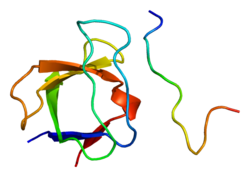
Proto-oncogene tyrosine-protein kinase Fyn (p59-FYN, Slk, Syn, MGC45350, Gene ID 2534)[5] is an enzyme that in humans is encoded by the FYN gene.[6]
Fyn is a 59-kDa member of the Src family of kinases typically associated with T-cell and neuronal signaling in development and normal cell physiology. Disruptions in these signaling pathways often have implications in the formation of a variety of cancers. By definition as a proto-oncogene, Fyn codes for proteins that help regulate cell growth. Changes in its DNA sequence transform it into an oncogene that leads to the formation of a different protein with implications for normal cell regulation.[5][7]
Fyn is a member of the protein-tyrosine kinase oncogene family. It encodes a membrane-associated tyrosine kinase that has been implicated in the control of cell growth. The protein associates with the p85 subunit of phosphatidylinositol 3-kinase and interacts with the fyn-binding protein. Alternatively spliced transcript variants encoding distinct isoforms exist.[8]
History
[edit]Fyn is a member of the Src-family of kinases (SFK), the first proto-oncogene to be identified. The discovery of the Src-family in 1976 led to the Nobel prize for medicine in 1989 for J.M Bishop and E.M. Varmus. Fyn was first identified in 1986 as Syn or Slk through probes derived from v-yes and v-fgr. A common feature of SFKs is that they are commonly upregulated in cancers. Fyn is functionally distinct from its family members in that it interacts with FAK and paxillin (PXN) in the regulation of cell morphology and motility.[9]
Function
[edit]Fyn is a protein, present in the signaling pathway of integrins, which activates ras. Fyn is a tyrosine-specific phospho-transferase that is a member of the Src family of non-receptor tyrosine protein kinases.[10] (This family also includes Abl, Src, focal adhesion kinase and Janus kinase.) Fyn is located downstream of several cell surface receptors, commonly associated with neuronal development and T-cell signaling. When fyn is activated it causes downstream activation of molecular signals that drive processes crucial to growth and motility of cells.[9] Fyn is primarily localized to the cytoplasmic leaflet of the plasma membrane, where it phosphorylates tyrosine residues on key targets involved in a variety of different signaling pathways. Tyrosine phosphorylation of target proteins by Fyn serves to either regulate target protein activity, and/or to generate a binding site on the target protein that recruits other signaling molecules. Fyn also is a tumor suppressor. When this normal biology is compromised, the altered Fyn becomes involved in the neoplastic transformation of normal cells to cancerous ones following the pathway from pre-invasive, to invasive, and ultimately metastasis.[7]
Fyn also appears to play an important role in fertilization including in the rapid Inositol trisphosphate-mediated calcium signaling which occurs when oocyte and sperm interact. Fyn expression levels are much higher in oocytes than even neurons and T-cells and it has been suggested to be an 'oocyte-specific kinase'.[11] Several studies point to Fyn as being responsible for dramatic biochemical changes in the oocyte cortex during oocyte maturation.[12] Fyn may also play an important role in proper shaping of sperm head and acrosome within the testis and possibly has an additional role in the sperm acrosome reaction.[13]
Role in signaling pathways
[edit]An understanding of the role of fyn in normal biology is crucial to the understanding of its role in cancer, as cancer is the dysregulation of these normal pathways. Knowing which pathways involve Fyn will provide key insight for the development of potential pharmacologic agents to attenuate this uncontrolled signaling.
At least three tools have been useful in discerning a requirement for Fyn function in a particular signaling system:
- cells derived from Fyn-/- mice (as well as cells derived from Fyn, Src, Yes, Fyn triple knockout mice (SYF));
- a kinase-inactive, dominant negative mutant form of Fyn (K299M);
- pharmacologic inhibitors of Src family kinases, such as PP2; note that PP2 also inhibits other tyrosine protein kinases such as Abl, PDGFR and c-Kit.
Using these tools, a requirement for Fyn has been shown for the following signaling pathways: T and B cell receptor signaling,[14][15] integrin-mediated signaling, growth factor and cytokine receptor signaling, platelet activation, ion channel function, cell adhesion, axon guidance, fertilization, entry into mitosis, and differentiation of natural killer cells, oligodendrocytes and keratinocytes. Fyn also has an important role to play in TLR-mediated immune responses from T cells.[16]
Interactions
[edit]FYN has been shown to interact with:
- ADD2,[17]
- BCAR1,[18][19]
- C-Raf,[20]
- CBLC,[21]
- CD36,[22][23]
- CD44,[24]
- CDH1,[25]
- CHRNA7,[26]
- CTNND1,[25][27]
- CBL,[28][29]
- CSF1R,[30]
- DLG4,[31][32]
- Dystroglycan,[33]
- EPHA8,[34]
- FYB,[35][36]
- FASLG,[37][38]
- GNB2L1,[39][40]
- GRIN2A,[31][32][41][42]
- ITK,[43][44]
- Janus kinase 2,[45]
- KHDRBS1,[46][47]
- Lck,[48]
- LKB1,[49]
- Nephrin,[50][51]
- PAG1,[52]
- PIK3R2,[53]
- PRKCQ,[54]
- PTK2B,[55][56][57]
- PTK2,[58][59]
- PTPRT[60]
- UNC119,[61]
- RICS,[62]
- SH2D1A,[63][64]
- SKAP1,[36][65][66]
- Syk,[29]
- TNK2,[67]
- TRPC6,[68]
- Tau protein,[69]
- TrkB,[70]
- TYK2,[71]
- TUBA3C,[69]
- WAS,[72][73][74] and
- ZAP-70,[75]
Role in cancer biology
[edit]The Src family of kinases is commonly associated with its role in "invasion and tumor progression, epithelial-to-mesenchymal transition, angiogenesis, and development of metastasis," all hallmarks of cancer progression.[9] Fyn's normal function in cellular growth and proliferation has the potential to be exploited in the progression and metastasis of cancer cells. Overexpression of Fyn has been found to drive morphologic transformation in normal cells and increase "anchorage-independent growth and prominent morphologic changes." [5]
Fyn overexpression has been studied in relation to the following cancers: prostate cancer, glioblastoma multiform, squamous cell carcinoma of the head and neck, pancreatic cancer, chronic melogenic leukemia, and melanoma.[5][76] This overexpression triggers a promotion of "anti-apoptotic activity of Akt" in prostate cancer, meaning that these cells have gained the ability to avoid the normal cell death pathways (a common hallmark of cancer).[7] Additionally, in glioblastoma multiform, Src and Fyn have been found to be "effectors of oncogenic EGFR signaling" which has led to tumor invasion and cancer cell survival.[5]
Fyn's normal role in cell migration and adhesion enables it to utilize the normal cell biology of integrin and FAK for cancer growth. Normal integrin is a cell surface receptor that interacts with the extracellular matrix to send signals influencing cell shape and motility. Normal FAK is a tyrosine kinase that gets recruited to focal adhesion sites and plays a key role in directed cell movement. These normal pathways plan a key role in "mediation of Fyn transmitted cellular events impacting shape and motility." A compromised version of this pathway would enable cancer cells to change shape and motility, increasing the possibility for advanced invasion and metastasis. Additional pathways under investigation regarding Fyn's role in cancer progression include: the Rac and Rho family of GTPases, Ras, Erk, and MAPK.[5][7]
Because of this, Fyn has been a common target for anti-cancer therapeutic research. The inhibition of Fyn (like other SFKs) results in decreased cell growth. Furthermore, "expression of kinase-dead-Fyn (KD-Fyn), a specific competitor of endogenous Fyn," was found to reduce the size of primary tumors in mice. Specifically targeting the unique identifying properties of Fyn as well as inhibiting FAK and PXN has the potential to create a very effective molecularly targeted combination cancer therapy.[7][9] Fyn inhibitors are also being explored as potential therapies for Alzheimer's Disease.[77]
References
[edit]- ^ a b c GRCh38: Ensembl release 89: ENSG00000010810 – Ensembl, May 2017
- ^ a b c GRCm38: Ensembl release 89: ENSMUSG00000019843 – Ensembl, May 2017
- ^ "Human PubMed Reference:". National Center for Biotechnology Information, U.S. National Library of Medicine.
- ^ "Mouse PubMed Reference:". National Center for Biotechnology Information, U.S. National Library of Medicine.
- ^ a b c d e f Saito YD, Jensen AR, Salgia R, Posadas EM (2010-04-01). "Fyn". Cancer. 116 (7): 1629–1637. doi:10.1002/cncr.24879. ISSN 1097-0142. PMC 2847065. PMID 20151426.
- ^ Semba K, Nishizawa M, Miyajima N, Yoshida MC, Sukegawa J, Yamanashi Y, et al. (August 1986). "yes-related protooncogene, syn, belongs to the protein-tyrosine kinase family". Proceedings of the National Academy of Sciences of the United States of America. 83 (15): 5459–5463. Bibcode:1986PNAS...83.5459S. doi:10.1073/pnas.83.15.5459. PMC 386306. PMID 3526330.
- ^ a b c d e Posadas EM, Al-Ahmadie H, Robinson VL, Jagadeeswaran R, Otto K, Kasza KE, et al. (2009-01-01). "FYN is overexpressed in human prostate cancer". BJU International. 103 (2): 171–177. doi:10.1111/j.1464-410X.2008.08009.x. ISSN 1464-410X. PMC 2741693. PMID 18990162.
- ^ "Entrez Gene: FYN FYN oncogene related to SRC, FGR, YES".
- ^ a b c d Sen B, Johnson FM (2011-04-04). "Regulation of Src Family Kinases in Human Cancers". Journal of Signal Transduction. 2011 865819. doi:10.1155/2011/865819. ISSN 2090-1739. PMC 3135246. PMID 21776389.
- ^ Resh MD (November 1998). "Fyn, a Src family tyrosine kinase". The International Journal of Biochemistry & Cell Biology. 30 (11): 1159–1162. doi:10.1016/S1357-2725(98)00089-2. PMID 9839441.
- ^ Kinsey WH (May 24, 2014). "SRC-Family Tyrosine Kinases in Oogenesis, Oocyte Maturation and Fertilization: An Evolutionary Perspective". In Sutovsky P (ed.). Posttranslational Protein Modifications in the Reproductive System. Advances in Experimental Medicine and Biology. Vol. 759. Springer. pp. 33–56. doi:10.1007/978-1-4939-0817-2_3. ISBN 978-1-4939-0816-5. PMC 4324500. PMID 25030759.
- ^ McGinnis LK, Limback SD, Albertini DF (January 2013). "Chapter Eight - Signaling Modalities During Oogenesis in Mammals". In Wassarman PM (ed.). Current Topics in Developmental Biology. Vol. 102. Academic Press. pp. 227–242. doi:10.1016/B978-0-12-416024-8.00008-8. ISBN 978-0-12-416024-8. PMID 23287035.
- ^ Luo J, Gupta V, Kern B, Tash JS, Sanchez G, Blanco G, et al. (January 2012). "Role of FYN Kinase in Spermatogenesis: Defects Characteristic of Fyn-Null Sperm in Mice". Biology of Reproduction. 86 (1): 1–8. doi:10.1095/biolreprod.111.093864. PMC 3313667. PMID 21918125.
- ^ Zamoyska R, Basson A, Filby A, Legname G, Lovatt M, Seddon B (February 2003). "The influence of the src-family kinases, Lck and Fyn, on T cell differentiation, survival and activation". Immunological Reviews. 191 (1): 107–118. doi:10.1034/j.1600-065X.2003.00015.x. PMID 12614355. S2CID 10156186.
- ^ Palacios EH, Weiss A (October 2004). "Function of the Src-family kinases, Lck and Fyn, in T-cell development and activation". Oncogene. 23 (48): 7990–8000. doi:10.1038/sj.onc.1208074. PMID 15489916.
- ^ Sharma N, Akhade AS, Qadri A (April 2016). "Src kinases central to T-cell receptor signaling regulate TLR-activated innate immune responses from human T cells". Innate Immunity. 22 (3): 238–244. doi:10.1177/1753425916632305. PMID 26888964.
- ^ Shima T, Okumura N, Takao T, Satomi Y, Yagi T, Okada M, et al. (November 2001). "Interaction of the SH2 domain of Fyn with a cytoskeletal protein, beta-adducin". Journal of Biological Chemistry. 276 (45): 42233–42240. doi:10.1074/jbc.M102699200. PMID 11526103.
- ^ Donaldson JC, Dempsey PJ, Reddy S, Bouton AH, Coffey RJ, Hanks SK (April 2000). "Crk-associated substrate p130(Cas) interacts with nephrocystin and both proteins localize to cell-cell contacts of polarized epithelial cells". Experimental Cell Research. 256 (1): 168–178. doi:10.1006/excr.2000.4822. PMID 10739664.
- ^ Manié SN, Astier A, Haghayeghi N, Canty T, Druker BJ, Hirai H, et al. (June 1997). "Regulation of integrin-mediated p130(Cas) tyrosine phosphorylation in human B cells. A role for p59(Fyn) and SHP2". Journal of Biological Chemistry. 272 (25): 15636–15641. doi:10.1074/jbc.272.25.15636. PMID 9188452.
- ^ Cleghon V, Morrison DK (July 1994). "Raf-1 interacts with Fyn and Src in a non-phosphotyrosine-dependent manner". Journal of Biological Chemistry. 269 (26): 17749–17755. doi:10.1016/S0021-9258(17)32504-8. PMID 7517401.
- ^ Kim M, Tezuka T, Suziki Y, Sugano S, Hirai M, Yamamoto T (October 1999). "Molecular cloning and characterization of a novel cbl-family gene, cbl-c". Gene. 239 (1): 145–154. doi:10.1016/s0378-1119(99)00356-x. PMID 10571044.
- ^ Huang MM, Bolen JB, Barnwell JW, Shattil SJ, Brugge JS (September 1991). "Membrane glycoprotein IV (CD36) is physically associated with the Fyn, Lyn, and Yes protein-tyrosine kinases in human platelets". Proceedings of the National Academy of Sciences of the United States of America. 88 (17): 7844–7848. Bibcode:1991PNAS...88.7844H. doi:10.1073/pnas.88.17.7844. PMC 52400. PMID 1715582.
- ^ Bull HA, Brickell PM, Dowd PM (August 1994). "Src-related protein tyrosine kinases are physically associated with the surface antigen CD36 in human dermal microvascular endothelial cells". FEBS Letters. 351 (1): 41–44. Bibcode:1994FEBSL.351...41B. doi:10.1016/0014-5793(94)00814-0. PMID 7521304. S2CID 45071719.
- ^ Ilangumaran S, Briol A, Hoessli DC (May 1998). "CD44 selectively associates with active Src family protein tyrosine kinases Lck and Fyn in glycosphingolipid-rich plasma membrane domains of human peripheral blood lymphocytes". Blood. 91 (10): 3901–3908. doi:10.1182/blood.V91.10.3901. PMID 9573028.
- ^ a b Piedra J, Miravet S, Castaño J, Pálmer HG, Heisterkamp N, García de Herreros A, et al. (April 2003). "p120 Catenin-associated Fer and Fyn tyrosine kinases regulate beta-catenin Tyr-142 phosphorylation and beta-catenin-alpha-catenin Interaction". Molecular and Cellular Biology. 23 (7): 2287–2297. doi:10.1128/mcb.23.7.2287-2297.2003. PMC 150740. PMID 12640114.
- ^ Kihara T, Shimohama S, Sawada H, Honda K, Nakamizo T, Shibasaki H, et al. (April 2001). "alpha 7 nicotinic receptor transduces signals to phosphatidylinositol 3-kinase to block A beta-amyloid-induced neurotoxicity". Journal of Biological Chemistry. 276 (17): 13541–13546. doi:10.1074/jbc.M008035200. PMID 11278378.
- ^ Martinez MC, Ochiishi T, Majewski M, Kosik KS (July 2003). "Dual regulation of neuronal morphogenesis by a delta-catenin-cortactin complex and Rho". The Journal of Cell Biology. 162 (1): 99–111. doi:10.1083/jcb.200211025. PMC 2172717. PMID 12835311.
- ^ Taher TE, Tjin EP, Beuling EA, Borst J, Spaargaren M, Pals ST (October 2002). "c-Cbl is involved in Met signaling in B cells and mediates hepatocyte growth factor-induced receptor ubiquitination". Journal of Immunology. 169 (7). Baltimore, Md.: 3793–3800. doi:10.4049/jimmunol.169.7.3793. PMID 12244174.
- ^ a b Deckert M, Elly C, Altman A, Liu YC (April 1998). "Coordinated regulation of the tyrosine phosphorylation of Cbl by Fyn and Syk tyrosine kinases". Journal of Biological Chemistry. 273 (15): 8867–8874. doi:10.1074/jbc.273.15.8867. PMID 9535867.
- ^ Courtneidge SA, Dhand R, Pilat D, Twamley GM, Waterfield MD, Roussel MF (March 1993). "Activation of Src family kinases by colony stimulating factor-1, and their association with its receptor". The EMBO Journal. 12 (3): 943–950. doi:10.1002/j.1460-2075.1993.tb05735.x. PMC 413295. PMID 7681396.
- ^ a b Tezuka T, Umemori H, Akiyama T, Nakanishi S, Yamamoto T (January 1999). "PSD-95 promotes Fyn-mediated tyrosine phosphorylation of the N-methyl-D-aspartate receptor subunit NR2A". Proceedings of the National Academy of Sciences of the United States of America. 96 (2): 435–440. Bibcode:1999PNAS...96..435T. doi:10.1073/pnas.96.2.435. PMC 15154. PMID 9892651.
- ^ a b Hou XY, Zhang GY, Yan JZ, Chen M, Liu Y (November 2002). "Activation of NMDA receptors and L-type voltage-gated calcium channels mediates enhanced formation of Fyn-PSD95-NR2A complex after transient brain ischemia". Brain Research. 955 (1–2): 123–132. doi:10.1016/s0006-8993(02)03376-0. PMID 12419528. S2CID 85751.
- ^ Sotgia F, Lee H, Bedford MT, Petrucci T, Sudol M, Lisanti MP (December 2001). "Tyrosine phosphorylation of beta-dystroglycan at its WW domain binding motif, PPxY, recruits SH2 domain containing proteins". Biochemistry. 40 (48): 14585–14592. doi:10.1021/bi011247r. PMID 11724572.
- ^ Choi S, Park S (September 1999). "Phosphorylation at Tyr-838 in the kinase domain of EphA8 modulates Fyn binding to the Tyr-615 site by enhancing tyrosine kinase activity". Oncogene. 18 (39): 5413–5422. doi:10.1038/sj.onc.1202917. PMID 10498895.
- ^ da Silva AJ, Janssen O, Rudd CE (December 1993). "T cell receptor zeta/CD3-p59fyn(T)-associated p120/130 binds to the SH2 domain of p59fyn(T)". The Journal of Experimental Medicine. 178 (6): 2107–2113. doi:10.1084/jem.178.6.2107. PMC 2191307. PMID 7504057.
- ^ a b Marie-Cardine A, Hendricks-Taylor LR, Boerth NJ, Zhao H, Schraven B, Koretzky GA (October 1998). "Molecular interaction between the Fyn-associated protein SKAP55 and the SLP-76-associated phosphoprotein SLAP-130". Journal of Biological Chemistry. 273 (40): 25789–25795. doi:10.1074/jbc.273.40.25789. PMID 9748251.
- ^ Wenzel J, Sanzenbacher R, Ghadimi M, Lewitzky M, Zhou Q, Kaplan DR, et al. (December 2001). "Multiple interactions of the cytosolic polyproline region of the CD95 ligand: hints for the reverse signal transduction capacity of a death factor". FEBS Letters. 509 (2): 255–262. doi:10.1016/s0014-5793(01)03174-x. PMID 11741599. S2CID 33084576.
- ^ Hane M, Lowin B, Peitsch M, Becker K, Tschopp J (October 1995). "Interaction of peptides derived from the Fas ligand with the Fyn-SH3 domain". FEBS Letters. 373 (3): 265–268. Bibcode:1995FEBSL.373..265H. doi:10.1016/0014-5793(95)01051-f. PMID 7589480. S2CID 24130275.
- ^ Yaka R, He DY, Phamluong K, Ron D (March 2003). "Pituitary adenylate cyclase-activating polypeptide (PACAP(1-38)) enhances N-methyl-D-aspartate receptor function and brain-derived neurotrophic factor expression via RACK1". Journal of Biological Chemistry. 278 (11): 9630–9638. doi:10.1074/jbc.M209141200. PMID 12524444.
- ^ Yaka R, Thornton C, Vagts AJ, Phamluong K, Bonci A, Ron D (April 2002). "NMDA receptor function is regulated by the inhibitory scaffolding protein, RACK1". Proceedings of the National Academy of Sciences of the United States of America. 99 (8): 5710–5715. Bibcode:2002PNAS...99.5710Y. doi:10.1073/pnas.062046299. PMC 122836. PMID 11943848.
- ^ Ma J, Zhang GY (September 2003). "Lithium reduced N-methyl-D-aspartate receptor subunit 2A tyrosine phosphorylation and its interactions with Src and Fyn mediated by PSD-95 in rat hippocampus following cerebral ischemia". Neuroscience Letters. 348 (3): 185–189. doi:10.1016/s0304-3940(03)00784-5. PMID 12932824. S2CID 40684016.
- ^ Takagi N, Cheung HH, Bissoon N, Teves L, Wallace MC, Gurd JW (August 1999). "The effect of transient global ischemia on the interaction of Src and Fyn with the N-methyl-D-aspartate receptor and postsynaptic densities: possible involvement of Src homology 2 domains". Journal of Cerebral Blood Flow and Metabolism. 19 (8): 880–888. doi:10.1097/00004647-199908000-00007. PMID 10458595.
- ^ Bunnell SC, Diehn M, Yaffe MB, Findell PR, Cantley LC, Berg LJ (January 2000). "Biochemical interactions integrating Itk with the T cell receptor-initiated signaling cascade". Journal of Biological Chemistry. 275 (3): 2219–2230. doi:10.1074/jbc.275.3.2219. PMID 10636929.
- ^ Bunnell SC, Henry PA, Kolluri R, Kirchhausen T, Rickles RJ, Berg LJ (October 1996). "Identification of Itk/Tsk Src homology 3 domain ligands". Journal of Biological Chemistry. 271 (41): 25646–25656. doi:10.1074/jbc.271.41.25646. PMID 8810341.
- ^ Sayeski PP, Ali MS, Safavi A, Lyles M, Kim SO, Frank SJ, et al. (November 1999). "A catalytically active Jak2 is required for the angiotensin II-dependent activation of Fyn". Journal of Biological Chemistry. 274 (46): 33131–33142. doi:10.1074/jbc.274.46.33131. PMID 10551884.
- ^ Oneyama C, Nakano H, Sharma SV (March 2002). "UCS15A, a novel small molecule, SH3 domain-mediated protein-protein interaction blocking drug". Oncogene. 21 (13): 2037–2050. doi:10.1038/sj.onc.1205271. PMID 11960376.
- ^ Fusaki N, Iwamatsu A, Iwashima M, Fujisawa Ji (March 1997). "Interaction between Sam68 and Src family tyrosine kinases, Fyn and Lck, in T cell receptor signaling". Journal of Biological Chemistry. 272 (10): 6214–6219. doi:10.1074/jbc.272.10.6214. PMID 9045636.
- ^ Filipp D, Moemeni B, Ferzoco A, Kathirkamathamby K, Zhang J, Ballek O, et al. (Sep 2008). "Lck-dependent Fyn activation requires C terminus-dependent targeting of kinase-active Lck to lipid rafts". The Journal of Biological Chemistry. 283 (39): 26409–26422. doi:10.1074/jbc.M710372200. PMC 3258908. PMID 18660530.
- ^ Yamada E, Bastie CC (2014). "Disruption of Fyn SH3 domain interaction with a proline-rich motif in liver kinase B1 results in activation of AMP-activated protein kinase". PLOS ONE. 9 (2) e89604. Bibcode:2014PLoSO...989604Y. doi:10.1371/journal.pone.0089604. PMC 3934923. PMID 24586906.
- ^ Lahdenperä J, Kilpeläinen P, Liu XL, Pikkarainen T, Reponen P, Ruotsalainen V, et al. (August 2003). "Clustering-induced tyrosine phosphorylation of nephrin by Src family kinases". Kidney International. 64 (2): 404–413. doi:10.1046/j.1523-1755.2003.00097.x. PMID 12846735.
- ^ Verma R, Wharram B, Kovari I, Kunkel R, Nihalani D, Wary KK, et al. (June 2003). "Fyn binds to and phosphorylates the kidney slit diaphragm component Nephrin". Journal of Biological Chemistry. 278 (23): 20716–20723. doi:10.1074/jbc.M301689200. PMID 12668668.
- ^ Brdicka T, Pavlistová D, Leo A, Bruyns E, Korínek V, Angelisová P, et al. (May 2000). "Phosphoprotein associated with glycosphingolipid-enriched microdomains (PAG), a novel ubiquitously expressed transmembrane adaptor protein, binds the protein tyrosine kinase csk and is involved in regulation of T cell activation". The Journal of Experimental Medicine. 191 (9): 1591–1604. doi:10.1084/jem.191.9.1591. PMC 2213442. PMID 10790433.
- ^ Gout I, Dhand R, Panayotou G, Fry MJ, Hiles I, Otsu M, et al. (December 1992). "Expression and characterization of the p85 subunit of the phosphatidylinositol 3-kinase complex and a related p85 beta protein by using the baculovirus expression system". The Biochemical Journal. 288. 288 (Pt 2): 395–405. doi:10.1042/bj2880395. PMC 1132024. PMID 1334406.
- ^ Ron D, Napolitano EW, Voronova A, Vasquez NJ, Roberts DN, Calio BL, et al. (July 1999). "Direct interaction in T-cells between thetaPKC and the tyrosine kinase p59fyn". Journal of Biological Chemistry. 274 (27): 19003–19010. doi:10.1074/jbc.274.27.19003. PMID 10383400.
- ^ Ganju RK, Hatch WC, Avraham H, Ona MA, Druker B, Avraham S, et al. (March 1997). "RAFTK, a novel member of the focal adhesion kinase family, is phosphorylated and associates with signaling molecules upon activation of mature T lymphocytes". The Journal of Experimental Medicine. 185 (6): 1055–1063. doi:10.1084/jem.185.6.1055. PMC 2196239. PMID 9091579.
- ^ Katagiri T, Takahashi T, Sasaki T, Nakamura S, Hattori S (June 2000). "Protein-tyrosine kinase Pyk2 is involved in interleukin-2 production by Jurkat T cells via its tyrosine 402". Journal of Biological Chemistry. 275 (26): 19645–19652. doi:10.1074/jbc.M909828199. PMID 10867021.
- ^ Qian D, Lev S, van Oers NS, Dikic I, Schlessinger J, Weiss A (April 1997). "Tyrosine phosphorylation of Pyk2 is selectively regulated by Fyn during TCR signaling". The Journal of Experimental Medicine. 185 (7): 1253–1259. doi:10.1084/jem.185.7.1253. PMC 2196260. PMID 9104812.
- ^ Messina S, Onofri F, Bongiorno-Borbone L, Giovedì S, Valtorta F, Girault JA, et al. (January 2003). "Specific interactions of neuronal focal adhesion kinase isoforms with Src kinases and amphiphysin". Journal of Neurochemistry. 84 (2): 253–265. doi:10.1046/j.1471-4159.2003.01519.x. PMID 12558988.
- ^ Arold ST, Ulmer TS, Mulhern TD, Werner JM, Ladbury JE, Campbell ID, et al. (May 2001). "The role of the Src homology 3-Src homology 2 interface in the regulation of Src kinases". Journal of Biological Chemistry. 276 (20): 17199–17205. doi:10.1074/jbc.M011185200. PMID 11278857.
- ^ Lim SH, Kwon SK, Lee MK, Moon J, Jeong DG, Park E, et al. (Nov 2009). "Synapse formation regulated by protein tyrosine phosphatase receptor T through interaction with cell adhesion molecules and Fyn". The EMBO Journal. 28 (22): 3564–3578. doi:10.1038/emboj.2009.289. PMC 2782100. PMID 19816407.
- ^ Gorska MM, Stafford SJ, Cen O, Sur S, Alam R (February 2004). "Unc119, a novel activator of Lck/Fyn, is essential for T cell activation". The Journal of Experimental Medicine. 199 (3): 369–379. doi:10.1084/jem.20030589. PMC 2211793. PMID 14757743.
- ^ Taniguchi S, Liu H, Nakazawa T, Yokoyama K, Tezuka T, Yamamoto T (June 2003). "p250GAP, a neural RhoGAP protein, is associated with and phosphorylated by Fyn". Biochemical and Biophysical Research Communications. 306 (1): 151–155. Bibcode:2003BBRC..306..151T. doi:10.1016/s0006-291x(03)00923-9. PMID 12788081.
- ^ Li C, Iosef C, Jia CY, Han VK, Li SS (February 2003). "Dual functional roles for the X-linked lymphoproliferative syndrome gene product SAP/SH2D1A in signaling through the signaling lymphocyte activation molecule (SLAM) family of immune receptors". Journal of Biological Chemistry. 278 (6): 3852–3859. doi:10.1074/jbc.M206649200. PMID 12458214.
- ^ Chan B, Lanyi A, Song HK, Griesbach J, Simarro-Grande M, Poy F, et al. (February 2003). "SAP couples Fyn to SLAM immune receptors". Nature Cell Biology. 5 (2): 155–160. doi:10.1038/ncb920. PMID 12545174. S2CID 9840321.
- ^ Marie-Cardine A, Bruyns E, Eckerskorn C, Kirchgessner H, Meuer SC, Schraven B (June 1997). "Molecular cloning of SKAP55, a novel protein that associates with the protein tyrosine kinase p59fyn in human T-lymphocytes". Journal of Biological Chemistry. 272 (26): 16077–16080. doi:10.1074/jbc.272.26.16077. PMID 9195899.
- ^ Wu L, Yu Z, Shen SH (October 2002). "SKAP55 recruits to lipid rafts and positively mediates the MAPK pathway upon T cell receptor activation". Journal of Biological Chemistry. 277 (43): 40420–40427. doi:10.1074/jbc.M206023200. PMID 12171928.
- ^ Linseman DA, Heidenreich KA, Fisher SK (February 2001). "Stimulation of M3 muscarinic receptors induces phosphorylation of the Cdc42 effector activated Cdc42Hs-associated kinase-1 via a Fyn tyrosine kinase signaling pathway". Journal of Biological Chemistry. 276 (8): 5622–5628. doi:10.1074/jbc.M006812200. PMID 11087735.
- ^ Hisatsune C, Kuroda Y, Nakamura K, Inoue T, Nakamura T, Michikawa T, et al. (April 2004). "Regulation of TRPC6 channel activity by tyrosine phosphorylation". Journal of Biological Chemistry. 279 (18): 18887–18894. doi:10.1074/jbc.M311274200. PMID 14761972.
- ^ a b Klein C, Kramer EM, Cardine AM, Schraven B, Brandt R, Trotter J (February 2002). "Process outgrowth of oligodendrocytes is promoted by interaction of fyn kinase with the cytoskeletal protein tau". The Journal of Neuroscience. 22 (3): 698–707. doi:10.1523/JNEUROSCI.22-03-00698.2002. PMC 6758498. PMID 11826099.
- ^ Iwasaki Y, Gay B, Wada K, Koizumi S (July 1998). "Association of the Src family tyrosine kinase Fyn with TrkB". Journal of Neurochemistry. 71 (1): 106–111. doi:10.1046/j.1471-4159.1998.71010106.x. PMID 9648856. S2CID 9012343.
- ^ Uddin S, Sher DA, Alsayed Y, Pons S, Colamonici OR, Fish EN, et al. (June 1997). "Interaction of p59fyn with interferon-activated Jak kinases". Biochemical and Biophysical Research Communications. 235 (1): 83–88. doi:10.1006/bbrc.1997.6741. PMID 9196040.
- ^ Banin S, Truong O, Katz DR, Waterfield MD, Brickell PM, Gout I (August 1996). "Wiskott-Aldrich syndrome protein (WASp) is a binding partner for c-Src family protein-tyrosine kinases". Current Biology. 6 (8): 981–988. Bibcode:1996CBio....6..981B. doi:10.1016/s0960-9822(02)00642-5. PMID 8805332. S2CID 162267.
- ^ Banin S, Gout I, Brickell P (August 1999). "Interaction between Wiskott-Aldrich Syndrome protein (WASP) and the Fyn protein-tyrosine kinase". Molecular Biology Reports. 26 (3): 173–177. doi:10.1023/A:1006954206151. PMID 10532312. S2CID 36018089.
- ^ Rivero-Lezcano OM, Marcilla A, Sameshima JH, Robbins KC (October 1995). "Wiskott-Aldrich syndrome protein physically associates with Nck through Src homology 3 domains". Molecular and Cellular Biology. 15 (10): 5725–5731. doi:10.1128/MCB.15.10.5725. PMC 230823. PMID 7565724.
- ^ Neumeister EN, Zhu Y, Richard S, Terhorst C, Chan AC, Shaw AS (June 1995). "Binding of ZAP-70 to phosphorylated T-cell receptor zeta and eta enhances its autophosphorylation and generates specific binding sites for SH2 domain-containing proteins". Molecular and Cellular Biology. 15 (6): 3171–3178. doi:10.1128/mcb.15.6.3171. PMC 230549. PMID 7760813.
- ^ Yadav V, Denning MF (2011-05-01). "Fyn is induced by Ras/PI3K/Akt signaling and is required for enhanced invasion/migration". Molecular Carcinogenesis. 50 (5): 346–352. doi:10.1002/mc.20716. ISSN 1098-2744. PMC 3080437. PMID 21480388.
- ^ Nygaard HB, Wagner AF, Bowen GS, Good SP, MacAvoy MG, Strittmatter KA, et al. (2015). "A phase Ib multiple ascending dose study of the safety, tolerability, and central nervous system availability of AZD0530 (saracatinib) in Alzheimer's disease". Alzheimer's Research & Therapy. 7 (1) 35. doi:10.1186/s13195-015-0119-0. PMC 4396171. PMID 25874001.
Further reading
[edit]- O'Sullivan E, Kinnon C, Brickell P (1999). "Wiskott-Aldrich syndrome protein, WASP". The International Journal of Biochemistry & Cell Biology. 31 (3–4): 383–387. doi:10.1016/S1357-2725(98)00118-6. PMID 10224664.
- Sasaoka T, Kobayashi M (Aug 2000). "The functional significance of Shc in insulin signaling as a substrate of the insulin receptor". Endocrine Journal. 47 (4): 373–381. doi:10.1507/endocrj.47.373. PMID 11075717.
- Leavitt SA, SchOn A, Klein JC, Manjappara U, Chaiken IM, Freire E (Feb 2004). "Interactions of HIV-1 proteins gp120 and Nef with cellular partners define a novel allosteric paradigm". Current Protein & Peptide Science. 5 (1): 1–8. doi:10.2174/1389203043486955. PMID 14965316.
- Tolstrup M, Ostergaard L, Laursen AL, Pedersen SF, Duch M (Apr 2004). "HIV/SIV escape from immune surveillance: focus on Nef". Current HIV Research. 2 (2): 141–151. doi:10.2174/1570162043484924. PMID 15078178.
- Joseph AM, Kumar M, Mitra D (Jan 2005). "Nef: "necessary and enforcing factor" in HIV infection". Current HIV Research. 3 (1): 87–94. doi:10.2174/1570162052773013. PMID 15638726.
- Stove V, Verhasselt B (Jan 2006). "Modelling thymic HIV-1 Nef effects". Current HIV Research. 4 (1): 57–64. doi:10.2174/157016206775197583. PMID 16454711.
External links
[edit]- Overview of all the structural information available in the PDB for UniProt: P06241 (Human Tyrosine-protein kinase Fyn) at the PDBe-KB.
- Overview of all the structural information available in the PDB for UniProt: P39688 (Mouse Tyrosine-protein kinase Fyn) at the PDBe-KB.
PDB gallery | |
|---|---|
|


Etymology
Chinese characters
The term fūyǎn is composed of two Chinese characters: 敷 (fū) and 衍 (yǎn). The character 敷 (fū) is a phono-semantic compound (形声字), with the phonetic component 甫 (fǔ) and the semantic radical 攴 (pū), which relates to actions or striking. Its original meaning centers on spreading out, laying out, applying, or distributing something, as in granting benefits or laying out a surface. Classical usages include spreading (e.g., mats or ideas) or applying (e.g., medicine), reflecting the core idea of extending over an area.[4] The character 衍 (yǎn) is an ideogrammic compound (会意字), formed from 水 (water) on the left and 行 (go/walk) on the right, originally depicting water flowing toward the sea in a natural, overflowing manner. Its primary sense is to extend, spread out, elaborate, or overflow, often implying expansion, development, or abundance.[5] Combined literally, 敷衍 conveys "to spread and extend" or "to lay out and develop," originally denoting the act of laying out or elaborating something extensively—such as spreading ideas or narrating in detail. This literal sense appears in early texts, such as Zhang Heng's Xijing Fu, where in the phrase "篠簜敷衍" it describes the extensive spreading of bamboo groves, with 敷 meaning to spread (布) and 衍 to extend or creep (蔓).[6] This original combination later evolved into the modern figurative meaning of superficial or perfunctory handling (see Figurative meaning).Pronunciation and romanization
fūyǎn (敷衍) is pronounced in Standard Mandarin as fūyǎn in Hanyu Pinyin, with fū bearing the first tone (high level) and yǎn bearing the third tone (falling-rising).[7][8] In Zhuyin fuhao (bopomofo), the term is represented as ㄈㄨ ㄧㄢˇ.[7][8] The Gwoyeu Romatzyh romanization renders it as fuyean.[7] The Wade-Giles system transcribes it as fu¹-yen³. This compound shows no tone sandhi, as the first tone followed by the third tone undergoes no modification in standard Mandarin phonology. The pronunciation corresponds to the characters 敷 (fū) and 衍 (yǎn), as detailed in the Chinese characters section.[7]Definitions
Literal meaning
The compound 敷衍 (fūyǎn) is formed from the characters 敷 (fū), meaning "to spread," "to lay out," or "to distribute," and 衍 (yǎn), meaning "to extend," "to spread out," or "to overflow."[6] Literally, 敷衍 thus conveys the sense of "spreading out and extending" or "laying out and developing" something, often in a physical or metaphorical manner that implies broad dissemination or elaboration.[6] In classical Chinese texts, the term appears in its original, non-idiomatic sense to describe acts of propagation, expansion, or detailed exposition. For instance, in Zhang Heng's Xijing Fu (2nd century CE), it describes the spreading growth of bamboo: "篠簜敷衍,编町成篁," with annotations clarifying 敷 as "to spread" (布) and 衍 as "to extend" or "to creep" (蔓), referring to the way bamboo shoots spread and form groves.[9] In the Old Tang Book (10th century), the phrase "扫除沴气,敷衍德音" uses 敷衍 to mean propagating or disseminating virtuous teachings and moral influence after clearing away evil forces.[9] Similarly, historical biographies employ it for intellectual elaboration, as in the Song Shi biography of Fan Chong, where "冲敷衍经旨" indicates expounding and developing the meaning of the classics to offer counsel.[6] These early attestations reflect a neutral to positive connotation centered on spreading or expanding content, whether physical entities or ideas, distinct from the term's later figurative shift (see Figurative meaning).[6][9]Figurative meaning
Fūyǎn in its modern figurative sense primarily refers to handling affairs superficially and perfunctorily, without genuine effort, thoroughness, or sincerity. This meaning emphasizes a lack of earnestness and responsibility, where actions are performed merely to meet minimal expectations, cope on the surface, or evade full accountability.[10][6] The term describes dealing with matters not earnestly or practically, but only paying attention to superficial coping and socializing, often implying dismissive or half-hearted engagement. Key characteristics include minimal effort, insincerity in interactions, and a focus on appearances rather than substance.[9][7] Although the characters historically carried meanings related to spreading out or elaborating, contemporary usage has shifted to this negative connotation of carelessness and inadequacy.[9]Common expressions
Major idioms
The most prominent four-character idioms incorporating the term fūyǎn are 敷衍了事 (fūyǎn liǎo shì) and 敷衍塞責 (fū yǎn sè zé), both conveying superficial or careless handling of affairs. 敷衍了事 (fūyǎn liǎo shì) describes handling tasks, responsibilities, or interactions in a perfunctory and half-hearted manner, focusing only on superficial compliance to hastily conclude the matter without genuine effort or thoroughness.[11][12] This expression criticizes actions that lack sincerity or seriousness, often applied to situations where someone merely goes through the motions to avoid deeper involvement.[13] 敷衍塞責 (fū yǎn sè zé) refers to performing duties irresponsibly by offering only surface-level responses to evade accountability or shirk responsibility.[14] The idiom combines the superficial coping implied by fūyǎn with sè zé (dodging blame), emphasizing a deliberate lack of commitment and seriousness in fulfilling obligations, frequently in professional or administrative contexts.[14] These idioms are among the most frequently cited fixed expressions featuring fūyǎn in modern Mandarin and are often used synonymously to denote perfunctory behavior.[13][14]Sentence examples
The term fūyǎn (敷衍) and its idiomatic expressions, such as fūyǎn liǎo shì (敷衍了事) and fūyǎn sè zé (敷衍塞責), appear in contemporary Mandarin to describe superficial, half-hearted, or evasive actions. Here are representative examples:-
他對此事一再的敷衍,根本沒有解決問題的誠意。
(Tā duì cǐ shì yī zài de fūyǎn, gēnběn méiyǒu jiějué wèntí de chéngyì.)
"He has repeatedly been perfunctory about this matter, with absolutely no sincerity in solving the problem."
This sentence uses fūyǎn alone to emphasize repeated insincere responses lacking genuine intent.[15] -
這件事要好好解釋一下,別以為隨便用三言兩語就可以敷衍了事。
(Zhè jiàn shì yào hǎohǎo jiěshì yīxià, bié yǐwéi suíbiàn yòng sān yán liǎng yǔ jiù kěyǐ fūyǎn liǎo shì.)
"This matter needs a proper explanation; don't think you can just brush it off with a few casual words."
The idiom fūyǎn liǎo shì conveys a warning against superficially concluding or dismissing an issue without adequate effort.[12] -
興建中的車站發生倒塌事件之後,承包廠商仍一再敷衍塞責,引起社會不滿。
(Xīngjiàn zhōng de chēzhàn fāshēng dǎotā shìjiàn zhīhòu, chéngbāo chǎngshāng réng yī zài fūyǎn sè zé, yǐnqǐ shèhuì bùmǎn.)
"After the collapse of the under-construction station, the contractor repeatedly shirked responsibility in a perfunctory manner, arousing public discontent."
Here, fūyǎn sè zé highlights evasive, superficial handling of accountability in a serious incident.[16] -
叫他做事,他總愛敷衍了事。
(Jiào tā zuò shì, tā zǒng ài fūyǎn liǎo shì.)
"When asked to do something, he always loves to handle it half-heartedly."
This everyday expression with fūyǎn liǎo shì illustrates habitual perfunctory behavior in routine tasks.[17]
Usage contexts
Historical usage
The term fūyǎn (敷衍) first appears in classical Chinese texts with a literal meaning of spreading, extending, or laying out, often describing natural growth or propagation. One of the earliest attestations is in Zhang Heng's Western Capital Rhapsody (included in the Liang dynasty compilation Wenxuan), where it describes bamboo spreading: "篠簜敷衍" (thin and thick bamboo spreading and extending), with annotations explaining "敷" as "to spread" and "衍" as "to extend or creep."[18] In subsequent dynasties, the term retained a largely positive or neutral sense of propagating or elaborating, particularly in moral, scholarly, or religious contexts. During the Tang dynasty, it appears in the Old Book of Tang (Jiu Tang Shu), in the praise for Emperor Daizong: "掃除沴氣,敷衍德音" (sweep away evil influences, spread virtuous sounds), referring to the dissemination of moral influence or teachings.[19] By the Song dynasty, fūyǎn commonly denoted expounding or elaborating on classics or doctrines. For example, the History of Song (Song Shi) records in the biography of Fan Chong: "冲 敷衍经旨,因以规讽" (Chong elaborated on the meaning of the classics and used it to offer admonition). Similar usage appears in Zhu Xi's Classified Conversations (Zhuzi Yulei), where it means to expound and embellish ideas.[20] The term's semantic shift toward a negative connotation of superficial or perfunctory handling emerged and solidified in the Qing dynasty. In works such as Dangkou Zhi, it describes stalling or superficial dealings to deceive or avoid commitment. By the Qing dynasty, this sense solidified in bureaucratic critiques, as in Zhang Jixin's Dao Xian Huan Hai Jian Wen Lu: "半属敷衍塞责" (half belonging to perfunctory shirking of responsibility), marking the development of the idiomatic expression fūyǎn sè zé to denote superficially discharging duties to evade accountability. Similar examples appear in Qing novels like Officialdom Unmasked and Dream of the Red Chamber, where it conveys handling affairs without sincerity or thoroughness.[9][21][22]Contemporary usage
In contemporary Mandarin Chinese, fūyǎn (敷衍) is widely used as a pejorative term to describe superficial, half-hearted, or perfunctory handling of matters—whether in work, interpersonal relations, or communication—often implying a lack of sincerity, effort, or genuine engagement. It frequently appears in everyday speech and writing to criticize behavior that meets only the bare minimum or avoids real responsibility. Common collocations include fūyǎn gōngzuò (敷衍工作, perfunctory work), fūyǎn guānzhòng (敷衍观众, giving the audience a half-hearted performance), and the fixed expressions fūyǎn liǎo shì (敷衍了事, to handle something carelessly just to finish it) and fūyǎn sè zé (敷衍塞责, to shirk responsibility superficially).[9][10] In the digital era, fūyǎn has gained particular prominence in online and instant-messaging contexts. Short, minimal replies such as “哦” (ò, oh), “嗯” (ńg, mm), or “呵呵” (hēhē, hehe) are commonly perceived and labeled as fūyǎn by recipients, who interpret them as signs of indifference, coldness, or insincerity. These responses are often cited as major sources of frustration in virtual conversations, capable of halting dialogue or straining relationships. Such complaints appear frequently on social media and forums, reflecting heightened sensitivity to response quality in text-based communication.[23][24] Overall, the term retains its strongly negative connotation in the 21st century and shows no significant semantic broadening; it continues to serve as a concise way to call out perceived lack of effort across both offline and online settings.Cultural significance
Social attitudes toward fūyǎn
In Chinese society, fūyǎn is widely regarded with disapproval, as it embodies a lack of sincerity, thoroughness, and genuine commitment—qualities at odds with longstanding cultural ideals of diligence, responsibility, and integrity. This negative evaluation is deeply rooted in Confucian-influenced values that prioritize moral cultivation, sincerity (诚), and the earnest fulfillment of duties, viewing superficial or half-hearted actions as ethically deficient and detrimental to personal and social harmony.[25] Literary and cultural critiques have reinforced this stance, portraying fūyǎn as a harmful habit embedded in aspects of national character. For instance, writer Lao She highlighted the "perfunctory and muddling" (敷衍鬼混) tendencies among Beijing residents as a barrier to responsible citizenship, advocating for serious and dutiful conduct to advance China's strength and reform negative social patterns.[26] In political and official contexts, fūyǎn faces explicit condemnation, particularly when applied to essential practices like criticism and self-criticism. Mao Zedong emphasized the need for "serious rather than perfunctory" (认真的而不是敷衍的) approaches, arguing that superficial efforts fail to resolve errors, clear contradictions, or promote genuine improvement, ultimately harming collective unity and progress within the Chinese Communist Party. Perfunctory behavior is likened to neglecting necessary purification, allowing flaws to accumulate unchecked.[25] Contemporary social attitudes continue to reflect this disapproval in workplace and institutional settings, where fūyǎn is often equated with irresponsibility, formalism, or evasion of duty—leading to criticism as untrustworthy or detrimental to group goals. Such behavior risks loss of face (面子) and reputational damage, as it signals disrespect for obligations and others' expectations, reinforcing its status as socially undesirable. In education and professional environments, perfunctory efforts are similarly censured for undermining quality and accountability.[25]Cross-cultural parallels
Concepts similar to fūyǎn appear in other languages and cultures through expressions that denote superficial, half-hearted, or perfunctory actions lacking genuine effort or sincerity. In English, the phrase "going through the motions" closely parallels idiomatic usages such as 敷衍了事, describing activities performed mechanically or without real commitment.[27] Other common equivalents include "perfunctory," used for actions done routinely but without interest or thoroughness, "half-hearted," emphasizing insufficient sincerity or enthusiasm, and "superficial," highlighting a focus on appearances rather than substance.[27][28] In Japanese, 適当 (tekitō) often carries a negative sense of being casual, irresponsible, or noncommittal, overlapping with the superficial and evasive qualities of fūyǎn when used pejoratively. In Korean, the verb 얼버무리다 describes glossing over or evading responsibility in a vague, superficial manner, akin to the perfunctory shirking implied in 敷衍 and its compounds.[29][30] These parallels indicate a cross-cultural recognition of superficial handling of affairs, though the precise degree of social disapproval attached to such behavior—as particularly strong in Chinese attitudes toward fūyǎn—may vary across linguistic and cultural contexts.References
- https://en.wiktionary.org/wiki/%E6%95%B7%E8%A1%8D
- https://zh.wikisource.org/wiki/%E8%A5%BF%E4%BA%AC%E8%B3%A6
- https://zh.wikisource.org/wiki/%E8%88%8A%E5%94%90%E6%9B%B8/%E5%8D%B711
- https://zh.wikisource.org/wiki/%E5%AE%8B%E5%8F%B2/%E5%8D%B7435