Hubbry Logo
STK11STK11Main
Open search
STK11
Community hub
STK11
logo
8 pages, 0 posts
0 subscribers
Be the first to start a discussion here.
STK11
STK11
from Wikipedia

STK11
Available structures
PDBOrtholog search: PDBe RCSB
Identifiers
AliasesSTK11, LKB1, PJS, hLKB1, serine/threonine kinase 11
External IDsOMIM: 602216; MGI: 1341870; HomoloGene: 393; GeneCards: STK11; OMA:STK11 - orthologs
Orthologs
SpeciesHumanMouse
Entrez
Ensembl
UniProt
RefSeq (mRNA)

NM_000455

NM_001301853
NM_001301854
NM_011492

RefSeq (protein)

NP_000446

NP_001288782
NP_001288783
NP_035622

Location (UCSC)Chr 19: 1.18 – 1.23 MbChr 10: 79.95 – 79.97 Mb
PubMed search[3][4]
Wikidata
View/Edit HumanView/Edit Mouse

Serine/threonine kinase 11 (STK11) also known as liver kinase B1 (LKB1) or renal carcinoma antigen NY-REN-19 is a protein kinase that in humans is encoded by the STK11 gene.[5]

Expression

[edit]

Testosterone and DHT treatment of murine 3T3-L1 or human SGBS adipocytes for 24 h significantly decreased the mRNA expression of LKB1 via the androgen receptor and consequently reduced the activation of AMPK by phosphorylation. In contrast, 17β-estradiol treatment increased LKB1 mRNA, an effect mediated by oestrogen receptor alpha.[6]

However, in ER-positive breast cancer cell line MCF-7, estradiol caused a dose-dependent decrease in LKB1 transcript and protein expression leading to a significant decrease in the phosphorylation of the LKB1 target AMPK. ERα binds to the STK11 promoter in a ligand-independent manner and this interaction is decreased in the presence of estradiol. Moreover, STK11 promoter activity is significantly decreased in the presence of estradiol.[7]

Function

[edit]

The STK11/LKB1 gene, which encodes a member of the serine/threonine kinase family, regulates cell polarity and functions as a tumour suppressor.

LKB1 is a primary upstream kinase of adenosine monophosphate-activated protein kinase (AMPK), a necessary element in cell metabolism that is required for maintaining energy homeostasis. It is now clear that LKB1 exerts its growth suppressing effects by activating a group of about 14 other kinases, comprising AMPK and AMPK-related kinases. Activation of AMPK by LKB1 suppresses growth and proliferation when energy and nutrient levels are scarce. Activation of AMPK-related kinases by LKB1 plays vital roles maintaining cell polarity thereby inhibiting inappropriate expansion of tumour cells. A picture from current research is emerging that loss of LKB1 leads to disorganization of cell polarity and facilitates tumour growth under energetically unfavorable conditions.[8][9] A study in rats showed that LKB1 expression is upregulated in cardiomyocytes after birth and that LKB1 abundance negatively correlates with proliferation of neonatal rat cardiomyocytes.[10]

Loss of LKB1 activity is associated with highly aggressive HER2+ breast cancer.[11] HER2/neu mice were engineered for loss of mammary gland expression of Lkb1 resulting in reduced latency of tumorgenesis. These mice developed mammary tumors that were highly metabolic and hyperactive for MTOR. Pre-clinical studies that simultaneously targeted mTOR and metabolism with AZD8055 (inhibitor of mTORC1 and mTORC2) and 2-DG, respectively inhibited mammary tumors from forming.[12] Mitochondria function In control mice that did not have mammary tumors were not affected by AZD8055/2-DG treatments.

LKB1 catalytic deficient mutants found in Peutz–Jeghers syndrome activate the expression of cyclin D1 through recruitment to response elements within the promoter of the oncogene. LKB1 catalytically deficient mutants have oncogenic properties.[13]

Clinical significance

[edit]

At least 51 disease-causing mutations in this gene have been discovered.[14] Germline mutations in this gene have been associated with Peutz–Jeghers syndrome, an autosomal dominant disorder characterized by the growth of polyps in the gastrointestinal tract, pigmented macules on the skin and mouth, and other neoplasms.[15][16][17] However, the LKB1 gene was also found to be mutated in lung cancer of sporadic origin, predominantly adenocarcinomas.[18] Further, more recent studies have uncovered a large number of somatic mutations of the LKB1 gene that are present in cervical, breast,[11] intestinal, testicular, pancreatic and skin cancer.[19][20]

LKB1 has been implicated as a potential target for inducing cardiac regeneration after injury as the regenerative potential of cardiomyocytes is limited in adult mammals. Knockdown of Lkb1 in rat cardiomyocytes suppressed phosphorylation of AMPK and activated Yes-associated protein, which subsequently promoted cardiomyocyte proliferation.[21]

Activation

[edit]

LKB1 is activated allosterically by binding to the pseudokinase STRAD and the adaptor protein MO25. The LKB1-STRAD-MO25 heterotrimeric complex represents the biologically active unit, that is capable of phosphorylating and activating AMPK and at least 12 other kinases that belong to the AMPK-related kinase family. Several novel splice isoforms of STRADα that differentially affect LKB1 activity, complex assembly, subcellular localization of LKB1 and the activation of the LKB1-dependent AMPK pathway.[22]

Structure

[edit]

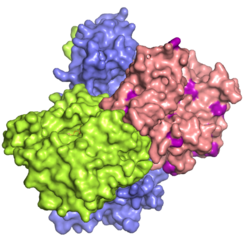
The crystal structure of the LKB1-STRAD-MO25 complex was elucidated using X-ray crystallography,[23] and revealed the mechanism by which LKB1 is allosterically activated. LKB1 has a structure typical of other protein kinases, with two (small and large) lobes on either side of the ligand ATP-binding pocket. STRAD and MO25 together cooperate to promote LKB1 active conformation. The LKB1 activation loop, a critical element in the process of kinase activation, is held in place by MO25, thus explaining the huge increase in LKB1 activity in the presence of STRAD and MO25 .

Splice variants

[edit]

Alternate transcriptional splice variants of this gene have been observed and characterized. There are two main splice isoforms denoted LKB1 long (LKB1L) and LKB1 short (LKB1S).[24][25] The short LKB1 variant is predominantly found in testes.

Interactions

[edit]

STK11 has been shown to interact with:

See also

[edit]
  • Paola Marignani (living), scientist and university professor, research on tumor suppressor kinase LKB1

References

[edit]

Further reading

[edit]
[edit]
Revisions and contributorsEdit on WikipediaRead on Wikipedia
from Grokipedia
STK11 is a human that encodes serine/threonine kinase 11 (STK11), also known as LKB1, a protein functioning primarily as a tumor suppressor that regulates , , and . Located on the short arm of at position 19p13.3, the spans approximately 23 kilobases and consists of 10 exons, producing a 433-amino-acid protein essential for and cellular . Mutations in STK11 are associated with increased cancer susceptibility and specific hereditary syndromes, making it a critical focus in and research. The STK11 protein plays a multifaceted role in cellular regulation, activating (AMPK) to maintain energy balance under stress conditions and interacting with proteins such as STRAD, MO25, , PTEN, and SMAD4 to control progression, polarity establishment, and . It is broadly expressed across human tissues, with the highest levels observed in the testis and , reflecting its involvement in diverse physiological processes from embryonic development to adult tissue maintenance. Dysregulation of STK11 disrupts these pathways, leading to uncontrolled cell growth and tumor formation, as evidenced by its inactivation in various malignancies. Germline mutations in STK11 cause Peutz-Jeghers syndrome (PJS), an autosomal dominant disorder characterized by mucocutaneous pigmentation, gastrointestinal hamartomatous polyps, and a significantly elevated lifetime risk of cancers including , colorectal, pancreatic, and . Over 340 distinct mutations have been identified in PJS patients, ranging from nonsense and frameshift variants to large deletions, with nearly all families affected by loss-of-function alterations. Somatic mutations in STK11 are also implicated in sporadic cancers, such as non-small cell (approximately 15–20% of adenocarcinomas), , and testicular tumors, underscoring its broad tumor-suppressive role across tumor types. Ongoing research highlights STK11's potential as a therapeutic target, particularly in AMPK-related pathways for .

Gene and Protein Overview

Nomenclature and Discovery

The STK11 gene, officially approved by the (HGNC) as serine/ kinase 11, encodes a protein also known by the alias LKB1 (liver B1). This protein functions as a serine/ with established tumor suppressor roles, regulating cellular processes such as polarity and . The STK11 was discovered in 1998 through independent efforts by two research groups using positional cloning and linkage analysis in families affected by Peutz-Jeghers syndrome (PJS), a hereditary condition characterized by hamartomatous polyps and increased cancer risk. Hemminki et al. identified germline mutations in STK11 on chromosome 19p13.3 as the cause of PJS, sequencing the gene and demonstrating loss-of-function mutations in affected individuals. Concurrently, Jenne et al. confirmed these findings, cloning the and noting its expression in various tissues, including liver, which contributed to the LKB1 alias based on sequence similarity to a rat liver-derived cDNA. Initial characterization revealed STK11/LKB1 as a serine/ with an unknown precise function at the time of discovery, though its pattern suggested involvement in tumor suppression. Subsequent early studies in the late and early 2000s provided functional insights, identifying LKB1's role in regulating through interactions with pseudokinases like STRAD and MO25, as well as its capacity to activate (AMPK), a central regulator of cellular and growth control. These findings established LKB1 as a master upstream linking metabolic sensing to tumor suppression.

Genomic Location and Basic Properties

The STK11 is located on the short arm of human at cytogenetic band 19p13.3, specifically spanning genomic coordinates from 1,205,778 to 1,228,431 on the forward strand according to GRCh38.p14 assembly. This positioning places it within a region associated with tumor suppression functions, and the itself covers approximately 23 kb of genomic DNA. It consists of 9 s, including 1 non-coding at the 5' end and 8 coding s, with the s transcribed in a telomere-to-centromere direction, allowing for the production of multiple transcript variants through . The canonical isoform of STK11 (isoform 1, transcript variant 1) encodes a serine/ kinase protein consisting of 433 , with a calculated molecular of 48,636 Da. This isoform's coding sequence is distributed across the 9 exons, with no additional introns interrupting the mature post-splicing for this primary variant, though alternative isoforms may incorporate elements from intronic sequences. The protein's sequence features a nuclear localization signal at the , contributing to its subcellular distribution. STK11 demonstrates high evolutionary conservation, particularly in its kinase domain, across mammalian species and beyond, reflecting its fundamental role in cellular processes like polarity establishment. Orthologs are present in invertebrates, including par-4 in Caenorhabditis elegans and lkb1 in Drosophila melanogaster, where they similarly regulate asymmetric cell division and polarity, indicating an ancient evolutionary origin for these functions. The protein localizes primarily to the nucleus but can translocate to the cytoplasm upon activation or interaction with partners, enabling its diverse regulatory roles.

Structure

Domain Organization

The LKB1 protein, encoded by the STK11 gene, comprises 433 amino acids and exhibits a modular domain organization that underpins its roles in cellular regulation and tumor suppression. The N-terminal region (residues 1–43) houses a nuclear localization signal (NLS) consisting of the basic motif PRRKRA (residues 38–43), which mediates nuclear import through interaction with importin α/β heterodimers, thereby directing LKB1 to the nucleus in the absence of activating partners. The core of LKB1 is its central serine/threonine kinase domain (residues 44–309), a catalytic module conserved across eukaryotic protein kinases, featuring key structural motifs for and substrate handling. This domain includes the P-loop (Gly-loop) motif for ATP binding, exemplified by the invariant Lys78 residue in the VAIK motif, which coordinates the γ-phosphate of ATP essential for phosphotransfer. Additionally, the activation loop within the kinase domain contains Thr189, a site subject to that influences catalytic efficiency and complex formation, although LKB1 primarily occurs allosterically rather than via canonical T-loop . These elements ensure precise control over substrate , such as the conserved residues in AMPK family members. Flanking the kinase domain, the C-terminal regulatory region (residues 310–433) modulates LKB1 stability, localization, and activity through autoinhibitory interactions with the kinase core and binding to accessory proteins. This region harbors phosphorylation sites (e.g., Ser431) that facilitate associations with 14-3-3 proteins, promoting cytoplasmic retention and relieving autoinhibition to enhance function in response to cellular cues. The C-terminus also includes a farnesylation motif that supports association, contributing to overall protein stability and regulatory dynamics.

Tertiary Structure and Complexes

The tertiary structure of LKB1, the protein product of the STK11 gene, was resolved in 2009 through of its catalytically inactive mutant in complex with binding partners, revealing a canonical bilobal typical of eukaryotic protein kinases. This consists of an N-terminal lobe dominated by β-sheets and an α-helical C-terminal lobe, connected by a hinge region that facilitates ATP binding. The structure, deposited as PDB entry 2WTK at 2.65 Å resolution, highlights the compact globular architecture of LKB1's domain (residues 49–309), with the activation loop (residues 170–188) playing a pivotal role in conformational dynamics. In its monomeric form, LKB1 adopts an auto-inhibited conformation that restricts catalytic activity. The activation loop occupies a position that sterically hinders substrate access to the , preventing efficient without external regulators. This inactive state is characterized by the absence of on key residues like Thr189, which would otherwise stabilize the loop in an extended, substrate-compatible orientation. Structural modeling and biochemical assays confirm that isolated LKB1 exhibits minimal activity toward substrates such as AMPK, underscoring the reliance on complex formation for derepression. Activation of LKB1 occurs through formation of a heterotrimeric complex with the pseudokinase STRADα and the scaffold protein MO25α, inducing a dramatic conformational shift to an open, catalytically competent state. STRADα binds as a pseudosubstrate to LKB1's active site, displacing the inhibitory activation loop and promoting its extension, while MO25α stabilizes the assembly by engaging both partners via extensive interfaces. Key structural features include hydrophobic interactions at the complex interfaces, such as the insertion of LKB1's Phe204 into a hydrophobic pocket on MO25α, contributing to an interface area of approximately 1580 Ų between LKB1 and MO25α. This allosteric mechanism results in a greater than 100-fold increase in LKB1's kinase activity compared to the monomer, as measured by in vitro phosphorylation assays of model substrates.

Expression and Regulation

Tissue and Cellular Expression Patterns

STK11, encoding the LKB1 protein, demonstrates ubiquitous expression across human tissues, characterized by low tissue specificity. Protein expression data from the Human Protein Atlas indicate moderate to high levels in virtually all examined tissues, with consistent detection via immunohistochemistry in organs such as liver, , , , and . Notably, expression is particularly elevated in the testis and fetal liver, where it supports developmental processes. At the mRNA level, GTEx database analyses reveal moderate to high overall expression, with median transcripts per million (TPM) values ranging from ~50 to 200 across 50+ tissues. Higher mRNA abundance is observed in testis (~200 TPM), liver (~150 TPM), kidney and heart (~100 TPM), while moderate levels predominate in skeletal muscle, brain regions, and spleen (~50 TPM), reflecting tissue-specific demands for metabolic and polarity regulation. Within cells, LKB1 localizes primarily to the cytoplasm in most cell types, including fibroblasts and non-polarized epithelia, where it associates with cytoskeletal elements and organelles like the centrosome and primary cilium. In polarized epithelial cells, however, LKB1 shuttles to the nucleus or plasma membrane, facilitating cell polarity establishment through interactions with partners like STRAD and MO25. This dynamic localization is evident in bronchial and intestinal epithelia, where nuclear accumulation supports junctional maturation. During development, STK11 expression is upregulated in embryogenic tissues requiring polarity and organogenesis, such as gut epithelium, heart, pancreas, kidney, and lung. In situ hybridization studies show maternal deposition of LKB1 mRNA, followed by broad embryonic expression overlapping with PTEN, peaking in epithelial progenitors of the gastrointestinal tract and neural crest derivatives. This pattern underscores its role in early tissue patterning, with sustained high levels in fetal liver and testis.

Transcriptional and Hormonal Regulation

The STK11 gene, encoding the LKB1 protein, features a promoter region containing an (ERα) binding site that mediates hormonal regulation of its expression. In ERα-positive cells, ERα binds to the STK11 promoter in a ligand-independent manner, but exposure to estradiol-17β disrupts this interaction, leading to decreased STK11 mRNA and protein levels. This repressive effect highlights a context-specific role of signaling in downregulating STK11 in estrogen-responsive malignancies. Conversely, in adipocytes, estradiol-17β upregulates STK11 mRNA expression in a dose-dependent manner, an effect mediated through ERα activation, as demonstrated by the selective ERα agonist PPT mimicking this increase. Androgens exert repressive effects on STK11 transcription in . Treatment of murine 3T3-L1 or human SGBS adipocytes with testosterone or (DHT) significantly reduces STK11 mRNA levels after 24 hours, an outcome blocked by the (AR) antagonist flutamide, indicating AR-dependent repression. This downregulation correlates with diminished of AMPK, a key downstream target of LKB1, thereby linking androgen signaling to impaired metabolic regulation in adipocytes. Transcriptional control of STK11 also involves stress-responsive elements, including p53-responsive sequences in its promoter that respond to DNA damage. The tumor suppressor p53 binds directly to these elements, enhancing STK11 promoter activity and upregulating its expression to promote cell cycle arrest and genomic stability. Overexpression of p53 in cellular models confirms this activation, underscoring STK11's integration into the p53-mediated DNA damage response pathway. Epigenetic modifications, particularly promoter hypermethylation, play a critical role in silencing STK11 expression in various cancers. In non-small cell lung cancer, methylation of the STK11 promoter CpG island is observed in approximately 30% of cases with , correlating with reduced independent of mutations. Similarly, in sporadic lung adenocarcinomas, promoter hypermethylation contributes to LKB1 inactivation, though less frequently than genetic alterations, facilitating tumor progression by abolishing its suppressor function.

Activation Mechanisms

Allosteric Activation by Binding Partners

The allosteric activation of STK11, also known as LKB1, occurs through non-covalent interactions with the pseudokinase STRAD and the scaffold protein MO25, which together form a heterotrimeric complex that potently stimulates LKB1 activity. This mechanism was first elucidated through the identification of LKB1-STRAD complexes, where STRAD binding induces an active-like conformation in LKB1 by mimicking the structural effects of activation loop , thereby opening the loop to allow substrate binding and . The subsequent incorporation of MO25 into this complex further stabilizes the interaction, as MO25 binds specifically to the C-terminal lobe of STRAD, enhancing the overall assembly without contributing any enzymatic function itself. Kinetic analyses of the LKB1-STRAD-MO25 complex demonstrate a profound enhancement in LKB1's catalytic performance, with the heterotrimer exhibiting a greater than 100-fold increase in Vmax for of the AMPK T-loop compared to LKB1 alone, while the Km for the substrate remains unchanged. This allosteric effect elevates LKB1's intrinsic activity from near-basal levels to highly efficient , underscoring the pseudokinase-scaffold duo's role in unlocking LKB1's potential without altering its substrate specificity. The of the core LKB1-STRADα-MO25α complex confirms this mechanism, showing how STRADα enforces an active fold in LKB1 and MO25α directly contacts the activation loop to rigidify it in an open state. Beyond enzymatic activation, heterotrimer formation drives a relocation of LKB1 from its predominant nuclear localization to the cytoplasm and plasma membrane, facilitating localized downstream signaling at cellular sites of action. This translocation is dependent on the intact complex, as STRAD binding masks nuclear localization signals on LKB1 while exposing cytoplasmic targeting motifs.

Post-Translational Modifications

STK11, also known as LKB1, undergoes several post-translational modifications that regulate its stability, kinase activity, and subcellular localization. Phosphorylation is the most extensively studied modification, occurring at multiple sites within the protein. Notably, threonine 189 (Thr189) in the activation loop is phosphorylated, which enhances LKB1's catalytic activity and downstream signaling, including activation of AMP-activated protein kinase (AMPK). Similarly, serine 431 (Ser431) in the C-terminal regulatory domain is phosphorylated by kinases including protein kinase A (PKA) and p90 ribosomal S6 kinase (p90RSK), promoting LKB1's interaction with binding partners and its tumor-suppressive functions; this modification is essential for growth suppression in cellular assays. Ubiquitination modulates LKB1 stability through proteasomal degradation pathways. The chaperone complex formed by heat shock protein 90 () and cell division cycle 37 (Cdc37) binds LKB1 and prevents its ubiquitination, thereby stabilizing the protein and maintaining its activity levels. Loss of this chaperone interaction leads to increased ubiquitination at sites such as lysine 41, lysine 44, and others, resulting in enhanced proteasomal turnover and reduced LKB1 abundance. Acetylation and sumoylation further fine-tune LKB1's localization and function. at lysine 48 (Lys48), reversed by (SIRT1), influences LKB1's cytosolic distribution and facilitates its at other sites, impacting metabolic regulation. Sumoylation, primarily at lysine 178 (Lys178) by SUMO-2 and the E2 enzyme UBC9, restricts LKB1's nucleocytoplasmic shuttling, promoting its nuclear retention and altering polarity establishment while potentially enhancing oncogenic potential in contexts like . These modifications collectively impact LKB1 function, as demonstrated by phosphomimetic mutants such as S431D, which mimic Ser431 and exhibit heightened AMPK and proliferative suppression in biochemical assays, underscoring the role of in amplifying LKB1's signaling output.

Biological Functions

Regulation of Cell Polarity and Proliferation

LKB1, the protein product of the , is essential for establishing and maintaining apical-basal polarity in epithelial cells through its of microtubule affinity-regulating kinase (MARK) family members. In a heterotrimeric complex with pseudokinase STRAD and adaptor protein MO25, LKB1 phosphorylates the T-loop of MARK kinases (MARK1-4), enabling their recruitment and localization to apical membrane domains where they phosphorylate microtubule-associated proteins such as and MAP2, thereby reorganizing the to define apical structures like brush borders. This process occurs autonomously in single cells, independent of cell-cell contacts, as demonstrated in intestinal epithelial models where LKB1 induces rapid sorting of apical markers (e.g., villin) and basolateral markers (e.g., E-cadherin) within hours. Loss of LKB1 impairs MARK , resulting in mislocalized polarity proteins and disrupted apical domain formation, leading to epithelial disorganization. Beyond polarity, LKB1 restrains by inhibiting the G1/S phase transition via transcriptional upregulation of the cyclin-dependent kinase inhibitor p21^WAF1/CIP1 and post-translational stabilization of p27^KIP1. For p21, cytoplasmic LKB1 signals through a p53-dependent pathway to induce its expression, halting cyclin E/CDK2 activity and preventing . Stabilization of p27 involves brief activation of the AMPK pathway, which phosphorylates p27 at Thr198 to inhibit its degradation and promote nuclear localization, suppressing expression without altering metabolic homeostasis directly. In , lkb1 mutants exhibit overproliferation in imaginal discs and neuroblasts, linked to defective polarity cues that fail to limit growth, highlighting LKB1's conserved role in coupling architectural integrity to proliferation control. LKB1 further contributes to asymmetric cell division in stem cells by localizing to the mitotic spindle, ensuring oriented division and unequal partitioning of fate determinants to daughter cells. In neuroblasts, Lkb1 associates with the via its kinase activity, positioning it along the polarity axis defined by PAR proteins to segregate Numb and to the basal daughter, promoting neuronal differentiation. Disruption of this localization in lkb1 mutants causes symmetric divisions, spindle misorientation, and expanded stem cell pools, underscoring LKB1's role in fate . Supporting these functions, conditional knockout studies in mice reveal pronounced polarity defects in epithelial tissues. In the pancreas, Lkb1 deletion in acinar cells abolishes apical-basal organization, disrupts tight junctions, and leads to cystic structures due to impaired MARK-mediated cytoskeletal remodeling. Similarly, Lkb1 loss in intestinal and epithelia results in mislocalized polarity markers (e.g., β-catenin expansion into apical domains) and defective epithelial folding, as observed in upper gastrointestinal and bronchial models, confirming LKB1's necessity for tissue architecture without invoking proliferative phenotypes here.

Metabolic Control via AMPK Pathway

STK11 encodes the serine/threonine kinase LKB1, which functions as a primary upstream activator of (AMPK), a key sensor of cellular energy status. LKB1 the α subunit of AMPK at threonine 172 (Thr172) within the activation loop, enabling AMPK's catalytic activity in response to an increased AMP/ATP ratio that signals energy stress. This is facilitated by LKB1's association with pseudokinase STRAD and MO25, forming a heterotrimeric complex that localizes to specific cellular compartments for efficient substrate access. Activated AMPK orchestrates metabolic reprogramming by inhibiting the mechanistic target of rapamycin complex 1 (), which suppresses energy-consuming anabolic processes like protein and lipid synthesis. Concurrently, AMPK promotes catabolic pathways, including enhanced fatty acid β-oxidation to generate ATP and induction of to recycle cellular components for energy production. This energy-sensing mechanism is quantitatively linked to the cellular ratio, where AMPK activation is proportional to the AMP/ATP ratio: AMPK activation[AMP][ATP]\text{AMPK activation} \propto \frac{[\text{AMP}]}{[\text{ATP}]} Such regulation ensures rapid adaptation to nutrient scarcity or metabolic demands. In a tissue-specific manner, the LKB1-AMPK axis modulates metabolism to maintain organismal homeostasis; in the liver, it phosphorylates and inhibits transcription factors like CREB and CRTC2, thereby suppressing gluconeogenic gene expression and preventing hyperglycemia during fasting. In skeletal muscle, LKB1-AMPK signaling stimulates GLUT4 translocation to the plasma membrane, enhancing insulin-independent glucose uptake, and activates PGC-1α to boost mitochondrial biogenesis and fatty acid oxidation during exercise. Additionally, feedback mechanisms within the pathway provide reciprocal regulation, with activated AMPK influencing LKB1 activity to fine-tune energy responses and prevent overactivation.

Tumor Suppressor Activity

LKB1, encoded by the STK11 gene, functions as a master that suppresses tumorigenesis primarily through its ability to phosphorylate and activate a family of 14 downstream kinases related to (AMPK), thereby integrating metabolic sensing with control of cell growth, polarity, and survival. These targets include AMPKα1/α2, which regulate , as well as BRSK1/2 (also known as SAD kinases), NUAK1/2, SIK1/2/3, MARK1/2/3/4, and SNRK. By activating these kinases, LKB1 enforces cellular constraints that prevent aberrant proliferation and promote ordered tissue architecture, with loss of LKB1 leading to dysregulated signaling that favors oncogenic transformation. Among these substrates, LKB1's phosphorylation of BRSK/SAD kinases and MARK family members is particularly critical for maintaining and microtubule stability, mechanisms that indirectly curb tumor initiation and progression. BRSK/SAD activation by LKB1 supports and apical-basal polarity in epithelial tissues, preventing disorganized growth that could lead to neoplastic lesions. Similarly, MARK kinases, once phosphorylated by LKB1, phosphorylate microtubule-associated proteins such as and MAP2, destabilizing to inhibit improper and invasion during early tumorigenesis. Disruption of these polarity pathways upon LKB1 inactivation allows cancer cells to evade spatial controls, facilitating the transition to malignant states. LKB1 exerts direct oncogenic suppression by inhibiting key pro-proliferative and pro-invasive effectors, including and the /TAZ transcriptional co-activators. Through AMPK-dependent mechanisms, LKB1 downregulates expression and activity, arresting cells in and blocking uncontrolled entry that drives tumor expansion. Loss of LKB1 also derepresses /TAZ, which translocate to the nucleus to promote transcription of genes involved in proliferation and survival, thereby enhancing tumorigenic potential. Furthermore, LKB1 deficiency induces epithelial-mesenchymal transition (EMT) via ZEB1-mediated activation, enabling invasion and while bypassing anoikis. These pathways highlight LKB1's role in multi-layered suppression of oncogenic signaling. However, LKB1's role can be context-dependent, with loss-of-function sometimes conferring pro-tumorigenic advantages, such as enhanced survival in specific metabolic or immune microenvironments, as observed in certain cancers like ovarian carcinoma. LKB1 demonstrates in tumor suppression, where loss of a single is sufficient to initiate polyp formation in models of Peutz-Jeghers syndrome (PJS). In Lkb1 heterozygous mice, gastrointestinal hamartomatous polyps develop spontaneously, mirroring human PJS and indicating that reduced LKB1 dosage disrupts threshold levels of activity needed to maintain epithelial integrity and prevent hyperproliferation. This sensitivity underscores LKB1's dosage-dependent tumor suppressive function without requiring complete biallelic inactivation for early lesion formation. Beyond its kinase activity, LKB1 exhibits non-catalytic functions in the nucleus that contribute to tumor suppression, including modulation of hormone-responsive signaling pathways. Nuclear LKB1 interacts with α (ERα) and is recruited to ERα-responsive promoters, influencing transcriptional outputs that can restrain estrogen-driven proliferation in hormone-sensitive contexts. Although primarily a co-regulator, this nuclear localization expands LKB1's repertoire to suppress tumorigenesis through direct gene regulation independent of events.

Genetic Variants

Splice Isoforms

The STK11 gene, encoding the serine/threonine kinase LKB1, undergoes alternative splicing to produce multiple isoforms with distinct functional properties and tissue-specific expression patterns. The canonical long isoform, LKB1L, consists of 433 amino acids and includes a nuclear localization signal (NLS) at the N-terminus, a central kinase domain (residues 49–309), and a C-terminal region featuring a prenylation motif (Cys430-Lys-Gln-Gln) that facilitates membrane association. This isoform exhibits full kinase activity, phosphorylating and activating AMPK and over 13 related kinases, and is ubiquitously expressed across human tissues, contributing to core cellular processes such as polarity establishment and metabolic regulation. A prominent splice variant is the short isoform, LKB1S (also denoted as the 48 kDa form), comprising 404 . Generated by that excludes exons 8 and 9 while incorporating a unique 3' exon, LKB1S retains the N-terminal NLS and domain but features an alternative lacking the prenylation motif, resulting in distinct subcellular localization and regulatory properties. Although ubiquitously expressed at low levels, LKB1S is markedly upregulated in testicular germ cells, particularly haploid spermatids, where it predominates over LKB1L. This isoform maintains activity, often with enhanced efficiency toward certain substrates like BRSK2 compared to LKB1L, and plays a critical role in by supporting head shaping, flagellar assembly, and ; targeted disruption in mice leads to male sterility with abnormal, immotile spermatozoa. Additional rare isoforms arise from or alternative promoter usage, leading to proteins with altered localization and potential functional divergence. For instance, the ΔN-LKB1 variant (approximately 312 amino acids) results from splicing that removes the initial ATG in 1, initiating at a downstream in-frame AUG and deleting the N-terminal NLS; this promotes cytoplasmic retention and has been observed in specific cellular contexts, potentially modulating kinase-independent roles in stress responses or mitochondrial function, though its physiological prevalence remains limited. These isoform-specific localizations—nuclear for LKB1L, cytoplasmic or flagellar for variants like LKB1S and ΔN-LKB1—underpin tissue-adapted roles, with expression data from transcriptomic analyses confirming LKB1S enrichment in germinal tissues while rarer skips correlate with variable kinase outputs in non-germline cells.01934-8/fulltext)

Pathogenic Mutations and Polymorphisms

Pathogenic mutations in the STK11 gene, encoding the serine/threonine LKB1, are primarily variants associated with Peutz-Jeghers syndrome (PJS) and somatic alterations implicated in various cancers. Over 300 distinct pathogenic variants have been identified in individuals with PJS, encompassing missense, , frameshift, splice site, small insertions/deletions, and whole-gene deletions. These mutations predominantly result in loss of function, often through premature truncation of the protein, which disrupts LKB1's kinase activity and its role in downstream signaling pathways. For instance, the R273* introduces a premature , leading to a truncated, nonfunctional protein. In sporadic cancers, somatic mutations in STK11 are frequently inactivating and occur at high rates in certain tumor types, particularly lung adenocarcinoma. These mutations are detected in 15-30% of lung adenocarcinomas, with and frameshift variants predominating, alongside missense changes concentrated in the domain that impair catalytic function. Such alterations contribute to tumorigenesis by abolishing LKB1's tumor-suppressive effects, including regulation of and . Splice site mutations, which can overlap with pathogenic variants, may also produce aberrant isoforms with reduced stability or activity, though these are less common than truncating changes. Common polymorphisms in STK11, such as single nucleotide polymorphisms (SNPs), have been investigated for associations with cancer susceptibility. For example, the SNP rs9282860 has been linked to a reduced risk of , with the minor conferring protective effects potentially through subtle modulation of or protein function. Similarly, rs12977689 is associated with increased risk in certain populations, highlighting how benign variants may influence oncogenic processes. Functional assays have been crucial for characterizing the impact of STK11 missense variants, particularly those of uncertain significance. A comprehensive 2025 study utilized a mammalian cell-based proliferation assay to evaluate 6,026 possible missense variants (73% of all conceivable changes), revealing that approximately 80% exhibit loss of activity, with many leading to cellular toxicity or impaired downstream AMPK . Another 2025 analysis of 28 rare variants from non-small cell biopsies employed assays and predictive modeling, confirming that variants in the domain, such as those altering catalytic residues, consistently abolish enzymatic function and correlate with aggressive tumor behavior. These assays provide a framework for classifying variants and understanding their molecular consequences in disease contexts.

Clinical and Pathological Significance

Association with Peutz-Jeghers Syndrome

Peutz-Jeghers syndrome (PJS) is a rare autosomal dominant hereditary disorder primarily caused by germline mutations in the gene, located on chromosome 19p13.3. These mutations disrupt the function of the STK11 protein, a serine/threonine kinase that acts as a tumor suppressor, leading to the characteristic clinical features of the syndrome. The inheritance pattern of PJS is autosomal dominant, with each affected individual having a 50% chance of transmitting the mutation to offspring; approximately 30% of cases arise from de novo mutations without family history. STK11 mutations are identified in 80-100% of clinically diagnosed PJS cases, depending on the sensitivity of methods, such as next-generation sequencing that detects point mutations, small insertions/deletions, and large genomic rearrangements. Clinically, PJS manifests with mucocutaneous hyperpigmentation, appearing as bluish-black macules on the lips, buccal mucosa, and digits, often evident in early childhood and fading with age. The hallmark feature is the development of multiple hamartomatous polyps throughout the gastrointestinal tract, particularly in the small intestine (affecting about 75% of cases), which can lead to complications such as intussusception, obstruction, bleeding, and chronic anemia. Affected individuals also face a substantially elevated lifetime cancer risk, including gastrointestinal cancers like colorectal (up to 39% by age 70), as well as breast cancer (32–54% lifetime risk). At the pathophysiological level, STK11 mutations typically result in , where reduced protein dosage impairs its role in regulating , proliferation, and , thereby promoting uncontrolled cell growth and formation. This mechanism underlies the polyp development and heightened oncogenic potential observed in PJS, with loss of the wild-type in polyps often contributing to further progression. Diagnosis of PJS relies on a of clinical criteria—such as the presence of characteristic polyps and pigmentation—and confirmatory for STK11 variants, which is recommended for at-risk individuals or those meeting diagnostic thresholds. The syndrome has an estimated prevalence of approximately 1 in 50,000 individuals worldwide, though estimates vary up to 1 in 200,000 due to underdiagnosis.

Role in Oncogenesis and Cancer Progression

STK11, also known as LKB1, is frequently inactivated in sporadic cancers through somatic mutations, with loss-of-function alterations occurring in approximately 15–20% of lung adenocarcinomas. These mutations are particularly prevalent in non-small cell lung cancer subsets, where STK11 alterations often co-occur with oncogenic drivers such as KRAS mutations (in up to 30% of KRAS-mutant cases) and KEAP1 inactivation, defining an aggressive molecular subtype associated with immunotherapy resistance and poor clinical outcomes. Beyond lung cancer, STK11 inactivation contributes to oncogenesis in other epithelial malignancies, though at lower frequencies, by disrupting key tumor suppressor pathways. Inactivation of STK11 promotes oncogenesis and cancer progression through multiple mechanisms, including metabolic rewiring that shifts tumor cells toward aerobic to support rapid proliferation and under stress. This Warburg-like reprogramming enhances and lactate production, fostering an acidic that aids immune evasion. Additionally, STK11 loss drives , a debilitating wasting syndrome, by altering tumor-secreted factors that induce muscle and breakdown, as demonstrated in preclinical models of non-small cell where STK11-deficient tumors accelerated host and frailty. These metabolic and systemic effects collectively enable tumor adaptation and progression. STK11 deficiency enhances invasion and by deregulating polarity and cytoskeletal dynamics, leading to increased and extracellular matrix remodeling. In , LKB1 inactivation correlates with advanced disease stages and peritoneal dissemination, while in , it promotes triple-negative subtypes' metastatic potential through heightened epithelial-mesenchymal transition. Both associations link STK11 loss to poor prognosis, with reduced overall survival in patient cohorts exhibiting these alterations. Recent research highlights additional layers of STK11's role in progression, including epigenetic dysregulation where LKB1 deficiency induces global DNA hypomethylation in lung adenocarcinomas via S-adenosylmethionine depletion and DNMT1 downregulation, potentially activating transposable elements and genomic instability. Furthermore, STK11 loss fosters tumor microenvironment immunosuppression by enriching adenosine and lactate levels, which recruit regulatory T cells and myeloid-derived suppressor cells, creating an "cold" immune landscape that impairs antitumor responses.

Implications for Therapy and Biomarkers

STK11/LKB1-mutant tumors exhibit specific therapeutic vulnerabilities that can be exploited for targeted cancer therapies. In particular, co-alterations in STK11/LKB1 and in KRAS-mutant non-small cell lung cancer (NSCLC) enhance sensitivity to ataxia-telangiectasia and Rad3-related (ATR) inhibitors, as these mutations lead to increased DNA damage and replication stress, making cells reliant on ATR-mediated repair pathways. Metabolic reprogramming in LKB1-deficient tumors, characterized by altered glutamine dependency, renders them susceptible to glutaminase inhibitors such as CB-839, which disrupt nucleotide synthesis and tumor growth in preclinical models of NSCLC. Recent studies further highlight how LKB1/STK11 mutations drive distinct metabolic vulnerabilities that can be targeted to overcome resistance in co-mutant lung cancers. As a , STK11/LKB1 status predicts resistance to inhibitors (ICIs) in , particularly in NSCLC, where LKB1 alterations correlate with an immunosuppressive and reduced T-cell infiltration, leading to poorer responses to PD-1/ blockade. In advanced NSCLC, STK11 mutations are associated with unfavorable prognosis, independently of treatment modality, with shortened overall survival observed in patients receiving first-line or chemo-immunotherapy. Therapeutic strategies aimed at restoring LKB1 function show promise in preclinical settings; for instance, re-expression of LKB1 in mutant models induces tumor stasis and metabolic reprogramming toward a quiescent state, suggesting potential for approaches to reactivate tumor suppression. Combining therapies that address LKB1-related immune evasion, such as CTLA-4 blockade with PD-1 inhibitors, can abrogate resistance in STK11/KEAP1-mutant NSCLC by enhancing T-cell activation and mitigating the cold tumor phenotype. Ongoing clinical trials explore interventions for LKB1 loss-induced complications, including in NSCLC, where JAK inhibitors are being evaluated alongside standard immunotherapy-chemotherapy regimens to counteract muscle wasting driven by STK11 mutations. Preclinically, LKB1 suppression via the LKB1-AMPK-YAP axis promotes cardiomyocyte proliferation and regeneration, indicating potential non-oncologic applications in cardiac repair following injury.

Molecular Interactions

Key Protein Binding Partners

The LKB1 protein, encoded by the STK11 gene, forms a heterotrimeric complex with the pseudokinases STRADα and STRADβ, which bind directly to its kinase domain with high affinity to induce an active conformation. This interaction is essential for LKB1 activation, as STRAD binding mimics substrate engagement and promotes autophosphorylation at key residues in the activation loop. The binding affinity of LKB1 to STRAD is enhanced by ATP association with STRAD, facilitating stable complex formation in the . MO25α and MO25β further associate with the LKB1-STRAD dimer to form the active trimer, where MO25 stabilizes the complex by interacting with both LKB1 and STRAD, thereby locking LKB1 in its catalytically competent state and preventing dissociation. LKB1 stability is maintained through interactions with chaperone proteins and Cdc37, which bind to the kinase domain and shield it from proteasomal degradation. The -Cdc37 complex prevents ubiquitination of LKB1 by competing with the HSC70-CHIP system, ensuring proper folding and maturation of nascent LKB1 polypeptides. Additionally, the Fyn binds LKB1 and phosphorylates it at residues Y261 and Y365, modulating its subcellular localization and activity, with these modifications promoting nuclear retention of LKB1. As a serine/threonine , LKB1 directly binds and substrates such as the α-subunit of AMPK and the microtubule affinity-regulating MARK1 through MARK4, recognizing a consensus motif RXRXXS in their T-loops to enable . This binding occurs via the domain of LKB1, positioning the substrate for phosphorylation at the conserved serine or residue within the motif. LKB1 also interacts with Brg1, the subunit of the complex, through direct association that enhances Brg1's enzymatic activity and recruitment to specific genomic loci. This binding promotes events independent of LKB1's function. Furthermore, LKB1 binds the estrogen receptor α (ERα) in the nucleus, where it is recruited to ERα-responsive promoters via an interaction with Brg1, contributing to .

Integration into Signaling Networks

STK11, also known as LKB1, serves as an upstream kinase that phosphorylates and activates (AMPK) in response to elevated AMP/ATP ratios during energy stress, thereby inhibiting the (mTORC1) to suppress anabolic processes such as protein synthesis and . This LKB1-AMPK-mTOR axis is critical for maintaining cellular , with LKB1 deficiency leading to unchecked mTORC1 activity and enhanced tumor under nutrient-limited conditions. In the context of cell polarity and MAPK signaling, LKB1 activates microtubule affinity-regulating kinases (MARKs), which in turn phosphorylate and inhibit /TAZ, key effectors of the Hippo pathway, thereby restraining proliferation and migration in epithelial tissues. Additionally, this pathway exhibits feedback with the Raf-MEK-ERK cascade, where activation confers resistance to RAF and MEK inhibitors by promoting survival signaling. LKB1 loss promotes activation, contributing to such resistance in relevant cancers. LKB1 loss in tumors, particularly in KRAS-mutant adenocarcinomas, suppresses the cGAS-STING pathway through epigenetic silencing of STING expression, resulting in reduced type I production and an immunosuppressive (TME) characterized by decreased T-cell infiltration. Recent studies from 2021 to 2025 highlight that this suppression impairs innate immune sensing of cytosolic DNA, fostering immune evasion and diminished response to checkpoint blockade therapies. LKB1 engages in cross-talk with during DNA damage responses, where it stabilizes via the JNK pathway to enhance in response to agents like , independent of its AMPK activation. In hypoxia, LKB1 normally restrains HIF-1α accumulation to limit glycolytic reprogramming; its inactivation promotes normoxic stabilization of HIF-1α, driving metabolic shifts toward lactate production and tumor adaptation to low-oxygen environments.

References

Add your contribution
Related Hubs
User Avatar
No comments yet.