Hubbry Logo
search
logo
2312653

Gaussian beam

logo
Community Hub0 Subscribers
Read side by side
from Wikipedia
Instantaneous absolute value of the real part of electric field amplitude of a TEM00 Gaussian beam, focal region. Showing thus with two peaks for each positive wavefront.
Top: transverse intensity profile of a Gaussian beam that is propagating out of the page. Blue curve: electric (or magnetic) field amplitude vs. radial position from the beam axis. The black curve is the corresponding intensity.
A 5 mW green laser pointer beam, showing the TEM00 profile

In optics, a Gaussian beam is an idealized beam of electromagnetic radiation whose amplitude envelope in the transverse plane is given by a Gaussian function; this also implies a Gaussian intensity (irradiance) profile. This fundamental (or TEM00) transverse Gaussian mode describes the intended output of many lasers, as such a beam diverges less and can be focused better than any other. When a Gaussian beam is refocused by an ideal lens, a new Gaussian beam is produced. The electric and magnetic field amplitude profiles along a circular Gaussian beam of a given wavelength and polarization are determined by two parameters: the waist w0, which is a measure of the width of the beam at its narrowest point, and the position z relative to the waist.[1]

Since the Gaussian function is infinite in extent, perfect Gaussian beams do not exist in nature, and the edges of any such beam would be cut off by any finite lens or mirror. However, the Gaussian is a useful approximation to a real-world beam for cases where lenses or mirrors in the beam are significantly larger than the spot size w(z) of the beam.

Fundamentally, the Gaussian is a solution of the paraxial Helmholtz equation, the wave equation for an electromagnetic field. Although there exist other solutions, the Gaussian families of solutions are useful for problems involving compact beams.

Mathematical form

[edit]

The equations below assume a beam with a circular cross-section at all values of z; this can be seen by noting that a single transverse dimension, r, appears. Beams with elliptical cross-sections, or with waists at different positions in z for the two transverse dimensions (astigmatic beams) can also be described as Gaussian beams, but with distinct values of w0 and of the z = 0 location for the two transverse dimensions x and y.

Gaussian beam intensity profile with w0 = 2λ.

The Gaussian beam is a transverse electromagnetic (TEM) mode.[2] The mathematical expression for the electric field amplitude is a solution to the paraxial Helmholtz equation.[1] Assuming polarization in the x direction and propagation in the +z direction, the electric field in phasor (complex) notation is given by:

where[1][3]

  • r is the radial distance from the center axis of the beam,
  • z is the axial distance from the beam's focus (or "waist"),
  • i is the imaginary unit,
  • k = 2πn/λ is the wave number (in radians per meter) for a free-space wavelength λ, and n is the index of refraction of the medium in which the beam propagates,
  • E0 = E(0, 0), the electric field amplitude at the origin (r = 0, z = 0),
  • w(z) is the radius at which the field amplitudes fall to 1/e of their axial values (i.e., where the intensity values fall to 1/e2 of their axial values), at the plane z along the beam,
  • w0 = w(0) is the waist radius,
  • R(z) is the radius of curvature of the beam's wavefronts at z, and
  • ψ(z) = arctan(z/zR) is the Gouy phase at z, an extra phase term beyond that attributable to the phase velocity of light.

The physical electric field is obtained from the phasor field amplitude given above by taking the real part of the amplitude times a time factor: where is the angular frequency of the light and t is time. The time factor involves an arbitrary sign convention, as discussed at Mathematical descriptions of opacity § Complex conjugate ambiguity.

Since this solution relies on the paraxial approximation, it is not accurate for very strongly diverging beams. The above form is valid in most practical cases, where w0λ/n.

The corresponding intensity (or irradiance) distribution is given by

where the constant η is the wave impedance of the medium in which the beam is propagating. For free space, η = η0 ≈ 377 Ω. I0 = |E0|2/2η is the intensity at the center of the beam at its waist.

If P0 is the total power of the beam,

Evolving beam width

[edit]
The Gaussian function has a 1/e2 diameter (2w as used in the text) about 1.7 times the FWHM.

At a position z along the beam (measured from the focus), the spot size parameter w is given by a hyperbolic relation:[1] where[1] is called the Rayleigh range as further discussed below, and is the refractive index of the medium.
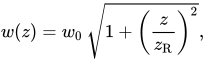
The radius of the beam w(z), at any position z along the beam, is related to the full width at half maximum (FWHM) of the intensity distribution at that position according to:[4]

Wavefront curvature

[edit]

The wavefronts have zero curvature (radius = ∞) at the waist. Wavefront curvature increases in magnitude away from the waist, reaching an extremum at the Rayleigh distance, z = ±zR (maximum for z = +zR, minimum for z = -zR). Beyond the Rayleigh distance, |z| > zR, the curvature again decreases in magnitude, approaching zero as z → ±∞. The curvature is often expressed in terms of its reciprocal, R, the radius of curvature; for a fundamental Gaussian beam the curvature at position z is given by:
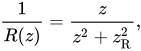
so the radius of curvature R(z) is [1] Being the reciprocal of the curvature, the radius of curvature reverses sign and is infinite at the beam waist where the curvature goes through zero.

Elliptical and astigmatic beams

[edit]

Many laser beams have an elliptical cross-section. Also common are beams with waist positions which are different for the two transverse dimensions, called astigmatic beams. These beams can be dealt with using the above two evolution equations, but with distinct values of each parameter for x and y and distinct definitions of the z = 0 point. The Gouy phase is a single value calculated correctly by summing the contribution from each dimension, with a Gouy phase within the range ±π/4 contributed by each dimension.

An elliptical beam will invert its ellipticity ratio as it propagates from the far field to the waist. The dimension which was the larger far from the waist, will be the smaller near the waist.

Gaussian as a decomposition into modes

[edit]

Arbitrary solutions of the paraxial Helmholtz equation can be decomposed as the sum of Hermite–Gaussian modes (whose amplitude profiles are separable in x and y using Cartesian coordinates), Laguerre–Gaussian modes (whose amplitude profiles are separable in r and θ using cylindrical coordinates) or similarly as combinations of Ince–Gaussian modes (whose amplitude profiles are separable in ξ and η using elliptical coordinates).[5][6][7] At any point along the beam z these modes include the same Gaussian factor as the fundamental Gaussian mode multiplying the additional geometrical factors for the specified mode. However different modes propagate with a different Gouy phase which is why the net transverse profile due to a superposition of modes evolves in z, whereas the propagation of any single Hermite–Gaussian (or Laguerre–Gaussian) mode retains the same form along a beam.

Although there are other modal decompositions, Gaussians are useful for problems involving compact beams, that is, where the optical power is rather closely confined along an axis. Even when a laser is not operating in the fundamental Gaussian mode, its power will generally be found among the lowest-order modes using these decompositions, as the spatial extent of higher order modes will tend to exceed the bounds of a laser's resonator (cavity). "Gaussian beam" normally implies radiation confined to the fundamental (TEM00) Gaussian mode.

Beam parameters

[edit]

The geometric dependence of the fields of a Gaussian beam are governed by the light's wavelength λ (in the dielectric medium, if not free space) and the following beam parameters, all of which are connected as detailed in the following sections.

Beam waist

[edit]
Gaussian beam width w(z) as a function of the distance z along the beam, which forms a hyperbola. w0: beam waist; b: depth of focus; zR: Rayleigh range; Θ: total angular spread

The shape of a Gaussian beam of a given wavelength λ is governed solely by one parameter, the beam waist w0. This is a measure of the beam size at the point of its focus (z = 0 in the above equations) where the beam width w(z) (as defined above) is the smallest (and likewise where the intensity on-axis (r = 0) is the largest). From this parameter the other parameters describing the beam geometry are determined. This includes the Rayleigh range zR and asymptotic beam divergence θ, as detailed below.

Rayleigh range and confocal parameter

[edit]

The Rayleigh distance or Rayleigh range zR is determined given a Gaussian beam's waist size:
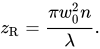
Here λ is the wavelength of the light, n is the index of refraction. At a distance from the waist equal to the Rayleigh range zR, the width w of the beam is 2 larger than it is at the focus where w = w0, the beam waist. That also implies that the on-axis (r = 0) intensity there is one half of the peak intensity (at z = 0). That point along the beam also happens to be where the wavefront curvature (1/R) is greatest.[1]

The distance between the two points z = ±zR is called the confocal parameter or depth of focus of the beam.[8]

Beam divergence

[edit]

Although the tails of a Gaussian function never actually reach zero, for the purposes of the following discussion the "edge" of a beam is considered to be the radius where r = w(z). That is where the intensity has dropped to 1/e2 of its on-axis value. Now, for zzR the parameter w(z) increases linearly with z. This means that far from the waist, the beam "edge" (in the above sense) is cone-shaped. The angle between that cone (whose r = w(z)) and the beam axis (r = 0) defines the divergence of the beam:
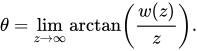
In the paraxial case, as we have been considering, θ (in radians) is then approximately[1]

where n is the refractive index of the medium the beam propagates through, and λ is the free-space wavelength. The total angular spread of the diverging beam, or apex angle of the above-described cone, is then given by

That cone then contains 86% of the Gaussian beam's total power.

Because the divergence is inversely proportional to the spot size, for a given wavelength λ, a Gaussian beam that is focused to a small spot diverges rapidly as it propagates away from the focus. Conversely, to minimize the divergence of a laser beam in the far field (and increase its peak intensity at large distances) it must have a large cross-section (w0) at the waist (and thus a large diameter where it is launched, since w(z) is never less than w0). This relationship between beam width and divergence is a fundamental characteristic of diffraction, and of the Fourier transform which describes Fraunhofer diffraction. A beam with any specified amplitude profile also obeys this inverse relationship, but the fundamental Gaussian mode is a special case where the product of beam size at focus and far-field divergence is smaller than for any other case.

Since the Gaussian beam model uses the paraxial approximation, it fails when wavefronts are tilted by more than about 30° from the axis of the beam.[9] From the above expression for divergence, this means the Gaussian beam model is only accurate for beams with waists larger than about 2λ/π.

Laser beam quality is quantified by the beam parameter product (BPP). For a Gaussian beam, the BPP is the product of the beam's divergence and waist size w0. The BPP of a real beam is obtained by measuring the beam's minimum diameter and far-field divergence, and taking their product. The ratio of the BPP of the real beam to that of an ideal Gaussian beam at the same wavelength is known as M2 ("M squared"). The M2 for a Gaussian beam is one. All real laser beams have M2 values greater than one, although very high quality beams can have values very close to one.

The numerical aperture of a Gaussian beam is defined to be NA = n sin θ, where n is the index of refraction of the medium through which the beam propagates. This means that the Rayleigh range is related to the numerical aperture by

Gouy phase

[edit]

The Gouy phase is a phase shift gradually acquired by a beam around the focal region. At position z the Gouy phase of a fundamental Gaussian beam is given by[1]
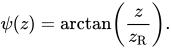
Gouy phase.

The Gouy phase results in an increase in the apparent wavelength near the waist (z ≈ 0). Thus the phase velocity in that region formally exceeds the speed of light. That paradoxical behavior must be understood as a near-field phenomenon where the departure from the phase velocity of light (as would apply exactly to a plane wave) is very small except in the case of a beam with large numerical aperture, in which case the wavefronts' curvature (see previous section) changes substantially over the distance of a single wavelength. In all cases the wave equation is satisfied at every position.

The sign of the Gouy phase depends on the sign convention chosen for the electric field phasor.[10] With eiωt dependence, the Gouy phase changes from -π/2 to +π/2, while with e-iωt dependence it changes from +π/2 to -π/2 along the axis.

For a fundamental Gaussian beam, the Gouy phase results in a net phase discrepancy with respect to the speed of light amounting to π radians (thus a phase reversal) as one moves from the far field on one side of the waist to the far field on the other side. This phase variation is not observable in most experiments. It is, however, of theoretical importance and takes on a greater range for higher-order Gaussian modes.[10]

Power through an aperture

[edit]

If a Gaussian beam is centered on a circular aperture of radius r at distance z from the beam waist, the power P that passes through the aperture is[11]

For a circle of radius r = w(z), the fraction of power transmitted through the circle is

Similarly, about 90% of the beam's power will flow through a circle of radius r = 1.07 × w(z), 95% through a circle of radius r = 1.224 × w(z), and 99% through a circle of radius r = 1.52 × w(z).[11]

Complex beam parameter

[edit]

The spot size and curvature of a Gaussian beam as a function of z along the beam can also be encoded in the complex beam parameter q(z)[12][13] given by:

The reciprocal of q(z) contains the wavefront curvature and relative on-axis intensity in its real and imaginary parts, respectively:[12]
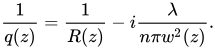
The complex beam parameter simplifies the mathematical analysis of Gaussian beam propagation, and especially in the analysis of optical resonator cavities using ray transfer matrices.

Then using this form, the earlier equation for the electric (or magnetic) field is greatly simplified. If we call u the relative field strength of an elliptical Gaussian beam (with the elliptical axes in the x and y directions) then it can be separated in x and y according to:

where
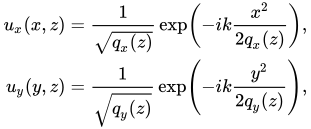
where qx(z) and qy(z) are the complex beam parameters in the x and y directions.

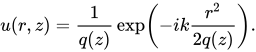
For the common case of a circular beam profile, qx(z) = qy(z) = q(z) and x2 + y2 = r2, which yields[14]
Beam optics

[edit]
A diagram of a gaussian beam passing through a lens.

When a gaussian beam propagates through a thin lens, the outgoing beam is also a (different) gaussian beam, provided that the beam travels along the cylindrical symmetry axis of the lens, and that the lens is larger than the width of the beam. The focal length of the lens , the beam waist radius , and beam waist position of the incoming beam can be used to determine the beam waist radius and position of the outgoing beam.

Lens equation

[edit]

As derived by Saleh and Teich, the relationship between the ingoing and outgoing beams can be found by considering the phase that is added to each point of the gaussian beam as it travels through the lens.[15] An alternative approach due to Self is to consider the effect of a thin lens on the gaussian beam wavefronts.[16]

The exact solution to the above problem is expressed simply in terms of the magnification

The magnification, which depends on and , is given by
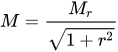
where

An equivalent expression for the beam position is
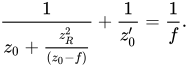
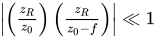
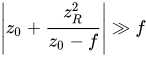
This last expression makes clear that the ray optics thin lens equation is recovered in the limit that . It can also be noted that if then the incoming beam is "well collimated" so that .
Beam focusing

[edit]

In some applications it is desirable to use a converging lens to focus a laser beam to a very small spot. Mathematically, this implies minimization of the magnification . If the beam size is constrained by the size of available optics, this is typically best achieved by sending the largest possible collimated beam through a small focal length lens, i.e. by maximizing and minimizing . In this situation, it is justifiable to make the approximation , implying that and yielding the result . This result is often presented in the form


where

which is found after assuming that the medium has index of refraction and substituting . The factors of 2 are introduced because of a common preference to represent beam size by the beam waist diameters and , rather than the waist radii and .

Wave equation

[edit]

As a special case of electromagnetic radiation, Gaussian beams (and the higher-order Gaussian modes detailed below) are solutions to the wave equation for an electromagnetic field in free space or in a homogeneous dielectric medium,[17] obtained by combining Maxwell's equations for the curl of E and the curl of H, resulting in: where c is the speed of light in the medium, and U could either refer to the electric or magnetic field vector, as any specific solution for either determines the other. The Gaussian beam solution is valid only in the paraxial approximation, that is, where wave propagation is limited to directions within a small angle of an axis. Without loss of generality let us take that direction to be the +z direction in which case the solution U can generally be written in terms of u which has no time dependence and varies relatively smoothly in space, with the main variation spatially corresponding to the wavenumber k in the z direction:[17]
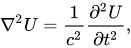

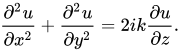
Using this form along with the paraxial approximation, 2u/∂z2 can then be essentially neglected. Since solutions of the electromagnetic wave equation only hold for polarizations which are orthogonal to the direction of propagation (z), we have without loss of generality considered the polarization to be in the x direction so that we now solve a scalar equation for u(x, y, z).

Substituting this solution into the wave equation above yields the paraxial approximation to the scalar wave equation:[17] Writing the wave equations in the light-cone coordinates returns this equation without utilizing any approximation.[18] Gaussian beams of any beam waist w0 satisfy the paraxial approximation to the scalar wave equation; this is most easily verified by expressing the wave at z in terms of the complex beam parameter q(z) as defined above. There are many other solutions. As solutions to a linear system, any combination of solutions (using addition or multiplication by a constant) is also a solution. The fundamental Gaussian happens to be the one that minimizes the product of minimum spot size and far-field divergence, as noted above. In seeking paraxial solutions, and in particular ones that would describe laser radiation that is not in the fundamental Gaussian mode, we will look for families of solutions with gradually increasing products of their divergences and minimum spot sizes. Two important orthogonal decompositions of this sort are the Hermite–Gaussian or Laguerre-Gaussian modes, corresponding to rectangular and circular symmetry respectively, as detailed in the next section. With both of these, the fundamental Gaussian beam we have been considering is the lowest order mode.
Higher-order modes

[edit]

Hermite-Gaussian modes

[edit]
Twelve Hermite-Gaussian modes

It is possible to decompose a coherent paraxial beam using the orthogonal set of so-called Hermite-Gaussian modes, any of which are given by the product of a factor in x and a factor in y. Such a solution is possible due to the separability in x and y in the paraxial Helmholtz equation as written in Cartesian coordinates.[19] Thus given a mode of order (l, m) referring to the x and y directions, the electric field amplitude at x, y, z may be given by: where the factors for the x and y dependence are each given by: where we have employed the complex beam parameter q(z) (as defined above) for a beam of waist w0 at z from the focus. In this form, the first factor is just a normalizing constant to make the set of uJ orthonormal. The second factor is an additional normalization dependent on z which compensates for the expansion of the spatial extent of the mode according to w(z)/w0 (due to the last two factors). It also contains part of the Gouy phase. The third factor is a pure phase which enhances the Gouy phase shift for higher orders J.


The final two factors account for the spatial variation over x (or y). The fourth factor is the Hermite polynomial of order J ("physicists' form", i.e. H1(x) = 2x), while the fifth accounts for the Gaussian amplitude fall-off exp(−x2/w(z)2), although this isn't obvious using the complex q in the exponent. Expansion of that exponential also produces a phase factor in x which accounts for the wavefront curvature (1/R(z)) at z along the beam.

Hermite-Gaussian modes are typically designated "TEMlm"; the fundamental Gaussian beam may thus be referred to as TEM00 (where TEM is transverse electro-magnetic). Multiplying ul(x, z) and um(y, z) to get the 2-D mode profile, and removing the normalization so that the leading factor is just called E0, we can write the (l, m) mode in the more accessible form:

In this form, the parameter w0, as before, determines the family of modes, in particular scaling the spatial extent of the fundamental mode's waist and all other mode patterns at z = 0. Given that w0, w(z) and R(z) have the same definitions as for the fundamental Gaussian beam described above. It can be seen that with l = m = 0 we obtain the fundamental Gaussian beam described earlier (since H0 = 1). The only specific difference in the x and y profiles at any z are due to the Hermite polynomial factors for the order numbers l and m. However, there is a change in the evolution of the modes' Gouy phase over z:
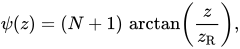
where the combined order of the mode N is defined as N = l + m. While the Gouy phase shift for the fundamental (0,0) Gaussian mode only changes by ±π/2 radians over all of z (and only by ±π/4 radians between ±zR), this is increased by the factor N + 1 for the higher order modes.[10]

Hermite Gaussian modes, with their rectangular symmetry, are especially suited for the modal analysis of radiation from lasers whose cavity design is asymmetric in a rectangular fashion. On the other hand, lasers and systems with circular symmetry can better be handled using the set of Laguerre-Gaussian modes introduced in the next section.

Laguerre-Gaussian modes

[edit]
Intensity profiles of the first 12 Laguerre-Gaussian modes.

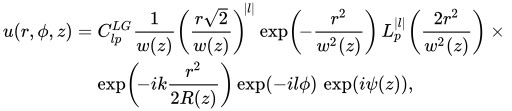
Beam profiles which are circularly symmetric (or lasers with cavities that are cylindrically symmetric) are often best solved using the Laguerre-Gaussian modal decomposition.[6] These functions are written in cylindrical coordinates using generalized Laguerre polynomials. Each transverse mode is again labelled using two integers, in this case the radial index p ≥ 0 and the azimuthal index l which can be positive or negative (or zero):[20][21]
A Laguerre-Gaussian beam with l=1 and p=0. Red and blue indicate intensity of the electric field with positive and negative phase.

where Lpl are the generalized Laguerre polynomials. CLG
lp
is a required normalization constant:[22] .

w(z) and R(z) have the same definitions as above. As with the higher-order Hermite-Gaussian modes the magnitude of the Laguerre-Gaussian modes' Gouy phase shift is exaggerated by the factor N + 1: where in this case the combined mode number N = |l| + 2p. As before, the transverse amplitude variations are contained in the last two factors on the upper line of the equation, which again includes the basic Gaussian drop off in r but now multiplied by a Laguerre polynomial. The effect of the rotational mode number l, in addition to affecting the Laguerre polynomial, is mainly contained in the phase factor exp(−ilφ), in which the beam profile is advanced (or retarded) by l complete 2π phases in one rotation around the beam (in φ). This is an example of an optical vortex of topological charge l, and can be associated with the orbital angular momentum of light in that mode.

Ince-Gaussian modes

[edit]
Transverse amplitude profile of the lowest order even Ince-Gaussian modes.

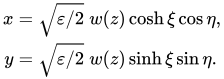
In elliptic coordinates, one can write the higher-order modes using Ince polynomials. The even and odd Ince-Gaussian modes are given by[7]

where ξ and η are the radial and angular elliptic coordinates defined by Cm
p
(η, ε)
are the even Ince polynomials of order p and degree m where ε is the ellipticity parameter. The Hermite-Gaussian and Laguerre-Gaussian modes are a special case of the Ince-Gaussian modes for ε = ∞ and ε = 0 respectively.[7]

Hypergeometric-Gaussian modes

[edit]

There is another important class of paraxial wave modes in cylindrical coordinates in which the complex amplitude is proportional to a confluent hypergeometric function.

These modes have a singular phase profile and are eigenfunctions of the photon orbital angular momentum. Their intensity profiles are characterized by a single brilliant ring; like Laguerre–Gaussian modes, their intensities fall to zero at the center (on the optical axis) except for the fundamental (0,0) mode. A mode's complex amplitude can be written in terms of the normalized (dimensionless) radial coordinate ρ = r/w0 and the normalized longitudinal coordinate Ζ = z/zR as follows:[23]
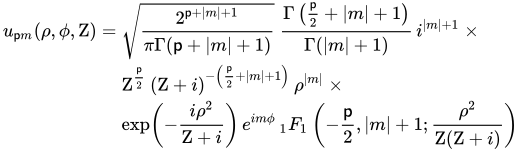
where the rotational index m is an integer, and is real-valued, Γ(x) is the gamma function and 1F1(a, b; x) is a confluent hypergeometric function.

Some subfamilies of hypergeometric-Gaussian (HyGG) modes can be listed as the modified Bessel-Gaussian modes, the modified exponential Gaussian modes,[23] and the modified Laguerre–Gaussian modes.

The set of hypergeometric-Gaussian modes is overcomplete and is not an orthogonal set of modes. In spite of its complicated field profile, HyGG modes have a very simple profile at the beam waist (z = 0):

See also

[edit]

Notes

[edit]

References

[edit]
[edit]
Revisions and contributorsEdit on WikipediaRead on Wikipedia
from Grokipedia
A Gaussian beam is a type of electromagnetic beam, typically produced by lasers operating in their fundamental transverse electromagnetic (TEM00) mode, whose transverse intensity profile follows a Gaussian distribution, with maximum intensity at the center and exponentially decreasing toward the edges.[1][2] This bell-shaped profile arises from the paraxial approximation of the wave equation, making Gaussian beams exact solutions that propagate while preserving their Gaussian form (up to scaling) in free space or through linear optical systems.[3][4] Key parameters defining a Gaussian beam include the beam waist $ w_0 $, the minimum radius at the narrowest point where the intensity drops to $ 1/e^2 $ of its peak value; the Rayleigh range $ z_R = \pi w_0^2 / \lambda $, which indicates the distance over which the beam remains roughly collimated before significant divergence; and the far-field divergence angle $ \theta = \lambda / (\pi w_0) $, determining how the beam spreads at large distances.[5][6] These properties stem from the beam's complex amplitude expression, $ E(r,z) \propto \frac{w_0}{w(z)} \exp\left( -\frac{r^2}{w(z)^2} \right) \exp\left( i(kz + \frac{kr^2}{2R(z)} - \zeta(z)) \right) $, where $ w(z) $ is the beam radius at distance $ z $, $ R(z) $ the radius of curvature, and $ \zeta(z) $ the Gouy phase shift.[1] Gaussian beams are essential in modern optics due to their diffraction-limited nature, representing the lowest possible beam divergence for a given wavelength $ \lambda $ and waist size, which enables precise focusing and efficient coupling into optical fibers or resonators.[7] They find widespread applications in laser design, beam transformation through lenses and mirrors using ABCD matrix formalism, and technologies such as optical tweezers, laser surgery, and telecommunications.[8][9]

Fundamentals

Definition and Physical Interpretation

A Gaussian beam is a type of electromagnetic wave in which the amplitude of the electric field in the transverse plane—perpendicular to the direction of propagation—exhibits a Gaussian distribution.[1] This profile arises as the fundamental solution to the paraxial wave equation, describing the lowest-order transverse electromagnetic (TEM00) mode that can be sustained in stable optical resonators.[10] Physically, it represents an idealized light beam where the intensity, proportional to the square of the field amplitude, forms a smooth, radially symmetric bell-shaped pattern that peaks at the beam axis and decays exponentially away from it.[11] The physical significance of Gaussian beams lies in their unique propagation characteristics, making them the preferred mode for laser applications. Unlike uniform plane waves, which diffract rapidly due to sharp edges, Gaussian beams experience minimal diffraction because their smooth intensity gradient reduces edge effects at the beam boundary.[12] This allows for tighter focusing to small spot sizes and lower divergence over propagation distances, essential for precision optics in microscopy, telecommunications, and material processing.[1] Additionally, Gaussian beams propagate in a self-similar manner: the transverse profile remains Gaussian at every point along the axis, with the beam width evolving predictably—contracting to a minimum at the beam waist before expanding—without distorting the overall shape.[11] This invariance under free-space propagation, up to scaling, stems from the Gaussian function's property as its own Fourier transform, which directly relates to diffraction theory.[12] Their stability within laser cavities further underscores their importance; the Gaussian profile naturally matches the eigenmodes of stable resonators, enabling efficient energy buildup and output coupling with low losses.[13] For illustration, consider a typical helium-neon laser beam: its central intensity is highest, dropping to about 13.5% of the peak at the 1/e² radius, containing nearly all the power within a compact region that maintains the bell-shaped form as it travels, scaling smoothly from the waist onward.[11] Conceptually, the Gaussian beam's transverse structure draws an analogy from quantum mechanics, where its profile mirrors the ground-state wavefunction of a one-dimensional harmonic oscillator.[14] This parallel emerges because the paraxial approximation of the wave equation for light propagation resembles the Schrödinger equation for the oscillator, with the beam's "potential" defined by the quadratic phase terms, providing insight into the beam's confinement and evolution.[15]

Historical Development

The invention of the first laser by Theodore Maiman in 1960, using a ruby crystal, marked a pivotal moment, as Gaussian beams were soon recognized as essential for achieving stable single-transverse-mode operation in laser cavities. In the early 1960s, significant theoretical progress occurred with G. D. Boyd and J. P. Gordon's 1961 analysis of Gaussian modes within confocal multimode resonators, demonstrating their suitability for millimeter-wave through optical masers and laying groundwork for resonator design.[16] The first experimental verification of Gaussian beam propagation in free space came in 1966 from H. Kogelnik and T. Li, whose comprehensive review confirmed the theoretical predictions for beam evolution, resonator stability, and mode interactions.[17] During the 1970s and 1980s, the framework expanded to astigmatic Gaussian beams, as explored by D. C. Hanna in 1969 for cavities with axial asymmetry, and higher-order modes, with A. E. Siegman's 1986 monograph "Lasers" providing a rigorous formalization of propagation characteristics across these variants.[7]

Mathematical Description

Field Expression and Intensity Profile

The complex electric field amplitude of a fundamental Gaussian beam propagating in the positive z-direction, assuming cylindrical symmetry and linear polarization, is given by
E(r,z)=E0w0w(z)exp(r2w(z)2)exp[i(kz+kr22R(z)η(z))], E(r,z) = E_0 \frac{w_0}{w(z)} \exp\left( -\frac{r^2}{w(z)^2} \right) \exp\left[ i\left( kz + \frac{k r^2}{2 R(z)} - \eta(z) \right) \right],
where E0E_0 is the complex amplitude at the beam waist, w0w_0 is the waist radius, w(z)w(z) is the beam radius at axial position zz, R(z)R(z) is the wavefront radius of curvature, η(z)\eta(z) is the Gouy phase, k=2π/λk = 2\pi/\lambda is the wavenumber, λ\lambda is the wavelength, and rr is the radial coordinate.[18] This formulation captures the essential features of the beam: the Gaussian envelope governs the transverse amplitude falloff, while the phase terms account for propagation, wavefront curvature, and an additional phase shift beyond the plane-wave contribution. The expression was derived as the fundamental mode solution for stable optical resonators and free-space propagation.[18] The intensity profile I(r,z)I(r,z), defined as the time-averaged power flux or E(r,z)2|E(r,z)|^2 (up to a proportionality constant), follows directly from the magnitude squared of the field, as the phase factors do not affect the local intensity:
I(r,z)=I0(w0w(z))2exp(2r2w(z)2), I(r,z) = I_0 \left( \frac{w_0}{w(z)} \right)^2 \exp\left( - \frac{2 r^2}{w(z)^2} \right),
with peak on-axis intensity I0E02I_0 \propto |E_0|^2 at the waist (z=0z=0).[18] This yields a radially symmetric Gaussian distribution at each z-plane, characterized by the 1/e² radius w(z)w(z), and conserves the total integrated power along the propagation axis in the absence of losses.[18] The Gaussian transverse profile emerges as the exact lowest-order solution to the paraxial Helmholtz equation under the slowly varying envelope approximation, which in transverse coordinates takes the form of a two-dimensional diffusion-like equation: 2u+2iku/z=0\nabla_\perp^2 u + 2 i k \partial u / \partial z = 0, where uu is the envelope function.[18] Substituting the Gaussian ansatz satisfies this equation precisely, confirming its role as the fundamental mode for paraxial beam propagation.[18]

Beam Width Evolution and Waist

The beam waist of a Gaussian beam is defined as the minimum radius $ w_0 $ achieved by the transverse intensity profile at the focal point, typically located at $ z = 0 $ along the propagation axis. This waist radius represents the smallest possible spot size for a diffraction-limited beam in paraxial optics, arising as the fundamental solution to the Helmholtz equation for free-space propagation. The evolution of the beam radius $ w(z) $ with propagation distance $ z $ from the waist is described by the formula
w(z)=w01+(zzR)2, w(z) = w_0 \sqrt{1 + \left( \frac{z}{z_R} \right)^2},
where $ z_R = \frac{\pi w_0^2}{\lambda} $ is the Rayleigh range and $ \lambda $ is the wavelength. This expression, derived from the paraxial approximation of the wave equation, shows that the beam cross-section remains Gaussian in shape but expands hyperbolically along the axis. In the near-field regime, where $ |z| \ll z_R $, the term $ \left( \frac{z}{z_R} \right)^2 $ is negligible, resulting in $ w(z) \approx w_0 $ and a nearly collimated beam with constant width over the depth of focus. Conversely, in the far-field regime, where $ |z| \gg z_R $, the beam radius approximates $ w(z) \approx w_0 \frac{|z|}{z_R} $, leading to linear divergence with propagation distance. This behavior underscores the trade-off between tight focusing (small $ w_0 $, short $ z_R $) and beam collimation (large $ w_0 $, long $ z_R $). As the beam width $ w(z) $ varies, the on-axis intensity scales inversely with $ w(z)^2 ,maintainingthetotalpowerwhileredistributingitovertheexpandingprofile.Forexample,aHeNe[laser](/page/Laser)beam(, maintaining the total power while redistributing it over the expanding profile. For example, a He-Ne [laser](/page/Laser) beam ( \lambda = 633 $ nm) focused to a waist radius of $ w_0 = 10 $ μm has a Rayleigh range of approximately 0.58 mm, such that the beam width doubles to $ 2w_0 $ after propagating about 1 mm from the waist.

Wavefront Curvature and Phase

The wavefronts of a Gaussian beam exhibit spherical curvature that varies along the propagation direction zz, described by the radius of curvature
R(z)=z[1+(zRz)2], R(z) = z \left[ 1 + \left( \frac{z_R}{z} \right)^2 \right],
where zRz_R is the Rayleigh range.[19] At the beam waist (z=0z = 0), R(z)R(z) approaches infinity, corresponding to planar wavefronts; as the beam propagates, the wavefronts curve positively for z>0z > 0, reaching a minimum radius R(zR)=2zRR(z_R) = 2z_R at the Rayleigh range, beyond which the curvature gradually flattens again.[19] This quadratic phase variation arises from the parabolic term in the complex field expression, which imparts a position-dependent phase delay that shapes the diverging or converging spherical surfaces.[19] In addition to the curvature-induced phase, Gaussian beams experience the Gouy phase shift, an extra longitudinal phase accumulation given by
η(z)=arctan(zzR). \eta(z) = \arctan\left( \frac{z}{z_R} \right).
This results in a total phase advance of π\pi over a distance of 2zR2z_R centered at the waist, distinguishing the beam from a uniform plane wave.[19] The Gouy phase originates as a topological effect from the transverse spatial confinement of the beam, which, via the uncertainty principle, introduces a spread in longitudinal momentum components that manifests as this anomalous shift. These phase structures significantly influence interference phenomena. The varying wavefront curvature and Gouy phase can introduce spatial and axial phase mismatches when combining multiple Gaussian beams, leading to reduced fringe visibility or shifted interference patterns in setups like Michelson interferometers or nonlinear interactions. For instance, unequal propagation distances or waist locations between beams exacerbate dephasing, impacting applications such as coherent beam coupling.

Key Parameters

Rayleigh Range and Confocal Parameter

The Rayleigh range, denoted $ z_R $, quantifies the longitudinal extent over which a Gaussian beam maintains its narrowest profile near the waist, serving as a fundamental measure of beam collimation. It is defined as
zR=πw02λ, z_R = \frac{\pi w_0^2}{\lambda},
where $ w_0 $ is the beam waist radius at its minimum and $ \lambda $ is the wavelength of the light. This parameter originates from the paraxial wave equation solutions for Gaussian beams and represents the propagation distance from the waist where the beam radius expands to $ \sqrt{2} $ times $ w_0 $, effectively doubling the beam area. Beyond this distance, the beam begins significant diffraction, marking the transition from the near-field (collimated) to the far-field (diverging) regime; thus, $ z_R $ characterizes the depth of focus, indicating how far the beam remains suitable for applications requiring tight focusing.[20] Closely related is the confocal parameter, $ b = 2 z_R $, which spans the full symmetric region around the waist where the beam stays relatively collimated, with the radius varying by no more than $ \sqrt{2} $ from $ w_0 $.[3] This parameter, also termed the depth of focus, provides a practical metric for the total axial distance over which the beam's cross-section remains approximately constant, aiding in the design of optical systems like resonators or focusing setups.[1] The confocal parameter arises naturally in Gaussian beam theory as twice the Rayleigh range, emphasizing the balanced propagation on either side of the waist. The physical significance of these parameters hinges on the ratio $ w_0 / \lambda $: for tightly focused beams with small $ w_0 / \lambda $ (e.g., subwavelength waists), $ z_R $ is correspondingly small, resulting in rapid divergence and a shallow depth of focus; in contrast, larger ratios produce extended $ z_R $ and $ b $, enabling highly collimated beams over greater distances, as seen in long-range laser applications.[20] For instance, in microscopy techniques such as light-sheet imaging, the Rayleigh range directly governs axial resolution, limiting the effective imaging depth to approximately $ z_R $ before beam spreading degrades focus and contrast.[21] The Rayleigh range also informs the beam width evolution $ w(z) $, where it sets the scale for quadratic broadening near the waist.

Beam Divergence and Far-Field Behavior

In the far field, where the propagation distance zz greatly exceeds the Rayleigh range, a Gaussian beam exhibits a linear increase in its beam radius w(z)w(z) with distance, approximated as w(z)θzw(z) \approx \theta |z|, where θ\theta is the half-angle divergence.[22] This divergence angle quantifies the angular spread of the beam and is given by θ=λπw0\theta = \frac{\lambda}{\pi w_0}, with λ\lambda as the wavelength and w0w_0 the beam waist radius at z=0z=0.[22] The formula arises from the paraxial approximation of Gaussian beam propagation, reflecting the fundamental diffraction limit for a beam with minimum uncertainty in transverse position and momentum.[12] The intensity profile in the far field maintains a Gaussian form, but expressed in angular coordinates rather than spatial ones, with the angular width determined by θ\theta.[23] Specifically, the far-field intensity distribution I(ϕ)I(\phi) as a function of the angle ϕ\phi from the beam axis follows I(ϕ)exp(2ϕ2/θ2)I(\phi) \propto \exp\left(-2 \phi^2 / \theta^2\right), where the beam spreads conically with Gaussian weighting.[23] This angular Gaussian profile ensures that the beam quality remains preserved over long distances, unlike higher-order modes which diverge more rapidly. The half-angle divergence θ\theta establishes the diffraction limit for focusing Gaussian beams, as the smallest achievable spot size upon focusing is fundamentally tied to this angle and the wavelength.[24] For an ideal Gaussian beam, the beam quality factor M2=1M^2 = 1, indicating diffraction-limited performance where no tighter focus is possible without violating optical principles.[24] This property is crucial in applications requiring precise beam control; for instance, semiconductor lasers, which typically emit from small apertures resulting in large θ\theta (often tens of degrees), employ aspheric or cylindrical lenses to collimate and reduce divergence for efficient coupling into optical fibers or free-space systems.[25] Note that θ\theta relates inversely to the Rayleigh range zRz_R, such that the divergence scales with the beam waist relative to this depth-of-focus parameter.

Gouy Phase Shift

The Gouy phase shift represents a characteristic phase anomaly in the propagation of focused Gaussian beams, arising specifically from their transverse confinement. For the fundamental Gaussian mode, the Gouy phase is expressed as
η(z)=arctan(zzR), \eta(z) = \arctan\left(\frac{z}{z_R}\right),
where zz is the propagation distance from the beam waist and zRz_R is the Rayleigh range. As the beam propagates from z=z = -\infty to z=+z = +\infty, the Gouy phase evolves from π/2-\pi/2 to +π/2+\pi/2, yielding a total Gouy shift of π\pi over the full confocal distance. This total shift stems from a phase velocity difference between the interior of the beam and an ideal plane wave outside it: the transverse momentum spread induced by spatial confinement reduces the effective axial wave number, resulting in a superluminal phase velocity vp>cv_p > c within the beam.[26] The derivative of the Gouy phase, dηdz=11+(z/zR)2\frac{d\eta}{dz} = \frac{1}{1 + (z/z_R)^2}, quantifies this anomalous velocity effect locally, equaling the ratio of the waist spot size squared to the local beam width squared and reaching a maximum of unity at the waist.[26] This phase anomaly originates in the mathematical derivation of Gaussian beam solutions to the paraxial wave equation, either through saddle-point evaluation of the angular spectrum integral or via normalization conditions for the mode fields. In practical applications, the Gouy phase shift alters resonance frequencies in optical cavities by contributing an additional round-trip phase that depends on the beam's confocal parameter, necessitating precise accounting in cavity stability and mode selection analyses. It also plays a critical role in interferometry, where differential Gouy shifts due to beam focusing or misalignment can introduce systematic phase errors in fringe patterns and signal interpretation.[27]

Intensity and Power

Peak Intensity and Total Power

The peak intensity of a Gaussian beam occurs on the optical axis and is inversely proportional to the squared beam radius at position zz along the propagation direction. For the fundamental TEM00_{00} mode, the on-axis intensity is expressed as
I0(z)=2Pπw(z)2, I_0(z) = \frac{2P}{\pi w(z)^2},
where PP is the total power of the beam and w(z)w(z) is the 1/e21/e^2 intensity radius at zz. This relation follows directly from the radial intensity profile I(r,z)=I0(z)exp(2r2/w(z)2)I(r,z) = I_0(z) \exp\left(-2r^2 / w(z)^2\right), normalized such that the peak value scales with the inverse of the effective beam area. The total power PP remains constant during free-space propagation of an ideal, untruncated Gaussian beam and can be obtained by integrating the intensity distribution over the transverse plane:
P=0I(r,z)2πrdr=πw(z)2I0(z)2. P = \int_0^\infty I(r,z) \, 2\pi r \, dr = \frac{\pi w(z)^2 I_0(z)}{2}.
This integral yields the inverse of the peak intensity formula, confirming power conservation independent of zz. In practice, approximately 86% of the total power is contained within the 1/e21/e^2 radius w(z)w(z).[1] In laser sources, the total power PP corresponds to the device's output power, determined by factors such as the pump source efficiency, gain medium properties, and cavity design.[7] For instance, a continuous-wave laser emitting 1 W with a beam waist radius w0=100μmw_0 = 100 \, \mu\mathrm{m} (at z=0z=0) achieves a peak intensity of approximately 6.4×10³W/cm26.4 \times 10^3 \, \mathrm{W/cm^2} at the waist.[11]

Power Through Apertures and Truncation Effects

The fraction of total power transmitted through a circular aperture of radius aa for a Gaussian beam with radius ww (defined at the 1/e21/e^2 intensity contour) is given by
T=1exp(2a2w2). T = 1 - \exp\left(-2 \frac{a^2}{w^2}\right).
This expression results from integrating the radial Gaussian intensity profile I(r)=I0exp(2r2/w2)I(r) = I_0 \exp(-2 r^2 / w^2) over the aperture area, normalized to the total infinite-plane power.[28] As awa \gg w, TT approaches unity, indicating negligible loss for sufficiently large apertures.[1] Representative values illustrate the rapid containment of Gaussian beam power: an aperture of radius a=wa = w transmits approximately 86% of the total power, while a=2wa = 2w transmits about 99%.[29] These thresholds guide practical aperture sizing to minimize losses while avoiding oversized optics. Significant truncation, where aa is comparable to or smaller than ww, clips the beam tails and introduces components of higher-order modes, distorting the pure fundamental Gaussian profile. This leads to increased far-field divergence beyond that of an ideal Gaussian beam and elevates the beam quality factor M2>1M^2 > 1, quantifying the degradation in propagation characteristics.[23][30] In laser resonators, if mirror dimensions are smaller than a few times the local beam radius w(z)w(z), clipping induces round-trip power losses, reducing resonator efficiency and potentially exciting unwanted higher-order modes that further destabilize operation.[31]

Complex Beam Parameter

Definition and Propagation

The complex beam parameter $ q(z) $ provides a compact mathematical description of a Gaussian beam's properties along its propagation axis at position $ z $. It is defined by the relation
1q(z)=1R(z)iλπw(z)2, \frac{1}{q(z)} = \frac{1}{R(z)} - i \frac{\lambda}{\pi w(z)^2},
where $ R(z) $ is the radius of curvature of the beam's wavefront, $ w(z) $ is the beam radius at position $ z $, and $ \lambda $ is the wavelength of the light. This formulation encodes both the real part, associated with wavefront curvature, and the imaginary part, related to the beam's transverse intensity profile and phase structure.[1] At the beam waist, where the wavefront is flat ($ R(0) = \infty )andthebeamradiusisminimum() and the beam radius is minimum ( w(0) = w_0 $), the parameter simplifies to $ q(0) = i z_R $, with the Rayleigh range $ z_R = \pi w_0^2 / \lambda $ representing the axial distance over which the beam remains roughly collimated. This imaginary value at the waist highlights the beam's minimal divergence point, serving as a reference for propagation analysis.[1] In free space, the complex beam parameter evolves linearly with propagation distance according to $ q(z) = q(0) + z $. This simple additive rule arises from the paraxial wave equation solutions for Gaussian beams, allowing straightforward tracking of beam evolution without separate computations for width and curvature.[1] The use of $ q(z) $ unifies multiple beam parameters into a single complex quantity, facilitating efficient calculations of Gaussian beam propagation and transformations.[1] This q-parameter approach, often termed the q-transform, streamlines analysis by avoiding decoupled equations for individual parameters like $ w(z) $ and $ R(z) $.

Transformation Through Optical Elements

The complex beam parameter qq, which encapsulates the Gaussian beam's waist size and wavefront curvature, transforms through paraxial optical systems according to the ABCD matrix formalism.[32] For an optical element or system characterized by the ray-transfer matrix (ABCD)\begin{pmatrix} A & B \\ C & D \end{pmatrix}, the output parameter q2q_2 relates to the input q1q_1 via
q2=Aq1+BCq1+D, q_2 = \frac{A q_1 + B}{C q_1 + D},
where the matrix elements satisfy ADBC=1AD - BC = 1 for lossless systems.[33] This transformation preserves the Gaussian form of the beam while updating its spot size and curvature.[34] Consider a thin lens of focal length ff as a representative example. The ABCD matrix for such a lens is (101/f1)\begin{pmatrix} 1 & 0 \\ -1/f & 1 \end{pmatrix}, leading to the output parameter
qout=qin1qin/f. q_\text{out} = \frac{q_\text{in}}{1 - q_\text{in}/f}.
This relation demonstrates how the lens alters the beam's divergence and focusing properties without changing the total power.[32] Reflection from a mirror introduces an additional phase flip, effectively transforming the parameter as q=qq' = -q for the backward-propagating beam after the matrix application, which accounts for the reversal in propagation direction.[33] For a curved mirror with radius of curvature RR, the ABCD matrix (102/R1)\begin{pmatrix} 1 & 0 \\ -2/R & 1 \end{pmatrix} further adjusts the wavefront curvature accordingly.[34] In the case of astigmatic beams, where the beam cross-section is elliptical due to differing properties in orthogonal directions, separate complex parameters qxq_x and qyq_y are employed. Each undergoes independent transformation using the corresponding ABCD matrices in the xx and yy planes, enabling analysis of beams distorted by cylindrical or toric elements.[35]

Propagation and Optics

ABCD Matrix Formalism

The ABCD matrix formalism, also known as ray-transfer matrix analysis, provides a powerful tool for describing the propagation of light rays in paraxial optical systems. In this approach, the position $ r $ and angle $ \theta $ of a ray are transformed linearly through an optical element or system via a 2×2 matrix of the form
(ABCD), \begin{pmatrix} A & B \\ C & D \end{pmatrix},
such that the output ray parameters are given by $ r_\text{out} = A r_\text{in} + B \theta_\text{in} $ and $ \theta_\text{out} = C r_\text{in} + D \theta_\text{in} $. This matrix representation originates from the paraxial ray equations and enables straightforward modeling of ray paths in systems composed of lenses, mirrors, and free-space propagation.[36] Specific optical elements have well-defined ABCD matrices. For propagation through free space over a distance $ z $, the matrix is
(1z01), \begin{pmatrix} 1 & z \\ 0 & 1 \end{pmatrix},
which simply translates the ray position by $ z \theta_\text{in} $ while leaving the angle unchanged. For a thin lens with focal length $ f $, the matrix is
(101f1), \begin{pmatrix} 1 & 0 \\ -\frac{1}{f} & 1 \end{pmatrix},
which alters the ray angle by $ -\frac{r_\text{in}}{f} $ without changing the position, assuming the lens is infinitesimally thin. Complex optical systems are analyzed by composing these matrices through matrix multiplication in the reverse order of ray traversal; the determinant $ AD - BC = 1 $ holds for lossless, rotation-free systems, preserving the ray bundle's etendue.[37] In the context of Gaussian beam propagation, the ABCD matrix formalism extends beyond individual rays to the entire beam profile by applying the matrices to the complex beam parameter $ q $, which encodes the beam's waist size and wavefront curvature; this transformation governs how the Gaussian beam evolves through the system. The same matrices also describe the propagation of marginal ray bundles that outline the beam's envelope, linking geometric optics to wave optics. This application was formalized in the derivation of diffraction integrals expressed in terms of ray-transfer matrices, enabling efficient computation of beam parameters in laser resonators and optical trains.[37] The validity of the ABCD formalism for Gaussian beams is limited to the paraxial approximation, where ray angles are small (typically $ \theta \ll 1 $ radian) relative to the optical axis, and higher-order aberrations are negligible; deviations occur for wide beams or strongly diverging/converging configurations.[36]

Focusing and Lens Interactions

When a Gaussian beam passes through a thin lens, the lens modifies the beam's wavefront curvature, producing a new Gaussian beam with a relocated and typically smaller waist. This interaction is fundamental to focusing applications in optics, where the goal is often to achieve the smallest possible spot size at a desired location while maintaining the Gaussian profile. The transformation preserves the fundamental property of Gaussian beams, namely the beam parameter product $ w_0 \theta = \lambda / \pi $, where $ w_0 $ is the waist radius, $ \theta $ is the far-field divergence half-angle, and $ \lambda $ is the wavelength. The minimal focused waist size is achieved when the input beam is collimated (flat wavefront) at the lens. In this case, if the 1/e² beam radius at the lens is $ w $, the focused waist radius is $ w_0' = \frac{\lambda f}{\pi w} $, located approximately at distance $ f $ from the lens (with small diffraction-induced shift of order $ z_R^2 / f $, where $ z_R = \pi w^2 / \lambda $ is the Rayleigh range based on the beam radius at the lens). This diffraction-limited spot size is independent of the exact input waist location as long as the wavefront is flat at the lens and the radius there is $ w $.[11] For a general input Gaussian beam with waist radius $ w_{\text{in}} $ located a distance $ d $ before the thin lens (distance from waist to lens = $ d $), the focused parameters are given by
w_0' = \frac{w_{\text{in}} f}{\sqrt{(d - f)^2 + z_R^2}}, \quad z_0' = \frac{f \left[ (d - f)^2 + z_R^2 \right] }{ (d - f)^2 + z_R^2 + f (f - 2d)/ something wait, actually standard is:
More precisely, using the ABCD method, the new waist location $ z_0' $ from the lens is
z0=f(d2+zR2)/df2df+(d2+zR2)/d, z_0' = \frac{ f (d^2 + z_R^2 ) / d - f^2 }{ d - f + (d^2 + z_R^2 ) / d },
but for practical purposes, the minimal spot is as above for collimated input. The Rayleigh length of the input beam is $ z_R = \frac{\pi w_{\text{in}}^2}{\lambda} $, which influences the propagation but the minimum waist size is achieved by ensuring collimation at the lens.[12] In the special case of the input waist at the front focal point ($ d = f $), the output beam is nearly collimated with waist radius $ w_0' \approx \frac{\lambda f}{\pi w_{\text{in}}} $ located approximately at the lens ($ z_0' \approx 0 $), resulting in a slightly diverging output with small divergence angle $ \theta' \approx \frac{w_{\text{in}}}{f} $. This configuration is used to produce collimated beams with controlled size. For instance, the focal shift in collimated focusing is small, on the order of $ z_R^2 / f $.[11] In laser systems, such as those employing beam telescopes for compression, a pair of lenses can first reduce the beam diameter to increase $ \theta $, but for optimal focusing to minimal spots, expansion prior to the focusing lens is common to maximize $ w $ at the final optic, yielding $ w_0' $ as small as a few micrometers for visible wavelengths and short focal lengths. For example, a 532 nm beam expanded to $ w = 5 $ mm and focused with $ f = 50 $ mm achieves $ w_0' \approx 1.7 $ μm, enhancing intensity for applications like optical trapping.[12]

Derivation from Wave Equation

Paraxial Approximation

The scalar Helmholtz equation governs the propagation of monochromatic electromagnetic waves in free space, given by
2E+k2E=0, \nabla^2 E + k^2 E = 0,
where EE is the electric field amplitude and k=2π/λk = 2\pi / \lambda is the wavenumber with λ\lambda the wavelength. This equation describes exact wave solutions but is challenging to solve for beams with finite transverse extent propagating primarily along the zz-direction. To obtain tractable solutions for such beams, the paraxial approximation is employed, assuming the beam propagates nearly parallel to the zz-axis with small transverse variations relative to the longitudinal direction.[38] Under this approximation, the field is expressed as E(x,y,z)=u(x,y,z)exp(ikz)E(x, y, z) = u(x, y, z) \exp(ikz), where u(x,y,z)u(x, y, z) is a slowly varying envelope function that captures the beam's transverse profile and gradual changes along zz. Substituting this form into the Helmholtz equation yields
2uz2+2u+2ikuz=0, \frac{\partial^2 u}{\partial z^2} + \nabla_\perp^2 u + 2ik \frac{\partial u}{\partial z} = 0,
with 2=2/x2+2/y2\nabla_\perp^2 = \partial^2 / \partial x^2 + \partial^2 / \partial y^2. The paraxial approximation neglects the second derivative 2u/z2\partial^2 u / \partial z^2 because the envelope varies slowly in the propagation direction compared to the rapid phase oscillation exp(ikz)\exp(ikz), resulting in the paraxial wave equation:
2ikuz+2u=0. 2ik \frac{\partial u}{\partial z} + \nabla_\perp^2 u = 0.
This equation resembles the time-independent Schrödinger equation for a free particle in two dimensions, facilitating analytical solutions like Gaussian beams.[28] The approximation holds when the beam's divergence angle θ\theta satisfies θ1\theta \ll 1 radian, ensuring rays are nearly paraxial, and the beam waist width w0w_0 is much larger than the wavelength, w0λw_0 \gg \lambda, so transverse derivatives dominate over longitudinal ones.[38] These conditions are typical for many laser beam applications but break down for tightly focused beams or high numerical aperture (NA) systems, where full vectorial treatments or exact Helmholtz solutions are required to account for significant non-paraxial effects.[39]

Hermite-Gaussian Solutions

The Hermite-Gaussian (HG) modes represent exact solutions to the paraxial wave equation for beams exhibiting rectangular symmetry in the transverse plane, derived through separation of variables in Cartesian coordinates. These modes form a complete orthogonal set, enabling the decomposition of arbitrary transverse field distributions into HG basis functions for analysis in laser resonators and free-space propagation. The paraxial approximation, which assumes small divergence angles, underpins this separation, leading to a one-dimensional harmonic oscillator-like equation in each transverse dimension whose solutions involve Hermite polynomials. For the fundamental mode with indices m=0m = 0 and n=0n = 0, the transverse field profile reduces to the familiar Gaussian form E00(x,y,z)exp(x2+y2w(z)2)E_{00}(x, y, z) \propto \exp\left( -\frac{x^2 + y^2}{w(z)^2} \right), multiplied by the beam width w(z)w(z) and phase factors that account for propagation. Higher-order HG modes incorporate Hermite polynomials to introduce nodal structures: the electric field is given by
Emn(x,y,z)Hm(2xw(z))Hn(2yw(z))exp(x2+y2w(z)2)×exp[i(kz(m+n+1)tan1(zzR)+k(x2+y2)2R(z))], E_{mn}(x, y, z) \propto H_m\left( \sqrt{2} \frac{x}{w(z)} \right) H_n\left( \sqrt{2} \frac{y}{w(z)} \right) \exp\left( -\frac{x^2 + y^2}{w(z)^2} \right) \times \exp\left[ i \left( kz - (m + n + 1) \tan^{-1}\left( \frac{z}{z_R} \right) + \frac{k (x^2 + y^2)}{2 R(z)} \right) \right],
where HmH_m and HnH_n are Hermite polynomials of order mm and nn, kk is the wavenumber, zRz_R is the Rayleigh range, w(z)w(z) is the beam radius at zz, and R(z)R(z) is the radius of curvature. The exponential Gaussian envelope ensures confinement, while the Hermite polynomials generate intensity lobes separated by nodes. Normalization of HG modes ensures unit power per mode in the paraxial approximation, with the normalization constant \sqrt{\frac{2}{\pi w(z)^2}} \frac{1}{\sqrt{2^{m+n} m! n!}} for the transverse part, such that the integral of Emn2|E_{mn}|^2 over the xyxy-plane yields the total power. Orthogonality follows from the properties of Hermite polynomials: Emn(x,y,z)Emn(x,y,z)dxdy=δmmδnn\iint_{-\infty}^{\infty} E_{mn}(x, y, z) E_{m'n'}^*(x, y, z) \, dx \, dy = \delta_{mm'} \delta_{nn'}, allowing unique decomposition of input fields into mode coefficients for propagation calculations.[40] The Gouy phase shift for the HG_{mn} mode accumulates as (m+n+1)tan1(z/zR)-(m + n + 1) \tan^{-1}(z / z_R) along the propagation direction, reflecting the topological contribution from the m+nm + n transverse nodes plus the fundamental beam's shift. For example, the TEM_{10} mode (m=1,n=0m=1, n=0) features a single intensity null along the xx-direction, with the field profile E102xw(z)exp(x2+y2w(z)2)E_{10} \propto \frac{\sqrt{2} x}{w(z)} \exp\left( -\frac{x^2 + y^2}{w(z)^2} \right) times phase terms, resulting in an odd lobe structure symmetric about the node.

Higher-Order Modes

Hermite-Gaussian Modes

Hermite-Gaussian (HG) modes exhibit a distinctive transverse structure defined by orthogonal nodal lines aligned parallel to the coordinate axes, reflecting their Cartesian symmetry. The mode denoted as HGmn_{mn} possesses mm nodal lines parallel to the yy-axis (in the xx-direction) and nn nodal lines parallel to the xx-axis (in the yy-direction), creating a pattern of intensity lobes separated by these zero-intensity lines. This structure arises from the product form of the mode's transverse field, consisting of Hermite polynomials multiplied by a Gaussian envelope, as referenced in the derivation of Hermite-Gaussian solutions. The effective spot size weffw_{\rm eff} for higher-order modes exceeds that of the fundamental HG00_{00} mode and scales approximately as wm+n+1w \sqrt{m + n + 1}, where ww is the spot size parameter of the fundamental Gaussian, accounting for the expanded spatial extent due to the additional lobes.[40][41][42] These modes can be generated in laser resonators designed with rectangular geometry, such as unstable resonators, where the confinement favors the separation of variables in Cartesian coordinates and supports HG profiles as eigenmodes. Alternatively, higher-order HG modes are produced by modifying a fundamental Gaussian beam using amplitude or phase masks, such as slits or spatial light modulators, which selectively excite specific Hermite polynomial components through diffraction or phase patterning.[31][43][44] The beam quality of HGmn_{mn} modes is quantified by the factor M2=(2m+1)(2n+1)M^2 = \sqrt{(2m + 1)(2n + 1)}, which measures deviation from ideal Gaussian propagation and increases with mode order due to the multimode nature and larger divergence. For the fundamental HG00_{00} mode, M2=1M^2 = 1, while higher orders exhibit reduced focusability, with M2=3M^2 = 3 for HG11_{11}, for instance. In practical applications, such as slab lasers, HG modes are employed to mitigate astigmatism arising from the anisotropic gain medium geometry; the rectangular slab cross-section naturally selects one-dimensional HG0n_{0n} modes, aligning the beam's asymmetry with the cavity to achieve higher power extraction and improved output quality.[24][45]

Laguerre-Gaussian Modes and Orbital Angular Momentum

Laguerre-Gaussian (LG) modes represent a complete set of orthogonal solutions to the paraxial wave equation in cylindrical coordinates, suitable for describing stable resonator modes in circularly symmetric cavities. These modes are indexed by two non-negative integers: the radial index p=0,1,2,p = 0, 1, 2, \dots, which governs the number of radial nodes, and the azimuthal index l=0,±1,±2,l = 0, \pm 1, \pm 2, \dots, which specifies the topological charge associated with the phase structure. Unlike fundamental Gaussian beams (p=0p = 0, l=0l = 0), higher-order LG modes exhibit doughnut-shaped intensity profiles with a central dark spot for l>0|l| > 0, where the intensity vanishes on the beam axis due to the phase singularity.[46] The transverse electric field distribution of an LG mode is given by
upl(r,ϕ,z)=2p!π(p+l)!1w(z)(2rw(z))lLpl(2r2w2(z))exp(r2w2(z))exp(ilϕ)exp(ikz+izR2q(z)r2)exp(i(2p+l+1)ζ(z)), u_{p}^{l}(r, \phi, z) = \sqrt{\frac{2p!}{\pi (p + |l|)!}} \frac{1}{w(z)} \left( \frac{\sqrt{2} r}{w(z)} \right)^{|l|} L_{p}^{|l|} \left( \frac{2 r^{2}}{w^{2}(z)} \right) \exp\left( -\frac{r^{2}}{w^{2}(z)} \right) \exp\left( i l \phi \right) \exp\left( -i k \frac{z + i z_{R}}{2 q(z)} r^{2} \right) \exp\left( i (2p + |l| + 1) \zeta(z) \right),
where LplL_{p}^{|l|} are the associated Laguerre polynomials, w(z)w(z) is the beam radius, q(z)q(z) is the complex beam parameter, zRz_R is the Rayleigh range, ζ(z)=tan1(z/zR)\zeta(z) = \tan^{-1}(z/z_R) is the Gouy phase, and k=2π/λk = 2\pi/\lambda is the wavenumber. This form incorporates a Gaussian envelope modulated by the Laguerre polynomial and an azimuthal phase factor exp(ilϕ)\exp(i l \phi), leading to a helical wavefront that twists around the propagation axis ll times.[46] A defining feature of LG modes with l0l \neq 0 is their carrying of orbital angular momentum (OAM), distinct from the spin angular momentum associated with circular polarization. The azimuthal phase dependence exp(ilϕ)\exp(i l \phi) imparts a well-defined OAM of ll \hbar per photon along the beam axis, where \hbar is the reduced Planck's constant. This OAM arises from the conservation of angular momentum in the paraxial approximation and manifests as a torque when the beam interacts with absorbing or birefringent particles, enabling rotational manipulation in optical tweezers. The total angular momentum of light in such beams combines OAM and spin contributions, but LG modes provide a pure OAM basis for multiplexing in quantum and classical optics. Seminal theoretical work demonstrated that LG modes possess this quantized OAM and can be interconverted with Hermite-Gaussian modes via astigmatic transformations, such as a pair of cylindrical lenses.[47] LG modes form a basis for expanding arbitrary paraxial fields in cylindrical symmetry, with orthogonality ensuring no cross-talk in mode decomposition. For p=0p = 0, the modes reduce to simple vortex beams with a single intensity ring, while increasing pp adds concentric rings, enhancing complexity for applications like super-resolution imaging. The OAM spectrum allows encoding information in the ll degree of freedom, supporting high-capacity optical communications with orthogonality between different ll values over propagation distances. Experimental generation often involves spatial light modulators imprinting the phase structure onto a Gaussian beam or intra-cavity mode selection in stable resonators.[46][47]

Ince-Gaussian and Other Modes

Ince-Gaussian (IG) modes represent a family of exact, orthogonal solutions to the paraxial wave equation in elliptic coordinates, forming the third complete set of such modes alongside Hermite-Gaussian and Laguerre-Gaussian families. These modes are characterized by their transverse intensity profiles, which are described by Ince polynomials multiplied by a Gaussian envelope, exhibiting inherent elliptical symmetry that allows for a continuous transition between rectangular (Hermite-Gaussian) and cylindrical (Laguerre-Gaussian) symmetries as the ellipticity parameter varies. IG modes are particularly stable in elliptic resonators, where the cavity mirrors' geometry matches the beam's elliptical structure, enabling efficient lasing without mode discrimination in astigmatic systems. Unlike the more commonly used Hermite-Gaussian and Laguerre-Gaussian modes, IG modes are rarer in practical applications due to the prevalence of circular or square resonator designs, but they offer advantages in astigmatic cavities by minimizing beam distortion and improving mode purity.[48] For instance, in elliptic beam propagation, IG modes maintain their shape over distance, making them suitable for applications requiring elliptical intensity distributions, such as tailored optical trapping or beam shaping in anisotropic media. Hypergeometric-Gaussian (HyGG) modes constitute another class of paraxial solutions, analogous to Mathieu-like beams in their use of special functions for bounded propagation, where the field amplitude is proportional to confluent hypergeometric functions combined with a Gaussian factor. These modes feature a singular phase profile at the center, rendering them eigenfunctions of the photon orbital angular momentum operator, with intensity patterns typically showing a single bright ring surrounding a dark core.[49] HyGG modes are overcomplete and nonorthogonal, providing flexibility in representing complex beam profiles for applications like vortex beam generation, though their propagation is confined to paraxial regimes similar to other Gaussian-derived modes. In general, both IG and HyGG modes, along with related families like Mathieu-Gaussian modes, emerge as exact solutions to the paraxial wave equation under symmetries appropriate to elliptic or polar coordinates, offering alternatives to standard modes for systems with non-circular geometries. While HG and LG modes dominate due to their simplicity in cylindrical and Cartesian setups, IG modes excel in handling astigmatism, and HyGG modes support advanced angular momentum control, though experimental generation often requires specialized phase modulation techniques.

Applications

In Laser Systems and Beam Quality

In single-mode lasers, the fundamental transverse electromagnetic mode, denoted as TEM00_{00}, corresponds to a Gaussian beam profile that achieves the highest possible brightness by concentrating the output power into the smallest possible diffraction-limited spot. This mode is preferred in applications requiring maximal intensity, such as precision spectroscopy and high-resolution material processing, because it minimizes beam divergence and maximizes focusability compared to higher-order modes.[50] The beam quality of a laser output is quantitatively assessed using the M2M^2 factor, also known as the beam propagation factor, which equals 1 for an ideal Gaussian beam and quantifies deviations from this diffraction-limited performance in real beams. A value of M2=1M^2 = 1 indicates perfect Gaussian propagation, where the product of the beam waist size and far-field divergence angle matches the theoretical minimum; higher values signify increased divergence or larger waist sizes, degrading focusability. Importantly, M2M^2 remains invariant under free-space propagation or through ideal paraxial optical systems, allowing consistent characterization of beam quality independent of position.[51] Gaussian beams play a central role in the design of stable laser resonators, where the ABCD matrix formalism describes mode propagation between cavity mirrors, ensuring self-consistent Gaussian solutions only in stable configurations. Resonator stability is determined by the parameters g1=1L/R1g_1 = 1 - L/R_1 and g2=1L/R2g_2 = 1 - L/R_2, where LL is the cavity length and R1R_1, R2R_2 are the mirror radii of curvature; the condition 0<g1g2<10 < g_1 g_2 < 1 defines the stable regime, confining the Gaussian mode within the cavity without loss to diffraction or walk-off. This criterion, derived from ray-transfer matrix analysis, guides the selection of mirror curvatures to support low-loss TEM00_{00} operation in diverse laser systems.[52] A practical example is found in CO2_2 lasers used for industrial cutting, where the output is optimized for a Gaussian TEM00_{00} profile to achieve the tightest focal spot and highest power density on the workpiece, enabling efficient material removal with minimal heat-affected zones. In these systems, the Gaussian mode allows cutting speeds proportional to laser power up to several kilowatts, as demonstrated in mild steel processing, while deviations to multimode operation would broaden the beam and reduce precision.[53]

In Optical Trapping and Imaging

Gaussian beams form the basis of optical tweezers, a technique pioneered by Arthur Ashkin in 1970 through the demonstration of particle acceleration and trapping using radiation pressure from a continuous laser beam.[54] In 1986, Ashkin advanced this to single-beam gradient force traps, where a tightly focused Gaussian beam generates an intensity gradient that confines micron-sized dielectric particles in three dimensions via the refractive index mismatch-induced force.[55] The Gaussian profile's smooth intensity distribution and diffraction-limited focal spot enable stable trapping of objects ranging from viruses to cells, with forces on the order of piconewtons.[56] This invention earned Ashkin the 2018 Nobel Prize in Physics for pioneering optical manipulation of microscopic objects. Laguerre-Gaussian (LG) beams, carrying orbital angular momentum (OAM), enhance optical trapping by transferring rotational momentum to particles. In LG-based tweezers, partially absorbing particles trapped in the beam's helical phase front experience azimuthal forces, leading to controlled rotation with rates proportional to the topological charge of the mode. This OAM transfer, first experimentally verified in 1996, allows bidirectional spinning and has applications in studying microrheology and assembling chiral structures.[57] In confocal microscopy, Gaussian beams provide excitation light focused to a diffraction-limited spot, achieving lateral resolutions near λ/(2NA)\lambda / (2 \mathrm{NA}), where λ\lambda is the wavelength and NA is the numerical aperture.[58] The pinhole aperture further improves contrast by blocking out-of-focus fluorescence, while the beam's Rayleigh range zR=πw02/λz_R = \pi w_0^2 / \lambda (with w0w_0 the beam waist) defines the axial sectioning capability, typically on the order of 0.5–1 μ\mum for high-NA objectives.[59] Astigmatic Gaussian beams facilitate three-dimensional particle tracking in microscopy by introducing controlled aberration via a cylindrical lens, which elongates the point spread function (PSF) elliptically along one axis depending on the defocus position.[60] The degree of ellipticity directly correlates with the axial displacement from the focal plane, enabling nanometer-precision z-localization over ranges of several micrometers without mechanical scanning.[60] This method is particularly effective for real-time monitoring of Brownian motion in complex media. Bessel-Gaussian beams approximate non-diffracting propagation by superimposing a Gaussian envelope on a Bessel function core, allowing extended axial trapping along the beam path without rapid divergence. First applied in optical traps in 2002, these beams enable multiple-particle alignment and transport over distances up to millimeters, ideal for holographic line traps in biological assays.[61]

References

User Avatar
No comments yet.