Hubbry Logo
search
logo
2097691

Gerald Baliles

logo
Community Hub0 Subscribers
Read side by side
from Wikipedia

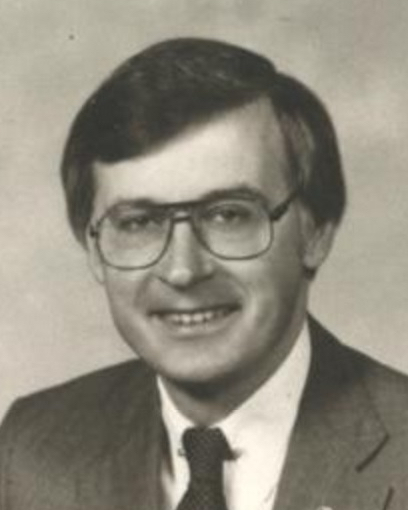
Gerald Lee Baliles (/bəˈllz/ bə-LYLES; July 8, 1940 – October 29, 2019) was an American lawyer and Democratic politician from the Commonwealth of Virginia whose career spanned great social and technological changes in his native state.[1] The 65th Governor of Virginia (from 1986 to 1990), the native of Patrick County previously served as the Commonwealth's attorney general (1982–85), and represented Richmond and Henrico County in the Virginia House of Delegates (1972-1982). After another stint in private legal practice, with Hunton & Williams (1991-2005), Baliles directed the nonpartisan Miller Center of Public Affairs associated with his alma mater, the University of Virginia (2006-2014).[2]

Key Information

Early life and education

[edit]

Born on July 8, 1940, in rural Patrick County, near Stuart, when their parents divorced, Baliles and his brother Larry were raised by their grandparents; an aunt and uncle raised their brother Stuart.[3] During Virginia's Massive Resistance (which included school closings in many counties), Baliles attended Fishburne Military School in Waynesboro, Virginia. He then earned a bachelor's degree in government from Wesleyan University in Connecticut (1963). In 1967, Baliles received a J.D. from the University of Virginia School of Law in Charlottesville, Virginia.

Career

[edit]

Following his admission to the Virginia bar, Baliles accepted an entry-level position as an assistant attorney general in the state capital, Richmond, where he gained expertise in environmental law. He received a promotion to Deputy Attorney General of Virginia during his final three years on that office's staff (1972-1975).[4] As the Byrd Organization crumbled, Baliles left the office and set up a private legal practice. He had become the secretary of Richmond's Democratic committee in 1971, and ran for office on his own behalf in 1975, and become one of the delegates representing Richmond and Henrico County, Virginia, in the Virginia General Assembly (a part-time position),[5] Re-elected as a member of the Virginia House of Delegates thru 1981 (when he successfully ran for Attorney General, as discussed below). In the legislature, Baliles served on the Corporations, Insurance and Banking, and Agriculture committees. He was also active in the American Bar Association, the Virginia Bar Association, and the Richmond Bar Association, and chaired the Virginia Model Judiciary Program from 1975 to 1977. He was also admitted to practice before the United States Court of Appeals for the Fourth Circuit and the Supreme Court of the United States.

Attorney General of Virginia

[edit]

Baliles ran for statewide office as attorney general in 1981 on a ticket led by Chuck Robb, who became Virginia's 64th Governor. His peers elected him Outstanding Attorney General.[6] He resigned his office in order to campaign for governor, so his chief deputy, William Gray Broaddus briefly became Virginia's Attorney General until voters elected Mary Sue Terry (who ran on the same winning ticket as Baliles), to that office.

Governor of Virginia

[edit]

Since Virginia's state constitution limits governors to non-consecutive single terms in office, Baliles ran to succeed Robb and won both the Democratic primary and general election. In the 1985 election Baliles led a diverse Democratic slate, with Douglas Wilder as Lieutenant Governor (the first African-American to hold that office) and Mary Sue Terry as attorney general (the first woman to hold that office). They defeated the white male Republican slate led by delegate Wyatt Durrette. Baliles won 55.2% of the gubernatorial vote.

He served as the 65th Governor of Virginia from 1986 to 1990, and became known as an advocate for transportation, education, and economic development. He also appointed the first woman, Elizabeth B. Lacy, to the Virginia Supreme Court, expanded the state prison system, and sought to strengthen the state's environmental protections, including cleaning the Chesapeake Bay.

During his term in office, Baliles sought to reform Virginia's transportation infrastructure. In 1986, he guided a $422 million-a-year revenue package through a special session of the General Assembly to improve Virginia's transportation system, even daring to raise gasoline taxes and advocate toll roads. Some later called him Virginia's "transportation governor" because of the premium he placed on improving transportation. Another of Baliles's key priorities as governor was ensuring the state's ability to participate and compete in world markets, and during his administration Virginia's international trade grew substantially. Increasing its revenues became another signature accomplishment.

Baliles long emphasized the need for workers to continually acquire new skills and training throughout their lives and careers. His administration increased faculty salaries, making pay for the state's higher-education teachers the highest in the South and within $400 of the national average. He began convening annual meetings of educators and education officials with the goal of building a flexible, statewide educational system that would be accessible to Virginians of all backgrounds and ages, including from the state's rural regions outside the Washington/Richmond corridor. In 1989, he hosted the nation's governors in Charlottesville for President George H. W. Bush's summit. During Baliles's administration, the state gained 300,000 jobs, and boasted the highest per-capita income in the South (the ninth highest in the nation). Despite a national recession in the final year of his term, Baliles's popularity helped secure the narrow election of Douglas Wilder as governor in 1989.

Post-gubernatorial career

[edit]

While some considered Baliles an attractive candidate for higher public office after his service as governor, Virginia's United States Senate seats were held by Democrat Chuck Robb, Baliles's predecessor as governor, and popular Republican John Warner. Baliles also chose against pursuing the Democratic nomination for President in 1992.

After his term as governor ended in 1990, Baliles returned to private law practice as a partner in the national firm Hunton & Williams based in Richmond, Virginia. He specialized in aviation and international law, negotiating agreements between airlines and airports, worked on strategic alliances between carriers, and led coalitions to expand market access and protect environmental standards. He also accepted some public service assignments, including as chair of the Commission to Ensure a Strong Competitive Airline Industry (National Airline) Commission for President Bill Clinton and Congress. In the early 1990s, Baliles served as chairman of the Public Infrastructure Subcouncil of the Competitiveness Policy Council. He also sat on the boards of the Norfolk Southern Corporation and Altria Group. Baliles also served two terms as the chairman of the board of the Public Broadcasting System.[7]

An avid fisherman, throughout most of his professional life Baliles helped preserving the Chesapeake Bay. In 1995 he published Preserving the Chesapeake Bay. In 2004 Baliles served as chair of a blue-ribbon panel to raise money for the Bay cleanup, and in 2005 the Chesapeake Bay Foundation named him conservationist of the year. He also founded the Patrick County Education Foundation and served as chairman of the Commission on the Academic Presidency and for the Task Force on the State of the Presidency in Higher Education, for the Association of Governing Boards of Universities and Colleges. Baliles received eleven honorary degrees, including the Harry F. Byrd Public Service Award from the Virginia Military Institute in 2006.

Baliles became the Miller Center's fifth director in April 2006, and before his retirement on December 31, 2014, developed the "American Forum" television program (which ran for 6 years). Known for his civility and bipartisanship, Baliles also oversaw the publication of more than a dozen transcript volumes of White House tapes from the John F. Kennedy Lyndon B. Johnson and Richard M. Nixon presidencies and fostered its oral history program, including of presidents George H. W. Bush, Bill Clinton and George W. Bush, as well as the Edward M. Kennedy Oral History Project (released in 2015) and laid the groundwork for the Barack Obama Presidential Oral History Project. Earlier, the Miller Center in 2002 held a conference focusing on his governorship, which led to a 2003 documentary.[citation needed]

Personal life

[edit]

Baliles married twice. He had two children, Laura and Jonathan, with his first wife, Jeannie Baliles. In his final years, Governor Baliles and his second wife, Robin, split their time between Charlottesville, Virginia and Patrick County. His son Jon Baliles continued the family's political tradition, winning election to the Richmond City Council (a part-time position) in 2012,[8][9] and currently[when?] is the city's Senior Policy Advisor for Innovation.

Death

[edit]

Baliles succumbed after a four-year battle with renal cell carcinoma and pulmonary fibrosis.[10] He died in Charlottesville on October 29, 2019, while surrounded by his family. He was 79 years old.[11][12] Virginia Governor Ralph Northam announced that state flags would fly at half mast until November 28, 2019, to honor Baliles' service to the Commonwealth.[13]

[edit]

In the 1988 NBC Miniseries The Murder of Mary Phagan, filmed in the historical Shockoe Bottom section of Richmond, Baliles made a cameo appearance ("Sir, I'm from Virginia, and I protest")[14] as an advocate for Leo Frank begging for his execution for the murder of Mary Phagan being halted due to an unfair trial and prejudice.

References

[edit]
[edit]
Revisions and contributorsEdit on WikipediaRead on Wikipedia
from Grokipedia
Gerald L. Baliles (July 8, 1940 – October 29, 2019) was an American lawyer and Democratic politician who served as the 65th governor of Virginia from 1986 to 1990.[1][2] Born in Patrick County, Virginia, Baliles earned a bachelor's degree from Wesleyan University and a law degree from the University of Virginia before entering public service as a member of the Virginia House of Delegates and later as attorney general from 1982 to 1985.[1][3] As governor, he spearheaded a landmark $10 billion, decade-long transportation funding package to address infrastructure needs, earning him the nickname "transportation governor," and prioritized education by increasing teacher salaries and fully funding public school budgets.[4][5] Baliles appointed the first woman to the Virginia Supreme Court, led efforts to improve Chesapeake Bay water quality through policy initiatives, and later directed the University of Virginia's Miller Center of Public Affairs, focusing on presidential transitions and governance studies.[1][6][7] A moderate Democrat known for bipartisan approaches, he died in Charlottesville from kidney cancer after battling the illness for four years.[8][9]

Early Life and Education

Family Background and Childhood

Gerald Lee Baliles was born on July 8, 1940, in Stuart, the seat of rural Patrick County, Virginia, located in the Blue Ridge Mountains.[10][8] His parents were Syrus Lee Baliles, a young factory worker, and Lottie Violet Baliles; the family faced early challenges as the parents separated shortly after his birth.[11] Baliles spent his initial years in Washington, D.C., where his father had relocated for wartime employment during World War II, before returning to Virginia with his father following the separation.[10] He and his brother, Larry W. Baliles, were subsequently raised by their paternal grandparents, James Lee Baliles and Emma Baliles, on the family's farm in Patrick County, instilling in him an appreciation for rural life amid the hardships of Depression-era and postwar Appalachia.[8][2] This upbringing in a modest, agrarian household shaped his early worldview, emphasizing self-reliance and community ties in a region marked by economic limitations and traditional values.[12]

Academic and Professional Training

Baliles attended Fishburne Military School in Waynesboro, Virginia, during his secondary education.[1] He then pursued higher education at Wesleyan University in Middletown, Connecticut, earning a Bachelor of Arts degree in government in 1963.[5][10] Following undergraduate studies, Baliles enrolled at the University of Virginia School of Law, from which he received a Juris Doctor degree in 1967.[9][13] Upon completing law school, Baliles entered public service as an assistant attorney general for the Commonwealth of Virginia, advancing to the role of deputy attorney general by the early 1970s.[13] He held these positions until 1975, gaining experience in state legal matters including civil litigation and advisory roles to government agencies.[3] In 1975, Baliles transitioned to private practice, becoming a partner at the Richmond-based law firm of Partrick, Bell, Lacey & Baliles, where he focused on general civil law, including real estate and business transactions.[3] This early legal career provided foundational training in Virginia's governmental and commercial legal frameworks prior to his entry into elective politics.[2]

Rise in Virginia Politics

Legislative Service

Baliles was elected to the Virginia House of Delegates in November 1975 as a Democrat, representing District 35, which covered portions of Henrico County and the City of Richmond as a "floater" seat.[14][2] He took office at the start of the 1976 session and served through the 1981 special session, resigning upon his election as attorney general in November 1981.[14][9] Throughout his legislative tenure, Baliles held assignments on key standing committees reflecting his background as an attorney and interest in economic and resource issues. From 1976 to 1977, he served on the Committees on Agriculture and Corporations, Insurance, and Banking.[14] In 1978, his roles expanded to include the Appropriations Committee alongside Agriculture and Corporations, Insurance, and Banking.[14] By 1979 through 1981, he continued on Appropriations and Corporations, Insurance, and Banking, while also joining the Committee on Conservation and Natural Resources.[14] These positions positioned him to influence budget allocations, regulatory matters, and environmental policy deliberations within the Democratic minority caucus.[14] Baliles' time in the House focused on building bipartisan relationships and addressing local constituency concerns in the Richmond metropolitan area, though specific sponsored bills or floor leadership roles are not prominently documented in official records.[14] His service provided a foundation for higher office, culminating in his successful 1981 campaign for attorney general after winning reelection to the House in 1977 and 1979.[15][14]

Attorney General Tenure (1981–1985)

Gerald Baliles was elected Attorney General of Virginia in the November 3, 1981, statewide election, securing 51% of the vote against his Republican opponent in a closely contested race.[15] He assumed office on January 14, 1982, succeeding Republican Marshall Coleman, and served until resigning on June 1, 1985, to pursue the governorship. During his tenure, Baliles drew on his prior experience as an assistant and deputy attorney general from 1967 to 1975 to prioritize operational efficiency, streamlining the office's structure and enhancing its capacity to handle legal matters for state agencies.[3] Baliles emphasized anticrime efforts, advocating for legislative measures to strengthen penalties and deter criminal activity, including support for Governor Charles Robb's proposals on sentencing enhancements and law enforcement resources.[16] He also pushed consumer protection reforms, persuading the General Assembly to enact laws improving safeguards against fraud and deceptive practices.[17] In March 1983, Baliles wrote to President Ronald Reagan urging a comprehensive federal policy to curb drug importation, highlighting Virginia's vulnerability to interstate narcotics trafficking.[18] Additionally, he opposed restrictive firearms legislation, arguing it infringed on Second Amendment rights without effectively reducing crime.[19] His leadership earned national recognition when fellow attorneys general selected him as the Outstanding Attorney General of the United States, citing his innovative approaches to public safety and office modernization.[9] Baliles represented the state in key litigation, including Baliles v. Mazur (1982), where the Virginia Supreme Court addressed disputes over executive fiscal authority involving the state comptroller.[20] He issued formal opinions guiding state policy, such as on local government powers and election laws, contributing to legal clarity during a period of administrative transition.[21] These efforts positioned Baliles as a proactive legal officer focused on practical governance over partisan posturing.

Gubernatorial Campaign and Election

1985 Election Dynamics

The 1985 Virginia gubernatorial election, held on November 5, featured Democratic nominee Gerald L. Baliles, the incumbent Attorney General, against Republican Wyatt B. Durrette Jr., a state legislator and former party chairman. Baliles secured victory with 741,438 votes (55.2 percent) to Durrette's 601,652 (44.8 percent), out of 1,343,243 total votes cast statewide.[22] The race marked a continuation of Democratic strength following Governor Charles Robb's 1981 win, amid term limits preventing Robb's reelection, and unfolded as part of a broader Democratic sweep that included L. Douglas Wilder's historic election as the first Black lieutenant governor and Mary Sue Terry's as the first female attorney general.[23] Campaign dynamics were characterized by high spending, exceeding $5 million by early October and projected to reach nearly $7 million by Election Day—the most expensive gubernatorial contest in Virginia history at the time—driven largely by contributions from Northern Virginia developers and corporations in the Washington suburbs.[24] Baliles maintained a consistent lead in polls, such as a 50 percent to 31 percent advantage reported on October 6, by adopting themes of patriotism, fiscal conservatism, and optimism akin to President Reagan's style while refusing the AFL-CIO endorsement to court traditional conservative Democrats.[25] Durrette, bolstered by endorsements from Reagan, Vice President Bush, and other GOP leaders through fundraisers and speeches, faced internal Republican divisions between moderates and old-line conservatives and resorted to accusations that Baliles distorted his record through personal attacks, particularly on qualifications for office.[25][26] Racial undercurrents influenced turnout dynamics, as Wilder's lieutenant gubernatorial bid—positioning him as the first Black major-party nominee for statewide office—raised concerns among white Democrats about voter reluctance, with surveys indicating white voters favored Republicans 4-to-1 in recent fall elections.[27] Republicans anticipated leveraging these divisions for gains across the statewide ticket, though Baliles' broad appeal neutralized such efforts, contributing to his margin of nearly 140,000 votes.[28] The contest reflected Democrats' strategy to reclaim conservative voters in the South by co-opting Reagan-era rhetoric, challenging GOP dominance despite national Republican momentum.[25]

Platform and Key Issues

Baliles campaigned as a moderate Democrat committed to fiscal responsibility, pledging to fund state priorities without enacting general tax increases, in contrast to Republican opponent Wyatt B. Durrette's accusations that his proposed initiatives would require up to $3 billion in new revenue and necessitate hikes.[29][30] His platform highlighted transportation infrastructure as a core issue, promising major reforms to the highway system amid Virginia's accelerating population growth, particularly in Northern Virginia, which strained existing roads and mobility.[31][32] Education reform and funding improvements formed another pillar, building on the legacy of term-limited incumbent Chuck Robb by advocating sustained investments to enhance quality and access without expanding the tax base.[33] Baliles also stressed economic development through expanded foreign trade missions and better utilization of Southeastern Virginia's ports to capitalize on global opportunities and job creation.[32] These positions positioned him as a pragmatic successor to Robb's "New Democrat" approach, focusing on growth management and social progress while avoiding perceptions of fiscal extravagance that had historically burdened Virginia Democrats.[34]

Governorship (1986–1990)

Administrative Priorities and Appointments

Baliles structured his administration around Virginia's secretarial system, comprising 14 secretariats to oversee state agencies and implement policy priorities without micromanaging operations. Secretaries served as policy advisors and coordinators, emphasizing budget preparation, legislative advocacy, and alignment with a four-year gubernatorial plan focused on economic growth and infrastructure.[35] The cabinet prioritized experienced appointees with legislative and governmental backgrounds, including two former General Assembly members and several with staff expertise, to ensure institutional continuity and effective policy execution; it remained non-partisan and non-ideological, avoiding campaign loyalists.[35] Among key structural changes, Baliles established the first cabinet-level Secretary of Natural Resources position to address environmental coordination, appointing John W. Daniel II to lead it and advance initiatives like Chesapeake Bay restoration.[36] He retained Donald J. Finley, a career state budget specialist from the prior administration, as Secretary of Education to support reforms linking education to economic development.[37] Other notable executive appointments included Carolyn J. Moss as Secretary of Administration, handling personnel and operational efficiency from 1986 to 1990, and Leonard L. Hopkins Jr. as executive assistant for policy, a role focused on strategic coordination at $55,000 annually.[3][38] In judicial appointments, Baliles named Elizabeth B. Lacy to the Virginia Supreme Court in 1987, marking the first female justice in its history and reflecting a commitment to diversifying state leadership.[1] These selections supported broader administrative goals, such as sustaining economic expansion through personal business recruitment efforts and positioning transportation as foundational to growth, with cabinet retreats used to synchronize agency actions.[39][35]

Transportation and Infrastructure Reforms

During his first year in office, Governor Gerald Baliles identified Virginia's deteriorating transportation infrastructure as a critical barrier to economic growth and mobility, prompting the creation of the Commission on Virginia's Transportation Needs to assess priorities across roads, ports, airports, and transit systems.[39] This led to a special legislative session in September 1986, where the General Assembly approved a comprehensive transportation funding package generating approximately $422 million annually through targeted revenue enhancements, including a 2.3-cent increase in the gasoline tax and a half-cent sales tax dedicated to transportation.[40][3] The initiative marked the largest such investment in state history at the time, projected to deliver over $10 billion in improvements over a decade by expanding revenue sources for construction and maintenance separate from the traditional highway trust fund.[41][42] The package prioritized highway expansion and repair, resulting in the construction of 438 miles of new roads by late 1989—double the mileage achieved under his predecessor, Governor Charles S. Robb—while also allocating funds for public transit enhancements, seaport dredging, and airport upgrades to support commerce and population growth in urban corridors like Northern Virginia and Hampton Roads.[43] Baliles emphasized user-based financing mechanisms, such as bonds and tolls repaid by highway users, over general taxation where possible, arguing that Virginia's half-century reliance on gasoline taxes alone had underfunded maintenance amid rising vehicle miles traveled.[39] Implementation accelerated road projects, with Baliles pledging in March 1986 to expedite construction using the new revenues, focusing on congestion relief on interstate corridors and bridges vital to the state's logistics economy.[44] Baliles' reforms also laid groundwork for innovative procurement, fostering early interest in public-private partnerships for infrastructure delivery, which addressed fiscal constraints without broad tax hikes beyond the initial package.[45] Critics noted the plan fell short of Baliles' original $10 billion vision due to legislative compromises, yet it established a dedicated construction fund insulated from annual budget raids, enabling sustained progress on critical needs like the Springfield Interchange and port access routes.[43][46] By prioritizing empirical assessments of traffic data and economic impacts over political expediency, the administration achieved measurable gains in capacity and reliability, though ongoing federal funding uncertainties prompted Baliles to advocate for greater state autonomy in highway planning.[47]

Education and Economic Development Initiatives

Baliles emphasized education as a cornerstone of economic development, arguing that improvements in public schooling were necessary to prepare Virginia for global competition. In 1986, he established the Commission on Excellence in Education, charging its 18 members with developing bold, creative recommendations to elevate Virginia's schools beyond national benchmarks toward international standards.[48] His administration raised average teacher salaries to within $400 of the national average through targeted funding increases, aiming to attract and retain qualified educators.[10] Baliles also introduced the state's first standardized testing program for public schools to assess student performance uniformly, though it was later superseded by the Standards of Learning assessments.[10] Additional reforms included mandating guidance counselors in elementary schools and installing large world maps in every seventh-grade classroom to instill early awareness of international affairs.[3] [10] These measures were part of broader efforts to combat illiteracy and bolster K-12 funding, with full school budget allocations tied to long-term workforce development.[49] [5] In parallel, Baliles pursued economic development by enhancing Virginia's global trade position and infrastructure to drive job growth across regions. His administration prioritized expanding port facilities and seaports to facilitate international commerce, including legislative support for upgrades that increased export capacities.[50] He appointed a director to lead the Virginia Department of Economic Development in 1987, focusing on diversified economic activity in urban and rural sectors alike.[51] To foster international ties, Baliles launched the nation's first state-sponsored international internship program in the late 1980s, sending young Virginians abroad for professional experience, though it was discontinued amid later budget cuts.[52] These initiatives complemented education reforms by linking skilled labor development to trade promotion, with Baliles traveling internationally to market Virginia's assets and positioning the state as a competitive player in the global marketplace.[3] Outcomes included sustained economic expansion, though challenged by a $2 billion state budget deficit by 1990.[10]

Environmental Policies

During his governorship from January 14, 1986, to January 13, 1990, Gerald Baliles prioritized environmental protection by integrating conservation with economic development, establishing dedicated state mechanisms for resource management, and leading multistate efforts to address waterway pollution.[53] He created Virginia's first cabinet-level Secretary of Natural Resources position in 1986, appointing John W. Daniel II to oversee agencies handling natural resources, which centralized coordination of environmental programs previously scattered across departments.[36] Baliles' most prominent environmental initiative centered on the Chesapeake Bay, where he chaired the Chesapeake Executive Council starting in January 1987 and drove negotiations for the 1987 Chesapeake Bay Agreement, signed on December 15, 1987, at the Baltimore Convention Center.[6] This agreement expanded prior commitments into 30 time-bound actions, including a measurable goal of reducing nutrient pollution—specifically nitrogen and phosphorus—by 40 percent by 2000 from controllable sources, alongside efforts to eliminate toxics from wastewater and other discharges.[54] [6] To support implementation, Baliles committed $100 million in state funding for Bay cleanup, originated the Chesapeake Bay Local Assistance Department to aid local governments in compliance, and backed the Chesapeake Bay Preservation Act, which tied land-use planning to water quality standards to curb nonpoint source runoff.[13] [6] [36] Beyond the Bay, Baliles enacted a statewide ban on offshore oil drilling to safeguard coastal ecosystems from exploration risks, a measure advocated by environmental groups amid late-1980s threats from federal leasing proposals.[13] [54] His administration emphasized funding strategies for broader water quality improvements and resource preservation, laying groundwork for sustained restoration without compromising industrial growth.[6] These policies reflected Baliles' background in environmental law from his time as attorney general, where he handled energy and pollution cases, and earned him recognition as Conservationist of the Year from the Chesapeake Bay Foundation in 2004.[36]

Fiscal Policies and Tax Measures

During his governorship, Gerald Baliles prioritized funding Virginia's deteriorating transportation infrastructure through targeted tax increases, culminating in a landmark 1986 special session of the General Assembly. Baliles proposed a comprehensive revenue package to generate approximately $571.5 million annually, with the bulk—$301.5 million—coming from raising the state sales tax from 4 percent to 4.75 percent.[55] The package also included increasing the motor fuels tax to 17.5 cents per gallon, a level that remains in effect.[56] These measures, approved on September 27, 1986, represented Virginia's largest-ever tax increase for transportation at the time, projected to yield $6.3 billion over a decade.[40] [57] The 1986 reforms established the Commonwealth Transportation Trust Fund (initially styled as a restructured highway fund), dedicating the new revenues to a 10-year, $10 billion initiative encompassing highways, ports, airports, and mass transit.[58] This dedicated funding mechanism aimed to insulate transportation investments from general fund fluctuations, building on prior gasoline tax deposits into special trust funds.[39] Baliles framed the increases as essential for economic competitiveness, arguing that Virginia's infrastructure backlog threatened growth; the package passed with bipartisan support despite Republican opposition labeling it a broad tax hike.[55] Baliles pursued additional fiscal adjustments later in his term. In early 1989, amid ongoing road funding shortfalls, he recommended allowing localities a surcharge on the state income tax—up to 0.625 percent—to support regional transportation needs, though this local-option proposal faced resistance and did not fully materialize.[59] He also advocated a sliding-scale tax credit to rebate a $100 million federal tax windfall to residents, which the Senate endorsed as a one-time relief measure.[60] Critics, including Virginia Republicans, accused Baliles of enacting at least five tax hikes in his first 14 months, encompassing sales, gasoline, and minor income adjustments, which they argued eroded his campaign pledges of fiscal restraint.[61] Overall, Baliles' approach yielded short-term fiscal gains, including a $31.6 million general fund surplus at the end of fiscal year 1986, but his administration ended amid a late-term economic downturn that contributed to a $2 billion budget shortfall for his successor.[62] [63]

Criticisms and Political Opposition

Baliles faced significant opposition to his proposed tax increases aimed at funding transportation infrastructure, particularly a half-cent sales tax hike and gasoline tax elevation, which critics argued burdened Virginians amid economic pressures. In September 1986, the Virginia State Senate voted 22-17 against the sales tax measure despite Baliles' appeals, reflecting resistance from fiscal conservatives wary of broadening the tax base beyond user fees.[64] Republicans, including future Governor George Allen, vocally opposed these hikes, portraying them as unnecessary expansions of government spending rather than targeted solutions.[65] Democrats also critiqued Baliles' fiscal approach, notably Lieutenant Governor L. Douglas Wilder, who withheld support for the transportation tax package, prioritizing opposition to sales tax growth over comprehensive road funding.[66] This intra-party friction highlighted tensions between Baliles' infrastructure priorities and concerns over regressive taxation impacts on lower-income residents. By 1989, Baliles' budget proposals drew further rebuke for austerity measures, including forgoing $170 million in salary raises for teachers and state employees to balance expenditures, which some viewed as insufficient investment in public services amid rising costs.[67] Baliles encountered pushback on labor policies, particularly his decision to deploy state police during the 1989 Pittston Coal Company strike, prompting initial criticism from Democrats like Wilder for perceived overreach that alienated union supporters. Wilder later moderated his stance amid party pressure, but the move underscored divisions between Baliles' emphasis on law and order and progressive elements favoring striker protections.[68] Overall, these episodes tested Baliles' bipartisan reputation, with Republican-led General Assembly resistance culminating in a challenging 1989 legislative session that risked his legacy on key reforms.[69]

Post-Gubernatorial Career

Leadership at the Miller Center

In April 2006, Gerald Baliles was appointed director and chief executive officer of the University of Virginia's Miller Center of Public Affairs, a nonpartisan institution dedicated to the study of the American presidency, public policy, and political history.[70] He succeeded Linwood Holton in the role, bringing his experience as a former governor to lead the center's expansion of scholarly programs and outreach.[71] Baliles served in this capacity until December 31, 2014, during which time he emphasized interdisciplinary research on governance challenges.[7] Under Baliles' leadership, the Miller Center hosted national commissions addressing key policy areas, including presidential war powers in 2009, containing health care costs in 2013, and immigration reform in 2014.[72] He designed conferences and initiatives focused on foreign and domestic economic policy, enhancing the center's role in fostering bipartisan dialogue on executive authority and legislative processes.[73] These efforts elevated the institution's national profile, positioning it as a premier resource for presidential scholarship and policy analysis.[71] Baliles' tenure also strengthened institutional partnerships and funding, contributing to the center's recognition as one of the nation's leading venues for public affairs research.[74] His strategic vision included integrating oral histories, simulations, and expert forums to examine historical precedents for contemporary issues, reflecting a commitment to evidence-based insights into American political institutions.[73] In acknowledgment of these contributions, the Miller Center established the Gerald L. Baliles Professorship in Presidential Studies in 2018.[7]

Advocacy and Public Service Roles

Following his tenure as governor, Baliles assumed the role of chairman of the Public Broadcasting Service (PBS) board in 1993, where he advocated for structural reforms to enhance decision-making efficiency and finality in board resolutions.[75][76] During this period, he also served as chairman of the Virginia Historical Society, supporting efforts to preserve and promote Virginia's cultural heritage.[2] Baliles maintained a sustained commitment to environmental advocacy, particularly concerning the Chesapeake Bay watershed. In 1995, he authored Preserving the Chesapeake Bay, a publication outlining strategies for ongoing restoration amid competing economic pressures.[13] By 2004, he chaired the Chesapeake Bay Blue Ribbon Panel, convened by the Chesapeake Bay Executive Council to develop financing mechanisms for watershed restoration, including proposals for a multi-stakeholder authority to leverage public and private funds for nutrient reduction and habitat improvement.[77][78] That same year, the Chesapeake Bay Foundation recognized him as Conservationist of the Year for his contributions to bay preservation policy.[36] In recognition of his prior transportation initiatives, Baliles received the American Institute of Aeronautics and Astronautics (AIAA) Public Service Award in 1994 for advancing air transportation policies that balanced infrastructure needs with fiscal responsibility.[79] His post-gubernatorial legal practice at Hunton & Williams further emphasized aviation and international trade advocacy, informing broader public discussions on economic infrastructure. Throughout these efforts, Baliles emphasized pragmatic, evidence-based approaches to policy challenges, drawing on empirical assessments of environmental and developmental trade-offs.[80]

Personal Life and Death

Family and Relationships

Gerald Baliles married Jeannie Patterson McPherson, whom he met while attending Wesleyan University in Connecticut, and they had two children together: daughter Laura Baliles Osberger and son Jonathan Tabor Baliles.[81][8] The couple divorced in 1996 after 31 years of marriage.[82] Baliles remarried in 2003 to Robin Marshall Deal, with whom he remained until his death; she brought two stepdaughters into the family, Katherine Deal Stone and Elizabeth Deal.[2][83] No public records indicate additional marriages or significant relationships beyond these.[10]

Health Decline and Passing (2019)

In September 2019, Baliles entered a palliative care program following a four-year battle with kidney cancer, as announced by his family.[84] [80] His condition, identified as renal cell carcinoma, had progressed to the point where further aggressive treatment was deemed unfeasible. Baliles died on October 29, 2019, at the age of 79, from complications of the kidney cancer, surrounded by his family in Charlottesville, Virginia.[8] [85] Virginia Governor Ralph Northam confirmed the death and ordered state flags to be flown at half-staff for 30 days in Baliles's honor.[10]

Legacy and Assessments

Long-Term Policy Impacts

Baliles' transportation reforms, initiated through the 1986 Commission on Transportation, produced a landmark $10 billion, decade-long investment package that overhauled Virginia's highways, seaports, airports, and public transit infrastructure.[1][43] This addressed acute congestion and funding gaps, particularly in Northern Virginia, where identified needs exceeded available resources by $7 billion, fostering long-term economic expansion by enhancing logistics efficiency and commuter access.[43] Subsequent decades saw these foundations support Virginia's growth into a major East Coast trade corridor, though persistent underfunding has limited full realization of benefits amid population surges.[86] Education policies under Baliles elevated teacher pay to within $400 of the national average by 1990, fully funded K-12 budgets, and launched Virginia's inaugural statewide standardized testing alongside elementary school guidance programs.[10] These steps, framed as essential for economic competitiveness, correlated with sustained improvements in student outcomes and Virginia's ranking among top states for public education quality, aiding talent retention and business recruitment into the 21st century.[5] On environmental fronts, Baliles propelled Chesapeake Bay restoration via the 1987 multistate agreement, pioneering nutrient pollution controls that established benchmarks for water quality monitoring and agricultural runoff mitigation.[6] This framework underpinned decades of targeted interventions, yielding detectable declines in pollution levels and habitat recovery by the 2010s, while integrating conservation with development to sustain coastal economies.[6]

Evaluations from Conservative and Fiscal Perspectives

Republicans criticized Governor Baliles for reneging on his 1985 campaign pledge against proposing tax increases, a promise articulated as "I don't intend to propose a tax increase," which they argued undermined his credibility and reflected fiscally irresponsible governance.[61] The Virginia GOP launched "Project Accountability" in 1987, an advertising campaign accusing him of raising five taxes—including sales, gasoline, and income levies—within his first 14 months in office, framing these actions as a betrayal that burdened taxpayers without sufficient justification.[61] From a fiscal conservative standpoint, Baliles' signature achievement—a 1986 transportation funding package generating $422 million annually through tax hikes, including a 0.5 percentage point sales tax increase to 4.5% and a 2.5-cent gasoline tax rise—exemplified excessive government expansion rather than restrained budgeting or spending cuts. Critics contended this $1.6 billion initiative, while addressing infrastructure needs, prioritized new revenue over reallocating existing funds, contributing to perceptions of Democratic fiscal profligacy in a state with a constitutional balanced-budget requirement that nonetheless allowed for such hikes.[87] Conservatives highlighted that these measures marked record-level increases, setting a precedent for future tax expansions rather than promoting efficiency or private-sector alternatives for road funding.[88] Baliles' later-term fiscal adjustments offered partial mitigation in conservative eyes, as he imposed agency spending cuts of 1 to 5% in 1990 to achieve $233.3 million in biennial savings amid revenue shortfalls, demonstrating some adherence to budgetary discipline.[67] However, fiscal hawks viewed his overall tenure as prioritizing ambitious public investments in education, environment, and economic development over tax relief or deregulation, with the transportation tax package's long-term infrastructure gains not offsetting the immediate and enduring taxpayer costs in their assessment.[8] This perspective aligns with broader conservative critiques of 1980s Democratic governors who, despite moderate labels, expanded state roles without corresponding reductions in government size.

References

User Avatar
No comments yet.