Hubbry Logo
LeRoy CollinsLeRoy CollinsMain
Open search
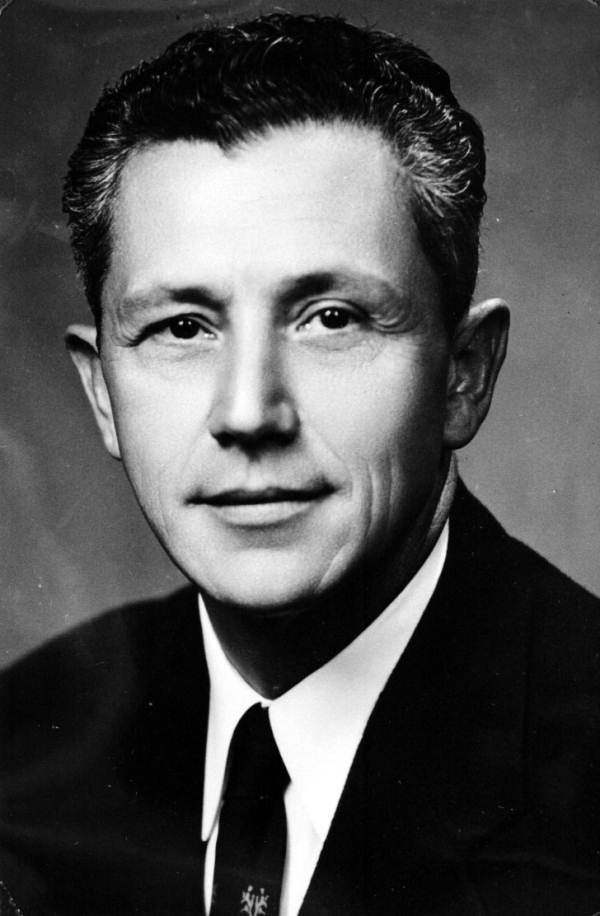
LeRoy Collins
Community hub
LeRoy Collins
logo
8 pages, 0 posts
0 subscribers
Be the first to start a discussion here.
LeRoy Collins
LeRoy Collins
from Wikipedia

Thomas LeRoy Collins (March 10, 1909 – March 12, 1991) was an American politician who served as the 33rd governor of Florida from 1955 to 1961. Collins began his governorship after winning a special election in 1954, and was elected to a four-year term in 1956.

Key Information

Prior to winning election as governor, Collins served several terms in the Florida House of Representatives and Senate. He was the first governor from the South to promote ending segregation. Counseling "progress under law," he took a moderate course in favor of incremental improvements during the 1950s and 60s and is remembered as a voice in favor of civil rights.

Early life

[edit]

Collins, "an example of the poor boy made good," was born and raised in Tallahassee, Florida, son of a "neighborhood grocer".[2]: 19  He attended Leon High School. He went on to attend Eastman Business College in Poughkeepsie, New York, and then the Cumberland School of Law, at that time in Lebanon, Tennessee, where he earned a law degree. In 1932, he married Mary Call Darby, great-granddaughter of Richard K. Call, twice territorial governor of Florida.

Start of career

[edit]

Political start

[edit]

Collins was first elected to public office in 1934, as Leon County's representative to the Florida House of Representatives. He continued to serve in the House until 1940, when he was elected to the Florida Senate to fill an unexpired term of the late William Hodges.

In 1941, he purchased The Grove Plantation, the house built by Richard K. Call in Tallahassee across the street from the Governor's Mansion. Re-elected to the Senate in 1942, Collins resigned to join the military for World War II.

Military service

[edit]

Collins attempted to enlist in 1943, but was rejected by the United States Navy because of his age.[3] In 1944, he was accepted and received his commission as a lieutenant junior grade.[3] He attended officer training first in Hollywood, Florida, and then in Princeton, New Jersey.[3][4] Originally slated for assignment to a unit that would oversee post-war rebuilding of countries previously held by the Japanese, he began training in the Chinese language in Monterey, California.[5] When the unit was disbanded, Collins was transferred to the Navy's judge advocate general corps.[3] He was posted to the 13th Naval District headquarters in Seattle, Washington, where he was assigned as an attorney for Navy boards and courts.[6] Collins was discharged from active duty as a lieutenant in March 1946, and returned to Florida to resume his legal and political career.[6]

Return to politics

[edit]

After the war, in 1946 he was elected again to the Florida Senate. He was re-elected in 1950, serving until 1954. That year a special election was held to fill the remaining two years in the term of Governor Daniel T. McCarty, who had died in office in 1953.

Collins twice received the title of "Most Valuable Senator" (the first time in 1947 by the Capital Press Corps and in 1953 by fellow lawmakers).[7]

Governorship

[edit]

Governor McCarty died on September 28, 1953, just nine months after assuming office, having suffered a debilitating heart attack on February 25.[8] At that time, Florida had no lieutenant governor, and the president of the Florida Senate, Charley Eugene Johns, became acting governor to serve until a special election.[9]

Collins challenged Johns in the 1954 Democratic primary election and won the nomination. Due to the disenfranchisement of most blacks in the South, the Democratic Party dominated regional politics and a primary win nearly guaranteed victory in the general election.[citation needed] Collins was sworn in as governor on January 4, 1955. In 1956, he was reelected to serve a regular four-year term, Collins was the first governor of Florida to serve two consecutive terms.

Painted portrait of Governor LeRoy Collins.

In the 1956 election, Collins made history by becoming the first governor to win the Democratic nomination without a runoff election, defeating segregationist Sumter de Leon Lowry Jr. and four other Democrats with over 51 percent of the vote. During his term, Collins focused on education, working to strengthen the state's school system. In the racial unrest caused by the Civil Rights Movement seeking enforcement of constitutional rights, he took a moderate course, counseling obedience to the law, though gradually, to avoid disruption. The state had minimal disorder compared to other states in the Deep South.

Although he initially condemned the US Supreme Court decision in Brown v. Board of Education (1954), as did almost all Southern elected officials, he fought with the Florida Legislature to try to prevent them from passing an "interposition" resolution. This indicated the intent of the legislature to "interpose" itself between the citizens of Florida and the United States government to prevent what the legislature contended was an illegal intrusion upon the right of the state by imposing integration.

Collins prevented passage of the resolution the first time by using his power under Section 10 of Article Four of the state constitution to unilaterally adjourn the legislature.[10] [clarification needed] After the legislature returned and passed the resolution, Collins could not veto it, because it was not a proposed law but only a resolution expressing the sentiments of the legislature.

When the interposition resolution reached his office, Collins noted on it the following, in his own handwriting:

This concurrent resolution of 'Interposition' crosses the Governor's desk as a matter of routine. I have no authority to veto it. I take this means however to advise the student of government, who may examine this document in the archives of the state in the years to come, that the Governor of Florida expressed open and vigorous opposition thereto. I feel that the U. S. Supreme Court has improperly usurped powers reserved to the states under the constitution. I have joined in protesting such and in seeking legal means of avoidance. But if this resolution declaring the decisions of the court to be 'null and void' is to be taken seriously, it is anarchy and rebellion against the nation which must remain 'indivisible under God' if it is to survive. Not only will I not condone 'interposition' as so many have sought me to do, I decry it as an evil thing, whipped up by the demagogues and carried on the hot and erratic winds of passion, prejudice, and hysteria. If history judges me right this day, I want it known that I did my best to avert this blot. If I am judged wrong, then here in my own handwriting and over my signature is the proof of guilt to support my conviction.

— "LeRoy Collins, Governor." May 2, 1957.

The document is held by the State Archives of Florida.

In 1955, Collins personally reviewed the case of the Groveland Four, a case that had been unjust to four black men. Two of these men had been murdered during the case, an underage boy was given life in prison, and Walter Irvin was sentenced to death for a rape where there was little to no evidence against him. Collins decided to commute Irvin's sentence to life in prison, explaining: "My conscience told me it was a bad case, badly handled, badly tried ... I was asked to take a man's life. My conscience would not let me do it."[11]

Collins became Chairman of the Southern Governors' Association in 1957.[7]

Collins fell just a few votes short of persuading the first Constitution Revision Commission to send an amendment to voters to abolish capital punishment in the state. He later recalled that he worked for the amendment because every time an execution was carried out under his order, it left him feeling nearly as guilty as the murderers.[12] His two immediate successors, C. Farris Bryant and Haydon Burns, also opposed the death penalty.[13]

Speech on race relations, March 20, 1960

[edit]

Though Collins is now remembered as a voice for civil rights, in his campaign for Florida's governorship he had identified as a staunch segregationist who regarded the practice as "part and parcel of our way of life." Yet biographer Martin Dyckman argues that, in his speeches and statements, Collins never extolled segregation as a virtue, but defended it legalistically. For instance, although he took issue with the Supreme Court's ruling in Brown v. Board of Education, he acknowledged the court's authority. By 1957 Collins was expressing doubts that whites would universally react negatively to integration (though he still criticized the NAACP for "forcing the issue").[14]

Tensions were mounting in Tallahassee as 1960 neared. Bus boycotts and lunch counter sit-ins were taking place in Tallahassee and across Florida. On March 20, 1960, against the advice of his friends, Collins gave an impassioned speech about his conviction that as governor he represented all the people of Florida, "whether that person is black or white, whether that person is rich or poor, or whether that person is influential or not influential."[15] He was the first southern governor to speak so frankly in support of the moral necessity of the end of segregation. His speech generated hundreds of responses, mostly positive, from citizens across the state.

Collins' reputation as a moderate secured him the chairmanship of the 1960 Democratic National Convention. Some historians believed he had a good chance for the vice-presidential nomination, but the party nominated Lyndon Johnson in order to win Texas voters to support the ticket with John F. Kennedy from Boston.[14]

Presidential and vice-presidential possibilities

[edit]

During the 1956 Democratic National Convention, Collins was among contenders for the vice presidential nomination, when presidential nominee Adlai Stevenson II allowed the convention to choose his running-mate. Collins received 29 votes on the first ballot.[16]

Before the 1960 presidential election, Collins was seriously considered as a possible candidate because of his popularity as a Southern governor. He was also acceptable to Northern liberals because of his support for civil rights.[17] But he did not seek the nomination, even in the Florida primary, which went to favorite son candidate Senator George Smathers.[18]

Chairman of the 1960 Democratic National Convention

[edit]
Collins with Lyndon B. Johnson on October 13, 1960

Collins served as chairman of the 1960 Democratic National Convention, which nominated Senator John F. Kennedy of Massachusetts for President and Senate Majority Leader Lyndon B. Johnson of Texas for Vice President.[7]

Post-governorship

[edit]

Upon completion of six years as governor, he became president of the National Association of Broadcasters. He resigned this at the request of President Lyndon B. Johnson to become the first Director of the Community Relations Service under the 1964 Civil Rights Act. Also by presidential appointment, he became United States Under Secretary of Commerce on July 7, 1965. He resigned this position effective October 1, 1966 to return to Florida to become a partner in a Tampa law firm.

In 1968, he was nominated by the Democratic Party for the United States Senate seat vacated by fellow Democrat George Smathers. However, he lost the general election to Republican U.S. Representative Edward Gurney.[19] Gurney partisans distributed a photograph of Collins walking alongside the Reverend Martin Luther King Jr., during the second of the March 1965 Selma to Montgomery marches in Alabama. The photograph contained no caption or other explanation of why Collins was in Selma. In fact, Collins had not participated in the march, but had shuttled back and forth between the marchers and the Alabama authorities to pursue a compromise to avoid a repeat of the violence perpetrated two days earlier, by state troopers and a deputized county posse, on the county side of the Edmund Pettus Bridge during the "Bloody Sunday" march. He conducted these negotiations as a part of his job as head of the Community Relations Service, at the behest of President Lyndon B. Johnson. He succeeded, as the marchers were allowed to cross the bridge, pray, and return to the other side, completing the "Turnaround Tuesday" march.

A death penalty opponent, Collins participated in a protest against execution of John Spenkelink in 1979.[20] This was the first post-Furman involuntary execution in the U.S. and the first in Florida since 1964. The protest was held outside the gubernatorial mansion he had once occupied. (Then-Governor Bob Graham let the execution proceed.)

After Collins' defeat in the Senate race, he left his law firm in Tampa and returned to "The Grove" in Tallahassee, where he lived until his death from cancer in 1991. He was called "the greatest Governor of Florida" by former governors Reubin Askew, Bob Graham, and Jeb Bush.[21]

Family

[edit]
Governor LeRoy Collins surrounded by his family at the Governor's Mansion, in 1960.

His son, LeRoy Collins Jr., a retired United States Navy rear admiral, unsuccessfully sought the 2006 Republican nomination for the United States Senate from Florida, losing to Congresswoman Katherine Harris. She was defeated by Bill Nelson, the Democratic incumbent.

Legacy and honors

[edit]
  • On March 19, 1991, a tribute was entered in the official record of the United States House of Representatives by Florida Representatives James Bacchus and Charles E. Bennett
  • His papers are held by the University of South Florida, and a road on the university's Tampa campus is named after him
  • The Leon County Public Library is named after him.[22]
  • Opening in 2017, the Governor LeRoy Collins Farm Park, situated on 84 acres of now undeveloped land in western Davie, Florida will be a public park devoted to agricultural education and open space. It will provide opportunities for experimental learning about agriculture

Works

[edit]
  • Forerunners Courageous: Stories of Frontier Florida Colcade, Tallahassee, FL, 1971

References

[edit]
[edit]
Revisions and contributorsEdit on WikipediaRead on Wikipedia
from Grokipedia
Thomas LeRoy Collins (March 10, 1909 – March 12, 1991) was an American politician who served as the 33rd governor of Florida from 1955 to 1961. Born and raised in Tallahassee to a family of modest means, with his father operating a grocery business, Collins studied business administration and law at the University of Florida before entering public service as a state representative in 1934 at age 25. He ascended to the governorship following the death of incumbent Dan McCarty and became the first in Florida history to win election to two consecutive terms, implementing reforms in education funding, highway construction, and mental health institutions amid post-World War II growth. Collins's tenure coincided with escalating national tensions over school desegregation after the 1954 Brown v. Board of Education ruling, during which he initially campaigned on segregationist principles but shifted to urge peaceful compliance with federal law, denouncing legislative efforts to nullify the decision and counseling against violent resistance in favor of orderly transition. This moderate stance, while earning federal appointments post-governorship—including as the inaugural director of the Community Relations Service under the 1964 Civil Rights Act—drew backlash from hardline segregationists in the South, positioning him as a bridge figure between entrenched traditions and emerging legal realities. His emphasis on civic responsibility and rule of law over extremism marked a pragmatic conservatism that prioritized stability amid Florida's rapid demographic and economic changes.

Early Life

Upbringing and Family Background

Thomas LeRoy Collins was born on March 10, 1909, in , to Marvin Herring Collins and Mattie Albritton Brandon Collins. As the fourth of six children in a middle-class family, he grew up on the outskirts of the city, where his father operated a that provided a modest livelihood tied to local commerce. Marvin Collins's background included descent from a line of Methodist preachers, which influenced the family's religious environment. The Collins household emphasized Methodist values, with Mattie Collins reportedly aspiring for her son to enter the ministry, instilling principles of personal duty, moral uprightness, and pragmatic amid the challenges of early 20th-century Southern life. These familial expectations fostered a rooted in traditional Protestant and community-oriented responsibility, reflective of rural Southern norms. Collins's childhood unfolded in the Jim Crow South, where rigid was the entrenched social order, accepted as commonplace by white families like his own without question during his formative years. This environment, characterized by separate facilities, schools, and public spaces for blacks and whites, shaped his early understanding of societal hierarchies as natural and unremarkable fixtures of life.

Education and Early Influences

Collins attended public schools in , where he developed an early interest in leadership, culminating in his election as class president during his senior year at ; he graduated in 1927. Following graduation, Collins worked as a in his family's grocery store to finance postsecondary education, reflecting the practical self-reliance shaped by his upbringing in a modest mercantile household. In 1928, he enrolled at the Eastman School of Business in , completing a one-year program focused on commercial skills such as and , which prioritized applied knowledge over theoretical study. Determined to pursue law, Collins entered the accelerated one-year program at School of Law in , earning his LL.B. degree in 1931 amid the deepening , which strained small businesses like his father's and underscored the value of economic resilience and personal initiative. This formative period, marked by familial financial pressures and concise, vocational training, honed his rhetorical abilities through high school leadership roles and instilled a preference for pragmatic problem-solving over expansive governmental solutions.

Pre-Gubernatorial Career

Upon receiving his LL.B. degree from in , on June 1, 1931, Thomas LeRoy Collins returned to his native , where he was admitted to and established a private law practice. His early legal work centered on representing small farmers and local clients in disputes against larger corporate interests, reflecting the economic pressures of the on rural and agricultural communities in Leon County. Prior to and alongside his nascent legal career, Collins contributed to his family's grocery business, owned by his father, by working as a at establishments like Byrd's Grocery on Monroe and Park streets. This hands-on role involved direct customer interactions and provided practical exposure to during the early 1930s recovery efforts, when retail operations faced stringent credit constraints and fluctuating commodity prices. Such involvement underscored his initial private-sector initiatives before transitioning to full-time legal and eventual pursuits. Collins' professional beginnings in Tallahassee fostered grassroots connections through routine legal consultations and community commerce, laying foundational networks in a city of approximately 14,000 residents amid statewide unemployment rates exceeding 25 percent in 1933.

State Legislature Service

Collins was first elected to public office in 1934 at age 25 as the representative for Leon County in the Florida House of Representatives, where he served three two-year terms until 1940. As a young legislator from Tallahassee, an urban center in a state dominated by rural Democratic interests, he focused on practical governance amid the Great Depression's economic constraints. During his service, Collins advocated for targeted and administrative reforms, sponsoring bills to establish a statewide system for teachers, implement a merit-based system for state employees to enhance efficiency, and fund improvements to support economic connectivity in a developing state. These efforts reflected a commitment to fiscal restraint and modernization, contrasting with the patronage-driven spending often favored by rural "pork barrel" factions that prioritized local projects over statewide needs, though Collins navigated these internal Democratic Party dynamics without alienating key allies. His legislative record emphasized incremental progress within Florida's one-party framework, where compliance with prevailing segregation laws was the norm for Democratic officeholders, as evidenced by the absence of any recorded challenges to Jim Crow policies during this period.

World War II Military Service

Collins resigned his position in the Florida State Senate in 1942 to enlist in the United States Navy, where he served as a lieutenant junior grade through the duration of World War II. His duties focused on administrative and support functions rather than direct combat, reflecting practical leadership in organizational capacities amid the broader war effort. Discharged in 1946, Collins returned to , carrying forward skills in discipline and structured operations gained from naval service, which underscored his aversion to totalitarian systems observed in the global conflict. With minimal personal exposure to frontline action, his wartime role emphasized training and intelligence-related preparations in the Pacific theater, contributing to Allied logistical readiness without notable heroic engagements.

Post-War Political Reentry

Following his discharge from the U.S. Navy in 1946, Collins successfully campaigned for re-election to the Florida State Senate, representing Leon County in the 1947–1950 term. His platform emphasized support for returning veterans, including access to and opportunities amid Florida's rapid post-war population influx driven by migration and economic booms in urban areas. He was re-elected again in 1950, continuing his service until 1954. In the , Collins positioned himself against the "Pork Chop Gang," a coalition of conservative rural Democrats from who wielded disproportionate influence through malapportioned districts, prioritizing pork-barrel spending for agricultural interests over statewide modernization. He forged alliances with urban and progressive legislators to advocate for reapportionment and investments that accommodated growth, such as expanded highways to support burgeoning industries. This opposition highlighted tensions between entrenched rural machine politics and demands for equitable representation in a diversifying . Collins also championed policies promoting Florida's tourism sector and agricultural diversification, urging state investments in marketing and research to leverage the post-war tourism surge and citrus/phosphate booms while addressing soil conservation needs. These efforts laid groundwork for broader economic adaptation, focusing on sustainable growth rather than rural subsidies, and enhanced his profile as a reform-minded legislator attuned to the state's shifting demographics.

Gubernatorial Tenure (1955–1961)

Election and Initial Reforms

Following the death of Governor Dan McCarty on September 28, , Lieutenant Governor Charley Johns assumed the acting governorship, but a special was required to fill the remaining two years of McCarty's term under Florida's constitution. LeRoy Collins, then a Democratic from Leon County, entered the Democratic primary field of five candidates. In the October 5 runoff, Collins narrowly defeated Johns, a rural conservative and vocal defender of segregation who had mobilized "Pork Chop Gang" legislators from small counties. Collins secured 51.5% of the vote in the November 2 general election against Republican nominee Lucius Reed and independent candidates, reflecting voter preference for his platform of governmental modernization over Johns' pork-barrel politics. He was inaugurated on January 4, 1955. Collins' victory over Johns marked a pragmatic moderate turn in Florida's one-party Democratic politics, distancing the governorship from the influence of rural-dominated legislators who prioritized over efficiency. As governor, Collins immediately advocated for administrative reforms to dismantle entrenched , including proposals for merit-based hiring to replace appointments and enhanced budget transparency to expose fiscal abuses in state agencies. These efforts targeted the that had flourished under prior administrations, though legislative resistance from malapportioned rural interests limited early implementation. In the 1956 Democratic primary, Collins faced minimal opposition after incumbency advantages and his reformist record deterred strong challengers, winning nomination handily before securing the general . This re-election, with over 70% of the vote, made Collins the first since the 1885 Constitution's adoption to serve consecutive terms, enabled by a 1954 voter-approved removing the one-term limit. His mandate reinforced commitments to initial governance overhaul, setting the stage for broader efficiency drives without delving into sectoral policies.

Economic and Infrastructure Developments

Collins played a key role in broadening Florida's economy beyond by promoting industry and state-sponsored through the establishment of the Florida Development Commission, which advertised the state's beaches, climate, and recreational opportunities to potential businesses and visitors. The commission's efforts aligned with the post-World War II migration surge, as Florida's grew from approximately 3.2 million in 1955 to 4.95 million by 1960, driving demand for expanded commercial activity and infrastructure. To accommodate this growth, Collins supported the construction and extension of the Florida Turnpike, a major linking central and southern to facilitate , freight movement, and population influx. He also initiated the development of the state's , laying groundwork for modern connectivity that enhanced access to emerging industrial sites and ports. These projects emphasized private enterprise and minimal regulatory burdens, attracting investments in and related sectors amid the state's annual population gains averaging over 200,000 residents during his tenure. Collins advocated for tax policies and incentives that prioritized stability over heavy intervention, contributing to Florida's reputation as a low-regulation environment conducive to industrial diversification. In 1959, he pursued bond financing for further expansions, conferring with investors to extend networks supporting and migration booms. While specific and enlargements were incremental, his administration's focus on overall transportation improvements correlated with rising commerce volumes, as and nascent industries like began supplementing traditional .

Education and Governmental Modernization Efforts

Collins prioritized enhancements to Florida's public education system amid rapid population growth that strained existing facilities. He led the implementation of the Minimum Foundation Program, the state's inaugural standardized financing mechanism for a uniform public school system, which facilitated increases in teacher salaries and allocations for new school construction to mitigate overcrowding. This addressed infrastructure deficits, with funding directed toward expanding capacity through the establishment of community colleges and universities, including the University of South Florida and Florida Atlantic University. Collins also advanced governmental efficiency by advocating for a comprehensive revision of Florida's constitution to enable modern administrative structures, though a amendment proposing broad changes was rejected by voters on November 3, 1959, primarily due to resistance from rural legislators protective of existing power distributions. To streamline operations and curb , he reorganized state agencies, creating the Department of Corrections and the State Development Commission while introducing central purchasing procedures and a merit-based system. These measures encountered legislative opposition from entrenched interests but promoted transparency and reduced favoritism in appointments.

Management of Racial Conflicts and Segregation Policies

Upon assuming office in 1955, Governor LeRoy Collins initially upheld Florida's segregation policies in line with prevailing state law and custom, emphasizing enforcement of the "separate but equal" framework amid rising tensions following the 1954 Brown v. Board of Education decision. During the Tallahassee Bus Boycott, which began in May 1956 after the arrest of two Florida A&M University students for sitting in the front of a segregated city bus, Collins criticized the boycott as an NAACP-orchestrated effort that harmed black interests and suspended all bus operations on July 2, 1956, to avert potential violence. He deployed Florida Highway Patrol troopers to monitor demonstrations and maintain public order, preventing escalation into widespread disorder while the local ordinance mandating segregated seating remained in effect until its repeal by the city commission on January 7, 1957. Collins's approach prioritized law enforcement to suppress unrest, including student-led protests tied to the boycott at Florida A&M University, where state troopers were mobilized to quell disturbances and enforce compliance with segregation statutes without conceding to immediate desegregation demands. This resulted in no major fatalities or property destruction during these events, contrasting with mob violence in other Southern locales like the University of Alabama's expulsion of Autherine Lucy in February 1956. Segregationists accused him of weakness for not endorsing nullification tactics, while civil rights groups faulted the delays in integration, though empirical outcomes showed Florida avoiding the scale of chaos seen nationally, such as the 1957 Little Rock crisis that necessitated federal troops. Over his tenure, Collins evolved toward rejecting extremist resistance, vetoing or blocking legislative pushes for interposition resolutions and "" bills in 1957 and 1959 that would have defied federal courts outright. He centralized authority over , using state police to curb white supremacist activities—such as disruptions—and advocated gradual compliance with judicial mandates, delaying school integration implementations beyond initial deadlines but forestalling federal overreach akin to . Racial violence incidents in Florida during 1955–1961 remained localized and contained, with no recorded lynchings or large-scale riots comparable to those in states like or , where over 20 racial killings occurred in the decade; this reflected effective suppression of extremism but sustained segregation in public facilities until court pressures mounted. Critics from both flanks persisted, with hardline segregationists decrying his moderation as capitulation and activists highlighting inaction on barriers affecting over 500,000 eligible black Floridians.

Key Public Addresses and National Profile

Governor LeRoy Collins delivered a landmark statewide television and radio address on March 20, 1960, amid heightened tensions from sit-in protests at segregated lunch counters, inspired by the February Greensboro sit-ins. In the speech, Collins declared racial segregation "morally wrong" and "undemocratic," a significant evolution from his segregationist stance during the 1954 gubernatorial campaign. He acknowledged the legal defensibility of segregation under existing state statutes but emphasized that moral considerations demanded voluntary efforts toward change. Collins balanced his rhetoric by urging strict obedience to the law, condemning mob violence against protesters as unlawful anarchy while cautioning against disruptive demonstrations that bypassed legal processes. He critiqued federal interventions, particularly in school desegregation crises following the 1954 Brown v. Board of Education ruling, as potentially exacerbating divisions without adequate local preparation. This approach aimed to foster calm deliberation and business-led accommodations rather than enforced upheaval. The address received extensive media coverage, generating hundreds of mostly positive responses from and positioning Collins as a pragmatic moderate amid Southern hardline resistance to civil rights advances. It elevated his national visibility as a Democrat bridging regional divides, contributing to perceptions of Florida under his leadership as a model of restrained . Yet, the speech's policy influence remained circumscribed; while some lunch counters desegregated voluntarily, widespread compliance lagged due to local economic pressures and cultural inertia, with fuller public accommodations desegregation requiring subsequent federal legislation like the 1964 . Underlying demographic frictions—rooted in entrenched segregationist institutions and white resistance—persisted, as rhetorical appeals to conscience proved insufficient against material incentives for maintaining the , underscoring the limits of executive moral suasion absent binding enforcement mechanisms.

National Political Aspirations

Vice-Presidential and Presidential Speculation

During his tenure as Florida governor, LeRoy Collins attracted national attention as a potential vice-presidential for the Democratic ticket in the 1960 presidential election. His profile as a Southern moderate who navigated civil rights tensions without alienating key constituencies made him a speculated choice to balance a ticket led by figures like Adlai Stevenson or . Collins publicly disavowed interest in the role, emphasizing his commitment to state duties. Party insiders viewed Collins as a potential bridge in internal debates over the civil rights platform plank, given his empirical record of enforcing federal court orders on school integration while preserving Southern Democratic support. This positioning stemmed from his pragmatic governance amid racial conflicts, contrasting with more hardline Southern segregationists. However, speculation for presidential nomination remained limited, with Collins lacking the national campaign infrastructure or delegate commitments of frontrunners. The Democratic convention ultimately rejected such prospects, opting for as Kennedy's running mate on July 14, 1960, to secure Southern votes and legislative clout through Johnson's Senate leadership. This choice prioritized regional loyalty and proven electoral pull in the over Collins' emerging but untested national appeal.

Role in 1960 Democratic National Convention

LeRoy Collins was elected permanent chairman of the , held July 11–15 in , , on July 12, becoming the first Southern governor to serve in that role since the Civil War. In this capacity, he delivered the keynote address that evening, criticizing the Eisenhower administration's policies and calling for Democratic renewal, before presiding over the nomination of Senator for president on July 13 and Senator for vice president on July 14. The convention's platform, adopted earlier on July 12 amid clashes over civil rights provisions, reflected tensions between Northern liberals seeking aggressive federal intervention and Southern delegates advocating moderation to preserve . The final civil rights plank pledged support for enforcing court decisions on desegregation, new voting rights legislation, and fair employment practices, but emphasized voluntary compliance, economic aid to the , and avoidance of coercion, marking a compromise rather than sweeping mandates. As chairman, Collins enforced procedural rules to maintain order during these proceedings, facilitating unity on nominations despite underlying factional divides. Collins' leadership drew praise for its fairness from figures like , who commended his address, but also elicited criticism from conservative , who viewed his moderation on race as overly liberal and biased toward the party's Northern establishment. The resulting platform's tempered civil rights language underscored the convention's pragmatic balancing act, prioritizing party cohesion over transformative policy shifts.

Post-Governorship Activities

Federal Government Positions

Following his governorship, Collins was appointed by President Lyndon B. Johnson on July 2, 1964, as the inaugural Director of the Community Relations Service (CRS), an agency established under Title X of the Civil Rights Act of 1964 to provide voluntary mediation in community disputes related to discriminatory practices. In this role, Collins oversaw a team of conciliators who intervened in over 100 racial flashpoints across the United States between 1964 and 1965, facilitating negotiations between local officials, civil rights groups, and affected communities to de-escalate tensions without federal enforcement powers. The CRS emphasized administrative coordination with state and local authorities, reporting directly to the President and prioritizing preventive dialogue over litigation, with Collins personally traveling to sites like Selma, Alabama, in early 1965 to support local resolution efforts amid voting rights demonstrations. On July 8, 1965, Collins was sworn in as Under Secretary of Commerce, succeeding , and served until his resignation on October 1, 1966. In this position, he assisted Secretary of Commerce John T. Connor in advancing U.S. economic interests, including efforts to address the growing balance-of-payments deficit, which reached $1.3 billion in , through targeted promotion programs and mission coordination. Collins focused on administrative implementation of initiatives like the Business Advisory Council for International , advocating for reduced barriers and increased foreign investment incentives, while testifying before congressional committees on maritime and transportation policies to bolster U.S. competitiveness amid rising imports from and . His tenure emphasized data-driven policy, such as analyzing statistics to prioritize sectors like and , though effectiveness was limited by broader economic constraints including the buildup.

Civil Rights Advocacy and Community Relations

Following his tenure as governor, Collins was appointed by President on July 9, 1964, as the first Director of the Community Relations Service (CRS), a federal agency established under of the Civil Rights Act of 1964 to mediate racial disputes and promote voluntary compliance with desegregation laws without direct enforcement powers. In this capacity, Collins led efforts to de-escalate tensions in communities facing racial violence, dispatching teams to over 100 hotspots between 1964 and 1966, including riots in (July 1964) and (August 1965), where mediation helped broker ceasefires and local dialogues that reduced immediate fatalities compared to unmediated outbreaks—such as the 39 deaths in Watts versus fewer in intervened sites like Selma. A pivotal instance of Collins's mediation occurred during the Selma voting rights crisis in March 1965, when, acting on Johnson's directive after "Bloody Sunday" on March 7, he arrived in Selma on March 9 to confer with Martin Luther King Jr. and local leaders, urging restraint to avert further bloodshed. This intervention facilitated the "Turnaround Tuesday" march, where King halted participants short of the Edmund Pettus Bridge, preventing a repeat confrontation with state troopers that could have escalated into mass casualties; Collins briefly joined the marchers on foot for about a mile alongside King and Coretta Scott King to signal federal commitment to peaceful resolution. While this approach was credited with saving lives—contrasting with the 1967 Newark riots' 26 deaths amid less coordinated federal involvement—critics argued it deferred militant action and inadvertently expanded federal oversight into state matters, fostering dependency on Washington arbitrators rather than local accountability. Collins's advocacy emphasized curbing extremism from all quarters, echoing his gubernatorial stance against both violence and disruptive protests that risked alienating moderates; in CRS reports and addresses, he warned that unchecked agitation on either side prolonged conflicts, citing mediated cases where bilateral concessions averted the 1965 riot's scale (two deaths) versus unresolved skirmishes elsewhere. Segregationist factions, including Florida's hardline Democrats, branded him a traitor for prioritizing federal integration over , viewing his Selma role as capitulation that eroded Southern autonomy. Conversely, some civil rights militants, including elements within King's , faulted his conciliatory tactics as insufficiently confrontational, claiming they diluted pressure for systemic overhaul by substituting negotiation for sustained disruption. These polarized assessments underscored the CRS's mixed efficacy: praised for short-term de-escalation but critiqued for enabling broader federal encroachment without addressing root economic disparities fueling unrest.

Senate Campaign and Later Public Roles

In January 1968, Collins announced his candidacy for the U.S. Senate seat in , then held by retiring Democrat , emphasizing a campaign based on his gubernatorial achievements rather than personal attacks on rivals. He secured the Democratic nomination after prevailing in the May primary against state Senator Charles W. Whited Jr. and others, advancing to the general election against Republican nominee Edward J. Gurney, a U.S. Representative from the Orlando area. The November 5, 1968, general election resulted in Collins's defeat by Gurney, who captured the seat—Florida's first Republican-held U.S. position since Reconstruction—in a contest shaped by national Republican momentum under , including voter discontent with Democratic handling of the escalation and federal civil rights initiatives that had advanced under Presidents Kennedy and Johnson. Collins's moderate positions on , while earning national acclaim, contributed to his vulnerability among conservative amid the era's backlash against perceived overreach in desegregation enforcement. After the loss, Collins pragmatically exited electoral politics, declining further partisan pursuits and resuming private law practice in Tallahassee, where he joined a prominent firm and focused on legal consulting without seeking public office. This withdrawal aligned with his post-gubernatorial pattern of selective , prioritizing non-partisan counsel on matters over renewed campaigns, thereby avoiding the deepening national polarization of the late and early .

Personal Life

Marriage and Immediate Family

Thomas LeRoy Collins married Mary Call Darby, a great-granddaughter of territorial governor Richard Keith Call, on June 29, 1932, at St. John's Episcopal Church in Tallahassee. The couple's partnership extended into public life, with Mary Call Collins engaging in civic activities and managing household responses to her husband's political decisions on sensitive issues. The Collinses had four children: LeRoy Collins Jr., Jane Collins Aurell, Mary Call Collins Proctor, and Sarah Darby Collins McLaurin. LeRoy Jr. entered and banking in Tampa. Jane married attorney John K. Aurell, Mary Call wed Ben D. Proctor, both of Tallahassee, and Sarah Darby pursued . The family resided at the Governor's Mansion during Collins's tenure, providing a stable home base amid his service.

Later Years and Death

After retiring from federal and advisory roles in the early 1970s, Collins returned to Tallahassee, where he resided at The Grove, his family's historic home. He briefly joined a local and authored the book Forerunner: Courageous Governor of the New South in 1971, reflecting on his career, while occasionally delivering speeches on ethical governance and to civic groups. Collins died on March 12, 1991, at age 82 in his Tallahassee home from , following a three years earlier and after undergoing for colon cancer in 1986. A private burial service was conducted at the family cemetery on the grounds of The Grove in Leon County, with arrangements handled by in Tallahassee.

Legacy

Positive Contributions and Achievements

Collins facilitated Florida's mid-century economic expansion by establishing the State Development Commission, which promoted industry, , and , contributing to a more diverse economy. During his tenure from 1955 to 1961, the state's surged from approximately 3.6 million in 1955 to 5.2 million by 1961, driven by migration and economic opportunities he endorsed through state-sponsored initiatives. He also created Florida's first system, enhancing educational access and workforce development to support industrial growth. His moderate leadership on civil rights issues helped avert the widespread violence that plagued other Southern states like and during the era. By calling for peace amid racial tensions and rejecting militant segregationist tactics, Collins maintained relative stability, preventing the escalation of conflicts that damaged neighboring states' reputations and economies. Collins advanced executive reform by challenging the rural-dominated "Pork Chop Gang" machine politics through advocacy for legislative reapportionment and revision of the 1885 state constitution, providing urban areas greater representation and setting a precedent for modernizing Southern governance structures. His efforts to outlaw corrupt slot machines further undermined entrenched political interests reliant on illicit revenue sources.

Criticisms and Policy Shortcomings

Collins' moderate approach to civil rights, particularly his advocacy for gradual desegregation, drew sharp backlash from segregationists who accused him of moral equivocation and undermining Florida's traditions. Hardline opponents in the Democratic primaries and labeled his policies as concessions to federal overreach, contributing to the defeat of segregationist initiatives but eroding his support among the white conservative base that had initially elected him. This opposition intensified after his September 1956 televised address during the Tallahassee bus boycott, where he declared segregation "morally wrong and ungodly," prompting accusations of betrayal from groups like the . Civil rights advocates, including elements within the , criticized Collins' gradualism as tokenistic, arguing it perpetuated systemic disparities rather than achieving substantive equality. Despite his interventions, such as mediating the 1956 Tallahassee boycott that disrupted local commerce for over seven months, black Floridians continued to face unequal access to public facilities and education; for instance, statewide school desegregation remained minimal by the end of his tenure in 1961, with most districts employing delay tactics until federal mandates in the late 1960s and 1970s enforced broader compliance. This slow pace failed to preempt escalating unrest, including boycotts and protests that imposed economic costs on businesses through lost revenue and heightened tensions, as seen in the prolonged Tallahassee standoff that strained municipal budgets and . Collins' inability to overhaul Florida's 1885 Constitution represented a key policy shortcoming, leaving structural inefficiencies intact that hindered effective governance. He identified this as his greatest failure, as legislative resistance blocked revisions aimed at streamlining government and curbing special-interest legislation. The unchanged framework perpetuated fiscal pork-barrel practices, with the legislature passing over 1,000 special acts annually by the late 1950s for local projects, fostering fragmented budgeting and inefficiencies that burdened state finances without addressing broader needs like infrastructure modernization. This stasis enabled ongoing patronage-driven spending, contributing to fiscal rigidities that persisted into subsequent decades.

Honors, Recognition, and Historical Assessments

In 1981, Collins was inducted into the Athletics Hall of Fame, receiving the Moore-Stone Award for his support of the institution's athletic programs during his legislative and gubernatorial tenures, which facilitated developments such as the Florida State-Florida football series. Following his death on March 12, 1991, the passed a unanimous resolution honoring him as the "Floridian of the Century," citing his enduring impact on the state's governance and moral leadership. He was also designated a Great Floridian by the Department of State in recognition of his moderate role in navigating civil rights challenges during the 1950s and 1960s. Posthumously awarded the Leadership Florida Lifetime Achievement Award in 1991, the honor underscored his exemplary use of leadership to advance , paralleling the institute named in his honor at , established in 1988 to promote nonpartisan . Biographies, such as Martin A. Dyckman's 2006 work Floridian of His Century: The Courage of Governor LeRoy Collins, portray him as a transformative figure whose evolution from segregationist to advocate for "moral, simple " in exemplified principled amid crisis. Historical assessments diverge along ideological lines, with progressive-leaning scholarship emphasizing Collins's courage in defying segregationist majorities, as evidenced by his televised addresses urging compliance with federal court orders despite political backlash that contributed to his 1960 U.S. defeat. Conservative perspectives, however, critique his accommodation of federal civil rights mandates as accelerating national centralization at the expense of , viewing invocations of local autonomy during events like the Little Rock crisis as insufficient barriers against judicial overreach and rapid social reconfiguration. Empirical outcomes support mixed legacies: his and reforms endured to modernize Florida's economy, yet civil rights enforcement aligned with broader federalization trends that diminished state discretion in , a shift skeptics attribute to underestimating causal disruptions from enforced integration without gradual local . Mainstream academic sources, often institutionally left-leaning, tend toward hagiographic treatments that privilege moral narratives over such structural critiques.

Published Works

LeRoy Collins authored a single book, Forerunners Courageous: Stories of Frontier Florida, published in 1971 by the Tallahassee Democrat. The work draws on historical accounts and personal reflections to recount the experiences of early settlers and pioneers in 's territorial period, emphasizing themes of resilience and . Collins composed the book after retiring from public office, incorporating narratives from archival sources and family lore during his time in Tallahassee. No other books or memoirs are attributed to him in verified records.

References

Add your contribution
Related Hubs
User Avatar
No comments yet.