

Gettysburg National Cemetery
View on Wikipedia
Gettysburg National Cemetery, originally called Soldiers' National Cemetery, is a United States national cemetery in Gettysburg, Pennsylvania, created for Union army casualties sustained in the Battle of Gettysburg during the American Civil War. The Battle of Gettysburg was fought over three days between July 1 to 3, 1863, and proved both the Civil War's deadliest and most significant battle. It resulted in over 50,000 casualties, the most of any battle in both the Civil War and all of American military history. But the battle also proved to be the war's turning point, turning the Civil War decisively in the Union's favor and leading ultimately to the nation's preservation.
Key Information


On November 19, 1863, four and a half months after the Battle of Gettysburg, Abraham Lincoln, the 16th U.S. president, traveled to Gettysburg National Cemetery, where he participated in a ceremonial consecration of it and delivered the Gettysburg Address, which is now considered one of the most famous and historically significant speeches in American history. The day of Lincoln's Gettysburg Address is observed annually at the cemetery and in Gettysburg as "Remembrance Day", which includes a parade, procession, and memorial ceremonies by thousands of Civil War reenactor troops representing both Union and Confederate armies and descendant heritage organizations led by the Sons of Union Veterans of the Civil War (SUVCW) and the Sons of Confederate Veterans (SCV).
The cemetery contains 3,512 interments from the Civil War, including the graves of 979 unknowns.[3] It also has sections for veterans of subsequent wars, including the Spanish–American War (1898), World War I (1917–1918), and others, and includes graves of the veterans' spouses and children. The total number of interments exceeds 6,000.[3]
Battlefield monuments, memorials, and markers are scattered throughout the cemetery, and its stone walls, iron fences and gates, burial and section markers, and brick sidewalk are listed as contributing structures within Gettysburg Battlefield Historic District.[4]
The land on which the cemetery is located was part of the Gettysburg Battlefield, and the cemetery is within Gettysburg National Military Park, which is administered by the National Park Service, a U.S. government agency administered by the U.S. Department of Interior.[5]
Description
[edit]The centerpiece of Gettysburg National Cemetery is Soldiers' National Monument (1869), a 60-foot-tall (18 m) granite monument designed by sculptor Randolph Rogers and architect George Keller. It is surrounded by concentric semicircles of graves, divided into 18 sections for Union states (1 each),[3] a section for United States Regulars, and three sections for unknown soldiers.[3]
Battlefield monuments within Gettysburg National Cemetery include those of the 1st United States Artillery Battery H, the 2nd Maine Battery, the 1st Massachusetts Battery (Cook's Battery), the 1st Minnesota Infantry, the 1st New Hampshire Light Battery, the 5th New York Independent Light Artillery, the 136th New York Volunteer Infantry, the 1st Ohio Battery H, the 55th Ohio Infantry, the 73rd Ohio Infantry, and the 75th Pennsylvania Infantry; and markers for the 1st Ohio Battery I and the 3rd Volunteer Brigade Artillery Reserve (Huntington's Brigade). Other monuments include the New York State Monument (1893), the Kentucky State Monument (1975), the Lincoln Address Monument (1912), the Friend to Friend Masonic Memorial (1994), the Major-General John F. Reynolds Statue (1872), and the Major-General Charles Collis Memorial (1906).
History
[edit]In 1863, William Saunders was selected by a committee of Union governors to design the Soldiers National Cemetery. Saunders' radial plan of "simple grandeur," grouped the Union dead by states and focused on a central monument. The graves were marked with simple, unadorned, rectangular slabs of gray granite inscribed with the name, rank, company, and regiment of each soldier. Saunders noted in his description of the design that this repetition of "objects in themselves simple and common place" was meant to evoke a sense of "solemnity" which "is an attribute of the sublime." Officers and enlisted men were buried alongside one another to symbolize the egalitarian nature of the Union Army, which consisted mostly of volunteer citizen soldiers.[6]
Reinterments
[edit]Union remains were transferred from the Gettysburg Battlefield burial plots,[7] local church cemeteries, field hospital burial sites, including Camp Letterman, Rock Creek-White Run Union Hospital Complex, USA General Hospital,[8] and the "Valley of Death" below Little Round Top, where unburied soldiers decomposed in place.[9] Samuel Weaver, as "Superintendent of the exhuming of the bodies", personally observed the contractor's workers opening graves, placing remains in coffins, and burying them in the cemetery,[8]: 158 and at least one reinterment from neighboring Evergreen Cemetery.

Consecration
[edit]

-
 Granite bands mark the graves of unknown soldiers.
 -
 National Cemetery rostrum (1879)
 -
 1st Minnesota Infantry Memorial Urn (1867), first battlefield monument installed in the national cemetery
 -
 Major-General John F. Reynolds (1872) by John Quincy Adams Ward
 -
 New York State Monument (1893)
 -
 Lincoln Address Memorial (1912)
 -
 Kentucky State Monument (1975)
 -
 The cemetery's south end contains graves of soldiers from more recent wars. The back of the Lincoln Address Memorial is at upper left.


Chronology
[edit]| Date | Event Symbols: †-interments ۩-structures §-superintendents
|
|---|---|
| 1863-07-01 | Union artillery in the summit's cornfield[10] at the subsequent cemetery site counterfired on Confederates west of Gettysburg at the seminary and railway cut.[11] On July 2, Confederate sharpshooters in Gettysburg were "picking off" Federals on the hill.[12] |
| 1863-07-04 | 8,900 dead soldiers were on the battlefield,[13] and townspeople and farmers buried some of them at battlefield sites (e.g., along fences and stone walls).[14] |
| 1863-07-07 | The local Provost Marshal solicited "Men, Horses, and Wagons…to bury the dead" in various Gettysburg Battlefield plots.[15] |
| 1863-07-10 | The last "Rebel dead" were interred on the battlefield (horse carcasses remained to be buried).[16] |
| [when?] | Battlefield land preservation began by August 5[17] with attorney David McConaughy's purchases including "the heights of Cemetery Hill"[18] which he planned for a soldiers' cemetery where lots could be purchased for reinterring soldiers. |
| 1863-07-20 | "Peter Thorn", [sic] who was deployed from Gettysburg in a combat unit, began weekly newspaper ads for "removals into Ever Green Cemetery".[19] |
| 1863-07-24 | David Wills, a Gettysburg attorney, recommended a state-funded cemetery at the south slope of East Cemetery Hill "on the Baltimore turnpike, opposite the Cemetery"[20]: 4 —the open, sloped tract of 8 acres (3.2 ha)[21] was sold by Peter Thorn in 1899.[22] |
| 1863-07-28 | State funds regarding "Pennsylvanians killed [were for] furnishing transportation for the body and one attendant" to home cemeteries[23] (600–700 coffins were used.)[24] |
| 1863-08-14 | Wills, after being designated Pennsylvania Governor Andrew Curtin's agent, purchased McConaughy's summit tract and a day or so later[who?] a 2nd tract "between Evergreen and the five-acre tract of Miller's apple orchard"[20]: 6 totalling 17 acres (6.9 ha) for $2,475.87[25] ($64,740 in 2025 dollars). |
| 1863-08-21 | Wills had contacted William Saunders about designing the cemetery.[26] |
| 1863 | The reinterment contract was issued and required wooden boards nailed to the head of the coffins to protrude from the ground for displaying identities.[27] |
| 1863-10-17 | † In a former cornfield of the battle,[28] the first reinterments (Cpl Story & Pvt James) were from the 1804 "United Presbyterian Burying Ground".[8]: 140 The "Associate Reformed Graveyard" closed in 1899[29] (at least five others are identified as reinterred from that graveyard.) |
| 1863-11-16 | ۩ A flagpole[30] was erected "near the stand prepared for the world-renowned Orator, Hon. Edward Everett".[31] The 12 ft × 20 ft (3.7 m × 6.1 m)[32] "platform" was "on the spot where the monument is to be built[1]…"fronting away from the cemetery [toward the subsequent] vast audience" (in Evergreen Cemetery).[33] |
| 1863-11 | Joseph Becker sketched the flagpole, the "grand stand"[34] ("speaker will face this way"), and East Cemetery Hill graves.[7] |
| 1863-11-19 | ¶ President Abraham Lincoln delivered the Gettysburg Address after the Everett oration at the Consecration of the National Cemetery at Gettysburg. |
| 1863-11-24 | † 1188 remains, including 582 unknown, "had already been interred in the Cemetery".[14] |
| 1863-12-07 | Wills advertised for farmers to report graves on their property.[35] |
| 1863-12-17 | The Board of Commissioners of the Soldiers' National Cemetery at Gettysburg was organized at Harrisburg and incorporated on March 25, 1864.[36][37][38] |
| 1864-02-03 | Michigan appropriated the first payment from a state for the cemetery. By the federal turnover in 1872, 18 states had contributed $129,523.24.[20]: 26 |
| [when?] | The "city of Boston" exhumed 158 soldiers' remains for reinterment in Massachusetts.[8]: 161 |
| 1864-03-19 | † Samuel Weaver reported 3,512 total Union bodies "taken up and removed to the Soldiers' National Cemetery" October 27-March 18.[8]: 161 |
| 1864-03-21 | † Wills identified the cemetery had 3,564 total burials, including those buried directly in the cemetery (not exhumed)[8]: 175 (e.g., Major George Tate's leg amputated at a hospital was buried in the cemetery which he annually visited from Massachusetts.)[39] |
| 1864-12 | † 37 more bodies had been located and reinterred, the stone walls had been completed (the lodge nearly so), and the "main avenue" was "ready for macadamizing".[20] |
| 1865 | Wills had iron fencing erected between the Soldiers' and Evergreen cemeteries[40] contrary to the condition when Pennsylvania purchased McConaughy's tract.[17] |
| 1865-03-06 | ۩ The cemetery's 3 stone walls[41] and the brick "gate house" (lodge) were complete, and the gate was ready to be erected.[8] |
| 1865-05 | § Daniel K. Snyder was appointed the cemetery superintendent, and was replaced in November by Sgt John McAllister.[20]: 21 |
| 1865 | ۩ The wooden marker boards for each grave were replaced with gravestones[42] (the CCC reset gravestones into concrete in 1934).[43] |
| [specify] | † A Union soldier buried July 5, 1863, at South Mountain's Monterey toll house was reinterred at the cemetery (his wife visited both sites for the 1913 reunion).[44] |
| 1865-07-04 | ۩ The "Exercises Incidental to the Laying of the Corner Stone" for the Soldiers' National Monument were conducted[45] after designs had been requested in 1864.[46]: 35 |
| 1867-06-19 | To plan the transfer to the federal government, the "Board of Managers" appointed a committee[47] (Blake, Carr, Ferry, Hebard, McCurdy, Selleck, and Wills).[48] |
| 1867-06-20 | The Committee of Arrangement of the Board of Commissioners of the National Cemetery met Governor Geary, who with General Grant visited the cemetery.[48] |
| 1867 | ۩ The marble urn in the National Cemetery was dedicated to the 1st Minnesota Infantry.[49] |
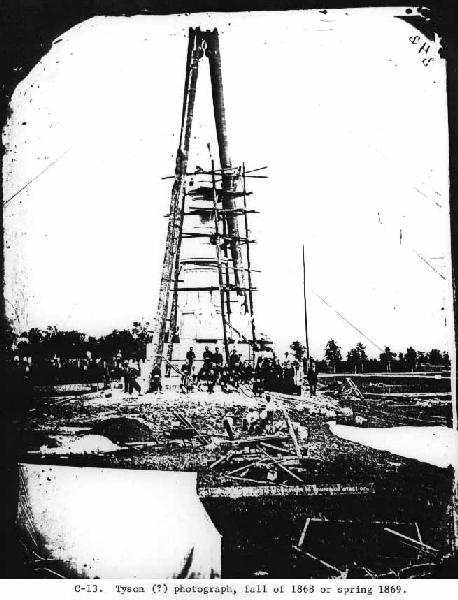
| 1869-07-01 | ۩ The Soldiers' National Monument was dedicated[38] after the crowning statue of the Genius of Liberty had arrived in October 1868.[50] On August 26, the "Plenty" statue was added to the monument,[51] and the "Peace" statue was added between[specify] August 30, 1869,[52] and September 21, 1887.[2] |
| c. 1870 | ۩ The 2nd floor of the stone "gatehouse" (Greek Revival architecture) was expanded with a Mansard roof.[53] |
| 1870-07-14 | "A Resolution Authorizing the Secretary of War to take charge of the Gettysburg and Antietam National Cemeteries" passed.[54] |
| 1871-07-22 | The commissioners met ""to close up the business of the Board preparatory to its transfer to the National Government".[55] |
| 1872-05-01 | Pennsylvania ceded the cemetery to the Department of War[46] (the board of commissioners expired.)[56] |
| 1872-08 | § Charles Stambaugh became the superintendent until July 1873.[20]: 26 |
| 1872-08-31 | ۩ The Reynolds statue cast from bronze cannon tubes[20]: 25 (Robert Wood & Co. foundry, J. Q. A. Ward design) was erected on a dark Quincy granite pedestal.[45]: 17 |
| 1878-10 | ۩ 50 new iron settees were placed in the cemetery.[57] |
| 1879-05 | ۩ The 1st rostrum of 20 ft × 40 ft (6.1 m × 12.2 m) was being completed by P. J. and J. J. Tawney,[58] with 12 brick columns and a 5-foot-high (1.5 m) high floor.[59] In addition to Decoration and Dedication days' observances, the building was used during military camps (e.g.,1882 Camp Burnside)[60] and 1890 Camp Abe Patterson).[61] |
| 1881-06 | † 20 skeletons plowed up on the Gelback Farm along the Emmitsburg Road were reinterred.[62] |
| 1882 | ۩ 17 tablets were erected to display stanzas of Bivouac of the Dead (only 8 remain).[4] |
| 1882-05-10 | † During Grand Central Avenue (now Hancock Avenue) construction, remains of a US soldier found on the Leister Farm were interred in the Cemetery.[63] |
| 1884-11-08 | † First and only African-American veteran of the Civil War, Henry Gooden of the 127th Regiment United States Colored Troops, is buried among U.S. Regulars in the Civil War section. |
| 1887-10-01 | § Battlefield guide[64] and assistant superintendent William Holtzworth replaced Supt. Nicholas G. Wilson who resigned to become the GBMA superintendent.[63] |
| 1889 | † Remains found during avenue construction were reinterred in the cemetery,[65] and the cemetery gate to the Taneytown Road was planned.[66] |
| 1889-09 | Joseph H. Smith constructed the "grand stand…for use on Thursday, Pennsylvania Day – on the large lawn in front of the rostrum".[66] |
| 1890 | ۩ Two "Act of Congress Tablets" were placed in the cemetery to commemorate[4] the February 22, 1867 "act to establish and perfect National Cemeteries"[67] (the congressional reburial program had been resolved on April 13, 1866).[68] |
| 1891-02 | ۩ The cemetery's Taneytown Road (west) entrance was built at the summit curve of the Gettysburg Electric Railway.[69] |
| 1891 | § Calvin Hamilton[70] resigned as[71] local school board president[72] and became the cemetery superintendent after 2 years as assistant to W. D. Holtzworth.[73] |
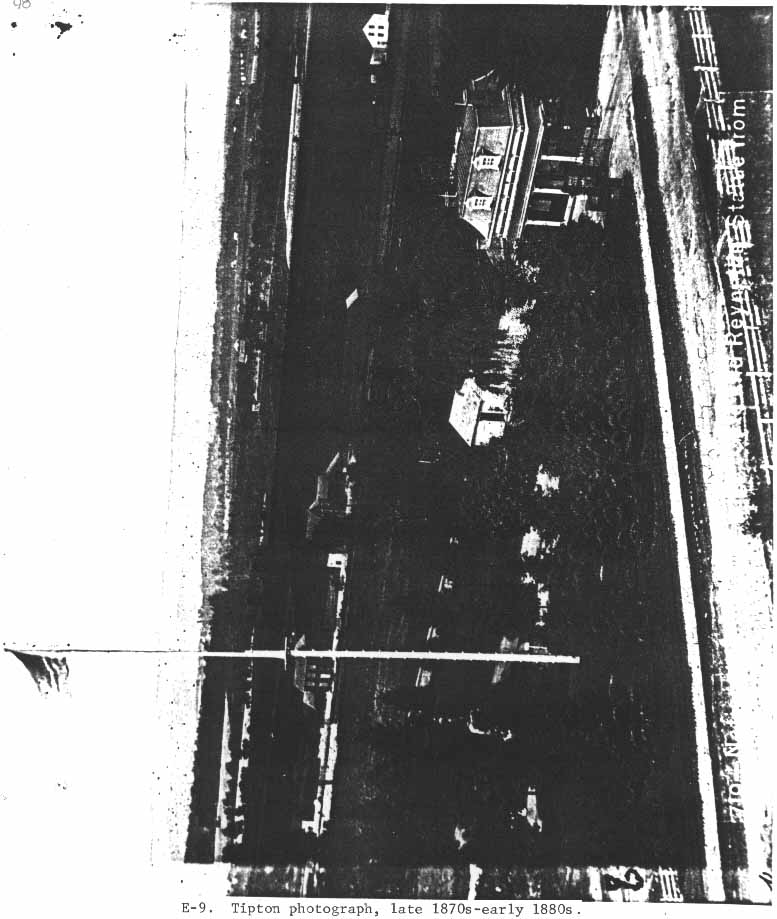
| 1892 | ۩ William H. Tipton photographed the cemetery's summer house[53] near the west gate. |
| 1893-07-02 | ۩ After an October 1890 objection by Wills had been resolved, the Ionic[56] New York State Monument[4] was unveiled[74] with the "statue of “Victory” in the presence of at least 12,000 persons".[75] The ceremony concluded with an artillery salute by Battery C.[76] |
| 1899 | † Remains found at the United Presbyterian Cemetery during construction of the shirt factory were reinterred in the cemetery.[29] |
| 1899-09-23 | † Remains of 18 soldiers found on Culp's Hill were reinterred in the cemetery.[77] |
| 1900 | † Remains found by fence builders on a farm were reinterred in the cemetery.[78] |
| 1903 | ۩ A larger Gettysburg Rostrum was built[79] 36.8 ft × 22 ft (11.2 m × 6.7 m) with a sod platform[4] to replace the original 1879 rostrum. |
| 1904-05-30 | ¶ President Theodore Roosevelt delivered the Decoration Day address[80] after detraining near the McPherson Ridge railway cut.[81] |
| 1905 | The lodge at the Baltimore Pike entrance was dismantled[82] (teacher Ruth Hamilton at the High Street School had lived at the lodge).[83] |
| 1906 | ۩ $6000 was appropriated for a new lodge for the superintendent[84] (Wm. H. Johns was the contractor).[85] |
| 1908 | First placement of memorial flags on graves.[86] |
| 1912-01-24 | ۩ The Lincoln Address Memorial was erected on the cemetery grounds "near site of original summer house".[4] |
| [specify] | "A 205' macadam roadway [was] graded and piked around the Lincoln Memorial in 1909 [sic]."[26] |
| 1914-04 | § Major M. M. Jefferys succeeded Calvin Hamilton as superintendent[87][88] and the Jefferys family moved into the lodge.[89] |
| 1915-05 | The "Three-Mile Picture Show" named for the length of film recorded wreath-laying at the Lincoln Address Memorial by local "colored residents".[90][91] |
| 1915-05-06 | † Remains of a soldier discovered at Menchey's Spring on the base of East Cemetery Hill were reinterred in the cemetery.[91][92] |
| 1915-05 | § Acting superintendent Harry E. Koch replaced[93] Major Jefferys who resigned during illness while at "Johns Hopkins hospital".[91] |
| 1915-09 | § Superintendent Austin. J. Chapman (1915 to 1918)[94] prohibited hackmans' jitneys from carrying more than 15 persons into the cemetery.[95] |
| 1928 | ¶ President Calvin Coolidge delivered the Memorial Day address in the rostrum.[96] |
| 1928-09 | ۩ The brick comfort station at the cemetery opened.[97] It was closed in 1931.[98] (The 1st Gettysburg Parkitecture comfort station was built in 1933.)[99] |
| 1930 | ¶ President Herbert Hoover delivered the Memorial Day address at the rostrum that had been temporarily extended by Army Quartermasters.[100] |
| 1930-08-31 | § James W. Bodley retired after serving as superintendent since 1918.[101] |
| 1933-06-10 | Executive Order 6166 combined management of the cemetery and military park with the Department of the Interior[20]: viii (Nine other cemeteries were transferred on July 28.)[68] |
| 1933 | ۩ Lafayette Square fencing was moved to the cemetery[102] after 1888 legislation had moved it[58] to East Cemetery Hill in 1889[103] (installed by Calvin Gilbert).[63] |
| 1936 | † A U.S. Colored Infantry soldier who died after the Civil War was reinterred from Yellow Hill Cemetery (Biglerville) into the cemetery.[104] |
| 1938 | The National Park Service planted 200 rhododendron plants in the cemetery.[40] |
| 1942 | § Captain Earl Taute was the cemetery superintendent.[105] |
| 1947/48 | † 850 World War II dead were reinterred "from European and South Pacific theaters".[106] |
| 1949 | Federal appropriations of $10,000 was planned to add 5 acres (2.0 ha) to the cemetery.[107] |
| 1955 | ۩ The American Legion Tablet was placed in the cemetery to honor the "efforts of American fighting forces in preservation of freedom of all men."[4] |
| 1955 | The Oscar-nominated The Battle of Gettysburg documentary filmed the cemetery. |
| 1963 | ¶ President Dwight D. Eisenhower was a dignitary in the Remembrance Day activities at the cemetery. |
| 1963-11-19 | Bethlehem Steel deeded 5 acres (2.0 ha) "to enlarge the present cemetery"[108][109] during a luncheon for the Lincoln Fellowship's 25th anniversary.[110] |
| 1967-04-15 | A design for the annex between the north wall of the cemetery and Steinwehr Avenue had plans for 1666 graves.[111] |
| 1968-02 | † The first burial was completed at the annex (a 22-car parking lot had been contracted on January 23, 1968).[112] |
| [when?] | † The last interment was made in the original cemetery area[112] (closed October 27, 1972, except for spouse interments). |
| 1972 | The last formal speaker for a Decoration Day ceremony at the cemetery was in the rostrum.[113] |
| 1976–08 | The National Park Service acquired the 4th of 6 houses along Steinwehr Avenue east of the Taneytown Road for the cemetery annex.[114] |
| 1980 | ۩ The cemetery's 1864 stone walls were reconstructed.[115] |
| 1993-08-21 | ۩ The Friend to Friend Masonic Memorial in the annex was dedicated by the Grand Lodge of Pennsylvania. |
| 1997-07-01 | † Remains of a soldier discovered in 1996[116] during Seminary Ridge excavation[117] were interred in the cemetery.[118] |
References
[edit]- ^ a b Reid, Whitelaw. "title tbd". Cincinnati Daily Gazette.
The stand was erected on the spot where the monument is to be built, in front of which are two semi-circular sections.
(cited by Tilberg 1970) Klement pp. 186–67, reference 23 cites Tilberg's "summary of study of location of Gettysburg Address platform" – perhaps referring to Tilberg's newspaper article:- Tilberg, Frederick (February 7, 1970). "Dr. Tilberg Defends Site Of National Monument As Spot Where Lincoln Stood" (Google News Archive). Gettysburg Times. Times and News Publishing Company. Retrieved March 20, 2012.
- ^ a b "Soldier's National Cemetery" (Google News Archive). The Wayne County Democrat. September 21, 1887. Retrieved February 25, 2012.
…slain in the first day's battle and had lain for days [behind enemy lines] in the sun and rain until recognition was impossible.
- ^ a b c d "Soldiers' National Cemetery at Gettysburg". CivilWarWiki.net. Archived from the original on July 9, 2020. Retrieved June 16, 2011.
- ^ a b c d e f g "GETT List of Classified Structures". www.hscl.cr.nps.gov. National Park Service. Archived from the original (NPS.gov HSCL[specify] website) on September 24, 2015. Retrieved March 22, 2012.
- Buildings: National Cemetery Rostrum,ArchivedArchived 2015-09-24 at the Wayback Machine …
- Monuments: "Lincoln Address Memorial (MN281)". Archived from the original on July 21, 2011. Retrieved February 13, 2011., "New York State Monument (MN289)". Archived from the original on September 17, 2012. Retrieved July 8, 2011., Reynolds Statue Archived 2015-09-24 at the Wayback Machine
- Other: "Act of Congress Tablets". Archived from the original on September 24, 2015. Retrieved March 22, 2012., American Legion Tablet, "Bivouac of the Dead Markers (CM08)". Archived from the original on September 24, 2015. Retrieved March 22, 2012.
- ^ National Park Service. "National Cemetery Walking Tour" (PDF). Archived from the original (PDF) on February 15, 2010. Retrieved June 12, 2012.
- ^ Rainey, Reuben (1995). "Saunders, William b. 1822, d. 1900". In Birnbaum, Charles A. (ed.). Pioneers of American Landscape Design II: An Annotated Bibliography. U.S. Department of the Interior. pp. 132–137. ISBN 0-16-048060-4.
 This article incorporates text from this source, which is in the public domain.
- ^ a b Becker, Joseph (November 1863), sketch of Cemetery Hill
- ^ a b c d e f g "Report of David Wills". Revised Report. pp. 4–tbd.
- ^ Wert, J. Howard (1886). A Complete Hand-Book of the Monuments and Indications and Guide to the Positions on the Gettysburg Battle-Field (Google Books). B.M. Sturgeon & Co. p. 93. Retrieved March 2, 2012.
The heavy rains that followed the battle washed down and lodged in these [Valley of Death] places other corpses from positions higher up the flat. These bodies were never recovered, but gradually decomposed, whilst the bones were washed away or covered with rubbish.
- ^ Adams, II, Charles J. (June 29, 2000). "National cemetery a somber stop" (Google News Archive). Reading Eagle. Retrieved March 22, 2012.
the Soldiers' National Monument now towers over the well-manicured lawn of what was once a cornfield and apple orchard.
{{cite news}}: CS1 maint: multiple names: authors list (link) - ^ Dreese, Michael A. (2002). The Hospital on Seminary Ridge at the Battle of Gettysburg (Google Books). McFarland. p. 130. ISBN 9780786412242. Retrieved February 25, 2012.
- ^ "Battle of Gettysburg" (Google News Archive). The Compiler. July 20, 1863. Retrieved February 26, 2012.
The Federal soldiers in the [Evergreen] Cemetery laid many of the tombsones on the ground to prevent injury… Thursday [July 2] Confederates…had their sharpshooters…picking off Federal soldiers on the hills [sic] to the north of the cemetery.
- ^ "Care of wounded after Battle of Gettysburg". The Gettysburg Times. July 14, 1986. p. 8. Retrieved March 12, 2012.
- ^ a b "Consecration of the Soldiers' National Cemetery at Gettysburg" (Google News Archive). The Adams Sentinel. November 24, 1863. Retrieved March 10, 2012.
…rows of graves ranged along the line of the stone or wooden fences
- ^ "The Adams Centinel" – via Google News Archive Search.
- ^ "OUR GETTYSBURG CORRESPONDENCE; the Last of the Dead Buried – Condition of the Wounded – The Battle-field and Relic Gatherers". The New York Times. July 15, 1863.
- ^ a b McConaughy, David (August 5, 1863), [letter to Governor Andrew Curtin] (negative photocopy), Gettysburg Museum and Visitor Center vertical files: David Wills correspondence
{{citation}}: CS1 maint: location missing publisher (link) (cited by GDG.org: The Development of the National Cemetery) - ^ "More Exempts from the Draft". The Baltimore Sun. September 16, 1863. Retrieved January 23, 2011.
the heights of Cemetery Hill and the granite spur of Round Top … purchased by Mr. D. McConaughy.
- ^ "The Compiler" – via Google News Archive Search.
- ^ a b c d e f g h Unrau, Harlan D (July 1991) [December 1865 complete draft]. administrative history, Gettysburg National Military Park (PDF) (Report). Denver, CO: National Park Service. OCLC 24228617. Archived from the original ("B&W Scan" of copy D-44) on October 20, 2012. Retrieved March 10, 2012.
McConaughy, who held key topographic features of the battlefield in trust for the GBMA, was reimbursed for his prior purchases from commonwealth appropriations in 1867–68
(cf. HAER No. 485 p. 43 claims McConaughy was paid in 1868 when the GBMA received $6,000 from the state.) - ^ Cross, Rev. Andrew B. (July 25, 1863), letter for newspaper publication (letter republished in report), retrieved March 9, 2012,
Shall the bones of those who turned the battle from the gate in that fearful struggle of three days at Gettysburg be left for men to plough up in their fields and to wagon over on the roads around that town?
(letter included in report, p. 60) - ^ "For Sale or Rent" (Google News Archive). The Star and Sentinel. January 2, 1900. Retrieved March 6, 2012.
For Sale or Rent. – My Property on Baltimore pike, below Evergreen Cemetery, right hand side; 10 acres, improved with 2-story House, Stable, Hog Pen, &c. Lot of Fruit, never-failing well of Water at Kitchen door. Peter Thorn, Residence on Middle St., next door Dr. Diehl's office. 12-12-4f.
- ^ "The Adams Centinel" – via Google News Archive Search.
- ^ "This Grand National Enterprise".
- ^ Murphy, Jim (1992). The Long Road to Gettysburg. New York: Clarion Books. pp. 98–9. ISBN 0-395-55965-0.
- ^ a b Gettysburg National Military Park Tour Roads (PDF). Historic American Engineering Record (Report). Archived from the original (PDF) on May 16, 2014. Retrieved March 22, 2012.
- ^ Wills request for proposals from contractors to reinter the dead[full citation needed]
- ^ "Gettysburg: Tiny Pennsylvania Town Teaches a Powerful Lesson in History". Deseret News. Salt Lake City. June 25, 2000.
A cornfield was turned into a cemetery for 3654 known Union soldiers.
- ^ a b Amrhein, Elizabeth (Fall 2009). Hidden in Plain Sight…Ice House Complex (PDF) (Report). Archived from the original (PDF) on April 2, 2015. Retrieved March 22, 2012.
In 1899, [sic] soldier remains were unearthed in preparation for construction of the new shirt factory.14 These remains were moved to the National Cemetery
- ^ "Archived copy". Archived from the original on September 24, 2015. Retrieved March 22, 2012.
{{cite web}}: CS1 maint: archived copy as title (link) - ^ "→A beautiful Pole…" (Google News Archive). The Adams Sentinel. November 17, 1863. Retrieved March 12, 2012.
- ^ Selleck, W. Y. ("purported to have been written by"), holograph text,
The stand on which President Lincoln stood…was 12 ft. wide and 20 ft. long, and facing to the North West. It was located 40 feet North East of the outer circle of Soldiers' Graves as shown by pencil mark
(cited by Tilberg 1970) - ^ Carr, Clark E. Lincoln at Gettysburg: An Address. Chicago: A. C. McClurg. Retrieved March 1, 2012.
I was able to have placed the Illinois section… On one side of our Illinois section is a large one, containing the graves of the unknown, and on the other that of the State of Virginia. It was upon the ground in the centre reserved for the monument that the platform from which the addresses were delivered was placed. This platform fronted away from the cemetery proper, giving room for the vast audience of people in front of and facing it.
- ^ "Digitool | Becker Collection". Archived from the original on November 28, 2010. Retrieved January 29, 2019.
- ^ "The Dead on the Battle-field" (Google News Archive). The Compiler. December 7, 1863. Retrieved February 25, 2012.
- ^ "The Providence Evening Press" – via Google News Archive Search.
- ^ "The Compiler" – via Google News Archive Search.
- ^ a b Own, Our (June 26, 1869). "Gettysburg: Preparations for the Dedication of the Soldiers' Monument" (PDF). New York Times. Retrieved June 16, 2011.
- ^ c. 1916 local Gettysburg newspaper item reporting Major Tate's annual visit (e.g., Gettysburg Times)[full citation needed]
- ^ a b "The Development of the National Cemetery". GDG.org – Gettysburg Discussion Group website. Retrieved March 12, 2012. citing for quotation:
- "David McConaughy to Governor Andrew Curtin, August 5, 1863 (negative photocopy, David Wills correspondence, GNMP vertical files): "We agree to sell to the state or states nine acres between the Cemetery and the Taneytown road, at $200.00 per acre – the states to enclose this land on that Road, and on North and South, but not on side adjoining the Cemetery – the grounds to be used for burial of the soldier dead of all the states."
- ^ "List of Classified Structures". Archived from the original on September 17, 2012.
- ^ Eicher, David (May 1, 2003). Gettysburg Battlefield: The Definitive Illustrated History. Chronicle Books. ISBN 9780811828680.
- ^ "Plan $50,000 Battlefield Project Here" (Google News Archive). Gettysburg Times. July 16, 1934. Retrieved March 2, 2012.
work on the re-setting of 5,200 feet of head stones in the National cemetery will ge under way within a week … many of which are either leaning or have fallen over altogether, will be reset in concrete. … The work will be done by enrollees of the two civilian conservation corps camps on the battlefield
- ^ "Baltimore American" – via Google News Archive Search.
- ^ a b Bartlett, John Russell, ed. (1874). "Oration of Governor O. P. Morton". The Soldiers' National Cemetery at Gettysburg…the Monument…dedication (Google Books). Providence, Rhode Island.
for distribution to the Board of Commissioners of the Cemetery.
{{cite book}}: CS1 maint: location missing publisher (link) - ^ a b Sellars, Richard West (Winter 2005). Pilgrim Places: Civil War Battlefields, Historic Preservation, and America's FirstNational Military Parks, 1863–1900 (PDF). CRM (Report). Archived from the original (PDF) on November 5, 2012. Retrieved March 22, 2012.
- ^ "Monuments and Entertainments" (Google News pay-per-view)). Detroit Free Press. June 21, 1867. Retrieved February 25, 2012.
- ^ a b "Visit of Gen. Grant and Gov. Geary & Meeting of the Board of Managers of the Soldiers' National Cemetery" (Google News Archive). The Star and Sentinel. June 26, 1867. Retrieved March 12, 2012.
- ^ "1st Minnesota".
- ^ "The Star and Sentinel" – via Google News Archive Search.
- ^ "Gettysburg: The Reunion on the Field…" (PDF). New York Times. August 27, 1869. visited the apple orchard,[where?] peach orchard, wheatfield, Round Top… The positions of the above-named corps were fixed. … Over one hundred stakes were driven at important points. … and the places where General Sickles, Hancock and Graham were wounded… General Hll…fixed the position…which opened the battle… The hop at the Springs Hotel…netted about $200, which is to be devoted to the Soldiers' Home, near Cemetery Hill. Retrieved July 7, 2011.
- ^ "Gettysburg" (Google News Archive). The Pittsburgh Gazette. August 30, 1869. Retrieved February 25, 2012.
The battle monument is not yet finished
- ^ a b "Photographs".
- ^ 16 Stat. 390[full citation needed]
- ^ "The Star and Sentinel" – via Google News Archive Search.
- ^ a b "New-York at Gettysburg: The Monument Question Settled at Last" (PDF). The New York Times. March 1, 1891. Retrieved March 2, 2012.
Wills indited to the Secretary of War…occupation of any portion of the cemetery by…any particular State for memorial structures.
- ^ "Gettysburg Compiler" – via Google News Archive Search.
- ^ a b "Maintenance by the War Department". GDG.org – Gettysburg Discussion Group website. pp. 12–23. Retrieved March 12, 2012.
- ^ "Gettysburg Compiler" – via Google News Archive Search.
- ^ "Gettysburg Compiler" – via Google News Archive Search.
- ^ "Veterans At Gettysburg" (PDF). The New York Times. September 1, 1890.
- ^ [link removed]
- ^ a b c "Minute Book, Gettysburg Battlefield Memorial Association, 1872–1895" (GDG.org webpage). Gettysburg Battlefield Memorial Association. 1982. Retrieved March 2, 2012.
July 23rd 1880. Board met at the Head-Quarters of the Grand Army of the Republic on East Cemetery Hill. … July 12, 1889 … sealed proposals for…the erection of a gate way at Hancock Avenue.
- ^ "Town and Country" (Google News Archive). Gettysburg Compiler. October 4, 1887. Retrieved July 7, 2011.
Major Wm. D. Holtzworth, the well-known Battlefield Guide, has been appointed by the War Department.
col. 2 - ^ "Gettysburg Compiler" – via Google News Archive Search.
- ^ a b "Gettysburg Compiler" – via Google News Archive Search.
- ^ "The Star and Sentinel" – via Google News Archive Search.
- ^ a b "Appendix I: VI. National Cemeteries" (PDF). title tbd (Report). p. 595. Retrieved March 12, 2012.
By the end of the Civil War, 14 national cemeteries had been established pursuant to this act; however, none of these original 14 remains in the jurisdiction of the National Park.
- ^ …Battle Field of Gettysburg (Map). New York: Julius Bien & Co. Lith. 1904. Gettysburg Park Commission (Nicholson, John P; Cope, Emmor; Hammond, Schuyler A).
- ^ "Adams County News" – via Google News Archive Search.
- ^ "Calvin Hamilton has resigned the principalship of the public schools of this place to accept the office of assistant superintendent of the national cemetery here". The Sun. August 31, 1889.
- ^ "Gettysburg Times" – via Google News Archive Search.
- ^ "New Oxford Item" – via Google News Archive Search.
- ^ "New York State Monument at Gettysburg Nat'l Military Park in Gettysburg, Pennsylvania by Casper Buberl".
- ^ "Honors for the Hero Dead" (PDF). New York Times. July 3, 1893. Retrieved June 23, 2011.
at the spot where Gen. Greene's brigade, 1,300 strong, repelled Johnston's Confederate division, which numbered at least 10,000.
- ^ Newspaper clipping timesmachine.nytimes.com July 3, 1893 Retrieved May 27, 2023
- ^ "The Star and Sentinel" – via Google News Archive Search.
- ^ Nasby, Dolly (2005). Gettysburg (Google Books). Arcadia Publishing. ISBN 0-7385-3651-2. Retrieved March 12, 2012.
Fence builders in 1900 came upon the remains of soldiers who had been buried on this farm.
- ^ "Rostrum in Soldiers' National Cemetery, Gettysburg Print". www.encore-editions.com. Retrieved May 22, 2022.
{{cite web}}: CS1 maint: deprecated archival service (link) - ^ [link removed]
- ^ "Gettysburg Compiler" – via Google News Archive Search.
- ^ "A Battlefield Visitor: Sees an Unsightly Object in Going Over Field" (Google News Archive). Gettysburg Compiler. July 26, 1905. Retrieved March 10, 2012.
entrance way disfigured for years with a partly dismantled lodge.
- ^ "Gettysburg Times" – via Google News Archive Search.
- ^ "Money for Battlefield" (Google News Archive). New Oxford Item. July 22, 1906. Retrieved February 25, 2012.
…appropriation for the construction of roads in Cumberland township, which, owing to the fact that the Lutheran seminary, Pennsylvania college and County Almshouse, as well as the great amount of government property situated therein, gives this township very little or no revenue in the matter of taxation, as all the above institutions are exempt from taxation.
- ^ "The Star and Sentinel" – via Google News Archive Search.
- ^ "The Star and Sentinel" – via Google News Archive Search.
- ^ "Gettysburg Times" – via Google News Archive Search.
- ^ "Adams County News" – via Google News Archive Search.
- ^ "The Free Lance" – via Google News Archive Search.
- ^ "Lincoln Memorial to be Scene of Film Feature" (Google News Archive). The Star and Sentinel. May 22, 1915. Retrieved April 12, 2011.
for photographing the Lincoln mounment [sic] in the upper end of the National cemetery and as the picture is being taken a number of colored residents of town will pass before it and each will lay a wreath of flowers on the monument of the emancipator of their race.
- ^ a b c "Include Gettysburg in Big "Movie"…, Will Bury Skeleton Dug Up…, & Major Jefferys to Resign Soon…" (Google News Archive). The Star and Sentinel. May 7, 1915. Retrieved March 10, 2012.
- ^ "Found Soldier's Bones: Will be Given Burial in the National Cemetery" (Google News Archive). Adams County News. May 8, 1915. Retrieved March 12, 2012.
repairing a pipe wall at the foot of East Cemetery Hill, unearthed the remains of a Union soldier, Thursday. Embedded in one of the bones of the forearm was a bullet.
- ^ "The Star and Sentinel" – via Google News Archive Search.
- ^ "Gettysburg Times" – via Google News Archive Search.
- ^ "Adams County News" – via Google News Archive Search.
- ^ "Gettysburg Times" – via Google News Archive Search.
- ^ "Comfort Station For Military Park" (Google News Archive). Gettysburg Times. Times and News Publishing Company. September 24, 1928. Retrieved March 21, 2012.
The first modern public comfort station in the national military park reservation was opened Saturday in the national cemetery.
(reprinted in 1943) - ^ "The Star and Sentinel" – via Google News Archive Search.
- ^ "New Comfort Station to be Built on Field" (Google News Archive). Gettysburg Times. May 5, 1933. Retrieved April 11, 2011.
- ^ "Gettysburg Times" – via Google News Archive Search.
- ^ "Gettysburg Compiler" – via Google News Archive Search.
- ^ "List of Classified Structures". Archived from the original on September 17, 2012. Retrieved July 8, 2011.
- ^ "Gettysburg Compiler" – via Google News Archive Search.
- ^ "Pennsylvania Grand Review » Charles H. Parker, 3rd Regiment U.S.C.T".
- ^ "The Star and Sentinel" – via Google News Archive Search.
- ^ Pyle, Michaela S. (April 22, 1965). "Expansion Problem May Curtail Gettysburg Burials" (Google News Archive). The Washington Observer. Retrieved March 22, 2012.
Of the 24 sections in the cemetery, 18 are filled with Union Civil War dead.
- ^ "Gettysburg Times" – via Google News Archive Search.
- ^ "Steel Firm to Give Land for Cemetery" (Google News Archive). The Gettysburg Times. November 16, 1963. Retrieved March 12, 2012.
- ^ "Gettysburg Times" – via Google News Archive Search.
- ^ "Gettysburg Times" – via Google News Archive Search.
- ^ "Gettysburg Times" – via Google News Archive Search.
- ^ a b "Gettysburg Times" – via Google News Archive Search.
- ^ "Gettysburg Times" – via Google News Archive Search.
- ^ "Start Razing Battlefield Motel Units" (Google News Archive). Gettysburg Times. August 28, 1976. Retrieved February 25, 2012.
- ^ "List of Classified Structures". Archived from the original on September 17, 2012. Retrieved July 8, 2011.
- ^ "The Gettysburg Times News & Weather". Archived from the original on March 18, 2012. Retrieved March 22, 2012.
- ^ O'Mara, Richard (July 2, 1997). "Unknown but not forgotten". The Baltimore Sun.
- ^ "Google News". August 24, 2023.


Further reading
[edit]- Fuoss, Jarrad; Frederick, Jared (Forward) (2020). Soldiers National Cemetery at Gettysburg. Charleston, SC: Arcadia Press (Images of America). ISBN 978-1467104852.
External links
[edit]
- National Park Service: Gettysburg National Cemetery
- Finding Aid for Correspondence and Printed Material on Gettysburg National Cemetery, Special Collections, Linderman Library, Lehigh University. Archived May 10, 2015, at the Wayback Machine
- The Soldiers' National Cemetery at Gettysburg (1874) by John Russell Bartlett
- U.S. Geological Survey Geographic Names Information System: Soldiers National Cemetery at Gettysburg
- Historic American Landscapes Survey (HALS) No. PA-28, "Gettysburg National Cemetery, Taneytown Road and Baltimore Pike, Gettysburg, Adams County, PA", 48 photos, 3 photo caption pages
| Campaigns and battles | |
|---|---|
| Fights and skirmishes | |
| Cities and counties | |
| Units and people | |
| Posts and hospitals | |
| Manufacturers | |
Civil War museums and historic sites | |
| Monuments and memorials | |


| International | |
|---|---|
| National | |
| Other | |


Gettysburg National Cemetery
View on GrokipediaPhysical Description and Layout
Site Features and Boundaries
Gettysburg National Cemetery occupies an irregular boundary within Gettysburg National Military Park, delineated by Steinwehr Avenue (U.S. 15 Business, also known as Emmitsburg Road) to the north, Baltimore Street to the east, the adjacent Evergreen Cemetery along the east and south, and Taneytown Road to the west.[5] The site encompasses 21.8 acres in total, comprising the original 17 acres acquired in 1863 for initial burials and a 5-acre annex added between 1968 and 1993 for later interments.[5] [6] The cemetery is situated on Cemetery Hill at an elevation of approximately 620 feet, forming the northern terminus of Cemetery Ridge, with terrain featuring a subtle rise toward the center and open lawns interspersed with burial areas.[5] Enclosures include a perimeter iron fence installed in 1934, sourced from Lafayette Square in Washington, D.C., which replaced earlier boundaries; original stone walls and low pipe-rail fences along parts of the Evergreen Cemetery edge were later augmented with taller iron fencing.[5] Gates at Baltimore Street and Taneytown Road, originally ornate, were simplified following road widenings.[5] Key site features encompass winding drives designed in a naturalistic style by landscape architect William Saunders, radial paths leading to a central semi-circular burial arrangement in the original section, and specimen trees such as Norway spruce along the perimeter and deciduous groves within.[5] The annex adopts a more formal lawn-style layout with its own semi-circular burial area and central monument, reflecting mid-20th-century national cemetery standards.[5] These elements contribute to a protected historic landscape emphasizing seclusion and commemoration, with subtle modifications from regrading efforts in 1935 that leveled earlier mounded earth from wartime interments.[5]Grave Arrangement and Sections
The original Civil War burials in Gettysburg National Cemetery occupy a central semi-circular area, with graves arranged in concentric rows radiating outward from the Soldiers' National Monument at the core.[7] This layout, devised by landscape architect William Saunders in 1863, organizes interments primarily by state of origin and military corps affiliation, positioning sections for smaller states closer to the monument while placing those for larger states along the outer perimeter.[8] The design encompasses approximately 3,500 Union soldiers from the Battle of Gettysburg, including 979 unknowns, with headstones laid flat to evoke a sense of equality in death.[3] Grave markers consist of three principal types: larger granite blocks delineating state sections, smaller individual tablets engraved with the soldier's name, rank, company, regiment, and state (where identified), and plain stones for unknowns inscribed simply as "Unknown" or with sequential numbers.[4] Sections are typically lettered or numbered, such as Pennsylvania in Section A or New York in Section B, facilitating location via rosters that list graves sequentially within each plot—starting from section markers and counting along rows toward the monument.[9] Adjoining the original semi-circle are peripheral sections dedicated to veterans of subsequent conflicts, including the Spanish-American War, World War I, World War II (with 590 burials), the Korean War, and the Vietnam War.[1][10] These extensions, located primarily toward the cemetery's southern boundary, maintain uniform headstone styles compliant with later national cemetery standards but diverge from the state-grouped Civil War pattern, instead following chronological or service-branch organization.[2] The full site now holds over 6,000 interments, underscoring its evolution from a Gettysburg-specific repository to a broader national military necropolis.[1]Historical Establishment
Post-Battle Burial Crisis
Following the cessation of hostilities on July 3, 1863, an estimated 7,000 soldiers—approximately 3,155 Union and 4,700 Confederate—lay dead across the Gettysburg battlefield, alongside thousands of slain horses.[11][12] An informal armistice on July 4 enabled burial parties, primarily from Union forces, to inter both sides' remains in shallow, often unmarked trenches, with initial efforts extending from dusk until midnight.[13] The sheer volume, however, rendered the task incomplete, leaving many bodies exposed or hastily covered without regard for identification or separation by affiliation.[3] Summer temperatures hastened decomposition, causing corpses to bloat, rupture, and emit overpowering odors that blanketed the area, raising acute fears of epidemics such as cholera among residents and lingering troops.[14] Torrential rains soon after the battle inundated shallow graves, eroding earth and exposing remains, while scavenging animals like hogs rooted up sites, further desecrating the dead.[8][15] By mid-July, advanced putrefaction in some cases precluded direct handling, necessitating aids such as fence posts to maneuver bloated forms into adjacent pits.[13] The resulting sanitary emergency and moral outrage overwhelmed local resources, compelling intervention from state authorities; Pennsylvania Governor Andrew G. Curtin arrived at Gettysburg soon after the battle, surveying the devastation of ruined properties, overwhelmed field hospitals, and proliferating shallow burials.[2] Curtin's observations underscored the inadequacy of battlefield interments for Union soldiers, spurring his administration to commission a permanent repository—initially through agent David Wills—to consolidate and honor the fallen, thereby averting ongoing health hazards and providing dignified reinterment.[16] This initiative addressed the crisis by prioritizing Union dead, whose remains numbered over 3,500 for eventual relocation, while Confederate burials remained largely in transient trenches or local plots.[17]Site Selection and Acquisition
Following the Battle of Gettysburg from July 1 to 3, 1863, Pennsylvania Governor Andrew Gregg Curtin visited the battlefield and observed the inadequate shallow burials of Union soldiers, which were being exposed by rainfall and posing health risks.[2] On July 24, 1863, Curtin appointed Gettysburg attorney David Wills as his agent to acquire land for a dedicated cemetery to consolidate and properly inter the approximately 3,600 Union dead scattered across the fields.[2] [3] Wills selected the eastern slope of Cemetery Hill, a prominent high-ground position central to the Union defensive lines during the battle and adjacent to the private Evergreen Cemetery.[3] This location was chosen for its strategic significance in repelling Confederate assaults, its visibility over the fields targeted by Pickett's Charge on July 3, and its suitability for a dignified, accessible memorial site that honored the fallen without encroaching on existing private burials.[3] [18] By early August 1863, Wills had secured approximately 17 acres through purchases from private landowners, funded initially by the state of Pennsylvania, with the tract designed to accommodate semi-circular arrangements of graves by state.[3] [2] To refine the layout, Wills consulted landscape architect William Saunders, who advised acquiring an additional five acres to ensure adequate space for burials and a central monument, expanding the site accordingly.[19] The acquisition process proceeded rapidly amid the post-battle crisis, prioritizing Union remains exclusively, as Confederate dead were left to Southern states or local handling.[3] This state-led initiative laid the foundation for federal oversight, with the cemetery later incorporated into the national system.[2]Reinterment Operations
Exhumation and Relocation Process
David Wills, appointed by Pennsylvania Governor Andrew G. Curtin as the agent for establishing the cemetery, coordinated the exhumation efforts by soliciting bids from contractors and hiring Samuel Weaver, a local justice of the peace and photographer, to superintend the process of disinterment, identification, and reinterment.[20] Weaver's role involved personally supervising workers to ensure bodies were properly exhumed from temporary battlefield graves, examined for identification markers such as uniform buttons or clothing remnants, and placed into wooden coffins before transport to the cemetery site.[20] [3] Exhumations commenced on October 27, 1863, after an initial attempt in August was halted due to advanced decomposition in the summer heat, and continued until March 18, 1864, with contractors like Frederick Biesecker's team and local laborers, including African Americans, handling the physical disinterment at a rate not exceeding 100 bodies per day to maintain order and respect.[20] Each exhumed body was coffined on-site, with any personal effects—totaling 287 packages such as letters, photographs, or money—cataloged and stored for potential claims by relatives, reflecting Weaver's meticulous documentation to aid identification amid the chaos of hasty post-battle burials.[20] [3] The relocated remains, exclusively those of Union soldiers numbering 3,354 in total (of which 979 could not be identified by name, unit, or state), were transported by wagon to the 17-acre cemetery plot adjacent to Evergreen Cemetery and reburied in semi-circular sections arranged by state affiliation, centering on a planned monument site as designed by landscape architect William Saunders.[20] [3] This structured relocation prioritized Union dead only, leaving Confederate remains in their original battlefield graves or subject to later private exhumations funded by Southern states, underscoring the cemetery's establishment as a federal honor for Northern casualties.[20] Challenges included the difficulty of distinguishing fragmented remains and verifying identities without reliable records, compounded by the passage of months since the July 1–3, 1863, battle, which Weaver addressed through on-site inspections and record-keeping.[20]Identification Challenges and Unknowns
Initial battlefield burials following the Battle of Gettysburg, conducted hastily amid decomposition and chaos from July 1–3, 1863, often lacked identification markers, complicating later reinterment efforts. Soldiers were interred in shallow trenches or individual graves without systematic recording of names, units, or locations, as burial parties prioritized speed over documentation amid the summer heat accelerating decay.[21][3] Reinterment teams, operating from 1863 into 1864 under the oversight of the United States Christian Commission and state agents, encountered severe obstacles including fragmented skeletons, eroded wooden headboards, and vanished personal effects like letters or photographs that might have aided identification. Mass graves yielded multiple commingled remains, while individual sites revealed only uniform buttons or belt buckles suggesting state affiliation but rarely personal identity. Efforts to match exhumed bodies against missing soldiers' rolls proved unreliable due to incomplete wartime records and the absence of standardized identification like dog tags.[22][21] Consequently, of the approximately 3,512 Civil War interments in the cemetery, 979 soldiers remain unidentified, buried in designated "Unknown" sections arranged by inferred state based on artifacts when possible. Some were named but unassigned to a state, marked simply as "UNKNOWN" with numerical designations on headstones. These unknowns, presumed Union based on burial context, highlight the era's limitations in forensic recovery, with granite bands later distinguishing their graves.[7][3]Dedication Ceremony
Planning and Key Participants
David Wills, a Gettysburg attorney appointed by Pennsylvania Governor Andrew Gregg Curtin as the state's agent for battlefield burials, spearheaded the planning for the cemetery's dedication to consecrate the grounds amid ongoing reinterments.[2] As president of the Soldiers' National Cemetery Association, Wills coordinated logistics, including site preparation on the partially completed grounds and arrangements for a large procession and platform for speakers, drawing from funds disbursed by participating states.[23] The event was scheduled for November 19, 1863, after a postponement from October to allow principal orator Edward Everett sufficient preparation time for his address.[24] Wills personally invited Edward Everett, a former U.S. Secretary of State, ambassador to Britain, and Harvard president renowned for his oratorical prowess, to deliver the main two-hour speech honoring the Union dead.[25] Complementing this, Wills wrote to President Abraham Lincoln on November 2, 1863, requesting "a few appropriate remarks" to formally dedicate the cemetery, positioning Lincoln as a secondary speaker.[26] The ceremony featured prominent participants beyond the speakers, including Governor Curtin, representatives from 18 states funding the cemetery, and Major General George G. Meade, who led the grand procession of military units, clergy, and civilians estimated at 15,000 to 20,000 attendees.[27] Music was provided by Birgwa's Band of Philadelphia and the U.S. Marine Band, with Reverend Franklin B. Hummer offering the opening prayer.[3]Abraham Lincoln's Gettysburg Address
Abraham Lincoln delivered the Gettysburg Address on November 19, 1863, as the concluding remarks at the dedication ceremony for the Soldiers' National Cemetery in Gettysburg, Pennsylvania.[28] The invitation came from David Wills, a Gettysburg attorney appointed as the Pennsylvania state agent overseeing the cemetery's establishment, who formally requested Lincoln's participation in a letter dated November 2, 1863.[29] Lincoln arrived in Gettysburg the previous evening, staying at Wills's home, and revised his speech before speaking from a wooden platform on the cemetery grounds after Edward Everett's two-hour oration.[8] The address, lasting approximately two minutes, articulated the Civil War's stakes in preserving the Union and the sacrifices of soldiers, emphasizing democratic principles. Lincoln's text, as delivered, reads:Four score and seven years ago our fathers brought forth on this continent, a new nation, conceived in Liberty, and dedicated to the proposition that all men are created equal.Contemporary newspaper accounts reported the speech with minor variations, reflecting its oral delivery without a fixed manuscript used on the platform.[28] Initial reception was subdued; Everett praised it in a note to Lincoln the next day, calling it "a perfect gem," but many attendees and reports focused on Everett's address as the principal feature, with Lincoln's remarks viewed as succinct dedicatory comments rather than the event's centerpiece.[31] Over time, the address gained prominence for reframing the war's purpose around equality and national renewal, influencing its enduring legacy at the cemetery site.[32]
Now we are engaged in a great civil war, testing whether that nation, or any nation so conceived and so dedicated, can long endure. We are met on a great battle-field of that war. We have come to dedicate a portion of that field, as a final resting place for those who here gave their lives that that nation might live. It is altogether fitting and proper that we should do this.
But, in a larger sense, we can not dedicate—we can not consecrate—we can not hallow—this ground. The brave men, living and dead, who struggled here, have consecrated it, far above our poor power to add or detract. The world will little note, nor long remember what we say here, but it can never forget what they did here. It is for us the living, rather, to be dedicated here to the unfinished work which they who fought here have thus far so nobly advanced. It is rather for us to be here dedicated to the great task remaining before us—that from these honored dead we take increased devotion to that cause for which they gave the last full measure of devotion—that we here highly resolve that these dead shall not have died in vain—that this nation, under God, shall have a new birth of freedom—and that government of the people, by the people, for the people, shall not perish from the earth.[30]